7 Easy Ways: how to hide bra straps for Any Outfit
How to Hide Bra Straps: A Complete Guide for Every Neckline and Outfit
Knowing how to hide bra straps can make the difference between feeling distracted by constant adjusting and feeling polished and confident in your outfit. Whether you’re wearing an off-shoulder top, a racerback tank, a halter neck, or a low-back dress, the goal is the same: keep support where you need it while keeping straps and clasps out of sight (or at least less noticeable).
This guide brings together practical, real-world strap hacks—no-sew options, quick mechanical fixes (including simple clip tricks), and more involved solutions like sew-in cups. You’ll also find a “toolkit” shopping list (clear/transparent straps, converters, fashion tape, strap cushions, and strapless or convertible bras), plus outfit-specific recommendations and common mistakes to avoid.
Understanding Your Neckline and Strap Options
Before you try any hack, take a second to identify what’s actually causing the strap to show: the neckline shape, the armhole cut, the backline, or the strap placement. Different tops and dresses reveal different parts of a bra—front straps, shoulder straps, side straps, or the back clasp—so the “best” method depends on what the garment exposes.
Most solutions fall into a few categories: repositioning straps (adjusting, crossing, or converting to racerback), reducing visibility (clear/invisible straps), changing the support system (strapless or sticky bras, or sewing in cups), or concealing hardware (hiding the clasp on low-back and backless tops).
Common strap configurations that help
If you frequently need to conceal straps, you’ll get the most flexibility from bras that can change shape. Adjustable straps let you fine-tune placement so straps sit where your neckline doesn’t. Removable or convertible straps let you reconfigure the bra for off-shoulder, one-shoulder, halter-style, and racerback looks. Strapless bras remove the shoulder straps entirely, while clear/transparent straps aim to reduce how noticeable they are.
Tip: Decide whether you need “invisible” or “intentional”
Sometimes the best answer isn’t making straps disappear completely—it’s making them less obvious. Clear straps can be a practical compromise when you need the security of straps but want minimal visibility. For other outfits (especially very low or backless styles), you may need to switch to a solution that avoids straps and clasps entirely, such as stick-on bras or sew-in cups.
Quick-Fire Hacks (No Sewing)
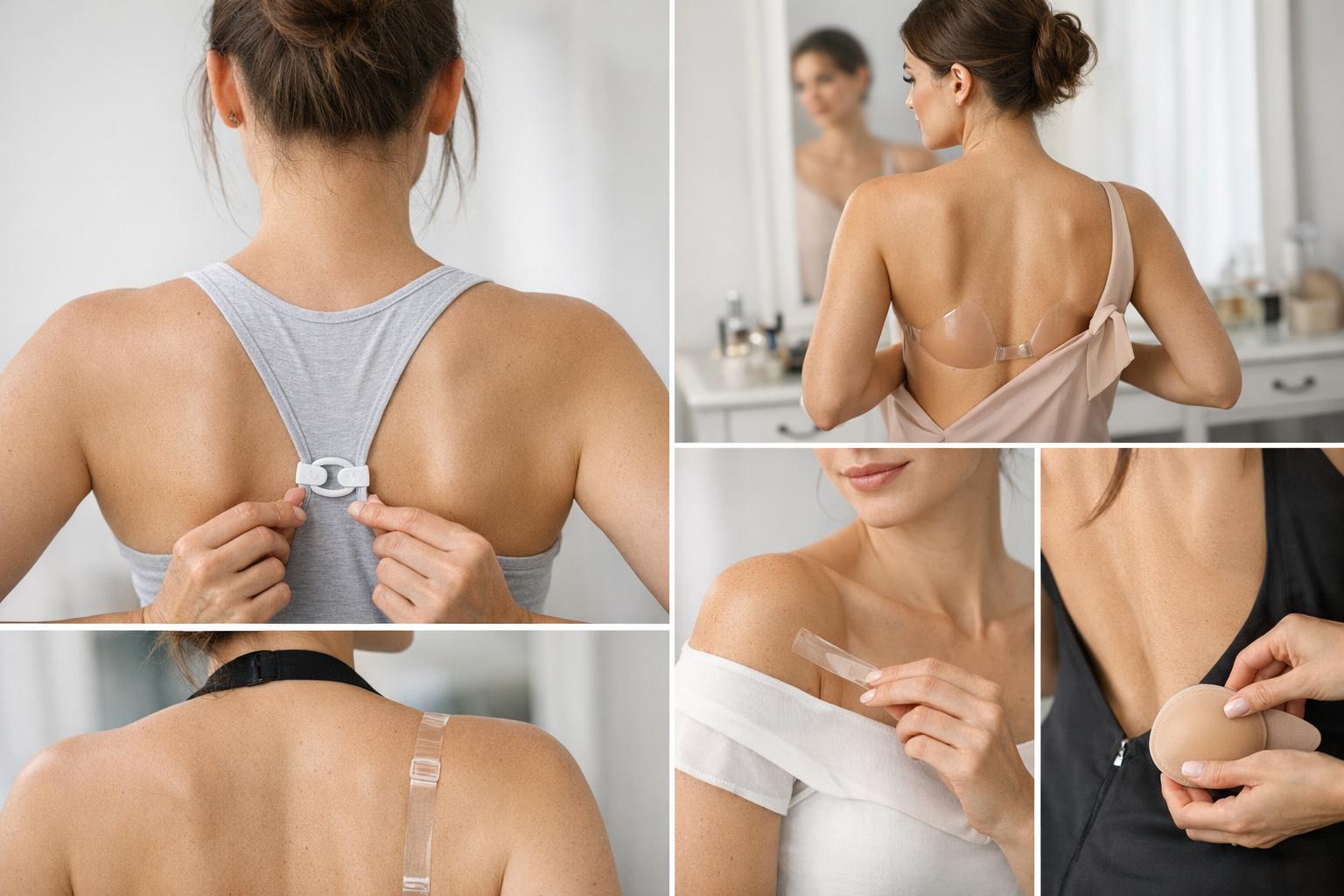
These methods are designed for speed and flexibility. They’re especially useful for day-to-day dressing, travel, or times when you don’t want to permanently alter a bra or garment. Many of these ideas rely on strap adjustment, strap clips/converters, or quick concealment strategies that you can reverse later.
Hack 1 — Adjust and reposition straps for off-shoulder and one-shoulder tops
Off-shoulder and one-shoulder styles tend to expose the top of the bra strap first. A practical first step is to adjust the bra straps so they sit as far out (or as far in) as your garment allows, then tuck them beneath the edge of the top so the fabric covers the strap line. Because this relies on tension and placement, small adjustments can make a big difference.
For off-shoulder looks, many people try to “drop” straps off the shoulders; that usually makes straps more visible and less supportive. Instead, aim to reposition and secure straps so they stay under the fabric edge near the arm area, where the garment has more structure.
Tips for off-shoulder success
- Adjust straps evenly so the bra sits level and doesn’t drift during movement.
- Check your top in a mirror from the side; the strap often peeks near the armhole first.
- If the top shifts easily, consider switching to a strapless or stick-on alternative rather than constantly re-tucking.
Hack 2 — Racerback solution: clip straps together or convert them
Racerback tops expose straps because the shoulder area is cut inward. The simplest fix is to create a racerback shape with your bra straps by pulling them toward the center of your back and joining them together. This moves the straps inward so they line up with the tank’s cut and reduces slipping off the shoulders.
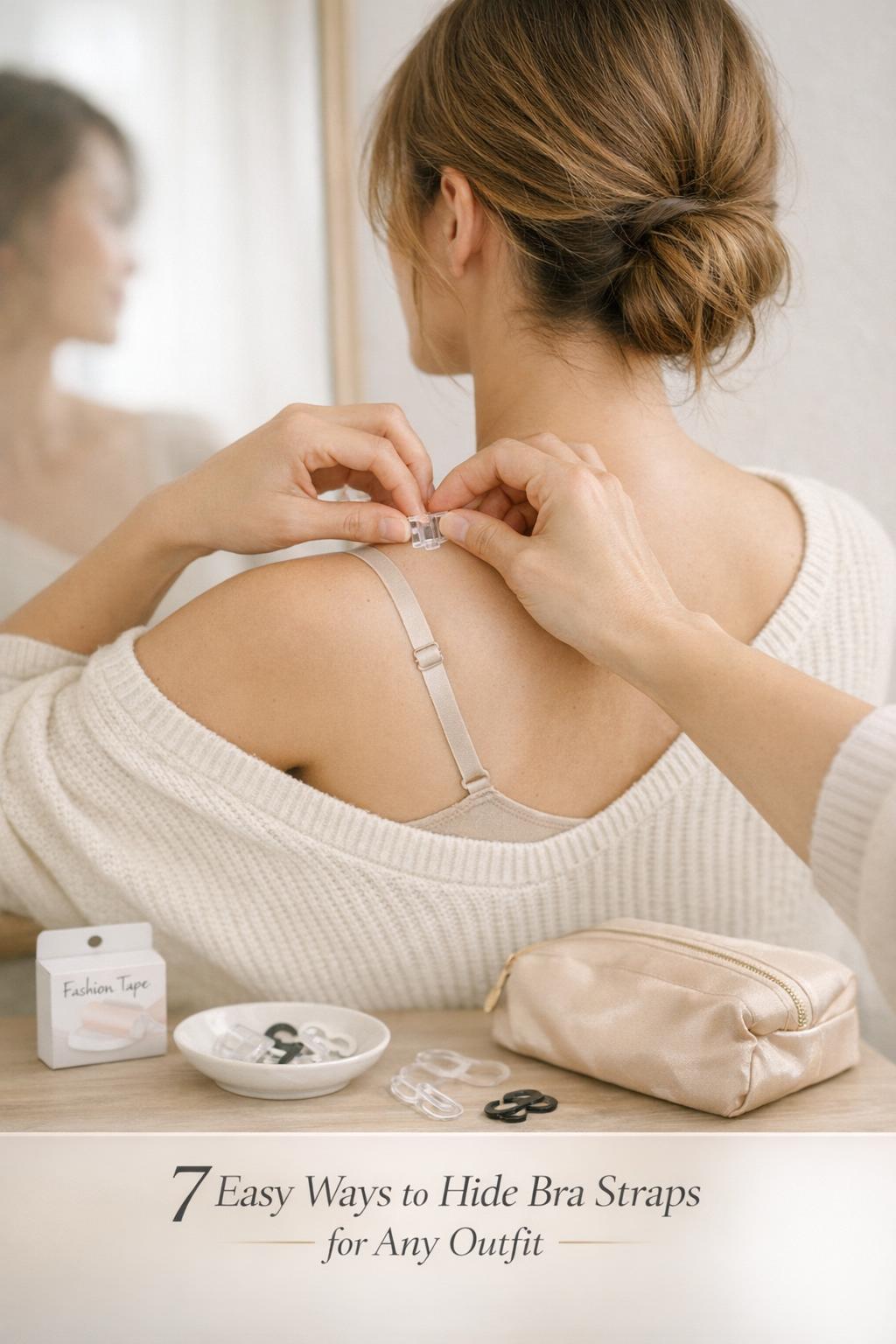
You can do this with a purpose-made strap clip or converter. If you don’t have one handy, some people use simple mechanical methods like clipping straps together with a paper clip. The goal is the same: connect the straps so they form a “V” or “Y” shape in the back and stay hidden under the racerback silhouette.
Tip: comfort check for clipped straps
When you pull straps inward, you change how tension distributes across your shoulders. If you feel digging or notice the bra riding up, loosen slightly and re-clip at a different point along the straps. A small reposition—higher or lower between the shoulder blades—often improves both comfort and concealment.
Hack 3 — Clear straps (invisible straps) for minimal visibility
Clear/transparent straps are a straightforward way to reduce how noticeable straps look when you still need shoulder support. They’re most useful with tops that reveal straps but don’t demand a truly strapless or backless solution—think sleeveless cuts, wide necklines, or outfits where a standard strap looks distracting.
To use clear straps effectively, attach them securely to your bra (especially if the bra is designed for removable straps), then adjust the length carefully so they lie flat and don’t twist. The goal is not just “clear,” but also smooth and aligned with the garment’s lines.
Tips for making clear straps look better
- Adjust for snugness without over-tightening; overly tight clear straps can look more obvious.
- Ensure both sides are symmetrical so the neckline looks balanced.
- Pair with outfits where the lighting and fabric won’t highlight reflections on the strap.
Hack 4 — Backless and low-back tops: focus on clasp concealment
Backless and low-back tops don’t just reveal straps—they reveal the bra clasp and band. In these cases, hiding bra straps is only part of the problem; you need a plan for the back closure too. Depending on how low the backline is, you may be able to manipulate or conceal the clasp, or you may need to switch to a different support approach entirely.
If the backline is very low, a regular bra band and clasp will likely show no matter how you adjust straps. When that happens, consider alternatives like stick-on bras or sew-in cups (covered later), which avoid a back band altogether.
Tip: do a “movement test” before leaving home
With low-back and backless looks, what seems hidden when you stand still can show as soon as you sit, reach, or turn. After adjusting, raise your arms, rotate your shoulders, and sit down—then re-check the backline in a mirror. This quick test can save you from constant tugging later.
Strap Converters and Strapless Conversions
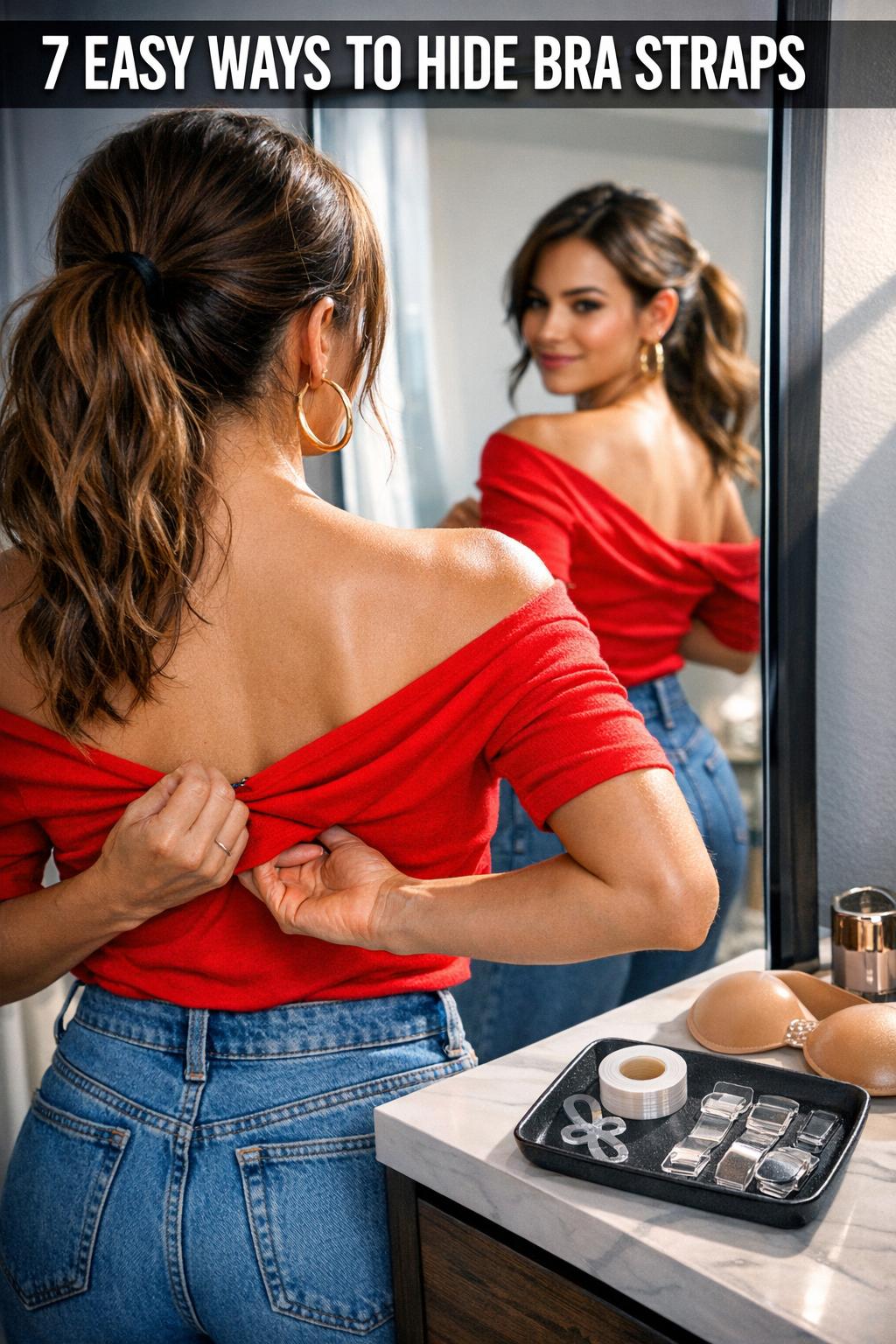
When quick adjustments aren’t enough, converters and conversions let you change how the bra functions—without necessarily buying a new one for every outfit. This is where tools like strap converters (including clips) and strapless conversion hacks come in, along with more tailored approaches if you’re comfortable doing small alterations.
Using strap converters (and why they work)
Strap converters are designed to redirect straps so they match the garment’s shape. The most common use is converting a standard bra into a racerback configuration, which helps with racerback tops and reduces visible straps at the shoulders. Converters can also help you pull straps inward, preventing them from peeking out of wide necklines.
Because converters change strap angles, they can also change how supportive (or comfortable) the bra feels. A good approach is to treat converters as adjustable: try the connection point higher or lower on your back until the straps feel secure without digging.
Convert a regular bra to strapless (a quick hack—with caveats)
There are popular “strapless conversion” hacks that repurpose a regular bra for a strapless look. These can be tempting when you need a last-minute fix, but they come with fit and security caveats. If your outfit requires reliable, all-day support—or if the neckline is structured and unforgiving—this is a scenario where a true strapless bra, a convertible bra designed for strapless wear, or a different solution like stick-on support may be more dependable.
If you try a conversion hack, take a cautious approach: test it at home first, check how it holds up during movement, and be honest about whether it actually stays in place. The goal isn’t just to remove straps; it’s to keep the bra stable.
Tips for safer strapless conversions
- Do a full movement test (arms up, twist, sit) before relying on it outside.
- Prioritize comfort and stability over an “invisible at all costs” result.
- If it slips during testing, switch methods rather than constantly adjusting in public.
Sewing-based solutions (if you’re comfortable)
If you’re willing to do light sewing, you can create cleaner, more permanent strap-hiding results—especially for special-event outfits. Two common approaches are sewing in cups directly into a dress/top or adding strap holders so straps stay anchored exactly where you want them rather than sliding into view.
Sew-in cups are especially useful when you want to avoid straps and back closures entirely (common with backless or low-back garments). Strap holders, on the other hand, are helpful when you want to keep wearing a regular bra but prevent strap slippage under specific necklines.
Product Toolkit: What to Buy (and What Each Item Solves)
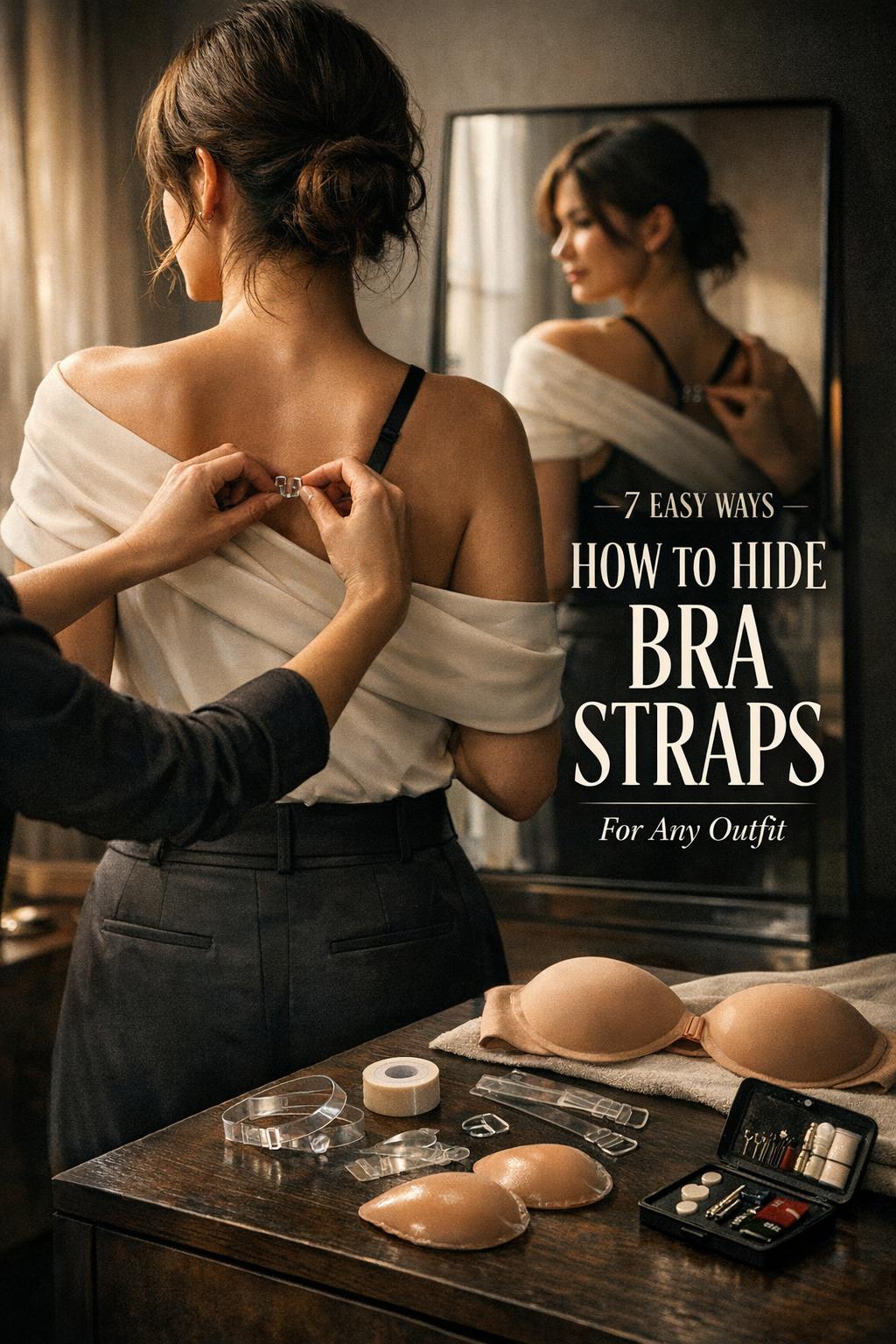
If you routinely wear a mix of necklines—off-shoulder, racerback, halter, and backless—building a small “strap-hiding toolkit” can save you time and frustration. The most useful items are the ones that adapt across outfits: clear straps, strap clips/converters, fashion tape options, strap cushions, and at least one solid strapless or convertible bra option.
Clear straps, silicone tape, and fashion tape
Clear/transparent straps help when you need strap support but want reduced visibility. Tape solutions are often used to keep fabric and straps in place so they don’t shift into view. If you use tape, pay attention to comfort and skin sensitivity, and treat tape as a temporary styling aid rather than a substitute for a well-fitting bra.
Because tape can affect comfort and removal, it’s worth using it thoughtfully: apply to clean, dry skin and remove carefully so you don’t irritate sensitive areas. Also consider that some tapes can leave residue or marks on delicate fabrics, so test when possible.
Strap cushions and non-slip strap options
Strap cushions can improve comfort when you’re using methods that change strap tension (like clipping into a racerback or tightening straps to keep them hidden). Non-slip strap options can help reduce sliding, which is one of the main reasons straps drift into view during the day.
Strapless bras vs. convertible bras
Strapless bras are designed for outfits where any strap would ruin the neckline, such as off-shoulder tops. Convertible bras are often the most versatile choice if you regularly switch between standard straps, racerback configurations, and occasional strapless needs. If you find yourself doing frequent hacks, upgrading to a convertible option can reduce daily trial-and-error.
Quick toolkit checklist
- Strap clip or strap converter (especially for racerback tops)
- Clear/transparent straps (for low-visibility support)
- Fashion tape or silicone tape (for stabilizing fabric and strap placement)
- Strap cushions (for comfort when tension changes)
- One reliable strapless or convertible bra (for off-shoulder and tricky necklines)
Outfit-Specific Guides (At a Glance)
Different silhouettes expose different bra areas, so it helps to match the neckline to the most realistic solution. Below are focused recommendations for the most-searched scenarios: off-shoulder and one-shoulder tops, racerback tops, halter necklines, thin-strap tops, and backless or very low-back dresses.
Off-shoulder tops
For a true off-shoulder cut, a strapless bra is often the cleanest solution. If you’re trying to make a regular bra work, focus on strap adjustment and positioning so straps sit under fabric rather than on top of it. If the top shifts throughout the day, consider switching methods instead of repeatedly re-tucking straps.
One-shoulder tops
One-shoulder styles require you to decide which side needs support and which side must stay bare. Removable or convertible strap setups can help you route support away from the exposed shoulder. If you can’t reconfigure the bra, you may need a strapless option or a solution that doesn’t rely on shoulder straps.
Racerback tops
A strap clip or converter is the most direct fix for racerbacks because it pulls straps inward so they don’t show at the outer shoulders. If you’re in a pinch, a paper clip method can mimic the converter’s function, but check comfort and stability before wearing it all day.
Halter tops
Halter necklines tend to reveal bra straps at the shoulders and sometimes at the back. A common approach is to route straps in a way that allows them to hide closer to the neck area, where the halter strap or fabric already draws attention. If your halter has a very open back, you may need to avoid a standard back clasp by using a different support approach.
Sleeveless and thin-strap tops
With sleeveless tops, the issue is often that straps look like an obvious second set of straps. Clear straps can reduce visibility while keeping the feel of a standard bra. If you don’t like the look of clear straps, a strapless bra can create the clean line many sleeveless outfits need.
Backless or deep-back dresses
Backless and deep-back styles are the hardest to pair with a standard bra because the clasp and band are exposed. If the backline is only moderately low, you may be able to focus on clasp concealment and careful strap placement. When the backline is very low, consider solutions that remove the back closure from the equation, such as stick-on bras or sew-in cups for a smooth finish.
Common Mistakes to Avoid (and How to Fix Them)
Even the best strap-hiding method can fail if the straps twist, the band shifts, or the garment moves more than expected. Many issues come down to tension, symmetry, and choosing a method that matches the outfit’s structure.
Mistake: Straps twist, peek, or drift throughout the day
Twisting and drifting often happen when straps are over-loosened or when you’ve changed their angle (like clipping into a racerback) without readjusting. The fix is usually simple: lay straps flat, adjust length evenly, and test movement. If the top’s neckline is unstable, use a more reliable approach (strapless, stick-on, or a garment-based solution like sew-in cups) rather than hoping a small tweak will hold.
Mistake: Straps dig in after clipping or converting
When you pull straps inward, you concentrate pressure. If you feel digging, change where the straps connect, loosen slightly, or add strap cushions for comfort. If comfort still isn’t workable, it’s a sign the method isn’t right for long wear, and switching to a strapless or different bra configuration can be the better choice.
Mistake: Using the wrong tape (or using it incorrectly)
Tape can be helpful, but it can also irritate sensitive skin or leave residue. If you’re using fashion tape or silicone tape, apply carefully and remove gently. If your skin reacts or the tape doesn’t hold, don’t force it—choose a different method like clear straps, a strap converter, or a strapless/convertible bra instead.
Comfort, Support, and Body-Shape Considerations
Hiding straps shouldn’t mean sacrificing support or spending your day adjusting. In general, the more you change strap angles or rely on temporary fixes, the more important fit becomes. A well-fitting band and properly adjusted straps make every hack work better, whether you’re clipping straps into a racerback, using clear straps, or going strapless.
It’s also normal for the “best” solution to vary from person to person. Some people prioritize maximum invisibility, while others prioritize comfort and secure support. If you have a fuller bust or simply want more stability, you may find that methods with stronger structure (like strapless or well-designed convertible options) feel more dependable than improvised hacks.
Tips for balancing invisibility and support
- If you’re reconfiguring straps, adjust slowly and check symmetry often; uneven tension makes slipping more likely.
- If a hack requires constant monitoring, consider upgrading to a purpose-built option (strapless, convertible, or garment-based cups).
- When comfort drops, performance usually drops too; treat digging and slipping as a signal to change methods.
Stylist-Level Approach: Build a Go-To Plan for Events and Photos
For weddings, formal events, and photo-heavy occasions, a “close enough” strap fix can become obvious in motion and in pictures. A more reliable approach is to plan around the outfit’s exact neckline: choose a strap strategy (strapless, clear straps, racerback conversion) and a back strategy (standard clasp, concealed clasp, or no clasp via stick-on/sew-in cups) before the day of the event.
If your outfit is backless or has a very low backline, it’s worth treating it as its own category rather than trying to force a standard bra to work. When straps and clasp must be invisible, garment-based support like sew-in cups can provide a cleaner finish and reduce last-minute stress.
Tip: Do a final mirror check in the lighting you’ll be in
Clear straps and certain concealment methods can look different under different lighting, especially when photos are involved. Before you leave, check your outfit in bright indoor light and natural light if possible, then do one last movement test to confirm straps and clasps stay hidden.
Visuals and How-To Videos: What to Look For When Learning a Method
If you’re learning a strap hack for the first time, short tutorials can be helpful—especially for racerback clips, halter-style routing, or strapless conversion attempts. The most useful demonstrations show strap placement from multiple angles and include a quick movement test, not just a still “after” shot.
When you follow a tutorial, focus on the principles rather than copying the exact steps: align straps with the garment’s cut, keep tension even, and prioritize stability. A method that looks good for one neckline (or one body shape) may need small adjustments to work for you.
FAQ
Will these methods affect bust support?
They can, especially methods that change strap angles (like clipping into a racerback) or remove straps entirely (strapless or conversion hacks). If support feels reduced or the bra shifts during movement, switch to a more stable option such as a strapless or convertible bra designed to hold its shape, or use garment-based support like sew-in cups for backless styles.
How do I hide bra straps under off-shoulder tops without constantly adjusting?
Off-shoulder tops often work best with a strapless bra because the neckline is designed to expose the shoulders. If you’re trying to make straps work, focus on careful strap adjustment and positioning under the fabric edge, then do a movement test; if the top shifts easily, a strapless or stick-on solution is usually more dependable than repeated re-tucking.
How do I hide bra straps under racerback tops?
Use a strap clip or strap converter to pull the straps inward so they match the racerback cut. In a pinch, a simple paper clip can connect straps similarly, but you should test comfort and security first and adjust the connection point to avoid digging or slipping.
Are clear straps actually “invisible”?
Clear or transparent straps usually make straps less noticeable rather than truly invisible. They work best when you need shoulder support but want reduced visual impact, and they look better when adjusted to lie flat, not over-tightened, and aligned with the garment’s lines.
What’s the best bra solution for backless or very low-back dresses?
If the backline is very low, a standard bra clasp and band will typically show, so methods that eliminate the back closure are often more effective. Stick-on bras and sew-in cups are common solutions because they avoid a visible clasp and can create a smoother look under backless styles.
How can I hide bra straps with a halter top?
Halter necklines often call for rerouting straps so they’re concealed closer to the neck area where the halter fabric already sits, or choosing an alternative that doesn’t rely on visible shoulder straps. If the halter has an open or low back, you may also need to avoid a standard back clasp by using a different support method.
Is it safe to use fashion tape or silicone tape to keep straps hidden?
Tape can be useful for stabilizing fabric and reducing shifting, but it should be used carefully, especially if you have sensitive skin. Apply to clean, dry skin, avoid forcing tape to do a job it can’t hold, and remove gently; if irritation occurs or the tape won’t stay put, switch to a different strap-hiding method.
What if my straps keep slipping off my shoulders and showing?
Try adjusting the straps evenly and consider a converter that changes the bra into a racerback configuration, which often reduces slipping and keeps straps aligned with many tank styles. If slipping continues, strap cushions or non-slip strap options can improve comfort and stability, but persistent slipping may mean you need a different bra configuration for that neckline.
When should I choose sew-in cups instead of a bra?
Sew-in cups are most helpful when you want a clean look without visible straps or a back clasp, such as with backless, low-back, or delicate necklines that don’t hide bra hardware well. They can also reduce the need for constant adjustments during events where you want a smooth, reliable finish.