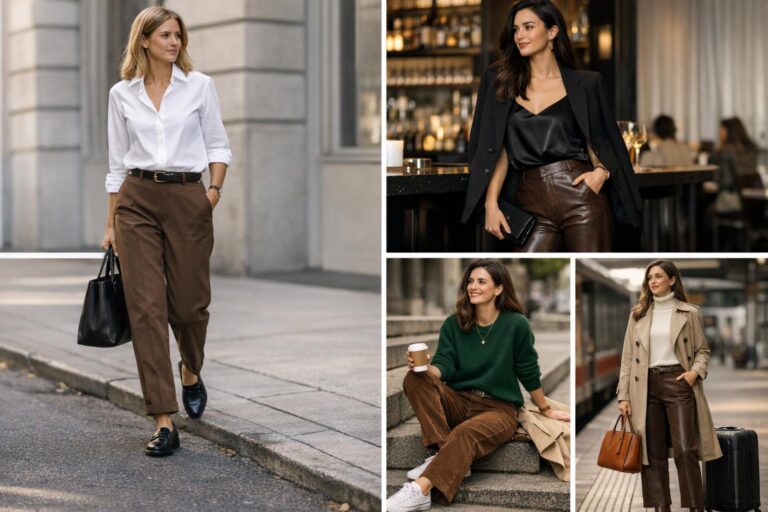
7 Outfit Formulas: how to dress a pear body shape (US)
How to Dress a Pear Body Shape: A Complete Guide for a Balanced Look
If you’ve ever felt like pants fit your hips but gap at the waist, or that your lower half looks “heavier” than your top half, you’re likely working with a pear figure. Learning how to dress a pear body shape isn’t about hiding your curves—it’s about creating balance, defining your waist, and choosing silhouettes that make your outfits feel intentional from head to toe.
Across the most practical styling guidance for pear-shaped bodies, the same goals come up again and again: draw the eye upward with smart necklines, shoulders, and color; keep the lower half clean and streamlined; and use waist definition to create an easy hourglass effect. The sections below break those ideas into clear, actionable strategies for tops, bottoms, dresses, outerwear, accessories, and outfit building for real life.
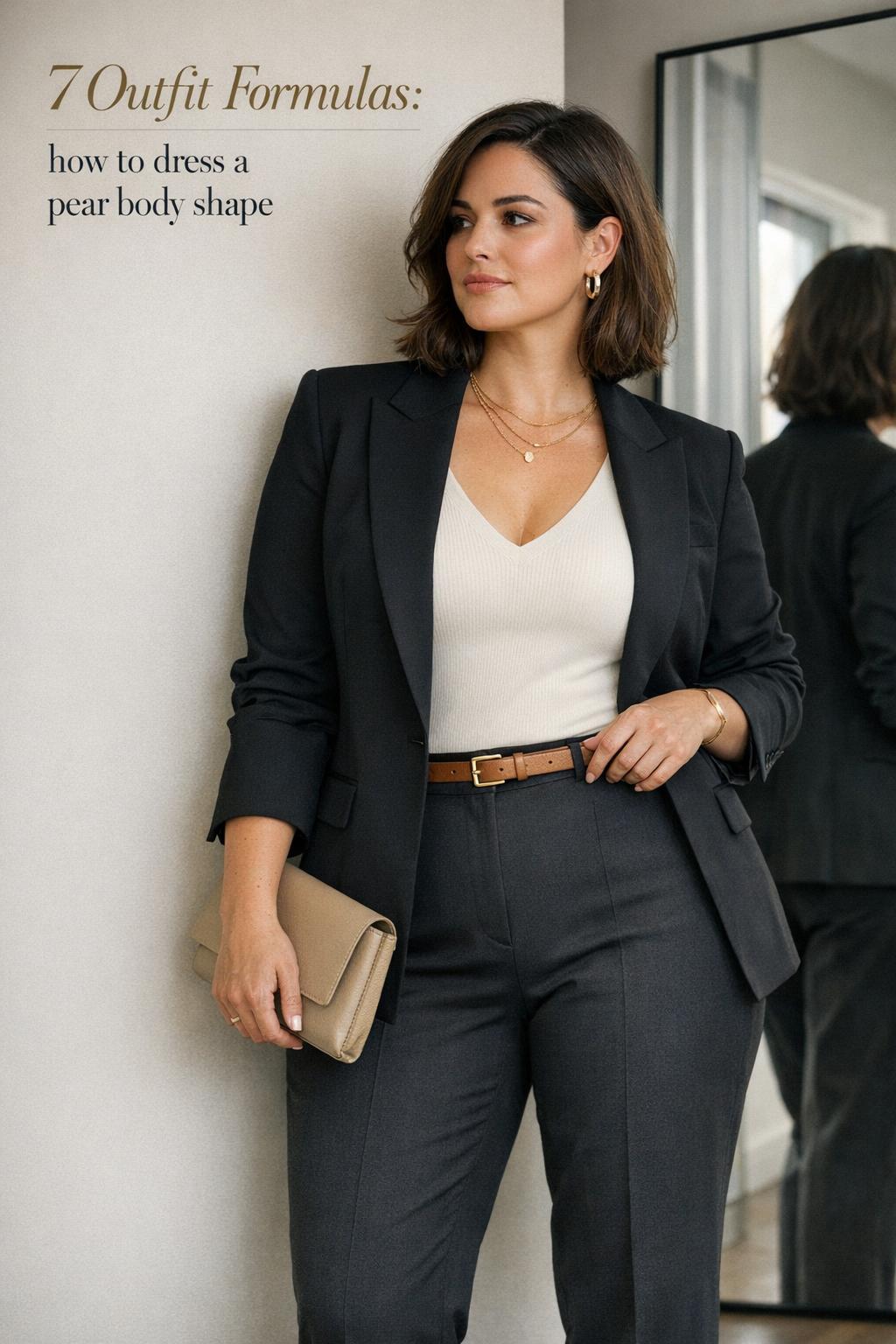
Understand Your Pear Shape
What characterizes a pear body shape?
A pear body shape is typically defined by hips that are wider than shoulders, often paired with a more defined waist. Many pear-shaped people feel their upper half looks narrower, while their lower half (hips, thighs, seat) carries more visual weight. Styling becomes easier when you treat your shape as a set of proportions you can balance—rather than a “problem” you need to fix.
Common pear-shape variations
Pear shapes don’t all look the same. Some have a softer, rounded lower half; others have a fuller pear with stronger hip curves; and some have a more straight or rectangular upper torso paired with wider hips. The core approach stays consistent, but your best choices may shift depending on how much structure you prefer up top, how defined your waist is, and whether you like to emphasize or minimize your hips.
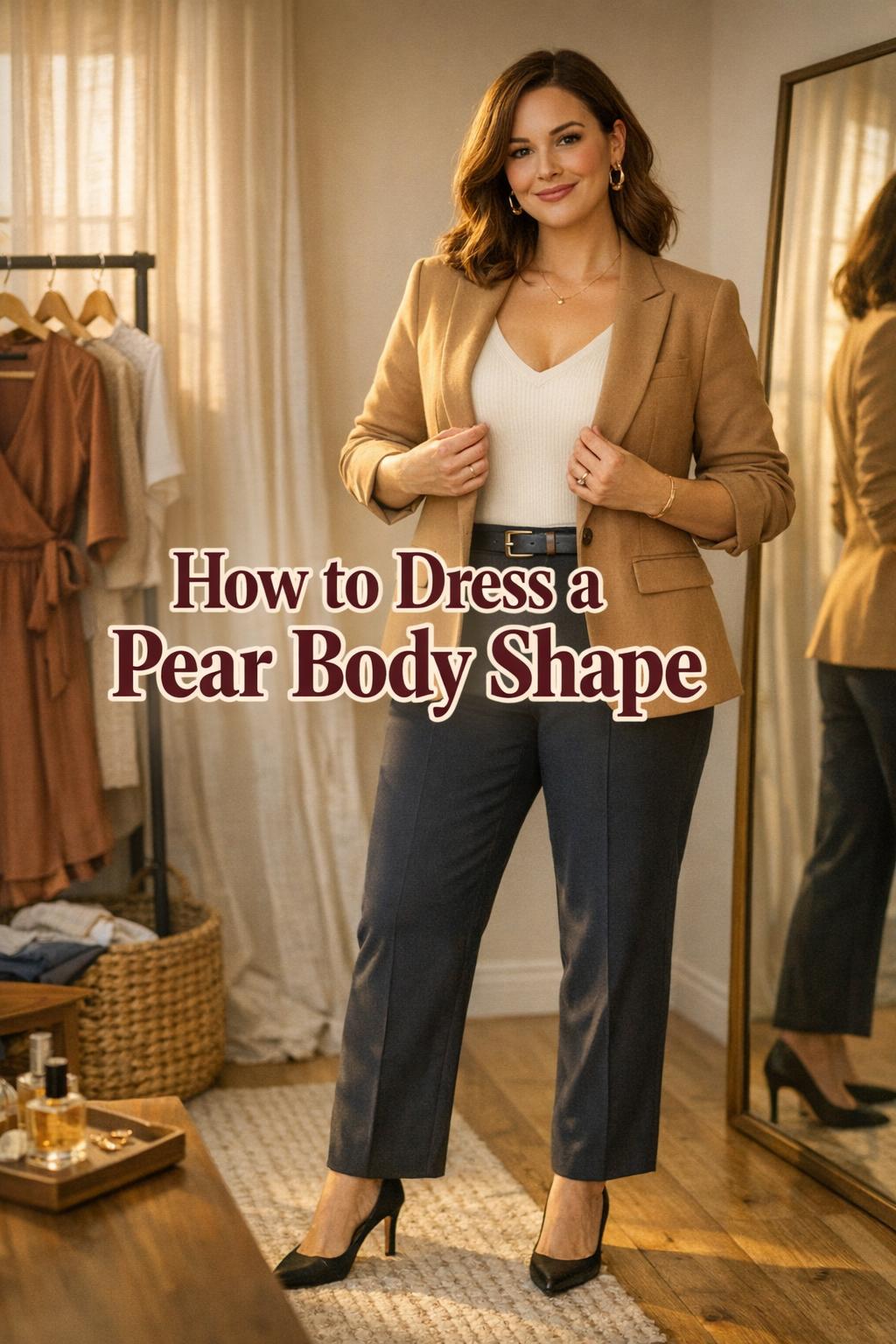
Core Principle: Balance the Upper Half, Quiet the Lower Half
Two styling approaches that both work
Most pear-shape outfit advice falls into two complementary approaches: either (1) highlight the upper body to bring it visually in line with the hips, or (2) keep the lower body simple so it doesn’t dominate the outfit. The best outfits usually do both—adding interest and structure on top while keeping bottoms clean, darker, and less detailed.
What “balance” looks like in practice
Balance isn’t one single trick; it’s the sum of your neckline, shoulders, sleeves, color placement, fabric, and where your outfit visually “ends” (hem lengths and jacket lengths). A wide neckline can make shoulders look broader. A structured jacket can add shape to the upper half. Dark, matte bottoms can quiet the hips. A waist-defining detail can connect it all into a proportional silhouette.
Tip: When an outfit feels “off,” don’t assume it’s your body—assume it’s the distribution of visual weight. If the bottom half has bold color, shine, prints, or bulky details, make the top half equally intentional with neckline shape, shoulder emphasis, or a statement accessory.
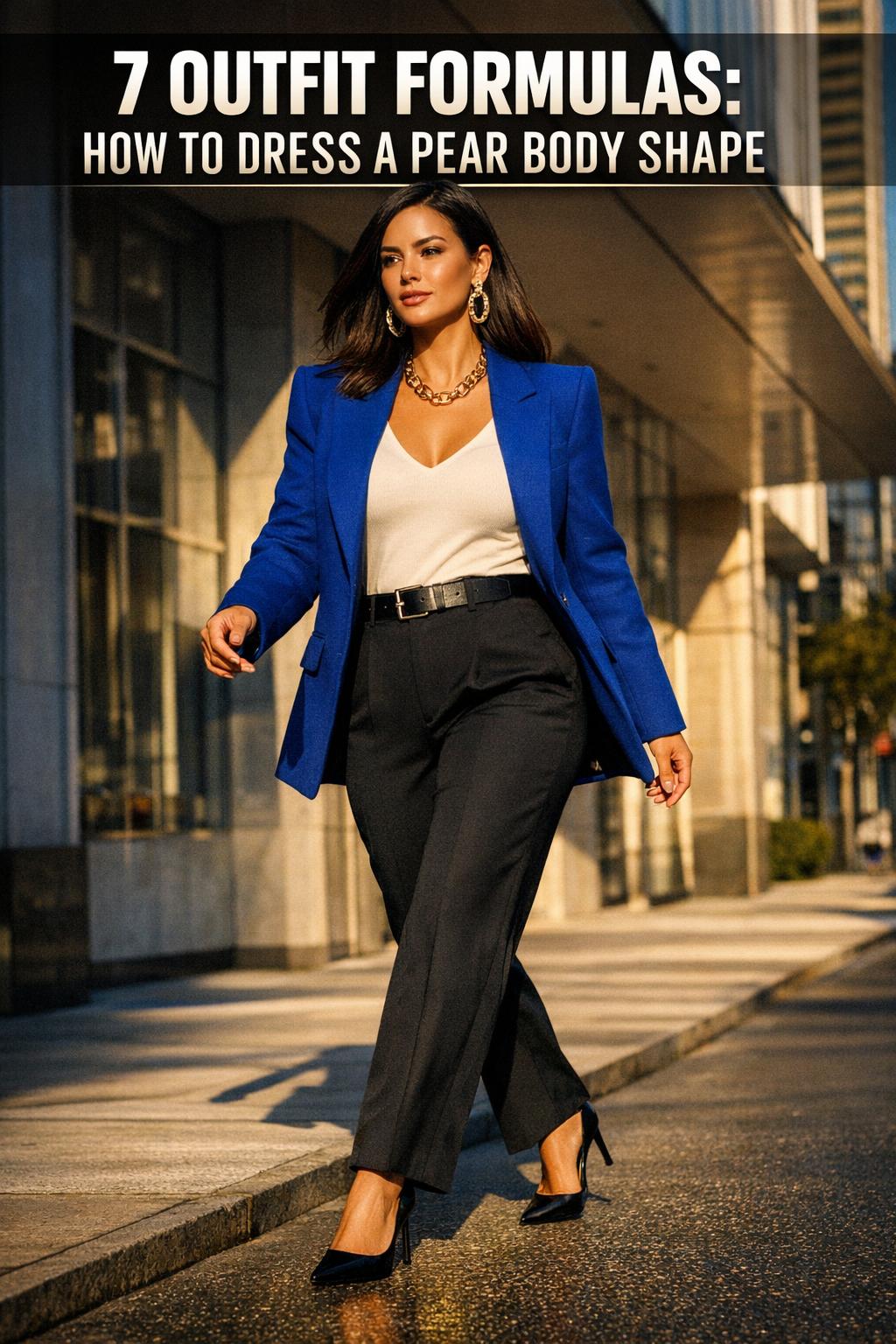
Top Half Strategies: Necklines, Shoulders, Color, and Focus
Necklines that flatter pear-shaped bodies
Necklines are one of the fastest ways to balance a pear shape because they change the perceived width of your shoulders and the length of your neck and torso. Wide necklines are frequently recommended because they broaden the upper frame, while V-necks are often suggested for a clean, elongating effect.
- Wide necklines (such as boat and wide scoop styles) to visually broaden the shoulder line
- V-necklines to create an elongating line and draw attention upward
- Open, airy necklines that keep the focus on the face, collarbone, and shoulders
Tip: If your shoulders feel very narrow compared to your hips, prioritize a neckline that goes wide (across the shoulder line) rather than deep. If you want a longer, leaner look through the torso, prioritize a V shape.
Shoulder emphasis: structure, sleeves, and details
Shoulder emphasis is a signature move for pear body styling because it shifts attention upward and creates a more even top-to-bottom proportion. This doesn’t have to mean extreme shapes; even subtle structure changes your silhouette.
- Structured shoulders in tops, blazers, and jackets
- Sleeves with shape or volume to add presence to the upper half
- Diagonal lines and design elements that keep the eye moving upward
On the other hand, styling guidance often warns against upper-body shapes that visually shrink the shoulders, such as narrow collars or tops that collapse through the shoulder line. If your outfit makes your shoulders look smaller, your hips will look comparatively larger—even if nothing else changed.
Color and pattern placement: be bold on top
Color strategy is one of the clearest, most repeatable tools for pear shapes: bold, bright, or printed tops paired with darker, calmer bottoms. This creates an intentional focal point on the upper half while keeping the hip area visually streamlined.
- Choose brighter colors, prints, or statement textures for tops to pull the eye upward
- Keep bottoms darker and more matte for a quieter lower half
- Use jewelry near the face (necklaces, earrings) to reinforce the upward focal point
Tip: If you love color everywhere, try “top-first color”: place the most attention-grabbing color on your top layer (top, jacket, or scarf) while keeping your bottom layer simpler. You still get your style, but the balance stays pear-friendly.
Fitted tops and polished basics that work hard
A pear shape often looks best when the upper half is defined and intentional. Many practical guides recommend fitted shirts because they keep your silhouette clean and prevent extra bulk at the waist. Button-down shirts also show up as a staple because they can be structured, layered, and adjusted at the neckline to suit your proportions.
The key is fit with purpose: you want enough shape to define your waist and upper torso without clinging in a way that makes layering difficult. A polished top paired with a streamlined bottom is one of the simplest formulas for a balanced pear-shaped outfit.
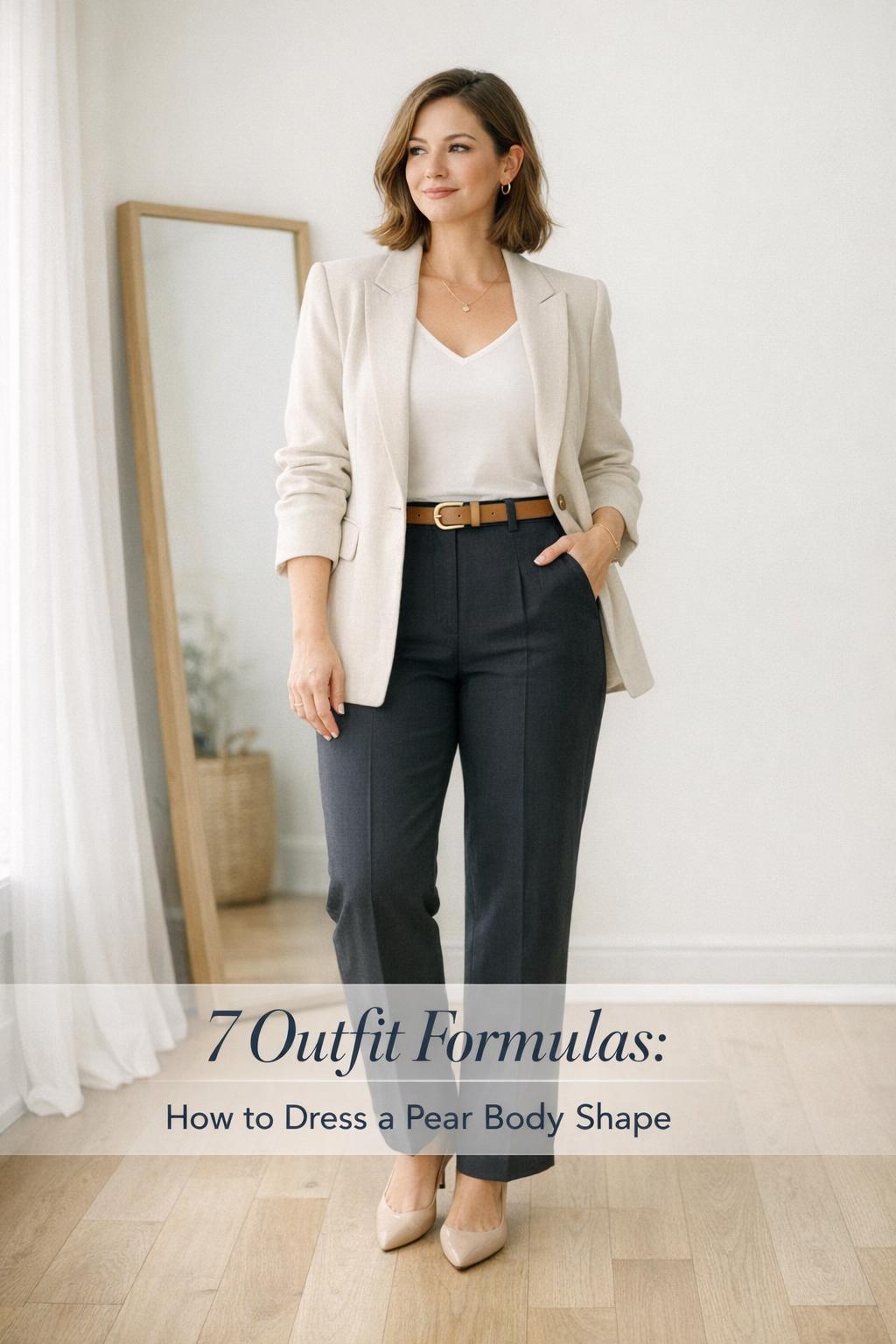
Layering and Outerwear: The Fastest Way to Rebalance Proportions
Structured jackets and blazers
Structured jackets are repeatedly recommended for pear shapes because they create shape through the shoulders and upper torso. When your outer layer has presence up top, it naturally balances wider hips below. This is especially helpful for work outfits, where blazers and tailored layers can create a clean, confident line.
Look for jackets that feel intentional at the shoulder and don’t collapse into the bust and waist area. The goal is not to add bulk everywhere; the goal is to add structure where you want more visual strength—up top.
Cardigans, coats, and layering for vertical length
Layering can also help create vertical length, which supports a streamlined silhouette. A long outer layer can help the eye travel up and down rather than side to side, especially when paired with a simplified bottom half.
Tip: When choosing layers, prioritize clean lines. A layer that adds too much bulk around the hip area can undo the balance you created with neckline and color. If a layer is roomy, keep everything else (especially bottoms) more tailored and simple.
Bottom Half Strategies: Skirts, Pants, Fabrics, and Waist Definition
Skirts that skim: A-line and wrap-inspired shapes
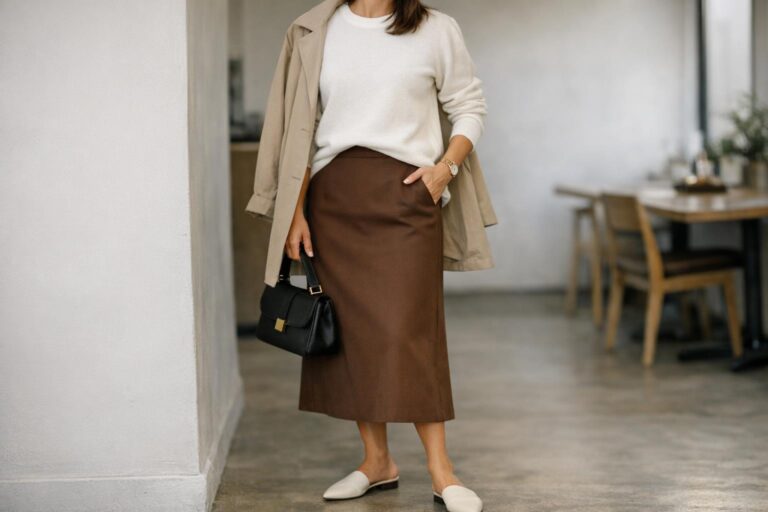
A-line skirts and fit-and-flare shapes are frequently suggested for pear bodies because they skim over the hips rather than clinging to them. Wrap-inspired skirts also show up often because they create a diagonal line and offer waist definition, which supports that balanced, hourglass-style effect.
What makes these shapes so useful is that they respect your curves without turning the hips into the main event. They create movement and shape without extra bulk from heavy pleats, oversized pockets, or attention-grabbing hardware at the hip line.
Pants: tailored lines, clean fronts, and thoughtful fit
Pear-shaped bodies often benefit from pants that look tailored and intentional. Clean lines through the hip and thigh help keep the outfit balanced, especially when the top half is already drawing attention upward. Practical advice frequently emphasizes choosing tailored pants rather than overly tight or overly bulky styles.
Fit matters more than trends here: if pants cling too tightly across the widest part of the hips, they can overemphasize that area. If they’re too bulky, they can add width where you don’t want it. The most reliable sweet spot is a streamlined silhouette with minimal extra detailing around pockets and hips.
Fabrics and finishes: avoid cling, avoid bulk
When your goal is a quieter lower half, fabric choice becomes a major tool. Pear-shape guidance often warns against clingy fabrics on the lower half, because clinging fabric highlights every curve and can create a “bottom-heavy” look if the top isn’t equally structured. At the same time, overly thick or bulky fabrics and details can add width around the hips.
- Choose bottoms with a structured feel and smooth drape rather than cling
- Keep hip-area details minimal (avoid bulky pockets and heavy embellishment)
- Use darker, more matte bottoms when you want the most streamlined effect
Tip: If you’re wearing a lighter or more noticeable fabric on the bottom, compensate on top with a wider neckline, a structured shoulder, or a statement layer. Balance is flexible; it’s about distribution, not strict rules.
Waist definition without adding visual weight
Pear shapes often have a naturally defined waist, so highlighting it is a strong move—when done carefully. Belts and high-waisted silhouettes appear frequently in pear-shape styling guidance because they reinforce the waist and create that “intentional hourglass” effect. The key is to define the waist without adding bulk at the hips.
Use waist definition as a connector: it ties your more detailed upper half to your streamlined bottom half. When your waist is clearly defined, the eye reads the outfit as balanced even if your hips are wider than your shoulders.
Dress Types That Work Best for Pear-Shaped Bodies
Wrap dresses and fit-and-flare shapes
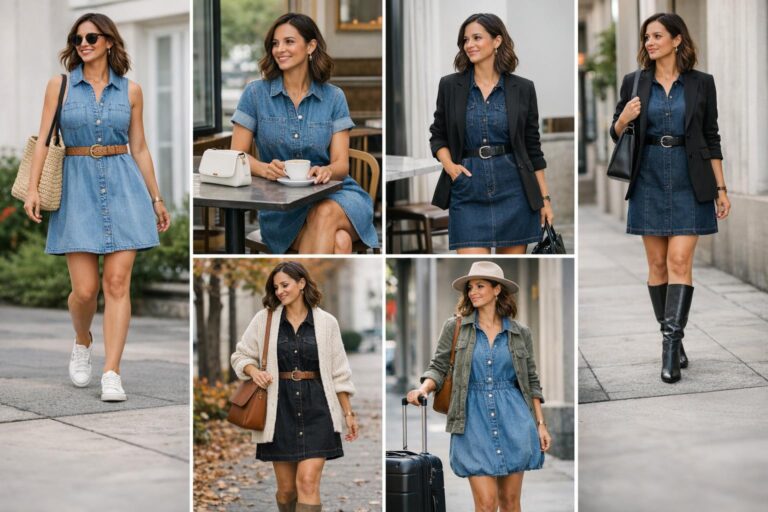
Wrap dresses are repeatedly recommended for pear shapes because they combine multiple flattering elements: an adjustable waist, a V-shaped neckline, and a silhouette that tends to skim the hips rather than squeeze them. Fit-and-flare dresses (often paired with A-line skirts) are also a go-to because they define the waist and allow room through the hip and thigh area.
These dress shapes align with the core pear strategy: emphasize the upper body and waist, then keep the lower half moving and streamlined.
Shift vs. sheath: choosing your best “straight dress”
When you want a simpler dress silhouette, details matter. A very clingy sheath can overemphasize the hips if the fabric grips the lower half. A cleaner, less clingy shift-style silhouette can be easier to wear when you want minimal focus on the hips—especially if you bring attention upward with neckline choice, sleeves, or jewelry.
Tip: If you love a sleek, body-skimming dress, make the upper half work harder: add shoulder emphasis, choose a neckline that opens up the chest and collarbone area, and keep the fabric from clinging at the widest part of the hips.
Jumpsuits and two-piece looks with an upper-body focus
Two-piece outfits can be extremely pear-friendly because you control where the eye goes. A brighter, patterned, or more structured top paired with darker, streamlined bottoms creates a balanced silhouette with minimal effort. Jumpsuits can work similarly when they feature an intentional neckline and defined waist, and when the leg line stays clean rather than overly tight or overly bulky.
Outfit Ideas for Real Life: Work, Casual, and Going Out
Pear-shaped outfit ideas for work
Workwear is often where pear shapes shine because structured pieces are common. The most reliable work outfits use upper-body structure (necklines, blazers, polished tops) and tailored bottoms with minimal hip detail.
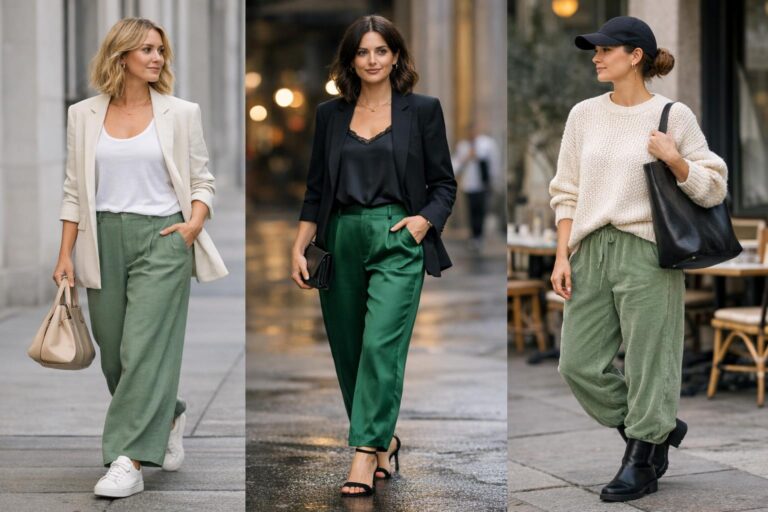
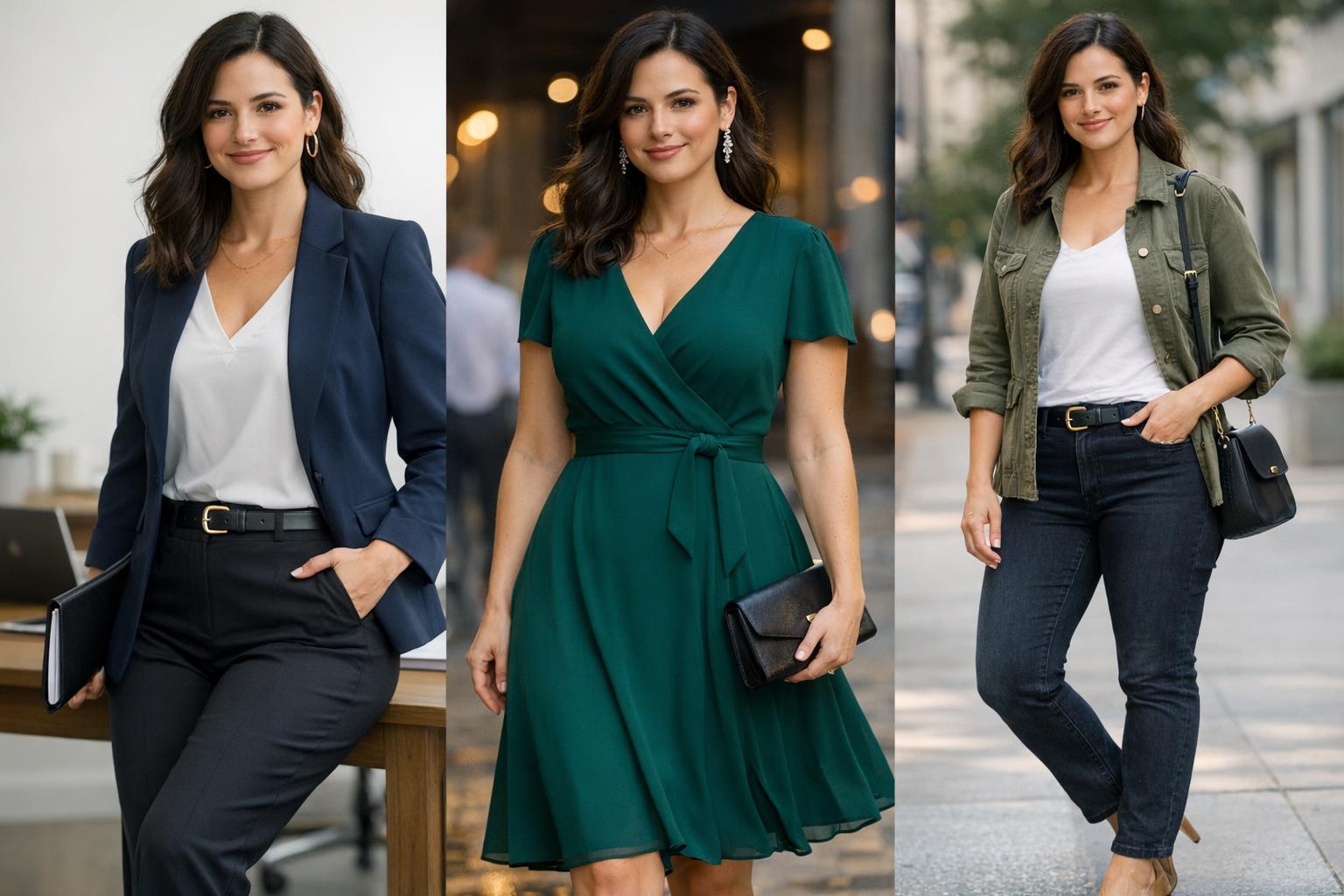
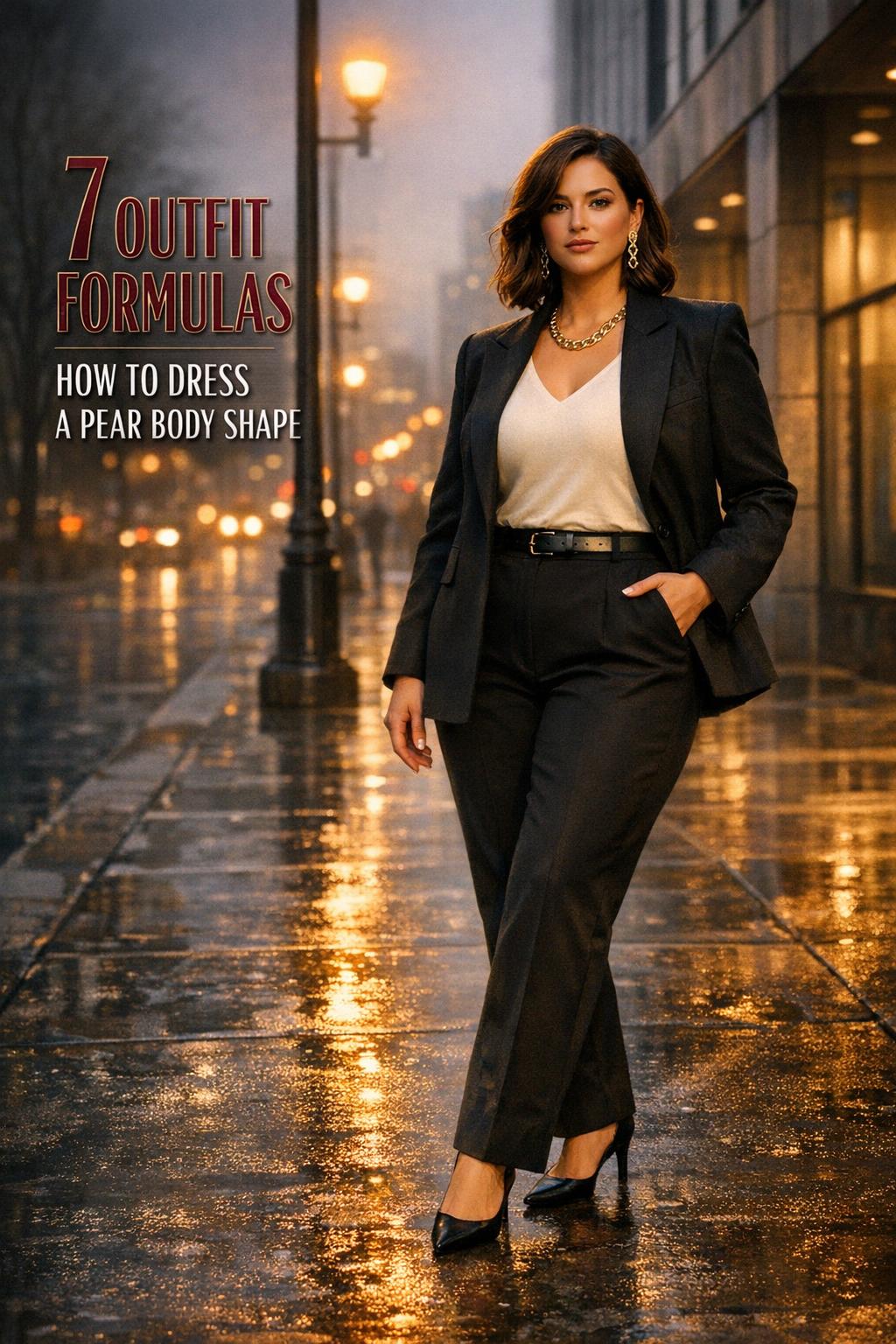
- A structured blazer with shoulder definition over a top with a wide or V neckline, paired with tailored dark pants
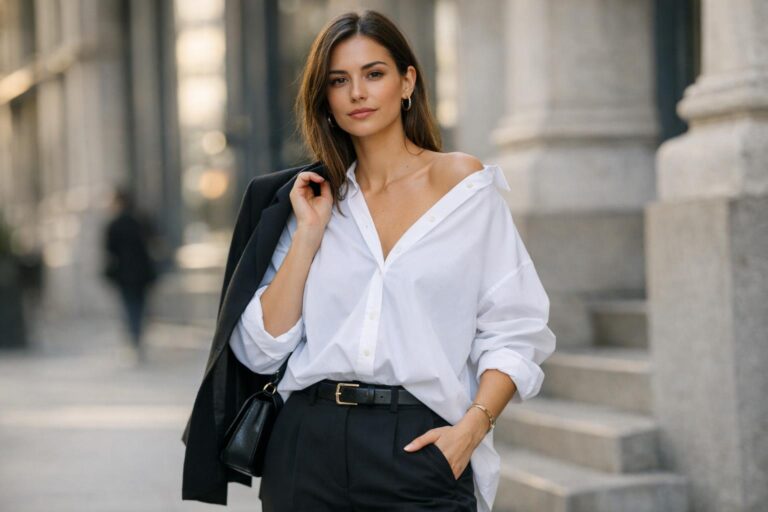
- A button-down shirt styled to highlight the neckline and waist, paired with clean-line trousers
- A wrap dress that defines the waist, finished with simple shoes and a polished necklace to keep focus upward
Tip: For meetings or presentations, aim for “top-first impact”: your most noticeable element should be above the waist (a neckline, jacket shape, or jewelry). It reads professional and instantly balanced.
Casual pear-shaped outfits that still look intentional
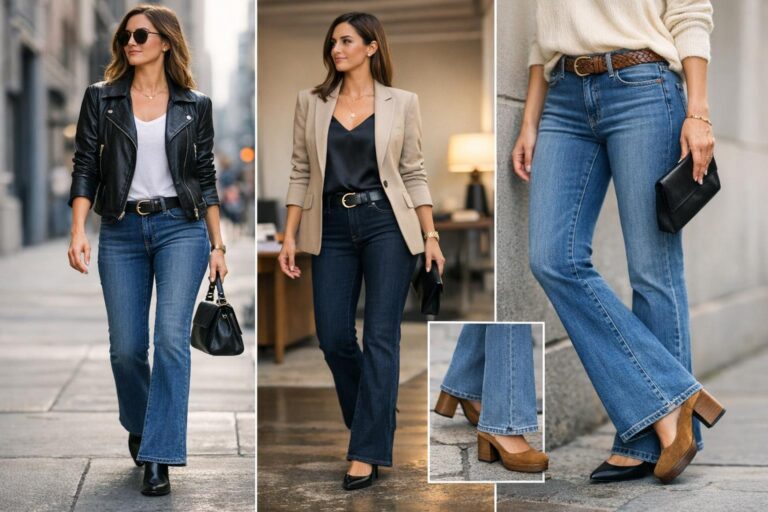
Casual outfits can lean bottom-heavy if your jeans or skirt has the most visual detail. To keep things balanced, choose a casual top that does a little more—through color, pattern, neckline, or sleeve—and keep the bottom half clean and streamlined.
If you’re wearing a simple tee, consider making it a better tee for your shape: a more open neckline, a more fitted cut through the torso, or a more intentional layer on top. Small choices can shift the entire look.
Party and evening looks: focus on neckline, waist, and clean lines
For evening outfits, the same pear principles apply but with higher contrast: emphasize the upper half with an open neckline or shoulder detail, define the waist, and keep the lower half elegant and uncluttered. Dresses that combine a V neckline with a defined waist and a skirt that moves away from the hips are especially common recommendations for pear shapes.
Tip: If your evening outfit includes shine or strong color on the bottom, add a statement earring or necklace to pull attention back to your face and shoulders so the outfit reads balanced.
Accessories That Elevate a Pear Shape
Jewelry that draws the eye upward
Accessories are a simple way to reinforce the “attention up top” strategy. Statement necklaces and earrings are frequently mentioned because they keep visual focus near the face and neckline—especially useful when your outfit is otherwise minimal.
If your clothing is already doing a lot near the neckline (a wide neckline, collar detail, or bold print), you can keep jewelry simpler while still maintaining that upward emphasis.
Shoes and leg-line tricks
Shoes can subtly affect the overall line of your outfit. Leg-lengthening tips often include choosing styles that create a cleaner line from the leg down, such as a pointed-toe shape, and using tones that visually extend the leg line, such as a nude shade close to your skin tone.
Heels are also commonly referenced as a way to lengthen the leg line and create a more elongated silhouette overall. The best approach is the one you’ll actually wear comfortably; even a small change in shoe shape can make an outfit feel more streamlined.
Common Mistakes to Avoid (and Simple Fixes)
Bottom-heavy outfits that compete with your shape
One of the most common issues for pear shapes is putting all the detail on the lower half: bright bottoms, busy prints, bulky pockets, or heavy embellishments right at the hips. This doesn’t mean you can never wear them—it means you should balance them with an equally intentional top half (neckline width, shoulder structure, bold top color, or statement jewelry).
Clingy or overly bulky fabric on the lower half
Clingy lower-half fabrics can overemphasize hips and thighs, while bulky lower-half fabrics can add width. Both can make your outfit feel out of proportion if the upper half is simple. A more structured, smoother fabric on the bottom—paired with an upper half that carries the “style message”—tends to look more balanced.
Narrow necklines or collapsed shoulders
Narrow collars and upper silhouettes that shrink the shoulders can unintentionally exaggerate hip width by comparison. If you notice your outfit makes your shoulders look small, widen the neckline, add structure with a jacket, or choose sleeves that add shape to your upper frame.
Tip: When you’re troubleshooting an outfit, change only one thing first. Swap the neckline, add a structured layer, or change the bottom to a darker, cleaner line. One adjustment often fixes the whole look.
Quick Reference: 10 Pear-Shape Styling Rules You Can Use Today
- Choose wide or open necklines to broaden the upper frame.
- Use V-necks when you want an elongating, clean line.
- Add shoulder structure with blazers, jackets, or shaped sleeves.
- Wear bolder colors and prints on top; keep bottoms darker and simpler.
- Favor A-line and wrap-inspired skirts that skim the hips.
- Choose tailored pants with clean lines and minimal hip details.
- Avoid clingy lower-half fabrics when you want a streamlined look.
- Define the waist with thoughtful shaping (including belts and high-waist silhouettes) without adding bulk at the hips.
- Use statement jewelry to keep the focal point near your face and neckline.
- When in doubt, “quiet the bottom, elevate the top.”
Wardrobe Planning: A 4-Week Pear Capsule Framework
Many pear-shape wardrobes become easier when you plan around balance instead of isolated pieces. A practical way to do that is to build a small rotation that consistently uses the same proven formulas: intentional tops, streamlined bottoms, and structured layers. Below is a simple four-week framework you can adapt to your style.
Week 1: Build your “top-first” foundation
Start with tops that do the balancing work: wide necklines, V-necks, and fitted, polished basics you can repeat. Include at least one bold or printed top that immediately pulls focus upward, plus a button-down option that can be styled open at the neckline or layered under structured pieces.
Week 2: Add streamlined bottoms you can trust
Next, choose bottoms that minimize fuss around the hips: darker, cleaner silhouettes, A-line or wrap-inspired skirts, and tailored pants. Focus on comfort and fit so you’ll reach for them often; the more reliable your bottoms are, the easier it is to experiment with tops and accessories.
Week 3: Choose outerwear that creates structure and balance
Now add layers that support pear proportions: structured jackets and blazers that give the shoulders presence, plus layering pieces that create a clean vertical line. This is the step that often makes outfits look instantly “styled,” especially for work and transitional weather.
Week 4: Finish with dresses, accessories, and repeatable outfits
Finally, add a few dress options that naturally flatter pear shapes—wrap dresses and fit-and-flare silhouettes are common favorites—plus accessories that reinforce the upward focal point. Statement earrings or necklaces can turn a simple outfit into a balanced, finished look without changing your base pieces.
Tip: To keep the framework cohesive, stick to a consistent color strategy: brighter and more expressive pieces on top, darker and calmer pieces on the bottom. This makes mixing and matching far easier and keeps your silhouette balanced across outfits.
FAQ
Can clothing change a pear body shape?
Clothing won’t change your body shape, but it can change how proportions are perceived by creating visual balance—most often by emphasizing the upper body with necklines, shoulder structure, and bolder top colors while keeping the lower half streamlined.
What necklines are best for a pear-shaped body?
Wide, open necklines are commonly recommended because they broaden the upper frame, and V-necklines are popular for creating an elongating line that draws attention upward toward the face and shoulders.
What skirts look best on pear shapes?
A-line and wrap-inspired skirts are often suggested because they define the waist and skim over the hips rather than clinging, which supports a balanced silhouette.
What pants are most flattering for pear-shaped bodies?
Tailored pants with clean lines and minimal hip details tend to be most reliable, especially when paired with a more noticeable or structured top that draws attention upward.
How do I minimize my hips if I have a pear figure?
Use a “quiet bottom” strategy: choose darker, more matte bottoms with fewer details around pockets and hips, avoid clingy lower-half fabrics, and bring attention to your upper half with a wide or V neckline, structured shoulders, or statement jewelry.
Are wrap dresses good for pear-shaped bodies?
Yes—wrap dresses are frequently recommended because they combine waist definition with an upper-body-friendly neckline and a silhouette that typically skims the hips rather than squeezing them.
What outerwear should pear shapes look for?
Structured jackets and blazers are popular because they add presence through the shoulders and upper torso, helping balance wider hips, while clean layering lines help keep the overall silhouette streamlined.
What should I avoid wearing with a pear-shaped body?
Common pitfalls include bottoms with bulky pockets or heavy embellishment at the hips, clingy lower-half fabrics when you want a streamlined look, and tops with narrow collars or shapes that make the shoulders look smaller compared to the hips.
How can I create an hourglass illusion with a pear shape?
Focus on defining the waist while balancing the upper body: choose necklines that open or widen the shoulder line, use structured layers or sleeves to add upper-body presence, and pair that with a clean, streamlined bottom that doesn’t add bulk at the hips.