7 Smart Rules for How to Layer Clothes Without Bulk
How to Layer Clothes: A Practical Guide for Every Season
Learning how to layer clothes well is one of the most useful style and comfort skills you can build. Layering lets you adjust to shifting temperatures, move between indoor and outdoor spaces comfortably, and create outfits with more depth and visual balance—often using the same core pieces in multiple ways. The key is knowing what each layer is supposed to do, choosing fabrics and fits that work together, and building outfits that look intentional rather than bulky.
This guide breaks layering down into a simple system (base, mid, and outer layers), then shows how to apply it across winter, transitional weather, and warm climates. You’ll also find fabric and fit guidance, outfit templates for different occasions, common mistakes to avoid, and finishing touches that make layered outfits feel polished.
Understanding the Layering System
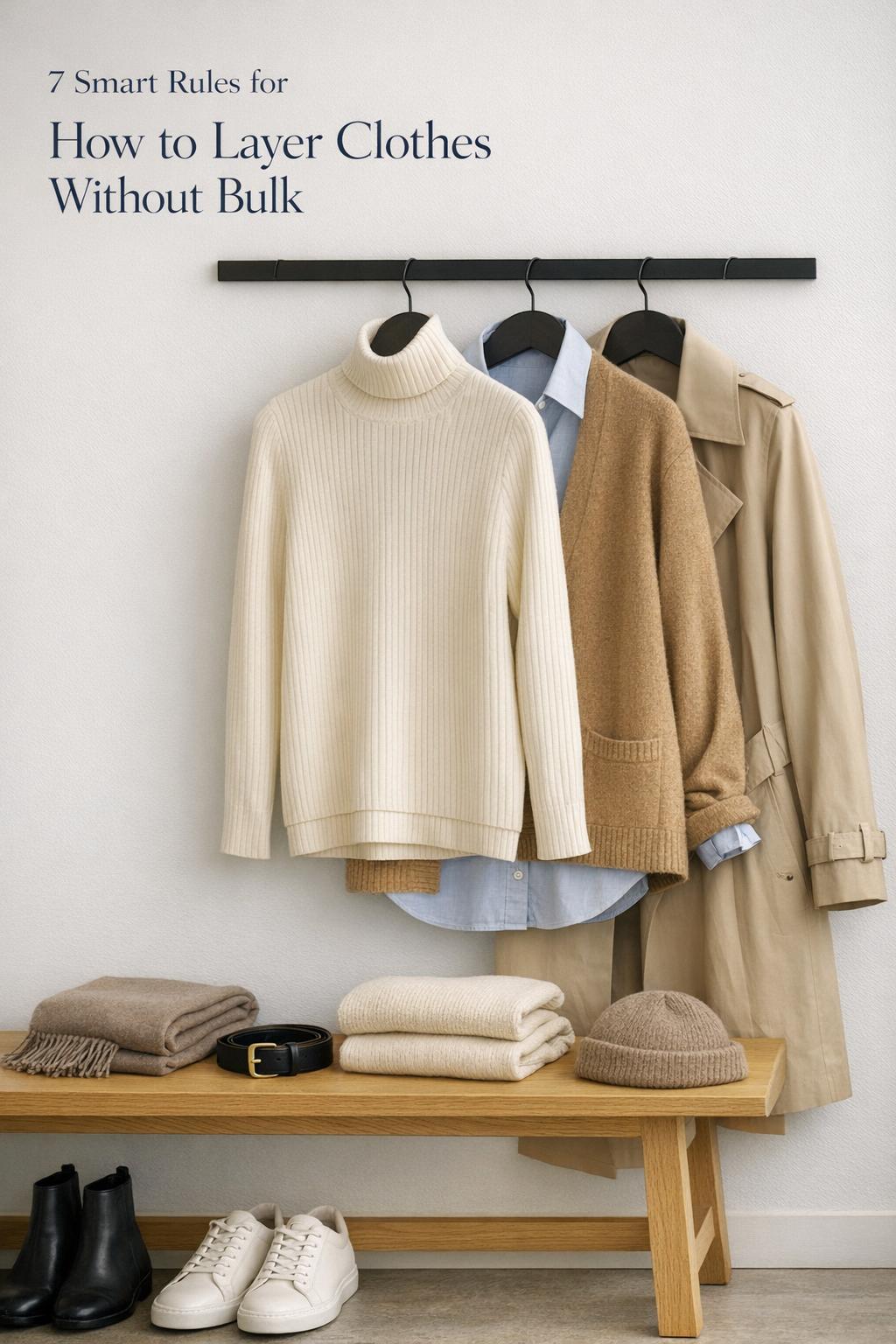
Most great layered outfits—whether casual, office-ready, or performance-focused—follow the same structure: a base layer closest to the skin, a mid layer for warmth and dimension, and an outer layer for protection and a finished look. You don’t always need all three, but understanding the job of each layer makes it easier to build outfits that adapt.
Base layer: comfort, coverage, and moisture management
The base layer is the foundation. It’s the piece that sits closest to your skin, so it needs to feel good, move well, and set you up for comfort if you add or remove layers throughout the day. In everyday dressing, this might be a fitted tee, a lightweight long-sleeve top, a tank, or a streamlined turtleneck. In more active contexts, base layers are often chosen with moisture management in mind, so you stay comfortable as you warm up.
A base layer works best when it isn’t overly bulky. If the first layer is too thick or too loose, every layer on top has to fight it, and the outfit can start to feel heavy or look unintentionally oversized.
Mid layer: warmth, structure, and style
The mid layer is where insulation and styling often come together. Think sweaters, cardigans, button-downs, sweatshirts, knit tops, and other pieces that add warmth and visual interest. This layer is also the most flexible: you can wear it as the “top” indoors, then add outerwear when you step outside.
Because mid layers often have more volume than base layers, they’re where fit and proportion matter most. A mid layer that’s too tight can restrict movement when layered, but one that’s too bulky can overwhelm the silhouette—especially once outerwear is added.
Outer layer: protection and a polished finish
The outer layer is your barrier against the elements and often the first thing people notice. Coats, jackets, trenches, and other outerwear pieces provide protection and create a finished look. In transitional weather, the outer layer is frequently the item you’ll take on and off, so it should be easy to remove and comfortable to carry.
Outerwear can also anchor your proportions. A structured jacket can sharpen a relaxed outfit, while a longer coat can visually streamline layers underneath—helpful when you’re trying to stay warm without feeling like you’re wearing “too much.”
How many layers are right? Balancing warmth and bulk
There’s no single “correct” number of layers. The goal is to wear enough to stay comfortable and look balanced, while still being able to move. Instead of piling on thick items, prioritize lighter layers you can add and remove. This approach is especially useful for day-to-night plans, commutes, and indoor spaces that run warm.
Tip: If you’re trying to avoid bulk, refine the first two layers. A smooth, close-to-body base and a mid layer that isn’t overly chunky can make the entire outfit look more intentional—even if you finish with a substantial coat.
- Start with one streamlined base layer you’d feel comfortable wearing on its own indoors.
- Add one mid layer that provides warmth and visual structure (knit, button-down, cardigan, or sweatshirt).
- Finish with an outer layer that suits the weather and can be removed easily.
- Adjust with accessories if you need warmth without adding another full garment layer.
How to Layer Clothes by Season and Climate
Seasonal layering is about flexibility. The same base/mid/outer logic works year-round, but your fabric weights, outerwear choices, and the number of layers shift depending on temperature swings and how often you move between indoors and outdoors.
How to layer clothes for winter: trap heat without feeling bulky
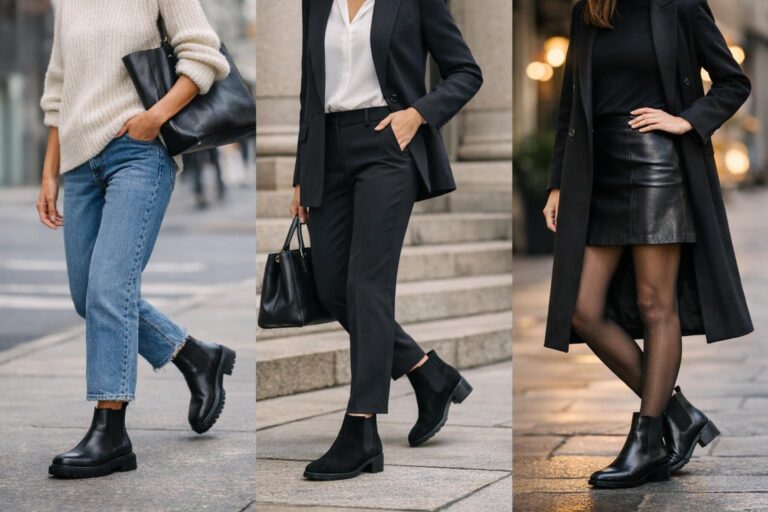
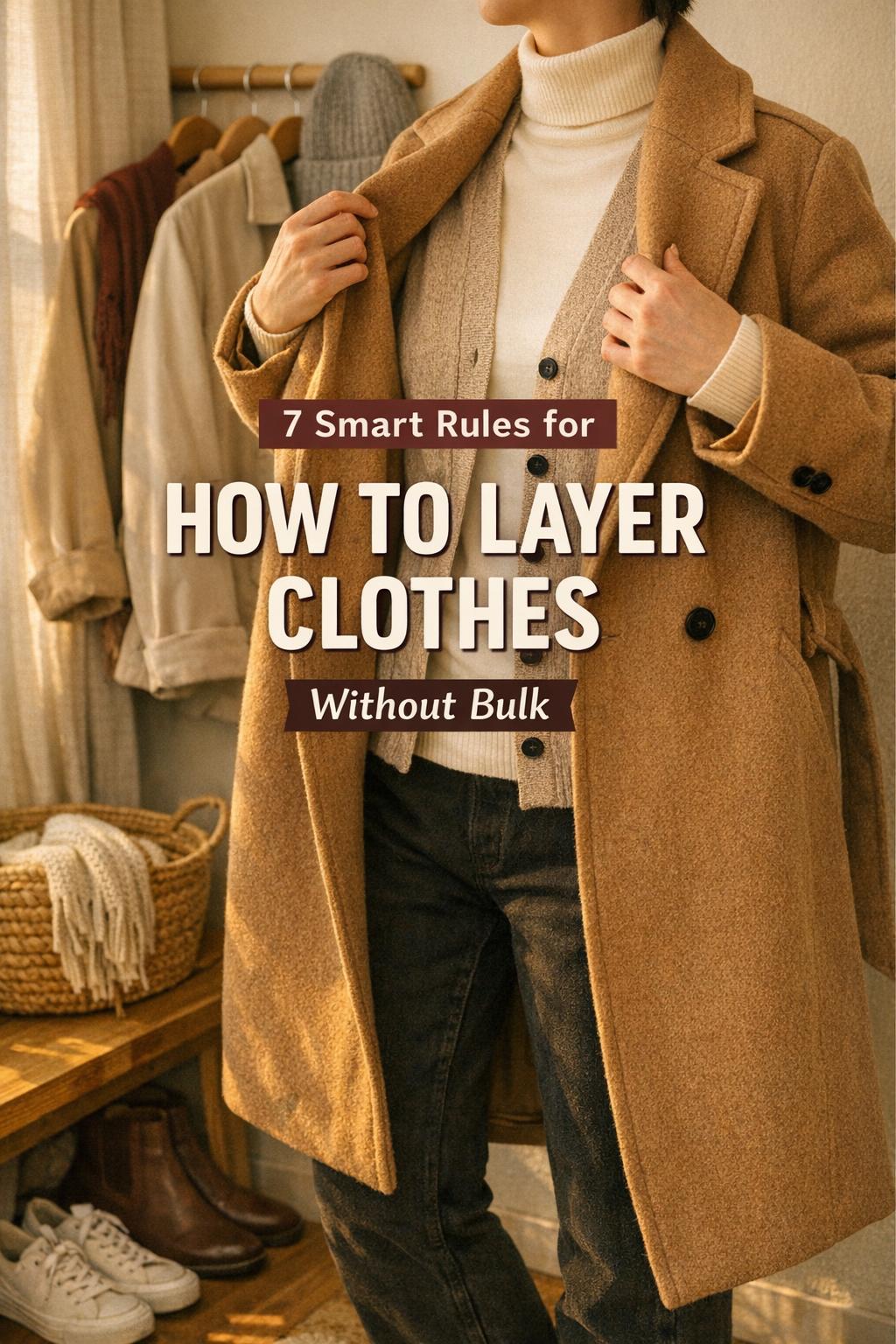
Winter outfits often fail for one of two reasons: too many thick pieces stacked together, or the wrong combination of layers that makes you feel cold outdoors and overheated indoors. A more reliable strategy is to build warmth gradually: a comfortable base layer, a true insulating mid layer, and an outer layer that protects you from cold conditions.
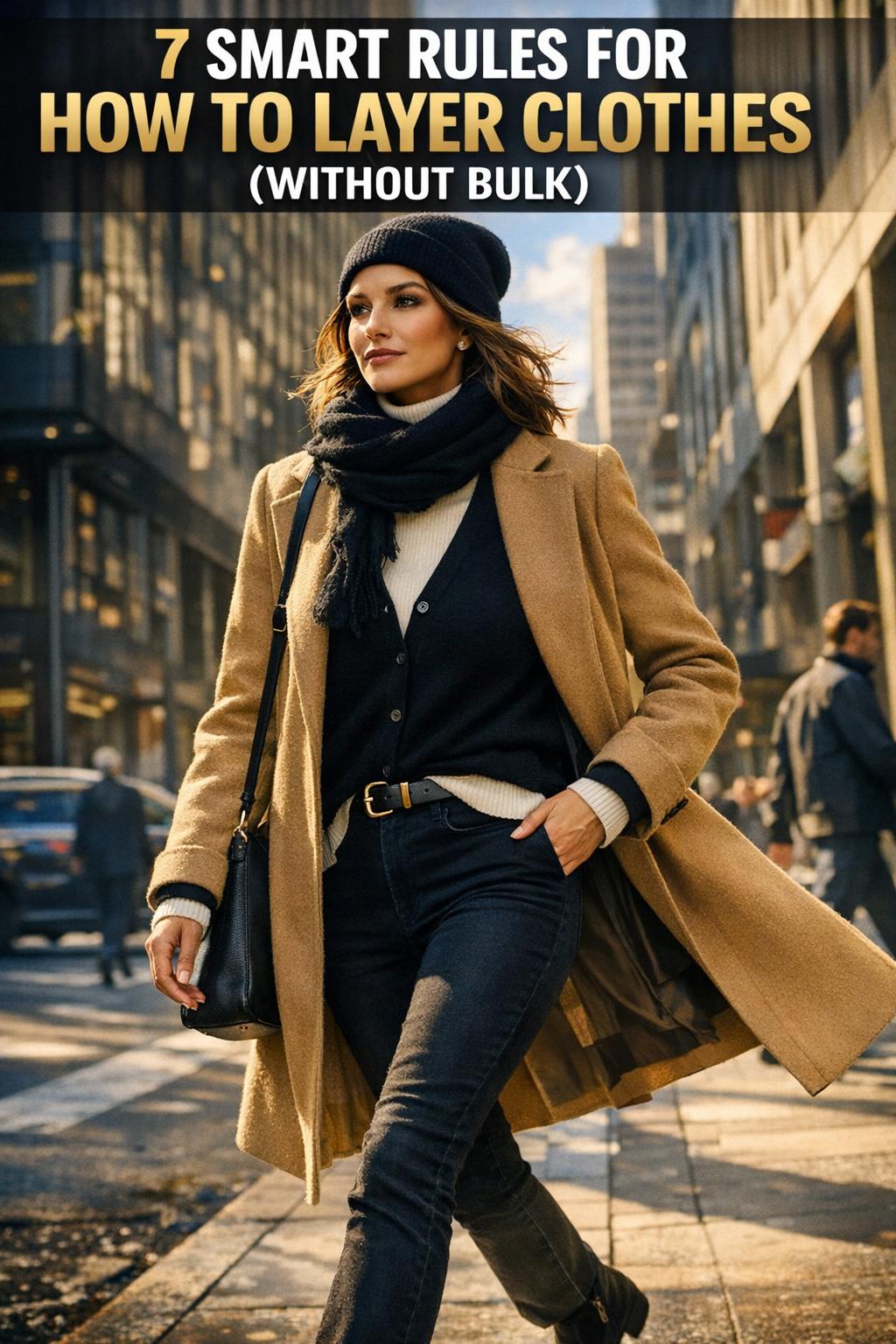
In winter, you can also lean into visual layering—collars, cuffs, and hems peeking out—because extra fabric is part of the look. The key is keeping the base layer smooth so your mid and outer layers sit well.
- Base: a fitted long-sleeve top or lightweight turtleneck for coverage and comfort.
- Mid: a sweater, cardigan, or sweatshirt that adds warmth without restricting movement.
- Outer: a coat or jacket that finishes the outfit and provides protection.
- Optional: add a second mid layer only if your pieces are thin enough to stay comfortable.
Tip: If your outfit feels bulky, don’t automatically remove a layer—swap one thick piece for two lighter layers. You often get better comfort and easier temperature control that way.
How to layer clothes for fall and other transitional weather
Transitional dressing is where layering shines. In fall (and similarly unpredictable seasons), you might leave home in crisp air, spend hours in warm indoor spaces, then head back out when it cools again. The best transitional outfits are built around pieces you can remove without ruining the look.
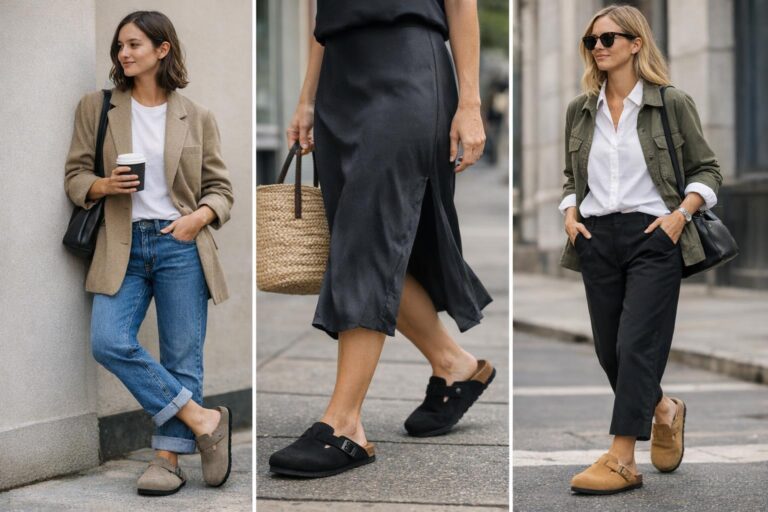
In this season, mixing textures and playing with proportions can look especially stylish. Light outerwear and mid layers become statement pieces, and you can create interest by combining knits with crisp shirts or by letting a longer layer peek out beneath a shorter one.
- Wear a base layer you’re happy to keep on indoors.
- Add a mid layer that looks good tied around the shoulders or carried.
- Choose an outer layer that’s easy to remove (and not too heavy to hold).
- Use visible layering details—collars, cuffs, and hems—for a deliberate finish.
Tip: Transitional layering is often more about removability than warmth. If you’re constantly adjusting, choose layers that won’t wrinkle easily and still look good when they’re off your body.
How to layer clothes in warm climates: breathable, lightweight layers
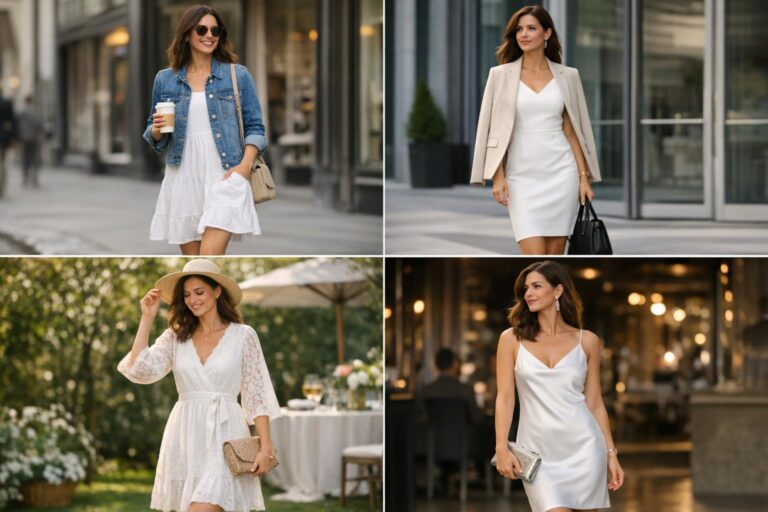
Layering isn’t only for cold weather. In warm climates—or during warmer months—layers can help with strong air conditioning, sun exposure, and day-to-night changes. The difference is that your layers should feel light and breathable, and you’ll likely rely on fewer total pieces.
Instead of thick knits and heavy outerwear, focus on lightweight tops, breathable mid layers, and an outer layer that functions more like a finishing piece than insulation. The goal is comfort and versatility without trapping excess heat.
Tip: If you tend to overheat, treat your outer layer like an accessory: something you can take on and off quickly, without building the whole outfit around it.
Fabric Fundamentals for Layering
Layering works best when fabrics cooperate. The wrong fabric choices can lead to discomfort, trapped heat, or an outfit that shifts and bunches as you move. Fabric selection is also closely tied to care: layering pieces get frequent wear, so choosing materials that hold up (and caring for them well) keeps your system reliable.
Natural vs. synthetic fibers: choosing what fits your day
Layering guidance commonly emphasizes matching fabric to function. Natural and synthetic fibers can both work, but they behave differently. In everyday outfits, comfort and feel might be the priority. In more athletic or fast-paced days, moisture management becomes more important, and performance-oriented fabrics can help you stay comfortable as your temperature changes.
Tip: If you’re building layers for a day that includes lots of walking or commuting, prioritize fabrics in the base layer that keep you comfortable when you warm up, then use the mid and outer layers to add warmth you can remove later.
Fabric weights: why thin layers often beat one thick piece
Weight matters as much as fiber type. Thin layers are easier to combine, easier to remove, and often create a cleaner silhouette—especially if you’re trying to learn how to layer clothes without bulk. Heavier fabrics can absolutely work, but you’ll typically want to limit how many heavy pieces you stack at once.
- Use lighter fabrics closer to the skin for smoother layering.
- Use medium-weight fabrics for your main insulating mid layer.
- Use an outer layer that suits the conditions and doesn’t crush the layers underneath.
Care tips that keep layering pieces looking sharp
Layering means pieces rub against each other, get taken on and off, and are worn more frequently. Keeping items in good shape helps layered outfits look intentional rather than rumpled. Follow garment care labels, and consider how often each layer needs washing—especially base layers, which typically need more frequent laundering than outerwear.
Tip: If your layers tend to cling or shift, check the fabric combination. Smooth base layers can help mid layers drape better, and structured outer layers can prevent the outfit from bunching.
Layering for Body Type, Fit, and Proportion
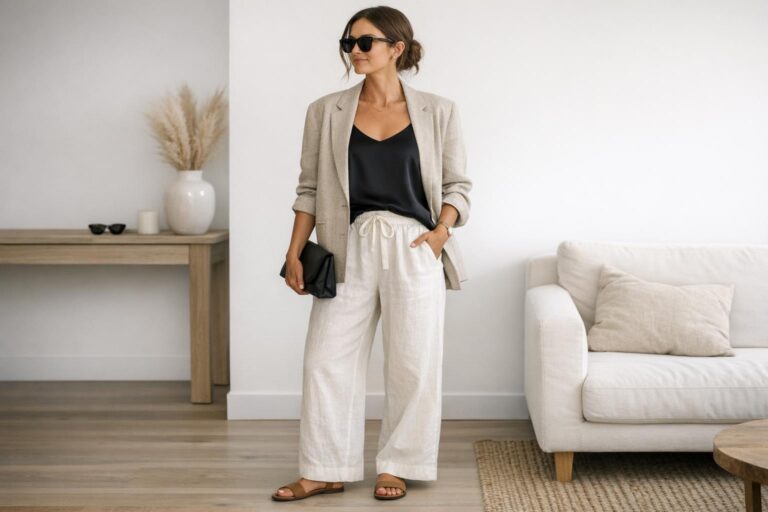
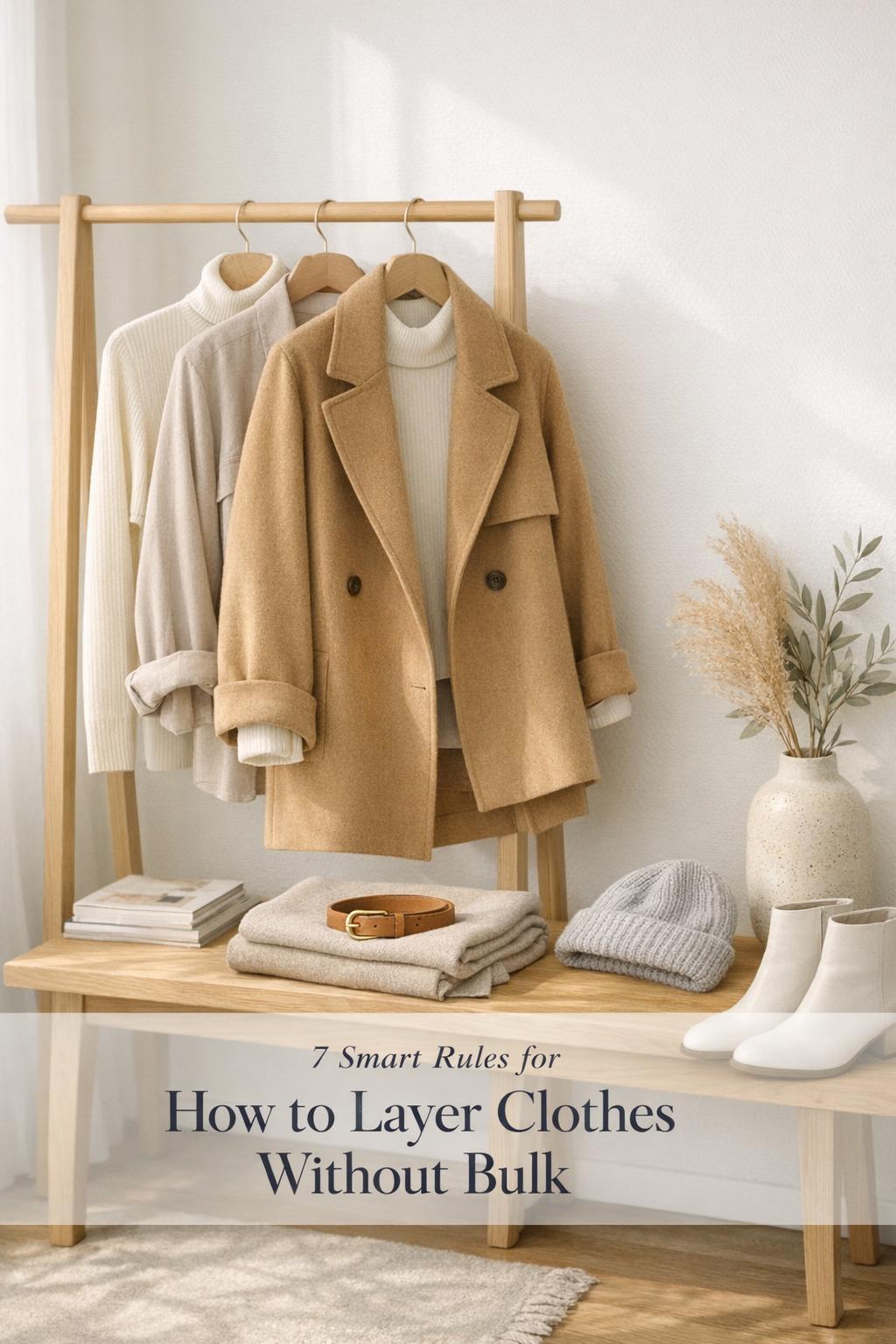
The most “fashion expert” looking layered outfits usually come down to proportion. You can use layers to create shape, add length, or balance volume—without needing dramatic trends. A few fit principles help almost everyone: keep at least one layer streamlined, vary lengths so layers are visible on purpose, and make sure you can move comfortably.
How to layer outfits without bulk: silhouette rules that work
Bulk happens when multiple layers compete for the same space—especially at the shoulders, waist, and sleeves. You can fix this by mixing fits (one fitted layer, one looser layer) and being deliberate about where volume sits. For example, if you wear a roomier sweater, keep the base layer smooth and let the outer layer be structured rather than oversized.
- Keep the base layer closer to the body to reduce bunching.
- Choose one “volume” piece at a time (a chunky knit or a relaxed jacket, not both).
- Vary lengths so hems look intentional instead of accidental.
- Check shoulder seams and sleeve tightness before committing to the full outfit.
Tip: If you feel puffy in layers, look first at sleeve stacking. A slimmer long-sleeve base under a mid layer can be more comfortable than two mid-weight sleeves fighting each other.
Length layering: hems, collars, cuffs, and the “peek” effect
One of the easiest ways to make layering look styled is to let details show: a shirt collar under a sweater, a cuff peeking past a sleeve, or a longer hemline under a shorter jacket. These small choices create a deliberate, layered look and help avoid the “random pile of clothes” effect.
Tip: When layering lengths, aim for clear separation. If two hems end at nearly the same spot, it can look unintentional. A visible difference in length typically reads more polished.
Practical Outfit Templates (Beginner to Advanced)
If you’re unsure where to start, outfit templates help you practice the layering system without overthinking. Each template below follows the same logic—base, mid, outer—then uses finishing touches (like accessories) to make the outfit feel complete.
Everyday casual layering (reliable and repeatable)
Casual outfits are the easiest place to experiment with layering because comfort is part of the aesthetic. You can build a small rotation of base layers and mid layers, then use outerwear to change the vibe and adapt to weather.
- Base: fitted tee, long-sleeve, or tank
- Mid: cardigan, sweatshirt, or knit top
- Outer: jacket or coat depending on conditions
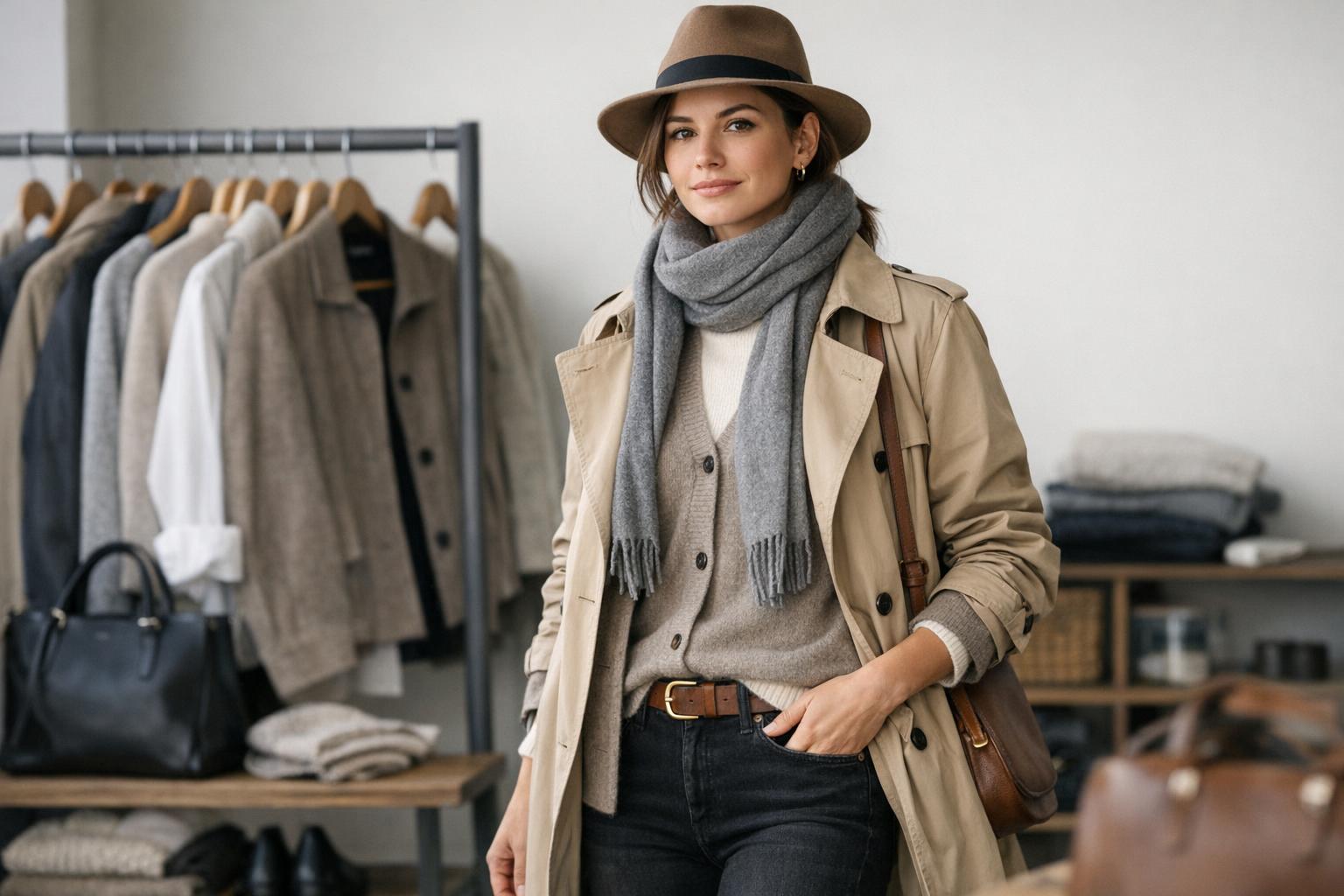
- Finish: add a scarf or hat when you want warmth without another garment layer
Tip: If your casual layers look messy, focus on alignment—straighten collars, roll or show cuffs intentionally, and make sure the base layer sits smoothly at the waist.
Office-appropriate layering (polished, removable, comfortable)
Office layering needs to do two things at once: look professional and handle temperature changes throughout the day. The simplest strategy is to make the mid layer your “desk-ready” top, with an outer layer that removes cleanly and a base layer that stays invisible or looks intentional if it shows.
- Base: a smooth, lightweight top that won’t bunch under sleeves
- Mid: a refined knit, cardigan, or button-down-style layer
- Outer: a structured coat or jacket that holds shape
- Finish: a belt can help define shape if you’re wearing longer layers
Tip: If your workplace runs warm, prioritize layers you can remove without losing the outfit’s structure. A mid layer that looks complete on its own makes daily adjustments easy.
Evening or event-ready layering (sleek, intentional, not fussy)
For evening, layers should enhance the outfit rather than distract from it. This is where proportion and clean lines matter most. Choose a base layer that feels elevated, keep the mid layer streamlined, and use outerwear as a finishing piece that complements the silhouette.
Tip: If you’re layering for an event, do a quick movement test before leaving—raise your arms, sit down, and walk. If anything pulls or shifts, adjust the base layer first, then reconsider the mid layer thickness.
Layering for Comfort and Performance (Active Days Included)
Layering isn’t just about fashion; it’s also a comfort strategy for movement-heavy days. If you’re walking a lot, commuting, or fitting in a workout, the right base layer can help you manage moisture and temperature changes. Then you can add a mid layer for warmth and an outer layer for protection, removing pieces as your body warms up.
Tip: When you expect to alternate between activity and stillness, build layers you can adjust quickly. A base layer that stays comfortable when you heat up, plus a mid or outer layer that’s easy to take off, can make the whole day feel easier.
Common Layering Mistakes (and Easy Fixes)
Even strong individual pieces can look off when layered incorrectly. Most problems come from a few predictable issues: too much thickness, mismatched proportions, or layers that aren’t meant to be worn together. Fixing them usually doesn’t require buying more—just swapping the order, adjusting fit, or changing one layer’s weight.
Mistake: over-layering with thick items
Stacking multiple heavy layers can restrict movement and create a bulky silhouette. Fix it by making at least one of the first two layers thinner, so the outfit can build warmth without feeling stuffed.
Mistake: layers that fight at the sleeves and shoulders
If sleeves feel tight or twist, you’ll adjust all day long. Fix it by choosing a smoother, closer base layer and making sure the mid layer has enough room to sit comfortably on top without pulling.
Mistake: all layers end at the same length
When hems align, the outfit can look accidental. Fix it by varying lengths so at least one layer clearly peeks out—like a shirt hem under a sweater or a longer mid layer under a shorter jacket.
Mistake: ignoring removability in transitional weather
If you can’t comfortably take layers off, you’ll either overheat or stop wearing the pieces you own. Fix it by choosing a mid layer that can stand alone and an outer layer that’s easy to remove and carry.
Accessories and Finishing Touches That Make Layers Look Intentional
Accessories can solve practical problems—like adding warmth—while also pulling an outfit together visually. They’re especially useful when you want to avoid adding another clothing layer but still need a little extra comfort. They also help balance proportions, define shape, and make layered outfits feel styled rather than purely functional.
Scarves, hats, and other warmth-boosters
Scarves and hats can add warmth where you feel it most, without changing how the rest of the outfit fits. They also add texture and dimension, which can elevate simple base-and-mid combinations. In cold weather, they can make a lighter outer layer feel more substantial; in transitional weather, they can replace a heavier mid layer.
Belts and shape: defining your silhouette over layers
When you’re wearing longer layers or multiple pieces with relaxed fits, a belt can help create definition and prevent the outfit from looking shapeless. This is especially helpful for office looks and for anyone who likes a more structured silhouette while still enjoying the practicality of layering.
Footwear as a balancing tool
Footwear can visually balance layered outfits. If your upper half has multiple layers and textures, clean, simple footwear can keep the overall look grounded. If your layers are minimal, footwear can add polish. The goal is cohesion—so the outfit looks designed from top to bottom, not just stacked for warmth.
Quick-Start Capsule Wardrobe for Layering
A layering capsule makes getting dressed faster because the pieces are chosen to work together. The focus is on versatile base layers, adaptable mid layers, and one or two outer layers that match your climate and lifestyle. This approach also supports wardrobe rotation: instead of buying lots of single-use outfits, you reuse core items in different combinations.
Essential layering pieces to prioritize
- Base layers: a few comfortable tees or long-sleeves that layer smoothly
- Mid layers: a mix of knits and structured options (like cardigans or button-down-style pieces)
- Outer layers: at least one go-to jacket or coat that works with most outfits
- Accessories: scarves and hats to fine-tune warmth and add visual interest
Tips for mixing and matching efficiently
Start with a small set of layers in compatible color families, then vary texture to keep outfits interesting. You can repeat the same base layer and swap the mid layer to change the look. Or keep the base and mid consistent and rotate outerwear to shift the outfit’s mood.
Tip: If you’re building a capsule for transitional weather, choose mid layers that can be worn multiple ways—on, tied over the shoulders, or carried—so your outfit remains functional without feeling heavy.
Visual and Practical Layering Tools You Can Use Immediately
You don’t need a complicated system to layer better; you need a repeatable process. Use the quick checklist below when you’re putting outfits together, especially on days with changing temperatures.
- Base: Does the first layer feel comfortable and smooth on the body?
- Mid: Does the second layer add warmth or structure without restricting movement?
- Outer: Can you remove the top layer easily and still look put together?
- Proportion: Can you see at least one intentional layering detail (collar, cuff, hem, or length difference)?
- Comfort: Can you sit, walk, and lift your arms without tugging?
Tip: If you’re getting dressed quickly, decide your “indoor outfit” first (base + mid), then choose outerwear last based on conditions. That one habit often improves both comfort and style.
FAQ
What is the correct order for layering clothes?
The most reliable order is base layer first (closest to the skin), then a mid layer for warmth and structure, then an outer layer for protection and a finished look. You can stop at two layers in mild weather or add accessories to fine-tune warmth without adding bulk.
How do I layer clothes without looking bulky?
Keep the base layer smooth and closer to the body, choose only one “volume” piece at a time (like a chunky knit or an oversized jacket), and vary lengths so the layers look intentional. If it still feels bulky, swap one thick garment for two lighter layers that you can remove more easily.
How do I layer clothes for winter while staying comfortable indoors?
Build an outfit where your base and mid layers look good on their own indoors, then add a removable outer layer for outside. This makes it easier to adjust during commutes and keeps you from overheating once you’re inside.
What are the best layering outfits for transitional weather?
The best transitional outfits use removable layers: a base you can keep on indoors, a mid layer that still looks good if you take your coat off, and an outer layer that’s easy to carry. Mixing textures and using visible details like cuffs, collars, and hems can make the outfit feel styled while remaining practical.
Can I layer cotton and wool together?
Yes, you can layer different fabrics together as long as the combination feels comfortable and the layers sit smoothly. Pay attention to thickness and friction between fabrics; a smoother base layer usually helps knit or heavier mid layers drape better.
How many layers should I wear in a day with lots of indoor/outdoor temperature changes?
A two- or three-layer setup usually works best: a comfortable base layer, a mid layer that can be your main indoor piece, and an outer layer you can remove quickly. If you need extra warmth, use accessories rather than adding another bulky garment layer.
How do I make layered outfits look more polished?
Focus on proportion and finishing details: vary the lengths of layers, let a collar or cuff show intentionally, and choose outerwear that adds structure. Accessories like a scarf or belt can also help the outfit look deliberate while improving comfort.
How should I layer clothes for active days or workouts?
Choose a base layer that supports comfort as you warm up, add a mid layer for warmth at the start, and finish with an outer layer for conditions. Prioritize pieces you can remove easily so you can adjust as your temperature changes.
What’s the easiest way to start layering if I’m a beginner?
Start with three simple steps: pick a comfortable base layer, add one mid layer you like wearing on its own, and finish with an outer layer appropriate for the weather. Once that feels easy, experiment with visible details like a shirt collar under a sweater or a longer hem under a shorter jacket.