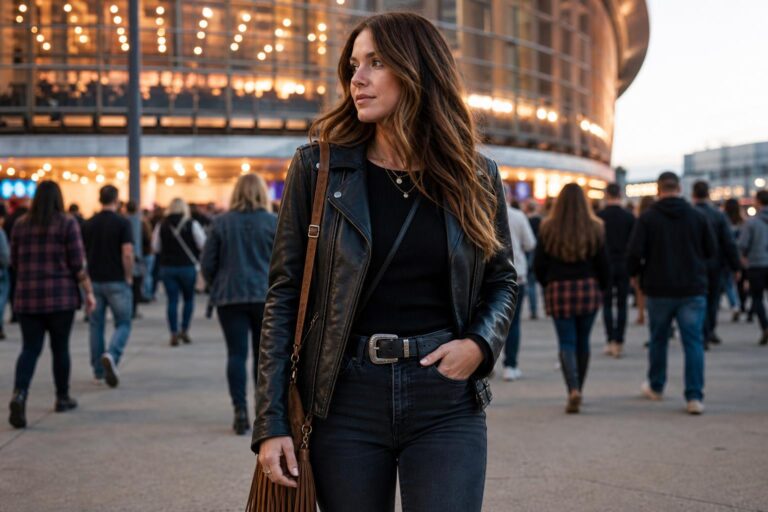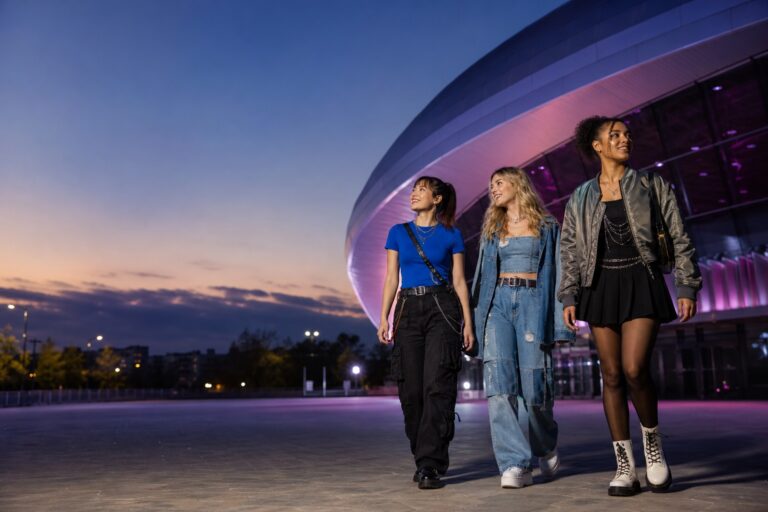
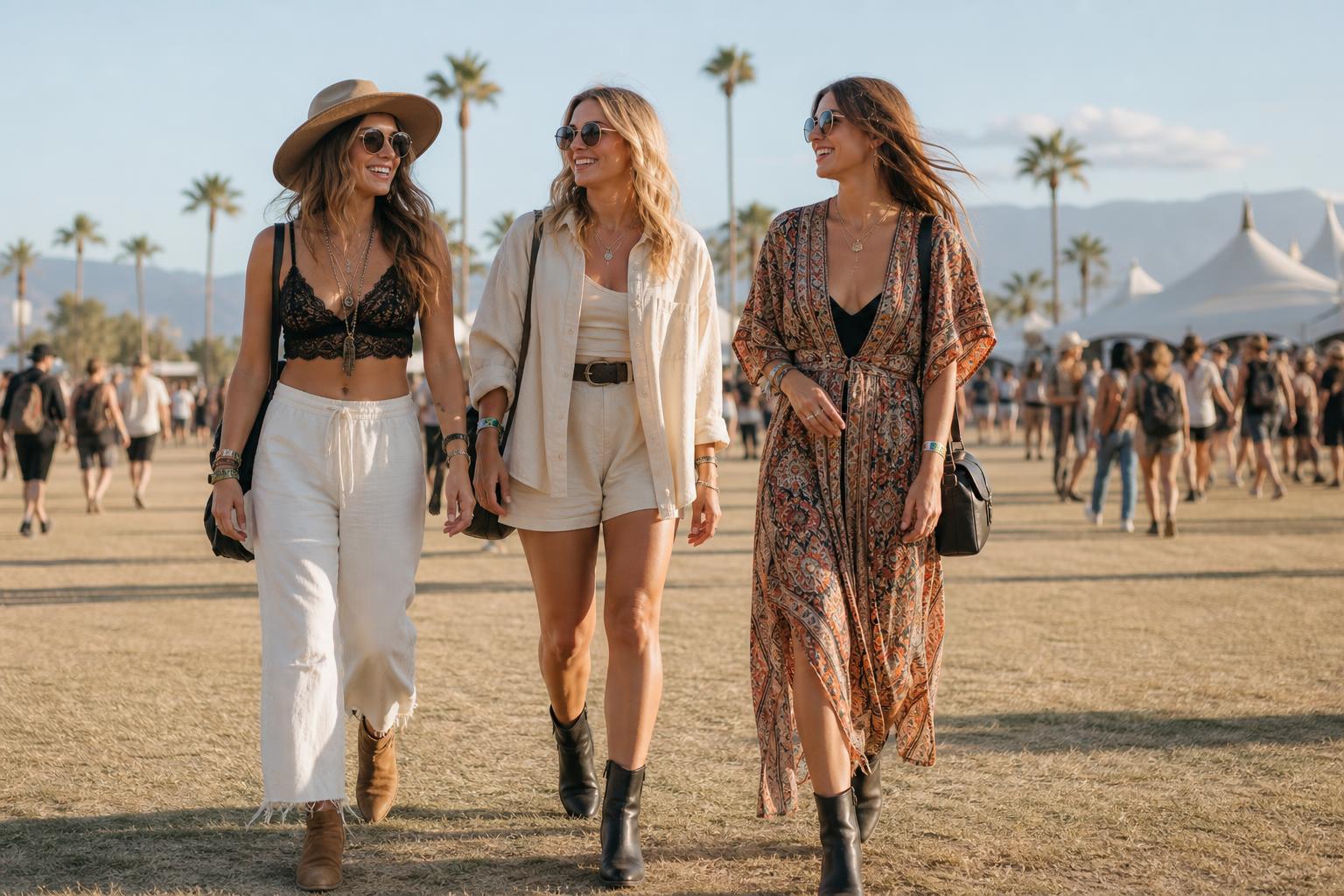
Casual Music Festival Outfits That Feel Cool
Festival dressing looks easy in photos and much harder in real life. The problem is rarely finding inspiration. It is translating that inspiration into casual music festival outfits that still work after hours of walking, shifting temperatures, crowded grounds, dusty fields, and the very practical need to feel like yourself rather than a costume version of festival style.
That tension explains why so many outfits look right on a screen but fail by midday. A look can be visually strong and still be poorly built for movement, heat, layering, or long wear. The opposite happens too: an outfit can be comfortable but feel flat, bulky, or disconnected from the mood of the event. The goal is not to choose between style and function. The goal is to make them support each other.
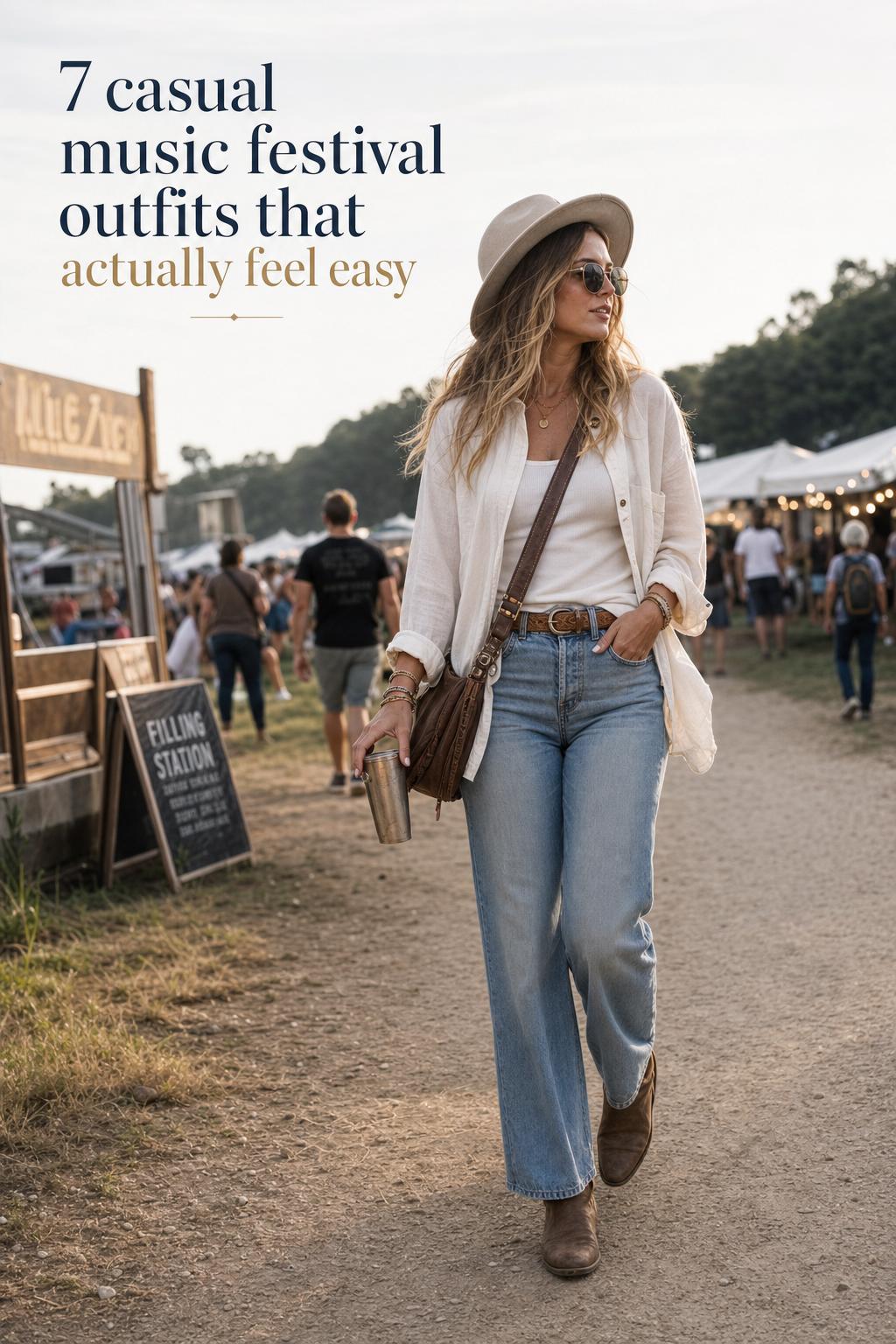
The most wearable festival wardrobes do exactly that. They use breathable fabrics, practical accessories, balanced proportions, and a few clear outfit formulas that adapt to Coachella, Bonnaroo, Lollapalooza, country concerts, and other U.S. festival settings. Whether your reference point is minimalist festival fashion, a softened boho direction, a sporty EDM mood, or a simple denim-and-dress rotation, the strongest looks are the ones built with intention.
Why festival outfits become difficult faster than expected
A festival is not a normal day out, and that changes how clothing behaves. You are dressing for sun exposure, long standing periods, temperature swings, bag limitations, repeat movement, and social visibility all at once. That is why an outfit that feels fine at home can become restrictive, overheated, or visually unbalanced once you add real conditions.
Found the dress? Keep the rest in one place.
Zarellea brings guest details, vendors, timelines, and every next step together — so your wedding plan feels as good as your look.
Climate is usually the first complication. Desert settings associated with Coachella often call for daytime breathability and evening layering. Other festival environments lean wet, coastal, or mixed, which means a look has to adapt instead of relying on one perfect temperature. Clothing also has to make sense from morning through late evening, which is why rigid fabrics, heavy layering, or shoes that only work on flat pavement create problems quickly.
Then there is silhouette. Many festival outfits fail because every piece is trying to be the statement. A dramatic top with a busy skirt, heavy boots, oversized accessories, and extra layers can feel visually crowded and physically exhausting. The better approach is outfit composition: one visual anchor, one support layer if needed, and accessories that solve a purpose while finishing the look.
Dress expectations matter too. Some readers want a Coachella-adjacent look without face glitter or flower-crown styling. Others are dressing for a country concert, a lawn venue, or a city-based festival where casual still needs polish. That is why modern festival dressing has shifted toward cleaner proportions, modular pieces, and casual formulas that can be personalized rather than copied.
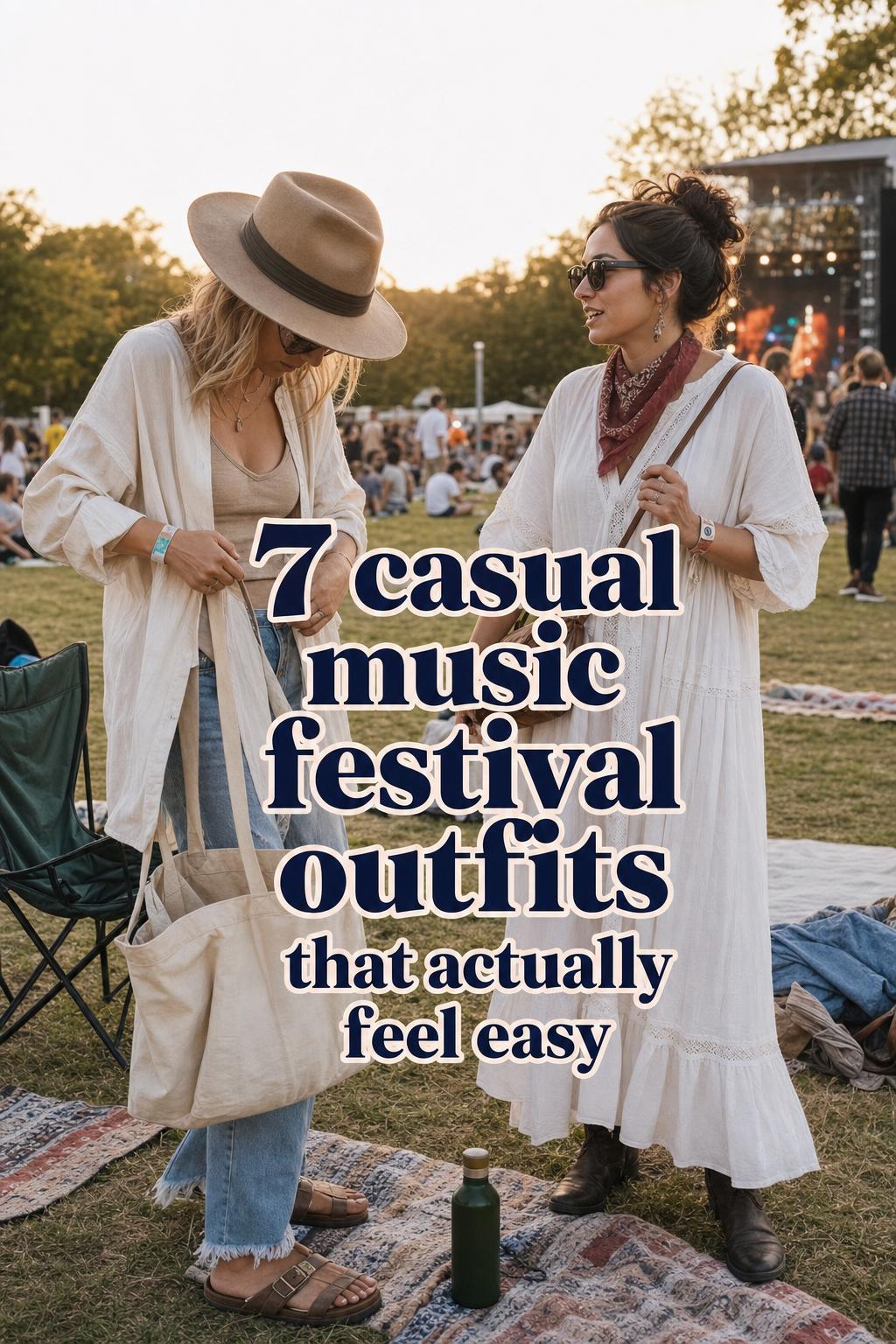
The styling logic behind casual festival dressing
The best festival outfit formulas start with three decisions: fabric behavior, proportion balance, and mobility. Fabric behavior determines whether you stay comfortable. Proportion balance decides whether the outfit feels intentional. Mobility makes the difference between an outfit you admire and one you can actually live in for a full day.
Start with a breathable base
Breathable cotton, linen, rayon, and lighter blends consistently make more sense than fabrics that trap heat or cling once temperatures rise. This matters most in casual music festival outfits because the base layer does the hardest work. If your dress, shorts, top, or romper is already comfortable against the skin, the rest of the outfit becomes easier to control.
Use proportion to create polish
Most successful looks are built around contrast. Shorter hemlines often feel more grounded with a looser shirt or button-down. A flowing maxi dress looks sharper with sturdier footwear such as boots rather than something overly delicate. A statement top works better when the bottom half is simpler, such as denim shorts, a midi skirt, or an easy two-piece set. That proportion play is what makes an outfit look styled rather than random.
Keep the outfit modular
Festival outfits should adapt throughout the day. A jacket tied at the waist, a button-down worn open over a base layer, or a jumpsuit styled with practical accessories gives you flexibility without forcing a total outfit change. This is the real logic behind layering: not adding more for the sake of styling, but creating options that do not disturb the outfit’s line.
Let accessories solve problems, not create them
Hats, sunglasses, bags, and footwear are not afterthoughts. They determine whether a look functions. A hat introduces sun protection and can visually anchor a soft outfit. Sunglasses sharpen minimal looks. A practical bag keeps the outfit usable. Footwear decides how the entire silhouette reads, from boho-chic lite to sporty-elevated or denim-centered casual.
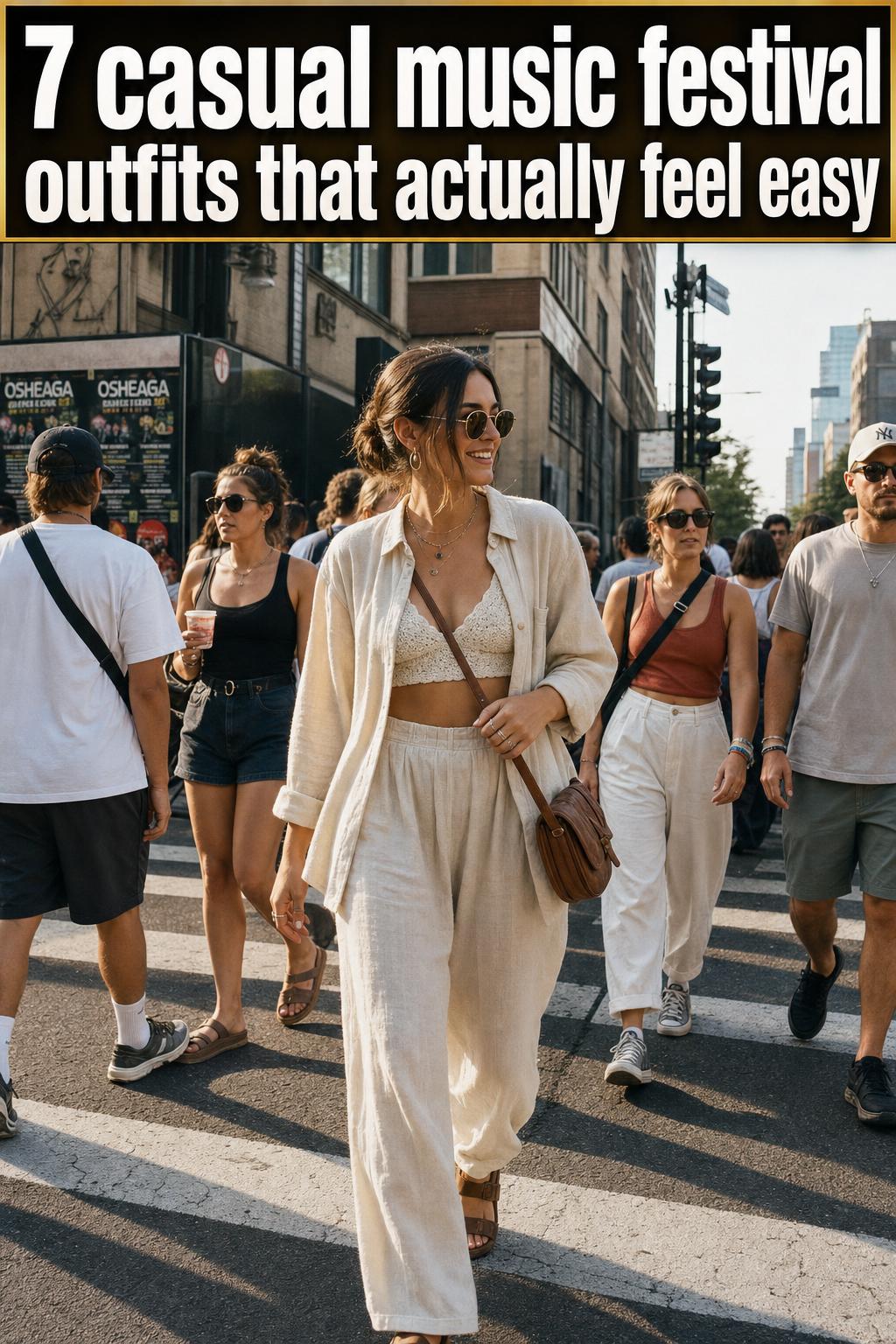
Six outfit directions that actually work at festivals
Instead of chasing dozens of disconnected ideas, it is more useful to understand the core outfit archetypes that repeatedly work across festivals. These formulas appear again and again because they handle comfort, temperature, and visual balance well.
Light and airy dresses with grounded accessories
A maxi dress or flowy midi dress is one of the easiest ways to create movement without overcomplicating the outfit. The visual mood is relaxed, but the success of the look depends on how you finish it. Soft volume from the dress needs a grounding element, which is why boots, flat sandals, or other comfortable footwear matter so much here.
This formula works especially well for hot-weather festivals because the silhouette allows airflow while still looking complete. Cotton and rayon make the idea more wearable since they support drape without unnecessary stiffness. If the dress has bold prints, keep accessories quieter. If the dress is plain, a hat and sunglasses can provide enough structure to make the look feel editorial rather than plain.
Why this outfit works: it solves the common problem of wanting coverage without feeling heavy. It also moves easily between daytime and sunset conditions, especially if you add a light layer that can sit open over the dress or rest at the waist.
Denim shorts and a top that does the visual work
Denim shorts remain a festival staple because they give structure to the lower half of the outfit. That structure is useful when the upper half is softer, lighter, or more expressive. A tee, crop top, button-down shirt, or statement top all pair well with denim because the shorts act as a visual anchor.
This combination is one of the most adaptable for Coachella-inspired dressing, but it also works for Bonnaroo and Lollapalooza because it can shift tone depending on styling. A plain tee keeps the look minimalist. A more directional top moves it closer to a fashion-editorial mood. An open button-down adds sun coverage and layering without making the outfit feel overbuilt.
Most versatile piece: the button-down shirt. Worn open, it softens the line of shorts. Tied at the waist, it introduces shape. Layered over a simple top, it adds dimension without committing to a jacket. That is practical styling, not decorative excess.
Matching sets that remove guesswork
Two-piece sets work well for readers who want a coordinated look without spending time balancing separates. They create instant cohesion, which is particularly useful in festival settings where accessories, weather layers, and shoes already add enough decision-making. Shorts sets and skirt sets both support a casual festival direction while still looking considered.
The main styling advantage is visual continuity. Because the top and bottom already relate, you can focus on comfort details such as fabric, hem length, and footwear. If you are dressing for an all-day event, this matters. A coordinated set reduces the risk of awkward proportion shifts that can happen when mixing random festival pieces.
Retailers such as Windsor build much of their casual festival outfits around this logic, while curated product spaces like Revolve reinforce it with tops, skirts, dresses, and coordinated pieces from brands including AFRM, Bananhot, Amanda Uprichard, and Agua Bendita. The broader lesson is not that you need one exact brand. It is that an already-resolved outfit composition often wears better than a look assembled from too many competing ideas.
Jumpsuits and rompers for movement-heavy days
When mobility is the priority, one-piece dressing deserves more attention. A jumpsuit or romper solves several common festival problems at once: it keeps the outfit compact, removes waistband layering issues, and creates a clean line that is easy to accessorize. That makes it especially useful for long walking days or when you want a look that still feels finished with minimal effort.
The key is fabric and fit. A one-piece should not pull when sitting, walking, or lifting your arms. Softer fabrics and easy cuts tend to perform better than tight or heavily structured versions. In style terms, this silhouette benefits from accessories with purpose. A practical bag, hat, and grounded footwear complete the look without distracting from it.
Sporty-elevated outfits with performance logic
Not every festival look needs a romantic or boho base. Sporty-elevated dressing has become a useful answer for EDM-leaning environments and for anyone who prioritizes movement and fabric performance. The visual language is cleaner, more direct, and often more modern than old festival clichés.
Performance blends, moisture-wicking options, and quick-dry materials make sense here because the styling premise begins with function. The outfit still needs shape, though. Balance sportier pieces with one cleaner line, whether that is a fitted top with relaxed shorts, a simple set with sleek sunglasses, or a practical silhouette interrupted by one standout accessory. This is where minimalist festival fashion often feels strongest.
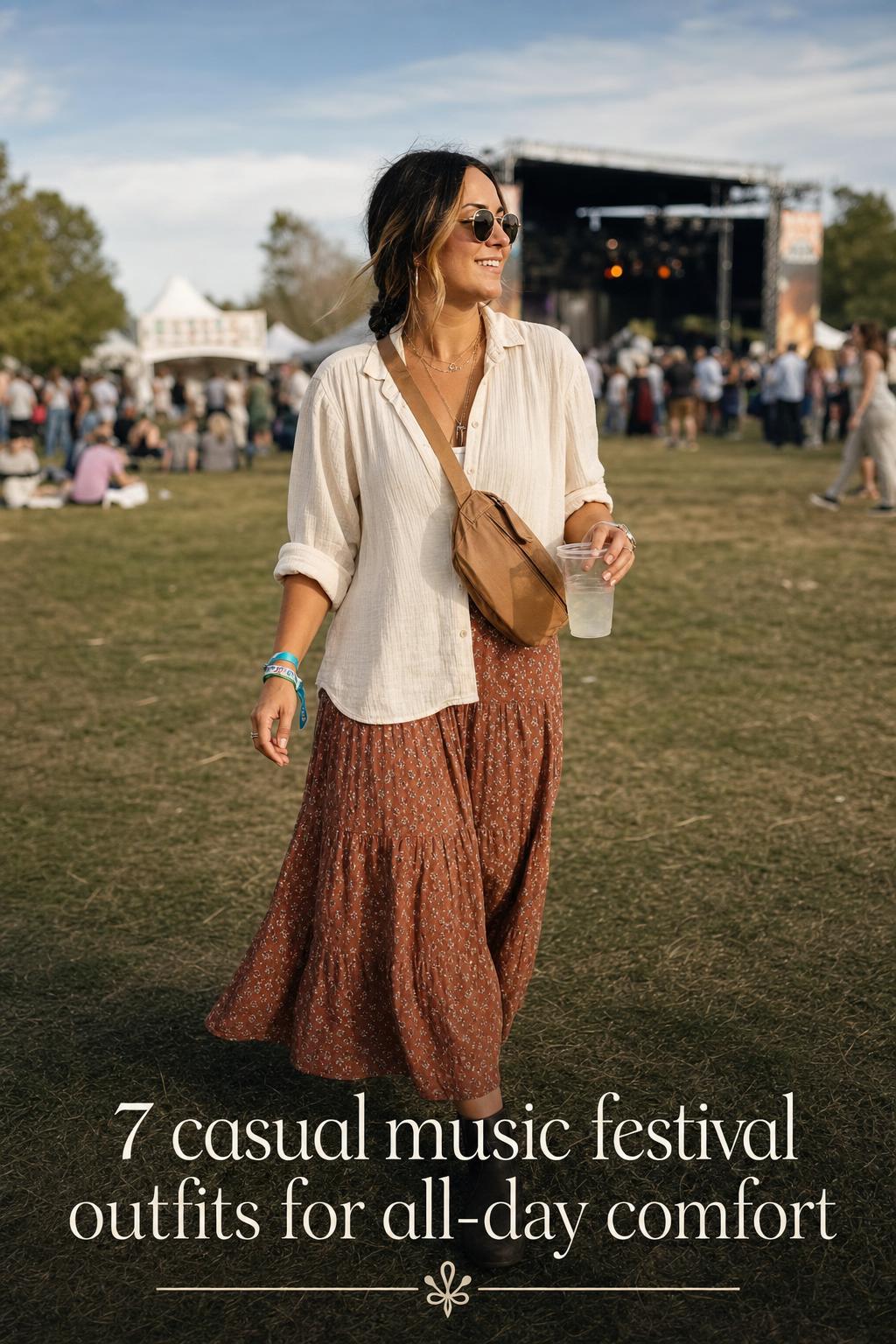
Boho-chic lite instead of full costume styling
Boho remains part of festival fashion, but the easiest way to wear it now is with restraint. Think embroidered details, flowing skirts, or soft dresses rather than piling on every expected reference at once. This lighter approach keeps the outfit wearable and avoids the dated feeling that many readers are trying to avoid.
Who What Wear’s framing around new rules for the ultimate music festival outfit reflects this shift well. The modern version relies less on obvious costume cues and more on a selective use of bohemian texture. You can see that influence in the contrast between a flowy skirt and a simpler top, or a romantic dress paired with practical boots. Even celebrity references such as Kendall Jenner point toward a cleaner, more directional take rather than maximal styling.
Wearable outfit solutions for different festival moods
Relaxed layers that still feel polished
Start with denim shorts and a lightweight tee, then add an open button-down shirt. This look works because the base is simple and familiar, while the extra layer brings movement and a little coverage without creating heat-trapping bulk. The shirt also breaks up the silhouette vertically, which can make the outfit feel more elongated and intentional.
For practical use, choose a breathable shirt rather than something crisp and rigid. The outfit is especially effective when weather changes through the day, since the shirt can be worn, tied, or removed without disturbing the look. A hat and sunglasses sharpen the finish. Footwear should remain simple and stable, because the upper half already has enough visual motion.
Easy way to recreate the look: use pieces already in your closet. The success of this formula comes from balance, not novelty. A familiar tee and denim short can look festival-ready when the proportions and accessories are resolved well.
Lightweight styling for hot afternoons
A cotton or rayon maxi dress with comfortable sandals creates one of the strongest hot-weather festival outfits because it removes friction from the day. There is no waistband pressure, no fussy layering, and no need to keep adjusting the look as you move. The volume of the dress also creates natural airflow, which matters far more than people realize once the event stretches into hours.
To keep the silhouette from feeling shapeless, use accessories strategically. A hat can frame the upper half, while sunglasses add definition. If the dress is especially flowing, choose footwear with enough visual presence to anchor it. That grounding effect is what keeps soft volume from turning into visual drift.
Comfortable city-festival outfits with structure
For a city-based festival or a more polished crowd, a coordinated two-piece set offers a clean answer. Shorts and a matching top create structure without feeling formal, and the matched palette gives the outfit a finished quality before accessories are even added. This is one of the easiest ways to look dressed with minimal styling stress.
The reason it works is proportion control. Matching sets naturally reduce visual clutter, which means you can keep your bag and shoes practical without making the outfit feel too plain. This is ideal if your festival plans include public transit, walking through the city, or moving from day events into dinner afterward.
Soft bohemian texture without visual overload
Pair a flowy skirt with a simpler top and low-effort accessories. This formula gives you the movement and ease associated with boho festival outfits while preventing the look from becoming overstyled. The skirt carries the texture and softness. The top keeps the composition stable.
Common comfort mistake: adding too many decorative pieces to a skirt-based outfit. Once the skirt is already moving and drawing attention, stacked extras can make the outfit feel busy and harder to wear. A simpler upper half usually looks more elevated because it gives the statement piece room to breathe.
One-piece looks that stay functional after dark
A romper or jumpsuit with a practical outer layer nearby is one of the best solutions for readers who dislike constant outfit readjustment. The shape remains intact whether you are walking, sitting, or dancing. Add a jacket only when the temperature drops, rather than building the outfit around heavy layering from the beginning.
Transitional weather tip: choose a one-piece in a lighter fabric, then let the outer layer do the evening work. That sequence keeps daytime comfort intact and avoids the common festival problem of starting out overdressed for the heat.
Fabric decisions that change everything
Fabric is where many festival outfits quietly succeed or fail. It affects temperature, movement, wrinkling, cling, and how polished the silhouette stays after hours of wear. Good outfit planning starts here, especially if you are trying to build a small festival capsule wardrobe instead of shopping for an entirely new look.
Breathable daytime fabrics
Cotton, linen, rayon, and lighter blends consistently support casual festival dressing because they feel easier on the body in heat. They also work visually. Cotton and linen give tees, shirts, and dresses a cleaner casual finish, while rayon helps flowing silhouettes such as maxi dresses or skirts keep movement without becoming stiff.
Quick-dry and moisture-aware choices
When a festival day is active or weather changes quickly, quick-dry and moisture-wicking materials become more important. These fabrics support sporty-elevated looks and can also be useful in more casual outfit formulas when you know you will be outside for long periods. The benefit is not only comfort. Clothing that handles moisture better tends to keep its shape and feel more manageable as the day goes on.
Sun-aware materials and accessories
UV-protection and sun-safe textiles are worth considering where exposure is high. Even when you are not building the whole look around technical features, a hat and lightweight extra layer can create a smarter overall outfit system. This is one of those practical decisions that often improves the visual result too, because purpose-built accessories tend to make an outfit feel resolved.
How weather and location should shape the look
Festival style in the U.S. is not one single aesthetic because venues and climates behave differently. A strong outfit for Coachella is not always the best formula for a wet or coastal event, and a country concert has a different visual rhythm from a city festival or an EDM-heavy lineup. The easiest way to improve your outfit is to style for place, not just mood.
Desert settings such as Coachella
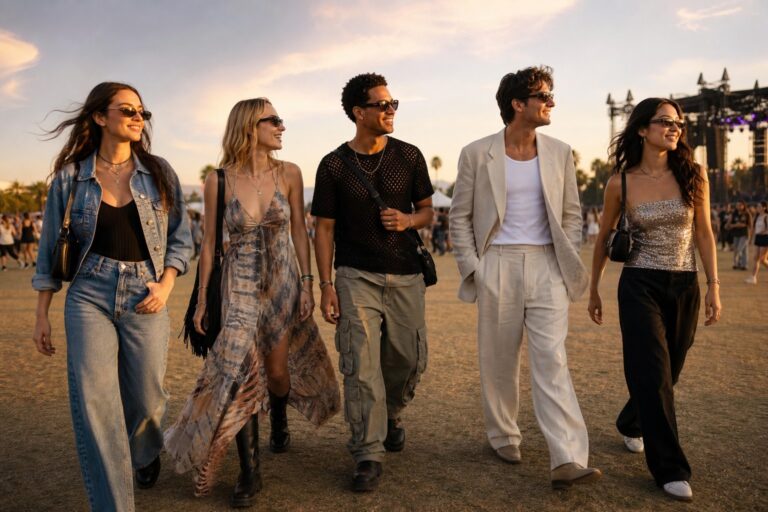
Desert conditions favor breathable fabrics, easy dresses, denim-based outfits, and pieces that layer lightly after sunset. A maxi dress, denim shorts with a tee and button-down, or a simple coordinated set all make sense here. Accessories matter more than extra clothing because sun exposure tends to be the real challenge during the day.
Multi-day camping festivals such as Bonnaroo
Bonnaroo-style dressing benefits from repetition and flexibility. Rather than treating every day as a separate fashion concept, it helps to build around a small capsule of interchangeable tops, shorts, dresses, and one-piece options. Comfort-first styling becomes essential because wearability compounds over several days. The pieces should mix easily and recover well after long use.
City and park festivals such as Lollapalooza
Lollapalooza and similar city-centered festivals often reward cleaner styling. Matching sets, denim with strong accessories, or minimalist dresses tend to feel right because they look casual yet put together. The setting can make overly theatrical festival dressing feel misplaced, while a more refined casual approach usually blends better with the urban backdrop.
Country concert and open-lawn environments
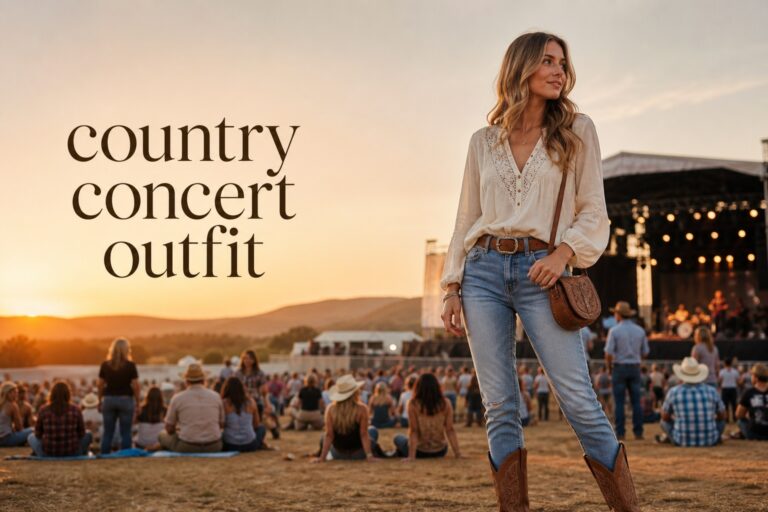
Country concert style often leans into flowing skirts, dresses, denim, and boots, but the key is still moderation. Choose one directional cue and keep the rest practical. A dress with boots or denim shorts with a soft top usually works better than combining too many theme-heavy pieces at once. The result feels more current and much easier to wear.
Accessories that earn their place in the outfit
The right accessories improve both the visual composition and the lived experience of the outfit. The wrong ones add clutter or discomfort. Festival accessories should be chosen with the same discipline as the clothing itself.
- Hats add sun coverage and create a visual frame for dresses, sets, and denim looks.
- Sunglasses sharpen casual outfits and often make minimalist combinations feel intentional.
- Practical bags are more useful than decorative novelty bags, especially in crowded settings.
- Footwear should suit the venue surface first and aesthetic second.
- Jewelry works best as a light accent rather than the main event in a comfort-first outfit.
Best shoe pairing depends on silhouette. Flowing dresses often benefit from boots or grounded sandals because they create contrast. Denim shorts can take flatter, simpler footwear without losing balance. Sporty-elevated outfits look strongest when the shoe continues the clean line instead of interrupting it with something overly ornate.
Accessory insight: anti-theft features, water-resistant bags, and practical carry solutions are often overlooked, yet they directly influence how relaxed you feel in the outfit. If your bag is secure and your shoes are reliable, the entire look becomes easier to wear with confidence.
Shopping smarter: budget, premium, and brand-led inspiration
Festival wardrobes do not need to be built from scratch, and they do not need to sit at one price point. What matters is choosing pieces that fit into a repeatable formula. Budget-friendly options can work extremely well when they align with strong shapes and useful fabrics. Premium options can be worthwhile when the cut, drape, or fabric performance improves wearability in a noticeable way.
Windsor approaches casual festival outfits through direct category shopping, especially dresses, shorts, two-piece sets, and accessories. Revolve leans more heavily into branded curation, with labels such as AFRM, Bananhot, Amanda Uprichard, and Agua Bendita appearing in the festival mix. Editorial references like Who What Wear and Marie Claire often frame the trend direction, whether that means minimalist festival fashion, boho, sporty EDM, or bold prints.
There is also room for selective influence rather than full imitation. If you like the clean celebrity-led styling associated with Kendall Jenner, focus on the underlying formula: fewer statement pieces, stronger basics, and sharper accessories. If a brand such as Paloma Wool appears in your visual references, translate the mood through silhouette and texture rather than assuming you need the exact product.
How to make shopping choices more useful
- Buy around an outfit archetype, not a one-time photo idea.
- Prioritize a wearable base piece first: denim shorts, a maxi dress, a simple set, or a romper.
- Choose fabrics that match the festival climate before choosing decorative details.
- Add one accessory that improves function, such as a hat or practical bag.
- Use rental or resale options for trend-heavy pieces you may not wear often.
That last point matters. Rental, reuse, and resale make particular sense for festival dressing because some pieces are highly specific in mood. If you want one bolder print or a more directional silhouette for a single event, temporary access can be smarter than forcing that item into your everyday wardrobe later.
A practical festival capsule wardrobe that reduces decision fatigue
A capsule wardrobe is one of the strongest tools for festival dressing, especially for multi-day events or travel. Instead of planning disconnected looks, build a compact group of pieces that work across several outfit directions. This creates visual consistency and makes dressing much easier when energy is low or weather changes unexpectedly.
- One breathable maxi or midi dress
- One pair of denim shorts
- Two tops: one simple, one more directional
- One lightweight button-down shirt for layering
- One coordinated set or one-piece option
- One practical outer layer for cooler evening temperatures
- One hat, one pair of sunglasses, and one functional bag
- One dependable pair of festival-ready shoes
This kind of edit supports multiple aesthetics. The same denim shorts can work with a minimalist tee one day and a stronger top the next. The button-down can shift between sun layer and styling tool. The dress handles the hottest part of the schedule. The set or jumpsuit gives you one low-effort but polished option when you do not want to think.
Tips for making a capsule feel less repetitive
Change the outfit mood through accessories and layering rather than through entirely new clothing. A dress looks different with boots than with sandals. Denim shorts feel cleaner with a tee and sunglasses, softer with a flowing button-down, and more styled with a statement top. Small changes create enough variety when the underlying wardrobe is well chosen.
Common styling traps that make festival outfits harder to wear
Many festival mistakes happen because people style for a single image rather than a full day of use. The result can be beautiful for ten minutes and frustrating for ten hours. Most of these problems are easy to fix once you know what to watch for.
Over-layering in the name of interest
Too many layers create heat, visual heaviness, and constant adjustment. The better route is one adaptable layer that can shift position during the day. A button-down or light jacket usually solves more problems than multiple decorative pieces stacked together.
Choosing shoes that belong to the photo, not the venue
Footwear is where styling fantasy often breaks down. Shoes must suit distance, terrain, and standing time. Even a strong outfit loses impact if you are visibly uncomfortable. Reliable shoes also improve posture and movement, which changes how the whole outfit reads.
Letting every piece compete for attention
If the dress is dramatic, let it lead. If the top is the statement, let the bottom stabilize the look. Strong outfit composition depends on hierarchy. This is the fastest way to make casual festival dressing feel modern rather than chaotic.
Ignoring climate-specific planning
A look that suits a dry desert afternoon may not handle wet conditions or a coastal breeze. Weather-aware styling is not boring. It is usually what makes an outfit feel better designed. Readers often think practical planning reduces creativity, when in reality it gives the outfit a much stronger foundation.
How to make the outfit feel more elevated without losing comfort
Elevation in festival style rarely comes from adding more. It comes from editing better. A simpler outfit with cleaner proportions, one purposeful accessory, and fabric that moves well will often read as more polished than a heavily styled look with no clear structure.
One reliable formula is to pair a casual base with a refined finish. Denim shorts and a tee become sharper with sunglasses and a strong bag. A maxi dress feels more directional with boots instead of overly delicate sandals. A matching set already has polish built in, so it needs very little beyond practical accessories. These are small shifts, but they create a noticeable difference in how cohesive the outfit feels.
Color also matters. Neutral and tonal combinations often look more expensive and easier to wear, while bold prints and color-heavy dressing can work best when the silhouette itself stays simple. Marie Claire’s festival dressing direction around boho, sporty EDM, bold prints, and color palettes reinforces this idea: visual impact is strongest when one element leads and the rest support it.
Planning your outfit before the festival day
The most practical styling move happens before you leave home: a full try-on with shoes, bag, and outer layer included. This reveals proportion issues, fabric problems, and comfort concerns that are easy to miss when you style in pieces. It also helps you see whether the outfit still works once the accessories are carrying actual responsibility rather than just looking decorative.
Try-on sessions matter even more for one-piece outfits, strapless or fitted shapes, and anything you plan to layer. The question is not only whether the outfit looks good standing still. It is whether it stays comfortable, moves easily, and still feels balanced after several hours. That kind of planning sounds simple, but it is often what separates a good idea from a genuinely wearable one.
Tips for the final outfit check
- Walk around in the full outfit, including shoes and bag.
- Test the layer on and off to make sure the outfit still works both ways.
- Check whether the hem, waistband, or straps need constant adjustment.
- Make sure accessories improve comfort instead of adding weight or inconvenience.
- Take a mirror photo to confirm the silhouette reads the way you expect.
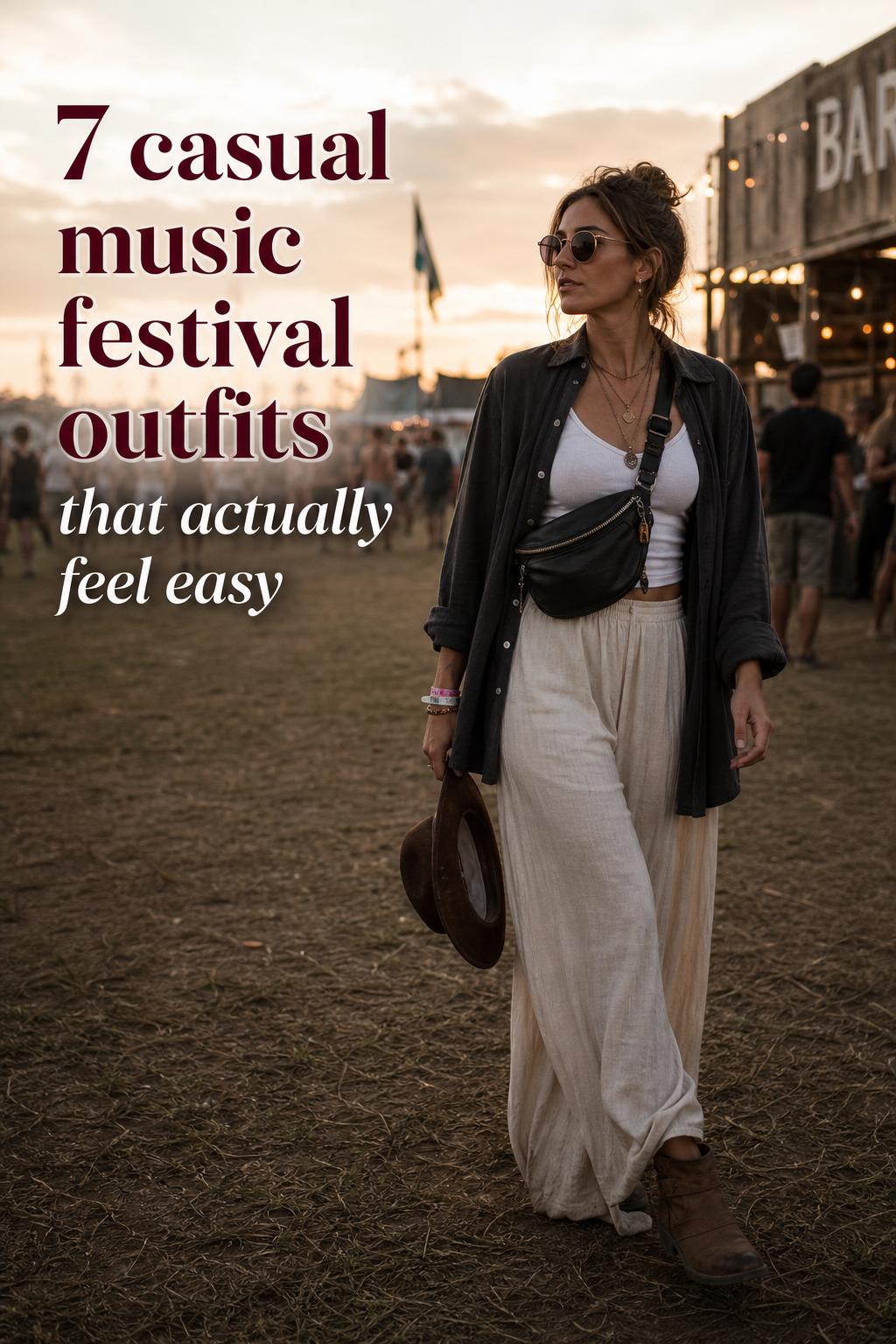
Casual festival style works best when it feels like your wardrobe, not a costume
The strongest festival outfits are rarely the most complicated ones. They are the looks that understand the event, respect the climate, and use proportion, fabric, and accessories to make casual dressing feel intentional. That could mean denim shorts and a button-down, a maxi dress with grounded shoes, a coordinated set, a romper, or a sporty-elevated formula built around movement.
Once you stop treating festival dressing as a separate identity and start treating it as smart wardrobe adaptation, the decisions become clearer. Build around comfort-first pieces, let one element lead, and choose accessories that earn their place. That is how casual festival style stays practical, polished, and easy to wear all day.
FAQ
What are the easiest casual music festival outfits to wear all day?
The easiest all-day options are a breathable maxi or midi dress, denim shorts with a tee or button-down, a coordinated two-piece set, or a comfortable romper. These formulas work because they balance mobility, temperature control, and simple outfit composition without requiring constant adjustment.
How do I make a festival outfit look stylish without being uncomfortable?
Start with comfort as the base layer, then build visual interest through proportion and accessories instead of extra complication. A simple outfit in cotton, linen, rayon, or a light blend often looks better than an overstyled one, especially when the shoes, bag, sunglasses, and hat feel intentional and practical.
What should I wear to a hot-weather festival like Coachella?
For a hot, desert-style festival, prioritize breathable fabrics, easy silhouettes, and light layering for evening temperature shifts. Maxi dresses, denim shorts with a relaxed top, matching sets, and practical accessories such as hats and sunglasses are especially effective because they handle sun and movement well.
Are boho festival outfits still in style?
Yes, but the most wearable version is more restrained than the older costume-like approach. A softer boho direction works best through one or two elements, such as a flowy skirt, embroidered detail, or romantic dress, balanced with simpler pieces and grounded footwear.
How can I dress for a multi-day festival without overpacking?
Build a small capsule wardrobe with interchangeable pieces: one dress, one pair of denim shorts, two tops, one layering shirt, one set or one-piece option, one outer layer, and practical accessories. This gives you variety without forcing you to plan a completely separate outfit for every day.
What shoes work best with festival outfits?
The best shoes depend on the venue surface and the outfit silhouette, but comfort and reliability should lead the decision. Flowing dresses often need grounded sandals or boots, while denim-based or sporty looks can handle simpler options as long as the shoe supports walking and standing for long periods.
Can I wear minimalist festival outfits instead of bold prints or statement pieces?
Absolutely. Minimalist festival outfits often look more modern and are usually easier to wear. Clean denim looks, simple dresses, tonal matching sets, and sporty-elevated combinations can feel just as strong as bolder outfits when the proportions, fabric choices, and accessories are well considered.
How do I choose between a dress, shorts, or a jumpsuit for a festival?
Choose based on movement, climate, and how much structure you want. Dresses are ideal for airflow and ease, denim shorts offer versatility and balance with different tops, and jumpsuits or rompers are best when you want a compact outfit that stays visually consistent through a long day.
Where can I shop for casual festival outfits?
Retail-focused options such as Windsor and Revolve are common places to start because they organize dresses, shorts, sets, tops, and accessories in a festival context. Editorial references from sources like Who What Wear and Marie Claire can also help you identify the silhouettes and styling directions that fit your personal wardrobe before you buy anything new.