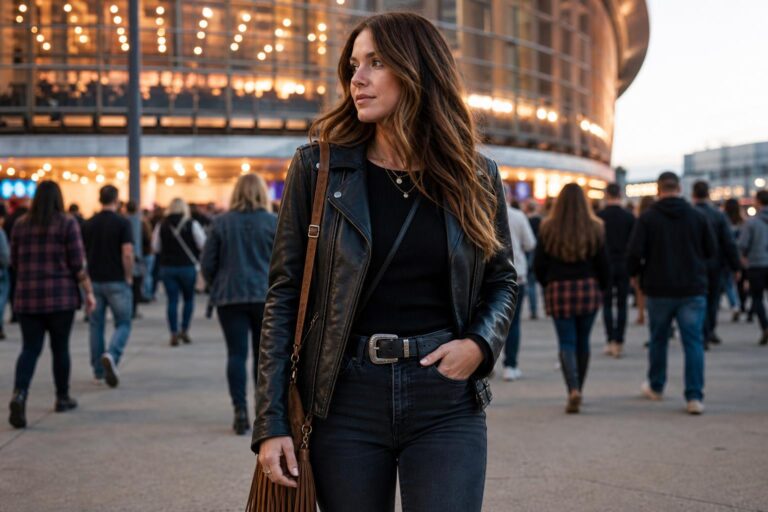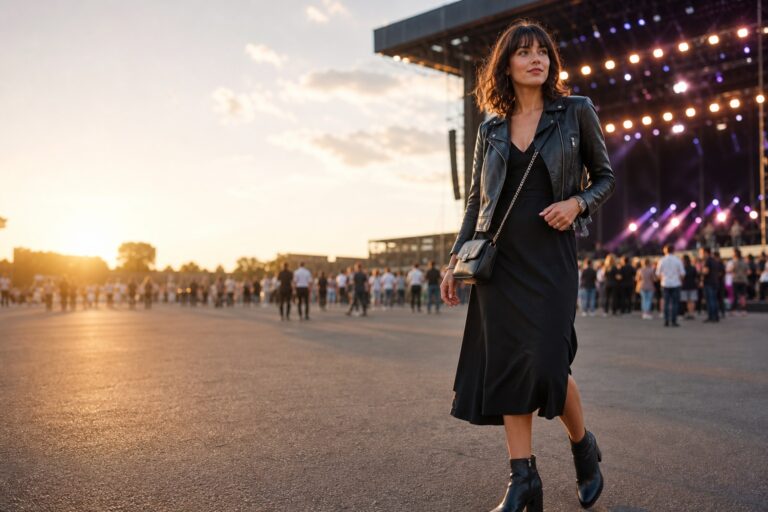
Metal Concert Outfit That Feel Intentional
A metal concert outfit is never just about wearing black and hoping it works. The setting changes everything: packed floors, heavy boots under low light, long hours on your feet, the heat of a crowded room, the visual language of band culture, and the need to look intentional without dressing like a costume. That tension is exactly why this category draws so much attention. People are not only asking what to wear. They are trying to understand the difference between looking authentic, feeling comfortable, and still expressing their own style.
What makes this conversation especially interesting is that metal style is often flattened into one image, when in reality it moves across several visual directions. Some outfits lean classic and severe, built around leather, denim, and sharp hardware. Others feel more casual and wearable, anchored by a band tee and practical layers. Then there is the modern crossover approach, where festival energy, streetwear proportions, and everyday basics soften the look without erasing its edge. These distinctions matter because they change how an outfit reads the moment you walk into the venue.
A strong concert look works on two levels at once. It should belong in the atmosphere of the show, but it also has to function in real life. That means considering movement, temperature, silhouette balance, and what still feels like you once the music starts. The best metal outfits do not rely on excess. They rely on visual clarity.
The visual language of a metal concert outfit
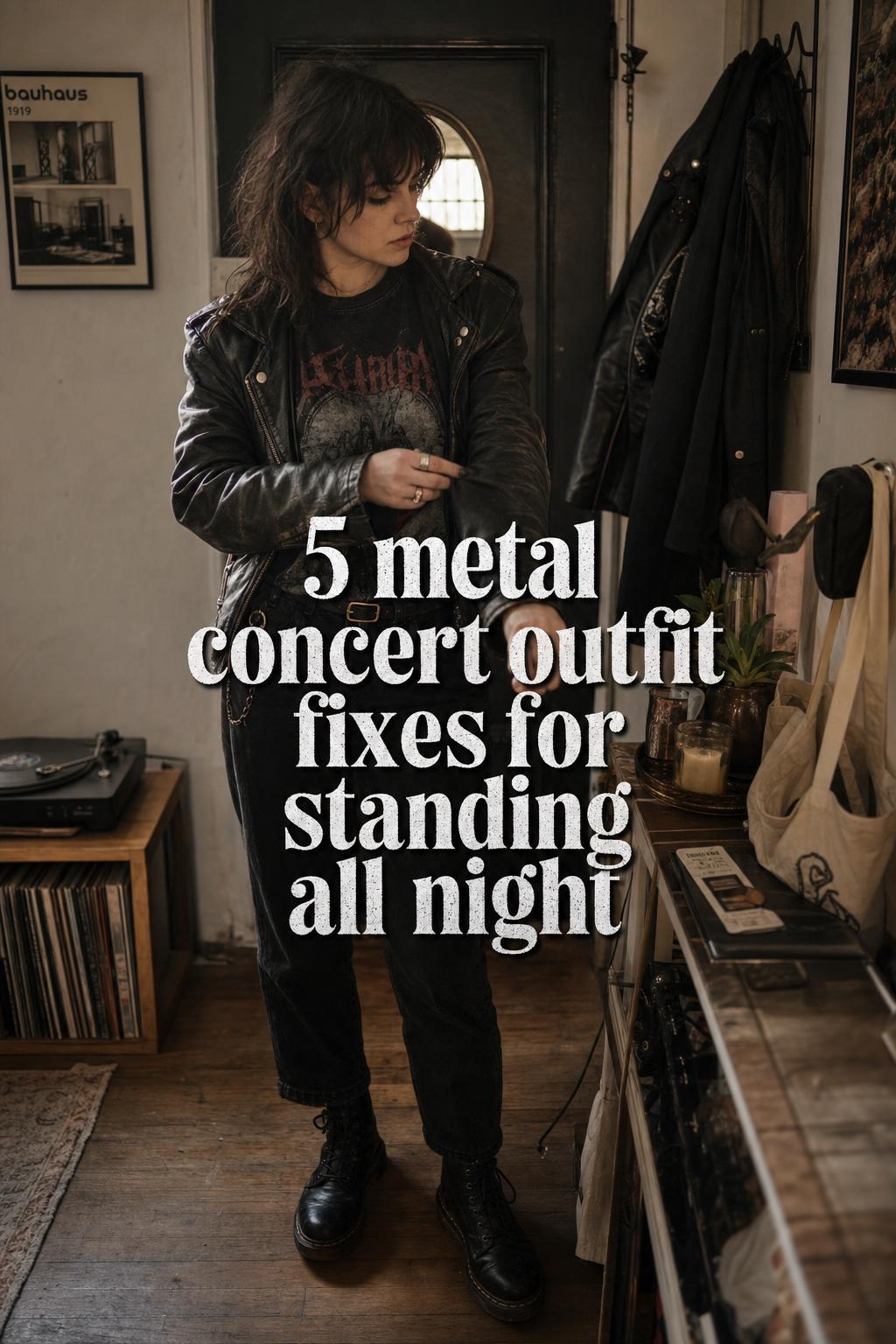
The most recognizable version of metal dressing is built on contrast: dark color, sturdy texture, and pieces that hold shape under movement. Leather jackets, distressed denim, black jeans, combat boots, and band shirts become the recurring visual anchors because they communicate attitude immediately. Even before accessories enter the look, these pieces suggest resistance, confidence, and a refusal to look overly polished.

Found the dress? Keep the rest in one place.
Zarellea brings guest details, vendors, timelines, and every next step together — so your wedding plan feels as good as your look.
But the aesthetic is not only about darkness. It is also about weight. A metal concert outfit usually feels grounded rather than airy. Fabrics tend to have structure, footwear has presence, and layers create a dense silhouette rather than a delicate one. That is why even simple combinations can look convincing in this context. A faded tee and straight black denim can carry more visual authority than an outfit with too many competing details.
There is also a clear relationship between authenticity and restraint. Over-accessorizing can make the outfit feel like a costume, while too little intention can make it look disconnected from the venue. The goal is not to perform a stereotype. It is to create a composition that feels natural inside the metal environment.
Why some metal looks feel authentic and others feel styled for the internet
One of the easiest ways to recognize a believable concert outfit is by how the proportions and materials work together. Real-life metal dressing often prioritizes pieces that can take wear: thick cotton, worn denim, broken-in leather, substantial boots. The outfit tends to look lived in rather than freshly assembled. That worn texture matters because it gives the look credibility.
By contrast, outfits built only for photos often lean too hard on obvious symbols without enough functional logic. A tiny skirt with impractical footwear, excessive hardware that becomes uncomfortable after an hour, or layers that cannot survive a hot standing-room venue may photograph well but fail the moment the event becomes physical. Metal style has attitude, but it is not detached from function.
The key visual difference
Authentic metal styling usually looks anchored. The outfit has one or two dominant elements, such as a band tee and boots or a leather jacket and black denim, and the rest supports those choices. A less convincing version often tries to make every piece the focal point at once. Strong outfit composition depends on hierarchy.
The controlled aggression of classic metal styling
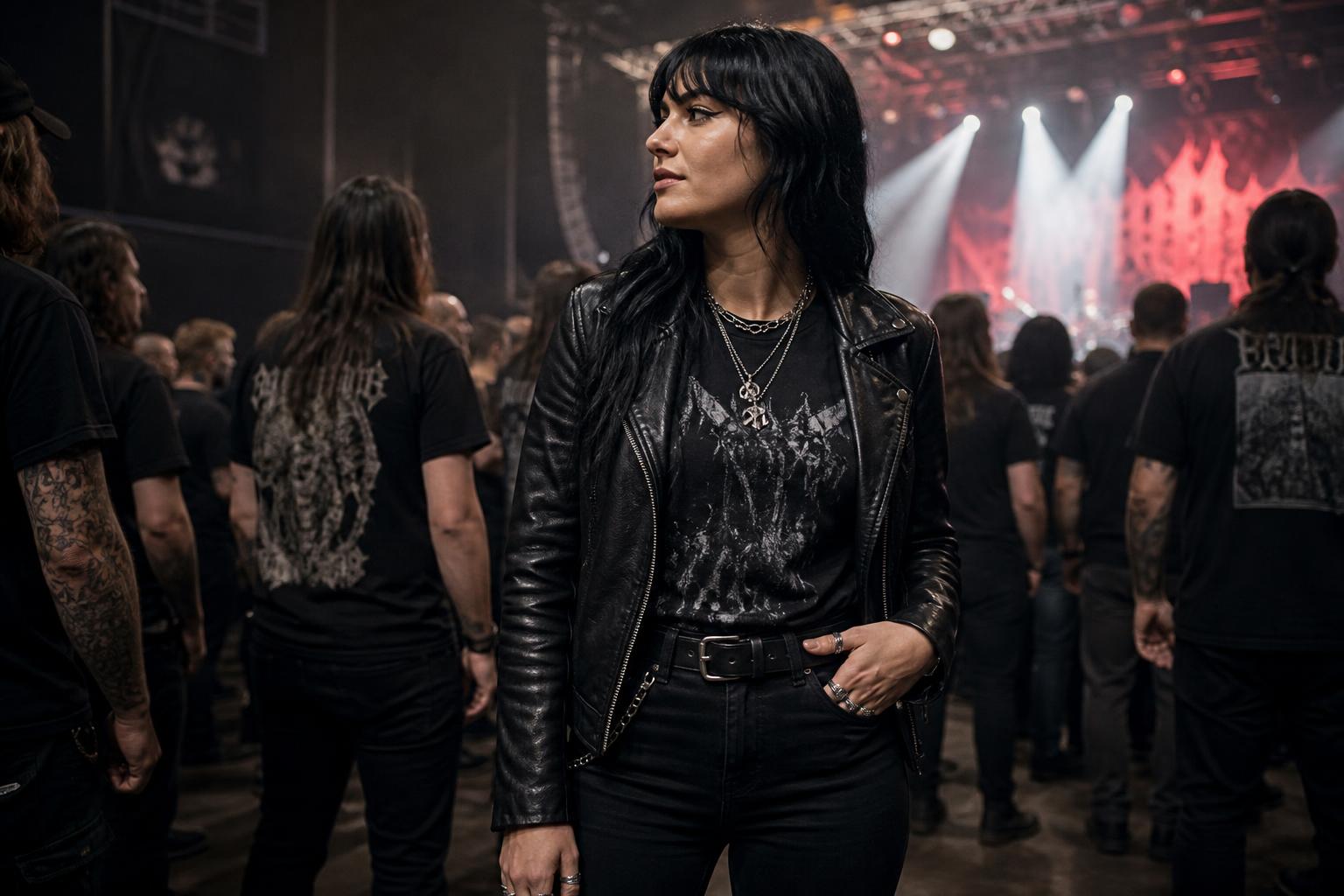
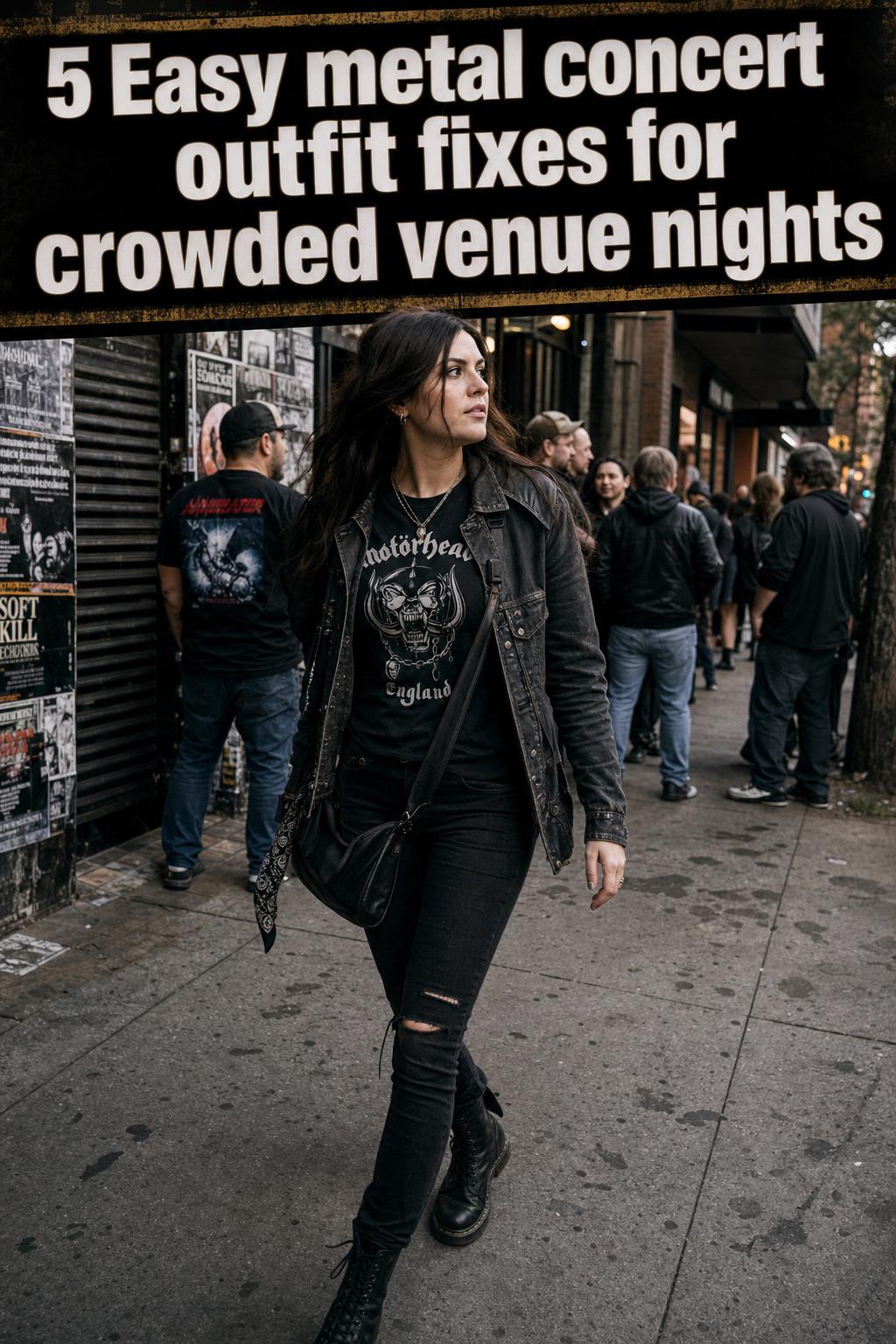
Classic metal style is the most concentrated version of the aesthetic. It relies on a firm silhouette, dark palette, and tactile materials that communicate toughness without explanation. Black jeans, a leather jacket, band merch, and heavy boots create a look that feels direct, visually dense, and culturally legible. The power of this approach is that it does not need much variation to work.
Silhouette is central here. Slim or straight-leg pants often pair well with bulkier outerwear or boots because the shape remains clean while still feeling hard-edged. If the jacket has structure, the rest of the outfit can stay simple. If the tee is oversized, the bottom half usually benefits from a little control. This is where proportion play becomes important. Metal style is strongest when the outfit feels deliberate rather than accidental.
Texture contrast carries much of the mood. Leather against cotton, washed denim against metal hardware, matte black against subtle shine: these relationships give the look depth without requiring bright color or complicated layering. The result is visually forceful but still wearable.
Why this look keeps its authority
Classic metal dressing works because every element reinforces the same message. The boots ground the body, the jacket creates upper-frame structure, and the shirt places the look inside concert culture. There is little confusion in the visual identity. That clarity makes the outfit feel timeless in a setting where trend-driven styling can quickly look disconnected.
The easier, more wearable side of metal dressing
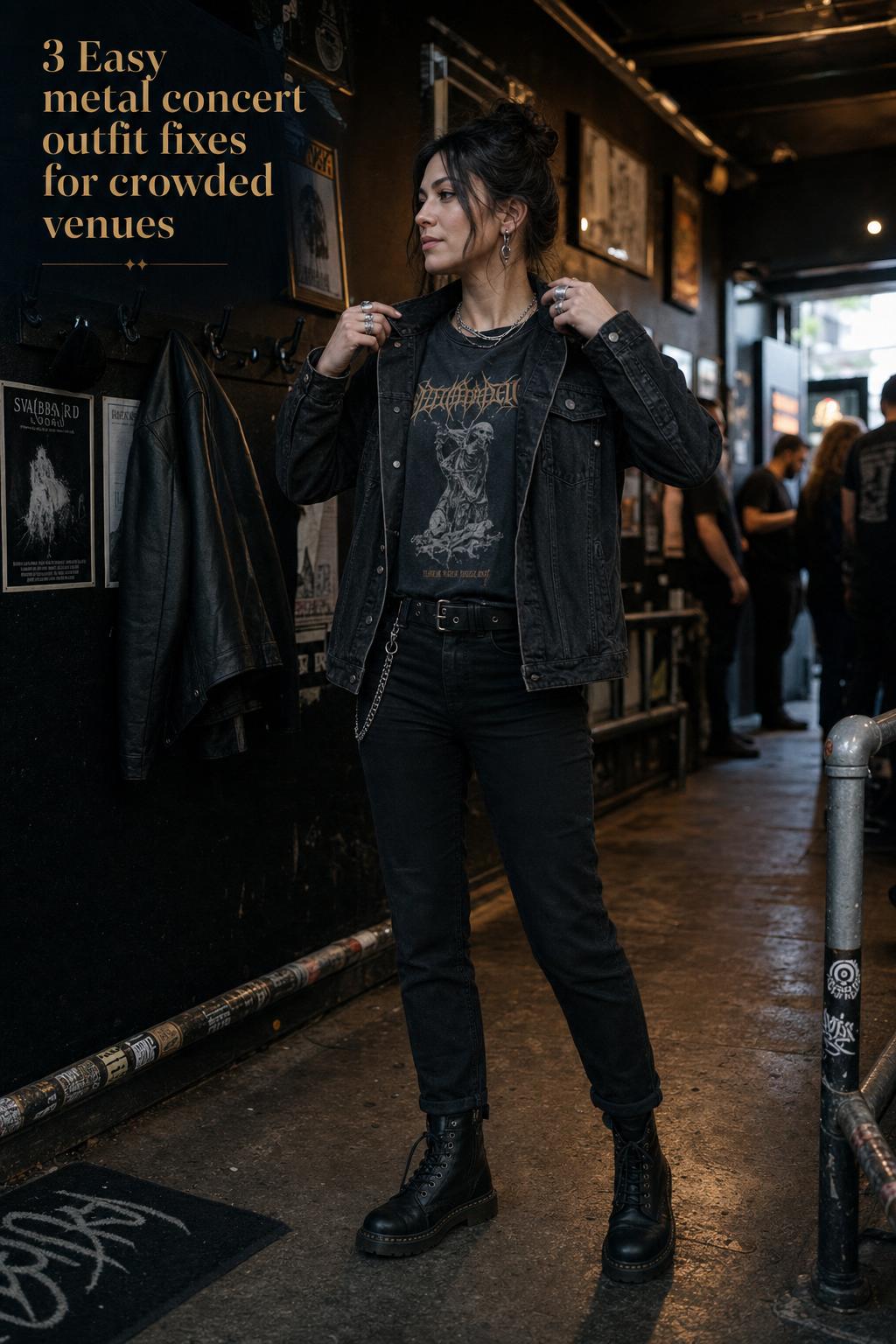
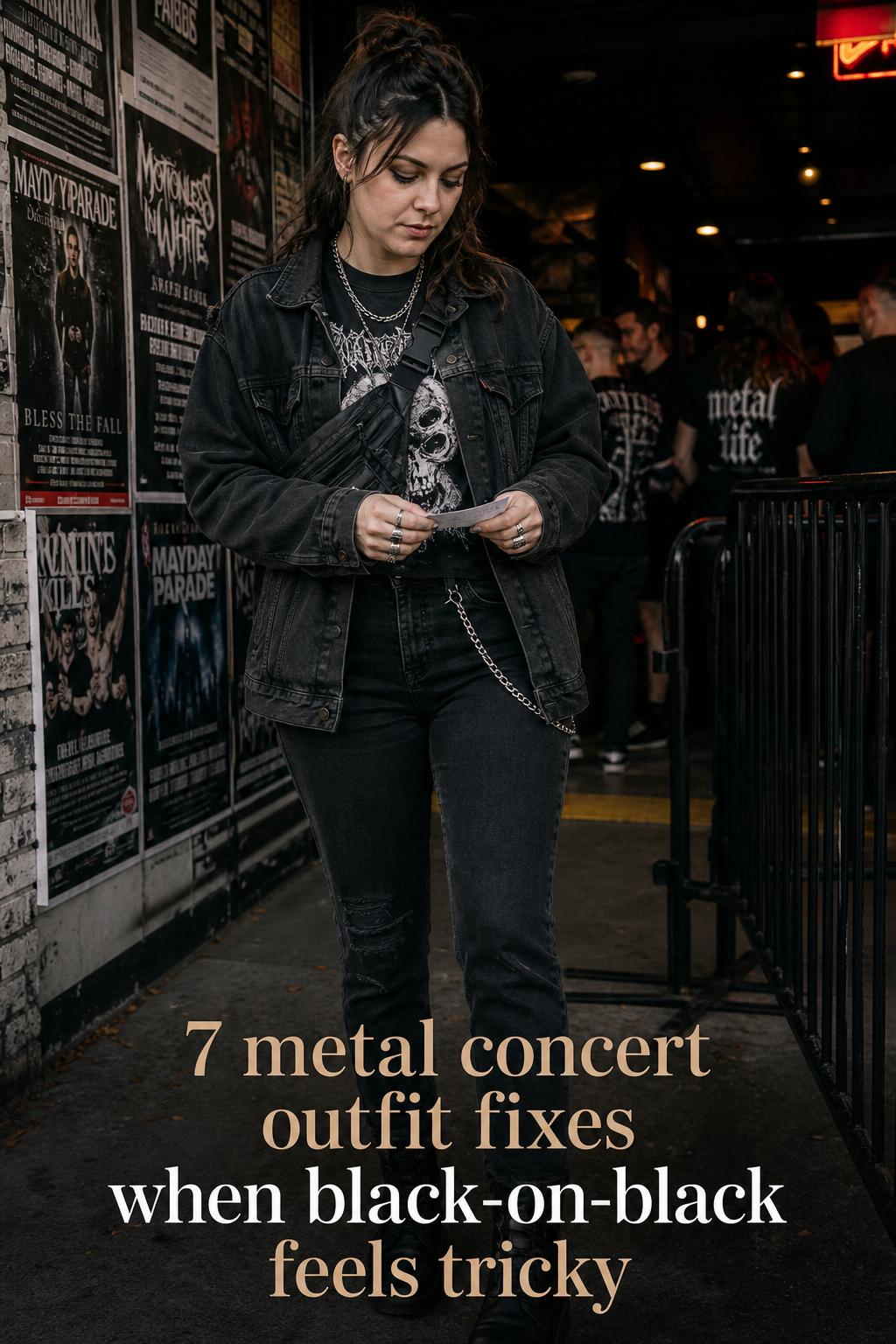
Not everyone wants the full intensity of classic metal style, and that is where the casual version becomes especially useful. This approach keeps the core references but softens the overall composition. A vintage-style band tee with black jeans and sneakers, or a dark tank with denim and a lightweight jacket, can still read as metal-adjacent without feeling overly committed.
This is often the most accessible route for people building a metal concert outfit from what they already own. It is also easier to recreate affordably because the foundation is based on familiar wardrobe pieces rather than specialty items. The visual identity comes from how the outfit is balanced, not from owning the most extreme pieces in the category.
The casual approach also suits venues where you want comfort to lead. If you are standing for hours, walking through a city before the show, or dealing with changing temperatures, simplified styling usually performs better. The outfit still needs a visual anchor, but that anchor can be as straightforward as a faded graphic tee or sturdy black boots.
Most versatile pieces
- A black band tee with a slightly relaxed fit
- Straight or slim black jeans
- Combat boots or other substantial dark footwear
- A denim jacket or leather jacket for structure
- Minimal silver-tone accessories for edge without excess
These pieces work because they can be combined in different intensities. You can dress them down for a smaller show or sharpen them with more structure and hardware for a larger concert environment.
How silhouette changes the mood of the outfit
Many people focus first on color, but silhouette is what actually decides whether a concert look feels aggressive, relaxed, polished, or awkward. In metal dressing, slim lines tend to create a sharper, more classic energy. Straight shapes feel more modern and practical. Oversized pieces can work well, but only when they are counterbalanced by something more controlled.
An oversized band shirt with loose pants and heavy boots can look intentional if the fabric weight and lengths are right. If everything is too long or too shapeless, the outfit loses impact. Conversely, a fitted top with very skinny pants and narrow shoes may feel too dated or too flat unless there is enough texture to create dimension. The best metal outfits understand visual weight distribution.
Practical proportion guidance
If your footwear is heavy, a cleaner lower silhouette often helps the outfit feel grounded instead of bulky. If your top layer is oversized, keep one line of the body visible so the outfit still has shape. If you are petite, large jackets and long tees can work, but they need intentional length control. If you are tall, broader layering often looks especially natural because the silhouette has room to expand without losing coherence.
Layering at a concert is not the same as layering for the street
Concert layering has to be edited. On the street, layered styling can prioritize visual complexity. In a venue, it has to account for heat, crowd density, and movement. A leather jacket may look ideal when you leave the house, but once the room fills up, it can become the piece you spend the night carrying. That does not mean avoiding layers entirely. It means choosing layers with an exit strategy.
Light outerwear, flannel shirts worn open over a tee, sleeveless tops under a jacket, or denim layers that tie easily around the waist tend to function better than complicated constructions. The point is not to reduce the outfit. It is to make each layer serve both the look and the event.
Tips for venue-smart layering
- Choose one outer layer that still makes sense if removed.
- Avoid overly delicate fabrics that wrinkle or cling in heat.
- Use a tee or tank as the visual base so the outfit remains complete indoors.
- If the show is in a colder season, let the jacket carry the strongest style message.
The role of boots, sneakers, and practical footwear
Footwear often determines whether a metal concert outfit feels convincing. Boots are the most natural choice because they add weight, structure, and protection. Combat boots in particular reinforce the aesthetic while also handling long standing periods better than many fashion-first options. They act as a visual anchor, especially when the rest of the outfit is simple.
Sneakers can work, but the styling logic has to shift. They make the outfit feel more casual and contemporary, which can be useful if you are aiming for a lighter interpretation of metal style. The trade-off is that the rest of the look may need stronger elements, such as darker denim, a more defined graphic top, or sharper accessories, to keep the outfit from losing its identity.
Heels, thin sandals, and overly precious shoes usually struggle in this setting. Even when they align with a more fashion-forward aesthetic, they often fail on venue practicality. This is one of those cases where comfort and visual logic point in the same direction.
Accessories that sharpen the look without turning it into costume
Accessories are where many outfits become overworked. In metal styling, silver-tone jewelry, belts, rings, and simple hardware often do enough. The purpose of accessories is to intensify the mood, not to replace the outfit’s structure. If the clothing already has strong graphics, texture, or shape, accessories should support that foundation rather than compete with it.
Belts can help define proportion, especially with oversized tops or high-rise denim. Rings and chain details bring in edge at a smaller scale. Sunglasses may complete the pre-show look, but inside the venue they are more styling signal than functional piece. The smartest approach is selective emphasis.
Styling mistakes to avoid
- Stacking too many statement accessories into one outfit
- Choosing pieces that snag, jingle excessively, or become uncomfortable in crowds
- Using accessories to force a metal aesthetic when the base outfit does not support it
- Wearing brand-new boots that have not been broken in
How to build a metal look around one key piece
The easiest way to create a cohesive concert outfit is to begin with a single visual anchor. In most cases that anchor is a band tee, leather jacket, or pair of substantial boots. Once that piece is established, the rest of the outfit should be chosen to reinforce its energy rather than distract from it.
If the band tee is the focal point, keep the surrounding palette controlled and let the graphic carry the personality. If the leather jacket is the dominant element, use simpler layers underneath so the outerwear remains the structural lead. If the boots are especially heavy or detailed, balance them with clean lines elsewhere. This method prevents the outfit from becoming visually noisy.
Why this composition works
Outfits feel stronger when the eye knows where to land first. A clear focal point creates coherence, and coherence is what makes even simple metal styling feel intentional. This matters more than piling on references.
Three real-world styling directions for different concert moods
The phrase metal concert can cover very different environments, from an intimate club show to a larger venue with a more fashion-visible crowd. The best outfit choice depends on how much intensity you want in the final look and how much functionality the setting demands.
The stripped-back club version
A black band shirt, straight dark jeans, and broken-in combat boots create a reliable foundation for smaller venues. Add a denim jacket if weather requires it, but keep the indoor layer simple. This version works because the silhouette is direct, the footwear is practical, and the outfit does not overstate itself in a close-range setting.
The sharper leather-led interpretation
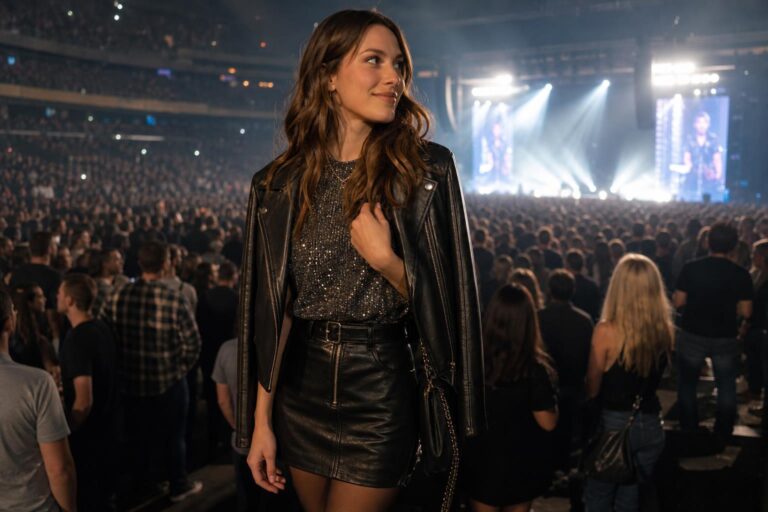
For a more visually forceful look, start with black jeans, a fitted or slightly relaxed tee, and a structured leather jacket. Add minimal silver jewelry and heavier boots. The jacket becomes the visual frame, giving the outfit more control and presence. This is the version that feels most aligned with classic metal styling.
The modern casual crossover
An oversized graphic tee, relaxed dark pants, and sturdy sneakers or boots create a softer interpretation that still makes sense in the concert context. The mood is less severe, more everyday, and often easier for people who want to nod to the aesthetic without fully inhabiting it. The success of this version depends on keeping the palette dark and the proportions clean.
The psychology behind the color palette
Black dominates metal dressing not only because it is traditional, but because it creates immediate visual compression. It sharpens silhouettes, makes layered textures feel more cohesive, and allows hardware, graphics, and worn fabric surfaces to stand out. In a concert setting, black also handles the unpredictability of lighting and wear better than lighter shades.
That does not mean every outfit must be pure black from head to toe. Charcoal, washed gray, dark denim, and muted tones can break up the palette without weakening the mood. What matters is tonal discipline. A metal outfit usually feels strongest when the colors support one another rather than compete for attention.
What makes an outfit feel polished instead of try-hard
The difference often comes down to editing. A polished metal concert outfit has intention in its fit, footwear, and finish. The pieces look chosen, not piled on. Distressing, hardware, and graphics are used strategically. There is enough texture to create interest, but not so much that the eye loses a focal point.
Fit is especially important. Even in a deliberately rough aesthetic, clothing should still sit in a controlled way on the body. Pants should work with the footwear instead of collapsing awkwardly over it. A tee should feel either intentionally fitted or intentionally relaxed. Jackets should frame the shoulders rather than distort the silhouette. Polish in this context does not mean looking formal. It means the outfit has internal logic.
Quick refinement tips
- Pick one statement zone: top, outerwear, or footwear.
- Let texture create depth before adding more accessories.
- Keep the color palette narrow for a stronger visual identity.
- Prioritize fit over novelty.
How to make the aesthetic work for your own lifestyle
Some people want a one-night concert look. Others want pieces that fit into their daily wardrobe long after the show. That distinction should shape what you buy and how you style it. If versatility matters, start with black jeans, a durable tee, and a jacket that can move beyond concert settings. These pieces hold their value because they can be restyled easily.
If your lifestyle already includes a lot of denim, boots, or graphic tops, a metal concert outfit may only require sharper styling rather than new clothing. If your wardrobe is more minimal or polished, introducing one harder-edged piece often works better than attempting a full transformation. A leather jacket over familiar basics can create enough shift on its own.
This is also where personal comfort matters. If you never wear heavy boots, a concert is not the ideal moment to test the most extreme pair. If you prefer relaxed silhouettes, build the outfit around that preference and add metal references through color, graphics, and accessories. A believable look is one you can inhabit naturally.
Context matters: venue, weather, and movement
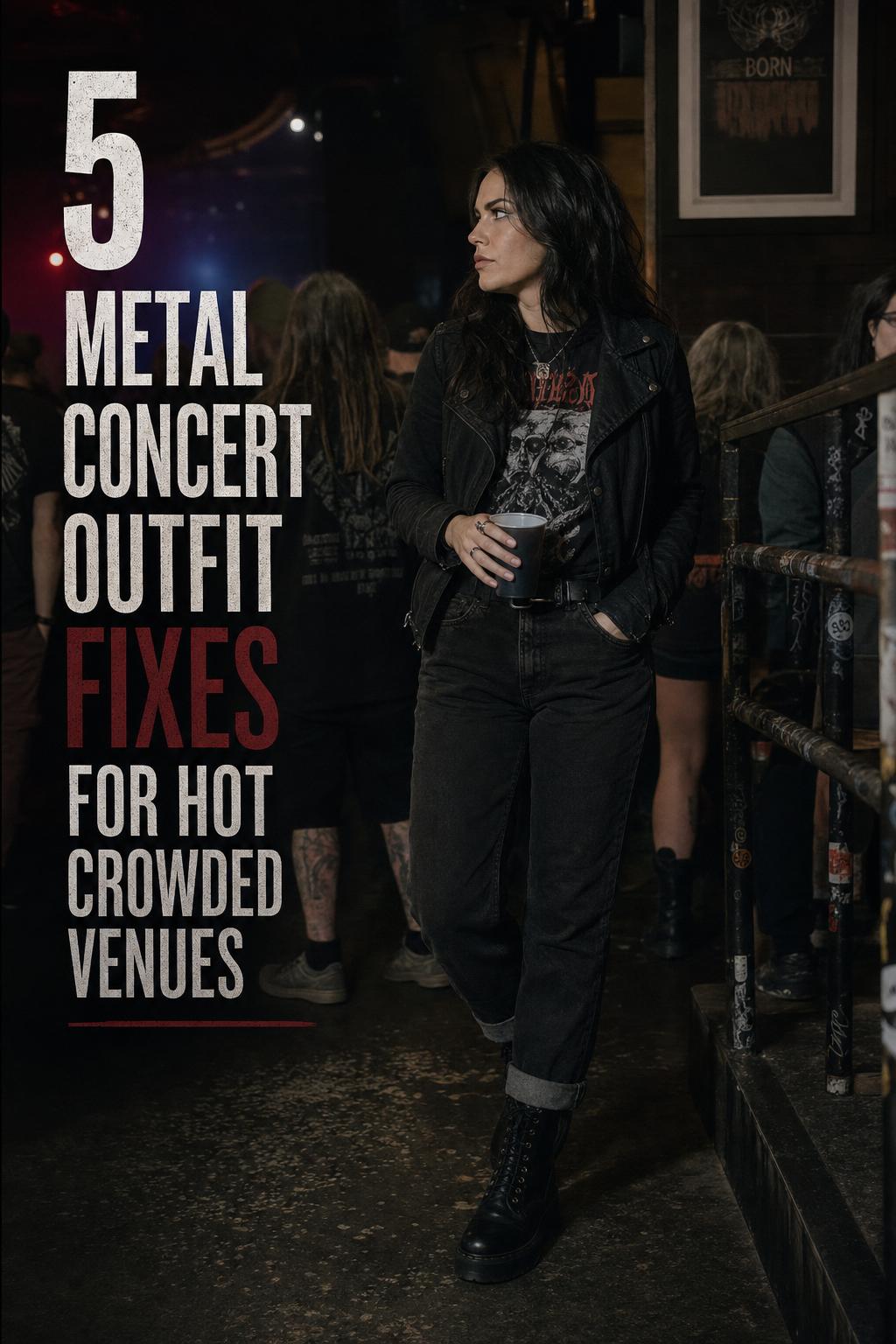
A useful metal concert outfit is shaped as much by the environment as by the aesthetic. Outdoor events demand different layering choices than tightly packed indoor rooms. Cold-weather shows allow jackets to play a bigger role in the composition. Hot venues make breathable cotton and simplified layers more important. Standing sections call for more supportive footwear than seated events.
This context-based thinking is what separates a wearable outfit from a purely visual one. A look that appears perfect online may fall apart if the venue is hot, the line is long, and the floor is crowded. Function should refine style decisions, not limit them.
A practical concert checklist
- Can you stand in the shoes for several hours?
- Will the outfit still work if you remove a layer?
- Are the fabrics breathable enough for an indoor crowd?
- Does the bag or pocket situation make sense for the venue?
- Will you still feel like yourself in the outfit after the first hour?
Easy ways to blend metal style with your usual wardrobe
The most modern approach to concert dressing often comes from blending rather than fully switching identities. A person who usually dresses minimal can introduce a band tee and boots without abandoning clean lines. Someone who prefers casual basics can add a leather jacket and darker palette for a more concert-specific mood. The result feels more personal and often more convincing.
This blending approach also keeps the outfit from becoming too literal. Metal style does not need to erase individuality. It can sit alongside a more pared-back wardrobe, a more streetwear-driven one, or a more vintage-oriented one, as long as the final composition still respects the visual codes of the setting.
The easiest mix points
Start with dark denim, a graphic top, or heavier footwear. These are the simplest entry points because they change the mood quickly without requiring an entirely new wardrobe architecture. Once those pieces feel natural, outerwear and accessories can deepen the direction.
Common mistakes that weaken the outfit
The most common mistake is overcommitting to surface details while ignoring structure. An outfit can have chains, studs, graphics, and black makeup-adjacent energy, yet still look weak if the silhouette lacks balance. The second mistake is dressing for an imagined version of the event instead of the actual one. Tight, restrictive pieces and uncomfortable shoes often undermine confidence very quickly.
Another issue is confusing darkness with intention. Wearing all black does not automatically create a strong metal look. Without texture contrast, proportion control, or one clear focal piece, the outfit can feel flat. Strong styling comes from composition, not only palette.
Choosing the version of metal style that actually suits you
The right metal concert outfit is the one that aligns the event’s atmosphere with your own way of dressing. If you are drawn to stronger visual impact, classic leather-and-boots styling offers the clearest identity. If comfort and versatility matter more, a band tee with dark denim and practical shoes may serve you better. If you prefer contemporary proportion play, relaxed silhouettes can work well as long as the outfit stays grounded.
What matters most is understanding why the pieces look right together. Metal style is not random rebellion. It is a specific balance of texture, weight, silhouette, and cultural reference. Once you see that pattern, the outfits become easier to build and easier to personalize.
The strongest looks rarely feel forced. They feel edited, functional, and visually consistent with the energy of the music. That is the instinct to trust.
FAQ
What should I wear to a metal concert if I do not usually dress in metal style?
Start with dark basics you already own, such as black jeans and a simple tee, then add one clear metal-coded piece like a band shirt, leather jacket, or combat boots. This keeps the outfit connected to the concert atmosphere without making you feel like you are wearing a costume.
Are boots necessary for a metal concert outfit?
Boots are not mandatory, but they are often the strongest footwear option because they add visual weight and handle standing-room conditions well. If you choose sneakers instead, keep the rest of the outfit sharp enough to maintain the metal mood.
Can I wear a band tee even if it is the main focus of the outfit?
Yes, and in many cases that is the smartest way to build the look. A band tee works best when the rest of the outfit supports it with clean dark layers, practical footwear, and restrained accessories.
How do I make a metal concert outfit look more polished?
Focus on fit, proportion, and editing. Keep the palette controlled, choose one dominant statement element, and make sure jackets, jeans, and shoes work together structurally rather than competing for attention.
Is all black the best choice for a metal concert?
All black is a reliable option because it sharpens the silhouette and fits the atmosphere, but it is not the only route. Charcoal, dark gray, and washed denim can add depth while keeping the outfit visually aligned with the setting.
What outerwear works best for a metal concert?
A leather jacket or denim jacket usually works best because each adds structure and supports the aesthetic naturally. The most practical choice is a layer that still looks intentional if you need to remove it once the venue gets hot.
How can I keep the outfit comfortable during a long show?
Choose broken-in shoes, breathable base layers, and simple silhouettes that allow movement. Avoid pieces that overheat quickly, restrict your body, or require constant adjustment in a crowded space.
What is the biggest mistake people make with a metal concert outfit?
The biggest mistake is relying on obvious details without building a strong base. Too many accessories, poor footwear choices, or unbalanced proportions can weaken the look even if every item seems metal-inspired on its own.