Plus Size Outfit Ideas for a Flexible Capsule Wardrobe
Getting dressed can feel strangely difficult when your closet is full but the pieces do not work together. You may own jeans for errands, a dress for dinners, a jacket you love, and several tops that are almost right, yet still stand in front of the mirror with no clear outfit. The problem is usually not a lack of clothes. It is a lack of dependable connections between them.
The most useful plus size outfit ideas are not built around hiding your body or following one flattering rule. They give you a small set of comfortable building blocks, show you how to combine them, and leave room for your taste. Think of this guide as a flexible capsule system for real days: work, coffee, errands, travel, dinner, and the in-between plans that make up most wardrobes.
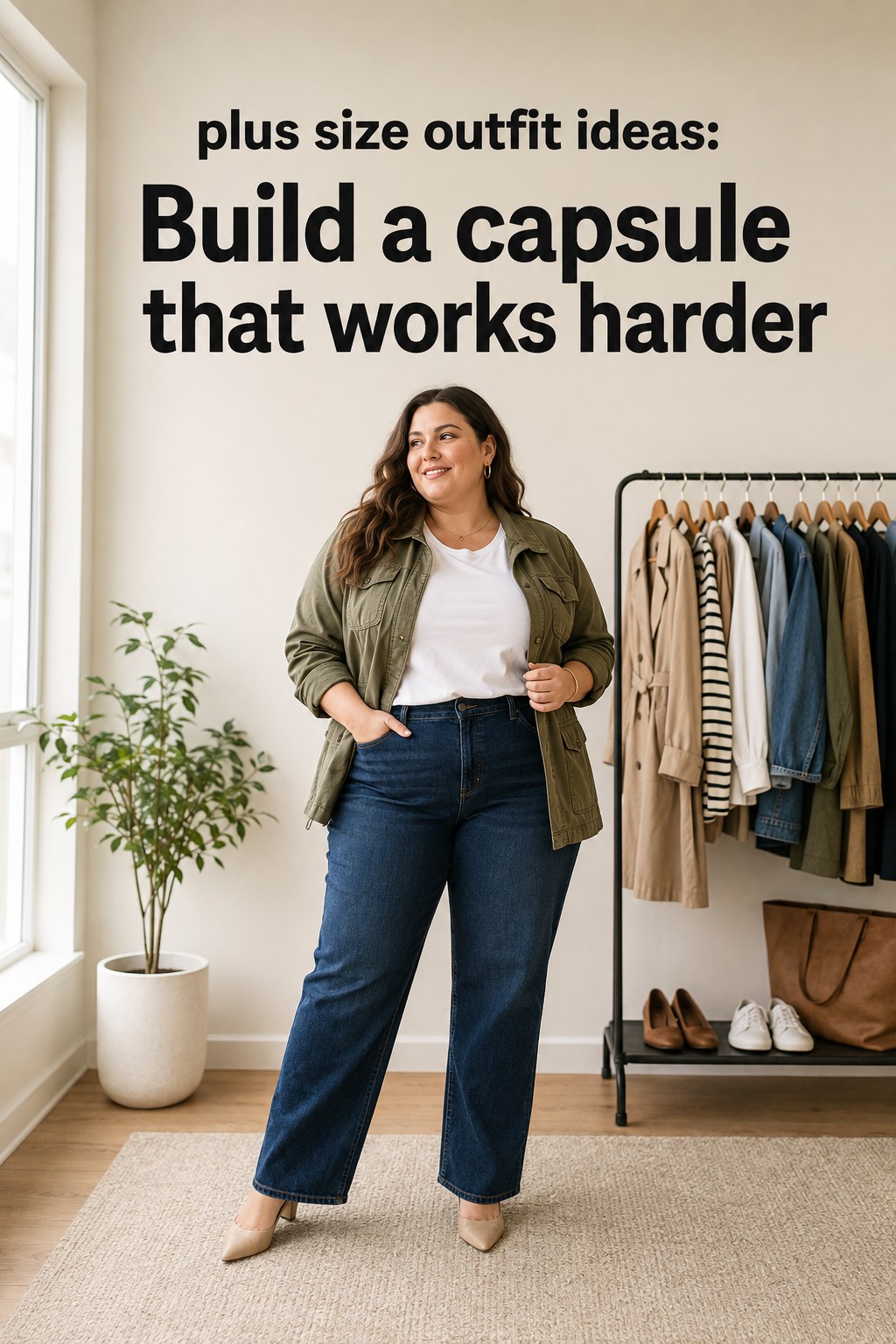
The building blocks that make plus size outfit ideas repeatable
A capsule wardrobe does not have to mean owning a strict number of items or wearing only neutrals. It means choosing pieces that have more than one job. A good pair of trousers should work with a tee, a blouse, a knit, and a jacket. A dress should be able to look relaxed with sneakers and more finished with boots or jewelry. When each piece has several partners, outfit ideas become a system rather than a memory test.
Start with two dependable bottoms
Choose bottoms according to the way you actually move through the week. One pair of straight-leg or wide-leg jeans can anchor casual looks, while a pair of stretch trousers, ponte pants, or polished pull-on pants can cover work, travel, and dinners. The exact cut matters less than the way the waistband, rise, seat, and hem feel when you sit, walk, and bend.
Found the dress? Keep the rest in one place.
Zarellea brings guest details, vendors, timelines, and every next step together — so your wedding plan feels as good as your look.
If you prefer skirts, use a midi skirt in place of the second trouser. A slightly structured A-line, column, or bias-cut shape can be just as versatile. The goal is contrast: two bottoms that create different silhouettes and work with the same tops. If both pairs are similar, the wardrobe may feel repetitive even when you own enough clothes.
Add three tops with different visual weights
A capsule becomes more useful when the tops are not three versions of the same shirt. Try one smooth everyday tee, one top with a little detail such as ruching, a square neckline, or a soft collar, and one layerable blouse or button-up. These different visual weights let you make a jeans outfit look casual, intentional, or slightly dressed up without changing every item.
Pay attention to fabric recovery. A top can feel comfortable in the first five minutes and become annoying after an hour if it stretches at the bust, twists at the side seams, or rides up when you raise your arms. Look for fabric that returns to shape, seams that sit flat, and necklines that stay where you want them. Comfort is not a compromise. It is what makes an outfit wearable enough to become a favorite.
Use one dress and two purposeful layers
A simple knit, wrap, shirt, or fit-and-flare dress can solve the days when separates feel like too much work. Select a shape that gives you the amount of ease you enjoy. You might like a defined waist, a straighter line, or a softly gathered skirt. There is no universal best silhouette. The useful question is whether you like the way the dress moves and whether you can style it for more than one setting.
For layers, choose one casual option and one polished option. A denim shirt, utility jacket, or cardigan brings texture and ease. A blazer, chore jacket, or clean longline coat gives the same base outfit a clearer finish. Layers should add function as well as shape. Check whether the sleeves fit comfortably over your tops and whether the hem lands in a place that feels balanced with your bottoms.
- Two bottoms with noticeably different silhouettes.
- Three tops with different necklines, textures, or levels of polish.
- One dress that can be worn with casual and dressier accessories.
- One relaxed layer and one structured layer.
- Two everyday shoe options, plus one pair for a more finished look.
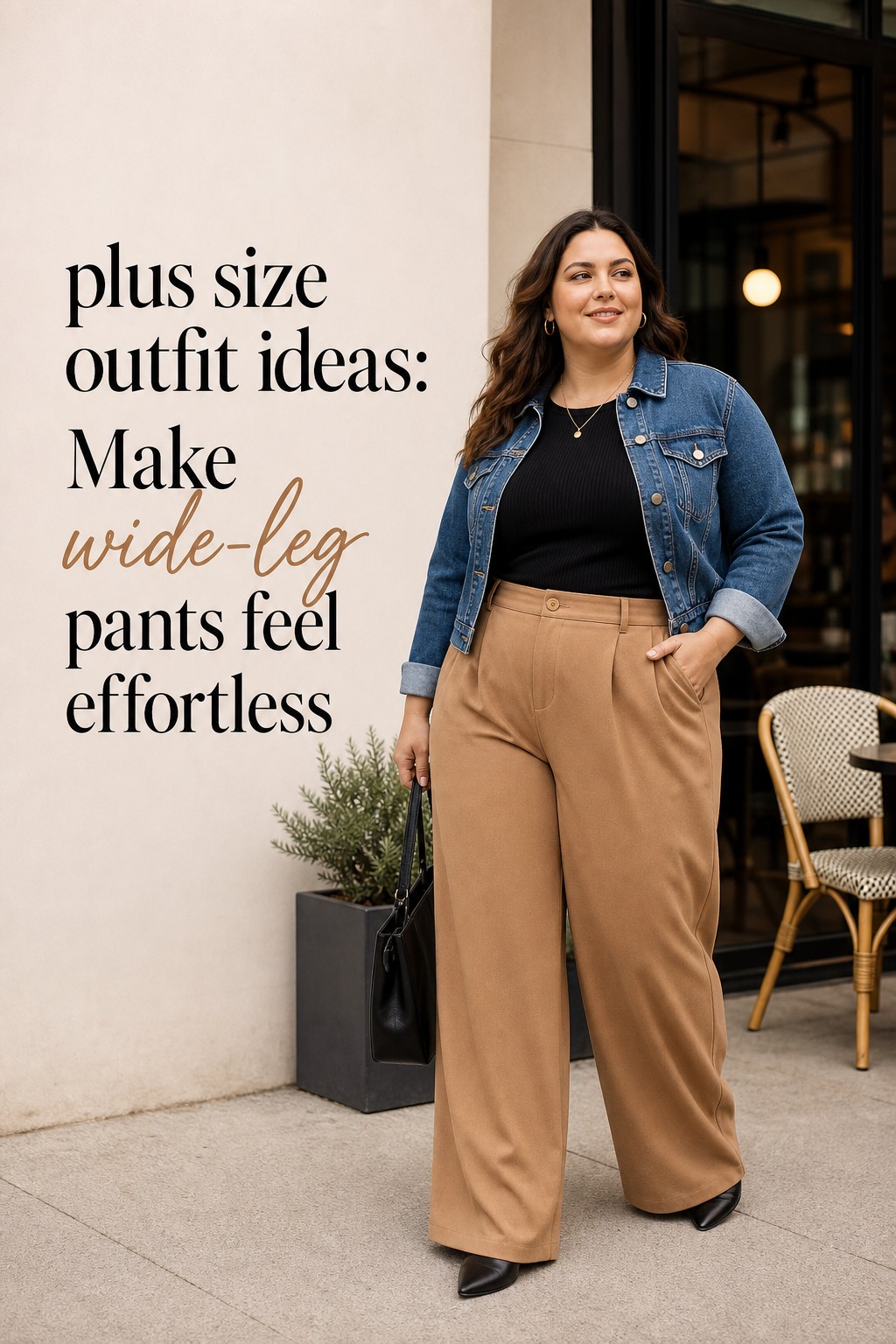
Five outfit formulas for everyday, work, weekends, dinner, and travel
Formulas are helpful because they reduce the number of decisions without forcing you into a uniform. Start with the base, add a layer when you need one, and use shoes or accessories to tell people where you are going. The same core pieces can support very different moods. Here are five plus size outfit ideas designed to be adjusted rather than copied exactly.
1. Straight-leg jeans, a shaped tee, and a light jacket
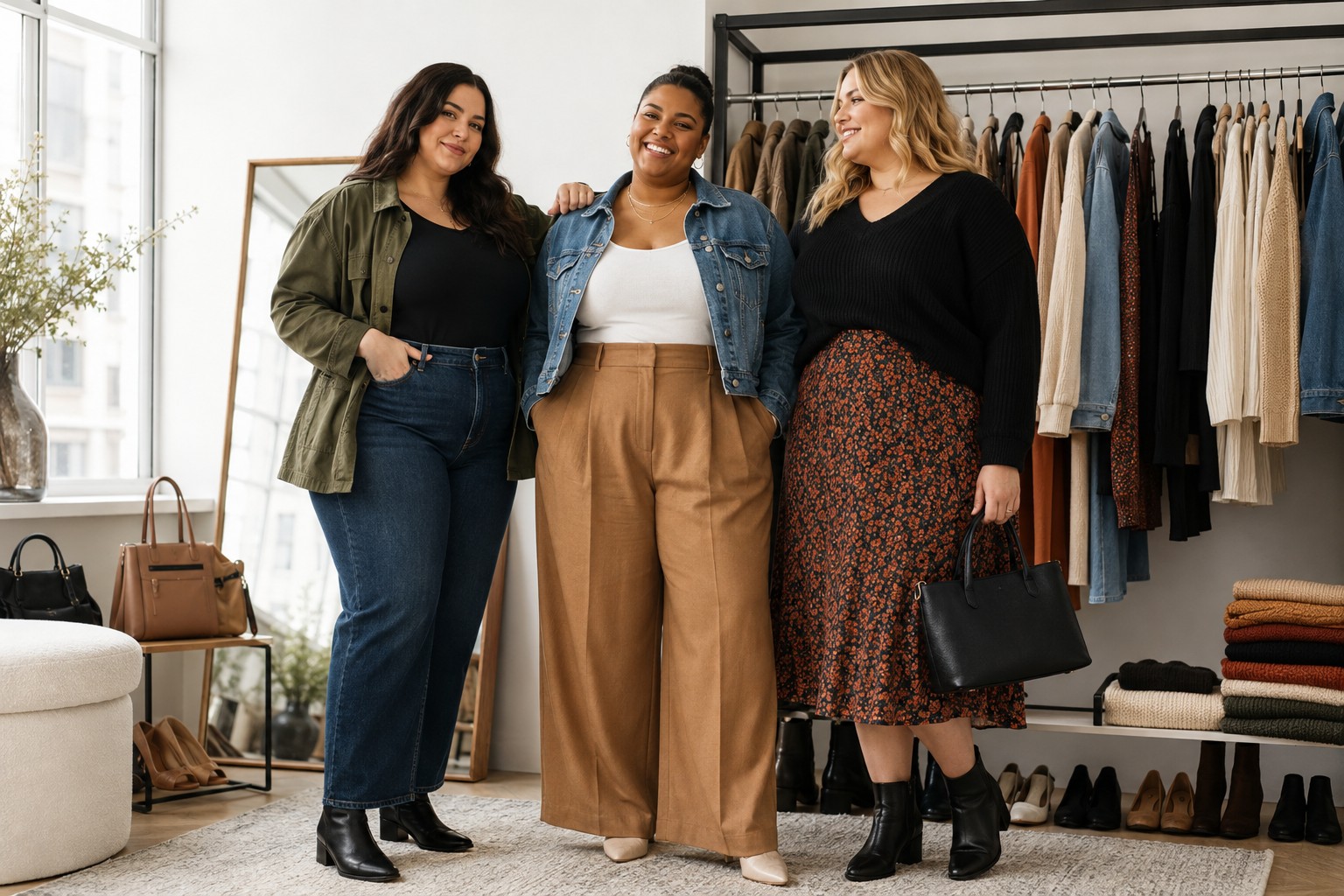
This is the reliable everyday combination for errands, coffee, school runs, and relaxed Fridays. A shaped tee can be tucked, half-tucked, or left loose depending on what feels best. Add a denim shirt, utility jacket, or soft overshirt to create a third piece. White sneakers keep it easy, while loafers or ankle boots make it look more deliberate.
To keep the outfit from looking like a collection of basics, introduce one point of interest. Choose a striped tee, a colorful jacket, a textured bag, or a pair of earrings. If you like a longer top, let the jacket finish near the hip or upper thigh and keep the jeans line clean. If you prefer a shorter layer, try a higher rise jean and a longer tee underneath for a layered hem.
2. Wide-leg pants, a tucked or cropped sweater, and loafers
Wide-leg pants create an elegant base for a comfortable outfit, especially when the top has a clear ending point. That could be a sweater that meets the waistband, a front tuck, or a fitted knit layered under a cardigan. The aim is not to make your body look smaller. It is to give the outfit a readable top and bottom line so the volume looks intentional.
Loafers, ballet flats, or low-profile sneakers can all work. If the pants are full length, check that the hem skims the top of your shoe without dragging. For a polished office-casual version, use a monochrome base and a contrasting bag. For the weekend, switch to a graphic tee, denim jacket, and sneakers.
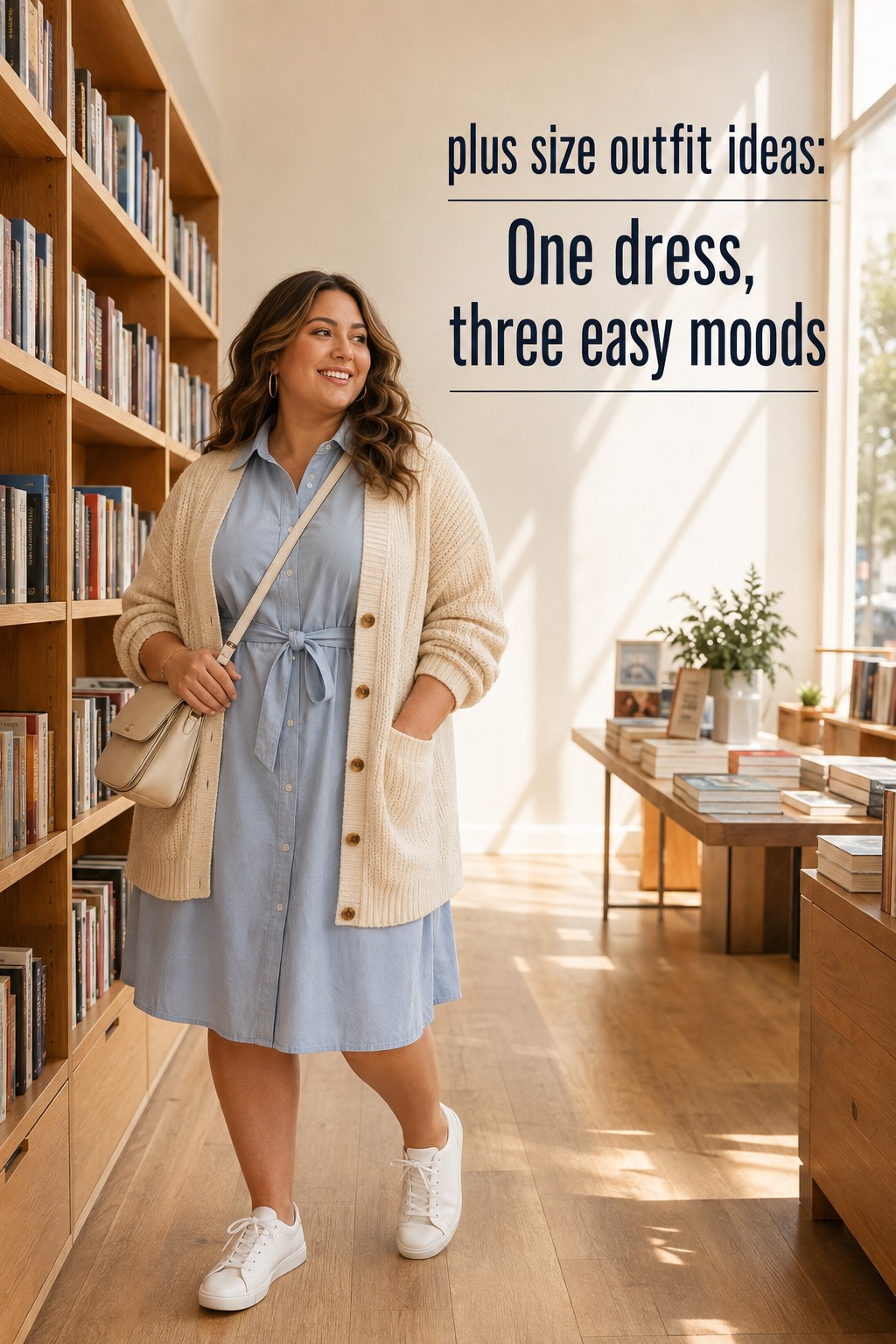
3. A shirt dress with a third-piece layer
A shirt dress is one of the easiest one-piece outfit ideas because it can shift between relaxed and refined. Wear it open over a tank and straight-leg jeans, button it with sneakers, or add a belt only if you enjoy the definition. A cardigan changes the mood to soft and approachable, while a blazer or cropped jacket makes it feel more tailored.
Look for buttons that do not pull across the fullest part of the bust and a skirt that gives you comfortable stride room. If the dress is very relaxed, add structure through shoes, a watch, or a firm handbag. If the dress already has a strong print or dramatic sleeve, let the accessories stay quiet.
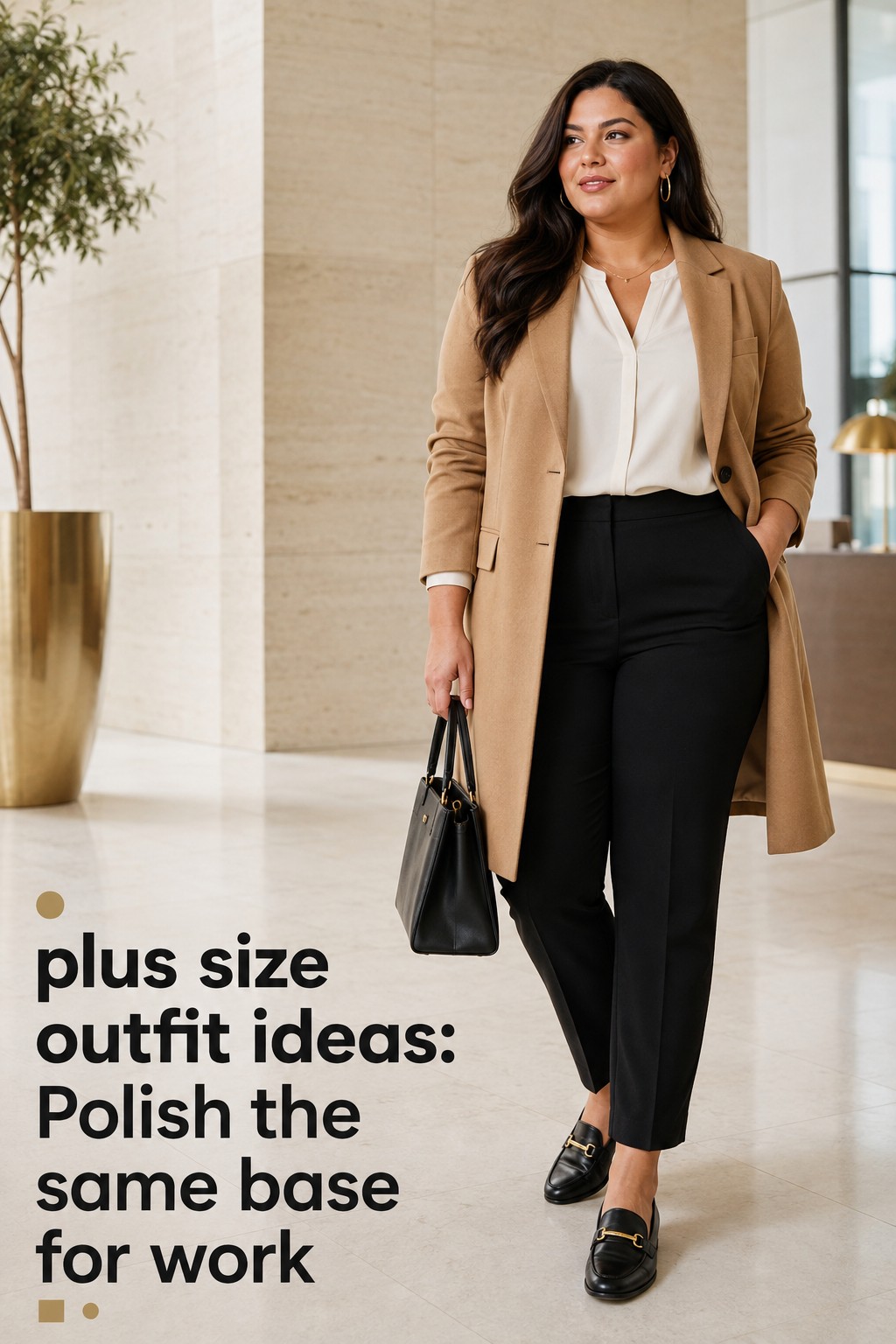
4. Stretch trousers, a blouse, and a longline layer
For work, appointments, or any day when you want to feel composed without wearing a suit, pair comfortable trousers with a blouse and a longer jacket. Ponte, stretch twill, and soft suiting can offer movement while still holding a clean line. Choose a blouse that can be worn out or partially tucked so you have options when the day changes.
The longline layer can be a blazer, cardigan, or lightweight coat. Keep an eye on the shoulder fit and the sleeve length. If the shoulders are too narrow, the layer will pull and make the whole outfit feel restrictive. If the shoulders fit but the body is too roomy, a tailor can sometimes make a small adjustment. A comfortable base plus one polished layer is often enough.
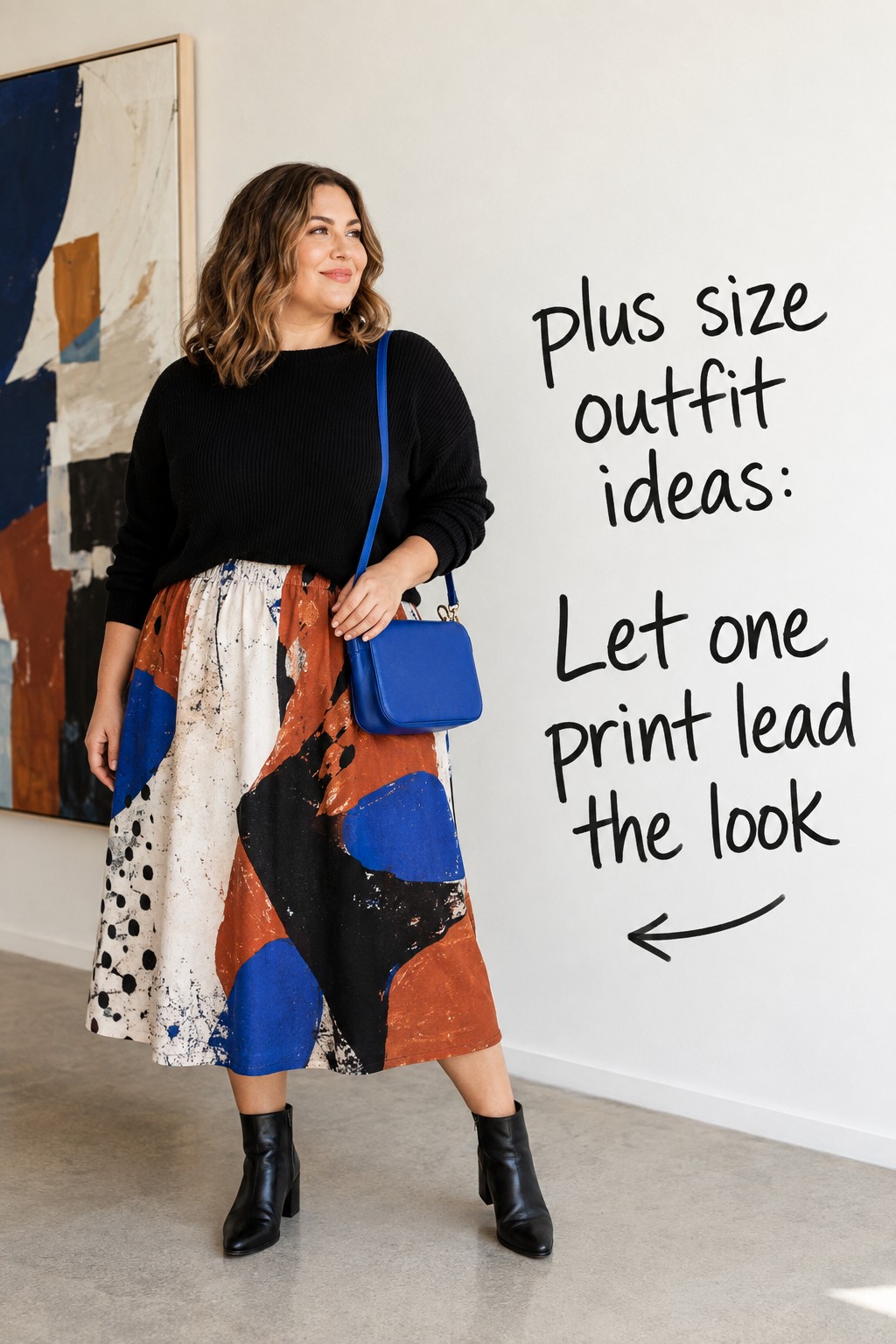
5. A midi skirt, a simple knit, and statement shoes
A midi skirt is a useful way to bring movement, color, or print into a capsule wardrobe. Pair it with a simple knit or tee so the skirt remains the focal point. The shoes can make the formula casual or expressive: sneakers for daytime, boots for cooler weather, or a bright flat for a more playful finish.
If you want more definition at the waist, try a partial tuck or a knit that finishes close to the waistband. If you prefer a relaxed line, choose a top that skims rather than clings and add a cropped jacket. A skirt outfit can also become a travel formula when you use a wrinkle-resistant fabric, a comfortable shoe, and a layer that works with other bottoms.
How to adjust proportion, fit, color, and comfort
When an outfit feels wrong, the answer is rarely that your body is wrong for the clothes. More often, one practical detail needs attention. Try changing one variable at a time so you can tell what helps. A different rise may fix a waistband problem. A shorter jacket may clarify the silhouette. A smoother fabric may make layering feel better.
Check the five fit points that affect the whole outfit
First, check the waistband while sitting. It should stay secure without digging or rolling. Next, check the rise and crotch depth. If you feel constant pulling when you walk or sit, try another cut instead of sizing up automatically. At the bust, look for gaping, button strain, and armhole comfort. At the sleeve, raise your arms and reach forward. Finally, check the hem with the shoes you will actually wear.
Sizes are not consistent across brands, so use the size chart and measure the garment when possible. A larger size is not a failure, and a smaller size is not an achievement. The useful size is the one that lets the garment do its job. For secondhand shopping, prioritize fabrics with recovery and inspect stress points for shine, stretched seams, or thinning.
Use proportion as a styling choice, not a body rule
Proportion describes how pieces relate to each other. A voluminous bottom may look balanced with a closer-fitting top, but it can also work with a roomy top when the layers have a clear hem relationship. A long cardigan over a long dress can feel elegant, while two awkwardly similar hems can make the outfit feel accidental. Use a mirror or a quick photo to see where the lines land.
Try these small adjustments: roll a sleeve, open a collar, show a bit of ankle, add a belt over a layer, or repeat one color in your shoes and bag. These details create intention without requiring a new wardrobe. Style should help you express a preference, not force you to disguise a feature.
Build a color palette that supports mixing
Choose two or three base colors you already enjoy wearing, then add one or two accent colors. Navy, black, denim, brown, cream, olive, and gray can all serve as foundations, but your palette can be brighter if that feels like you. The key is repetition. When a jacket, shoe, and bag share a color family, they connect more outfits automatically.
Prints can belong in a capsule too. Treat a print as a color map and pull out one shade for a cardigan, shoe, or lip color. This makes a statement piece easier to wear without making every item match. If you get bored with basics, add variety through texture, jewelry, scarves, or nail color rather than buying another nearly identical top.
Buying priorities, seasonal swaps, and mistakes to avoid
Before shopping, write down the three situations that most often create wardrobe stress. Maybe you need office outfits that survive a commute, casual looks that feel more finished, or travel pieces that layer easily. Shop for those gaps first. A beautiful item that solves no real problem can still be fun, but it should not take priority over a missing foundation.
Buy the piece that creates the most new combinations
When deciding between two purchases, count the outfits each one can join. A cardigan that works with jeans, trousers, a skirt, and a dress has more capsule value than a top that works with only one bottom. This does not mean every purchase must be practical. It means you can make a conscious choice about whether you are buying a workhorse, a statement, or a special-occasion piece.
- Buy a bottom only if you already own at least three tops that work with it.
- Test a top with the bra, layer, and movement you use in daily life.
- Choose shoes by the hours you can comfortably wear them, not only by appearance.
- Keep a note on your phone with outfit combinations that worked.
- Photograph successful looks so busy mornings have a ready-made starting point.
Make simple seasonal swaps
You do not need a completely different wardrobe for each season. In warm weather, use lighter denim, linen-blend trousers, breathable tees, and sandals or sneakers. When temperatures fall, keep the same base formulas and change the fabric weight: add a fine knit, tights, boots, a quilted vest, or a coat. A dress can move into fall with a turtleneck underneath, boots, and a structured jacket.
Weather changes also make accessories more important. A scarf, rain-friendly shoe, or compact layer can make a familiar outfit feel newly useful. Build a small seasonal transition zone rather than moving every item at once. Keep the pieces you are still wearing visible and store only what is truly out of rotation.
Skip the most common capsule mistakes
The first mistake is buying a fantasy lifestyle. If you work from home, rarely attend formal events, or spend most weekends walking, your capsule should reflect that. The second is choosing only shapeless comfort pieces and then wondering why outfits feel unfinished. Comfort and shape can coexist through fabric, seams, layers, and accessories. The third is keeping items that hurt because they look good on the hanger.
Another mistake is copying a formula without adapting it to your preferences. A tucked shirt may feel great for one person and distracting for another. A belt may be a favorite styling tool or something you never reach for. Use outfit ideas as prompts. Keep the parts that make you feel like yourself, and change the rest.
FAQ
What are the best plus size outfit ideas for everyday wear?
Start with a comfortable bottom, a top with a clear fit, and one finishing layer. Straight-leg jeans with a shaped tee and utility jacket, wide-leg pants with a knit, or a shirt dress with sneakers are reliable options. Add one personal detail such as color, jewelry, or a textured bag.
How many pieces should a plus size capsule wardrobe have?
There is no required number. Begin with the smallest group that covers your real week, often two or three bottoms, several tops, one dress, two layers, and a few shoes. Add pieces when you find a genuine gap, not because a capsule checklist says you should own them.
How can I make a casual plus size outfit look more polished?
Add a third piece, repeat a color, and choose a shoe with a clear shape. A blazer over a tee, a structured bag with jeans, or loafers with relaxed trousers can make a simple outfit feel intentional. Pressed or steamed fabric and neatly finished hems also make a noticeable difference.
What should I look for when buying plus size jeans?
Check the waistband while sitting, the rise while walking, the stretch recovery, and the hem with your everyday shoes. Look for enough room through the seat and thighs without excessive fabric at the waist. Compare the brand’s measurements instead of relying on the size number alone.
Can bright colors and prints work in a plus size capsule?
Yes. Treat a bright color or print as an accent or a statement base, then connect it to the rest of the wardrobe with one repeated shade. A printed skirt can work with a tee, cardigan, denim jacket, and several shoes. A colorful blazer can refresh neutral jeans and trousers.
How do I dress comfortably without wearing oversized clothes every day?
Choose comfort through soft fabrics, a supportive waistband, useful ease, and breathable layers rather than relying only on extra volume. Try one relaxed piece with one piece that has a clearer shape. A loose cardigan over straight jeans or wide-leg pants with a smooth knit can feel easy while still looking considered.
How can I create more outfits without buying more clothes?
Change the styling variables: tuck or untuck a top, layer a dress over pants, switch the shoes, add a jacket, repeat an accent color, or use different jewelry. Photograph combinations that work and group your most versatile pieces together. A visible, organized wardrobe makes experimentation more likely.
What is the easiest way to plan plus size outfit ideas for a trip?
Choose one color palette, two bottoms, three tops, one dress or jumpsuit, and two layers that coordinate. Wear your bulkiest layer during travel and pack shoes that can handle the activities on your itinerary. Test every outfit before packing, including the underlayers and shoes, so you know what feels comfortable for a full day.