9 Polished Ways: How to Wear a Scarf Year-Round (US)
How to Wear a Scarf: 12 Easy, Fashion-Forward Ways for Every Season
If you’re searching for how to wear a scarf, you’re probably after two things at once: warmth and a look that feels intentional. The good news is that scarves are one of the most flexible accessories you can own. With a few foundational wraps, a handful of knots, and a couple of creative non-neck options, you can adapt one scarf to everything from winter outerwear to breezy transitional-season outfits.
This guide breaks scarf styling into clear categories—easy neck wraps, structured knots, and non-traditional ways to wear a scarf (like a belt, top, or bag accessory). You’ll also get fabric-aware advice (thin silk versus thick wool), seasonal pairing ideas, and practical tips for keeping your scarf secure and comfortable.
Quick Start: Choose the Right Scarf for Your Look
Before you tie anything, take five seconds to match the scarf to the job. Many frustrations—bulky knots, slipping silk, ends that feel too short—come from using the right technique on the wrong scarf type. In general, lighter scarves invite smaller knots and styling versatility, while thicker scarves are best in wraps and minimal knots.
- Thin silk or lightweight fabric: Best for triangle styles, bows, bandana/choker looks, headscarves, and decorative bag ties.
- Medium-weight scarves: Great for classic drapes, French knot styles, and everyday neck looks that hold their shape without bulk.
- Thick wool or blanket-style scarves: Ideal for simple loops, once-around wraps, and warm, substantial winter styling—especially with coats.
- Narrow scarves vs. wide scarves: Narrow styles emphasize knots and clean lines; wide styles emphasize drape and layering.
Tip: If you want a polished, symmetrical look, choose a scarf that’s not overly thick and that glides easily when you adjust it. If warmth is the priority, choose a scarf that can wrap comfortably without needing complex knots.
Found the dress? Keep the rest in one place.
Zarellea brings guest details, vendors, timelines, and every next step together — so your wedding plan feels as good as your look.
Neck Wrap Techniques (Foundational Looks)
These wraps are the backbone of scarf styling because they’re fast, repeatable, and work with a wide range of outfits. They also pair especially well with outerwear, where you want a scarf to sit neatly under lapels or above a collar without constant readjustment.
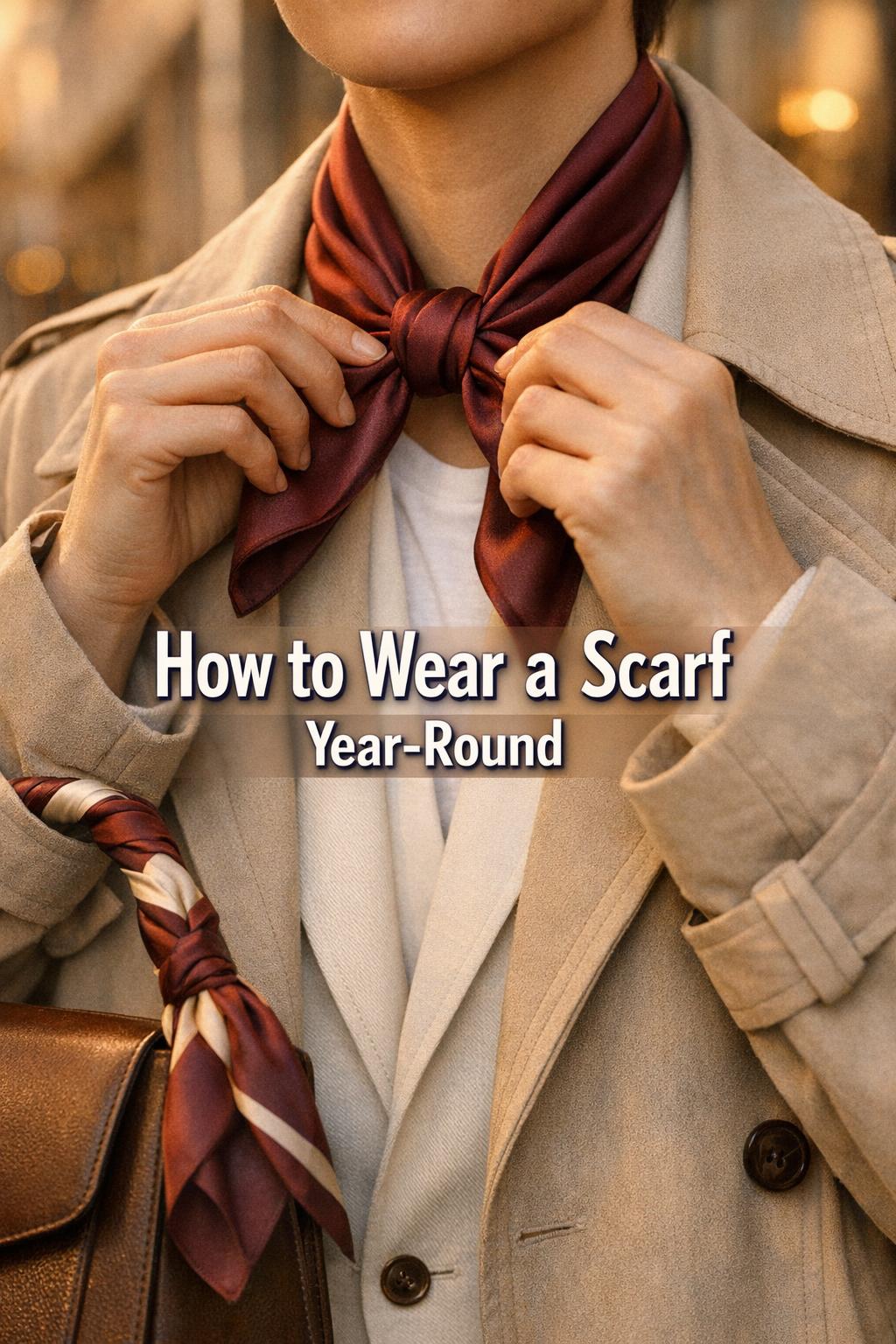
The Once Around
This is a timeless wrap that reads effortless and works particularly well in winter. It’s also one of the easiest ways to make a scarf look intentional without adding bulk at your neck.
- Drape the scarf around your neck with one end longer than the other.
- Wrap the longer end around your neck once.
- Let both ends fall naturally, then adjust so the wrap sits comfortably.
Tip: If you’re wearing a coat, try arranging the wrap so the scarf sits flat against your chest, then tuck the ends slightly into the coat opening for a cleaner, wind-resistant finish.
The Simple Loop
Think of this as the most practical “go-to” look. It’s quick, secure, and especially comfortable when you want warmth without a complicated knot. It’s also a common everyday approach in many quick-style guides.
- Fold the scarf in half lengthwise.
- Drape it around your neck so the folded end forms a loop on one side.
- Pull the two loose ends through the loop.
- Tighten or loosen until it feels comfortable.
Tip: For a less “tight” feel, don’t pull the ends all the way through. Keep the loop slightly open to create a relaxed collar effect.
The Classic Drape with One-Tail Tuck
This style is subtle and polished—great when you want a scarf to read more like a refined accessory than a cold-weather necessity. It’s also a clean solution when you’re layering with outerwear and don’t want too much volume at the neck.
Drape the scarf evenly around your neck so both ends hang down the front. Choose one end and tuck it into the neckline of your top or slightly into your coat opening. Leave the other end hanging free for a deliberate, asymmetric finish.
Tip: This is a strong option for medium-weight scarves that hold a soft shape; very slick silk may slide, while very bulky wool can look overly heavy.
The Toss-One-Side-Over-Your-Shoulder Drape
This street-style favorite is all about effortless drama. It works beautifully with coats and longer layers because it creates movement and a strong vertical line without looking overly “done.”
Drape the scarf around your neck and let both ends fall in front. Take one end and toss it over the opposite shoulder so it hangs down your back. Adjust the front so the remaining end still reads intentional and balanced.
Tip: If you’re in a windy area, pair this with a small securing move—like a discreet tuck under your coat lapel—to keep it from slipping off your shoulder.
The Airline-Hostess Wrap
This look is sleek, symmetrical, and especially effective with lighter scarves when you want a neat finish. It’s the kind of styling that feels intentional with minimal effort—excellent for workwear and simple outfits that benefit from a focal point at the neckline.
Center the scarf at the front of your neck, bring the ends around to the back, and cross them. Bring the ends back to the front and secure them in a tidy tie or tuck them neatly so the scarf forms a composed frame around the neck.
Tip: This style shines with silk or lighter materials where folds stay crisp. If the scarf is too thick, it can feel tight or bulky.
Knots & Ties: 6 Techniques for Structure and Texture
Knots give a scarf shape, hold, and visual texture. They’re ideal when you want your scarf to stay put, when you’re walking outdoors, or when you’re using a scarf as the main accessory in an otherwise minimal outfit. The techniques below range from beginner-friendly to slightly more involved, and several appear consistently in classic and editorial scarf guides.
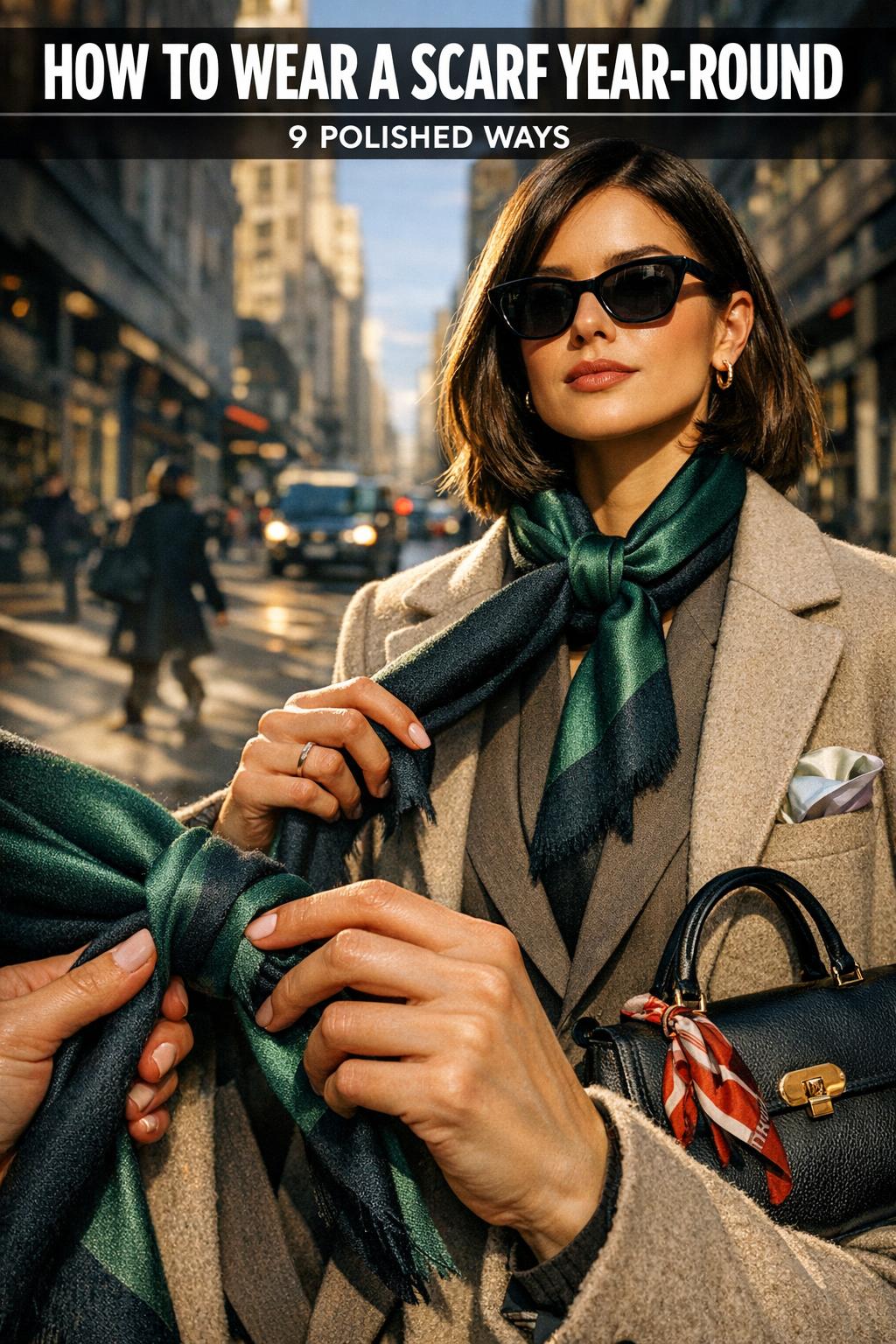
The Simple Tie Knot
This is a foundational knot that reads classic and straightforward. It’s a great choice when you want a scarf to feel secure but not overly styled.
- Drape the scarf around your neck with both ends in front.
- Tie the ends together once, like starting a shoelace.
- Adjust the knot higher for warmth or lower for a relaxed look.
Tip: Keep the knot slightly loose if you’re wearing a thicker scarf. Tight knots can add unnecessary bulk and feel restrictive.
The French Knot
The French knot is a recognizable, polished way to tie a scarf that feels a bit more styled than a simple tie. It’s often used with scarves that aren’t too bulky, where the knot can sit neatly at the neck.
Start with the scarf around your neck, then use a more deliberate knot placement at the center or slightly off-center. The goal is a tidy knot that frames the collar area and stays in place without looking overly tight.
Tip: This style is especially effective when you want a crisp neckline—consider it a scarf equivalent of a clean collar detail.
The Slipknot
This is the most “designed” of the foundational neck options: structured, secure, and visually interesting. It’s a go-to when you want a scarf to stay put and look intentional from the front.
- Drape the scarf around your neck with one end longer.
- Wrap the longer end around your neck once.
- Form a loose opening with the wrapped section and feed the other end through.
- Adjust until the knot sits comfortably and the ends look balanced.
Tip: For slippery fabrics, make the opening smaller and tighten gently. For thicker scarves, keep the knot looser so it doesn’t bunch at the throat.
The Hoxton/Chelsea Knot
You may see this knot referenced by name, which is part of the reason people search for specific “scarf knot names.” What matters most is the effect: a compact, stylish knot that holds well and looks clean from the front.
Use a neat, structured tying approach that creates a central knot and balanced ends. Keep the overall shape compact, and adjust the front so it looks deliberate rather than accidental.
Tip: If you’re learning knot names, focus first on results—compact versus draped, symmetrical versus asymmetrical—then match the technique to the look you want.
The Infinity Loop
The infinity look gives you a clean, rounded silhouette that feels modern and easy. It’s also one of the more secure ways to keep a scarf from shifting, especially if you don’t want ends hanging down.
Create a continuous loop effect by looping the scarf around your neck more than once so the scarf forms layered rings. Adjust the layers so the front looks even and the scarf sits comfortably without pressing on the neck.
Tip: This works best when the scarf has enough length to loop comfortably. If it feels tight after looping, switch to a single wrap or a draped style.
The Belt-Scarf Hybrid (A Structured Tie at the Waist)
If you like the idea of “scarf fashion” beyond the neck, a belt-scarf hybrid adds shape to your outfit while still feeling soft and playful. It’s also a strong way to incorporate a patterned scarf into a monochrome look.
Thread the scarf through belt loops or tie it at the waist over a dress, trousers, or a coat that looks good cinched. Aim for a secure knot and let the ends hang for movement, or keep them shorter for a cleaner line.
Tip: If the scarf fabric is slick, tie a firmer knot and keep the tails shorter so the scarf doesn’t slide out of place as you move.
Non-Neck Ways to Wear a Scarf: Accessories, Tops, and More
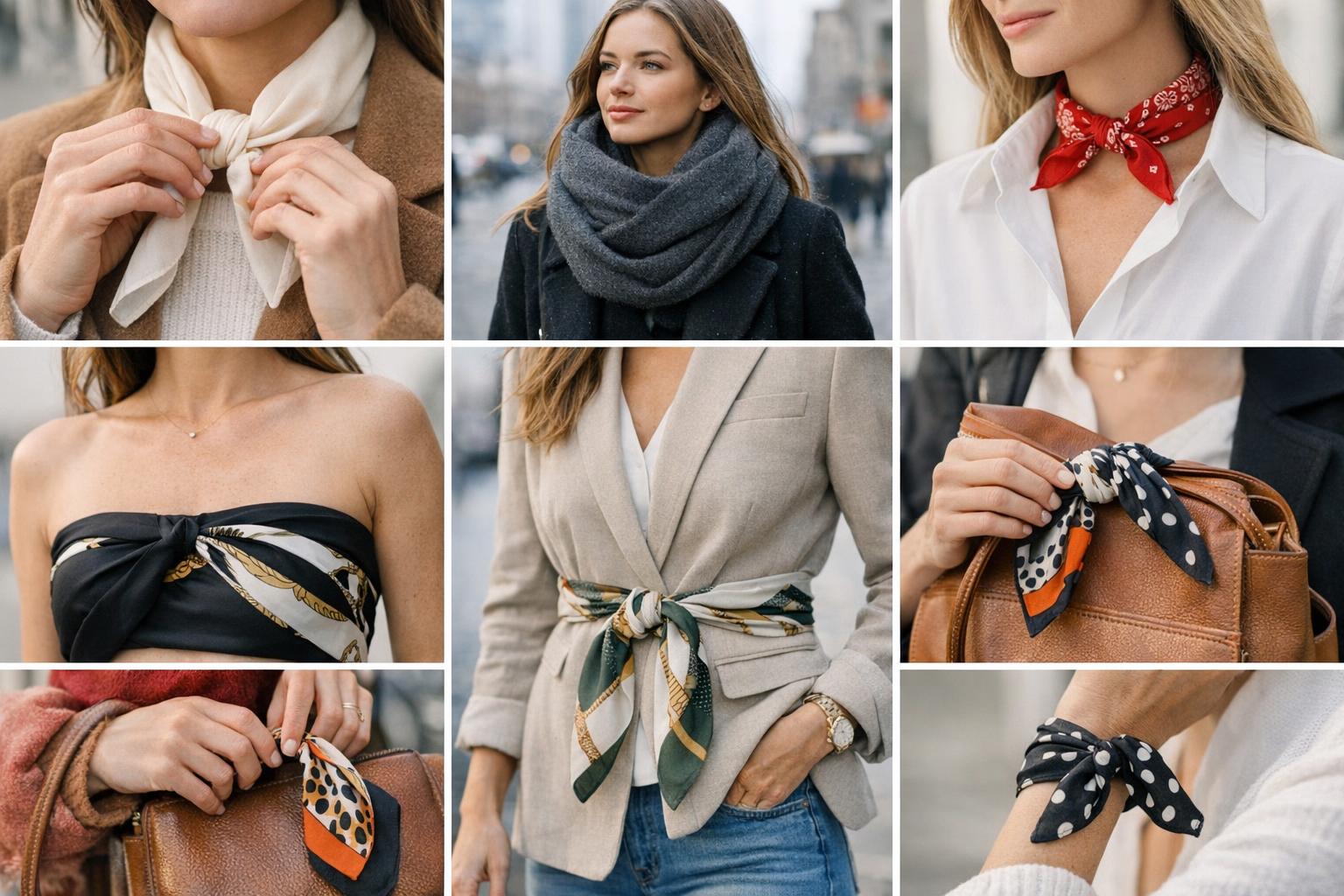
Some of the most useful scarf styling ideas have nothing to do with your neck. Editorial scarf guides frequently highlight how a scarf can become a top, a bag accent, a wrist detail, or even a functional accessory. These options are especially helpful in warmer months or when you want to refresh outfits without adding another piece of clothing.
Scarf as a Belt
Wearing a scarf as a belt is one of the easiest non-neck transformations. It adds color and pattern exactly where outfits often look plain: the waistline. It also creates shape when you’re wearing looser silhouettes.
- Fold the scarf into a long band (especially if it’s a silk scarf).
- Thread it through belt loops or wrap it around your waist over a dress or coat.
- Tie a knot or a small bow at the side or front.
Tip: If you want a more refined finish, keep the knot small and slightly off-center. If you want a playful look, make the bow more prominent.
Scarf as a Top (Bandeau or Shirt)
Wearing a scarf as a top is one of the most fashion-forward ways to use a scarf, and it shows up often in multi-season styling coverage. Depending on the scarf size and coverage you want, you can create a bandeau-style top or use a two-scarf approach for a more secure, styled “shirt” effect.
For a bandeau-style top, knot the scarf securely so it sits flat across the chest. For more coverage and stability, use two scarves: one can create the main front panel while the second supports the structure and helps tie more securely.
Tip: Prioritize security and comfort. Use firm knots and check that the scarf lies flat before heading out. Lightweight scarves tend to work best for shaping without bulk.
Headscarf Styling
A headscarf is both practical and expressive. It can read classic, bold, or minimal depending on how you fold and tie it. It’s also a great option in transitional seasons when you don’t need a full winter scarf around the neck.
Fold the scarf into a triangle or a band, place it over your head, and tie it securely. You can keep the knot under the chin for a retro-inspired feel, or tie it behind the head for a cleaner, modern finish.
Tip: For slippery silk, fold into a band rather than a loose triangle so it has more grip and sits more securely.
Wrap It Around Your Handbag (or Turn It Into a Bag)
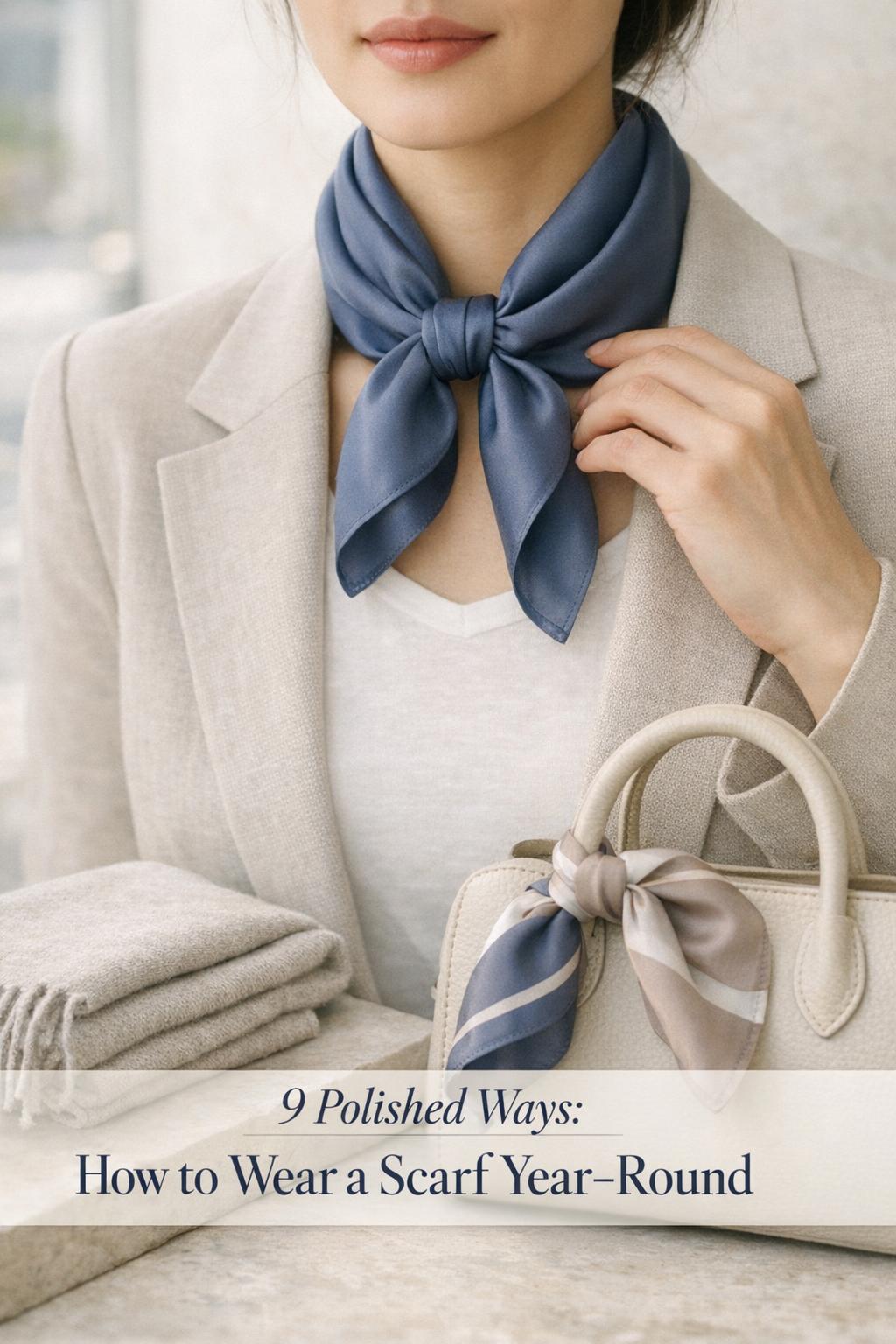
If you want to add personality to an outfit without changing your clothes, use a scarf on your bag. This is a fast styling trick that shows up in quick guides because it instantly adds color and texture.
Wrap the scarf around the handle of a handbag, tie it in a small knot, or let a short tail hang for movement. Some styling approaches also treat the scarf itself as a bag by tying it into a carryable shape.
Tip: Keep the knot snug when attaching a scarf to a bag so it doesn’t slip off as you walk. If the scarf is delicate, avoid pulling too hard when tightening.
Tie It Into a Bag (Quick Carry Option)
A scarf can become a functional carry piece in a pinch, and it’s also a playful styling statement. This is most effective with scarves that have enough fabric to hold shape when knotted.
Use strategic knots to form a pouch-like center and a handle you can hold or loop around your wrist. Keep the structure tight enough that the bag holds together, but not so tight that the fabric strains.
Tip: If you’re using a more delicate fabric, treat this as a light-duty option—better for small essentials than anything heavy.
Tie It Around Your Wrist
Wearing a scarf around your wrist is a small move that can make an outfit feel styled without much effort. It also works well when you want to coordinate with a bag scarf or a scarf belt for a cohesive theme.
Fold the scarf into a narrow band and wrap it around your wrist. Tie a small knot or bow, then adjust so the ends are short enough not to snag.
Tip: Keep this one streamlined. A large bow can feel bulky at the wrist, while a smaller knot looks intentional and is more comfortable.
Use It as a Sunglasses Strap
This is a clever way to make a scarf functional and stylish at once, especially when you’re wearing sunglasses often. It’s a playful detail that works best with lighter scarves that can tie neatly.
Secure the scarf to your sunglasses so it functions as a strap, then let it drape behind your neck or down your back. Keep the attachment firm and symmetrical so it looks deliberate.
Tip: If the scarf ends feel too long, shorten them with smaller knots so the strap doesn’t swing too much as you move.
Silk Scarf Styling: Triangle, Choker, Bow, and Bandana Variations
Silk scarf styles often look best when they’re folded with intention and tied with smaller, cleaner knots. Many classic scarf guides emphasize triangle-based looks, bows, and choker/bandana variations because silk holds crisp folds while still draping elegantly.
The Silk Triangle
The triangle fold is a foundation for several looks: neckwear, headscarf styling, and bandana-inspired options. It’s a simple way to make a square scarf feel purposeful.
- Fold the scarf diagonally to create a triangle.
- Place the long edge along your neck with the triangle point facing down (or up, depending on the look).
- Tie the ends behind your neck or at the side for a cleaner profile.
Tip: If you want less volume, fold the triangle again into a narrower band before tying.
The Bandana or Choker Look
A bandana/choker style brings focus to the neckline and pairs especially well with simple tops, blazers, or clean layers. It’s a strong choice in spring and summer when you want the scarf to act as an accessory rather than warmth.
Fold the scarf into a narrow band and wrap it around your neck. Tie a small knot at the front, side, or back. Keep the knot compact and the band smooth for a sleek finish.
Tip: If the scarf feels fussy, tie the knot slightly off-center and tuck tiny ends under the band for a cleaner, “finished” look.
The Bow
A bow is playful but can still look sophisticated when the scarf is folded neatly and the bow is sized appropriately. It’s a classic technique often featured in long-standing scarf guides because it instantly signals “styled.”
Wrap the scarf around your neck (or wrist, or bag handle), tie it once to anchor, then form a bow. Adjust the loops so they’re even, and tighten gently to keep the bow secure without crushing the fabric.
Tip: For a more refined look, keep the bow small and crisp. For a statement, let the loops be larger and the ends longer.
Seasonal Styling: Fabrics, Colors, and Outerwear Pairings
One reason scarves show up in multi-season fashion coverage is their ability to shift roles. In winter, they’re functional insulation and a finishing touch to coats. In warmer months, they become accessories—neck details, headscarves, bag accents, or tops.
Silk for Spring/Summer, Wool for Winter
Seasonal success is often about choosing the right weight. Lighter scarves suit warmer weather and more decorative tying, while thicker scarves suit winter layering and foundational wraps. If you find yourself overheating, move your scarf styling away from the neck and toward accessories like a bag tie or belt.
Tip: Think in roles: in cold weather, pick a method that seals in warmth (wraps, loops, secure knots). In transitional weather, pick a method that adds interest without insulation (bandana/choker, triangle, headscarf, bag wrap).
Layering with Outerwear
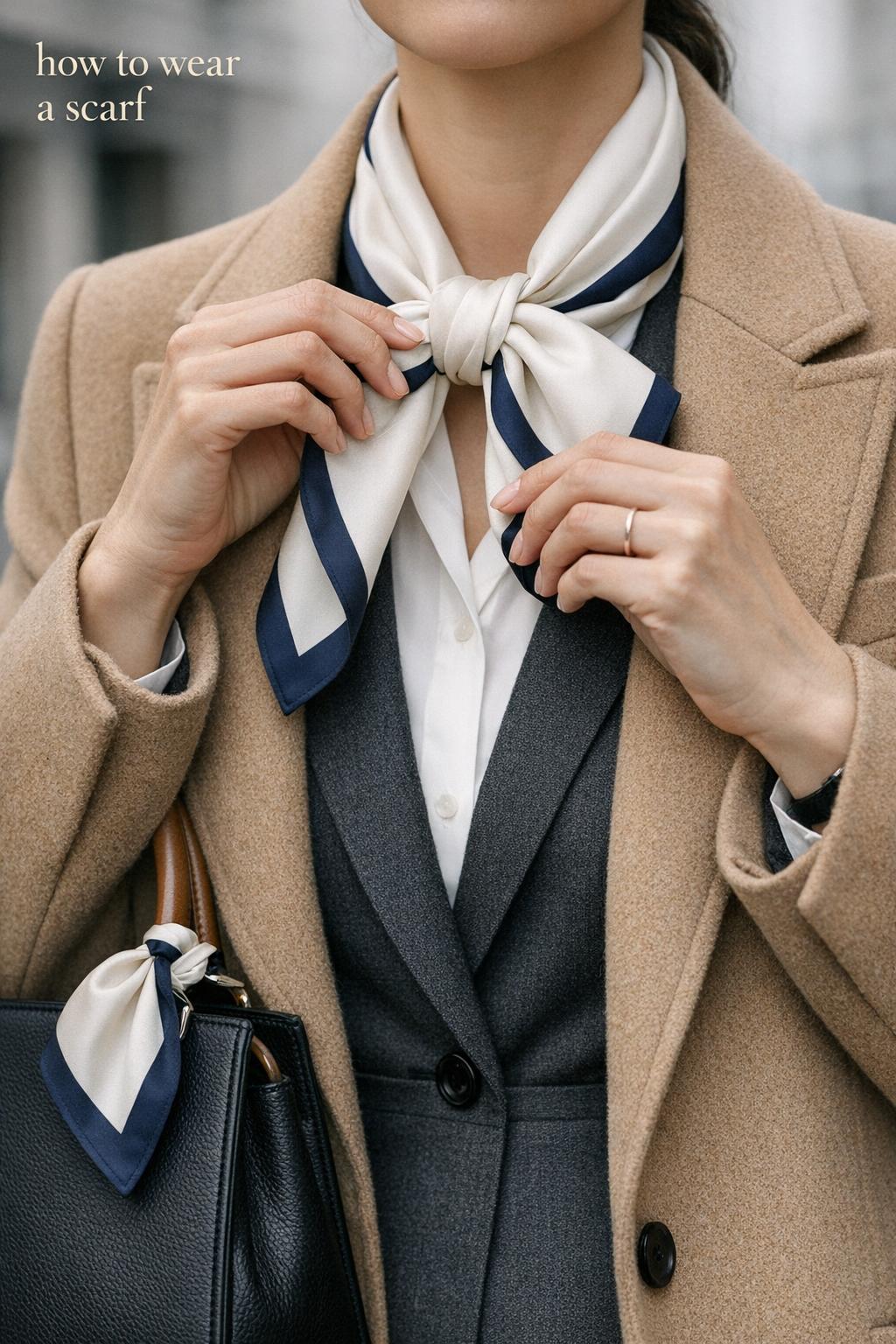
Scarves and coats work best when they don’t compete for space at the neckline. If your coat has a structured collar, a slimmer scarf or a simpler knot often looks cleaner. If your coat is more open or minimal, a thicker scarf can become the focal point.
Tip: When you’re wearing a scarf with a coat, aim for one “hero” element: either the scarf is the statement and the coat stays simple, or the coat’s collar and lapels are the focus and the scarf stays minimal and tidy.
Color Coordination and Pattern Mixing
Scarves can pull an outfit together when you treat them as the connector between pieces. Editorial approaches often lean on monochrome layering for a streamlined look or use a scarf to emphasize silhouette and focal points. If you like patterns, a scarf is a low-commitment way to add them without overwhelming your outfit.
Tip: If your outfit is already busy, choose a scarf in a simpler palette and let texture do the work. If your outfit is minimal, a patterned scarf can become the centerpiece—especially in a bow, triangle, or belt styling.
Practical Tips & Safety: Comfort, Security, and Fabric Care
Even the best scarf styling falls apart if it slips, scratches, or needs constant adjustment. A few practical habits—especially around knot security and delicate fabrics—make scarf wearing more comfortable and reliable.
Securing Knots for Windy Days
When it’s windy or you’re walking quickly, styles that rely on a loose drape can shift. Choose a more secure technique like a loop, a structured knot, or an infinity-style layering approach. If you prefer a draped look, use a discreet tuck into your coat opening or under a lapel to anchor the scarf without changing the style.
Tip: If you’re active—commuting, moving between buildings, or just don’t want to fuss—prioritize fewer loose ends. Less movement usually means fewer adjustments.
Fabric-Specific Handling (Silk vs. Thick Wool)
Different fabrics behave differently. Thin silk can slide and benefit from smaller, firmer knots and tighter folds. Thick wool can add bulk and tends to look best in wraps or minimal knots that don’t stack too many layers at the throat. If your scarf frays easily, avoid overly aggressive tightening and repeated untying.
Tip: If your knot won’t stay put, the solution is usually one of three things: a tighter knot, a different technique (loop or slipknot), or a different placement (slightly higher or lower on the neck so it grips better).
Comfort Checks That Make a Style Look Better
Comfort is a styling tool. When a scarf feels too tight, you’ll tug at it and distort the shape. When it’s too loose, it can slide around and look accidental. After you tie your scarf, do a quick check: breathe comfortably, turn your head easily, and make sure the scarf lies flat where you want it to frame the neckline.
Tip: If your scarf looks bulky from the side, reduce layers at the neck by switching from a knot to a drape, or from an infinity-style wrap to a once-around with longer ends.
Quick Reference: Your 12 Go-To Scarf Styles at a Glance
If you want a simple checklist you can return to, these are the 12 methods covered in this guide. Use it like a personal menu: pick one based on fabric weight, how much warmth you need, and whether you want a classic or fashion-forward vibe.
- The Once Around
- The Simple Loop
- The Classic Drape with One-Tail Tuck
- The Toss-One-Side-Over-Your–Shoulder Drape
- The Airline-Hostess Wrap
- The Simple Tie Knot
- The French Knot
- The Slipknot
- The Hoxton/Chelsea Knot
- The Infinity Loop
- Scarf as a Belt (including belt-scarf hybrid)
- Scarf as a Top (bandeau or two-scarf shirt method)
Tip: If you’re building confidence, start with three: a warm wrap (once around), a secure everyday option (simple loop), and one fashion-forward move (scarf as belt or bag wrap). Once those feel natural, add knots and silk variations.
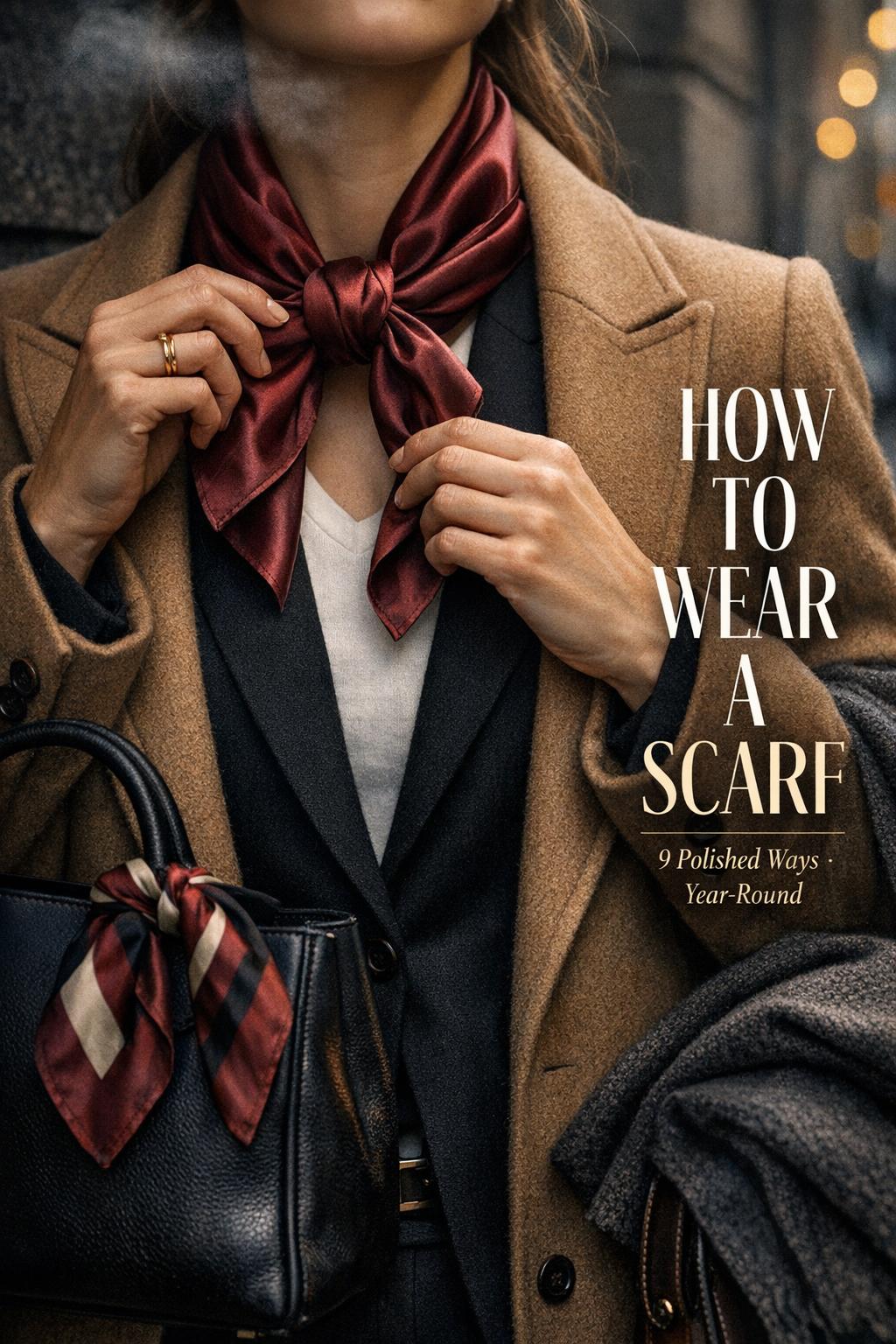
FAQ
Which scarf length should I choose for a specific style?
Longer scarves are generally easier for wraps, loops, and layered looks like an infinity-style arrangement, while shorter or square silk scarves work best for triangle folds, bandana/choker styles, and bows. If a style feels tight or impossible to loop, switch to a drape or a simpler wrap that needs less length.
How do I wear a scarf with a coat without looking bulky?
Choose a technique that minimizes layers at the neck, such as the once-around wrap, a classic drape with a tuck, or a tidy knot that sits flat. If your scarf is thick, avoid complex knots and focus on clean wraps that distribute volume across the chest rather than stacking it at the throat.
What are the easiest scarf tying techniques for winter?
The simplest winter-friendly options are the once-around wrap and the simple loop because they add warmth quickly and stay in place with minimal adjustment. For more structure, a slipknot-style approach can look intentional while remaining secure in colder weather.
How can I keep a silk scarf from slipping?
Use tighter folds and smaller, firmer knots, such as a compact bandana/choker tie or a neatly positioned triangle fold tied securely. If it still slides, adjust placement so the scarf grips better at the neckline, and avoid overly loose drapes that depend on friction to stay put.
How do I wear a scarf as a top without constant adjusting?
Use secure knots and aim for a flat, even wrap across the chest, and consider a two-scarf method for added stability and coverage. Lightweight scarves generally shape better, and a careful tightening step at the end helps the top stay in place longer.
Can I wear a scarf in warm weather?
Yes—choose lightweight fabric and use the scarf as an accessory rather than insulation, such as a bandana/choker tie, a headscarf, a bag handle wrap, or a waist belt. These approaches add style without the heat of a winter wrap.
What’s a good scarf style when I want something polished for work?
A classic drape with a one-tail tuck or a neat, symmetrical wrap like the airline-hostess style tends to look composed and intentional. These methods keep the scarf controlled and frame the neckline cleanly, which pairs well with structured outfits and outerwear.
What’s the difference between a simple knot and a more structured knot like a slipknot?
A simple knot is a straightforward tie that adds minimal structure and is easy to adjust, while a slipknot-style method creates a more designed front shape and typically holds more securely. If you want more texture and less movement, the slipknot approach is often the better choice.
Can scarves be worn with active outfits or on the go?
They can, but it’s best to choose secure styles with fewer loose ends, such as a loop or an infinity-style wrap, or to use a discreet tuck into outerwear so the scarf stays put. If you’ll be moving quickly or dealing with wind, avoid very loose drapes that shift easily.