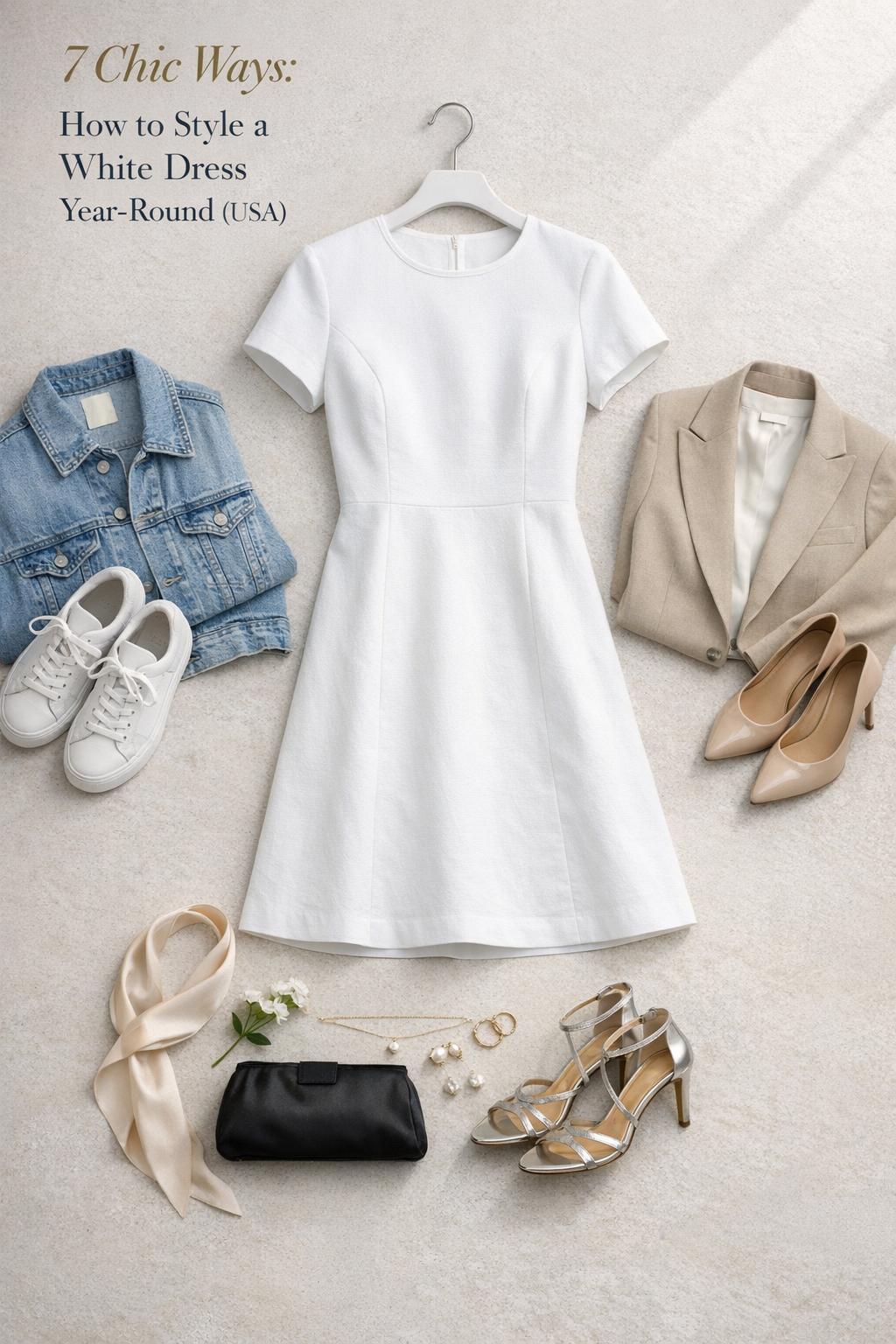
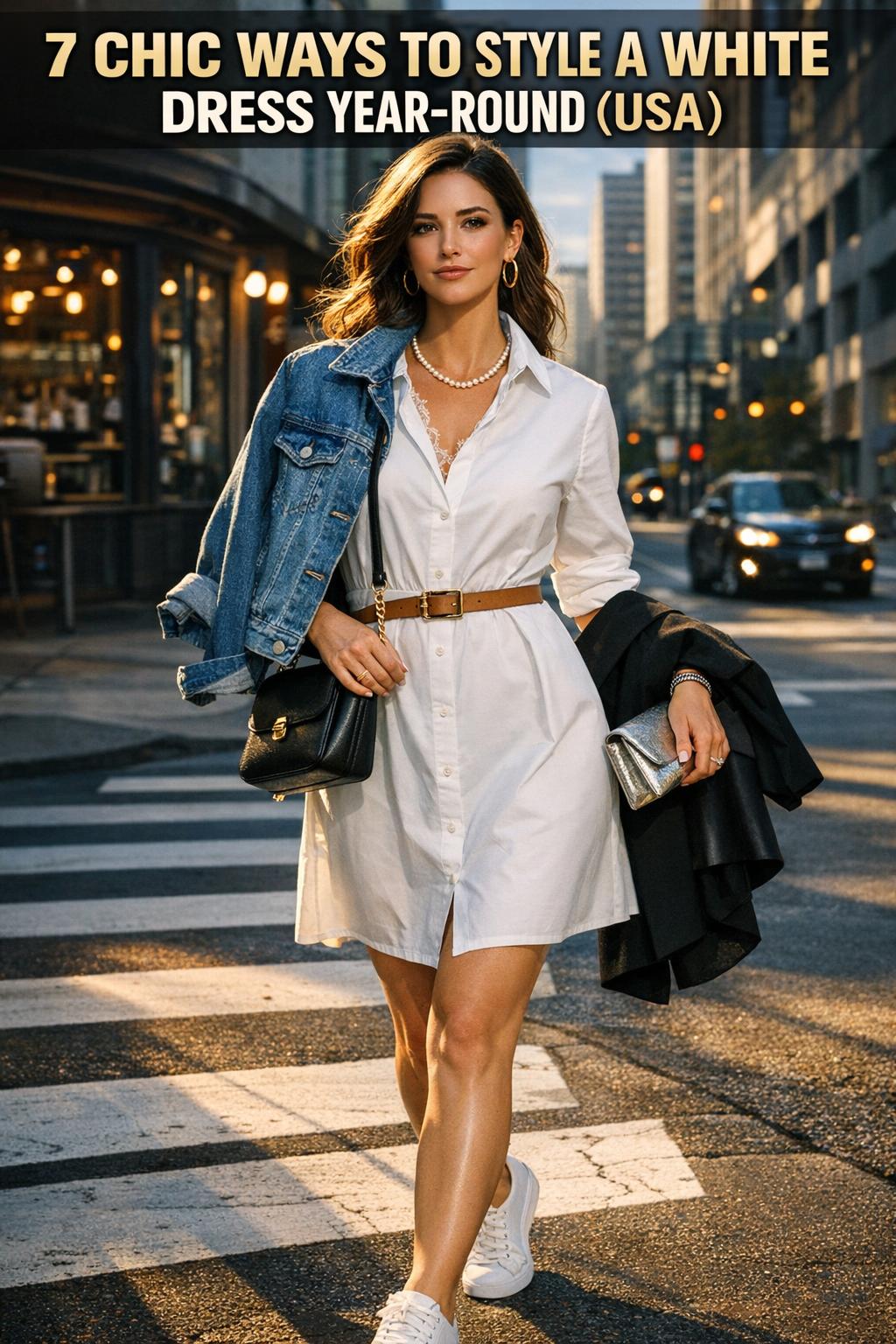
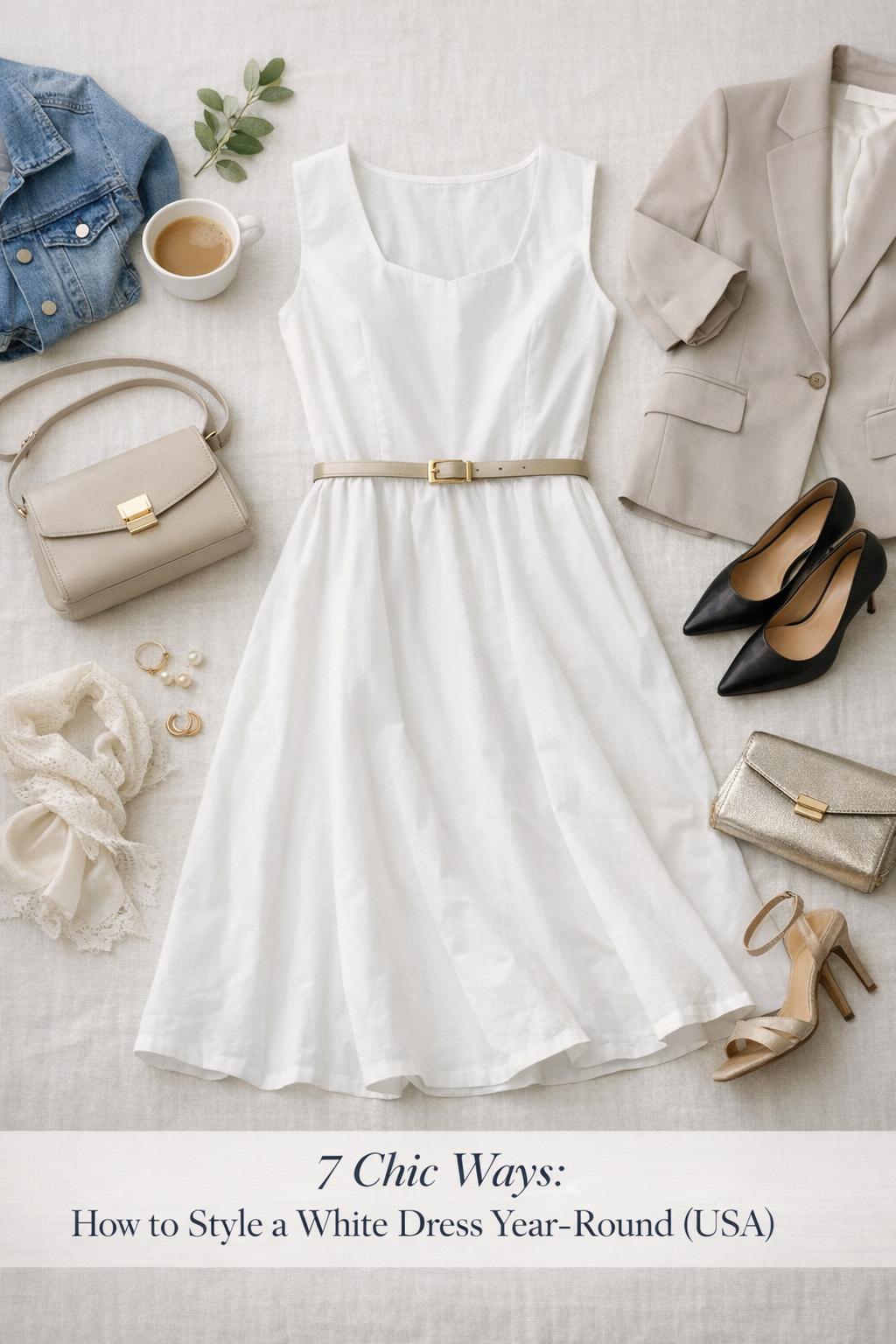
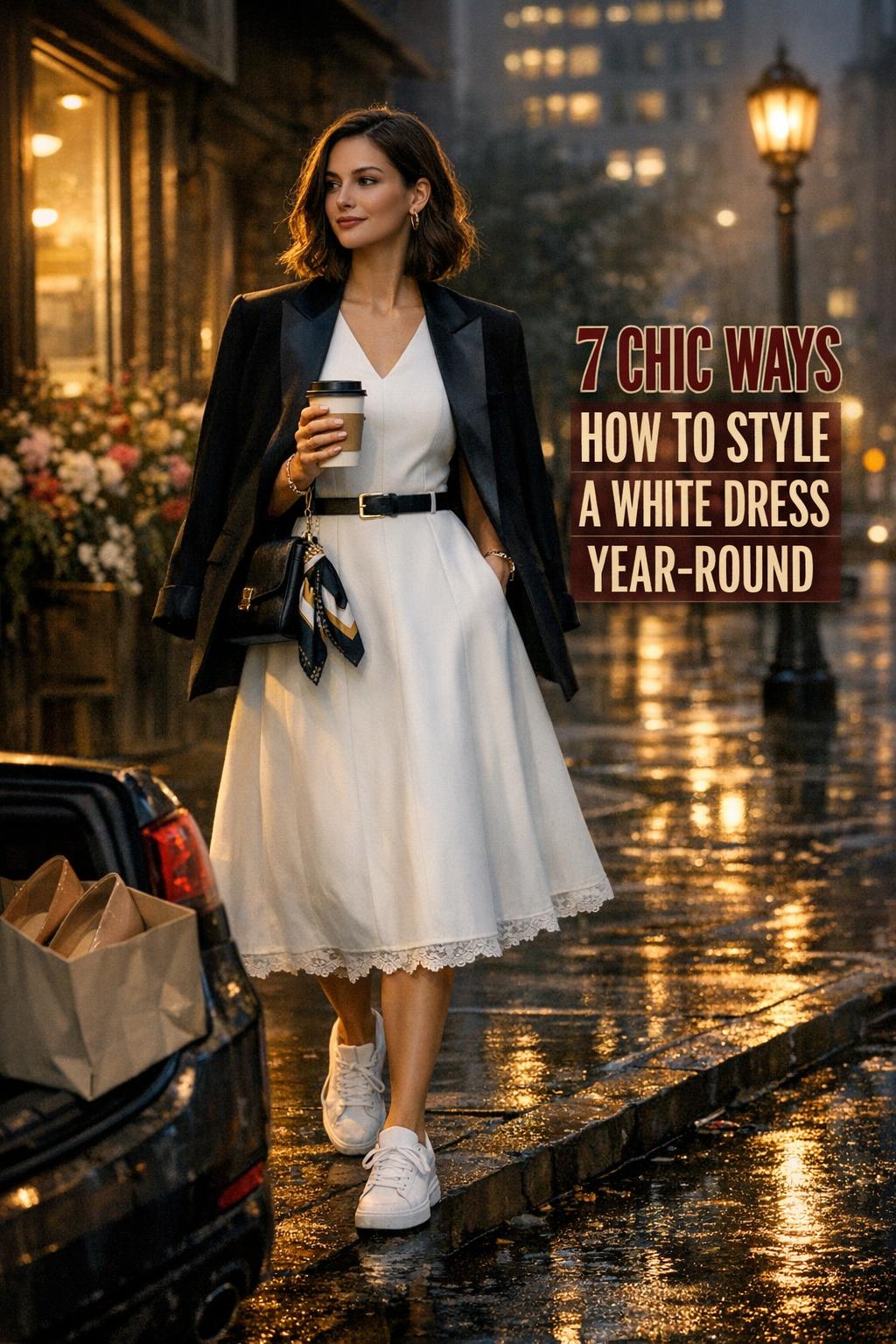
7 Chic Ways: how to style a white dress Year-Round (USA)
How to Style a White Dress: The Ultimate US-Style Guide for 2026
A white dress is one of the most versatile pieces you can own, but it can also feel intimidating: it shows stains easily, it can read “too bridal” in the wrong context, and it often gets labeled as “summer-only.” If you’ve been wondering how to style a white dress so it works for real life—casual weekends, office days, weddings, and evenings—this guide breaks it down into simple choices you can repeat.
We’ll start with the foundations (fabric, fit, silhouette), then move into outfit templates you can copy: everyday looks, dressier styling, seasonal/event ideas, and a practical accessorizing toolkit. You’ll also get care and maintenance guidance so your white dress stays bright and wearable, plus a capsule of five complete looks that show how to dress a white dress up or down without buying a whole new wardrobe.
Understanding Your White Dress: Fabric, Fit, and Silhouette
Before you add shoes, jewelry, or layers, take a quick look at what you’re working with. The fabric, fit, and silhouette of your white dress determine how it drapes, how formal it feels, and what types of accessories and outerwear will look intentional (rather than accidental).
Fabric matters: cotton, silk, satin, lace, and blends
White dresses can look dramatically different depending on fabric weight, texture, and sheerness. Cotton tends to read clean and casual (easy for day-to-day wear), while silk and satin lean dressier because of their drape and sheen. Lace adds texture and romance, but it can also shift the vibe toward “occasion” dressing, so your accessory choices matter more.
Found the dress? Keep the rest in one place.
Zarellea brings guest details, vendors, timelines, and every next step together — so your wedding plan feels as good as your look.
Use fabric as your “formality dial.” If the dress already feels elevated (silk, satin, lace), you can keep accessories simpler for balance. If it’s more casual (cotton or a straightforward blend), you can push the look dressier with metallic accents, a structured bag, or more polished shoes.
Tip: If your white fabric is at all sheer, plan your underlayer strategy before you plan your outfit. Getting the foundation right makes the entire look feel more confident and refined, whether you’re styling a white dress for work or for an event.
Fit and silhouette: A-line, wrap, shift, sheath
Silhouette influences what looks proportional and polished. A-line shapes often pair easily with everything (sneakers, sandals, boots), while wrap dresses naturally create definition at the waist and can handle both casual and dressy accessories. Shift dresses feel modern and simple; they often look best with clean lines in shoes and bags. Sheath silhouettes typically read more formal and look especially sharp with structured outerwear.
Think of silhouette as the “architecture” of the outfit. If the dress is flowy, add structure with a blazer, a belt, or a more tailored jacket. If the dress is already structured, you can soften it with accessories like pearls, a scarf, or a slightly more relaxed bag.

Everyday and Casual Looks (Day-to-Day Wear)
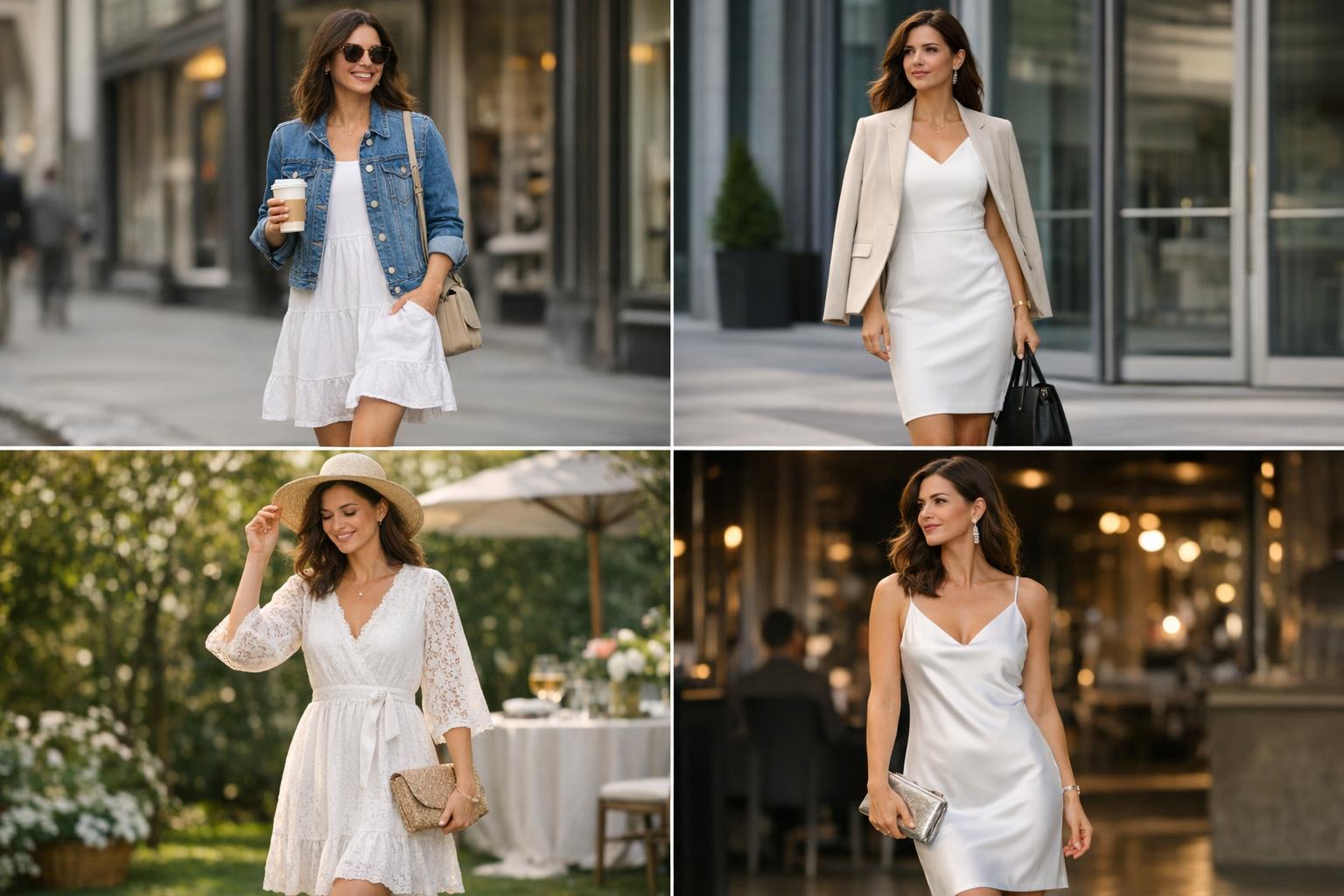
Casual white dress outfits work best when you keep the styling simple and intentional. The goal is to make the dress look wearable and lived-in—easy enough for errands or coffee—without losing the crisp freshness that makes white so appealing.
Casual with sneakers
One of the easiest ways to dress down a white dress is pairing it with sneakers. This combination turns “pretty” into “practical” immediately and suits a wide range of silhouettes, from A-line to shift.
- Keep jewelry minimal for an effortless feel (a simple metal tone or subtle pieces).
- Choose a streamlined bag to avoid visual clutter; a small crossbody works well for day-to-day.
- If your dress has texture (lace or crochet), keep the rest of the outfit clean and simple so it doesn’t feel costume-like.
Tip: If you want your white dress with sneakers to look intentional (not like you forgot to change shoes), echo the sneaker’s vibe in your accessories—keep lines clean and avoid overly formal bags or heavy evening jewelry.
Layering with denim and knits
Layering is how you expand a white dress beyond a single season and make it feel more styled. Denim jackets are a classic choice for relaxed structure, while knits like cardigans add softness and a cozy, approachable feel.
A denim jacket can create an easy contrast against the crispness of white, especially for casual weekend wear. A knit layer works well when you want a gentle, low-key outfit—think brunch, travel days, or a simple daytime plan where you still want to look put-together.
- Denim jacket + white dress: a straightforward way to add structure and casual energy.
- Cardigan + white dress: a softer, more relaxed silhouette for day-to-day styling.
- Light layering: helpful when you want the dress to transition across temperatures and settings.
Tips for layering with confidence: Keep one part of the look “clean” (either a sleek shoe or a simple bag) so the outfit doesn’t feel overly busy. White acts like a blank canvas, but too many competing elements can overwhelm its simplicity.
Dressier and Evening Looks
To style a white dress for evening, focus on three levers: shoe polish, accessory shine, and structured finishing layers. White can look incredibly elevated at night, especially when you use metallic accents or refined pieces that add depth without overpowering the base.
Heels, clutches, and metallics
Heels instantly shift a white dress into “evening.” Metallic jewelry and a clutch add a sharper, dressier finish, especially if your dress fabric is already elevated (silk, satin, or lace). If your dress is simple cotton, metallics can be the element that transforms it.
- Heels: an easy way to increase formality and lengthen the line of the outfit.
- Clutch: keeps the silhouette sleek and reads more event-ready than a casual tote.
- Metallic accents: add light-catching detail that works especially well for evening.
Tip: If you’re wearing statement accessories, keep the rest of the styling clean. A white dress already draws attention; let one focal point (shoes, jewelry, or bag) lead the look rather than competing elements.
Outerwear for evening events
Outerwear can define the mood of a white dress, especially after dark. A structured blazer can make the outfit look polished and intentional, while more tailored outerwear supports formal white dress styling without needing heavy embellishment.
This is also where fit and silhouette matter. A sheath or shift dress pairs naturally with clean, structured layers. A flowy silhouette often benefits from a slightly more defined outerwear shape to keep the outfit balanced.
Tip: For evening styling, aim for a clear contrast in structure: if the dress is soft and drapey, choose sharper outerwear; if the dress is sleek and structured, you can keep outerwear simple and let accessories do the work.
Seasonal and Event-Based Guides
White dresses aren’t limited to one season or one kind of plan. With the right accessories, layers, and shoe choices, you can wear white for summer events, professional settings, and beyond. The key is dressing for the occasion’s expectations while keeping the look fresh and personal.
Summer weddings, garden parties, and brunch
For summer styling, lighter fabrics and breathable silhouettes naturally feel right. The biggest styling challenge in this category is staying appropriate for the event while still feeling like yourself. Think “light, elevated, and comfortable,” especially when you’re outside for long stretches.
- Keep accessories refined and purposeful: a small bag and thoughtful jewelry can elevate even a simple dress.
- Choose footwear that makes sense for the setting (especially outdoors), so the look stays practical and confident.
- Add a subtle color accent if you want dimension without losing the clean effect of white.
Tip: If you’re figuring out how to style a white dress for a wedding guest look, prioritize event-appropriate polish. Your dress can be simple, but details like shoes, bag, and jewelry should look considered so the outfit reads “special occasion” rather than “everyday.”
Work-appropriate and professional settings
A white dress can absolutely work in professional settings when the styling is restrained and the silhouette feels office-friendly. Keep accessories subtle, avoid overly loud elements, and lean into structure: a blazer, a streamlined bag, and clean footwear can make a white dress look sharp and intentional.
The simplest approach is to treat your white dress like a neutral foundation and build a “polished capsule” around it: structured outerwear, understated jewelry, and a professional bag. This formula works well because it creates a clear message—put-together and work-ready—without needing trend-heavy additions.
Tips for professional white dress styling: Keep the outfit’s lines clean, avoid overly fussy accessories, and aim for balanced proportions. If the dress is minimal, don’t overcomplicate it—one structured layer can be enough to make the look feel office-appropriate.
Accessorizing Toolkit (Jewelry, Bags, Shoes)
Accessories decide whether your white dress feels casual, romantic, minimalist, or glam. When you’re unsure what to wear with a white dress, start with one anchor category (shoes, jewelry, or bag) and let the others support it. This keeps the outfit cohesive and prevents the “blank canvas overload” problem.
Jewelry combos: gold, silver, pearls
White plays well with multiple metal tones, so you can choose jewelry based on the vibe you want. Gold often reads warm and classic, silver can feel sleek and modern, and pearls can add a soft, refined finish—especially when your dress already has romantic texture like lace.
- Gold jewelry: a warm, classic pairing that can make white feel richer.
- Silver jewelry: a clean, modern option for minimal or structured looks.
- Pearls: a refined, romantic choice that complements textured fabrics.
Tip: If your dress has a lot of texture (lace, crochet), keep jewelry simpler. If the dress is plain and minimal, you have more room to make jewelry the focal point.
Shoes by vibe (sandals, flats, pumps, boots)
Choosing shoes for a white dress is less about rules and more about matching the mood and the length of the dress to the occasion. Sandals and flats generally skew daytime, pumps help you dress up a white dress quickly, and boots can add contrast and edge when you want a stronger style statement.
Start with your destination: casual errands, a professional setting, an evening event, or an outdoor party. Then choose the shoe type that matches the level of polish you need. If you’re aiming for “effortless,” keep lines simple; if you want “glam,” push the shine or structure of the shoe.
- Sandals: best for warm-weather, relaxed outfits and easy daytime plans.
- Flats: practical for day-to-day and a clean, understated finish.
- Pumps: a fast path to dressy white dress styling.
- Boots: add contrast and can shift a white dress into a more edgy or street-style direction.
Bags, belts, and scarves
Bags, belts, and scarves are your high-impact tools for transforming the same dress into multiple looks. A structured bag can make a simple white dress look more polished, while a softer bag can keep things casual. Belts break up an all-white outfit and can add shape, and scarves can introduce color or texture without changing the dress.
Tip: If you’re building a repeatable styling system, pick one “signature” add-on you love—like a belt or a go-to bag shape—and use it as your consistent styling thread across different occasions.
Color and Texture Play: Adding Depth Without Overpowering White
A common challenge with white dress outfits is that they can feel flat if everything is too uniform. The answer is dimension: texture, subtle color accents, and intentional layering. You don’t need loud elements—just enough contrast to make the look feel designed.
Belts, scarves, and props to break up white
If you love the clean look of an all-white outfit but want more definition, add one element that creates a break in the silhouette. A belt can define the waist and introduce texture. A scarf can bring movement and a small pop of color near the face. Even a standout bag can create enough contrast to give the outfit depth.
- Add a belt to create shape and break up a single block of white.
- Use a scarf for a small, controllable color accent.
- Let one accessory be the “contrast piece” and keep everything else quiet.
Tip: When you’re adding color to a white dress, start small. A single accent often looks more elevated than multiple competing colors, especially if you want the outfit to feel modern and intentional.
Mixing textures (lace, crochet, satin) for dimension
Texture is the easiest way to add visual interest while keeping a mostly monochrome feel. Lace and crochet add softness and romance; satin adds sheen and a dressier mood; knits add a casual, cozy layer. If your dress already has strong texture, you can keep everything else minimal. If your dress is plain, texture can come from a layer or accessory.
Tip: Balance is what makes texture look expensive. If one piece is visually “busy,” keep the rest of the outfit streamlined so the textures read as deliberate rather than chaotic.
Care, Maintenance, and Longevity
White dresses reward good care. A little prevention and a consistent routine can keep white fabric looking bright and wearable longer, and it also makes styling less stressful because you’re not worried about every moment turning into a stain emergency.
Stain prevention and quick fixes
With white, timing matters. When something spills or marks the fabric, the best approach is to act quickly and gently so you don’t set the stain or damage delicate fibers. The goal is to stabilize the situation until you can properly clean the dress according to its fabric needs.
- Address marks as soon as you notice them so they don’t settle into the fabric.
- Be extra careful with delicate materials like silk, satin, and lace to avoid damage.
- Plan ahead for higher-risk moments (food, drinks, outdoor seating) with thoughtful styling choices that keep you comfortable and confident.
Tip: If you’re wearing white to an event, choose accessories that reduce fuss—an easy-to-carry bag and comfortable shoes help you move naturally, which can lower the chance of accidental stains.
Washing and storage guidelines
White fabric maintenance is about consistency. Follow care steps appropriate to the fabric (cotton vs. delicate materials like silk, satin, and lace), and store your dress thoughtfully so it stays fresh between wears. The more you protect the fabric, the more your dress will keep its clean, bright look over time.
Tip: If you want your white dress to remain a reliable go-to piece, treat cleaning and storage as part of styling. A well-kept dress looks better with fewer accessories—and that simplicity is one of white’s biggest strengths.
Real-Life Capsule: 5 Complete Looks You Can Copy Now
If you want maximum wear from one dress, a capsule approach makes styling fast. Use the same white dress as the base, then rotate shoes, jewelry, bags, and outerwear to create distinct outfits. Below are five complete templates designed to cover common real-life situations without needing a closet overhaul.
Look 1: Minimalist day-to-night
Start with a clean foundation: your white dress and simple jewelry in one metal tone. For daytime, keep the look easy with a practical bag and comfortable shoes. For night, swap to a clutch and dressier shoes and add one refined accent (like metallic jewelry) to shift the mood quickly.
Look 2: Boho-chic garden party
Lean into texture. If your dress has lace or crochet, keep accessories complementary and not too sharp. Add a scarf for movement or a small color pop, choose comfortable event-appropriate footwear, and keep the bag compact so the silhouette stays light and intentional.
Look 3: Polished office-ready
Go structured and restrained. Pair the dress with a blazer or tailored outerwear and keep accessories subtle: a streamlined bag and refined jewelry. This is the easiest way to make a white dress feel professional and purposeful while still fresh and modern.
Look 4: Evening glam
Make shine and structure do the work. Choose heels, a clutch, and metallic accents for instant elevation. If your dress is minimal, you can go slightly bolder with accessories; if the dress is satin, silk, or lace, keep the styling sleek and let the fabric be the centerpiece.
Look 5: Weekend street style
Keep it relaxed but styled: sneakers, minimal jewelry, and a confident layer like denim. This look is about contrast—white looks crisp, denim looks casual, and sneakers make it wearable. If you want extra dimension, add one accessory (belt, scarf, or a standout bag) as your focal point.
Tools and Resources: Make White-Dress Styling Easier
White dresses become dramatically easier to style when you treat them like a repeatable system instead of a one-off outfit. Use the ideas below as a simple workflow: pick an occasion, choose your “formality dial” (shoes + bag), and then add one finishing detail (jewelry metal, scarf, or belt) to lock in the vibe.
Downloadable capsule checklist (make your own)
Create a short checklist for your closet so you can build outfits quickly. Keep it simple: one pair of casual shoes, one pair of dressy shoes, one structured outerwear option, one casual layer, one evening bag, one daytime bag, and a small set of jewelry options (gold, silver, pearls). With these pieces, you can cover most situations a white dress needs to handle.
Palette picker approach (quick decision tool)
When you’re unsure about accessory colors, limit yourself to one accent direction per outfit: keep it all-neutral, go metallic, or add one controlled color pop through a scarf, belt, or bag. This keeps your white dress as the anchor and prevents the outfit from feeling scattered.
FAQ
Can I wear a white dress after Labor Day?
Yes—white dresses can be styled year-round by shifting your layers and accessories; add structured outerwear (like a blazer) and choose shoes and textures that match the season so the look feels intentional rather than strictly “summer.”
How do I dress up or down a white dress quickly?
To dress it down, use sneakers and minimal jewelry; to dress it up, switch to heels, add metallic accents, and carry a clutch, then finish with structured outerwear if you want an even more formal look.
What are the best accessories for a white dress?
The most reliable accessories are simple jewelry (gold, silver, or pearls), a bag that matches the occasion (daytime vs. clutch for evening), and one optional “contrast” piece like a belt or scarf to add dimension without overpowering the white.
What shoes work best with a white dress?
Choose shoes based on vibe and setting: sneakers for casual wear, sandals or flats for daytime ease, pumps for a dressier finish, and boots when you want a stronger contrast and a more street-style direction.
How do I style a white dress for work?
Keep the styling polished and restrained by adding a blazer or structured outerwear, choosing a streamlined bag, and sticking to subtle jewelry so the outfit reads professional and intentional.
How do I style a white dress for an evening event?
Use heels, a clutch, and metallic jewelry to elevate the look, and consider structured outerwear to set a formal mood—especially if the dress is simple and you want it to feel event-ready.
What undergarments work best with white fabrics?
Because white can be sheer, prioritize underlayers that look smooth under the fabric and support the dress’s drape; choosing the right foundation first makes the styling look cleaner and more confident.
How can I add color to a white dress without overwhelming it?
Add one controlled accent at a time—such as a scarf, belt, or bag—and keep the rest of your accessories quiet so the white dress remains the anchor and the color reads as intentional.
How do I care for a white dress to keep it looking bright?
Act quickly on stains, handle delicate fabrics gently, and follow fabric-appropriate washing and storage routines consistently so the dress maintains its brightness and structure over time.