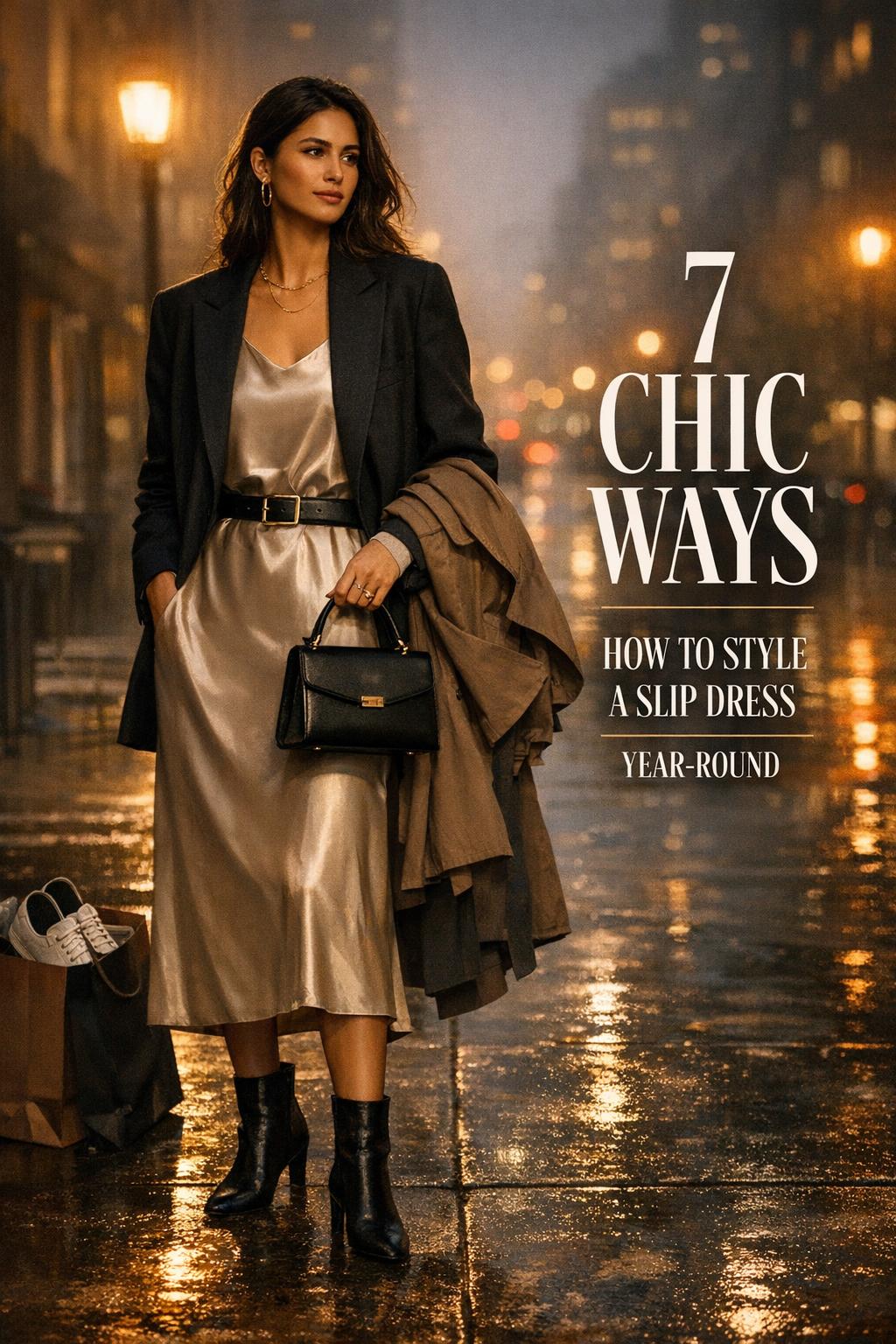
7 Chic Ways: How to Style a Slip Dress Year-Round
How to Style a Slip Dress: A Modern, Wear-Anywhere Guide
A slip dress is one of the most flexible pieces you can own: it can read minimalist, romantic, edgy, or polished depending on what you layer over it, what you wear under it, and how you finish the outfit with shoes and accessories. If you’ve been wondering how to style a slip dress beyond a single “date-night” formula, the key is to treat it like a base layer you can build on for any season, setting, and comfort level.
Below you’ll find core slip dress styling principles, season-by-season outfit strategies, outerwear and footwear pairings, occasion-based ideas (from office-appropriate to wedding guest), plus real-world look combinations you can copy. Along the way, you’ll also get practical tips for fit, coverage, and undergarments—because feeling confident in a slip dress is as important as the look itself.
Core Styling Principles for Slip Dresses
Slip dresses often have a lingerie-inspired simplicity—clean lines, a fluid drape, and minimal structure. That simplicity is exactly why they’re so easy to style: you can make the outfit feel intentional by controlling contrast (soft dress vs. structured blazer), proportion (fitted dress vs. oversized layers), and texture (satin with knits, leather, denim, or sheer pieces).
Pick the right slip dress for your look (length, fabric, silhouette)
Before you layer or accessorize, start with a slip dress that matches how you actually plan to wear it. A satin slip dress reads dressier and more elevated, while a jersey slip dress tends to feel more casual and forgiving for day-to-day outfits. Length also sets the tone: mini can lean playful, midi is the most versatile for day-to-night, and maxi can feel dramatic and event-ready depending on the styling.
Found the dress? Keep the rest in one place.
Zarellea brings guest details, vendors, timelines, and every next step together — so your wedding plan feels as good as your look.
Silhouette matters, too. If you want a sleek, minimalist slip dress outfit, keep the dress closer to the body and let accessories do the work. If you prefer comfort and movement, choose a slip that skims rather than clings, then add waist definition with a belt when you want more structure.
Balance is everything: proportion, coverage, and texture
The easiest way to make slip dress styling look “done” is to balance one element with another. If the slip is delicate, add a structured piece like a blazer. If the dress is simple and monochrome, add texture through layers like a knit sweater, a denim jacket, or a leather jacket. If you want more coverage or a work-appropriate feel, layer a T-shirt or a sheer blouse underneath and let the straps and neckline frame the layer intentionally.
Tip: When you’re unsure, pick one “hero” element and keep the rest streamlined. For example, choose either statement outerwear (like an oversized blazer) or statement shoes (like sleek heeled sandals), then keep jewelry and bag more minimal so the outfit stays cohesive.
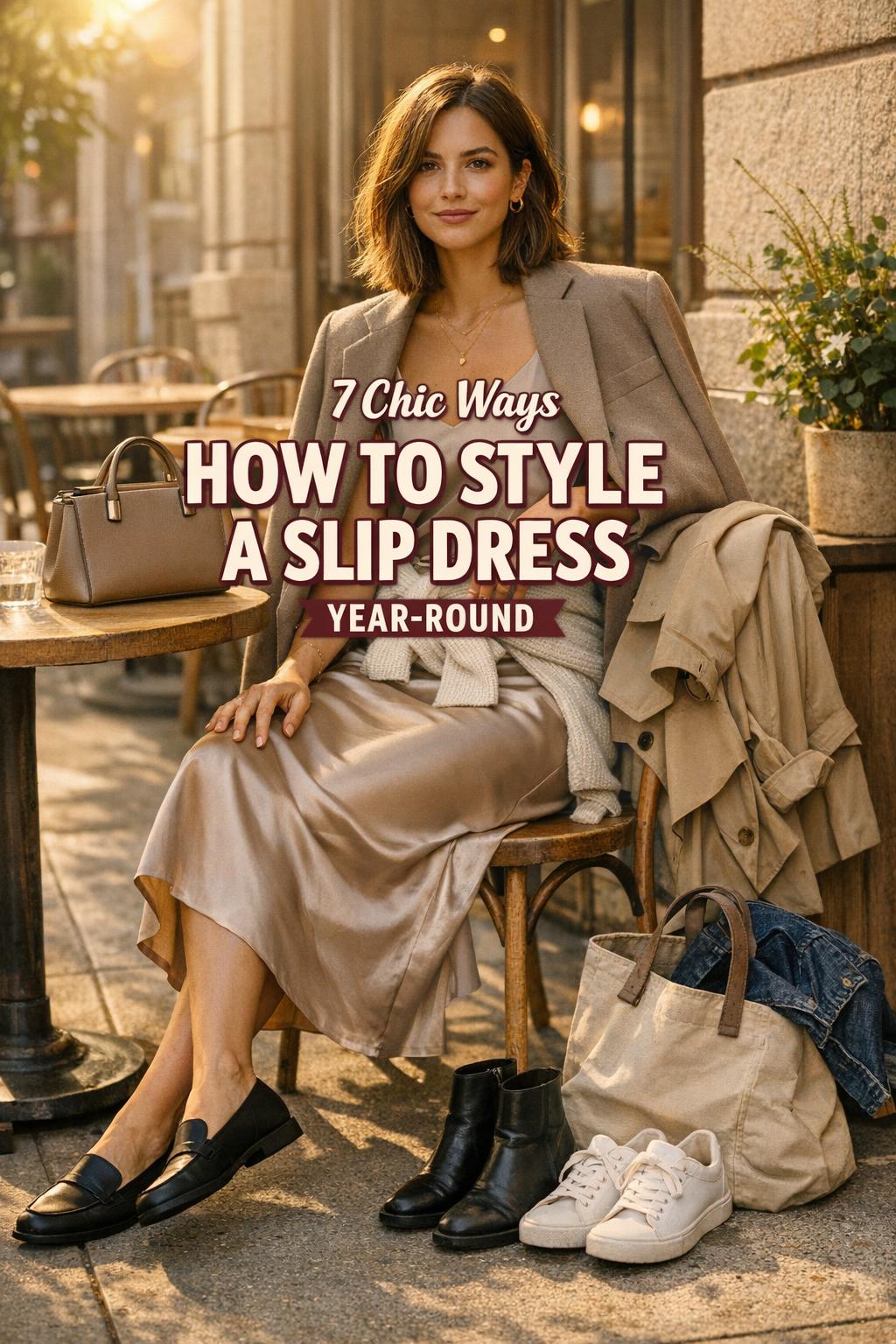
Slip Dress by Season: Layering Ideas You Can Actually Wear
One reason slip dresses stay popular year after year is that they transition across seasons with smart layering. You don’t need a new dress for each time of year—you need a few reliable layers and shoe swaps that change the vibe and temperature level.
Winter: tights, knits, boots, and warm outerwear
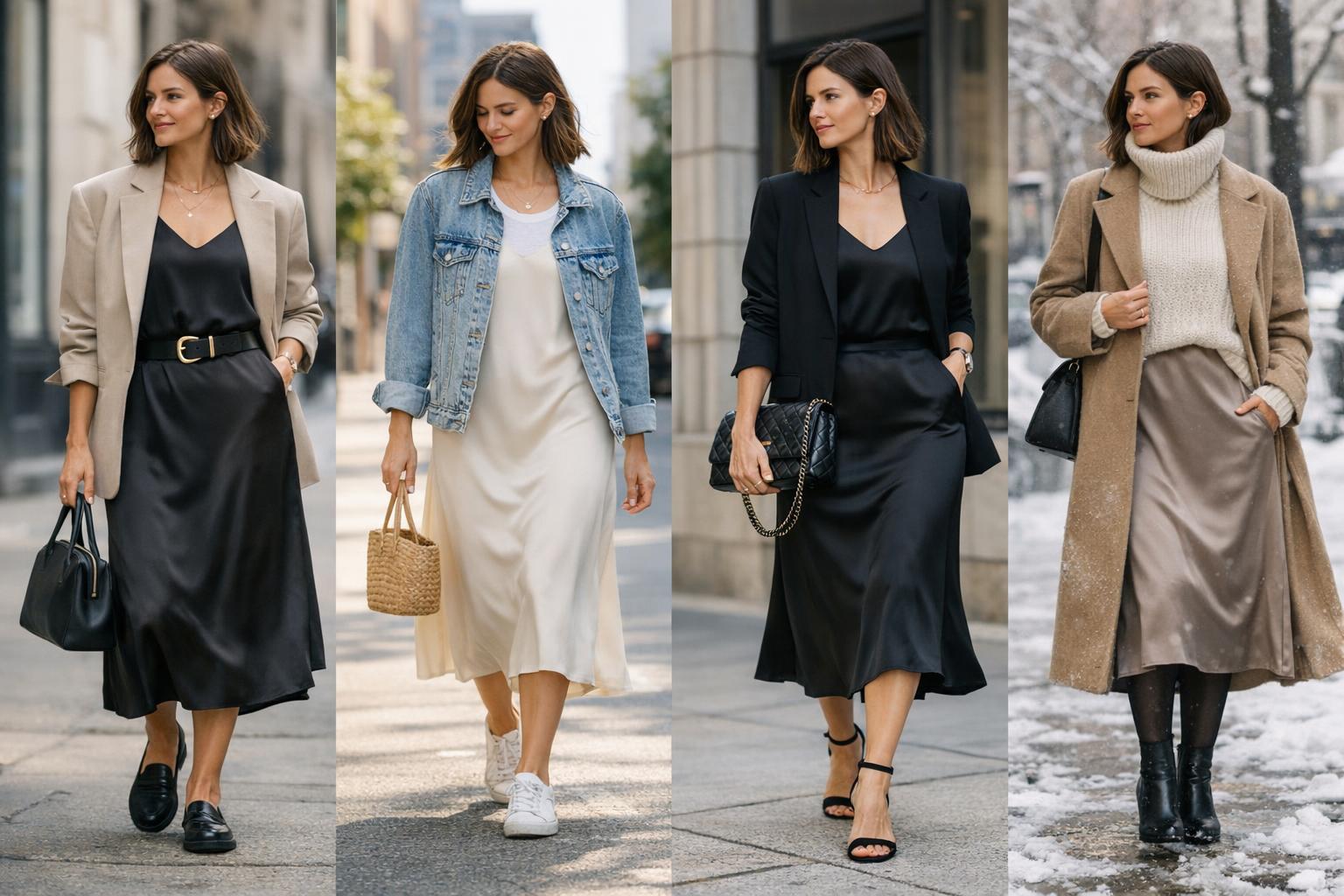
For winter slip dress outfits, warmth comes from building a base (tights and an underlayer if you want one), then adding insulation (knits), then finishing with weather-appropriate shoes and outerwear. A slip dress with tights can look polished and intentional when the colors are coordinated, especially with boots that visually “anchor” the lighter fabric of the dress.
- Wear tights under a midi slip dress, then add a knit sweater on top for a cozy, balanced silhouette.
- Try boots to make the outfit feel season-appropriate and grounded.
- Add a blazer for structure or a longer coat layer for a more elevated finish.
Tip: If your slip dress fabric is especially delicate, keep your winter layers intentional rather than bulky. A sweater layer can look best when it’s styled to define shape—either slightly cropped or paired with a belt at the waist to avoid losing your silhouette.
Spring: T-shirts, denim jackets, and light layers
Spring is prime time for casual slip dress outfits because the weather supports lighter layering. A slip dress with a T-shirt underneath is a classic approach that makes a slip feel daytime-friendly and relaxed. Denim jackets also pair naturally with the slip dress’s softness, creating an easy contrast that works for weekends and casual plans.
Tip: Keep the T-shirt layer smooth and simple so the slip dress still feels like the focal point. The goal is to make the layering look deliberate, not bulky, by choosing a tee that sits neatly under the dress straps and neckline.
Summer: sandals or heels, minimal accessories, and airy overlays
In summer, a slip dress can stand alone with minimal styling and still look finished. This is where refined footwear and light accessories do most of the work—think sandals for daytime ease or heels for a more dressed-up feel. If you want more coverage without adding heat, a sheer blouse underneath the slip dress can add texture and polish while staying light.
Tips for a summer slip dress outfit: Let the dress move and breathe. Keep jewelry simple for a minimalist slip dress look, and choose a bag that matches the occasion—more structured for dinner, more relaxed for day.
Fall: blazers, leather jackets, and ankle boots
Fall styling is all about smart layers that add warmth and structure without hiding the slip dress. A slip dress with blazer is one of the easiest ways to create a polished, fall-ready outfit. Leather jackets bring a slightly edgy contrast, and ankle boots can shift a slip dress outfit from summery to seasonal in one step.
Fall styling tip: build around one strong layer
If you want an effortless fall look, choose either an oversized blazer or a leather jacket as your “main” layer, then keep everything else streamlined. This makes the slip dress feel intentional rather than like you’re trying to force a summer piece into colder weather.
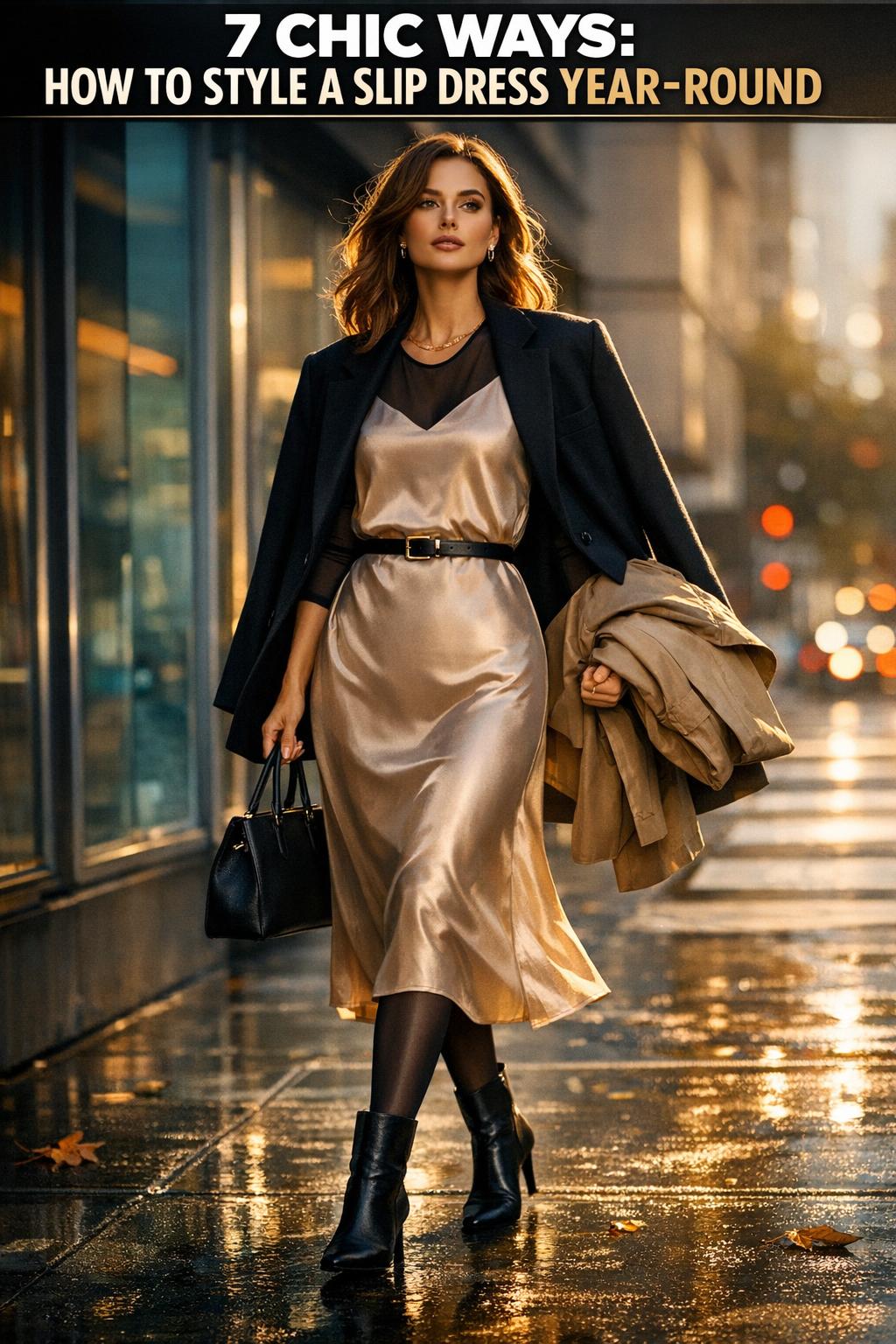
Outerwear Pairings That Instantly Elevate a Slip Dress
Outerwear is one of the most powerful tools in slip dress styling because it changes the outfit’s structure, formality, and season in seconds. The most wearable combinations rely on contrast: delicate fabric against tailoring, or sleek satin against casual denim.
Blazer outfits: oversized, fitted, and cropped
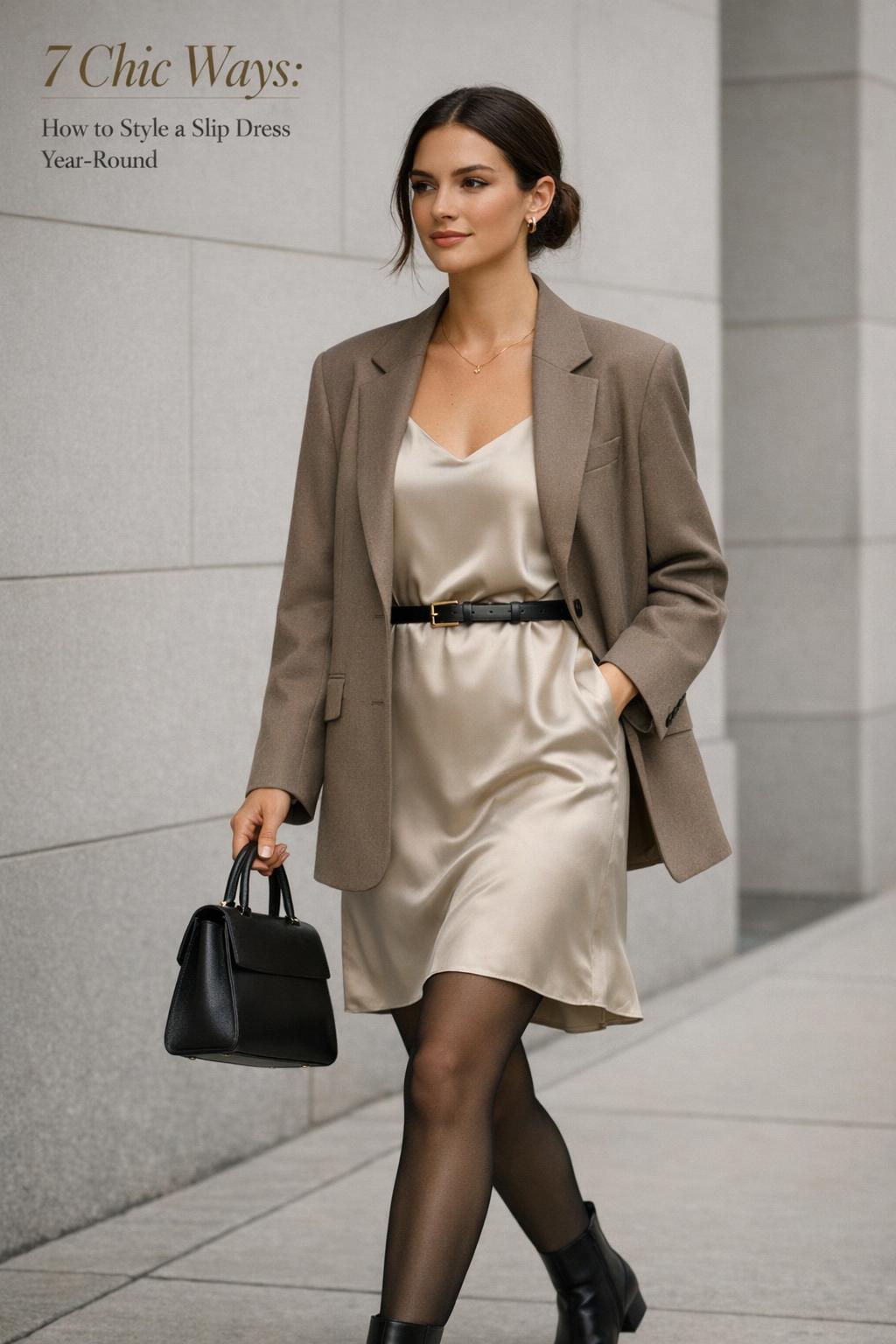
A slip dress with a blazer can read modern and “pulled together” whether you’re heading to dinner or aiming for a more office-appropriate slip dress outfit. Oversized blazers feel especially current and can make the slip dress look effortless, while a fitted or cropped blazer defines the waist and highlights the dress shape more directly.
- Oversized blazer: Creates a cool contrast and can be paired with loafers for a sharp, fashion-forward feel.
- Fitted blazer: More polished and streamlined; great when you want a clean silhouette.
- Cropped blazer: Highlights the waist and works well when the slip dress is midi or maxi and you want proportion balance.
Tip: If your slip dress is very minimal, a blazer is also a great place to introduce texture or a slightly different vibe—without changing the dress itself. The overall outfit still stays cohesive because the slip dress is a smooth base.
Leather and utility jackets for contrast
Leather outerwear brings edge and structure to a soft slip gown silhouette. This pairing works especially well when you want to dress down the “lingerie-inspired” feel and make the slip dress look more street-ready. Utility-style jackets create a similar contrast—practical, casual, and easy to throw on over a sleek dress.
Tip: When the jacket is more rugged, keep accessories simpler so the outfit doesn’t feel over-styled. Let the contrast between the jacket and the satin slip dress be the statement.
Denim jackets for casual, daytime slip dress outfits
A slip dress with a denim jacket is one of the most approachable ways to wear a slip dress during the day. Denim adds texture, makes the look feel more casual, and pairs easily with simple shoes. This is also a great option when you want a relaxed layer that doesn’t compete with the dress’s drape.
Trench coats and longline layers for a refined finish
Longer outerwear layers create a sleek line over a slip dress, which can feel especially elegant with a midi length. A trench-style layer is a classic way to make a slip dress outfit look intentional and “styled,” particularly for transitional weather when you want coverage without heavy winter layers.
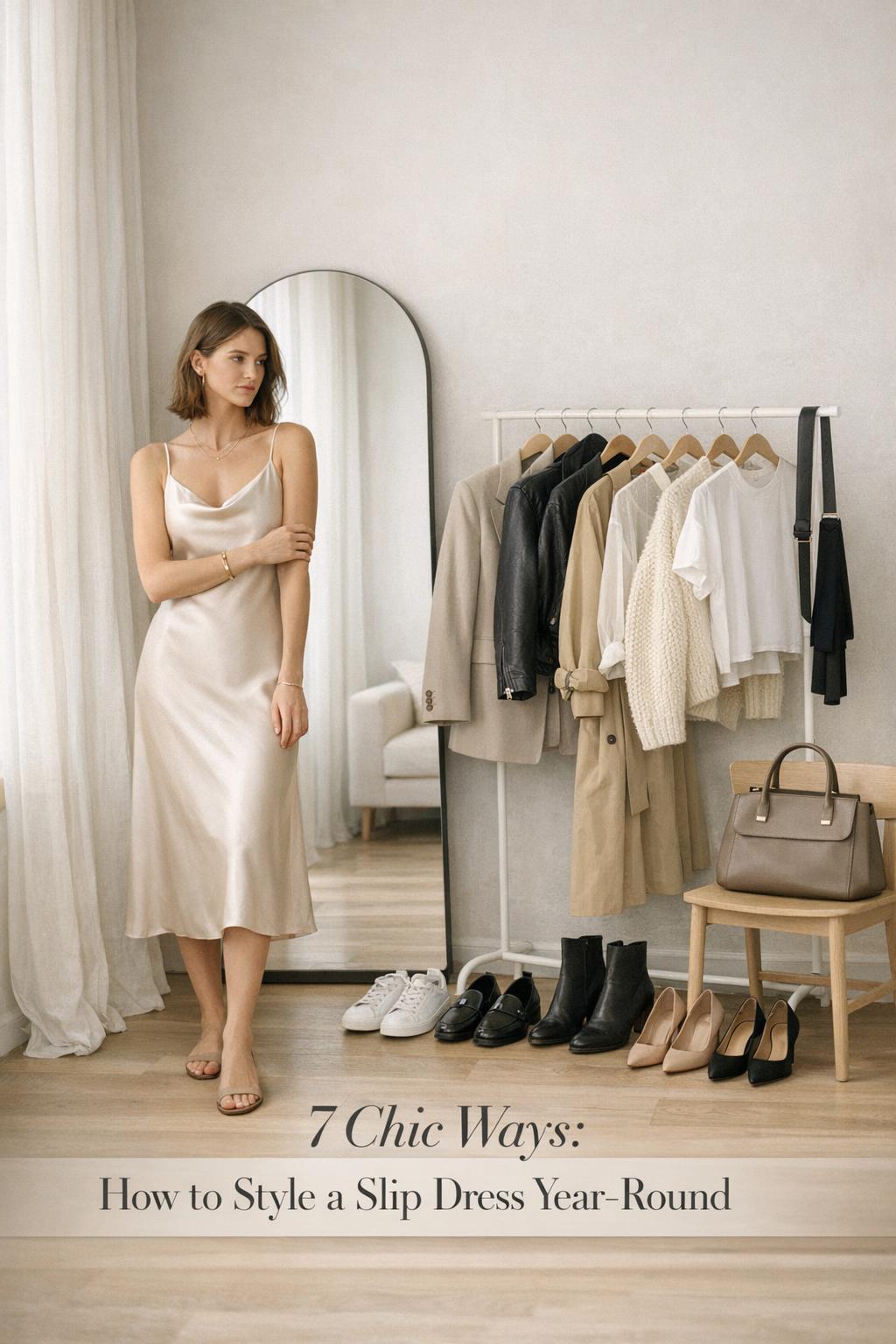
Footwear and Accessories That Define the Vibe
The fastest way to change a slip dress outfit is to change the shoes. Footwear can shift the same satin slip dress from casual to formal, from daytime minimal to evening glam. Accessories—especially belts, jewelry, and bags—then refine the direction you’ve chosen.
Best shoes for slip dresses: sneakers, heels, boots, and loafers
If you’re building a wardrobe of slip dress outfits, focus on shoe options that cover different levels of formality. Sneakers make the dress feel effortless and casual. Heels dress it up instantly for dates and events. Boots make it seasonal and grounded for fall and winter. Loafers add a polished, slightly tailored feel—especially when paired with an oversized blazer.
- Slip dress with sneakers: Casual and modern, especially for daytime and travel-friendly outfits.
- Dress it up with heels: A simple way to make a slip dress feel evening-ready without changing anything else.
- Slip dress with boots: Ideal for fall and winter; adds structure and balances a fluid hemline.
- Oversized blazer with loafers: A clean, tailored direction that feels contemporary and wearable.
Belts: the simplest way to define the waist
If you love the ease of a slip dress but want more shape sometimes, add a belt at the waist. Belting can make a slip dress look more styled, help control volume when layering a blazer or cardigan, and change the silhouette without needing alterations.
Tip: When you belt a slip dress, keep the rest of the outfit slightly cleaner—especially if you’re also layering. One defining element (like a belt) often looks more sophisticated than stacking several bold accessories at once.
Jewelry and bags: polish without overpowering the dress
Because slip dresses tend to be minimal, accessories can either stay understated for a minimalist slip dress outfit or go a bit bolder for an event feel. If the dress has a simple neckline, jewelry can frame your face and add finish. Bags can also steer the outfit: structured bags read more refined; simpler styles keep it casual.
Tip: If your slip dress has a noticeable sheen (like satin), choose accessories that complement rather than compete. Keeping either the jewelry or the bag more subtle helps the dress remain the focal point.
Styling a Slip Dress by Occasion
Once you understand the building blocks—layers, outerwear, shoes, accessories—you can quickly adapt slip dress styling to your schedule. The same dress can work for date night, an office-leaning look, or a wedding guest outfit by swapping a few key pieces.
Date night slip dress outfits (easy, elevated, confident)
A slip dress is a natural date-night piece because it’s sleek and feels special without requiring complicated styling. The simplest approach is to dress it up with heels and keep the rest streamlined. If you want a more modern, confident edge, add a blazer—oversized for a cool contrast, fitted for a more classic finish.
- Satin slip dress + heels + minimal jewelry for a clean, elevated look.
- Slip dress + blazer for structure and a night-out feel that still looks effortless.
- Slip dress + leather jacket for an edgy chic direction.
Tip: When you’re styling for a date, prioritize comfort and confidence. If heels feel like too much, choose a shoe that still looks intentional with the dress and keep your accessories polished so the outfit reads “planned,” not accidental.
Work-appropriate slip dress styling (layering for coverage and polish)
A slip dress can work in more office-appropriate settings when you add structure and coverage. The most reliable formula is a slip dress with a blazer, since tailoring instantly makes the look more professional. Layering a T-shirt underneath can also make the dress feel more daytime and less lingerie-inspired, and a sheer blouse underneath can add coverage while keeping the outfit refined.
Tips for a work-ready slip dress outfit: Keep the overall look streamlined and intentional. Choose a longer length (like midi) when possible, and lean into structured outerwear and refined shoes to balance the slip dress’s softness.
Wedding guest and event styling (fabric and finish matter)
For weddings and events, slip dresses can look especially elegant when the fit is smooth and the styling is polished. This is where heels, a refined bag, and intentional jewelry can make a simple slip dress feel formal. If you want an extra layer, a blazer can work as a sleek topper that doesn’t hide the dress.
Tip: For events, focus on the details that read “occasion”: shoes, accessories, and the overall neatness of the silhouette. A slip dress is already a statement in its simplicity—your job is to make the finish feel elevated.
Fit, Coverage, and Undergarments: Make the Slip Dress Feel Wearable
Slip dresses can raise practical questions: What bra works? How do you avoid visible lines? How do you add coverage without ruining the drape? A few simple strategies can make slip dress outfits feel comfortable and confidence-building, whether you want a minimalist look or more modest layering.
Undergarments for slip dresses (smooth lines and comfort)
Because many slip dresses are made from delicate fabrics like satin or silk, undergarments can show more easily than they do under heavier materials. When you want the smoothest finish, look for nude seamless options that disappear under the dress. If the neckline or straps make a standard bra difficult, adhesive solutions can be an option for certain shapes and occasions.
Tip: Decide what matters most for the day—support, invisibility, or comfort—and style the dress around that choice. You can also use layering (like a T-shirt or sheer blouse underneath) to make undergarment choices simpler and more comfortable.
Coverage layers that still look intentional
If you want more coverage, you don’t have to abandon the slip dress silhouette. Layering is your best tool: wear a T-shirt underneath for a casual, daytime look, or try a sheer blouse underneath to add texture and modesty while keeping the outfit light. For warmth and coverage from the top, add a sweater layer or a blazer depending on whether you want cozy or tailored.
Care and drape: keeping the slip dress looking polished
Slip dresses look their best when the fabric drapes cleanly and the outfit feels smooth. Be mindful of how you store and handle delicate materials, and pay attention to the overall finish of the look—wrinkles, bunching from bulky layers, or an ill-placed belt can distract from the dress’s simplicity.
Tip: If you’re layering, do a quick movement check. Sit, walk, and raise your arms—your layers should stay comfortable and the dress should still hang smoothly.
Real-World Slip Dress Outfit Ideas (Copy-and-Go Looks)
If you want fast inspiration, use the combinations below as templates. Each one is built from styling themes that consistently work: a strong layer, a deliberate shoe choice, and accessories that match the vibe. You can adapt any of these whether your dress is mini, midi, or maxi—just adjust proportions (like blazer length or boot height) so the overall silhouette stays balanced.
- Cozy winter classic: Slip dress + tights + knit sweater + boots for warmth and a clean silhouette.
- Tailored and modern: Slip dress with oversized blazer + loafers for a sharp, wearable contrast.
- Office-leaning polish: Midi slip dress + fitted blazer + refined shoes + minimal jewelry.
- Casual daytime: Slip dress with a T-shirt underneath + sneakers for an easy weekend uniform.
- Denim contrast: Slip dress + denim jacket + casual shoes for spring-ready layering.
- Edgy chic: Satin slip dress + leather jacket + boots for a stronger, more structured feel.
- Minimal summer: Slip dress + sandals + simple jewelry for a clean, airy look.
- Dress it up: Slip dress + heels + polished bag for an instant evening outfit.
- Waist-defined update: Slip dress + belt at the waist + blazer for shape and structure.
- Textured layering: Slip dress + sheer blouse underneath + refined accessories for a light but elevated outfit.
- Day-to-night swap: Slip dress + sneakers for daytime, then switch to heels and add a blazer for dinner.
- Resort chic feel: Slip dress + minimal accessories + a lightweight top layer when needed for an effortless vacation-ready look.
Tip: If you’re building confidence with slip dress styling, start with one “uniform” you love (for example, slip dress + blazer + your go-to shoes). Once that feels easy, experiment with one variable at a time: swap the shoes, then try a different layer, then add a belt.
Common Slip Dress Styling Mistakes to Avoid
Slip dresses are deceptively simple: small styling choices can make the difference between effortless and awkward. Avoiding a few common mistakes will help your outfit look more balanced and intentional.
- Over-layering the dress: Too many heavy layers can hide the slip silhouette and interrupt the drape.
- Ignoring proportion: A very long outer layer over a very long slip can look heavy unless you balance it with clean lines and the right shoes.
- Mixing vibes without a plan: If your outerwear is strong (like leather) and your accessories are also bold, the outfit can feel busy; choose one statement direction.
- Forgetting the finish: Slip dresses look best when the final details feel polished—shoes, bag, and layering should look chosen, not last-minute.
Tip: When something feels “off,” simplify. Remove one accessory, switch to a cleaner shoe, or choose a more structured outer layer (like a blazer) to bring the look back into balance.
Quick-Start Checklist: What to Buy First (and Why It Works)
If you want maximum outfit options with minimal shopping, a slip dress works best as part of a small styling system: one great base dress, a couple of outerwear choices, a few shoes that cover different occasions, and accessories that help you change the vibe quickly.
- 1 neutral slip dress: A versatile base for casual, work-leaning, and event looks.
- 2 outerwear layers: One tailored (a blazer) and one casual (denim jacket or a sweater layer) to cover different settings.
- 3 shoe options: Sneakers for casual, boots for seasonal wear, and heels for dressy occasions.
- 2 accessories: A belt for waist definition and a bag that matches your most common plans (day or evening).
Tip: If you’re choosing just one outerwear piece first, start with a blazer. It’s one of the most reliable ways to make slip dress outfits look intentional across seasons and occasions, from casual styling to more polished settings.
FAQ
Can you wear a slip dress to work?
Yes, a slip dress can work in office-leaning settings when you add structure and coverage, such as pairing it with a blazer and choosing a more refined overall finish; layering a T-shirt or a sheer blouse underneath can also make it feel more daytime-appropriate.
How do I wear a slip dress in winter?
To wear a slip dress in winter, rely on layered warmth like tights, a knit sweater layer, and boots, then finish with an outer layer such as a blazer or a longer coat so the outfit stays balanced and season-appropriate.
What are the best shoes to wear with a slip dress?
The best shoes depend on the vibe: sneakers make a slip dress casual, heels dress it up for evenings and events, boots make it feel fall- or winter-ready, and loafers paired with an oversized blazer can look polished and modern.
How do I style a slip dress with a blazer?
Pair a slip dress with an oversized blazer for a relaxed, contemporary contrast or choose a fitted or cropped blazer for a more defined silhouette, then keep shoes and accessories aligned with the occasion for a cohesive look.
Can I wear a T-shirt under a slip dress?
Yes, a T-shirt under a slip dress is a classic layering option that makes the outfit feel more casual and daytime-friendly while adding coverage and making the styling look intentional.
How do I belt a slip dress without ruining the drape?
Use a belt to define the waist when you want more shape, then keep the rest of the look streamlined—especially if you’re layering with a blazer or sweater—so the dress still hangs smoothly and the silhouette stays clean.
What undergarments work best with a satin slip dress?
Because satin can show lines easily, nude seamless undergarments are a common go-to for a smooth finish, and for necklines or straps that don’t accommodate a standard bra, adhesive options can work for certain fits and occasions.
How can I add coverage to a slip dress and still look chic?
You can add coverage while keeping the look chic by layering a T-shirt or a sheer blouse underneath, or by adding a sweater or blazer on top, focusing on balanced proportions so the slip dress remains the outfit’s sleek foundation.