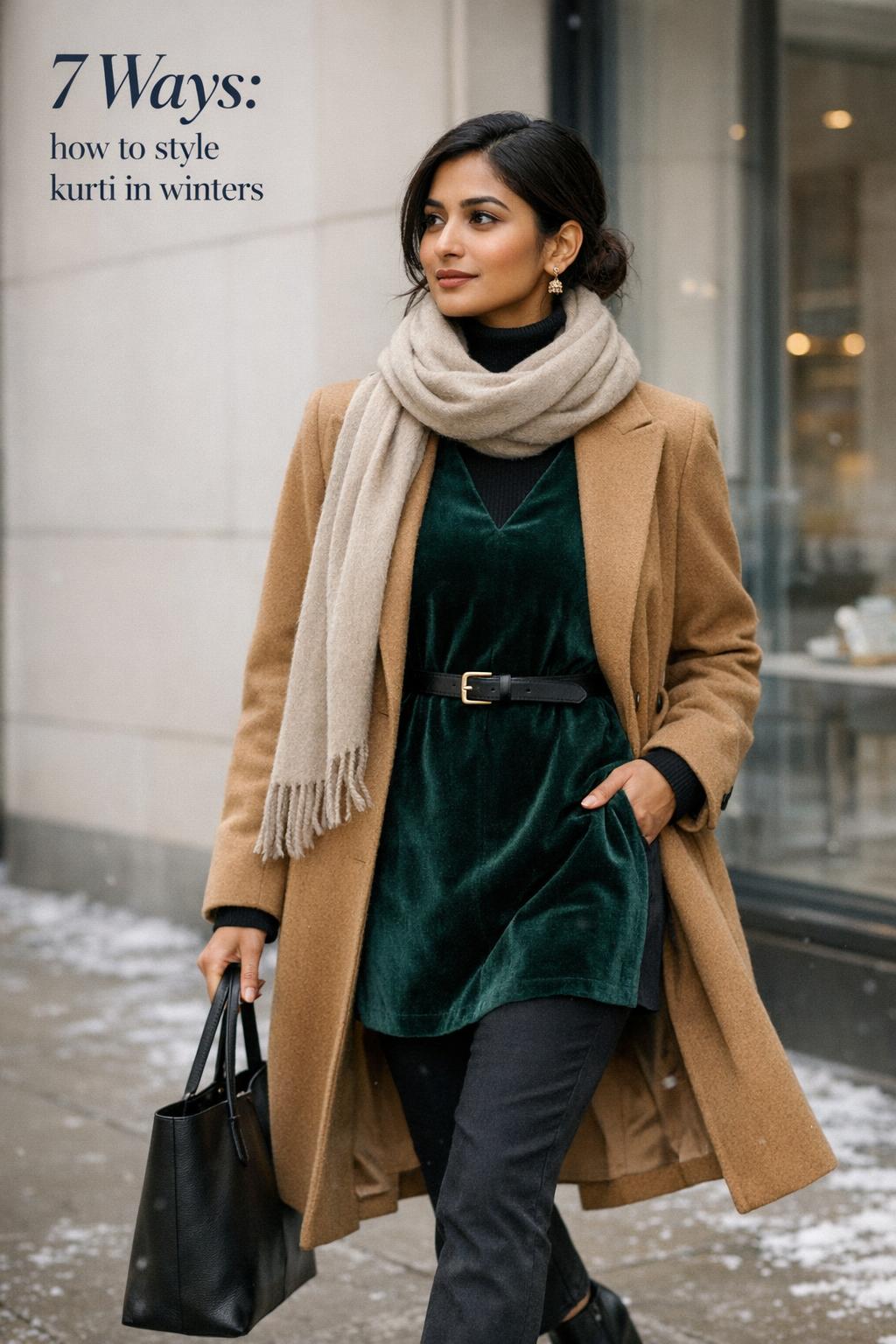
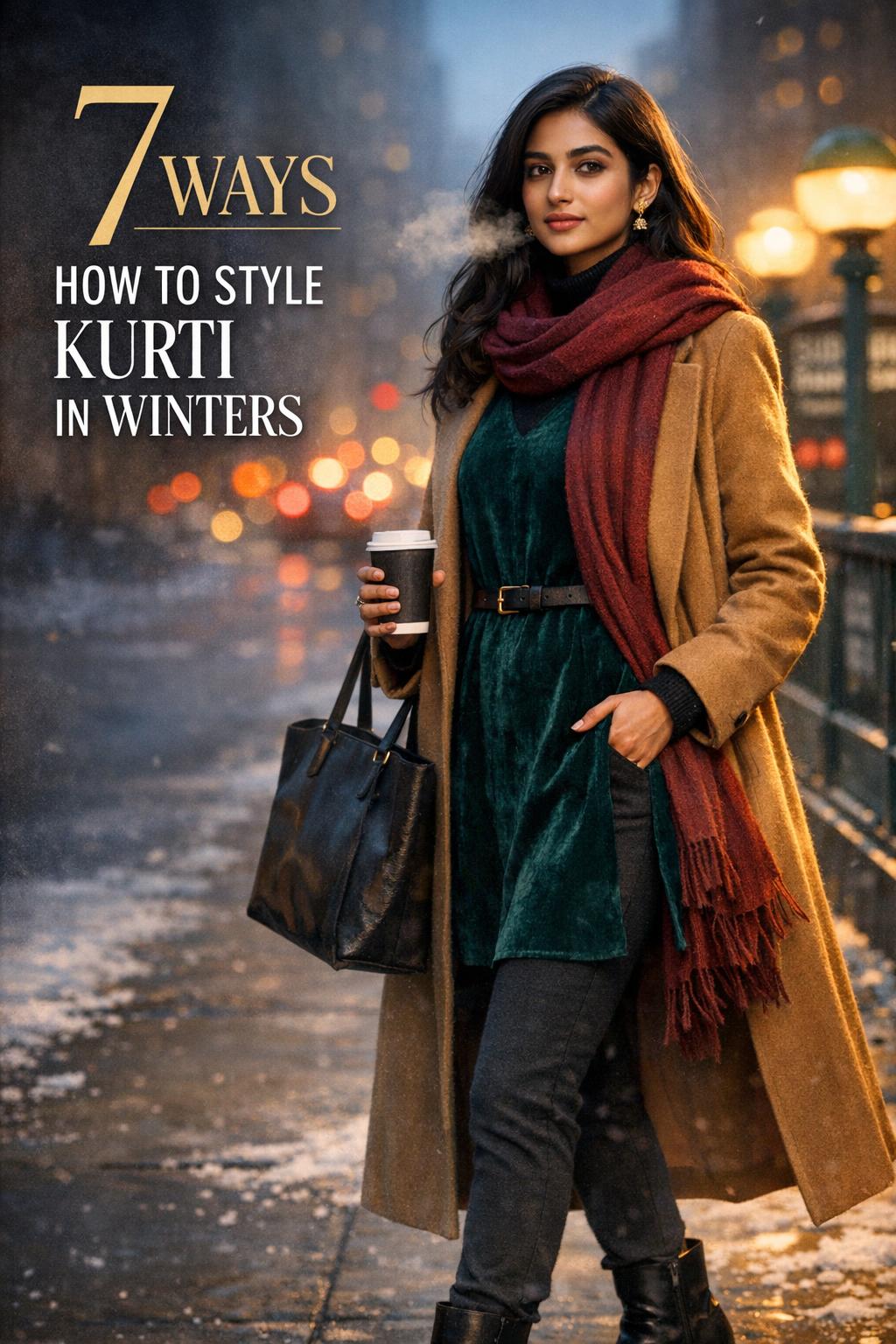
7 Ways: how to style kurti in winters for US Cold Days
How to Style Kurti in Winters: Warm, Fashionable, and Office-Ready
If you’ve been wondering how to style kurti in winters without losing the ethnic vibe (or freezing in the process), the answer is simple: build warmth in smart layers, balance proportions from top to bottom, and finish with winter-friendly accessories. Kurtis are naturally versatile, so with the right base layer, outerwear, and footwear, you can create winter outfits that look intentional—whether you’re heading to the office, running errands, or dressing up for a casual dinner.
This guide focuses on practical, repeatable ways to wear a kurti in cold weather: warmer fabrics (like wool blends and velvet), fitted inner layers (like thermals and turtlenecks), longline layers (like cardigans and coats), and styling tools (like belts, scarves, shawls, and boots) that keep you cozy while still looking polished.
Understand the Winter Styling Foundation
Winter kurti styling works best when you start with two goals: warmth and silhouette. Warmth comes from fabric choice and layering; silhouette comes from choosing layers that don’t add random bulk or hide the kurti’s shape. Once those two are set, you can go as traditional or as Indo-western as you like with outerwear, bottoms, and accessories.
Pick the Right Fabrics
Fabric is your first (and most overlooked) winter layer. In cold weather, lightweight materials won’t hold heat on their own, so start by choosing kurtis made in warmer, denser, or richer-looking textiles. Wool blends and velvet are repeatedly favored for winter because they feel season-appropriate and naturally add warmth, while heavier cotton can also work when paired with a good base layer. A lined or heavier-feel kurti generally performs better than a very thin one when you’re spending time outdoors.
Found the dress? Keep the rest in one place.
Zarellea brings guest details, vendors, timelines, and every next step together — so your wedding plan feels as good as your look.
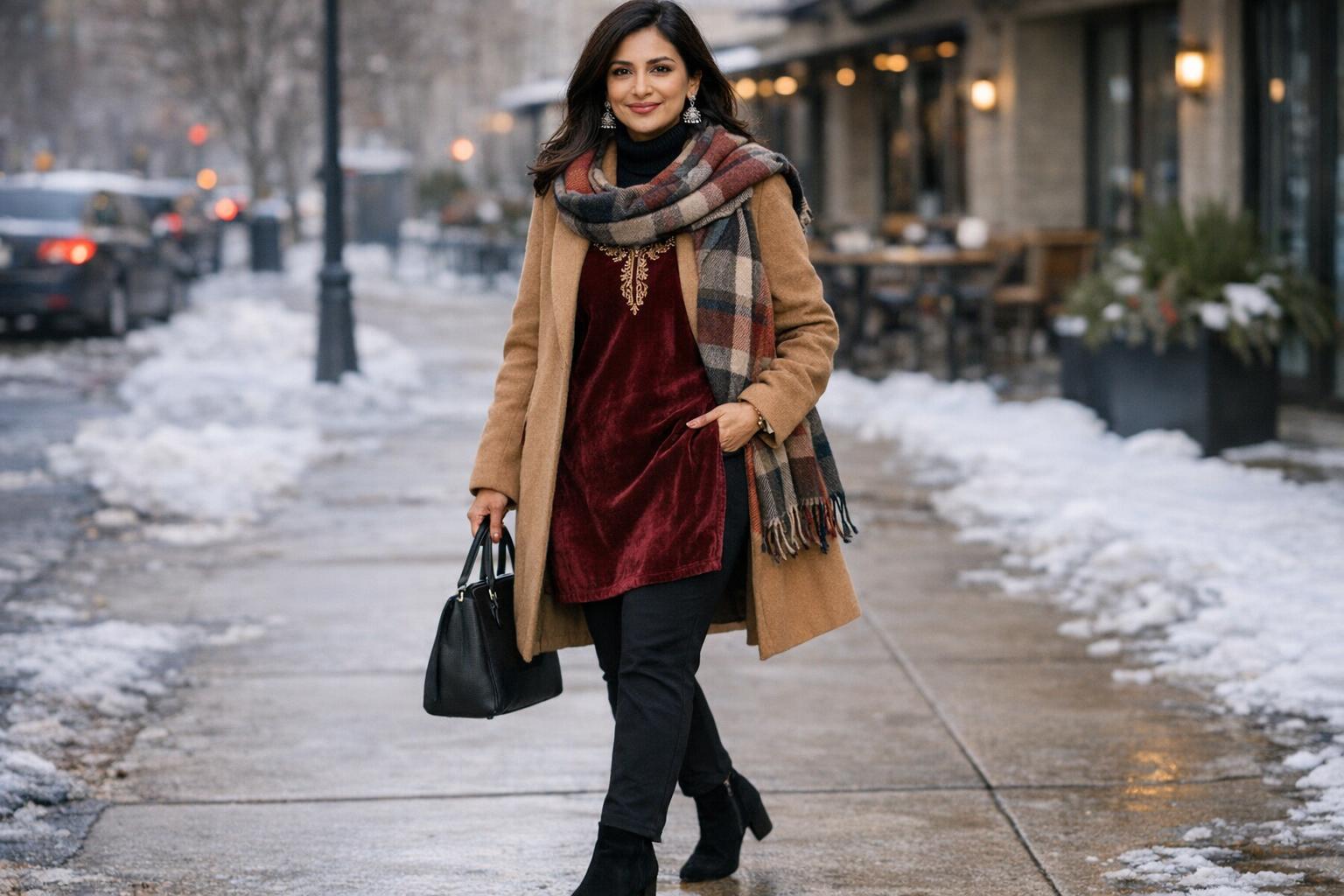
For a winter wardrobe that still looks festive and elevated, velvet kurtis are a strong option, especially when paired with structured outerwear or a statement shawl. Wool-blend kurtis (including woolen kurti styling winter looks) can feel cozy and look refined with minimal effort—especially in deeper shades that visually suit the season.
Core Base Layer Options (Your Warmth “Insurance”)
The easiest way to wear a kurti in cold weather is to add a fitted inner layer underneath. This keeps you warm without changing the kurti’s overall vibe—and it also makes lighter kurtis more wearable across more days in winter. The best base layers are smooth, close to the body, and comfortable at the neckline and sleeves so they disappear under your kurti.
- Thermal tops under a kurti for everyday warmth
- Long-sleeve tees for mild winter days
- Fitted turtlenecks under a kurti for a clean, modern winter look
- High-neck or higher-coverage options when you want extra warmth around the neck
Tip: If your kurti has a simple neckline, a fitted turtleneck underneath can look especially intentional, not like an afterthought. Keep the base layer streamlined so your outfit stays flattering even after you add a coat, cape, or shawl.
Layering Toolkit: Outerwear That Elevates Without Bulk
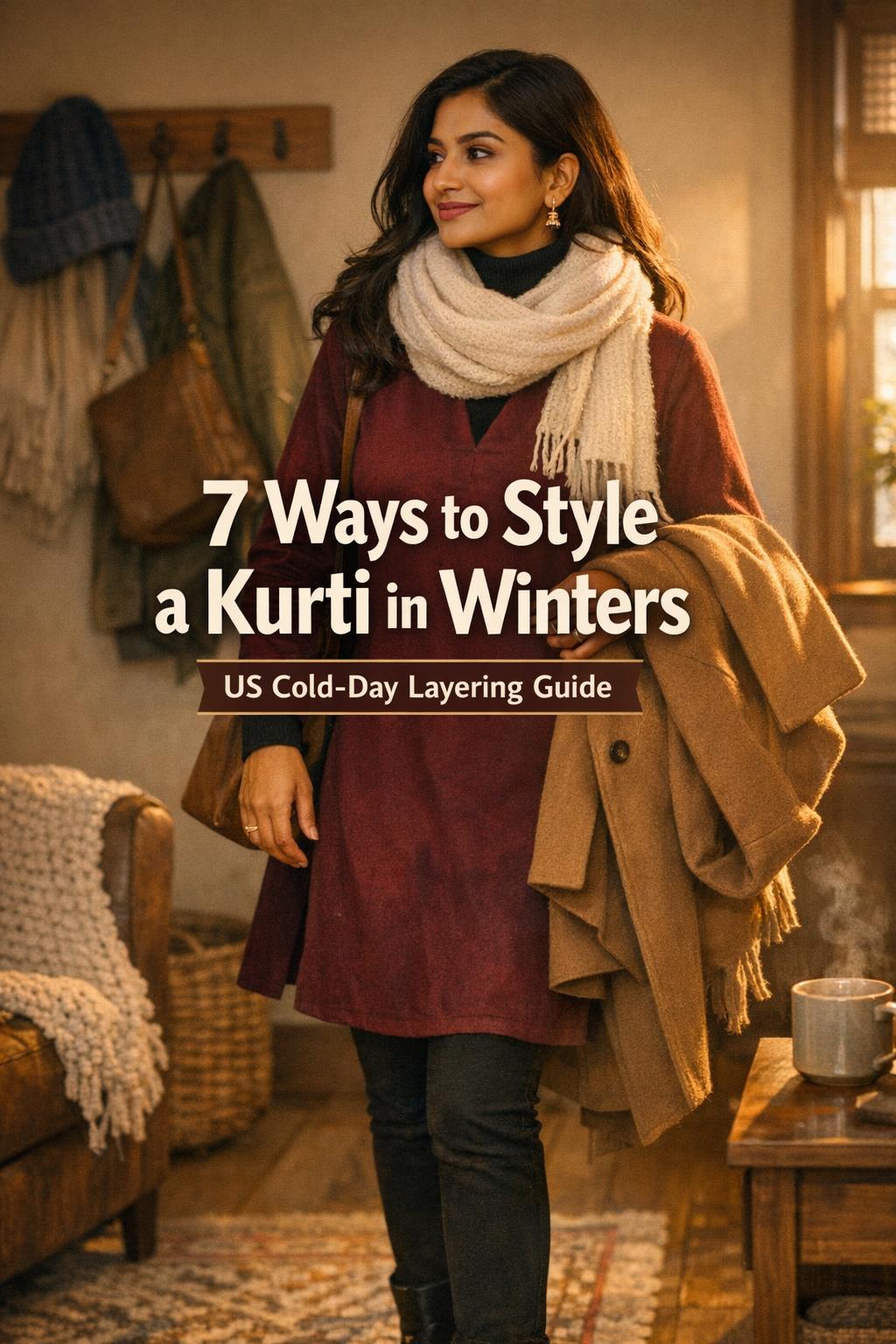
Layering kurtis in winter is all about choosing outerwear that works with ethnic silhouettes rather than fighting them. The most reliable options from classic winter styling ideas include longline layers, trench coats, short jackets, capes, kimonos, and shawls—each with its own effect on proportion and formality.
Outer Layers by Length and Style
Different outerwear lengths create different silhouettes with kurtis. As a rule, match the “visual weight” of your kurti with outerwear that complements it: shorter jackets add shape and structure; longline layers create an elegant vertical line; trench coats add polish and can instantly make the outfit look office-ready.
- Short jacket over a kurti: great for defining the waist and keeping the look sharp (and it pairs especially well with denim for an Indo-western twist).
- Longline cardigan or long shrug: ideal for creating a streamlined winter silhouette without looking overly formal.
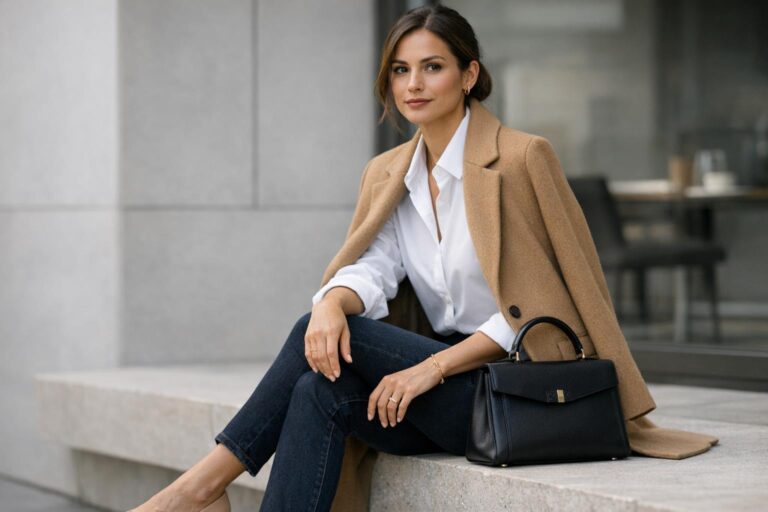
- Wool coat over a kurti: a strong choice for colder days, especially with straight-cut kurtis and tailored bottoms.
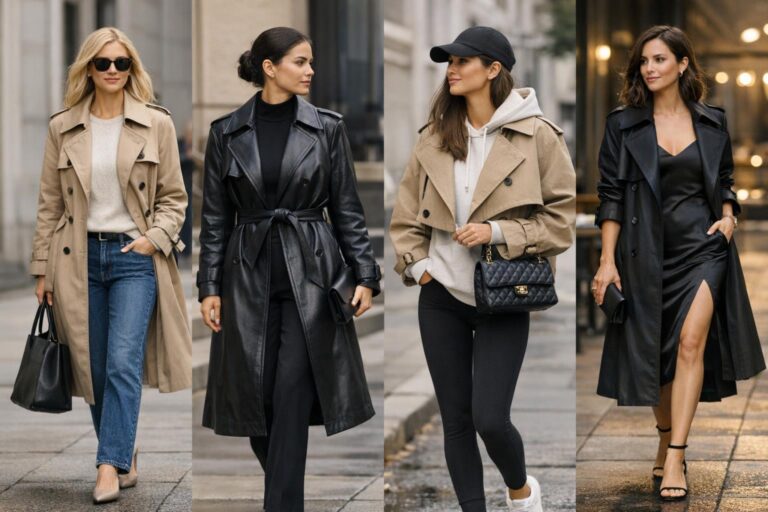
- Trench coat over a kurti: a polished, structured layer that works well for office commutes and smart casual outings.
- Cape or kimono: a stylish cover-up that adds drama and movement while keeping you warm.
Tip: If you’re layering with a long coat or trench, keep your kurti cut relatively clean and avoid too many bulky layers underneath. The goal is warmth with a controlled silhouette.
Swap Dupattas for Shawls (or Style Both)
A shawl is one of the most effective ways to stay warm in an ethnic outfit, and it can fully replace a dupatta in winter. If you love the traditional finish of a dupatta, you can also style both—just keep it balanced so the look doesn’t feel heavy. Embroidered shawls add a festive feel and can elevate even a simple kurti-and-leggings combination.
To keep the outfit cohesive, consider contrast: a contrasting scarf or shawl can make your kurti look more styled, while a tonal shawl keeps the look subtle and sophisticated. Either way, the warmth payoff is significant, and it’s one of the easiest winter updates you can make without buying an entirely new outfit.
Practical Draping Techniques (Warmth + Shape)
Draping matters because it affects both insulation and proportion. A loosely thrown shawl might look good indoors, but it won’t stay put outside. When you want real warmth, wrap your shawl so it covers your shoulders and upper arms, and keep the ends controlled so they don’t interfere with movement.
Belts are another winter styling tool that helps define your shape when you’re wearing multiple layers. A belt over a kurti (or over a longline layer) can prevent your outfit from looking boxy, especially if you’re adding a cape, coat, or shawl on top.
Tip: If you’re using a belt, make the rest of the styling slightly simpler—cleaner bottoms, minimal extra layers, and one focal accessory—so the outfit doesn’t feel overbuilt.
Bottom Wear That Keeps You Warm (But Flows)
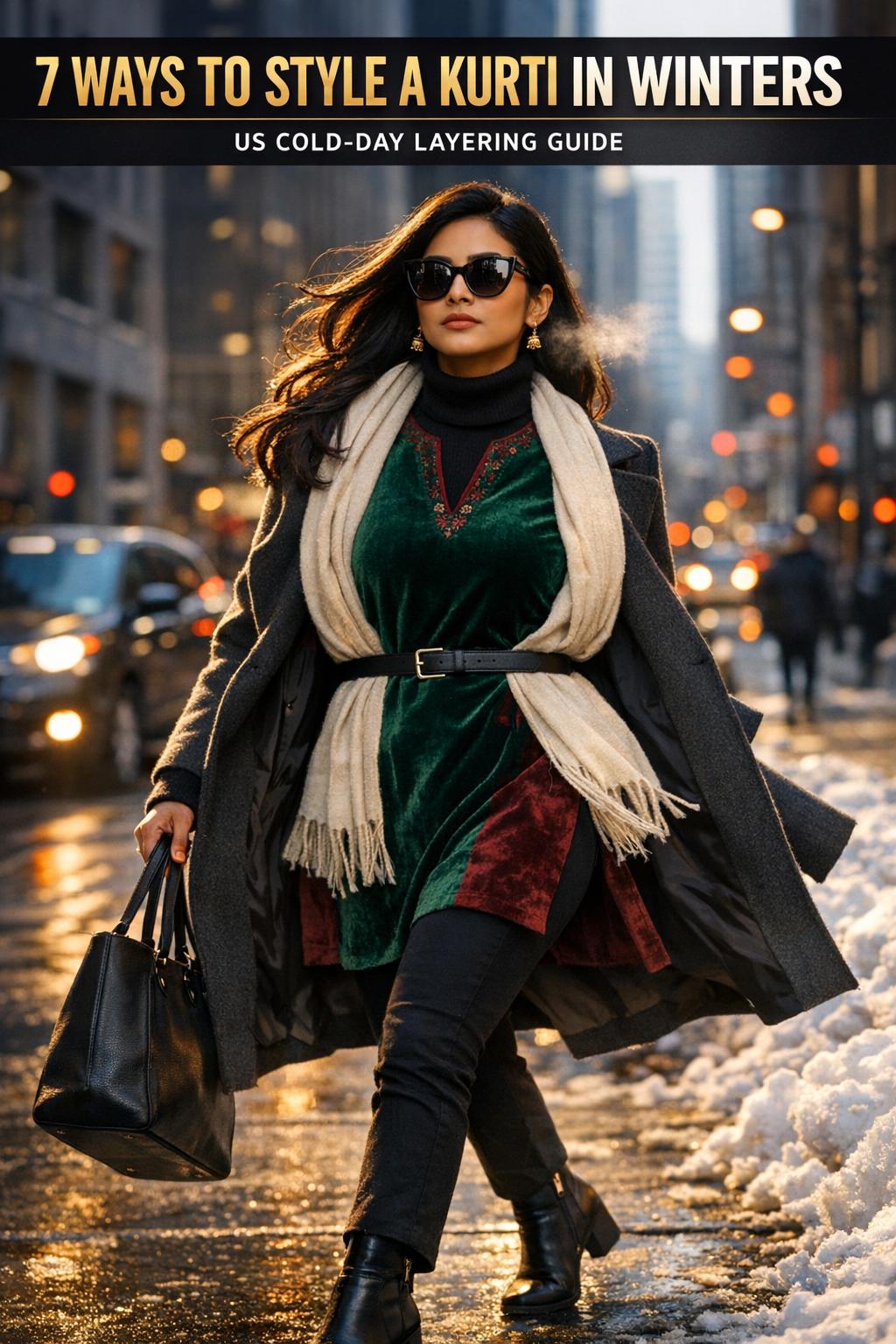
Bottom wear can make or break winter comfort. The best winter bottoms for kurtis keep you warm, allow easy movement, and balance the kurti’s length. Leggings remain a staple for a reason, but winter styling often improves when you explore trousers, warmer leggings, or denim for an Indo-western look.
When temperatures drop, choose options that add warmth without adding bulk. Woolen leggings or fleece-lined leggings can be a practical solution under mid-length and long kurtis. If you prefer a more structured look, trousers can feel office-ready while still pairing neatly with kurtis.
Layer Smartly on the Bottom
“Layering smartly” isn’t only for your top half. In winter, your legs need insulation too, especially if you’re commuting or spending time outdoors. The key is to keep the base warm while letting the outer silhouette stay smooth.
- Woolen leggings or fleece-lined leggings for maximum warmth under knee-length or long kurtis
- Trousers for a polished, office-friendly finish
- Denim for a modern kurti winter outfit (especially with a short jacket)
- Bootcut jeans as an alternative to leggings when you want a slightly more contemporary silhouette
- Palazzos for flow, especially with a more structured outer layer (like a trench coat) to balance volume
Pairing by Kurti Length (Proportion First)
To keep your winter kurti outfits flattering, pair the kurti length with bottoms that make sense visually. Short kurtis can handle wider or more structured bottoms; long kurtis often look best with streamlined leggings or slim trousers. If you’re adding boots, choose the kurti length with the boot height in mind so the outfit looks deliberate, not crowded.
Tip: If you’re wearing a longer kurti with a long coat, keep the bottoms slim (like leggings or narrow trousers). If your outerwear is shorter (like a jacket), you can experiment more with denim, bootcut jeans, or slightly wider trousers.
Footwear and Accessories for a Cozy, Polished Look
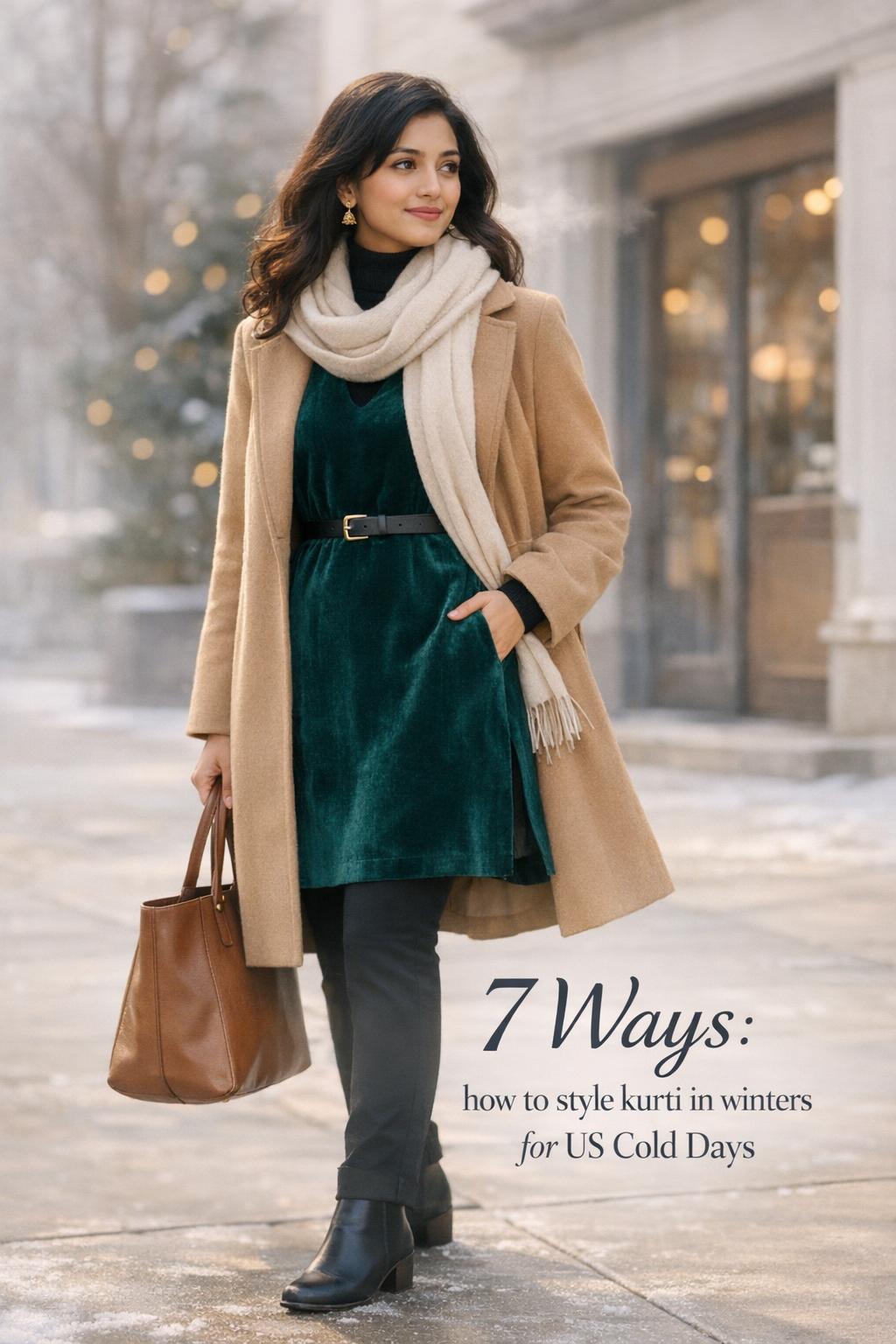
Winter-friendly accessories are where comfort and styling meet. Once your kurti layering is sorted, the right shoes, scarves, and small add-ons can make the outfit look finished—especially for U.S. winter settings where you may be walking more outdoors than you would in milder weather.
Winter Footwear to Pair with Kurtis
Closed-toe footwear is a winter essential, and kurtis pair particularly well with boots when you want warmth and a modern edge. Ankle-length boots can work with many kurti lengths, while longer boots can create a sleek line under longer kurtis and warmer bottoms. For a more casual take, sneakers with a kurti and scarf is a common cold-weather styling idea that keeps things comfortable and contemporary.
- Ankle-length boots with kurtis for an easy, everyday winter look
- Boots plus gloves for colder days when you want a coordinated winter outfit
- Closed-toe traditional footwear when you want a more ethnic finish while staying weather-appropriate
- Sneakers with a scarf for a casual, practical outfit
Tip: If your outfit already has a lot of texture (like velvet or an embroidered shawl), keep footwear simple and clean so the overall look stays balanced.
Scarves, Gloves, Beanies, and Jewelry: The Finishing Layer
Accessories can add warmth and personality without forcing you into bulky outerwear. Scarves are especially flexible: they can be your color accent, your extra insulation, and your styling anchor. Gloves and beanies are practical additions for cold days, and they can look intentional when they complement your kurti’s palette.
Traditional jewelry can still work in winter—jhumkas, for example, add ethnic character even if the rest of the outfit leans modern with a turtleneck and boots. The trick is moderation: if you’re wearing a statement shawl or cape, keep jewelry simpler; if your outfit is minimal, let one piece stand out.
Color and Texture Play (A Winter-Ready Palette)
Winter styling often looks best with deeper hues and richer textures. Darker colors can feel seasonally appropriate and tend to look more “winter-ready” with coats, boots, and shawls. Texture also becomes your style advantage in winter—velvet, wool blends, and embroidered layers bring depth that lightweight summer fabrics don’t naturally create.
Tip: If you’re wearing a multicolored or printed kurti, anchor the look with a neutral outer layer (like a coat or trench) and keep accessories cohesive. If your kurti is solid, you can add interest through a textured shawl, an embroidered wrap, or a contrasting scarf.
Fabric Fusion and Care: Keeping Kurtis Looking Fresh
Winter kurti fabrics and layers can take more wear than summer outfits: heavier textiles can pill, velvet can attract lint, and frequent layering can cause friction at the elbows and sides. A little care goes a long way in keeping your winter kurtis looking sharp through the season.
- If you’re wearing wool blends often, rotate outfits so the same kurti isn’t stressed repeatedly back-to-back.
- For velvet kurtis, keep them looking polished by minimizing contact with rough outerwear textures that can catch or crush the pile.
- When layering, choose smoother inner layers to reduce friction and help the kurti drape cleanly.
- Store shawls and dupattas neatly so they hold their shape and remain easy to style when you’re in a hurry.
Tip: Winter outfits look best when they look intentional and crisp. Even a simple kurti-and-leggings combination can read as “styled” if the layers sit smoothly and your shawl, scarf, or coat looks well arranged.
Regional U.S. Weather Advisory: When to Layer More vs. Less
U.S. winter conditions vary widely, so your kurti winter styling should be adjustable. The best approach is to build a base layer that can stay on indoors, then add or remove outer layers depending on how cold it is outside. This makes kurtis practical across different regions and day-to-night temperature swings.
In milder winter conditions, a long-sleeve tee or light thermal under a kurti plus a scarf or shawl can be enough. In colder conditions, step up to a fitted turtleneck base, warmer bottoms (like woolen or fleece-lined leggings), and a structured outer layer like a wool coat or trench coat. If you’re traveling between indoors and outdoors frequently, capes, shawls, and longline layers can be especially convenient because they’re easier to take on and off than heavier coats.
Tip: If you’re unsure, prioritize a warmer base layer and closed-toe footwear first. You can always add a shawl, scarf, or coat on top, but being cold underneath is harder to fix once you’re out the door.
Quick-Start 7-Look Winter Capsule (Ready-to-Copy)
If you want repeatable winter kurti outfits without overthinking each morning, use this seven-look capsule as a plug-and-play framework. Each look follows the same formula—base layer, kurti, warm bottom, outerwear, and finishing accessories—so you can mix and match while staying warm and put-together.
Look 1: Office-Ready Trench + Kurti
Wear a fitted thermal or long-sleeve tee under a straight kurti, add slim trousers or warm leggings, and finish with a trench coat for structure. Add a scarf for neck warmth and keep accessories minimal for a clean, professional look.
Look 2: Velvet Kurti + Embroidered Shawl (Festive Warmth)
Choose a velvet kurti as your statement piece, layer with warm leggings, and add an embroidered shawl for texture and traditional flair. Finish with closed-toe footwear and one ethnic jewelry accent (like jhumkas) to keep the vibe festive without over-accessorizing.
Look 3: Turtleneck Under Kurti + Ankle Boots (Modern Classic)
Layer a fitted turtleneck top under a kurti for a sleek neckline and extra warmth. Pair with slim bottoms and ankle-length boots for a winter-ready finish. This look is especially strong when you want a modern, city-friendly outfit that still keeps the kurti as the hero piece.
Look 4: Denim Jacket + Kurti + Jeans (Casual Indo-Western)
Style a kurti with denim and a short jacket for an easy casual outfit. Add a scarf for warmth, and pick comfortable closed-toe shoes (including sneakers if you want a relaxed vibe). This combination is a straightforward way to make kurtis feel everyday and wearable in winter.
Look 5: Cape Over Kurti (Statement Layering)
Add a cape over your kurti when you want warmth with drama and movement. Keep the rest of the outfit streamlined—fitted inner layer, slim bottom—and let the cape be the visual focus. A contrasting scarf can add dimension while still looking cohesive.
Look 6: Shawl + Dupatta Styling (Traditional, Extra Cozy)
For an intentionally traditional winter look, wear your kurti with warm bottoms and add a dupatta for the ethnic finish, then layer a shawl over it for real warmth. Keep the colors coordinated so the two layers look styled rather than busy.
Look 7: Longline Layer + Belt (Defined Shape, No Bulk)
Use a longline cardigan or long shrug over your kurti for a sleek vertical line, then add a belt to define your shape. This is a strong option when you want to look polished indoors while still having an extra layer for cold hallways, errands, or commutes.
Tips to Make Winter Kurti Outfits Look Intentional (Not Improvised)
Winter layering can sometimes look accidental—like you just grabbed whatever was warmest. The following tips help keep your kurti winter outfits cohesive and flattering while still prioritizing comfort.
- Choose one “hero” item: a velvet kurti, an embroidered shawl, a trench coat, or statement boots—then keep the rest supportive.
- Keep the base layer fitted so the kurti’s drape stays clean even after adding outerwear.
- Balance volume: if you wear a cape or shawl, keep the bottom slim; if you wear palazzos, choose more structured outerwear.
- Use darker or deeper colors when you want a winter-ready feel, and add texture through shawls, velvet, or wool blends.
- Finish with winter-friendly accessories (scarf, gloves, beanie) that match the palette so they look like part of the outfit.
Tip: When in doubt, simplify. A clean kurti layered over a thermal, paired with warm leggings, plus a shawl and ankle boots can look more elevated than a complicated stack of layers that fight each other.
FAQ
How to style kurti in winters without looking bulky?
Start with a fitted base layer (like a thermal or turtleneck) under your kurti, then add one structured outer layer (such as a trench coat or longline cardigan) and keep bottoms streamlined; use a belt if needed to define shape and avoid piling on multiple bulky layers at once.
What are the best fabrics for winter kurtis?
Wool blends and velvet are especially winter-friendly because they add warmth and seasonal texture, while heavier cotton can work well when paired with a warm inner layer and appropriate outerwear like shawls, coats, or longline layers.
What can I wear under a kurti for warmth?
Wear a thermal top, long-sleeve tee, or fitted turtleneck under your kurti to create a warm base without changing the kurti’s silhouette, and choose a smooth, close-to-body fit so the kurti drapes neatly on top.
Can I wear a kurti with a trench coat in winter?
Yes—trench coats pair well with kurtis because they add structure and polish, making the outfit feel office-ready; keep your inner layers fitted and choose slim trousers or warm leggings to maintain clean proportions.
How do I style a shawl with a kurti for winter?
Drape the shawl so it covers your shoulders and upper arms for real warmth, and choose either a coordinated tone for a refined look or a contrasting color for dimension; embroidered shawls can instantly elevate a simple kurti outfit.
What bottoms look best with kurtis in cold weather?
Warm leggings (including woolen or fleece-lined options), slim trousers, and denim are reliable cold-weather choices; match the bottom to kurti length for balance, keeping bottoms slimmer when the kurti or outerwear is longer or more voluminous.
Do boots go with kurtis in winter?
Yes—ankle-length boots are an easy match for many kurti lengths and create a modern winter finish, and pairing boots with warm leggings and a scarf can make a kurti outfit feel both practical and styled for cold days.
How can I keep the ethnic vibe while layering for winter?
Use ethnic-leaning layers like shawls or dupattas (or both in a coordinated way), choose winter-appropriate fabrics like velvet or wool blends, and finish with traditional accessories such as jhumkas while keeping the overall layering neat and proportional.