How to Style Combat Boots: 9 Effortless Outfit Formulas
How to Style Combat Boots: A Complete Guide to Edgy, Effortless Outfits
Combat boots can look tough, polished, feminine, minimalist, or street—sometimes all in the same outfit. If you’ve been wondering how to style combat boots without feeling costume-y or overly “edgy,” the key is learning a few repeatable principles and then applying them to outfits you already own. This guide is built for real life: season-by-season frameworks, ready-to-copy outfit ideas, finishing touches, body-type proportion tips, and practical fit and care so your boots look good and feel good.
Whether you’re pairing chunky sole combat boots with a floral midi dress, wearing combat boots with jeans and a blazer, or trying to make them work for the office, you’ll find a clear template here—and multiple ways to make each look your own.
Why Combat Boots Are a Timeless Staple
Combat boots stay relevant because they’re versatile across seasons and silhouettes. They’re often chosen for comfort and durability, but their real styling power is contrast: rugged footwear can balance a feminine dress, make tailoring feel more relaxed, or add a subtle edge to everyday denim.
They also adapt easily to different style directions—classic, grunge-inspired, street style, or more polished looks—depending on what you pair them with and how you finish the outfit.
- Versatility: Works with dresses, skirts, denim, tailoring, and layered outerwear.
- Balance: Adds structure to softer fabrics like knits and florals.
- Season reach: Easy to style from fall outfits through winter and into spring styling, plus summer looks with lightweight pieces.
- Personal style friendly: You can go monochrome, high-contrast, or texture-forward without changing the boot.
Fit, Comfort, and Care You Need Before You Style
Styling is easier when your boots fit well and are comfortable enough to wear all day. A great outfit falls apart if you’re distracted by rubbing, heavy soles, or weather damage. Before you plan combat boots outfits, take a few minutes to dial in fit and basic boot care.
Choosing the Right Height and Fit
Combat boots come in ankle, mid-calf, and taller heights, and each changes the outfit’s proportions. Ankle heights tend to feel the easiest for everyday wear and pair naturally with jeans, straight-leg pants, and midi dresses. Mid-calf styles can feel bolder and more statement-making, especially with skirts and dresses, while taller boots can shift the entire outfit into a more dramatic, styled direction.
Fit matters around the ankle and calf, especially if you plan to wear thicker socks or tuck in pants. When the shaft is too tight, it limits styling options and comfort; when it’s too loose, the look can feel slouchy unless that’s the vibe you’re aiming for.
Breaking In Boots for Comfort
Combat boots often need a break-in period. Start by wearing them for shorter stretches with socks you’ll realistically use (not ultra-thin socks if you plan to wear thick ones later). Lacing can also help you customize pressure points—snug at the ankle for support, slightly looser at the top if you want a more relaxed line.
Tip: If you’re building outfits for long days, prioritize comfort adjustments early: experiment with lacing patterns, consider adding supportive insoles, and test your socks with the boots before committing to an all-day event.
Cleaning, Conditioning, and Weatherproofing
Boot care supports styling because clean, well-kept boots elevate every outfit—especially when you’re wearing them with dresses, skirts, or tailored pieces. Regular cleaning keeps them looking intentional instead of “beat up,” and weatherproofing helps them hold up through seasonal changes.
Tip: If you plan to wear combat boots in unpredictable weather, make care part of your routine. A quick clean and basic weather protection goes a long way toward keeping the boots looking polished rather than worn down.
Socks and Insoles: The Hidden Styling Tool
Socks and insoles aren’t just about comfort—they influence the outfit’s finish. Ribbed socks peeking above the boot can look casual and cozy, while sheer or patterned tights shift boots into a more styled, outfit-forward direction. Insoles can improve wearability, which expands the range of looks you’ll actually use.
- Ribbed socks: Great for casual outfits and knit-heavy fall outfits.
- Sheer tights: Helpful when styling combat boots with skirts or dresses for a lighter look.
- Thermal tights: A practical choice for winter: keeps the dress-and-boots formula comfortable.
Core Styling Principles for Every Look
Most outfit ideas with combat boots work for the same reasons: balanced proportions, thoughtful texture mixing, and intentional color coordination. Use these principles as your shortcut. Once you understand them, you can create endless combinations without needing a brand-new wardrobe.
Proportions and Silhouettes (Including Petite and Tall Considerations)
Combat boots add visual weight at the bottom of your outfit. That can look amazing, but it means the rest of the silhouette matters. If you’re petite, you’ll often get the most streamlined effect by keeping lines clean and using higher rises to lengthen the legs. If you’re tall, you can play more with cropped hems and dramatic proportion shifts, like oversized outerwear with a shorter skirt.
Tip: When an outfit feels “heavy,” adjust one thing first: hem length (shorter), waist definition (higher), or outerwear shape (more structured). Small tweaks usually fix the balance.
Monochrome Versus Contrast
Monochrome (especially all-black or tone-on-tone) makes combat boots feel sleek and intentional. High contrast—like a floral dress with chunky boots—creates that classic feminine-meets-rugged tension that makes combat boots styling so popular in street style. Neither is “better”; choose based on the mood you want.
If you’re new to combat boots, try a monochrome base first. Once you like the proportions, add contrast through a dress print, a lighter jacket, or a different texture.
Texture Pairing: Leather, Knit, Denim, and Soft Fabrics
Texture mixing is one of the easiest ways to make combat boots look styled rather than random. Leather boots against a soft knit feels cozy and grounded. Denim creates a casual, everyday match. Florals, satin-like finishes, or even subtle shine can make the boots feel modern and fashion-forward without needing extra accessories.
- Leather + knit: A classic fall and winter formula.
- Denim + tailored layer: Creates a polished-casual balance.
- Soft dress + chunky sole: Strong contrast that reads intentional.
Layering for Depth and Balance
Layering is where combat boots shine, especially in cooler months. A blazer, trench, leather jacket, or coat can “frame” the boots so the outfit looks complete from top to bottom. The goal is cohesion: echo the boots’ structure somewhere else, like a structured bag, a belt, or a crisp outer layer.
Tip: If you’re wearing a very flowy dress or skirt, add one structured layer (a blazer, cropped coat, or leather jacket) to keep the look from feeling too soft for the boots.
Seasonal Outfit Frameworks (Templates You Can Reuse)
Seasonal styling works best when you have repeatable templates. These frameworks are designed to be mixed and matched with what you already own, whether you prefer edgy outfits with combat boots or a subtle edge that still feels polished.
Fall: Denim, Leather, and Knits
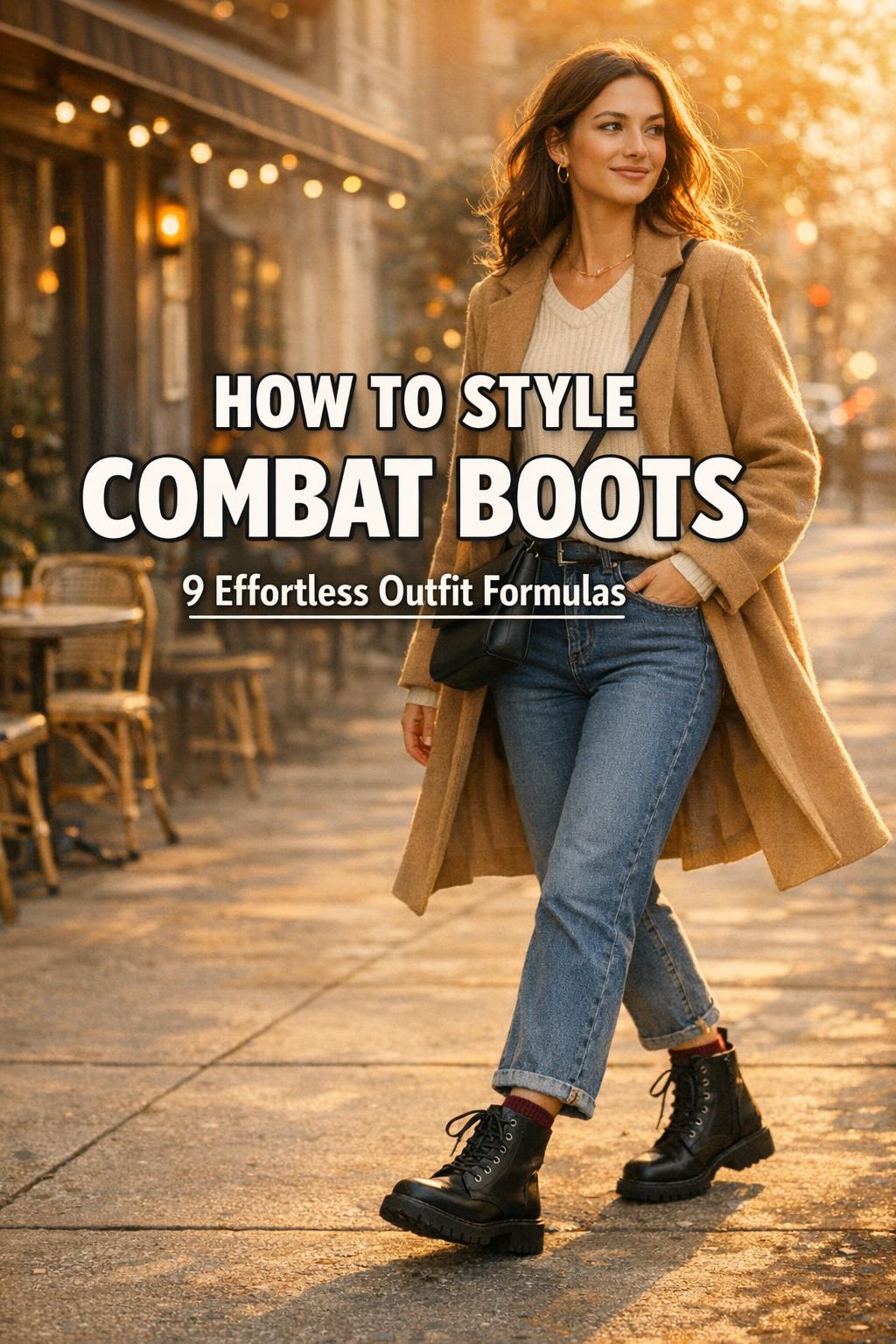
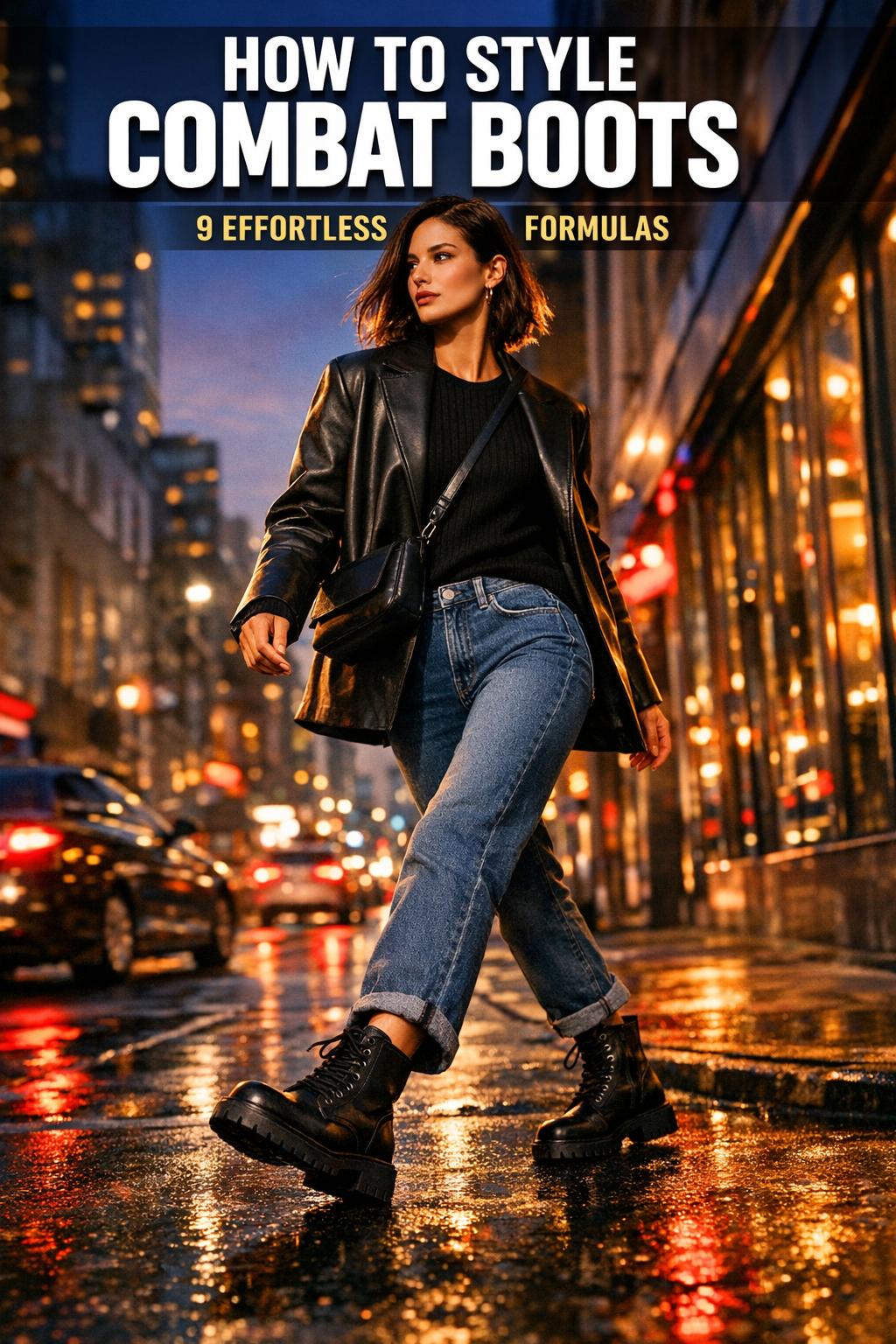
Fall outfits with combat boots are popular because the textures naturally complement each other. Start with denim or a knit base, then add a jacket that matches the boots’ structure. This is also the easiest season for chunky sole combat boots outfits because the overall wardrobe weight supports them.
- Straight-leg or skinny jeans + oversized knit sweater + combat boots
- Leggings + long sweater or knit + structured outerwear layer + combat boots
- Jeans + cropped tee + leather jacket + combat boots
Tip: If your jeans bunch above the boot, choose a cleaner hem (cropped or tapered) or adjust the laces to reduce bulk at the ankle.
Winter: Midi Dress + Thermal Tights + Coat
Winter is where function and style need to work together. A midi dress paired with thermal tights and combat boots gives you warmth and a strong silhouette. Add a coat to finish the look—this outfit is especially effective when you want a dressier feel without giving up comfort.
This is also a great season for monochrome looks: tone-on-tone outfits keep the boots streamlined and make heavier layers feel intentional.
Spring: Florals and Light Layers
Spring styling is all about contrast: lighter fabrics, brighter energy, and just enough structure to keep the look grounded. Combat boots with dresses—especially a floral midi dress—are a go-to because it’s easy, comfortable, and visually interesting.
- Floral midi dress + combat boots + lightweight blazer
- Denim skirt + simple top + combat boots + light jacket
- Straight-leg jeans + tee + blazer + combat boots
Tip: In spring, keep at least one element light—either the outer layer, the fabric, or the color palette—so the boots feel like an accent rather than the whole story.
Summer: Flowy Dresses and Dressy-but-Cool Combinations
Yes, you can wear combat boots in summer. The trick is to keep the rest of the outfit breathable and visually light. A flowy dress with ankle boots is one of the easiest warm-weather formulas when you want something more interesting than sandals.
For a more styled summer approach, lean into clean lines: a simple dress silhouette with structured boots creates a “dressy-but-cool” contrast that feels modern.
Warmer Climates: Lightweight Fabrics and Sheer Tights
If you live somewhere that doesn’t get a true cold season, combat boots can still be part of your rotation. Choose lighter fabrics, shorter hems, and consider sheer tights when you want the look of a layered outfit without the heat of heavy knits or coats.
Tip: When temperatures are higher, avoid piling on too many heavy textures at once. Let the boots be the “weight” and keep the rest of the outfit crisp and minimal.
12 Ready-to-Recreate Looks with Combat Boots
These outfit ideas are built as templates: each one gives you a clear base, a recommended outer layer (when relevant), and a finishing direction. Screenshot them, save them, and tweak the details to match your personal style.
Look 1: Floral Midi Dress + Combat Boots
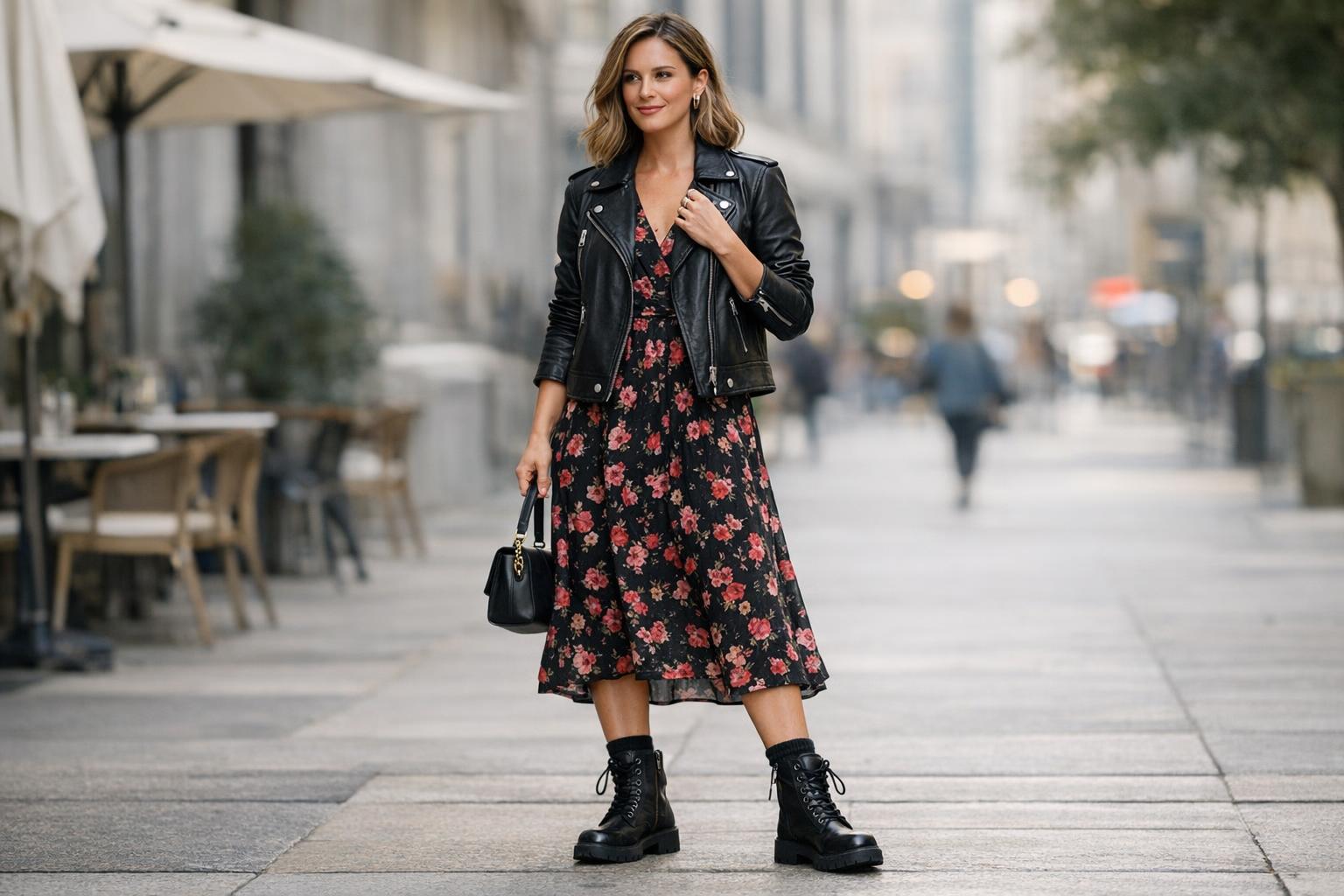
This is the signature “pairing combat boots with florals” formula. The softness of a floral midi dress contrasts with rugged boots, creating an outfit that feels intentional and wearable. Add a lightweight blazer for spring or a cropped coat when it’s cooler to give the look structure.
Look 2: Midi Dress + Thermal Tights + Coat (Winter-Ready)
For winter, focus on warmth and a clean silhouette. A midi dress gives you movement, thermal tights make it practical, and combat boots ground the outfit. Finish with a coat to tie everything together; this is especially effective in darker, tone-on-tone palettes for a sleek effect.
Look 3: Straight-Leg Jeans + Cropped Tee + Combat Boots
This is a casual staple that works year-round. Straight-leg denim balances the boots without clinging too tightly, and a cropped tee keeps the proportions fresh. Add a jacket when needed, and keep accessories simple for an effortlessly cool vibe.
Look 4: Skinny Jeans + Leather Jacket + Combat Boots
If you want a classic combat boots outfit with a strong, structured feel, this is it. Skinny jeans tuck neatly into or sit cleanly over the boots, while a leather jacket echoes the boots’ toughness. This look is especially effective for fall outfits when you want an easy uniform.
Look 5: Leggings + Oversized Knit + Combat Boots
This comfort-first look can still feel styled when you pay attention to proportions. The oversized knit adds volume on top, leggings keep the bottom streamlined, and combat boots add structure. For an even more finished look, add an outer layer with shape.
Look 6: Sweater + Midi Skirt + Combat Boots
A midi skirt brings movement and a slightly dressier feel, while the sweater keeps it grounded and cozy. Combat boots add edge without making the outfit feel overly precious. This template is especially useful when you want something more elevated than jeans but still easy to wear.
Look 7: Plaid Mini Skirt + Chunky Sole Combat Boots
This is a statement silhouette: the shorter hem highlights the boots, and the chunky sole makes the outfit feel bold. Add tights for more coverage and to transition the look into cooler weather. Keep the top relatively simple so the skirt-and-boot combination stays the focus.
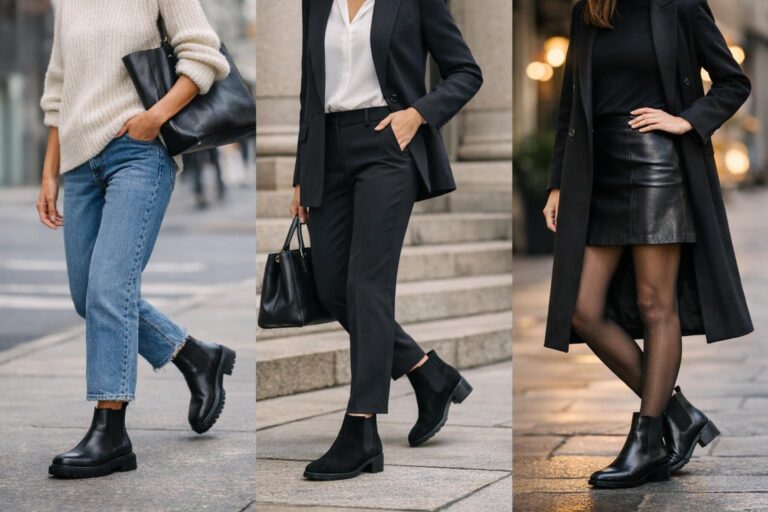
Look 8: Blazer + Jeans + Combat Boots (Street-Style Polished)
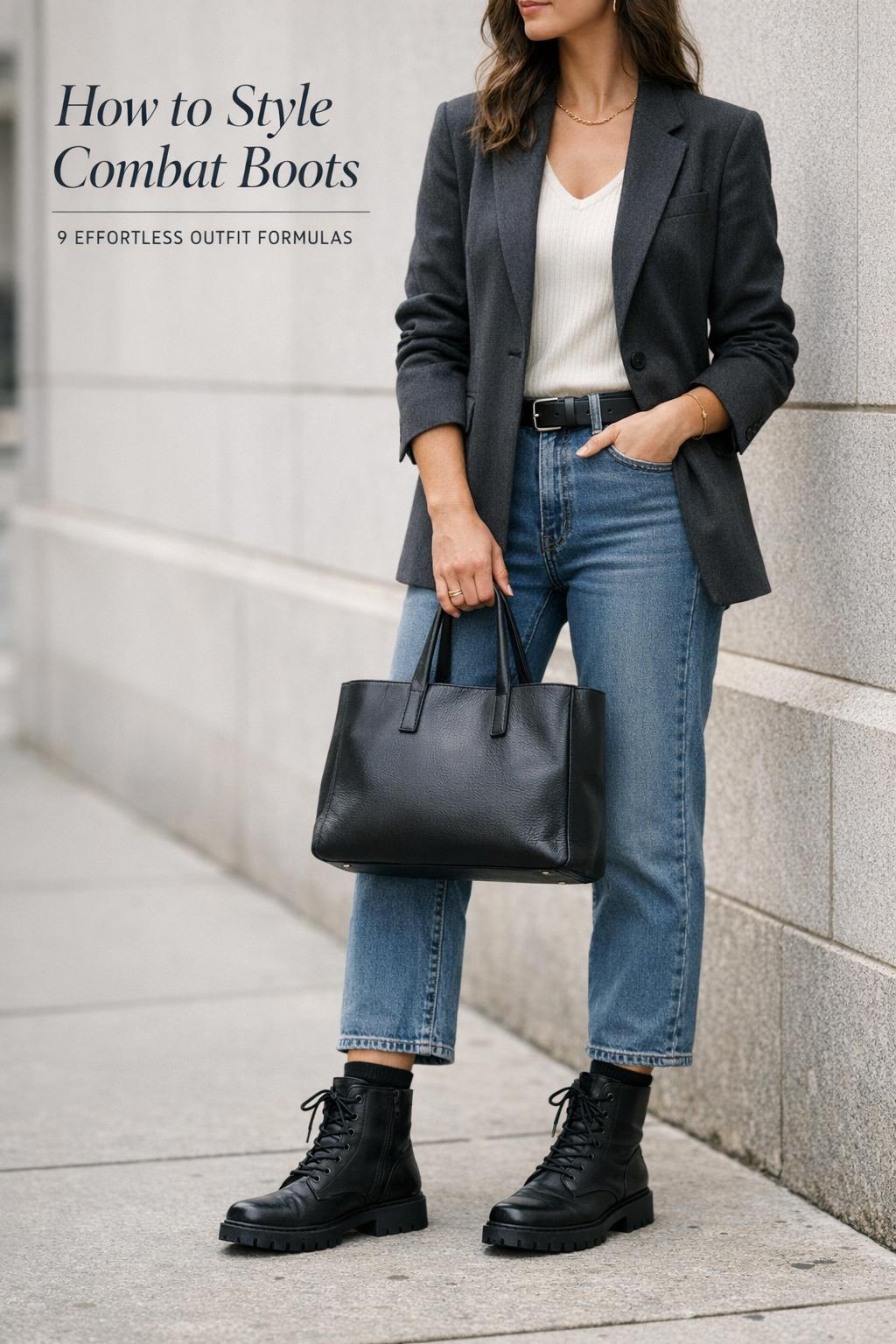
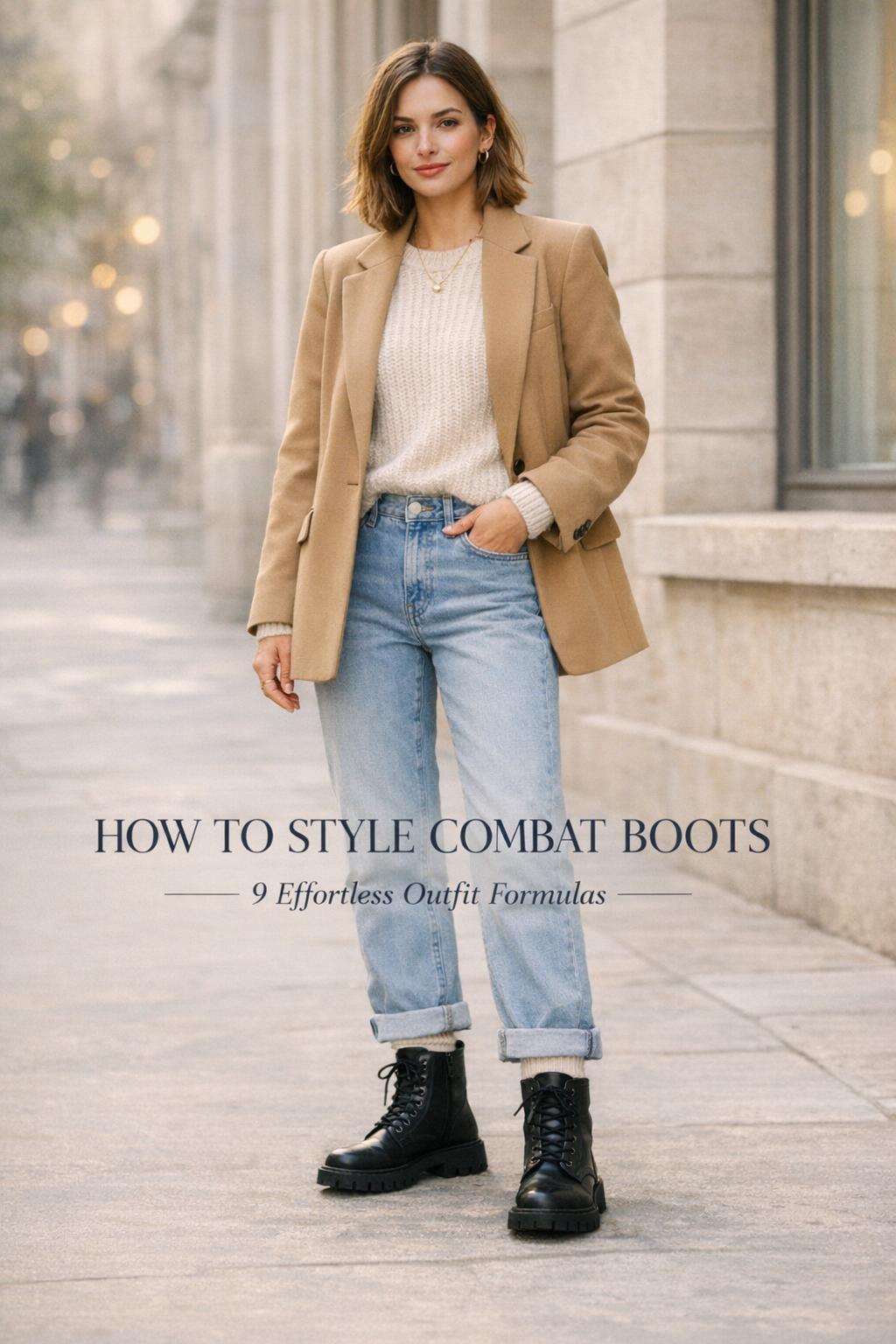
This is one of the easiest ways to make combat boots feel polished. The blazer adds structure and a more refined note, while jeans keep it accessible. If you want to soften the edge, keep your color palette coordinated; if you want more contrast, pair a lighter blazer with darker boots.
Look 9: Blazer + Cigarette Pants + Combat Boots (Work-Friendly Edge)
Tailoring and combat boots can absolutely work together. Cigarette pants create a clean line, and a blazer keeps the outfit professional. Combat boots add a subtle edge without looking out of place, especially when the outfit is cohesive and not overloaded with competing textures.
Look 10: All-Black, Tone-on-Tone (Sleek and Minimal)
Tone-on-tone styling—especially all-black—is a reliable shortcut when you want combat boots to look elevated. The boots blend seamlessly into the outfit, and the overall effect feels intentional and streamlined. This is also a great option when you’re experimenting with a chunkier boot and want to keep the outfit grounded.
Look 11: Sequins or Shine + Combat Boots (Glam Contrast)
One of the most fun ways to style combat boots is to pair them with something unexpectedly glam—like sequins or a shiny texture. The boots tone down the dressiness and make the look feel modern and wearable, while the shine keeps it from reading too casual.
Look 12: Joggers + Oversized Hoodie + Combat Boots (Athleisure Remix)
Combat boots can add structure to athleisure elements. Joggers and an oversized hoodie create a relaxed base, and the boots sharpen the outfit’s edge. Keep the fit intentional—if everything is oversized, it can feel heavy, so aim for one main volume piece and one more streamlined element.
Accessorizing and Finishing Touches
Accessories are where you decide whether your combat boots outfit reads casual, polished, or fashion-forward. You don’t need a lot—just a few intentional choices that echo the boots’ structure or soften their edge, depending on your goal.
Belts and Layering for a Defined Shape
Belts can be especially helpful when you’re wearing combat boots with dresses or oversized knits. A little waist definition balances the visual weight of the boots and makes the silhouette look purposeful rather than thrown together.
Tip: If a dress-and-boot outfit feels “off,” try adding structure at the waist or shoulders before swapping the boots. A belt or a blazer is often the fix.
Tights and Socks: Sheer, Ribbed, or Patterned
Tights and socks change the tone fast. Sheer tights help skirts and dresses feel lighter, while ribbed socks can lean cozy and casual. Patterned options can add personality, but keep the rest of the outfit simpler so it doesn’t compete with the boots.
- Sheer tights: Great for mini and midi lengths when you want a softer finish.
- Thermal tights: Best for winter outfits that still include dresses and skirts.
- Ribbed socks: Easy with denim and knits; can peek above the boot for a relaxed vibe.
Outerwear Options by Vibe: Leather Jacket, Trench, Cropped Coat
Outerwear acts like the “frame” of your outfit. A leather jacket amplifies edge and works perfectly with jeans or dresses. A trench can make combat boots feel more polished and intentional. A cropped coat emphasizes the waist and can be especially flattering with high-rise pants or midi skirts.
Tip: Match the outfit’s formality with your outerwear. If you’re styling combat boots for work, choose structured outerwear. If you’re going for weekend casual, a relaxed layer can keep it easy.
Styling for Different Body Types and Proportions
There’s no single “right” body type for combat boots. The goal is to make the proportions feel balanced for you. Small adjustments—hem placement, waist definition, and how your pants break at the boot—can make a big difference.
Petite Styling: Longer Lines and Higher Rises
If you’re petite, combat boots can feel visually heavy if the outfit is chopped into too many segments. Try higher-rise pants, cleaner pant hems, and shorter or more structured outer layers. Monochrome outfits can also help create a continuous line, making the look feel sleek.
Curvy Styling: Balance with Structured Pieces
For curvier proportions, combat boots can look especially good when the outfit includes at least one structured element—like a blazer, coat, or defined waist. This keeps the look balanced and intentional, especially when pairing boots with dresses or skirts.
Tall Styling: Play with Crops and Hem Lengths
If you’re tall, you can lean into bolder proportion play: cropped jackets with midi skirts, oversized knits with shorter hems, or more dramatic boot heights. Combat boots can anchor oversized pieces without making the outfit look overwhelmed.
Tip: When experimenting with proportions, change one variable at a time. If you go oversized on top and bottom, keep the color palette more cohesive so the outfit still feels unified.
Common Pitfalls to Avoid (and How to Fix Them)
Combat boots are forgiving, but a few predictable issues can make outfits feel unbalanced. Use these quick fixes before you give up on a look.
Pitfall 1: Mismatched Visual “Weights”
If the boots look too heavy for the outfit, add structure elsewhere (a blazer, a leather jacket, or a more substantial knit) or choose a longer hem like a midi dress that balances the boot. If the outfit looks too heavy overall, lighten one piece—swap a bulky layer for a lighter outerwear option.
Pitfall 2: Ignoring Weather and Practicality
When you’re building seasonal outfits, comfort matters. If it’s cold, add thermal tights with dresses and skirts. If it’s wet, keep boots clean and weather-ready so the whole outfit still looks put together.
Pitfall 3: Over-Layering Without a Clear Shape
Too many layers can hide your proportions, making the boots feel like a disconnected chunk at the bottom. Fix it by defining one area—waist, shoulders, or hemline. A belt, a cropped coat, or a cleaner pant hem can restore balance quickly.
Pitfall 4: Too Many Competing Textures
Texture mixing is great, but too much at once can look busy. If your boots are chunky and your outfit includes heavy knit and a strong print, keep accessories simple and stick to a tighter color story.
Pitfall 5: No Intentional Finishing Touch
Sometimes the outfit is fine—it just needs a finishing choice. Add a structured bag, a belt, or a cohesive outer layer. Even a simple monochrome approach can make combat boots look more polished instantly.
Shopping Guide: Boots That Complement Your Wardrobe
Shopping for combat boots is easier when you start with your wardrobe and lifestyle. Think about what you wear most—jeans, dresses, skirts, tailoring, athleisure—and choose a boot height and material that supports those outfits. The goal is a pair you’ll actually style repeatedly.
Choosing Boot Heights: Ankle, Mid-Calf, Knee-High
Ankle combat boots are the most flexible for everyday outfits, especially if you regularly wear jeans or straight-leg pants. Mid-calf styles can feel more fashion-forward and look great with skirts and dresses. Knee-high or taller options create a stronger statement silhouette and can shift even simple outfits into a more styled direction.
- Ankle: Best “first pair” and easiest with jeans and tailoring.
- Mid-calf: Strong with midi skirts and dresses; makes the boots a focal point.
- Taller heights: More dramatic; works best when the rest of the outfit is clean and intentional.
Materials: Leather vs Suede (and Why It Matters)
Material affects both vibe and maintenance. Leather tends to read structured and works naturally with tailoring, leather jackets, and sleek monochrome looks. Suede can feel softer and can pair beautifully with spring outfits and lighter textures, but it may require more attention to keep it looking fresh—especially if you’re wearing your boots through changing seasons.
Tip: Choose the material that matches how you’ll wear them most. If your outfits lean polished and you like tone-on-tone looks, a structured finish fits naturally. If you prefer softer styling with dresses and lighter layers, a softer finish can blend beautifully.
Budget vs Premium: What to Prioritize
Whether you’re shopping on a budget or investing in a premium pair, prioritize comfort and versatility. A boot you can wear all day will become a staple; a boot that only works for one type of outfit won’t. If you’re building a small wardrobe of repeatable looks, start with a classic shape you can wear with jeans, dresses, and skirts.
If you’re looking for affordable combat boots, focus on fit, comfort, and a shape that complements your most-worn pants and hemlines. If you’re going premium, look for a pair you’ll wear across seasons and occasions so the cost-per-wear makes sense.
Visual Gallery: 14 Inspiring Looks to Try
If you’re creating your own lookbook or saving outfit inspiration, use these as caption-style prompts for a simple gallery (and clear alt text when you post or save images). Each one maps to a repeatable outfit formula.
- Floral midi dress with combat boots (feminine contrast)
- All-black outfit with combat boots (tone-on-tone sleek)
- Straight-leg jeans and cropped tee with combat boots (everyday casual)
- Skinny jeans and leather jacket with combat boots (classic edgy)
- Midi dress, thermal tights, and coat with combat boots (winter-ready)
- Plaid mini skirt, tights, and chunky sole combat boots (bold proportions)
- Sweater and midi skirt with combat boots (cozy polished)
- Blazer and jeans with combat boots (street-style tailored)
- Blazer and cigarette pants with combat boots (work-friendly edge)
- Leggings and oversized knit with combat boots (comfort uniform)
- Joggers and oversized hoodie with combat boots (athleisure remix)
- Denim skirt and light layer with combat boots (spring staple)
- Flowy dress with ankle combat boots (summer styling)
- Shiny texture or sequins with combat boots (glam contrast)
Practical Resources and Next Steps
The fastest way to build confidence with combat boots is to pick two “uniforms” you’ll actually wear—one casual (jeans-based) and one dress-based—then repeat them with small variations in layers, tights, and accessories. Combat boots are at their best when they’re used often, styled intentionally, and cared for so they stay sharp through the season.
Tip: If you want to expand your rotation without buying new clothes, change one dimension at a time: swap jeans for a midi skirt, switch a leather jacket for a blazer, or move from monochrome to contrast by introducing a floral dress. You’ll learn what feels most “you” quickly.
FAQ
Can I wear combat boots with dresses?
Yes—combat boots with dresses is one of the easiest, most reliable pairings because the contrast looks intentional. Try a floral midi dress for a feminine-meets-rugged look, and add a blazer or cropped coat if you want more structure.
How do I style combat boots with jeans?
Start with straight-leg or skinny jeans for a clean line, then build upward with a simple tee and a structured layer like a blazer or leather jacket. If the ankle area feels bulky, adjust the hem (cropped or tapered) or refine the lacing for a neater break.
How do I wear combat boots in summer without looking too heavy?
Keep the rest of the outfit light: choose breathable fabrics and simple silhouettes like a flowy dress with ankle boots, or a skirt with a lightweight top. Minimizing heavy layers and keeping the color palette clean helps the boots feel like an accent rather than the whole outfit.
What socks work best with combat boots?
Ribbed socks are a great everyday option for comfort and a casual finish, especially with denim and knits. For skirts and dresses, sheer tights create a lighter look, while thermal tights are ideal in winter when you want warmth without losing the dress-and-boot silhouette.
How do I style combat boots for work?
Use tailoring to balance the boots: pair them with cigarette pants and a blazer, or a cohesive, structured outfit in a coordinated color palette. Keeping textures and accessories polished makes the boots feel like a subtle edge rather than a distraction.
Are combat boots good for wide calves?
They can be, especially when you focus on shaft fit and adjustability. Boots with lacing can help customize fit through the ankle and calf area, and choosing a height that sits comfortably on your leg will make styling and all-day wear easier.
How can I make chunky sole combat boots look balanced?
Balance chunky soles with either a clean, streamlined bottom (like straight-leg jeans or tights) or a longer hem (like a midi dress or midi skirt). If the look feels too heavy, simplify textures and lean into monochrome or a tight color story.
What are the most common styling mistakes with combat boots?
The most common issues are mismatched outfit “weights,” over-layering without a defined shape, and too many competing textures. Fix them by adding one structured element (like a blazer or belt), adjusting hem placement, and simplifying either the palette or the layers.