Mini scarf style: The Finishing Touch for Busy City Days
Mini scarf style, explained the way you’ll actually wear it
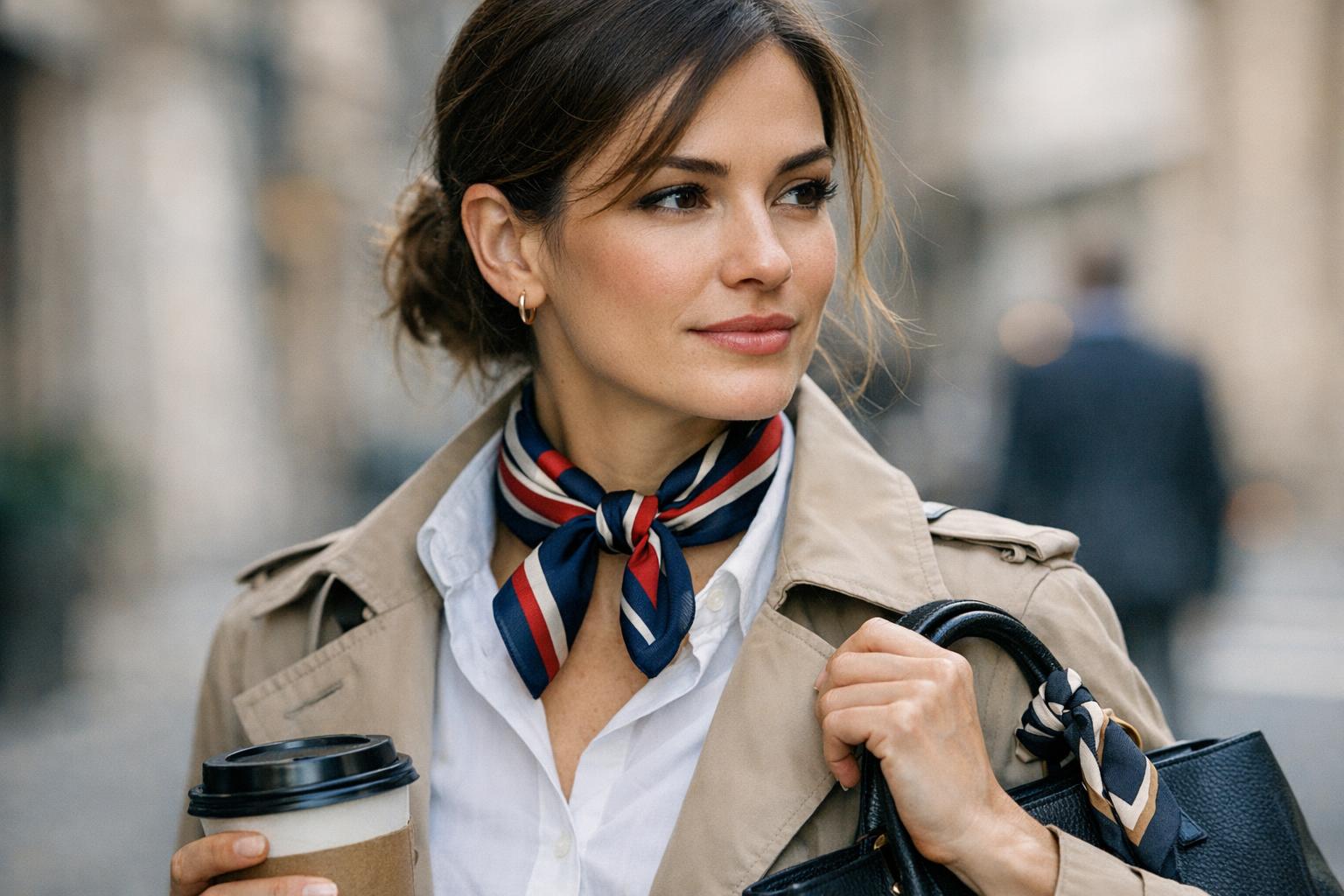
The moment you’re halfway out the door—coffee in hand, phone in the other—you feel it: the outfit is fine, but not finished. That’s where mini scarf style earns its reputation. A tiny scarf can sharpen a neckline, soften a blazer, add color near your face, or turn a basic tote into something intentional. The best part is that mini scarves don’t demand a whole new wardrobe. They work by editing what’s already there: adding a line, a knot, a print, or a texture exactly where the eye naturally lands.
Across today’s mini scarf landscape, you’ll see a few consistent threads: mini square scarves (like the Amber Palace Print in Smokey Olive mini square scarf attributed to Wild Paris), skinny scarves in jewel tones (a signature lane for The Weft Wright), mini knit scarves (like the Chiclara mini knit scarf), and luxury mini formats such as a Hermès mini losange scarf in silk. Add to that the practical, technique-focused side—like the Hoxton knot and related scarf-knot methods—and you have a small accessory category with surprisingly big range, from street-ready scarf aesthetic to polished neck scarf outfit styling.
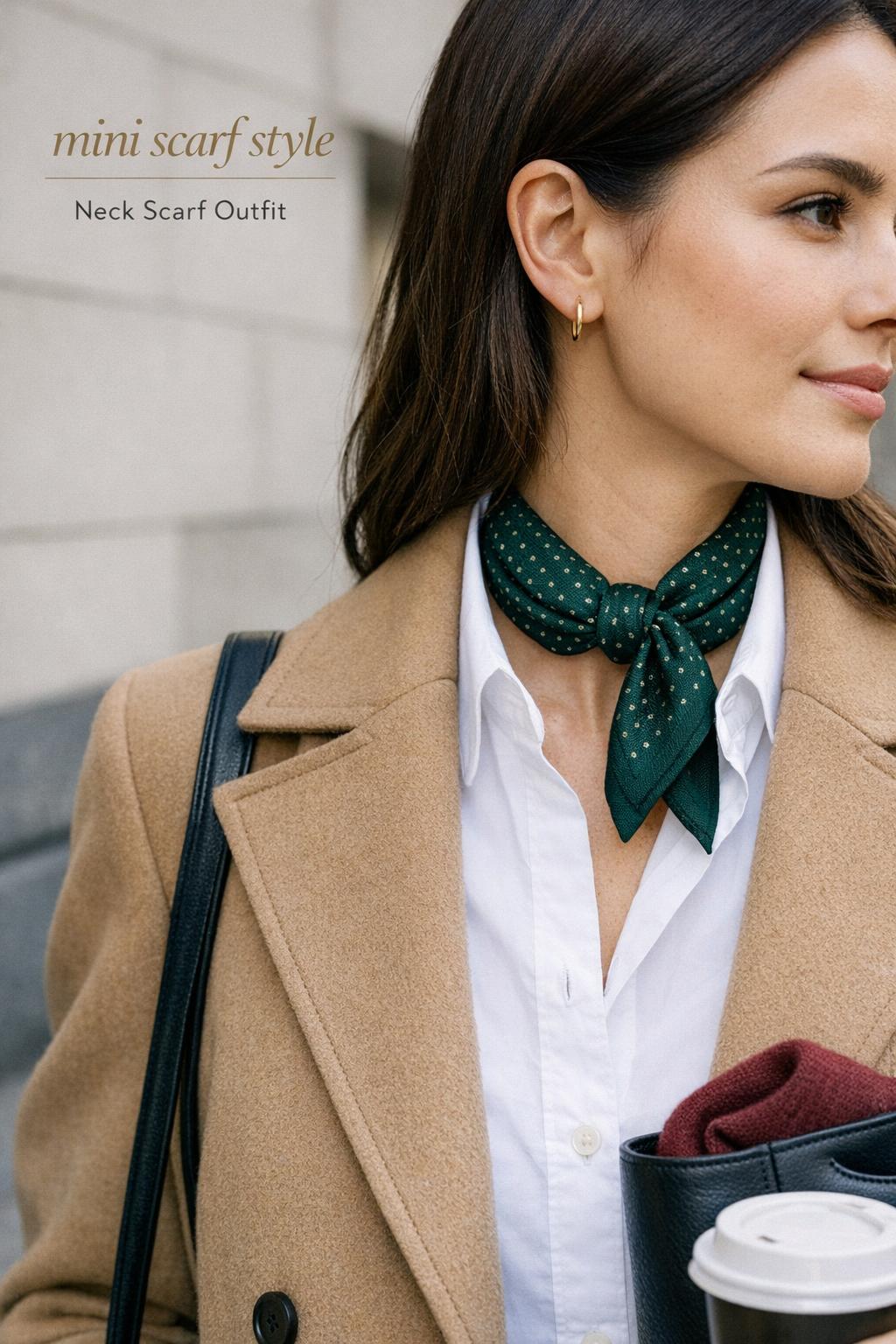
This guide approaches mini scarves the way real people use them: quickly, repeatedly, and in different contexts. You’ll learn what “mini” really means in shapes and materials, how to tie knots that hold on smaller dimensions, how to build a scarf around neck outfit that doesn’t feel fussy, how to style minis for work and evenings, and when to choose silk vs cashmere vs recycled polyester. You’ll also find a DIY corner (including an easy mini scarf knitting pattern from Moc An Knits) and a care-and-longevity section so your favorite piece stays wearable rather than “delicate and ignored.”
What counts as a mini scarf (and why the shape matters)
A mini scarf is defined less by a single measurement and more by behavior: it’s short enough to style close to the body and small enough to act as an accent rather than a wrap. In practice, that “mini” behavior shows up in a few main formats—mini square scarf, skinny scarf, twilly-style scarf, and compact knit or cashmere versions. Each format changes how much structure you can get from a knot and how the scarf sits against skin, hair, or a bag handle.
Common shapes: mini square, skinny, and twilly-style
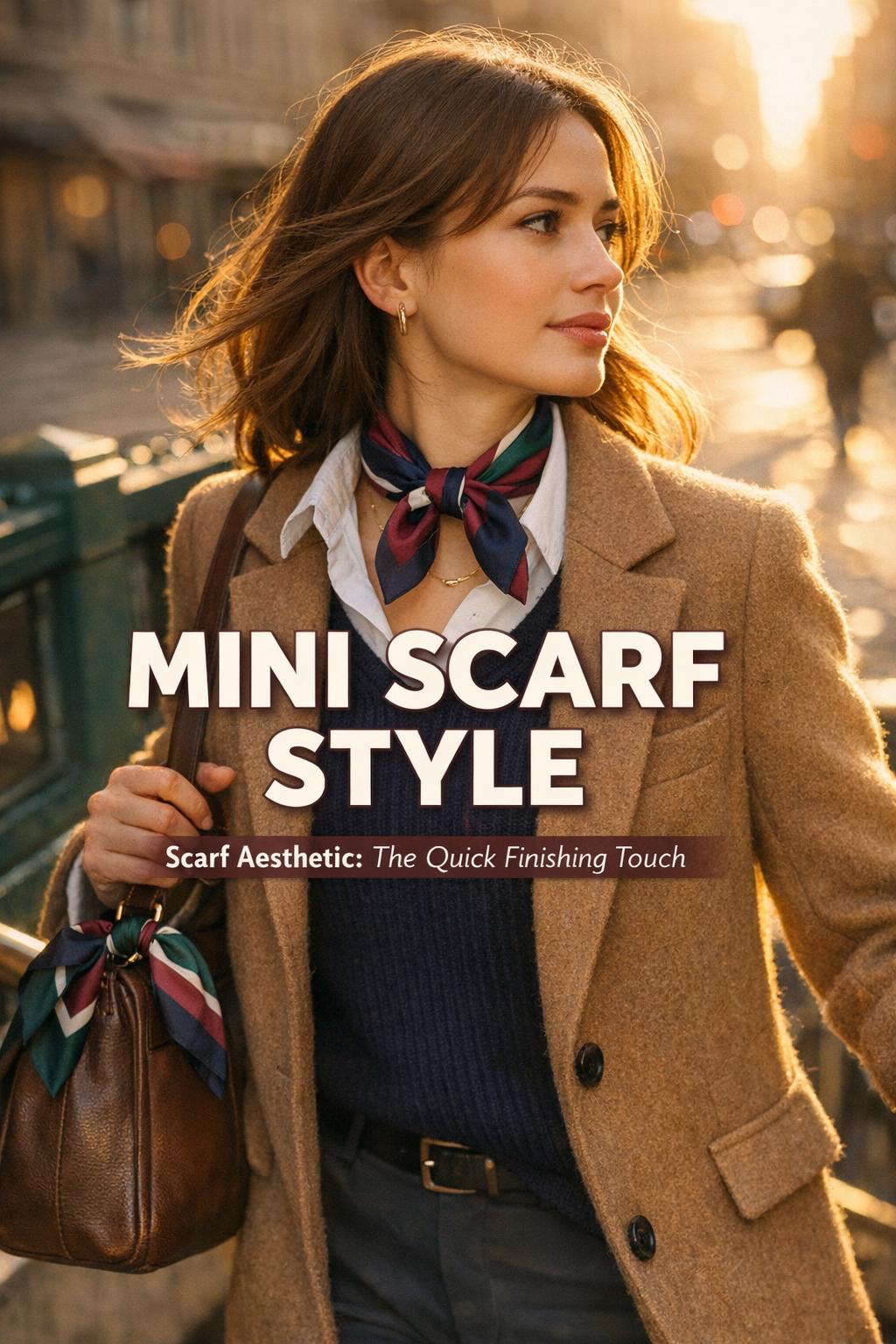
Mini square scarves tend to read “graphic” and styled because the corners and edges create clean lines when folded. A good example is the Amber Palace print mini square scarf in a Smokey Olive colorway, described with multiple wear options (around the neck, on a bag, or as a hair accent) and made in recycled polyester. Skinny scarves, by contrast, are all about line: they’re narrow, often longer than a mini square, and they style well with small knots and sleek silhouettes—exactly the vibe The Weft Wright leans into with vintage jewel tone skinny scarves and a broader skinny scarves trend-and-styling conversation. A twilly-style scarf (often treated as a synonym for a tiny scarf fashion staple) typically behaves like a skinny scarf but is designed to wrap around straps, wrists, or collars without bulk.
Material changes the “hold”: silk, cashmere, blends, and recycled polyester
On a mini scarf, material isn’t a minor detail—it decides whether your knot stays put, whether the scarf looks crisp or soft, and whether it feels right in warm vs cool weather. Silk reads polished and is strongly associated with luxury minis, like the Hermès beige silk contrast-edged logo print mini losange scarf. Cashmere, like the Iris von Arnim MINI HARVA cashmere scarf in oatmeal, brings warmth and a plush finish even at a smaller scale. Knit blends (such as the wool/nylon/acrylic blend noted for a mini knit scarf) add cozy texture and tend to grip slightly better than slick silk. Recycled polyester, as referenced for the Amber Palace print mini square scarf, can support a sustainability-minded scarf aesthetic while still giving you a light, easy-to-style accessory.
The knot and drape basics that make mini scarves look intentional
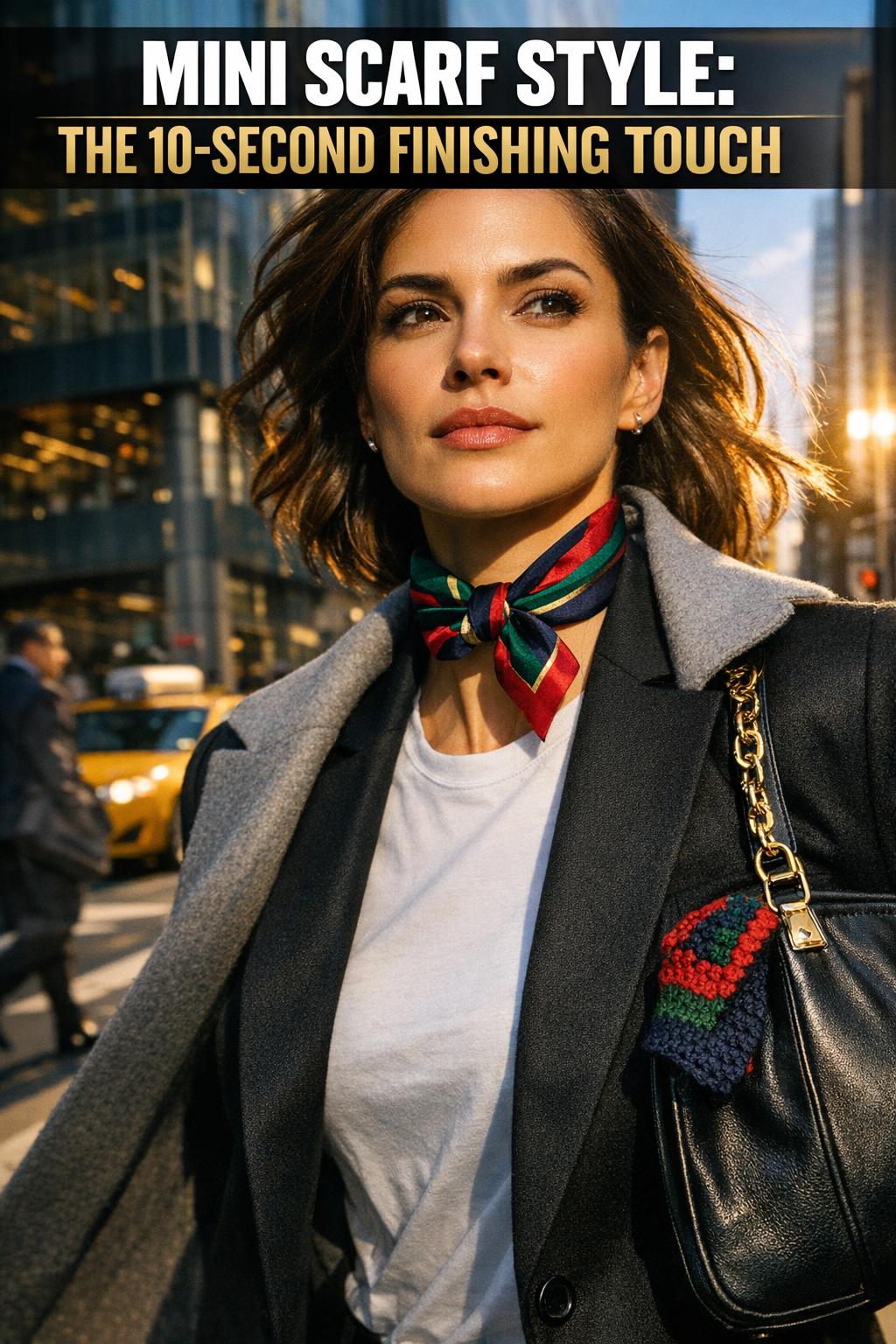
Mini scarves can look elevated or accidental depending on two things: knot choice and drape control. With less fabric to work with, you don’t have much margin for error. A bulky knot can overwhelm the scarf; a loose knot can slip, especially in smooth fabrics. That’s why technique-driven approaches—like the Hoxton knot and other named knot methods (including Chelsea and Parisian knots)—matter more here than they do with full-size scarves. Think of knots as “closures” that finish a line around the neck, rather than decorative macramé.
A mini “knot library” you’ll actually use: Hoxton, Chelsea, Parisian
The Hoxton knot is a practical reference point because it’s a named technique associated with scarf knotting education, and it sits well in a compact space. If you’re styling a scarf around neck outfit for daily wear, choose a knot that tightens neatly and doesn’t require long tails. In the same family of recognizable knot names, Chelsea and Parisian knots are useful when you want a clean, centered finish. The core idea across these techniques is consistent: control the scarf’s endpoints so the look reads deliberate, especially with skinny scarves and mini squares.
Quick start method for small scarves (works across shapes)
When time is short, start with a fold that matches the scarf type. For a mini square scarf, fold into a triangle, then narrow it into a band so it behaves like a skinny scarf; this gives you a predictable width and keeps prints like the Amber Palace motif visible in a controlled way. For a skinny scarf, smooth it flat and align the ends before you tie; misaligned ends look messier on a narrow silhouette. For a knit mini scarf, avoid over-tightening—knits can compress, making the scarf look shorter and the knot look chunky.
Neck scarf outfit decisions: where the mini scarf should sit
A neck scarf outfit succeeds when the scarf’s placement supports the outfit’s neckline and proportions. With minis, placement is especially noticeable: a scarf tied too high can feel restrictive; too low can look like an afterthought. Instead of thinking “How do I tie this?” start with “Where should this sit?” and let that decision choose the knot.
For a crisp shirt or button-up, a mini scarf works best close to the collarbone with a tidy knot, so the scarf reads like a finishing detail rather than a substitute tie. With a crewneck tee or fine knit top, go slightly higher to frame the face. With a blazer, you can either tuck the knot under the lapel for a clean line or let it sit centered for a more classic scarf aesthetic. The key is consistency: the scarf should relate to an existing line—collar, neckline curve, lapel edge—rather than floating independently.
Tips: keep the mini scarf from overpowering your face
If you’ve ever tied a small scarf and felt like you suddenly look “all accessory,” it’s usually because the scarf is too wide for the neckline or the knot is too large. With mini squares, narrow the fold until it’s proportional to your neck opening. With silk, prioritize smaller knots and tighter, cleaner tails. With cashmere like the MINI HARVA in oatmeal, keep the knot simple and let the softness do the work—cashmere already communicates texture and warmth without needing extra volume.
Small scarf outfit inspiration that doesn’t feel costume-y
The most wearable small scarf outfit ideas are the ones that fit into real schedules: commuting, long workdays, a dinner reservation, or a weekend market run. Instead of treating mini scarf style as a “look,” treat it as a tool—an easy adjustment that changes the mood of familiar basics. Below are editorially grounded ideas you can rotate without reinventing your closet.
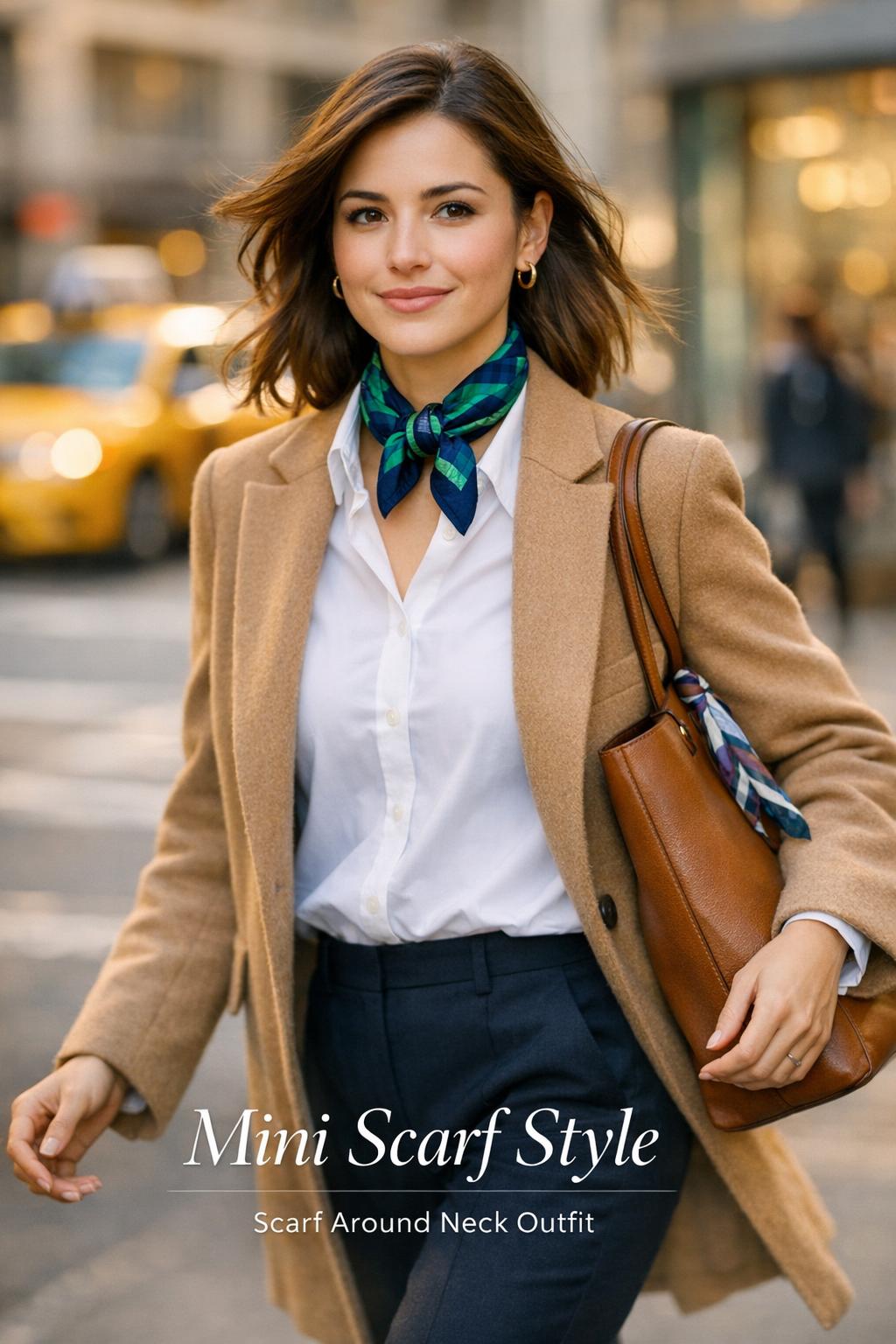
- Workday polish: a mini square scarf folded into a band, tied neatly at the side of the neck so it doesn’t compete with a collar or jewelry.
- Evening focus: a silk mini scarf (like a mini losange style) centered with a clean knot to draw attention to the neckline without adding bulk.
- Weekend minimal: a skinny scarf in a jewel tone to add a single saturated line against a neutral tee or sweater.
- Texture-forward cozy: a mini knit scarf—soft blend fibers read warm and casual, ideal when you want comfort without the weight of a full wrap.
- Theme styling: a motif scarf, such as an AWST Intl mini horses in blankets scarf, used as a playful accent that still functions as a wearable accessory.
Notice what these ideas share: each uses the scarf to solve a styling problem—adding color near the face, creating a focal point at the neck, or finishing an outfit that feels flat. That “problem-solution” mindset is what keeps mini scarves from slipping into costume territory.
Street-style energy vs classic scarf aesthetic: choose one anchor
Skinny scarves and mini squares can skew classic or edgy depending on one anchor choice: either keep the outfit quiet and let the scarf speak, or keep the scarf simple and let the outfit carry the vibe. The Weft Wright’s skinny scarf approach lends itself to a streamlined, trend-aware line, while a mini square scarf with a clear print like Amber Palace naturally becomes a focal point. When both your outfit and scarf compete, minis can look busy because they sit so close to the face.
Beyond the neck: hair, bags, and “hands-free” mini scarf styling
One reason mini scarves continue to trend is that they aren’t confined to neckwear. Mini scarf style easily becomes a hair detail or bag accent—two placements that create impact without needing perfect knot technique at the throat. This is also where mini squares and twilly-style scarves shine, because their scale makes them less cumbersome and more secure on accessories.
Hair accent styling (and when it works best)
Hair styling with a mini scarf is most successful when you treat it as an accent rather than a head wrap. A mini square scarf folded into a narrow band can tie around a ponytail or sit like a slim headband. If the fabric is slick (as silk often is), you’ll want a secure knot and potentially a slightly tighter tie than you’d use around the neck—hair movement can loosen it faster. If you prefer a softer, cozy look, a knit mini scarf can echo the texture of a sweater and feel more relaxed, though it may look bulkier if tied too close to the hairline.
Bag charm styling: the easiest upgrade for a basic tote
A scarf tied to a bag handle is one of the most forgiving ways to wear a mini scarf, and it’s explicitly suggested for pieces like the Amber Palace print mini square scarf. This placement works because the scarf doesn’t need to sit perfectly symmetrical near your face. It’s also a smart option if you love the idea of a scarf around neck outfit but find neckwear uncomfortable during long days. Choose a print or jewel tone that contrasts your bag color, and keep the knot compact so it doesn’t snag as you move.
Material-specific mini scarf style: silk vs cashmere vs knit blends
Mini scarves succeed when you let the material dictate the styling. What works in silk can look awkward in cashmere; what holds in knit might not hold in recycled polyester. Instead of forcing one technique on every scarf, match the method to fabric behavior and the situation you’re dressing for.
Silk mini scarves: crisp, polished, and sensitive to knot size
Silk minis—such as a Hermès mini losange scarf in beige silk—naturally read refined. They’re ideal when you want a clean scarf aesthetic that looks intentional in close-up. The trade-off is slippage: silk can loosen, especially with very small knots. Practical fix: keep the fold narrow, choose a compact knot style (the kind of logic behind named knot techniques like Hoxton, Chelsea, or Parisian), and avoid excessive tails that shift throughout the day.
Cashmere mini scarves: warmth and softness with a luxury feel
Cashmere minis like the Iris von Arnim MINI HARVA in oatmeal do something silk can’t: they add warmth and plush texture without needing volume. Cashmere suits cooler environments where a tiny scarf isn’t just decorative, but still you don’t want a full wrap. The trade-off is bulk at the knot—cashmere compresses less crisply than silk—so choose a simpler tie and let the scarf sit naturally. If you’re building a neck scarf outfit for a long day, cashmere can feel more comfortable than a tight silk knot.
Knit and blended minis: cozy, practical, and easy to repeat
Mini knit scarves (like the Chiclara mini knit scarf in a soft blend) and other blended options tend to be the most repeatable day-to-day. They’re comfortable, less precious, and they often stay in place better than silk. The trade-off is definition: knit textures can swallow a knot and make the scarf look shorter. When you want a clean silhouette, keep the knot small and consider wearing the scarf slightly looser rather than cinched tight.
Recycled polyester minis: lightweight, graphic, and easy to travel with
A mini square scarf made from recycled polyester—like the Amber Palace print in Smokey Olive—can be a practical choice when you want an eco-leaning material angle without sacrificing ease. Lightweight fabrics pack well and are easy to repurpose from neck to hair to bag. The trade-off is that some lightweight fabrics can flutter or shift; narrowing the fold and using a stable knot keeps the print placement controlled.
A U.S.-centric way to wear mini scarves through the seasons
In the U.S., mini scarves often have to flex across wildly different indoor/outdoor conditions: air-conditioned offices, hot sidewalks, chilly evenings, and layered winter errands. Seasonality matters less as a “fashion rule” and more as a comfort strategy. Mini scarf style is particularly useful here because it lets you adjust temperature and polish without carrying a bulky accessory.
In fall and winter, mini cashmere (like an oatmeal MINI HARVA) supports warmth at the neck without the heaviness of a full scarf—especially helpful if you’re already wearing a coat and don’t want collar crowding. A mini knit scarf plays a similar role with a more casual mood. In spring and summer, lighter fabrics such as silk and lightweight mini squares make more sense; they can finish an outfit without adding heat, and they transition easily into hair or bag styling if the neck feels too warm.
Tips: packing a mini scarf so it stays “ready to wear”
Mini scarves are travel-friendly, but they can also turn into a wrinkled knot of fabric in a bag. A simple approach is to fold the scarf into the shape you wear most—band for neck, narrow roll for bag handle—and place it flat in a pouch. If you’re carrying multiple minis (a silk option and a knit option, for example), keep them separate so texture doesn’t catch. A mini scarf that’s easy to grab and style is the one you’ll actually use on a hectic travel day.
Brands and signature mini scarves worth knowing (from accessible to luxury)
Mini scarves show up across very different price points and style ecosystems, and understanding the brand landscape helps you shop with clearer expectations. Some brands emphasize material and prestige, others focus on wearable knit comfort, and others build their identity around skinny scarf trend styling and jewel-tone palettes. The goal isn’t to chase a label—it’s to match the scarf’s “personality” to how you’ll wear it.
- Wild Paris: associated with the Amber Palace print mini square scarf, highlighting a distinct print identity and styling versatility (neck, bag, hair) with recycled polyester material.
- Chiclara: a mini knit scarf approach that leans practical and wearable, with soft blend fabrics and multiple color options.
- The Weft Wright: known for vintage jewel tone skinny scarves and an editorial focus on skinny scarf trends and styling tips.
- Hermès: a luxury reference point through a silk mini losange scarf format, where material and brand signaling become part of the look.
- Iris von Arnim: represented through the MINI HARVA cashmere scarf in oatmeal, emphasizing a refined, warm mini scarf option.
- AWST Intl: a motif-driven mini scarf (mini horses in blankets), useful when your scarf aesthetic is playful or theme-based.
If you’re deciding between a graphic mini square and a skinny scarf, think about where you want the visual emphasis. Square prints tend to read bolder and more “styled,” while skinny scarves act like a clean line that can integrate into more outfits without demanding attention. If you’re choosing between luxury silk and cozy cashmere, ask what problem you’re solving: polish and definition (silk) or warmth and softness (cashmere).
How stylists avoid the most common mini scarf mistakes
Mini scarves are deceptively simple, which is why the mistakes are so repeatable. The good news: most issues come down to proportion and intention, not “having the wrong face shape” or needing advanced technique. If your mini scarf style isn’t landing, adjust one variable at a time—fold width, knot size, placement, or fabric choice—until the look feels integrated.
Mistake: the scarf looks bulky or “bunched” at the neck
This often happens with knits and cashmere when the knot is too complex, or with mini squares when the fold is too wide. Simplify the knot and narrow the fold. A mini scarf should read like a clean accent; if it becomes a lump at the throat, it fights the outfit rather than finishing it.
Mistake: the knot won’t stay put (especially with silk)
Slick fabrics can loosen during a long day. Choose a knot approach rooted in the logic of named techniques like Hoxton, Chelsea, or Parisian: compact, secure, and not reliant on long tails. Also consider placement—if the scarf sits where your jawline or collar constantly rubs, it will shift more.
Mistake: the scarf feels too “precious” to wear
This is a real barrier with luxury silk or any scarf you fear damaging. One practical workaround is to rotate placements: wear the scarf on a bag handle on busy days and reserve neck styling for lower-friction moments. A mini scarf is at its best when it’s in your routine, not locked into “special occasion only.”
Haru NY and the value of a style guide mindset
Mini scarf style improves quickly when you approach it like a style guide rather than a single trick. Haru NY frames scarf styling through a guide format, which is useful because it encourages repetition: wear the same scarf three different ways, learn what holds, then refine. That’s how you build a personal “library” of reliable looks—one for work, one for weekends, one for evenings—without collecting dozens of pieces.
Try setting a simple rule for yourself for two weeks: style your mini scarf in one primary way (for example, a narrow band around the neck with a compact knot), then experiment only with placement (center vs side) or destination (neck vs bag). This controlled approach makes it obvious what’s working: material, knot choice, or proportions.
DIY: mini scarves you can make, and how that changes styling choices
DIY mini scarves add a different kind of satisfaction: you can tailor the feel and proportions to how you actually dress. A pattern-focused option like the Moc An Knits MINI SCARF easy knitting pattern turns mini scarf style into a repeatable project, especially if you like the idea of a signature accessory you can make in multiple colors. DIY also opens the door to crochet scarves in a mini format, which can deliver texture and grip—useful if you struggle with silk slipping.
Tips: designing your DIY mini scarf for wearability, not just cuteness
When you make a mini scarf, the most wearable results usually come from prioritizing how it ties. If the scarf is too thick, knots can become bulky; if it’s too short, you’ll be limited to very tight placements. Knit minis in particular benefit from a balanced approach: enough length to tie cleanly, enough softness to sit comfortably at the neck, and enough structure to keep a neat shape throughout the day. If your goal is a scarf around neck outfit that you can wear for hours, comfort at the knot area matters as much as appearance.
Care, longevity, and a practical take on sustainability
Because mini scarves are small, they’re easy to wear often—and that’s exactly why care matters. A scarf that’s constantly tied and untied experiences friction at the knot and edges. Material-specific care keeps the scarf looking intentional rather than worn out, and it protects the very qualities you bought it for: silk’s sheen, cashmere’s softness, knit’s resilience, or the lightweight ease of recycled polyester.
A sustainability-minded approach can be as straightforward as choosing materials aligned with your values and then extending the scarf’s usable life through mindful wear. A recycled polyester mini square scarf is one visible pathway in this category, and so is committing to repeat-wear: using one mini scarf across neck, hair, and bag instead of buying multiple single-purpose accessories. Longevity is not just an abstract ideal here—it’s a practical benefit when you’ve found a tie and placement that truly works for you.
Tips: reduce wear at the knot and keep edges looking crisp
Rotate knot positions so the same spot isn’t stressed daily, especially on silk and lightweight fabrics. Avoid yanking knots open; loosen them gently to protect fibers. If you wear a mini scarf on a bag handle, place it where it won’t rub constantly against a coat zipper or hardware. These small habits are what keep a mini scarf looking “new enough” to remain your go-to finishing piece.
Making mini scarves feel modern: trend energy without overdoing it
Mini scarves sit at an interesting intersection: they can read vintage, trend-forward, luxurious, crafty, playful, or minimalist depending on your choices. A skinny scarf in jewel tones can tap into the current skinny scarf conversation without feeling like a costume when it’s paired with clean lines. A Hermès mini losange scarf leans classic and brand-signaled, which can be powerful but also more formal than you may want for everyday. A mini horses motif scarf by AWST Intl can feel charming and personal, especially if equestrian style resonates with you, but it’s best used as a deliberate accent rather than stacked with other strong prints.
A useful litmus test is repeatability: will you want to wear this mini scarf style again next week? If the answer is yes, you’ve probably found the right balance between expression and practicality. If the answer is no, you may have created a look that’s more editorial than livable—and there’s nothing wrong with that, as long as you’re choosing it intentionally for the occasion.
FAQ
How to style a mini scarf without looking overdressed?
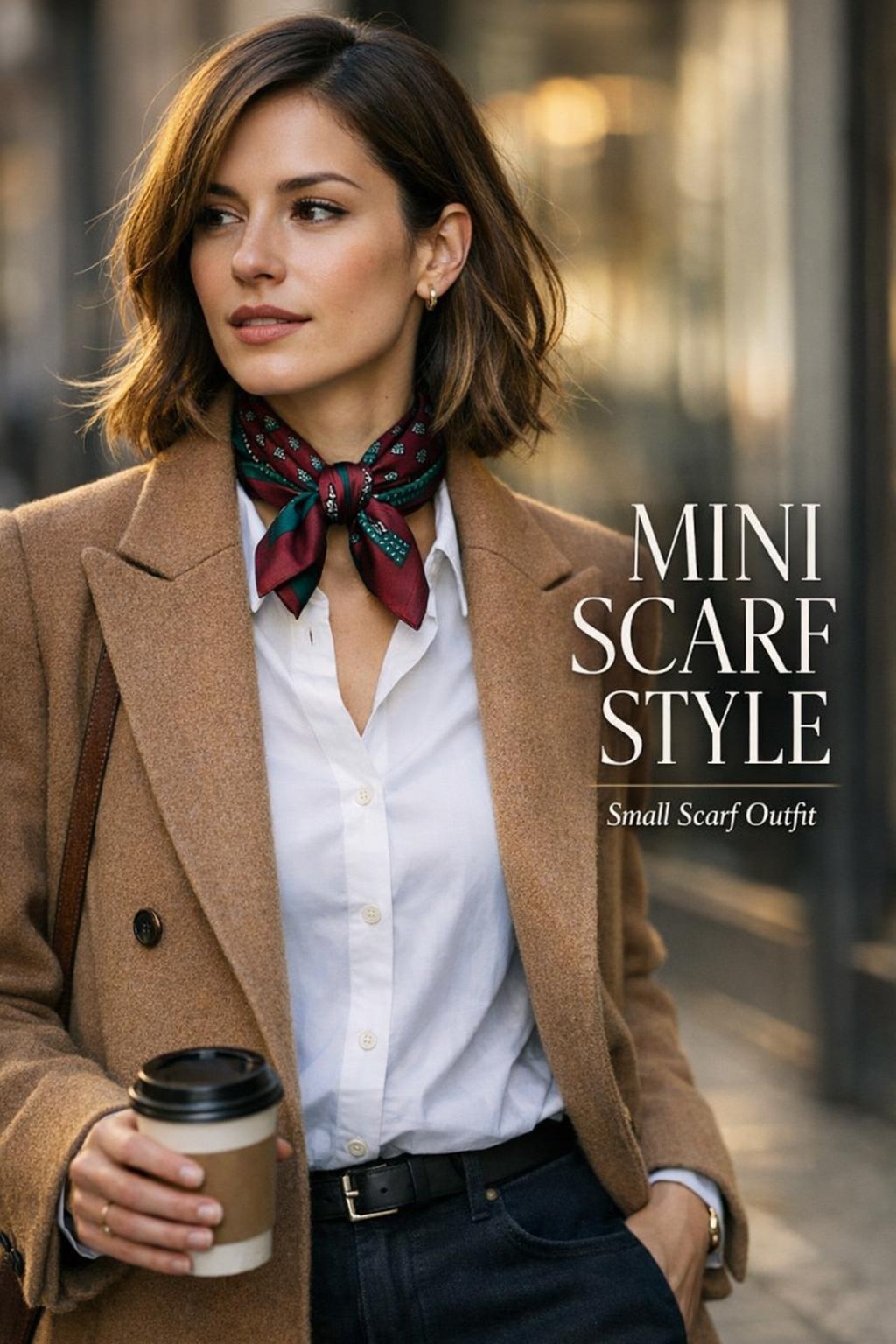
Keep the fold narrow and the knot compact, then pair it with simple basics so the scarf reads as a finishing detail rather than the entire outfit. A skinny scarf or a mini square scarf folded into a band usually looks more effortless than a wide fold that creates bulk at the neck.
What are the easiest mini scarf knot techniques to start with?
Start with a secure, compact knot concept like the Hoxton knot approach, then experiment with similarly clean options such as Chelsea and Parisian knots. Mini scarves benefit from knots that don’t rely on long tails and that stay stable in smaller dimensions.
What’s the difference between a mini square scarf and a skinny scarf?
A mini square scarf is typically folded to create the shape you need, and it often emphasizes prints and edges; a skinny scarf is already narrow and creates a sleek line with minimal folding. Mini squares are great for graphic scarf aesthetic moments, while skinny scarves are easy for streamlined, repeatable styling.
How do I wear a mini scarf in my hair without it slipping?
Fold the scarf into a narrow band, tie a secure knot, and place it where movement won’t constantly loosen it. Silk can slip more than knit or blended fabrics, so a mini knit scarf or a scarf with a bit more texture may feel more stable for all-day wear.
How can I use a mini scarf on a bag and still keep it looking neat?
Tie it with a compact knot close to the handle and keep the ends short enough that they won’t snag on zippers or hardware. A mini square scarf like the Amber Palace print style is particularly suited to bag styling because it’s small, lightweight, and designed for multiple wear options.
Is silk or cashmere better for a scarf around neck outfit?
Silk (as seen in a Hermès mini losange scarf) is better when you want crisp definition and a polished finish, but it can require a more secure knot to prevent slipping. Cashmere (like the Iris von Arnim MINI HARVA) is better for softness and warmth, especially in cooler conditions, though knots may look slightly bulkier due to the plush texture.
Can I make my own mini scarf, and what’s a beginner-friendly route?
Yes—DIY is a practical option, and a beginner-friendly starting point is a guided pattern such as the Moc An Knits MINI SCARF easy knitting pattern. If you prefer texture and grip, mini-format crochet scarves can also be a comfortable, wearable direction as long as you keep the thickness manageable for knotting.
What should I do if my mini scarf knot keeps coming undone?
Use a smaller, tighter knot style inspired by compact techniques (like Hoxton, Chelsea, or Parisian approaches), narrow your fold to reduce bulk, and avoid long tails that shift as you move. Also check placement: constant rubbing from collars or jawline movement can loosen a knot over the course of the day.