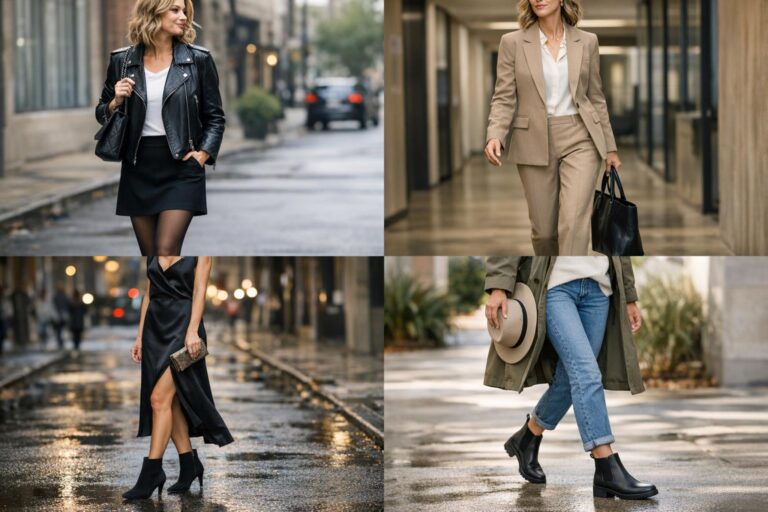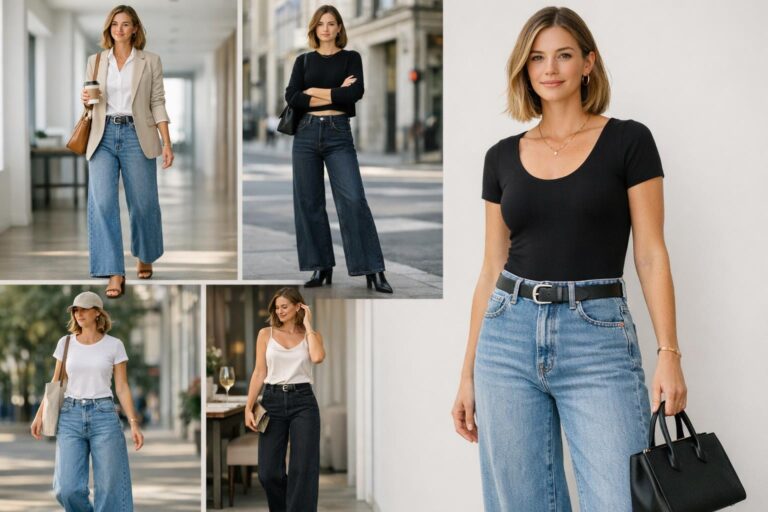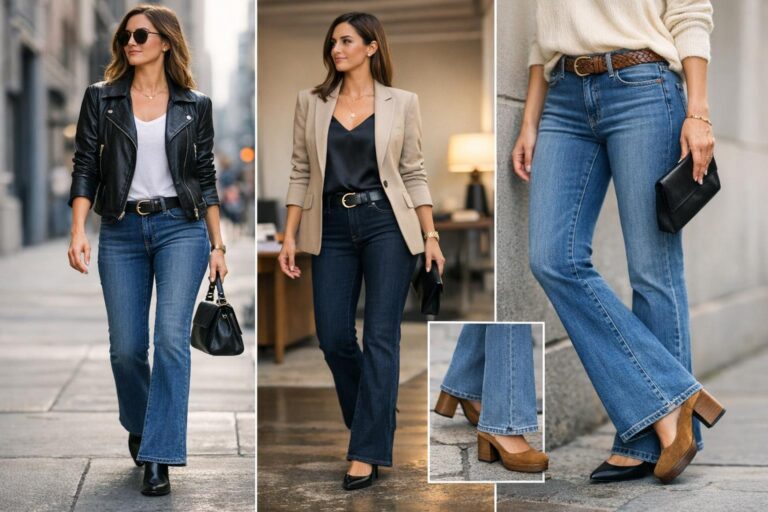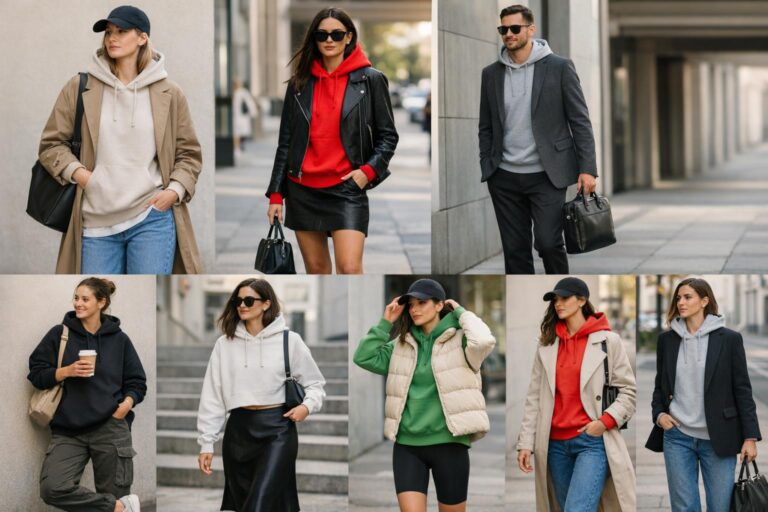
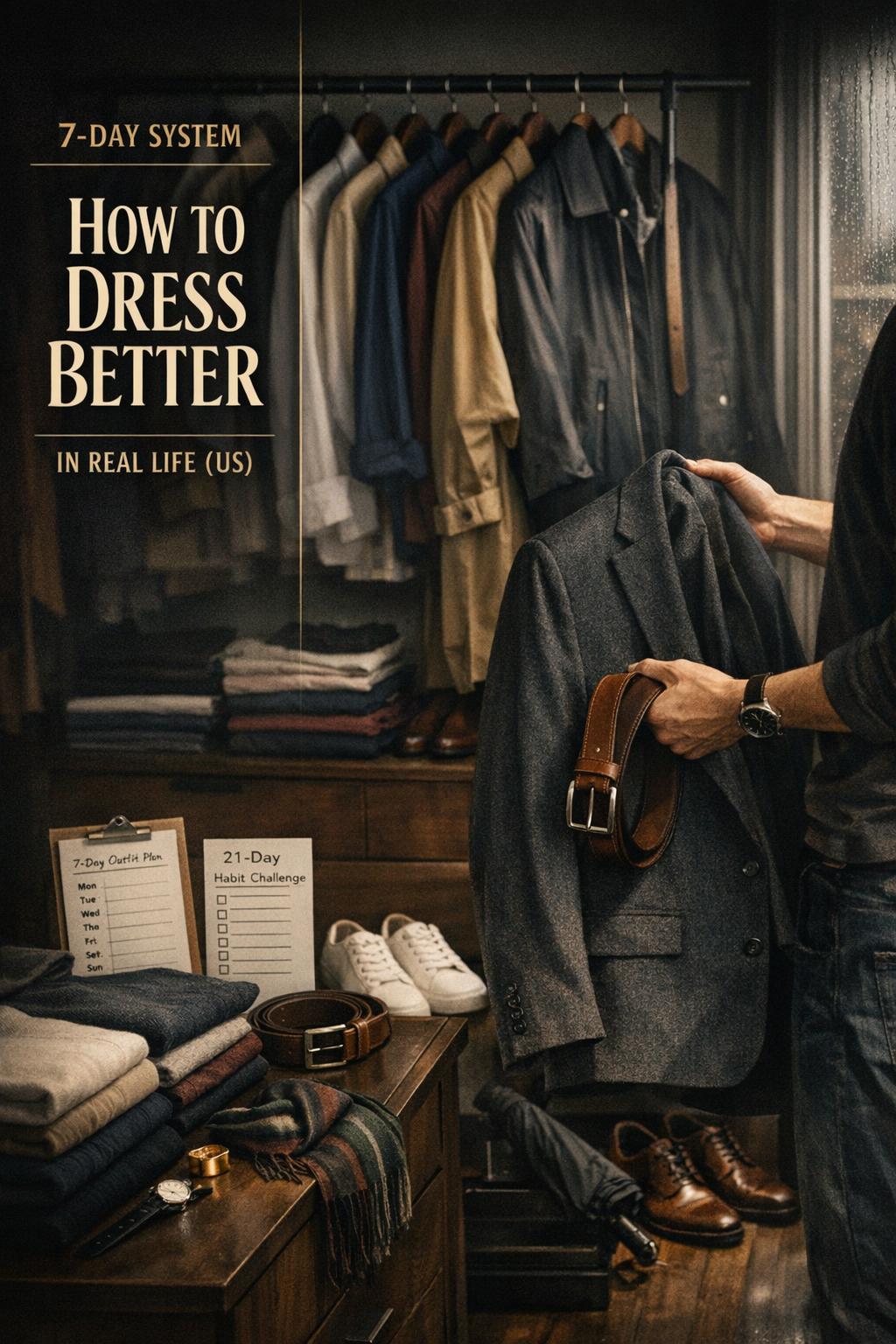
7-Day System: How to Dress Better in Real Life (US)
How to Dress Better: A Practical Guide to Elevating Your Style in the US
If you’re searching for how to dress better, the fastest path is also the simplest: focus on a few fundamentals that consistently make outfits look intentional. Dressing well isn’t about chasing labels or buying more—it’s about fit, proportion, color coordination, fabric choices, and a wardrobe strategy you can repeat across work, weekends, and events. This guide breaks the process into clear steps you can apply immediately, then refine over time.
You’ll learn how to run a wardrobe audit, build a capsule-style wardrobe that suits U.S. seasons, use color theory in everyday outfits, and add polish with accessories and footwear. Along the way, you’ll find tips you can implement in minutes, plus a practical 21-day challenge to turn ideas into habits.
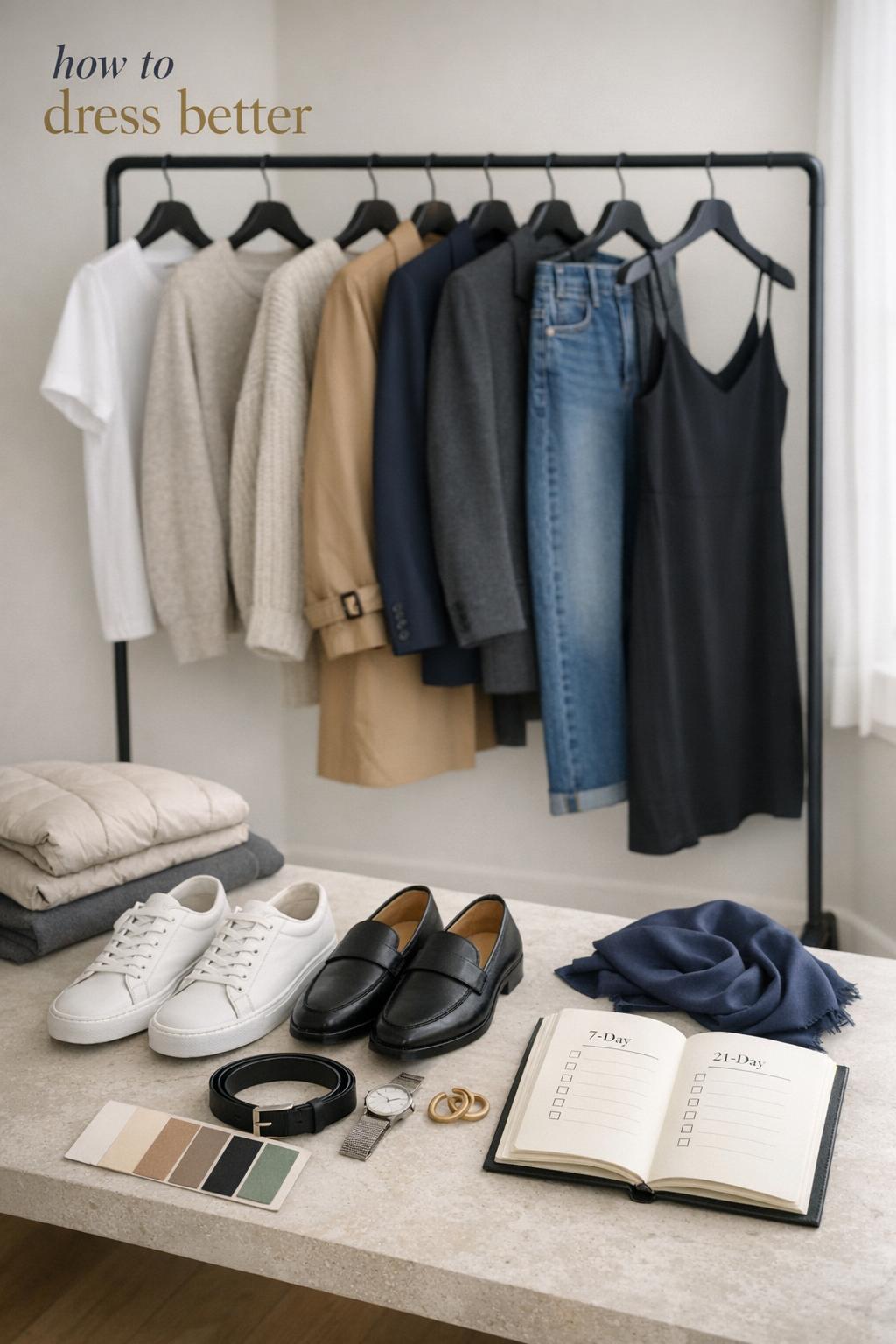
Understand the Foundations of Good Style
“Dressing better” tends to look different from person to person, but the foundations are remarkably consistent. Most outfits that read as put-together share a few qualities: clothing fits the body well, colors work together, fabrics drape cleanly, and the look matches the setting. When those basics are in place, personal taste—classic, streetwear, minimalist, bold—becomes easier to express without feeling random.
Fit, proportion, color, and fabric: the core four
Fit is usually the biggest multiplier: a simple outfit in the right size and shape can look more elevated than a trend-forward outfit that pulls, bunches, or overwhelms your frame. Proportion is the next layer—how lengths, rises, hems, and silhouettes balance each other. Color ties everything together, helping outfits feel deliberate rather than accidental. Fabric and care determine whether an outfit looks crisp and holds up, or looks tired quickly.
Start with repeatable principles, not constant new purchases
A practical approach beats a closet full of “maybe someday” items. When you rely on repeatable rules—like building outfits around a versatile palette, prioritizing tailoring, and keeping shoes maintained—you create consistency. That consistency is what people often interpret as “style.”
Tip: If you ever feel stuck, return to the core four. Ask: Does it fit? Do the proportions make sense? Do the colors coordinate? Does the fabric look clean and intentional today? One adjustment in any of these areas can upgrade your look without changing your entire outfit.
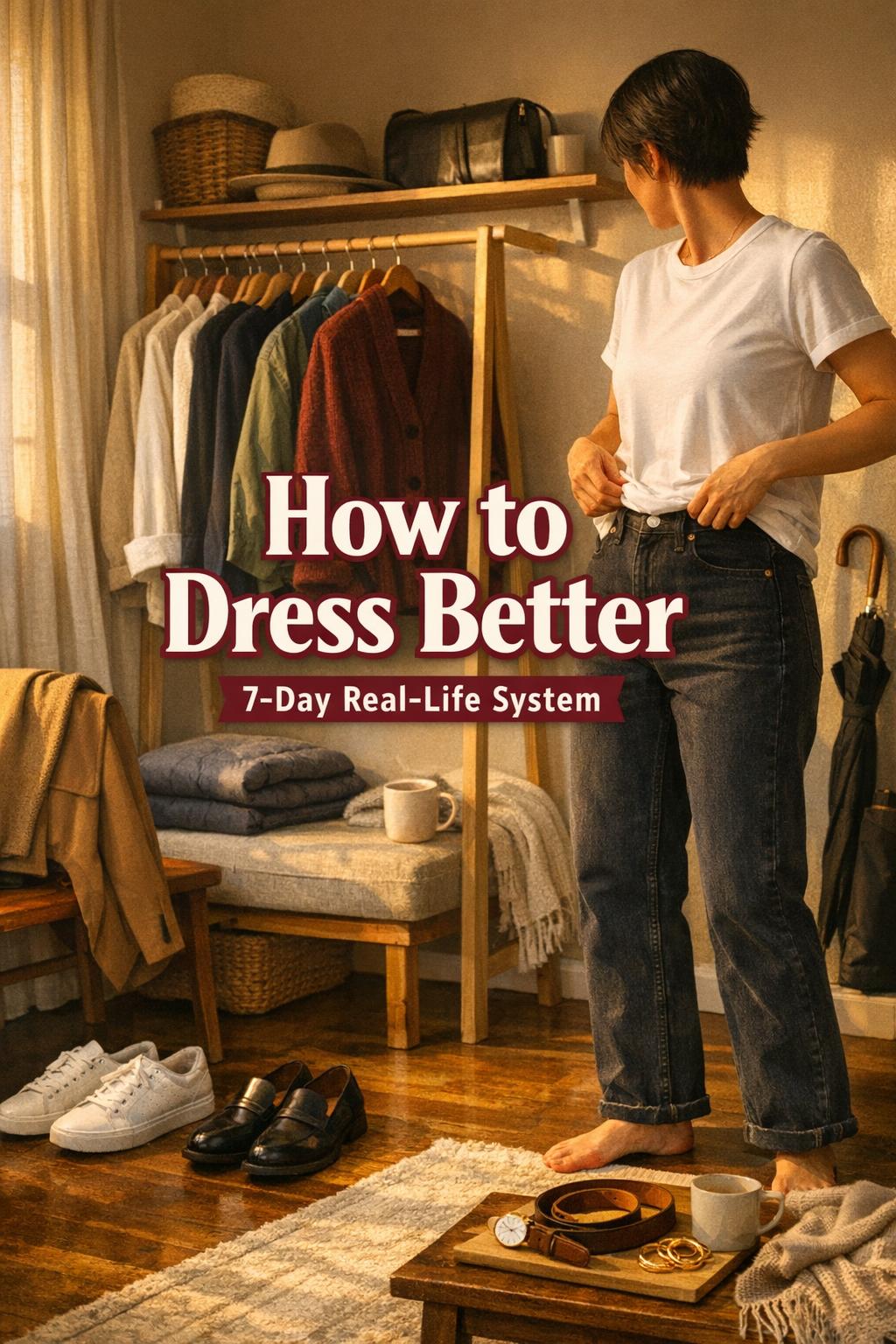
Start with a Wardrobe Audit
Before you buy anything, audit what you already own. A wardrobe audit is the clearest way to see what supports your life and what distracts from it. It also prevents the common cycle of shopping for “better style” and ending up with more items that don’t mix well.
Define your style goals and lifestyle
Start by defining where you actually need outfits. Work, casual weekends, events, and seasonal needs matter more than an idealized version of your life. In the U.S., seasonality can also shape daily dressing—layering needs in four-season climates, heat and humidity considerations, and how often you shift between indoor and outdoor environments.
Audit what you own vs. what you wear
Go through your closet and separate items into what you truly wear, what’s occasional, and what you avoid. Pay special attention to why you don’t wear certain pieces: is it fit, comfort, color coordination, or a mismatch with your lifestyle? Those reasons become your action plan.
- Keep: items that fit well, coordinate easily, and match your real life
- Tailor/repair: items you like that need small fit or maintenance fixes
- Replace: essentials that are worn out or never worked for you
- Pause: items you’re unsure about—revisit after you build a clearer base
Create a shopping plan based on gaps
Once you know what’s missing, you can shop with intention. The goal is not a “haul,” but a replacement plan: fill the gaps that prevent easy outfits. If you frequently struggle with shoes that don’t match, pants that don’t fit consistently, or layers that don’t work across seasons, prioritize those first.
Tip: Write down your top three outfit problems (for example: “my tops don’t work with my pants,” “my work outfits feel unfinished,” or “my casual looks feel sloppy”). Shop only to solve those problems, and stop when they’re solved.
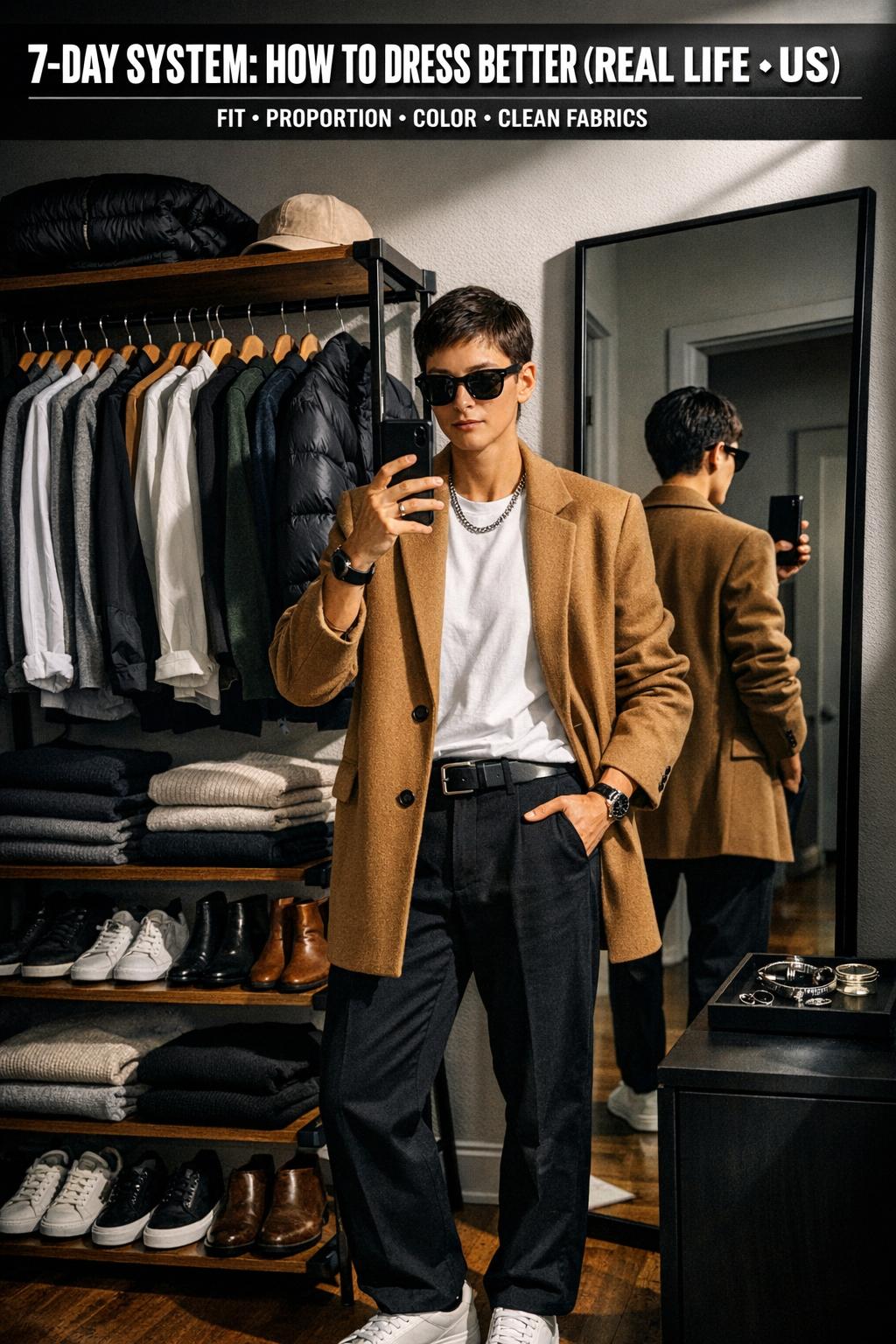
Master Fit, Tailoring, and Proportion
Fit is the most reliable way to elevate an outfit quickly. It’s also one of the most misunderstood: “tight” isn’t the same as “good fit,” and “loose” isn’t automatically stylish. Dressing well comes from clothing that sits correctly on your body and moves comfortably.
Why fit matters more than brand
Brand names can’t compensate for pulling at the chest, a waistband that slides, shoulders that droop, or hems that shorten your legs. When fit is right, even simple pieces look intentional. When fit is wrong, even expensive pieces can look off.
When to tailor vs. replace
Tailoring can be a smart upgrade when the garment is close to right and the issue is localized—like a hem, sleeve length, or a minor waist adjustment. Replace items when the overall shape is wrong for you, when multiple areas need major changes, or when you already avoid wearing it. The aim is to build a closet you can reach into without negotiating with yourself.
Tip: If you own pieces you love but never wear, ask whether a simple alteration would turn them into weekly staples. If the answer is “yes,” schedule the fix and treat it as a wardrobe upgrade.
Proportion tricks for different body types
Generic advice like “dress for your body type” isn’t useful unless it translates into simple proportion decisions. Think in terms of balance: if you’re wearing a more relaxed top, you may prefer a more structured bottom; if the bottom is wider or more relaxed, the top can provide a cleaner line. Hem lengths, rises, and layering lengths can also shape the overall silhouette.
- Use intentional contrast: one relaxed piece paired with one cleaner, more defined piece
- Pay attention to hems: where a jacket or top ends can change your proportions
- Use layering to refine the silhouette rather than hide it
- Prioritize comfort: clothing that fights your movement rarely looks confident
Build a Capsule-Style Wardrobe for the US
A capsule-style wardrobe is a practical framework: fewer items that work together in many combinations. It reduces decision fatigue and makes it easier to dress better consistently. Rather than owning lots of single-purpose pieces, you build a base of staples and add a smaller number of seasonal or personal-style items.
Core staples for all seasons
Start with versatile essentials you can wear in multiple settings: work-appropriate options, casual staples, and pieces that layer easily. The exact items depend on your lifestyle, but the principle stays the same—choose pieces that mix without effort and feel like “you.”
Tip: A capsule works best when your “core” pieces share a consistent vibe. If you like elevated casual, keep the core clean and adaptable, then express personality through a few standout layers or accessories.
Seasonal layering pieces by region
In many parts of the U.S., the same day can include cold mornings, warm afternoons, and air-conditioned interiors. Layering is less about bulk and more about flexibility. Think in systems: base layer, mid layer, and an outer layer you can add or remove.
- Four-season areas: prioritize versatile mid layers and outer layers that pair with most outfits
- Warm or humid areas: focus on breathable pieces and lighter layers that still look structured
- Variable indoor/outdoor days: rely on layers that are easy to carry and still look polished when removed
Color palettes that mix well
A capsule becomes dramatically easier when most items live in a cohesive palette. This doesn’t mean dressing in all neutrals; it means choosing a set of colors that naturally work together. A reliable approach is to anchor your closet in neutrals and add a small set of accents you enjoy wearing.
Tip: If you often feel like you “have nothing to wear,” it’s frequently a coordination problem, not a quantity problem. A tighter palette makes your closet feel bigger because combinations multiply.
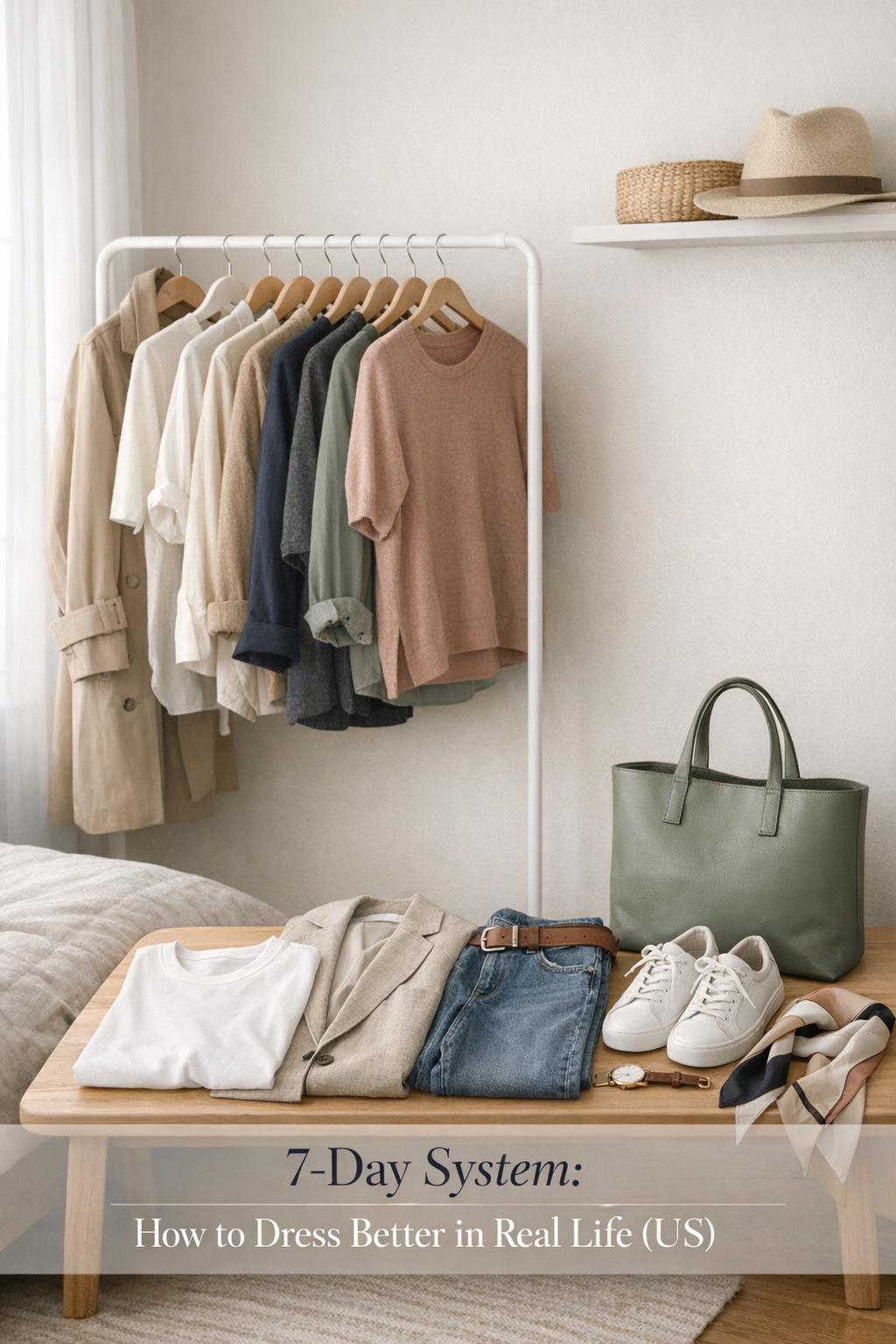
Color Theory for Everyday Style
Color coordination is one of the quickest ways to make outfits look intentional. When colors relate—through neutral foundations, controlled contrast, and repeated tones—your outfit reads as a “look” rather than a collection of items.
Choosing a versatile color palette
Start with a small group of neutrals that you’re comfortable wearing often, then select a few accent colors you genuinely like. A versatile palette reduces decision-making and increases outfit options, especially if you’re building a capsule-style wardrobe.
How to mix neutrals with accent colors
Use neutrals as the base and add accent colors in a controlled way so the outfit doesn’t feel busy. One practical method is to keep most of the outfit neutral and add one accent through a top, layer, or accessory. Another is to repeat an accent subtly—like echoing a color in both a layer and a small accessory—to create cohesion.
- Build outfits from neutrals first, then add a single accent
- Repeat one tone at least twice to create intentional coordination
- Use contrast thoughtfully: too much contrast can feel harsh; too little can feel flat
Tip: When in doubt, simplify. If an outfit feels “off,” remove one color or swap one piece back to a neutral. Clean coordination often looks more elevated than complex combinations.
Fabrics, Quality, and Care
Fabric affects how clothing drapes, how it holds shape, and how long it looks good. It also affects comfort, which directly impacts how confidently you wear an outfit. You don’t need to become a fabric expert, but understanding labels and care basics makes your wardrobe look sharper for longer.
Read fabric labels and care instructions
Care labels matter because they tell you how to keep a garment looking its best. Ignoring care instructions often leads to shrinking, misshaping, fading, or a generally worn appearance. A consistent care routine helps your clothes maintain the clean lines that make outfits look polished.
How fabric affects drape and durability
Some fabrics look crisp and structured; others drape more softly. Either can be stylish, but the key is choosing fabric that matches the look you want and the use it will get. When you dress better consistently, you’re also choosing garments that hold up to repeat wear and still look presentable after care.
Tip: If a piece always looks wrinkled or limp shortly after you put it on, it may be a fabric-and-care mismatch for your day-to-day life. Favor materials that maintain their appearance with the amount of effort you realistically want to invest.
Accessorizing for Polished Looks
Accessories are the finishing layer that can make simple outfits feel complete. The goal isn’t to add more—it’s to add the right elements that create cohesion. Accessories also help you express personal style without constantly changing your wardrobe.
Belts, watches, shoes and their roles
Belts can visually “finish” an outfit by creating a clear line at the waist and reinforcing coordination with shoes. Watches often read as intentional and pulled together, especially in outfits that are otherwise minimal. Shoes anchor the outfit: they can elevate casual clothing, or they can drag down a good outfit if they look worn or mismatched.
Balancing bold accessories vs. minimalism
Minimal outfits often benefit from one focal point—like a standout shoe, a distinctive watch, or a single bold accessory—while the rest stays clean. If you prefer bolder styling, keep the outfit cohesive by choosing a consistent palette and limiting competing statement pieces.
- If the outfit is simple, add one noticeable accessory
- If the outfit is already complex, choose subtle accessories for balance
- Match accessories to the setting: “polished” depends on the scenario
Tip: The most reliable “polish” accessory is the one you’ll actually wear consistently. Choose accessories that feel natural, then make them part of your daily uniform.
Shoes, Belts, and Footwear Pairings
Shoes are one of the first things people notice, and they strongly influence how formal or casual an outfit reads. Coordinating shoes with belts and overall outfit tone can make your style feel deliberate even when the clothing itself is simple.
Classic pairings by occasion
Rather than memorizing dozens of rules, focus on consistency: shoes should match the overall level of formality and feel aligned with the rest of the outfit. Belts should support the same direction—cohesive, not distracting. If your wardrobe is capsule-based, a small set of dependable shoes can cover most needs.
Care and maintenance
Footwear care is a quiet advantage: clean, well-maintained shoes can elevate basic outfits, while scuffed or neglected shoes can undermine a strong look. Build a simple routine that fits your life, so your shoes consistently look like an intentional choice rather than an afterthought.
Tip: If you only improve one maintenance habit, make it “resetting” your shoes—keeping them clean enough that they don’t call attention for the wrong reasons.
Dressing for Specific US Scenarios
Knowing how to dress better often comes down to dressing appropriately for the setting. A great outfit in one context can feel off in another. Scenario-based dressing makes style practical: you know what to reach for because you’ve already defined the goal—professional, casual, formal, or adaptable for changing temperatures.
Workwear, casual, and formal events
For workwear, focus on consistency: pieces that fit well, a cohesive palette, and accessories that signal polish. For casual outfits, avoid the “too relaxed” trap by keeping one element sharper—cleaner shoes, a more structured layer, or better fit. For formal events, prioritize fit and cohesion over novelty; the simplest looks often appear the most confident when everything sits correctly.
- Work: lean on a repeatable outfit formula you can vary with small changes
- Casual: keep comfort, but add one elevating detail (fit, shoes, layer, or accessory)
- Formal: refine fit and finish; avoid distractions and last-minute experiments
Seasonal adjustments and layering for four-season climates
Seasonal transitions are where many wardrobes break down. A capsule approach helps: your base stays consistent, and you rotate layers. On variable days, the ability to add or remove layers while keeping the outfit cohesive is a major advantage. This is especially relevant in many U.S. cities where you move between outdoor weather and indoor climate control.
Tip: Build “bridge outfits” you can rely on during seasonal transitions: a base you like, plus one layer that can come on and off without ruining the silhouette. When you have a few of these, getting dressed becomes easier even when the weather is unpredictable.
Budget, Shopping, and Sustainability
Dressing better on a budget is realistic when you focus on cost-per-wear and versatility. A smart approach isn’t about finding the cheapest items; it’s about avoiding purchases that don’t integrate into your wardrobe and choosing pieces that you’ll wear repeatedly.
How to allocate your budget
Budget allocation works best when it supports your lifestyle and the parts of outfits that carry the most visual weight. If you’re building a capsule-style wardrobe, prioritize the pieces you wear most often and the items that affect polish the most—especially fit and the finishing elements that pull an outfit together.
Smart shopping strategies and how to avoid fast fashion traps
Impulse shopping often creates clutter and frustration because items don’t coordinate, don’t fit as expected, or don’t hold up. A better approach is to shop from a list created during your wardrobe audit, choose pieces that work with your existing palette, and avoid buying duplicates that don’t solve an actual gap. When you keep your closet intentional, it’s easier to maintain a sustainable wardrobe with fewer wasted purchases.
- Shop from your gap list, not from mood
- Favor pieces that create multiple outfits with what you already own
- Choose quality you can care for consistently, so items stay presentable
- Replace strategically instead of constantly adding
Tip: If you’re tempted by a trend, test it through one item that fits your palette and your wardrobe structure. If it integrates easily, keep it; if it becomes a “single-outfit” piece, treat it as optional rather than essential.
Quick Wins: Do This in 7 Days
If you want noticeable improvement fast, focus on changes that produce immediate visual polish: fit checks, coordination, and a small set of reliable outfit formulas. The goal is momentum—once you see results, it becomes easier to keep refining.
- Day 1: Do a fast closet scan and identify your top three outfit problems
- Day 2: Try on your most-worn outfits and note fit issues you can tailor or replace
- Day 3: Choose a consistent neutral base and remove one “hard to match” outlier for now
- Day 4: Create two go-to outfits for work and two for casual days
- Day 5: Check shoes for condition and coordinate belt/shoe direction for one outfit
- Day 6: Add one polishing accessory you’ll wear consistently
- Day 7: Plan outfits for the next week using your best-fitting pieces
Tip: Take note of what felt easiest to wear and what felt like work. The “easy” outfits often reveal your natural style direction and should become the foundation of your wardrobe strategy.
Practical 21-Day Challenge: Apply What You Learned
This 21-day plan turns better dressing into a repeatable system. The focus is small daily actions: refining fit, simplifying coordination, and building a capsule-like structure so you can dress well without overthinking.
Week 1: Audit and simplify
Spend the first week identifying what works and removing friction. Clarify your most common scenarios, set aside items you avoid wearing, and commit to a tighter palette for daily outfits. The goal is not perfection—just a clearer base.
- Day 1–2: Define your lifestyle needs (work, casual, events, seasonal realities)
- Day 3–4: Sort your closet into keep, tailor/repair, replace, and pause
- Day 5: Identify your most versatile pieces and build two simple outfit formulas
- Day 6: Choose your core neutrals and two or three accent colors
- Day 7: Plan five outfits using only what currently fits and coordinates
Week 2: Fit and finishing details
Week two is about upgrades with outsized impact: fit checks, tailoring decisions, and the finishing elements that signal polish. You’ll also refine footwear and accessory consistency so outfits look complete.
- Day 8–9: Try on core items and note what needs tailoring vs. replacing
- Day 10: Build one work outfit and one casual outfit around your best fit
- Day 11: Identify your top shoe options and align them with outfit formality
- Day 12: Add one reliable accessory that fits your daily style
- Day 13–14: Practice layering that you can remove without ruining the look
Week 3: Capsule consistency and smart shopping
The final week turns your improvements into a sustainable wardrobe strategy. You’ll identify missing staples, build a replacement plan, and practice using a small set of pieces across multiple scenarios. The goal is consistency and confidence, not constant novelty.
- Day 15–16: Build a mini capsule for the next two weeks (work + casual)
- Day 17: Create a gap list based on what prevented easy outfits
- Day 18: Set a simple budget allocation plan for essentials vs. optional pieces
- Day 19: Practice one elevated casual look and one more formal look
- Day 20: Review what you wore most and why it worked
- Day 21: Lock in your go-to formulas and your next three upgrades
Tip: Track results in the most practical way: fewer outfit changes, faster mornings, and more outfits you feel confident repeating. Those are strong signs your wardrobe is becoming more functional and polished.
Start Small, Then Iterate
Learning how to dress better doesn’t require a new identity or an expensive wardrobe. It requires a system you can repeat: audit your closet, prioritize fit and tailoring, simplify color coordination, choose fabrics you can care for, and rely on a capsule-style structure that matches U.S. seasons and your real lifestyle. Start with a few upgrades that remove friction, then iterate. The best style improvements are the ones you can sustain.
FAQ
Do I need lots of clothes to dress well?
No—dressing well is more about fit, coordination, and a repeatable wardrobe structure than quantity. A capsule-style approach with fewer pieces that mix well often creates more usable outfits than a larger closet full of mismatched items.
Can I dress better on a small budget?
Yes—start with a wardrobe audit and only buy to fill real gaps, prioritizing items that create multiple outfits. Focus on fit and finishing details like footwear condition and simple accessories, since they can elevate basic clothing without requiring lots of new purchases.
What matters more: fit or brand?
Fit matters more than brand because it determines how clothing sits on your body and whether an outfit looks intentional. A well-fitting, simple outfit can look more polished than a higher-priced outfit with pulling, bunching, or unbalanced proportions.
When should I tailor my clothes instead of replacing them?
Tailor items that are close to right and need small adjustments like hems or sleeve length, especially if you already like the piece and would wear it more with improved fit. Replace items when the overall shape is wrong, when too many areas need major changes, or when you consistently avoid wearing them.
How do I choose a color palette that makes outfits easy?
Choose a set of core neutrals you’ll wear often and add a small group of accent colors you genuinely like. Keeping most of your wardrobe inside that palette makes mixing and matching easier and helps outfits look coordinated without much effort.
How can I make casual outfits look more elevated?
Keep comfort, but add one element of polish such as better fit, cleaner coordination, a more structured layer, or well-maintained shoes. Small finishing choices often make casual looks feel intentional rather than sloppy.
Do accessories really make a difference?
Yes—accessories can make simple outfits feel complete and cohesive, especially when they match the overall level of formality. Consistent choices like a belt, watch, and appropriate shoes often signal polish with minimal effort.
How long does it take to see results when improving my style?
You can see noticeable improvements within a week by focusing on fit checks, color coordination, and reliable outfit formulas. Longer-term results come from iterating: tailoring or replacing key items, refining your capsule structure, and sticking to a shopping plan based on wardrobe gaps.