How to Wear Ankle Boots: 7 Polished Outfit Formulas (US)
How to Wear Ankle Boots: A Complete Guide to Styling Every Outfit
Ankle boots (also called booties) are one of the most versatile shoes in a wardrobe: they can look polished with tailoring, effortless with denim, and elevated with dresses, depending on the toe shape, heel height, and material. If you’ve ever wondered how to wear ankle boots without cutting off your leg line, feeling underdressed, or struggling with proportions, this guide breaks it down into repeatable outfit formulas, body-proportion tips, material and care essentials, and a practical shopping checklist.
The goal isn’t to follow rigid rules—it’s to understand a few style levers (hem length, boot shaft height, toe shape, heel type, and texture) so you can create outfits that feel intentional across casual days, office settings, nights out, and seasonal transitions.
Quick-start Outfit Formulas
When you want instant outfits that reliably work, start with a formula. Each one below can be repeated with different boot styles—Chelsea boots, pointed-toe booties, block-heel booties, wedges, and statement textures—so you can build variety without overthinking.
Ankle Boots with Jeans: Everyday Casual
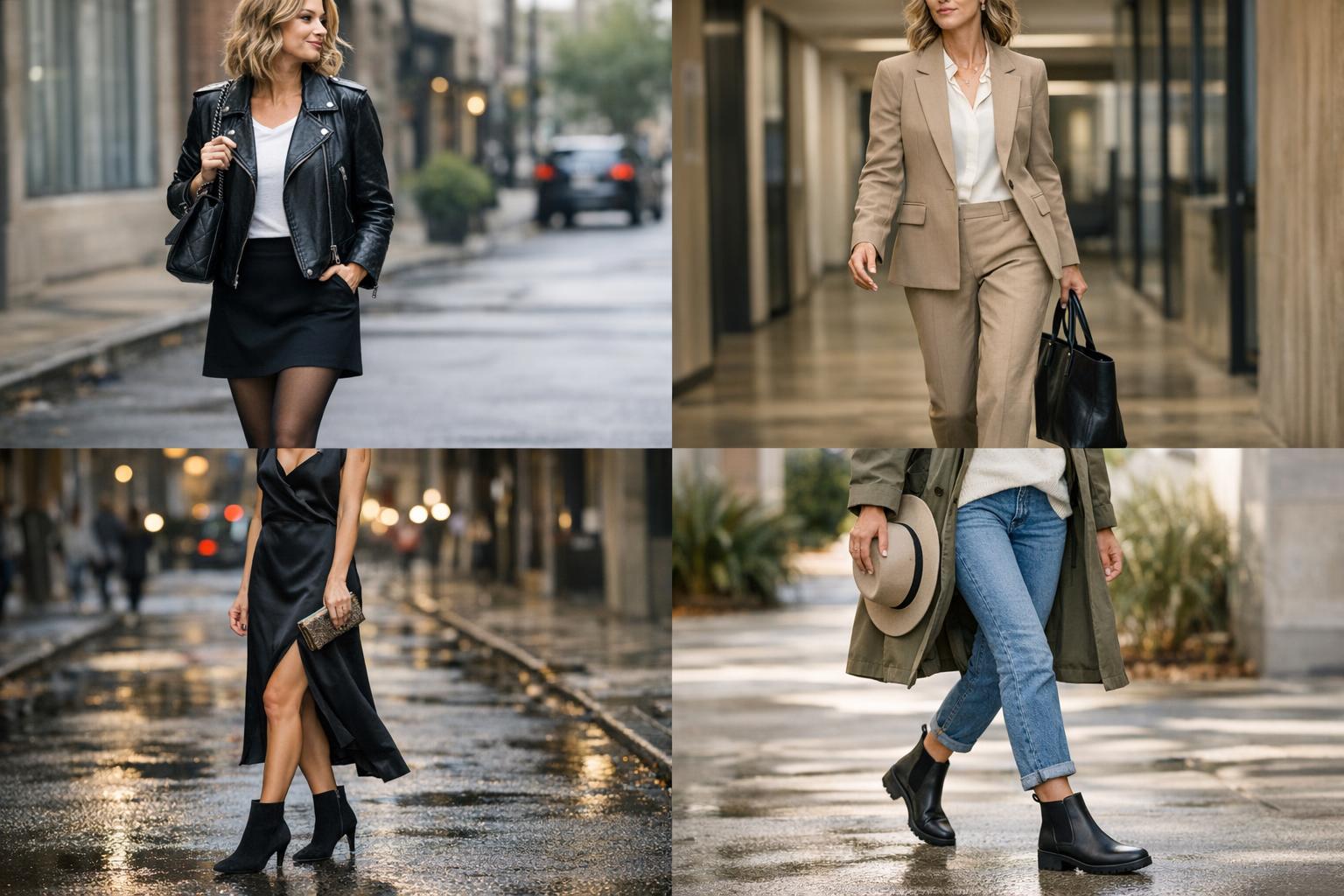
Jeans and ankle boots are a go-to pairing because the look is simple, comfortable, and endlessly adjustable. The key is the “meeting point” between your hem and the boot shaft: you want it to look deliberate rather than like your jeans accidentally bunched over your booties. If your denim is slim, you can tuck it neatly into the boots; if it’s straight or cropped, let the hem sit cleanly above the boot.
Found the dress? Keep the rest in one place.
Zarellea brings guest details, vendors, timelines, and every next step together — so your wedding plan feels as good as your look.
To keep the outfit balanced, match the mood of your denim to the mood of your boots. Distressed jeans naturally read casual and pair easily with black ankle boots for an off-duty look. If your jeans are more polished, a sleek toe shape or a heeled bootie can pull the outfit into smart casual territory.
- Black ankle boots + distressed jeans for an easy casual uniform
- Pointed-toe booties + straight jeans for a sharper silhouette
- Block-heel booties + slim jeans when you want comfort with a little lift
- Wedge booties + flared jeans to echo a longer line through the leg
Tips: If your jean hem feels “stuck” at an awkward length, choose a boot with a slightly higher shaft or switch to a more streamlined toe. Small shifts like these can make the jeans-and-booties combination look styled rather than improvised.
Office-Ready Booties: Professional Looks
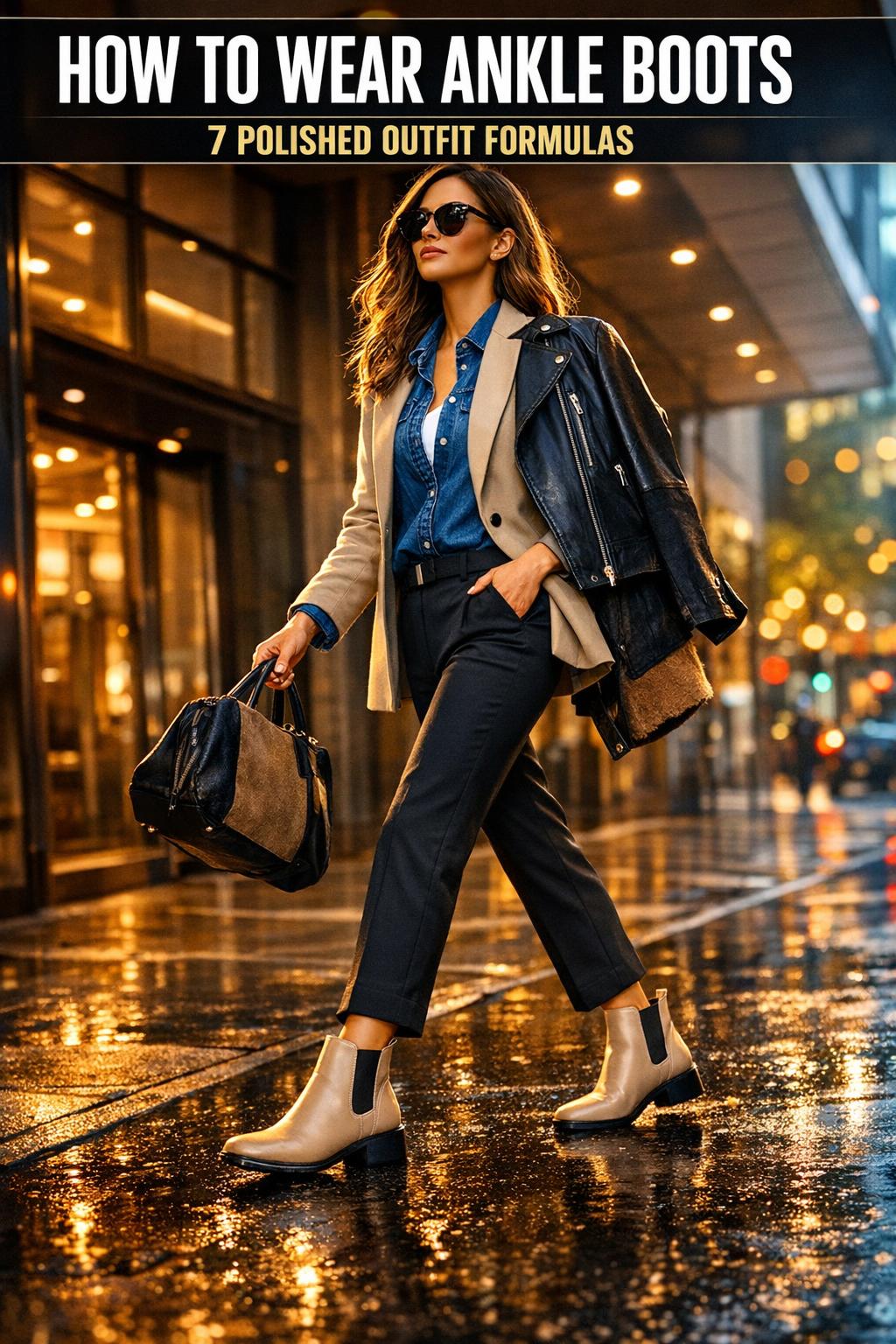
Ankle boots can absolutely belong in a work wardrobe when you keep the overall look tailored and intentional. Closed-toe booties tend to read more office-appropriate, especially when paired with trousers or a suit. A low-to-mid heel (such as a block heel) often strikes the best balance between comfort and polish for long days.
For a clean work outfit, build around structured pieces: trousers, blazers, and suits. Ankle boots can replace traditional pumps while keeping the look sharp—particularly when your boot shaft sits smoothly under a trouser hem or the pant breaks neatly at the top of the boot.
- Ankle boots with trousers for a streamlined weekday outfit
- Booties with a suit when you want modern tailoring with edge
- Closed-toe booties for more traditional office environments
- Neutral boot colors and classic shapes for maximum outfit mileage
Tips: If you’re unsure whether your booties read “work,” check two things: the finish (sleek leather often looks more formal than heavily textured materials) and the overall silhouette (clean lines usually look more professional than overly bulky shapes).
Dress and Skirt Combos
Ankle boots with dresses and skirts can look modern, confident, and wearable—especially for transitional weather. The most reliable approach is to decide whether you want contrast (a tougher boot with a softer dress) or continuity (a sleek boot with a sleek dress). Slip dresses are a standout pairing: the fluidity of the dress plays well with the structure of a boot, and you can shift the mood from minimal to edgy depending on the boot finish.
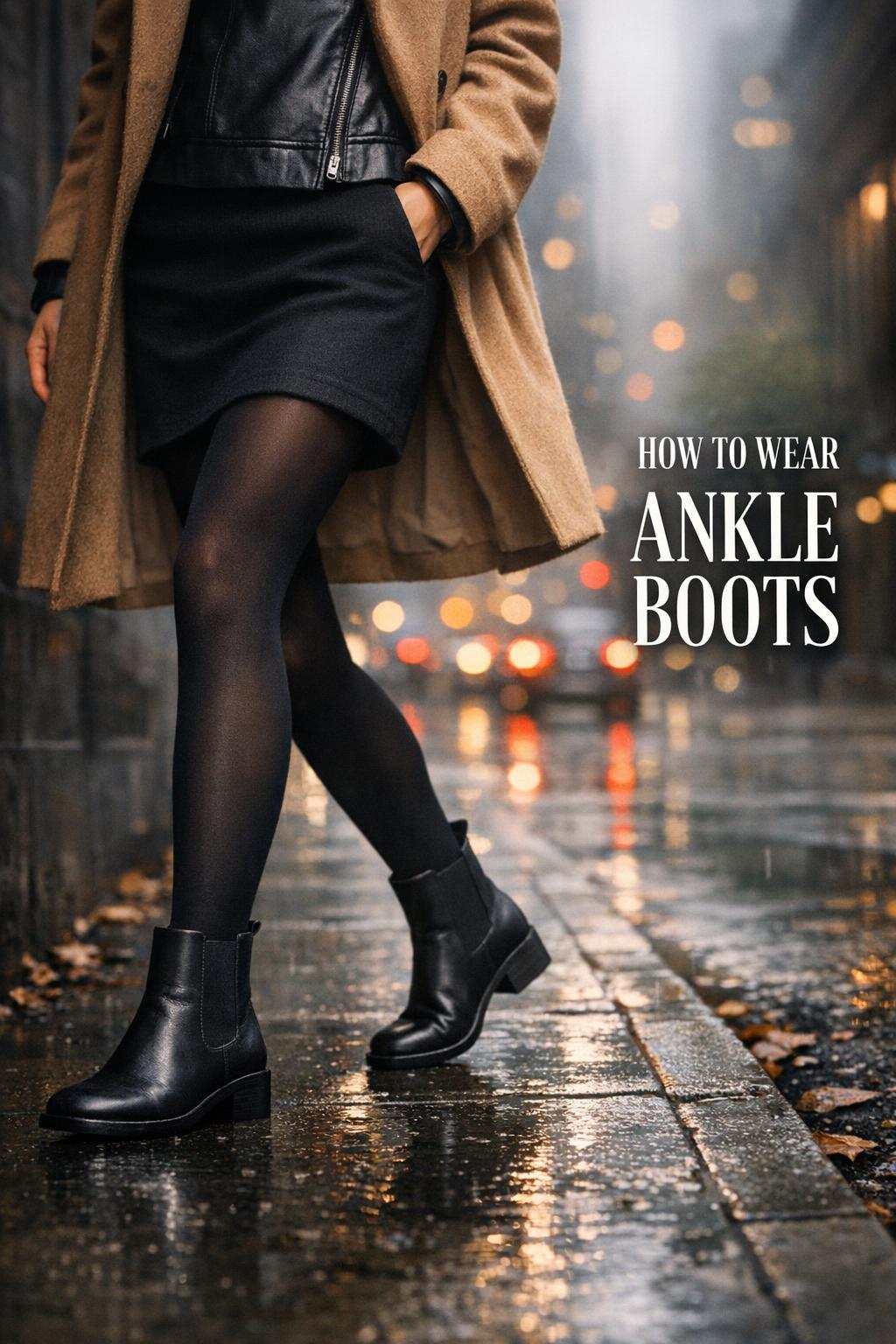
Skirts work similarly: ankle boots can ground a skirt outfit, especially when you want something more substantial than flats. In cooler seasons, adding tights with a mini dress is a common way to make the outfit feel cohesive and wearable while keeping the ankle boot silhouette front and center.
- Ankle boots with a slip dress for an elevated, versatile outfit
- Mini dress + tights + booties for a season-friendly formula
- Skirt + ankle boots when you want a balanced, styled look
- High-heeled boots with a dress for a more evening-ready finish
Tips: If your dress or skirt outfit feels visually “cut up,” simplify one element: choose a boot color that blends with your tights or keep the boot silhouette sleek so the outfit reads as one coordinated look.
Night Out: Statement Booties
For nights out, ankle boots can be the main event. This is where bold textures, standout colors, and fashion-forward shapes make sense—think statement ankle boots that immediately upgrade a simple outfit. A high-heeled bootie naturally adds drama, but you can also create impact through the toe shape (sharp, modern) or the material finish (sleek, glossy, or richly textured).
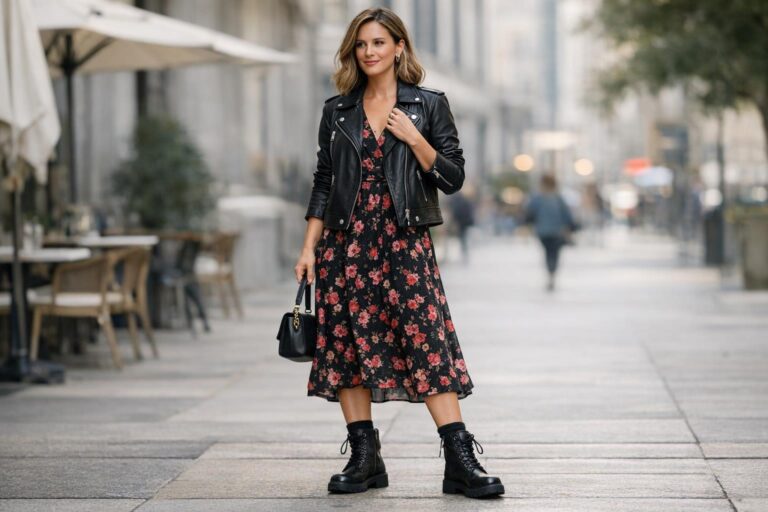
A practical way to style statement booties is to keep your clothing relatively simple—like a white tee base layer or a streamlined dress—so the boots carry the “fashion statement” without competing elements. You can also lean into a tougher aesthetic with outerwear: pairing booties with a biker jacket is a classic approach for an intentional, night-ready edge.
- Bold booties as the focal point with a minimal outfit base
- Booties + biker jacket for an intentional, edgy look
- High-heeled ankle boots with a dress for evening polish
- Statement textures or prints when you want your footwear to lead
Tips: When you go bold with boots, repeat one small element elsewhere (a similar tone, a matching hardware vibe, or a complementary texture) so the outfit feels cohesive rather than random.
Seasonal Transitions: Fall/Winter/Spring
Ankle boots shine most during seasonal transitions because they bridge the gap between warm-weather outfits and cold-weather layers. In fall, ankle boot outfits often revolve around denim, skirts with tights, and layered looks that feel substantial but not heavy. In winter, the priority shifts toward protection and longevity—choosing materials and care routines that stand up to harsh conditions and frequent wear.
Spring styling with booties tends to look best when the outfit is lighter overall—think cleaner lines and less bulk—while still benefiting from the structure that ankle boots add. The core idea is to let seasonality guide your material choices (and your care routine) without losing the styling flexibility that makes booties so useful.
- Fall ankle boots with jeans, skirts, and layered outfits
- Winter booties with a stronger focus on protection and maintenance
- Spring booties outfits that feel lighter but still structured
- Transition-friendly formulas like dresses plus booties and a jacket layer
Tips: If you’re wearing ankle boots frequently during changing weather, treat care as part of styling. Clean, well-maintained boots look sharper with every outfit, from casual denim to office tailoring.
Outfit Ideas You Can Copy (By Category)
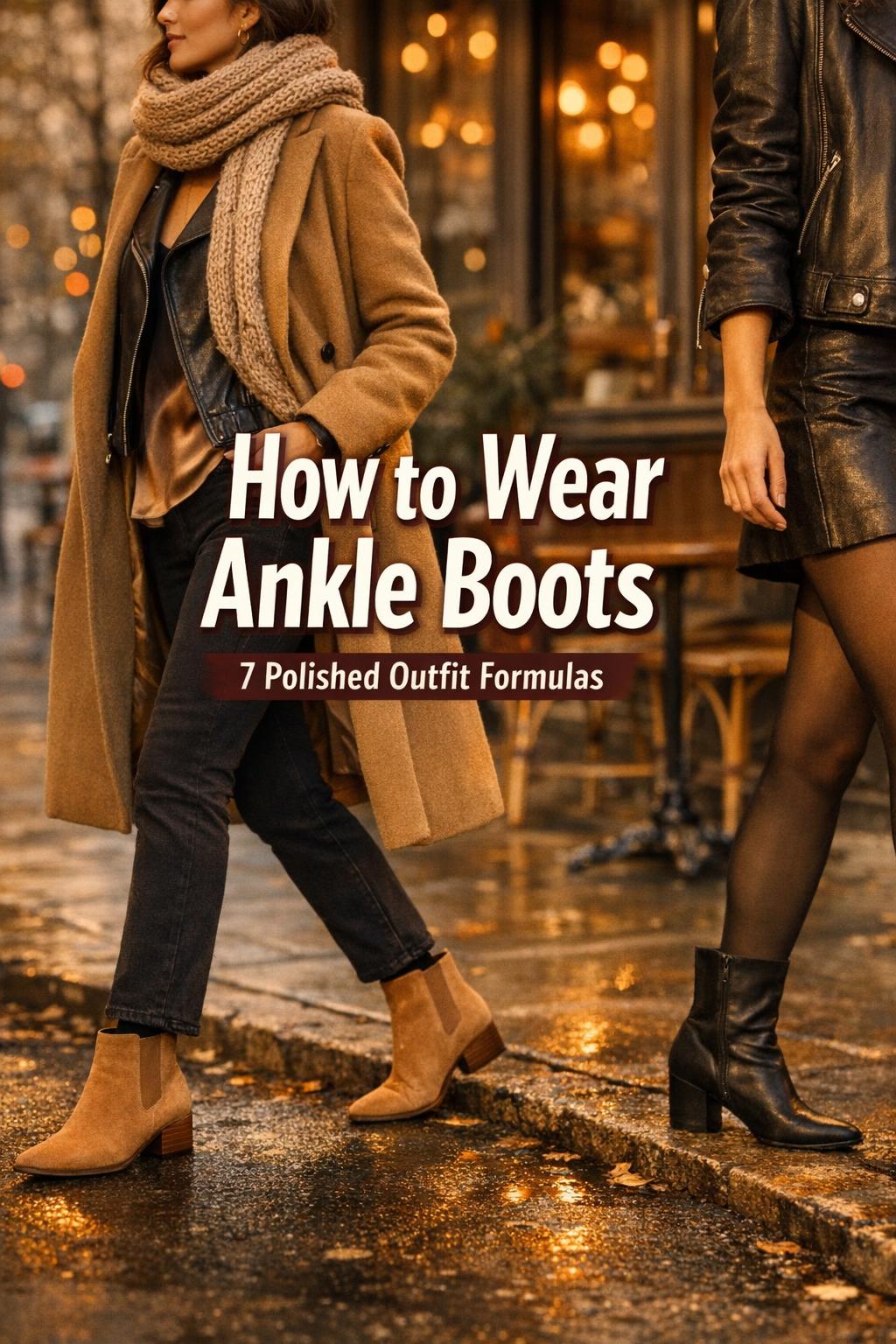
If you prefer a menu of combinations rather than theory, these outfit ideas mirror the most common ways people actually wear ankle boots—across denim, dresses, skirts, trousers, and outerwear. Use them as plug-and-play templates, then adjust based on your boot style (Chelsea, pointed-toe, block heel) and the occasion.
With Trousers: Clean and Modern
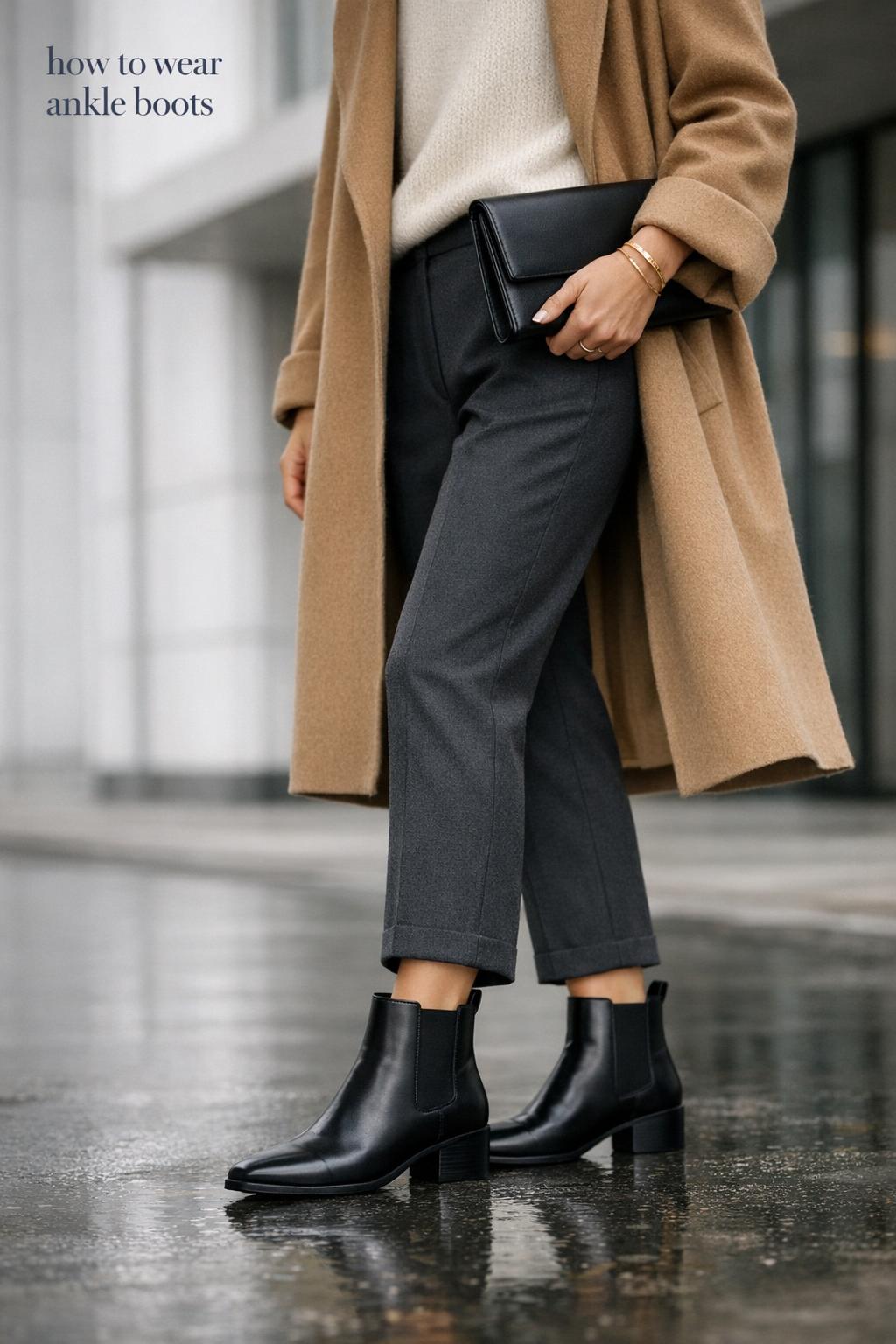
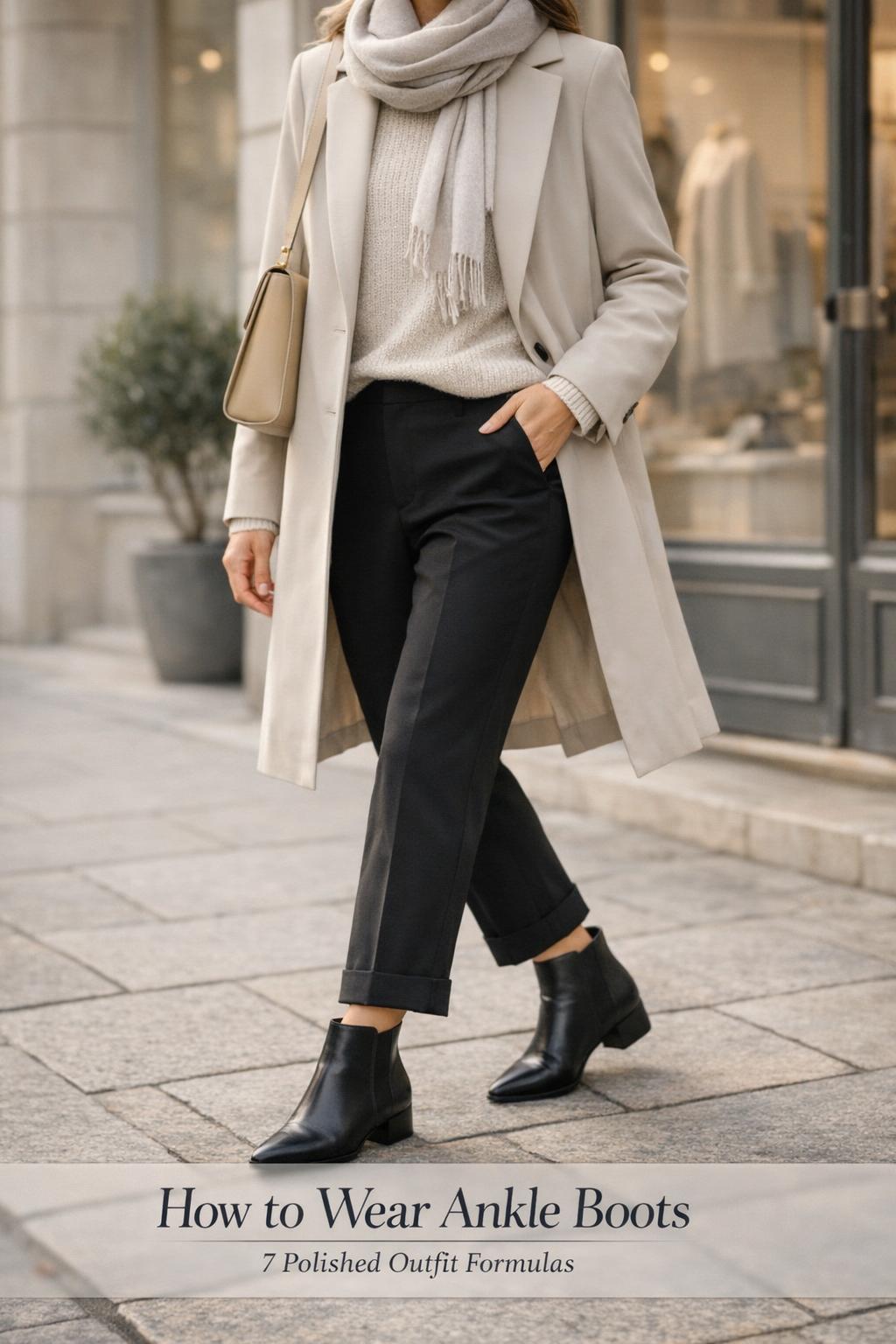
Trousers and ankle boots can look extremely current when the pant shape and boot shaft work together. A tailored trouser gives the outfit structure, and the ankle boot adds a grounded finish. This pairing is especially effective when you want to look put-together without defaulting to traditional office shoes.
To keep the line clean, aim for a trouser hem that either meets the top of the boot or breaks in a controlled way. If the pant leg is wide, a more streamlined boot can keep the look from feeling heavy; if the pant is slimmer, you have more flexibility to play with chunkier shapes.
With a Suit: A Fresh Alternative to Heels
Ankle boots with a suit create a confident, modern silhouette. The suit provides sharp structure; the boot adds personality and practicality. This combo works particularly well for days when you want the presence of a heel (or at least some height) without sacrificing stability.
Keep the suit and boot relationship intentional: sleek booties complement clean tailoring, while a more substantial boot can add edge. If you’re building a workwear rotation, this pairing is a strong argument for owning at least one versatile, closed-toe bootie in a neutral shade.
With a Slip Dress: Minimal, Cool, and Versatile
A slip dress and ankle boots is a high-impact pairing that feels both effortless and styled. The contrast between a fluid dress and structured boots creates balance without needing many accessories. You can wear this combination as-is or layer around it, depending on the season and the vibe you want.
To shift the look, focus on boot shape and finish: a sleek silhouette can read refined, while a more rugged boot leans edgy. If you want the outfit to feel more evening-appropriate, a high-heeled ankle boot is a straightforward upgrade.
With Leather Pieces: Elevated Edge
Leather outfits and ankle boots naturally complement each other because the textures align and the overall mood feels intentional. Whether you’re styling leather as the main element or as a supporting layer, ankle boots can help anchor the look so it feels cohesive rather than costume-like.
This is also a place where boot finish matters: leather booties can look sleek and polished, while other finishes can create contrast. If you’re aiming for an edgy approach, pairing booties with a tougher jacket layer is a reliable move.
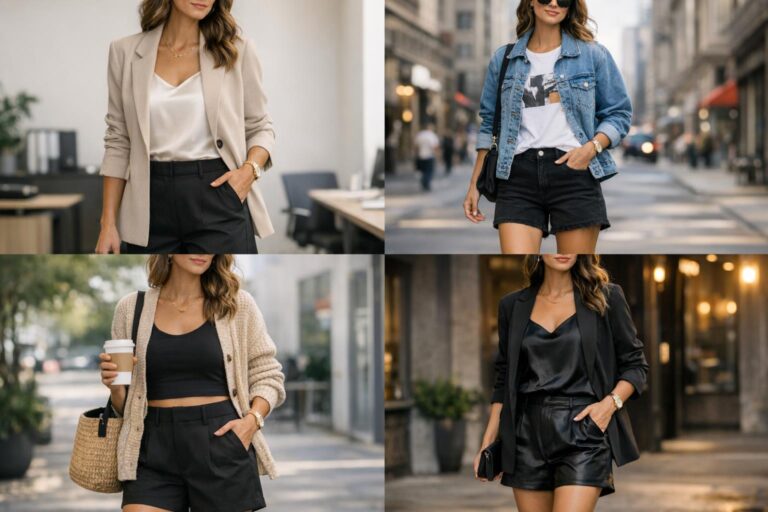
With Shorts and a Blazer: Warm-Weather Structure
Ankle booties can work with shorts when the rest of the outfit adds structure—like a blazer. This combination creates a balanced silhouette: the shorts keep it light, the blazer keeps it sharp, and the boots add a grounded, styled finish. Suede ankle booties can be particularly effective here because they add texture and softness to a look that could otherwise feel too stark.
The key is to keep the proportions intentional. If your shorts are casual, make sure the blazer and boots look considered; if your shorts are more tailored, you can choose a sleeker boot shape for a refined result.
Body-Shape and Proportion: Which Ankle Boots Suit You Best
Most “rules” about ankle boots come down to proportion. Boot shaft height, toe shape, and heel height change how your leg line looks, especially at the ankle. Rather than aiming for one universally “flattering” boot, choose pairs that support your typical outfits and the visual balance you prefer.
Petite Frames: Heel Heights and Shaft Lengths
If you’re petite or simply want more leg length in your outfits, focus on boots that help create a longer line. A little height (from a comfortable heel) can shift proportions quickly, and a sleeker toe shape can visually extend the leg. Shaft height matters too: the wrong height can “cut” the leg at the ankle, while a more streamlined shaft can look cleaner with cropped hems.
Build your outfits around clean transitions. Pairing ankle boots with jeans that don’t bunch, or wearing tights with skirts, can make the boot-to-leg line feel continuous rather than choppy.
- Choose a sleeker silhouette when you want a longer visual line
- Use heeled booties when you want a quick proportion boost
- Prioritize clean hems (cropped, straight, or neatly tucked)
- Use tights with skirts to reduce stark breaks at the ankle
Tall and Leggy: Balancing Bold Boots
If you’re tall, you can often wear a wider range of ankle boot silhouettes without feeling “cut off,” including chunkier shapes and bolder designs. The main goal becomes balance: if your boots are very statement-making, keep the rest of the outfit streamlined; if your outfit already has volume (like wide-leg pants), consider a boot shape that keeps the overall look intentional rather than oversized.
Because tall frames can carry dramatic proportions well, statement ankle boots can become a signature. Use toe shape and texture strategically: sharp shapes read sleek, while heavier shapes read more rugged.
Curvy Figures: Proportional Balance with Booties
For curvier proportions, ankle boots look best when the outfit’s volume feels balanced from top to bottom. A block heel can provide stability and visual grounding, while a clean boot shaft helps the ankle area look smooth rather than visually interrupted. Pairing booties with structured layers (like blazers) or polished basics (like a simple tee and great denim) can keep the look cohesive.
When styling dresses and skirts, consider whether you want the boot to blend in or stand out. A sleek boot can keep the outfit refined; a statement boot can add personality—either works when the overall silhouette feels deliberate.
Tips: If an ankle boot outfit feels “bottom heavy,” simplify the boot (sleeker toe, cleaner shaft) or add structure up top (a jacket layer) so the visual weight is balanced across the look.
Footwear Materials and Care: Longevity for Ankle Boots
Style gets you excited to wear your booties; care keeps them looking good after repeated wears. Many guides focus on outfits but skip the practical reality: ankle boots are often worn in transitional weather, which means they’re exposed to moisture, dirt, and daily friction. A simple care routine protects your investment and keeps every outfit looking sharper.
Leather vs. Suede: Care Tips
Leather and suede ankle boots can both be wardrobe workhorses, but they require different approaches. Leather is often chosen for its sleek look and durability, while suede is prized for its soft texture and seasonal feel. The most important principle is consistency: light, regular maintenance is easier (and more effective) than waiting until boots look visibly worn.
- Leather booties benefit from regular cleaning and protective habits to keep the finish polished
- Suede booties require gentler handling to preserve their texture and avoid visible marks
- Rotate pairs when possible so each boot has time to recover its shape between wears
Tips: If you’re building a small ankle boot collection, consider having at least one leather pair for more polished outfits and one suede pair for texture-heavy, seasonal styling.
Weatherproofing and Protection
Protection is part of wearing ankle boots in real life. Weather shifts, wet sidewalks, and daily wear can shorten the life of your boots if you skip basic prevention. A simple approach is to treat protection as a routine: prepare your boots before heavy-wear seasons and stay consistent through the months you rely on them most.
- Use protective treatments as part of seasonal prep, especially during high-wear months
- Store boots thoughtfully so they keep their shape and finish
- Avoid common care mistakes that can dull the material or shorten wear time
Tips: If you’re wearing booties often in fall and winter, set a recurring reminder to check their condition. Catching small issues early helps them stay presentable longer and keeps your outfits looking refined.
Cleaning Step-by-Step
A practical cleaning routine keeps ankle boots looking intentional rather than tired. The exact steps depend on material, but the overall structure is the same: remove surface dirt, address marks promptly, and store them correctly so they don’t lose shape between wears. If you’re unsure what to do, start with the least aggressive approach and increase only as needed.
- Do a quick post-wear check for dirt and marks
- Clean gently and regularly rather than waiting for buildup
- Let boots rest and dry naturally before storing
- Store in a way that supports the shaft and preserves the silhouette
Shopping Guide: Picking the Right Ankle Boots
The best ankle boots aren’t just “cute”—they work with your real wardrobe, your comfort preferences, and the situations you actually dress for. Use the factors below to choose booties you’ll reach for repeatedly, whether you’re building outfits with jeans, trousers, skirts, or dresses.
Toe Shapes and Heels: What to Choose
Toe shape and heel type do most of the styling work. Pointed-toe booties often read sharper and more refined, while other toe shapes can feel more relaxed or trend-forward depending on the overall silhouette. Heel height also signals occasion: a lower heel can skew practical and everyday, while a high heel instantly makes an outfit feel more “night out.”
- Pointed-toe booties for a sleek, dressed-up vibe
- Block-heel booties for comfort and stability that still looks polished
- Wedge booties when you want height with a more grounded feel
- Bold shapes, colors, or textures when you want statement ankle boots
Tips: If you want one pair to do the most work, prioritize a comfortable heel height and a toe shape that matches your typical outfits. A versatile boot is the one you can wear repeatedly without having to “design” an outfit around it.
Shaft Height and Fit: Finding Your Perfect Pair
Shaft height influences how your boots interact with pants and hemlines. The same boot can look sleek with trousers and tricky with a certain jean length, simply because the shaft hits at a different point on your ankle. Fit also matters for comfort and appearance: a boot that’s too tight can feel restrictive, while a boot that’s too loose can look sloppy and be harder to style with slimmer pants.
When in doubt, think about what you wear most. If jeans are your daily uniform, look for booties that pair well with the denim silhouettes you own. If you often wear dresses and skirts, consider how the boot shaft visually “finishes” your leg line and whether you’ll frequently add tights during cooler months.
Budget, Brands, and Where to Buy
Ankle boots exist at every price point, from quick seasonal finds to long-term wardrobe anchors. No matter your budget, prioritize a pair you can realistically wear often and maintain easily. When buying online, pay attention to practical purchasing details—especially policies that make it easier to try multiple sizes or styles without risk.
- Focus on cost-per-wear: choose boots that match your actual wardrobe
- Check return and exchange policies before ordering online
- Consider owning one versatile everyday pair and one statement pair for variety
Visual Guides and Galleries (How to Use Them)
Many people learn best by seeing outfits rather than reading rules. If you’re building your own visual reference—whether you save images, take mirror photos, or create a simple folder of looks—organize your ankle boots outfits by category: jeans, trousers, dresses, skirts, and occasion (work vs. weekend vs. evening). This makes it easier to repeat successful combinations and spot what proportions you like most.
Gallery: 20 Real-Outfit Shots (What to Look For)
When you’re scanning outfit images for inspiration, don’t only look at the boots—look at the hemline. The most useful outfit shots clearly show how the pant or skirt ends relative to the boot shaft and how the overall silhouette is balanced. Also note whether the boots blend in (neutral, sleek) or act as the statement element (bold texture, standout color, dramatic shape).
Quick Video: 60-Second Styling Tips (What to Practice)
Short-form styling videos are most helpful when you treat them like drills: practice the same outfit formula with two or three different boots and notice how the vibe changes. For example, try the same jeans-and-tee base with a pointed-toe bootie, a block-heel bootie, and a bold statement boot, then decide which version fits your lifestyle and personal style best.
Final Takeaways
Wearing ankle boots well comes down to three things: an outfit formula you can repeat, proportions that feel intentional (especially at the hem-to-boot transition), and boots that stay in good condition through regular care. Start with the pairings that cover most of your life—booties with jeans for everyday, ankle boots with trousers or a suit for work, and ankle boots with dresses or skirts for versatility—then add a statement option when you want extra personality.
As you experiment, keep notes on what feels best: toe shape, heel height, shaft height, and the outfits you wear most often. The more you treat ankle boots as a styling tool rather than a one-off trend, the easier it becomes to build outfits that look effortless and feel reliable.
FAQ
Can ankle boots be worn in every season?
Yes—ankle boots can work year-round, but they’re especially useful in transitional weather. In fall and winter, prioritize protection and consistent care; in spring, keep the rest of the outfit lighter so the boots feel season-appropriate rather than heavy.
How do I wear ankle boots with jeans without looking awkward?
Focus on the hem-to-boot transition: either tuck slim jeans cleanly into the boots or choose a hem that sits neatly above the boot shaft. Avoid bunching at the ankle when possible, and use a sleeker boot shape if you want a cleaner line.
What are the best ankle boots to wear to the office?
Closed-toe booties in a classic shape are the most dependable for work, especially with trousers or a suit. A low-to-mid heel like a block heel often gives a polished look while staying comfortable for long days.
How do I style ankle boots with dresses and skirts?
Decide whether you want contrast or a sleek, continuous look: ankle boots can add edge to softer pieces like slip dresses, or they can look refined with a streamlined dress silhouette. For cooler weather, tights with a mini dress or skirt can make the outfit feel cohesive and wearable.
Do I need socks with ankle boots?
Socks aren’t always required, but they can improve comfort and reduce friction depending on the fit of your booties. If the boots feel snug or you’ll be walking a lot, socks can make the wear experience more comfortable without changing the overall look much.
How do I break in new ankle boots quickly?
Break them in gradually by wearing them for short periods and increasing wear time as they soften. Pay attention to pressure points early so you can adjust how you wear them, and keep the boots clean and properly stored so the material stays in good condition during the break-in period.
Are suede ankle booties harder to maintain than leather?
Suede typically requires a gentler approach and more attention to keeping the texture looking fresh, while leather often reads sleeker and is commonly chosen for polished outfits. Either material can last well with consistent maintenance and thoughtful protection habits.
What makes a bootie a “statement ankle boot”?
A statement ankle boot stands out through bold design choices like striking textures, noticeable colors, or an attention-grabbing silhouette. The easiest way to style statement booties is to keep the rest of the outfit relatively simple so the boots remain the focal point.
How can I make ankle boots look more polished?
Choose a clean silhouette (often closed-toe with a refined shape), pair them with tailored pieces like trousers or a suit, and keep the boots well maintained. Regular care and a thoughtful hemline that meets the boot neatly can make the entire outfit look more intentional.