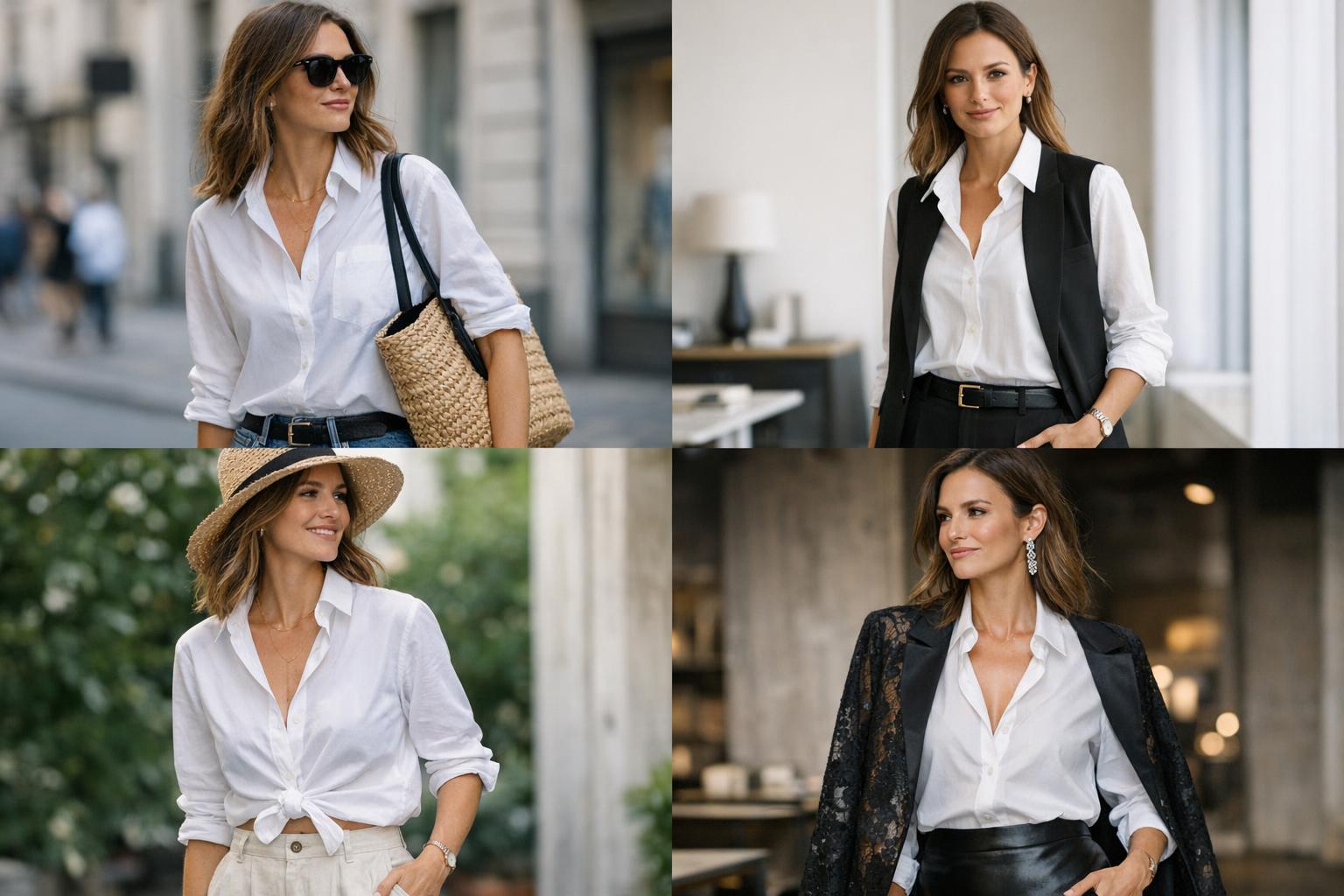
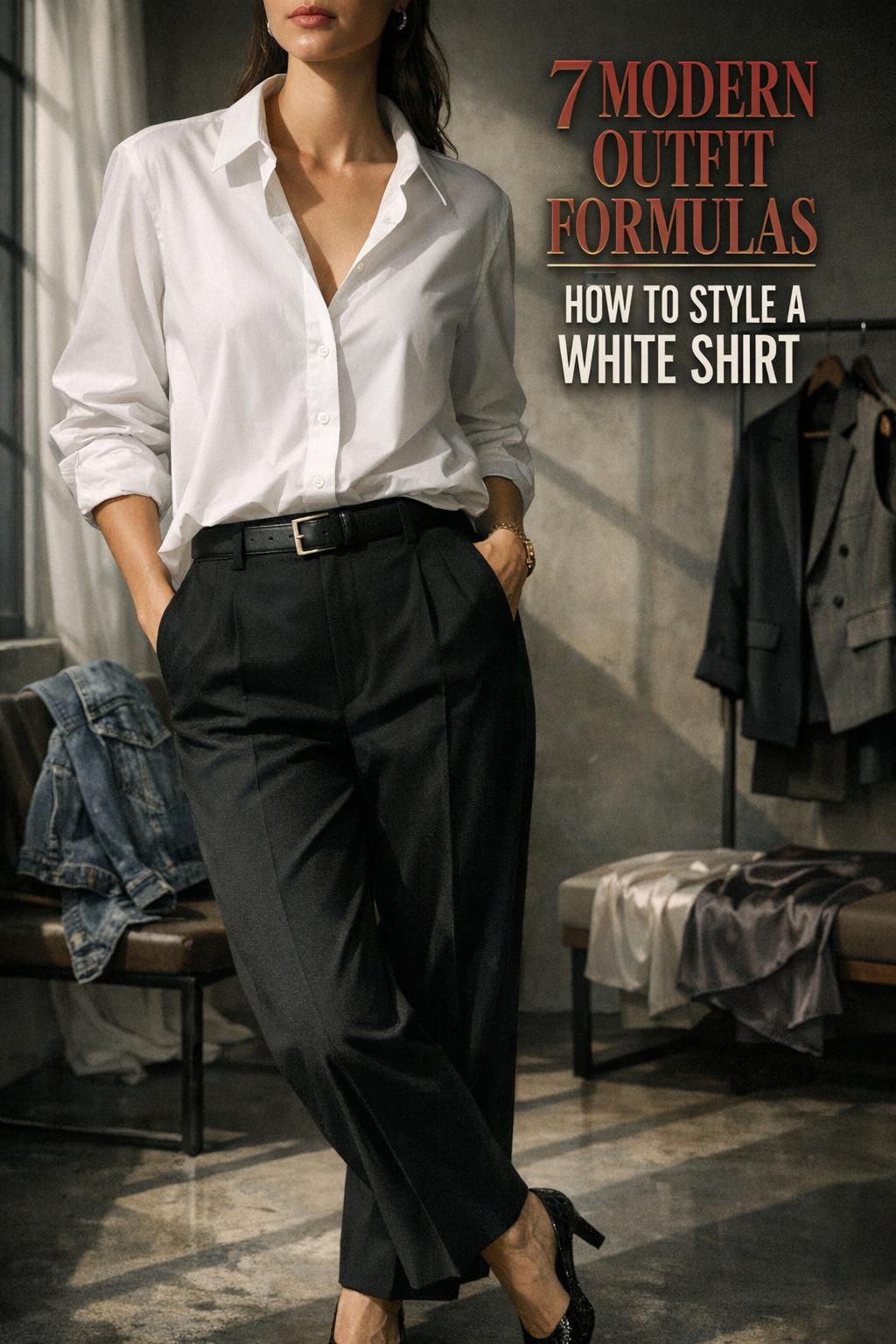
7 Modern Outfit Formulas: how to style white shirt in the US
How to Style a White Shirt: 21 Fresh Looks for Every Occasion
A crisp white shirt is one of the few pieces that can move effortlessly between casual, office-ready, and dressy settings. If you’ve ever wondered how to style white shirt outfits without repeating the same formula, this guide breaks it down into practical outfit ideas you can mix and match by fit, fabric, season, and occasion. You’ll also find proportion guidance, accessory strategies, and care habits that keep your shirt looking bright and feeling comfortable over time.
The goal isn’t to create one “perfect” outfit—it’s to build repeatable outfit formulas. Once you know your shirt’s fit and fabric, you can style it with denim, skirts, trousers, blazers, knitwear, and statement accessories while keeping the look intentional.
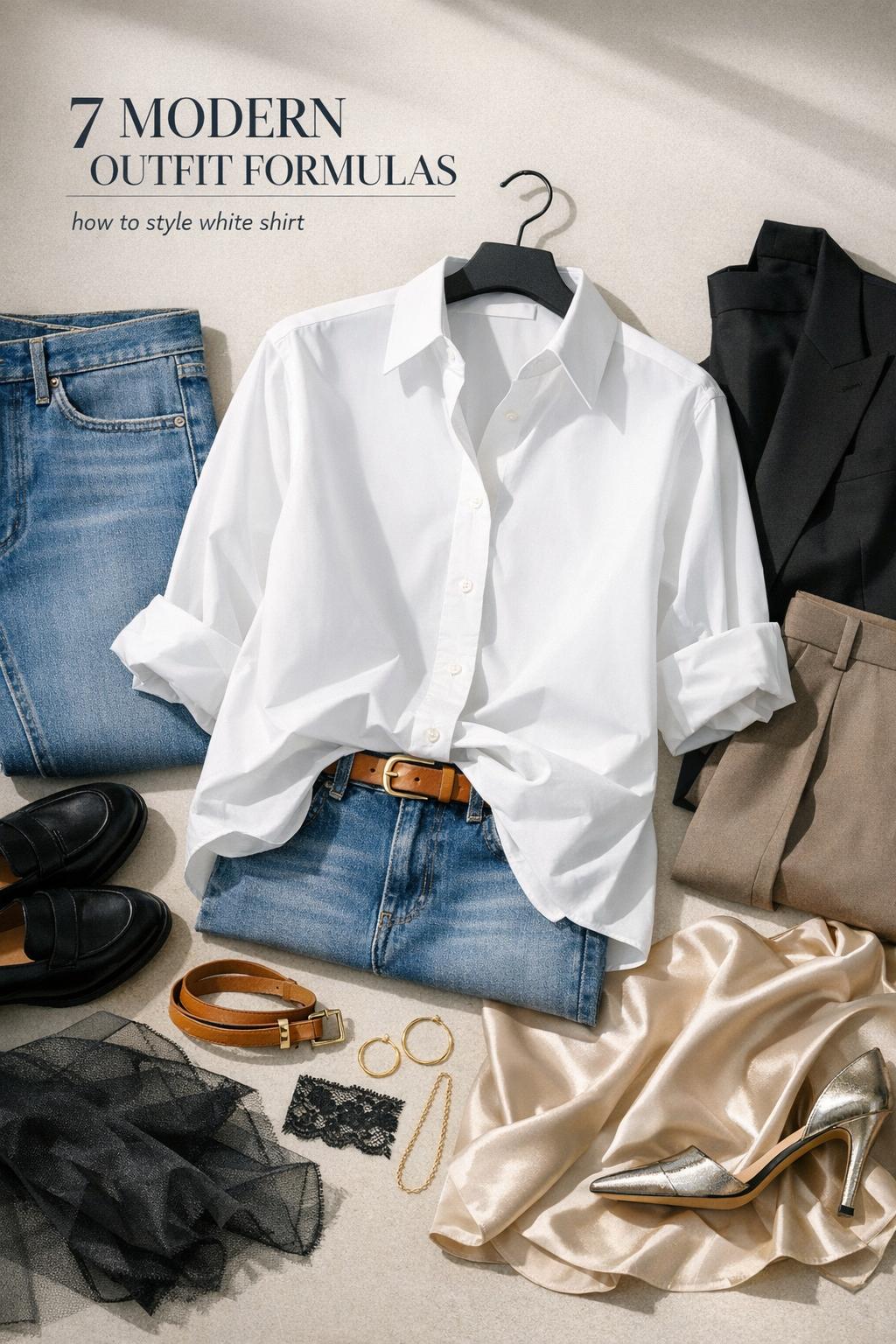
Know Your White Shirt: Fit, Fabric, and Care
Before you get to outfit building, take a minute to identify what kind of white shirt you’re working with. Most white shirt styling problems come down to one of three things: a fit that fights your proportions, a fabric that doesn’t behave the way you expect, or care habits that dull the color and shape.
Picking the Right Fit (Classic, Regular, Slim, Oversized)
Fit shapes the entire silhouette. A classic or regular fit tends to be the easiest for everyday wear because it can be tucked, half-tucked, or worn open over a base layer. A slim fit looks sharp under blazers and vests but can feel restrictive if you plan to layer. An oversized white shirt is ideal for relaxed styling and proportion play, but it needs a bit more intention—especially around hem length and sleeve volume.
- Classic/regular fit: Balanced option for casual looks, workwear, and layering.
- Slim fit: Most polished for office outfits and tailored proportions.
- Oversized fit: Best for casual styling, layering, and modern, relaxed silhouettes.
- Hem and sleeve check: Make sure your hemline and sleeve length work with how you plan to wear it (tucked, untucked, rolled, layered).
Tip: If you want your white button-down to do everything (weekend, work, and evening), prioritize a fit that allows easy movement through the shoulders and arms. Comfort is what makes a shirt feel wearable enough to become a staple.
Fabric Considerations (Cotton, Poplin, Broadcloth, Linen, Blends)
Fabric affects both styling and maintenance. Cotton is a wardrobe workhorse and tends to feel straightforward for everyday wear. Poplin and broadcloth are often chosen for a crisp look that reads polished and structured. Linen is a go-to for breathable warm-weather outfits. Blends can be useful if you want easier wear and lower-maintenance care, though the feel and drape vary.
Think of fabric as the “mood” of the outfit. A crisp poplin shirt naturally looks more office-ready, while a linen white shirt leans casual and seasonal. You can dress either one up or down, but the base vibe matters when you’re choosing accessories and pairings.
Tip: If you love the look of a crisp white shirt but don’t want to feel overly formal, mix it with casual textures like denim or relaxed knitwear. If your shirt is softer and more relaxed (like linen), add structure with a blazer, vest, belt, or sharper shoe.
Care Tips for Longevity (Washing, Whitening, Stain Treatment)
Care is part of styling because a white shirt only looks “crisp” when it stays bright and holds its shape. A simple, consistent routine matters more than an occasional deep clean. Treat stains quickly when possible, wash thoughtfully, and focus on practices that keep the shirt wearable across seasons.
- Washing: Use a consistent washing approach that supports fabric longevity.
- Whitening: Build a maintenance routine aimed at keeping the shirt bright over time.
- Stain treatment: Treat common stains promptly so they don’t set in and become permanent.
- Longevity mindset: The easier you make care, the more often you’ll actually wear the shirt.
Tip: If your lifestyle includes coffee, commute time, or long days at work, plan outfits with “stain risk” in mind. A white shirt can absolutely be an everyday item, but it pays to keep stain treatment and care consistent so you’re not saving it only for special occasions.
Everyday Casual Looks
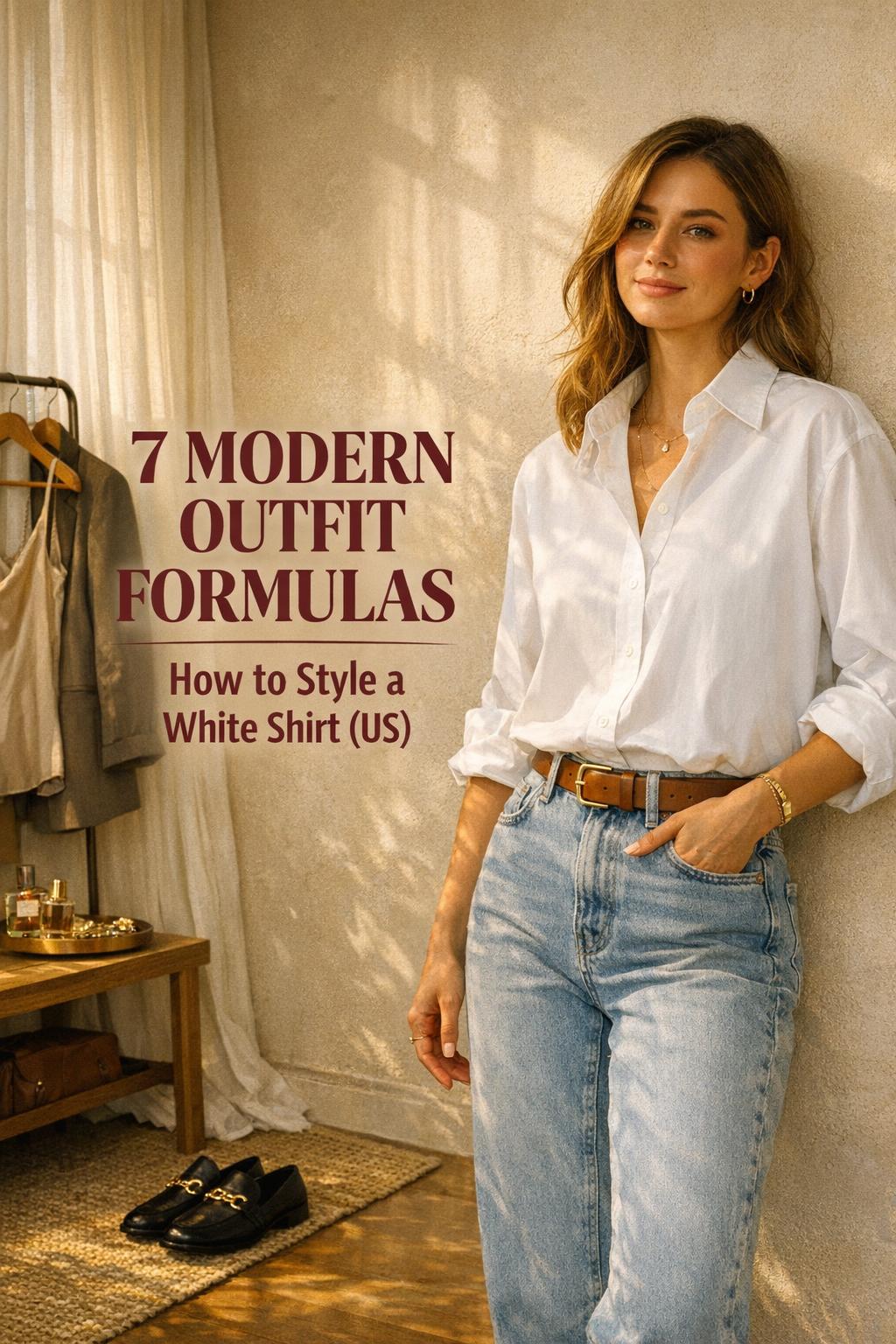
Casual white shirt outfits are all about ease: relaxed proportions, practical layers, and comfortable shoes. The white shirt works as a clean base, letting you change the feel of the outfit through denim washes, skirt shapes, and light layering.
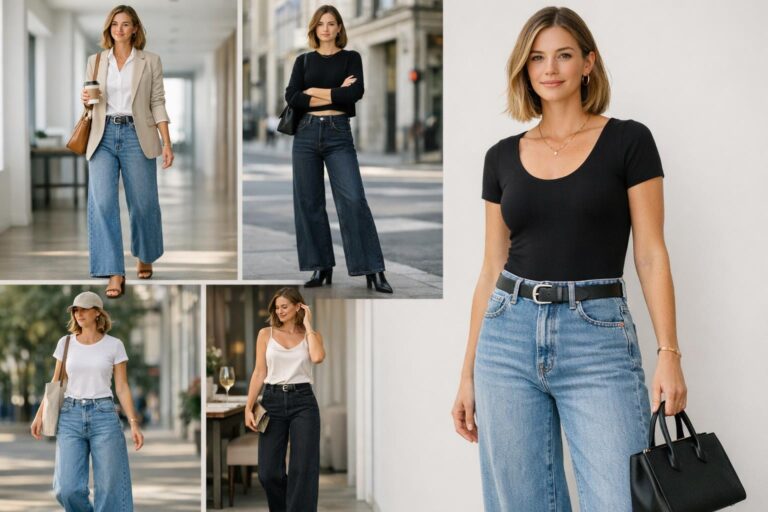
With Jeans: Classic, Distressed, and Wide-Leg
The “white shirt with jeans” pairing is popular because it’s flexible. It can read minimalist, classic, modern, or edgy depending on the denim cut and how you style the shirt. The quickest upgrade comes from choosing a tuck strategy that matches the rise of your jeans and the length of your shirt.
- Look 1: Classic — Regular-fit white shirt + dark-wash jeans + simple accessories for a clean, everyday uniform.
- Look 2: Relaxed — Oversized white shirt worn open over a base layer + light-wash jeans for an easy weekend outfit.
- Look 3: Modern proportion — Half-tuck a crisp white shirt into wide-leg denim to balance volume and define the waistline.
- Look 4: Distressed contrast — Crisp white button-down + distressed denim to contrast polished and casual textures.
Tips for making denim look intentional: If your shirt feels too formal with jeans, roll sleeves or wear the shirt slightly open for a more casual finish. If your denim feels too casual, shift the shirt toward a sharper shape by tucking more cleanly and adding a structured layer like a lightweight jacket.
With Shorts or Skirts for Warm Weather
Warm-weather styling works best when you keep the shirt breathable and the silhouette uncomplicated. A white blouse or button-down can be worn as a top, a light overshirt, or even a simple layer over a warm-weather base outfit. Shorts and skirts help you control how dressed up you want to look without changing the shirt itself.
- Look 5: Minimal summer — Linen white shirt + shorts + minimal accessories for a breathable, low-effort outfit.
- Look 6: Skirt balance — Tuck a crisp white shirt into a midi skirt for an outfit that’s easy but polished.
- Look 7: Casual skirt day — Wear the shirt untucked with a skirt and keep the vibe relaxed through lightweight accessories.
- Look 8: Layer-as-jacket — Wear the white shirt open over a simple base layer with shorts for sun-to-evening versatility.
Tip: If you want a summer outfit to feel finished without adding heavy layers, use accessories as your structure—think a belt for definition or a more deliberate shoe choice to shift the outfit from beachy to city-ready.
Layering with Cardigans and Lightweight Jackets
Layering is where a white shirt becomes a true year-round staple. In mild weather, it’s a perfect base under cardigans and lightweight jackets, adding contrast at the collar and cuffs. This is also one of the easiest ways to make casual outfits look pulled together.
- Look 9: Cardigan classic — White shirt under a cardigan, with the collar and cuffs showing for an easy “smart casual” finish.
- Look 10: Light jacket layer — White shirt + lightweight jacket for transitional days; keep the shirt slightly structured for balance.
- Look 11: Texture mix — Crisp white shirt with a knit layer to combine polished structure and soft texture.
Tip: When layering, pay attention to collar and cuff styling. A visible collar can signal polish instantly, while rolled sleeves and a more open neckline can keep the outfit relaxed. Small adjustments are often enough to change the whole vibe.
Workwear and Office-Ready Styles
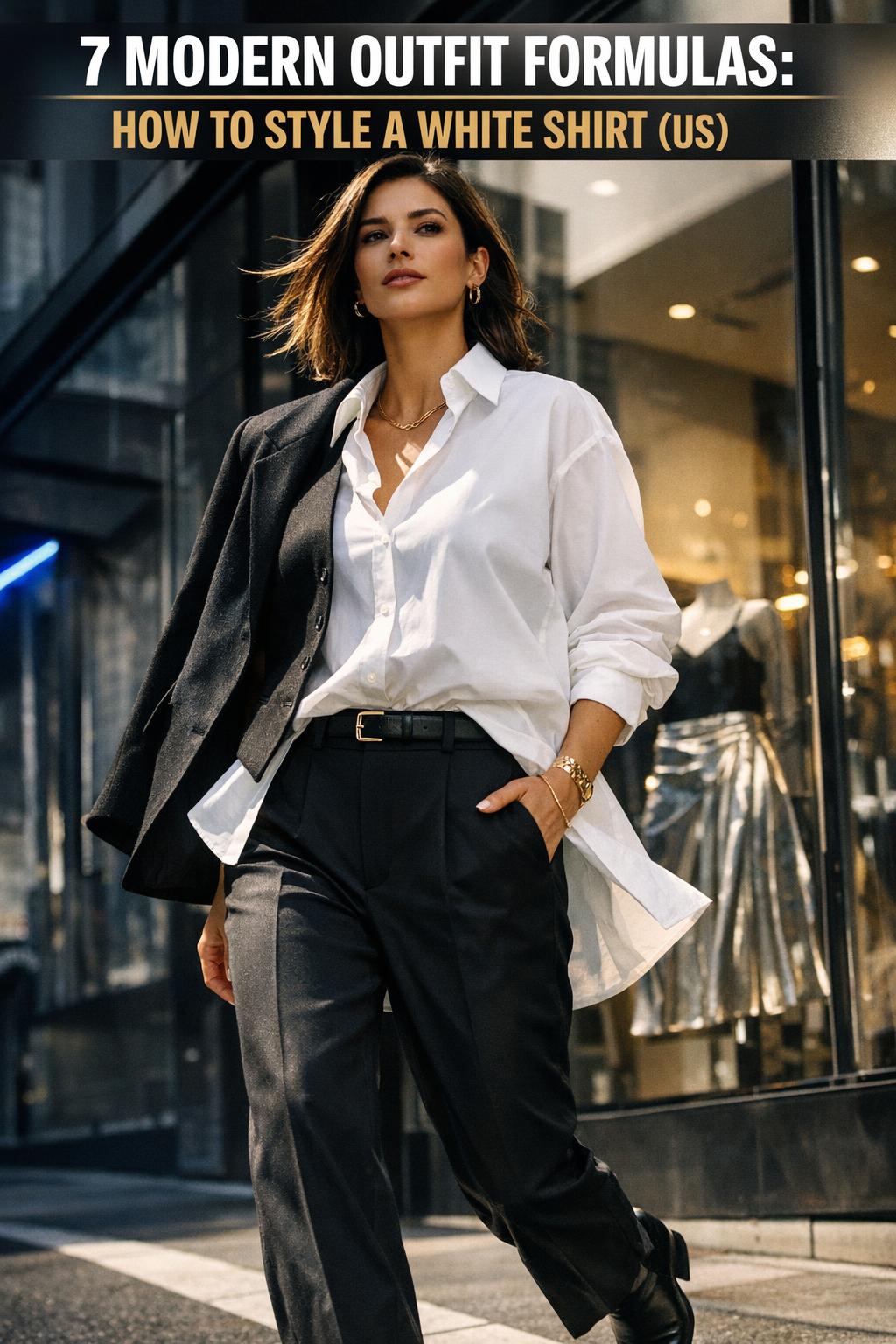
A white shirt is a core workwear tool because it pairs cleanly with trousers, pencil skirts, blazers, and vests. The difference between “basic” and “boardroom-ready” often comes down to proportion (tucked vs. untucked), fabric crispness, and accessories that feel deliberate rather than incidental.
Tucked vs Untucked: Proportions for Different Pants
Tucking changes how your outfit reads and how your proportions look. A full tuck tends to look the most formal and structured, especially with trousers or pencil skirts. Untucked works best when the shirt length and overall silhouette look intentional rather than accidental. If you’re unsure, a half-tuck is the simplest middle ground.
- Look 12: Full tuck polish — Crisp white shirt fully tucked into tailored trousers for a straightforward office outfit.
- Look 13: Half-tuck balance — White button-down half-tucked with trousers to keep structure while feeling modern.
- Look 14: Intentional untucked — Regular-fit shirt worn untucked with a clean trouser line for a relaxed business-casual approach.
Tips for office proportions: If your pants are wider or higher-waisted, a tuck (full or half) helps define the waistline and prevents the shirt from adding bulk. If your trousers are slim and your shirt is slim, keep the silhouette clean with a full tuck and minimal layers.
With Trousers and Pencil Skirts
Pairing a white shirt with tailored pieces is one of the most reliable ways to look professional. Trousers read modern and versatile, while pencil skirts lean more classic and structured. The shirt’s collar, sleeve length, and fabric crispness can shift the look from everyday workwear to more formal office attire.
- Look 15: Trousers staple — White shirt + trousers with simple accessories for a repeatable work uniform.
- Look 16: Pencil skirt classic — Tucked white shirt + pencil skirt to emphasize a clean, professional silhouette.
- Look 17: Vest update — White button-down under a vest for a sharper, tailored finish that still feels current.
Tip: If you want the outfit to feel less predictable, focus on texture rather than loud color. Mixing crisp broadcloth with a different texture in your skirt or trousers adds depth while staying office-appropriate.
Blazers, Accessories, and a Polished Finish
Blazers and accessories are the simplest route to an office-ready upgrade. A blazer instantly adds structure, especially over a white shirt that’s crisp and well-fitting through the shoulders. Accessories can remain minimal, but they should look intentional—especially if you’re dressing for meetings or a work-to-evening transition.
- Look 18: Blazer and button-down — White shirt + blazer for a classic professional pairing with instant credibility.
- Look 19: Office-to-drinks — Keep the white shirt base and shift the vibe after work with bolder accessories or a dressier shoe.
Tips for a “finished” work look: Aim for one focal point—either the blazer’s structure, a belt that defines the waist, or a stronger accessory choice. When everything is competing, the outfit can feel busy. When one element leads, the white shirt supports and elevates it.
Evening and Dressy Options
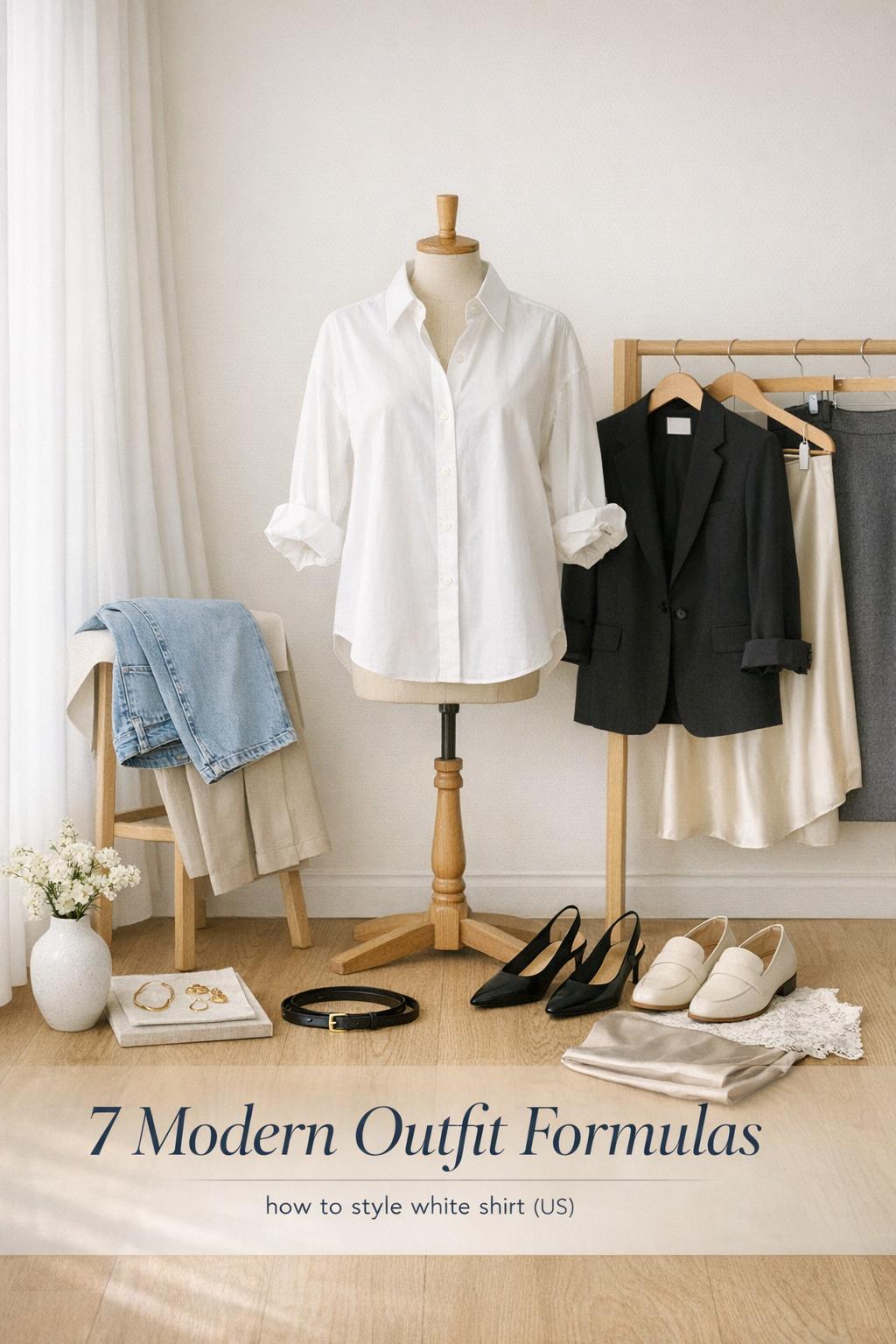
A white shirt can absolutely be dressy. The key is shifting the supporting pieces: richer textures, more deliberate silhouette shaping, and accessories that clearly signal nighttime. Evening styling also benefits from thoughtful layering—sheer overlays, satin-like shine, or lace-style texture contrasts can make the shirt feel less “daytime.”
Sheer and Layered Textures
Texture play is the fastest way to move a white blouse outfit into evening territory. A clean white base allows dressier textures to stand out, whether you choose a sleek finish or a more romantic direction. The goal is contrast: crisp and clean meets soft, sheer, or glossy.
- Look 20: Sheer layer — White shirt layered with a sheer element for a more styled, nighttime feel.
- Look 21: Satin/lace contrast — Pair the white shirt with a dressier texture to create a deliberate, elevated mix.
Tip: If you’re keeping the shirt itself simple, make the evening energy come from what touches the edges of the outfit: shoes, jewelry, and the feel of the fabric in your skirt or trousers. Those details communicate “night out” even when the base is classic.
Skirt Pairings and Belted Silhouettes
Belting and skirt pairings are a reliable way to make a white shirt look intentional for dinner, events, or an elevated night-out outfit. A belt helps control volume and turns a simple shirt into a styled silhouette. Skirt shapes can steer the mood from structured (pencil) to more fluid (midi).
Tips for belting without fuss: Keep the tuck clean enough that the belt sits smoothly. If you prefer less structure, use a half-tuck with a belt to hint at shape without making the outfit feel rigid.
Shoes and Jewelry for Nighttime Vibes
Evening styling often comes down to finishing choices. When your base is a crisp white shirt, shoes and jewelry can do more of the “speaking.” If your daytime looks tend to be minimal, this is where you can experiment with bolder accessory energy while still staying grounded in a classic piece.
Tip: If you want a white shirt party outfit to feel modern rather than overly formal, focus on one strong finish—either standout jewelry or a more dramatic shoe choice—then keep everything else clean and balanced.
Seasonal Styling Guides
The same white shirt can work in every season if you adjust fabric, layering weight, and how much structure you add. Seasonal styling is less about reinventing the shirt and more about building weather-appropriate outfit formulas you’ll actually wear.
Spring: Light Layers and Pastel Accessories
Spring outfits benefit from light layering and a fresher palette. A white shirt acts as a bright anchor that pairs easily with softer accessory choices. Keep layers lightweight and let the shirt peek through at the collar and cuffs to create dimension without bulk.
Tip: In transitional weather, use the white shirt as your consistent base and rotate the outer layer. That approach keeps your outfit planning simple while still feeling seasonally appropriate.
Summer: Breathable Fabrics and Minimal Layers
Summer white shirt outfits are easiest when you lean into breathable fabrics, minimal layering, and simpler silhouettes. Linen becomes especially useful here because it naturally reads warm-weather, but any comfortable white shirt can work when styled as a top or worn open as a light layer.
Tip: If you’re in a humid climate, keep the outfit formula simple: white shirt + one bottom piece + minimal accessories. The shirt should feel effortless, not restrictive.
Fall: Layering with Knitwear and Leather
Fall is prime time for layering a white shirt. Knitwear adds warmth and softness, while leather-like texture brings contrast and depth. In this season, your white shirt is most effective when it adds crisp structure under heavier textures.
Tip: To keep fall layers from feeling bulky, pay attention to sleeve volume. If your shirt is oversized, choose a layer that can comfortably accommodate it without bunching.
Winter: Thermal Underlayers and Statement Outerwear
In winter, a white shirt becomes a layering tool that can sit under warmer pieces while still adding a clean neckline and visible structure. Thermal underlayers help with comfort, and statement outerwear can carry the outfit while the white shirt keeps the look sharp and intentional.
Tip: If you’re layering heavily, choose a white shirt fit that feels comfortable at the shoulders and arms. The best winter outfit is the one you can move in all day.
Style by Body Type and Proportion
White shirt styling looks best when the proportions match your frame and the outfit’s intention. Small changes—like sleeve length, hemline, and tuck style—can make an outfit feel custom to you without needing a completely different wardrobe.
Tall, Petite, Curvy, Athletic: Adjusting Shirt Fit, Sleeve Length, and Hemline
Instead of chasing a single rule, aim for balance. If you’re petite, overly long hems can overwhelm your frame, so consider a cleaner tuck or a more intentional hem length. If you’re tall, you may prefer longer hems and sleeves for comfort and proportion. Curvy and athletic frames can both benefit from fit that moves comfortably through shoulders and bust, with styling choices (like a tuck or belt) used to create the silhouette you want.
- Petite: Consider shorter hems or more deliberate tucks to keep proportions clean.
- Tall: Longer sleeves and hem can look naturally balanced; use tucks strategically based on the outfit’s structure.
- Curvy: Prioritize comfort and ease through the upper body; use belts or tucks for definition when desired.
- Athletic: Use layering, texture, and tuck choices to create either a straighter silhouette or more waist definition.
Tip: When you’re testing proportions, take a quick look at the outfit in motion. A white shirt that looks fine standing still but pulls or shifts while you move will be harder to wear confidently, especially in workwear settings.
Collar and Neckline Suggestions (Classic Point, Spread, V-Neck Variations)
Collars and necklines change the frame of your face and the overall tone of the outfit. A classic point collar reads timeless and versatile. A spread collar can feel bolder and more modern. V-neck style openings (created by unbuttoning or choosing a blouse with a V shape) can feel more relaxed or more dressy depending on the rest of the look.
Tip: If you’re unsure where to start, keep the collar choice classic and vary the neckline by how you button the shirt. That one adjustment can shift an outfit from buttoned-up workwear to a more relaxed, evening-ready feel.
Color Theory and Accessory Play
A white shirt is a styling canvas. That’s why it shows up in capsule wardrobe conversations and “wear it a hundred ways” guides: it supports neutral looks, bold color blocking, and texture mixing without feeling too busy. When you decide the color story and the accessory focus, the outfit becomes cohesive.
Neutral Palette Pairings
Neutral palettes are a natural match for a crisp white shirt. This approach is especially useful for workwear, travel, and everyday dressing because it’s easy to repeat and refine. A neutral outfit can still look interesting when you vary fabric textures and proportions.
Tip: When your palette is quiet, let texture do the work. Combine a crisp shirt with denim, knitwear, or a smoother dressy fabric to add depth without adding more color.
Bold Color Blocking with White
White is the ultimate “reset” color, which makes it ideal for color blocking. If you want to add bold color without feeling overwhelmed, keep your white shirt clean and simple, then concentrate color in one or two places—like your bottom piece and an accessory.
Tip: If bold color feels intimidating, start with a single strong color and keep everything else neutral. The white shirt will naturally balance the look and keep it readable.
Texture and Pattern Mix (Lace, Velvet, Denim, Metallics)
Texture mixing is where white shirt styling becomes truly “styled.” Pairing a white button-down with denim is a classic example of texture contrast. For dressier outfits, richer textures like velvet or metallic elements can create an evening feel while the shirt keeps everything grounded and clean.
- Crisp + rugged: White shirt with denim for a classic high-low mix.
- Crisp + soft: White shirt with knitwear for an easy layered look.
- Crisp + dressy: White shirt with satin-like shine, lace-style texture, velvet feel, or metallic accents for evening.
Tip: If you’re mixing multiple textures, keep the silhouette simple. Let the materials be the interest so the outfit doesn’t become visually chaotic.
Sustainable and Budget-Friendly Approaches
A white shirt can be a long-term staple, which makes it a good candidate for more thoughtful shopping habits. Whether you’re working with a tight budget or trying to reduce waste, there are practical ways to build great white shirt outfits without constantly buying new.
Thrifted Finds, Rentals, and Upcycling Ideas
Second-hand, rental, and upcycling approaches can help you experiment with different fits and fabrics—like oversized, slim, poplin, or linen—without committing to a large closet overhaul. A thrifted white shirt can become a “try it and learn” piece for proportion experiments, while rentals can help when you need a specific look for a short period.
Tip: If you’re testing a new fit (like oversized), start with a lower-commitment option so you can learn how you like to style it. Once you know what you reach for most—tucked, untucked, layered—you can invest more confidently.
Capsule Wardrobe Strategy Centered on One White Shirt
If you want fewer clothes and more outfits, build a mini capsule around one great white shirt. The advantage of this approach is consistency: the shirt stays the same, and you rotate the supporting items based on season and occasion. This also makes it easier to develop your personal uniform while still having variety.
- Casual capsule: White shirt + denim + lightweight layer.
- Work capsule: White shirt + trousers or pencil skirt + blazer or vest.
- Dressy capsule: White shirt + textured skirt or trousers + bold accessory focus.
- Seasonal capsule: Shift fabric weight and layering (linen in summer, knitwear and outerwear in winter).
Tip: A capsule works best when the shirt fits your real life. If you commute, sit at a desk, or move around all day, prioritize comfort in the shoulders and sleeves so the “staple” actually gets worn.
Care and Maintenance Checklist (Printable)
Use this checklist to keep your white shirt bright, wearable, and easy to style. Consistency is the secret—small habits prevent the slow fade and dullness that make a white shirt feel “tired.”
- Before wearing: Check for faint marks or collar discoloration so you can treat early.
- After wearing: Don’t let stains sit; treat as soon as possible when you notice them.
- During laundry: Use a steady washing routine that supports longevity and brightness.
- Between wears: Store in a way that helps maintain shape and reduce wrinkles.
- Seasonal reset: Reassess fit and fabric needs (lighter for summer, layering-friendly for winter).
Quick Reference: Fabric-Specific Guidance
Different fabrics behave differently, so your care and styling approach should match. Crisp fabrics like poplin and broadcloth tend to emphasize structure and can look especially sharp for workwear, while linen leans breathable and casual. Cotton is flexible and often the easiest all-around choice, and blends can be helpful when you want lower-maintenance wear with an everyday feel.
Tip: If you notice you avoid wearing a white shirt because it feels like “too much work,” that’s a sign to simplify your care routine or choose a fabric that better fits your day-to-day needs.
Gallery: 21 White Shirt Outfit Ideas (Quick Captions)
Use these as quick outfit formulas. Repeat the ones you love, then swap one element at a time—fit, tuck style, texture, or accessories—to create new combinations without starting from scratch.
- Look 1: Regular-fit white shirt + dark-wash denim for a clean everyday uniform.
- Look 2: Oversized white shirt worn open over a base layer + light-wash jeans.
- Look 3: Half-tucked crisp white shirt + wide-leg denim for modern proportions.
- Look 4: Crisp white button-down + distressed jeans for polished-meets-casual contrast.
- Look 5: Linen white shirt + shorts for breathable summer styling.
- Look 6: Tucked white shirt + midi skirt for an easy polished day outfit.
- Look 7: Untucked white shirt + skirt for relaxed warm-weather dressing.
- Look 8: White shirt worn open as a light layer over a simple warm-weather base.
- Look 9: White shirt under a cardigan with collar and cuffs showing.
- Look 10: White shirt + lightweight jacket for transitional layering.
- Look 11: Crisp shirt + knit layer for texture contrast and everyday structure.
- Look 12: Fully tucked white shirt + tailored trousers for a classic office look.
- Look 13: Half-tucked white shirt + trousers for business casual with a modern edge.
- Look 14: Intentional untucked white shirt + clean trousers for relaxed office styling.
- Look 15: White shirt + trousers + minimal accessories for a repeatable work uniform.
- Look 16: Tucked white shirt + pencil skirt for a structured professional silhouette.
- Look 17: White button-down under a vest for sharper, tailored polish.
- Look 18: White shirt + blazer for instant professional structure.
- Look 19: Work-to-drinks: keep the shirt, shift energy with dressier accessories.
- Look 20: White shirt with a sheer layering element for a dressier, nighttime feel.
- Look 21: White shirt + a richer texture (satin/lace/velvet/metallic accents) for an elevated outfit.
Practical Shopping Guide: Choose by Price Range, Fabric, and Fit
A great white shirt doesn’t need to be complicated, but it should match your lifestyle. Start with where you’ll wear it most—casual, workwear, or dressy—then choose the fabric and fit that support that use. If you plan to layer often, prioritize comfort at the shoulders and sleeves. If you need a sharper office look, lean toward crisper fabrics and a cleaner fit.
How to Choose a White Shirt by Price Range
No matter your budget, aim for a shirt you’ll wear repeatedly. If you’re experimenting with a new silhouette (like oversized) or trying out different fabrics (like linen vs poplin), a budget-friendly option can be a smart starting point. If you already know your go-to fit and you plan to wear it weekly, investing in the best-feeling fabric and the most consistent fit can make the shirt a true cornerstone.
Recommended Approach: Match Fabric and Fit to Your Most-Worn Outfits
If you mostly want casual white shirt outfit ideas, a regular fit in cotton or a breathable linen option will likely feel easiest. If your focus is office outfit ideas, a crisp poplin or broadcloth with a cleaner fit can help you look polished with minimal effort. If you want to style a white shirt for evening, consider how it pairs with texture—your shirt can stay classic while the rest of the outfit brings the “dressy.”
Conclusion: Make the White Shirt Yours
The white shirt is popular for a reason: it’s adaptable. Once you understand your fit, fabric, and go-to proportions, you can create casual outfits with denim, build office-ready looks with trousers and blazers, and go dressy with texture and accessories. Save a few outfit formulas from the gallery, then repeat them with small changes—tuck style, layering, texture, or color blocking—until your white shirt feels like the most reliable piece in your closet.
FAQ
How do I choose the right sleeve length for a white shirt?
Choose a sleeve length that feels comfortable when you move your arms and that works with your most common styling habits. If you often layer under cardigans, vests, or blazers, avoid sleeves that feel tight in the upper arm; if you like showing cuffs for a polished look, make sure the sleeve length supports that without bunching.
How to style a white shirt with jeans without looking too basic?
Use one deliberate upgrade: change your tuck strategy (half-tuck with wide-leg denim or a clean full tuck for structure), add a layer like a lightweight jacket, or introduce texture contrast. A crisp white shirt with distressed denim can also create a polished-meets-casual effect that feels styled rather than plain.
How to style a white shirt for work?
Start with a crisp fabric and a fit that sits comfortably at the shoulders, then pair it with trousers or a pencil skirt. A full tuck reads the most professional, while a half-tuck can feel more modern in business-casual settings; add a blazer or vest and keep accessories intentional for a polished finish.
Can I style a white shirt for plus sizes?
Yes—focus on a fit that allows comfortable movement through the shoulders and arms and then use proportion tools like a full tuck, half-tuck, or belt depending on the silhouette you want. The most flattering and wearable result usually comes from balancing volume (shirt and bottom) and choosing a fabric that supports the level of structure you prefer.
How to style a white shirt for petites?
Use deliberate proportions: a cleaner tuck (full or half) often helps define the waistline and avoids a long hem overwhelming your frame. You can also choose a less bulky layer and keep sleeve volume under control so the outfit looks intentional and balanced.
How do I style an oversized white shirt without looking sloppy?
Anchor the volume with one structured choice: a half-tuck to define shape, a belt to create a silhouette, or a more tailored bottom like trousers. Keeping accessories deliberate and paying attention to sleeve and hem length also helps the oversized fit read modern and relaxed rather than accidental.
How can I wear a white shirt in summer without feeling overheated?
Prioritize breathable fabrics and minimal layers, and consider wearing the shirt open as a light overshirt over a simple base. Pair it with shorts or a skirt and keep the outfit uncomplicated so the shirt feels airy and wearable in warm-weather conditions.
How do I style a white shirt for evening?
Keep the shirt clean and classic, then shift the outfit through texture and finishing details. Pair it with a dressier skirt or trousers and use richer textures (like satin-like shine, lace-style texture, velvet feel, or metallic accents) plus bolder jewelry or shoes to create a clear nighttime vibe.
What are the best ways to remove common stains like coffee, wine, or sweat?
Treat stains as quickly as you can and build a consistent routine so marks don’t set and dull the shirt over time. If your white shirt is a frequent-wear staple, keeping stain treatment and care habits simple and repeatable will do more for long-term brightness than occasional intensive fixes.