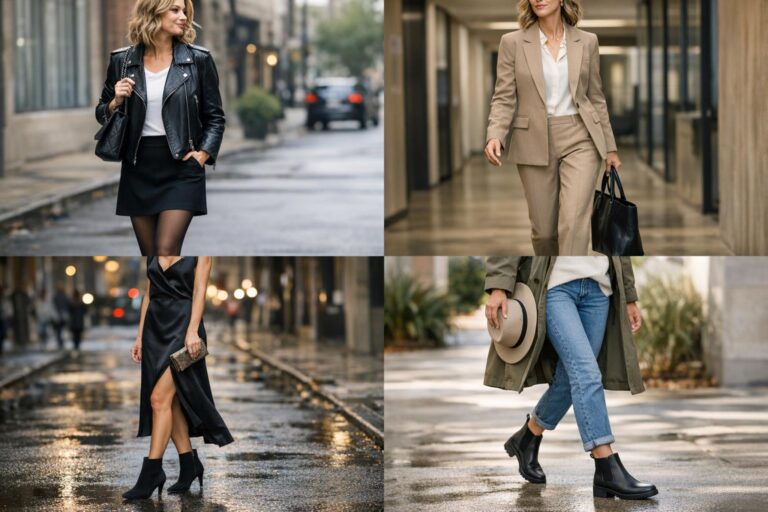
7 Outfit Formulas: How to Style Dresses for Any Occasion (US)
How to Style Dresses: A Complete, Practical Guide for Every Occasion
Learning how to style dresses comes down to a few repeatable outfit formulas you can use across silhouettes, occasions, seasons, and body types. Instead of treating every dress as a one-off, this guide helps you build a simple system: start with the dress shape, match the moment (casual, work, wedding guest, evening), then finish with shoes, accessories, and light layering. You’ll also find practical tips for color and pattern pairings, capsule-wardrobe thinking, and common mistakes that make outfits feel “over-styled.”
The goal isn’t to follow rigid rules—it’s to create reliable options you can repeat. When you have a few go-to combinations, it becomes easy to dress a look up or down without buying a whole new wardrobe.
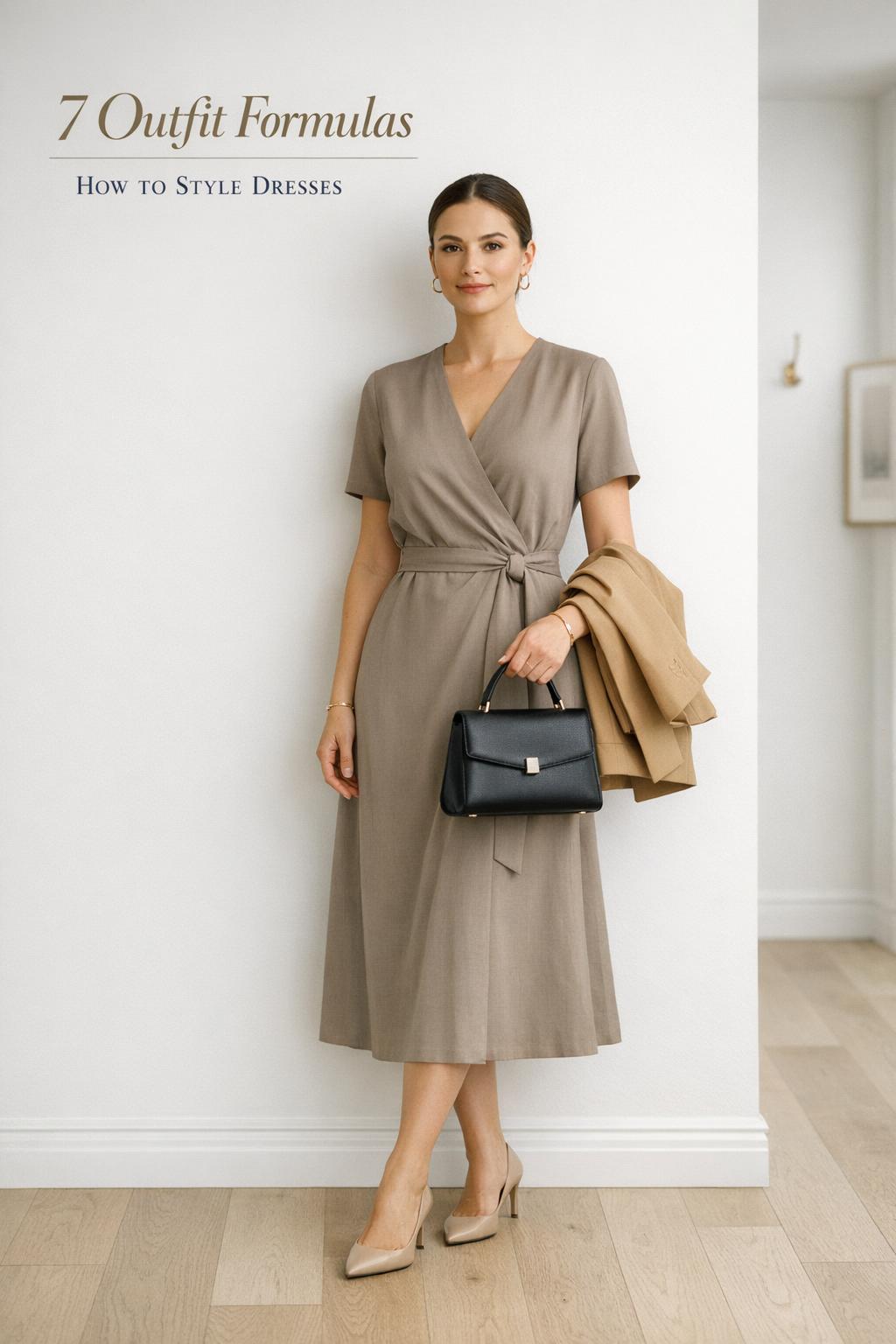
Understanding Dress Silhouettes and How They Shape Your Look
Dress silhouettes are the foundation of styling because they set the proportions for everything else: footwear height, outerwear length, bag size, and even how bold you can go with jewelry. Before you add anything, identify the silhouette you’re working with and decide what you want to emphasize—waist definition, length, structure, or ease.
Sheath: polished and streamlined
A sheath dress reads clean and professional because it follows the body in a straight, tailored line. Styling usually looks best when you keep the supporting pieces equally refined—think structured shoes, minimal jewelry, and an outer layer that doesn’t overwhelm the shape.
A-line: balanced and versatile
An A-line dress creates an easy “balanced” look: defined at the top with a gentle flare through the skirt. This silhouette pairs well with a wide range of shoes and bags, and it transitions smoothly between casual day outfits and dressier events depending on accessories and outerwear.
Shift: simple, modern, and easy to dress up or down
A shift dress typically hangs straight from the shoulders with minimal waist definition. You can keep it intentionally relaxed for everyday dress styling, or add structure using a sharp outer layer and more deliberate accessories.
Wrap: adjustable and waist-defining
A wrap dress naturally draws attention to the waist and creates a flattering, angled line through the torso. Because wrap dresses already bring visual interest, you can often keep accessories simpler and let the silhouette do the work.
Fit-and-flare: classic “waist + movement” shape
Fit-and-flare dresses combine a shaped bodice with a fuller skirt. The silhouette tends to look best when your footwear and bag choice supports the dress’s mood: playful for daytime, sleek for evening and formal events.
Maxi: elongated, dramatic, and sensitive to proportions
Maxi dresses make a strong statement because of length alone. Small details matter: the shoe shape, whether your outerwear ends above the knee or closer to the hem, and whether accessories feel “light” enough to avoid a heavy overall look.
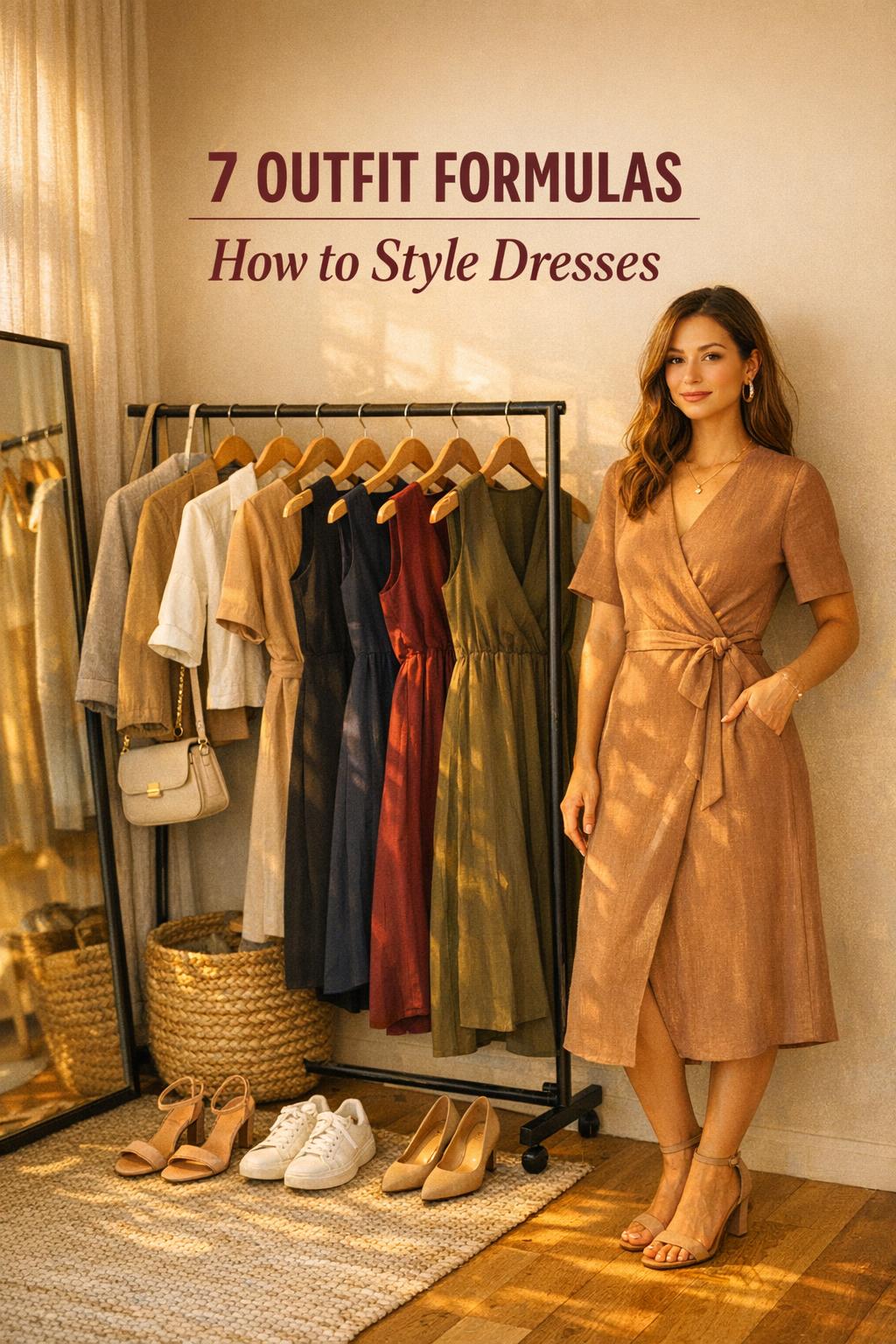
Dressing for the Occasion: Quick Formulas That Work
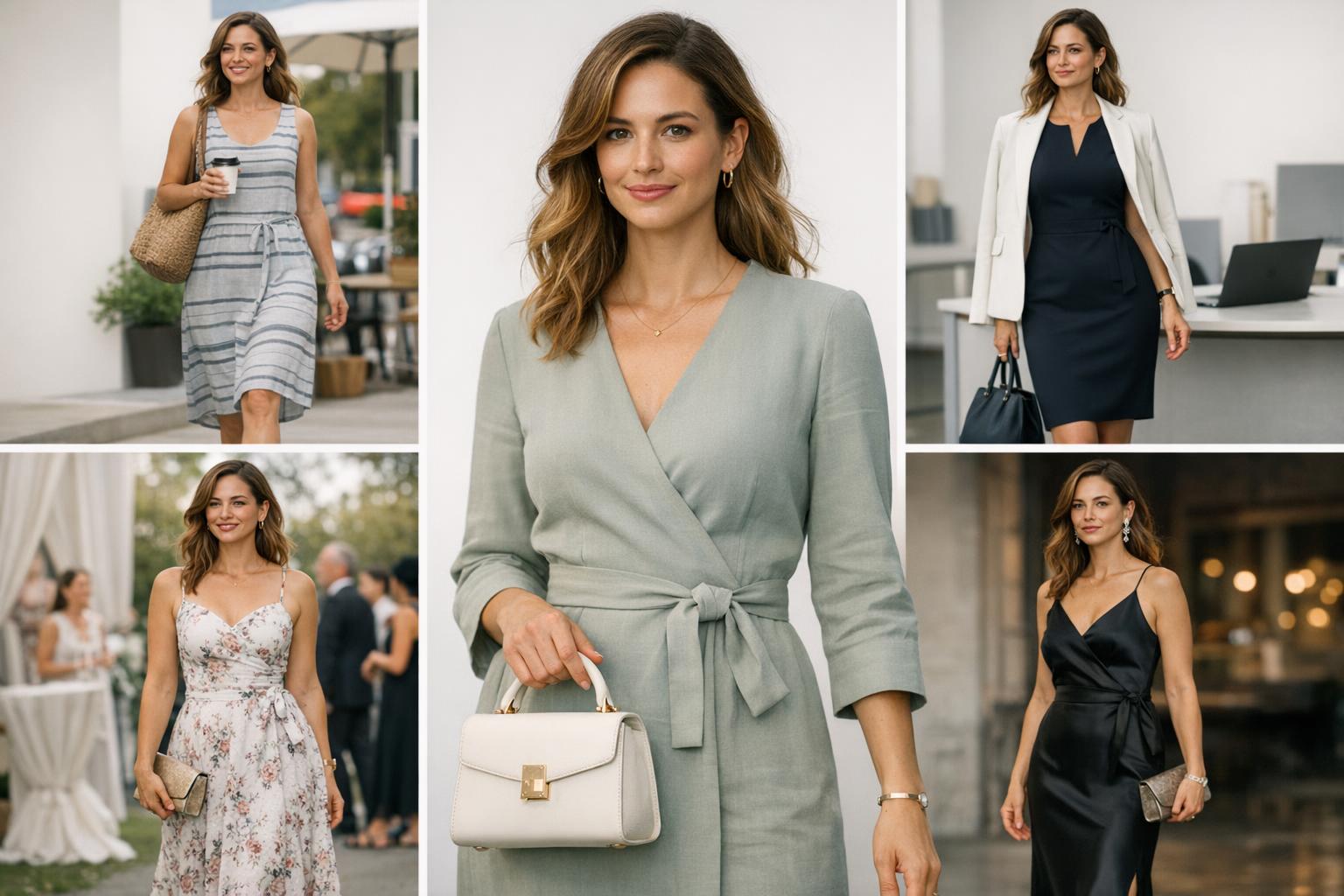
Most dress outfit ideas can be built from one of two moves: make it more relaxed (softer shoes, lighter layers, fewer accessories) or elevate it (more structure, more shine, more intentional finishing pieces). Use the formulas below as plug-and-play templates.
Casual day outfits
For casual dress outfits, aim for comfort and a touch of intention. A casual look usually succeeds when the styling feels effortless: practical shoes, a low-maintenance bag, and light outerwear that layers cleanly.
- Everyday formula: simple dress + comfortable shoes + crossbody or tote + light outerwear
- Relaxed balance: loose silhouette (shift or maxi) + minimal jewelry + practical bag
- Defined-casual: wrap or fit-and-flare + clean shoes + one standout accessory (not three)
Tip: If your dress already has a strong print or bold color, treat the rest of the outfit like a frame. Keeping shoes and bag in a “safe neutral” palette helps the dress look intentional rather than busy.
Work-ready looks
Office dress styling works best when you prioritize polish: clean lines, appropriate coverage for the setting, and accessories that complement without competing. Even a simple sheath or shift can look sharply professional with the right supporting pieces.
- Professional base: sheath or shift + structured outer layer + pared-back jewelry
- Smart balance: A-line + sleek shoes + structured bag
- Quietly elevated: wrap dress + refined accessories that repeat the dress’s tone
Tip: When in doubt, choose one “lead” element. If your dress has a standout neckline or strong pattern, keep your jewelry understated and let your outerwear and bag provide structure.
Evening and formal events
Evening dress styling is about elevation through finishing choices. You don’t necessarily need a different dress—you need a more formal set of shoes, jewelry, and bag. Small upgrades can shift a look from day to night quickly.
- Evening formula: dress + more refined shoes + more intentional jewelry + smaller bag
- Streamlined glam: sheath + sleek accessories + minimal outerwear that doesn’t break the line
- Movement and drama: fit-and-flare or maxi + a single standout accessory moment
Tip: Avoid “over-styling” by choosing either statement jewelry or statement shoes—not both. A clean hierarchy (one focal point) reads more expensive and more confident.
Special occasions: wedding guest and date night
Special occasions often have unspoken expectations: wedding guest dress styling should feel celebratory and appropriate, while date night dress ideas usually benefit from a bit more personality. In both cases, aim for a look that feels “finished” with coordinated accessories and a clear mood.
If you’re styling dresses for a wedding, focus on polish: coordinated shoes and bag, jewelry that complements the neckline, and a layer that looks intentional in photos. For date night, you can lean more into one bold choice—color, accessories, or silhouette—while keeping everything else clean.
Styling by Body Type: Practical Outfit Formulas
Body type dress styling is most helpful when it gives you starting points rather than strict rules. Use these formulas as a way to decide where to add structure, where to keep things easy, and how to build balance with shoes, accessories, and light outerwear.
Inverted triangle: emphasize balance through the lower half
If your shoulders or upper body feel more prominent, consider silhouettes that create a balanced outline. A-line and fit-and-flare shapes can help create a sense of proportion by adding gentle volume below the waist, while accessories can stay more streamlined near the neckline.
Tip: When the dress has a stronger top detail, keep bags and jewelry quieter and let the silhouette do the balancing work.
Pear: highlight the waist and support the top
If your hips feel more prominent, dresses that define the waist—like wrap or fit-and-flare—can create a clear shape. Styling can focus on drawing attention upward in a subtle way, such as choosing accessories that complement the neckline without adding visual clutter.
Apple: prioritize comfort and clean lines through the torso
If you prefer less emphasis through the midsection, consider shift dresses or silhouettes that skim rather than cling. A polished outer layer can add structure, while footwear and accessories can direct the eye through the full outfit instead of concentrating attention in one area.
Hourglass: keep waist definition intentional
If your waist is a natural focal point, wrap and sheath styles can feel especially straightforward to style. Because the silhouette already creates definition, you can keep additional elements coordinated and avoid adding too many competing details.
Rectangle: create shape with silhouette or styling choices
If your shoulders, waist, and hips feel more aligned, you can create a sense of shape with fit-and-flare, wrap styles, or thoughtfully structured layers. Accessories can also add interest—just keep them coordinated so the outfit still looks cohesive.
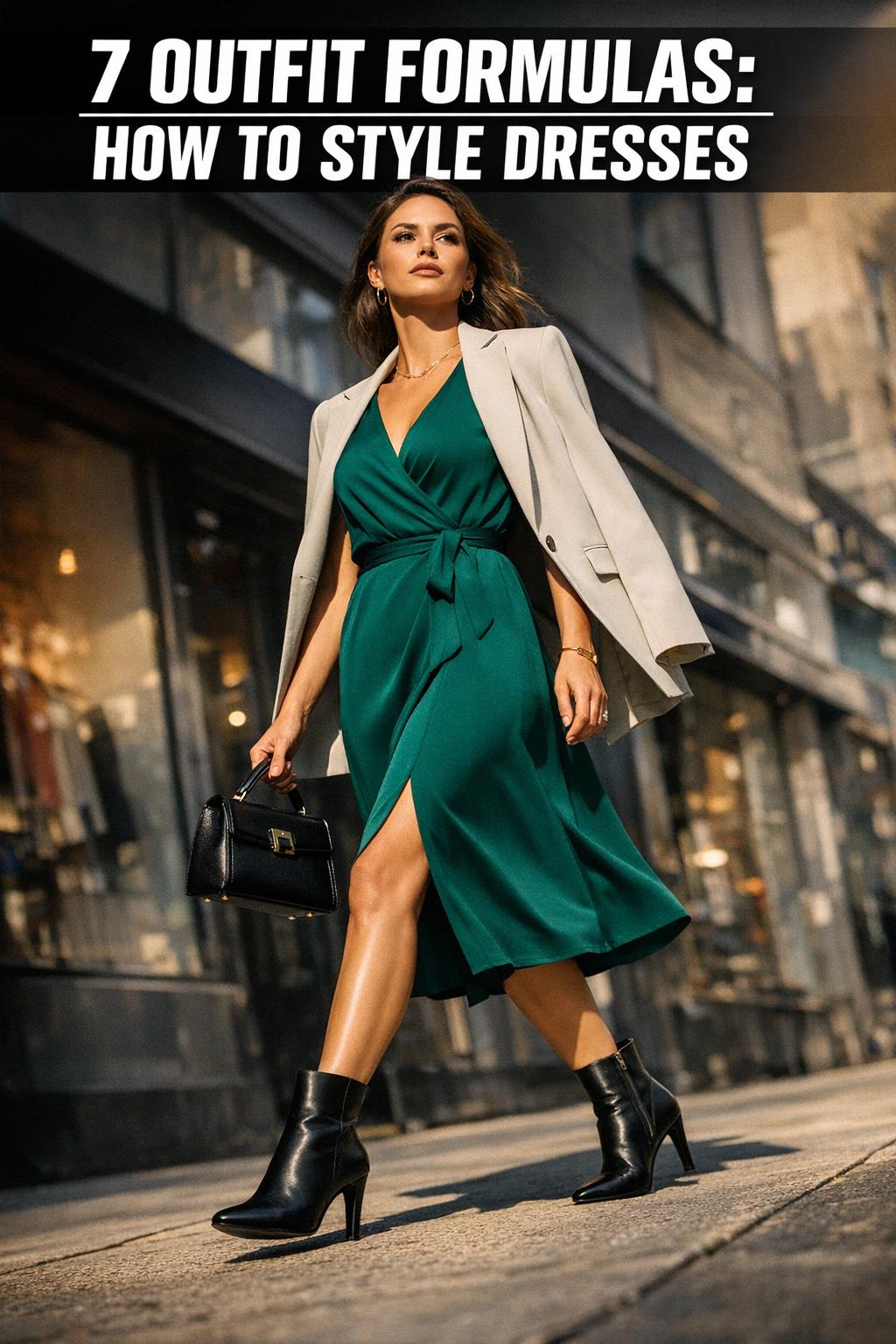
Footwear, Accessories, and Outerwear That Complete the Look
The “finished” look of a dress outfit usually comes from the items around it: shoes set the tone, jewelry sets the focus, the bag sets the practicality level, and outerwear sets the silhouette when you’re moving through real life. The most reliable approach is to choose one anchor (shoes or bag) and let the rest support.
Shoes to pair with each silhouette
When people ask “best shoes to wear with a dress,” they’re often really asking how to keep proportions consistent. Sleeker silhouettes tend to pair naturally with more refined shoes, while fuller skirts can handle more visual weight. With maxi dresses, the shoe choice affects the overall line more than you think—especially when the hem is long.
- Sheath: choose shoes that feel equally streamlined and polished
- A-line: works with many shoe shapes; match the mood (casual vs. elevated)
- Shift: can go relaxed or sharp depending on how you want to style the simplicity
- Wrap and fit-and-flare: let the waist definition lead; keep shoe choice coordinated
- Maxi: aim for a shoe that supports an elongated look and doesn’t fight the hemline
Tip: If your outfit feels slightly “off,” swap the shoes before changing the entire look. One shoe change can move a dress from casual day to evening-ready faster than adding multiple accessories.
Jewelry and bags that complement without competing
Jewelry for dresses works best when it respects the dress’s neckline and pattern. If your dress is minimal, you have room for a stronger accessory moment. If your dress is already bold (print, bright color, dramatic shape), pick accessories that reinforce the direction rather than introduce a new one.
A reliable strategy is to decide what should get the attention first: the dress, your face, or your shoes. Then choose jewelry and a bag that support that priority. This prevents the common “everything is shouting” effect.
Light outerwear for layered looks
Outerwear can make or break your proportions. Light layers are especially important for office dress styling, wedding guest settings, and transitional weather. The easiest way to keep the outfit coherent is to choose outerwear that matches the dress’s level of structure: refined layers for sleek dresses, softer layers for relaxed silhouettes.
Tip: Pay attention to where your outerwear ends. The length of the layer changes the “visual breaks” of the outfit, which can affect how the dress reads overall.
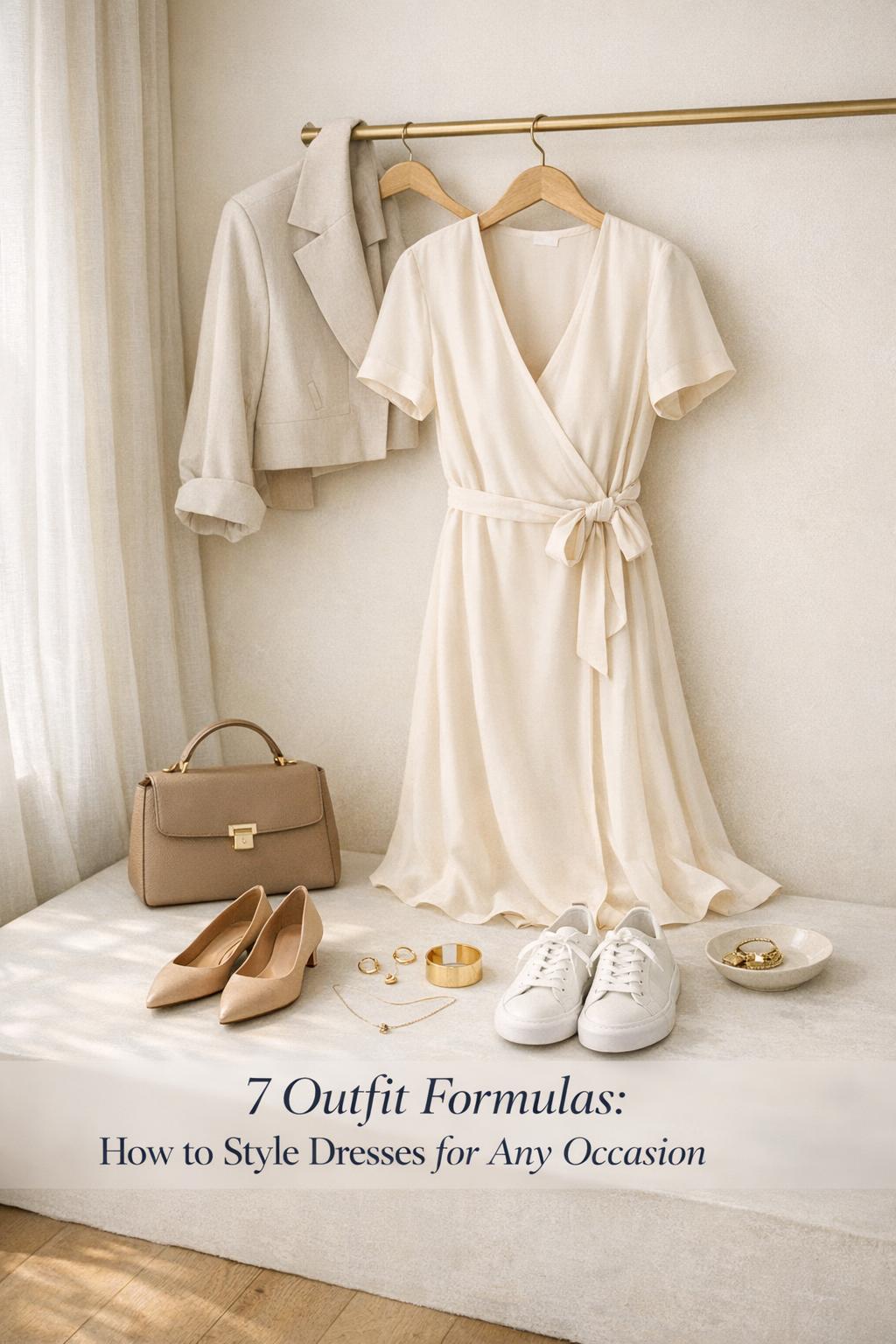
Color Theory and Pattern Pairings for Dresses
Color coordination with dresses doesn’t need to be complicated. Most outfits look cohesive when you choose either a calm, neutral framing (especially with bold dresses) or a deliberate, repeated color story (especially when you’re elevating a simple dress). With patterns, the goal is clarity: let the print be the message and keep everything else supportive.
Safe neutrals vs. bold colors
Neutrals are often the easiest way to keep dress color matching simple. They reduce the number of decisions and can help a bright or patterned dress feel grounded. Bold colors can work beautifully, too—especially when the rest of the outfit repeats or echoes the dress’s tone rather than competing with it.
Tip: If you’re unsure whether the look is cohesive, repeat one element intentionally (a similar tone in shoes, bag, or jewelry) and keep the rest restrained.
Mixing prints with solid colors
Prints and patterns already bring visual energy, so pairing them with solid colors is often the simplest, most effective move. If you want a fashion-forward look, keep the “statement” limited to one area—either the dress pattern or a bold accessory—so the outfit still reads clean in photos and in motion.
Tips for printed dresses: Choose solid accessories that pull from one color in the print, keep outerwear quieter than the dress, and avoid stacking multiple attention-grabbing pieces at once.
Fabric considerations: breathability, drape, and seasonality
Fabric affects how a dress hangs (drape), how formal it feels, and how well it layers. A dress that moves easily can feel more relaxed, while a structured fabric often reads more polished. Seasonality matters too: some dresses layer cleanly under outerwear, while others look best as the main focus with minimal layering.
Tip: Before building the full look, check the dress in motion. If it pulls, bunches, or twists with your chosen layer or bag strap, simplify—small friction points can make a styled outfit feel uncomfortable all day.
Wardrobe Essentials: Building a Dress Capsule That Multiplies Looks
A capsule wardrobe approach to dresses means fewer dresses, more outfits. Instead of collecting single-use pieces, choose a small mix of silhouettes that can move between casual, work, and special occasions through styling changes. The payoff is consistency: you know what works, you can pack more easily, and you get more wear from each piece.
- A polished, streamlined option (often a sheath or clean shift) for work-ready looks
- A versatile day-to-evening option (wrap or A-line) that adapts with accessories
- A dress with movement (fit-and-flare or maxi) for events and elevated days
- A “simple base” dress that can take bold accessories when you want more personality
Tip: When you find a dress that truly works for you, build multiple outfit ideas with it on purpose. Style it once for everyday, once for work, once for evening, and once for a special occasion. The dress becomes a reliable tool rather than a single look.
Practical Tips, Hacks, and Common Mistakes to Avoid
Most dress styling problems aren’t about the dress—they’re about finishing details. The fix is usually simpler than it seems: adjust proportion, reduce competing elements, or make one deliberate upgrade (shoes, bag, jewelry, or outerwear). Use the tips below to troubleshoot quickly.
Quick fixes for imperfect fits
When a dress fit isn’t ideal, styling can still improve the overall look by restoring clean lines and comfort. A structured outer layer can create shape, and a more intentional shoe can shift the outfit from “almost” to “complete.” The key is avoiding fussy additions that call attention to the issue.
Tip: If you feel like you keep adjusting your outfit throughout the day, simplify. Comfort is part of polish, and a confident outfit is one you can forget you’re wearing.
How to prevent outfits from looking “over-styled”
Over-styling often happens when too many items compete for attention: bold shoes, bold jewelry, bold bag, plus a bold print. Pick a focal point and keep everything else supportive. This approach makes even “dressy” outfits look clean and intentional.
- Choose one statement: dress, shoes, or jewelry
- Repeat one tone or metal to keep the look cohesive
- Keep outerwear simpler than the dress when the dress is the star
Tip: If you’re unsure, remove one accessory. You’ll almost never regret simplifying, but you’ll often regret adding one more “extra” piece.
Dress-to-day, dress-to-night: small swaps that matter
One of the most practical styling skills is knowing how to change the tone without changing the dress. The simplest method is to swap two elements: shoes and bag, or shoes and jewelry. This keeps your look cohesive while clearly shifting the occasion level.
Tip: When you want a bigger impact, keep your dress and outerwear the same and change only the accessories. This is especially useful for travel and for building a dress capsule that multiplies looks.
Gallery: 24 Outfit Formulas You Can Copy Today
These outfit ideas with dresses are written as quick formulas you can apply to what you already own. Use them as a starting point, then adjust based on your dress silhouette, the occasion, and the level of structure you prefer.
- Shift dress + comfortable shoes + crossbody bag + light outerwear
- Shift dress + structured outer layer + refined shoes + minimal jewelry
- Shift dress + sleek shoes + small bag + a single standout accessory
- Sheath dress + structured bag + polished shoes + understated jewelry
- Sheath dress + light outerwear with clean lines + refined accessories
- Sheath dress + elevated shoes + smaller bag + simple, intentional jewelry
- A-line dress + practical shoes + tote + light layer
- A-line dress + refined shoes + structured bag + subtle jewelry
- A-line dress + evening shoes + small bag + statement earrings (or statement necklace)
- Wrap dress + simple jewelry + coordinated bag + shoes that match the mood
- Wrap dress + refined accessories + light outerwear for a polished finish
- Wrap dress + evening accessories + smaller bag for a date-night feel
- Fit-and-flare dress + casual shoes + simple bag + minimal jewelry
- Fit-and-flare dress + work-ready accessories + structured outer layer
- Fit-and-flare dress + elevated shoes + one statement accessory for events
- Maxi dress + comfortable shoes + minimal accessories + practical bag
- Maxi dress + refined accessories + light outerwear that supports the long line
- Maxi dress + evening shoes + small bag + simple, polished jewelry
- Floral dress for summer + neutral accessories + light outerwear option
- Black dress for office + structured bag + refined shoes + minimal jewelry
- Wedding guest dress + coordinated shoes + small bag + balanced jewelry
- Date night dress + one bold element (color or accessory) + clean supporting pieces
- Simple dress + bold jewelry + quiet shoes and bag to keep focus on the statement
- Bold dress + neutral shoes and bag + minimal jewelry to keep the look balanced
Tip: If you’re building your own “go-to” list, save three formulas for each main life scenario: everyday, work, special occasion, and evening. That alone can cover most styling needs without adding more dresses.
Internal and External Resources
If you want to keep improving your results, focus on resources that deepen the same core skills: understanding your preferred silhouettes, building a small dress capsule, and getting more confident with color coordination and pattern pairings. It also helps to look at credible fashion lookbooks and styling guides for visual inspiration and outfit formulas you can recreate with your own closet.
FAQ
What shoes go best with a midi dress?
The best shoes with a midi dress are the ones that support the proportions and the occasion: streamlined shoes tend to look polished with sleeker midis, while more relaxed choices fit casual day styling. If the outfit feels off, change the shoes first—this swap usually has the biggest impact on the overall line.
How to style dresses for a wedding as a guest?
For wedding guest dress styling, aim for a celebratory but appropriate look by coordinating shoes and a smaller bag, then choosing jewelry that complements the neckline without competing with it. Finish with a light outer layer that looks intentional in photos and keeps the silhouette clean.
How do I style a black dress for the office?
To style a black dress for office settings, keep the look polished with a structured bag, refined shoes, and minimal jewelry, then add a clean-lined outer layer to reinforce professionalism. If you want a more elevated effect, choose one intentional accessory detail and keep everything else understated.
How can I style a floral dress for summer without looking overdone?
Use the floral print as the statement and frame it with solid, neutral accessories so the outfit feels balanced rather than busy. Keep jewelry simple, choose a practical bag for daytime, and avoid adding multiple bold elements that compete with the print.
How to style dresses by body type without following strict rules?
Think in terms of outfit goals instead of rules: decide whether you want more waist definition, more structure, or more ease, then choose a silhouette and finishing pieces that support that goal. Use simple formulas—like wrap for waist emphasis or shift for clean ease—and adjust accessories so the outfit has one clear focal point.
How to style a maxi dress with heels?
With a maxi dress, heels can help maintain an elongated line, but the key is keeping the overall look cohesive: choose refined accessories and outerwear that doesn’t cut the outfit awkwardly. If the dress already feels dramatic, keep jewelry and the bag simpler so the length stays the main statement.
Can I style a dress for winter?
Yes—winter dress styling is mainly about layering in a way that preserves the dress silhouette. Choose outerwear that matches the dress’s level of structure and pay attention to where the layer ends, since that length changes the outfit’s proportions and how “clean” the final look appears.
How should petites style dresses?
Petite dress styling often looks best when the outfit maintains clear proportions and avoids too many visual breaks. Focus on a cohesive line by coordinating shoes and outerwear with the dress silhouette, and keep accessories intentional so the overall look stays streamlined rather than busy.