Vintage Capsule Wardrobe for a Modern, Polished Closet
A vintage capsule wardrobe sits at the intersection of two fashion ideas that are often discussed together but not always understood as the same thing: the streamlined logic of a capsule wardrobe and the character-rich appeal of vintage clothing. In practice, that creates an interesting comparison. Some wardrobes prioritize strict minimalism with modern basics, while others lean into vintage-inspired style with retro silhouettes, second-hand sourcing, and more visible personality.
The overlap is why the categories are frequently confused. A timeless wardrobe, an evergreen wardrobe, a minimal wardrobe, a second-hand capsule, and a vintage-inspired capsule wardrobe can all share similar goals: fewer pieces, stronger outfit formulas, and less dependence on seasonal fashion cycles. The distinction lies in silhouette, sourcing, texture, and styling philosophy.
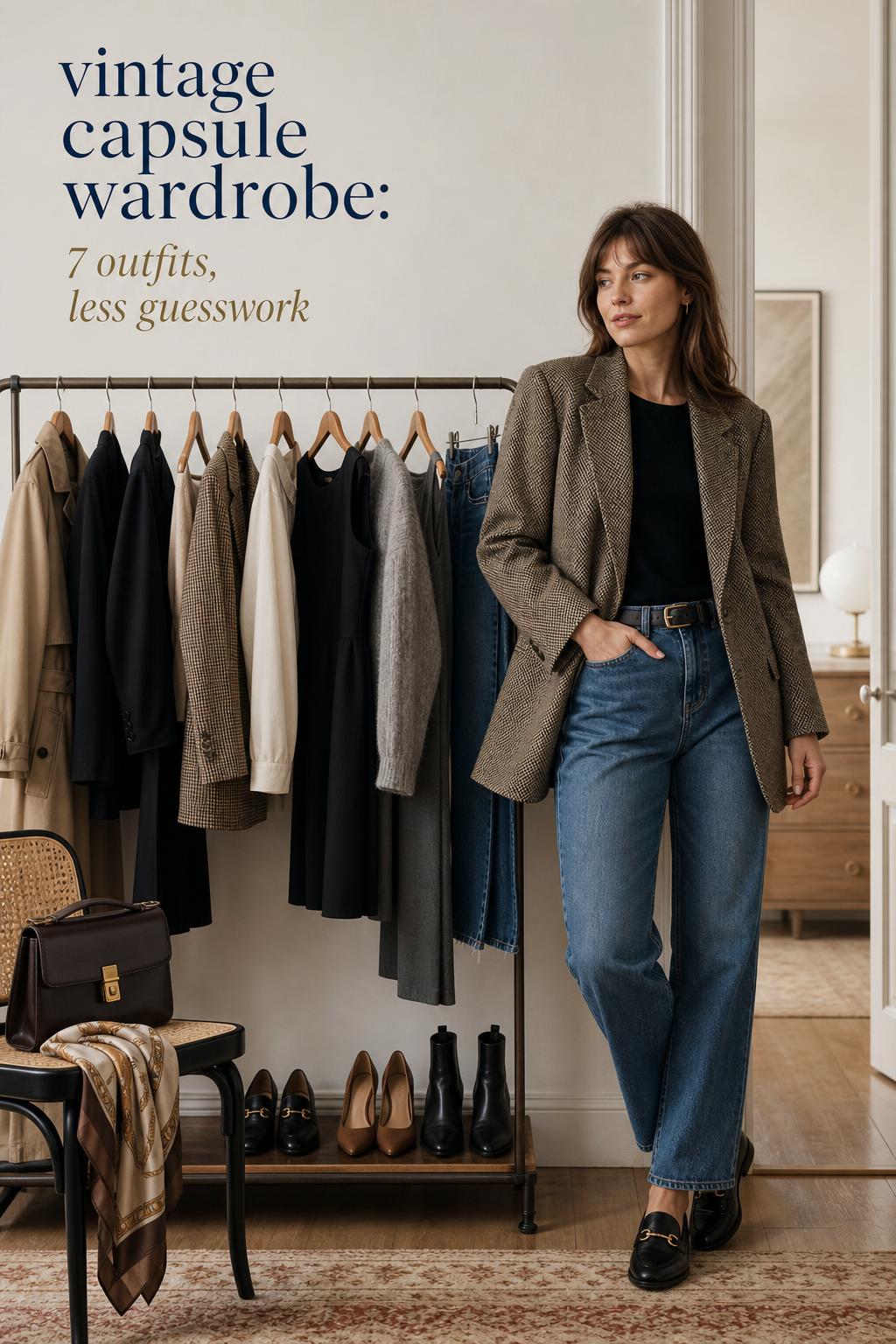
This comparison breaks down how a vintage capsule wardrobe differs from a modern capsule wardrobe, where they overlap, and how each approach functions across everyday wear, work, travel, and seasonal transitions. It also shows how to mix old and new with more precision, so your wardrobe feels curated rather than costume-like or overly plain.
Two wardrobe systems that look similar from a distance
At a glance, both a vintage capsule wardrobe and a modern capsule wardrobe appear disciplined. Both rely on repeatable combinations, practical layering, and timeless pieces rather than constant trend rotation. Both also connect naturally to sustainable fashion, especially when they reduce overbuying and encourage longer wear.
Found the dress? Keep the rest in one place.
Zarellea brings guest details, vendors, timelines, and every next step together — so your wedding plan feels as good as your look.
Yet the visual outcome is different. A modern capsule wardrobe often favors clean lines, neutral knitwear, tailored trousers, classic outerwear, and trend-agnostic staples. A vintage capsule wardrobe may use the same structural logic, but it introduces era-specific silhouettes, pre-loved garments, stronger fabric character, and details that feel rooted in another decade. That shift changes the mood, the styling rhythm, and even how outfit balance is built.
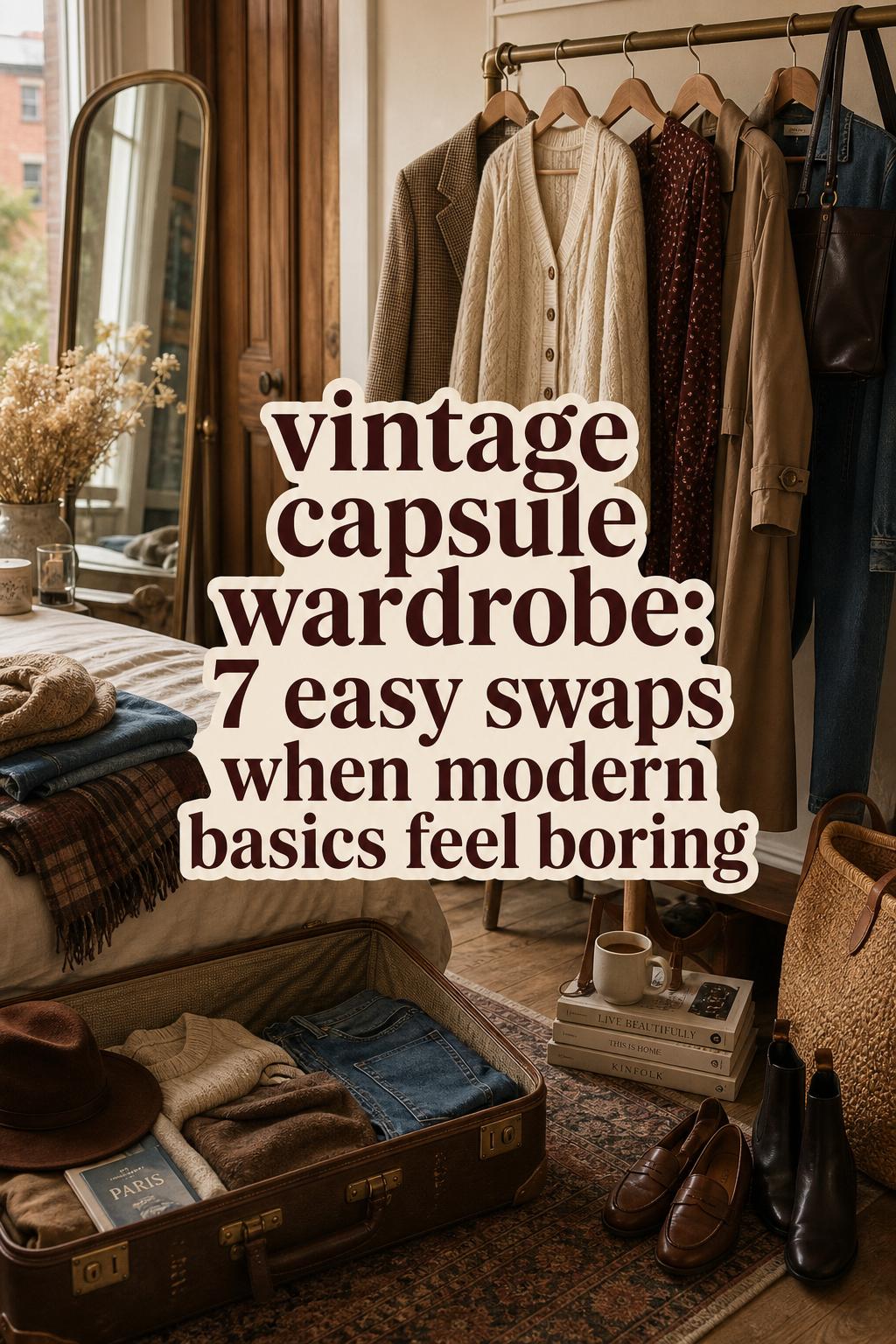
Style overview: vintage capsule wardrobe
A vintage capsule wardrobe is a compact, mix-and-match wardrobe built around vintage or vintage-inspired pieces, often supported by modern basics. Its defining characteristics are individuality, durable construction, and a stronger relationship to silhouette history. The overall goal is not just minimalism, but curated continuity: fewer pieces that still carry visual identity.
Typical silhouettes vary by era. 1940s and 1950s tailoring staples introduce structure through suits, pencil skirts, and jackets. 1960s and 1970s dress silhouettes bring mod sheath dresses and A-line skirts into the mix. 1980s and 1990s statement layers often show up through blazers, cardigans, and denim integrators. The color palette can still be neutral, but texture and cut usually do more of the expressive work.
Fabrics and textures matter more here than in many modern capsules. Vintage jackets, dresses, accessories, knitwear, straight-leg jeans, and tailored separates all function as visual anchors. The mood is timeless, but not anonymous. Even when the wardrobe is restrained, the pieces rarely disappear into the background.
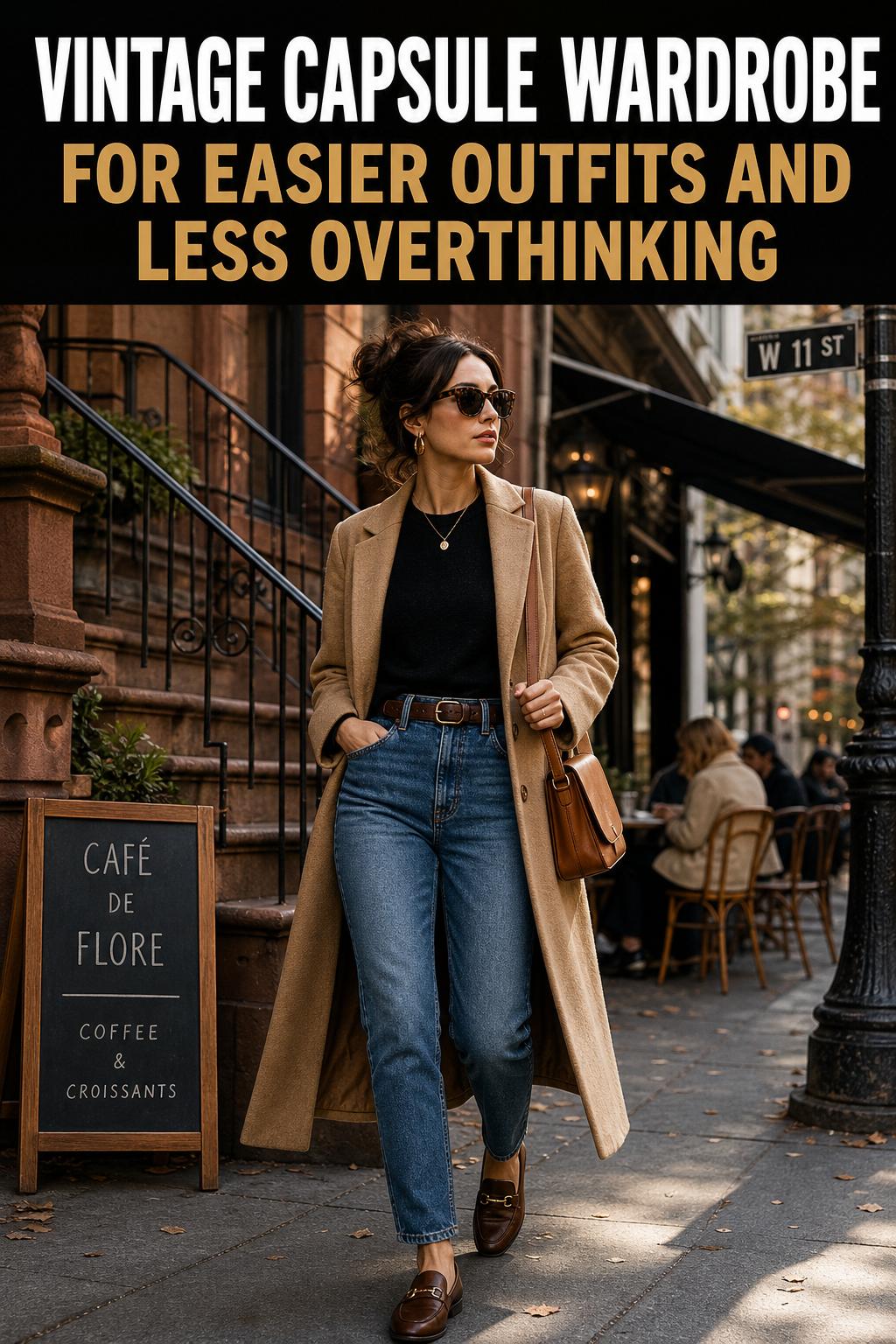
Style overview: modern capsule wardrobe
A modern capsule wardrobe is usually built around streamlined essentials selected for flexibility, ease, and consistency across seasons. The focus is often anti-trend in a contemporary sense: classic pieces that are simple to style, easy to replace, and compatible with multiple settings.
Its core silhouettes tend to be cleaner and less era-specific. Neutral knitwear, tailored trousers, straight-leg jeans, classic outerwear, and understated footwear create a polished baseline. Brands sometimes enter this conversation through staple categories, as seen with examples such as AGOLDE for denim or Joe Browns when the look shifts toward vintage-inspired retail styling.
The color palette is usually narrower, the styling more restrained, and the visual message more immediate. The mood is efficient, polished, and adaptable. It is a wardrobe system designed to reduce decision fatigue first, with personality often added through subtle accessories or seasonal styling rather than through provenance or retro cut.
Where the line actually falls: the core differences
Silhouette and structure
The clearest difference is silhouette. A modern capsule typically minimizes shape complexity. A vintage capsule uses shape as a defining tool. A pencil skirt from a 1940s-1950s tailoring mindset creates a different line from modern tailored trousers. A mod sheath dress changes body proportion differently than a minimal contemporary slip-style piece. Even when both wardrobes use the same number of items, the vintage version often has stronger structure and more deliberate proportion play.
Color palette and texture contrast
Modern capsules often rely on tonal layering with a disciplined palette. Vintage capsules can do the same, but they usually feel richer because texture contrast is more visible. A vintage jacket, heritage-feeling cardigan, or pre-loved accessory introduces depth without requiring a louder color story. This is one reason vintage-inspired outfits can feel visually complete even when the palette remains restrained.
Formality level
A vintage capsule wardrobe often reads more dressed, even in casual contexts. Tailoring details, structured blazers, dresses, and accessories can raise the formality level automatically. A modern capsule wardrobe is more likely to flatten those distinctions, making work, weekend, and travel outfits feel close in tone. Neither approach is better; the choice depends on whether you want visual ease or stronger stylistic identity.
Sourcing philosophy
Sourcing is central to the comparison. A modern capsule is often built through straightforward retail selection. A vintage capsule usually depends on thrift stores, charity shops, vintage boutiques, second-hand markets, vintage fairs, auctions, or online marketplaces. That creates more uniqueness, but also more variables around fit, condition, and consistency. The sourcing process itself becomes part of the wardrobe method.
Wardrobe personality
A modern capsule tends to prioritize neutrality of expression. A vintage capsule prioritizes edited individuality. Even when both wardrobes are highly functional, the vintage version usually communicates a point of view more clearly. This is especially visible in 90s vintage capsule wardrobe styling, where authentic pieces can anchor a look far more strongly than modern reproductions.
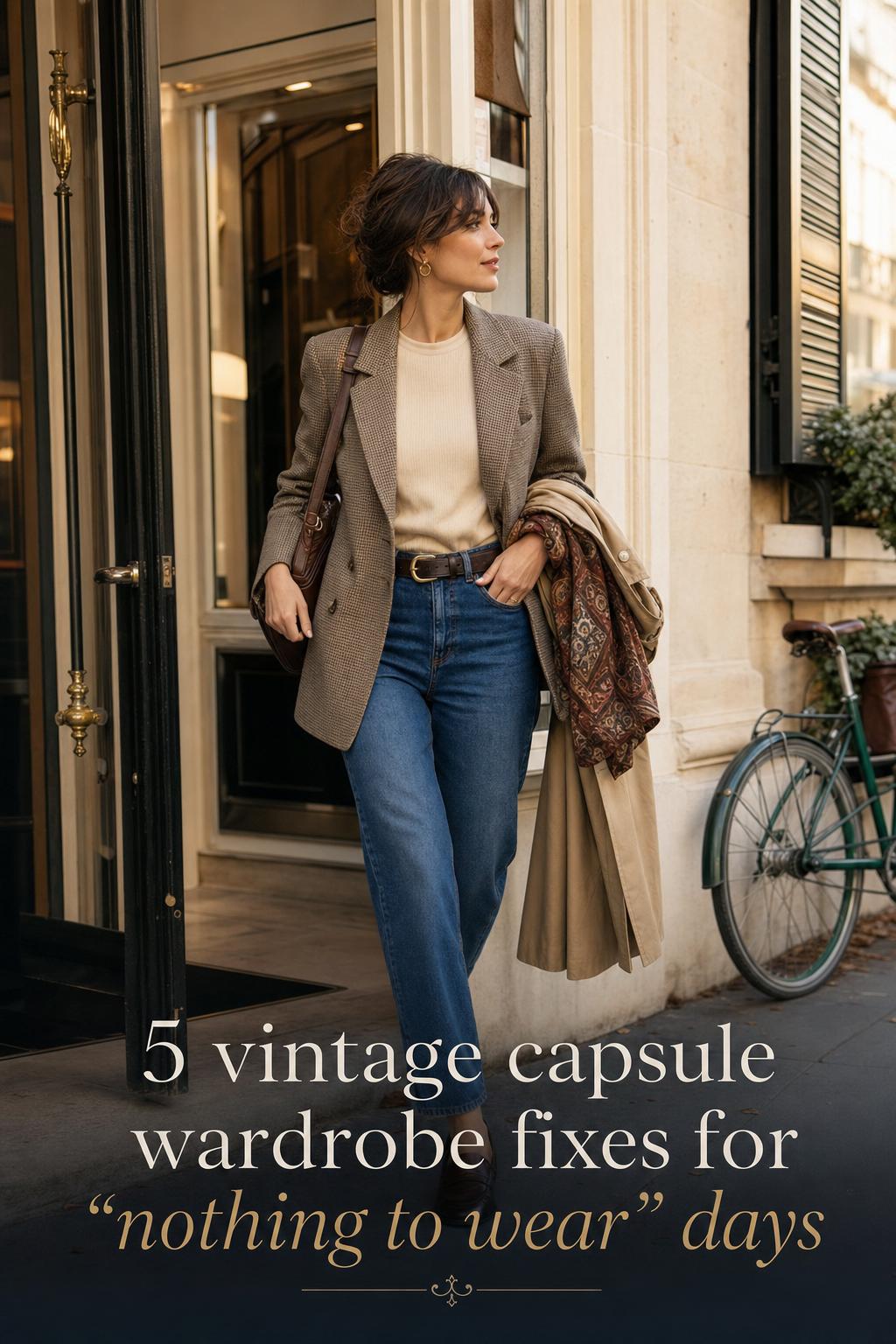
Vintage by era versus modern by category
One of the most useful ways to understand the difference is to compare how each wardrobe is organized mentally. Modern capsule dressing is often category-led: one coat, two trousers, a few knits, reliable shoes. Vintage capsule dressing is often era-led: which silhouettes from the 1940s, 1950s, 1960s, 1970s, 1980s, or 1990s create the right base for your life now?
- 1940s-1950s tailoring staples emphasize suits, pencil skirts, and structured jackets.
- 1960s-1970s dress silhouettes bring mod sheath dresses and A-line skirts into sharper focus.
- 1980s-1990s statement layers rely on blazers, cardigans, and denim as outfit integrators.
- Modern capsule building starts less with decade identity and more with practical staple categories.
This difference affects shopping decisions. In a modern capsule, a blazer is just a blazer if it fits the wardrobe palette. In a vintage capsule wardrobe, the blazer’s cut, decade feel, and interaction with dresses, trousers, or straight-leg jeans matter much more. The same item category carries more styling information.
How they differ visually in daily outfits
Layering approach
Modern capsules usually build layering through clean function: knitwear under outerwear, straightforward coat shapes, and minimal visual interruption. A vintage capsule often layers with more intention around shape and texture. A cardigan may be chosen not just for warmth, but because it softens the line of a pencil skirt or adds contrast against a more structured jacket. The outfit composition becomes more architectural.
Garment proportions
Garment proportions tell the story quickly. Modern capsules typically favor consistency: straight-leg jeans with a neat knit, tailored trousers with classic outerwear. Vintage capsules use stronger shifts in volume and line. An A-line skirt creates movement where tailored trousers create control. A blazer from a 90s vintage lens changes shoulder emphasis and makes the entire outfit feel more directional.
Accessories as visual anchors
In modern capsule styling, accessories often stay quiet to preserve clarity. In vintage styling, accessories can become the bridge between decades and modern wearability. Vintage accessories, designer pieces, and carefully chosen shoes often ground the look so the outfit feels intentional rather than theatrical. This is where the crossover seen in mixes of vintage and designer pieces becomes especially effective.
Footwear choices
Footwear in a modern capsule usually supports versatility first. In a vintage capsule, shoes and accessories do more balancing work. They can either amplify a period mood or neutralize it. This is why the same dress can read fully retro with one shoe choice and simply timeless with another. The footwear decision often determines whether the styling feels costume-adjacent or everyday-ready.
Outfit comparisons that show the styling logic
Casual day outfit interpretation
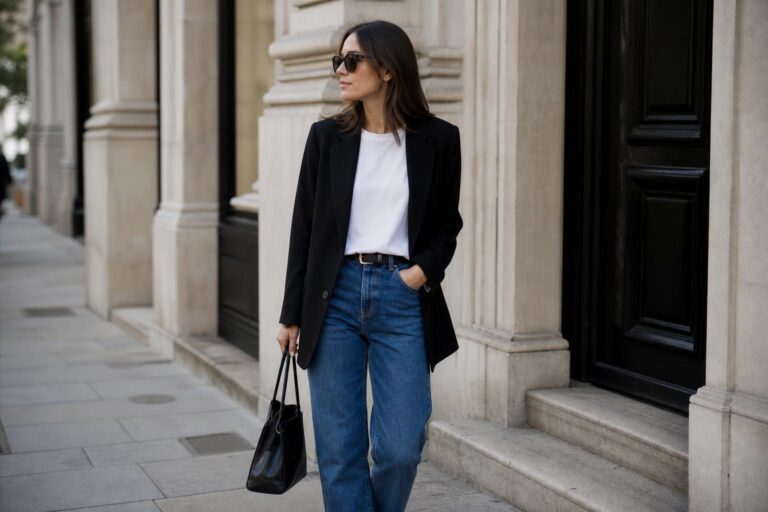
A modern capsule wardrobe handles a casual day through direct simplicity: straight-leg jeans, neutral knitwear, and classic outerwear. The outfit works because the silhouette balance is steady and there are no competing focal points. The result is clean, efficient, and easy to repeat.
A vintage capsule wardrobe approaches the same situation with more character. Straight-leg jeans may still appear, but they are more likely to be paired with a vintage jacket or cardigan that adds texture contrast and a stronger shape line. The styling logic is not about adding more pieces. It is about making one pre-loved or vintage-inspired item do more visual work.
Workwear interpretation
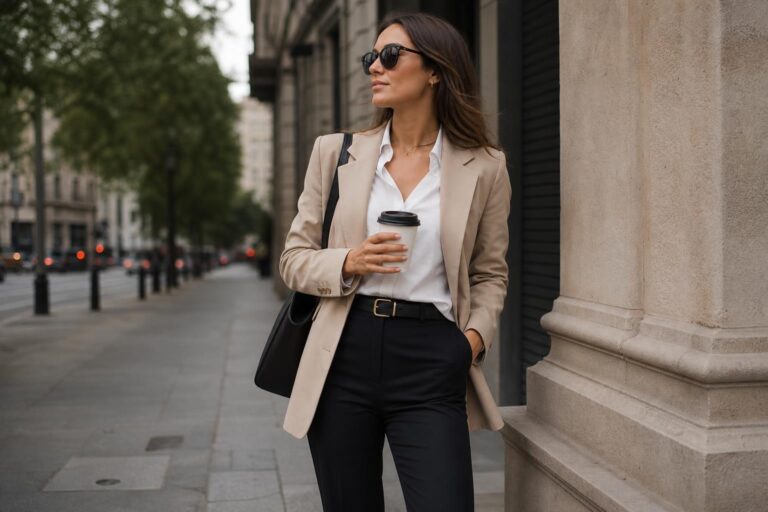
In a modern work capsule, tailored trousers and a blazer create instant polish. The palette tends to stay controlled, which helps the wardrobe function across multiple office days without feeling repetitive. The look is dependable and often better for highly standardized professional environments.
In a vintage capsule, workwear can lean on 1940s-1950s tailoring staples such as jackets and pencil skirts or on 1980s-1990s blazers that create a more expressive shoulder line. This approach often feels sharper and more distinctive, but it requires fit discipline. Tailoring matters more because a slightly off proportion is easier to notice when the silhouette itself is stronger.
Weekend outfit interpretation
A modern weekend outfit usually relaxes by reducing structure. A vintage weekend outfit often keeps the structure but softens the context. That might mean using denim integrators, an easy cardigan, or a simpler dress silhouette instead of full tailoring. The visual effect is still more intentional than minimalist, which suits readers who want personality without sacrificing practicality.
Evening outfit interpretation
Modern evening capsules tend to elevate through refinement and restraint. Vintage evening styling often elevates through silhouette memory. A dress with a clear era reference, paired with accessories that sharpen the line, creates a more memorable outfit composition. This is where mixing vintage with designer pieces can be especially effective, as the designer element adds polish while the vintage piece adds narrative depth.
Why vintage and vintage-inspired are not identical
Another useful comparison is between a true vintage capsule wardrobe and a vintage-inspired capsule wardrobe. They are related, but they are not interchangeable. A true vintage capsule is built around actual vintage or second-hand garments, often with concerns around provenance, authenticity, quality checks, and fabric preservation. A vintage-inspired capsule borrows the mood, silhouettes, and styling cues while relying more heavily on current retail pieces.
This distinction matters because it changes the wardrobe’s constraints. True vintage offers uniqueness and sustainability through pre-loved clothing, but fit can be inconsistent and sourcing takes more patience. Vintage-inspired dressing is easier to standardize, which is why brands and commerce-led content often frame the idea through curated staples rather than through garment hunting.
- Choose true vintage if individuality, second-hand value, and heritage feel are your priorities.
- Choose vintage-inspired if you want the visual mood with easier sizing and faster wardrobe building.
- Combine both if you want a practical wardrobe with one-of-a-kind anchors.
The role of sustainability in each approach
Sustainability appears in both wardrobe systems, but it carries more structural weight in a vintage capsule wardrobe. Second-hand, pre-loved, and thrifted fashion are not side benefits here; they are part of the method. A wardrobe built through charity shops, second-hand retailers, vintage boutiques, or online resale channels naturally aligns with waste reduction and circular fashion thinking.
That said, a modern capsule can also be responsible when it is genuinely limited, carefully used, and based on long-lasting pieces. The difference is that a vintage capsule embeds sustainability into sourcing as well as wearing. This is why so many discussions around vintage capsules also include decluttering, long-lasting quality, and the practical value of trimming a wardrobe down to pieces that earn repeat use.
The second-hand angle also changes budget logic. A wardrobe built through thrift shops or second-hand markets can create stronger individuality without requiring a large spend on every item. The trade-off is time. You may save money but spend longer sourcing the right jacket, dress, or pair of trousers.
Sourcing pathways: where the comparison becomes practical
The biggest real-world divide between a vintage capsule wardrobe and a modern one appears during acquisition. Modern capsules are usually straightforward to shop. Vintage capsules require a sourcing roadmap, and the quality of that roadmap determines whether the wardrobe feels cohesive or random.
Second-hand channels that support a vintage capsule
- Thrift stores for broad experimentation and unexpected staple finds
- Charity shops and second-hand retailers, including references such as Oxfam in second-hand capsule discussions
- Vintage boutiques for stronger curation and clearer era identity
- Vintage fairs and markets for concentrated sourcing
- Auctions and online marketplaces when you need more specific silhouettes or designer pieces
These channels do not offer the same experience. Thrift and charity shopping are useful for budget-conscious wardrobe building and for testing silhouettes. Vintage boutiques tend to be better for precision. Auctions and online marketplaces can help when you want a specific category, such as a blazer, dress, or designer-linked item, but they demand more confidence around quality checks.
Quality checks that matter more in vintage than in modern basics
When building a second-hand capsule wardrobe, quality is not just about appearance. Condition, fabric behavior, and alterability all affect whether a piece deserves space in a limited wardrobe. A visually striking piece that cannot be layered well, cleaned reliably, or tailored for repeated wear is usually a poor capsule investment.
Tip: before buying a vintage item, judge it against at least three wardrobe relationships. Ask whether it works with your knitwear, your preferred outerwear, and your existing shoes and accessories. If the answer is uncertain, it may be a beautiful standalone piece but not a strong capsule component.
Fit, alterations, and why they matter more with vintage
Capsule wardrobes depend on repeatability. For that reason, fit is not a minor issue in vintage dressing; it is one of the central filters. Modern basics are easier to replace in a consistent size run. Vintage pieces often require tailoring or at least strategic adjustment in styling. That makes alterations part of the wardrobe logic rather than a rescue measure.
A modern capsule can survive with near-perfect off-the-rack staples. A vintage capsule wardrobe often becomes more cohesive after selective tailoring, especially with jackets, dresses, and skirts. The point is not to erase the original character of the piece. It is to align the garment’s line with your current proportions so the outfit composition stays intentional.
Tip: prioritize alterations for your most repeated visual anchors. A blazer, jacket, or structured dress that appears often has a greater impact on wardrobe polish than a niche statement item that only comes out occasionally.
Seasonal transitions: where a vintage capsule can outperform
Seasonality is one of the strongest arguments for building a vintage capsule wardrobe with care. Many guides emphasize every-season flexibility, and that matters because layering and fabric behavior decide whether a capsule feels realistic. Vintage wardrobes can perform especially well in transitional weather because jackets, cardigans, dresses, and separates often create stronger layering combinations than a purely minimal wardrobe.
A modern capsule may feel cleaner in peak summer or deep winter because the formula is simple. A vintage capsule often excels in the in-between months, when texture contrast and silhouette variation can do more styling work. A jacket over a dress, or knitwear balanced against a structured skirt, creates useful adaptability without needing a large number of garments.
This is also where London- and UK-centered vintage styling references remain relevant for U.S. readers. Seasonal layering, fabric considerations, and wardrobe auditing are not region-specific in principle, even if shopping channels differ by location.
A context-specific comparison: building for city thrifting versus direct retail shopping
This is the point where wardrobe theory meets actual schedule. Someone building a capsule in a city with active thrift routes, vintage boutiques, fairs, and second-hand markets can create a richer vintage wardrobe more efficiently than someone relying mostly on direct retail or limited online searches. The difference is not just access. It changes how selective you can afford to be.
In a direct retail model, the modern capsule usually wins on speed and consistency. In a city-thrifting model, the vintage capsule can become more compelling because sourcing itself uncovers category strength: a better blazer, a more distinctive dress, a cardigan with more texture, or accessories that make the whole wardrobe feel less generic. That is one reason cross-cultural vintage capsule perspectives, from the UK to Washington DC media framing, often emphasize local shopping ecosystems alongside styling advice.
Common mistakes when comparing or building these wardrobes
- Assuming fewer pieces automatically create a capsule. Without mix-and-match logic, a small wardrobe is just a small wardrobe.
- Confusing vintage styling with costume dressing. A strong era reference needs grounding through modern basics, footwear, or accessories.
- Buying vintage for novelty instead of repeat use. Capsule pieces need outfit range.
- Over-simplifying modern capsules into blandness. Clean dressing still needs proportion, texture, and visual anchors.
- Ignoring tailoring. In both systems, but especially in vintage, fit determines whether a wardrobe looks curated or accidental.
The most common mistake is treating the wardrobe concept as an aesthetic first and a system second. The strongest capsules, whether modern or vintage-inspired, are built around realistic repetition: workdays, weekends, travel, and transitional weather. The clothes should support those situations with minimal friction.
When to choose a vintage capsule wardrobe
A vintage capsule wardrobe makes the most sense when you want individuality, enjoy second-hand sourcing, and are willing to spend more time evaluating silhouette, condition, and fit. It is especially effective for readers who feel underwhelmed by purely modern basics and want a wardrobe that remains compact without looking visually anonymous.
- Choose it for everyday wear if you want distinctive outfit formulas with fewer pieces.
- Choose it for work if your environment allows stronger tailoring or dress-based styling.
- Choose it for travel if your capsule is already tested and built around reliable layering.
- Choose it for polished casual settings when you want more presence than a minimal wardrobe usually offers.
This approach also suits anyone already drawn to 90s vintage, designer-vintage mixing, or seasonally layered wardrobes that depend on jackets, cardigans, and dresses more than on interchangeable basics alone.
When a modern capsule wardrobe may be the better option
A modern capsule is often the better choice when consistency, speed, and easy maintenance matter most. If your work environment is highly standardized, your shopping time is limited, or your wardrobe needs to move smoothly between commute, office, and weekend, a cleaner modern structure may outperform a more expressive vintage one.
It can also be the right starting point for beginners. Building a stable foundation of neutral knitwear, tailored trousers, classic outerwear, and dependable denim gives you a platform for adding vintage later. This is often the most practical way to integrate vintage pieces without creating imbalance.
The strongest option for most people: a hybrid wardrobe
For many readers, the most functional answer is neither pure vintage nor pure modern minimalism. It is a hybrid. This means using modern basics as the stabilizing framework and introducing vintage pieces where they add the most value: a blazer, jacket, dress, skirt, cardigan, or accessory that acts as a statement piece without disrupting outfit repeatability.
This hybrid approach mirrors much of the most practical guidance around mixing vintage with modern, vintage with designer pieces, and anti-trend dressing with real-life wearability. It protects the wardrobe from feeling flat while also preventing the capsule from becoming too dependent on difficult-to-source items.
Tip: if you are building your first hybrid capsule, start with one era-sensitive piece in each major category rather than filling the wardrobe with vintage at once. A 90s blazer, a structured jacket, an A-line skirt, or a dress with a clear silhouette identity can reshape the wardrobe without overwhelming it.
Three practical capsule profiles
The professional who wants polish without sameness
This wardrobe works best with a modern base of tailored trousers, knitwear, and classic outerwear, supported by one or two vintage jackets or blazers. The reason is simple: workwear needs reliability, but repeated contemporary staples can become visually flat. Vintage tailoring introduces distinction while keeping the outfit structure office-appropriate.
The student stylist or creative dresser
This profile can handle a stronger vintage ratio, especially through second-hand denim, cardigans, dresses, and accessories. The key is still capsule logic. The best pieces are not the most dramatic ones; they are the ones that can shift between class, weekend, and evening settings with only minor styling changes.
The vintage curator mindset
This approach places provenance, sustainability, and era coherence at the center. It is ideal for someone who values pre-loved quality and enjoys sourcing through boutiques, fairs, and auctions. The strength of this wardrobe is depth of character. Its challenge is discipline. Without strict outfit formulas, collecting can easily outpace actual wear.
How to identify each style at a glance
You can usually identify a modern capsule wardrobe by its consistency of line and palette. The garments coordinate quickly, the accessories stay controlled, and the wardrobe reads as calm and efficient. You can identify a vintage capsule wardrobe by the presence of silhouette memory: a jacket with stronger structure, a skirt with a more defined line, a dress with clear era influence, or accessories that shift the outfit’s mood toward a specific period.
The easiest visual test is this: if the outfit’s impact comes mostly from clarity and restraint, it is closer to a modern capsule. If the impact comes from shape, provenance, and texture-rich styling, it is closer to a vintage capsule wardrobe.
Final style takeaways
The core distinction is not simply old versus new. It is system versus system. A modern capsule wardrobe edits through simplicity and category consistency. A vintage capsule wardrobe edits through silhouette, sourcing, and era-informed character. Both can be timeless. Both can support sustainable fashion. But they create very different visual results.
Once you know how to read the line of a jacket, the role of texture contrast, and the sourcing philosophy behind the clothes, the difference becomes easy to spot. And for most real wardrobes, the most effective solution is a controlled blend: modern basics for stability, vintage pieces for identity, and enough mix-and-match logic to keep the wardrobe useful across seasons, occasions, and everyday life.
FAQ
What is a vintage capsule wardrobe?
A vintage capsule wardrobe is a small, coordinated wardrobe built around vintage or vintage-inspired pieces that can be mixed and matched across multiple outfits. It follows the same efficiency principles as a regular capsule wardrobe, but places more emphasis on second-hand sourcing, timeless silhouettes, and distinctive garment character.
How is a vintage capsule wardrobe different from a regular capsule wardrobe?
The main difference is styling philosophy. A regular capsule wardrobe usually focuses on modern basics, neutral tones, and simplified categories, while a vintage capsule wardrobe uses era-driven silhouettes, pre-loved clothing, and stronger texture or tailoring details to create individuality within a compact wardrobe.
Can I include modern pieces in a vintage capsule wardrobe?
Yes. In fact, many of the most wearable vintage capsules rely on modern basics such as knitwear, tailored trousers, straight-leg jeans, or classic outerwear to ground vintage pieces. This makes the wardrobe easier to style for everyday use and helps prevent the overall look from feeling overly theatrical.
How many pieces should be in a vintage capsule wardrobe?
There is no single fixed number, but most effective vintage capsules stay selective and focus on repeatable staples rather than volume. A smaller wardrobe works best when each piece supports multiple outfit formulas across work, weekend, and seasonal layering.
Where should I shop for a vintage capsule wardrobe?
Useful sourcing channels include thrift stores, charity shops, vintage boutiques, second-hand retailers, online marketplaces, vintage fairs, and auctions. Each channel has a different balance of price, convenience, and curation, so the best choice depends on whether you need broad experimentation or a more precise search for specific silhouettes.
Is a second-hand capsule wardrobe the same as a vintage capsule wardrobe?
Not exactly. A second-hand capsule wardrobe is defined by sourcing, while a vintage capsule wardrobe is defined by both sourcing and style direction. A second-hand capsule can include contemporary pre-owned basics, while a vintage capsule usually includes garments with a clearer retro or era-based visual identity.
What vintage eras work best in a capsule wardrobe?
The most practical eras are usually the ones that translate easily into repeat wear. 1940s-1950s tailoring staples, 1960s-1970s dress silhouettes, and 1980s-1990s statement layers all work well because they offer recognizable shape without requiring a full costume-style commitment.
Why is tailoring important in a vintage capsule wardrobe?
Tailoring matters because capsule wardrobes depend on frequent repetition, and repeated wear makes fit issues more visible. Vintage garments often have stronger structure and more specific proportions than modern basics, so small adjustments can make a major difference in comfort, silhouette balance, and outfit polish.
Is a vintage capsule wardrobe more sustainable?
It often can be, especially when it relies on second-hand, pre-loved, and long-lasting pieces that reduce waste and encourage extended wear. Its sustainability advantage is strongest when the wardrobe is curated carefully, worn often, and built around quality rather than impulse collecting.
What is the easiest way to start a vintage-inspired capsule wardrobe?
The easiest entry point is a hybrid method: keep a stable base of modern essentials, then add one or two vintage or vintage-inspired anchors such as a blazer, jacket, dress, or skirt. This gives you the visual interest of vintage styling without making the wardrobe difficult to build or maintain.