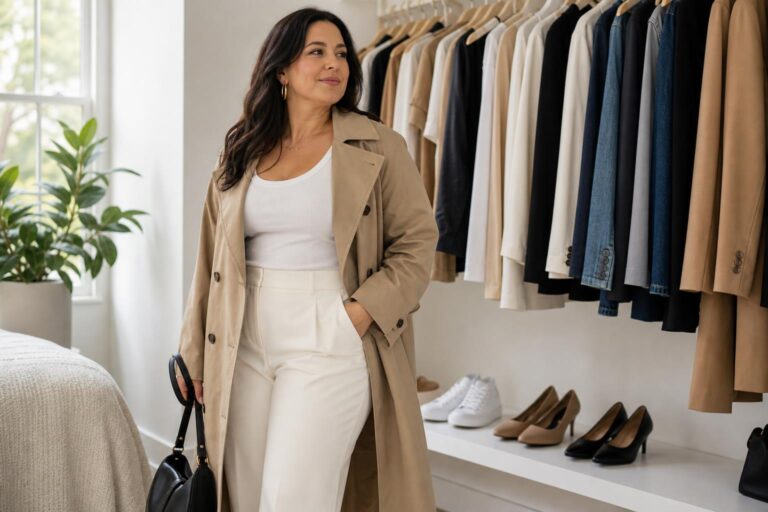
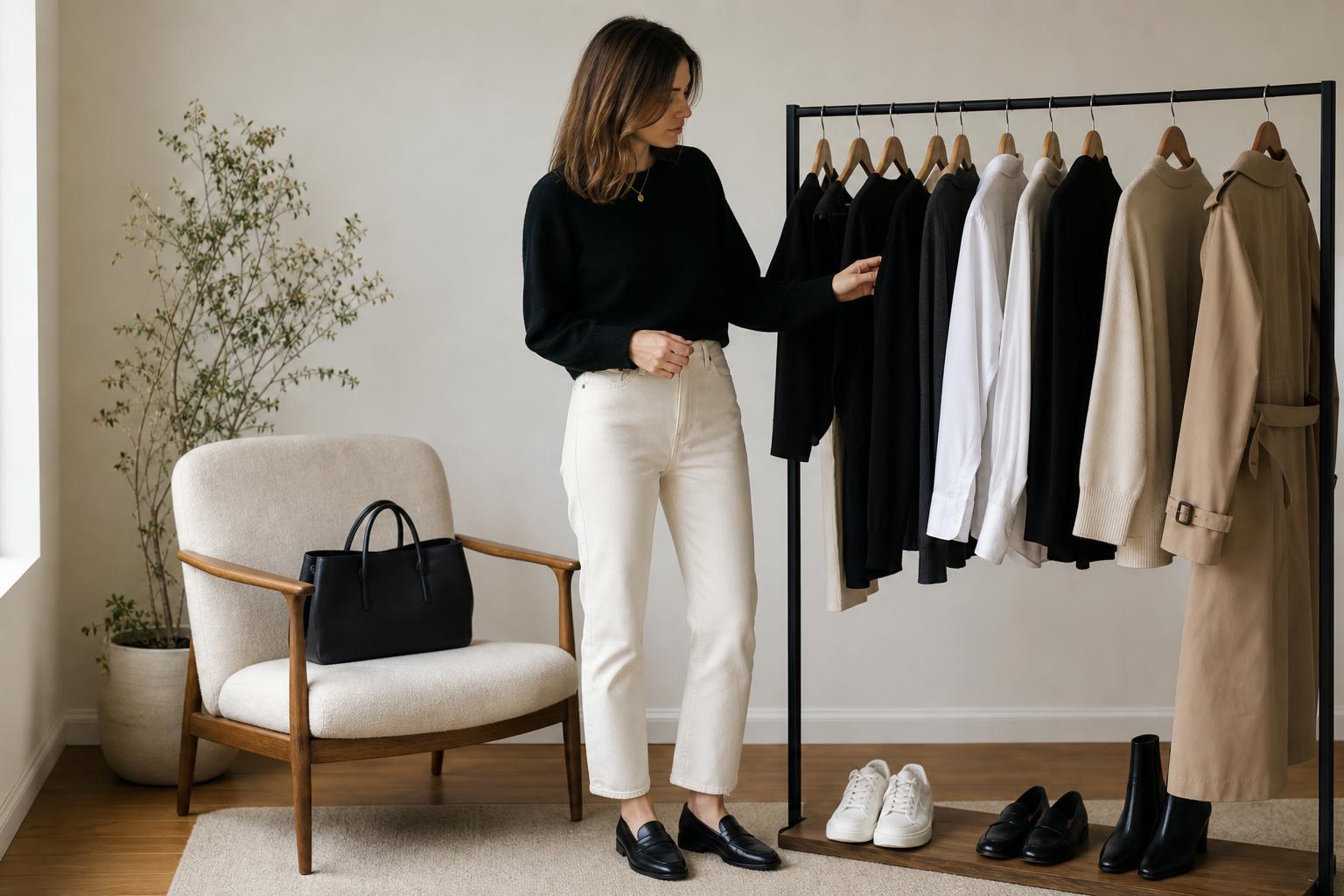
Minimal Capsule Wardrobe for Busy, Polished Days
A crowded closet and the feeling of having nothing to wear often point to the same issue: too many disconnected pieces and not enough reliable outfit structure. A minimal capsule wardrobe solves that problem by reducing visual noise and replacing impulse dressing with a tighter system of timeless basics, practical layers, and repeatable outfit formulas.
The challenge is not simply owning fewer clothes. It is knowing which pieces earn their place, how they work across seasons, and how to balance comfort, polish, and real-life demands such as commuting, work, travel, and changing weather. That is why so many people stall between aspiration and execution.
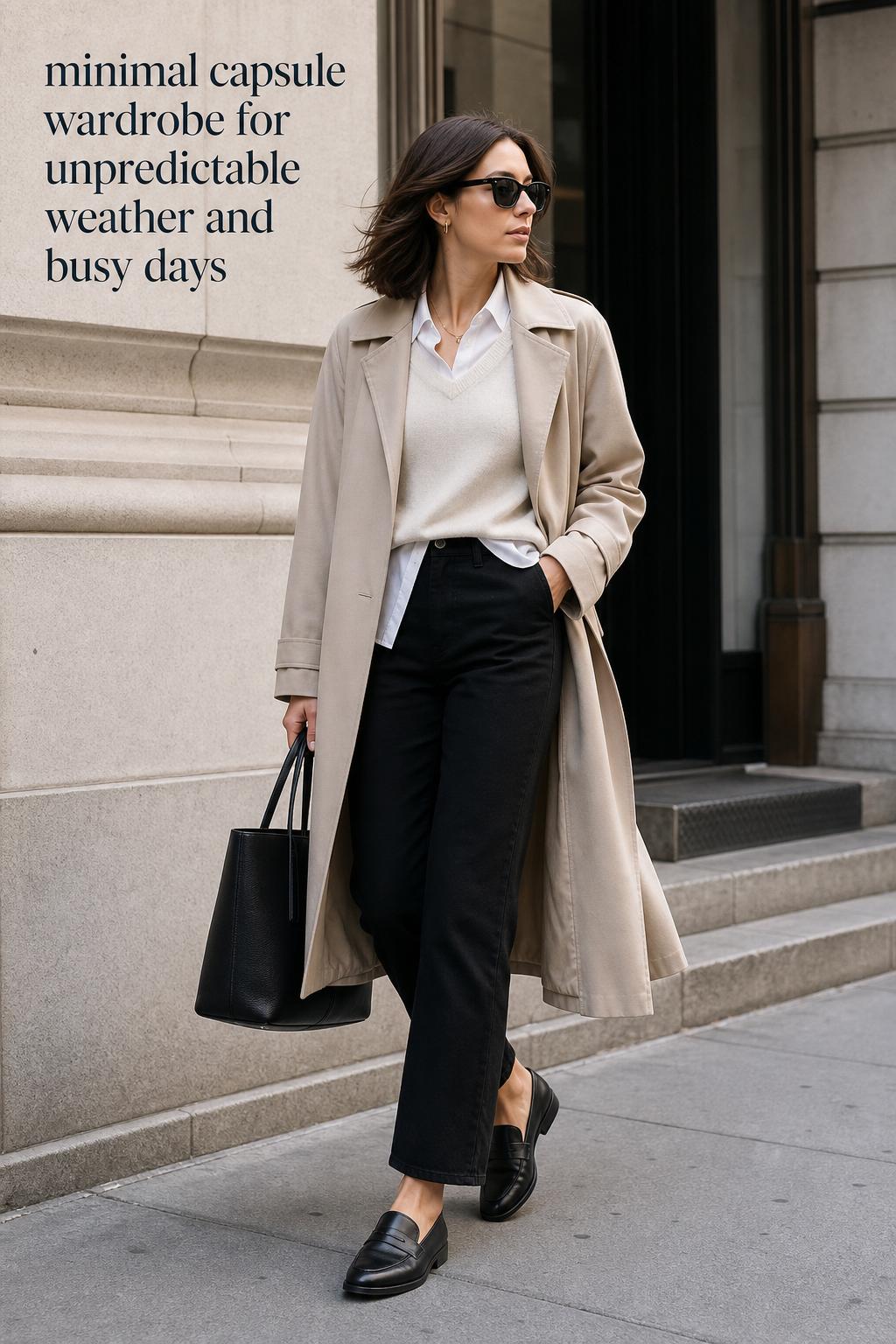
This guide approaches the minimal capsule wardrobe as a problem-solving fashion system. It breaks down the styling logic behind essential pieces, shows how to build around a busy U.S. lifestyle, and explains how to create outfit combinations that feel cohesive rather than repetitive.
Why the minimal wardrobe problem keeps repeating
A capsule wardrobe sounds simple in theory: fewer items, more versatility. In practice, the difficulty comes from competing needs. You want enough variety for work, casual dressing, and social plans, but not so much that your closet becomes cluttered again. You want timeless basics, yet you still want your wardrobe to reflect your personal style archetype, whether that leans classic, modern, or minimal glam.
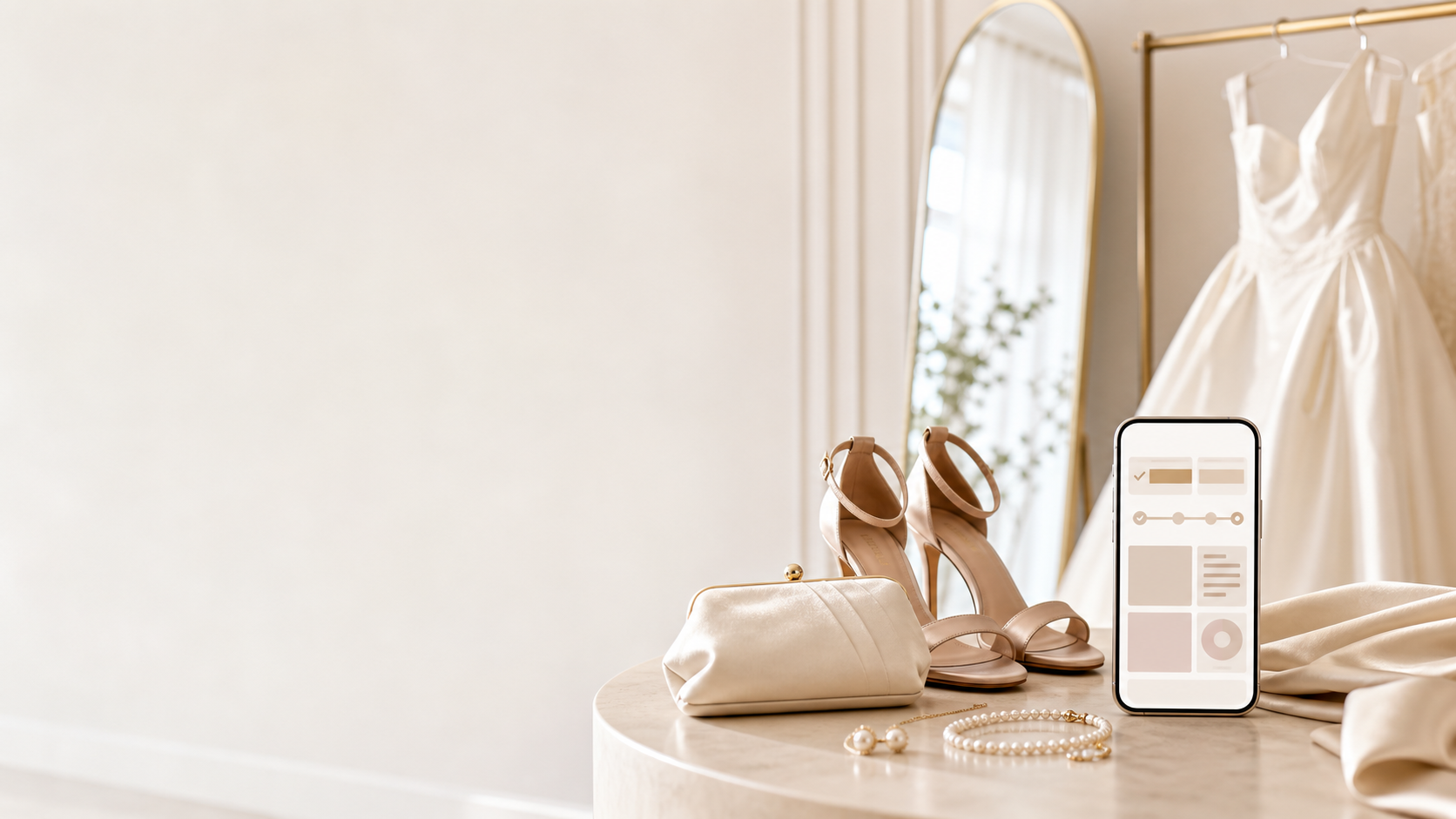
Found the dress? Keep the rest in one place.
Zarellea brings guest details, vendors, timelines, and every next step together — so your wedding plan feels as good as your look.
Weather adds another layer of complexity. A wardrobe that works in New York may rely heavily on structured outerwear and knitwear, while San Francisco dressing often depends on lighter layers and flexible fabrics. Chicago-style planning requires stronger seasonal rotation, especially around outerwear, boots, and texture weight. This is why a successful capsule closet is not only about garment count. It is about climate, proportion, fabric behavior, and how often each item realistically gets worn.
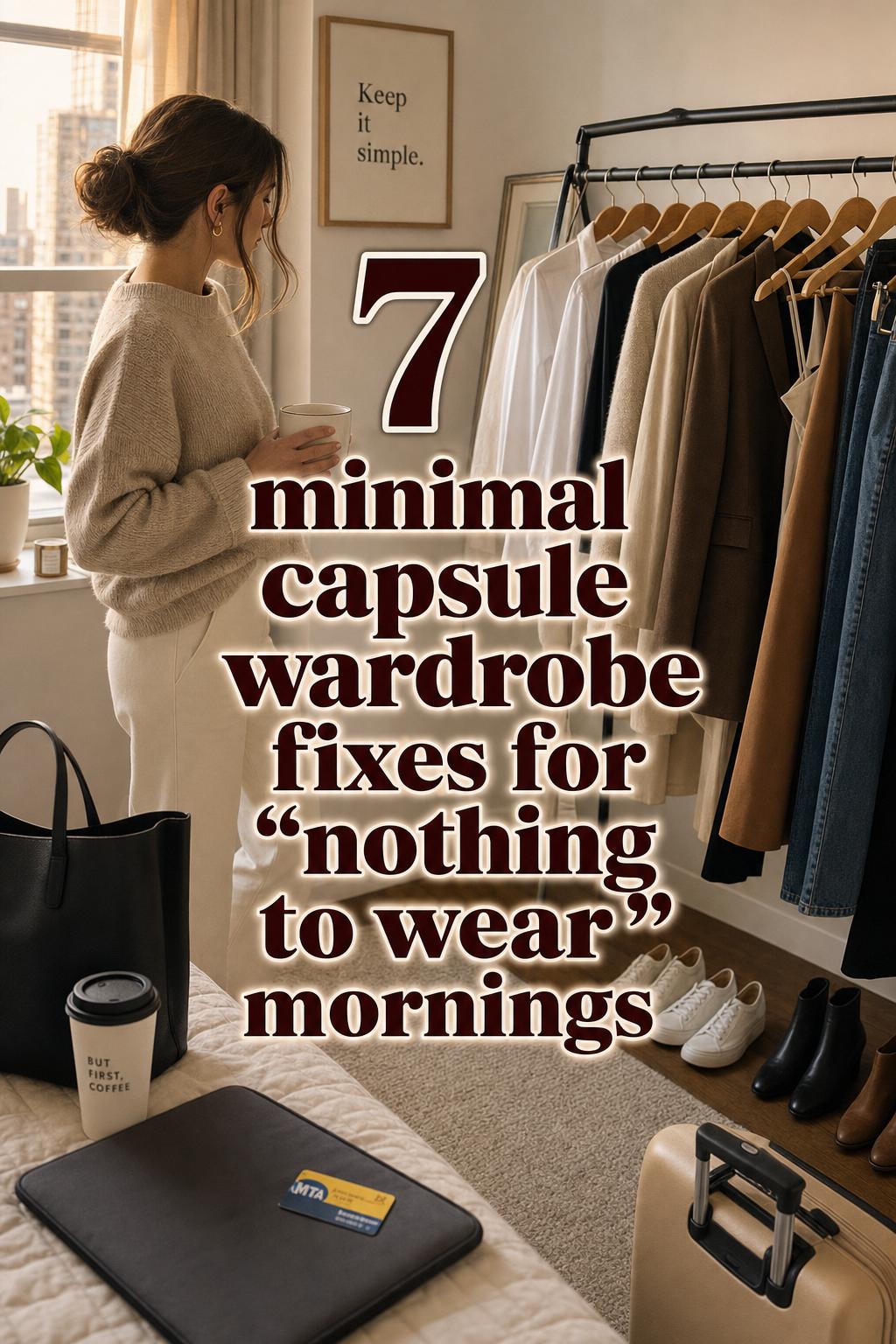
Decision fatigue also plays a major role. When every item competes for attention, outfits take longer to assemble and often feel less intentional. A strong minimal capsule wardrobe reduces that pressure by building visual anchors: a blazer that sharpens denim, a trench coat that frames simple separates, black pants that stabilize softer textures, or a white button-down that lifts casual layers.
What a minimal capsule wardrobe actually is
A minimal capsule wardrobe is a curated group of essential pieces designed to work together across multiple outfits and situations. The focus is on longevity, versatility, and strong repeat wear rather than constant novelty. In fashion terms, it is less about restriction and more about wardrobe efficiency.
The most consistent elements across capsule guidance are clear: core pieces, interchangeable outfit formulas, and seasonal adjustments. The wardrobe is built from staples such as a white shirt, trench, blazer, denim, knit sweater, black pants, simple dresses, and dependable footwear. These are not random basics. Each piece earns value because it connects to several others and can shift between casual and polished contexts.
This concept also overlaps with minimalism fashion and quiet style. The shared principle is visual restraint: clean lines, controlled color palettes, and garments chosen for repeat styling. A minimalist wardrobe does not have to look severe. It can feel soft, modern, and personal when the silhouette balance is well considered.
The core dressing principles that make capsules work
Before choosing individual pieces, it helps to understand the styling logic underneath them. A successful capsule wardrobe is not built on trend chasing. It is built on reliable composition.
- Choose a restrained color palette. Neutrals such as black, white, navy, and beige create easy tonal layering and reduce friction between pieces.
- Prioritize fabric compatibility. Cotton, wool, cashmere, and silk-like textures tend to layer more smoothly than overly stiff or highly seasonal fabrics.
- Build around visual anchors. A blazer, trench coat, or black trouser gives the eye a structured focal point and makes simpler items feel finished.
- Balance proportions. If a sweater has volume, pair it with a cleaner trouser or denim shape. If outerwear is long, keep the base outfit visually streamlined.
- Use outfit formulas. Repeating a small number of combinations saves time while still allowing variation through shoes, layering, and texture contrast.
These principles matter because they protect the wardrobe from two common failure points: buying pieces that do not connect, and keeping pieces that look good alone but do not support real daily dressing. Capsule success is rarely about one perfect item. It is about how items interact.
US climate-driven foundations: build for where you actually live
One reason capsule wardrobes sometimes disappoint is that they are copied as fixed checklists instead of adapted as climate systems. The outerwear and fabric strategy that suits a mild coastal city will not perform the same way in a colder or more variable environment. In the U.S., climate-aware dressing is one of the clearest ways to make a minimal wardrobe practical rather than theoretical.
Mild and layer-heavy wardrobes
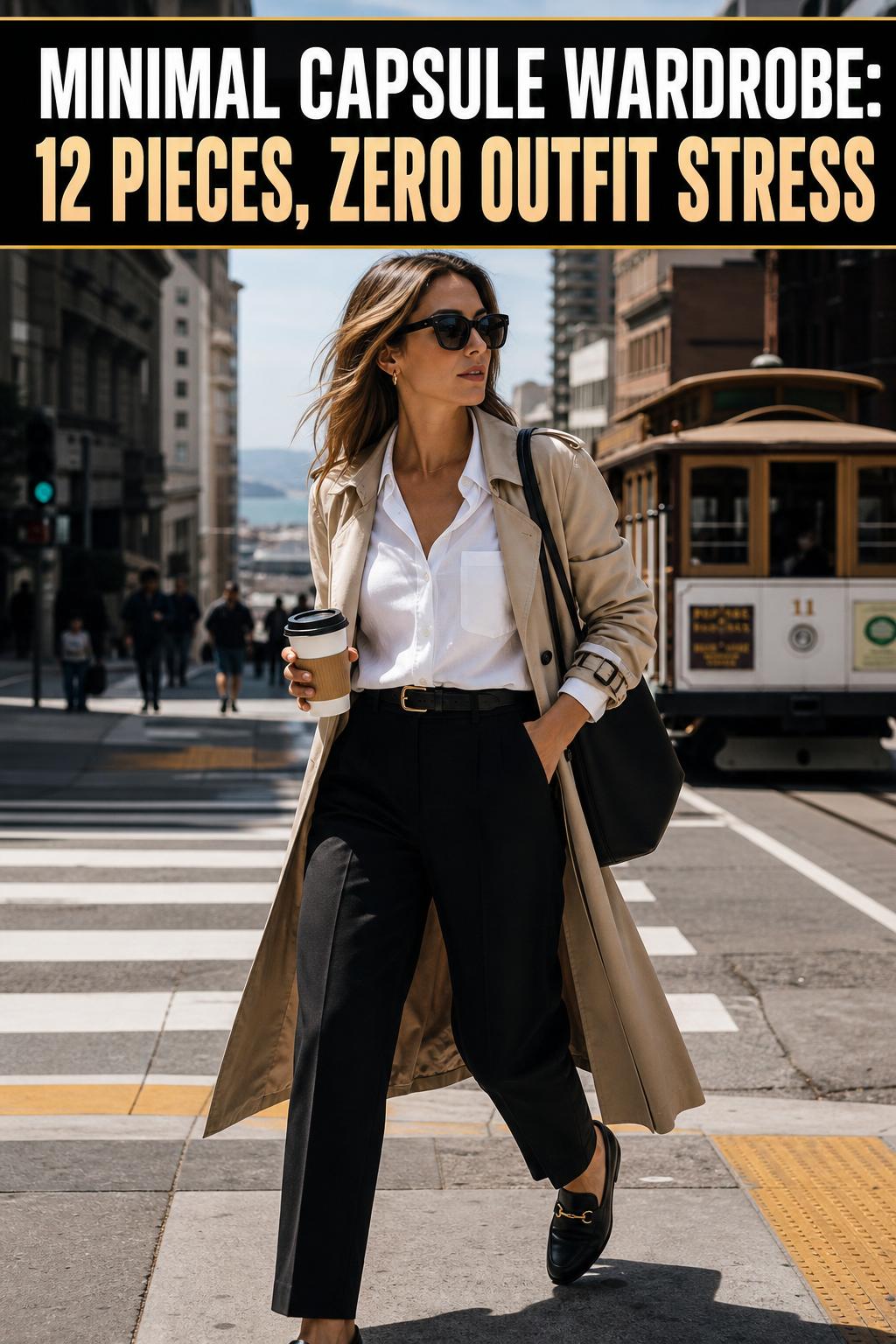
For places like San Francisco, the capsule should lean on light layering. A trench coat, blazer, fine knit sweater, cotton shirt, straight-leg denim, and loafers create enough flexibility for temperature shifts without overloading the wardrobe. The logic here is modularity. Each layer should work alone indoors and as part of a stacked outfit outdoors.
Cold-weather wardrobes with stronger rotation
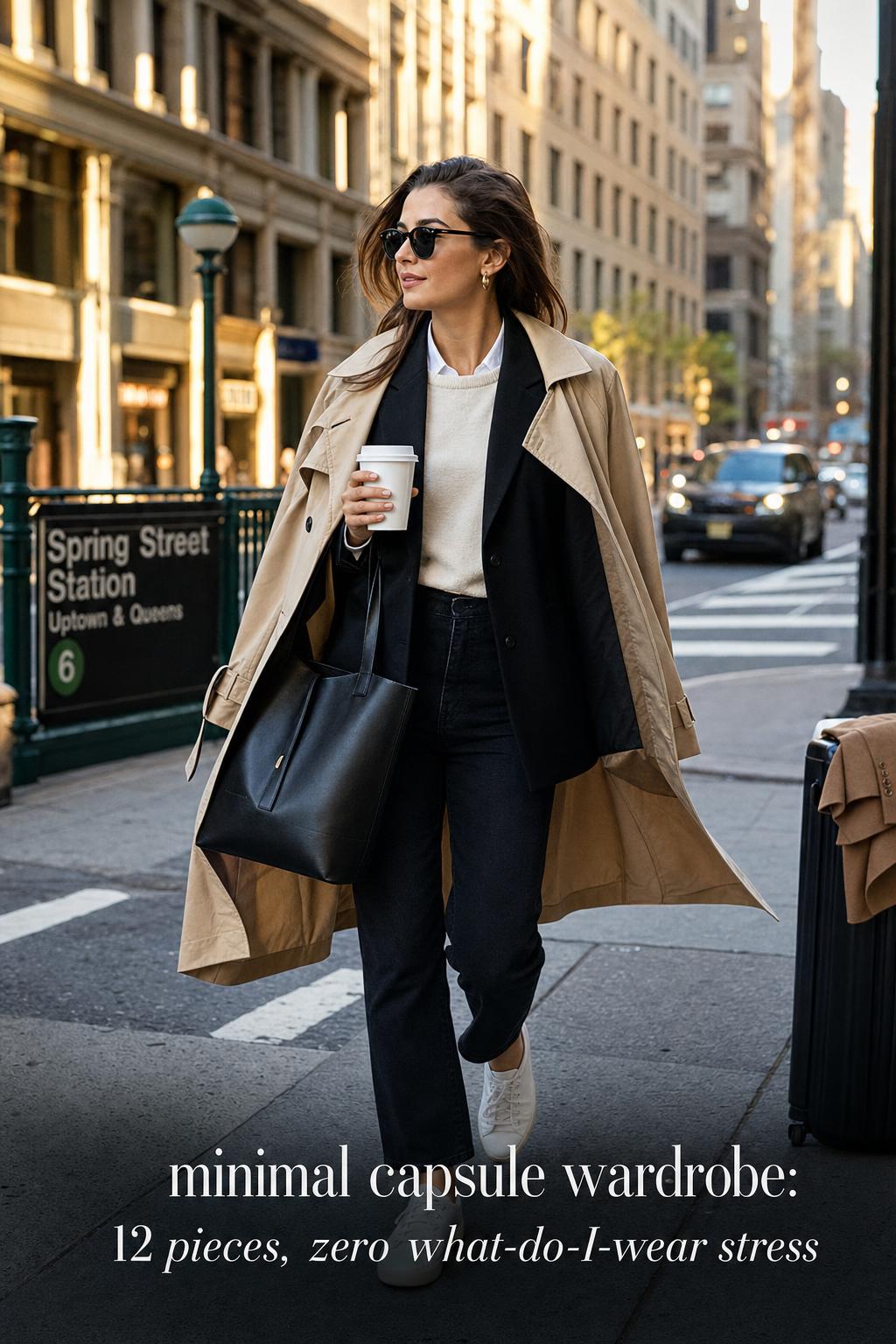
In cities such as Chicago or New York, outerwear needs more authority. A wool coat becomes a functional visual anchor, knitwear earns heavier use, and boots gain more importance than flats. The capsule still remains minimal, but the seasonal rotation becomes sharper. Lightweight cotton basics may stay in the system, yet they move into supporting roles under knits and coats.
What climate adaptation changes
Climate shifts do not require a completely different wardrobe identity. They mainly affect fabric weight, the number of layers, and which pieces serve as the wardrobe’s structural core. That is why the same minimalist wardrobe formula can appear in multiple cities while still looking context-appropriate.
The essential pieces: a focused capsule that still feels complete
The strongest minimal capsule wardrobe usually centers on 9 to 12 core pieces, then expands modestly for season, lifestyle, and frequency of wear. This range aligns with the most common fashion-editor approach to capsule dressing: small enough to stay coherent, broad enough to avoid monotony.
- white button-down shirt
- plain t-shirt
- knit sweater
- blazer
- trench coat or wool coat, depending on climate
- straight or classic denim
- black pants or tailored trousers
- midi skirt or simple dress option
- little black dress for versatile polish
- loafers or flats
- sneakers
- boots for cooler seasons
These pieces continue appearing in capsule wardrobe essentials lists because they solve multiple styling needs at once. A trench coat sharpens denim and a t-shirt. A blazer refines black pants for work but also adds structure to a dress. Sneakers relax tailored pieces; loafers restore polish. The little black dress works because it simplifies outfit composition while leaving room for outerwear and footwear shifts.
Brands are often used in capsule discussions as examples of quality and price range, but the stronger principle is not brand loyalty. It is choosing pieces with repeat styling power and enough construction quality to survive frequent wear. That is where timeless pieces differ from temporary purchases.
Tops, bottoms, and dresses: the three-piece model
A practical capsule becomes easier to manage when you think in three categories: tops that layer cleanly, bottoms that anchor proportions, and one or two dresses that simplify dressing on busy days. The white shirt and t-shirt function as clean foundations. A knit sweater introduces texture and seasonal weight. Denim and black trousers create two distinct mood lines: one casual, one polished. A midi skirt or little black dress adds movement and breaks the visual sameness of constant separates.
Neutrals are especially useful here. Black, white, navy, and beige allow faster pairings and create visual consistency across workwear, travel, and off-duty dressing. They also support tonal styling, which is one of the easiest ways to make a small wardrobe look elevated rather than repetitive.
Outerwear and footwear that scale across the year
Outerwear and shoes often determine whether a capsule feels sophisticated or incomplete. Two to three outerwear options are usually enough: a trench for transitional weather, a blazer for indoor structure and light layering, and a wool coat for colder conditions. In footwear, sneakers, loafers or flats, and boots cover most realistic needs without scattering the wardrobe’s focus.
This combination works because these categories carry strong stylistic influence. Changing from sneakers to loafers can shift the same trouser-and-knit look from casual to office-ready. Swapping a blazer for a trench changes silhouette length and visual rhythm without requiring a new base outfit.
Outfit solutions for real wardrobe problems
A capsule should not remain abstract. Its value appears in outfit repetition that still feels intentional. The combinations below show how a small set of pieces can handle different situations without overcomplicating the closet.
Outfit solution: polished weekday uniform
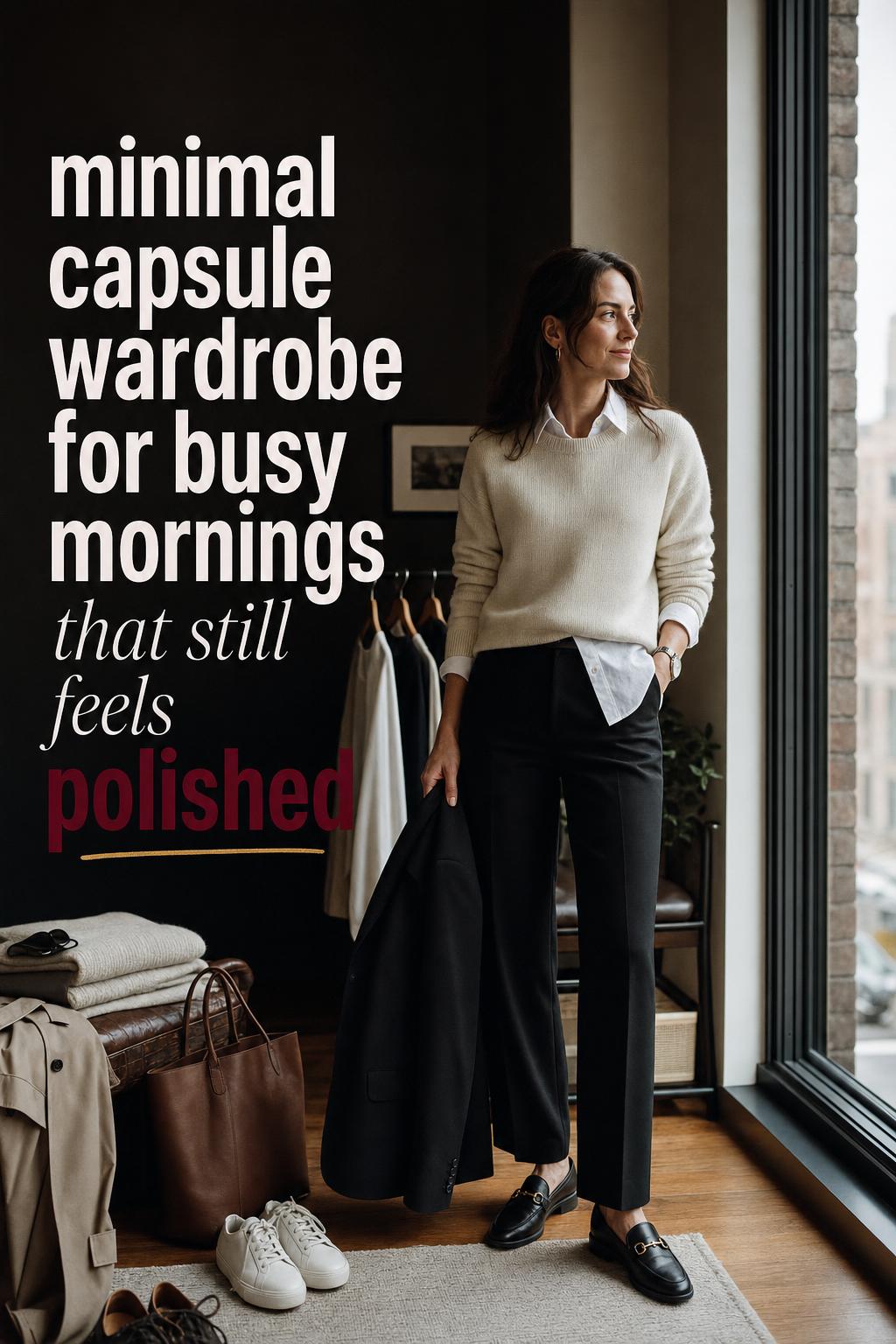
Start with black pants, a white button-down, and a blazer. Add loafers or flats depending on your commute. This combination works because the tailored trouser creates a clean vertical line while the shirt brings brightness close to the face. The blazer acts as the visual anchor, making the outfit feel finished even with minimal accessories. For a busy work schedule, this formula is efficient because it reads professional without requiring trend-dependent pieces.
Outfit solution: comfortable city layering
Pair straight denim with a plain t-shirt, knit sweater, and trench coat, then finish with sneakers. This is a strong solution for walking-heavy days, travel, or casual meetings because it combines movement, warmth control, and visual simplicity. The trench adds structure and length, preventing the outfit from looking too basic, while the denim-and-sneaker base keeps the composition grounded and practical.
Outfit solution: streamlined dinner or event dressing
A little black dress with a blazer or wool coat and simple boots creates one of the most efficient capsule formulas. The dress acts as a complete base layer, so there is less risk of awkward proportion play. Adding tailored outerwear gives shape and polish, making the outfit suitable for dinners, gallery-style events, or more refined casual occasions. This is where a minimalist wardrobe proves that versatility does not have to mean plainness.
Outfit solution: soft minimal weekend look
Use a midi skirt, knit sweater, and flats or loafers. This outfit solves the common problem of wanting comfort without relying on denim every day. The knit adds softness and seasonal texture, while the skirt introduces movement and variation. The silhouette balance works best when one element stays streamlined, so if the sweater is slightly relaxed, keep the skirt line clean and uncomplicated.
Outfit solution: year-round travel formula
Travel is where many wardrobes fail because outfits need to work across transit, changing temperatures, and multiple settings. A t-shirt, blazer, denim, trench, and sneakers form a reliable travel formula because each piece can be reworn in different combinations. The same blazer can later style with black pants for dinner, and the trench can top both denim and dress-based outfits. This is the logic behind year-round capsule formulas: fewer pieces, more role flexibility.
Personal style without clutter: shaping the capsule around your aesthetic
A minimal capsule wardrobe should reflect your style archetype, not erase it. The point of editing is coherence, not uniformity. Two people can own nearly the same essentials and create very different wardrobes based on proportion, texture, and finish.
Classic
The classic capsule leans into a crisp white shirt, structured blazer, tailored trousers, loafers, and a trench coat. The visual message is clean, stable, and polished. This works especially well for professionals who want an easy transition between workwear and off-duty dressing.
Modern minimal
The modern version often emphasizes sharper lines, stronger black-and-navy combinations, and simpler outfit composition. Denim stays clean, knitwear remains refined, and the silhouette tends to rely on quiet proportion play instead of decorative detail. This approach aligns naturally with the broader minimalist wardrobe concept.
Minimal glam or quiet style
This direction keeps the same wardrobe staples but adds more texture contrast and tonal depth. A little black dress, softer knit, refined boots, and a strong wool coat can create a more elevated mood without disrupting the capsule structure. Quiet style works best when the palette remains restrained and the fabrics carry the visual interest.
Tip: if your wardrobe feels too plain after editing, the solution is rarely more items. It is usually stronger contrast between silhouettes or textures. A sharper blazer, a better drape in black pants, or a richer knit texture will create more sophistication than adding extra categories.
Seasonal rotation and capsule maintenance
A capsule wardrobe is not static. It stays lean by rotating pieces according to weather and use frequency. Seasonal maintenance matters because even timeless basics can become visually or functionally inefficient when they remain in constant circulation regardless of climate.
- Review your wardrobe at each seasonal shift: spring, summer, fall, and winter.
- Move low-use pieces out of immediate reach rather than forcing them into daily dressing.
- Check wear patterns: if an item is rarely used, question whether it truly belongs in the capsule.
- Reassess outerwear first, since coats and layers often determine seasonal success.
- Keep an inventory, even a simple one, to avoid duplicate purchases and spot gaps clearly.
Closet maintenance is also where the idea of wardrobe restructuring becomes practical. You are not only subtracting. You are clarifying the role of each item. A sweater may become a winter staple, while a shirt becomes more central in spring. The same blazer might remain active all year, just styled differently.
Sustainability, quality, and long-term value
One of the most useful expansions of the capsule wardrobe conversation is the shift toward sustainability, repair, resale, and circular fashion. A minimal wardrobe naturally supports these ideas because it prioritizes fewer, better-integrated pieces and encourages thoughtful replacement over constant accumulation.
Responsible capsule building does not require perfection. It means asking sharper questions before buying: Does this piece connect to at least three existing outfits? Is the fabric likely to age well? Can it be repaired, altered, or resold if your needs change? These questions make cost-per-wear more meaningful than price alone.
There is also a practical trust factor here. High-rotation items such as denim, trousers, blazers, coats, and loafers take more stress than occasional pieces. Their quality matters because the entire capsule depends on them. Circular habits such as repair and resale fit naturally into this system because the goal is longevity, not one-season ownership.
Tip: when evaluating a new capsule item, focus on construction and styling range before aesthetics alone. A beautiful piece that only works with one outfit weakens the wardrobe. A simpler piece with better fabric, stronger fit, and more layering potential usually delivers more value.
Real-world capsule examples by lifestyle and setting
Practical examples help translate theory into actual dressing. These scenarios show how the same capsule concept changes with lifestyle, climate, and routine while keeping the core logic intact.
The city professional in New York
This wardrobe needs fast weekday polish and reliable weather layering. The strongest core would likely center on black pants, a white shirt, blazer, wool coat, knit sweater, denim, loafers, boots, and a little black dress. The blazer-to-coat relationship is especially important here because it allows indoor structure and outdoor protection without multiplying categories.
The flexible dresser in San Francisco
This capsule benefits from lightweight layering and tonal adaptability. A trench coat, t-shirt, shirt, knit, denim, midi skirt, flats, sneakers, and blazer create a compact but flexible system. The emphasis shifts away from heavy winter investment and toward pieces that can be removed or added throughout the day.
The seasonal planner in Chicago
Here the wardrobe needs clearer cold-weather structure. A wool coat, boots, knitwear, denim, trousers, and blazer become the central framework, with spring and fall pieces rotating in around them. The lesson is not that the capsule must be larger. It is that seasonal rotation must be more intentional and outerwear carries more responsibility.
Tools and systems that keep the wardrobe functional
Many people can build a capsule once but struggle to maintain it. That is where wardrobe inventory systems, closet apps, and AI outfit generators become useful support tools. Their value is not technological novelty. Their value is visibility. When you can see what you own, how often you wear it, and which combinations recur, the capsule becomes easier to manage.
A digital closet can help identify duplication, support seasonal rotation, and reveal whether your wardrobe leans too heavily toward one category, such as tops without enough anchoring bottoms or outerwear without versatile footwear. AI styling tools and outfit generators may also help refresh combinations from existing staples, particularly when the wardrobe is small and every piece needs to work harder.
This is one of the clearest modern extensions of the capsule closet concept. The wardrobe remains grounded in timeless basics, but management becomes more precise. For busy lifestyles, that precision can reduce unnecessary shopping and improve daily outfit planning.
Common mistakes that weaken a minimal capsule wardrobe
The biggest errors usually come from misunderstanding what “minimal” should mean. Minimal is not the same as underprepared, overly trendless, or disconnected from your actual life.
- Buying duplicates of basics that serve the same function instead of expanding outfit range.
- Ignoring outerwear and shoes, even though they shape most outfits from the outside in.
- Choosing pieces that look aspirational but do not suit your climate or routine.
- Building only for one context, such as office wear, and forgetting casual, travel, or evening needs.
- Removing too much personality, which can make the wardrobe feel flat and harder to sustain.
Another common mistake is relying on a checklist without considering proportion. A blazer, trench, or skirt may belong in many capsule lists, but if the cut does not suit your styling preferences, the piece will sit unused. Capsule dressing works best when the structure is universal but the fit choices are personal.
Practical tips for choosing pieces that last in your rotation
The easiest way to strengthen a capsule wardrobe is to make each purchase answer a specific styling need. Instead of asking whether a piece is fashionable, ask whether it improves outfit composition. Does it create a missing layer? Does it support work and weekend dressing? Does it balance existing silhouettes?
Fabric choice also deserves more attention than it usually gets. Cotton is helpful for shirts and t-shirts because it layers easily. Wool and cashmere bring warmth and texture depth to knitwear and coats. Silk-like softness can elevate a simple palette, especially in dresses or blouses, but only if the item still connects to the broader wardrobe. The best fabrics in a capsule are not necessarily the most delicate or expensive. They are the ones that repeatedly support comfort, drape, and longevity.
Footwear should be selected with movement in mind. A beautifully minimal wardrobe fails quickly if the shoes do not support real daily wear. Sneakers provide mobility, loafers and flats sharpen casual-to-polished transitions, and boots extend the wardrobe into colder weather. In a true capsule, these categories are not extras. They are structural.
Tip: if you are unsure whether an item belongs, style it three ways using pieces you already own. If the outfit compositions feel forced, the item is probably not core enough for a minimal wardrobe.
How to think about brands, trends, and inspiration without losing focus
Fashion editors, magazines, and style platforms often illustrate capsule wardrobes through specific brands, influencers, and fashion-week references such as Paris Fashion Week. These references can be useful because they show the enduring appeal of staples like the trench coat, blazer, white shirt, and classic denim. They become less useful when they encourage imitation without adaptation.
The right takeaway from editorial inspiration is not to copy a full shopping list. It is to study the outfit formulas and visual logic. Notice how a structured coat frames softer knitwear, how black trousers ground brighter tops, or how flats can make a tailored outfit feel more approachable. That analytical lens keeps your wardrobe stable even when trends shift.
In other words, fashion inspiration works best when it confirms principles you can already apply: coherent palette, strong layering, dependable staples, and enough personality to keep the wardrobe wearable over time.
FAQ
How many items should a minimal capsule wardrobe have?
A practical minimal capsule wardrobe often starts with around 9 to 12 core pieces, then expands slightly based on season, climate, and lifestyle. The exact number matters less than whether the items work together across multiple outfits.
What are the most important capsule wardrobe essentials?
The most consistent essentials are a white button-down, plain t-shirt, knit sweater, blazer, trench or wool coat, denim, black trousers, a simple dress or little black dress, and versatile shoes such as sneakers, loafers, flats, or boots.
Can a capsule wardrobe still reflect personal style?
Yes. A capsule wardrobe provides structure, but personal style comes through in silhouette, fabric choice, color emphasis, and whether your overall look feels classic, modern, or aligned with quiet style. Editing the wardrobe should create clarity, not sameness.
How do I build a capsule wardrobe for changing U.S. weather?
Start with layers and outerwear suited to your location. Mild climates benefit from lighter combinations such as a trench, blazer, and knit, while colder places need stronger outerwear, boots, and more deliberate seasonal rotation. The same core staples can stay in place, but fabric weight and layering strategy should shift.
Is a minimal capsule wardrobe only for workwear?
No. A strong capsule should handle work, casual dressing, travel, and simple evening plans. The key is choosing pieces that can move between settings, such as denim that works with both sneakers and loafers, or a blazer that styles with trousers and dresses.
How often should I rotate my capsule wardrobe?
Review the wardrobe at each seasonal shift and adjust for spring, summer, fall, and winter. Outerwear, knitwear, and footwear usually need the most attention because they determine comfort and practicality across changing temperatures.
What is the biggest mistake people make when starting a capsule closet?
The most common mistake is following a generic checklist without considering climate, daily routine, or proportion preferences. A capsule works only when the pieces fit your real life and combine naturally with one another.
Can sustainability fit into a capsule wardrobe?
Yes. A capsule wardrobe naturally supports sustainability by focusing on fewer, better-used pieces and encouraging repair, resale, and thoughtful replacement. The strongest approach is to buy for longevity and repeat wear rather than short-term novelty.
Are closet apps or AI outfit tools useful for capsule dressing?
They can be very useful for tracking wardrobe inventory, planning seasonal rotation, and seeing which pieces you wear most. AI outfit generators and digital closet tools are especially helpful when you want fresh combinations from a small set of staples.
How do I know if a new piece belongs in my minimalist wardrobe?
A new piece belongs if it supports several outfits, fits your climate and routine, and improves the balance of your existing wardrobe. If it only works in one styling scenario or competes with items you already own, it is probably not a strong capsule addition.