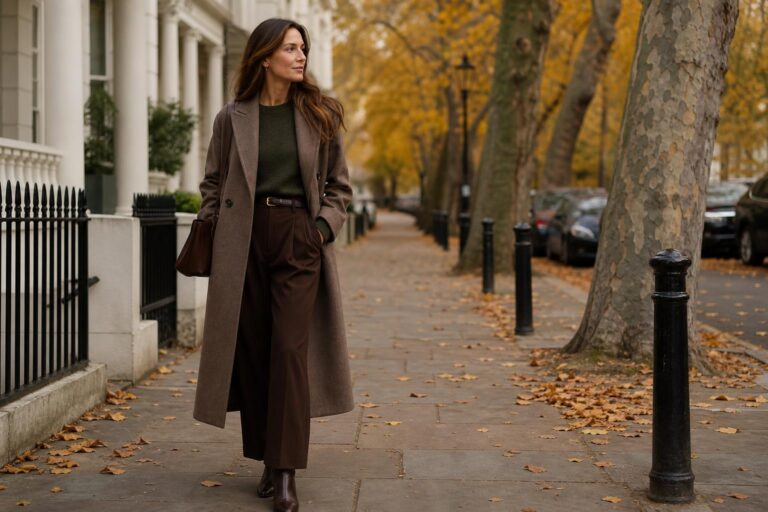
Transitional Outfits for In-Between Days
Getting dressed during in-between weather sounds simple until you are standing in front of the closet trying to solve three problems at once: temperature changes, comfort, and looking pulled together. Transitional outfits are rarely difficult because the clothes themselves are complicated. They are difficult because the day keeps changing. A cool morning becomes a warm afternoon, indoor air conditioning fights with outdoor humidity, and the outfit that worked at breakfast can feel completely wrong by early evening.
That tension is what makes this category of dressing so useful. Transitional style is not just about adding a layer and hoping for the best. It is about outfit composition that can handle movement, changing weather behavior, practical routines, and the visual balance that keeps a look from feeling either too heavy or too bare.
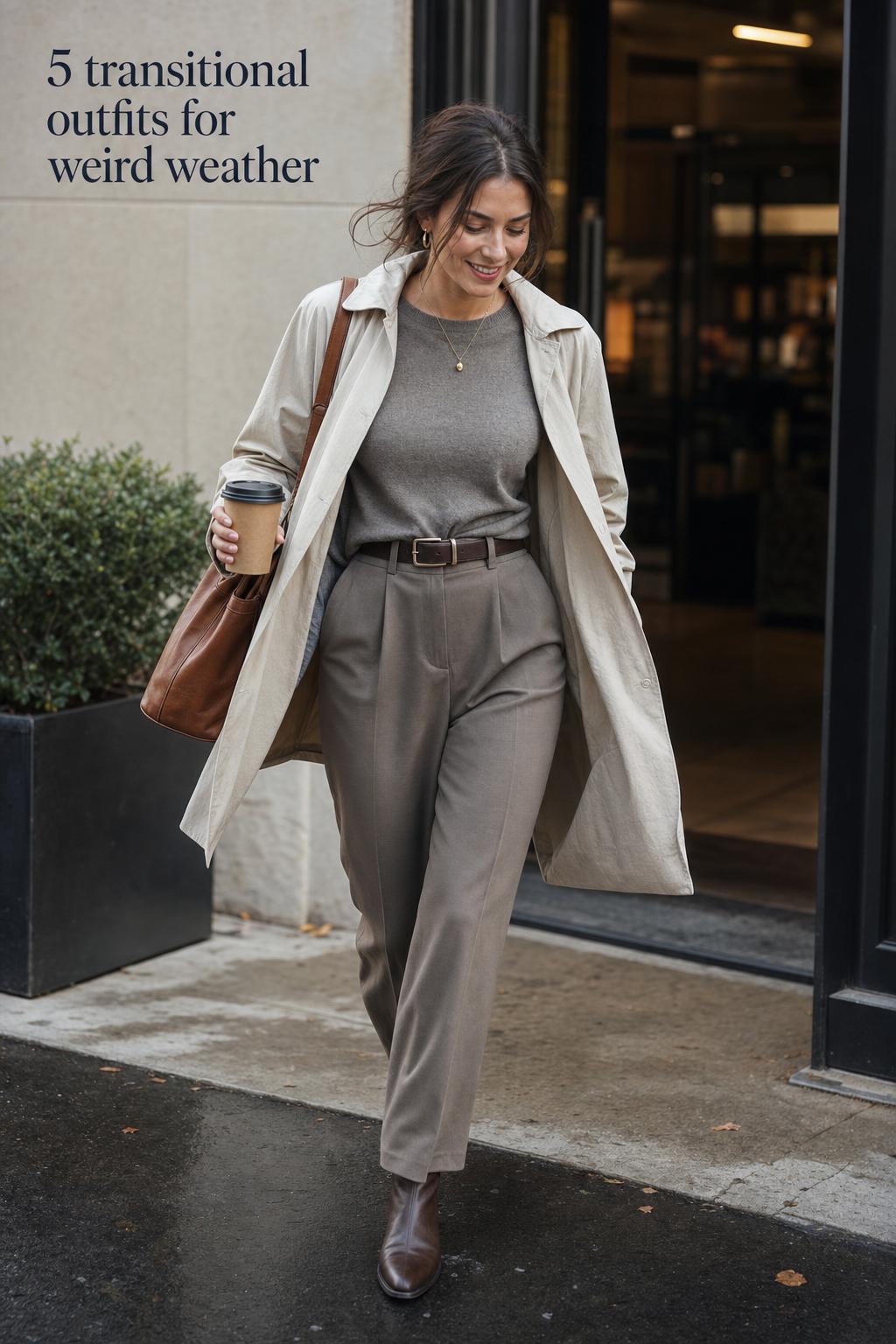
The most wearable solutions come from understanding how proportion, texture contrast, and temperature adaptability work together. Once that logic is clear, transitional outfits stop feeling like a seasonal struggle and start functioning as some of the smartest looks in a wardrobe.
Why transitional dressing feels harder than it should
The real challenge is that transitional weather creates competing needs. You want coverage without bulk, polish without stiffness, and flexibility without looking as if you dressed for two different seasons at once. That is why many outfits fail in the middle ground. They are either built for cold weather and become visually heavy, or they lean too warm-weather and leave the outfit feeling unfinished.
Found the dress? Keep the rest in one place.
Zarellea brings guest details, vendors, timelines, and every next step together — so your wedding plan feels as good as your look.
Climate plays the biggest role, but routine matters just as much. A person commuting across a city, moving between outdoor sidewalks and heavily cooled interiors, needs a different approach from someone driving directly to one destination. Transitional dressing also intersects with dress codes. Casual offices, travel days, school runs, dinner plans, and weekend errands all ask for slightly different levels of structure.
There is also a silhouette issue. Layering can distort proportion very quickly. A boxy jacket over a loose knit and wide pants can feel comfortable in theory but shapeless in practice. On the other hand, a fitted top with a very slim bottom and heavy shoes can feel visually top-light and seasonally confused. The goal is not simply to combine pieces. The goal is to create a clear line through the outfit so it still looks intentional once the layers shift throughout the day.
Where outfits usually go wrong
Most transitional outfit mistakes come from overcorrecting. People add too many layers because they are worried about being cold later, or they strip the outfit down too far because they are thinking only about midday warmth. The result is often discomfort, restricted movement, or a look that feels visually disconnected.
- Too many bulky layers create heat fast and flatten the silhouette.
- Very thin fabrics without a visual anchor can make an outfit look incomplete.
- Shoes that belong to a single weather extreme often disrupt the outfit’s balance.
- Ignoring indoor conditions makes the look harder to wear in real life.
- Choosing trend pieces over adaptable staples reduces versatility.
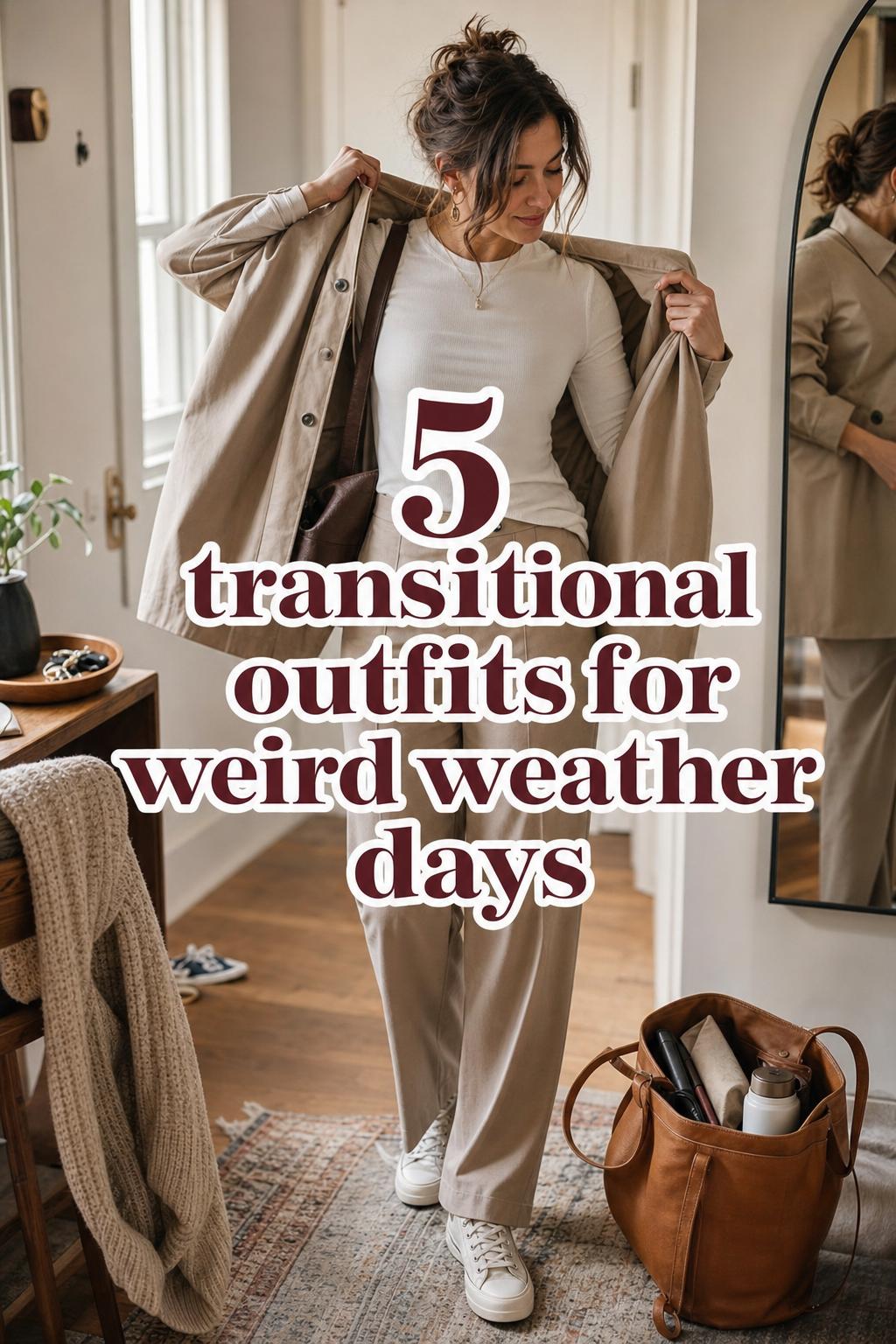
The styling logic behind successful transitional outfits
The best transitional outfits work because they are built around adjustment points. An adjustment point is any part of the look that changes comfort without collapsing the full outfit composition. That might be a light outer layer, footwear with seasonal flexibility, or fabric contrasts that create warmth without visual heaviness.
Silhouette balance matters first. If one piece carries volume, another piece should provide shape or structure. That does not mean everything has to be fitted. It means the eye needs a clear visual anchor. For example, if the outfit uses a relaxed top layer, a cleaner line through the trousers, skirt, or shoe keeps the look intentional.
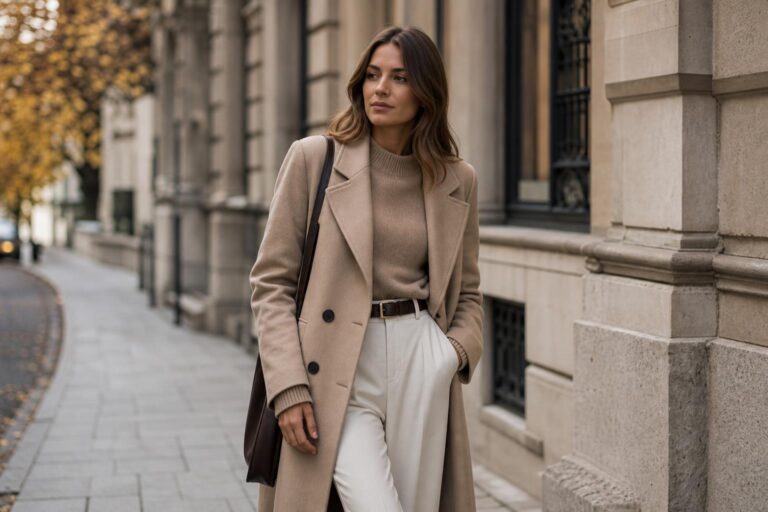
Texture contrast matters just as much as color. Transitional dressing often looks strongest when soft and structured elements appear together. A smooth outer layer over a knit, or a fluid base with a more tailored finishing piece, creates depth. This is why these outfits often feel more polished than warm-weather minimal looks or winter-heavy combinations. They sit in the middle, where visual nuance does the work.
Color balancing is also practical. Transitional palettes tend to work best when they avoid extremes. Tonal layering, grounded neutrals, or a restrained seasonal palette make it easier to remove or add pieces without the outfit looking broken apart. A strong visual anchor, such as a jacket, trouser, or bag, helps hold everything together when temperatures shift.
Fabric insight
Fabric behavior often determines whether a look feels wearable by hour six, not hour one. Pieces that trap too much heat become frustrating fast, while fabrics with no substance can wrinkle, cling, or lose shape as the day goes on. Transitional dressing usually benefits from materials that hold structure lightly, skim the body rather than compress it, and layer without friction.
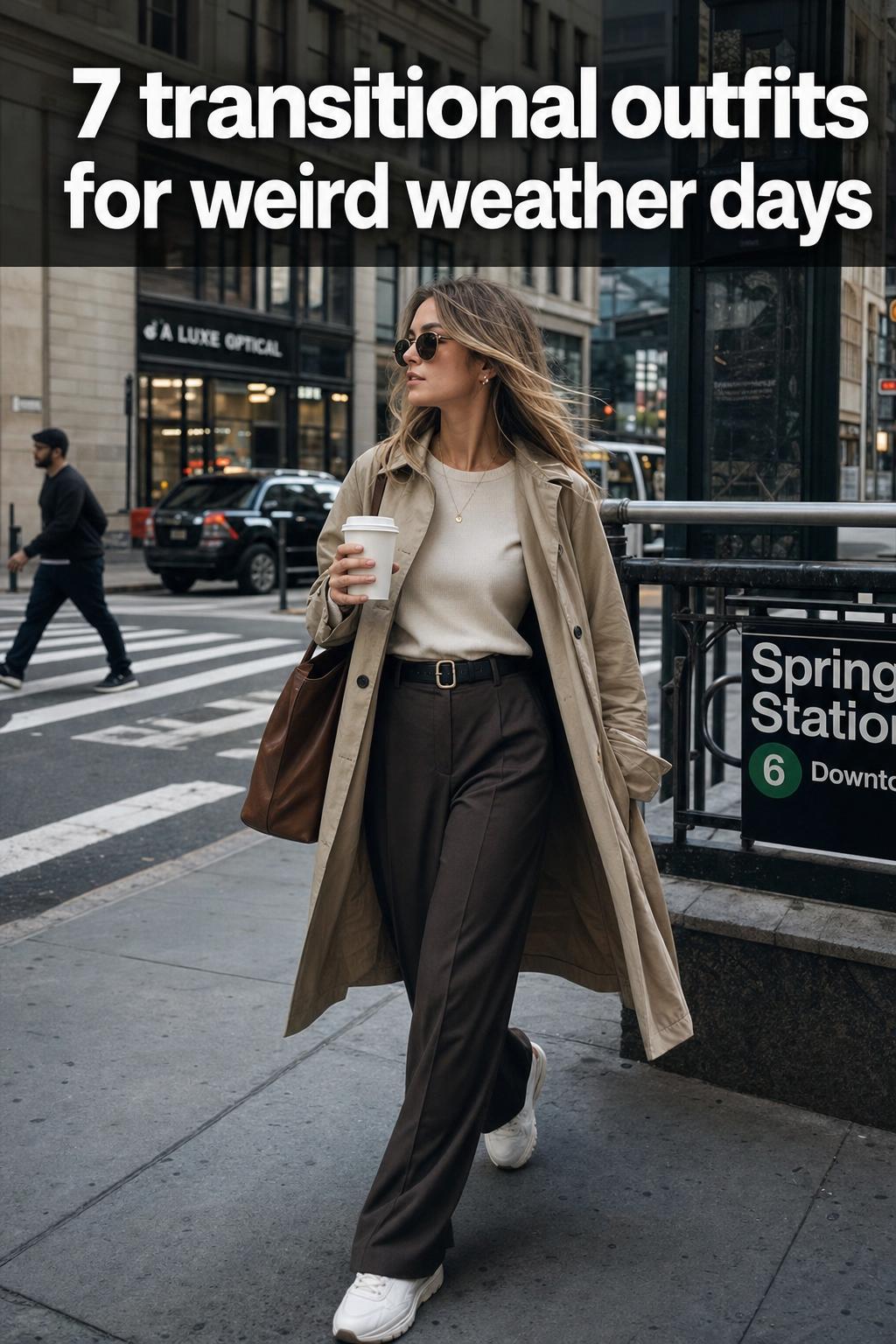
Relaxed layers that still feel polished
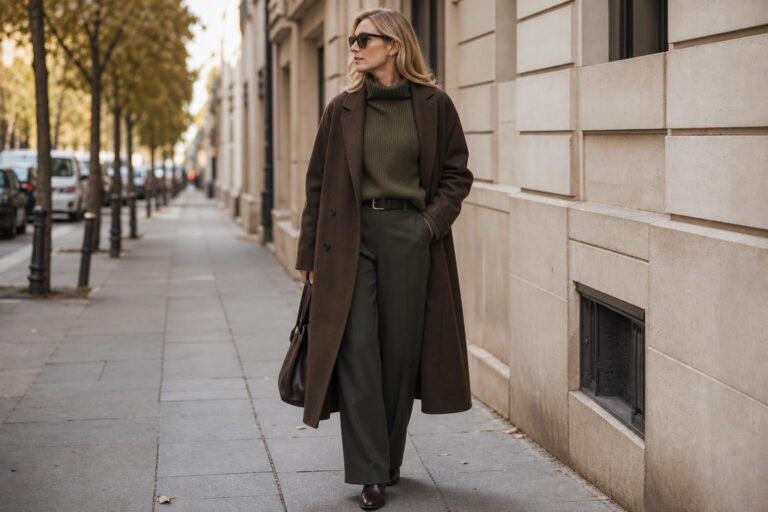
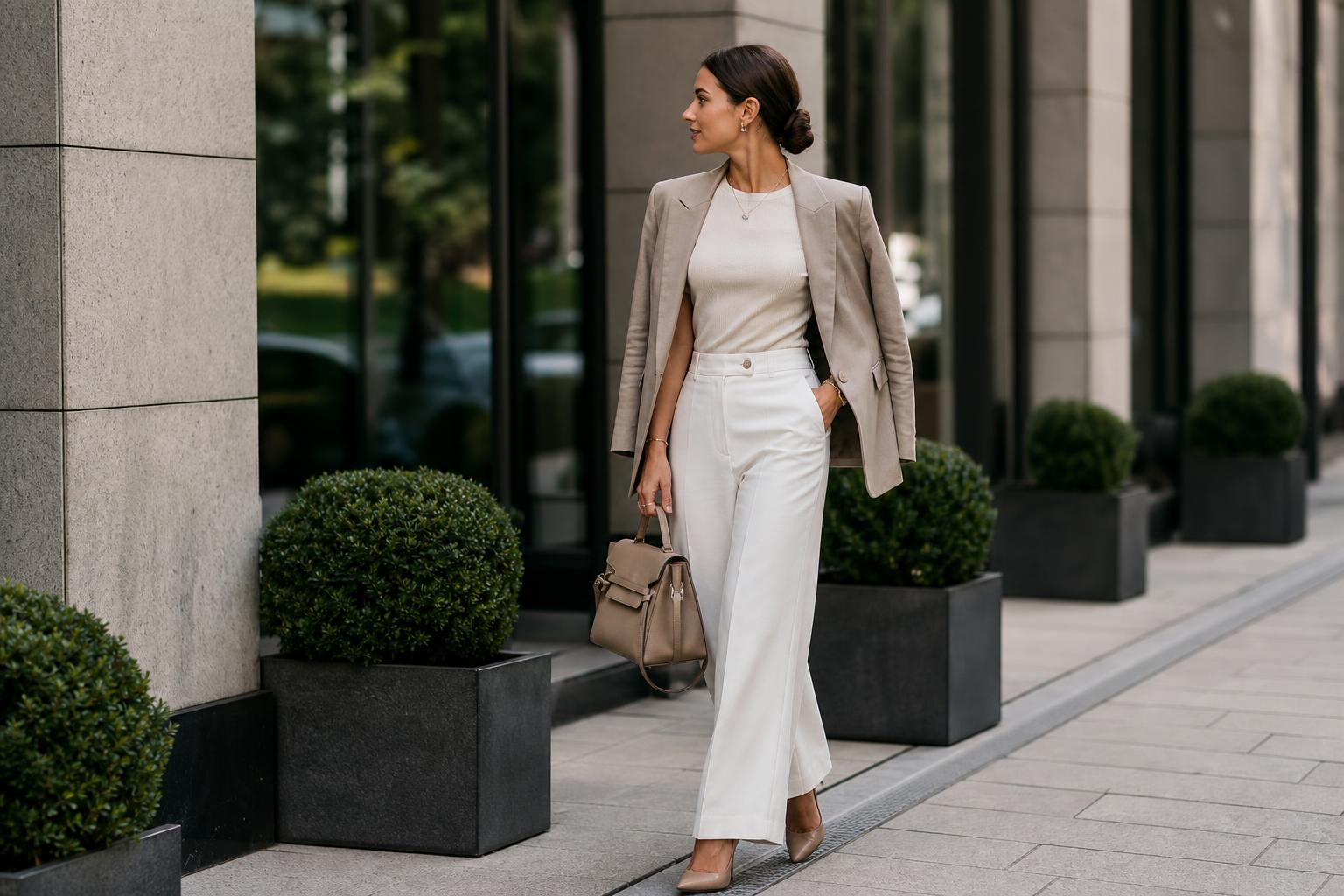
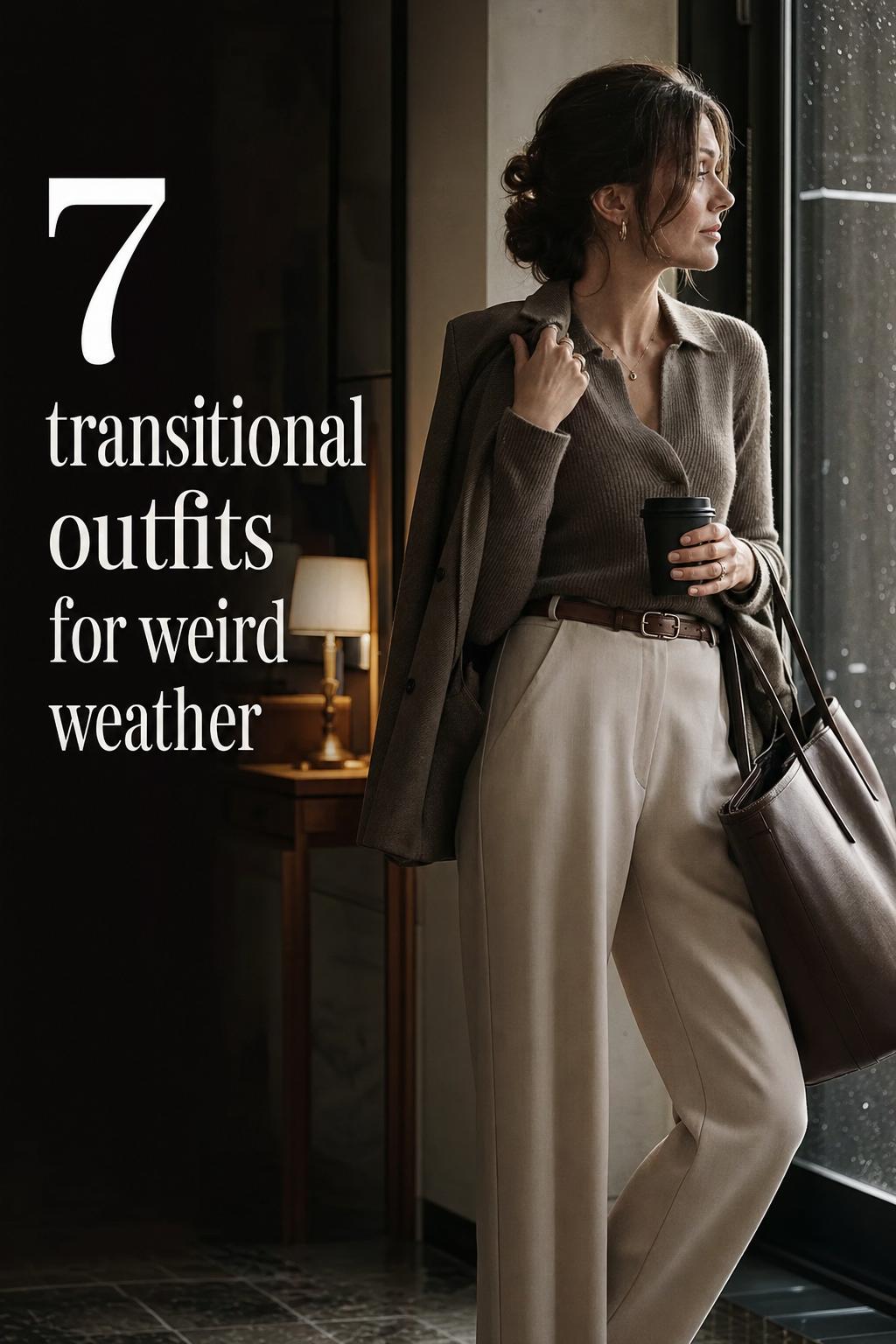
This is one of the most useful formulas for everyday transitional dressing because it solves comfort and appearance at the same time. The idea is simple: combine a relaxed base with one defined, structured layer so the outfit feels easy but not undone. Visually, this creates proportion play. Practically, it allows the top layer to come off without leaving the outfit feeling unfinished.
A polished relaxed outfit usually works best when the softest piece sits close to the body or falls cleanly rather than adding width everywhere. That could mean a knit under a sharper outer layer, or a fluid top grounded by trousers with a cleaner leg line. The structure does not need to be severe. It only needs enough shape to frame the softness underneath.
Why this outfit works
The contrast between ease and structure keeps the outfit modern. It also makes temperature changes easier to manage. When the day warms up, removing the outer piece still leaves a coherent look. When the temperature dips, the structured layer restores definition and polish immediately.
Quick styling adjustment
If the outfit starts feeling too casual, shift the visual anchor rather than adding more clothing. A more refined bag, cleaner shoe, or sharper outer layer can elevate the entire composition without making it less comfortable.
Lightweight styling for unpredictable weather
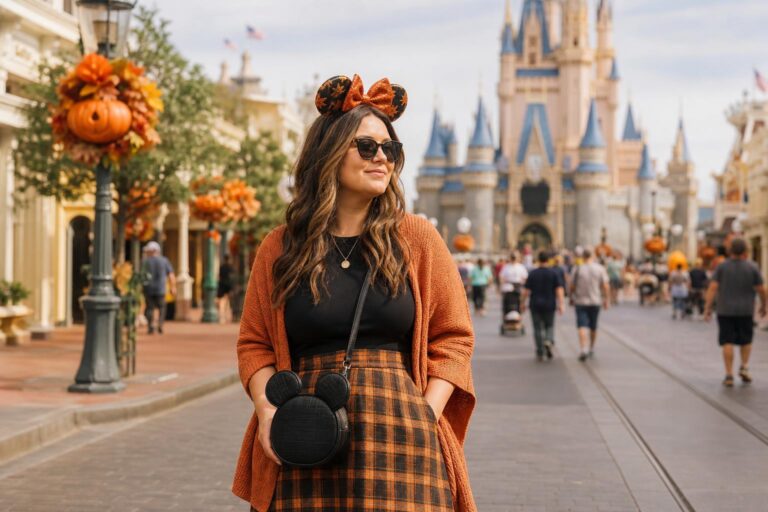
Some days are not cold enough for substantial layers but too changeable for a single-season look. This is where lightweight transitional outfits perform best. The strategy here is not to build warmth through thickness. It is to build adaptability through layers that can move with the day.
These outfits benefit from pieces that fold easily into a bag, sit comfortably over the base layer, and do not distort the silhouette once added. The styling logic is subtle but important. Lightweight pieces work best when the base outfit already feels complete. That way, the extra layer functions as a response to weather rather than a rescue operation for an otherwise unfinished look.
For readers dressing in places where mornings start cool and afternoons warm quickly, this approach is especially useful. The look remains visually cohesive whether the extra layer is on the body, draped over the shoulders, or carried. That kind of flexibility is the real strength of transitional styling.
Transitional weather tip
When weather is inconsistent, avoid making the warmest item the main visual feature of the outfit. If the heaviest layer dominates the look, removing it later often leaves the remaining outfit under-styled. Build the outfit from the inside out, then let the weather layer be secondary.
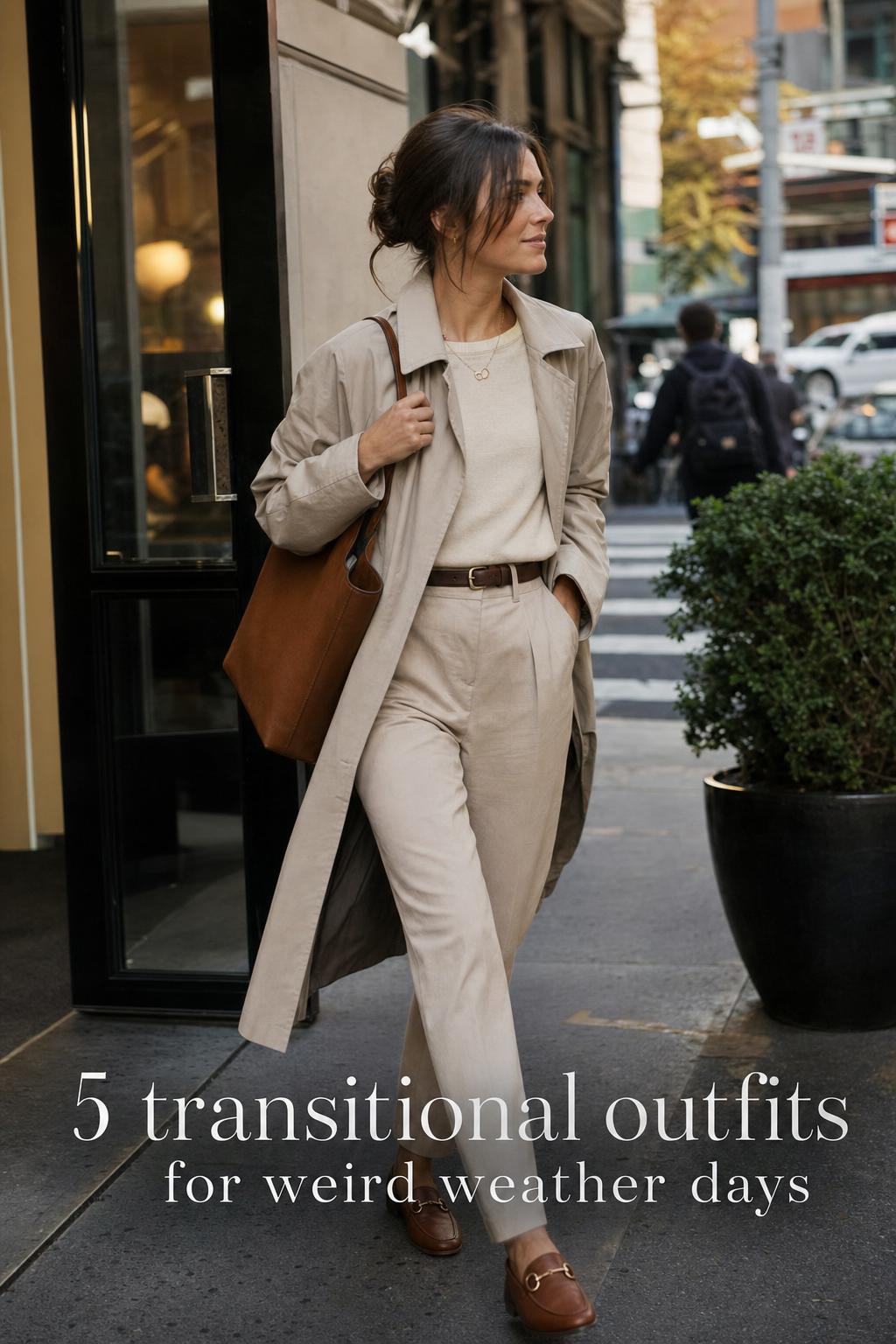
Comfortable city outfits with structure
City dressing asks more from transitional outfits than many people realize. Walking, commuting, standing, and moving between exterior and interior environments create friction points that purely aesthetic outfit advice often ignores. A successful city look needs enough structure to feel dressed, enough comfort to handle movement, and enough flexibility to stay practical for hours.
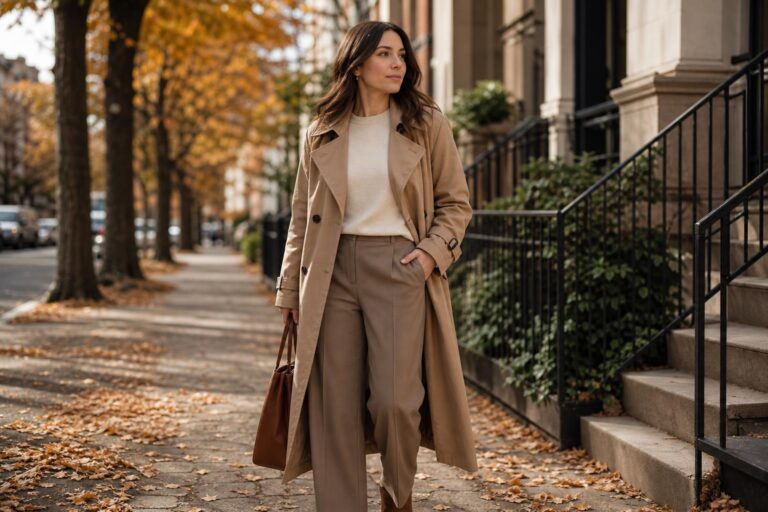
The strongest city-focused outfit composition usually begins with a stable base: a streamlined lower half, footwear that can handle pavement, and one structured layer that sharpens the line of the outfit. This combination creates a clean silhouette even when the pieces themselves are simple. It also prevents the common problem of looking too casual once comfort becomes the priority.
Footwear matters here more than almost any other detail. In transitional dressing, the wrong shoe can make the entire outfit feel seasonally mismatched. The best shoe pairing is one that supports movement and visually connects the weight of the outfit from top to bottom. If the upper half includes texture or layering, the shoes should not feel too delicate or too heavy by comparison.
Best shoe pairing
Choose footwear that works across multiple temperature ranges and surfaces. In practical terms, that means avoiding shoes that are built only for peak summer or true cold weather. Transitional outfits look strongest when the shoe carries enough presence to ground the silhouette while still feeling wearable for a full day.
Elevated casual looks that stay practical
One of the most common dressing frustrations is wanting an outfit to feel easy without drifting into visual flatness. Transitional outfits solve this well because layering naturally introduces dimension. The key is to use that dimension intentionally rather than piling on separate pieces with no relationship to one another.
An elevated casual look generally needs three things: a clear color story, one piece with shape, and one element of texture contrast. That formula creates depth without overcomplication. It also allows familiar wardrobe staples to feel more considered. The result is a look that works for real life, not just a styled image.
Easy ways to recreate the look
- Start with the staples you already wear most often.
- Add one outer or top layer that gives the outfit definition.
- Keep the palette controlled so the layered pieces connect visually.
- Use texture to create interest instead of adding more accessories.
- Choose a bag that supports your routine rather than interrupting it.
This approach is especially useful for anyone who wants to look put together without rebuilding their wardrobe. Transitional dressing often works best when it refines familiar pieces rather than replacing them.
Soft layering without added bulk
Bulk is one of the fastest ways an outfit loses polish. It affects movement, traps heat, and can make proportion harder to control. Soft layering solves this by creating warmth and dimension through fabric interaction instead of sheer thickness.
The visual goal is to let layers sit close enough to the body that the silhouette remains readable. That does not mean tight clothing. It means layers should glide rather than compete. Pieces that cling, bunch, or resist each other create tension both visually and physically. In contrast, layers that drape cleanly maintain comfort while still looking intentional.
Common comfort mistake
Many people try to create transitional warmth by stacking multiple medium-weight pieces. That usually feels heavier and less breathable than combining a lighter base with one purposeful top layer. The smarter route is not always more fabric. It is more considered fabric behavior.
How proportion changes the entire outfit
Proportion is what separates a wearable transitional outfit from one that feels awkward by midday. Layering changes where the eye lands, how the body reads visually, and whether the outfit feels balanced in motion. This is why a look can include all the right categories of clothing and still not feel right once you put it on.
A balanced transitional silhouette usually includes one dominant shape and one supporting shape. If the top half is layered and visually fuller, the lower half benefits from a cleaner line. If the lower half is softer or wider, the upper half often needs a sharper frame. This relationship keeps the outfit from becoming either top-heavy or visually stagnant.
Body type and routine both affect how these choices should be applied. Someone who needs unrestricted movement may prefer more ease through the lower half and structure above. Someone sitting for long periods may want softer waist placement with a stronger line from the outer layer or shoes. The principle stays the same: the outfit should create shape without forcing discomfort.
Most versatile piece
The most versatile piece in transitional dressing is usually the one that can change the outfit’s structure without changing its identity. In practice, that means a finishing layer or anchor piece that sharpens the silhouette, works across settings, and still makes sense when carried or removed.
Color, texture, and the seasonal palette
Transitional outfits often look more expensive and more resolved when the palette is controlled. Because the weather itself is mixed, the outfit benefits from visual consistency. Tonal layering is especially effective here because it lets different fabrics create interest without overwhelming the eye.
Texture contrast is what gives these looks depth. A smooth finish next to a softer surface, or a crisp layer over a more fluid one, creates a balanced outfit composition. This is particularly helpful in transitional weather because the clothes need to do double duty: they have to offer function while also signaling a clear seasonal direction.
The easiest way to make a transitional outfit feel modern is to let one element lead. That could be the seasonal palette, a statement piece, or a strong outer layer. Once one visual idea is established, the rest of the outfit can stay quieter. This keeps the look cohesive and adaptable.
Making transitional outfits work for real routines
A good outfit on paper is not always a good outfit in motion. Transitional dressing has to survive commutes, errands, office hours, school pickups, last-minute plans, and changing weather with minimal effort. That means every piece should earn its place. If a layer is too fussy to carry, too warm to keep on, or too flimsy to matter, it usually weakens the outfit rather than helping it.
Bag choice becomes more important here than it does in single-season dressing. A practical bag supports the reality of transitional style because it allows room for a removed layer, holds daily essentials, and maintains the outfit’s visual structure. Accessories should not just decorate the look. They should support how the outfit functions across the day.
Tips for everyday wearability
- Build the outfit so it still looks complete if one layer comes off.
- Keep at least one piece structured to maintain silhouette definition.
- Use accessories as practical support, not only visual extras.
- Test the outfit sitting, walking, and carrying a layer before relying on it for a long day.
- Repeat strong formulas instead of reinventing the wheel every morning.
How to make a transitional look feel more elevated
Elevation in transitional dressing usually comes from editing, not adding. Too many visible decisions can make a look feel busy. A more refined result comes from clear outfit composition, controlled palette choices, and one or two pieces that provide definition.
If an outfit feels ordinary, assess the visual anchor first. Does the look have a strong line, a clear texture contrast, or a piece that sharpens the silhouette? If not, the solution is often simpler than expected. A more structured layer, a better shoe, or a bag with cleaner lines can shift the outfit from functional to polished without reducing comfort.
Budget-friendly alternative
You do not need a completely new wardrobe to dress well in transitional weather. The smartest approach is to identify the pieces you already rely on, then add one or two items that improve outfit composition across multiple combinations. Prioritize versatility over novelty. A single reliable layer or grounding shoe can change the performance of several looks at once.
What stylists usually avoid in transitional dressing
The outfits that read as effortless usually involve more editing than people assume. The most common trap is trying to solve weather anxiety with quantity. More layers, more accessories, more visual detail. In practice, that often creates heat, discomfort, and a silhouette that feels weighed down.
Another frequent issue is mismatch in outfit weight. A very heavy element paired with pieces that feel overtly summery can make the entire look feel disconnected. Transitional outfits are strongest when the components sit in a similar visual temperature range. They do not need to match exactly, but they should belong to the same conversation.
Finally, there is the problem of false versatility. Some pieces seem adaptable but only work in very narrow circumstances. A truly useful transitional piece works across settings, supports layering, and remains comfortable for long stretches of wear. That is the standard worth aiming for.
Building a repeatable transitional wardrobe formula
The easiest way to reduce decision fatigue is to think in formulas rather than isolated outfits. A formula gives you consistency while still allowing for variation in color, texture, and occasion. That is what makes transitional outfits practical in real life. They should not depend on perfect weather or constant shopping.
- Begin with a base that feels complete on its own.
- Add one layer that changes structure or warmth without overwhelming the look.
- Choose shoes that support movement and match the outfit’s visual weight.
- Use a bag or accessory as a functional finishing element.
- Keep the palette cohesive so pieces can be removed without disrupting the full composition.
Once you identify two or three formulas that suit your routine, transitional dressing becomes much easier. You are no longer solving the weather from scratch every morning. You are adjusting proven combinations based on the day’s conditions.
A sharper way to approach in-between weather
The most successful transitional outfits are not the most layered or the most trend-driven. They are the ones that understand real life. They account for shifting temperatures, movement, comfort, visual balance, and the fact that most people need one outfit to do several jobs in a day.
Approach the process with structure rather than stress. Focus on silhouette balance, fabric behavior, texture contrast, and adaptability. When those elements are working together, the outfit feels polished without becoming impractical. That is the real value of transitional dressing: it lets style and function support each other instead of competing.
FAQ
What are transitional outfits?
Transitional outfits are looks designed for in-between weather and shifting temperatures. They rely on adaptable layers, balanced proportions, and pieces that still look intentional when added, removed, or restyled throughout the day.
How do I make a transitional outfit look polished instead of random?
The key is to create a clear visual anchor. Use one structured piece, maintain a controlled color story, and balance volume so the outfit has shape. That keeps the look cohesive even when it includes lighter layers or changing textures.
What is the biggest mistake people make with transitional dressing?
The biggest mistake is over-layering out of caution. Too many medium or heavy pieces often create bulk, overheating, and an unbalanced silhouette. A lighter base with one purposeful layer usually works better than stacking multiple items.
How can I dress for cool mornings and warm afternoons without changing completely?
Build the outfit so the base already feels finished, then add a removable layer that adjusts for temperature. This approach allows you to take off the extra piece later without leaving the remaining outfit looking incomplete.
What shoes work best with transitional outfits?
The best shoes are ones that support movement and sit comfortably between weather extremes. They should visually ground the outfit without feeling too summery or too winter-specific, and they need to stay comfortable for a full day of wear.
How do I avoid looking bulky in layered outfits?
Focus on soft layering rather than stacking thickness. Choose pieces that glide over each other, keep one part of the silhouette defined, and avoid adding volume at every point of the outfit. Clean lines make layers look intentional rather than heavy.
Can transitional outfits work for casual offices or city routines?
Yes, and they often work especially well in those settings because they combine comfort with structure. A streamlined base, practical footwear, and one polished layer create a look that can handle commuting, indoor climate changes, and dress-code expectations.
Do I need to buy new clothes to create better transitional outfits?
No. A stronger transitional wardrobe usually comes from styling familiar staples more strategically. Start with pieces you already wear often, then identify one or two additions that improve layering, structure, and versatility across multiple outfits.
How do I make a practical outfit feel more elevated?
Refine the outfit rather than adding more to it. A sharper outer layer, cleaner shoe, tonal palette, or better bag can make the look feel more considered while preserving comfort and day-long wearability.