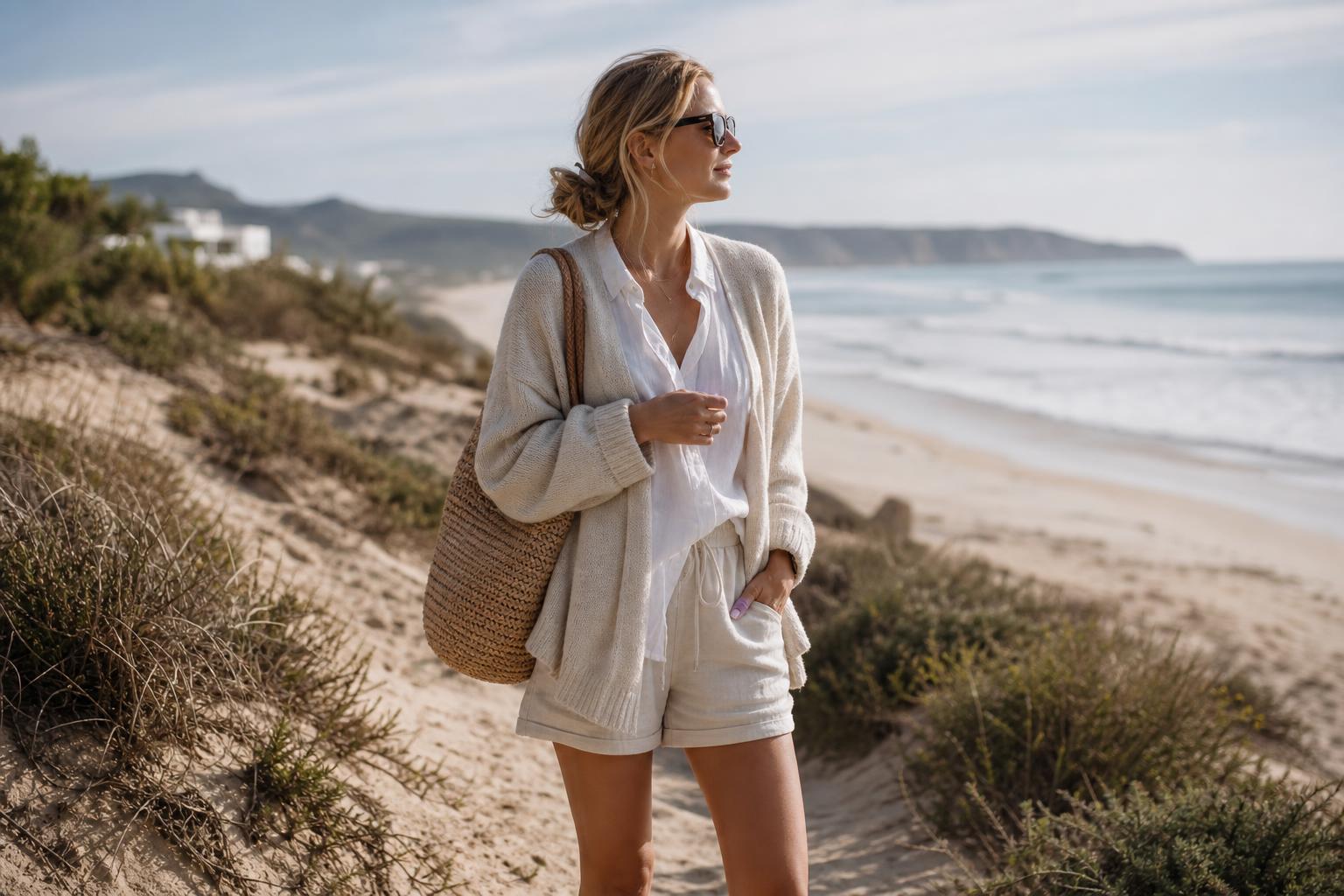
Cozy Beach Outfits for Breezy Coastal Days
There is a particular appeal to cozy beach outfits that goes beyond simple vacation dressing. The mood is quieter than a resort wardrobe and softer than a classic summer capsule. It is about clothes that can handle salt air, shifting temperatures, and the long in-between hours when you are not fully sunbathing, not fully dressed up, but still want the outfit to feel considered.
The aesthetic works because the beach is rarely only one thing. A shoreline morning can start cool, a boardwalk afternoon can feel bright and exposed, and sunset often calls for an extra layer. That makes texture, proportion, and ease more important than trend-heavy styling. The most convincing versions rely on pieces that move naturally between comfort and polish.
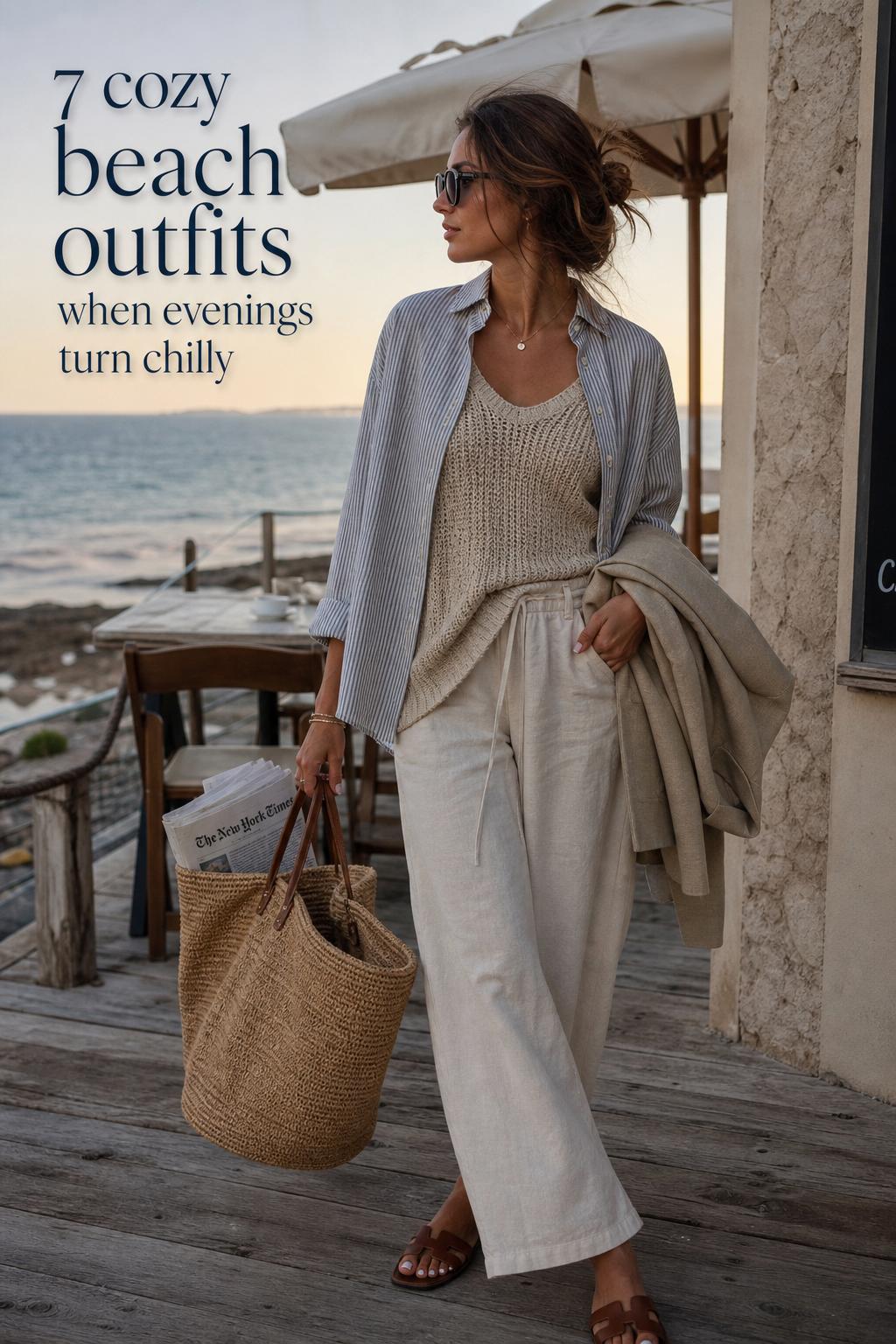
In real life, cozy beach outfits show up everywhere from weekend coastal walks to casual seaside dinners, travel days, breezy bonfire gatherings, and slow vacation mornings. They feel aspirational because the imagery is relaxed and atmospheric, yet they remain wearable because the core formula is practical: light layers, touchable fabrics, flexible silhouettes, and enough structure to keep the outfit from reading like loungewear.
What defines cozy beach outfits
The defining quality is balance. Beach dressing often leans in one of two directions: very minimal swim-cover styling or fully styled vacation fashion. Cozy beach outfits sit between those extremes. They combine comfort-led pieces with intentional outfit composition, usually through tonal layering, soft contrast, and silhouettes that feel easy without becoming shapeless.

Found the dress? Keep the rest in one place.
Zarellea brings guest details, vendors, timelines, and every next step together — so your wedding plan feels as good as your look.
At the center of the aesthetic are products that naturally support comfort and movement: knits, oversized shirts, relaxed trousers, easy dresses, lightweight layers, sandals, and carryall accessories that can transition from sand to town. The concept is less about a fixed uniform and more about a styling logic. The logic is simple: every piece should either soften the outfit, ground it, or give it a cleaner visual anchor.
This is also why the style feels visually satisfying. The beach environment already provides texture through water, wind, light, and raw landscape. Clothing that echoes that softness tends to work better than hard, overdesigned combinations. A cozy beach outfit should feel integrated with the setting rather than competing against it.
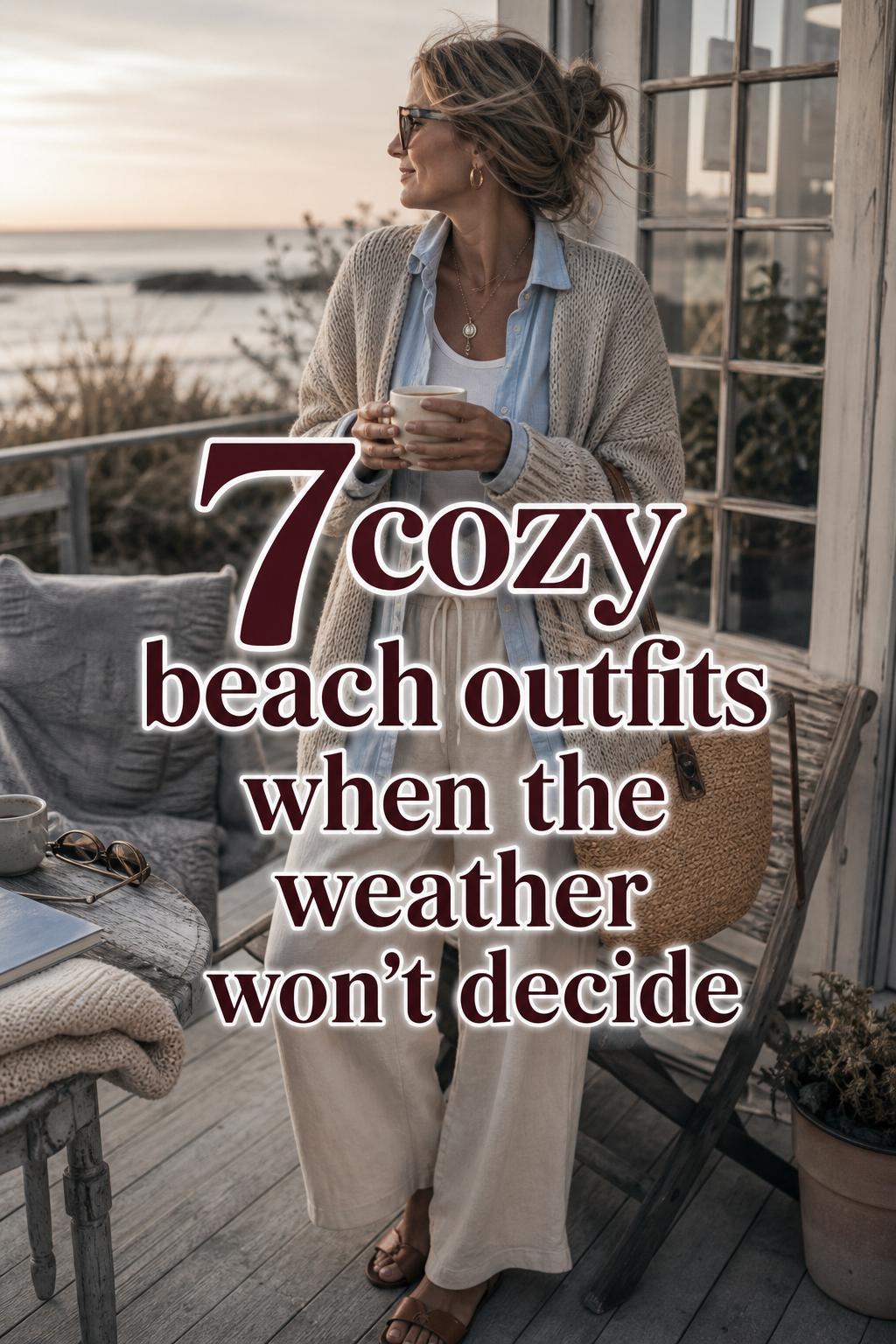
Why the aesthetic resonates
Part of the appeal is emotional. Cozy dressing suggests ease, but at the beach that ease becomes more specific. It means being prepared for temperature shifts, avoiding stiffness, and choosing pieces that can handle sitting, walking, layering, and carrying essentials without constant adjustment. That kind of quiet practicality feels modern.
It also resonates visually because it supports a softer version of style confidence. Instead of relying on statement dressing alone, these outfits create interest through fabric behavior, proportion play, and subtle contrasts. A loose knit over a streamlined base, or a relaxed shirt over swimwear and shorts, offers visual depth without looking forced. The result is a wardrobe language that feels both current and timeless enough to repeat.
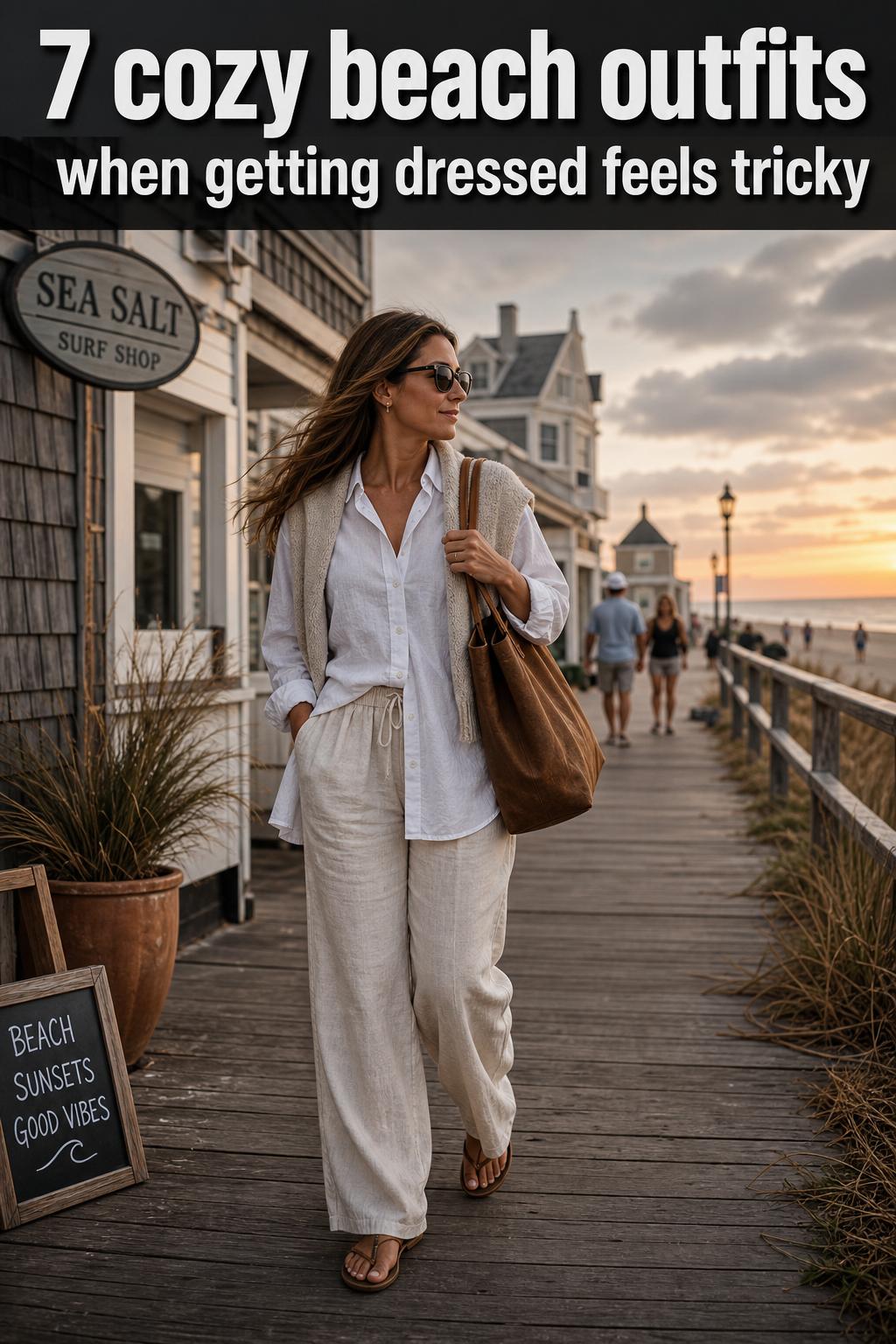
Relaxed layers with a soft minimal edge
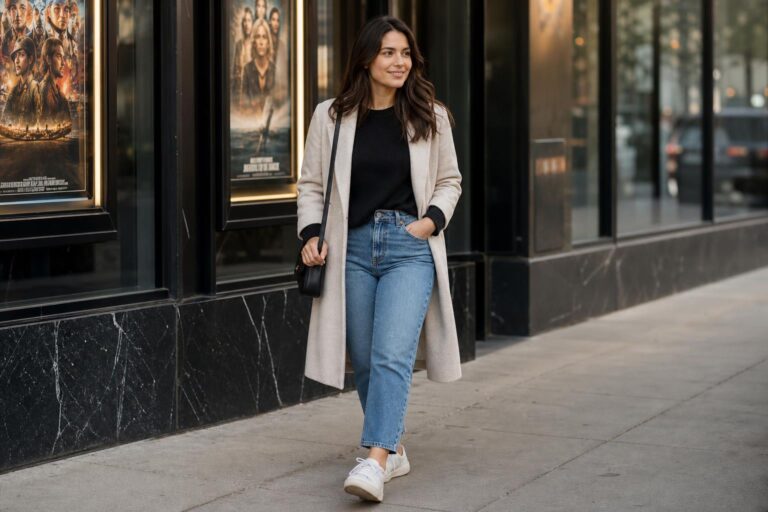
This is one of the clearest expressions of the aesthetic: a lightweight knit or sweater layered over a simple base, with enough openness in the silhouette to feel breezy rather than bundled. The combination works because the knit introduces softness while the beach setting keeps the outfit from feeling too urban or heavy.
For the base, streamlined pieces matter. A slim tank, a simple top, or a clean swimsuit functioning as a bodysuit creates a visual anchor under the softer layer. Pairing that with shorts or relaxed trousers keeps the proportions grounded. If everything is oversized at once, the outfit can lose shape quickly. One loose piece usually needs one more defined element nearby.
Why this combination works
The beach naturally introduces movement, so soft layers perform especially well there. A knit catches wind, adds dimension in photos, and creates a tactile contrast against smoother fabrics. The minimal base prevents the texture from becoming visually busy. That is the core styling equation: one touchable layer, one clean foundation, one practical bottom.
Easy ways to recreate the look
- Start with a neutral or muted base to keep the outfit cohesive.
- Add one soft layer with visible texture rather than multiple competing layers.
- Keep footwear uncomplicated so the upper half remains the focus.
- Use a roomy bag or simple accessory to support the relaxed mood.
If you are rebuilding the look from what you already own, invest first in the outer layer. A good knit or easy long-sleeve layer changes the outfit more than swapping bottoms. It also gives the most flexibility across cooler mornings, air-conditioned travel, and post-sunset walks.
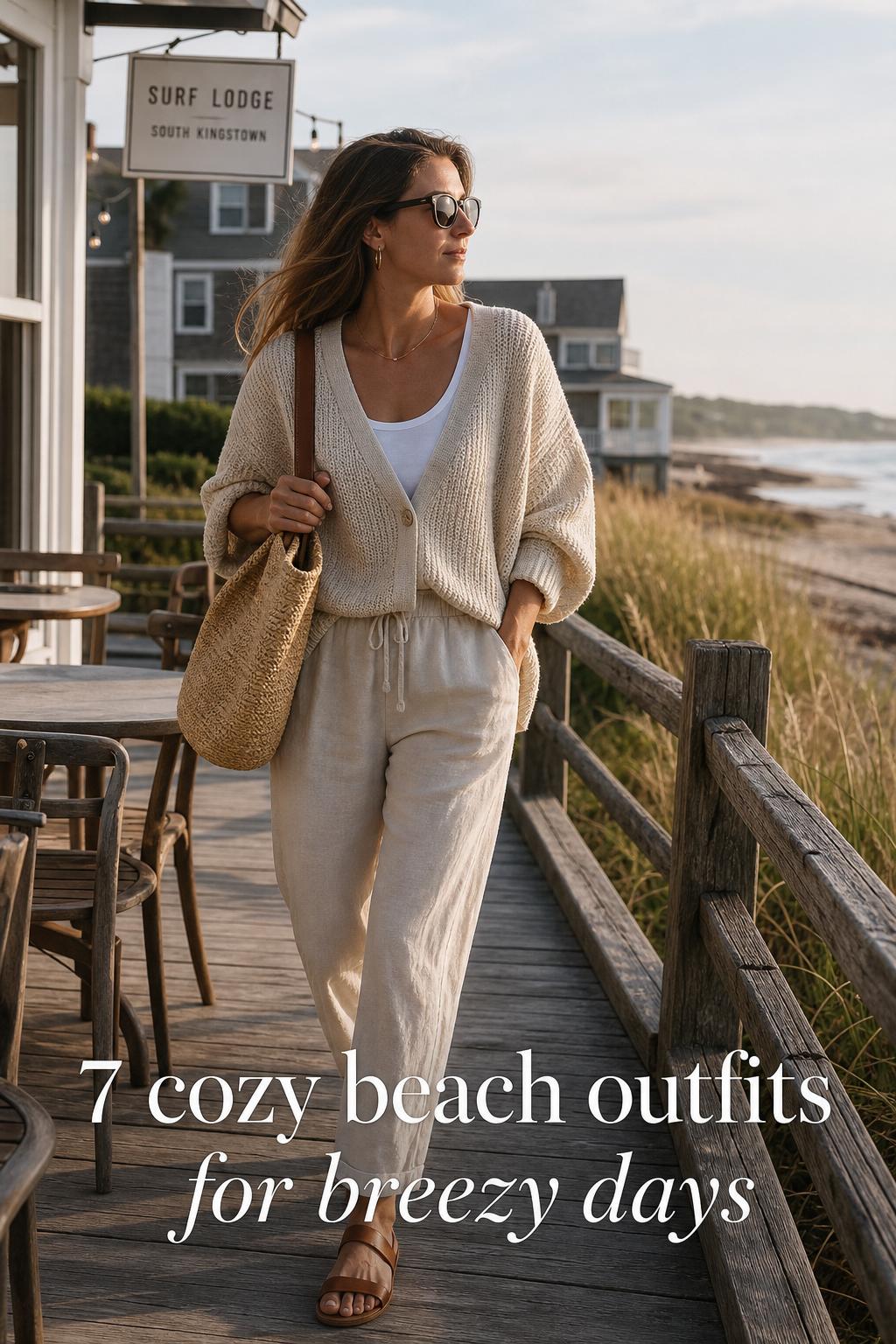
Oversized shirting for that between-beach-and-town ease
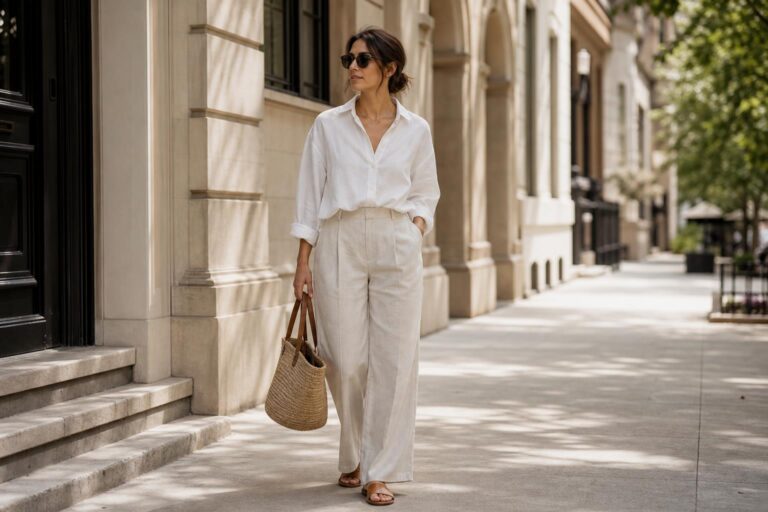
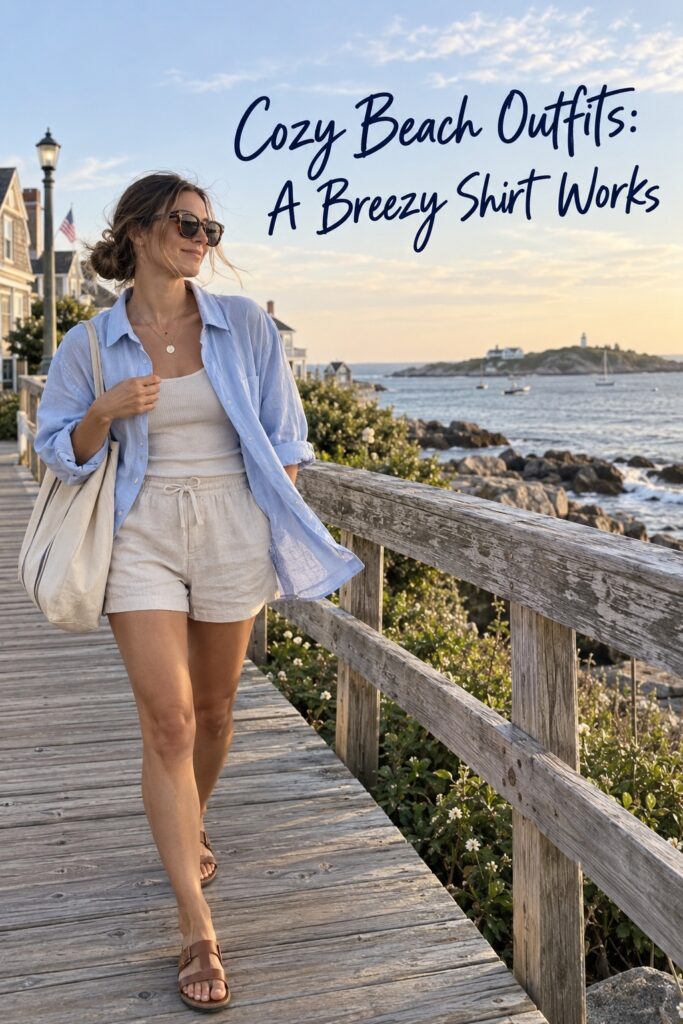
An oversized shirt is one of the most practical components in cozy beach outfits because it can behave like a cover-up, a light jacket, or the main styling piece depending on how it is worn. The effect is polished but not formal, which makes it useful when the day moves from shore to lunch, from pool to errands, or from a hotel balcony to an early dinner.
What makes this approach effective is silhouette control. The shirt is naturally relaxed, so the pieces underneath should either stay abbreviated or visually neat. Swimwear, fitted tops, shorts, or a narrow dress shape allow the shirt to remain the hero piece. Worn over another oversized layer, it can become too heavy in the wrong way and lose the coastal ease that gives it charm.
Style insight
The oversized shirt is often the most versatile item in a beach wardrobe because it solves multiple problems at once: coverage, layering, sun protection, and outfit polish. It also packs easily and can be styled open, half-tucked, tied, or draped. Few pieces offer that much adaptability without making the outfit feel overworked.
To make the look feel intentional rather than thrown on, pay attention to sleeve styling and hem length. A rolled sleeve adds shape near the arms, while a slightly longer hem creates a sense of fluidity. These small adjustments matter because beachwear can quickly slip into accidental styling if the lines are not edited.
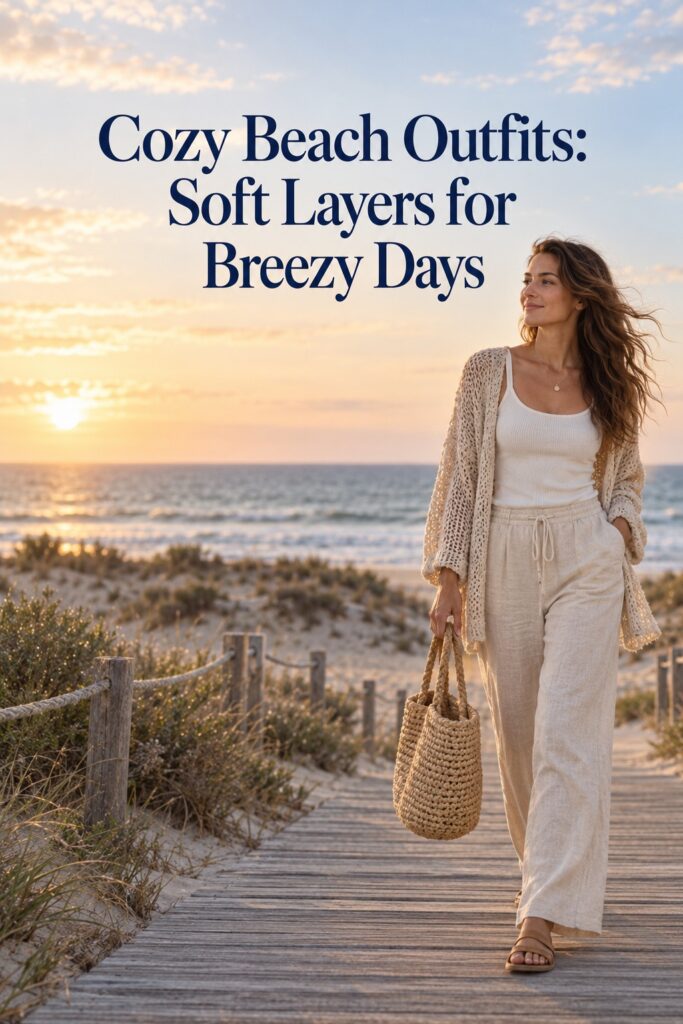
Soft dresses that still hold shape
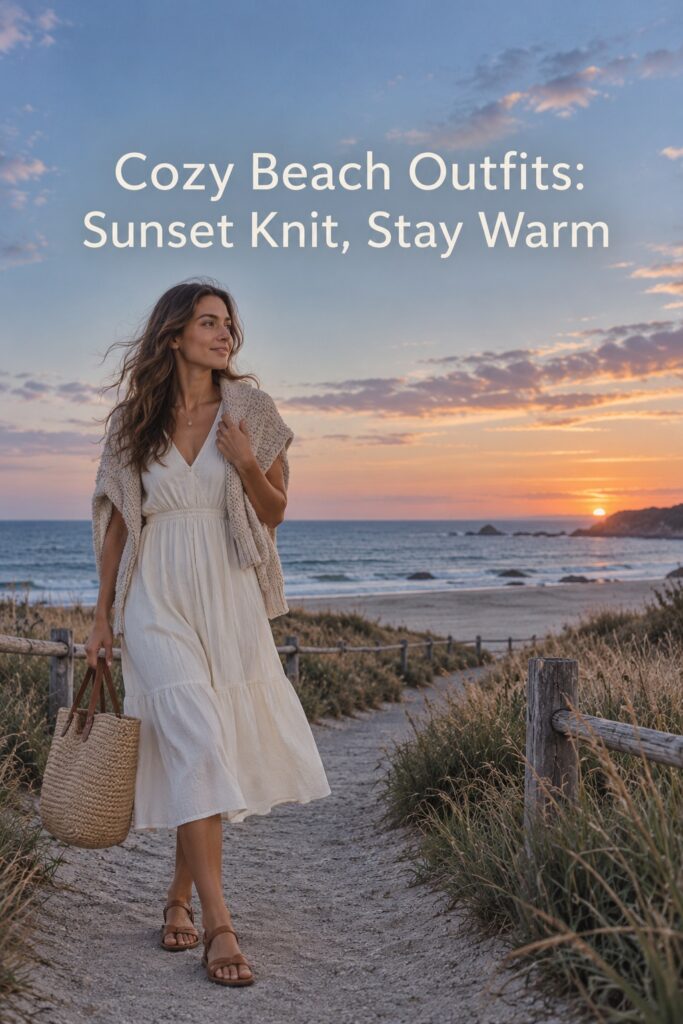
Not every cozy beach outfit needs obvious layering. Sometimes the most effective version is a simple dress with a relaxed profile and just enough structure to maintain form. The key is choosing a dress that feels airy but not flimsy. At the beach, fabric movement is part of the visual appeal, but the silhouette still needs definition.
A soft dress works especially well for readers who want comfort without piecing together separates. It creates an immediate outfit and can shift easily between barefoot sand moments and more dressed coastal settings. The styling challenge is keeping it grounded. A layer over the shoulders, a light shirt, or a practical carryall can prevent the look from feeling too delicate or too occasion-specific.
Key piece breakdown
- A dress with movement, but not excessive volume
- A layer that can be added when wind picks up
- Footwear that supports walking, not just posing
- An accessory with enough presence to anchor the softness
The reason this formula works so well is contrast management. Dresses bring softness naturally, so the supporting pieces should add utility or edge. If every element is equally romantic or loose, the outfit can lose the grounded ease that makes beach styling feel believable in everyday life.
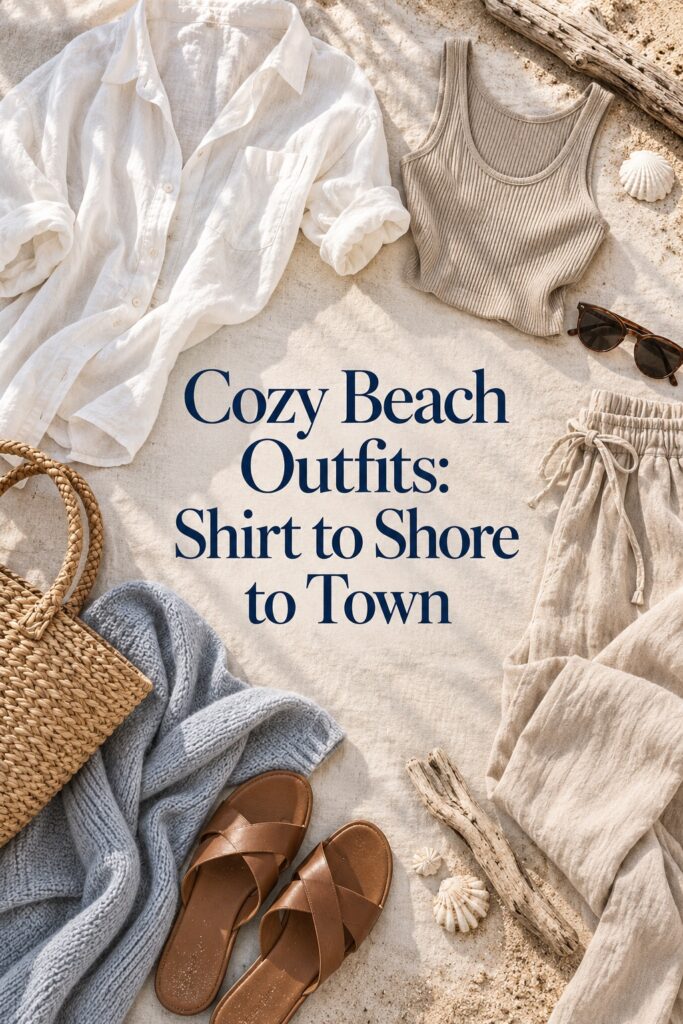
Tonal layering in neutral textures
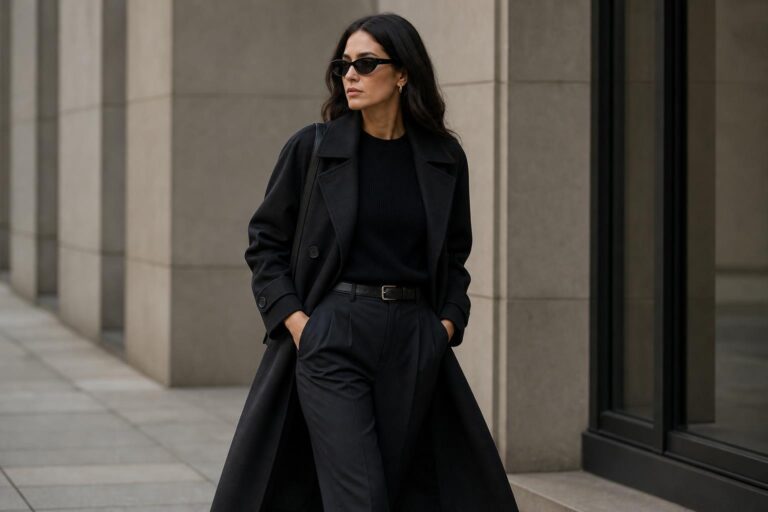
Among the most sophisticated takes on cozy beach outfits is tonal dressing built around neutral textures. Instead of relying on bold contrast, this approach creates depth through slight shifts in shade and fabric. Think a soft layer over a similarly toned base, or a gentle progression between top, bottom, and accessory.
This kind of outfit composition feels elevated because it is quiet. At the beach, where the setting already offers visual drama, a restrained palette often reads more luxurious than an overcomplicated one. Texture does the work that prints or loud color might do elsewhere. A ribbed knit, crisp cotton, or washed fabric can create enough variation on its own.
Why tonal dressing works by the water
Neutral layering echoes the softness of sand, driftwood, sky, and sun-faded surfaces. That visual harmony is one reason it photographs well and feels naturally integrated into coastal settings. It also simplifies packing and repeat wear because pieces combine with minimal effort.
The trade-off is that tonal outfits need stronger attention to proportion. If color contrast is low, silhouette becomes more important. Use one line of structure, whether that is a cleaner shoulder, a defined waist, a straighter leg, or a more substantial accessory. Without that anchor, the outfit can flatten visually.
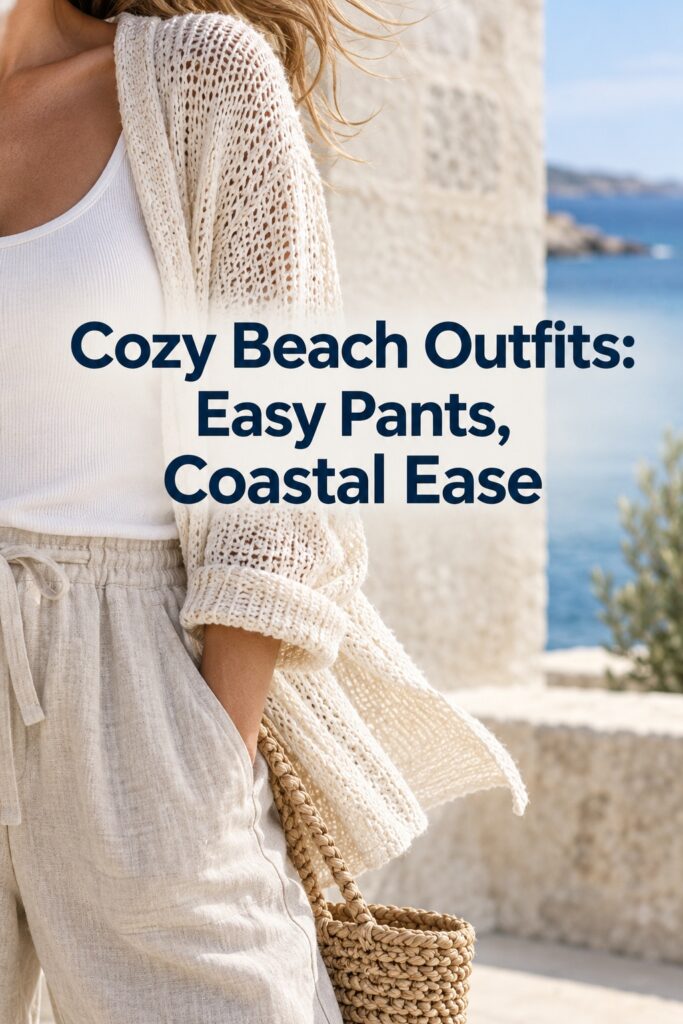
Beach pants and the case for easy structure
Relaxed trousers or beach pants are often overlooked in favor of shorts, but they are one of the smartest choices for a cozy beach wardrobe. They bring instant coverage, feel comfortable in motion, and offer a stronger sense of outfit completion. They also transition more smoothly into non-beach plans than many abbreviated pieces do.
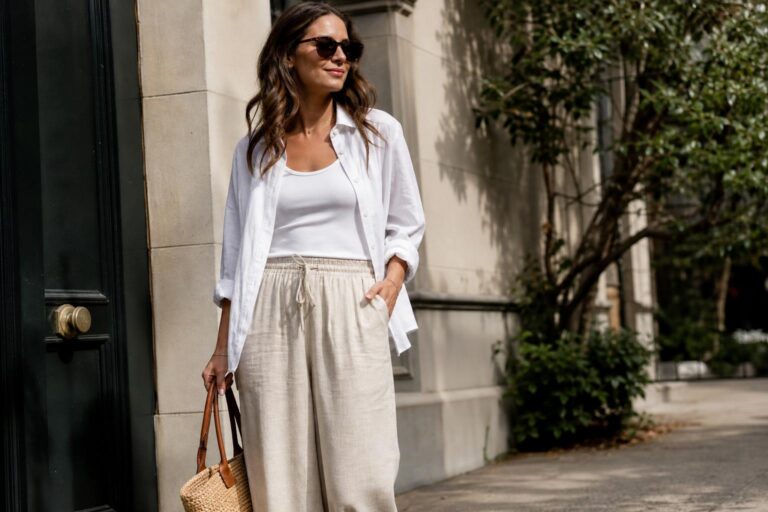
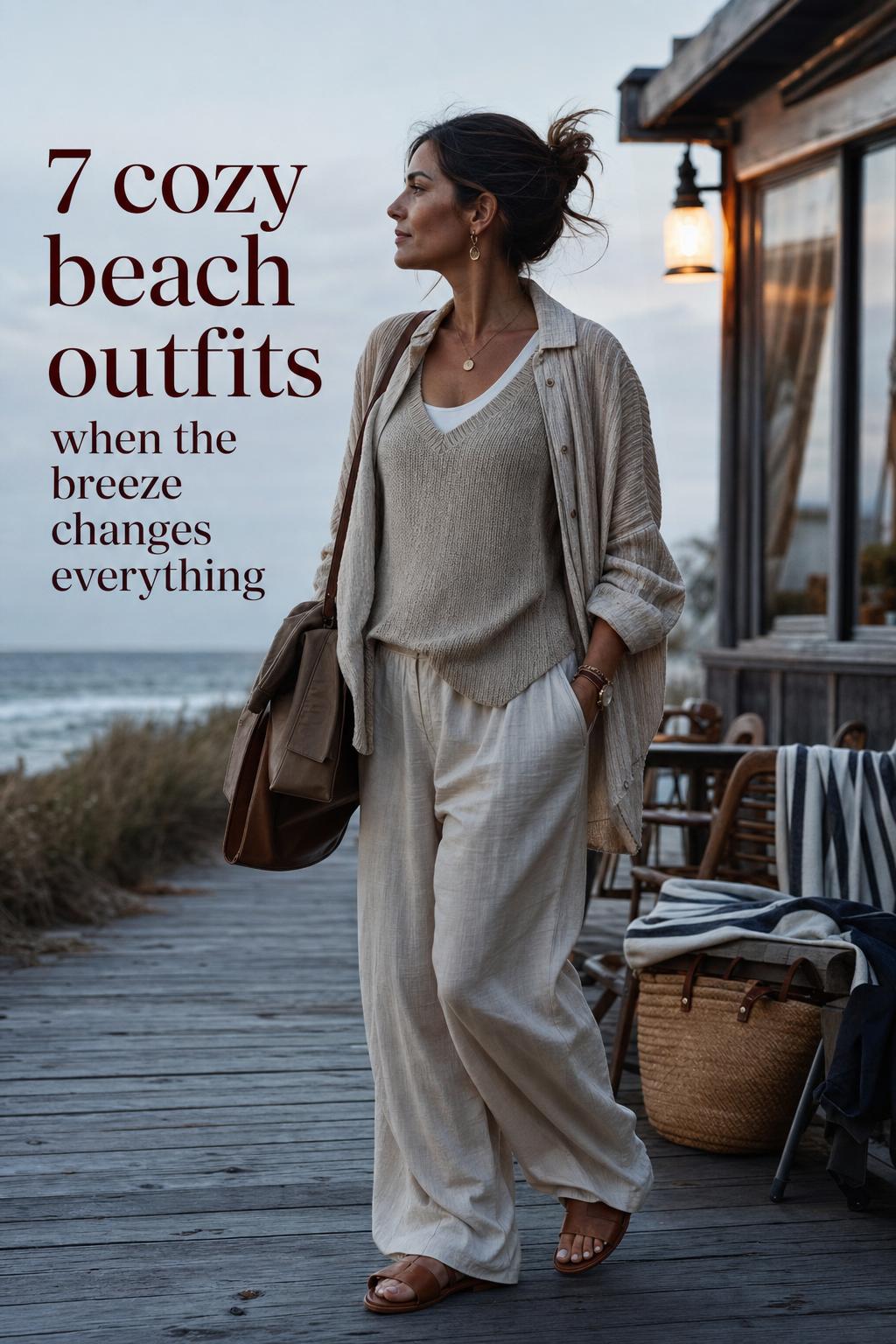
The most successful styling comes from pairing easy structure with softness. If the pants are wide or fluid, the top should provide some clarity, either through a neat fit or a visible layering strategy. A tank with an open shirt, or a simple top under a light knit, keeps the silhouette from becoming too diffuse.
How to wear this in everyday life
This is the version of beach dressing that works best for travel days, boardwalk afternoons, and casual dinners near the water. It offers comfort without looking underdressed. For readers who want their beach wardrobe to function beyond the shoreline, relaxed trousers are often the best first purchase because they can be reworked repeatedly with tops and layers already in the closet.
Body-type considerations matter here too. A wider leg can feel elegant and lengthening when the rise and hem are right, but if the fabric is too voluminous and the top is equally oversized, the look may lose balance. Aim for one defined point in the outfit, whether at the shoulder, waist, or ankle.
Cozy beach outfits for cool mornings and late sunsets
This is where the aesthetic becomes especially useful. A beach wardrobe that only works in direct midday sun is limited. The more wearable version accounts for the hours when the temperature drops, the wind changes, or the itinerary stretches unexpectedly. Layers become less decorative and more essential.
A good cool-weather coastal outfit often begins with a foundation that still feels seasonally light, then adds one insulating but breathable layer. That might mean a simple base with a knit, a dress with an oversized shirt, or a minimal outfit finished with a wrap-like piece that can be removed when the day warms up. The success of the look depends on keeping the layers soft and mobile rather than bulky.
Tips for handling temperature shifts
- Choose layers that can be carried or tied easily when the weather changes.
- Keep the base outfit complete on its own so removing a layer does not leave the look unfinished.
- Avoid overly thick pieces that feel disconnected from the beach environment.
- Use accessories to add comfort rather than more garments when possible.
The point is not to dress warmly in a heavy way. It is to maintain the visual ease of beachwear while building in enough protection for a realistic day near the water.
When softness needs contrast
One common issue with cozy beach outfits is over-softening the entire look. If every piece is draped, loose, pale, and unstructured, the outfit can read sleepy rather than refined. The better approach is to use contrast strategically. That contrast does not need to be dramatic. It can be as subtle as pairing a fluid piece with a cleaner line or balancing an oversized layer with a more compact base.
This is where styling intelligence matters more than shopping. You do not always need a new wardrobe to make the aesthetic work. Often, you only need to identify the piece that provides definition. That could be a sharper shirt collar, a more streamlined sandal, a better-proportioned short, or a bag with enough structure to visually hold the outfit together.
Styling mistakes to avoid
- Layering too many oversized pieces at once
- Using fabrics that feel too heavy for a coastal setting
- Ignoring footwear practicality on sand, pavement, or boardwalk surfaces
- Choosing only aesthetic pieces and forgetting temperature changes
- Building a tonal outfit without any silhouette definition
These adjustments seem minor, but they are often what separate a stylish beach outfit from one that feels costume-like or impractical.
Accessories that support the mood instead of interrupting it
Accessories in cozy beach outfits should extend the visual language of ease, not compete with it. The goal is cohesion. If the clothing relies on softness, layering, and natural movement, the accessories should reinforce those qualities through proportion and simplicity.
Carryalls, practical sandals, and understated finishing pieces tend to work best because they preserve mobility. The beach environment asks a lot from accessories: they need to handle movement, carry essentials, and transition through multiple settings. A bag that is too precious or shoes that only suit one surface can limit the whole outfit.
Most versatile accessory approach
Choose one accessory with utility and one with visual presence. That formula keeps the outfit from becoming cluttered. For example, if the bag is roomy and practical, the footwear can remain clean and minimal. If the sandals have stronger personality, keep the other details quieter. This editing principle helps maintain that effortless coastal finish.
How to build cozy beach outfits from pieces you already own
The easiest way to approach this aesthetic is to think in layers and functions rather than complete new looks. Most wardrobes already contain some version of the necessary components: a soft layer, a simple base, a relaxed bottom, and easy shoes. The styling shift comes from how those pieces are combined and edited.
Start by identifying garments that feel breathable, comfortable, and visually calm. Then separate them into three roles: foundation pieces, softening pieces, and grounding pieces. A foundation piece might be a tank, swimsuit, or simple dress. A softening piece might be a knit or oversized shirt. A grounding piece might be trousers, shorts, or a practical bag that gives the outfit clearer structure.
Budget-friendly alternative mindset
Instead of chasing exact outfits, focus on replacing only the missing category. If you already own a strong base and bottoms, the most useful addition may be one lightweight layer. If you have the layers but the outfits still feel flat, better footwear or a more functional bag may solve the problem faster than buying more clothing. This approach keeps the wardrobe cohesive and avoids overbuying for a single trip or season.
Context matters: matching the outfit to the beach plan
The best cozy beach outfits respond to what the day actually requires. A shoreline walk, a boardwalk lunch, a beachside dinner, and a casual bonfire do not ask for the same outfit, even if the aesthetic remains consistent. Styling decisions should shift according to movement, temperature, and how long you plan to stay out.
For a morning beach walk, lighter layering and easier footwear matter most. For a longer day that includes indoor stops, choose a more complete outfit base that can stand on its own once layers come off. For sunset or evening, prioritize pieces that keep warmth close to the body without introducing bulk. This is where knits, oversized shirts, and easy trousers become especially reliable.
Practical outfit planning checklist
- Will you be sitting on sand, walking through town, or doing both?
- Does your base outfit still work if you remove the outer layer?
- Can your shoes handle different surfaces comfortably?
- Do you have one piece that adds warmth for late-day wind?
- Is the outfit visually balanced when viewed as a full silhouette, not just separate pieces?
This kind of planning makes the wardrobe feel intentional and helps avoid the familiar beach mistake of dressing for one perfect photo moment rather than the full day.
Silhouette strategies that make the aesthetic feel elevated
Cozy dressing can sometimes be mistaken for oversized dressing, but the strongest beach outfits rely on proportion, not just looseness. Elevation comes from understanding where the eye lands. A broad top shape may need a cleaner lower half. A flowing bottom often benefits from a more compact upper line. A soft dress may need a stronger accessory to create a visual anchor.
The reason this matters is simple: beach outfits are exposed to movement and light. Every imbalance becomes more visible outdoors. Strong silhouette balance keeps the outfit looking composed from multiple angles and through changing conditions. It is one of the easiest ways to make comfort read as intentional style instead of default casualness.
Quick proportion rules that usually work
- If the top layer is oversized, keep the base or bottom more concise.
- If the trousers are wide, use a top with clearer shape or layering definition.
- If the dress is very fluid, anchor it with a sharper or more practical accessory.
- If the palette is quiet, rely more on texture and shape for interest.
These are not rigid rules, but they are useful starting points when an outfit feels close to right without fully landing.
The pieces worth prioritizing first
When building a more functional coastal wardrobe, a few pieces consistently do the most work. They are not always the most dramatic items, but they create the most combinations and solve the biggest styling gaps. Prioritizing them makes the aesthetic easier to sustain instead of relying on one-time outfits.
- A lightweight knit or soft outer layer for warmth and texture
- An oversized shirt that can function as cover-up, layer, or main styling piece
- Relaxed shorts or beach pants that support movement and versatility
- A simple dress that can be styled up or down with layers
- Practical footwear suited to coastal surfaces and long wear
- A bag that carries essentials without disrupting the outfit line
If budget is limited, start with the layer. It changes the widest range of outfits and extends wear across more times of day. After that, choose whichever category your wardrobe lacks most: a stronger bottom, a more useful shirt, or better footwear. The goal is not quantity. It is outfit flexibility.
Cozy does not mean careless
The most convincing cozy beach outfits share a certain precision beneath the ease. They may look effortless, but they usually rely on deliberate choices about fabric weight, layering order, hem length, and silhouette balance. That precision is what keeps the outfit from feeling like sleepwear, gym wear, or an unfinished vacation look.
In practice, this means editing with intention. Remove one layer if the outfit feels bulky. Add one grounding piece if it feels too soft. Choose one focal texture rather than several. The beach naturally softens everything visually, so the styling does not need much force. Often, the strongest result comes from doing slightly less, but doing it more thoughtfully.
FAQ
What are the essential pieces for cozy beach outfits?
The most useful essentials are a lightweight knit, an oversized shirt, a simple base such as a tank or swimsuit, relaxed shorts or beach pants, practical sandals, and a functional bag. These pieces create multiple outfit combinations while keeping the wardrobe comfortable and adaptable.
How do I make a beach outfit feel cozy without looking too heavy?
Use light layers rather than bulky ones and keep the base outfit streamlined. Soft texture creates warmth visually, but the fabric should still feel breathable and appropriate for a coastal setting. One textured layer is usually enough to create the cozy effect.
Are cozy beach outfits only for cool weather?
No. The aesthetic works in warm weather too because it is based on flexibility, not thickness. A cozy beach outfit can be as simple as a light shirt over a minimal base or a soft dress with practical accessories. The point is comfort, softness, and realistic layering for changing conditions.
What shoes work best with cozy beach outfits?
Footwear should support movement and suit more than one surface. Simple sandals usually work best because they keep the outfit light and practical. The most successful options do not interrupt the relaxed line of the outfit or limit where you can comfortably walk.
How can I wear cozy beach outfits if I do not want shorts?
Relaxed beach pants are one of the best alternatives. They offer coverage, comfort, and stronger outfit structure while still feeling easy. Pair them with a simple top and one soft layer so the silhouette stays balanced rather than overly loose.
What colors work best for cozy beach outfits?
Tonal and neutral palettes often work especially well because they let texture and shape stand out. That said, the most important factor is cohesion. A quieter palette generally feels more integrated with the beach environment and makes layering easier to repeat.
How do I avoid looking sloppy in relaxed beach clothes?
Focus on proportion and one clear visual anchor. If one piece is oversized, keep another piece more defined. Use accessories with purpose, watch hem lengths, and make sure the outfit still has shape when viewed as a full silhouette. Relaxed clothing looks better when there is at least one element of structure.
Can I create cozy beach outfits without buying a whole new wardrobe?
Yes. Start with what you already own and identify the roles each item can play: base, layer, or grounding piece. Most people already have at least some version of the formula. Usually, one better layer or one more practical bottom is enough to make existing outfits feel more cohesive.
What makes cozy beach outfits feel aspirational but still wearable?
The combination of softness and function is what creates that balance. These outfits feel elevated because of their texture, restraint, and proportion, but they stay wearable because they account for movement, weather changes, and real-day comfort. That is why the aesthetic works so well beyond a single beach moment.
Cozy beach outfits remain compelling because they meet fashion at the point of real life. They allow for softness without sacrificing structure, comfort without losing intention, and atmosphere without becoming impractical. The most memorable versions are rarely the most complicated. They are the ones that understand the setting, respect movement, and leave enough room for personal styling to come through naturally.