Edgy Minimalist Fashion for a Cool, City-Ready Wardrobe
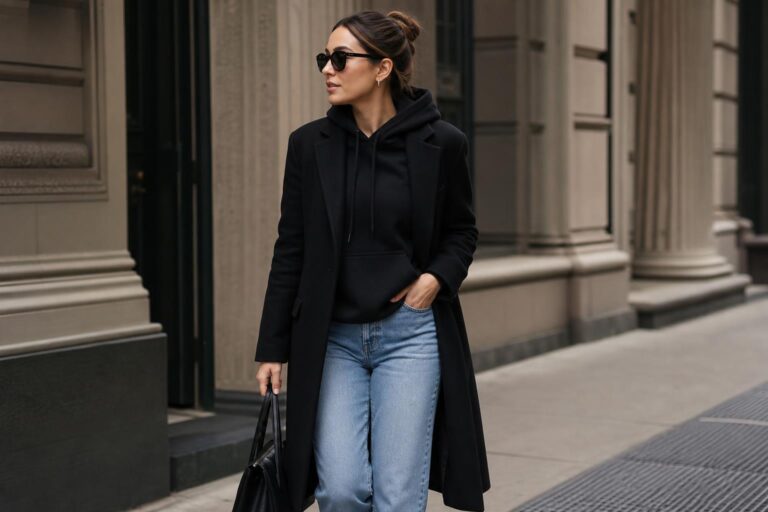
There is a reason edgy minimalist fashion keeps pulling people in. It offers the restraint of minimalism, but it refuses to disappear. The lines are clean, the palette is often quiet, and the wardrobe can look highly controlled at first glance, yet one sharp seam, one matte leather finish, one piece of black steel hardware, or one structured coat can shift the entire mood from calm to commanding.
That tension is exactly what makes the aesthetic so relevant now. In a fashion landscape where many people want less clutter, better outfit repeatability, and a more intentional closet, edgy minimalism answers a practical need. At the same time, it preserves personality. It is not the softness of coastal simplicity, and it is not the logo-heavy language of louder streetwear. It sits somewhere between discipline and disruption.
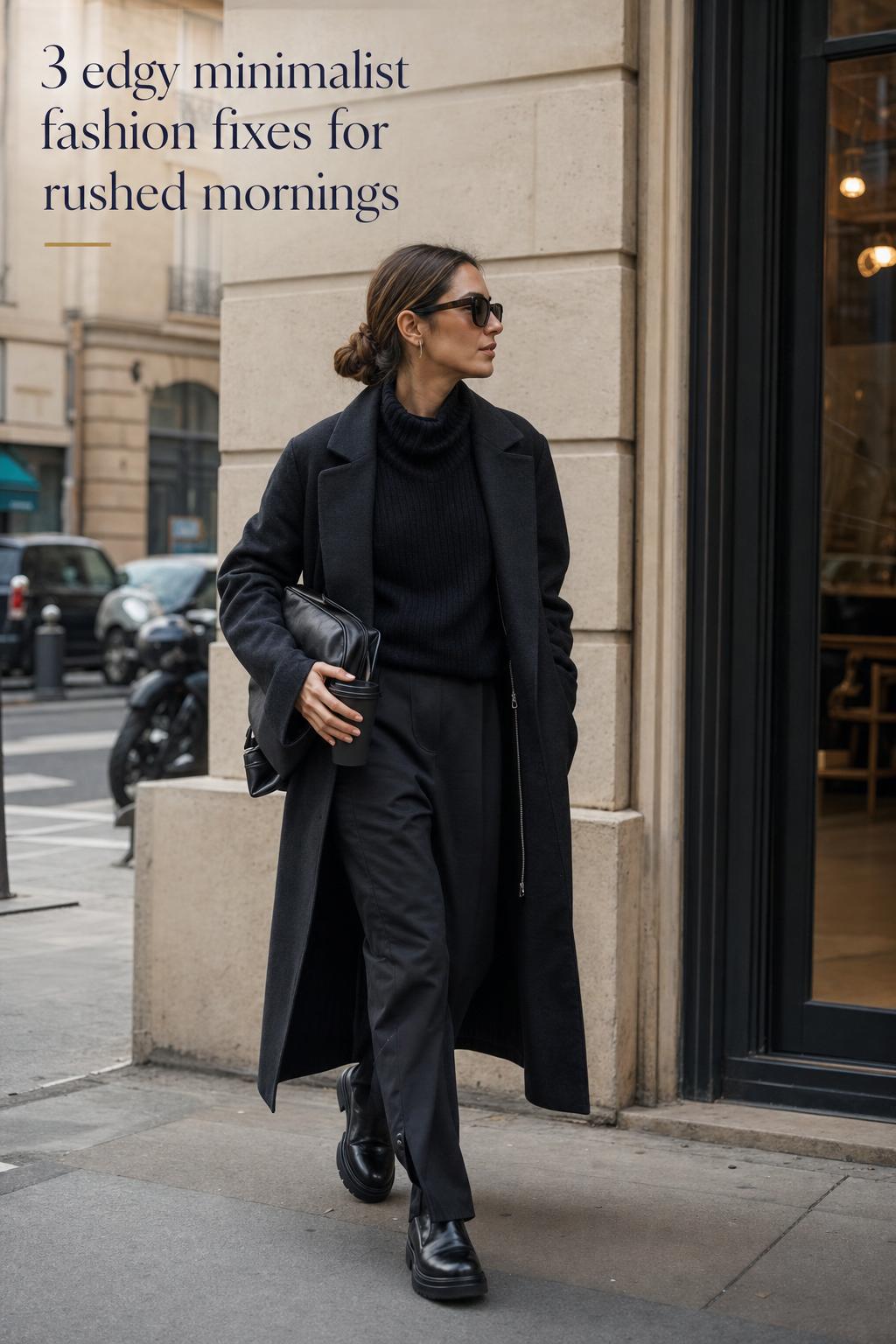
People often confuse edgy minimalism with classic minimalist fashion because both rely on clean lines, neutral tones, and a controlled visual field. The difference is felt more than announced. One aims for purity and ease. The other introduces tension through texture, hardware accents, sculptural shapes, or a slightly darker, more urban mood. That distinction matters when you are building a wardrobe that needs to function in real life, whether you dress for everyday errands, an office setting, travel, or evening plans.
Understanding edgy minimalist fashion is less about memorizing a checklist and more about learning to recognize visual logic: where silhouette carries authority, where accessories create friction, and where a capsule wardrobe can feel polished without becoming predictable.
Found the dress? Keep the rest in one place.
Zarellea brings guest details, vendors, timelines, and every next step together — so your wedding plan feels as good as your look.
What gives edgy minimalism its distinctive mood
At its core, edgy minimalism is a styling philosophy built on contrast within restraint. Minimalism supplies the framework: reduced clutter, strong proportions, tonal dressing, and pieces that earn their place through function and repeat wear. The edge comes from controlled disruption. That can mean a jacket with strong structure, a zipper placed as a visual anchor, a sculptural knit, a sharp boot, or a bag that introduces attitude without overwhelming the look.
Visually, the aesthetic tends to communicate self-possession. Traditional minimalist dressing can read serene, polished, and understated. Edgy minimalism reads more directional. It often feels closer to modern goth-minimalism, sculptural minimalism, or minimal streetwear than to purely classic dressing. Even when the outfit uses familiar basics such as a tee, tailored trousers, or a long coat, the composition is less about softness and more about tension, precision, and shape.
This is also why the aesthetic works so well in capsule wardrobes. A tightly edited closet depends on items being versatile, but versatility does not have to mean blandness. Texture, matte finishes, technical fabrics, clean seams, and subtle hardware allow a small wardrobe to express more than one mood without losing coherence.
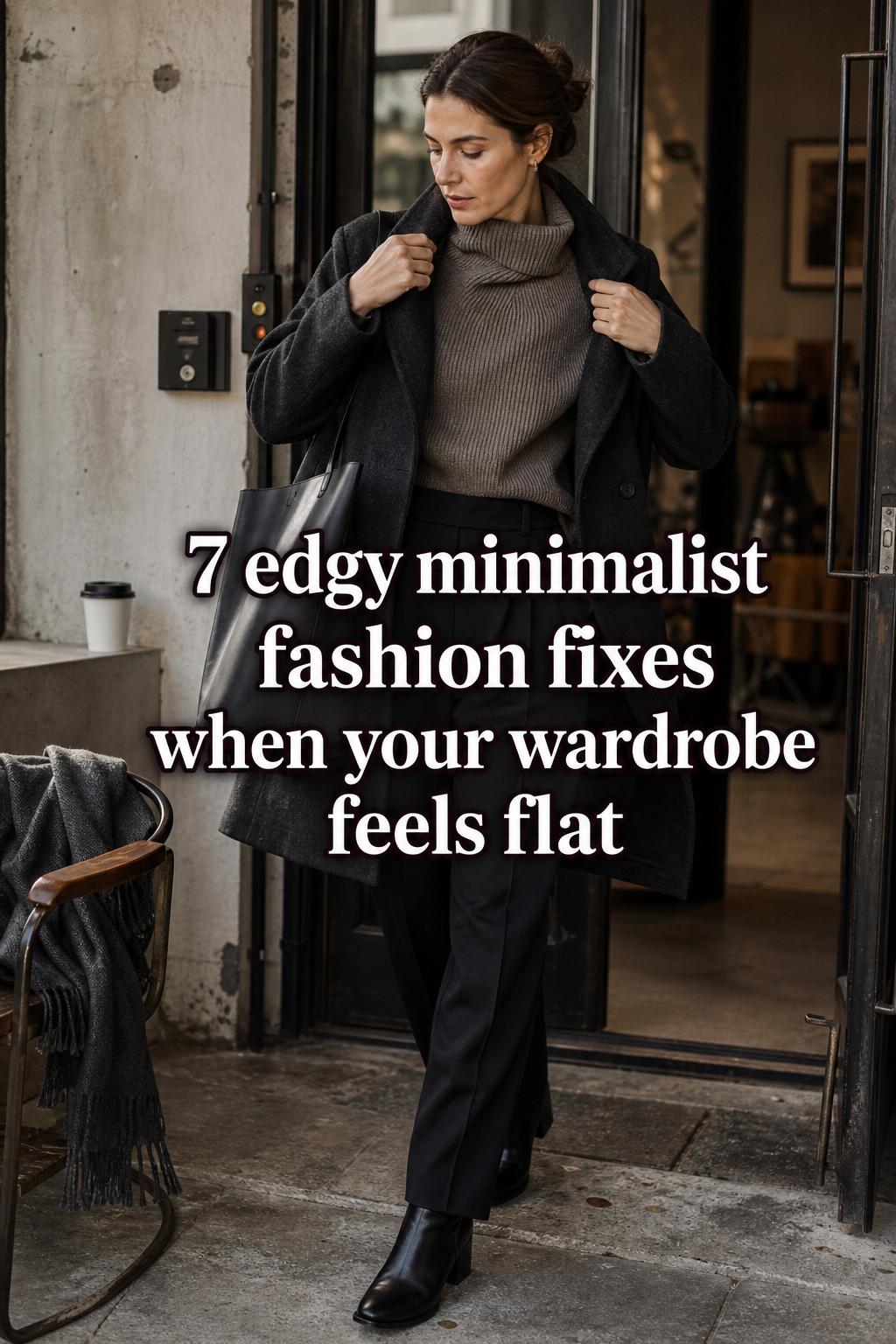
The visual split: classic minimalist dressing versus minimalism with edge
The easiest way to understand the category is to compare two nearly identical wardrobes and observe what changes. A classic minimalist outfit may rely on streamlined trousers, a fine knit, and simple footwear with barely visible details. An edgy minimalist outfit might use the same silhouette base, but the knit becomes sculptural, the footwear gains a chunky sole, the outerwear introduces stronger shoulders, or the accessories add hardware accents that sharpen the mood.
This difference is not about adding more. It is about changing the visual temperature. Classic minimalism tends to create calm and continuity. Edgy minimalism creates intent and contrast. The outfit still looks controlled, but it also appears more urban, more directional, and often more individual.
That is why brands are useful reference points here. The Row, COS, and Totême often anchor conversations around minimalist fashion because they help define the language of clean silhouettes and modern restraint. J.Crew’s spring collection, framed through a 1990s-era minimalism-with-a-twist lens, shows how minimal silhouettes can gain personality through styling details. Psylo Fashion pushes the spectrum further toward alternative, ethically handmade streetwear, showing how an edgy minimalist sensibility can also connect to sustainability and bolder design choices.
The key visual difference
If classic minimalist style is about removal, edgy minimalism is about selective emphasis. The outfit is still edited, but it preserves one or two deliberate points of tension. That editing discipline is what keeps the look modern rather than costume-like.
Silhouette is where the attitude begins
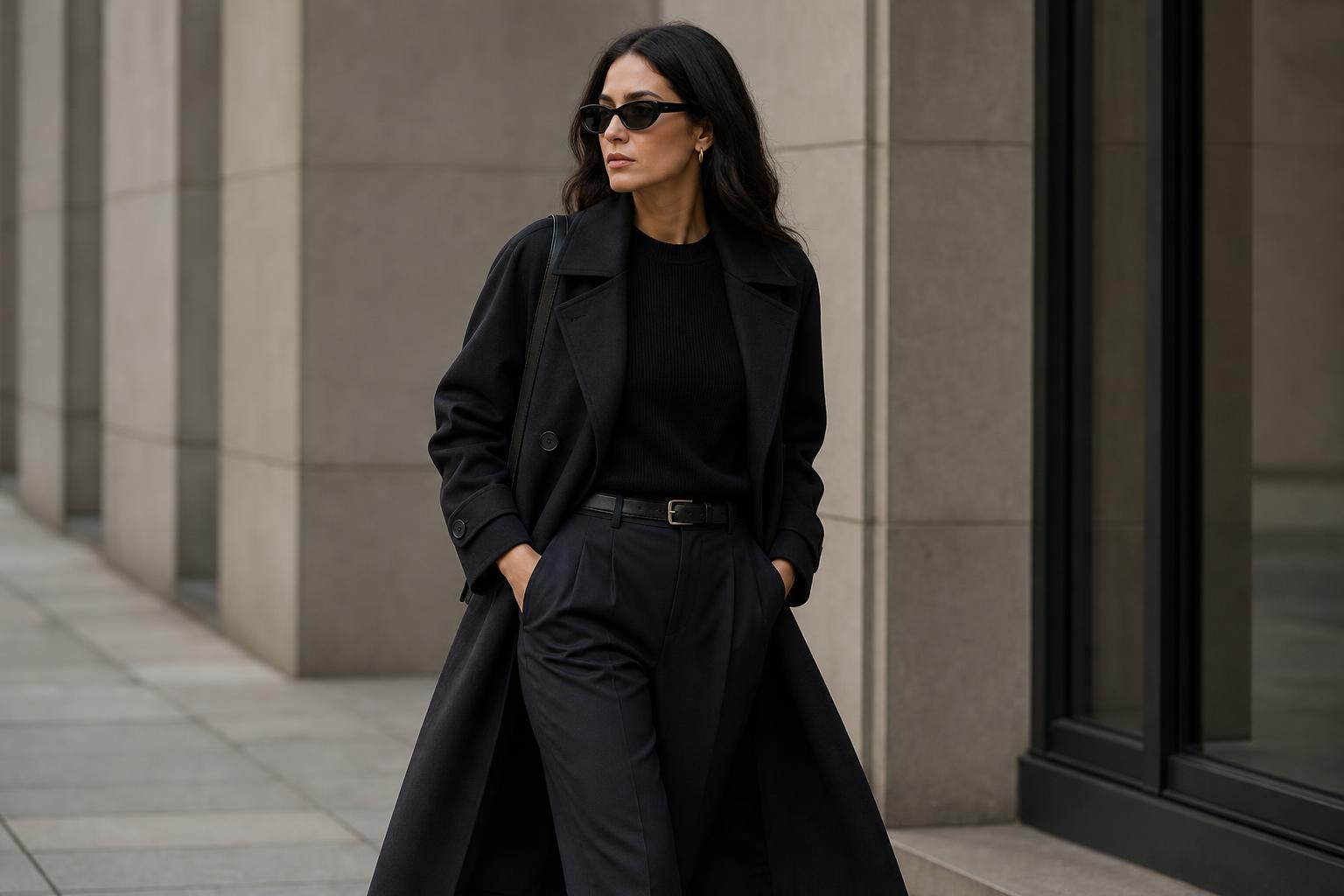
Silhouette does most of the work in edgy minimalist fashion. Before color, before accessories, before even fabric, the outline decides whether the look feels refined, severe, relaxed, architectural, or too conventional. Clean lines are essential, but in this aesthetic they often appear with stronger shape language: structured coats, tailored trousers, streamlined skirts, elongated layers, and jackets that hold form rather than collapse into softness.
Architectural shapes matter because they create presence without requiring loud decoration. A straight coat over narrow trousers reads very differently from the same coat over slouchier bottoms. A sculptural knit changes a simple base layer into a statement. This is why edgy minimalist dressing often feels more intentional in movement. The clothing creates a stronger frame around the body.
For readers trying to assess wearability, this is an important point. A strong silhouette can be more forgiving than an overly detailed outfit because it creates a clear line of focus. But it can also feel demanding if proportion is ignored. Too many oversized elements at once can flatten the edge and make the look heavy. Too much tailoring without textural contrast can make the outfit feel corporate rather than fashion-aware.
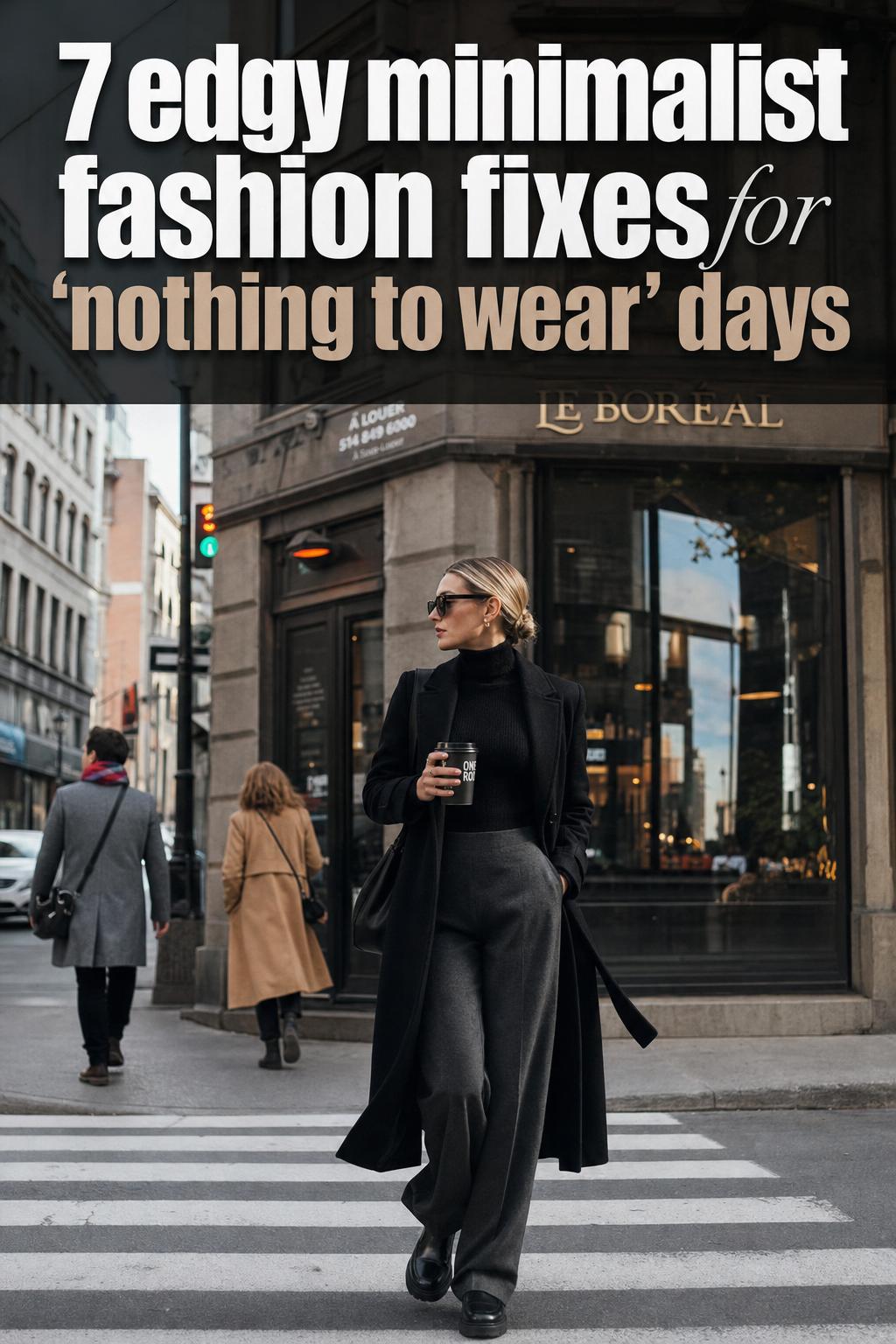
Tips for making silhouette feel intentional
- Keep one dominant line in the outfit, such as a long coat, tailored trouser, or sculptural top.
- Balance sharp outerwear with simpler underlayers so the shape remains the visual anchor.
- Use proportion play carefully: if the coat is oversized, keep the base layer more streamlined.
- Let footwear support the silhouette rather than interrupt it.
The wardrobe pieces that build the look without overbuilding the closet
The strongest edgy minimalist wardrobes usually look smaller than they are because the pieces work in multiple combinations. This is where the capsule wardrobe approach becomes useful. Instead of collecting many statement items, the aesthetic favors a controlled set of basics with strategic edge built in.
Tops that hold shape and mood
Neutral tees are foundational because they create visual space. But in edgy minimalist styling, they are often paired with pieces that sharpen the mood: a statement jacket, hardware-heavy belt, or structured coat. Sculptural knits add more tension because texture gives minimal dressing depth without introducing visual noise. A basic top should not compete; it should stabilize the look.
Bottoms that create line rather than distraction
Tailored trousers are central because they deliver clean structure and can move between workwear, weekend dressing, and evening styling. Streamlined skirts serve a similar role when the goal is a sleeker outline. In both cases, the most effective shapes avoid excessive volume. The edge comes from precision and proportion, not decorative complexity.
Outerwear that acts as the visual anchor
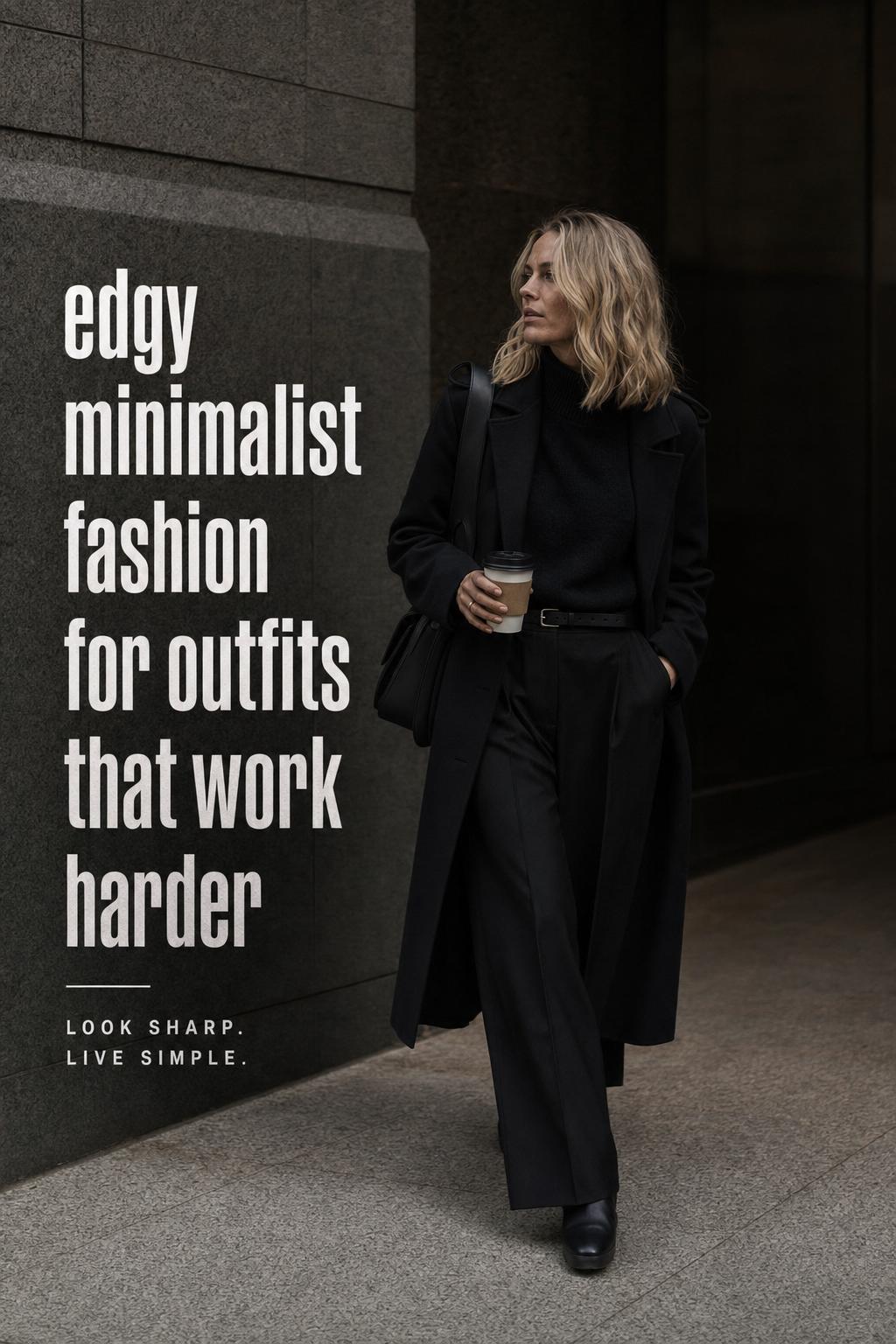
Outerwear is where edgy minimalism becomes unmistakable. Structured coats, statement jackets, and sharper layering pieces establish authority immediately. In seasonal dressing, especially spring and fall, outerwear also determines whether a capsule wardrobe feels repetitive or fully styled. One strong coat can transform basics into a recognizable point of view.
Footwear that finishes the line
Footwear is an underused but crucial category in this aesthetic. Minimalist silhouettes with bold details, including boots or chunky sole sneakers, can shift an outfit from standard minimal to edgy minimal. The goal is not bulk for its own sake. It is controlled weight at the base of the outfit. That weight helps structured layers feel grounded.
Accessories with attitude
Accessories should punctuate, not crowd. Hardware, belts, jewelry, bags, hats, and even chokers can support the aesthetic when they are integrated with discipline. A minimal outfit does not need many accessories, but the ones it includes should have visual purpose. That is what creates the sense of attitude without clutter.
Materials do the quiet work that color often does in other aesthetics
In edgy minimalist fashion, texture contrast is often more important than bright color contrast. Since many outfits rely on neutrals and a reduced palette, materials become the tool that keeps the composition alive. Matte leather, suiting fabrics, wool, cashmere, and technical fabrics all support different versions of the same aesthetic.
Cashmere and wool soften structure without making it passive. Suiting fabrics sharpen line and increase polish. Matte leather introduces attitude while staying aligned with minimalism because the surface itself acts as the statement. Technical fabrics bring a contemporary, slightly utilitarian quality that can make minimal silhouettes feel more urban and modern.
Details matter just as much as fabric choice. Zippers, seams, hardware, and closures become part of the visual language. They are not decoration in the conventional sense. They are tension points. A clean outfit with one visible zipper or black steel hardware can feel significantly more directional than an equally simple outfit with no points of interruption.
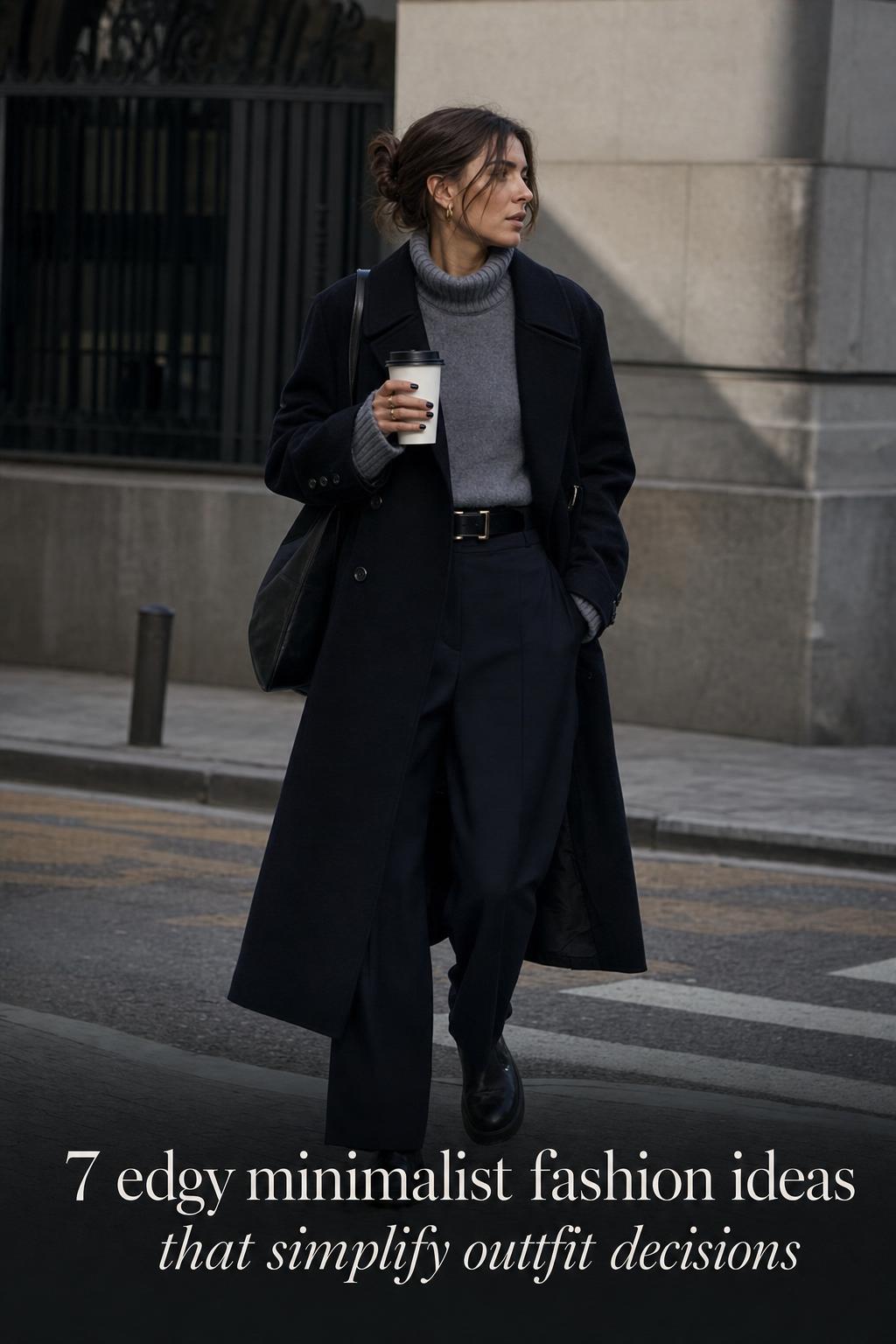
Why this combination works
A minimal base with strong material contrast creates depth without sacrificing clarity. That is the ideal balance for readers who want an edited wardrobe that still feels expressive. The texture does the talking, so the outfit can remain compact and easy to repeat.
Neutral does not mean flat: the palette logic behind edgy minimalist dressing
Neutral tones dominate because they allow silhouette, texture, and detail to lead. But the role of neutrals in edgy minimalism is different from their role in softer minimalist wardrobes. Here, the palette functions as a controlled backdrop for shape and hardware. It creates atmosphere rather than comfort alone.
Tonal layering is particularly effective. When similar shades are stacked through coats, tops, and trousers, the outfit feels elongated and intentional. The edge enters through the shift in fabric weight or the addition of bolder details rather than through loud color blocking. This is one reason the aesthetic often feels expensive even when the pieces are relatively simple.
A bold accent can work, but it should behave like punctuation. If every piece asks for attention, the minimalism disappears. The more disciplined the palette, the more room there is for a statement jacket, strong footwear, or a sharper accessory choice.
How different fashion worlds interpret minimalism with edge
The aesthetic does not look identical everywhere. Editorial references tied to New York, London, and Paris often reinforce different shades of minimalism. New York suggests a more urban and purposeful expression, often closer to workwear or directional street style. London can push the alternative side of minimalism further. Paris often frames minimal dressing through a polished, fashion-literate lens. These are broad style cues rather than rigid rules, but they help explain why the same base wardrobe can be styled with different energy.
Fashion weeks such as New York Fashion Week and Paris Fashion Week also help shape how these codes are interpreted. Runway and street style coverage from platforms like Vogue Runway reinforce the relationship between clean lines, sculptural simplicity, and stronger accessories. That influence trickles down into how people build everyday wardrobes, even if they never describe their outfits in those terms.
There is also a practical regional split implied in the way people dress. A more casual West Coast minimalism may lean softer and easier, while a more urban East Coast approach may hold more structure and visible edge. That distinction matters when deciding how much severity feels realistic for your own life.
Brand references that clarify the spectrum
Some brands help decode the aesthetic because each one emphasizes a different point on the minimal-to-edgy spectrum. Looking at them side by side is useful not for imitation, but for pattern recognition.
- COS often represents modern minimalism with clean structure and wearable precision.
- The Row is a reference point for elevated restraint, where silhouette and material quality do the work.
- Totême sharpens minimalist dressing through polished lines and strong outfit cohesion.
- J.Crew, especially through a 1990s minimalism-with-a-twist perspective, shows how accessible wardrobe pieces can be styled with edge.
- Psylo Fashion pushes into ethical minimalist streetwear, where handmade production, sustainability, and alternative design language create a darker, more expressive variation.
Together, these references show that edgy minimalist fashion is not one uniform formula. It can lean toward understated luxury, alternative streetwear, or modern office-ready dressing depending on which part of the spectrum feels most natural.
How everyday basics change under an edgy minimalist lens
The true test of any aesthetic is what it does to ordinary clothes. If a style only works with highly specific pieces, it is difficult to sustain. Edgy minimalism succeeds because it reinterprets basics rather than replacing them entirely.
A tee becomes more directional when paired with a long structured coat and sharp footwear. Tailored trousers feel less formal when grounded by a sculptural knit or chunkier sole. A simple jacket becomes the focal point when everything around it is quiet. In each case, the styling shift is not dramatic, but the visual outcome is clear.
This is also why the aesthetic works well for capsule dressing. Core items such as tees, jackets, trousers, and shoes are already practical. The difference lies in editing out pieces that add noise and replacing them with items that improve line, texture, or attitude.
Most versatile pieces
- A structured coat for spring and fall layering
- Tailored trousers that work for daytime and evening
- A sculptural knit that adds depth to neutral outfits
- Minimal footwear with a stronger sole or bold detail
- A streamlined bag or belt with visible hardware accents
Real-life outfit logic: one aesthetic, three settings
The easiest way to understand wearability is to see how edgy minimalist fashion adapts across contexts. The same visual principles can look very different depending on where the outfit needs to function.
For everyday movement
A neutral tee, tailored trousers, and a structured jacket create a stable foundation. Add minimalist footwear with a bolder sole and a bag with hardware detail, and the outfit shifts from generic to composed. This works because the base remains simple enough for errands, commuting, or travel, while the accessories supply visual definition.
For workplace-ready minimal edge
Edgy minimalist office wear depends on precision rather than rebellion. A streamlined skirt or tailored trouser, a refined knit, and a sharp coat create authority. The edge should come through shape, seams, or subtle hardware rather than anything too aggressive. This interpretation is especially effective in city dressing, where polished restraint feels more versatile than trend-driven styling.
For evening or a more elevated setting
Evening minimal with attitude often relies on material and silhouette rather than embellishment. Matte leather, stronger tailoring, a statement jacket, or a sharper accessory can turn a minimal base into an after-dark look. The advantage is practicality: the outfit still feels like an extension of the same wardrobe rather than a separate fashion personality.
When layering looks polished and when it starts to lose the point
Layering is central to edgy minimalist style, particularly in spring and fall when the wardrobe naturally shifts around outerwear. But not all layering supports the aesthetic. The goal is controlled dimension, not visual accumulation.
The strongest layered looks build from a smooth base outward: a tee or knit, then a jacket or coat with stronger structure. Each layer should contribute either shape or texture. If multiple layers all compete through volume, the clean lines disappear. If all layers are equally flat and similar in texture, the outfit can feel underdeveloped.
This is where seasonal capsule thinking becomes practical. A spring capsule wardrobe may rely on lighter layers and sharper transitions, while a fall capsule wardrobe can absorb denser texture and more substantial outerwear. In both cases, the styling principle is the same: layering should make the silhouette more decisive, not more cluttered.
Tips for spring and fall capsules
- In spring, use lighter jackets and cleaner transitions between layers to preserve sharpness.
- In fall, let wool, suiting fabrics, and denser knits create texture contrast.
- Choose one outerwear piece that can anchor multiple outfits.
- Keep the underlayer simple when the coat or jacket is the statement piece.
The role of accessories in creating edge without excess
Accessories decide whether a minimal outfit stays quiet or becomes memorable. In this aesthetic, their role is highly strategic. A belt with hardware, a bag with a clean geometric line, understated jewelry, hats, or even chokers in the right context can shift the identity of the outfit immediately.
The logic is simple: because the clothing is reduced, accessories become concentrated signals. They should introduce tension, not clutter. One strong accessory is often more effective than several moderate ones. That keeps the outfit aligned with minimalist principles while still preserving attitude.
Footwear belongs in this conversation too. Many wardrobes get the clothing right but lose the aesthetic at shoe level. Edgy minimalist footwear should support the line of the outfit. Boots often bring authority. Chunky sole sneakers can make the look more urban. Clean shoes with one bold detail preserve minimalism while avoiding blandness.
Style psychology: who this aesthetic tends to resonate with
Edgy minimalism often appeals to people who want structure, repeatability, and clarity in their wardrobe but do not want to look neutral in personality. It suits those who value a capsule wardrobe, modern minimalism, and intentional dressing, yet still want their clothing to project individuality.
It also works for people whose lifestyle moves across settings. Someone dressing for an office, city errands, travel days, and evening plans can benefit from a wardrobe that adapts through small shifts rather than complete outfit changes. A well-edited set of outerwear, tailored pieces, and accessories handles that range efficiently.
By contrast, those who prefer softness, romance, or a highly relaxed visual language may find the aesthetic too controlled if they interpret it too rigidly. That does not mean it is inaccessible. It means the version of edge needs to match the wearer. For some, that is a strong coat and neutral palette. For others, it is a move toward alternative minimalist streetwear influenced by Psylo Fashion.
Designers, references, and the broader fashion conversation
Minimalist dressing does not exist in isolation, and edgy minimalism becomes easier to understand when placed within a broader style lineage. Zoran is a useful minimalist reference because the conversation around minimal aesthetic dressing often begins with disciplined shape and restraint. Phoebe Philo-era minimalism is another important style reference because it sharpened the idea that minimal clothing can still feel commanding, intellectual, and distinctly modern.
These references matter because they connect the aesthetic to a larger fashion vocabulary rather than treating it like a social-media microtrend. They also clarify why so many current wardrobes return to sculptural simplicity and strong proportion play. The appeal is not novelty alone. It is the reliability of a visual language that can evolve across seasons without losing coherence.
Building a sustainable edgy minimalist wardrobe
Aesthetic discipline and sustainability often work well together because both reward selectivity. A sustainable edgy minimal wardrobe is less about buying into a fixed uniform and more about choosing pieces with longevity, repeat wear, and clear styling range. That is one reason capsule wardrobe thinking appears so often in this space.
Ethical production also has a visible place here. Psylo Fashion demonstrates how handmade production and sustainable fashion can connect with a minimalist-leaning edge. For readers drawn to the aesthetic but concerned about overconsumption, this is an important reminder that a wardrobe can express attitude without depending on constant novelty.
In practical terms, sustainability within this aesthetic usually means prioritizing outerwear, trousers, knits, and footwear that can anchor multiple looks over a long period. It also means paying attention to material behavior. Technical fabrics, wool, cashmere, and suiting fabrics are not interchangeable in how they wear, move, and age. The better the material aligns with your daily reality, the more likely the wardrobe will remain useful rather than aspirational.
Styling mistakes to avoid
- Adding too many edgy details at once and losing the minimalist foundation
- Choosing oversized pieces without enough structure
- Ignoring footwear, which can weaken the entire outfit composition
- Relying only on color and forgetting the importance of texture
- Building a capsule wardrobe with pieces that look good individually but do not connect as a system
How to blend minimalism and edge if you are not ready for a full shift
Most people do not adopt edgy minimalist fashion all at once. They move toward it by adjusting emphasis. That makes the transition more wearable and often more successful. If your wardrobe already includes minimalist brands, clean silhouettes, or tonal basics, you do not need a total reset. You need sharper anchors.
Start with outerwear or footwear. These categories shift the mood quickly without changing how the rest of the wardrobe functions. Then look at accessories. A belt or bag with hardware can often do more for the outfit than replacing all your basics. After that, introduce texture through a sculptural knit, matte leather piece, or stronger suiting fabric.
This gradual approach also helps identify your preferred version of the aesthetic. Some readers will land closer to understated luxury with references like The Row or Totême. Others will want a more alternative, streetwear-adjacent interpretation. Both can be valid expressions of edgy minimalism as long as the styling remains edited and intentional.
Easy ways to blend both styles
Use a classic minimalist base and introduce one stronger element per outfit: a statement jacket, bold-detail footwear, visible hardware, or a more architectural silhouette. This keeps the outfit approachable while making the visual distinction clear.
Which version feels more timeless
The answer depends on where the edge is coming from. If the outfit relies on sharp silhouette, material contrast, and disciplined accessories, it tends to age well because those are enduring styling principles. If the edge depends on overly specific trend cues, it can feel dated more quickly.
This is another reason editorial and brand references matter. COS, The Row, Totême, and even a 1990s minimalism-with-a-twist interpretation from J.Crew show that the strongest looks are rarely overloaded. They are memorable because the composition is exact. The more your wardrobe is built around line, texture, and proportion, the more timeless it is likely to feel.
Edgy minimalism is ultimately not about dressing darker or more severe for the sake of image. It is about refining minimalism until it has presence. Once you understand that, the aesthetic becomes far easier to recognize and far easier to wear.
FAQ
What defines edgy minimalist fashion?
Edgy minimalist fashion combines the clean lines, neutral tones, and restraint of minimalism with sharper details such as structured outerwear, sculptural shapes, texture contrast, hardware accents, or bolder footwear. The result is an edited wardrobe that feels more directional and urban than classic minimal dressing.
How do I start an edgy minimalist capsule wardrobe?
Begin with versatile foundations such as neutral tees, tailored trousers, a structured coat, streamlined skirts, and simple shoes, then add edge through one or two categories: stronger outerwear, sculptural knits, bold-detail footwear, or accessories with hardware. The goal is a small wardrobe with clear line, repeatability, and controlled attitude.
Which brands are most associated with this aesthetic?
COS, The Row, and Totême are strong references for modern minimalist dressing with clean silhouettes and polished structure. J.Crew offers an accessible 1990s minimalism-with-a-twist perspective, while Psylo Fashion shows how ethical minimalist streetwear and alternative design can push the aesthetic in a darker, more expressive direction.
What colors work best in edgy minimalist outfits?
Neutral palettes work best because they let silhouette, texture, and hardware details stand out. Tonal layering is especially effective, since it creates depth and cohesion without overwhelming the outfit. If you add a bolder accent, it should act as a controlled focal point rather than dominate the entire look.
How is edgy minimalism different from classic minimalist fashion?
Classic minimalist fashion aims for calm, simplicity, and reduced visual interruption. Edgy minimalism keeps that restraint but introduces tension through sharper shapes, stronger accessories, texture emphasis, or a more directional mood. Both are clean and edited, but edgy minimalism projects more attitude and visual intensity.
Can edgy minimalist fashion work for the office?
Yes, especially when the edge comes through tailoring, silhouette, and subtle details rather than overtly dramatic pieces. Tailored trousers, streamlined skirts, refined knits, and structured coats create a workplace-ready version of the aesthetic that feels polished, modern, and practical.
What shoes fit edgy minimalist style best?
Footwear should stay visually clean while adding weight or definition to the outfit. Boots, minimalist shoes with bold details, and chunky sole sneakers all fit well when they support the silhouette rather than distract from it. The key is to make the shoe feel like a finishing element, not an afterthought.
Is edgy minimalist fashion compatible with sustainable shopping?
It can be highly compatible because the aesthetic naturally supports selective buying, long-term wear, and capsule wardrobe thinking. Brands such as Psylo Fashion also connect edge with ethical handmade production, showing that strong visual identity and mindful consumption can coexist within the same wardrobe.
How can I make minimalist outfits look less boring without losing simplicity?
Introduce contrast through texture, hardware, sharper outerwear, or a more architectural silhouette instead of adding many extra pieces. A single statement jacket, sculptural knit, or bold-detail shoe can transform a simple outfit while preserving the clean structure that makes minimal dressing effective.