Everyday Summer Outfits That Feel Polished
The reality of everyday summer outfits is less about owning endless new pieces and more about building reliable combinations that hold up in heat, movement, and real schedules. A good summer wardrobe has to work for errands, casual office days, dinner plans, weekends, and the occasional last-minute social stop. That is why the strongest warm-weather style formulas keep returning to the same foundations: breathable fabrics, uncomplicated silhouettes, practical shoes, and accessories that finish the look without making it feel overworked. From a white tee and skirt to a linen set with sandals, the best summer outfits succeed because they solve a daily problem while still looking intentional.
This season’s strongest references also show a wide range of directions. Some women lean into white-on-white dressing, tank-and-skirt combinations, rompers, slips, and easy dresses. Others take cues from Hailey Bieber and Vittoria Ceretti and strip things back even further with sweatshirt-and-jeans styling as an anti-trend answer to overly complicated summer fashion. Meanwhile, an Isabel Marant-inspired approach brings in boots for contrast, and luxury signals like Prada embroidered dresses remind shoppers that summer style can be interpreted at every budget level. The practical question is not which trend to copy. It is which outfit formulas will actually serve your life.
The logic behind everyday summer dressing
Every useful summer wardrobe is built on three principles: comfort, repeatability, and visual balance. Comfort starts with fabric and fit. Repeatability comes from choosing tops, bottoms, dresses, and shoes that can recombine without much thought. Visual balance is what makes a simple outfit feel polished instead of unfinished. A fitted tank with a fuller skirt, a relaxed tee with a more structured bottom, or a fluid dress with sneakers all create proportion play that reads considered.
This is also why capsule wardrobe thinking shows up so often in summer style. In hot weather, people want fewer decisions. The most functional approach is to work from basics first, then add variation through color, accessories, footwear, or one statement piece. A white tee, denim shorts, denim skirt, tank top, linen set, simple dress, sandals, and sneakers can produce far more combinations than a closet full of single-use pieces.
Found the dress? Keep the rest in one place.
Zarellea brings guest details, vendors, timelines, and every next step together — so your wedding plan feels as good as your look.
Fabric matters more in summer than in any other season
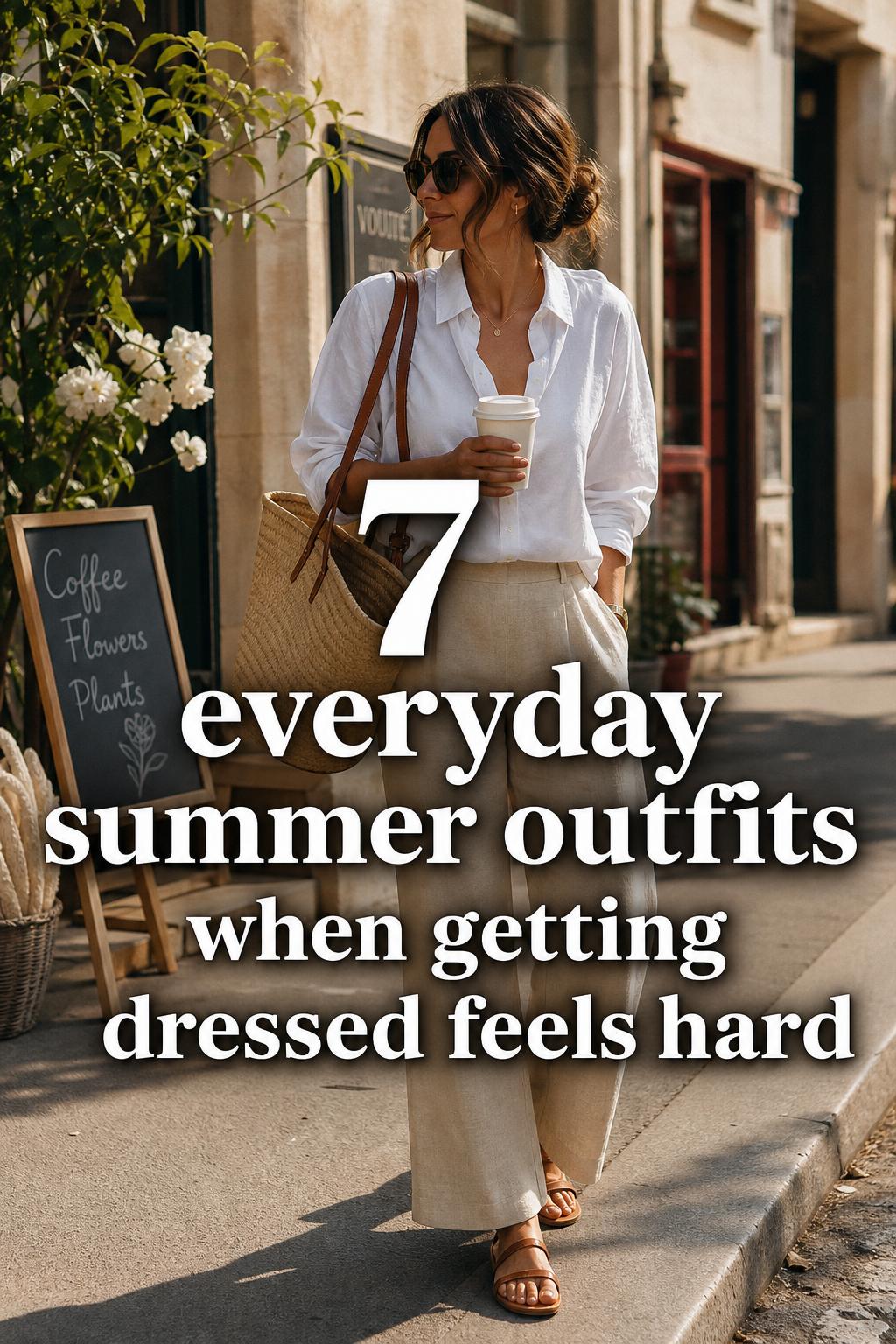
Breathable fabrics are not just a style preference; they determine whether an outfit gets worn repeatedly. Linen, cotton, and lightweight blends keep appearing in strong summer outfit formulas because they support airflow and reduce the heavy feeling that can ruin an otherwise good look. Linen sets are especially useful because they deliver a coordinated outfit composition with minimal effort. Cotton tees and tanks remain the most versatile base layers because they pair with denim, skirts, shorts, and dresses layered over the top.
When deciding what to buy first, prioritize breathable pieces in silhouettes you can wear across multiple settings. A linen set can separate into several outfits. A cotton white tee can anchor skirts, shorts, and layered looks. A lightweight maxi dress works on its own during the day and can take a light layer for evening. The more breathable the base, the more often the outfit gets repeated.
Color strategy keeps basics from feeling dull
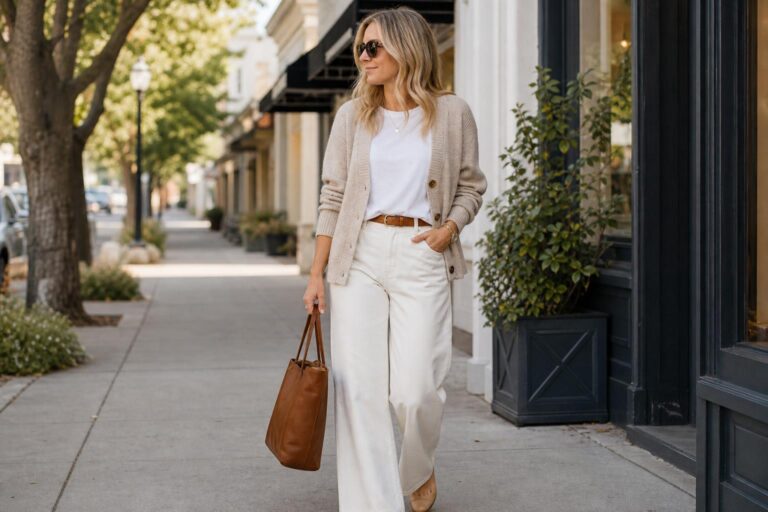
Many of the most wearable everyday summer outfits rely on a neutral base with selective accents. White-on-white works because it feels clean and heat-appropriate while creating tonal layering through fabric texture rather than bold contrast. Neutrals also make it easier to rotate accessories, shoes, and bags. If your wardrobe is basics-led, color can enter through a skirt, bag, sunglasses, or jewelry rather than through every garment at once.
The practical advantage of this approach is flexibility. A white tee can move from a denim skirt to olive separates. A neutral linen set can be paired with sandals one day and sneakers the next. If you prefer patterns, keep the surrounding pieces quieter so the outfit still reads easy rather than busy.
The summer outfit formulas that actually get worn
Outfit formulas are useful because they remove guesswork. Instead of chasing endless inspiration, you can rely on a handful of combinations that already make sense for heat, movement, and daily life. The following formulas appear repeatedly because they strike the right balance between ease and polish.
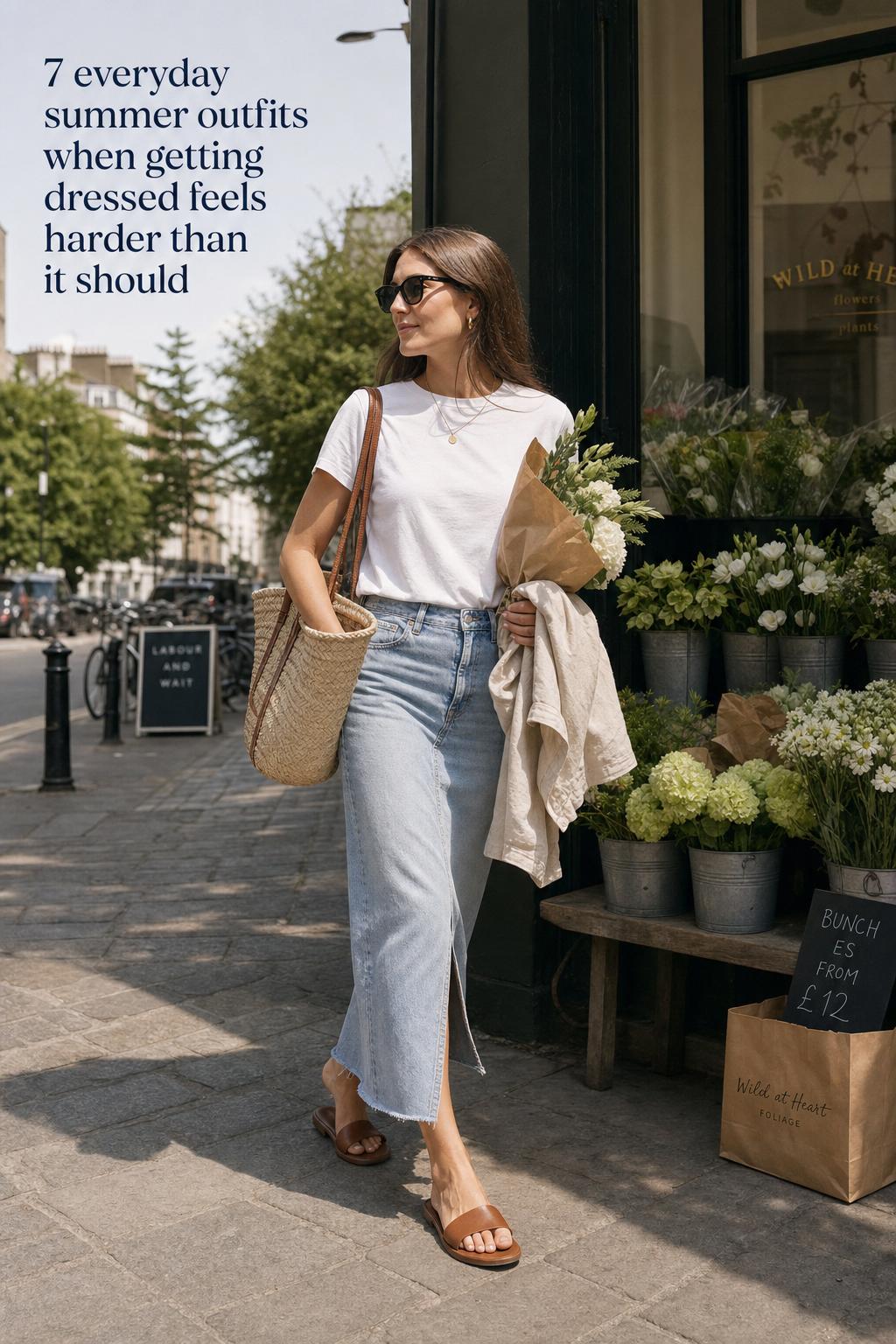
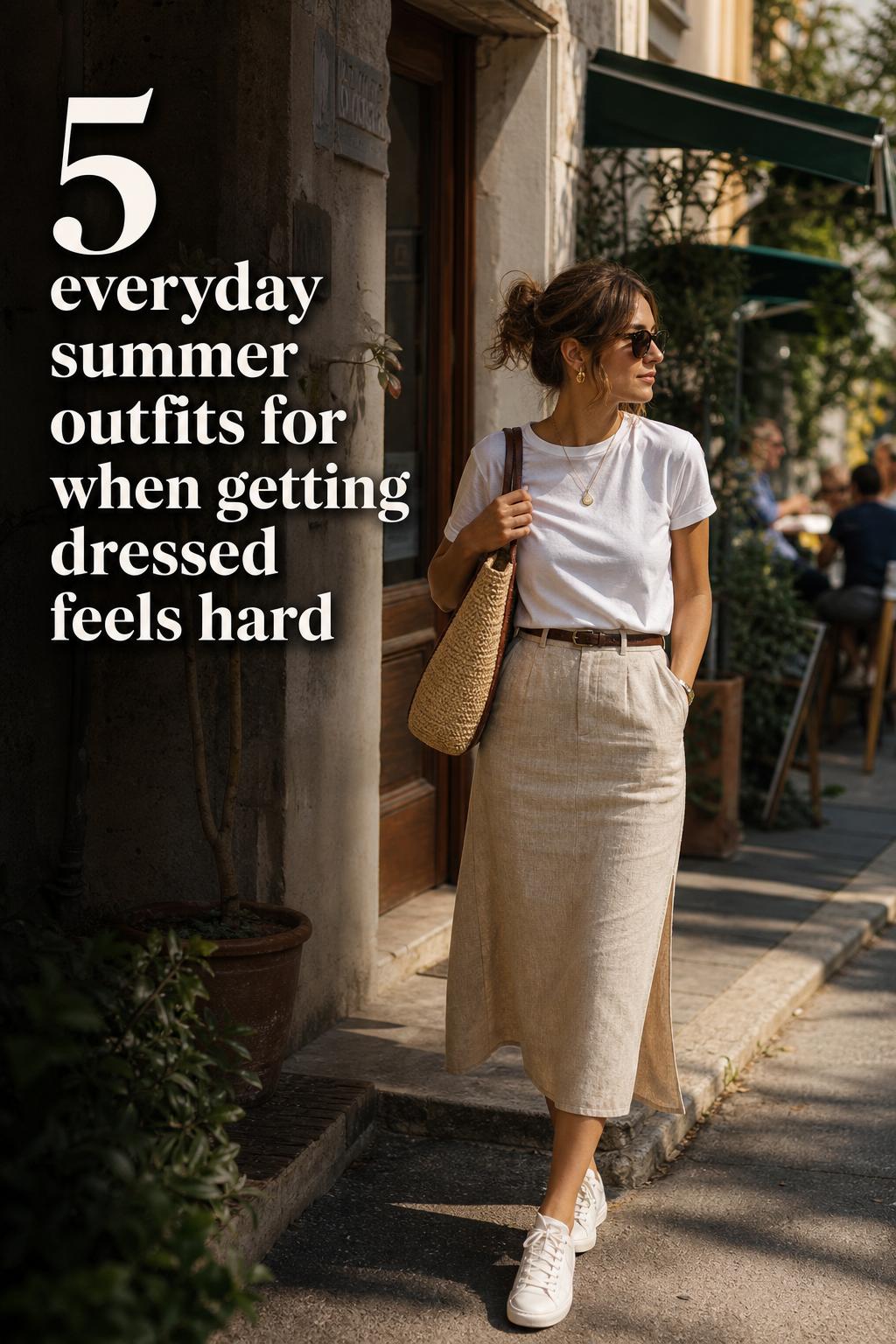
White tee plus denim skirt
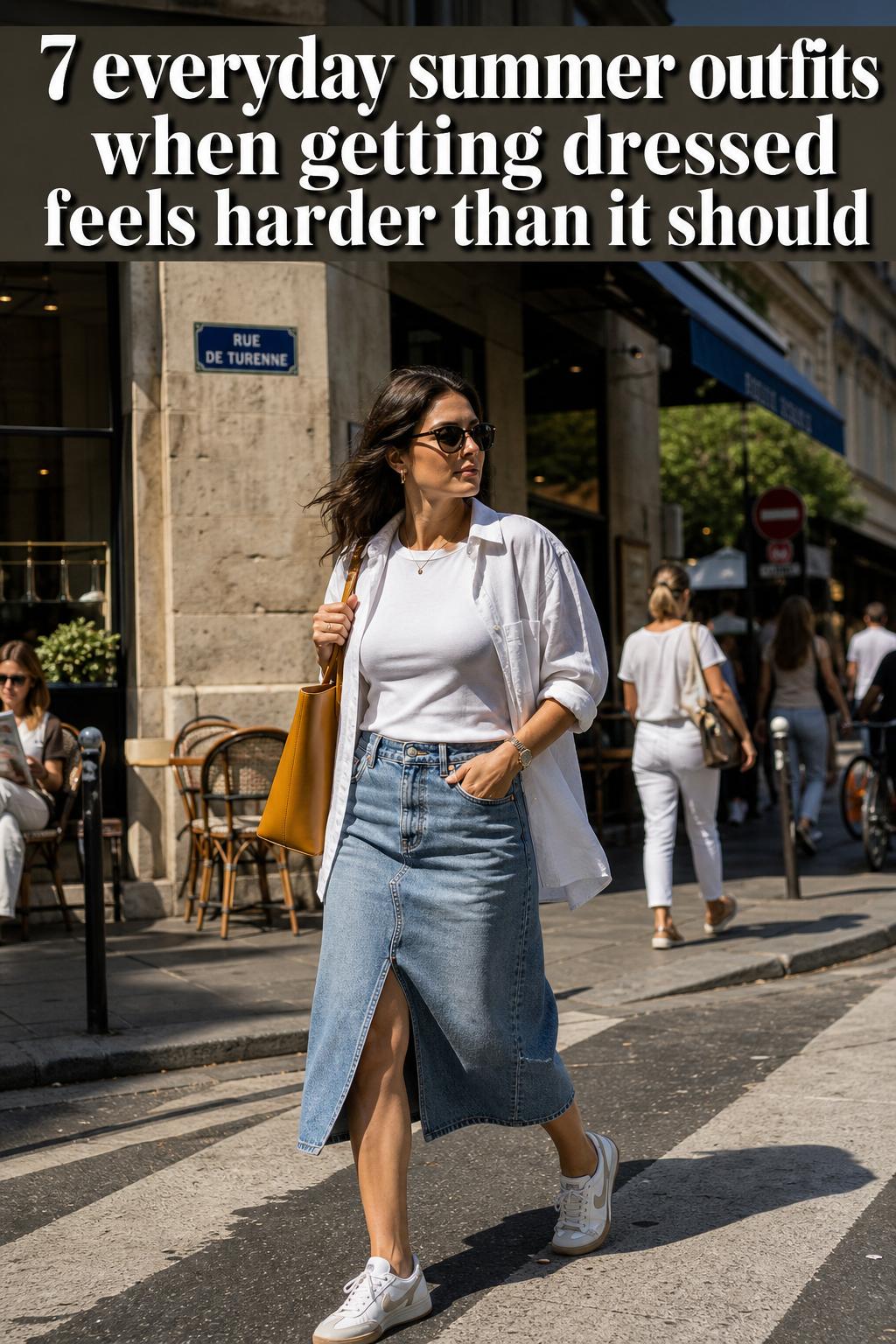
This is one of the clearest examples of a summer outfit doing a lot with very little. The white tee creates a bright, breathable visual anchor. The denim skirt adds structure and durability, which helps the outfit feel grounded rather than overly soft. Sneakers make it practical for walking, while sandals shift it into a more relaxed warm-weather direction.
Why it works: the top is simple and close to the body, while the skirt brings shape and texture contrast. This makes the outfit adaptable across body proportions. If you are petite, a more streamlined skirt keeps the silhouette from feeling cut off. If you are curvy, a skirt with a clean waistband helps define shape without adding bulk. If you are tall, this formula can handle a slightly longer hem or more relaxed tee without losing balance.
- Best for: errands, casual lunches, travel days, outdoor markets
- Easiest shoes: sneakers for function, sandals for a lighter finish
- Worth investing in: a flattering white tee that holds its shape
- Budget shortcut: keep the tee and skirt simple, then add better sunglasses or a structured bag
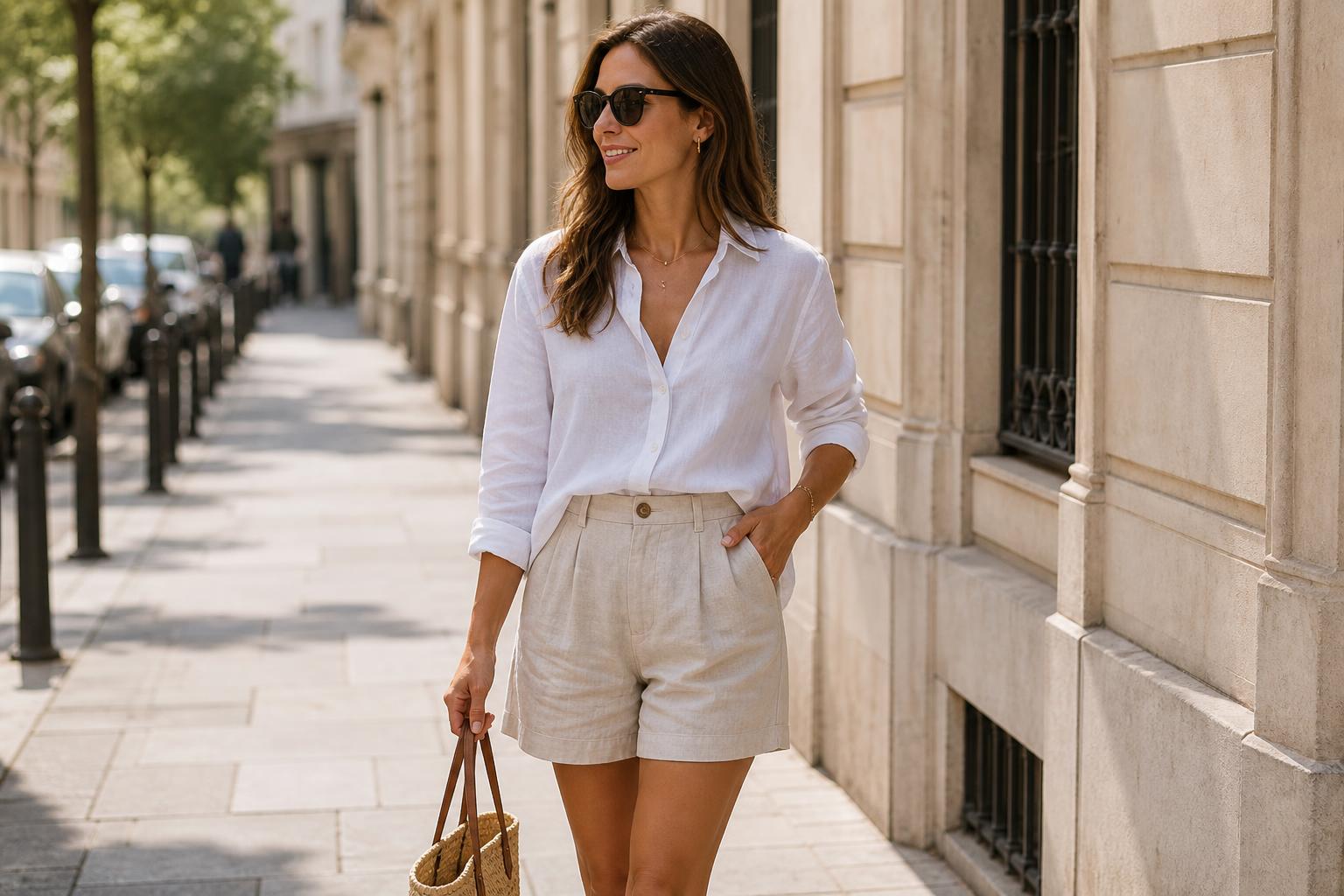
Linen set with sandals or sneakers
The linen set is one of the most practical answers to everyday summer outfits because it removes the matching problem entirely. You get a coordinated look immediately, and each piece can usually separate into other outfits. Sandals keep it airy and direct. Sneakers make it more urban and useful for longer walking days.
Why it works: matching pieces create cohesion, which makes even a relaxed silhouette feel intentional. Linen also introduces visible texture, so the outfit has depth without needing heavy accessories. In a capsule wardrobe, this is one of the highest-value purchases because the top can pair with denim shorts or a skirt, and the bottoms can take a tank or white tee.
If you tend to feel overwhelmed by loose summer clothes, focus on proportion. A boxy linen top works best with bottoms that still suggest shape at the waist or hip. If the set is very relaxed, keep accessories cleaner so the outfit does not drift into looking shapeless.
Tank top and skirt
The tank-and-skirt combination is one of the most repeated warm-weather outfit structures because it solves heat and polish at the same time. A tank top keeps the upper half minimal and cool, while the skirt adds movement. This is also one of the easiest ways to create a high-low mix: simple top, slightly more expressive bottom.
Why it works: the clean line of the tank allows the skirt to become the main visual element. This can be especially effective in white-on-white dressing, where shape and texture carry the outfit instead of strong color contrast. For everyday wear, this formula is also easy to modify by activity. Flat sandals make it more relaxed, while sneakers make it more practical for a full day out.
Common mistake to avoid: pairing a very clingy tank with a very clingy skirt can make the entire outfit feel overfitted and less versatile. It usually looks stronger when one element is more fluid or structured than the other.
Dress with sneakers or sandals
Easy dresses remain one of the strongest categories in summer style guides for a reason. They are one-step outfits that require little coordination but still look complete. A casual dress outfit becomes more practical with sneakers and softer with sandals. This switch alone can change the function of the look without changing the dress itself.
Slip dresses, linen dresses, embroidered dresses, and simple day dresses all fit into this category. The key is choosing a shape that can carry multiple styling directions. If the dress is already detailed, keep the shoes and bag straightforward. If the dress is very minimal, accessories can do more work.
For day-to-day wear, this is one of the easiest formulas to recreate on a budget. Retailers and brand style guides consistently return to dress-first summer looks because they are forgiving, useful, and broadly flattering. A dress with clean lines can move between daytime errands and casual evening plans just by changing from sneakers to sandals and adding jewelry.
Maxi dress with a lightweight layer
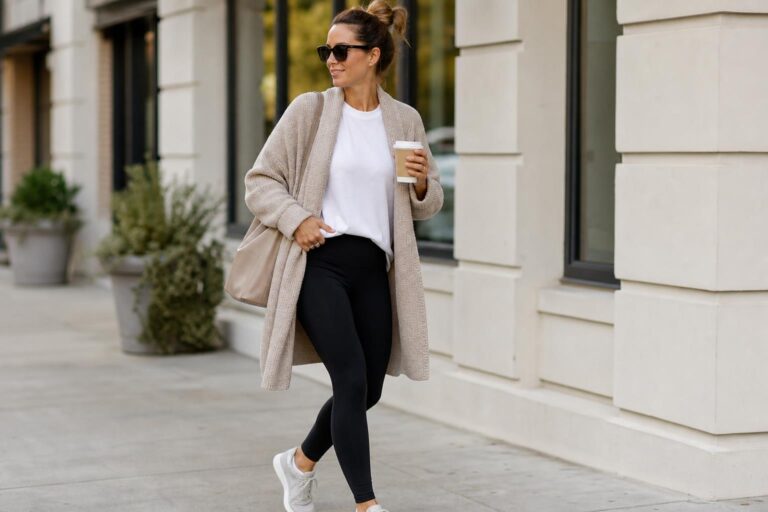
A maxi dress is especially effective when your day spans different temperatures, indoor air conditioning, or late-evening plans. The lightweight layer can be practical rather than decorative: a cardigan, overshirt, or simple top layer gives the outfit range. A straw hat can reinforce the summer context without overcomplicating the look.
Why it works: the long vertical line of the maxi dress creates an elongated silhouette, while the light layer adds structure and allows for subtle tonal layering. For tall frames, this formula naturally supports longer proportions. For petite dressers, a lighter, less bulky layer keeps the look from overwhelming the body. For curvier figures, dresses that skim rather than grip tend to give the best movement in heat.
Rompers and one-piece outfits for low-effort mornings
Rompers and one-piece outfits are often overlooked in practical wardrobe planning, but they answer the same need as dresses: one decision, finished result. They work particularly well for active days when you want the security of shorts but still want the visual simplicity of a one-piece outfit.
The styling principle is similar to dresses. Keep footwear functional and choose accessories that do not compete with the one-piece silhouette. If you already own sandals and sneakers, there is no need to overbuy here. The point of a romper is speed and ease, so the rest of the outfit should support that logic.
The anti-trend option: sweatshirt and jeans in summer
Not every summer day calls for dresses and shorts. One of the more interesting low-key directions this season is the sweatshirt-and-jeans combination associated with Hailey Bieber and Vittoria Ceretti. It reads anti-trend because it ignores the expectation that summer dressing always has to look overtly seasonal. In practice, this works best for cooler evenings, travel days, or indoor-heavy schedules where air conditioning changes the equation.
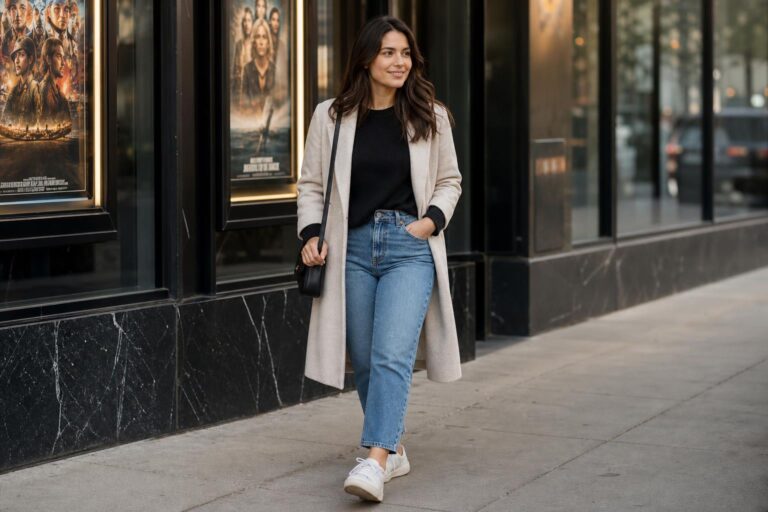
Why it works: the outfit is built on familiar basics, which gives it instant wearability. The styling success comes from restraint. If the sweatshirt is oversized, the jeans should feel intentional rather than sloppy. If the denim is relaxed, the rest of the look benefits from a cleaner shoe and bag choice. This is less about novelty and more about confidence in uncomplicated pieces.
This formula is also useful for shoppers who do not connect with overtly feminine summer dressing. It provides a minimalist, non-trend route through the season and can sit comfortably beside tees, tanks, and dresses in a capsule wardrobe.
Why boots can work with summer outfits
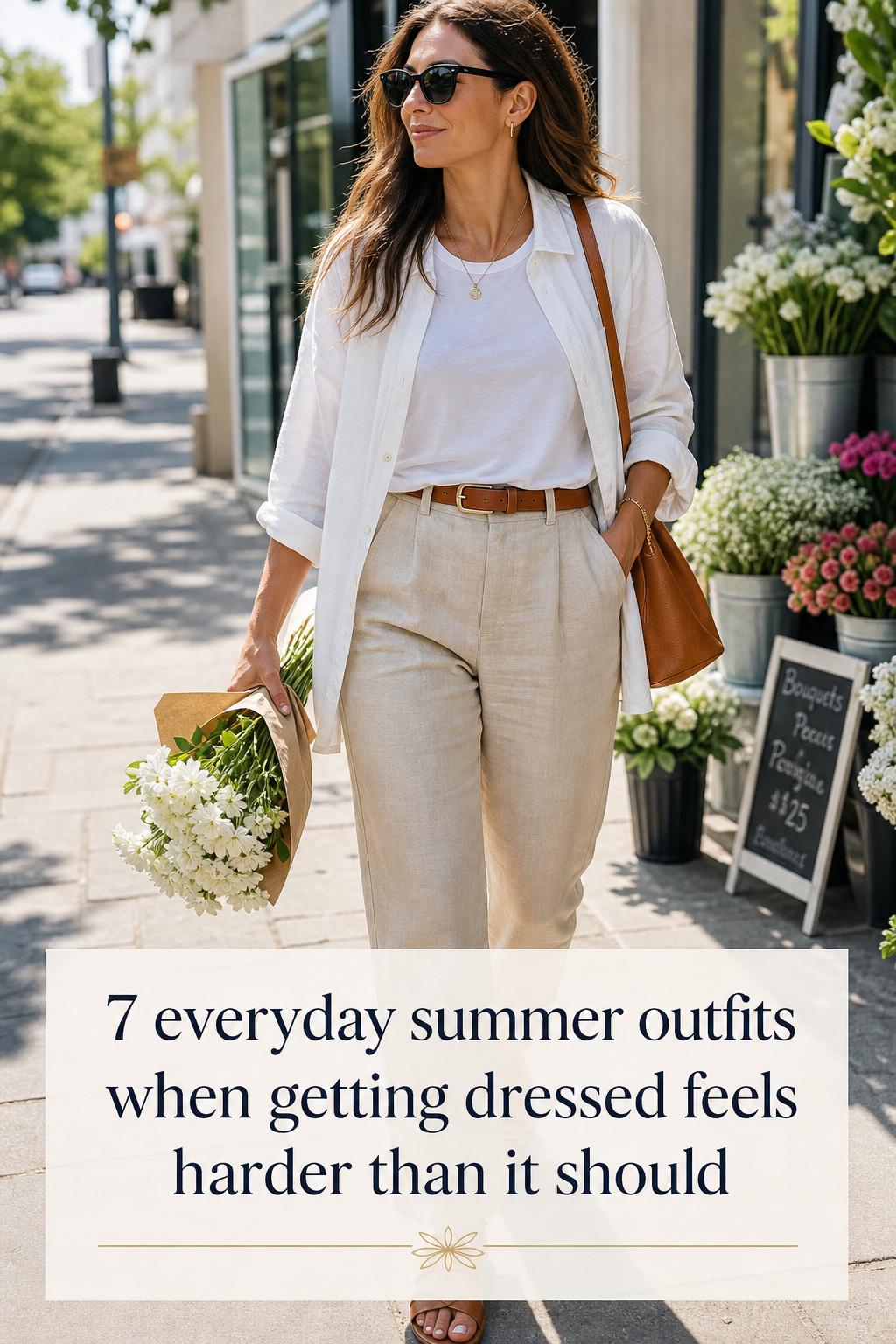
Summer outfits with boots sound contradictory until you look at the silhouette logic. An Isabel Marant-coded approach often relies on tension: light dress, grounded boot; easy denim, more rugged footwear. That contrast can make an outfit feel sharper and less expected than the default sandal pairing.
Boots work best in summer when the clothing remains light and simple. A fluid dress, denim, or skirt offsets the visual weight of the boot. This matters because if every piece in the outfit is heavy, the result can feel seasonally confused. The boot should be the counterpoint, not the whole story.
- Most functional for: evening social plans, casual pub settings, cooler days, concerts, transitional weather
- Pairs best with: dresses, denim, simple skirts
- Less ideal for: peak-heat errands or long midday walking in very hot conditions
- Best styling tip: keep the upper half light so the footwear does not overpower the outfit
If you like the edge of boots but need practicality, reserve them for specific contexts rather than forcing them into every warm-weather day. That approach keeps the look intentional and wearable.
Accessories that make basics look finished
Basic outfits rarely fail because the clothing is too simple. They fail when there is no visual anchor. Accessories solve this by creating direction. In summer, the most useful categories are hats, sunglasses, jewelry, and bags that can hold up for a full day.
Hats, sunglasses, and jewelry
A straw hat instantly signals seasonality and adds texture to dresses, maxi looks, and beach-to-street outfits. Sunglasses create polish even in minimal combinations like a tee and shorts. Jewelry layering can help a basics-first outfit feel more styled, especially with tanks and simple necklines. The key is moderation. If the outfit already includes an embroidered dress or a statement silhouette, lighter jewelry keeps the composition balanced.
Anklet and necklace combinations work especially well with sandals because they carry detail into the lower half of the outfit. For sneakers, a slightly cleaner jewelry approach usually feels more coherent. Think in terms of outfit rhythm: if the shoes are sporty, overly delicate accessories can feel disconnected unless the rest of the outfit bridges the two moods.
Bags that can handle real life
The best summer bag is not necessarily the trendiest one. It is the one that can move from daytime utility to casual evening plans without requiring an outfit change. Crossbody bags are practical for errands, commuting, and travel. Totes work well when you need capacity, especially for market days, beach-to-city transitions, or long outings.
If your clothing is very relaxed, a more structured bag can make the whole look feel sharper. If your outfit is already polished, a softer lightweight bag keeps it approachable. This kind of accessory contrast is one of the easiest ways to make affordable clothes look more expensive.
Shopping smart: what to buy first and what can wait
A strong summer wardrobe does not require buying everything at once. The smartest order is based on versatility. Start with the pieces that connect the most outfits, then add special items if there is a clear gap in your routine.
- Buy first: white tee, tank top, denim shorts or denim skirt, simple sandals, sneakers
- Next layer of value: easy dress, linen set, lightweight layer, crossbody bag
- Optional style expanders: romper, boots for specific looks, embroidered dress, statement skirt
- Luxury if it fits your budget and lifestyle: Prada-style embroidered dresses or other cult summer items that still align with your actual wardrobe habits
This is also where budget matters. A value-driven retailer approach, like the spring and summer outfit framing seen around Costco and Nautica categories, can cover essentials effectively. Dresses, polos, shorts, sandals, and light layers all have a role if they support frequent wear. Mid-range and premium purchases should focus on quality fabrics and strong repeat value, especially in linen and dresses. Luxury only makes sense when the piece is both special and genuinely wearable.
Love Olive Co’s basics-first mindset is particularly useful here. Pieces like denim shorts, basic tops, and options such as Harris Shorts support repeat outfit building. That is the right lens for shopping: buy items because they unlock combinations, not because they create one impressive but isolated look.
Adapting everyday summer outfits by weather and setting
Not all summer days ask for the same outfit logic. Heatwaves, coastal settings, city walking, and casual social plans each change what feels practical. The most wearable wardrobe is the one that responds to context rather than following one narrow summer template.
Heatwave days
On heatwave days, intentional simplicity matters more than styling complexity. Linen sets, tank-and-shorts combinations, and breathable dresses tend to perform best because they reduce layers and encourage airflow. Accessories should stay lightweight. This is not the time for heavy footwear or over-accessorizing.
The mistake that often makes hot-weather outfits feel worse is trying to force structure through too many pieces. In peak heat, structure should come from clean lines and proportion, not from extra layers.
Urban summer dressing
City summer outfits need shoes that can handle pavement, steps, and long periods of wear. That is why sneakers become so important with dresses, skirts, and shorts. In urban settings, a linen set with sneakers often feels more practical than sandals, while a maxi dress may need a more functional bag to balance its softness.
For pub plans or casual evening social events, a skirt-and-tank outfit, a white-on-white look, or a dress with boots can shift the mood without losing everyday ease. The aim is not to look formal. It is to look composed enough for the setting while still feeling comfortable in summer temperatures.
Coastal and beach-to-street styling
Coastal outfits usually benefit from softer shapes, straw hats, sandals, and bags with lighter visual weight. Dresses, rompers, and linen pieces feel especially natural here. A beach-to-street outfit works best when the base clothing is relaxed but the accessories still feel intentional, such as polished sunglasses or a more refined tote.
This is one area where white-on-white dressing performs particularly well. It aligns with the lighter mood of coastal summer while still looking elevated when the textures are distinct enough to create depth.
How celebrity and brand cues can help without taking over your style
Celebrity and designer references are most useful when treated as directional signals rather than strict templates. Hailey Bieber and Vittoria Ceretti illustrate the appeal of minimalist anti-trend dressing: basics styled with confidence. Isabel Marant references point toward a slightly tougher, more contrast-driven summer silhouette, especially with boots. Prada and other cult luxury summer pieces signal what the market values in detail, texture, and seasonal desirability.
The practical lesson is to extract the styling logic, not the exact shopping list. If you like the Isabel Marant energy, try the dress-and-boots contrast with pieces you already own. If you respond to Hailey Bieber’s stripped-back direction, sharpen your basics rather than chasing more embellishment. If Prada embroidered dresses appeal to you, look for dresses with similar texture or detail at a price level that matches your real wardrobe use.
Small styling shifts that make outfits look more considered
Summer dressing can quickly tip into looking accidental because the clothing is lighter and simpler. A few small decisions make a major difference. These adjustments are especially useful when you are working with affordable basics or a compact capsule wardrobe.
- Balance volume: if the skirt is fuller, keep the top cleaner; if the top is relaxed, anchor it with a more defined bottom
- Use texture for depth: linen, denim, and embroidered details help a neutral outfit feel layered without adding heat
- Choose one visual anchor: boots, a straw hat, strong sunglasses, or a structured bag are often enough
- Repeat footwear logic: sneakers for movement-heavy days, sandals for lighter schedules, boots for targeted contrast
- Keep the palette coherent: basics look more expensive when the colors feel intentional instead of random
One important note on proportion: not every viral combination works equally well on every frame. For petite dressers, too much fabric can flatten height. For taller frames, longer lines often look especially strong in maxi dresses and wide silhouettes. For curvier body types, defining at least one point in the silhouette usually helps the outfit read cleaner. These are not rules meant to limit style. They are practical tools that make shopping and outfit-building more efficient.
A practical 12-piece capsule for everyday summer outfits
If you want a wardrobe that covers most daily summer scenarios without becoming repetitive, a small capsule is the best place to start. The goal is not minimalism for its own sake. The goal is to create enough combinations that getting dressed stops feeling difficult.
- 1 white tee
- 1 additional basic tee
- 2 tank tops
- 1 denim shorts option or Harris Shorts-style casual short
- 1 denim skirt
- 1 linen set
- 1 easy day dress
- 1 maxi dress or slip dress
- 1 romper or one-piece outfit
- 1 lightweight layer
- 1 pair of sandals
- 1 pair of sneakers
From there, a boot option, statement skirt, or embroidered dress can be added based on lifestyle rather than impulse. This setup gives you enough range for work-adjacent casual dressing, travel, social plans, and heatwave days while still keeping the wardrobe coherent.
Common mistakes that make summer outfits harder than they need to be
Most summer outfit frustration comes from buying for fantasy scenarios instead of repeat use. A closet full of beautiful but isolated dresses or overly trend-specific pieces creates decision fatigue rather than ease. Summer style becomes more functional when each piece has at least two or three obvious pairing options.
- Buying too many statement pieces without enough basics to support them
- Ignoring fabric and ending up with clothes that look good but feel wrong in heat
- Choosing shoes that do not match your real walking habits
- Over-layering on hot days when the outfit would be stronger with simpler lines
- Forgetting evening shifts in temperature and lacking one light layer
- Wearing every accessory at once instead of letting one or two pieces lead
The easiest correction is to dress from function outward. Start with the day’s weather and movement level, then build the outfit. If you know you will be walking, sneakers matter. If the day is social and seated, sandals may be enough. If the event is a casual pub evening, a dress with boots or a tank-and-skirt combination may give the right level of polish without overdressing.
Everyday outfit planning for short summer trips
A short summer trip is where outfit formulas prove their value. Packing gets easier when every piece can serve more than one purpose. For a three- to five-day trip, the ideal mix mirrors an everyday capsule: basics, one-piece options, and footwear that can cover multiple activities.
A practical trip wardrobe might include a white tee, tank top, linen set, denim shorts, one dress, one maxi or slip dress, sandals, sneakers, a lightweight layer, sunglasses, and one versatile bag. This covers city walking, coastal dinners, travel transit, and casual social plans without overpacking. The key is avoiding single-use items that require their own shoe or accessory ecosystem.
This kind of planning also reveals which pieces deserve investment. If an item works at home and travels well, it earns wardrobe space. If it only suits a very specific photo moment, it has limited practical value.
FAQ
What are the easiest everyday summer outfits to recreate?
The easiest formulas are a white tee with a denim skirt, a tank top with a skirt, a linen set with sandals or sneakers, and a simple dress with sneakers. These combinations work because they use common basics, require very little coordination, and can be adapted for errands, casual social plans, or travel.
What should I buy first for a summer capsule wardrobe?
Start with the most versatile connectors: a white tee, one or two tank tops, denim shorts or a denim skirt, sandals, and sneakers. After that, add an easy dress, a linen set, and a lightweight layer. These pieces create the widest range of everyday summer outfits without requiring a large budget.
Do boots really work with summer outfits?
Yes, but only in the right contexts. Boots work best when paired with lighter summer pieces such as dresses, denim, or simple skirts, creating contrast in the same way an Isabel Marant-inspired look often does. They are most practical for evenings, casual pub plans, or cooler days rather than peak-heat afternoons.
How can I make basic summer outfits look more expensive?
Focus on silhouette balance, coherent color choices, and one strong accessory. A structured bag, polished sunglasses, clean sneakers, or a straw hat can sharpen a simple tee-and-skirt or dress outfit. Texture also matters: linen, denim, and embroidered details add depth that makes basics feel more considered.
What works best in a heatwave?
Linen sets, tank tops with shorts, simple dresses, and other breathable cotton or linen-based outfits are the strongest options for heatwave dressing. Keep the outfit composition simple, avoid unnecessary layers, and choose lighter footwear like sandals unless your day requires sneakers for walking.
Can I wear jeans in summer without feeling out of place?
Yes, especially on cooler evenings, travel days, or indoor-heavy schedules. The sweatshirt-and-jeans combination associated with Hailey Bieber and Vittoria Ceretti shows how basics can feel current without relying on traditional summer pieces. The key is keeping the overall outfit intentional and not overly heavy.
How do I adapt these outfits for petite, curvy, or tall proportions?
Use proportion as your guide. Petite frames usually benefit from cleaner lines and less excess fabric. Curvy figures often look strongest when at least one part of the outfit defines shape, such as a clean waistband or fitted tank. Tall frames can carry longer hemlines, maxi dresses, and more relaxed silhouettes especially well. The outfit formula stays the same, but the scale of each piece should support your proportions.
Are dresses or separates more useful for everyday summer outfits?
Both have value, but separates usually deliver more versatility while dresses offer more speed. A white tee, tank, skirt, and shorts can generate many combinations, while a dress gives you a one-step solution. The strongest wardrobe includes both: separates for mix-and-match flexibility and one or two dresses for easy low-effort days.
How can I recreate luxury summer style on a budget?
Borrow the styling logic instead of chasing exact designer pieces. If you like Prada-style embroidered dresses, look for dresses with texture or detail at a lower price point. If you like cult summer items, choose one elevated piece and keep the rest of the outfit simple. Affordable basics from value-oriented retailers can still look strong when the silhouette and accessories are handled well.