Comfy summer outfits for Real-Life Heat
Hot weather gets romanticized until you actually have to get dressed for it. The real challenge is not finding summer clothes. It is finding comfy summer outfits that still look intentional when the temperature is high, the air feels heavy, and your day includes more than one setting.
Most people are not dressing for a single perfect photo. They are dressing for a commute, a grocery run, a casual office, a lunch outside, maybe an evening plan added at the last minute. That is where many summer outfits fall apart. A look can seem chic on a hanger and still feel clingy, stiff, overly bare, or strangely impractical once you start moving.
The solution is rarely more trend pieces. It usually comes down to better fabric choices, smarter silhouette balance, and outfit combinations that create airflow, ease, and visual polish at the same time. Soft fabrics, loose structure, supportive sandals or flats, and a few well-chosen accessories can completely change how a summer wardrobe performs in real life.
A strong warm-weather wardrobe should feel calm rather than complicated. The best outfits are easy to repeat, easy to adapt, and built from pieces like linen trousers, cotton dresses, oversized shirts, wide-leg pants, sandals, ballet flats, and simple bags that make the entire look function better.
Found the dress? Keep the rest in one place.
Zarellea brings guest details, vendors, timelines, and every next step together — so your wedding plan feels as good as your look.
Why summer dressing feels harder than it should
Summer style problems are often blamed on heat alone, but the issue is more specific than that. Warm-weather dressing asks one outfit to solve several competing needs at once: breathability, movement, coverage, polish, and comfort over a long day. If even one of those elements is off, the whole outfit can feel wrong.
Fabric behavior is usually the first point of failure. Some materials trap heat, some cling when humidity rises, and some look crisp at first but become uncomfortable after a few hours. That is why linen, cotton, lightweight blends, and other breathable materials appear so often in the most wearable summer wardrobes. They allow airflow, keep the outfit visually light, and support a relaxed silhouette without looking sloppy.
Silhouette creates the second challenge. Many people think comfort means going oversized in every piece, but too much volume can make an outfit feel heavy or unbalanced. On the other hand, slim or fitted clothing can become restrictive and visually harsh in summer. The sweet spot is proportion play: a boxy top with wide-leg pants, a loose midi dress with flat sandals, or an oversized shirt balanced by more defined shorts or a cleaner bag shape.
There is also the social side of dressing. A beach-adjacent outfit may not work for a casual office. A work-friendly look can feel too formal for a weekend patio lunch. A modest summer outfit needs coverage without losing airflow. The smartest wardrobes solve this by relying on adaptable staples rather than highly specific looks.
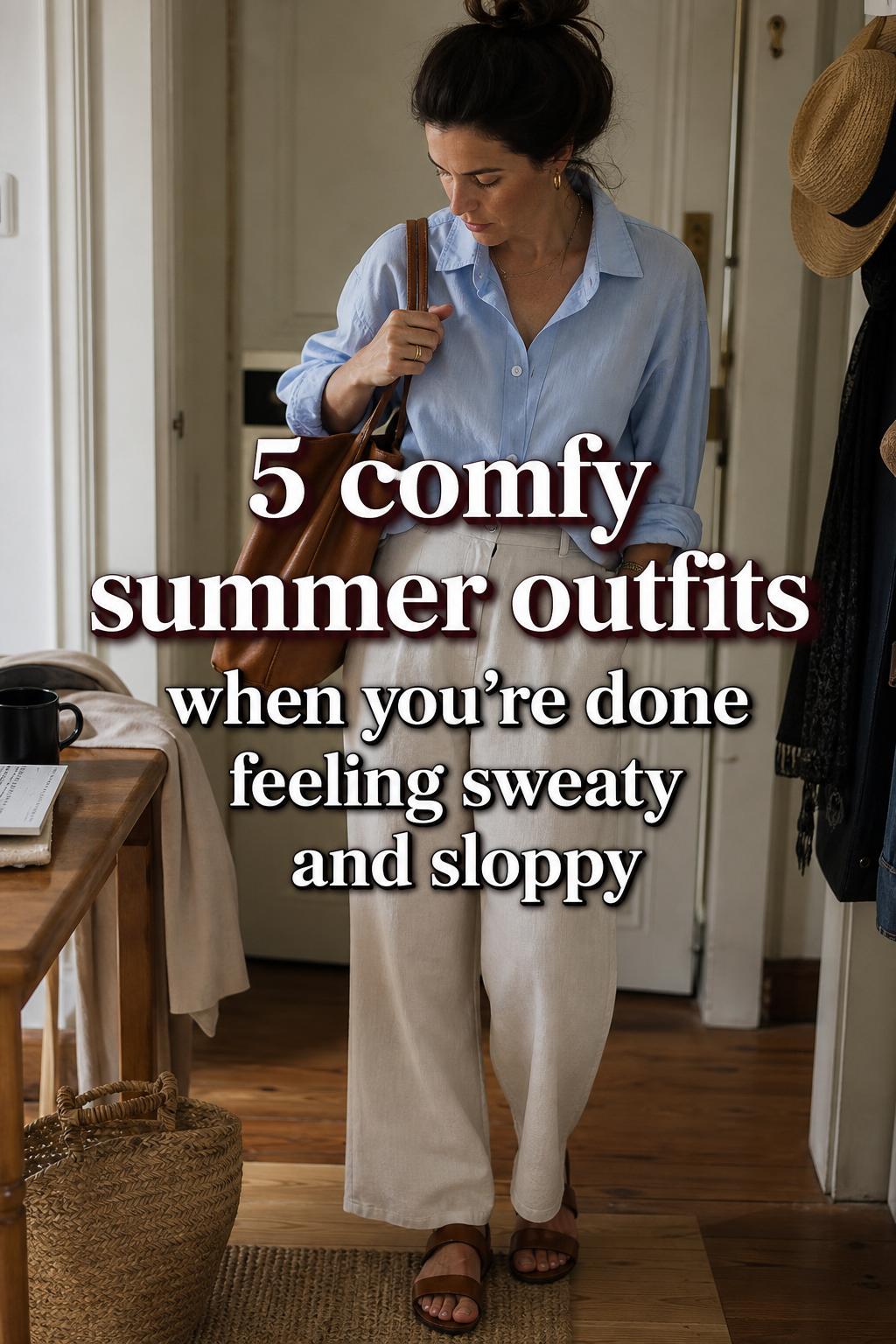
Start with fabric, not the outfit photo
If a summer outfit feels uncomfortable, the issue is often the textile before it is the styling. Fabric determines how the outfit moves, how much air reaches the skin, how much structure remains after wear, and whether the look reads effortless or tired by midafternoon.
The six fabric directions that make summer outfits work harder
- Linen: the most consistent summer staple for trousers, shirts, dresses, and blouses. It creates airflow and a relaxed texture that suits casual chic dressing.
- Cotton: dependable for tee dresses, lightweight tops, and everyday basics. It feels familiar, washable, and practical.
- Cotton-linen blends: ideal when you want breathability with a slightly smoother finish.
- Chambray: useful when you want a denim-like look without the visual weight of heavy denim.
- Breathable viscose or rayon blends: helpful for drape, especially in wide-leg pants or easy dresses, though they work best when cut loosely.
- Hemp blends: a strong option within a natural-fiber wardrobe when you want texture and light structure.
Natural fibers and breathable blends do more than keep you cool. They change the visual language of an outfit. A linen blouse automatically reads more relaxed than a stiff top in a heavier fabric. Wide-leg pants in a soft blend move with the body instead of pulling against it. A cotton tee dress looks simple, but its ease is exactly what makes it useful.
Fabric insight
Comfort does not only mean softness. In summer, comfort also means the fabric allows distance between the garment and the body. That small amount of space improves airflow and helps the outfit keep its shape. This is why loose poplin shirts, linen-blend pants, midi dresses, and maxi skirts often outperform clingier options, even when both look light on paper.
The silhouette logic behind truly wearable summer outfits
The most successful comfy summer outfits are not random collections of breezy pieces. They are carefully balanced compositions. They use one relaxed element, one anchoring element, and one finishing detail that prevents the look from reading unfinished.
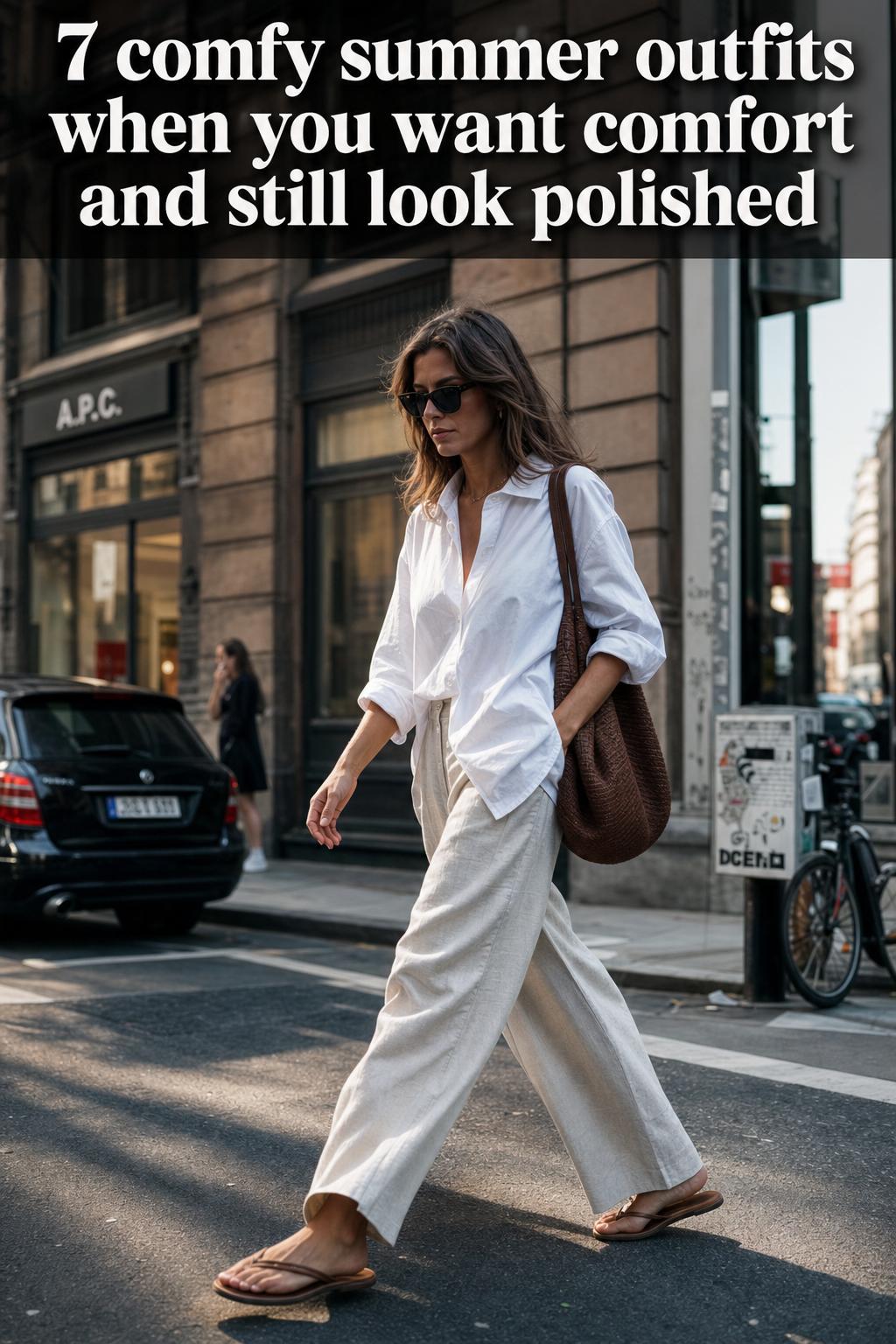
For example, oversized silhouettes work best when they are paired with some degree of structure. A poplin shirt can be roomy, but it looks sharper with linen trousers that skim rather than overwhelm. A maxi dress feels easier when flat sandals keep the hemline visually grounded. A boxy top can look polished with an A-line skirt because the skirt introduces movement without adding unnecessary bulk.
This is also where body-type adaptation becomes useful. Petite frames often benefit from cleaner vertical lines such as a midi dress, straight linen trousers, or a matching tonal top and bottom. Tall frames can carry more volume in a maxi skirt or oversized shirt without losing balance. Curvy dressers often find that soft waist definition, an A-line line, or a flowing wide-leg pant creates ease while preserving shape.
The key is not dressing for a rigid category. It is identifying where the outfit needs openness and where it needs order. Airy shapes create comfort. Visual anchors create polish.
Comfy summer outfit formulas that actually solve the problem
The following outfit directions work because they are built around movement, breathable fabrics, and realistic daily use. Each one can be recreated from staples already common in a summer wardrobe, which makes them more useful than one-time statement looks.
Relaxed layers that still feel polished
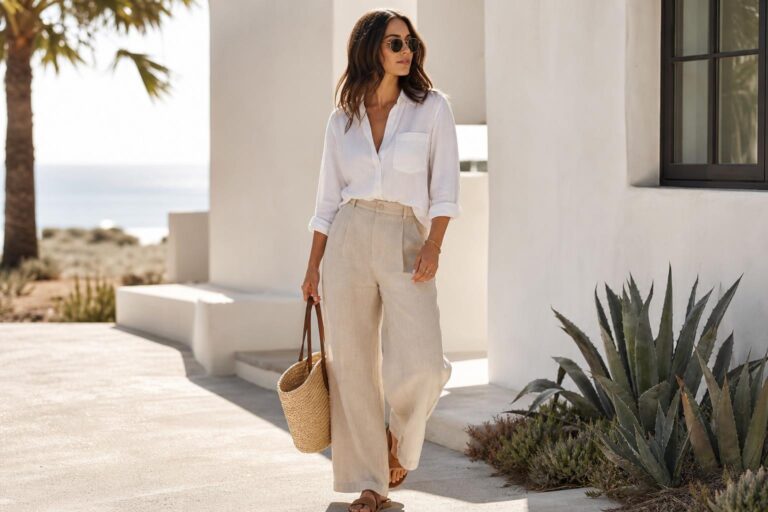
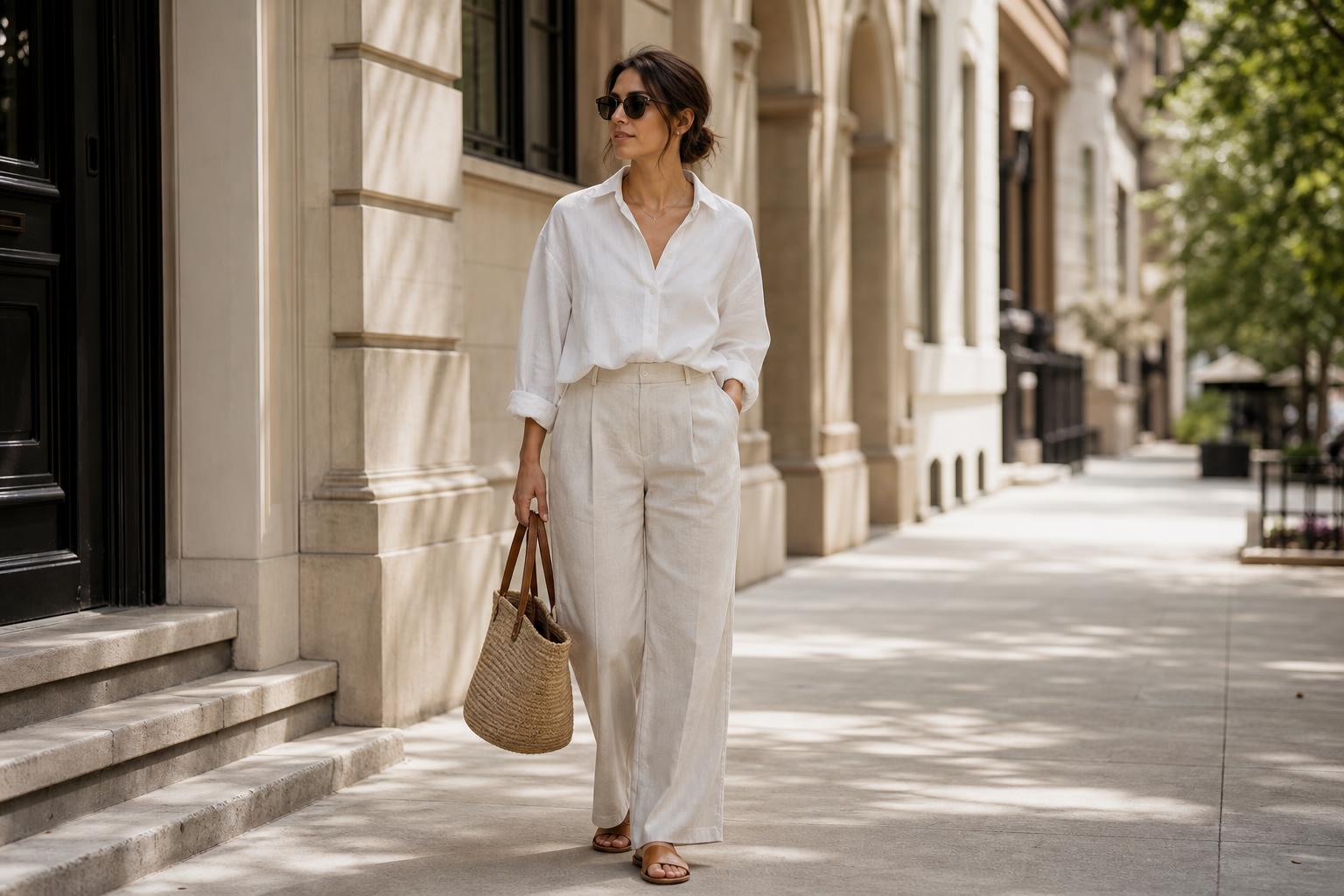
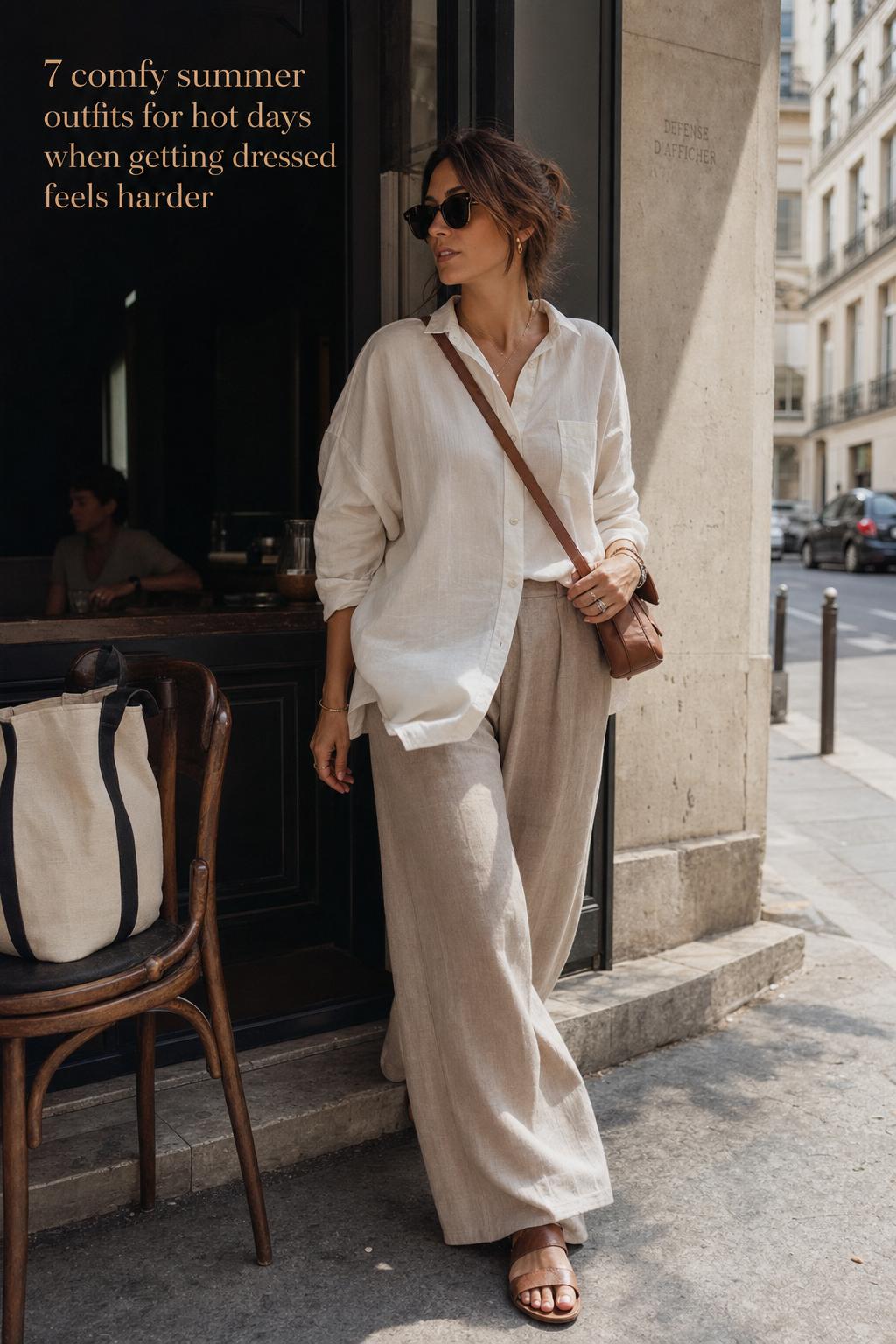
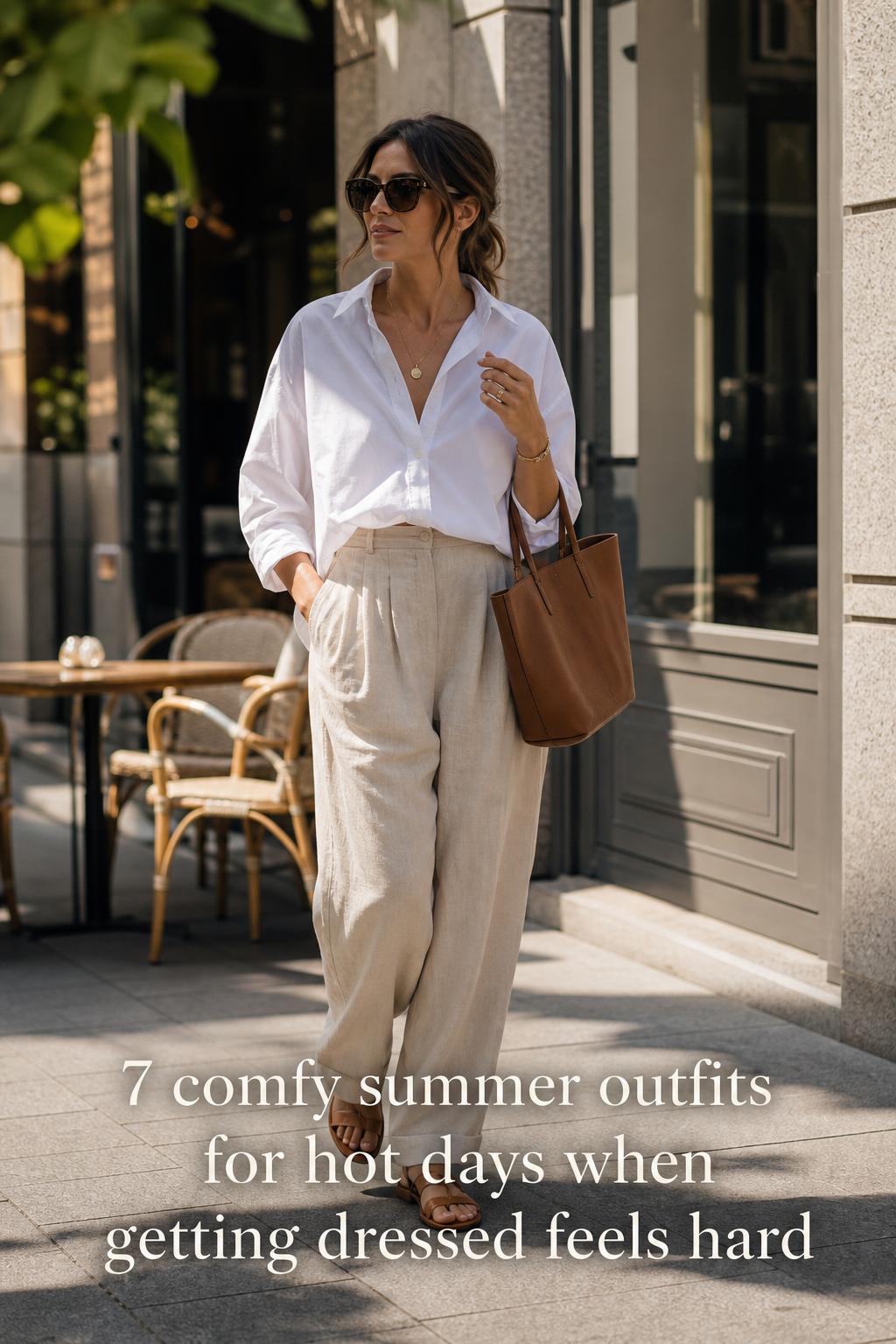
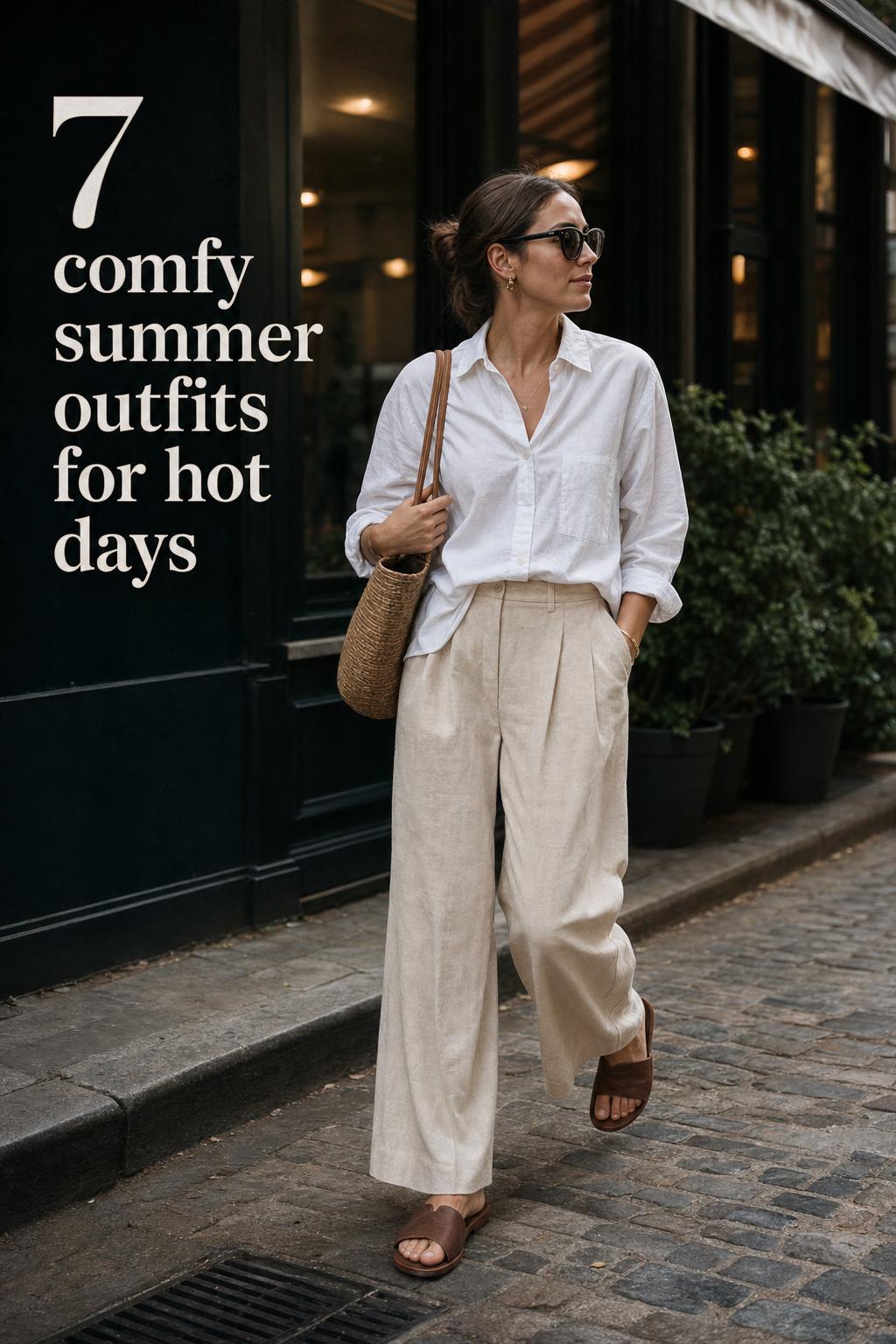
An oversized shirt worn over linen-blend pants is one of the strongest answers to summer dressing fatigue. The shirt creates airiness and a soft, relaxed outline. The trousers keep the look intentional, especially if the leg is wide but not overwhelming. Flat sandals finish the outfit without fighting its ease.
This combination works because it distributes volume vertically instead of concentrating it in one place. The shirt can be worn open over a lightweight top, loosely tucked at the front, or left untucked if the fabric has enough drape. A crossbody bag or tote bag gives the outfit a functional urban feel, while sunglasses or a wide-brim hat add both comfort and a clearer summer identity.
Easy ways to recreate the look
- Use a poplin shirt if you want more structure.
- Choose cotton-linen blend trousers if pure linen feels too rumpled for your routine.
- Swap sandals for ballet flats when you want a slightly more polished city finish.
The dress solution for days when nothing else feels right
A cotton tee dress or a lightweight midi dress is often the most practical answer to summer indecision. It removes the pressure of coordinating separates and creates one clean line through the body, which tends to feel cooler and visually calmer.
The styling logic matters here. A tee dress works best when the accessories sharpen it slightly. Supportive sandals, a structured bag, and simple jewelry stop the outfit from reading too lounge-oriented. A midi dress has more built-in polish, especially when paired with ballet flats or minimal sandals. If you want more coverage, an oversized shirt can function as a soft outer layer rather than a traditional jacket.
This type of outfit is especially useful for errands, travel days, casual lunches, or any day with changing plans. It adapts quickly without losing comfort.
Most versatile piece
The midi dress is the quiet workhorse of summer. It handles flat footwear well, supports modest coverage more easily than a shorter dress, and can move between casual and polished settings with only a change of bag, shoe, or sunglasses.
Comfortable city outfits with structure
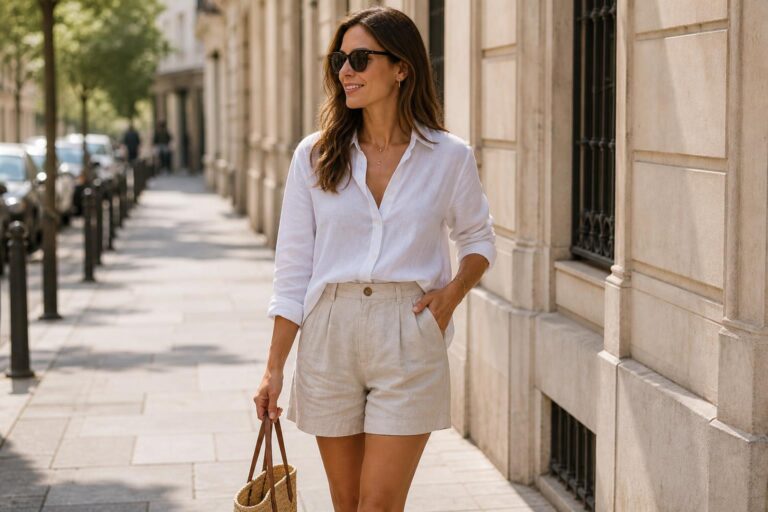
City dressing in summer often requires more polish than a resort-style wardrobe but still has to survive heat, walking, and long hours out of the house. One reliable formula is a linen blouse with tailored shorts or culottes, finished with sandals or loafers depending on the setting.
What makes this outfit effective is contrast. The blouse adds softness and breathability. The tailored bottom gives the look shape and control. A structured bag acts as a visual anchor, which is especially important when the garments themselves are loose or fluid.
If shorts feel too bare for your routine, culottes or wide-leg pants create similar ease with more coverage. This is also an easy formula to adapt from day to evening because the base pieces already have a refined outline.
Why this outfit works
Many summer outfits fail in the city because every element is too casual at once. This formula avoids that by pairing breathable pieces with cleaner tailoring. The result feels modern, practical, and less dependent on accessories to rescue it.
Soft volume without losing shape
Wide-leg pants with a lightweight top are a core summer formula, but the details determine whether the look feels elegant or shapeless. The pants should move freely without swallowing the frame. The top should either have a cleaner fit or a fabric that drapes close enough to create definition.
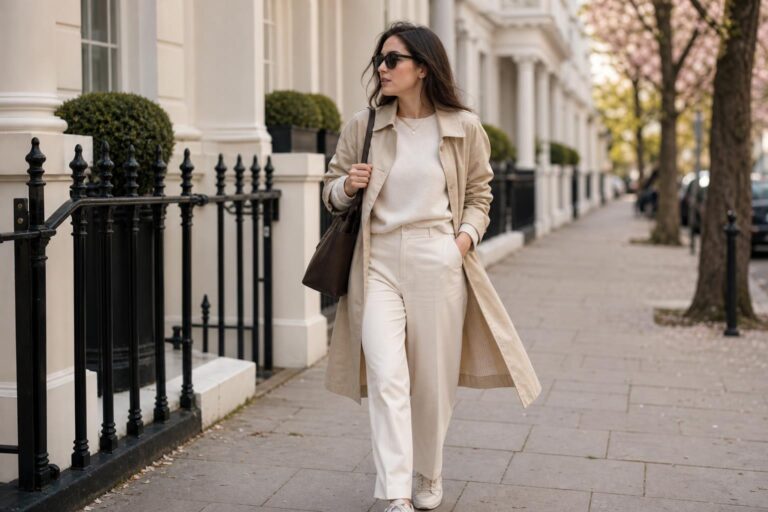
A simple lightweight top with wide-leg pants, flat sandals, and a tote bag creates a strong casual foundation. To make the outfit feel more elevated, use tonal layering. Similar shades across the top, pants, and bag make the silhouette appear longer and calmer, which is especially effective when the outfit itself is relaxed.
For a modest summer outfit, this formula is particularly useful. Wide-leg pants offer coverage without trapping too much heat, and lightweight tops in cotton or breathable blends preserve comfort while keeping the outfit easy to move in.
Common comfort mistake
Pairing an oversized top with overly long or puddling wide-leg pants can make the outfit feel hotter and visually heavier than intended. A cleaner hemline and some shape in either the top or the bag usually solve the issue immediately.
Casual chic with a maxi skirt
A maxi skirt brings movement and coverage, which makes it especially useful for hot days when shorts or fitted dresses feel limiting. Styled with a lightweight top or boxy tee and sandals, it creates a relaxed but complete outfit composition.
This combination works best when the skirt fabric stays light and fluid. A visually heavy maxi can drag the entire outfit down. The top should feel crisp enough to balance that movement, whether through a cleaner shoulder line, a front tuck, or a shorter proportion.
This is one of the easiest formulas to adapt for different body types. Petite dressers can use a more streamlined skirt and a closer-fitting top. Taller frames can handle more sweep and volume. Anyone wanting a modest but breathable option gets both airflow and coverage without relying on extra layers.
Ballet flats for a casual-elevated finish
Ballet flats are a strong alternative when sandals feel too informal or impractical. They pair especially well with dresses, denim-inspired separates, skirts, and lightweight tailoring. Their value in summer is less about trend and more about polish. They complete an outfit without adding visual heaviness.
A midi dress with ballet flats creates a clean line from shoulder to hem and feels more refined than the same dress with bulkier footwear. Linen trousers with a blouse and ballet flats also work well when you want an office-friendly look that still feels light. This is where casual-elevated styling becomes useful: the outfit remains comfortable, but the finishing piece shifts its tone.
Best shoe pairing
Use sandals when your priority is maximum ventilation and easy movement. Use ballet flats when you need a neater silhouette or more professional finish. Both support comfy summer outfits, but they solve slightly different problems.
Work-ready summer outfits that do not feel stiff
Summer workwear often becomes uncomfortable because it is built from the logic of cooler seasons. Heavy structure, dark layers, and overly formal fabrics simply do not translate well. The answer is not to make workwear more casual than the setting allows. It is to make it lighter, sharper, and more breathable.
The breathable blouse and culotte combination
A linen blouse with culottes is one of the easiest ways to look office-appropriate without feeling constrained. The blouse reads polished, while the cropped width of culottes adds airflow and movement. Loafers or ballet flats complete the look depending on how formal your workplace feels.
This pairing succeeds because the proportions are controlled. The top offers clean vertical structure. The bottom creates ease without becoming too casual. Add a crossbody bag for commuting or a more structured tote if you carry work essentials.
Lightweight tailoring with a summer blazer
A lightweight blazer over a breathable top and linen trousers can still work in summer when the fabrics stay soft and the fit remains relaxed. The blazer should feel more like an outer layer for air-conditioned interiors than a rigid suit jacket. This is a useful formula for meetings, presentations, or settings that expect a more polished business casual approach.
The styling principle here is selective structure. Only one part of the outfit needs to carry authority. Once the blazer does that work, the rest of the look can remain easy and fluid.
Tailored shorts done the practical way
In workplaces where tailored shorts are acceptable, they offer relief without sacrificing visual order. Pair them with a blouse, simple sandals or loafers, and a clean bag shape. The shorts should read intentional rather than beachy, so fabric and fit matter more than extra styling details.
This is not the right answer for every dress code, which is exactly why balance matters. If your office leans conservative, wide-leg pants or culottes usually offer the same comfort with broader versatility.
Climate-smart dressing across different U.S. summer conditions
Summer in the U.S. does not behave like one season. The same outfit formula will perform differently in dry heat, high humidity, or a coastal setting. A more useful wardrobe accounts for that difference from the start.
For arid heat and strong sun
In very hot, dry conditions, coverage can actually feel more comfortable than expected if the fabrics are breathable. Maxi dresses, oversized shirts, wide-leg pants, and wide-brim hats create a barrier from direct sun while preserving airflow. This is also where UPF fabrics and sun-protective layers become relevant additions to a comfort-focused wardrobe.
For humidity and sticky air
Humidity punishes clingy fabrics and close fits. Cotton dresses, linen trousers, boxy tops, and sandals usually perform better than anything overly structured. In these conditions, the best outfit is often the one with the fewest friction points: less layering, more airflow, and fabrics that do not sit too closely against the body.
For coastal or variable temperatures
When mornings and evenings cool down, a light cardigan or oversized shirt becomes more useful than a heavy extra layer. The goal is to preserve the outfit’s softness while adding just enough coverage for shifting temperatures. A midi dress with sandals and a lightweight layer handles this especially well.
Transitional weather tip
Late summer often asks for the same breathable base pieces with slightly more structure. This is where loafers, a light blazer, or a cardigan can extend your favorite summer outfits into the early fall transition without making them feel seasonally confused.
Accessories that improve comfort instead of just decorating the outfit
Accessories can either refine a summer outfit or make it less wearable. The difference comes down to utility. In warm weather, the best finishing pieces support comfort, sun management, and movement while keeping the look visually coherent.
- Wide-brim hats: especially useful with dresses, maxi skirts, and wide-leg pants when the outfit needs both shade and a clear summer identity.
- Sunglasses: a practical visual anchor that instantly makes simple basics look more complete.
- Crossbody bags: ideal for walking, commuting, or events where hands-free ease matters.
- Tote bags: useful when carrying layers, water, or daily essentials, especially with relaxed city outfits.
- Supportive sandals: often the most practical everyday summer shoe when movement matters.
Jewelry can stay minimal. Summer outfits usually look better when texture and silhouette do most of the work. Linen, cotton, and soft tailoring already create enough visual interest. The accessory goal is not abundance. It is clarity.
Anti-trend thinking makes summer style easier
One reason summer wardrobes become frustrating is that trend-led pieces are often highly specific. They may look appealing online but solve very few real-life dressing problems. Anti-trend dressing offers a more practical framework. It focuses on staples that continue to work across settings, body types, and temperature shifts.
Linen trousers, blouses, sandals, midi dresses, oversized shirts, and easy skirts form a stronger foundation than novelty pieces that only match one shoe or one occasion. This is why capsule-wardrobe thinking keeps appearing in strong summer style. It reduces decision fatigue and increases repeat wear without making outfits feel repetitive.
Brand-specific shopping can fit into this approach when it supports the same logic. H&M, for example, is associated with affordable summer staples such as linen trousers, blouses, and sandals that help build a polished casual wardrobe on a budget. The value is not the logo. It is access to versatile basics that already align with a comfort-first strategy.
Budget-friendly alternative
If you are not buying a full new wardrobe, start by updating the pieces that control the feel of the outfit most: shoes, one breathable bottom, and one reliable dress or shirt. Those three changes usually improve multiple outfits at once.
A practical summer capsule that covers most real life
A useful comfort capsule should support errands, casual workdays, outdoor meals, travel, and low-effort evening plans. It does not need dozens of items. It needs enough range to create balance between airflow, coverage, and polish.
- 1 cotton tee dress
- 1 midi dress
- 1 maxi dress or maxi skirt
- 2 lightweight tops or blouses
- 1 oversized shirt
- 1 pair of linen trousers
- 1 pair of wide-leg pants or culottes
- 1 pair of tailored shorts if your lifestyle supports them
- 1 pair of sandals
- 1 pair of ballet flats or loafers
- 1 tote bag or crossbody bag
- 1 wide-brim hat and sunglasses
This wardrobe works because each item can interact with several others. The oversized shirt becomes a top, a layer, or a cover-up. Linen trousers can go casual with sandals or more polished with ballet flats. The dresses remove coordination stress on high-heat days. Accessories keep the looks functional.
How to make the capsule feel more elevated
Keep the palette calm and let texture do the work. Linen, cotton, chambray, and soft blends naturally create depth. When the colors stay cohesive, the wardrobe looks more intentional even when every piece is designed for ease.
Common styling traps that make summer outfits less comfortable
Comfort problems often come from small styling errors rather than the entire outfit concept. Fixing those details can make familiar pieces work much better.
- Over-layering: adding unnecessary pieces out of habit can make a breathable outfit feel trapped.
- Ignoring proportion: oversized everything often looks and feels heavier than intended.
- Choosing visually heavy fabrics: even a loose cut can feel wrong if the textile lacks airflow.
- Using impractical shoes: sandals and flats only help if they support real walking and standing.
- Prioritizing trend over function: the most photogenic outfit is not always the most wearable for a full day.
The better approach is to treat comfort as part of style analysis, not a separate concern. If the outfit restricts movement, overheats easily, or requires constant adjustment, it is not actually serving you no matter how strong it looks at first glance.
How to adapt comfy summer outfits to your routine
The same garment can perform very differently depending on how your day is structured. A strong summer wardrobe becomes more useful when you think in routines rather than isolated looks.
For everyday errands and casual plans
Choose the simplest formula with the fewest styling demands: a cotton tee dress with sandals, or lightweight tops with wide-leg pants and a tote bag. These combinations minimize effort and still feel put together enough for spontaneous plans.
For travel or long days out
Prioritize pieces that do not need constant adjustment. Linen trousers, oversized shirts, midi dresses, and crossbody bags work well because they allow movement and keep essentials manageable. Ballet flats can be useful here when you want closed-toe polish without heavy structure.
For modest dressing
Coverage does not have to mean discomfort. Maxi skirts, wide-leg pants, lightweight tops, oversized shirts, and breathable fabrics create a modest summer outfit framework that still feels easy. The goal is to create space around the body, not to add heaviness.
For budget-conscious shopping
Start with staples that can repeat across multiple formulas: linen trousers, one dress, one oversized shirt, and one good pair of sandals. Add blouses or accessories later. A small edit of better basics usually outperforms a large haul of overly specific pieces.
Quick tips for making summer outfits feel better immediately
A few strategic adjustments can improve an outfit before you buy anything new.
- Tuck or half-tuck oversized tops to restore proportion.
- Swap a stiff bottom for linen trousers or culottes when the outfit feels heavy.
- Use sandals for airflow and ballet flats for polish instead of forcing one shoe into every setting.
- Add a wide-brim hat or sunglasses when the outfit feels unfinished but you do not want more layers.
- Choose one relaxed piece and one cleaner piece to keep the silhouette balanced.
- Use a light cardigan or oversized shirt for variable temperatures instead of a dense outer layer.
These changes sound small, but they directly affect comfort, movement, and visual structure. That is why they work so consistently.
The real goal: a personal comfort blueprint
The best summer wardrobe does not chase constant novelty. It understands what your days actually require and builds around pieces that meet those demands beautifully. Linen, cotton, breathable blends, dresses, wide-leg pants, sandals, ballet flats, hats, and functional bags all matter, but their value comes from how they work together.
Once you understand the logic, getting dressed becomes easier. You stop asking whether an outfit looks good in theory and start recognizing whether it will carry you through heat, movement, and real life with ease. That is what makes comfy summer outfits feel modern: they are practical, flattering, and quietly polished at the same time.
FAQ
What are the best fabrics for comfy summer outfits?
Linen, cotton, cotton-linen blends, chambray, breathable viscose or rayon blends, and hemp blends are the most useful options because they support airflow, movement, and a lighter visual finish. The best choice depends on whether you want more structure, more softness, or easier drape.
How do I make summer outfits look polished without feeling overdressed?
Use a relaxed base with one structured element. Linen trousers with a blouse, a tee dress with a sharper bag, or a midi dress with ballet flats all work because they combine comfort with a visual anchor. Polished summer dressing is usually about proportion and finishing pieces rather than heavy styling.
What shoes work best for comfortable summer outfit ideas?
Sandals and ballet flats are the most versatile choices. Sandals are best when ventilation and easy movement matter most, while ballet flats are useful when you want a casual-elevated or work-friendly finish. Loafers can also work in office settings where more structure is needed.
How can I dress comfortably in summer for work?
Focus on breathable office outfits built from linen blouses, culottes, linen trousers, lightweight blazers, and flats or loafers. The goal is to keep the fabrics light and the silhouette clean rather than trying to replicate cold-weather tailoring in hot conditions.
Are oversized summer outfits always the most comfortable?
Not always. Oversized silhouettes can feel excellent in heat, but they still need balance. Too much volume in every piece can make an outfit look heavy and feel less practical. A better approach is to combine one roomy element with a cleaner line elsewhere in the outfit.
What are good comfy summer outfits for humid weather?
Humidity calls for loose shapes and breathable materials that do not cling. Cotton dresses, linen trousers, wide-leg pants, boxy tops, and sandals are especially useful because they reduce friction and allow more airflow than close-fitting or heavily layered outfits.
How can I build a summer capsule wardrobe on a budget?
Start with a few high-use staples: one dress, one oversized shirt, one pair of linen trousers or wide-leg pants, and one pair of reliable sandals. Affordable retailers such as H&M can be useful when you are looking for anti-trend summer staples like blouses, trousers, and sandals that mix easily.
What makes a summer outfit both modest and breathable?
Modest summer outfits work best when coverage comes from shape rather than heavy fabric. Maxi skirts, wide-leg pants, oversized shirts, lightweight tops, and breathable materials like linen and cotton create space around the body while still maintaining comfort in the heat.
How do I transition comfy summer outfits into late summer or early fall?
Keep the breathable base pieces and add light structure. A cardigan, lightweight blazer, or loafers can extend dresses, linen trousers, and blouses into transitional weather without making the outfit feel too heavy or out of season.