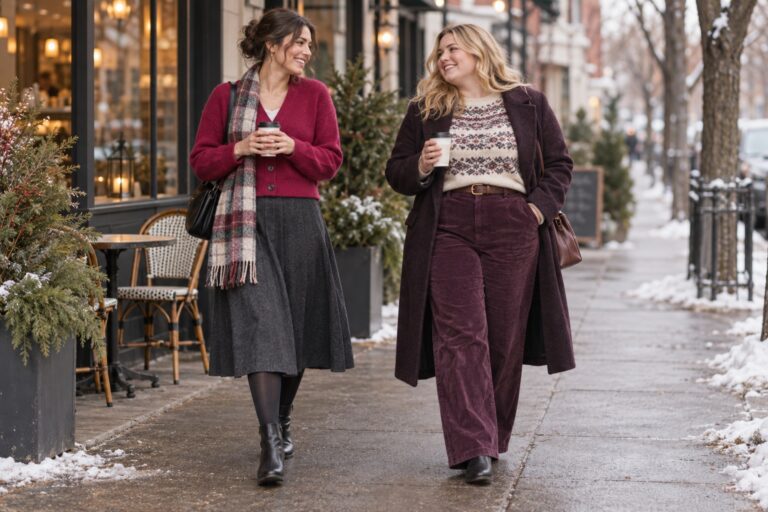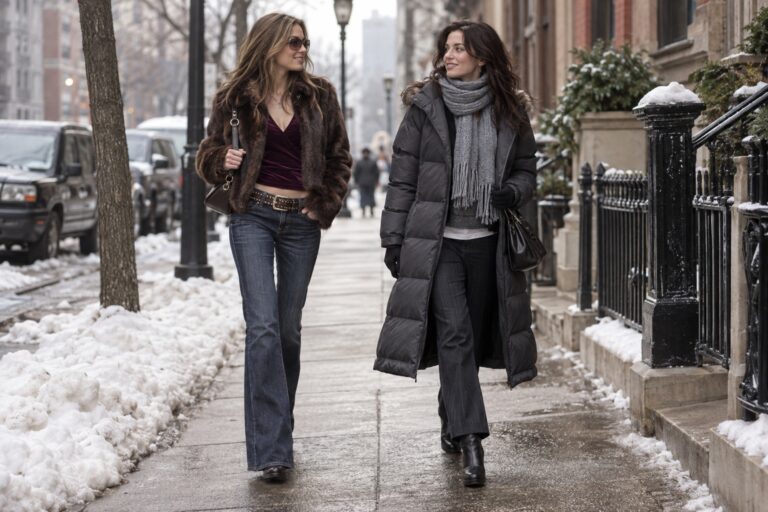
Winter Party Outfits for Five Different Nights
The invitation says Saturday at seven. It does not say holiday party, cocktail attire, or anything that helps you decide whether the velvet trousers are too much. You know the host, the neighborhood, and that people will probably move between the kitchen and living room. The question is less what is fashionable than what will feel right once you arrive.
Winter party outfits have to negotiate a few things at once: the mood of the gathering, the temperature outside, and how you want to spend the evening. A birthday dinner, housewarming, gallery opening, work celebration, and dance night can all call for different levels of polish. Start with the plan, then choose one piece that makes the outfit feel like an occasion. The rest can support it.
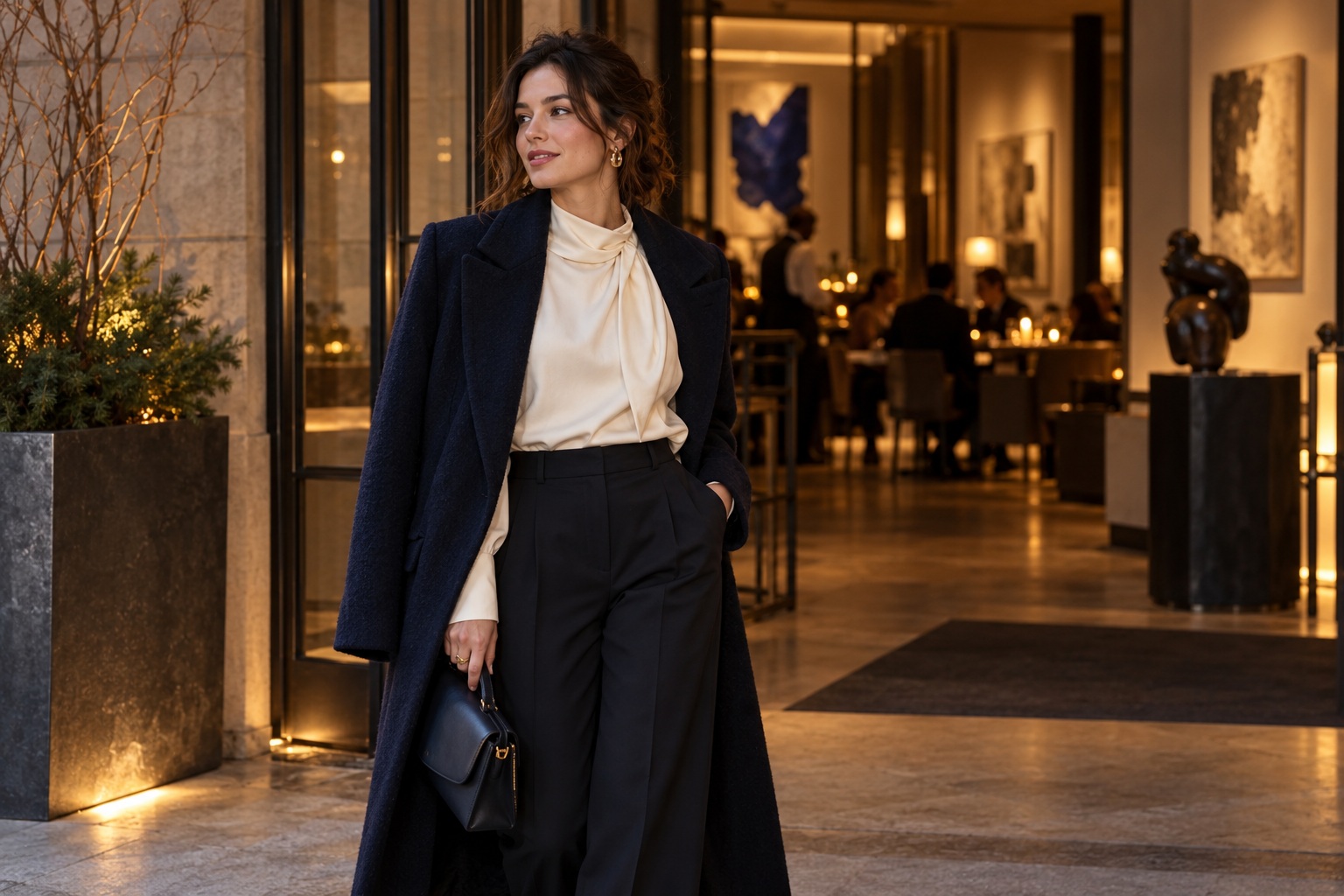
The invite is for Saturday, not a holiday
Not every winter party needs a festive uniform. Plenty of invitations arrive between the holidays: a friend’s birthday, a new apartment, a small opening, a team dinner, or a night out that has been postponed twice. These plans deserve an outfit with personality, but they do not require sequins, seasonal colors, or a dress code borrowed from December.
Think about the evening as a small story. Where does it begin? Will you sit for dinner, stand and talk, take your coat off in a crowded entryway, or spend most of the night moving around? These details are more useful than trying to guess what everyone else will wear. They help you decide whether a fluid skirt, tailored trousers, a knit dress, or a strong top should lead.
Found the dress? Keep the rest in one place.
Zarellea brings guest details, vendors, timelines, and every next step together — so your wedding plan feels as good as your look.
Then choose your level of contrast. A relaxed gathering can make a polished jacket feel interesting; a formal room can make a clean, simple outfit feel quietly confident. You might pair a sculptural earring with an otherwise understated look, or let a textured top carry the outfit while the trousers and shoes stay familiar. The aim is to feel dressed for the occasion without looking as though you are wearing a costume for it.
There is also a practical reason to decide on the mood first. Winter outerwear can change the first impression of an outfit, and a layer that is awkward to carry can distract you all evening. If your coat is bulky, choose a base that still feels complete once you take it off. If you expect to keep a jacket on for part of the night, make sure its proportions work with the outfit beneath.
Read the room before you choose the statement
“Party” describes a mood, not a single dress code. A candlelit restaurant, a friend’s apartment, a bright gallery, and a dance floor each ask for a slightly different balance. You do not need a perfect forecast of the night. Use the invitation, venue, host, and planned activity as clues, then make a choice that lets you participate comfortably.
Consider movement first. If the evening includes a long dinner, a top that stays comfortable while seated and a waistband that does not need constant adjustment will make the outfit easier to enjoy. For a standing reception, think about a layer you can take off and carry, plus shoes that feel manageable on the floor you are likely to encounter. For dancing, choose a hem and shoe combination you can move in without watching every step.
Next, decide where the visual interest belongs. A statement can be a saturated color, a clean shoulder, an unusual fabric, a full skirt, a sharp trouser, or one piece of jewelry. It does not have to be shine. When one element has a clear point of view, the rest of the outfit can stay calm, which often makes the statement easier to wear.
Finally, consider how much of the evening will happen outside. A short walk from a car to the door is different from waiting outdoors or taking public transit. Build your own comfortable layers around the outfit rather than expecting a party look to do every job by itself. A fine base layer under a top, tights with a skirt, or a warm scarf for the trip can preserve the look you planned while giving you options.
Winter party outfits for five non-holiday nights
Use these scenarios as starting points, not uniforms. Swap colors, silhouettes, and accessories to suit your wardrobe. Each look has one occasion piece and a few quieter partners, so it is easy to adjust the level of dress without rebuilding the whole outfit.
Birthday dinner: let one expressive piece lead
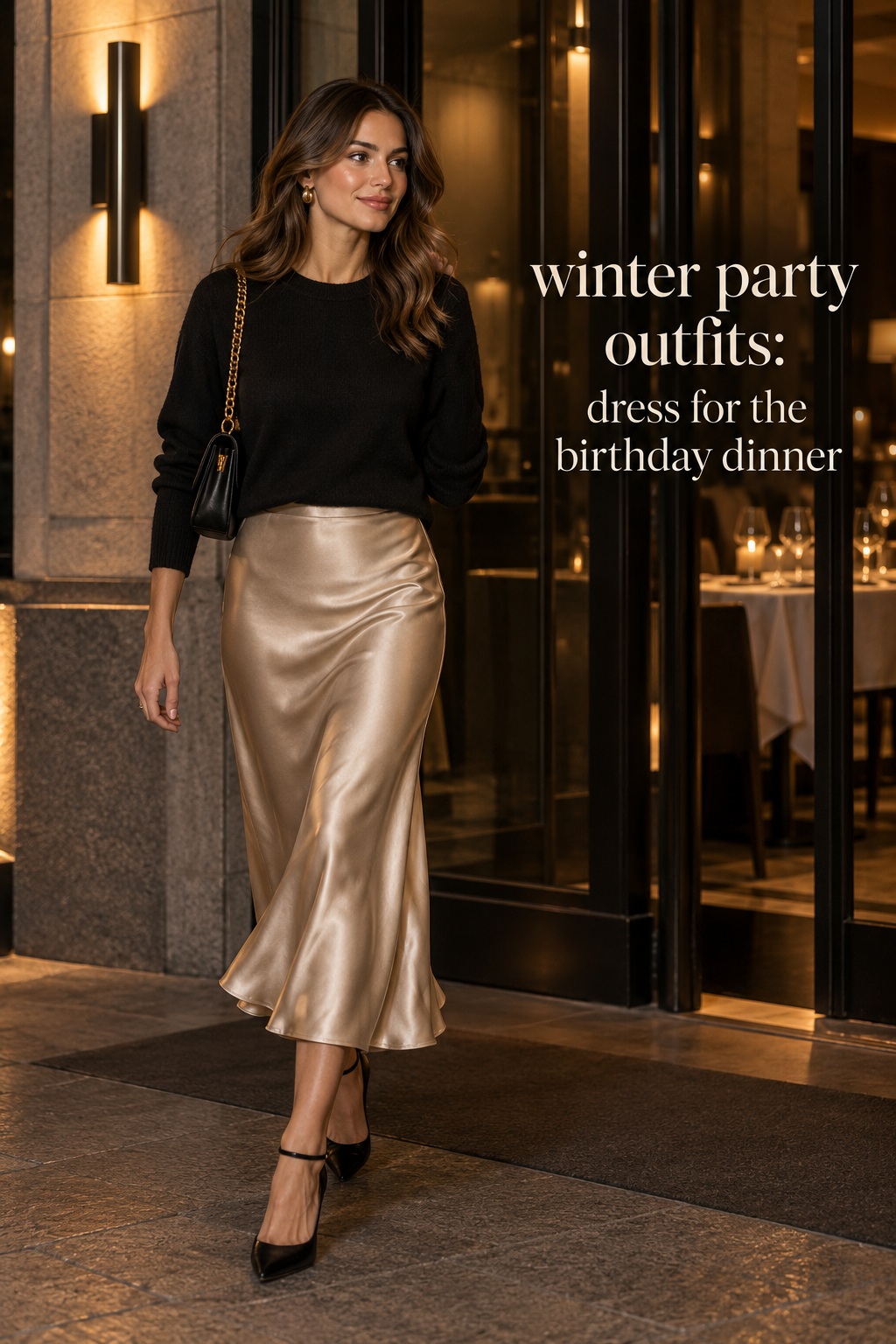
A birthday dinner gives you room to look celebratory without dressing for a specific season. Try a satin-finish skirt with a fine-gauge sweater, or wear tailored trousers with a top that has an interesting neckline or sleeve. Keep the shape comfortable enough for sitting, and choose one accessory that feels personal: a sculptural earring, a cuff, or a small bag with a distinct shape.
If the restaurant is relaxed, a good dark jean can work with a draped blouse and a refined flat or low heel. If the reservation feels more formal, swap the denim for a fluid trouser or skirt and add a jacket with a clean line. The adjustment is small, but it changes the impression. You do not need to add several dressy details at once.
Think about the coat as part of the arrival. A long coat over a simple outfit can look composed, while a cropped jacket may suit a more casual silhouette. When you take it off, the base should still feel intentional. A tucked top, a considered neckline, or a visible belt gives the outfit a finished center without making it fussy.
Housewarming: choose ease with a little structure
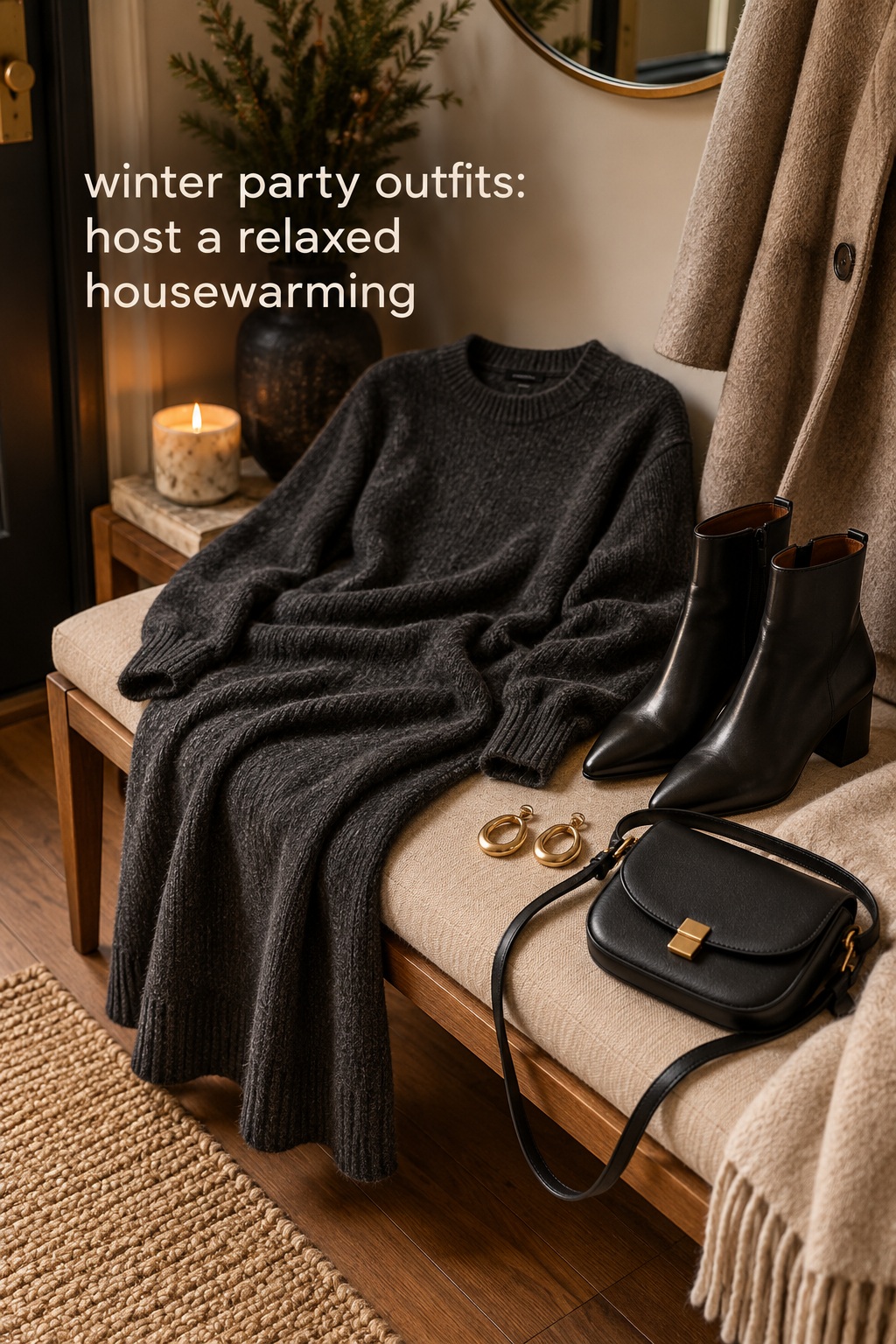
At a housewarming, you may be greeting people at the door, balancing a drink, and moving through rooms you have never seen. An outfit with some ease makes sense, but it can still feel considered. Try straight-leg trousers with a soft blouse and a short jacket, or a knit dress with a defined shoulder and simple boots. A crossbody or compact shoulder bag can leave your hands free if you prefer one.
Indoor shoes vary from home to home, so avoid building the entire look around a dramatic heel if you would feel awkward changing footwear. A polished loafer, low boot, or clean flat can keep the outfit smart while staying adaptable. If you know the host keeps shoes on, choose the pair that fits the room and your comfort rather than defaulting to the most formal option.
Texture can do the work of extra ornament. A ribbed knit beside smooth trousers, a brushed jacket over a fine top, or a soft skirt with a crisp shirt gives the outfit depth without making it feel overdressed. Keep the palette close if you want an easy, pulled-together result, or use one color accent to make the look more playful.
Gallery opening: use shape and restraint
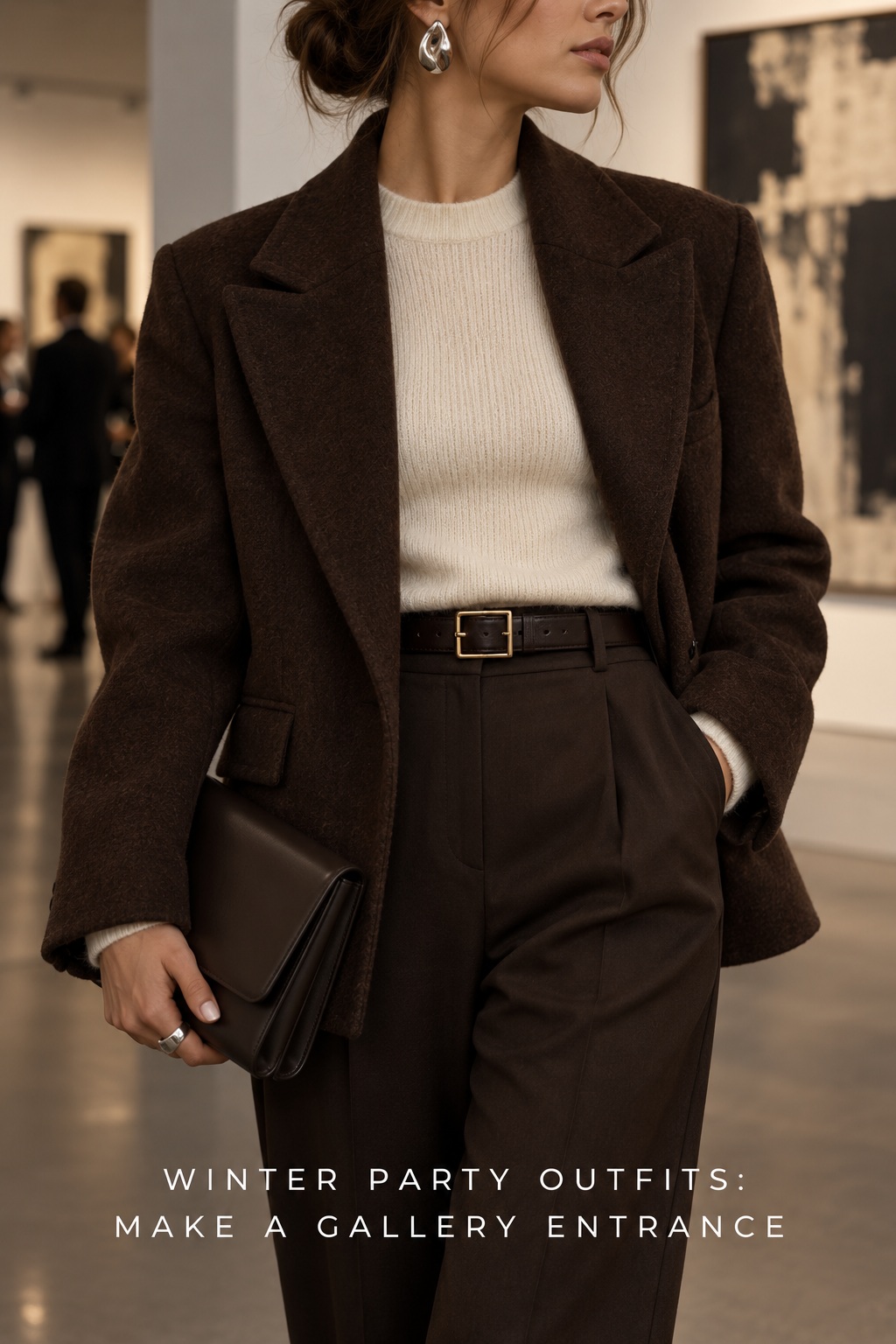
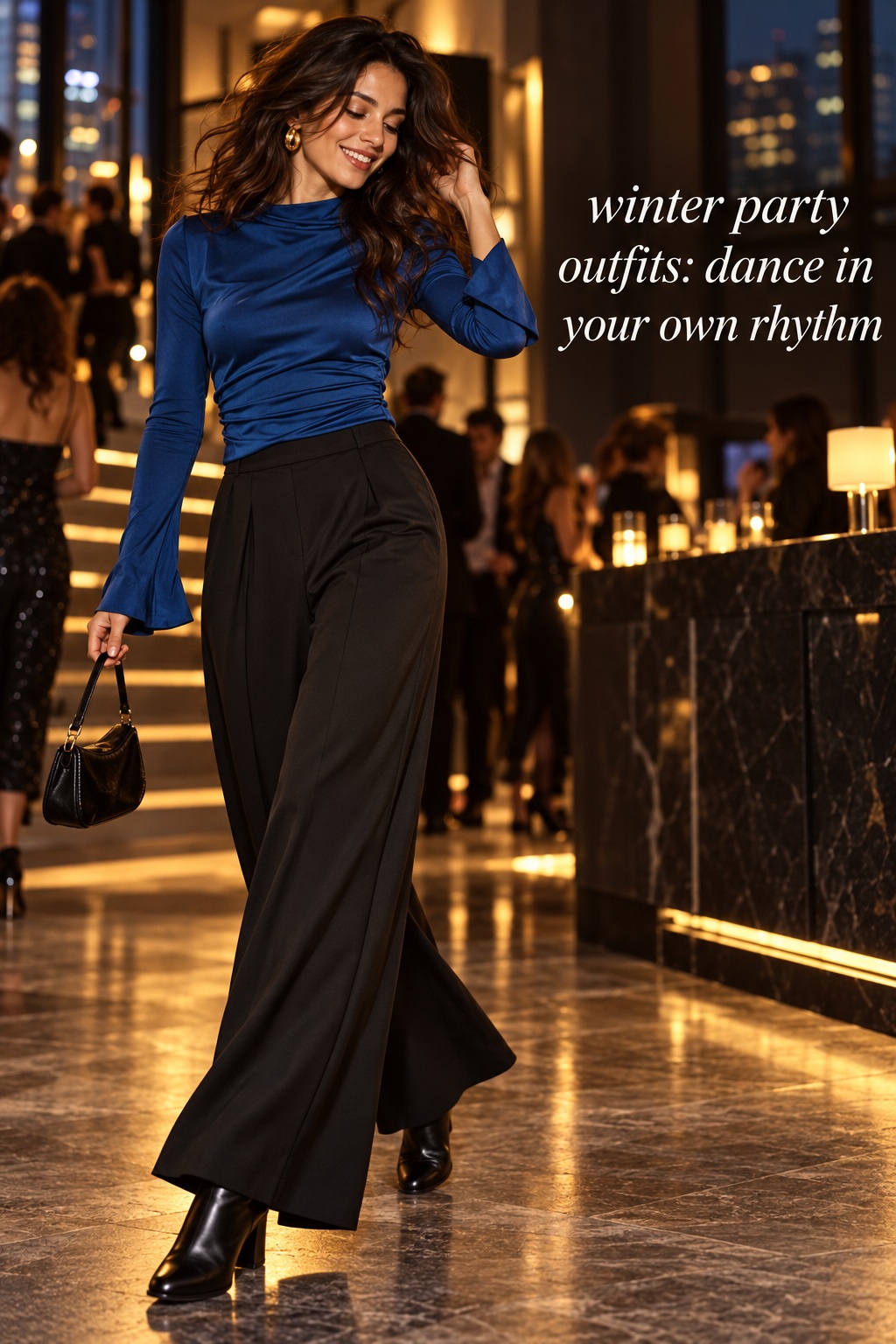
A gallery opening is a natural setting for a silhouette with a point of view. Consider wide-leg trousers with a fitted knit, a column skirt with a crisp shirt, or a minimal dress under a sharply cut jacket. The interest can come from proportion rather than decoration. A single unusual earring or a sculptural bag can finish the outfit without competing with the clean lines.
Choose pieces that let you stand, walk, and look around without adjusting them constantly. If you expect to move through several rooms, a stable shoe may matter more than extra height. A sleek boot, loafer, or low heel can work with a long trouser or a midi hem. Check the hem with your chosen shoes before leaving so it falls the way you want.
For color, you can stay tonal or choose one clear accent. A charcoal outfit with a pale top, a deep brown look with a textured bag, or a simple black base with a blue accessory can all feel deliberate. There is no need to dress like the artwork. Let one decision make the outfit yours, then keep the rest edited.
Work celebration: keep the polish, soften the office cues
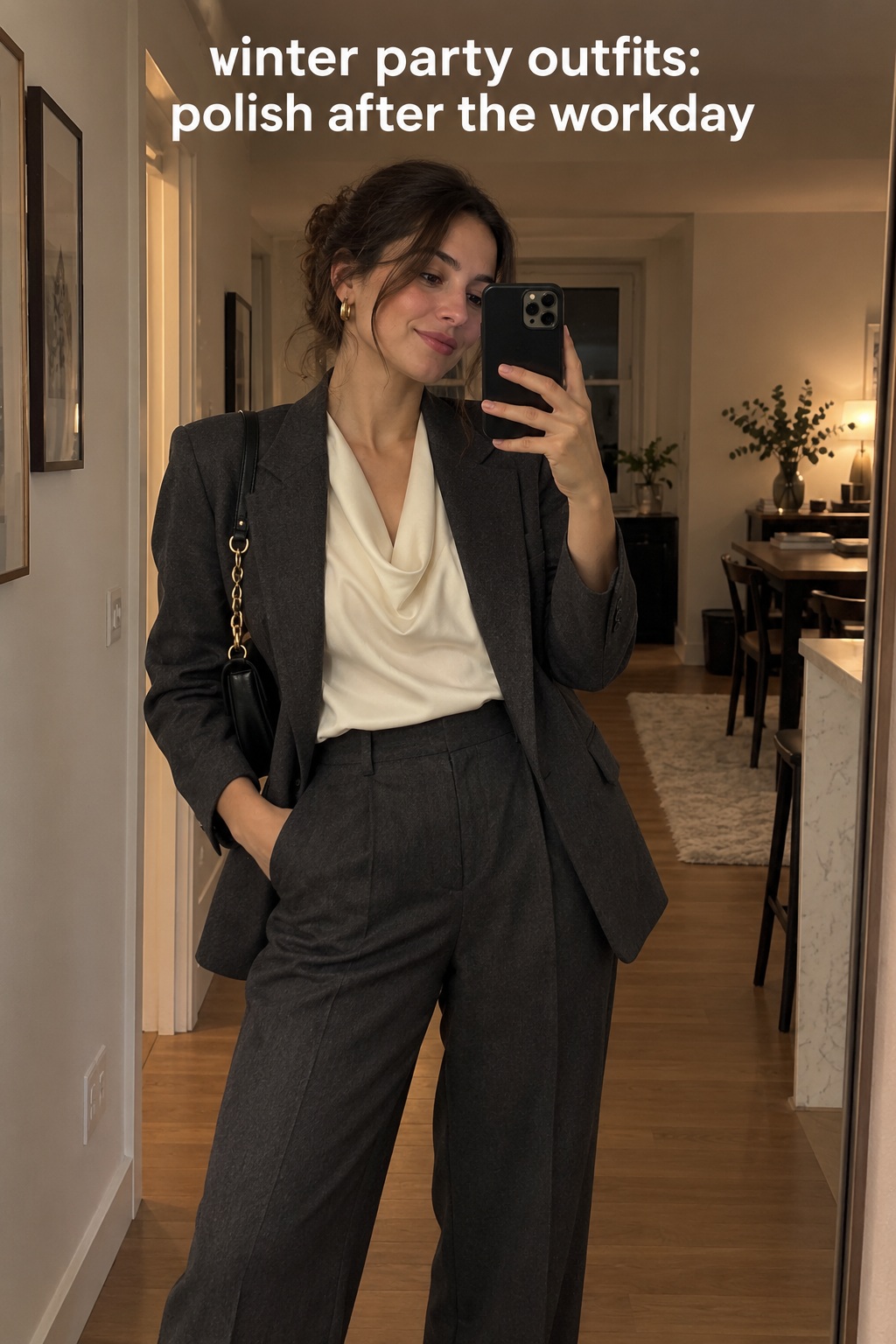
A team dinner or end-of-project gathering may follow a workday, which makes a flexible base useful. Tailored trousers with a fine knit and a distinctive belt can shift easily from desk to dinner. You could also wear a simple dress with a jacket, then remove the jacket if the room feels more relaxed. A change of earrings or lipstick is optional, not a requirement.
Think about the people and setting rather than assuming every workplace has the same expectations. If your office is casual, a polished top and dark denim may feel right. If you usually dress formally, a fluid blouse or softer fabric can bring a celebratory note while keeping your familiar level of coverage. Choose what lets you enjoy the social part without feeling unlike yourself.
One practical approach is to keep the main outfit simple and carry a small finishing piece. A jacket can be left on for a more structured look or taken off when you arrive. A compact bag, a refined shoe, or a subtle piece of jewelry can lift the outfit without requiring a full change. If you are going straight from work, comfort and ease of carrying matter as much as the visual result.
Dance night: dress for movement first
For a night built around dancing, start with the clothes you can move in. A fitted top with fluid trousers, a stretch dress with a comfortable layer, or a skirt that feels secure when you turn can all make good foundations. Check that straps stay put, the waistband feels comfortable, and the hem does not need constant attention. Small practical checks help you forget about the outfit once the evening starts.
Shoes deserve an honest test. Walk around at home, turn, and stand for a few minutes in the pair you plan to wear. A lower heel, sturdy boot, or polished flat may suit a long night better than a shoe that looks appealing but changes how you move. If you want height, choose a pair you already know you can wear for the duration of your plans.
Let the energy come from one detail: a strong color, a sheer layer over a simple base, a dramatic sleeve, or a long necklace that moves with you. If you choose a standout top, keep the bottom easy. If the skirt or trouser carries the look, simplify the neckline. An outfit can feel lively without every piece asking for attention at once.
Give the outfit a good ending
Once you have the main pieces, do a short practical edit. Put on the coat you will travel in. Sit down, walk across the room, and reach for the bag you plan to carry. Notice whether a sleeve catches, a skirt rides up, or the layers bunch under the coat. Fix the part that interrupts your comfort, then leave the rest alone.
Consider the transition between indoors and outdoors. If the coat will cover most of the outfit on the way there, choose a scarf or collar that works with its neckline. If you will carry the coat later, make sure you have a plan for it and a bag that will not feel awkward. A coat check may or may not be available, so the venue details can guide this choice.
Accessories are most useful when they solve a small styling problem. A belt can clarify the waist of a loose top. A simple earring can bring attention to the face when the neckline is high. A compact bag can give a soft outfit a little structure. You do not need a matching set. Pick the piece that helps the outfit feel complete, and skip anything that makes you keep checking yourself.
Color can be handled in the same restrained way. If your outfit is mostly neutral, one saturated piece or a subtle pattern can give it a focal point. If the clothes already contain several colors, repeat one shade in a small accessory or let the shoes stay quiet. Coordinated does not have to mean identical. Slight variation often makes a combination feel more natural.
Most of all, leave room for the evening to be an evening. An outfit that requires constant fixing takes attention away from the people you came to see. Winter party outfits work best when the occasion is visible in the choices, but the clothes still feel like yours. Start with the plan, select one piece that sets the mood, and let comfort shape the finishing touches.
FAQ
What should I wear to a winter party that is not a holiday event?
Choose an outfit around the setting and activity. Tailored trousers with an expressive top, a knit dress with boots, or a skirt with a fine sweater can all work. Use one occasion-ready detail, then keep the rest suited to your comfort and the venue.
How can I dress up without wearing sequins?
Use shape, texture, or a considered accessory. A sharply cut jacket, fluid trousers, a satin-finish skirt, an interesting neckline, or sculptural jewelry can make an outfit feel special without relying on sparkle.
What shoes work for a winter party?
Choose shoes that suit both the outfit and the plans. Loafers, flats, boots, and lower heels can all look polished. Consider how long you will stand or walk, the likely surface, and whether you can move comfortably in the pair.
How do I stay warm without hiding my party outfit?
Layer for your own comfort with a smooth base, tights, a scarf, or a coat that works with the outfit’s shape. Try the full combination together so you can see whether sleeves, hems, or closures bunch before you leave.
Can I wear jeans to a winter party?
Often, yes, when the venue and invitation feel casual. Dark or clean-lined denim with a refined top, jacket, and considered shoes can feel intentional. Choose trousers or a skirt if the gathering calls for a more formal level of dress.
What is an easy outfit for a work celebration?
Start with a base you are comfortable wearing at work, such as tailored trousers and a fine knit or a simple dress. Add one flexible finishing piece, like a jacket, refined shoe, or small accessory, that suits the gathering after hours.