
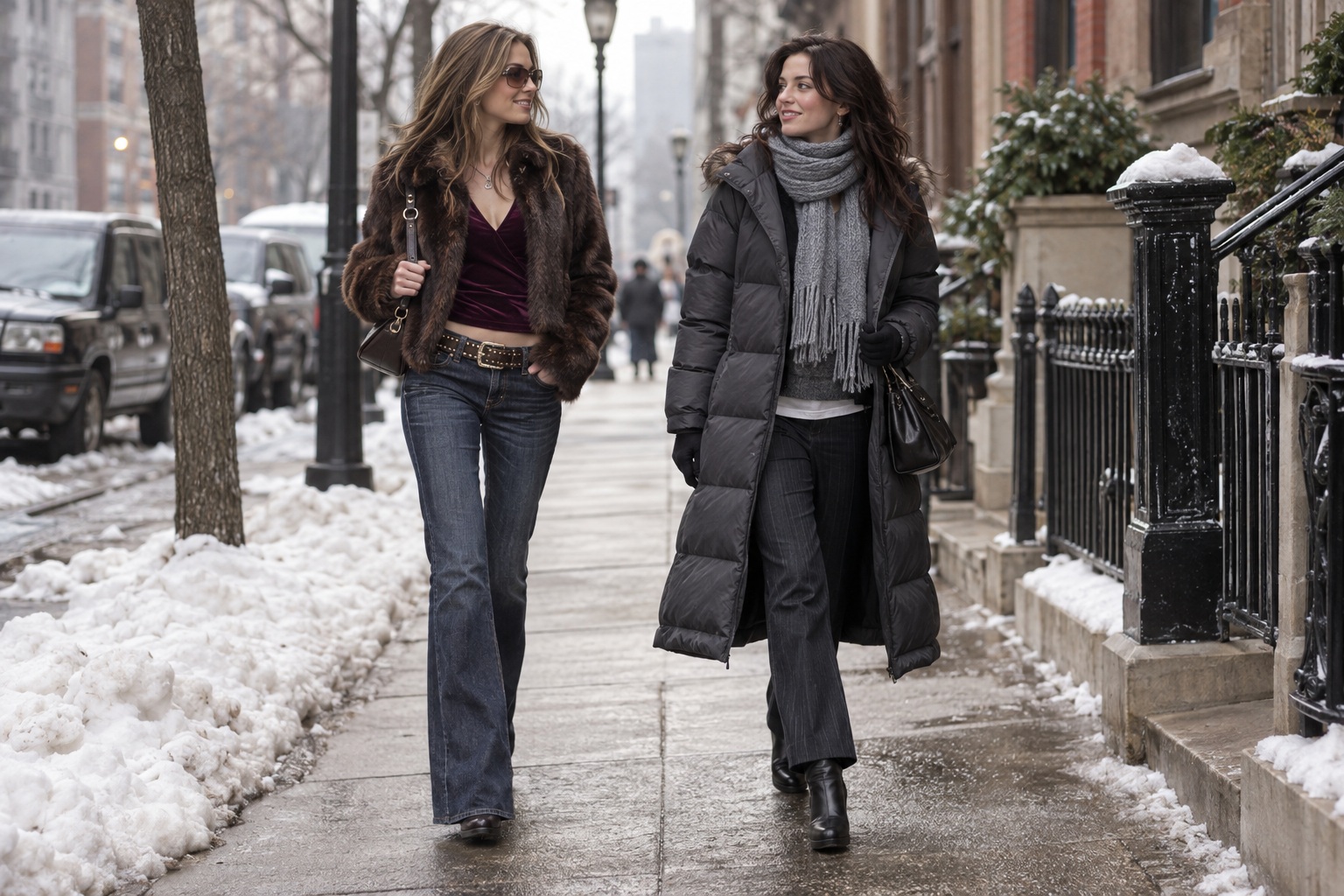
2000s winter outfits: Choose a Look for the Cold
The best 2000s winter outfits depend on how much time you will spend outside. A cropped jacket and bootcut jeans may feel right for a quick coffee run, while a long day of commuting calls for layers you can remove indoors. If you expect freezing temperatures, start with coverage and warmth, then bring in the decade through denim, a small shoulder bag, a belt, or a playful accessory. That simple choice keeps a nostalgic look wearable instead of turning it into a costume that only works in a mirror selfie.
This comparison gives you three routes: light chill, mixed indoor and outdoor plans, and sustained cold. Each one keeps a different balance between visible Y2K cues and practical layers. Choose the route that resembles your day, then adjust the details to your own comfort and closet. You do not need every signature piece at once. One clear reference, such as a velour track jacket, flared denim, a faux-fur collar, or a baguette-shaped bag, is usually enough to make the outfit read as early 2000s.
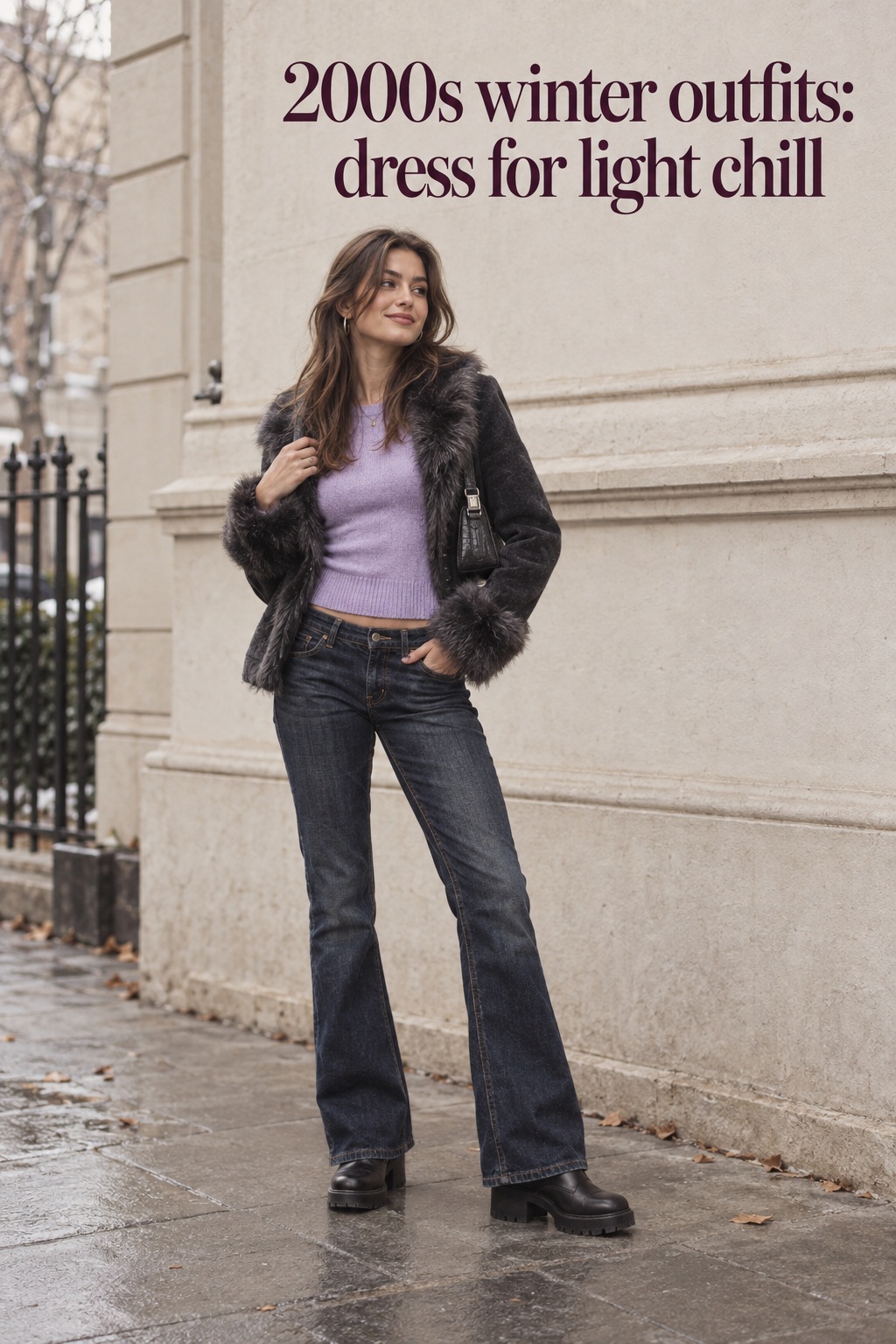
Choose your 2000s winter outfit by cold exposure
Think about exposure before you choose a silhouette. A short walk from a parked car to a warm restaurant is different from waiting for a bus, walking a dog, or spending an afternoon outdoors. Your outfit has to work for the coldest and longest part of the plan, not just the time you expect to be inside. If you are unsure, favor a removable layer. It is easier to take off a cardigan or open a coat than to make a light outfit warmer once you have left home.
Found the dress? Keep the rest in one place.
Zarellea brings guest details, vendors, timelines, and every next step together — so your wedding plan feels as good as your look.
For a brief outdoor stretch, a light-to-medium outer layer can be the main visual statement. A short faux-fur jacket, fitted puffer, or suede-look coat over a knit top and bootcut jeans gives a recognizably nostalgic outline without a complicated stack. For a long day that moves between heated buildings and cold sidewalks, use a base layer, a mid-layer, and an outer layer that can open or come off. For an extended cold spell, put coverage first: a warm coat, full-length bottoms, socks, and weather-appropriate shoes matter more than a bare waist or cropped hem.
The core 2000s references do not all have the same job. Flared and bootcut jeans create a familiar line, while a velour zip top or graphic tee can provide color and texture. A short jacket gives a strong period cue, but it may leave less room for insulation than a longer coat. A mini skirt can work with tights and boots for a quick indoor-focused plan, yet it needs more thought if you will be exposed to wind. Choose the detail that fits your day rather than forcing every trend into one outfit.
It can help to make one piece the anchor and let the rest solve practical problems. If the anchor is a cropped jacket, pair it with a high-coverage knit or a longer layer underneath. If it is a low-rise or mid-rise jean, decide whether a tucked base layer feels comfortable when you sit, bend, and reach. If you want a skirt, test the tights and shoes together before you go. This small try-on prevents the familiar mismatch of a photogenic outfit that becomes fussy as soon as the weather or schedule changes.
For a visual reminder of the quieter side of the decade, Vogue’s look at Gisele Bündchen’s 2000s winter style shows how simple denim, boots, a suede coat, and a few accessories can do the work. The lesson is useful for any of the three routes: you can choose a recognizable reference without piling on every nostalgic accessory. Decide how much of the look should be obvious, then keep the rest of the outfit calm enough to wear comfortably through the day.
For light chill, let the outfit lead
When you will be outside briefly and mostly in comfortable indoor spaces, you can let the silhouette carry more of the styling. Start with bootcut jeans, a fitted long-sleeve top, and a short jacket. A velour zip-up, cropped puffer, or soft faux-fur layer can add the era cue. Finish with flat boots or sturdy sneakers, then add a compact shoulder bag and one noticeable accessory. The combination feels deliberate because the pieces share a clear proportion: a close-fitting upper half, a defined waist, and denim that opens slightly at the hem.
A second light-chill option is a knit dress with opaque tights, knee-high boots, and a short coat. This formula has a dressier feel while keeping the legs covered. If the dress is simple, use a belt or a small bag to make the reference more visible. If the coat has a textured collar, skip a statement necklace and let that texture be the focus. Keep a scarf nearby if the temperature changes, but do not wrap so many bulky pieces around the neckline that the outfit loses its shape.
A graphic tee layered over a thin long-sleeve top is another recognizable route, especially with flared jeans and a bomber jacket. The layers can show at the sleeve or neckline, giving the outfit dimension without requiring a heavy knit. A fitted thermal shirt can play the same role when you want more coverage. Choose a tee that sits smoothly over the base layer, and avoid piling on extra jewelry if the graphic is already busy. A simple belt and small shoulder bag make the idea feel finished without adding weight.
For an indoor party or dinner, try a mini skirt with tights, a slim sweater, and a longer coat for the journey there. The outer layer can be removed once you arrive, so the outfit reads lighter indoors. Add boots with a sole you can manage on the actual route. If the walk is more than a few minutes, a warm coat and scarf should be part of the plan even if they cover the styling. This version works best when you know the venue is warm and can avoid long waits outside.
Light-chill styling has one main trade-off: cropped outerwear gives the most immediate throwback shape but offers less coverage. You can preserve the look by choosing a longer top underneath, wearing a fitted vest under the jacket, or keeping the jacket open over a warm mid-layer. A longer coat is also easy to carry or leave at a coat check, so the outfit does not need to depend on a short hem. Keep the decision simple: if you will be outside longer than the outfit can handle, change the outer layer before you leave.
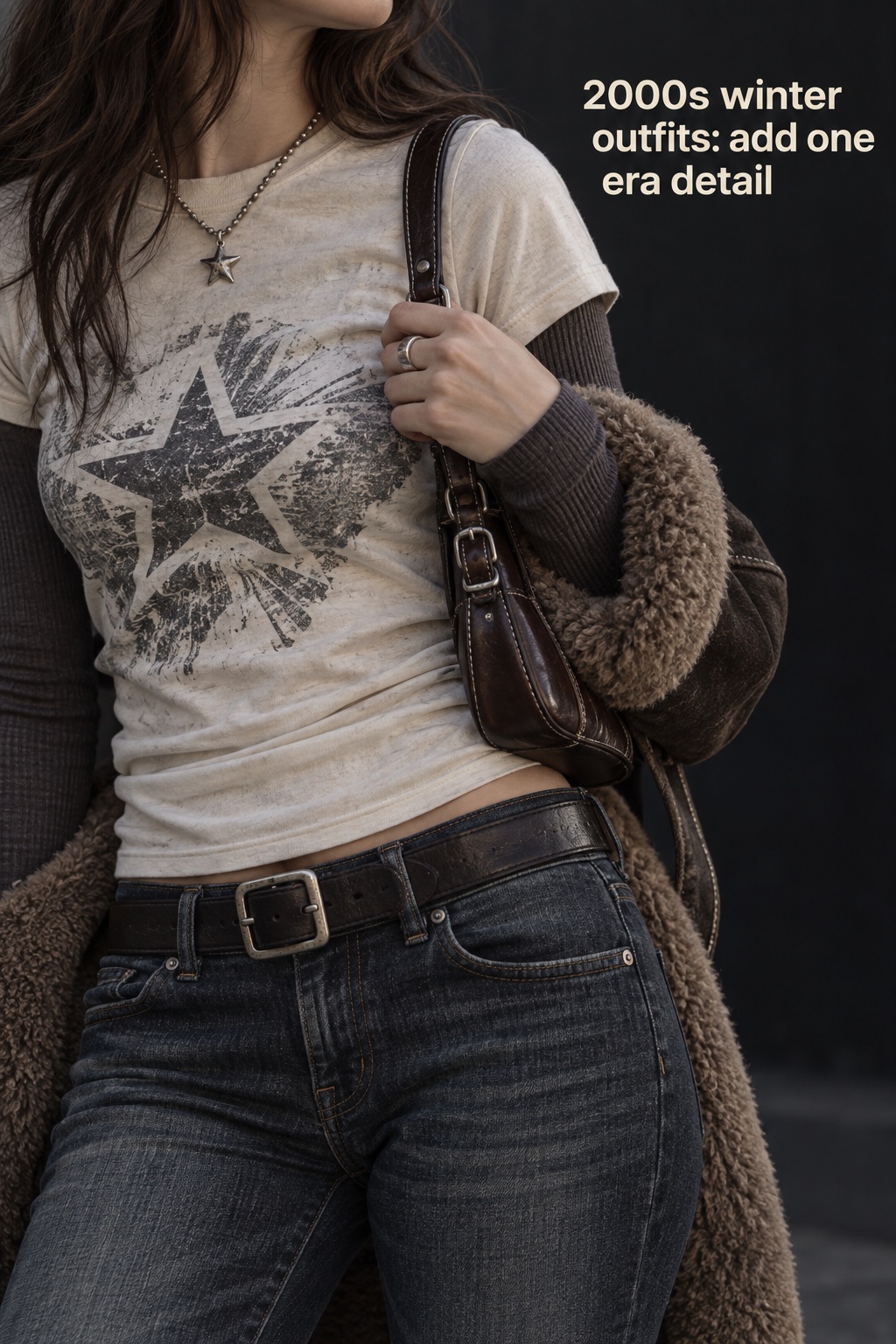
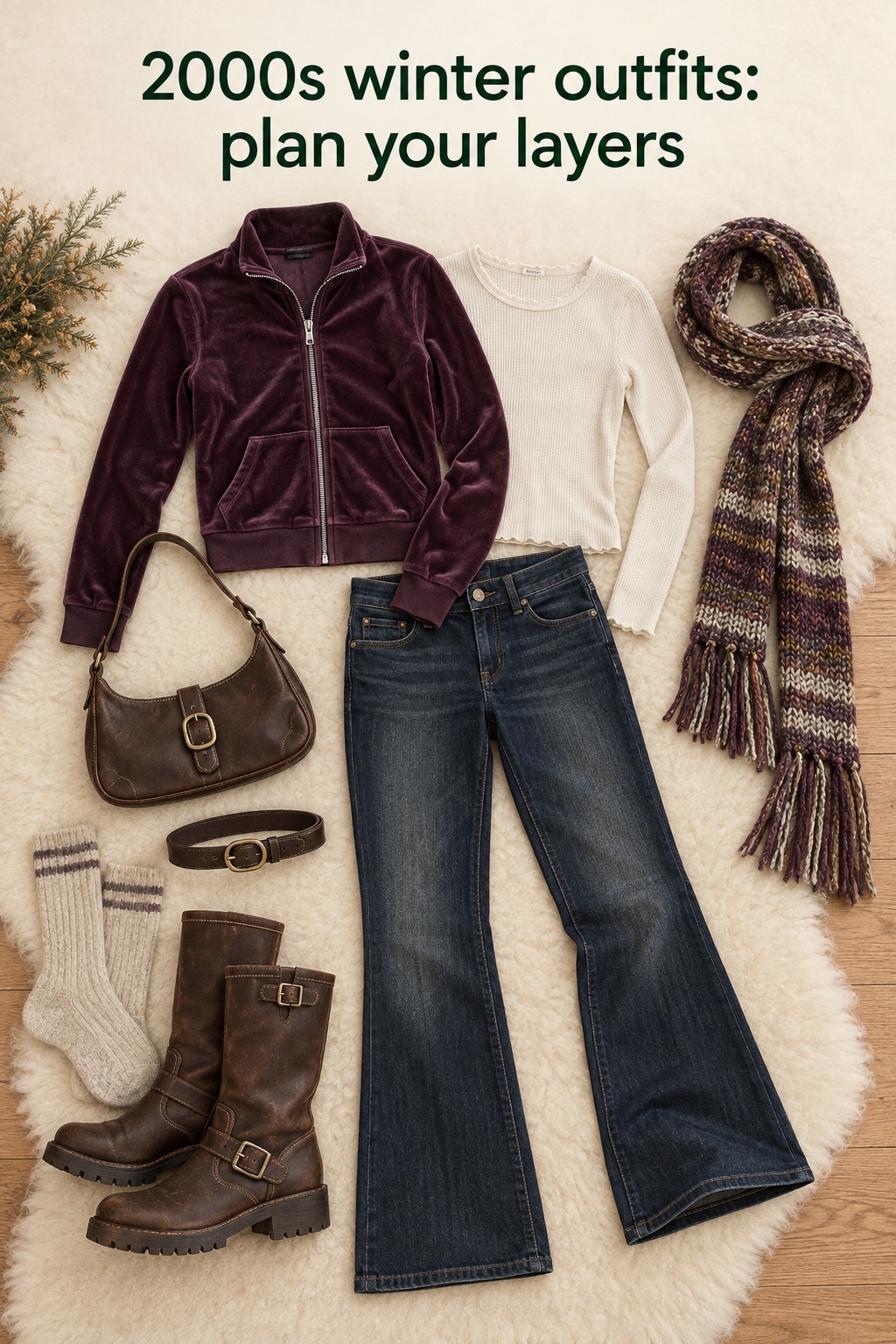
For mixed indoor and outdoor days, build a removable Y2K layer
Commuting, errands, campus days, and city plans often move between cold air and heated rooms. For that pattern, use three pieces with different jobs: a close base, a visible mid-layer, and an outer layer that can open or come off. A thin long-sleeve top under a graphic tee or fitted cardigan makes the first two layers. Add a roomy coat or puffer for the walk. When you arrive, remove the coat and still have an outfit with intentional color, texture, or proportion.
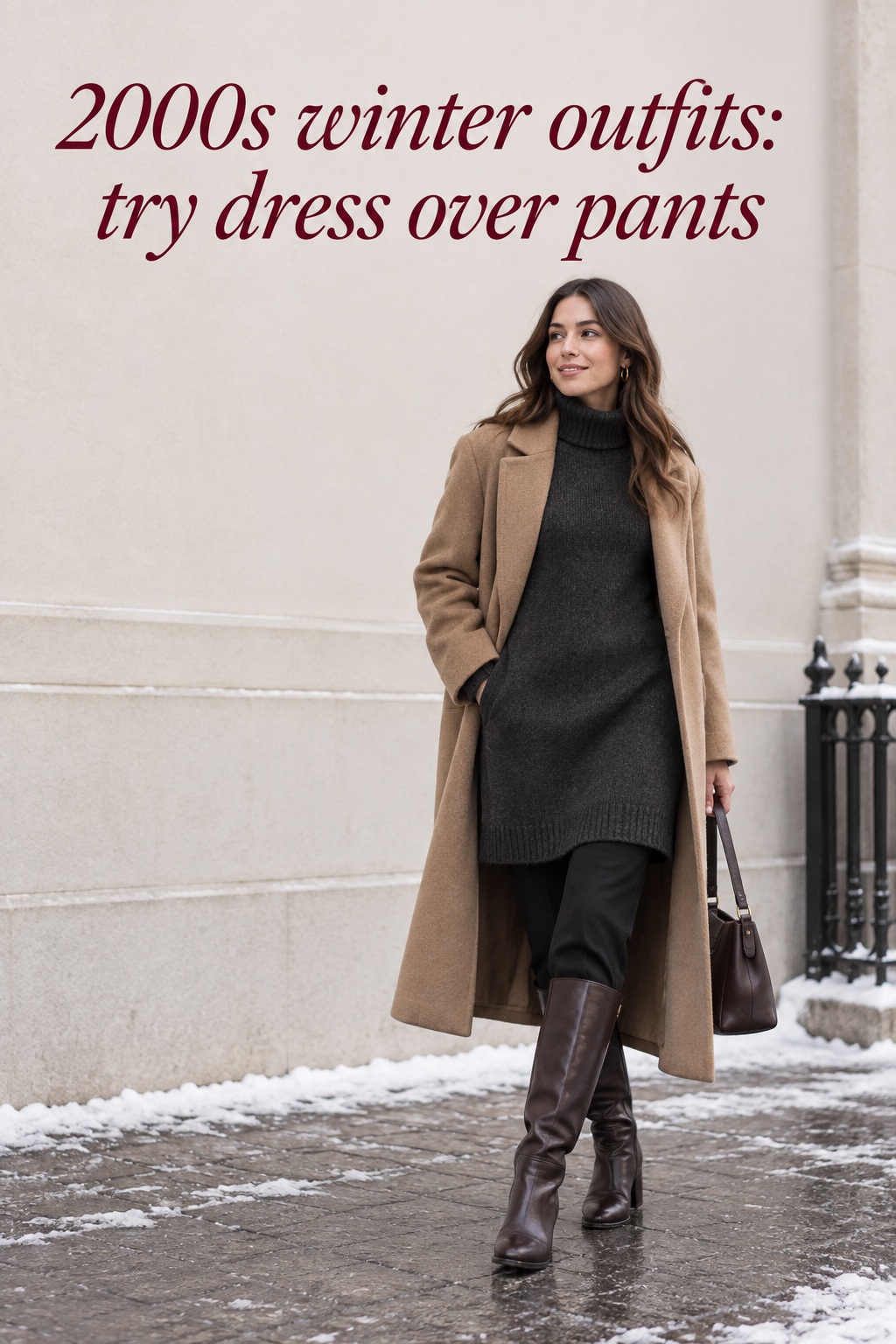
Bootcut or straight jeans are useful in this route because they work with several kinds of footwear and do not require a delicate hem. Wear them with a fitted knit, a zip hoodie, or a velour track jacket under a longer coat. If you prefer a skirt, a knit dress over slim trousers or leggings offers another layered option. The dress-over-pants combination is a genuine early-2000s styling cue, and a recent Marie Claire winter styling feature revisits it with jeans, leggings, and trousers. Treat it as a proportion experiment: the hem and bottom layer should look intentional together.
Build the outfit so the middle layer is comfortable on its own. A cardigan should not pull when buttoned, and a hoodie should fit beneath the coat without bunching at the shoulders. If the indoor room is warm, you may want to remove both coat and scarf. That means the base layer should not feel like underwear, and the mid-layer should still look finished. A fitted tee beneath a cardigan, a mock-neck beneath a zip jacket, or a long-sleeve top beneath a graphic tee can each work, depending on the amount of warmth you need.
Accessories can make a practical set of layers feel more distinctly 2000s. A slim belt, small shoulder bag, narrow scarf, tinted glasses, or a playful hair clip can add a reference without interfering with the coat. Pick one or two. Too many small accents can compete with the outfit, while one focused detail makes the look easier to read. If the jacket is shiny or the bag has a noticeable finish, keep the jewelry simple. If your clothes are mostly matte and neutral, a brighter accessory can provide the focal point.
Shoes deserve special attention on mixed days. Choose a pair that works for the longest walk and the slickest surface you expect. Chunky boots can balance flared denim and handle more than a delicate heel, while a clean sneaker can suit a casual route with little snow or slush. If you want a tall boot with a skirt or dress, check that the shaft fits comfortably over tights or slim pants. Keep a practical pair near the door if you can change after arriving, but do not depend on a shoe that is unsafe for the route.
When a day includes a long indoor stretch, avoid wearing the warmest possible base layer if you are likely to overheat. Instead, make the warmth adjustable: a coat that opens, a scarf that comes off, and a mid-layer that is easy to carry. The silhouette can remain Y2K-inspired through the cropped line of the mid-layer, a visible belt, or flared denim. You do not need the outerwear to match the decade exactly. A simple modern coat can make a playful under-layer feel more wearable and keep the overall look from becoming too literal.
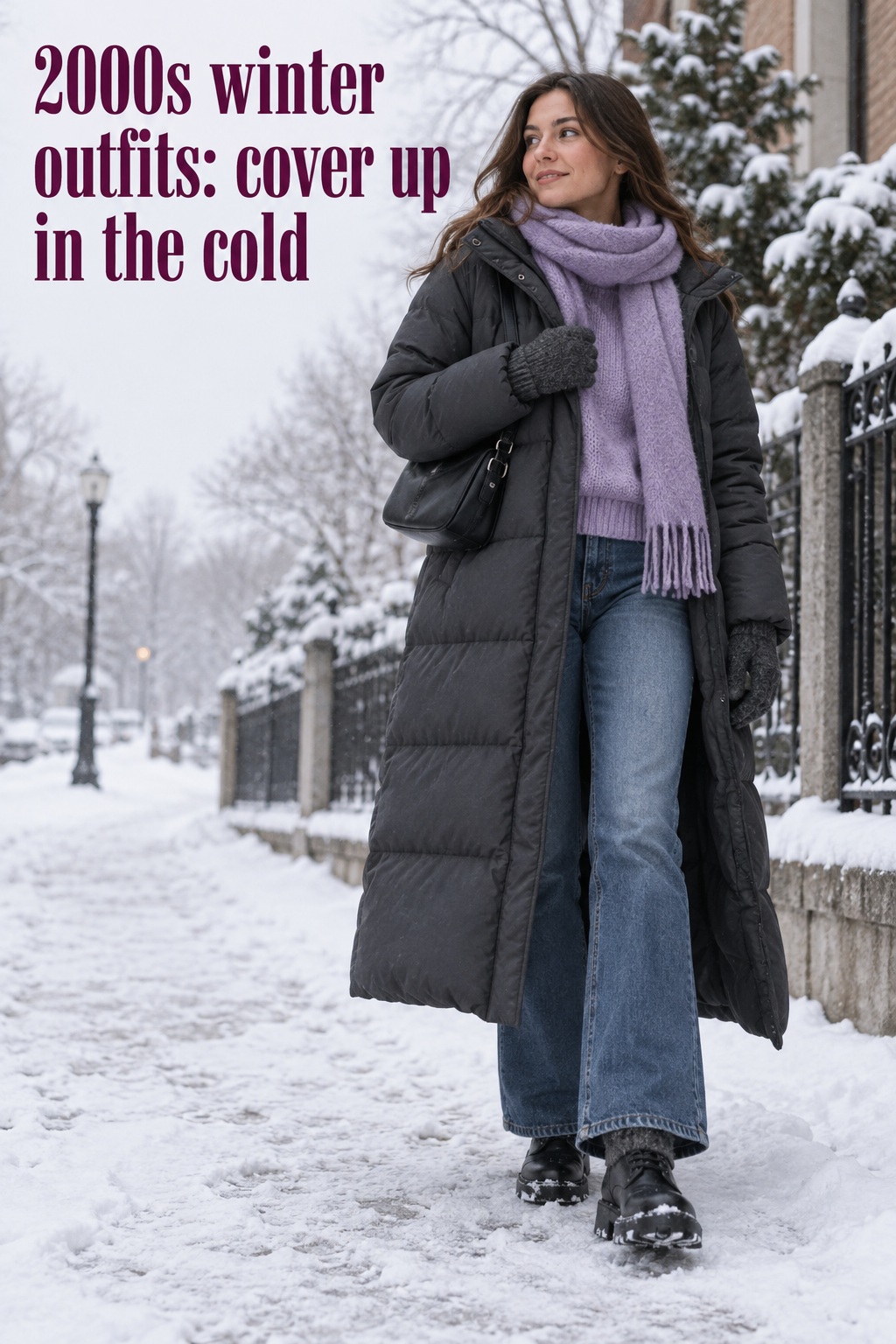
For freezing weather, make warmth the base
When you expect extended time outside, build from the layer closest to your body and work outward. Choose a comfortable base layer, then add a knit, fleece, or other insulating mid-layer and a coat that covers the areas you want protected. The nostalgic elements can sit over or around that practical foundation: a velour top beneath a coat, a belt over a sweater, a small bag, or a bootcut silhouette with warm socks and substantial boots. The outfit can still look like your chosen decade even when the coat is doing most of the visual work.
For a jeans-based look, choose full-length denim with enough room for a base layer underneath if that feels comfortable. Add a fitted thermal or long-sleeve shirt, a warm knit, and a coat with enough space through the shoulders to move. A scarf, gloves, and a hat can be coordinated with the denim or coat rather than treated as unrelated necessities. If the coat covers the outfit outdoors, let the bag, boot shape, or visible hem carry the Y2K reference. Comfort and coverage are part of the styling, not a failure of it.
A skirt or dress can also work in colder conditions, but plan the full coverage system rather than styling only the visible pieces. Opaque tights, a warm base layer, a longer coat, and boots create a more complete outfit than a bare leg paired with a statement jacket. If you will be outside for a while, consider whether trousers under a dress or skirt feel better than tights alone. The added layer can be a deliberate reference to early-2000s styling. Check how the hems overlap when you walk and sit, since excess bunching can make the outfit feel awkward.
Outerwear often determines whether a freezing-weather outfit works. A short puffer may look like the clearest Y2K reference, but a longer coat usually gives more coverage. You can keep the shorter shape visible indoors and use a longer coat for the journey, or choose a coat with a defined waist and add a belt to echo the era. If the coat is bulky, streamline the layers beneath it so you can move freely. Try the whole combination zipped or buttoned, including scarf and gloves, before deciding it works.
Footwear should match the conditions you will actually encounter. A platform sole or tall boot may complete the look, but it should also feel stable and comfortable on your route. If there is snow, ice, or slush, prioritize traction and keep delicate shoes for indoor wear. Warm socks can affect the fit, so test them with the boots rather than assuming your usual size will feel the same. A bag with a secure strap is useful when gloves make small closures fiddly. These practical choices leave you freer to enjoy the outfit instead of adjusting it all day.
Use color and texture to keep heavy layers from feeling monotonous. A soft pastel knit, a glossy bag, a ribbed scarf, or a faux-fur trim can bring back the playful mood associated with 2000s dressing. Keep the number of statement textures under control: if the coat has a strong texture, let the knit and accessories be quieter. If the coat is plain, a brighter hat or bag can provide the accent. This is a flexible styling choice, not a rule about what people wore, so choose details that feel like you.
Compare the trade-offs before you leave
Use a quick side-by-side check. Light chill favors a short statement jacket and a simpler base, with the trade-off of less coverage. A mixed day favors several removable layers and practical shoes, with the trade-off of carrying a coat or scarf indoors. Freezing weather favors full coverage and a longer outer layer, with the trade-off that the outfit’s nostalgic details may be less visible outside. None is the universally best 2000s winter outfit. The useful one is the outfit that stays comfortable through the most demanding part of your plans.
Check proportions in the mirror while wearing the outer layer. A cropped jacket can look balanced over a longer top and flared jeans; a long coat can work with a closer-fitting base and a small shoulder bag. If every layer is oversized, show a clear line somewhere, such as a cuff, waist detail, or clean shoe shape. If several pieces are fitted, let the coat add ease. These are simple visual adjustments that preserve the silhouette without asking you to wear clothes that feel restrictive.
Next, do a movement check. Sit down, raise your arms, walk a few steps, and put on the coat. Notice whether the waistband shifts, the top rides up, the skirt twists, or the boots pinch. If anything distracts you in a brief try-on, it is likely to bother you more after a full day. Switch to a similar piece that solves the problem: a higher rise, longer base layer, softer knit, wider boot shaft, or shoe with a more secure fit. You can keep the same color story and era reference.
Finally, choose one focal point and remove anything that competes with it. A fuzzy collar, a standout belt, a bright shoulder bag, or a layered graphic top can be the feature. You do not need all of them. This keeps the outfit from looking like a checklist of trends and makes it easier to adapt across settings. If the rest of the outfit is simple, the focal point reads clearly. If the outfit already has a strong print or texture, let that do the work and keep jewelry and accessories quieter.
A useful last question is whether you can handle the coldest moment of the day in the outfit as planned. If not, add coverage or change the shoes before you go, even if that means hiding a favorite detail under a coat. If you can, consider whether you will be too warm once inside and make one layer removable. That small adjustment separates a look built only for a photo from one you can comfortably wear through real plans. Keep the decade cue that makes you smile, and let the rest of the outfit serve the day.
FAQ
What makes an outfit look like it is from the 2000s?
Common references include bootcut or flared denim, velour, cropped jackets, layered tops, small shoulder bags, belts, and playful accessories. You do not need every one. Choose a couple of details and combine them with pieces that fit your comfort and plans.
How can I wear 2000s winter outfits without feeling too cold?
Begin with the amount of time you will spend outside, then add coverage where needed. A base layer, warm mid-layer, coat, socks, and weather-appropriate shoes can sit beneath or around a nostalgic detail such as flared jeans, a velour top, or a small shoulder bag.
Can I wear a mini skirt for a winter Y2K look?
Yes. Pair it with tights or another comfortable leg layer, a coat suited to your route, and shoes appropriate for the ground. This formula is easiest when you will be indoors much of the time or can keep the full coverage layer on outside.
What coat works best with a 2000s-inspired outfit?
Choose by coverage and setting. A short puffer or textured jacket gives a stronger throwback outline for brief outings. A longer coat is more useful when you expect extended cold exposure. Either can work with denim, a knit, and one focused period detail.
How do I dress for a day that moves between indoors and outdoors?
Use a comfortable base, a finished mid-layer, and an outer layer that opens or comes off. A cardigan or zip top can keep the outfit looking intentional indoors, while a coat and scarf handle the outdoor portion. Pick shoes for the longest walk.
Are low-rise jeans necessary for a 2000s outfit?
No. Bootcut, flared, or straight denim can suggest the era at a rise that feels comfortable to you. If you want a lower-rise shape, test the top and base layer while sitting and moving so the outfit remains comfortable through the day.
How many Y2K accessories should I wear at once?
Start with one or two. A shoulder bag and belt, or a hair clip and textured collar, can establish the reference without competing. If your jacket or top is already a statement, keep the remaining accessories simple and let that piece lead.
