Winter 2026 Outfits: Make Runway Ideas Wearable
A runway image can make a striking idea look surprisingly hard to wear on an ordinary day. The silhouette may feel exaggerated, the fabric unusually bold, or every part of the outfit may seem to be making a statement at once. That does not mean the idea is unusable. The most helpful way to approach winter 2026 outfits is to identify the one detail that gives a look its character, then bring that detail into an outfit you already understand.
Recent Fall/Winter 2026 coverage points to expressive contrast, tactile surfaces, reworked classics, and noticeable shifts in proportion. Those are useful starting points, but they are not a checklist you need to complete. This guide shows how to spot the visual signal in a trend photo, decide how much of it feels like you, and finish with a balanced outfit that works in your own routine.
The method is simple: name the feature, choose its scale, and anchor it with familiar pieces. You might borrow a sculptural shoulder without changing your whole wardrobe, introduce texture through one accessory, or test a long-over-short proportion with a coat you already own. The goal is to make a new idea look intentional on you, not to reproduce someone else’s styling from head to toe.
Why winter 2026 outfits can feel difficult to copy
A runway look is designed to communicate quickly from a distance. Shape, movement, styling, and accessories work together, so the finished image may feel like one indivisible idea. In a closet, however, each piece has to make sense on its own and with clothes you will wear again. The gap between those two settings is where many trend purchases lose their appeal. A look that seemed clear in a photo can become confusing when you try to build it from separate items.
Found the dress? Keep the rest in one place.
Zarellea brings guest details, vendors, timelines, and every next step together — so your wedding plan feels as good as your look.
There is also a scale problem. An oversized sleeve, a long skirt, a dramatic coat, and a large accessory may each look interesting alone. Put all four in one outfit and they compete for attention. The reverse can happen too: you may like a dramatic runway silhouette, then choose a tiny, timid version of it that no longer carries the same visual idea. A useful translation keeps the character of the feature while adjusting how strongly it appears.
Finally, a complete look often depends on context. A transparent layer, a special shoe, or a sculptural coat may be styled for a show, a photograph, or a particular setting. Your version needs to account for where you are going, how much movement the day involves, and what you want to feel comfortable wearing. Treat the image as a styling reference. It can suggest a direction without dictating every garment.
Separate the outfit into visible signals
Before shopping or getting dressed, look at the image for a few seconds and describe what you notice without naming a trend. Is the outfit memorable because the coat has a strong shape? Does a smooth fabric sit beside a rough knit? Is the waist placed higher or lower than expected? Is a familiar shirt worn in an unfamiliar way? Plain descriptions point to choices you can actually make. Trend labels can be inspiring, but a visual description tells you which part to try.
Then ask whether the signal comes from the garment itself or from the styling. A gathered shoulder is built into the piece. A sweater draped over a coat is a styling decision. A sheer skirt has a distinct surface, while wearing it over opaque tights changes how that surface reads. This distinction matters because styling adjustments are usually easy to test with existing clothes. A new garment asks for more commitment, so it helps to know that the feature is one you genuinely want.
As a quick check, write down three things: the feature you like, the part you would change, and a familiar item that could ground it. For example: “I like the oversized jacket, I want less volume through the whole outfit, and my straight trousers can balance it.” That sentence is more useful than “I need the entire look.” It gives you a plan for your own closet and a clear stopping point if you do decide to browse.
Choose the part of the look you want to keep
The current season’s runway coverage is broad. Vogue’s September report notes contrasts between clean silhouettes and rich textures, along with reworked staples and unexpected volume. One way to use that observation is to pick the contrast that suits you best. You could keep the clean line and add a tactile accessory, or start with a textured garment and make the rest of the outfit quiet. Each version draws from the same seasonal idea, but neither requires a full trend makeover.
If proportion is the part that caught your eye
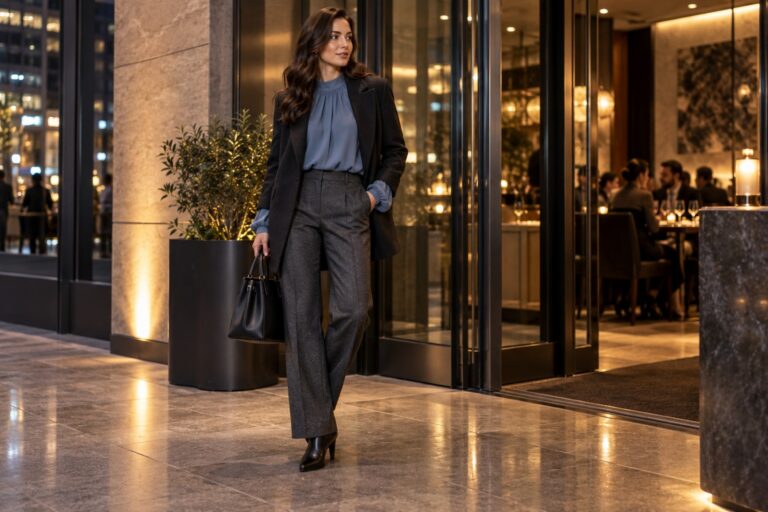
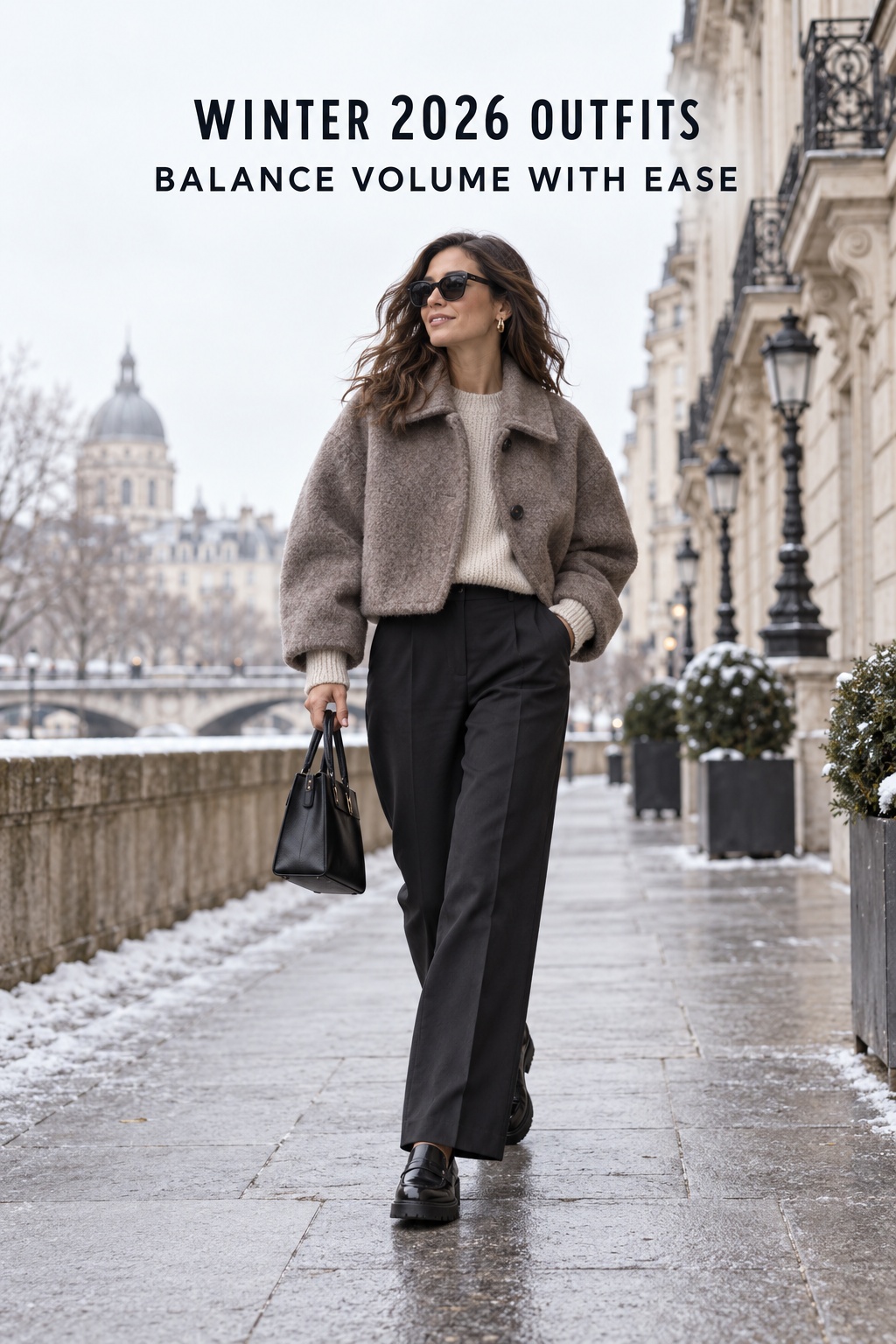
Volume can come from a sleeve, shoulder, trouser leg, skirt, or coat. Pick one place for it to lead. A roomy jacket can sit over a relatively straight base of a fine knit and tailored trousers. Wide trousers can work with a closer-fitting top and a coat that does not add another large shape. A full skirt can feel easier with a neat cardigan or fitted turtleneck. These are not rules about what suits every body. They are ways to make the main shape visible and let you decide whether you like the result.
Length creates another proportion to test. Try a long coat over a shorter jacket or a cropped knit over a longer shirt. If you are unsure, keep the color relationship between the layers simple so the change in length is easy to see. You can also use a belt or a half-tuck to reveal where one layer ends. Take a mirror photo from a few steps back, because proportions that look unusual close up can read clearly from a normal viewing distance.
Do not judge the idea only by whether it matches a runway photograph. Instead, notice whether you can move, sit, and reach comfortably, and whether the outline still feels like your style. If the extra volume catches on your bag or the hem interferes with your usual shoes, adjust the scale. A shorter sleeve, a narrower trouser, or a less structured coat can preserve the concept while making it easier to live in.
If texture or contrast is what you noticed
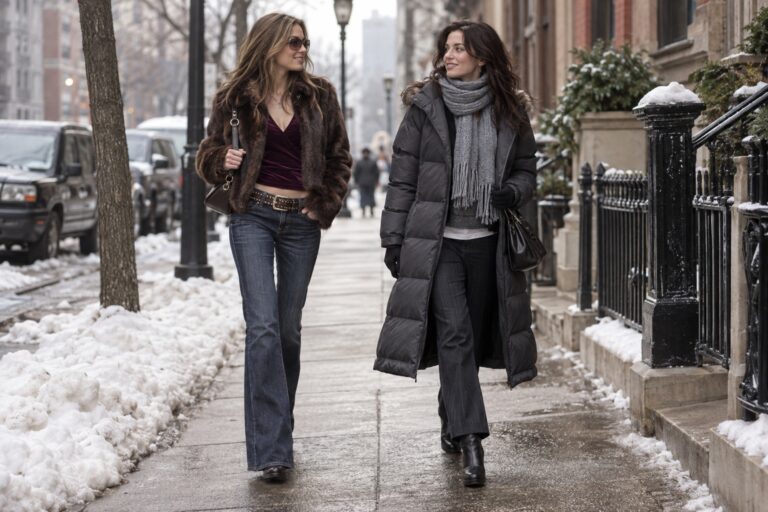
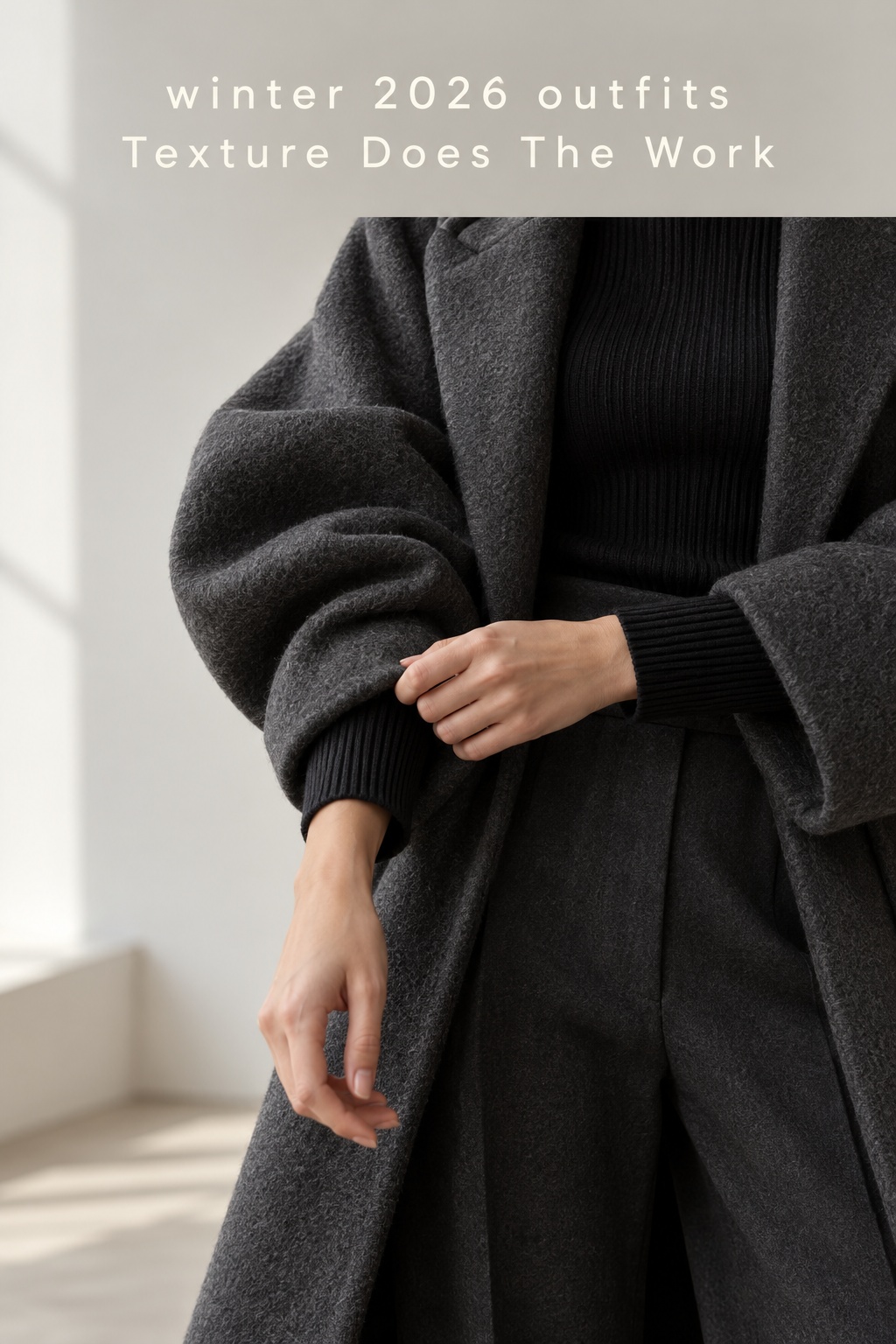
Texture is a subtle way to make a familiar outfit look considered. Pair a smooth knit with brushed wool, denim with a polished shoe, or a matte coat with a soft scarf. The contrast does not need to be dramatic. Two nearby textures can be enough if their surfaces respond differently to light. If you prefer a more expressive look, let one texture take up more space, such as a textured jacket over a plain top and trousers.
When choosing texture, consider how it meets the rest of the outfit. A fuzzy scarf beside a textured coat may blend into one large soft area, while that same scarf over a smooth wool coat will stand out. A glossy shoe may give a matte outfit a small point of polish. This is a practical way to interpret the season’s interest in contrast: use the relationship between surfaces, rather than buying every material currently appearing in trend coverage.
Outerwear can be especially useful because it changes the first impression of a winter outfit. Marie Claire’s recent Fall 2026 runway-to-street coverage points to coats and jackets with more shape, texture, and attitude. If a sculptural collar or cropped proportion appeals to you, let the outer layer be the focal point and keep the visible base straightforward. You can read the feature as a styling cue and compare it with a coat already in your closet before deciding whether a new version adds something distinct.
Turn one runway idea into a complete outfit
A trend feels more approachable when it has a job in the outfit. Ask what it should do: change the outline, add texture, bring movement, or create a focal point. Once you answer, choose the other pieces to support that job. A useful outfit is not a collection of trend signals. It has a clear lead, a calm supporting base, and a finish that makes sense for the day.
Outfit idea: make a familiar coat feel new
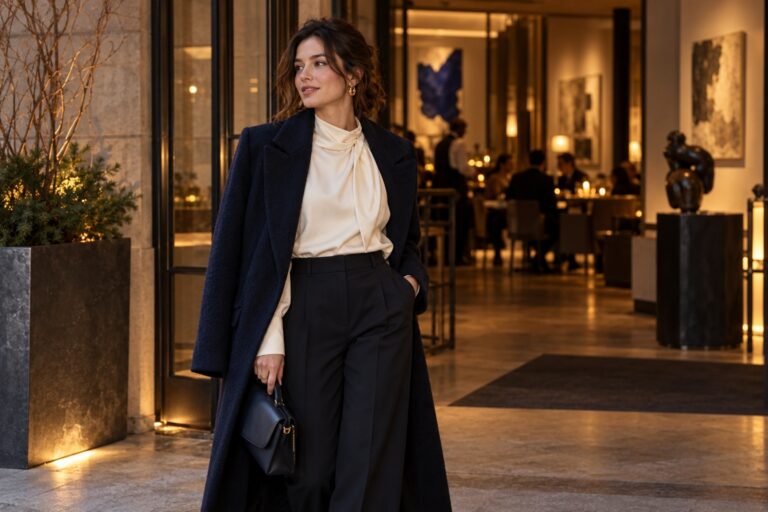
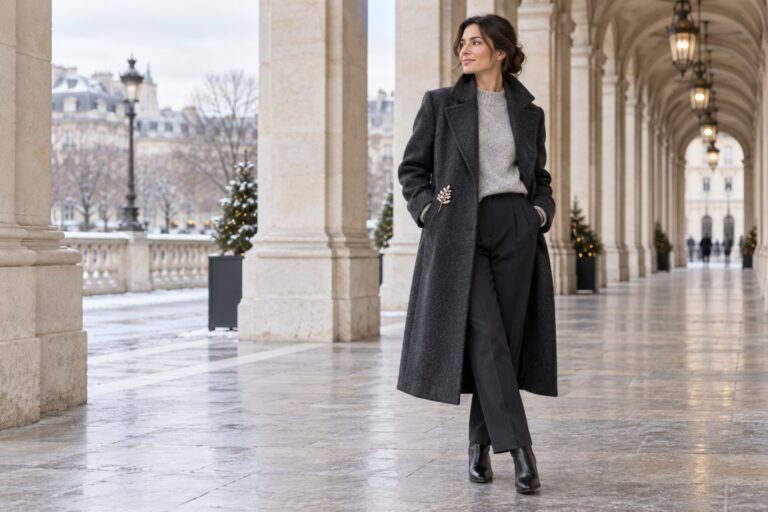
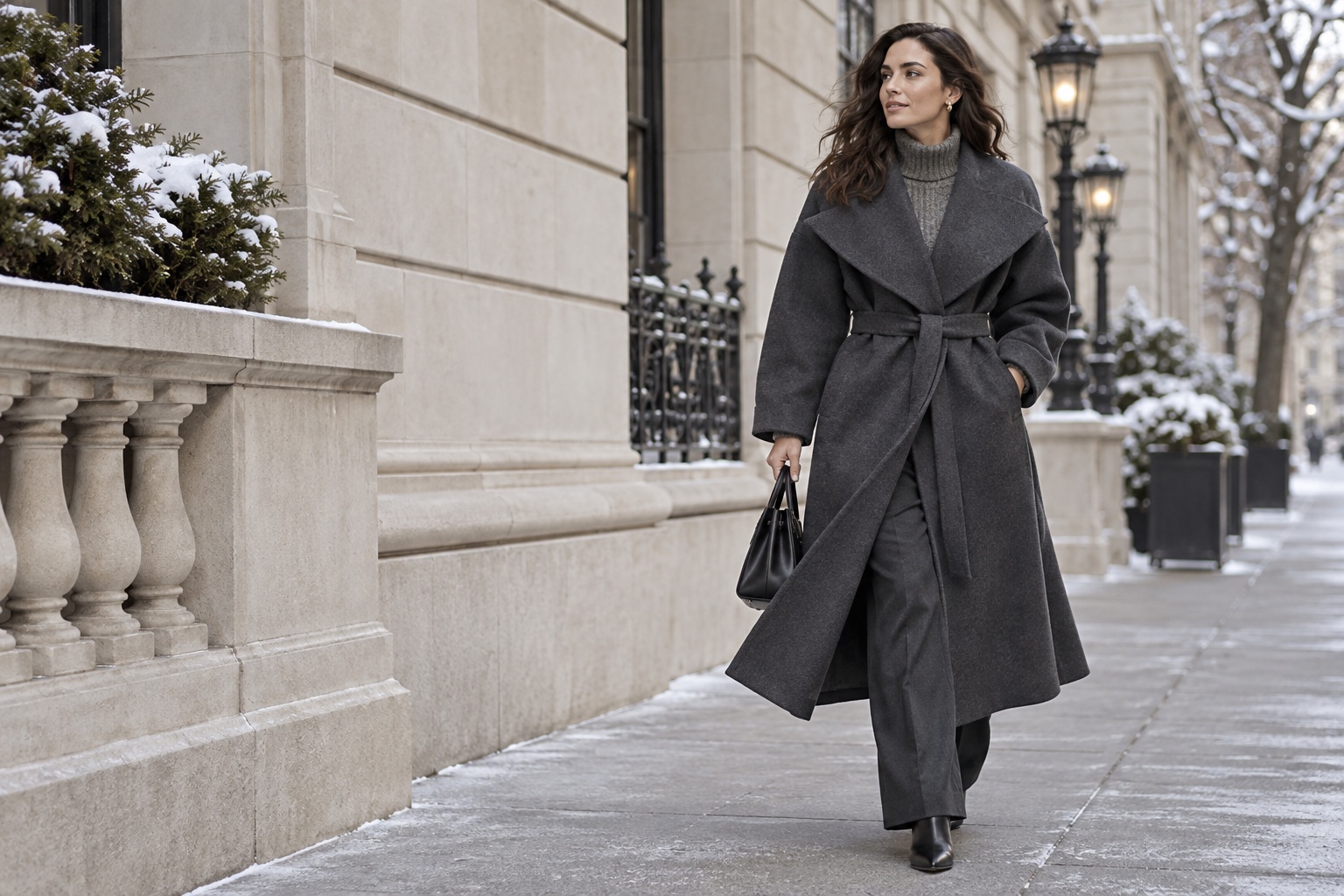
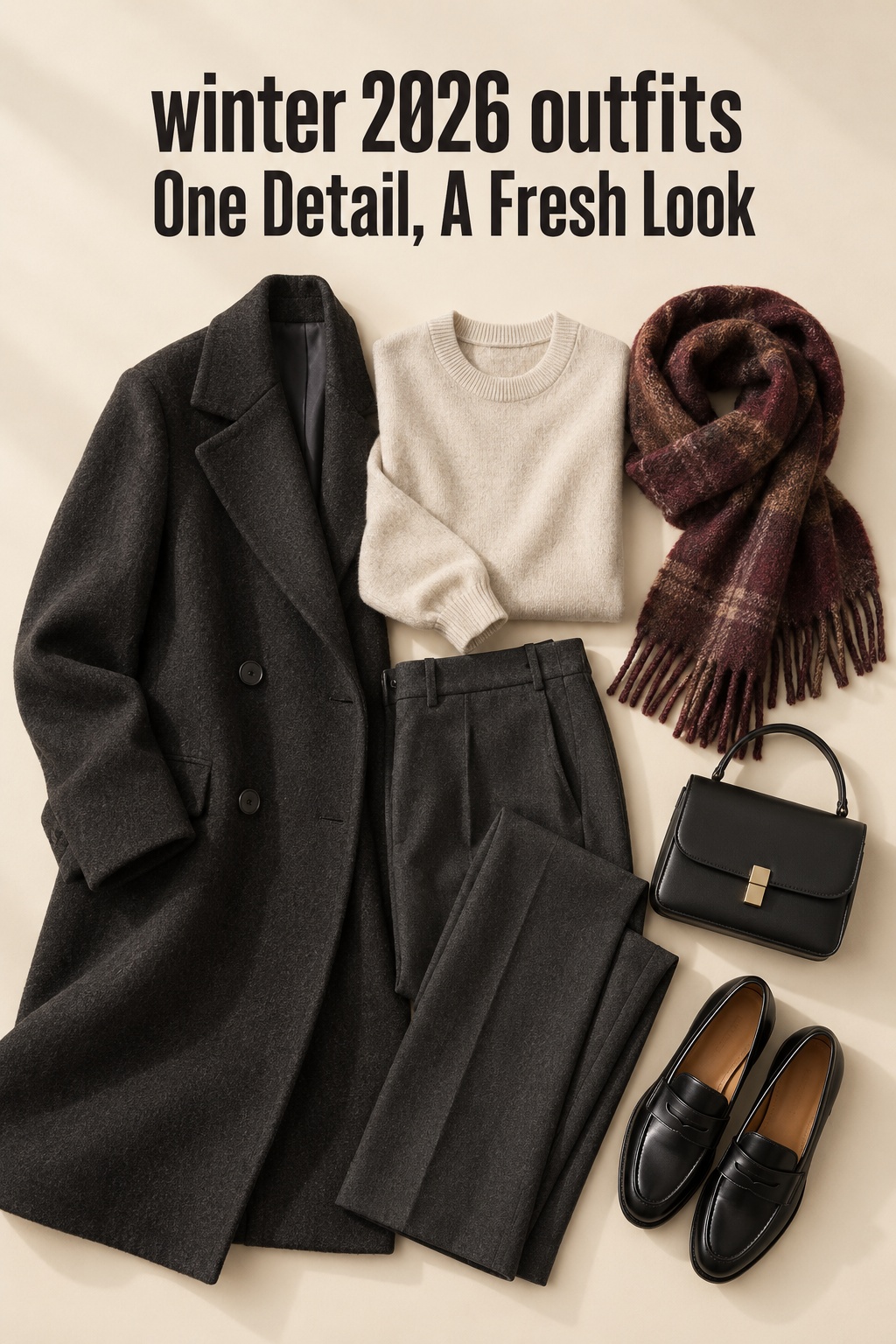
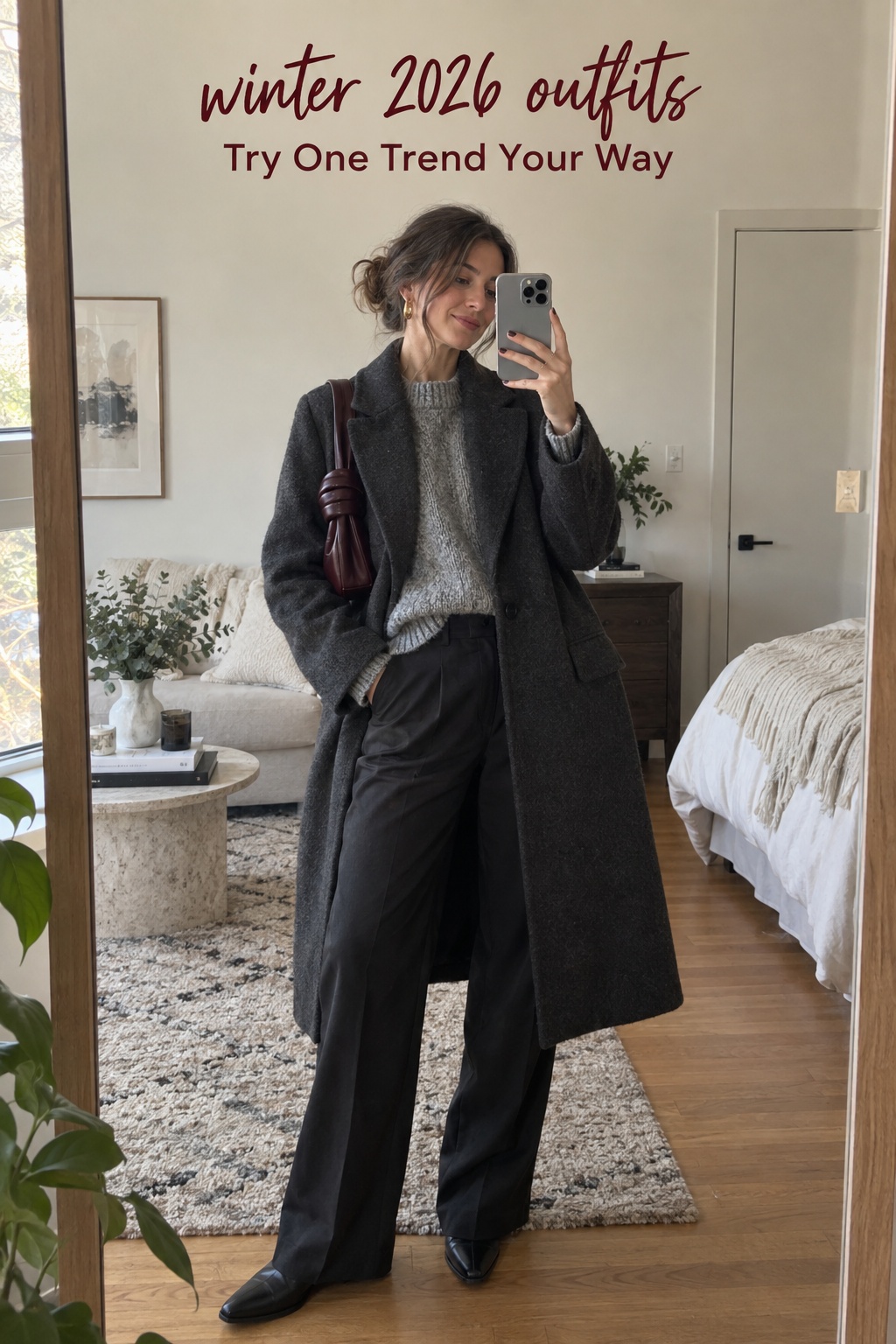
Start with a coat you already reach for. Change one styling detail around it: lift the collar, show a shirt cuff, add a fine scarf beneath the lapel, or let a knit layer rest over your shoulders if that feels natural. Underneath, choose a simple knit and straight-leg trousers. Finish with shoes you can wear comfortably for the plans ahead. The coat stays familiar, but the way the layers meet gives the outfit a deliberate point of view.
If the coat is already oversized, avoid adding volume at every other point. A straighter trouser can give the eye a clean line to follow. If the coat is slim and tailored, a fuller trouser or a soft scarf can add movement. The aim is not to create an hourglass or any other prescribed outline. It is to choose whether you want your outfit to feel crisp, relaxed, or visibly sculptural, then support that choice with the next piece.
Outfit idea: borrow bold proportion in a small dose
If an exaggerated shape is appealing but feels too theatrical, bring it in through one item with a defined edge. Try a softly rounded sleeve with straight jeans, or wide trousers with a compact cardigan. A cropped jacket can also shift the balance of a simple dress without requiring a new color scheme or multiple statement pieces. Keep accessories familiar for the first try. You can always add a stronger shoe or bag after you know how the silhouette feels.
Take the outfit through a small movement test. Sit down, put on your coat, carry your usual bag, and check the hem as you walk. If the shape collapses under the coat, decide whether that matters for the setting. Some details are meant to be seen only indoors; others should hold up outside. A quick trial reveals whether the look suits your schedule, and it can prevent an eye-catching piece from becoming something you only wear for a photograph.
Outfit idea: add a new texture without a new uniform
Use a combination you already trust as the base: a knit and jeans, a shirt and trousers, or a dress with tights. Add one different surface through a scarf, belt, bag, skirt, or shoe. For a low-contrast look, choose texture in a similar color to the base. For a more noticeable look, let the item differ in both surface and tone, but keep the rest of the outfit quiet. This lets you explore a tactile direction without changing the pieces that make getting dressed easy.
Texture can also be seasonal without feeling tied to one particular trend report. A ribbed knit, brushed coat, smooth leather accessory, or softly pleated fabric each adds a different kind of interest. Think about where you want the eye to land. A textured scarf near the face creates a small focal area; a textured skirt makes the lower half of the outfit more prominent. Choose the placement that feels natural to you, then repeat one color elsewhere if the outfit needs a visual connection.
Make the final look feel like yours
After assembling the outfit, take away one element and look again. If the main idea is still clear, you may not need the extra belt, layered necklace, statement bag, and bold shoes all at once. Editing is especially helpful when the reference image has a lot of styling. The outfit can stay expressive with fewer moving parts, which makes it easier to repeat and adapt to more than one plan.
Use your own comfort preferences as a design constraint. If you do not like a high neckline, try the shape through a scarf or jacket instead. If sheer fabric is not for you, consider a transparent detail in a bag or shoe, or skip that signal entirely. If a stiff coat makes movement difficult, look for a softer version of the same broad shape. Personal style becomes clearer when you decide what the idea means to you, rather than treating the runway image as a uniform.
Before buying anything, make at least two outfits with the item in mind. Name the tops, bottoms, outer layer, and shoes you would wear with it, then check whether those combinations fit your real week. If the piece works only with a special outfit you do not already own, it may need more thought. If it connects clothes you wear in different ways, it is easier to see the role it could play. This is a small test of usefulness, not a demand that every purchase match a fixed wardrobe plan.
Let the trend stay small if that is the version you enjoy. A cuff, a different tuck, one textured layer, or an adjusted hem can be enough to refresh an outfit. Fashion coverage tends to name a direction because naming makes it easier to discuss. Your own wardrobe can respond more selectively. One idea worn in a way that feels convincing will usually say more than several borrowed details competing for attention.
Quick fixes when a trend looks wrong on you
If the outfit feels too loud, reduce the area covered by the trend. Swap a full statement coat for a scarf or shoe with a related detail. If it feels flat, introduce contrast in texture or proportion rather than adding several colors. If the outfit seems unbalanced, take a photo and identify where the visual weight sits. A small adjustment to hem length, sleeve styling, or shoe shape may make the intention easier to read.
If you like the idea but not the particular garment, keep the visual principle and change the item. A dramatic sleeve could become a rounded shoulder in a jacket. A sheer layer could become a light translucent accessory. A low-slung waist could be suggested by a longer top rather than a different trouser rise. The useful question is not “Can I wear exactly this?” It is “Which part of this look do I want to carry into my own outfit?”
If the outfit only works when the weather, venue, and mood line up perfectly, keep it as inspiration and adapt one component. Check care labels and practical layering before relying on a delicate piece outdoors. A winter look also has to work with the coat, bag, and shoes that are part of your day. There is no need to force one runway reference into every situation. Try it in a setting where the idea has room to make sense.
A reliable final check is to finish this sentence: “I chose this detail because…” If the answer is clear, the outfit has a point of view. If the answer is only that the piece is popular, take another look at whether it belongs in your rotation. Style references are most useful when they help you notice new possibilities in what you already own, then make a considered choice about what to wear next.
FAQ
What should I wear for winter 2026 outfits?
Start with pieces that suit your plans and the weather, then add one detail inspired by current styling: a changed proportion, a tactile layer, or a different way to wear a familiar item. There is no single required outfit for winter 2026. Choose the idea that feels like a natural extension of your own clothes.
How can I make runway trends wearable?
Identify the part of the runway image that creates its effect, then use a smaller or more familiar version of that feature. Ground a dramatic shape with simple pieces, or introduce texture through one accessory. A complete runway look is a reference, not a required shopping list.
How many trends should I combine in one winter outfit?
Try one main trend signal first. You can add a second detail if it supports the same idea and does not make the outfit feel crowded. Let the rest of the clothes provide space for the focal feature to read clearly.
Can I create a 2026-inspired look without shopping?
Yes. Change how you layer a shirt, roll a sleeve, tie a scarf, or combine a smooth piece with a textured one. Reconsidering proportion can also refresh familiar clothes. A new styling decision may be all you need to test whether a seasonal idea suits you.
How do I know if a trend works with my personal style?
Notice whether you feel at ease moving through your normal day in it and whether you can pair it with clothes you already enjoy. If you like the visual idea but feel unlike yourself in the full version, reduce its scale or express it through another item.
What is an easy way to update a winter coat outfit?
Try one change around the coat, such as a visible knit layer, a different scarf placement, a turned-up cuff, or a contrasting texture beneath it. Keep the base outfit familiar so you can tell whether the adjustment adds the kind of interest you wanted.