Winter Snow Outfits: A Five-Point Checklist
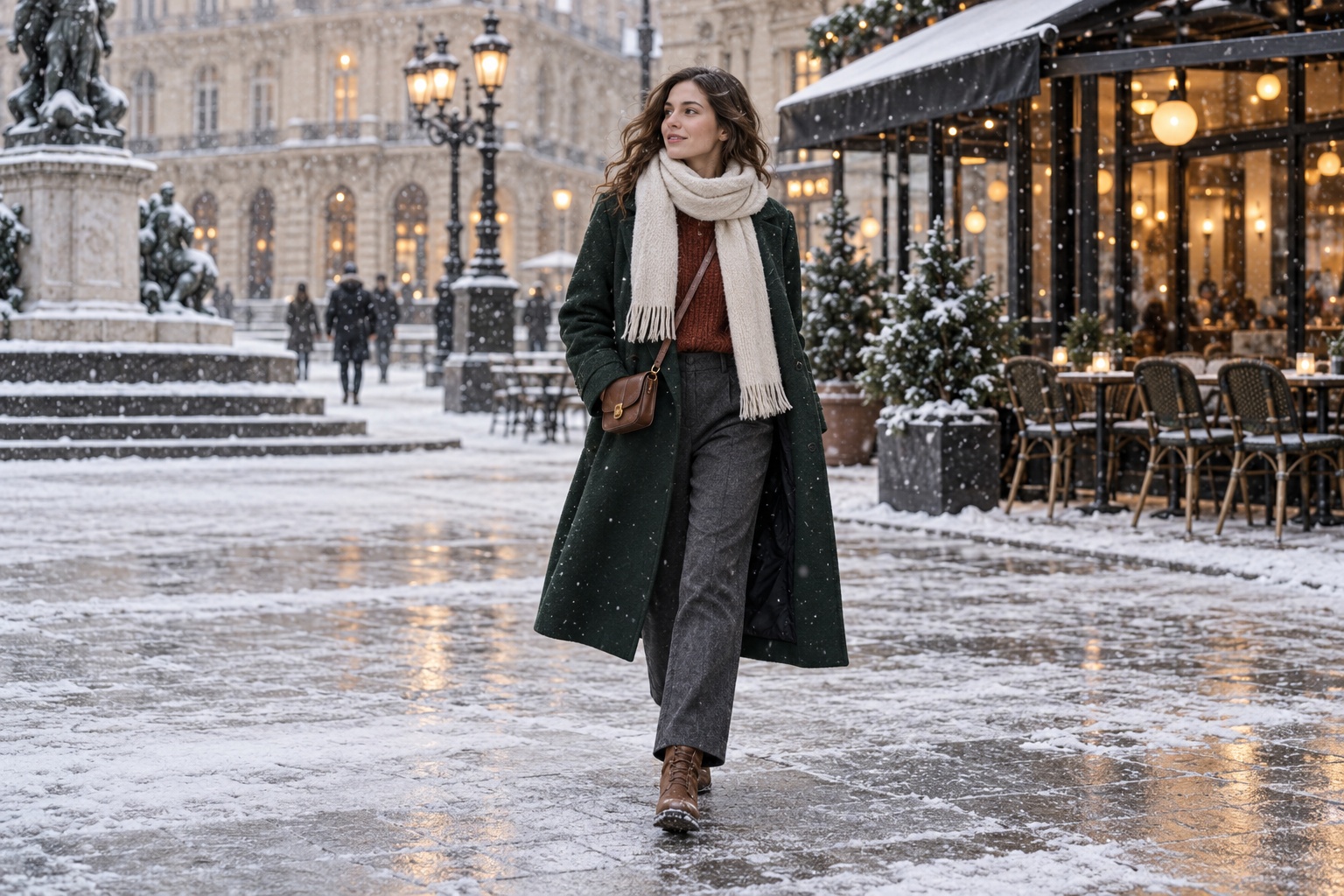
Winter snow outfits are easier to build when you start with the route, not a saved photo. A short walk through dry flurries asks for something different from a slushy commute, an hour of outdoor errands, or a slow afternoon near a snowy park. The outfit can still feel polished. It simply needs to answer a few practical questions before you choose the coat, trousers, and boots.
This checklist is for everyday plans in snow, not a ski or snowboard day. It helps you decide what needs protection, how much warmth you need while moving, and which details will make the finished look feel intentional. The same wardrobe can produce several useful winter snow outfits when you adjust the pieces to the conditions instead of adding every warm item at once.
Read the snow and route before choosing an outfit
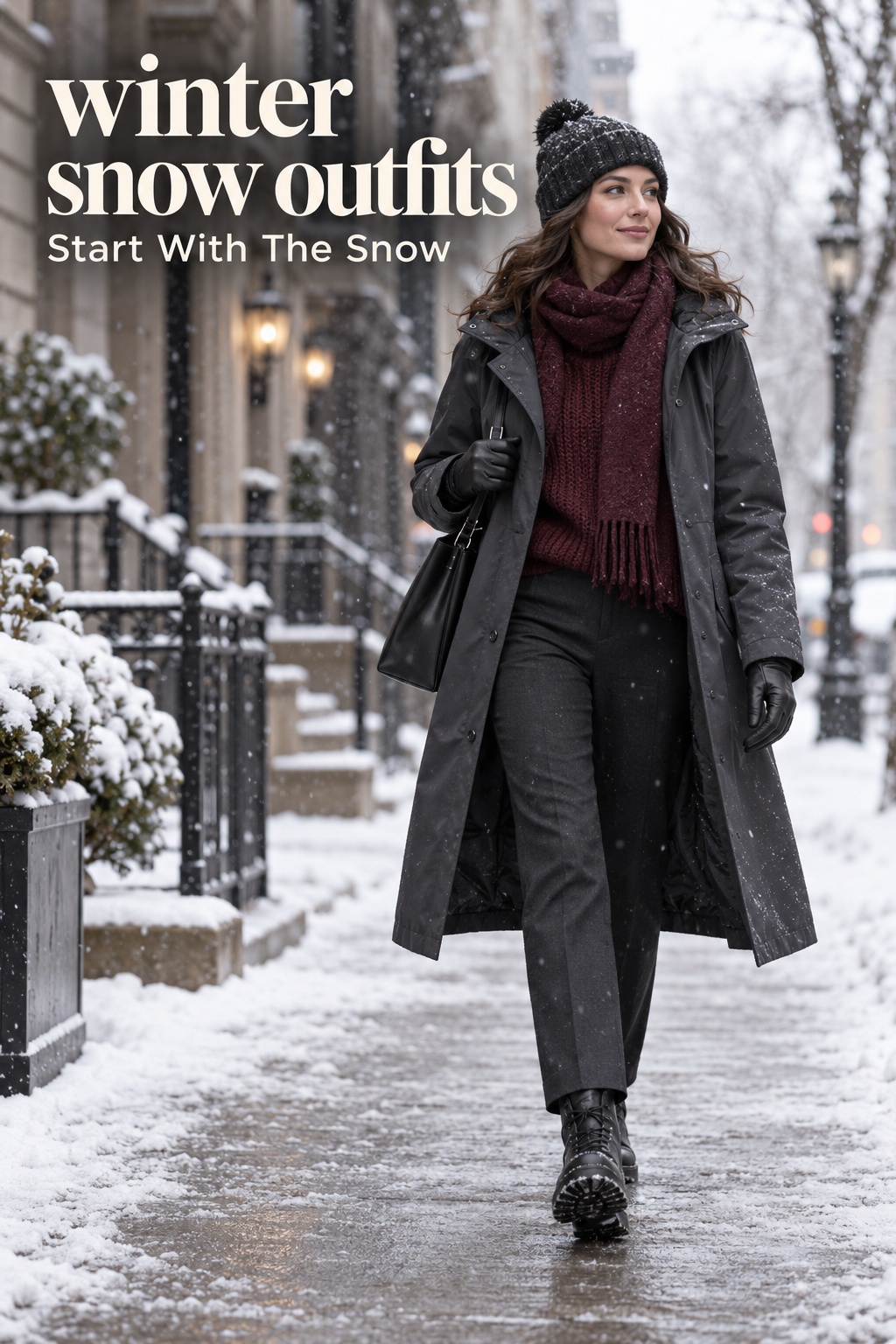
“Snow” describes several conditions that behave differently on clothing. Light flakes may melt on a warm sidewalk. Packed snow can collect around a boot opening. Wet slush can splash onto trouser hems. Wind can make an exposed walk feel harsher than the temperature suggests. You do not need a complicated forecast analysis. Before getting dressed, identify what is likely to touch your outfit and how long you will be exposed to it.
Start with contact points. Will you only cross a few snowy blocks, or will you walk through slush, stand outside, or spend time sitting on a bench? Think about the lowest parts of the outfit first: footwear, socks, and the gap between the pant hem and boot. If those areas get wet, a beautiful coat may not rescue the rest of the day. For deeper or wetter snow, a longer waterproof outer layer and pants that meet the boot opening become more useful than a delicate shoe or a hem that drags.

Found the dress? Keep the rest in one place.
Zarellea brings guest details, vendors, timelines, and every next step together — so your wedding plan feels as good as your look.
Next, estimate exposure time and pace. A brisk ten-minute walk can feel different from waiting for a bus, walking a dog slowly, or helping someone outside. When you are moving, your body may warm up and a thick stack of indoor sweaters can become uncomfortable. When you are mostly standing, warmth and coverage matter more. REI’s cold-weather clothing guide explains how a base layer, insulation, and an outer shell serve different jobs, and why outerwear needs to account for precipitation and wind.
Finally, map the indoor parts of the trip. A day that moves from a cold sidewalk into a heated office or café can feel less comfortable if every layer stays on indoors. A jacket that opens easily, a mid-layer that looks presentable on its own, and accessories you can remove without fuss make the transition smoother. A snow outfit is not only a picture taken outside. It has to work through the whole route.
Use this five-point winter snow outfit checklist
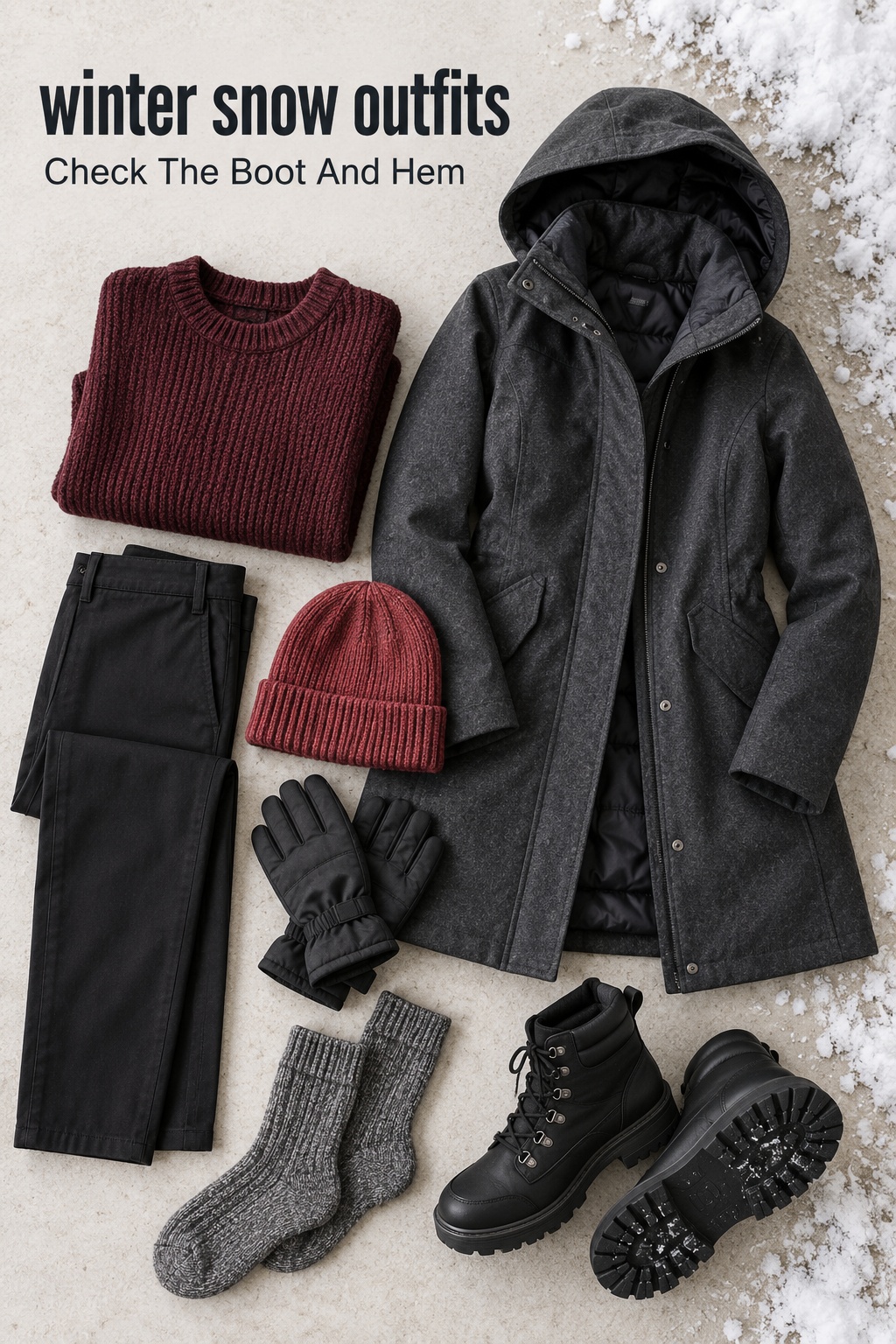
Think of each point as a job to solve, not a shopping list. You may already own pieces that work. The goal is to match those pieces to the day and then edit the silhouette so that practical decisions still look considered.
1. Keep the layer next to your skin comfortable
Choose a first layer that feels comfortable under the outfit and does not restrict your movement. For a short, low-effort outing, that may be a long-sleeved top and regular trousers. For longer time outside, a close-fitting thermal top or leggings can add warmth without requiring a bulky sweater. If you expect to walk quickly, avoid dressing so heavily that you feel damp from exertion. Once a base layer is uncomfortable, every layer on top tends to feel more irritating.
Let the fit of the next layer guide the choice. A smooth, close layer usually sits more easily beneath straight trousers or a fitted knit, while a roomy base can feel better under relaxed snow pants. Keep the neck and cuffs comfortable too. If a high collar competes with a scarf and coat, choose a simpler neckline. A small adjustment here can prevent bunching and let the coat close cleanly.
2. Add warmth, then a barrier for wet snow
Your insulating piece can be a fleece, a wool sweater, a warm cardigan, or another layer you can move in. It should provide comfort without making the outer layer feel tight across the shoulders or arms. If you already have a warm coat, a thinner mid-layer may be enough for a quick errand. If your outerwear is lighter, the middle layer has to do more of the warming work.
Then check what protects the layers underneath from the weather. A wool coat can be a lovely choice for a short route with light flakes and nearby shelter. If the snow is wet, the walk is longer, or you will be outside for a while, a water-resistant or waterproof shell is a more suitable outer surface. “Warm” and “weatherproof” describe different things. A lofty knit can trap warmth but still become uncomfortable if it gets wet. The National Weather Service recommends dressing in layers and changing out of wet clothing after coming inside, so plan for a way to stay dry and a way to warm back up.
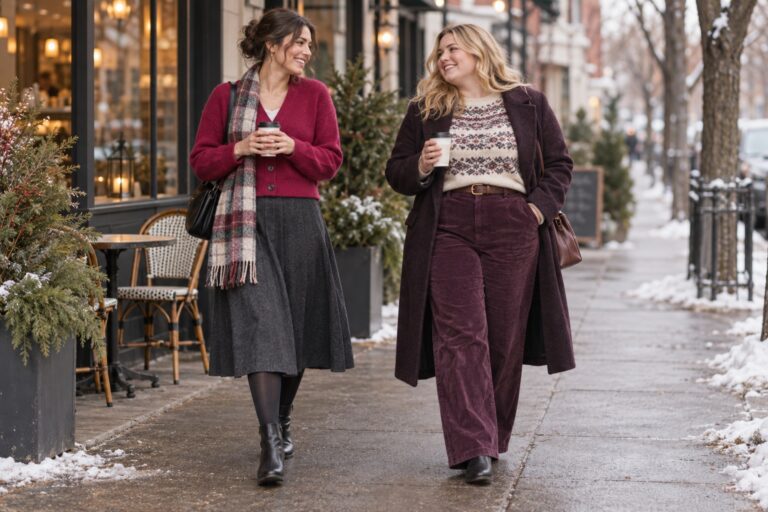
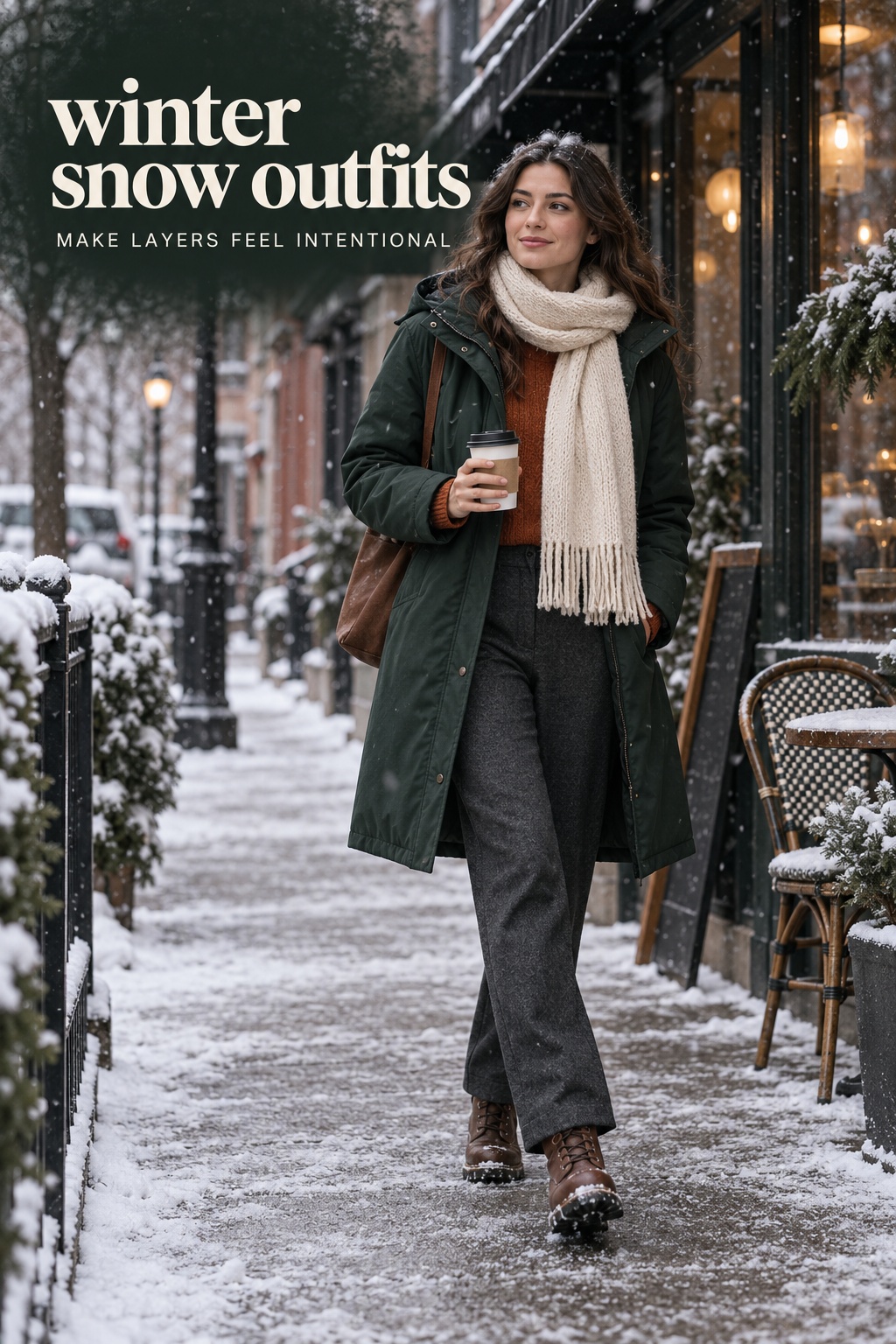
Style the layers as a system. A shell can cover a softer sweater, while a visible cuff, collar, or scarf adds color close to the face. If the coat is the strongest piece, keep the mid-layer quiet. If the outer layer is simple, let a patterned knit or a bright scarf provide the point of interest. The outfit will look more deliberate when one layer leads and the others support it.
3. Check the meeting point between pants and boots
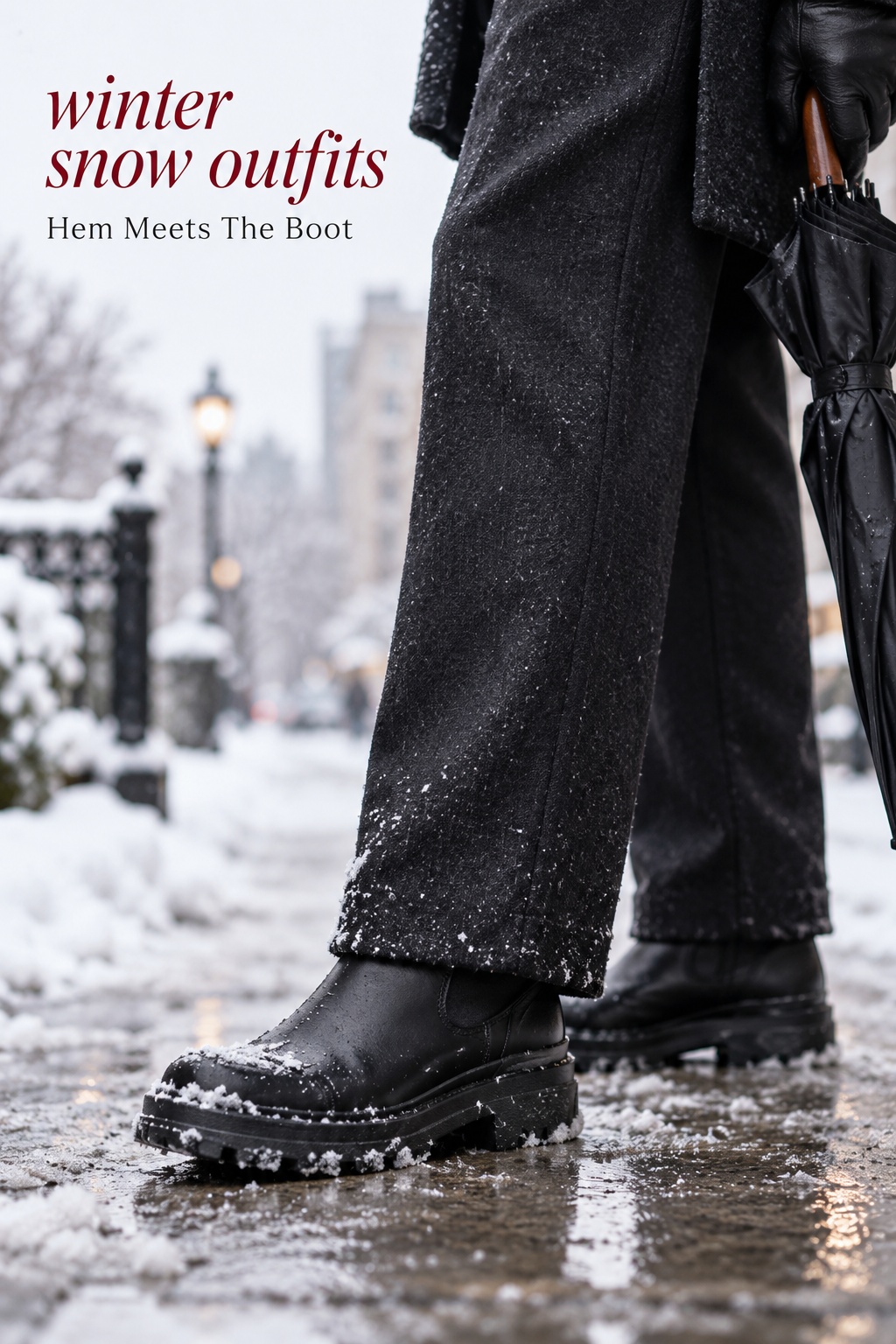
Before leaving, stand up in the trousers you plan to wear and look at where the hem lands. If the fabric brushes wet ground, folds over the boot, or leaves an exposed gap when you sit, make a small adjustment. Cuffing a hem, choosing a straighter trouser, tucking leggings into a boot, or adding a shell pant can change how the outfit handles snow. The right option depends on the amount of contact and the shape of the footwear.
For a polished city look, a neat hem that meets the top of a weather-ready boot can feel more intentional than a puddle of fabric around the ankle. For longer outdoor time, a wider boot opening and an outer pant that covers it can help keep snow from collecting at the gap. Avoid forcing bulky pants into a narrow shaft if the fabric bunches uncomfortably. A clean line is useful, but comfort and coverage should decide the final arrangement.
Footwear should match the surface, not only the color palette. A smooth sole or an absorbent fabric shoe may be fine indoors but frustrating on wet sidewalks. For snow or ice, look for winter footwear with traction and enough coverage for the conditions. REI notes that winter boots can combine insulation with traction on snow or ice. Make sure you can walk naturally in them before building the rest of the outfit around their shape.
4. Cover the small areas that change comfort
Hands, ears, neck, and the space between a glove and sleeve can affect how complete the outfit feels. A beanie, scarf, neck warmer, or gloves can be both useful and visible, so choose pieces that complement the coat instead of competing with it. If your coat has a hood, decide whether it will sit over a hat comfortably. If you carry a bag, check that its strap does not pull a scarf loose or interfere with the coat closure.
Accessories are an easy place to make a practical outfit personal. A red beanie can lift a charcoal coat. A patterned scarf can echo a small color in your sweater. Matching gloves and a hat can make a simple silhouette feel composed. You do not need a full coordinated set. Repeating one color in two places is often enough to make the outfit feel tied together.
5. Make the indoor transition easy
Consider what happens when you arrive. Can you remove the shell without taking off three layers? Does the sweater look finished on its own? Can you carry your hat and gloves without losing them? These details matter on a commute or a day with several stops. A good winter outfit lets you adapt without a full change in a restroom or hallway.
One removable layer often solves the problem. You might wear a long-sleeved base, a neat knit, and a weatherproof coat, then take off the coat and scarf indoors. If your destination is warm and your walk is short, avoid adding extra bulk just because snow is visible outside. If you will be waiting outdoors, bring the layer you can add back quickly. Flexibility is part of the outfit, not an afterthought.
Build three outfits for ordinary snowy plans
These examples are starting points rather than fixed uniforms. Swap colors and familiar pieces from your closet, then run each combination through the five checks. The important difference is the job each outfit has to do.
For a quick neighborhood errand
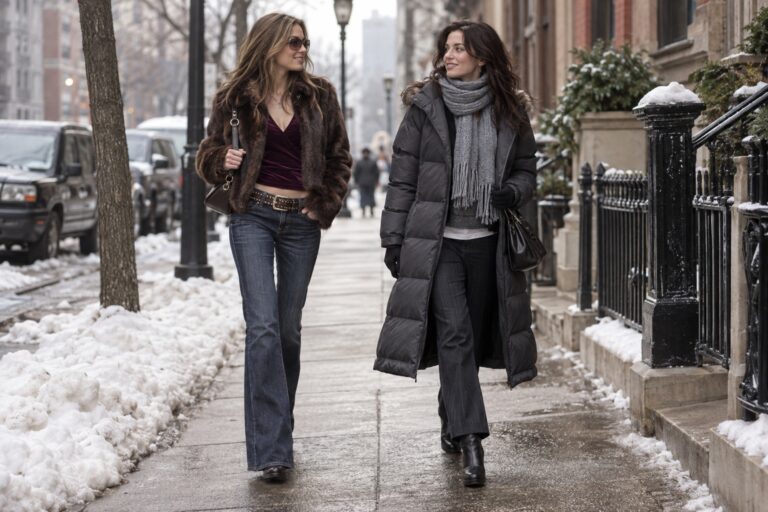
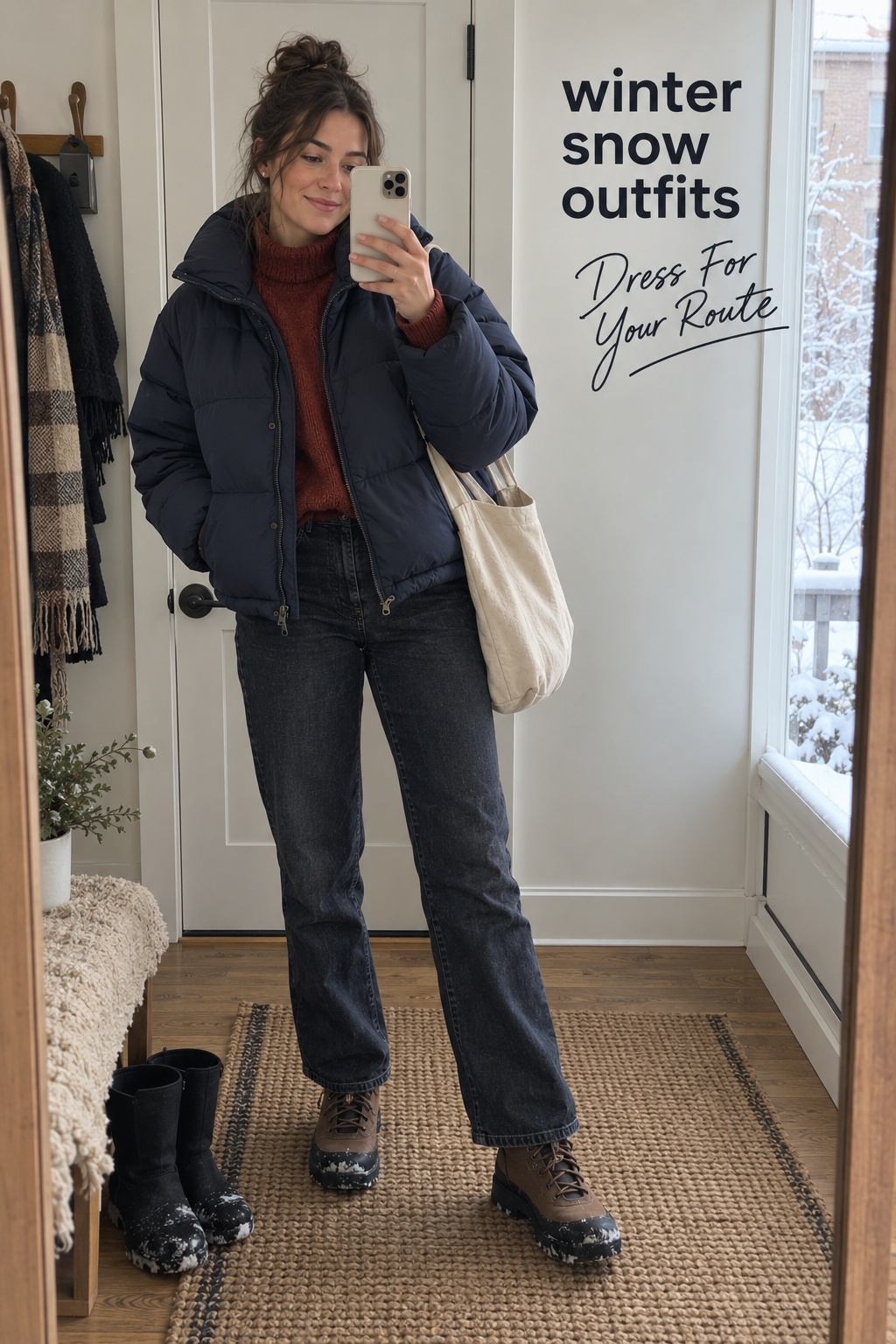
Begin with a comfortable long-sleeved top, straight jeans or relaxed trousers, and a sweater that fits under your coat without pulling at the arms. Add a coat suited to the amount of snow and a pair of weather-ready boots with a sole you trust on the route. A beanie and gloves can bring in a soft accent color. Keep the hem clear of slush, especially if you will be walking along curb edges or crossing wet pavement.
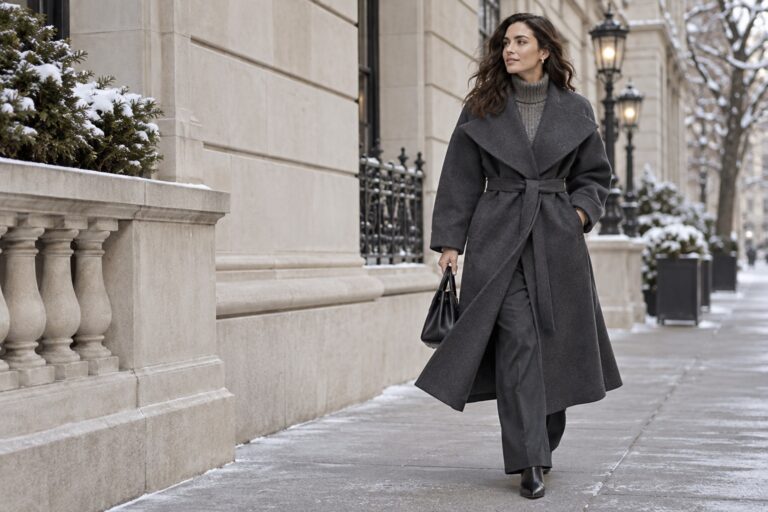
For a clean silhouette, keep the trousers and boots visually close in color, then let the coat or hat create contrast. A shorter puffer over a longer knit can make the layers visible, while a long coat creates a continuous line over straight-leg pants. Choose the version that works with your footwear and feels easy to move in. Because the outing is short, there is no need to dress as if you will be standing outside for hours.
For a slushy commute with indoor stops
Prioritize the lower half and the transition. Wear a smooth base layer under trousers that do not drag, then add an outer pant or a longer weatherproof layer if the route is wet and exposed. Choose boots that can handle the walk and meet the trouser opening neatly. Add a mid-layer that looks presentable when you take off your outerwear. A knit jacket, a tidy fleece, or a simple sweater can work, depending on your office or destination.
Keep the look composed with a limited color story. A dark shell, charcoal trousers, and black boots create a practical foundation. A lighter scarf or a colored knit gives the face area some contrast once the coat opens. If you carry a tote or shoulder bag, use one that closes securely and sits comfortably over the outerwear. Avoid a long strap that catches on bulky sleeves or a bag that swings into wet pant legs.
For a longer walk or low-key outdoor plan
When you expect to be outside longer, plan for changing comfort as you walk. Use a first layer that remains comfortable, a mid-layer you can open or remove, and an outer layer that protects you from the snow and wind. Choose trousers with enough room to move and footwear that feels stable on the path. If the plan includes sitting, playing, or leaning against snowy surfaces, use pants that can handle contact instead of relying on denim alone.
Make the outfit feel intentional through texture rather than delicate details. A matte shell can pair with a ribbed knit, a fleece collar, or a scarf with a subtle pattern. Choose one main color, one supporting neutral, and one small accent. This keeps the look visually calm while allowing each functional layer to show. If the weather is severe or the planned activity needs technical equipment, use gear designed for that activity and follow local weather guidance instead of treating a fashion outfit as protective equipment.
Keep the practical layers looking intentional
Snow-day dressing can look bulky when every piece has the same volume. Give the outfit a visual order. If the coat is oversized, keep the layer beneath it relatively smooth. If you choose wide trousers, let the top layer provide a defined line at the shoulder or waist. If the boots are large, a straighter pant or leggings tucked cleanly into the shaft can keep the lower half from looking crowded. These are styling choices, so use the proportions that feel comfortable on your body.
Color can also create clarity. A monochrome base makes the coat feel like the main statement. A neutral coat with a brighter hat gives the eye one clear stopping point. A patterned scarf can bridge a light sweater and dark outerwear. The goal is not to avoid color or pattern. It is to decide where you want attention to land so that the functional pieces read as one outfit.
Think about what the outfit looks like in motion. Raise your arms as if you were reaching for a bus handle. Sit down and stand up. Walk a few steps in the boots. Check whether the coat rides up, the trousers pull, the gloves leave a gap, or the scarf slips. A mirror only shows the standing version. A quick movement check catches the details that can make a snow outfit feel awkward after you leave.
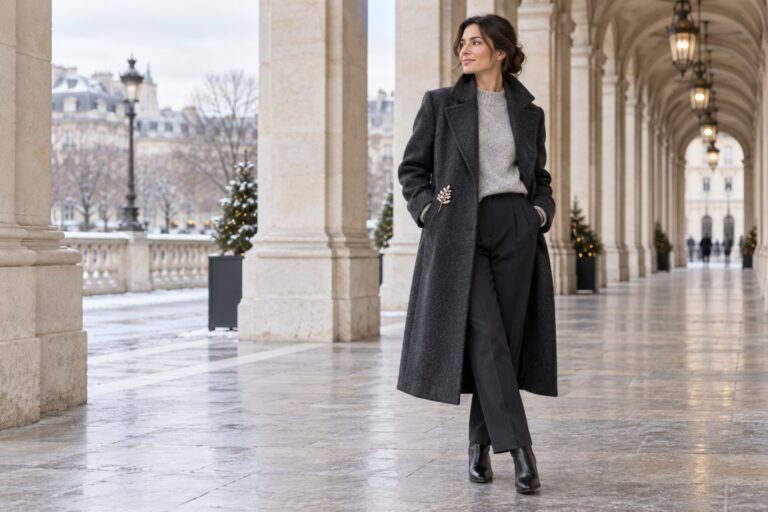
Finally, separate the piece that protects you from the piece that decorates the look. A brooch, bright bag, or soft knit can add personality, but do not let an accessory substitute for coverage, dry footwear, or a coat appropriate for your plan. Once the practical foundation is in place, one memorable detail is usually more effective than adding several competing accents. That balance lets winter snow outfits feel considered without making getting dressed more complicated.
Do a two-minute review before you leave
Stand in the outfit and check it from head to toe. Is the weather-facing layer appropriate for the snow you expect? Are your ankles covered when you move? Can you walk comfortably in the shoes? Do your hands and ears have coverage if the route is exposed? Will the outfit still work when you enter a heated room?
Then check the details that make the look feel finished. Close the coat and see whether it pulls across the layers. Open it and see whether the sweater still looks like an outfit. Make sure your bag strap, scarf, and hood can coexist. If the silhouette feels too heavy, remove one redundant layer or simplify an accessory instead of taking away the coverage you need.
If anything will be wet, decide what you will do when you come back inside. The National Weather Service advises changing out of wet clothing and warming up after exposure to cold conditions. A dry pair of socks or a spare top can make sense for a longer day, while a short errand may only require a good outer layer and a clear route home. Dress for the actual plan and take local alerts seriously when conditions become hazardous.
This is the whole method: read the route, build the outfit around its practical jobs, and use proportion and color to make it yours. You do not need a completely new wardrobe for every snowfall. A few thoughtful checks can help familiar clothes work harder and make getting ready feel more predictable.
FAQ
Can I wear jeans in winter snow outfits?
Yes, if the snow exposure is limited and the jeans will not drag through slush or stay wet. For longer outdoor plans or wet snow, add a protective outer pant or choose trousers that dry and move better for the conditions. Keep the hem clear of the ground and consider a base layer if you expect to be outside for a while.
What shoes should I wear when it is snowing?
Choose footwear suited to the surface you will cross. Wet sidewalks and packed snow call for more coverage and traction than a dry indoor commute. Check the sole, how securely the shoe fits, and whether your trouser hem meets the boot without leaving an uncomfortable gap. If ice or severe weather is expected, prioritize safe footwear over a purely decorative shoe.
Do I need snow pants for everyday errands?
Not always. For a short trip with light snowfall and nearby shelter, regular trousers with appropriate layers may be enough. Snow pants or shell pants make more sense when you expect prolonged exposure, deep snow, wet contact, or an activity that puts you down on the ground. Let the route and duration guide the decision.
How can I avoid looking bulky in snow clothes?
Use layers that fit together without pulling, and give the outfit a clear visual order. Pair a roomy coat with a smoother inner layer, or balance wide trousers with a more defined upper silhouette. Repeating one color can make the pieces feel cohesive. Keep the coverage you need, then remove redundant bulk or extra accessories.
What should I wear if I will go inside and outside all day?
Build around layers that are easy to open or remove. A comfortable base, a presentable mid-layer, and a suitable outer layer let you adjust between the sidewalk and heated interiors. Choose accessories that are easy to carry, and avoid adding thick indoor layers that make you overheat while walking.
How do I make a snow outfit look more stylish?
Start with the practical pieces, then choose one deliberate styling direction. You might repeat a color between a hat and scarf, use texture to soften a simple shell, or make the coat the main visual feature. Check the outfit while moving, not only in the mirror. Small, coordinated choices usually look more polished than a collection of unrelated accents.