
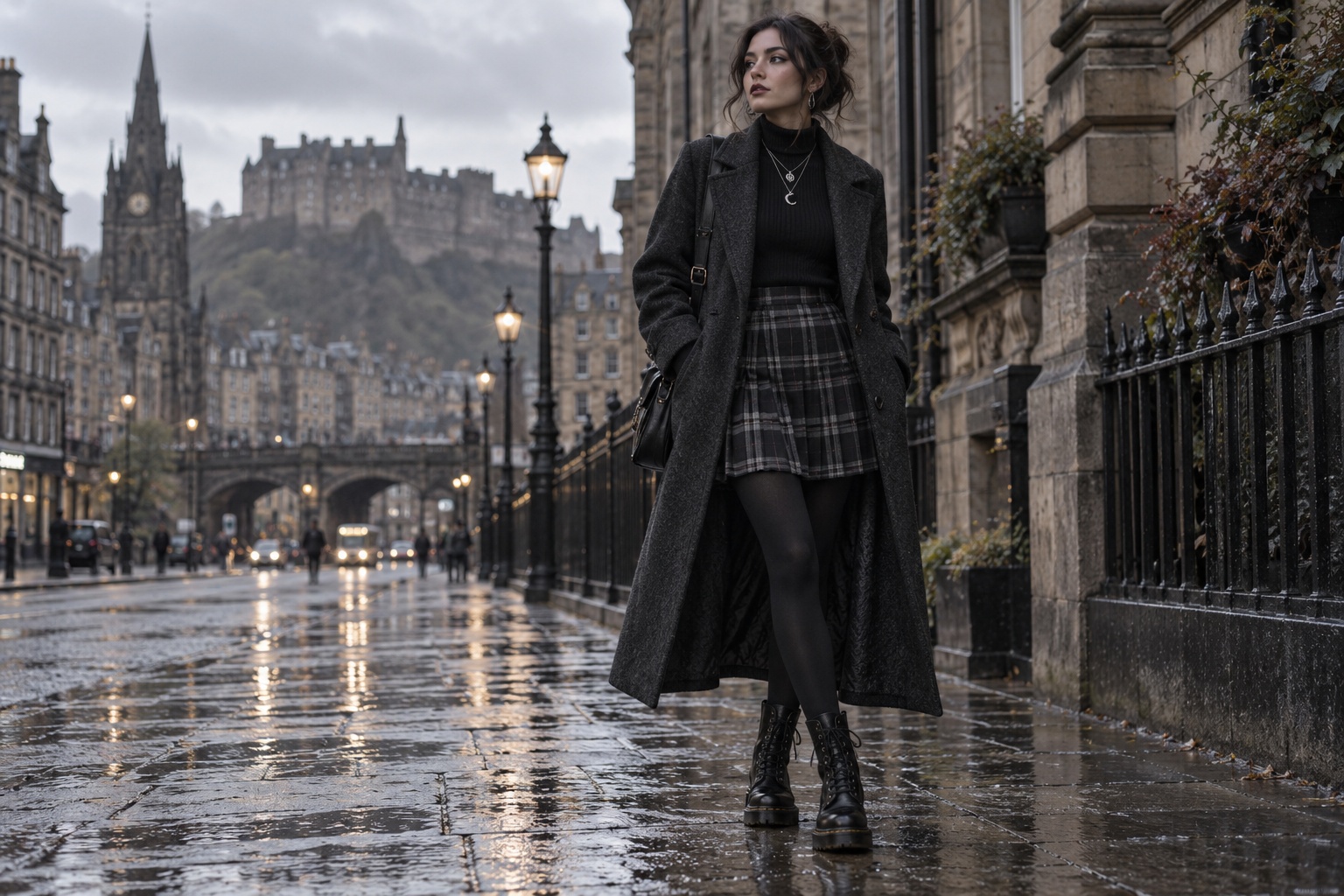
Alt Winter Outfits: Choose the Right Coat
The coat can decide whether an alternative winter outfit feels like your style or like a practical cover you cannot wait to take off. A long wool coat, a moto jacket, a cropped insulated jacket, and a weather-ready parka each create a different outline. They also leave different amounts of room for sweaters, skirts, trousers, and boots. Choosing the outer layer first makes the rest of the outfit easier to plan.
This guide compares four outerwear directions for alt winter outfits. Start with where you will go and how long you expect to be outside, then consider which silhouette you like and what you already own. The examples are styling starting points, not temperature ratings. Check your local forecast and the construction and care guidance for the specific coat and shoes you plan to wear.
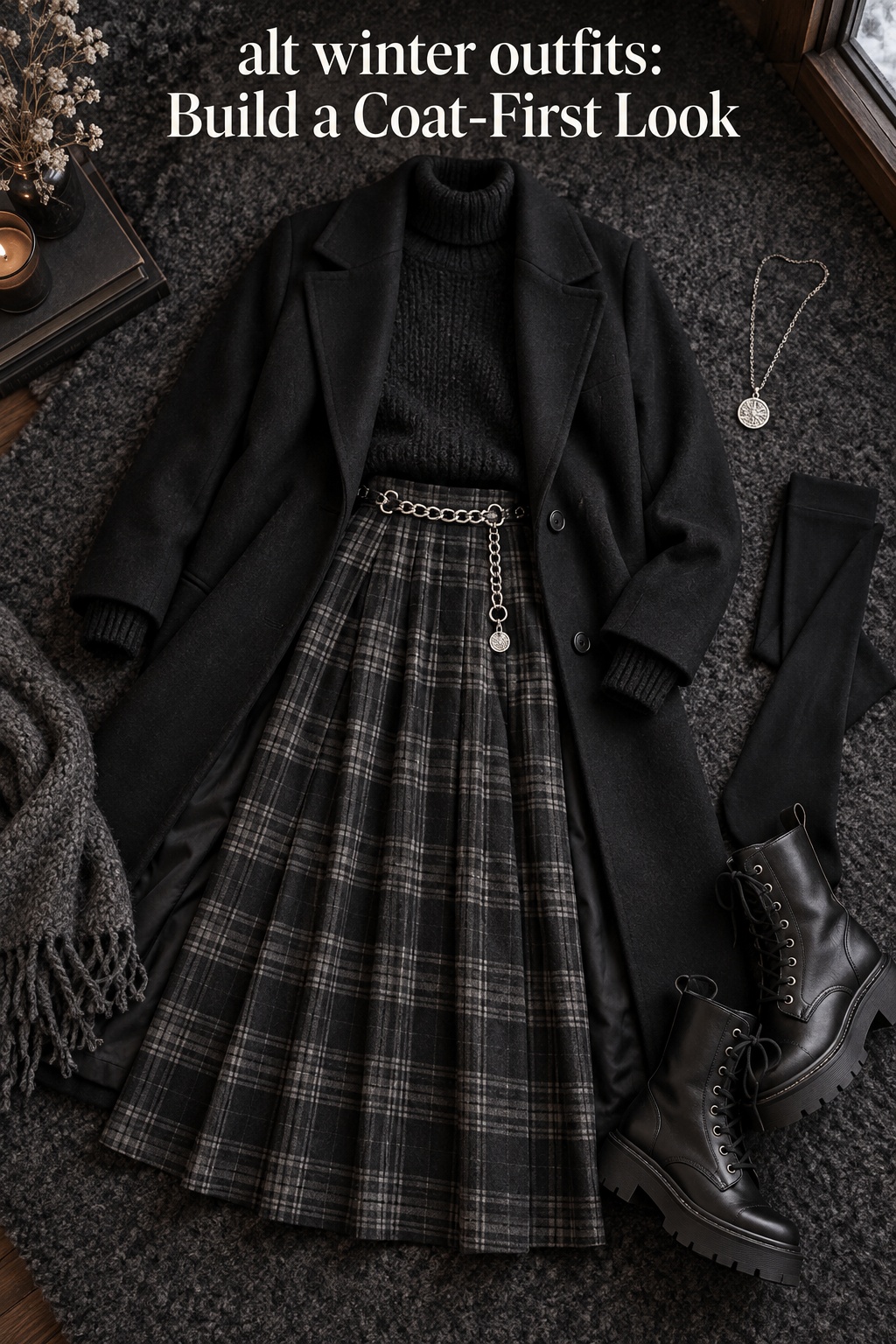
Start with what the outer layer has to do
Before choosing a coat for its aesthetic, make a quick comparison of the day ahead. Will you walk several blocks, move between a car and indoor spaces, stand outside for an event, or spend a long stretch on a wet route? A coat that is easy to carry between heated rooms may not suit a day with extended outdoor exposure. A dramatic long coat can feel right for the outfit but awkward on crowded transit. Let the route shape the shortlist.
Then name the outfit base you wear most in winter. It could be a knit dress, a skirt with tights, dark jeans, wide-leg trousers, or cargo pants. The coat should sit comfortably over that base without pulling at the shoulders or hiding every detail you care about. If you usually wear a thick hoodie, bring it along when you check the coat. If your winter uniform is a skirt and boots, try the real hem lengths together.
Found the dress? Keep the rest in one place.
Zarellea brings guest details, vendors, timelines, and every next step together — so your wedding plan feels as good as your look.
Separate visual identity from weather protection
A leather-look moto jacket may deliver the texture you want, while a separate warm layer underneath handles another part of the outfit. A technical shell can manage a practical job while a graphic knit, plaid cuff, or distinctive boot keeps the look personal. These roles can belong to one garment, but they do not have to. Decide which piece sets the silhouette and which piece you rely on for the conditions.
Do not assume that a heavy-looking coat blocks wind or rain, or that a fashion boot is made for ice. Read the item’s description, label, and care instructions. For more exposed routes, the National Weather Service recommends adding layers and protecting extremities such as the head and hands; its cold-weather safety guidance is a helpful reminder to plan for the conditions rather than judging by appearance. Choose garments and footwear for the actual route you expect.
Pick the silhouette you want to see from across the street
In winter, the outer layer may cover most of the clothes underneath. Think about the line it creates: long and column-like, short and boxy, close through the waist, or roomy through the body. Those choices change the visible relationship between your coat, skirt, trouser leg, and shoes. A coat does not need spikes, studs, or a dramatic collar to look alternative. A strong shape, surface, or proportion can give a familiar black layer a more individual point of view.
Choose one feature you want the outer layer to contribute. It might be a sharp lapel, a long uninterrupted line, a cropped hem, a visible hood, textured fabric, or hardware. When you know the feature, you can keep the rest of the outfit more focused. This is particularly useful if your favorite pieces already include plaid, chains, lace, graphics, or contrast stitching.
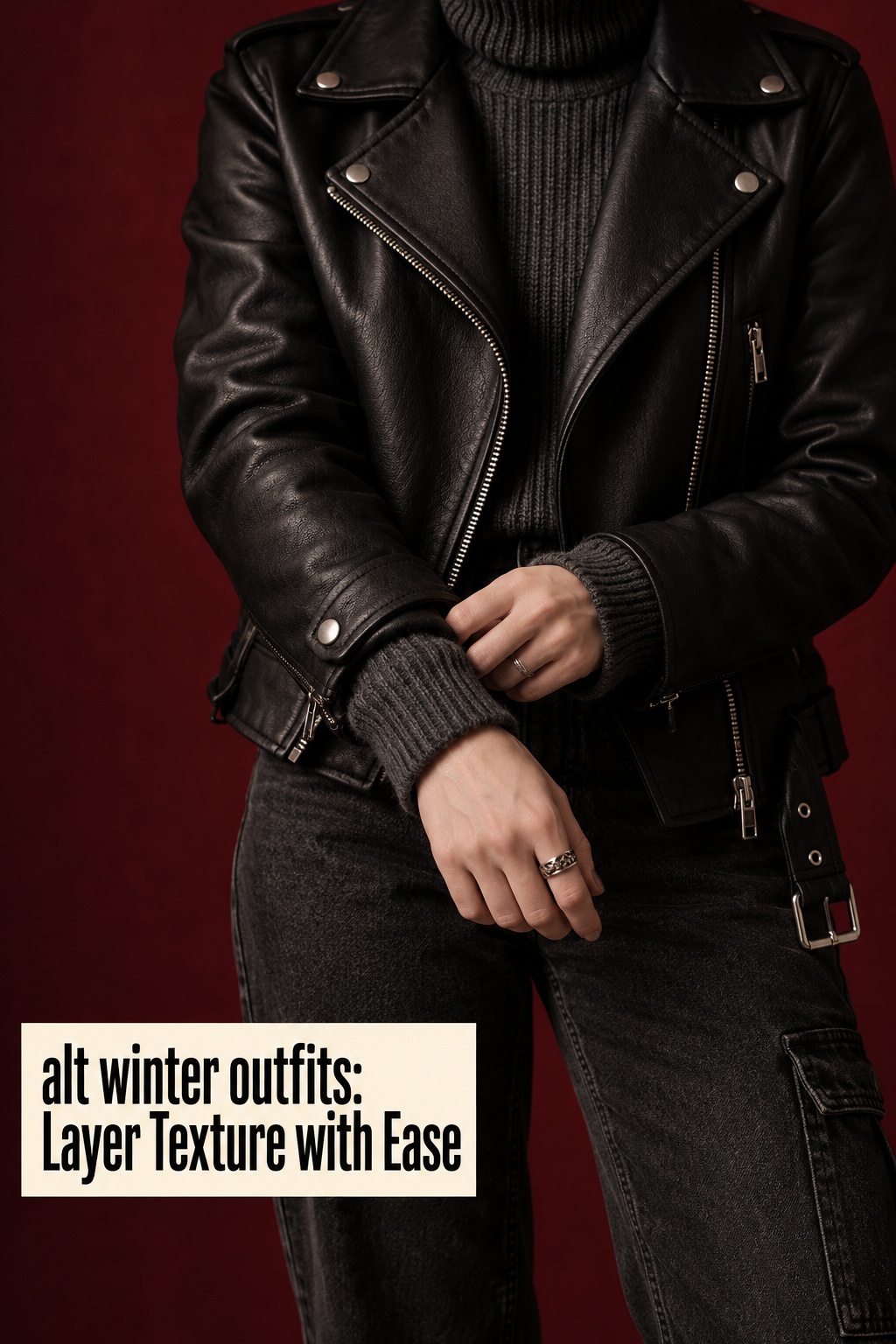
Compare four outer layers for alt winter outfits
Use the following comparison to decide what to try on first. The best option is the one that fits the way you dress and the conditions you face. None of the four categories is automatically warmer or more protective than the others; construction, lining, fit, and weather details vary from garment to garment.
Long wool coat: a strong line over dresses, skirts, and tailored layers
A long coat creates a clear vertical shape and gives a relatively simple outfit a distinct outline. Try it over a black knit dress, a plaid midi skirt, dark straight jeans, or a buttoned shirt and trousers. A large collar, military-inspired buttons, a belt, or an intentionally oversized cut can change its mood. If your existing coat is plain, the layers that show at the collar, wrist, and hem can carry the alternative detail.
Check where the coat ends against your skirt or dress. A visible band of skirt below a mid-calf coat can look deliberate; a coat that nearly meets the skirt hem may feel accidental if the two lengths compete. Try both pieces while wearing the boots you intend to use. A long coat can also feel cumbersome on stairs or in a crowded room, so walk, sit, and close it before deciding. This option suits you if a continuous dark outline is part of your preferred look.
Moto or leather-look jacket: visible hardware and texture at the top
A moto jacket gives an outfit a defined upper edge through its collar, zip, seams, and surface. It can sit over a thin turtleneck, a band tee, a fine knit, or a hoodie that fits comfortably beneath it. With dark jeans and boots, the jacket can be the single statement piece. With a soft dress or a skirt, its sharper texture creates contrast without requiring several accessories.
Its tradeoff is coverage and room. A short jacket exposes more of the lower outfit, which may be exactly what you want, but the base layers and bottom half still need to work for the route. Try the jacket zipped and open over your real midlayer. Reach forward and raise your arms to check whether the shoulders restrict movement or the sleeves bunch. If it is a lighter style piece, decide whether another layer or an additional coat is needed for your time outside.
Cropped insulated jacket: volume above a defined bottom
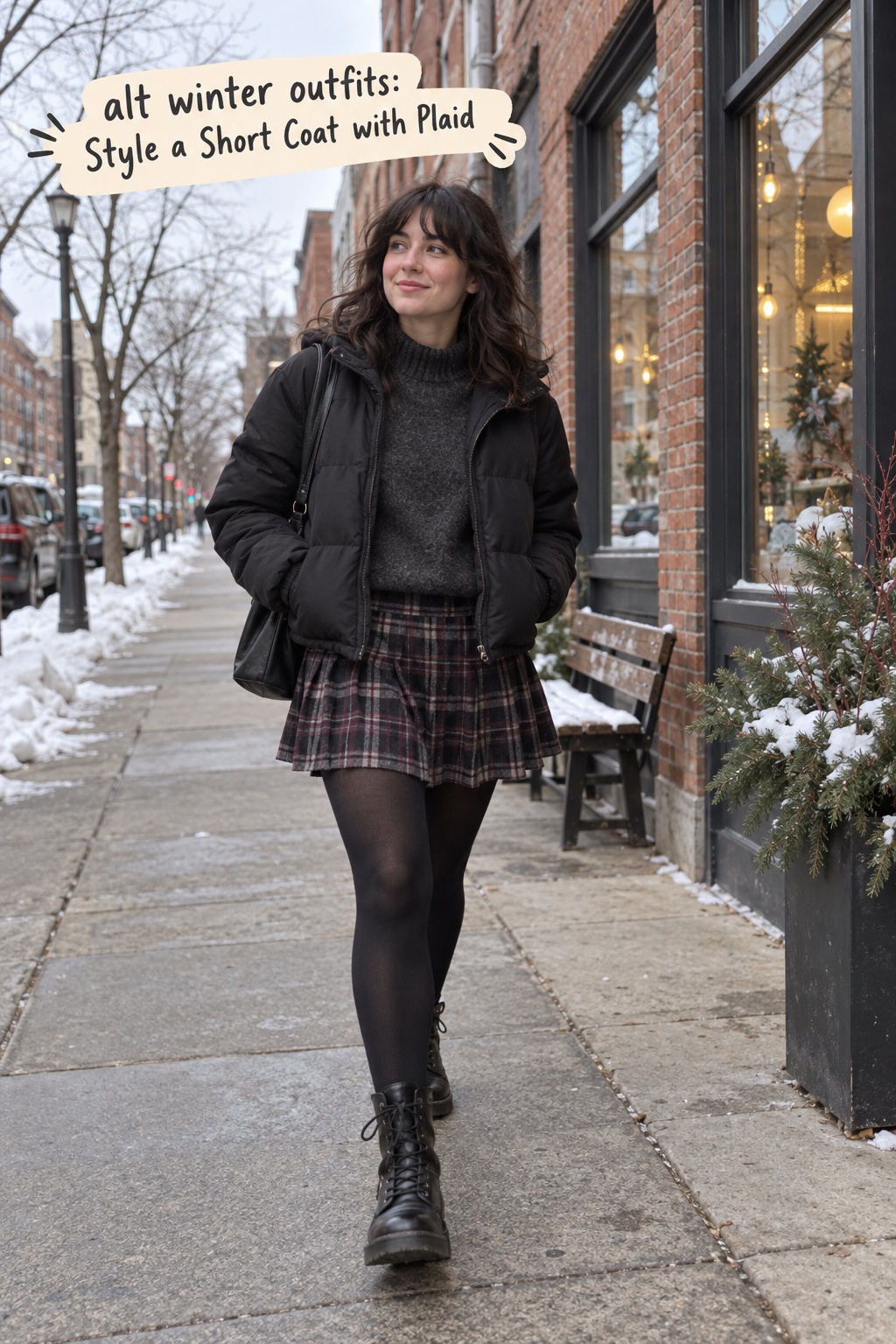
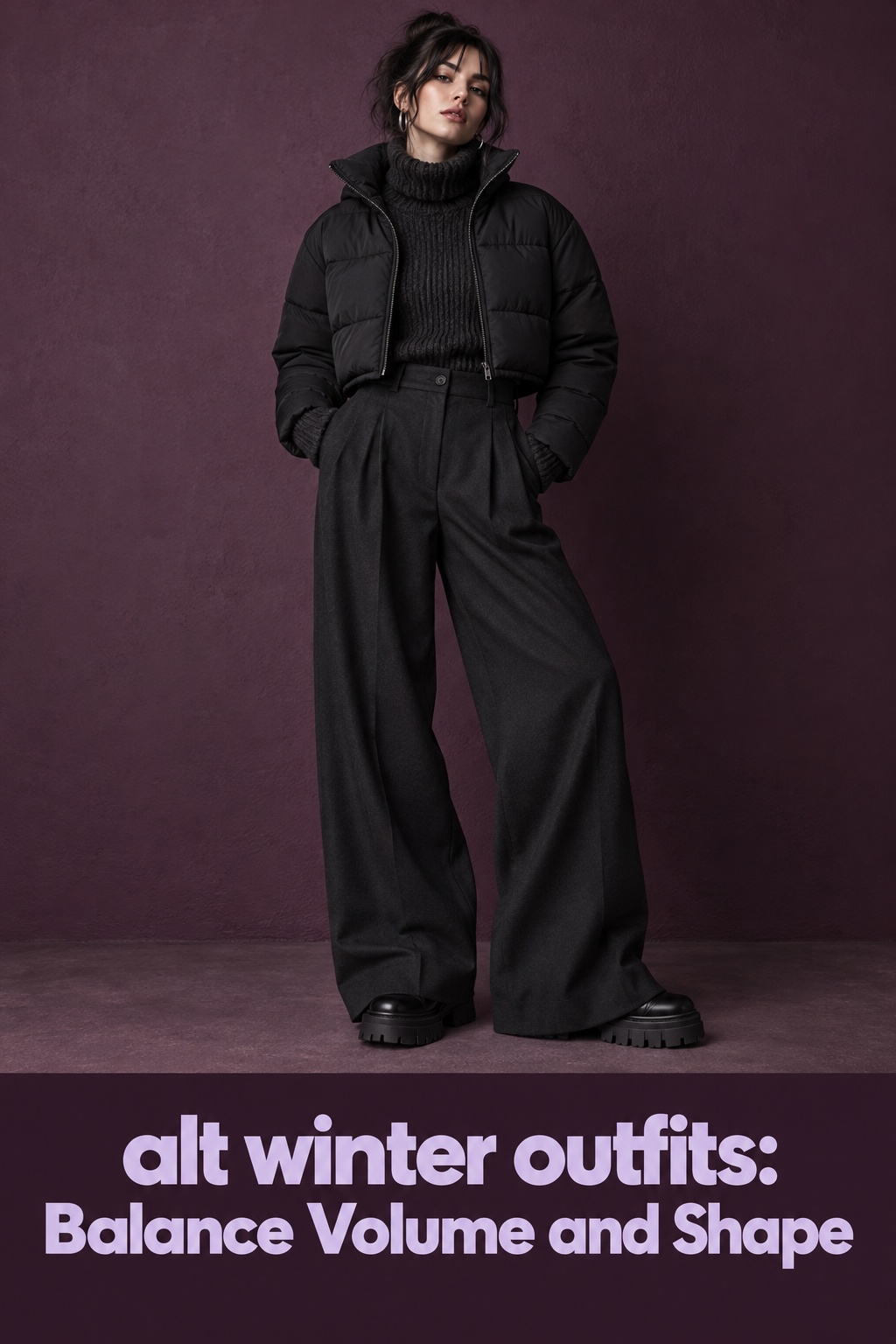
A cropped puffer or insulated jacket adds volume at the torso and leaves more of the bottom visible. This makes it a natural option with a high-rise skirt, straight trousers, or a wide-leg jean whose waistband and shape you want to show. A black jacket can work with plaid or patterned bottoms; a colored one can become the lead piece over a quieter outfit. Keep the visual details easy to read by choosing one main texture or motif.
Compare its width with the layers underneath. If both the jacket and sweater are very bulky, the sleeves and waist can feel crowded. A smoother base layer or a closer-fitting midlayer may sit better. Also check how the cropped hem meets your waistband when you move, reach, and sit. If the outfit depends on a tucked shirt or belt, make sure that focal point remains where you want it. This shape is helpful when you want a shorter outer layer and an outfit with a visible waist or bottom silhouette.
Parka or weather shell: function that can still look intentional
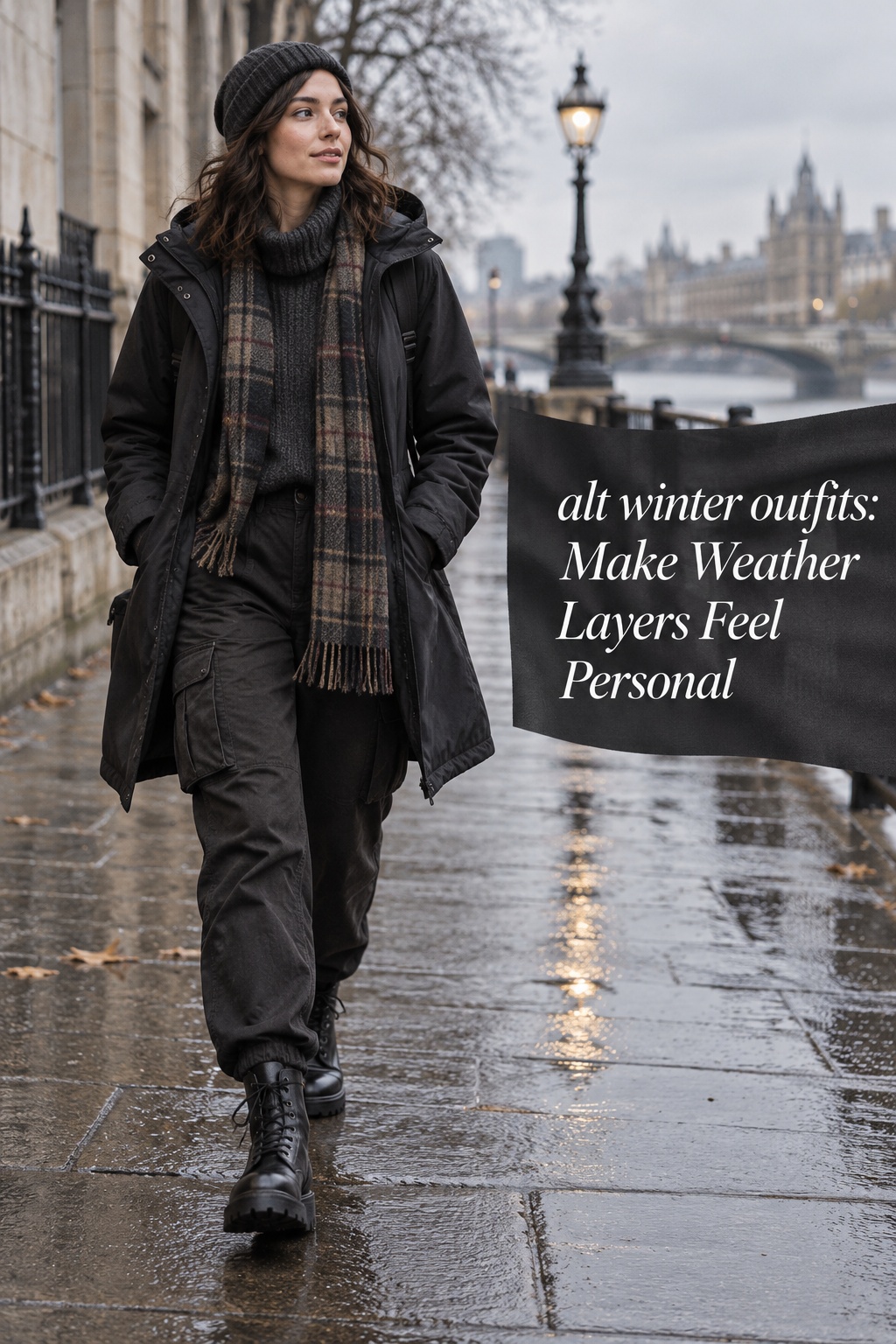
A parka or shell can be the practical choice for a route where wind or precipitation is part of the plan. Look at the garment’s own features and fit rather than relying on the category name. A hood, drawcord, length, lining, closures, and space for a midlayer all change how it works. Dark cargos, a graphic knit, a visible scarf, or substantial footwear can connect a practical coat to an alternative outfit without asking the coat to provide every style cue.
The tradeoff is that a roomy shell may cover the layers underneath, while a heavily detailed outfit can compete with visible drawcords, pockets, and straps. Decide what people will see while the coat is closed. A bright beanie, a high contrast collar, a distinctive bag, or a boot shape can carry the look at the edges. Try the coat with your actual bag and gloves to ensure its cuffs and pockets remain easy to use.
For a quick side-by-side check, compare your candidate coats on four points: the outline they create, how your usual midlayer fits beneath them, how much of your base outfit remains visible, and whether their features match the route you have planned. Write down one clear advantage and one limitation for each. A choice becomes easier when you can see the tradeoff rather than trying to identify a universally perfect alt coat.
Choose the coat for the route and outfit you wear most
The most useful coat is often the one that supports several outfits you already like. Think about your usual route first, then use your winter base as the second filter. The following comparisons help narrow the choice without prescribing a particular subculture or requiring a new wardrobe.
Mostly city-to-indoor days: choose a layer you can open or remove easily
If your day moves between a short outdoor walk, transit, an office, a cafe, or a classroom, check how quickly the outfit adapts. A long wool coat can open over a graphic knit and dark trousers. A moto jacket may be the visible layer beneath a longer coat. A cropped insulated jacket can go over a simple sweater and high-waisted bottom. Whichever you choose, make sure the indoor version still looks complete after you remove the outermost piece.
A simple test is to wear the outfit indoors with the coat off and look at it from front, side, and back. If the coat is the only piece expressing your style, add a detail that remains visible: a contrast sleeve, patterned collar, unusual belt, or a shoe with the shape you like. You do not need to load every layer with hardware. One surviving detail can connect the indoor and outdoor versions of the outfit.
Mostly skirts and dresses: compare the coat hem with the outfit hem
Start with the dress or skirt you want to wear, then try both a coat that covers most of its hem and a coat that finishes clearly above it. Either relationship can look intentional. A long dark coat over a shorter skirt shifts attention to tights and boots. A cropped jacket leaves more of a plaid midi or long knit dress in view. The key is to make the lengths look chosen rather than nearly, but not quite, aligned.
Check the full combination while sitting and walking, not just while standing in front of a mirror. If you wear tights, socks, and boots together, verify that the boot still fits comfortably and that the visible layers sit where you expect. Keep personal comfort and the weather in view. A skirt formula does not become suitable for every outdoor route just because it looks cohesive indoors.
Mostly trousers and cargos: balance the coat’s width and length
Wide trousers, cargos, or relaxed denim can look grounded with either a close upper layer or a structured long coat. If the coat is roomy too, add definition somewhere: a visible waistband, a compact bag worn close to the body, a closer base layer, or a boot with a clean shape. A cropped jacket can show the trouser waist; a long coat can create a single dark column. Test the hem with your shoes so the fabric does not bunch in a way that bothers you.
Think about pockets and movement with cargo pants. If both the coat and trousers have many visible pockets, you may prefer a plain base layer and fewer accessories. If the trousers are simple, the jacket can carry more surface detail. The point is not to match a strict aesthetic checklist. It is to choose which garment does the visual work and leave the other pieces room to support it.
Build the visible outfit around the coat
After you choose the outer layer, assemble the outfit from the inside out. Make sure each visible piece relates to the coat in shape, length, or texture. You can keep the palette dark and let materials create contrast, or repeat one color in a knit, scarf, or bag. A focused outfit is easier to adjust when the weather or indoor temperature changes.
Let one layer show the alternative detail
Choose a single piece that will remain visible with the coat open or closed. A plaid shirt under a dark coat, a mesh sleeve beneath a knit, a graphic tee under a moto jacket, or a silver belt over a dress can each give the outfit a point of view. If the coat has prominent hardware, keep the next layer simpler. If the coat is plain, let a patterned cuff, distressed denim, or expressive knit do more.
Try the outfit in both coat positions. If the detail disappears when the coat closes, decide whether you mind. Your outside look can be different from the indoor one. A scarf or high collar may preserve a color cue near the face; boots and a visible skirt hem may preserve the lower half. You only need a detail that makes the closed coat feel considered to you.
Check coat length, top length, and bottom hem together
Three lengths can compete: the coat, the top or sweater, and the bottom garment. If all three stop at nearly the same point, the outfit may feel visually crowded. Try tucking or shortening the visible top, changing the outer layer, or making one hem clearly longer. With a long dress, for example, a coat that stops well above the dress hem creates a visible band; a long coat can cover the dress almost entirely. Both can be clean solutions.
Do not choose a coat based only on how its hem looks with one pair of trousers. Test it with the bottoms you wear most. If you regularly alternate between a short skirt and wide-leg jeans, check both combinations before deciding that one jacket covers all your winter outfits. The goal is a repeatable relationship between hems, not a perfect match with every garment in your closet.
Use footwear as part of the outerwear decision
Boot height changes the line between your coat and your bottom. An ankle boot leaves more legwear or sock visible; a taller boot can connect to a skirt or coat hem; a substantial platform changes the visual weight under a long silhouette. Try the complete combination with the shoes you intend to wear. Check that hems clear the ground and that the boots suit your route.
Consider traction, fit, and weather suitability separately from appearance. If the route involves icy or wet ground, rely on the shoe maker’s guidance and conditions where you are going. A boot can look alternative and still be uncomfortable or unsuited to the surface. If you need a more practical pair, use laces, socks, gaiters, or a visible trouser hem to keep the styling connected rather than forcing one shoe to do every job.
Edit the accessories after you see the full silhouette
Put on the coat, bag, scarf, and gloves before adding more detail. The straps and closures can change where the eye lands. If the coat already has buckles, patches, or large pockets, a plain bag may give the outfit enough breathing room. If your outer layer is simple, a patterned scarf, chain detail, or contrast glove can create an intentional focal point.
Then move through the day you expect to have. Zip the coat, carry the bag, sit down, reach overhead, and take a few steps. See whether a scarf catches on the lapel, a bag interferes with a closure, or a sleeve shifts when you reach. A few small fit checks can help you decide which accessories earn a place in the outfit and which are better left at home.
For an alt winter outfit that feels like you, the coat is a starting decision rather than a uniform. Pick the silhouette that works with your real route, build around clothes you enjoy, and give one or two details room to stand out. A practical outer layer can belong to an alternative look when its shape and the visible outfit have been chosen together.
FAQ
What coat works best for alt winter outfits?
Choose a coat that fits your route and the silhouette you like. A long wool coat gives dresses and skirts a column-like outline, a moto jacket adds texture and hardware, a cropped insulated jacket shows more of the bottom, and a parka or shell can suit a route where weather features matter. Compare the actual garment’s fit and construction before deciding.
How can I make a practical coat feel more alternative?
Keep the coat if it works for your day, then add one visible style cue through a knit, scarf, collar, bag, boot, or patterned cuff. Choose the detail that fits your personal style and coordinate its scale with the coat’s pockets, closures, and hardware.
Can a leather jacket work as winter outerwear?
It can be one layer in a winter outfit, but warmth and weather resistance vary by material, lining, construction, and fit. Try it over the layers you plan to wear and decide whether you need another outer layer for your route. Check the garment information rather than assuming a leather-look surface provides a particular level of protection.
What coat length works with a skirt or dress?
Try a coat that ends clearly above the skirt hem or one that covers most of it. Both can create an intentional line. Check the actual garments together with your boots, then sit and walk to see how their lengths move in use.
How do I layer under a cropped puffer without feeling bulky?
Start with a base and midlayer that fit comfortably inside the jacket’s shoulders and sleeves. If both the sweater and coat are very voluminous, try a smoother or closer-fitting midlayer. Zip the coat, reach forward, and sit to check that the waist and sleeves remain comfortable.
How many statement details should an alt winter outfit have?
There is no fixed number, but choosing one main feature and one supporting detail is an easy place to start. The coat, boots, plaid, graphic knit, or silhouette can lead. Let the remaining pieces support that choice, then add more only if the full outfit still feels balanced to you.
How should I choose shoes for cold or wet winter routes?
Consider the ground, distance, and time outdoors, then check the footwear maker’s information for the pair you own. Try the shoes with your socks, trousers, skirt, and coat before leaving. If you need a more practical pair, coordinate its shape or laces with the outfit rather than relying on appearance alone.
