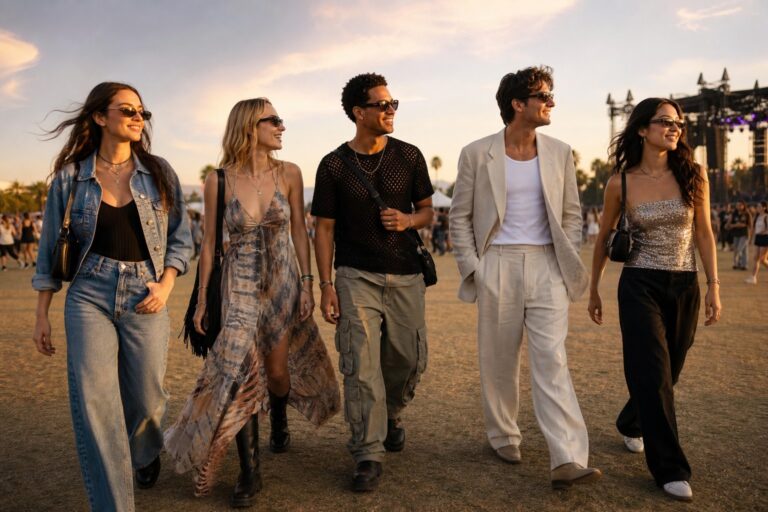
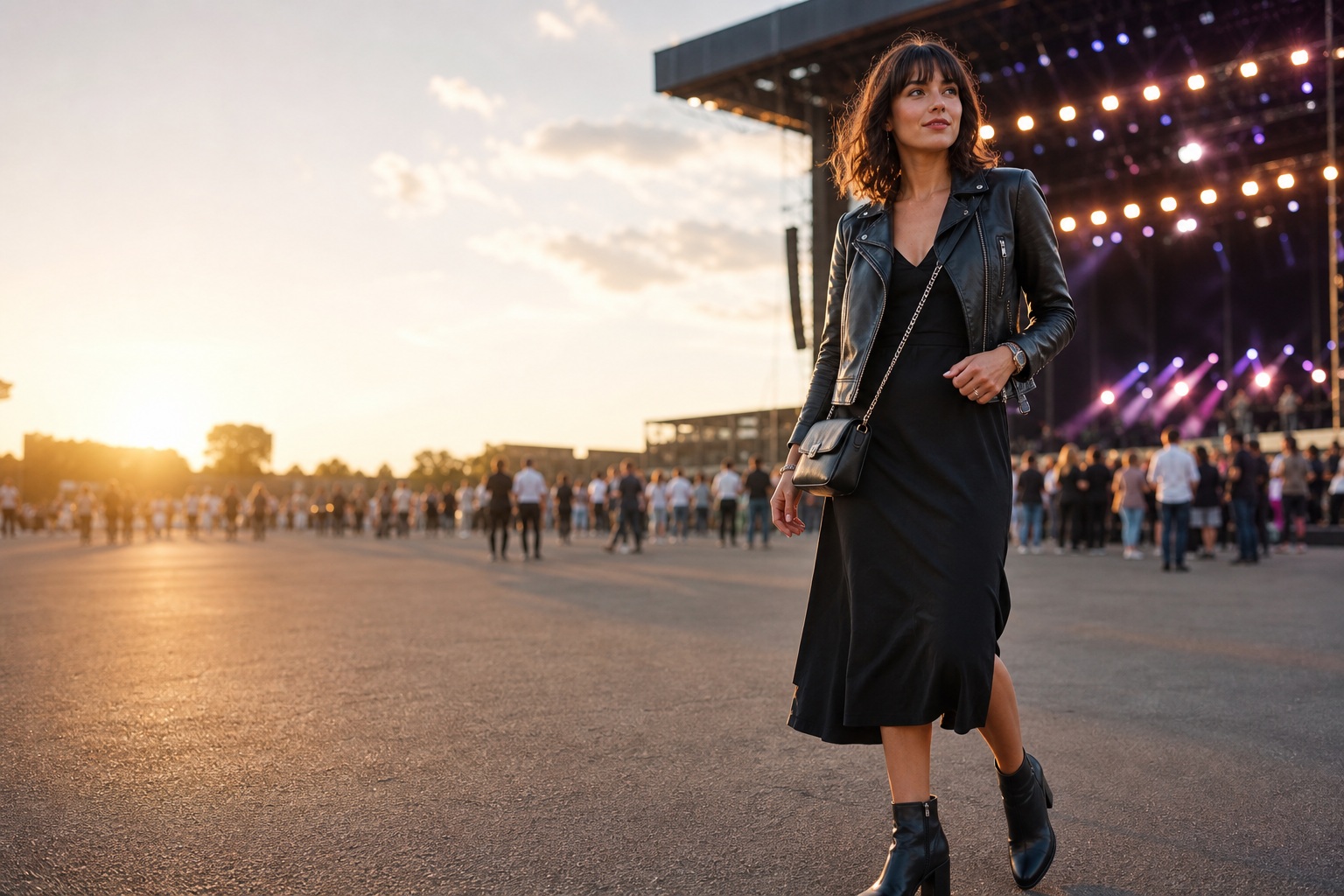
Concert Dress Ideas: 7 Comfortable Outfit Formulas
A concert is one of the rare occasions when your outfit can be expressive without needing to be formal. The right concert dress can carry the entire look, but it still has to survive real life: a long queue, security, standing, dancing, changing temperatures, and the walk home. That is why the best choice is not always the most dramatic dress on the rack. It is the one that gives you a clear point of view and enough freedom to enjoy the show.
Use this guide as a practical starting point. You will find seven outfit formulas for pop, rock, country, indie, outdoor, and arena concerts, plus a simple way to choose shoes, layers, and a bag. The goal is a concert dress that feels intentional, photographs well, and remains wearable after the final encore.
Start With the Venue, Not the Trend
Before choosing a color or aesthetic, picture the actual environment. A seated theater show gives you more freedom to wear a delicate midi or a dressier fabric. A general-admission floor calls for a hem you can move in, shoes that have already been tested, and a layer that will not become annoying when you are holding it for three hours. An outdoor lawn concert adds weather, grass, dust, and a longer walk between the entrance, food stands, and your spot.
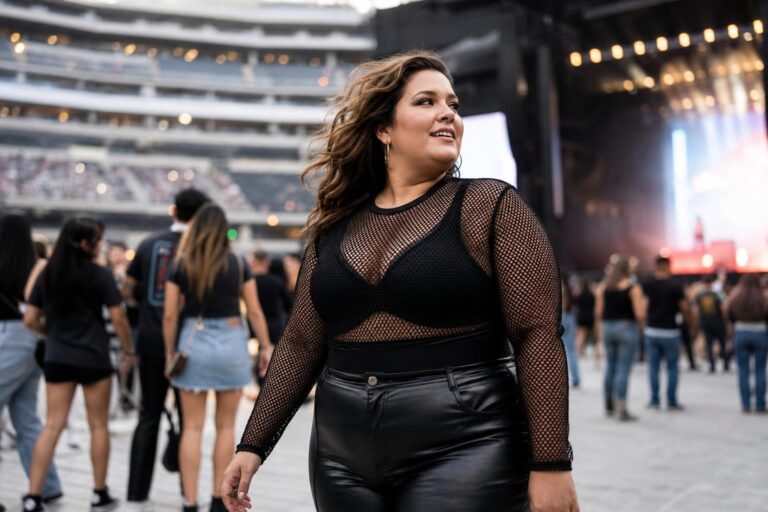
The venue also tells you how much structure your outfit needs. For an arena, a short or mid-length dress with a denim or leather jacket gives enough edge without looking over-styled. For a small club, a slip dress with boots can feel right because the setting already has a close, energetic mood. For a daytime festival, a breathable cotton, linen-blend, or easy jersey dress makes more sense than heavy sequins. The best concert dress responds to the room.
Found the dress? Keep the rest in one place.
Zarellea brings guest details, vendors, timelines, and every next step together — so your wedding plan feels as good as your look.
- Standing floor: choose secure straps, an easy hem, shorts underneath if useful, and shoes with real support.
- Seated arena or theater: you can lean into satin, a longer hem, or a sharper jacket because movement is less demanding.
- Outdoor lawn: consider sun, wind, grass, and temperature changes; add a light layer and shoes that handle uneven ground.
- Festival: prioritize breathable fabric, hands-free storage, and an outfit that can handle dust, heat, and walking.
Next, check the practical rules. Some venues limit bag size, prohibit large backpacks, or ask guests to keep items in a clear bag. A dress without pockets is not a problem if you plan for a small crossbody or belt bag, but do not discover the rule at the door. Look at the venue website before you build the outfit. It is a small step that prevents a beautiful look from becoming a frustrating one.
Seven Concert Dress Outfit Formulas That Actually Work
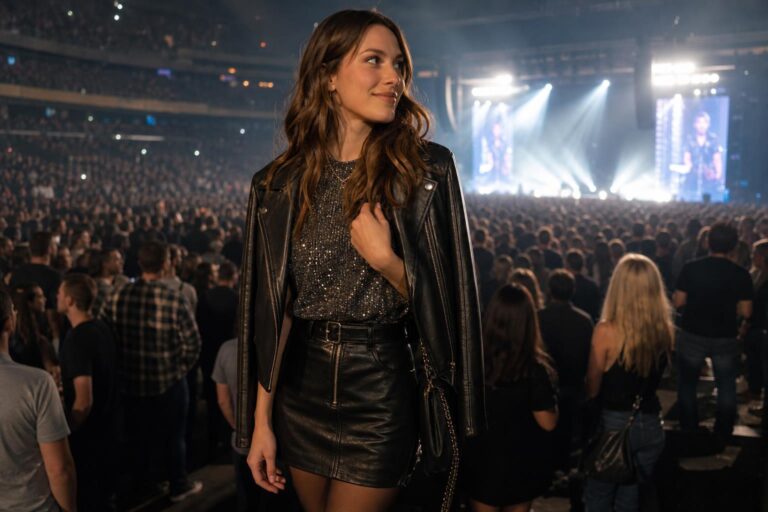
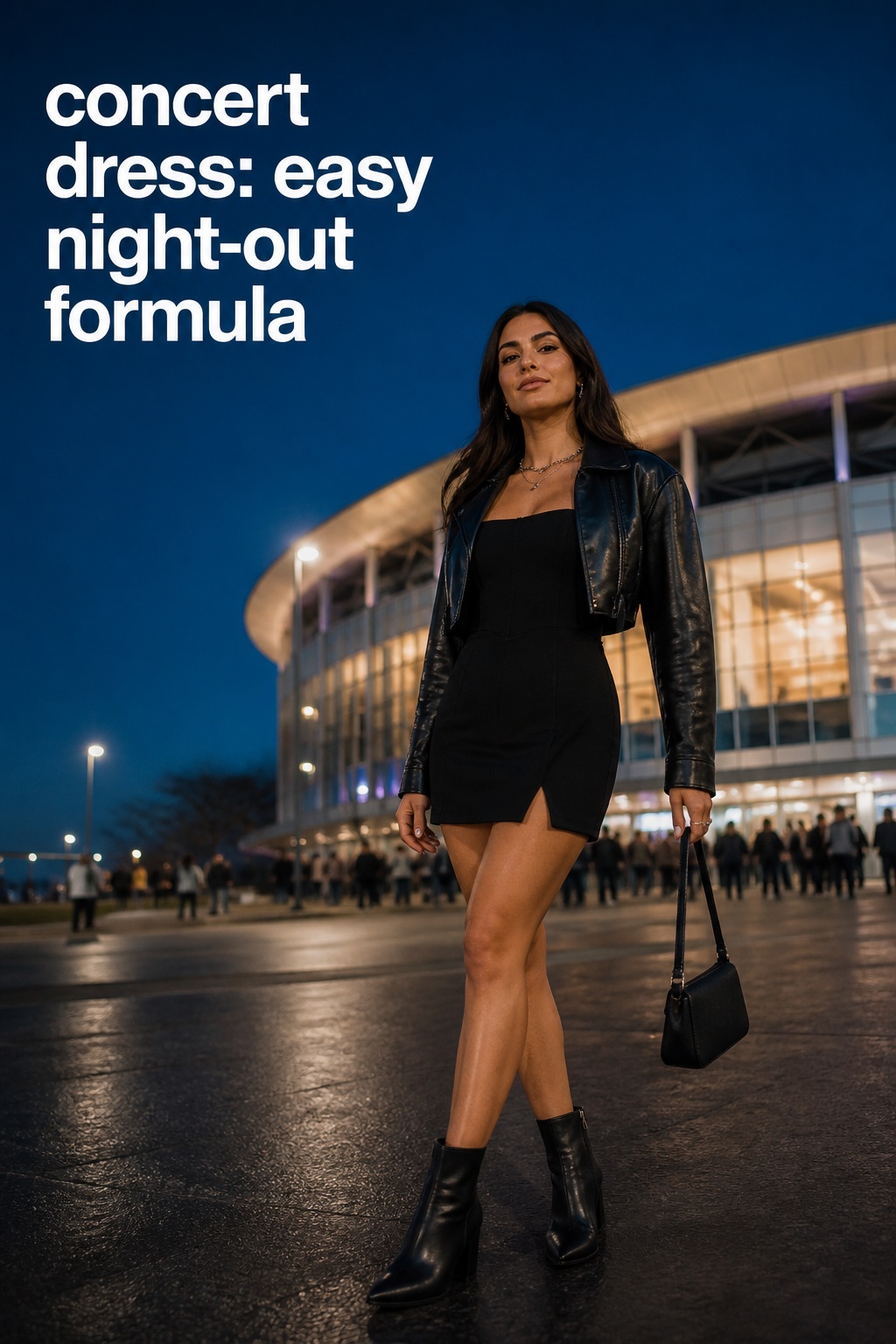
1. The mini dress, boots, and jacket formula. This is the reliable concert uniform because every piece has a job. A simple black, charcoal, burgundy, or printed mini dress gives you a clean base. Ankle or knee-high boots add presence and protect your feet better than delicate heels. A cropped denim jacket, oversized leather jacket, or utility jacket supplies a layer for the queue and makes the dress feel less like a special-occasion purchase.
Keep the proportions comfortable. If the dress is very short, choose a roomier jacket and opaque tights or fitted shorts underneath. If the dress is loose, a more streamlined boot keeps the outfit from feeling shapeless. This formula works especially well for rock, alternative, pop, and smaller indoor venues because it has attitude without requiring a costume.
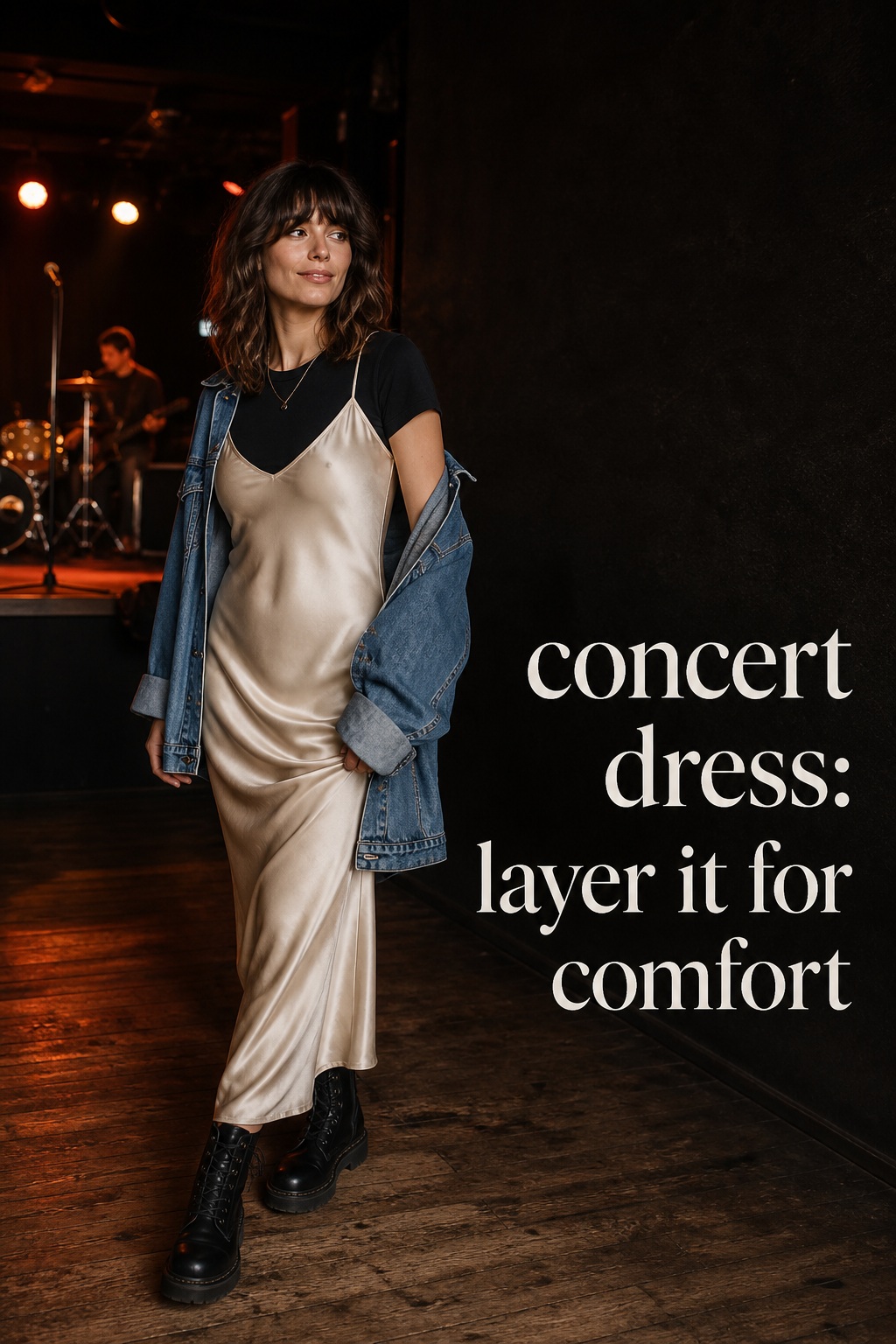
2. The slip dress with a grounding layer. Satin and silky slip dresses look effortless, but worn alone they can feel too fragile for a crowded show. Add a fitted tee underneath for a casual 1990s reference, or wear a boxy blazer, denim jacket, or soft cardigan over the top. Combat boots make the look energetic; clean sneakers make it easier and more daytime-friendly.
Choose a slip dress with adjustable straps and enough room at the hips to sit, walk, and dance. Matte satin, viscose, or a softly crinkled fabric is often easier than a very shiny fabric that needs constant attention. A small bag in a contrasting texture, such as leather against satin, makes the outfit look finished.
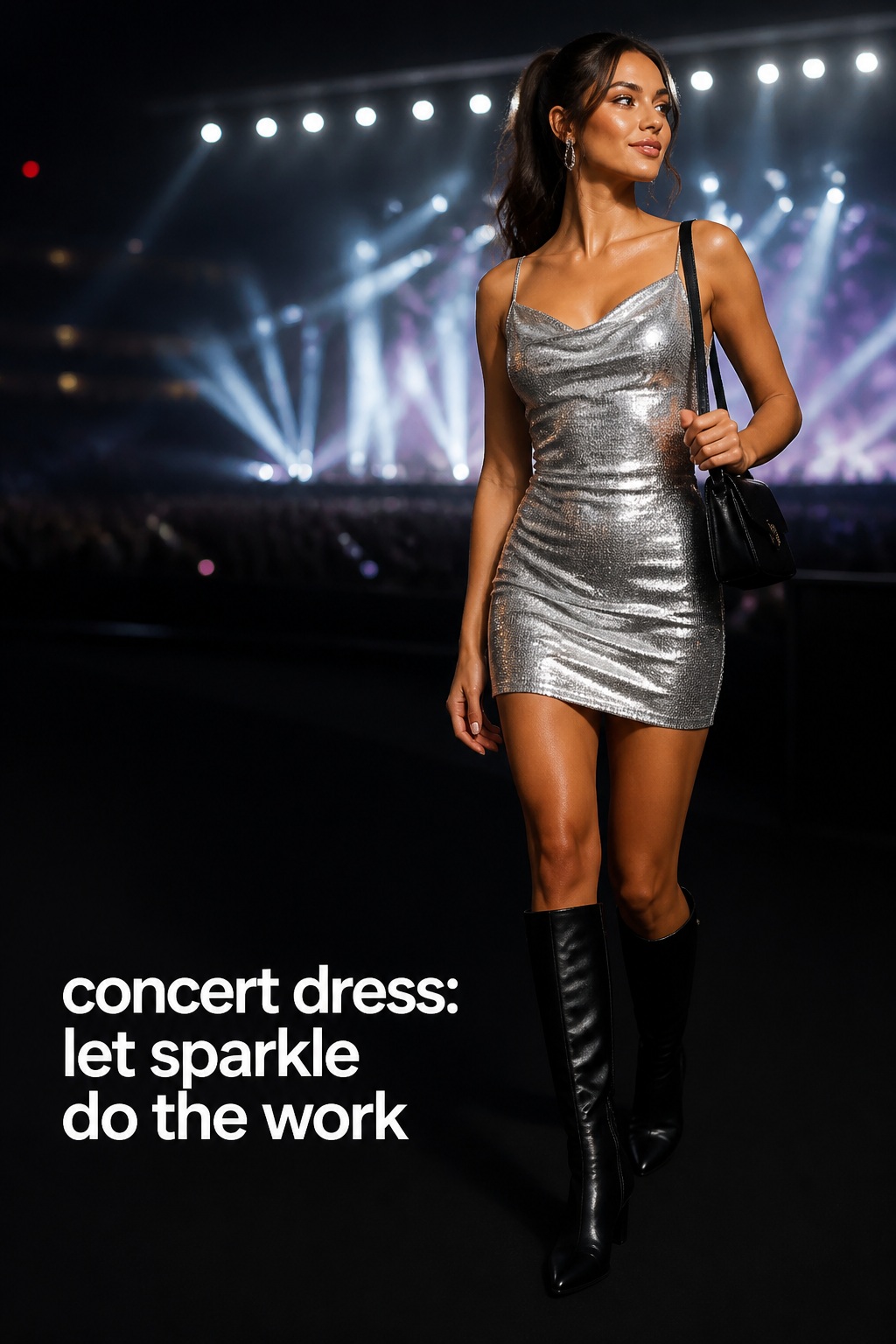
3. The metallic or sequined mini with quiet accessories. If the show is pop, dance, or a major arena event, let the dress be the statement. Silver, pewter, bronze, or controlled sparkle catches stage light beautifully. The trick is to keep the supporting pieces calm: black boots, a simple shoulder bag, minimal jewelry, and a jacket in denim, black, or a matching neutral.
A glittering dress does not have to feel like a costume. Look for a straightforward silhouette, such as a tank shape, column mini, or long-sleeve shift, rather than combining sparkle with several theatrical details. If the fabric is scratchy, wear a smooth slip or thin camisole underneath. Test the dress under movement and bright light before the show so you know whether it needs extra coverage.
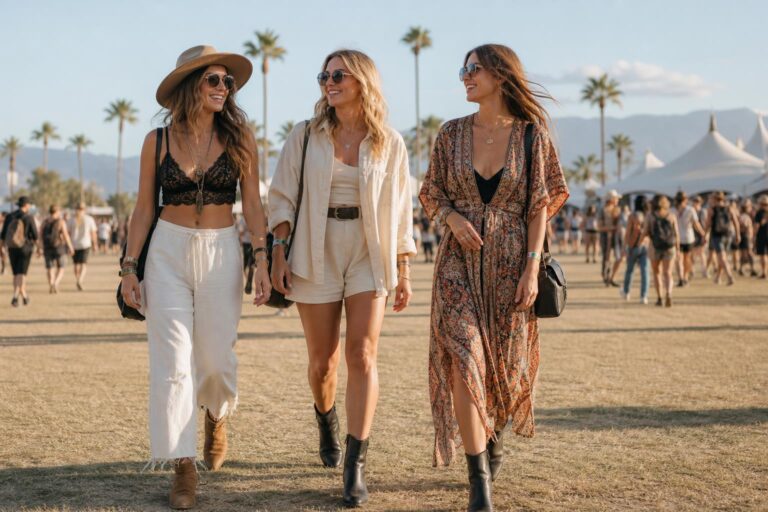
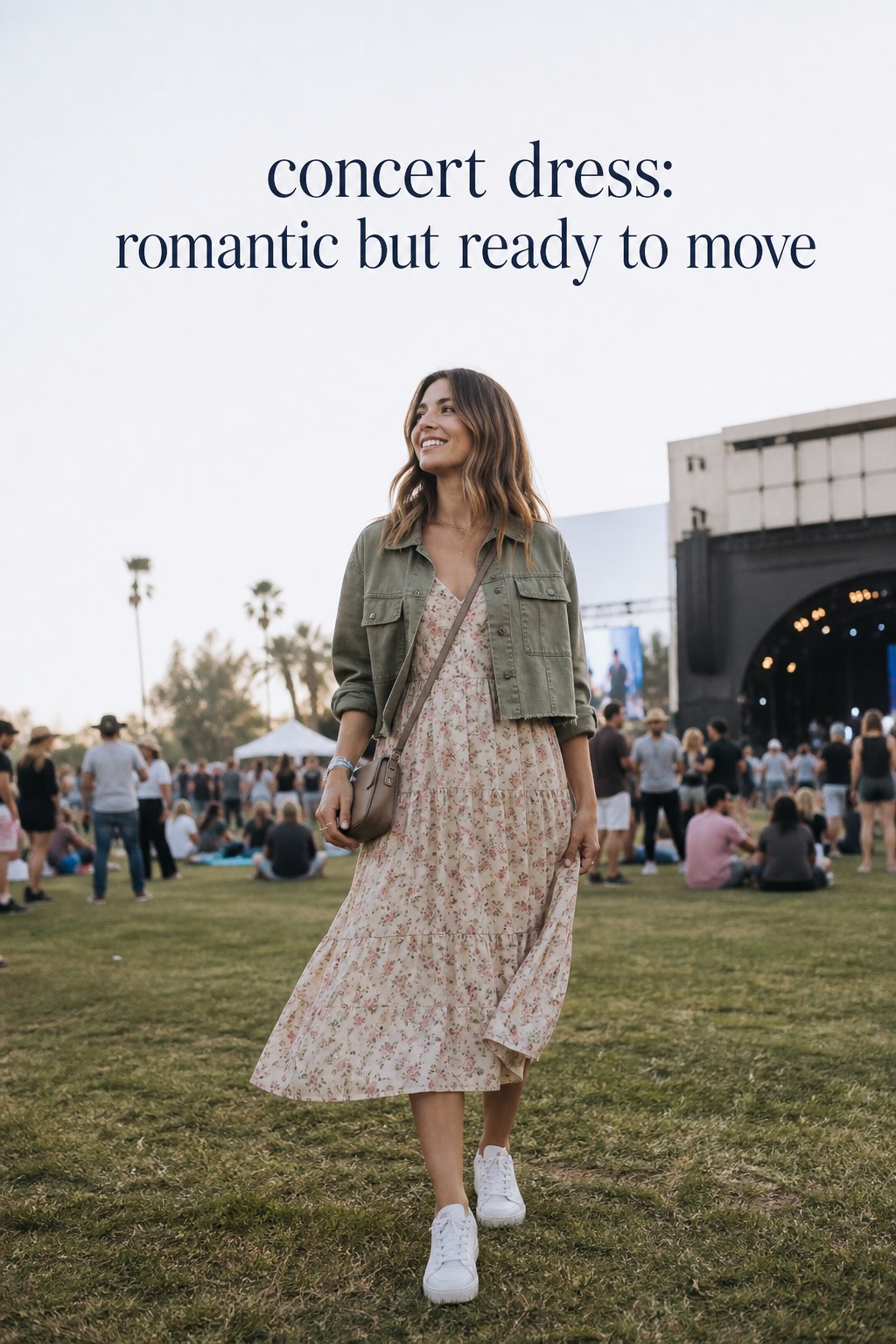
4. The romantic midi with practical shoes. A floral, softly draped, or tiered midi dress is a lovely answer for an indie concert, acoustic set, daytime performance, or outdoor venue. Balance the romance with sturdy footwear: lace-up boots, low-profile sneakers, or flat leather sandals when the ground and weather allow. A crossbody bag and a cropped jacket keep the look modern.
Pay attention to the hem. A sweeping maxi can drag through grass or catch on people when you are standing in a dense crowd. A midi that ends around mid-calf is often easier, while a side slit can add movement without exposing too much. If the dress is voluminous, keep your accessories compact and let the fabric create the visual interest.
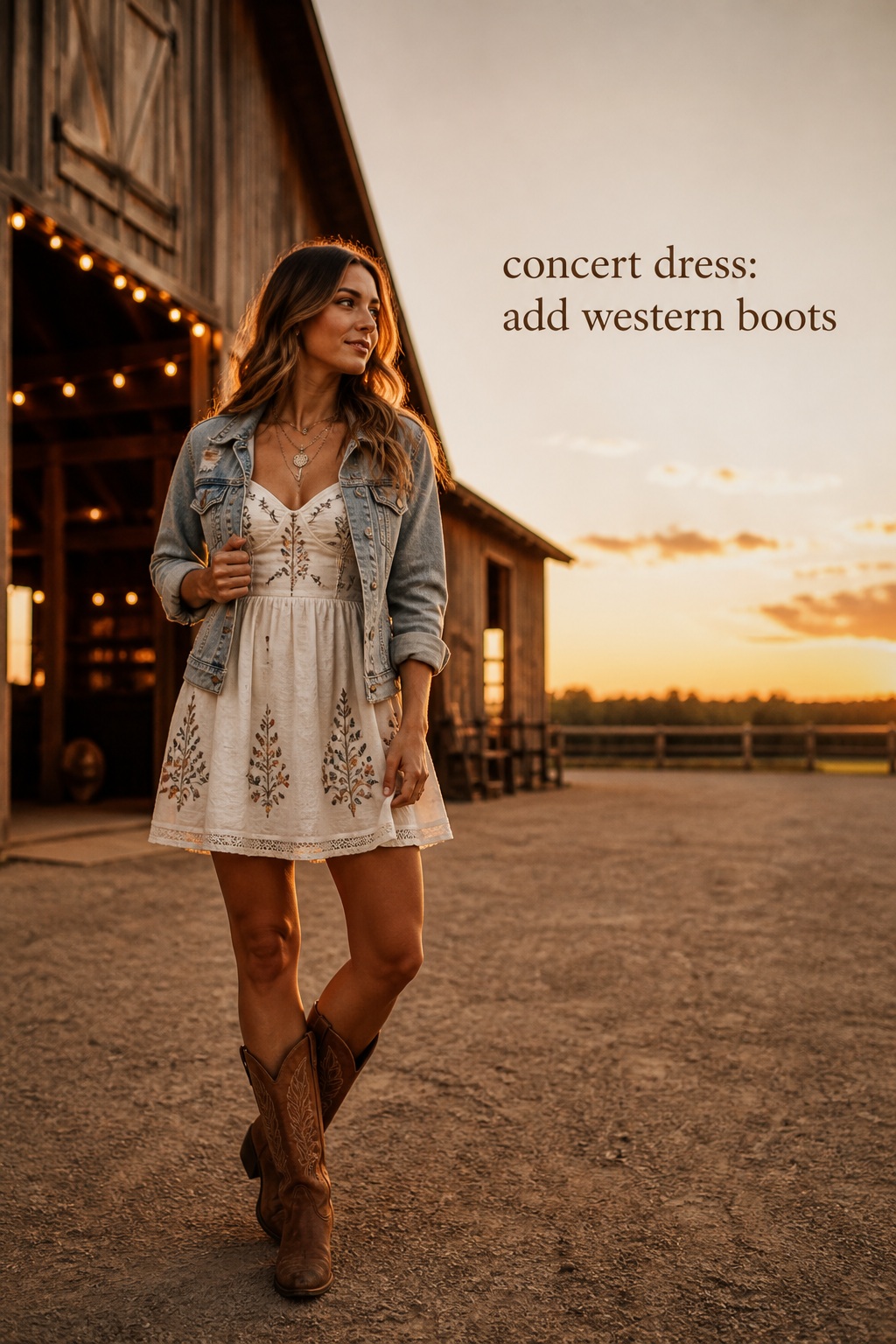
5. The country concert dress with western boots. A short floral, denim, crochet, or white dress naturally works with western boots, but the styling is strongest when the pieces are edited. Pick one western detail as the focus: the boot, a belt, a fringe bag, or a turquoise accent. You do not need all of them at once. A worn-in denim jacket can soften a sweet dress, while a leather belt can give a loose dress shape.
For an outdoor country show, consider the surface underfoot. A pointed cowboy boot may look polished, but a lower heel and a secure shaft are better for grass and long periods of standing. If the weather is hot, choose cotton, eyelet, or a light denim blend. If it is cool, add a suede-inspired jacket or tights rather than relying on a very short dress alone.
6. The sporty T-shirt dress with sneakers. This is the comfort-first option that can still look styled. Start with a T-shirt, polo, or rugby-inspired dress, then add clean sneakers, crew socks, a baseball cap, or a lightweight windbreaker. A belt bag keeps your hands free and reinforces the relaxed mood. Choose a dress with enough room through the shoulders and a hem that stays in place when you sit.
To make the formula feel less like an everyday errand outfit, add one deliberate detail: bold earrings, a metallic bag, a bright sneaker, or a jacket in the artist’s signature color. The contrast between a simple dress and one strong accessory looks current and is easy to wear for several hours.
7. The long-sleeve knit dress with boots. For a winter concert or a cold-weather queue, a lightweight knit dress gives you warmth without the bulk of separate layers. Wear it with tights and boots, then add a wool coat or oversized blazer for the journey. Inside a heated venue, you can remove the coat while keeping a complete outfit.
Avoid very heavy knits if you will be standing in a warm arena. A ribbed cotton blend, fine merino, or smooth jersey is easier to move in and less likely to trap too much heat. If the dress is close to the body, make sure you can bend your knees and raise your arms comfortably. The best winter outfit solves the outside temperature without making the inside experience miserable.
How to Choose Shoes, Layers, and a Bag
Shoes determine whether you remember the concert for the music or for your feet. Wear the shoes around the house before the event, especially boots with a heel or sneakers that are new. A cushioned insole can help, but it cannot fix a shoe that rubs or pinches. For most standing concerts, a supportive flat, low platform, or stable block heel is a smarter choice than a thin high heel.
- Pair mini dresses with ankle boots, combat boots, western boots, or supportive sneakers.
- Pair midi dresses with clean sneakers, flat boots, loafers, or low sandals for warm outdoor shows.
- Use tights, socks, or bike shorts to add comfort and coverage when the dress needs it.
- Skip shoes that make it difficult to walk quickly, stand on uneven ground, or move through a crowd.
Layers should be easy to remove and easy to carry. A cropped jacket is useful because it changes the silhouette without overwhelming a dress. A lightweight overshirt can be tied around your waist between the doors and the encore. For colder weather, wear the warm coat to the venue but check whether coat check is available before relying on it. A layer that you must carry all night is part of the outfit’s real cost.
Choose your bag based on what you need, not on the perfect photo. A small crossbody keeps both hands free and is usually easier in a crowd. A belt bag works with sporty or casual dresses. A tiny shoulder bag can be elegant, but it may swing while you dance. Keep the contents limited to your phone, identification, payment method, keys, lip product, and any required medication. Check the venue’s size policy and keep the strap secure.
Think about the outfit’s relationship to the artist without copying a stage costume. A bright color, one texture, or a small accessory can nod to the music. For a pop concert, that might be sparkle or a playful color. For rock, it could be a dark dress with leather. For country, it may be a floral print and western boot. For indie, contrast a romantic silhouette with utilitarian shoes. The reference should feel like you, not like a theme-party uniform.
The Final Concert-Dress Checklist
Do a full test the day before. Put on the dress, shoes, bag, and outer layer together. Sit down, walk up stairs, raise your arms, bend over, and practice moving through a doorway. If anything rides up, digs in, slips, or needs constant adjusting at home, it will be more distracting in a crowd. Small fixes such as fashion tape, a safety pin, shorts, or a different strap can make a major difference.
- Comfort: Can you stand and walk for several hours without adjusting the dress?
- Coverage: Do you feel secure when sitting, dancing, or reaching overhead?
- Weather: Do you have a plan for heat, rain, wind, or a cold trip home?
- Venue: Does the bag meet the rules, and will the shoes handle the floor or grass?
- Style: Is there one clear idea rather than too many competing details?
- Afterlife: Can you wear at least two pieces again outside the concert?
Remember that comfort does not mean giving up personality. It means making the expressive part of the outfit work harder. A plain black dress becomes distinctive with a metallic boot or a strong jacket. A floral midi becomes concert-ready with a practical shoe. A T-shirt dress becomes intentional with one memorable accessory. Start with the dress you genuinely want to wear, then build around the demands of the night.
If you are still undecided, use the simplest formula: a dress you can move in, a shoe you have already tested, a layer for the queue, and a small hands-free bag. That combination works because it leaves room for the best part of the evening—the music, the people you came with, and the freedom to enjoy the show without thinking about your outfit every five minutes.
FAQ
What kind of dress is best for a concert?
The best concert dress is one that matches the venue and lets you move comfortably. A mini works with boots or sneakers for an energetic show, a midi suits a seated or outdoor event, and a T-shirt dress is an easy choice for long standing periods. Look for breathable fabric, secure straps, and a hem that will not need constant adjustment.
Can you wear a mini dress to a concert?
Yes. Add fitted shorts or opaque tights if you want extra coverage, and choose a jacket that makes the proportions feel balanced. Test the dress while sitting, walking, and lifting your arms. Boots or supportive sneakers usually make a mini dress more practical than delicate heels.
What shoes should you wear with a concert dress?
Choose shoes you have already worn comfortably. Ankle boots, western boots, combat boots, supportive sneakers, loafers, and low sandals can all work depending on the venue. Avoid any shoe that rubs, feels unstable, or makes walking on grass and standing for hours difficult.
How do you stay warm in a concert dress?
Layer with tights, a fine long-sleeve base layer, boots, and a jacket or coat for the journey. Choose thin layers you can remove if the venue becomes warm. A lightweight knit dress is useful in winter, but avoid very heavy fabric if you will be inside a crowded, heated arena.
What should you wear to an outdoor concert?
Pick a breathable dress, comfortable shoes that can handle the ground, and a layer for wind or a cooler evening. Consider sun protection, rain, grass, and the walk from parking or public transit. A crossbody or belt bag is usually more practical than a large purse, but always check the venue’s bag policy.
How can you make a concert dress more casual?
Ground it with sneakers, a denim jacket, a utility overshirt, or a simple crossbody bag. A T-shirt under a slip dress also makes the look more relaxed. Keep one statement detail, such as sparkle, a bold boot, or a bright accessory, so the outfit still feels purposeful rather than ordinary.