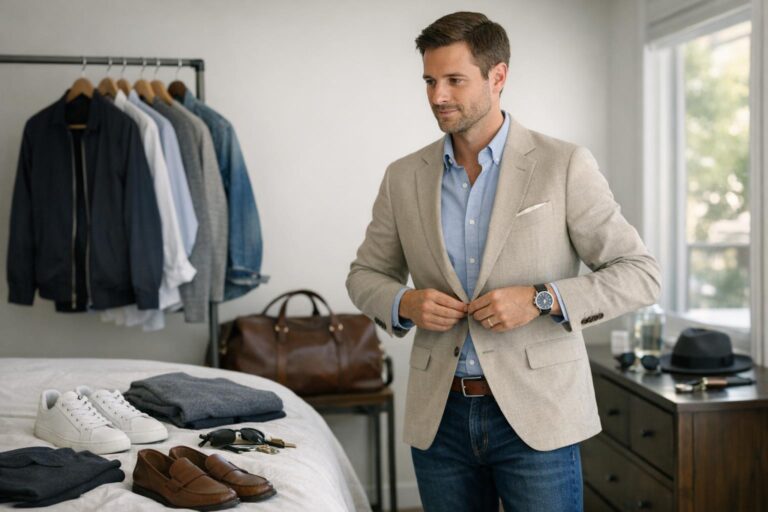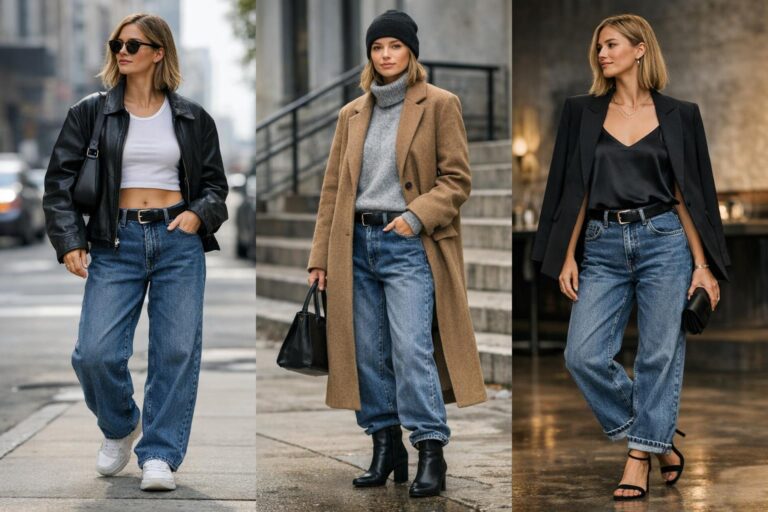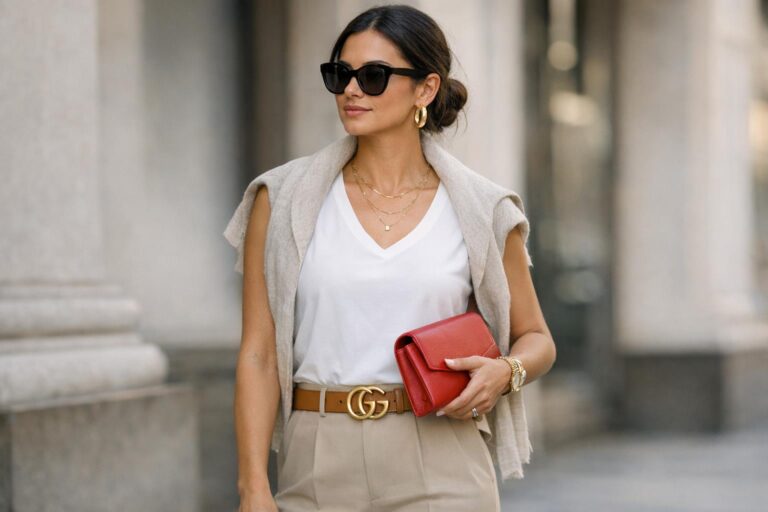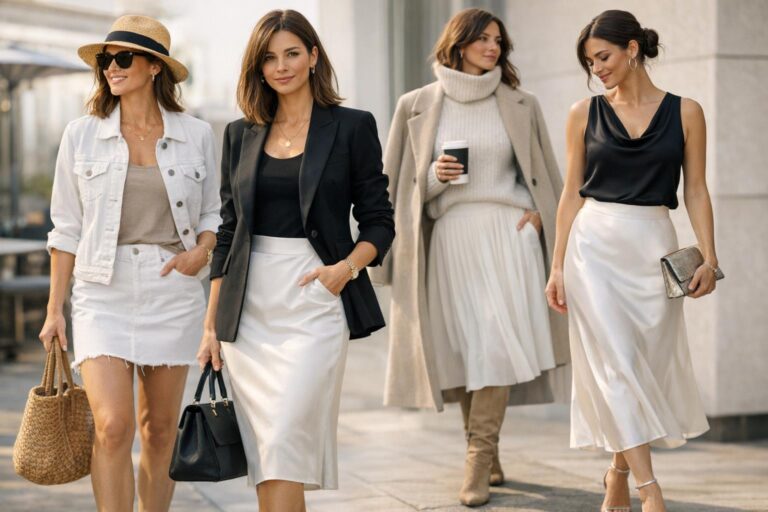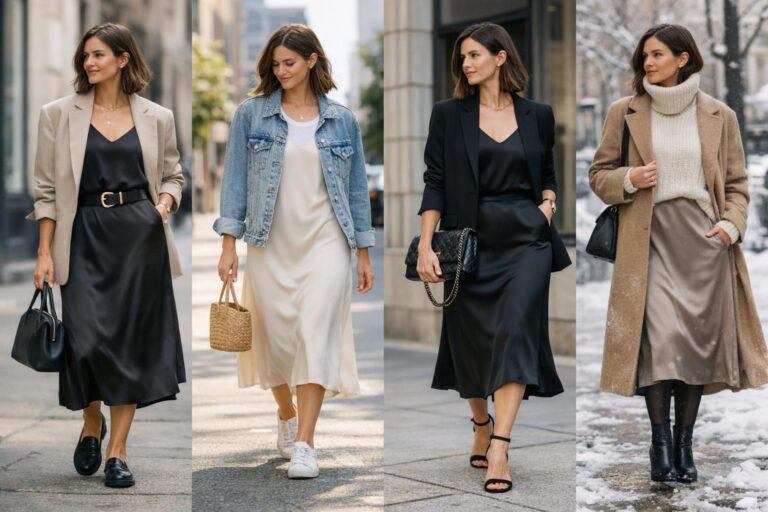
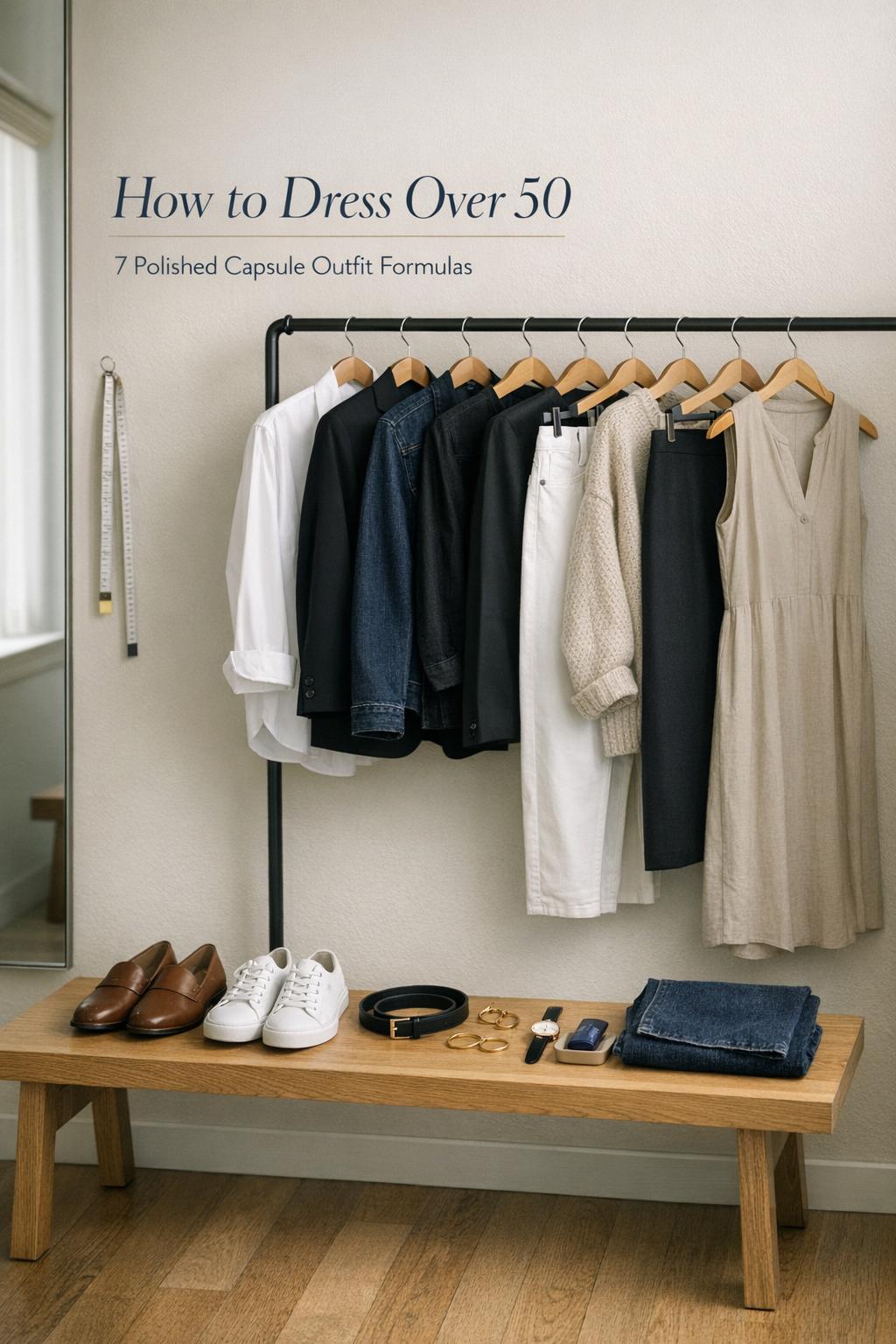
How to Dress Over 50: 7 Polished Capsule Outfit Formulas
How to Dress Over 50: A Modern, Confident Guide to Style After 50
If you’ve been wondering how to dress over 50 in a way that feels current, comfortable, and completely you, the answer isn’t a strict list of “dos and don’ts.” It’s a practical system: build a flexible wardrobe foundation, choose silhouettes that flatter your body now, prioritize fit and fabric, and use simple styling upgrades (shoes, accessories, tailoring) to look polished without chasing trends. This guide brings it all together with a capsule-wardrobe approach, category-by-category recommendations, and a step-by-step plan you can actually follow.
Why Dressing Well at 50+ Matters
Style after 50 is less about reinventing yourself and more about refining what already works. The biggest difference is that the details matter more: a great-fitting pant, a reliable blazer, denim that sits comfortably, and shoes that support your day can instantly improve how you look and feel. Dressing well also reduces decision fatigue—when your wardrobe is built around interchangeable staples, getting dressed becomes faster, easier, and more consistent.
Just as importantly, an age-positive mindset keeps your style personal. You don’t need to dress “younger” to look modern, and you don’t need to dress “older” to be taken seriously. You need clothes that fit your life and reflect your taste—whether that’s classic, minimal, creative, or bold.
Start with a Capsule Wardrobe for 50-Plus
A capsule wardrobe is a curated set of pieces that mix and match easily, giving you maximum outfits with fewer items. For dressing over 50, the capsule idea is especially effective because it prioritizes quality, fit, and versatility over impulse buys. Think of it as building a wardrobe that consistently delivers: you know your pieces work together, your silhouettes feel right, and you can dress up or down without starting from scratch.
Core staples to own (the reliable foundation)
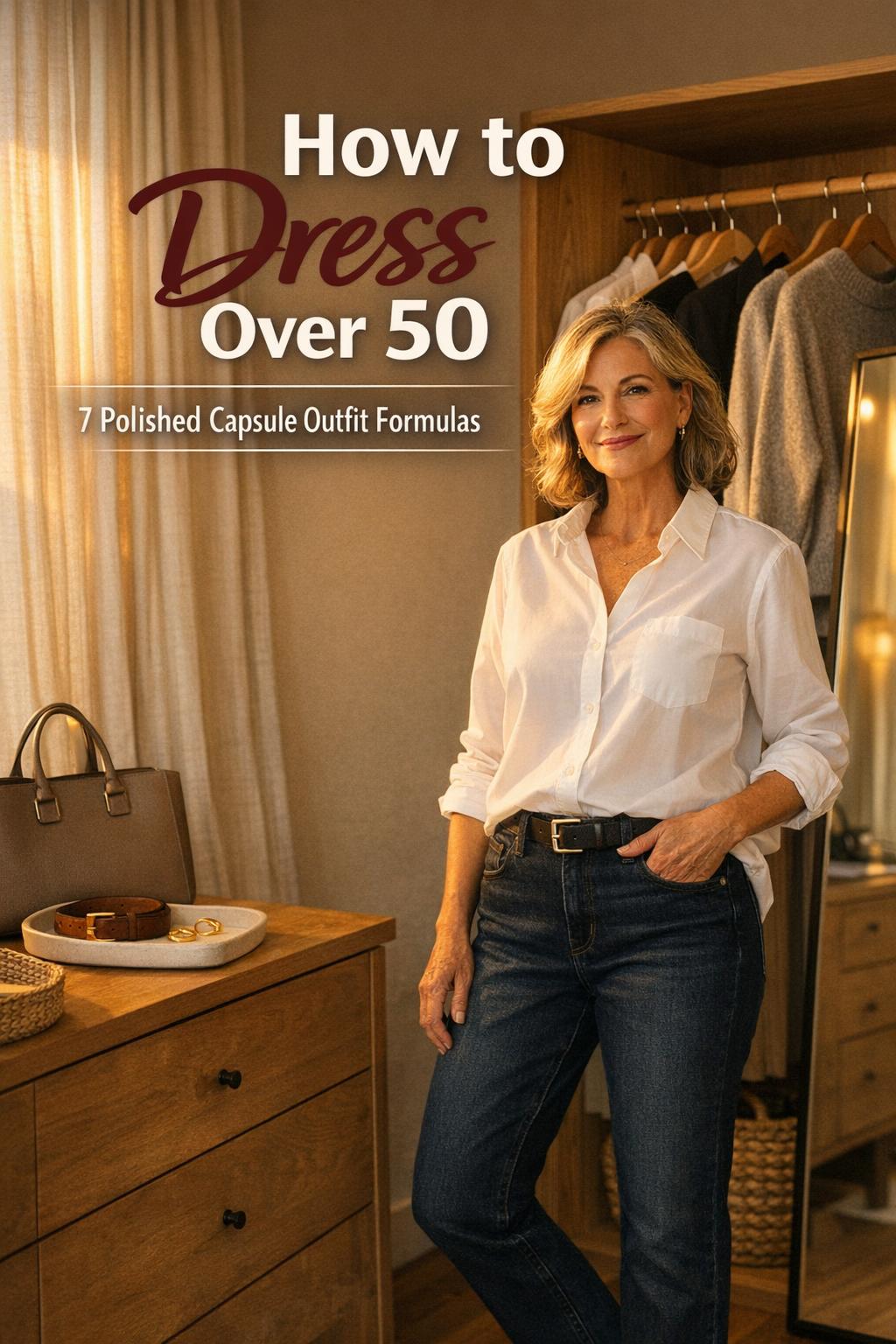
Many top wardrobe guides for women over 50 center on a small set of dependable essentials—pieces that anchor outfits and make everything else easier to style. Start with a strong core, then add personality through color, texture, and accessories.
- A white shirt (or crisp white blouse) that layers well
- Dark denim you can dress up (a clean, modern wash)
- White jeans for a fresh, polished casual look
- Great-fitting pants (tailored trousers you can wear weekly)
- A black blazer to sharpen almost any outfit
- A classic sweater (including cashmere-style knits if you like that look)
- A skirt option such as a black pencil skirt if that suits your lifestyle
- A midi dress (easy, flattering, and ready for events)
This kind of “wardrobe staples over 50” list works because you can repeat the same items across work, weekends, travel, and occasions—without repeating the exact same outfit.
Color strategies that flatter mature skin
Color choices can make an outfit look intentional and bright, especially when your goal is to look refreshed rather than overly styled. Many over-50 fashion guides lean on classic neutrals—black, white, deep denim—because they’re easy to mix and always look clean. From there, you can build a consistent palette: a few core neutrals plus a small set of accent colors you love.
Tips: If you’re unsure where to begin, use your best basics (white shirt, dark denim, black blazer) as the “frame,” then add one color element at a time—an accessory, a sweater, or a blouse. This keeps outfits modern and controlled rather than busy.
How many pieces you need (a practical 30-piece example)
A 30-piece capsule is a helpful target because it’s big enough to cover real life, but small enough to manage. You can treat 30 as a flexible guide rather than a strict rule. The goal is interoperability: every top should work with multiple bottoms, and every shoe should match multiple outfits.
- 8–10 tops (including your white shirt and a few blouses)
- 6–8 bottoms (dark denim, white jeans, tailored trousers, plus an optional skirt)
- 3–5 layers (blazer, sweaters, plus one outerwear piece)
- 2–4 dresses or one-and-done outfits (including a midi dress)
- 3–5 pairs of shoes (comfort-forward, lifestyle-appropriate)
- A small set of accessories (belt, scarf, jewelry you actually wear)
This capsule wardrobe 50s approach is meant to free you up: fewer pieces, more outfits, less frustration.
Build a 50+ Capsule Wardrobe in 30 Days (Simple Schedule and Budget)
Instead of trying to overhaul everything in one weekend, use a paced plan. A 30-day build allows for try-ons, returns, and tailoring, and it prevents “panic shopping” that doesn’t match what you already own.
Week-by-week schedule you can follow
- Week 1: Closet review and outfit testing (identify what already works)
- Week 2: Fill foundation gaps (white shirt, dark denim, great-fitting pants, blazer)
- Week 3: Add comfort layers and one event-ready piece (sweater, midi dress)
- Week 4: Shoes, accessories, and tailoring (finish and polish)
Tips: Before buying anything new, build five outfits from what you already have. The items you keep reaching for are your true style anchors—and they should guide what you purchase next.
Budget guidelines (spend where it shows)
Shopping smart over 50 is less about chasing the lowest price and more about buying the pieces that improve your wardrobe’s “repeat value.” For many people, tailoring and fit-driven staples deliver a better result than buying more trend items. If you’re deciding where to invest, prioritize pieces closest to your face (tops, sweaters), your outfit structure (blazer, trousers), and your daily comfort (shoes).
Tips: Treat tailoring as part of the clothing cost. When you plan for hemming or sleeve adjustments, you can buy fewer items and still look significantly more put-together.
Flattering Silhouettes for Your Body Type
“Flattering silhouettes 50+” isn’t about hiding your body; it’s about balancing proportions so outfits look intentional. Many style guides emphasize the same principle: when your clothes fit well and your lines are clean, you look modern and confident. Use body-type guidance as a starting point, then adapt based on comfort and lifestyle.
Pear shape (balance hips and shoulders)
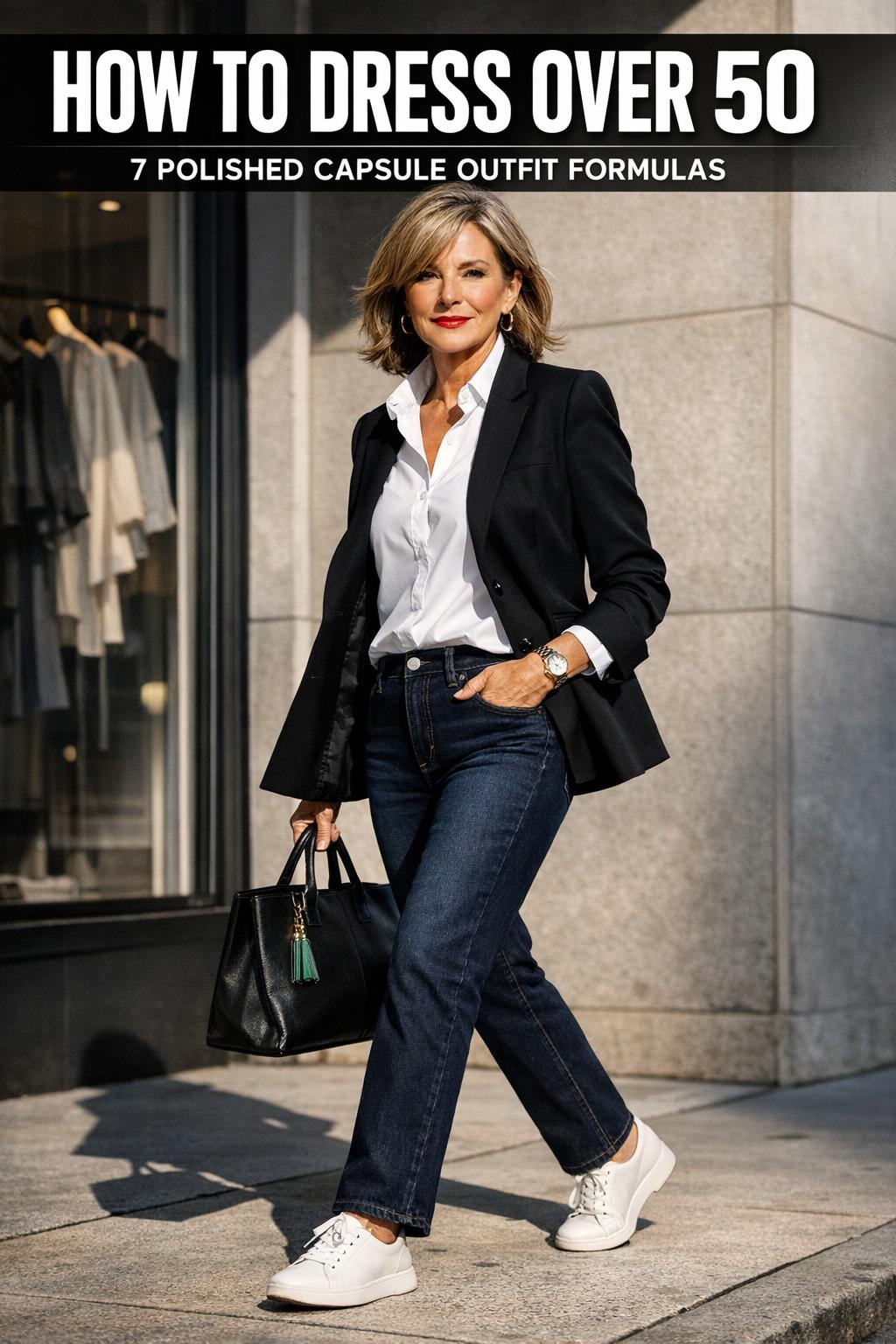
If you’re fuller through the hips and thighs, create balance by adding structure or visual interest on top. A crisp white shirt, a well-chosen sweater, or a blazer can bring attention upward, while dark denim or tailored trousers keep the bottom half streamlined. Avoid fighting your shape; focus on clean lines and a comfortable waistband that sits smoothly.
Apple shape (create gentle definition and long lines)
If you carry weight around the midsection, look for pieces that skim rather than cling and that create a long vertical line. A black blazer worn open over a simple top can add structure without feeling restrictive. Pants that fit well through the waist and hips—especially when tailored—can make your overall outfit look sharp and comfortable.
Rectangle shape (add shape with layering and detail)
If your shoulders, waist, and hips feel more uniform, strategic layering can create dimension. A sweater over a crisp shirt, a blazer that defines the shoulder, or a skirt or trouser with a clean waistband can give outfits more presence. Accessories like belts can help, but only if they feel comfortable and enhance rather than interrupt your lines.
Inverted triangle shape (balance shoulders with the right bottoms)
If your shoulders or bust are more prominent than your hips, balance comes from your bottoms. Consider denim and trousers that add a bit of volume or shape through the leg. Many capsule-wardrobe guides include flared jeans as a modern, wearable option because they help create proportion and look polished when the length is right.
Accessorizing for balance (simple, high-impact choices)
Accessories should support your silhouette rather than overwhelm it. Scarves, belts, and jewelry can sharpen an outfit quickly, especially when your clothing is built around classic staples. The goal is coherence: one or two accessories that feel intentional can look more modern than many competing elements.
Tips: When you try on an outfit, take 10 seconds to check the overall shape from the front and side. If something feels “off,” it’s often a proportion issue you can fix with one change—swap the shoe, add a blazer, adjust the pant length, or simplify accessories.
Fabric, Fit, and Comfort: The 50+ Wardrobe Essentials
Fit and fabric are the quiet drivers of style for older women. Many over-50 style guides emphasize that a great-fitting pant or a well-cut blazer can do more than a closet full of trendy pieces. Comfort matters because you’ll wear what feels good—and the pieces you wear often become your signature.
How to choose fabrics that drape well and feel good
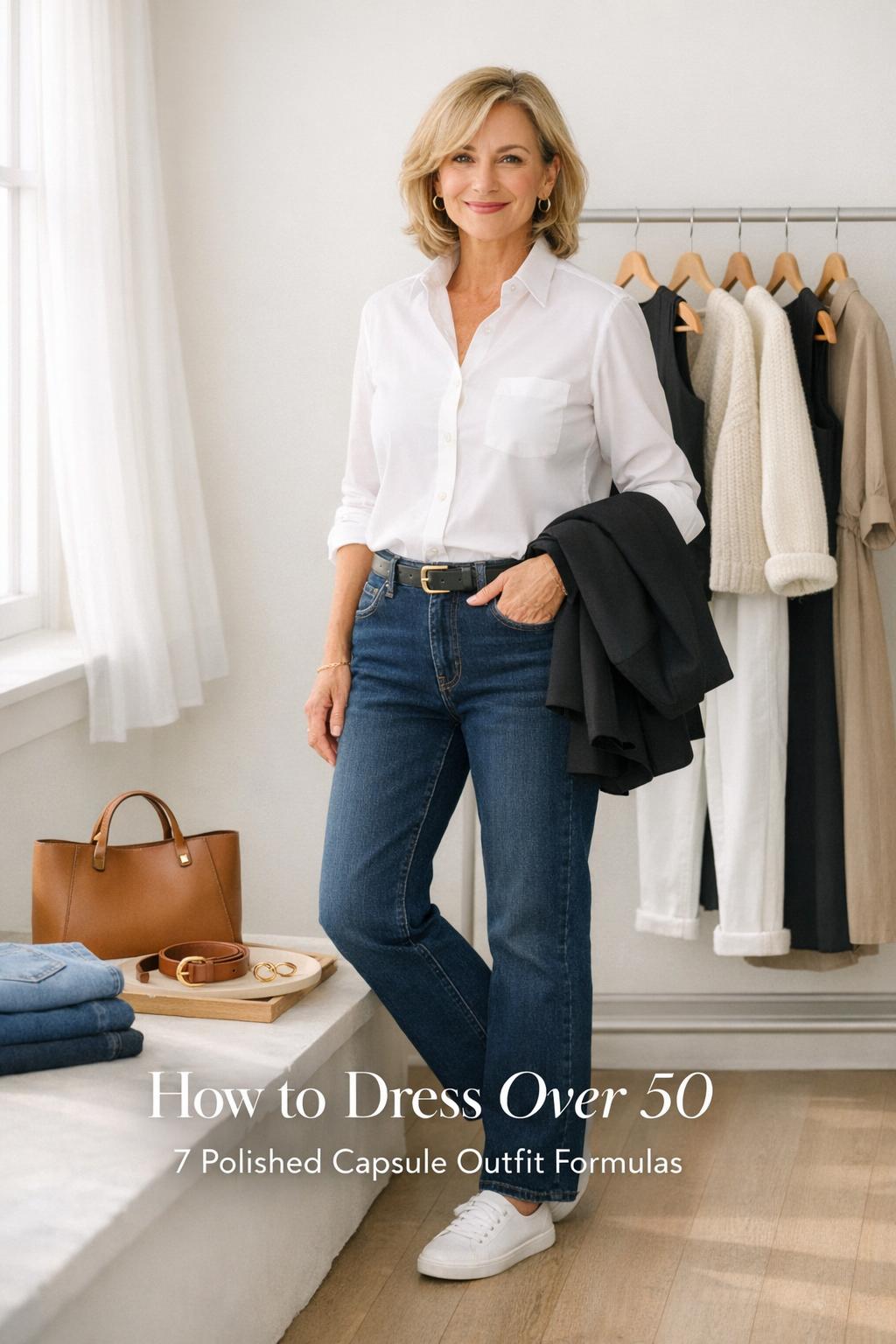
Look for fabrics that hold their shape without feeling stiff, and that drape without clinging. Sweaters and knits can be especially useful for layering, while structured pieces like blazers help create clean lines. Denim can be a cornerstone if the weight and feel work for you and the fit is dialed in.
Tips: When shopping, do a quick “movement test.” Sit, reach forward, and walk a few steps. If the fabric pulls, twists, or rides up uncomfortably in the fitting room, it will likely be more annoying at home.
Tailoring: the fastest way to look polished
Tailoring is a recurring theme in many dressing-over-50 guides because it solves common fit challenges quickly. Small adjustments—hemming pants, refining sleeve length, or improving how a blazer sits—can make mid-range clothing look far more elevated.
Tips: Prioritize alterations that change the overall line of an outfit: pant hems, sleeve length, and the way a jacket fits through the shoulders. If the shoulder fit is wrong, consider trying a different size or cut rather than forcing a fix.
In-store fit checklist (quick and practical)
- Waistband sits smoothly and feels comfortable when sitting
- Pants and jeans don’t pull across hips or thighs when walking
- Shirt buttons lie flat with no gaping
- Blazer shoulders sit cleanly and sleeves hit at a flattering point
- Hem lengths look intentional with your most-worn shoes
This small checklist keeps you focused on what makes outfits look expensive and modern: clean lines and ease of movement.
Garments by Category: What to Wear (and How to Wear It)
If you want a clear answer to “best clothing for women over 50,” it usually comes down to a set of categories that work together: strong tops, reliable denim and trousers, a few easy dresses and skirts, and outerwear that adds structure. Below is a practical guide you can use while shopping or styling what you own.
White shirts and blouses (the outfit builder)
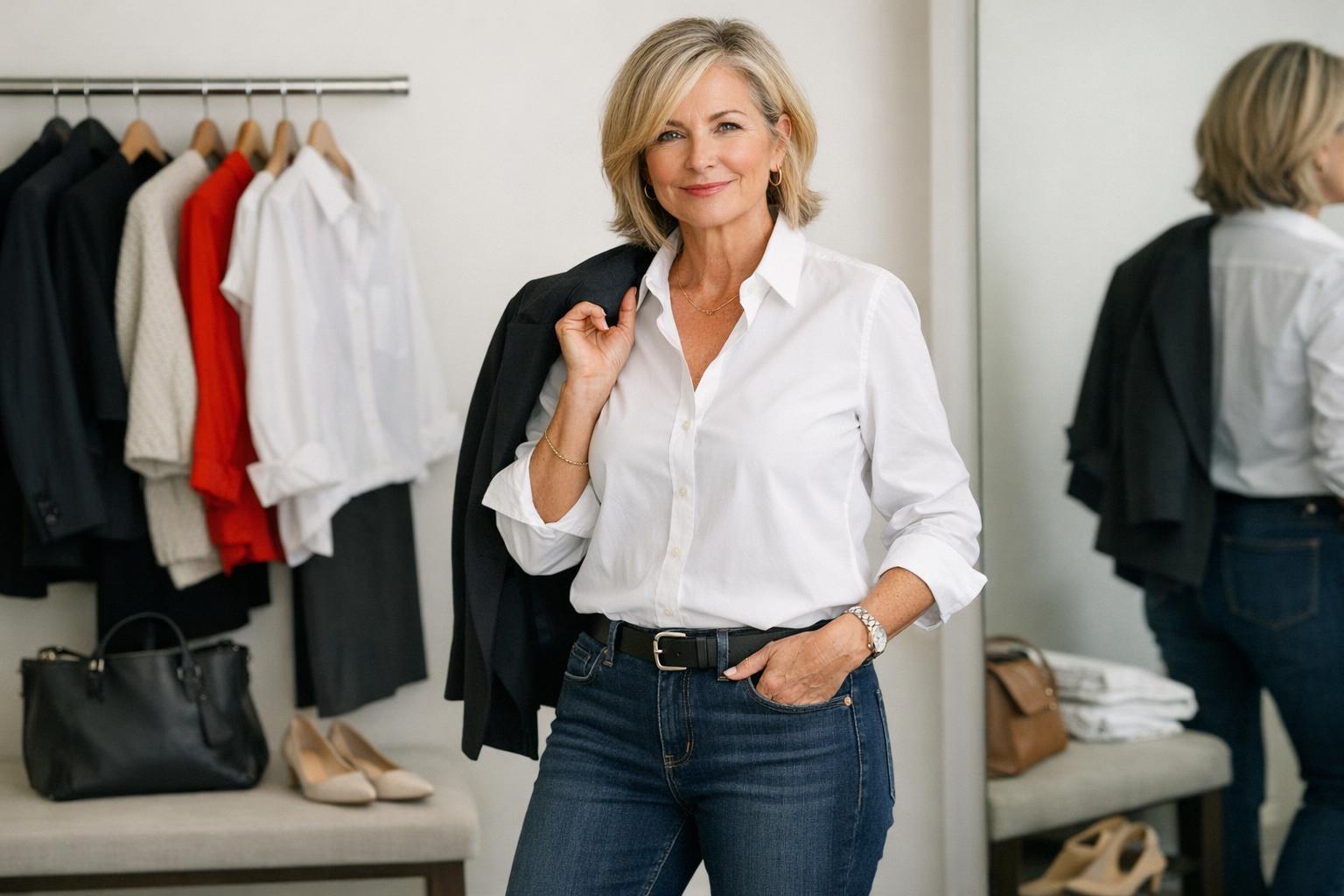
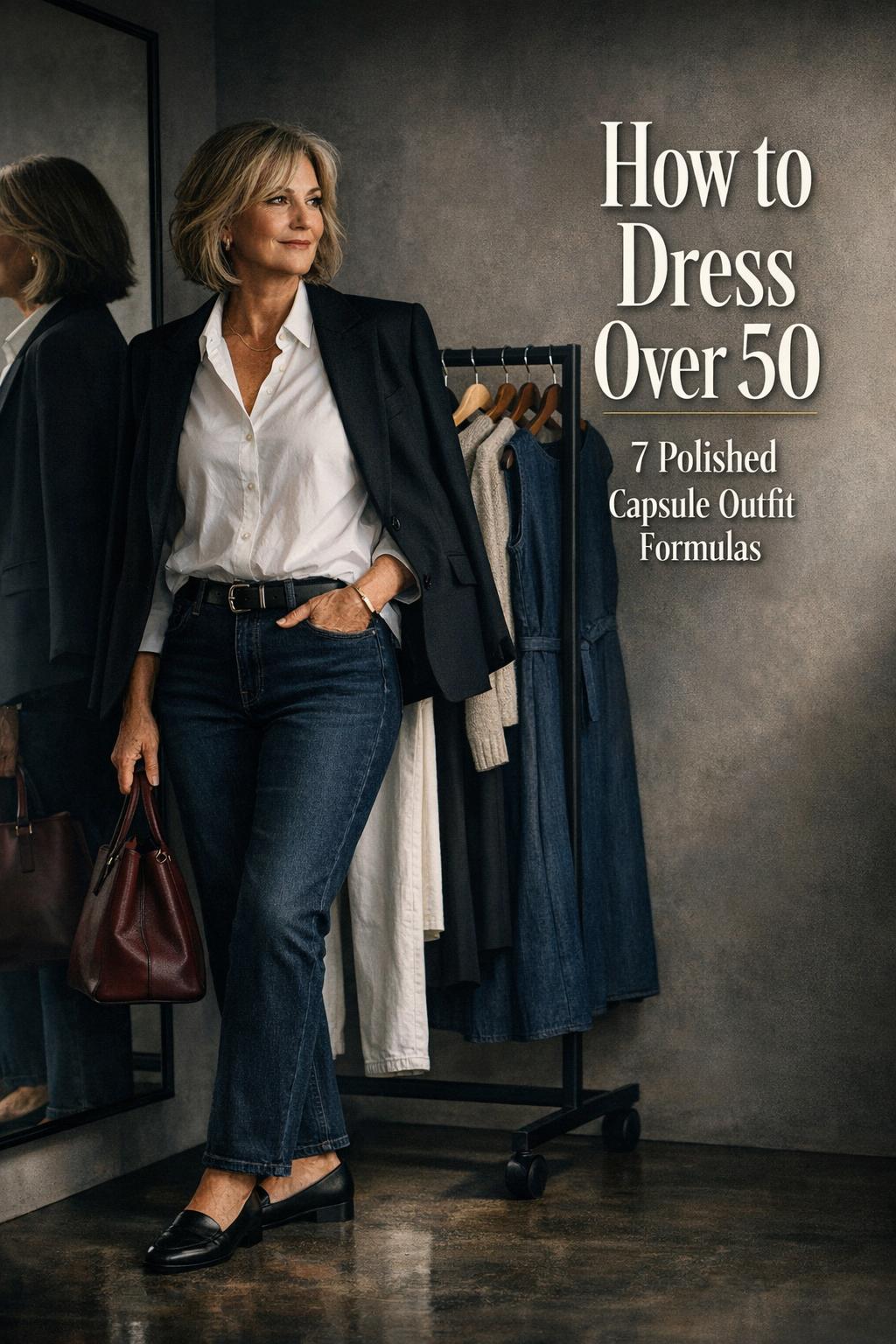
A crisp white shirt is a standout staple in many over-50 fashion guides because it instantly signals polish. It works under a blazer, layered with sweaters, paired with dark denim, or styled with tailored pants for a clean, confident look. The key is fit: it should skim the body comfortably, with buttons that lie flat.
Tips: If a white shirt feels too formal, treat it as a layering piece. Wear it open over a simple top, or let the collar and cuffs show under a knit for a refined, low-effort finish.
Sweaters and knits (easy sophistication)
Classic sweaters—especially soft, well-made knits—are repeatedly recommended because they photograph well, travel well, and help outfits look finished. A knit can replace a jacket in casual settings, and it’s one of the simplest ways to add texture to a capsule wardrobe.
Try pairing a sweater with white jeans for a bright, clean casual outfit, or layer it over a white shirt for dimension. Keep the overall silhouette intentional: if the top is relaxed, balance it with a more streamlined bottom, and vice versa.
Denim over 50: a simple fitting rubric
Denim is a common focus in dressing-over-50 content because it’s a daily staple, but small fit differences change everything. Dark denim is often recommended as a more polished option, and many guides also highlight white jeans as a modern, fresh alternative. The best jeans are the ones you can wear all day—comfortably—and still feel confident.
- Rise: Choose a rise that feels secure and smooth at the waist when sitting
- Leg shape: Straight, boot-cut, wide-leg, or flared jeans can all work—pick what balances your proportions
- Length: Hem so the break looks intentional with your most-worn shoes
- Wash: Dark denim reads more polished; white jeans look crisp and modern when the fit is right
Tips: If you find a pair that fits everywhere except length, don’t pass on them. Hemming is one of the most common (and most effective) tailoring upgrades, and it can make denim look custom rather than generic.
Great-fitting pants and tailored trousers (your outfit backbone)
Tailored trousers are a central wardrobe staple because they instantly elevate tops you already own. If you want to look sharp without overthinking, build around pants that fit beautifully at the waist and skim through the leg. Once you have one reliable pair, the rest of your closet becomes more wearable—especially when paired with a white shirt, sweater, or blazer.
Consider creating two “default” outfits that always work: trousers + white shirt + blazer for polished days, and dark denim + sweater for relaxed days. This is the capsule advantage: repeatable outfits that still feel like you.
Skirts and dresses (including the midi dress)
Skirts and dresses are often underused in everyday wardrobes, but they can be the easiest way to look pulled together. A midi dress is a strong option because it reads intentional and works across casual and dressier settings with the right shoes and accessories. If you love skirts, a pencil skirt can be a sleek, structured choice that pairs easily with blouses, sweaters, and blazers.
Tips: When choosing dresses and skirts, pay attention to how the fabric moves as you walk and sit. The goal is comfort and confidence—if you’re constantly adjusting, it won’t become a staple.
Outerwear That Elevates Your Look
Outerwear is one of the highest-impact parts of dressing well after 50 because it’s often the first thing people see. A structured layer can make simple pieces—like denim and a top—look instantly intentional. Many wardrobe guides consistently highlight the black blazer because it’s versatile, flattering, and easy to wear across settings.
The black blazer (the polish multiplier)
A black blazer works with dark denim, white jeans, tailored pants, and even a midi dress. Wear it open for a long, clean line, or push up the sleeves slightly if you want a more relaxed feel. The best blazer is the one that fits your shoulders well and allows easy movement.
Jackets and coats (choose the silhouette you’ll repeat)
Beyond the blazer, choose outerwear that matches your real life—commuting, travel, weekends, events—so it gets regular use. The consistent principle is structure and proportion: outerwear should complement your outfit rather than swallow it. If you live in a colder climate, outerwear becomes even more important as a daily uniform piece.
Tips: Try on outerwear with the layers you actually wear. A coat that only fits over a thin top may not work in real life, and a coat that’s too bulky can make your whole outfit feel heavier than you want.
Shoes and Accessories: Practical Style Upgrades
Shoes and accessories can make or break an outfit, especially when your wardrobe is built on classic staples. Comfort matters, but style matters too—your goal is footwear that supports your day while keeping your look current. Many style tips for readers in their 50s emphasize keeping heels to a minimum when comfort is a priority, and using accessories strategically instead.
Comfortable, stylish shoes (focus on stability and versatility)
Choose shoes that align with your routine: walking, errands, work, events, travel. Stability and comfort help you move with confidence, and that confidence reads as style. If you enjoy heels, consider wearing them selectively rather than by default, and build most outfits around shoes you can wear for hours.
Tips: Create a small shoe wardrobe that matches your capsule palette. When your shoes coordinate with your core colors, outfits look more cohesive with less effort.
Accessories that sharpen outfits (without clutter)
Accessories are where personality shines in a capsule wardrobe. Scarves, belts, and jewelry can add polish to simple outfits like a white shirt and jeans or a sweater with tailored pants. Some style advice also encourages embracing personal style choices—like glasses as a signature element—rather than treating them as something to hide.
- A belt that works with jeans and trousers
- One scarf that complements your core neutrals
- Jewelry you’ll actually wear (simple, repeatable pieces)
- A practical everyday bag that fits your lifestyle
The goal is not to “add more,” but to add the right finishing touches that make outfits feel complete.
Style Rules to Break (An Age-Positive Approach)
Many women over 50 have heard rigid “rules” about what they should or shouldn’t wear. But a lot of modern style guidance encourages a more empowering approach: keep what works, drop what doesn’t, and focus on fit, comfort, and personal expression. “Dress your mood” can be more useful than “dress your age,” because it keeps the focus on who you are and how you want to feel.
Replace outdated rules with smarter principles
Instead of defaulting to restrictions, use principles that consistently lead to better outfits: clean lines, good proportions, and a cohesive palette. If you love a bold choice—whether that’s a statement lip, a strong accessory, or a standout piece—use it intentionally with simpler supporting items. The point isn’t to avoid self-expression; it’s to make it look deliberate.
Tips: If you’re trying something new and it feels “too much,” adjust one variable rather than abandoning the idea. Pair a bold piece with dark denim and a white shirt, or ground it with a blazer. Small tweaks often turn “almost” into “exactly right.”
Shopping Smart: Fit, Sizing, and Making the Most of Your Budget
Shopping for fashion over 50 is easier when you know what you’re looking for: staples that integrate into your capsule, pieces that fit your body type, and items you’ll wear repeatedly. Smart shopping also means planning for returns, comparing sizing carefully, and using tailoring as a tool—not a last resort.
How to shop for reliable fits
Reliable fit starts with clarity. Know which silhouettes you prefer (straight or flared jeans, tailored trousers, structured blazer) and shop with those targets. When a piece is close but not perfect, decide whether it’s “tailorable.” Hemming and minor refinements can be worth it; a fundamentally wrong shoulder fit or uncomfortable waistband usually isn’t.
Budget tiers: what to prioritize at any price point
Whether you’re shopping affordably, mid-range, or premium, the priorities stay similar: fit, fabric feel, and versatility. Put your money (and attention) into the items that act as outfit engines—dark denim, great-fitting pants, a black blazer, and tops you can wear on repeat. Save trend experiments for smaller additions that don’t disrupt the capsule.
Tips: Before you buy, ask one question: “Can I style this at least three ways with what I already own?” If the answer is no, it’s probably not a capsule-friendly purchase.
Maintenance and Longevity: Keep Your Wardrobe Fresh
A wardrobe that looks good over time is maintained, not constantly replaced. Regular care, smart storage, and timely repairs keep your favorites in rotation and help your capsule stay consistent season after season. This is especially helpful if you’re building a smaller wardrobe by design.
A simple maintenance routine
- Do a quick seasonal try-on to confirm fit and outfit combinations
- Keep a short tailoring list (hem this, adjust that) and handle it in one batch
- Replace or repair the pieces you wear most often before they look worn out
- Store staples together (blazer, trousers, white shirt) so outfit building is fast
Tips: If you only do one thing, keep your “core uniform” pieces in excellent condition. When dark denim, a white shirt, and a blazer look crisp, everything else in your wardrobe seems more elevated.
Real-World Makeovers: Practical Outfit Formulas You Can Copy
You don’t need a dramatic transformation to see a big improvement in how you dress at 50 and beyond. Most style makeovers come from a few targeted upgrades: better fit, more cohesive color, and finishing touches that look intentional. Use these examples as repeatable templates and adjust them to your taste.
Makeover formula 1: Polished everyday (casual but pulled together)
Start with dark denim that fits comfortably and sits smoothly at the waist. Add a sweater or knit top that drapes well. Finish with a structured layer if needed—your black blazer is ideal for instant polish. This formula works because it blends comfort with clean lines.
Makeover formula 2: Fresh modern casual (bright and crisp)
Pair white jeans with a white shirt or a simple blouse, then add a sweater for texture or a blazer for structure. Keep accessories minimal and cohesive. White jeans are often recommended because they make simple outfits look intentional—especially when the fit is right.
Makeover formula 3: Work-ready structure (confidence on demand)
Use tailored trousers as your base, then add a crisp white shirt and a black blazer. This outfit formula shows why staples matter: it’s repeatable, flattering on many body types, and easy to adjust with shoes and accessories. The key is tailoring—when trousers are hemmed correctly and sleeves hit at the right point, the entire outfit looks elevated.
Makeover formula 4: Event-ready simplicity (minimal effort, maximum impact)
A midi dress can be your go-to when you want to look dressed up without complicated styling. Add a blazer or structured jacket if you want sharper lines, and use one strong accessory to finish. This is a great option when you’re building a smaller wardrobe but still need outfits for dinners, celebrations, or special occasions.
Your 14-Day Implementation Plan (Start Today)
This two-week plan is designed to turn ideas into a wearable wardrobe. It combines try-ons, gap-filling, and tailoring so you can see progress quickly without shopping randomly.
Days 1–3: Closet edit and outfit testing
- Day 1: Try on your most-worn jeans and pants; identify what fits best and why
- Day 2: Build three outfits using only what you own (one casual, one polished, one event-ready)
- Day 3: List gaps in staples (white shirt, dark denim, blazer, tailored trousers, knitwear)
Days 4–7: Shop the foundation (buy fewer, better pieces)
- Day 4: Find or upgrade your white shirt (prioritize fit and versatility)
- Day 5: Focus on dark denim (use the rise/leg/length rubric)
- Day 6: Choose great-fitting pants or tailored trousers you can wear weekly
- Day 7: Try on blazers and pick one that fits well in the shoulders
Days 8–11: Add versatility (layers and one-and-done outfits)
- Day 8: Add a sweater/knit that works with jeans and trousers
- Day 9: Choose a dress option (midi dress is a strong staple)
- Day 10: Add white jeans if they suit your lifestyle
- Day 11: Create a 10-outfit mix-and-match list from your updated closet
Days 12–14: Tailoring and finishing touches
- Day 12: Identify what needs tailoring (hems, sleeves, minor adjustments)
- Day 13: Choose shoes you can wear for hours; keep heel height practical
- Day 14: Select a small accessory set (belt, scarf, jewelry) and finalize your “go-to” outfits
Tips: Take quick photos of your best outfits. You’ll start to see patterns—your best silhouettes, your strongest colors, and the proportions that look most modern on you. That insight makes future shopping far easier.
FAQ
How do I dress stylishly over 50 without looking like I’m trying too hard?
Build outfits around classic staples like a white shirt, dark denim, tailored trousers, and a black blazer, then add one personal element (a scarf, jewelry, or a strong color) to keep the look modern and intentional.
What are the best wardrobe staples for women over 50?
Strong staples include a crisp white shirt, dark denim, white jeans, great-fitting pants or tailored trousers, a black blazer, versatile sweaters/knits, and an easy midi dress, because they mix and match across casual and polished settings.
How should jeans fit after 50?
The best denim over 50 fits comfortably at the waist when sitting, doesn’t pull through the hips or thighs when walking, and has an intentional length (often achieved with hemming); dark washes look especially polished, and flared or straight shapes can balance proportions.
Is a capsule wardrobe realistic if I have a busy lifestyle?
Yes, a capsule wardrobe is designed for busy life because it reduces decision-making and ensures your pieces work together; a practical target is around 30 pieces built from repeatable staples, a few layers, and shoes that match your core colors.
How do I find flattering silhouettes for my body type over 50?
Start by aiming for balanced proportions—use structure on top (like a blazer) to balance fuller hips, choose skimming lines for the midsection if that’s your focus area, and use bottom shapes like straight or flared jeans to create symmetry when shoulders are broader.
What’s the quickest way to look more polished at 50+?
Prioritize fit and tailoring, especially pant hems and sleeve lengths, and lean on a structured layer like a black blazer; these small changes create clean lines that make everyday outfits look intentional.
Do I need to avoid certain “rules” about dressing my age?
You don’t need rigid age-based rules; a better approach is age-positive styling focused on comfort, fit, and self-expression, using classic foundations and adjusting proportions and accessories so your choices look deliberate rather than restricted.
How can I upgrade my wardrobe on a budget?
Buy fewer, more versatile staples that you can style at least three ways, plan for returns so you don’t keep “almost right” items, and use tailoring strategically because a hemmed pant or adjusted sleeve can make affordable pieces look significantly more elevated.