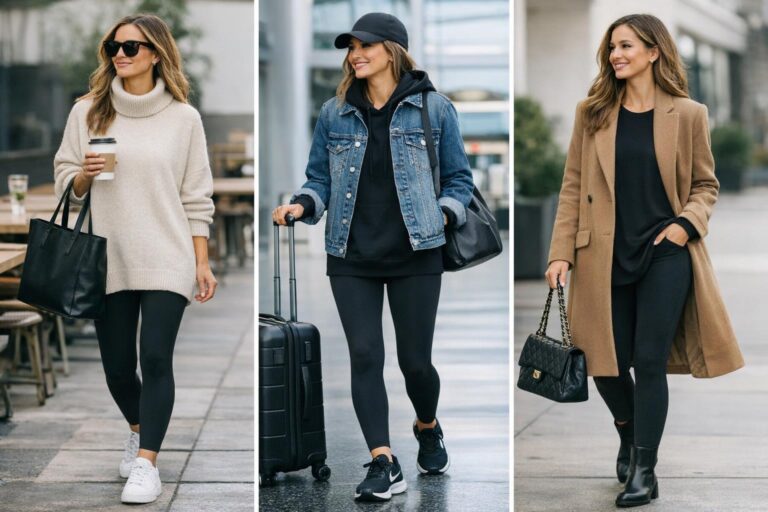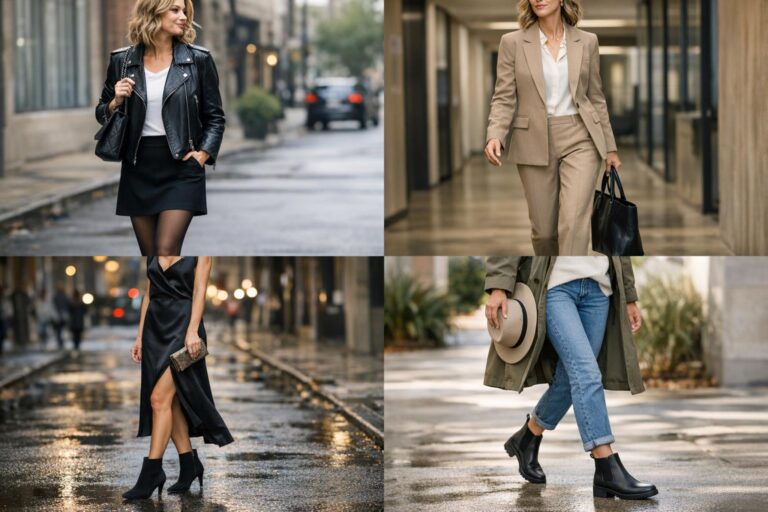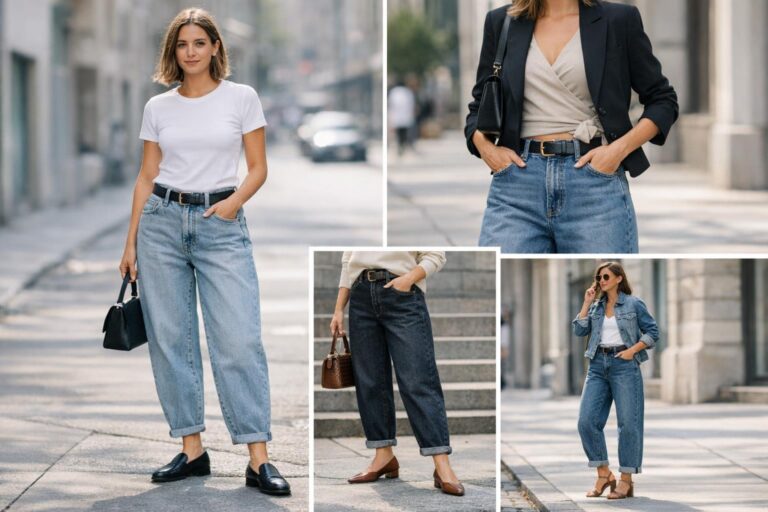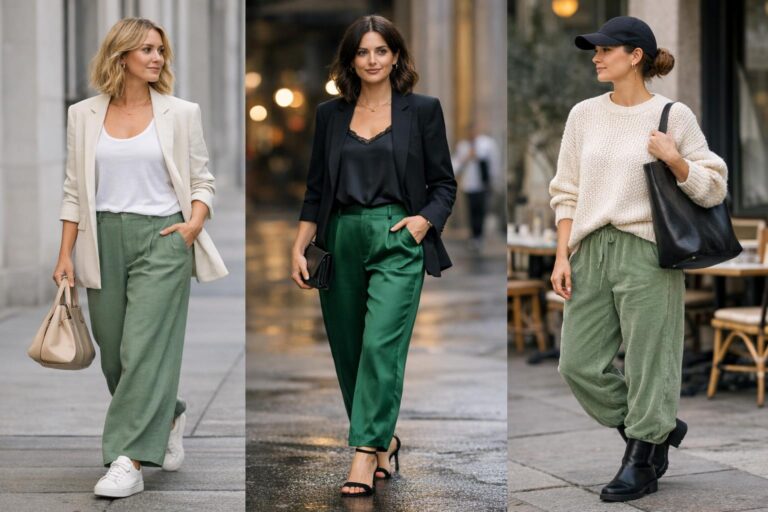
What to Wear: Clothing Hacks Fashion Tips and Tricks
A closet rarely fails all at once. The real problem is more specific: a shirt collar collapses before a meeting, a knit starts pilling just as the outfit needs to look polished, a hem sits awkwardly, or an otherwise good outfit feels flat because the proportions are slightly off. That is exactly where clothing hacks fashion tips and tricks become useful—not as gimmicks, but as practical tools for making everyday clothes work harder.
This kind of styling challenge is difficult because it sits at the intersection of appearance, comfort, budget, and speed. Most people do not need an entirely new wardrobe. They need better wardrobe maintenance, smarter layering, a few reliable tools like fashion tape or a lint remover, and a clearer understanding of why certain adjustments improve silhouette balance. The most effective solutions are often small, immediate, and repeatable.
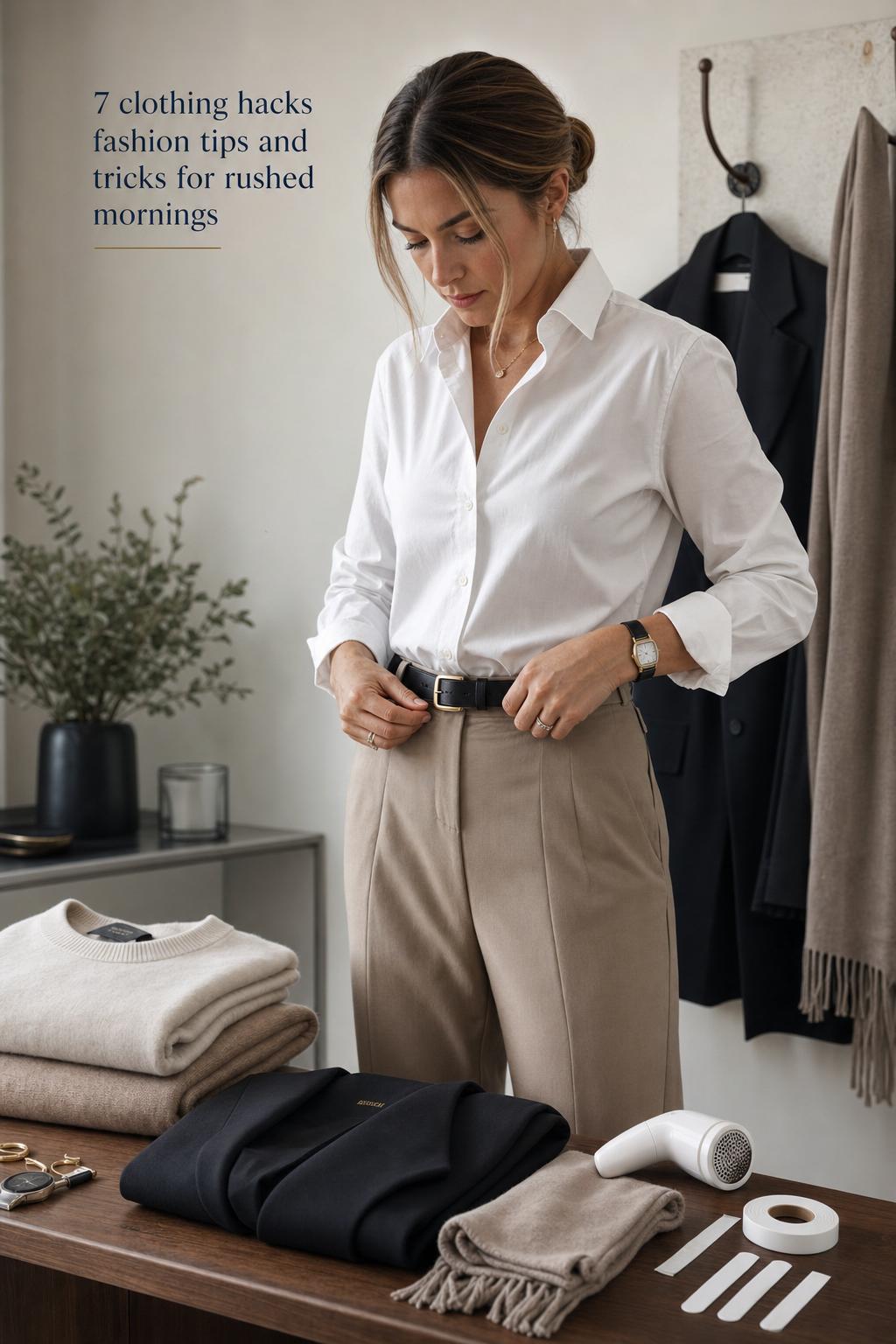
This guide focuses on those solutions. It breaks down the logic behind fit, layering, accessories, garment care, and budget-friendly styling, then translates that logic into realistic outfit ideas for workdays, weekends, and quick polished looks. The goal is simple: solve common clothing problems with methods that are easy to apply and useful in real life.
Why clothing hacks work in real wardrobes
The strongest fashion hacks are grounded in three principles: proportion, fabric behavior, and visual focus. Proportion affects how balanced an outfit appears. Fabric behavior determines whether a garment skims, clings, wrinkles, or collapses. Visual focus directs the eye, which is why belts, scarves, statement jewelry, and color coordination can make an outfit feel intentional even when the pieces are simple.
Found the dress? Keep the rest in one place.
Zarellea brings guest details, vendors, timelines, and every next step together — so your wedding plan feels as good as your look.
This is also why two people can wear similar wardrobe staples and get very different results. One look appears polished because the silhouette is controlled, the layers create clean vertical lines, and the accessories act as visual anchors. The other may feel unfinished because the hem, collar, texture, or fit interrupts that balance. Small adjustments—adding collar stays, using fashion tape, removing lint, refining a layer, or repositioning a belt—often create the difference.
In practical terms, clothing hacks solve four recurring problems: wardrobe emergencies, poor fit, lack of outfit variety, and the need to look expensive on a budget. That is why the top-performing style advice in the U.S. market consistently centers on quick fixes, maintenance tools, layering tricks, upcycling, and affordable styling rather than on trend-heavy shopping lists.
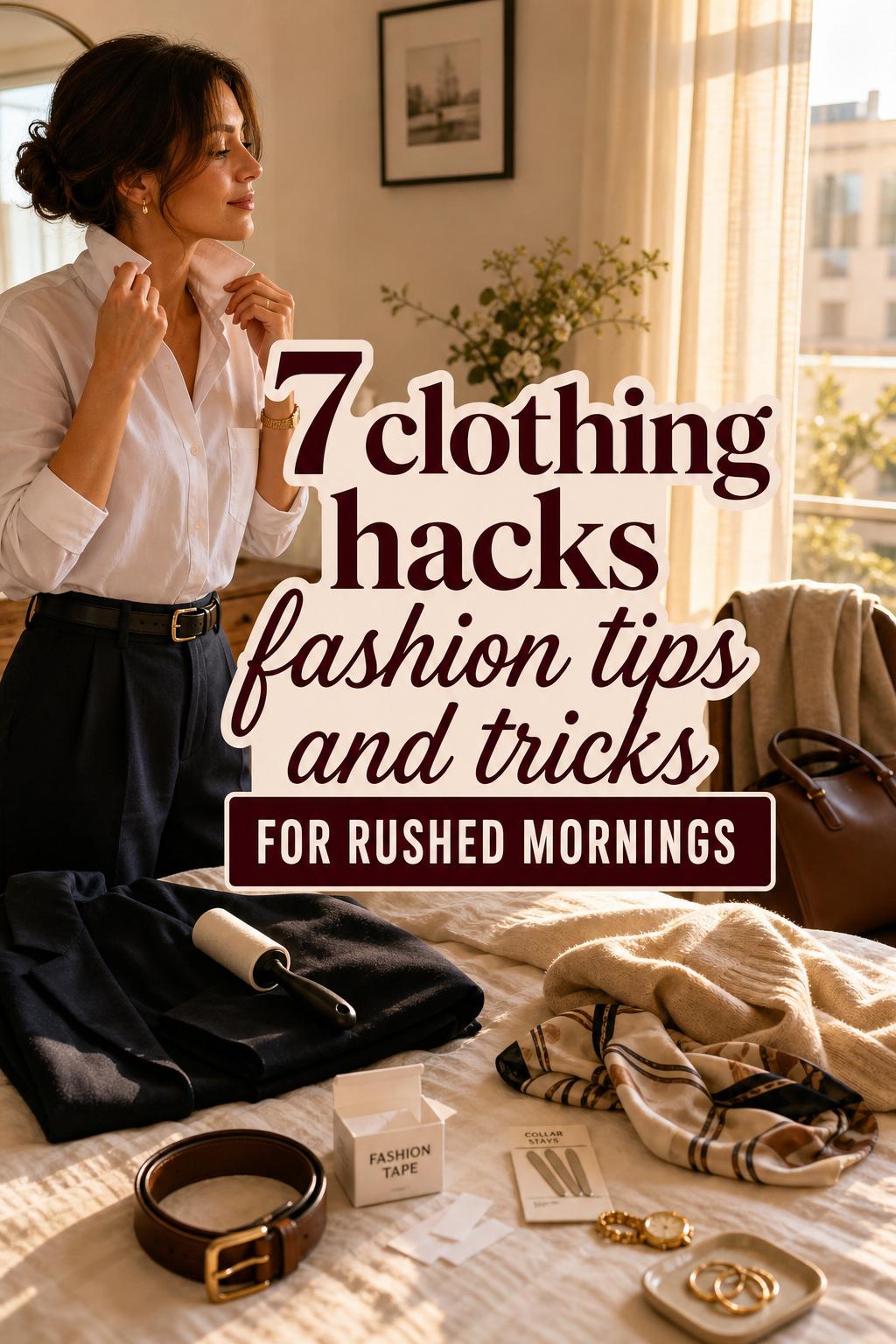
The styling challenge behind most outfit problems
Many daily outfit frustrations are not caused by bad taste. They come from conflicting demands. Clothes need to look good, feel comfortable, survive a long day, and adapt to changing conditions. A workday outfit may need to move from commute to office to dinner. A weekend look may need comfort without appearing careless. Seasonal transitions complicate this further because layering pieces can either refine the silhouette or overwhelm it.
Weather is part of the issue, but so are maintenance habits and time pressure. A beautiful outfit loses impact if dark fabric is covered in lint, a button gaps, or a knit is visibly worn. Practicality matters too. If a styling trick makes an outfit impossible to move in or maintain, it stops being useful. The best wardrobe hacks improve the appearance of clothes while preserving function.
This is why body confidence and fit psychology matter. Readers often search for silhouette hacks, layering tricks, and ways to look leaner not because they want complicated rules, but because they want clothes to feel more cooperative. The answer is usually not restriction. It is better outfit composition: cleaner lines, more strategic layering, and accessories that structure the look.
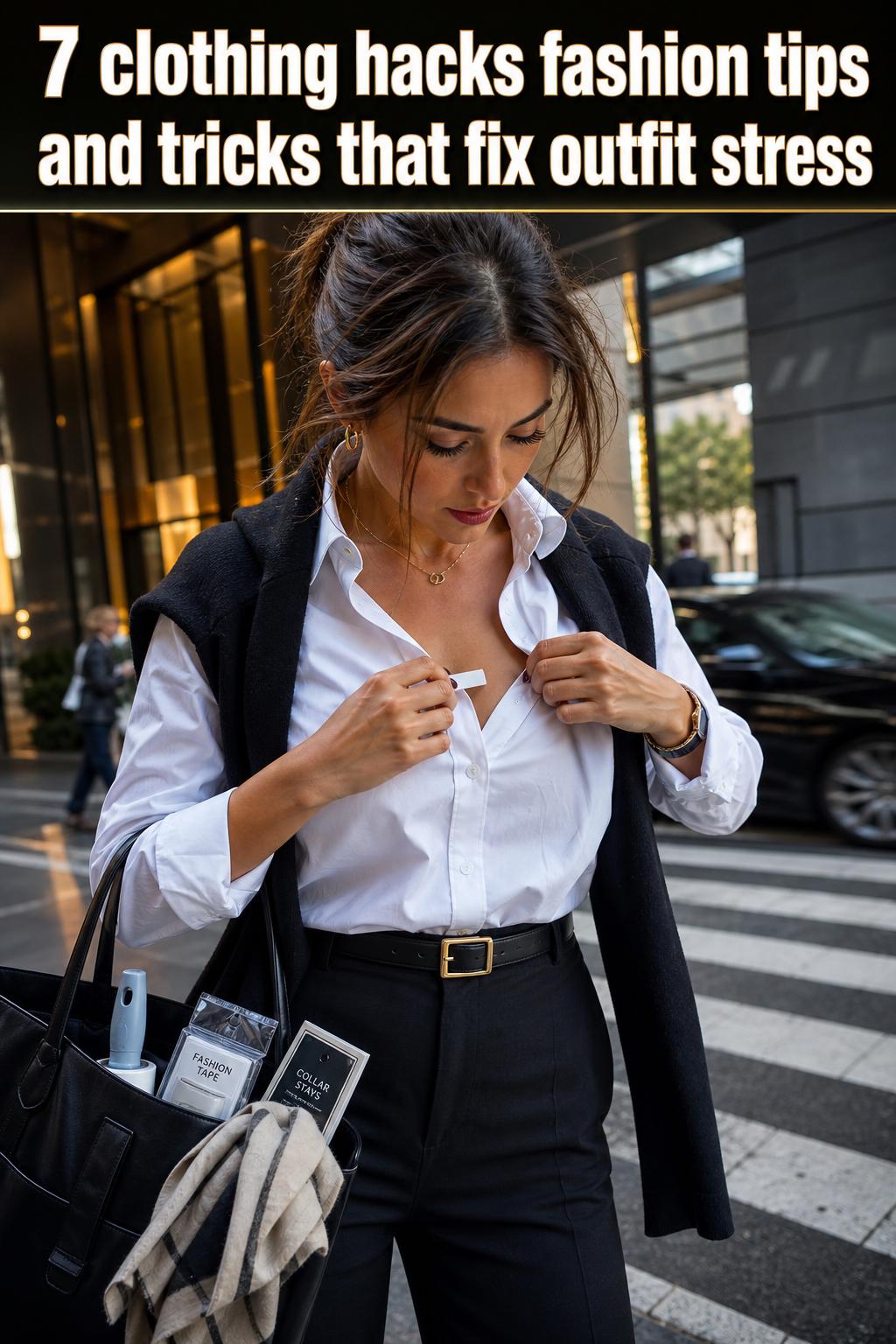
Key dressing principles that make hacks effective
Start with silhouette before detail
A strong outfit reads well from a distance first. Before focusing on jewelry, sunglasses, or a scarf transformation, assess silhouette. Does the outfit have shape? Is the top volume balanced by the lower half? Does layering elongate or cut the frame? A belt can define the waist, but only if the surrounding proportions support it. A layering piece can create polish, but only if it does not bunch or add unnecessary bulk.
Use texture and maintenance as style tools
Garment care is often framed as upkeep, but it is also styling. A lint roller, fabric shaver, or pill remover improves texture clarity, which makes clothes look newer and more intentional. This is especially important in budget fashion hacks, where a simple piece can look far more refined when the surface is smooth and clean. Wardrobe maintenance is not separate from style; it supports the final impression.
Build around versatile pieces and adaptable layers
Layering pieces, scarves, belts, and staple garments outperform novelty items because they can shift the visual message of an outfit quickly. A scarf can transform neckline focus. A belt can create structure. A clean outer layer can sharpen casual basics. Capsule wardrobe logic works here because repeated wear becomes easier when pieces transition across workwear, weekend outfits, and evening looks.
Keep solutions fast enough to use repeatedly
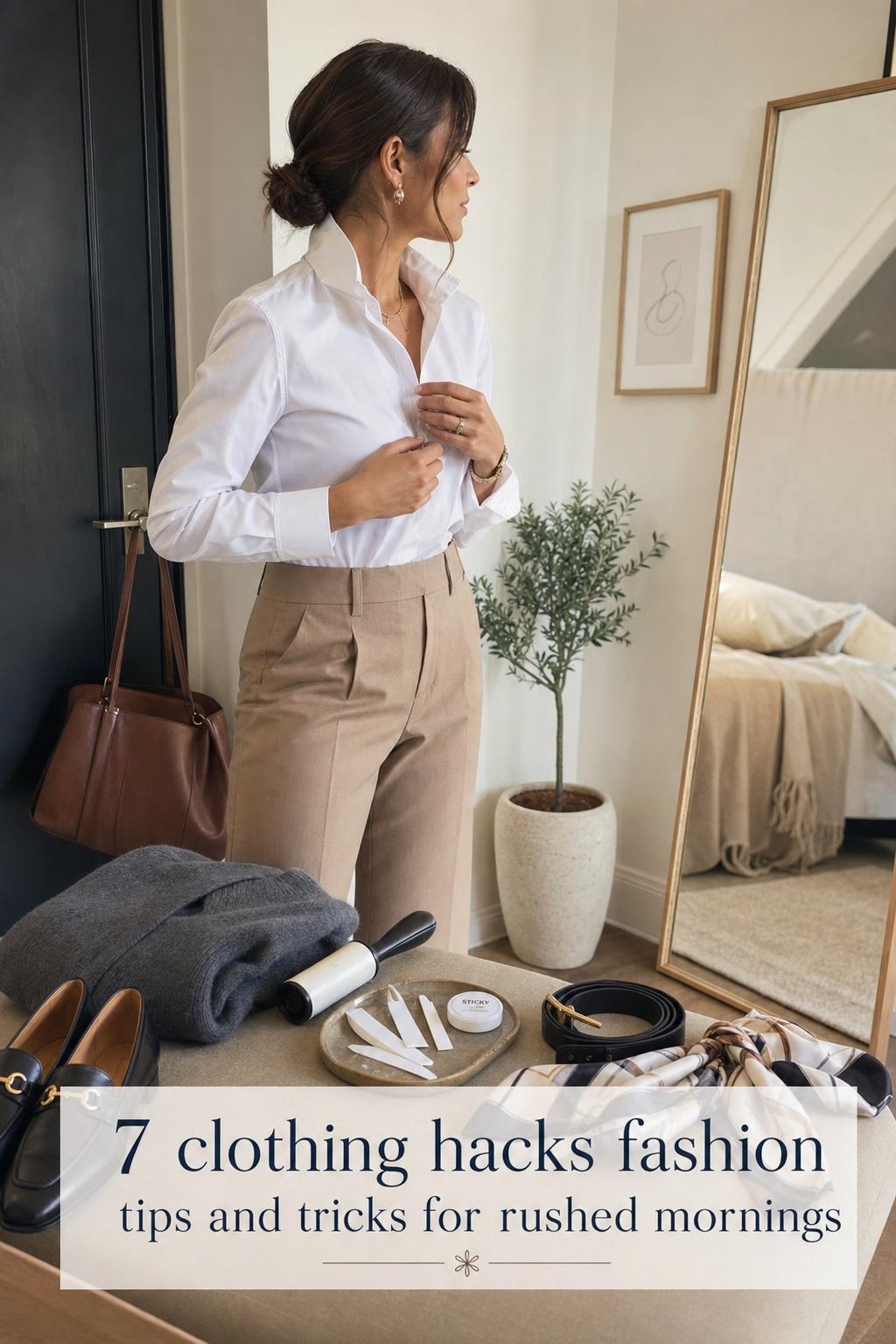
The most useful style tips survive real life. Safety pins, a mini sewing kit, fashion tape, collar stays, shirt stays, fabric scissors, and a lint remover are effective because they solve specific problems quickly. They are not dramatic transformations. They are low-friction tools that prevent distraction and preserve polish.
The wardrobe toolkit that solves most emergencies
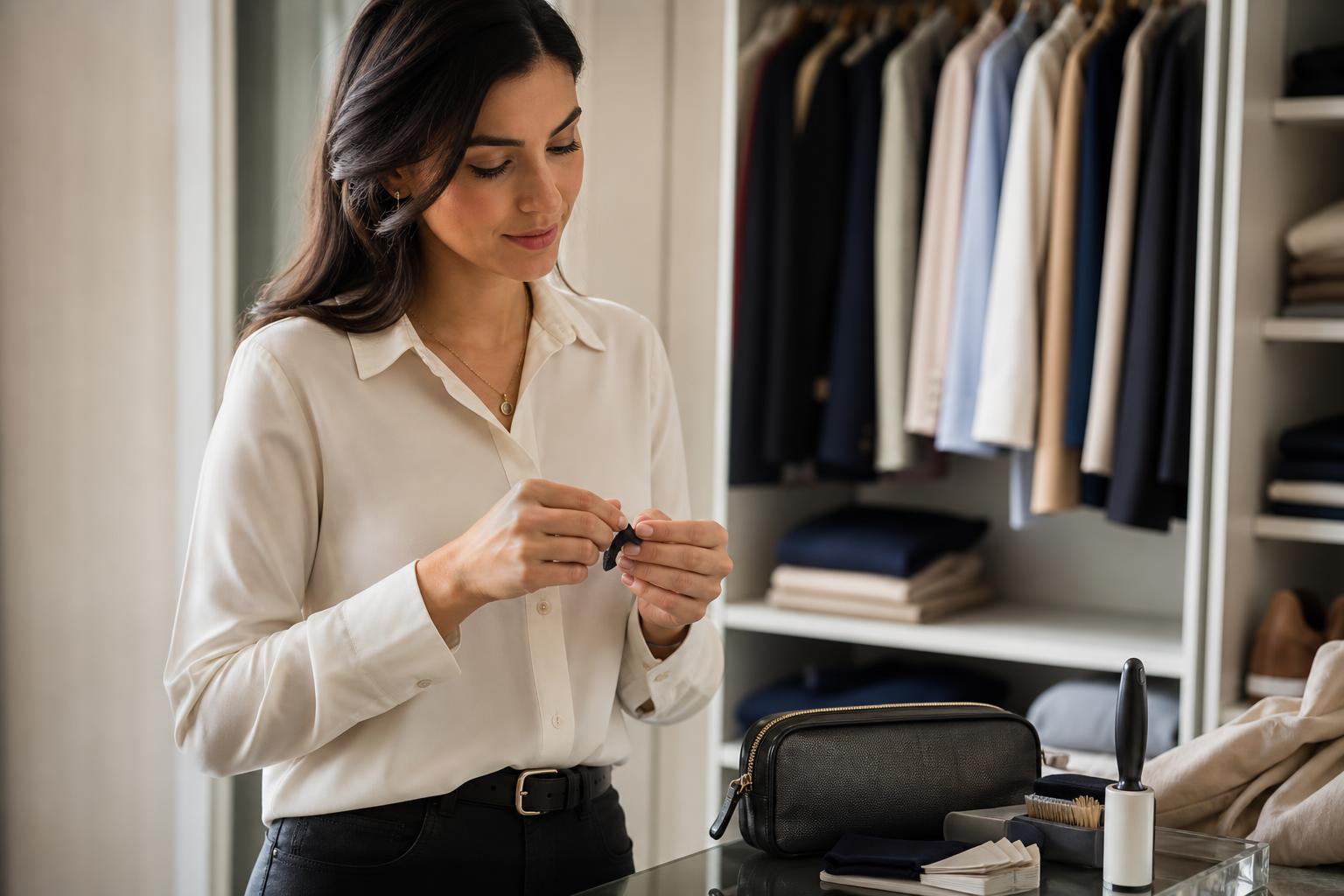
Everyday outfit problems become easier to manage when the right tools are close at hand. A wardrobe toolkit supports quick fixes, fit refinement, and garment care without requiring major alterations each time.
- Fashion tape for securing necklines, smoothing gaps, and stabilizing problem areas
- Safety pins for temporary fixes during wardrobe emergencies
- Mini sewing kit for loose buttons and basic repair
- Lint roller or lint remover for dark fabrics and polished finishing
- Fabric shaver or pill remover for knitwear maintenance
- Collar stays for cleaner shirt structure
- Shirt stays for a neater tucked-in appearance in men’s styling
- Fabric scissors for small clean-up tasks and simple at-home adjustments
These products appear repeatedly because they address common points of failure: collapsing collars, shifting fabric, visible wear, and unfinished lines. They also support different style categories. Fox News and Entrepreneur’s Joint emphasize quick appearance improvements; Lifehack.org leans into cost-saving repair and maintenance; RealMenRealStyle focuses on shirt structure and grooming-oriented garment care. The common thread is practical control.
For U.S.-based shoppers, these tools are easy to source through drugstores, craft stores, or general retailers. The important part is not where they are purchased, but keeping them accessible enough to use before leaving the house or while traveling between settings.
Core wardrobe fixes that create immediate polish
Fabric and fit fixes
Fit problems are often minor but visually disruptive. A gaping button placket, slipping hem, curling collar, or uneven drape can make a good outfit feel unreliable. Fashion tape and a mini sewing kit handle many of these issues quickly. Collar stays bring order to shirts that otherwise appear soft or rumpled. For men’s fashion, shirt stays support a sharper tucked silhouette and reduce bunching through the torso.
These adjustments matter because they restore line. Clean lines communicate intention. Once a garment sits correctly, the rest of the styling becomes easier because belts, scarves, jackets, and jewelry no longer need to compensate for a structural problem.
Accessory upgrades that change the outfit composition
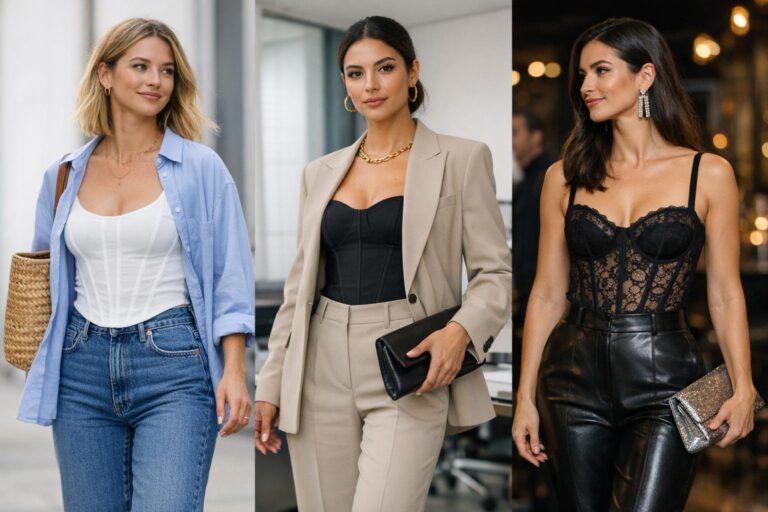
Accessories are the fastest route to outfit variation. Scarves, belts, statement jewelry, sunglasses, and other affordable accessories repeatedly appear in style coverage because they alter focus without requiring a full outfit change. A scarf transformation can shift a basic top toward a more styled finish. A belt creates a visual break that can improve proportion play. Satin fabrics and polished accessories can make everyday pieces feel more elevated.
Who What Wear and Aza Fashions both lean into this idea from an editorial perspective: inexpensive styling hacks often work because they create the impression of deliberateness. The accessory becomes the visual anchor, which helps even simple pieces read as composed rather than plain.
Garment care as a front-facing style decision
Pilling, lint, and visible wear do more damage to an outfit than many people realize. A knit with a beautiful silhouette can still look tired if the surface is rough. A dark layer can lose sharpness immediately if it attracts lint. Maintenance tools solve this quietly but effectively. A lint roller, pill remover, or fabric shaver does not change the garment itself, but it restores clarity and finish.
This is also where upcycling and repair become useful. If a piece still fits the wardrobe but shows wear, small interventions can extend its life. That is one reason clothing hacks that save money continue to resonate: they reduce replacement pressure while keeping wardrobe staples functional.
Layering and proportion: the logic behind a more flattering outfit
Layering is one of the most powerful styling tools because it changes length, depth, and balance at the same time. It can also create problems when layers are added without intention. The goal is not simply to wear more pieces. The goal is to create a cleaner silhouette, better seasonality, and stronger visual flow.
How layering changes body perception
Silhouette hacks often center on elongation and balance. Long lines can make an outfit feel streamlined. Strategic layering pieces can define shape without overfitting the body. Belts can emphasize structure, while scarves can draw the eye vertically or toward the face. These are the same principles behind many “look leaner” articles: not drastic transformation, but visual direction.
Layering also helps during seasonal transitions. A capsule wardrobe works because each added piece has a clear function. It may provide warmth, create contrast, sharpen the outline, or bridge the gap between casual and polished. If a layer does none of those things, it often becomes visual clutter.
Color and contrast as practical styling tools
Color coordination matters because it supports the shape of the outfit. Tonal layering feels smoother because the eye moves across similar shades without abrupt interruption. Contrast can work well too, but it should be placed deliberately. A belt, scarf, or accessory can create controlled contrast, while too many competing focal points can fragment the outfit composition.
This is especially useful in affordable styling. A restrained palette often makes budget-friendly pieces look more considered. The outfit appears stronger not because the items are expensive, but because the visual logic is coherent.
Outfit solution: the polished workday fix
This outfit solves a common problem: needing to look sharp quickly when time is limited and the wardrobe is built from practical staples rather than statement purchases.
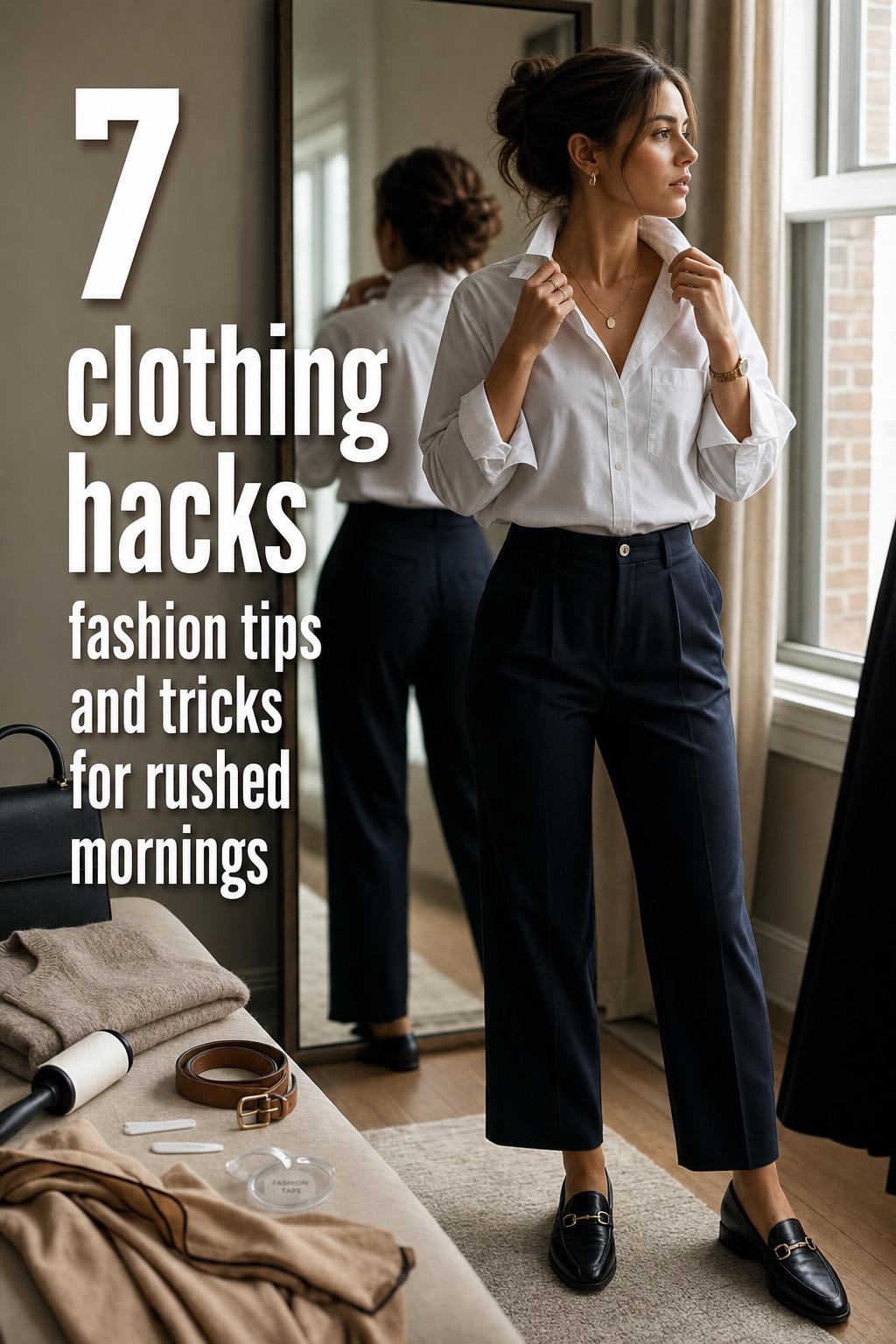
Build the look around a clean shirt with collar stays if needed, a structured bottom, and a belt that defines the center of the outfit. Add a light layering piece to create vertical structure. Finish with a lint-rolled surface and, if necessary, fashion tape to keep the neckline or button area secure. The result is polished because the details remove distraction.
Why this works: the shirt provides clarity, the belt creates proportion, and the layer adds authority without overcomplication. This is a strong example of quick fashion hacks to look polished in minutes. It is especially effective when moving between meetings, office settings, and after-work plans because the base remains simple and adaptable.
Style breakdown
- Use collar stays to sharpen the neckline and maintain structure
- Apply fashion tape if fabric shifts or gaps
- Add a belt to create a visual anchor
- Remove lint and pilling before leaving home
- Keep accessories controlled rather than excessive
Outfit solution: the budget-friendly elevated everyday look
This solution addresses another familiar challenge: making simple pieces feel refined without buying an entirely new outfit. The formula relies on affordable accessories, tonal layering, and texture management.
Start with wardrobe staples that already fit reasonably well. Add a scarf or belt to create shape and focus. If the fabrics are basic, keep them pristine with a lint remover or fabric shaver so the finish looks intentional. Satin fabrics or polished accessories can be added sparingly to create contrast and move the look toward affordable luxury.
Why this works: one accessory changes the outfit’s focal point, while maintenance keeps the base from looking tired. This is the core logic behind many cheap styling hacks and budget fashion hacks. The goal is not to disguise inexpensive pieces, but to style them with enough control that the whole composition looks deliberate.
Best use cases
This outfit structure is ideal for errands, informal meetings, casual lunches, and days when you want comfort without losing shape. It also adapts well to a capsule wardrobe because the same scarf, belt, or jewelry can be rotated across multiple looks.
Outfit solution: the quick weekend reset
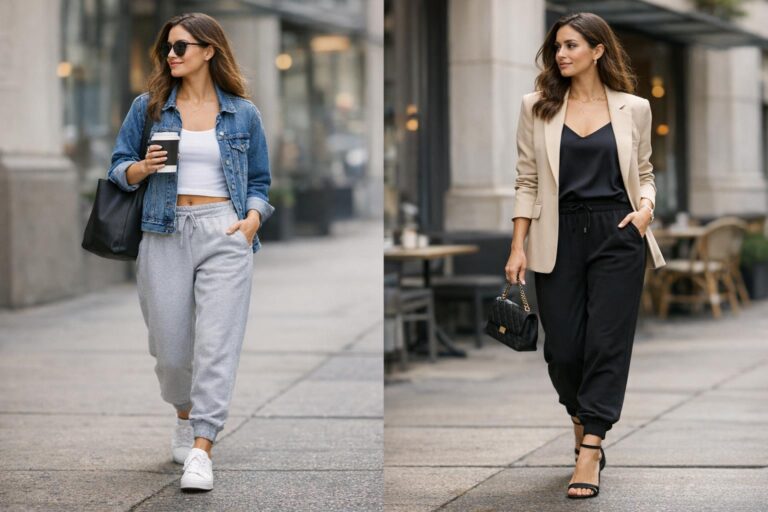
Weekend dressing often swings too far in one of two directions: overly casual with no visual structure, or overstyled in a way that feels impractical. A stronger solution is a relaxed base sharpened by one or two clear interventions.
Choose comfortable core pieces, then add one accessory-based upgrade such as a scarf transformation or belt. Use layering pieces to refine shape rather than hide it. If the fabric is soft or prone to collapse, maintenance becomes even more important because unstructured clothes reveal wear more quickly. A quick pass with a lint roller or pill remover often does more than adding another accessory.
Why this works: the outfit remains easy to move in, but the visual anchor prevents it from looking accidental. This is where wardrobe hacks and style hacks overlap most clearly. Function and polish are not competing goals when the composition is controlled.
Outfit solution: a men’s styling approach that looks sharper fast
Men’s fashion hacks tend to focus less on decorative change and more on structure, grooming, and garment behavior. That makes them particularly useful for readers who want reliable polish with minimal experimentation.
A strong men’s outfit fix begins with shirt control. Collar stays improve the line near the face, which is where attention naturally falls. Shirt stays keep the tuck neater over time, especially through sitting and movement. Simple ironing tricks and garment care prevent shirts, collars, and shoes from undermining the overall look. Layering can then be added without sacrificing clarity.
Why this works: it treats fit optimization as the foundation of style. RealMenRealStyle and other men-focused style sources center this because male wardrobes often depend on a smaller range of silhouettes. When the shirt, collar, and tuck are right, the outfit reads as more intentional immediately.
Where proportion matters most in men’s looks
Focus on the collar, shoulder line, and torso. If these areas are clean, accessories and layers have a stronger base to work from. If they are disordered, even good pieces can look less refined. This is also why maintenance tools belong in men’s wardrobes just as much as in women’s styling.
Tailoring, alterations, and why the strongest hack is sometimes professional
Many quick fixes are temporary by design. They solve an immediate problem and help a garment perform better in the moment. But some recurring frustrations point to a larger issue: the piece needs alteration. This is one of the most underused but practical fashion tips available.
Tailoring and alteration services belong in the same conversation as fashion tape and safety pins because they address fit at the source. If a hem repeatedly falls awkwardly, a waist lacks definition, or proportions consistently feel off, professional alteration can extend the life of the garment and improve repeat wear. In that sense, tailoring is both a style move and a budget strategy.
This matters even more in major fashion-oriented environments such as New York, Los Angeles, and Chicago, where personal style often depends on nuanced fit rather than obvious novelty. Regional fashion hubs are not important here because they dictate one correct aesthetic, but because they reinforce a broader truth: polished dressing often comes down to proportion and finish.
Sustainability, repair culture, and the long life of good wardrobe staples
Repair, resale, donation-oriented thinking, and upcycling are practical extensions of clothing hacks. They are not separate from fashion; they are part of a more efficient wardrobe system. If a piece can be repaired, refreshed, or repurposed, it continues to contribute value.
Lifehack.org’s cost-saving angle points directly to this logic. Upcycling and simple repair reduce waste while giving garments a second useful phase. Broader circular fashion ideas, including repair cafés, upcycle projects, and resale pathways, fit naturally into this approach because they prioritize longevity over constant replacement.
There is also a visual benefit. People who maintain, alter, and rotate their clothes with care often develop a more coherent personal style because they understand what actually works in their wardrobe. That leads to better capsule wardrobe decisions, more consistent seasonal transitions, and fewer impulse purchases that never integrate well.
Practical tips for building faster, more reliable outfits
Once the basics are in place, the next level is consistency. The best outfits usually come from repeated systems rather than daily improvisation.
- Keep a small toolkit in your wardrobe and a pared-down version in your bag for wardrobe emergencies
- Check lint, pilling, and collar shape before adding extra accessories
- Use belts and scarves strategically rather than automatically
- Rely on layering pieces that improve proportion, not just warmth
- Rotate a few affordable accessories across multiple staple outfits
- Treat garment care as part of dressing, not a separate task
- Consider alterations when the same fit problem appears repeatedly
Tip: if an outfit feels off, do not start by replacing the whole look. First assess the structure. Ask whether the issue is fit, fabric condition, lack of a focal point, or too many competing elements. In many cases, the solution is a lint remover, a belt, a cleaner layer, or a quick tape adjustment rather than a complete change.
Tip: use accessories to direct attention, not overwhelm the outfit. Statement jewelry, scarves, and sunglasses are most effective when the base is stable. If the outfit already includes strong contrast or layered volume, one accessory may be enough.
Common mistakes that make outfits feel harder than they need to
Using hacks to mask a poor fit instead of addressing it
Temporary fixes are valuable, but they do not replace fit. If a garment constantly needs pinning, taping, or adjustment, tailoring may be the smarter solution. Repeated patchwork can create more stress than polish.
Over-layering without a silhouette plan
Layering should improve shape, not bury it. Too many pieces can interrupt vertical lines and create bulk in the wrong places. Prioritize layers that add structure or elongation rather than layers added out of habit.
Ignoring fabric maintenance
Readers often focus on styling details while overlooking wear. Pilling, lint, and rough texture make even a good outfit look less intentional. Maintenance is one of the highest-impact, lowest-cost changes available.
Adding accessories without creating visual hierarchy
Scarves, belts, statement jewelry, and sunglasses all compete for attention. Use them with hierarchy. Decide what the focal point should be, then support it. An outfit with one clear anchor usually reads stronger than one with four competing accents.
A smarter way to approach everyday style
The most useful wardrobe hacks are not dramatic transformations. They are systems for keeping clothes functional, flattering, and adaptable. Fashion tape, collar stays, shirt stays, scarves, belts, lint removers, and simple repair tools all matter because they support a larger goal: better outfit composition with less waste and less friction.
Approach styling by sequence. Start with fit. Refine the silhouette through layering and proportion. Improve the surface through garment care. Then add accessories for focus and personality. That order makes clothing hacks, fashion tips, and outfit tricks more effective because each step builds on a stable foundation.
Once that logic becomes familiar, getting dressed becomes simpler. You stop chasing constant novelty and start making better use of what is already in the wardrobe. That is the real value of practical style advice: not just better outfits today, but a more reliable framework for every outfit that follows.
FAQ
How do I choose the right clothing hacks for my body type?
Start with silhouette rather than trends. Choose hacks that improve balance, such as belts for waist definition, layering pieces that create cleaner vertical lines, and scarves that direct attention toward the face. The best approach is to test which adjustments improve proportion and comfort at the same time.
What tools are most useful for quick wardrobe fixes?
The most practical toolkit includes fashion tape, safety pins, a mini sewing kit, a lint roller or lint remover, a fabric shaver or pill remover, collar stays, shirt stays, and fabric scissors. These tools cover the most common issues: shifting fabric, loose buttons, lint, pilling, and lack of structure.
How can I make cheap clothes look more polished?
Focus on garment care, fit, and visual control. Remove lint and pilling, use tonal layering or clean color coordination, and add one strong accessory such as a belt, scarf, or statement jewelry. Affordable styling looks better when the outfit is maintained well and has a clear focal point.
Are fashion tape and safety pins enough for fit problems?
They are effective for temporary wardrobe emergencies, but not for every recurring issue. If a garment repeatedly gaps, pulls, or sits awkwardly, alterations may be the better long-term solution. Quick fixes are best for immediate control, while tailoring addresses the root problem.
What is the easiest way to upgrade an outfit quickly?
Begin with maintenance, then add one intentional styling move. A lint-free surface, a sharpened collar, or a smoother tuck can do more than adding multiple accessories. After that, use a belt, scarf, or polished accessory to create a visual anchor and stronger outfit composition.
How do layering tricks help me look more balanced?
Layering changes the length and structure of an outfit, which affects how the eye reads the body. Well-placed layers can elongate, define, or soften the silhouette depending on where they begin and end. The key is choosing layers that create shape and continuity rather than unnecessary bulk.
Can clothing hacks actually save money?
Yes, especially when they focus on repair, upkeep, and extending garment life. Simple maintenance, upcycling, and small alterations can keep wardrobe staples in circulation longer. That reduces the need to replace pieces prematurely and helps existing clothes perform better.
What are the best fashion hacks for men?
Men’s styling benefits most from structure-focused hacks such as collar stays, shirt stays, ironing tricks, and regular garment care. These improve the shirt line, keep tucked looks sharper, and make simple outfits appear more intentional. In many cases, polish comes from better control rather than more pieces.
How do I maintain garments so they last longer and still look stylish?
Make lint removal, pill removal, and basic repair part of your regular dressing routine. Address small issues before they become visible distractions, and consider alterations when fit problems repeat. Maintenance supports both longevity and style because it preserves the finish that makes clothes look considered.