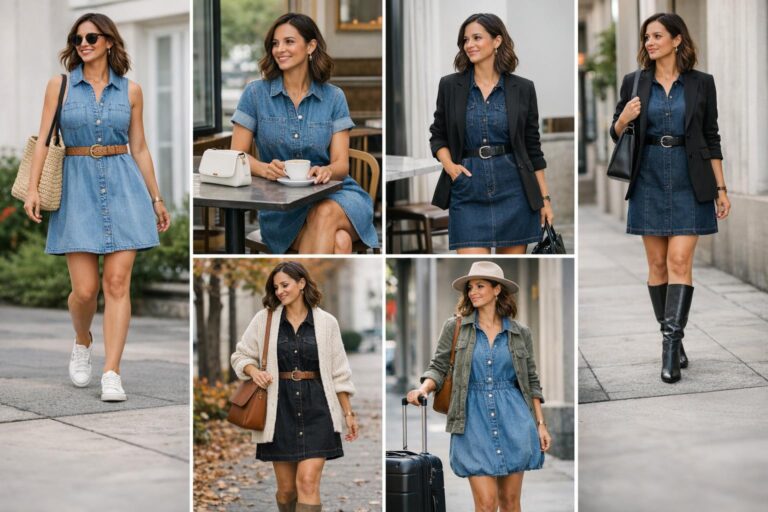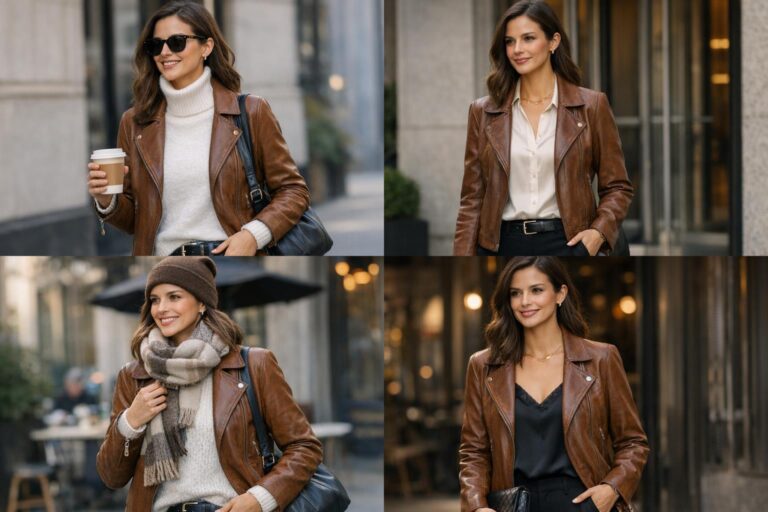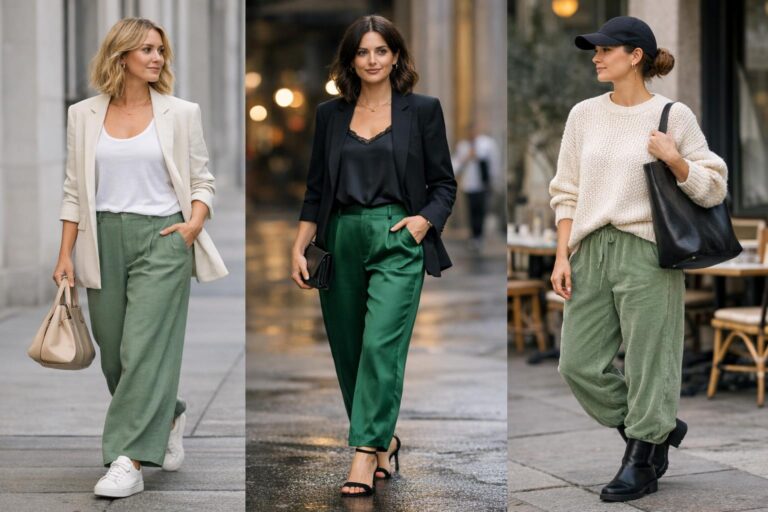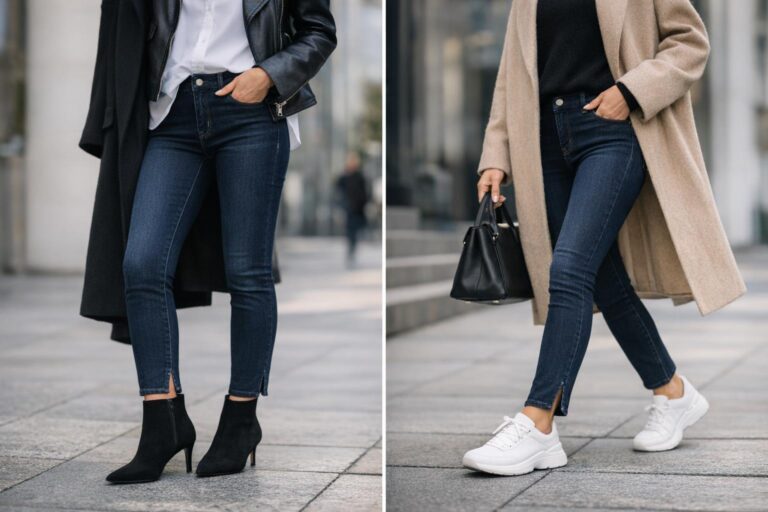

7 Easy Outfit Formulas for Scandi Style Fashion
Scandi Style Fashion: The Ultimate Guide to Nordic Minimalism in 2026
Scandi style fashion is a modern approach to dressing rooted in Nordic minimalism: clean lines, a neutral palette, practical layering, and a strong preference for quality materials over loud logos or overly trend-driven pieces. In the U.S., it resonates because it solves real wardrobe problems—what to wear on repeat, how to look polished without trying too hard, and how to build outfits that work across seasons and settings.
This guide breaks down what Scandi fashion is, the core elements that define it, and how to build a capsule-inspired Scandi wardrobe with outfit formulas you can actually use. You’ll also find a brand spotlight framework, a U.S.-friendly shopping approach, and maintenance tips that support the durability and timelessness at the heart of Scandinavian fashion.
What Is Scandi Style Fashion?
Scandi style fashion (often used interchangeably with Scandi fashion, Scandinavian fashion, or Nordic fashion) is a minimalist, functional way of dressing associated with the Nordic region. It favors timeless silhouettes, understated color, and pieces that can be layered and reworn in multiple combinations—an aesthetic that looks effortless but is usually built on thoughtful wardrobe planning.
At its core, Scandi style is less about chasing constant novelty and more about creating a dependable wardrobe system: neutrals as a foundation, versatile pieces that mix easily, and fabrics chosen for comfort and longevity. The result is a look that reads modern and calm, whether it’s interpreted through Copenhagen street style energy, Stockholm simplicity, or a more outdoors-ready Nordic practicality.
Tip: If you’re new to Scandinavian fashion, start by noticing what repeats in the outfits you already like: straight silhouettes, muted tones, minimal hardware, and layers that feel intentional rather than bulky. Those repeats are your fastest path to a Scandi-style wardrobe that feels personal instead of costume-like.
Core Elements of Scandi Style
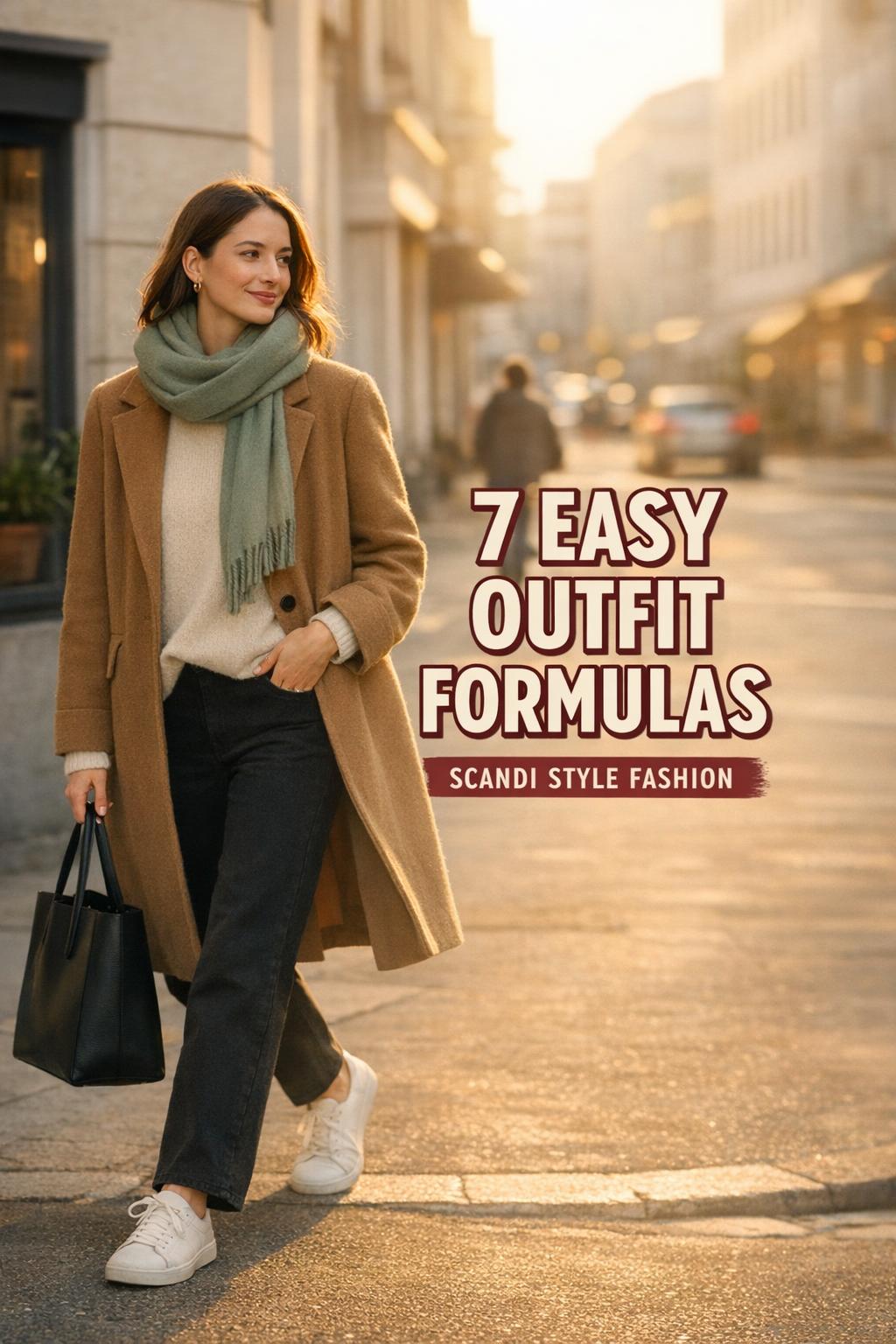
Scandi style isn’t defined by one item; it’s defined by a set of consistent choices. When you focus on those choices, the look becomes easy to recreate with many different budgets and across genders and lifestyles.
Silhouette and Fit
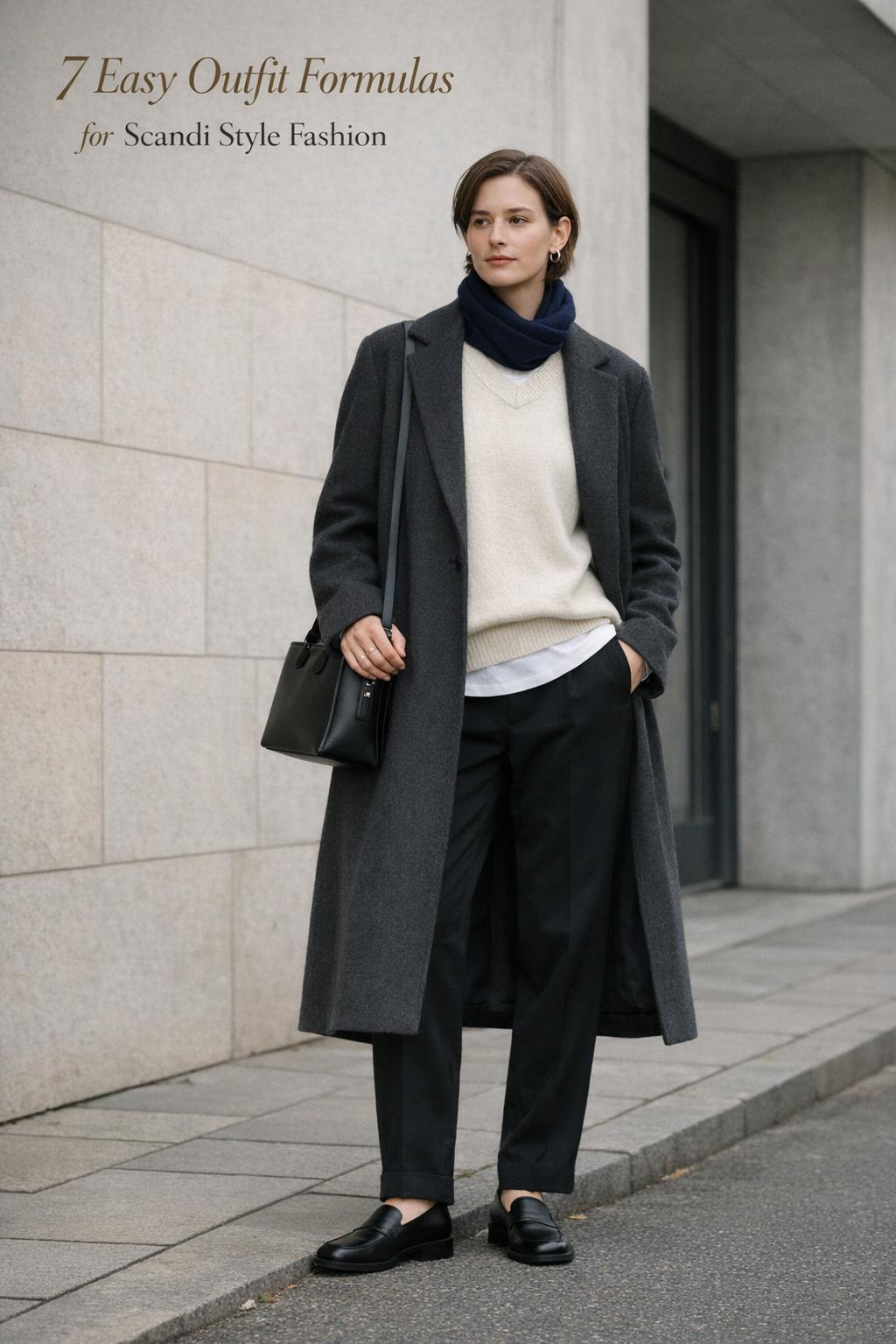
Silhouettes in Scandi style fashion are typically relaxed, straight, or slightly oversized, prioritizing comfort and ease of movement. Instead of tight tailoring or highly structured shapes, you’ll see clean lines and simple forms that sit away from the body without looking sloppy. The goal is to look modern and effortless, not overly styled.
This often translates to straight-leg trousers, relaxed denim, coats with room for layering, and knitwear that drapes rather than clings. If you like a more fitted look, you can still keep it Scandi by choosing streamlined, simple cuts and letting one piece (like outerwear) provide the relaxed proportion.
Color Palette and Materials
A neutral wardrobe is the backbone of Nordic minimalism. Think monochrome and tonal dressing: blacks, whites, grays, creams, and other muted tones that mix together without effort. Color pops can exist, but they’re usually controlled—muted rather than neon, and used strategically so the wardrobe still feels cohesive.
Materials matter just as much as color. Scandinavian fashion typically emphasizes natural fibers and tactile quality: wool, cotton, linen, leather, and elevated denim. Even when blends are used, the intent stays the same—comfort, durability, and a clean finish that looks good in repeat wears.
Layering and Function
Layering is one of the clearest signals of Scandi style, shaped by the need to dress for variable weather while staying polished. Instead of layering for volume, Scandi layering is about versatile pieces that stack cleanly: a tee under a shirt, a knit under a coat, or a lightweight layer that adds warmth without complicating the outfit.
The functional mindset extends beyond weather. A Scandi wardrobe favors items that transition easily between settings—workwear to weekend, travel to everyday, casual to smart casual—without requiring a complete outfit overhaul.
Footwear and Accessories
Footwear in Scandi fashion tends to mirror the clothing: clean lines, minimal branding, and sturdy construction. The same principle applies to accessories—structured bags, simple jewelry, and functional add-ons that elevate an outfit without dominating it.
Tip: If you’re trying to “Scandi-fy” an outfit quickly, focus on footwear and a bag. Minimalist footwear and a structured bag can make basic pieces feel intentionally styled, even when the clothing itself is simple.
How to Build a Scandi Style Wardrobe (Capsule Approach)
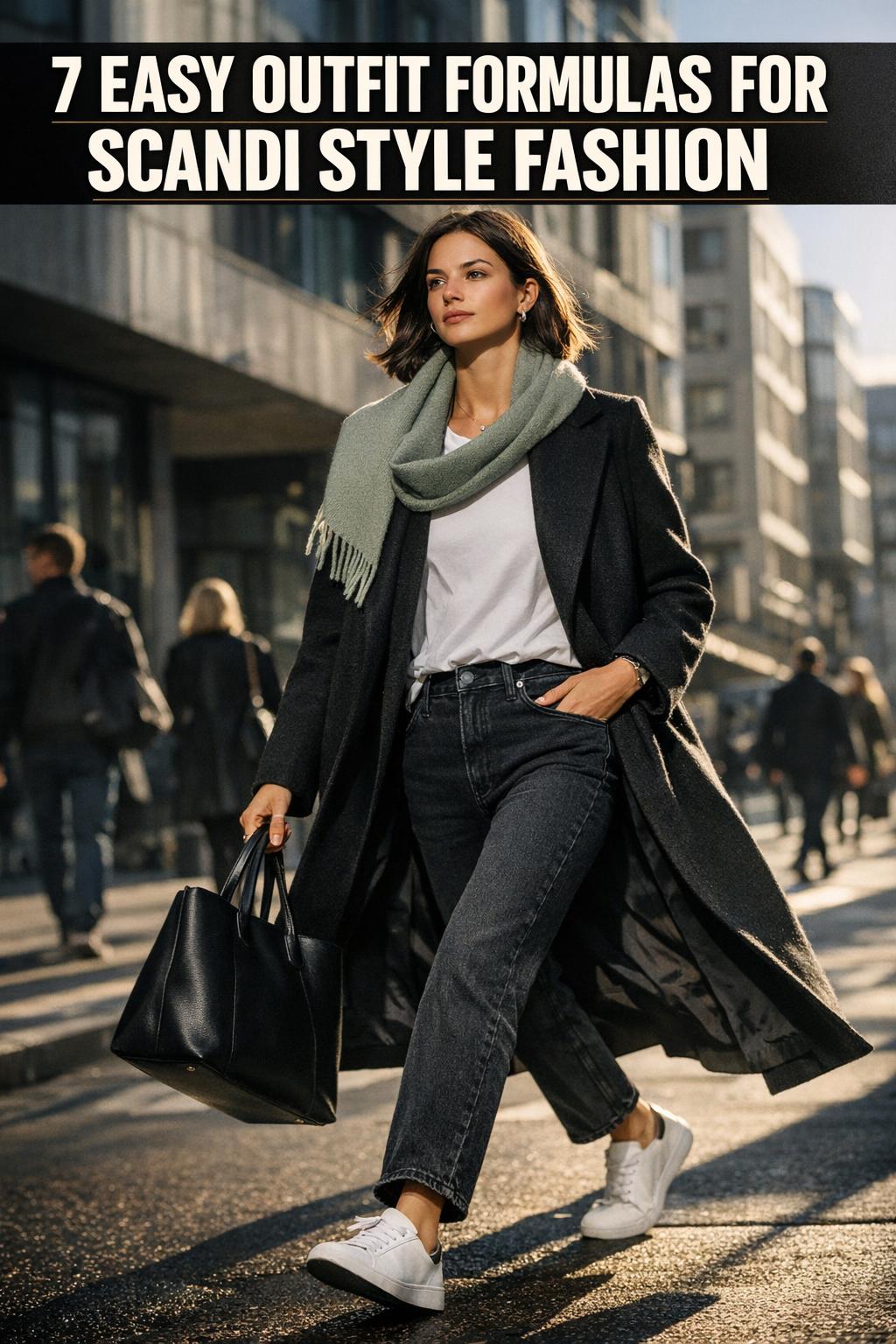
If Scandi style fashion feels “effortless,” it’s often because it’s built like a capsule wardrobe: fewer pieces, better coordination, and repeatable outfit formulas. The capsule approach also aligns with the Scandi emphasis on durability and timelessness—buying fewer items that you can wear more ways.
A practical way to start is to define a baseline capsule, then make seasonal adjustments based on climate and lifestyle. You don’t need to purge everything; you need a core that works together.
Baseline Capsule (Women)
A baseline Scandi capsule for women typically centers on neutrals, simple silhouettes, and layering-friendly basics. Aim for a tight color story—two to three base neutrals—so everything mixes easily, then add one muted accent tone if desired.
- 2–3 neutral tops (tees or long-sleeves) as everyday base layers
- 1–2 shirts (button-up or simple blouse) for smart casual options
- 1–2 knits (lightweight and warmer) for texture and warmth
- 1 straight-leg or relaxed trouser and 1 denim option
- 1 versatile dress or skirt (optional, depending on lifestyle)
- 1 lightweight jacket and 1 coat with room for layering
- 1–2 pairs minimalist shoes (one everyday, one slightly dressier)
- 1 structured bag and a small set of minimal accessories
Tip: When choosing capsule pieces, prioritize “repeatability.” Ask whether you can wear an item at least three different ways across everyday, workwear, and weekend settings. If the answer is no, it may not belong in your Scandi core.
Baseline Capsule (Men)
A baseline Scandi capsule for men follows the same rules: neutral wardrobe staples, clean silhouettes, and dependable layering. The difference is often in how the pieces are styled—more emphasis on straight cuts, structured outerwear, and understated details.
- 2–3 neutral tees or long-sleeves as base layers
- 1–2 shirts for smart casual and layering
- 1–2 knits for texture and warmth
- 1 straight trouser and 1 denim option
- 1 lightweight jacket and 1 coat designed for layering
- 1–2 pairs minimalist shoes with durable construction
- 1 functional bag (structured backpack or crossbody) and minimal accessories
If your lifestyle leans casual, your “smart casual” piece might be a crisp knit and a clean coat rather than formal tailoring. Scandi fashion can look elevated without being formal; the fit, fabric, and restraint do most of the work.
Seasonal Adjustments (Four-Season Mindset)
Scandi style is often associated with Nordic climates, but the logic works anywhere: build a core, then swap fabrics and outerwear so the outfits still feel cohesive. Seasonal adjustments are less about buying a new wardrobe and more about rotating the layers and materials.
- Spring: keep layers lightweight; focus on transitional outerwear and breathable knits
- Summer: swap heavy knits for linen and lighter cotton; keep the neutral palette for cohesion
- Fall: bring back wool and heavier denim; add structured layers that stack cleanly
- Winter: prioritize warm wool layers and a coat that accommodates layering without feeling tight
Tip: For seasonal rotation, try a simple rule: keep your core silhouettes the same, and change the fabric weight. This preserves the Scandi look while making it practical in warm climates or colder, variable weather.
Color, Fabric, and Texture: The Tactile Language of Scandi Style
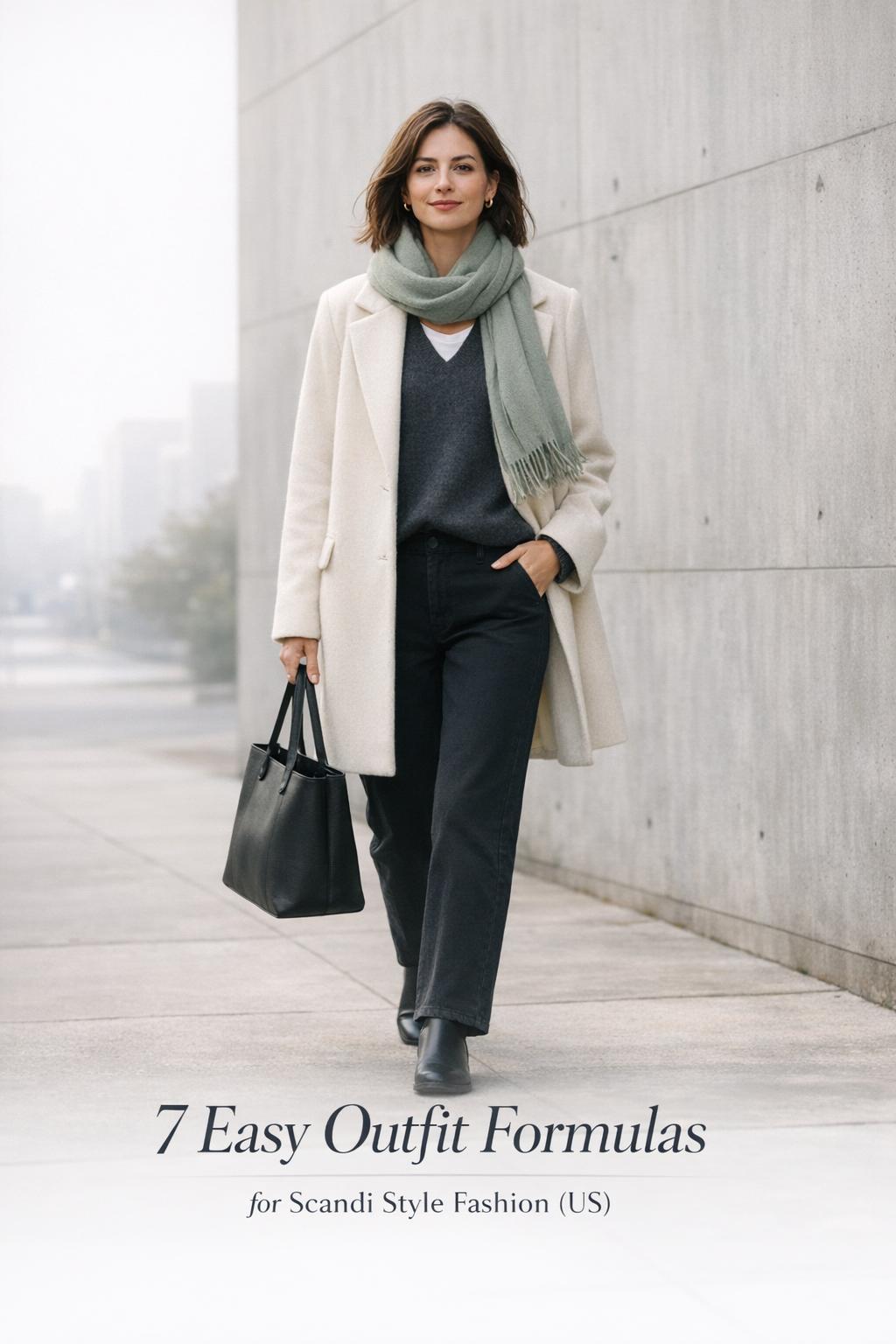
Minimal Scandinavian fashion outfits can look deceptively simple, so texture becomes the quiet detail that makes them feel intentional. The “tactile” side of Scandi fashion—how fabrics drape, how knits contrast with wovens, how denim balances soft layers—is what keeps a neutral wardrobe from feeling flat.
This is also where many people accidentally miss the mark: they replicate the neutral palette but choose materials that don’t hold shape, don’t layer well, or don’t feel durable. When the fabrics are right, the outfit reads refined even when the silhouette is relaxed.
Fabrics to Favor (and What to Be Careful With)
Scandi style frequently highlights natural fibers such as wool, merino wool, cotton, organic cotton, linen, and leather, along with denim as an everyday staple. These materials tend to support the “wear it often” philosophy because they can look better with thoughtful care and repeated use.
Blends and recycled blends can also fit within a Nordic fashion mindset when they support function and longevity. The key is to be careful with fabrics that lose structure quickly or make layering uncomfortable, because the Scandi approach relies heavily on pieces working together across outfits.
Tip: If you’re unsure whether a fabric choice supports a Scandi wardrobe, check how it behaves in a layered outfit. If it bunches, clings in an awkward way, or looks worn too fast, it may not deliver the clean-line effect Scandi style is known for.
Texture Pairings That Add Interest Without Clutter
Texture mixing is the easiest way to add depth while staying minimalist. The goal isn’t contrast for its own sake; it’s balance—soft against structured, matte against slightly glossy, knit against denim. This is how Scandinavian fashion can feel warm and lived-in while still looking modern.
- Knit + denim for everyday polish
- Wool outerwear + cotton base layers for clean seasonal layering
- Linen + lightweight knit for summer-to-early-fall versatility
- Leather accents (shoes or bag) to add structure to soft silhouettes
When everything is neutral, texture becomes your “pattern.” Keep the palette restrained, then let the fabric surfaces do the visual work.
Brand Spotlight: Nordic Labels and How They Embody Scandi Style
Many people discover Scandi style through Nordic labels and Copenhagen or Stockholm street style. While brands vary, the shared thread is a design ethos that prioritizes wearability: pieces that can be styled multiple ways, often in a palette that supports mixing and matching.
Popular Scandi fashion brands frequently cited in style conversations include Ganni, Stine Goya, Arket, and & Other Stories. Even within this group, there’s range: some skew more playful or color-forward, while others lean into strict minimalism. That variety is useful—you can keep the Scandi foundation while choosing a brand “personality” that fits your life.
What to Look For in a Nordic Brand
Instead of focusing only on a label name, look for how a brand supports the core Scandi principles: timeless silhouettes, a restrained approach to branding, and materials that feel considered. Many shoppers also care about sustainable practices and fabric choices, which often come up in discussions of Nordic fashion and durability.
- Clean silhouettes that layer easily
- A cohesive neutral base (even if the brand includes muted prints or accents)
- Quality materials that support repeat wear
- Understated logos and minimal hardware
- Versatility: pieces that work for everyday, workwear, and weekend outfits
Tip: If you’re drawn to “Nordic minimalism, maximalist accents,” use brands with stronger color or print as a controlled statement—one piece at a time—while keeping the rest of the outfit neutral and clean-lined.
Outfit Formulas: Ready-to-Wear Scandi Looks
Outfit formulas are what make a Scandi wardrobe feel effortless. Once your pieces fit a consistent silhouette and color story, you can repeat a few reliable combinations and still look put together. The formulas below work across genders; adjust proportions and layering levels to your preferences.
Everyday Essentials
Everyday Scandi outfits are built around a simple base layer, a clean bottom, and one detail that adds structure—often a knit, jacket, or coat. The look is intentionally low-noise, so fit and fabric do most of the styling.
- Neutral tee or long-sleeve + straight denim + minimalist shoes
- Monochrome knit + relaxed trouser + structured bag
- Layered base (tee + shirt) + denim + simple outer layer
Tip: When an outfit feels “too plain,” don’t add more items—upgrade one element. Swap the base layer for a better fabric, add a more structured bag, or choose footwear with a cleaner line.
Workwear and Smart Casual
Scandi workwear is typically smart casual: polished without stiffness. A clean silhouette, a controlled palette, and one elevated layer (like a structured coat or refined knit) can carry the whole outfit. This is where Scandinavian fashion is particularly strong—practical clothes that still look modern in professional settings.
- Button-up or simple blouse + straight trouser + minimalist footwear
- Fine knit + tailored-looking (but not tight) trouser + structured outerwear
- Tonal outfit (same color family) + a clean-lined coat for definition
Keep logos understated and avoid overly busy accessories. In Scandi style, “smart” usually comes from restraint and consistency rather than bold statement dressing.
Weekend and Travel
Scandi travel outfits and weekend looks lean into comfort while staying clean and cohesive. The trick is to maintain the straight or relaxed silhouette and keep your colors coordinated so you can re-wear items in different combinations.
- Neutral base layers + knit + lightweight jacket for flexible temperature changes
- Relaxed trouser + tee + coat that accommodates layering
- Monochrome set (top and bottom in similar tones) + minimal accessories
Tip: For travel, pack like a capsule: choose a tight neutral palette and prioritize layers. You’ll get more outfits from fewer pieces, and you’ll maintain that calm, Nordic minimalism effect in photos and real life.
Shopping Guide: Where to Buy Scandi Style in the US
Shopping for Scandi style fashion in the U.S. is usually a mix of brand stores and broader online marketplaces. The goal isn’t to buy everything from one place; it’s to choose pieces that match the Scandi principles: clean silhouettes, neutral wardrobe compatibility, and materials that support longevity.
If you’re brand-curious, start with a small purchase that anchors outfits—like a knit, a coat, or a structured bag—then build outward with basics that match your palette. If you’re building from scratch, focus on the capsule core first, then add statement accents (muted prints, color pops, or more directional silhouettes) once the foundation is strong.
Budget vs. Premium Picks (How to Decide)
Not every Scandi-inspired piece needs to be premium. A smarter approach is to spend where the fabric and construction matter most and keep the rest simple. Outerwear, knitwear, and footwear often carry an outfit and get repeated frequently, making them common “investment” categories in a Nordic wardrobe approach.
- Consider spending more on: coats, wool knits, and sturdy minimalist footwear
- Save on: base tees and simple layering tops (as long as the fit is clean)
- Balance: denim and trousers based on how often you’ll wear them
Tip: If you’re tempted to buy something highly trend-driven, ask whether it works with at least three outfits you already own. Scandi style thrives on integration, not one-off pieces.
Online Marketplaces vs. Brand Stores
Brand stores are useful when you want to understand a label’s full design language—how their silhouettes, colors, and materials work together. Online marketplaces are useful for browsing across multiple Nordic brands at once and comparing pieces that fit your capsule plan.
Whichever route you choose, keep your standards consistent: a restrained palette, minimal logos, and pieces that layer cleanly. This is what makes “buy Scandi style” more than a shopping mood—it becomes a wardrobe system.
Maintenance and Longevity: Caring for Scandi Wardrobe Staples
A Scandi wardrobe is meant to be worn often, so maintenance is part of the style—not an afterthought. When you care for natural fibers and quality basics properly, the wardrobe stays polished longer, and you’re less likely to replace items frequently.
Care Tips by Fabric
Different fabrics in Scandinavian fashion require different care rhythms. Wool and merino benefit from gentle handling and mindful storage; cotton and denim can handle more frequent washing but still look best when treated thoughtfully; linen improves with wear but can lose crispness if cared for carelessly.
- Wool/merino: prioritize gentle care habits and avoid unnecessary washing when possible
- Cotton/organic cotton: keep it looking clean and structured with consistent, fabric-appropriate care
- Denim: maintain shape and color by avoiding overly harsh routines
- Linen: embrace its relaxed texture while keeping it fresh and wearable
Tip: If your wardrobe is mostly neutrals, fabric wear is more noticeable. Good care habits matter more because the “interest” in your outfits often comes from texture and clean lines.
How to Make Pieces Last (A Practical Mindset)
Longevity in Scandi style fashion comes from choosing pieces you’ll repeat, then keeping them in good condition through consistent care. A capsule wardrobe approach helps because it reduces impulse buying and encourages you to learn how each piece performs across seasons and situations.
To support durability, think in cycles: which items are year-round anchors, which are seasonal layers, and which are occasional accents. When you know what you wear most, you can prioritize maintenance and replacements strategically instead of reacting when something wears out unexpectedly.
Getting Started Today: A Simple Scandi Style Plan
If you want to adopt Scandi fashion without overhauling your closet, start with a small system: define your palette, refine your silhouettes, and build a reliable layering stack. This approach keeps the style authentic to Nordic minimalism—practical, repeatable, and grounded in real life.
- Choose two to three base neutrals you’ll wear most (for easy mixing)
- Identify your go-to silhouette (straight, relaxed, or slightly oversized) and stick with it
- Add one strong layer (a coat, jacket, or knit) that elevates basics instantly
- Create three outfit formulas you can repeat for everyday, workwear, and weekend
- Upgrade slowly: replace the most-worn pieces first with better materials or cleaner cuts
Tip: Take one week and document what you actually wear. Then compare it to the Scandi principles—clean lines, neutrals, layering, quality basics. You’ll see immediately what to keep, what to refine, and what to stop buying.
Final Thoughts: Why Scandi Style Stands the Test of Time
Scandi style fashion endures because it’s built on fundamentals: a neutral wardrobe that mixes effortlessly, silhouettes that feel modern without being restrictive, and a practical layering mindset that works across seasons. When you treat it as a wardrobe system—capsule-inspired, texture-driven, and quality-focused—you get outfits that feel calm, confident, and wearable for years rather than weeks.
FAQ
What is scandi style fashion?
Scandi style fashion is a Nordic minimalism approach to dressing that emphasizes clean silhouettes, a neutral palette, practical layering, quality materials, and understated branding so outfits feel timeless, functional, and easy to repeat.
How do I build a scandi style wardrobe without starting over?
Start by tightening your color palette to two or three base neutrals, prioritizing straight or relaxed silhouettes, and adding a few layering-friendly basics (a knit, a versatile jacket or coat, and clean footwear) that can combine into repeatable outfit formulas.
What colors define Scandinavian fashion?
Scandinavian fashion is typically built on neutrals and monochrome or tonal dressing—colors like black, white, gray, and cream—often supported by muted tones as controlled accents rather than bright or heavily contrasting palettes.
What are the key elements of Nordic minimalism in outfits?
The key elements are clean lines, relaxed or straight fits, quality materials (often natural fibers like wool, cotton, linen, and denim), practical layering for versatility, and accessories that are functional and minimally branded.
Which scandi fashion brands are commonly associated with the look?
Brands often cited in Scandi fashion conversations include Ganni, Stine Goya, Arket, and & Other Stories, each offering its own interpretation while still aligning with the overall Nordic preference for wearability and cohesive styling.
Can scandi style work in warm climates?
Yes—keep the same neutral palette and clean silhouettes, then adjust by swapping heavy layers for lighter fabrics such as linen and lightweight cotton and using simpler layering that still looks intentional.
How do I keep a minimalist outfit from looking boring?
Use texture and structure instead of extra “stuff”: pair knits with denim or wovens, add a structured bag, choose clean-lined footwear, and rely on tonal dressing so the outfit feels refined while staying simple.
What does a scandi capsule wardrobe typically include?
A Scandi capsule wardrobe typically includes neutral base layers, a couple of shirts, one or two knits, straight or relaxed trousers and denim, versatile outerwear for layering, minimalist shoes, and a structured bag with understated accessories.
How do I shop for scandi style in the US?
Focus on pieces that match the Scandi principles—neutral compatibility, clean silhouettes, quality materials, and minimal branding—then shop via a mix of Nordic brand stores and broader online marketplaces to compare options and build a cohesive capsule over time.