Commuter Street Style That Looks Polished in Motion
Introduction
Street style is less a trend than a visual language: a way of building outfits that look intentional in motion, built for sidewalks, subway stairs, and last-minute plans. The aesthetic lives in proportion play—clean lines against softer drape, practical layers that still read styled, and color choices that feel curated rather than loud. It’s the kind of outfit composition that looks convincing at a crosswalk and even better in a quick mirror check.
The mood is modern, slightly effortless, and camera-aware without looking costume-y. A street style outfit doesn’t depend on one “statement” item; it works because the full silhouette is balanced—top-to-bottom cohesion, texture contrast, and a clear visual anchor (like a jacket shape, a shoe profile, or a controlled palette). That’s also why it translates so well into a tiktok outfit: the look reads instantly, even in a short clip.
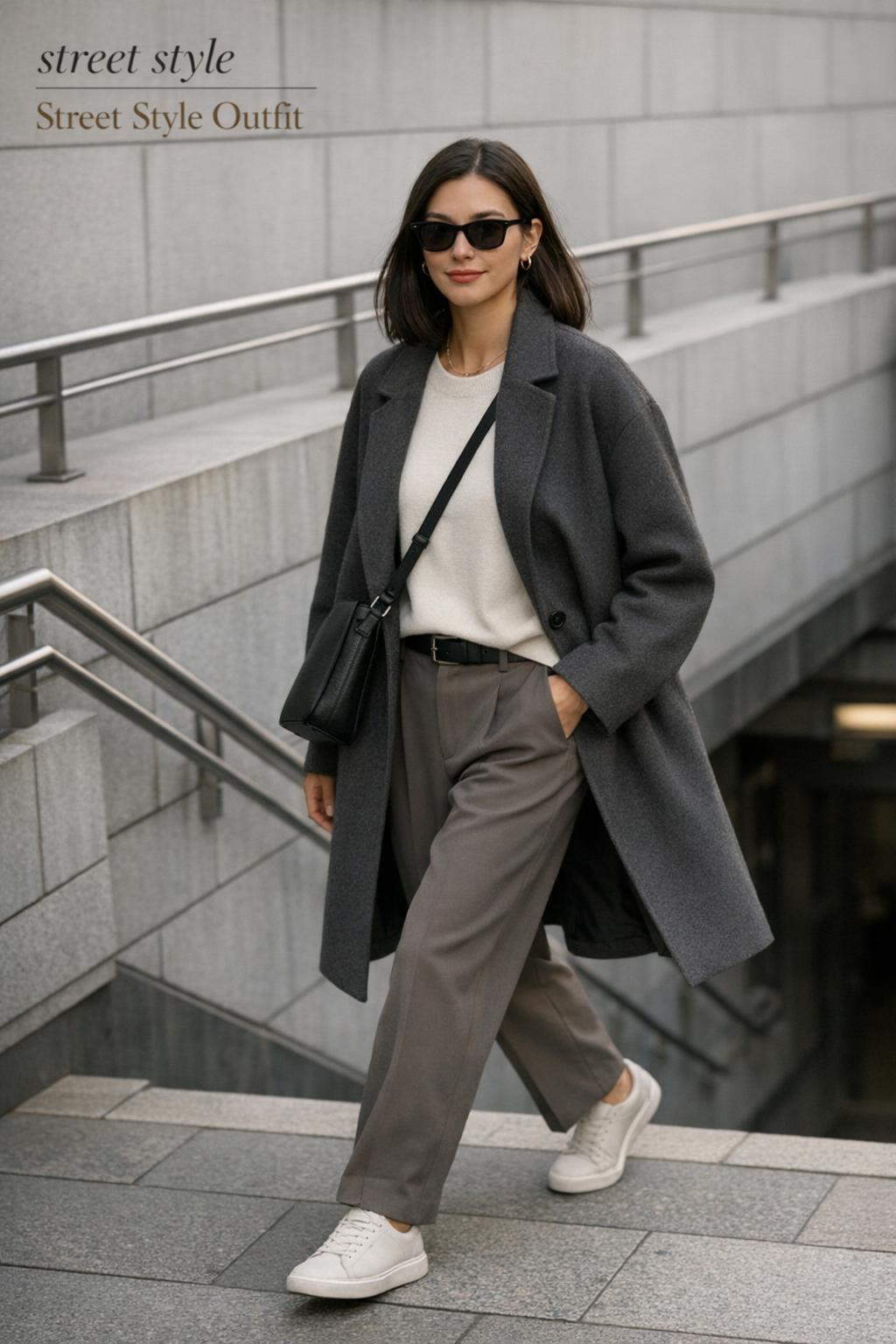
In real life, the appeal is practical. These looks are made to be worn—on school mornings when you need quick ootd ideas for school, on city weekends when comfort matters, and on days when you want that subtle “look di moda” finish without feeling overdressed. The core promise is simple: outfits that hold up under real movement while still looking editorial.
The street style formula: how the aesthetic actually works
Before the looks, it helps to name the mechanics behind the mood. Street style isn’t random; it’s a set of styling decisions that prioritize visual clarity. The most reliable outfits follow a three-part logic: a defined silhouette (what shape you’re creating), a controlled palette (how colors relate), and a texture story (how fabrics add depth). When one of these is missing, the outfit can look unfinished—comfortable, yes, but not composed.
Found the dress? Keep the rest in one place.
Zarellea brings guest details, vendors, timelines, and every next step together — so your wedding plan feels as good as your look.
Silhouette balance is the starting point. Wide-leg bottoms often want a more compact or structured top; oversized outerwear looks sharper when something underneath is streamlined. Color harmony matters next: tonal layering (shades of the same family) reads polished fast, while high-contrast pairings need cleaner lines to avoid visual noise. Finally, texture contrast does the “quiet work”—pairing a crisp fabric with something soft, or a matte piece with a subtle sheen, so the look has dimension even in a neutral palette.
This is why the streetwear outfit aesthetic remains so popular: it’s modular. You can build it with basics, rotate layers as the day changes, and still land on an outfit that feels current. The goal isn’t to dress “up” or “down,” but to dress with structure.
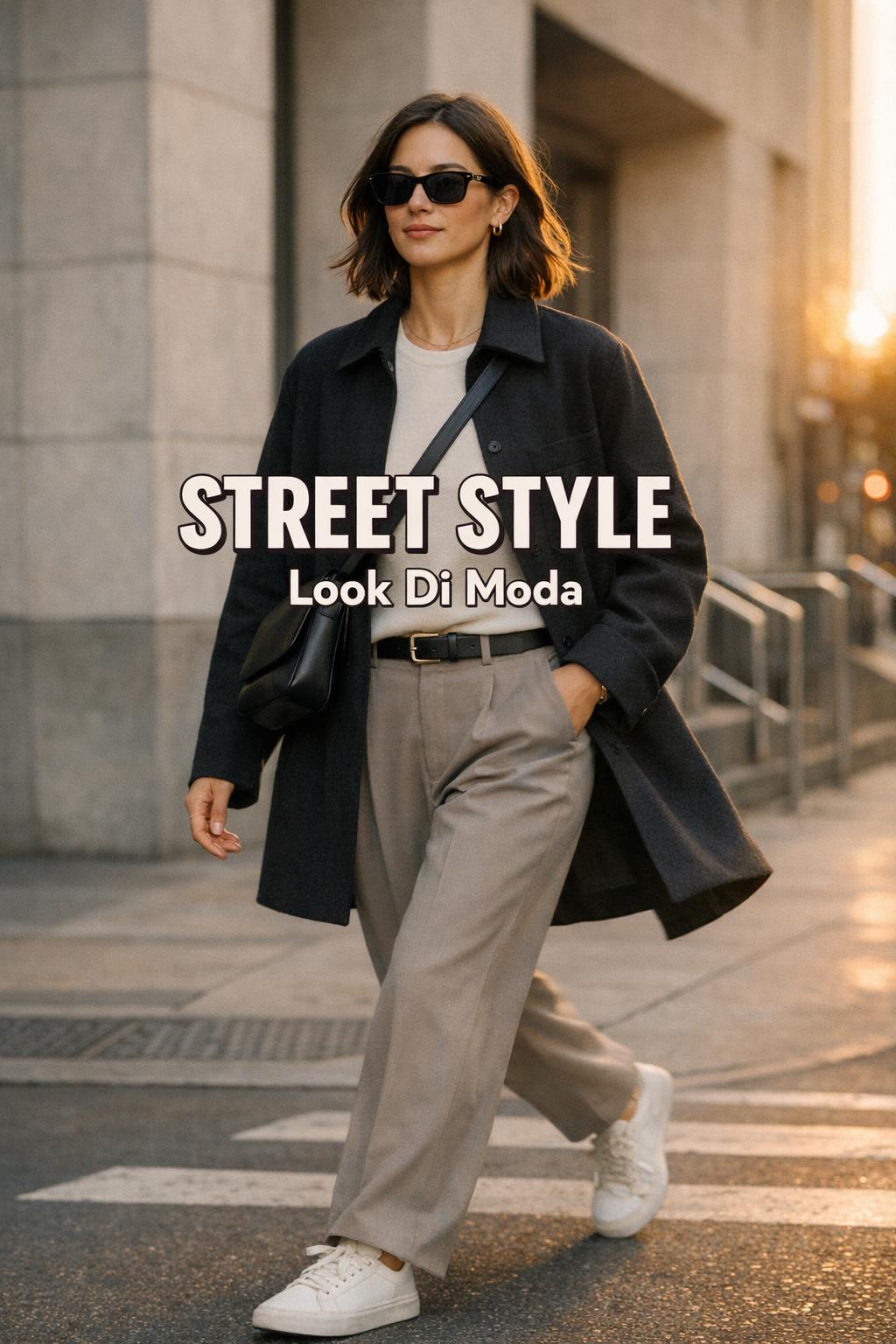
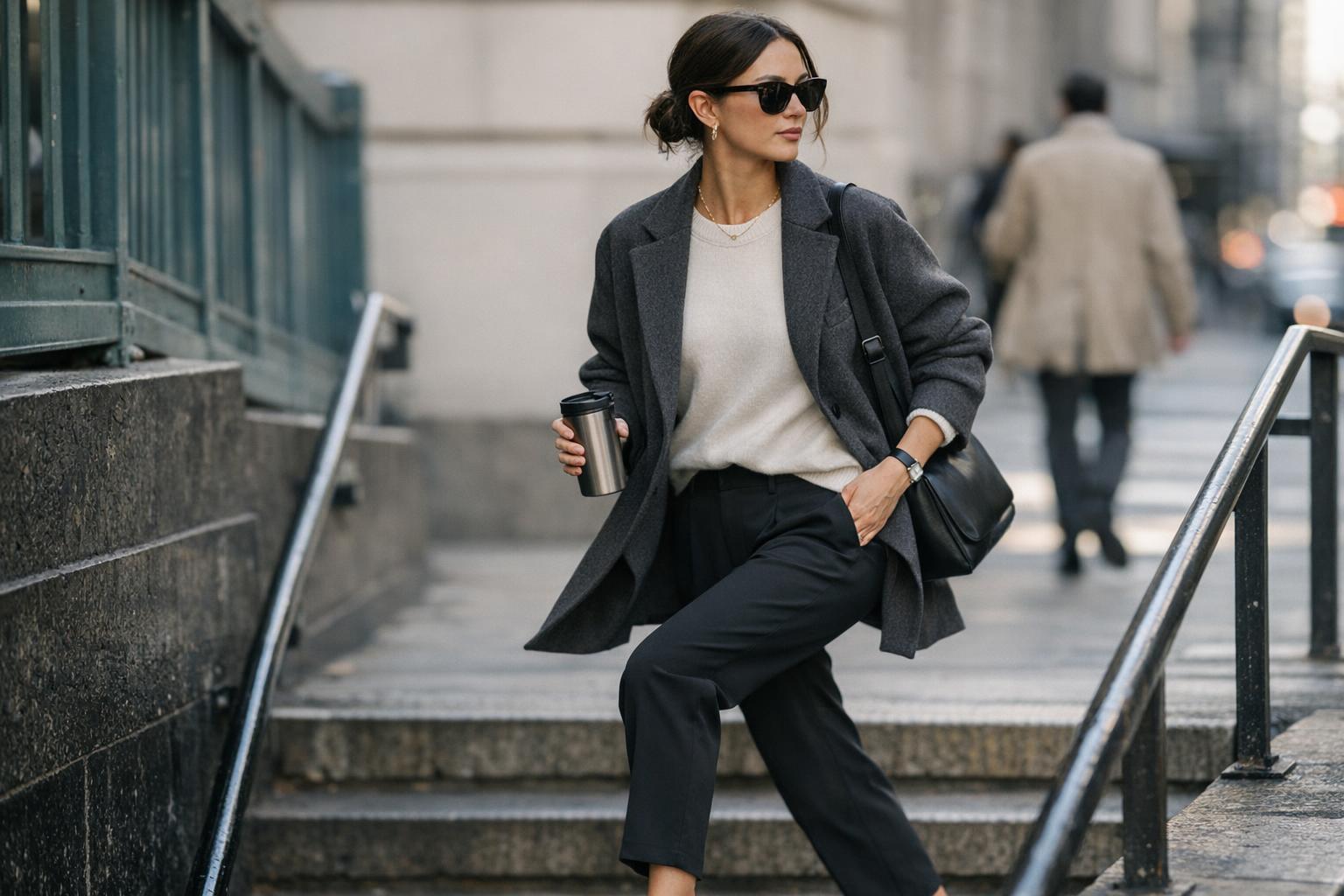
Look: relaxed minimal layers (the clean-city baseline)
This look is the most dependable street style outfit when you want polish without stiffness. The silhouette is long and relaxed, with a calm, architectural line from shoulder to hem. It reads minimal, but not empty—because the layering creates depth and a subtle sense of intention.
Keep the palette neutral and close in tone: think soft blacks, charcoal, stone, or muted cream. The key is fabric behavior—outer layers with structure (a crisp overshirt or a clean-lined jacket) over a softer base layer. The result is an outfit composition that feels steady and “adult” without being formal.
- Key garments: structured overshirt or light jacket, smooth base layer, relaxed trousers
- Footwear: low-profile sneakers or sleek flats that don’t interrupt the line
- Accessories: minimal bag, simple belt, understated jewelry
Why it fits the aesthetic: minimal layering creates a quiet visual rhythm. Nothing is competing, so the silhouette becomes the statement. This is also one of the easiest looks to repeat without looking repetitive—swap the outer layer and the entire mood shifts.
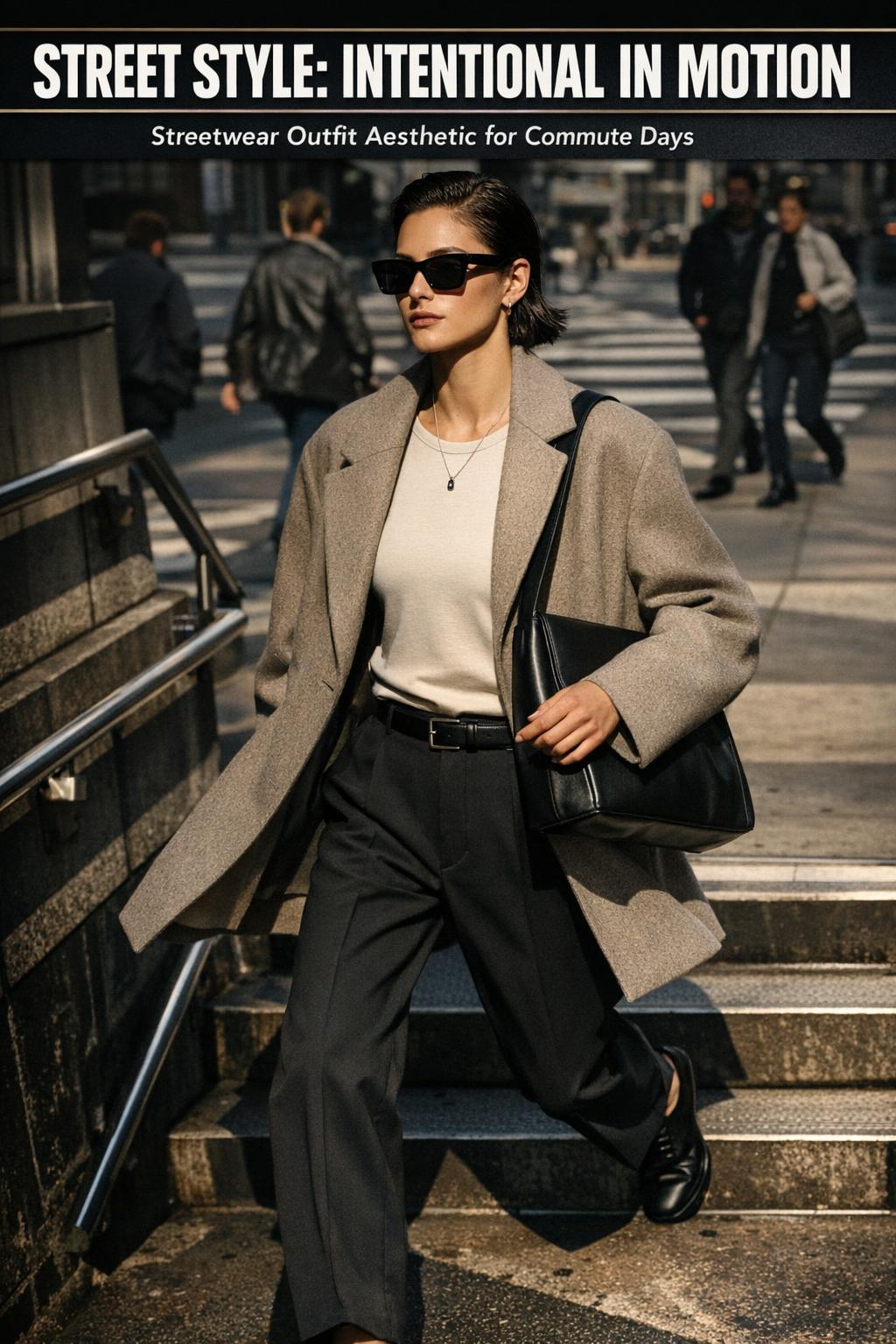
Look: neutral street style with a sharp outerwear anchor
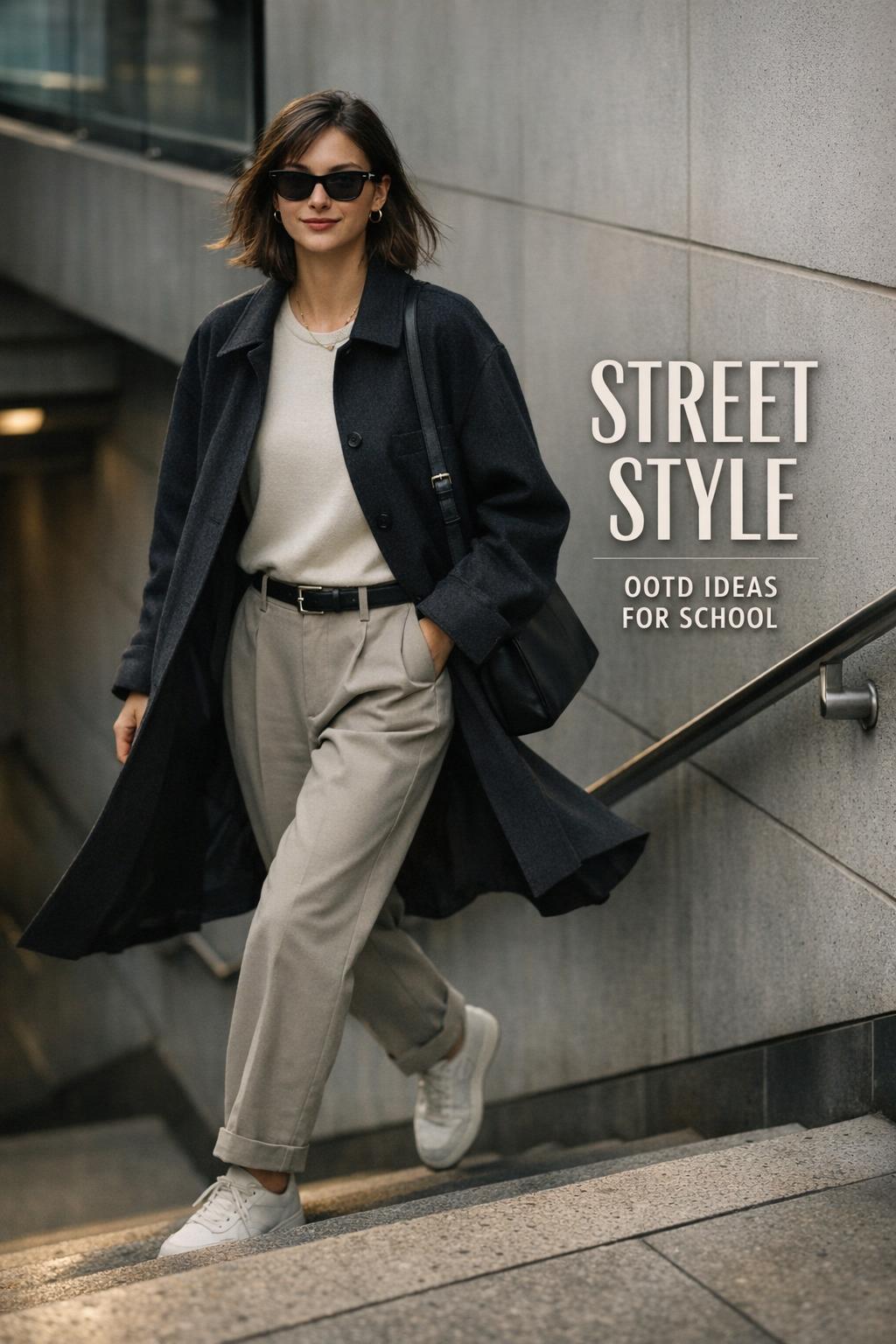
Some street style looks land because one piece sets the structure. Here, the outerwear is the visual anchor—clean shoulders, a slightly longer line, and enough shape to make the rest feel intentional. The vibe is “composed” rather than “styled,” which is exactly the point.
Work within a tight palette—beige, taupe, black, or off-white—and use one contrast point. A dark top under a lighter jacket, or a lighter top under a deeper outer layer, creates definition without needing bold color. Texture is where you add interest: a smooth top against a more substantial jacket fabric keeps the look from feeling flat.
Why it fits the aesthetic: street style reads best when the outfit has a clear hierarchy. Outerwear-led outfits photograph well, move well, and feel right for transitional weather—when you want your look to stay consistent indoors and out.
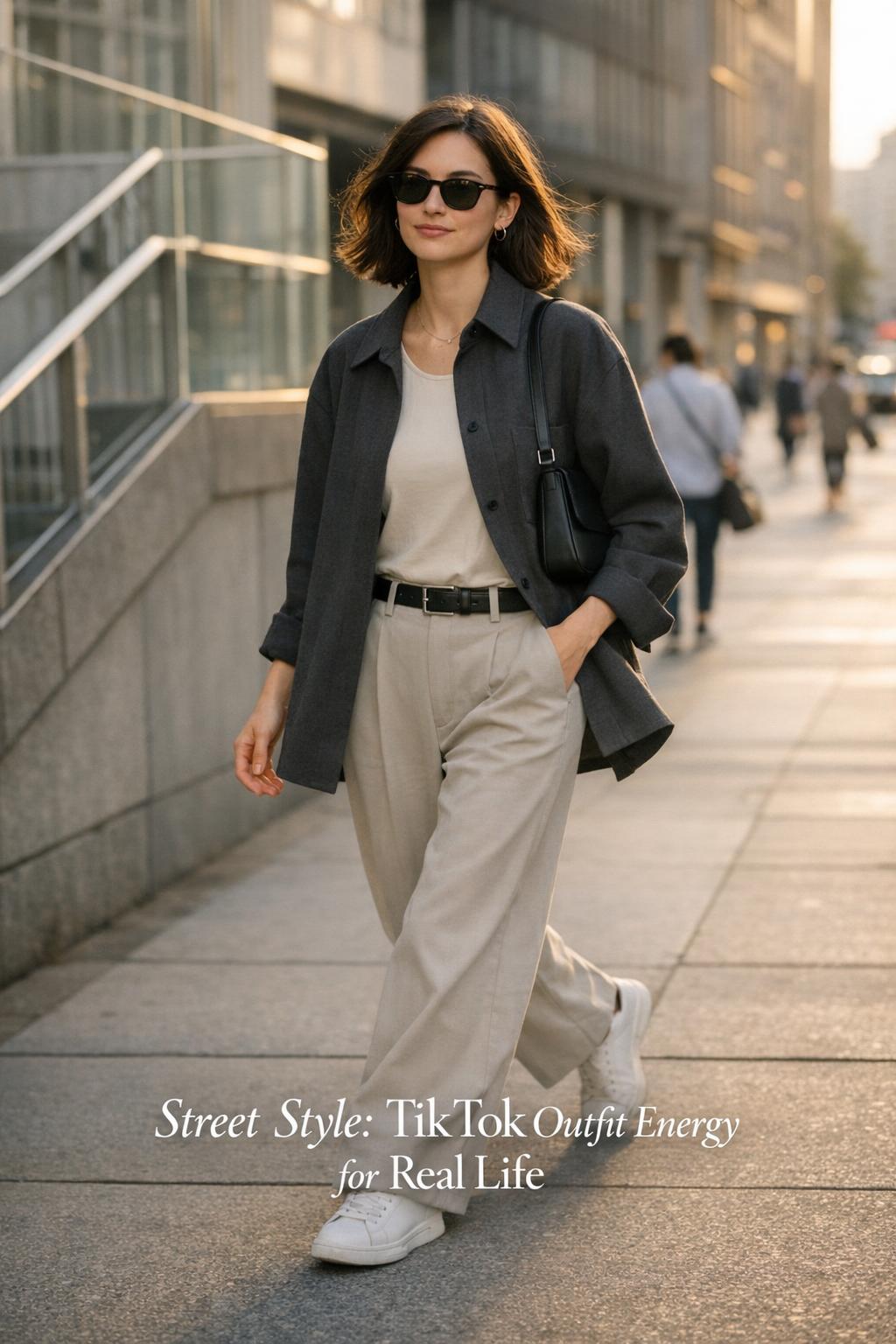
Style tip: make proportion play feel intentional, not accidental
Proportion play is the line between “effortless” and “messy.” If you go oversized on top, keep the lower half clean and uninterrupted; if your pants are wide, tighten the top silhouette or add structure through a jacket. The goal is one dominant volume at a time. This keeps a streetwear outfit aesthetic looking designed—especially in quick tiktok outfit videos where the camera compresses shape.
Look: soft weekend aesthetic (street style, but gentle)
This variation keeps the same street style backbone but softens the mood. The silhouette is relaxed and slightly rounded, with gentle lines and a sense of ease. It’s the outfit you reach for when comfort is non-negotiable, but you still want that “look di moda” finish.
Choose softer textures and a lighter palette—creams, soft grays, warm neutrals—then add one grounding element like a darker shoe or bag. The styling logic is simple: let the fabrics do the talking. When the materials look plush or drapey, the outfit reads elevated even without sharp tailoring.
- Key garments: soft knit or smooth long-sleeve base, relaxed layer, comfortable bottoms
- Footwear: clean sneakers or low boots for weight
- Accessories: cozy scarf or minimal cap to reinforce the weekend mood
Why it fits the aesthetic: street style isn’t always hard-edged. This is the proof that softness can still feel modern if the palette is controlled and the silhouette stays deliberate.
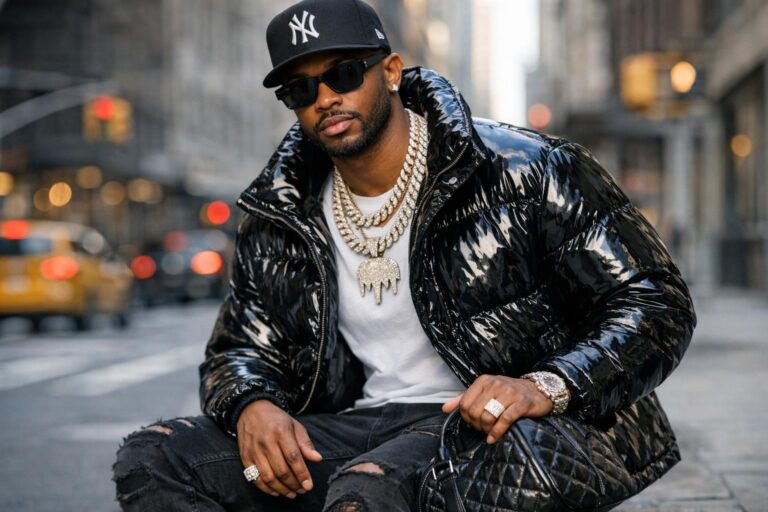
Look: streetwear outfit aesthetic with controlled volume
For a more streetwear-leaning read, the key is volume management. The silhouette is bolder—roomier through the top or bottom—but still edited. Instead of stacking multiple statement pieces, you build around one dominant shape and keep everything else quiet.
Stick to a compact color story—monochrome or near-monochrome works best here—then let fit and fabric create the interest. A slightly oversized top paired with straighter bottoms keeps movement easy without losing structure. If you push volume on the bottom, keep the top cleaner and shorter to avoid a “swallowed” effect.
Why it fits the aesthetic: streetwear outfit aesthetic succeeds when it looks intentional from every angle. Controlled volume gives the look impact while staying wearable for real days—walking, sitting, carrying a bag, and moving through crowds.
How to recreate the look di moda effect without chasing trends
“Look di moda” isn’t about novelty; it’s about finishing. In street style, the difference between a basic outfit and a fashion-forward one often comes down to three details: clean lines, a consistent palette, and one purposeful styling choice that reads as deliberate (a structured outer layer, a refined shoe shape, or a precise tuck that clarifies proportion).
Focus on garment behavior. Pieces that hold their shape (structured jackets, crisp layers, stable waistbands) create a stronger silhouette, which automatically looks more editorial. Softer pieces can still work, but they need an anchor—either a sharper layer or a more defined waistline—so the outfit doesn’t collapse visually.
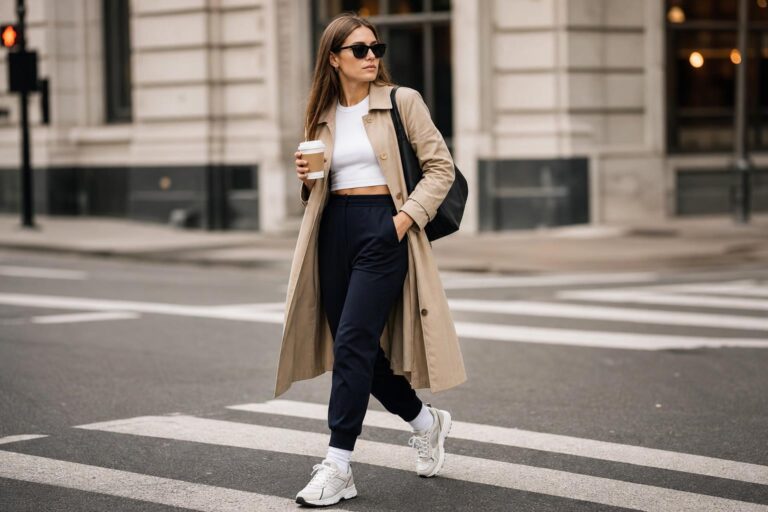
Look: tiktok outfit energy, but street-ready
This look is built for immediacy—the kind of styling that reads in a second. The silhouette has contrast: a clean, slightly fitted layer paired with something looser, or a long line offset by a cropped proportion. The vibe is confident, quick, and graphic without needing loud prints.
Choose a tight palette and repeat one element to create cohesion—similar tones top-to-bottom, or repeated hardware in accessories. The best tiktok outfit versions of street style are simple but precise: sharp hems, intentional layering lengths, and footwear that matches the mood (sleek rather than bulky, or purposely chunky but echoed elsewhere in the outfit).
- Key garments: a clean top layer, a contrasting base, bottoms with a clear shape (straight, wide, or tapered—choose one)
- Footwear: a strong profile shoe that supports the silhouette
- Accessories: one focal accessory (bag or eyewear) to finish the frame
Why it fits the aesthetic: street style is visual editing. This look works because every element has a job—nothing is filler, and the silhouette stays readable even on camera.
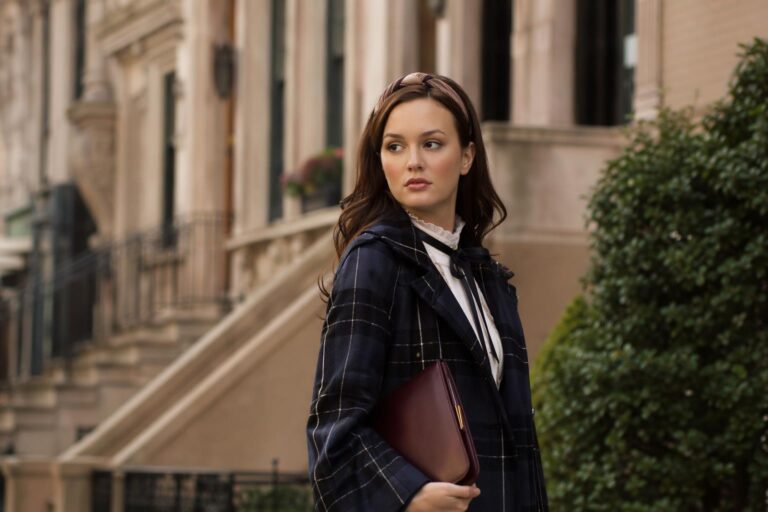
Look: ootd ideas for school that still feel like street style
School outfits have a specific set of constraints: long hours, lots of walking, temperature swings between morning and afternoon, and a need for comfort that doesn’t look sloppy. The street style solution is a streamlined base with a flexible layer—an outfit that can shift without losing its identity.
Keep the silhouette simple and functional: a comfortable bottom with enough structure to hold its line, a clean top, and a layer that can be removed without the outfit feeling incomplete. The palette should be low-maintenance—neutrals and muted tones work well because they look intentional even after a full day.
Why it fits the aesthetic: the best ootd ideas for school don’t chase complexity. They prioritize a stable silhouette and a controlled palette so you look put together from first period to after-school plans.
Common street style mistakes that flatten the aesthetic
Street style looks effortless, but that ease is usually engineered. When the outfit doesn’t land, it’s often because the visual logic is missing. The fix is rarely “add more”; it’s usually “edit better.”
- Too many competing focal points: multiple loud elements dilute the silhouette and make the look feel noisy.
- Unclear proportions: oversized on top and bottom without a defined waist, hemline, or structure can read unintentional.
- Palette drift: mixing too many unrelated tones breaks cohesion, especially in minimal looks.
- Ignoring fabric weight: combining pieces that fight each other (all flimsy, or all heavy) can make the outfit look off-balance.
- Footwear mismatch: the shoe profile should support the outfit’s line; an overly delicate shoe can feel disconnected from a heavy silhouette, and vice versa.
Street style is a system: when one element is doing the heavy lifting, the rest should support it. Editing is the skill that makes the aesthetic feel elevated.
Key pieces that build a repeatable street style outfit wardrobe
A sustainable street style closet is less about constant newness and more about a small set of reliable shapes. These are the pieces that create outfit structure quickly, letting you rotate details without reinventing the entire look. When you have strong silhouette tools, even simple combinations can read “look di moda.”
- A structured outer layer that immediately defines shoulder and line
- A clean base layer that sits smoothly under jackets and knits
- Bottoms with a clear shape (straight, wide, or tapered) that you can build around
- A go-to shoe profile that matches your typical silhouettes
- A minimal bag that doesn’t interrupt proportion
Think of these as your outfit architecture. Once the structure is set, you can shift the mood with small changes—tone, texture, or one accessory choice—without losing the street style identity.
Climate and comfort: the real-world test of street style
The most convincing street style outfits survive real conditions: cold mornings, warm afternoons, crowded commutes, and long days on your feet. That’s why layering strategy matters more than novelty. A removable top layer lets you adapt without losing cohesion, and a controlled palette means the outfit still reads composed even when you’re holding your jacket or tying it around your waist.
Comfort is not the enemy of style; it’s the baseline. Prioritize movement-friendly silhouettes and fabrics that don’t require constant adjustment. If you’re building a tiktok outfit for a day out, test it with real motion—walk, sit, carry your essentials—so the look stays sharp outside of the camera frame.
Tips for making street style feel personal (without losing the aesthetic)
Street style has a recognizable structure, but it shouldn’t feel like a uniform. Personal style comes from consistent choices—your preferred silhouette, your comfort level with volume, and the palette you repeat. Start by choosing one “signature”: either a silhouette habit (like long lines or cropped proportions) or a palette habit (like tonal neutrals). Then build every street style outfit around that decision.
Keep experimentation targeted. Change one variable at a time—swap footwear, adjust the layer length, shift the palette slightly—so you can see what actually improves the outfit composition. This is the fastest way to evolve your streetwear outfit aesthetic without turning your closet into a collection of one-off pieces.
FAQ
What does street style mean in everyday fashion?
Street style refers to outfits designed for real life—walking, commuting, and daily plans—while still looking visually composed; it relies on clear silhouette, controlled color harmony, and intentional layering rather than formal dress codes.
How do I build a street style outfit that looks intentional?
Start with a defined silhouette (one dominant volume), keep the palette tight (tonal neutrals are the easiest), and add one visual anchor such as structured outerwear or a strong shoe profile so the outfit has a clear hierarchy.
How can I make a streetwear outfit aesthetic feel more polished?
Polish comes from structure and finishing: choose at least one piece that holds its shape, avoid competing focal points, and make sure proportions are deliberate so the outfit reads designed rather than accidental.
What makes an outfit feel “look di moda” without being overdressed?
A “look di moda” finish usually comes from clean lines, consistent color relationships, and one purposeful styling decision—like a sharp outer layer or precise proportion—so the overall composition looks edited, not excessive.
How do I create a tiktok outfit that still works in real life?
Keep the look camera-readable with strong silhouette contrast and a tight palette, then stress-test it for comfort and movement so it holds up while walking, sitting, and carrying essentials beyond the clip.
What are reliable ootd ideas for school in a street style direction?
Use a streamlined base with a removable layer, stick to low-maintenance neutrals or muted tones, and choose comfortable footwear that supports the outfit’s shape so you stay put-together through long hours and temperature changes.
Why do some street style outfits look messy instead of effortless?
They usually fail due to unclear proportions, palette drift, or too many focal points; editing down to one dominant shape and one anchor piece restores the intentional, effortless effect.
How do I choose colors for street style if I don’t like bright outfits?
Build around tonal layering—multiple shades within the same neutral family—then add definition with one contrast point (like a darker shoe or bag) to keep the look dimensional without relying on bright color.