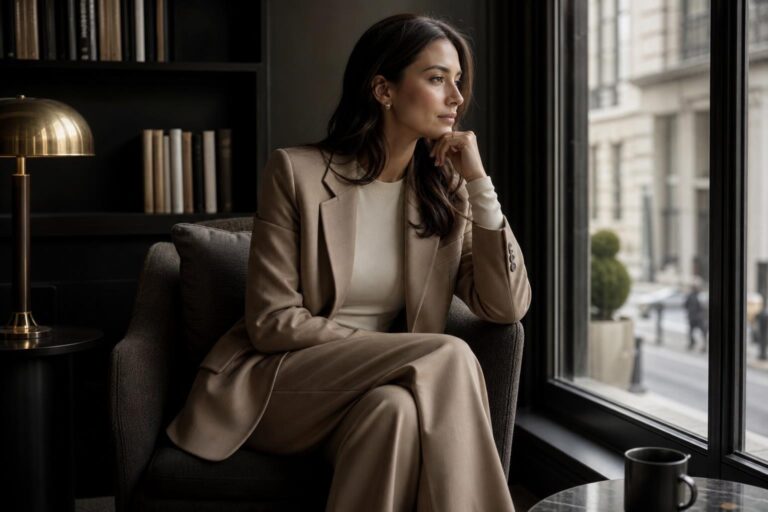
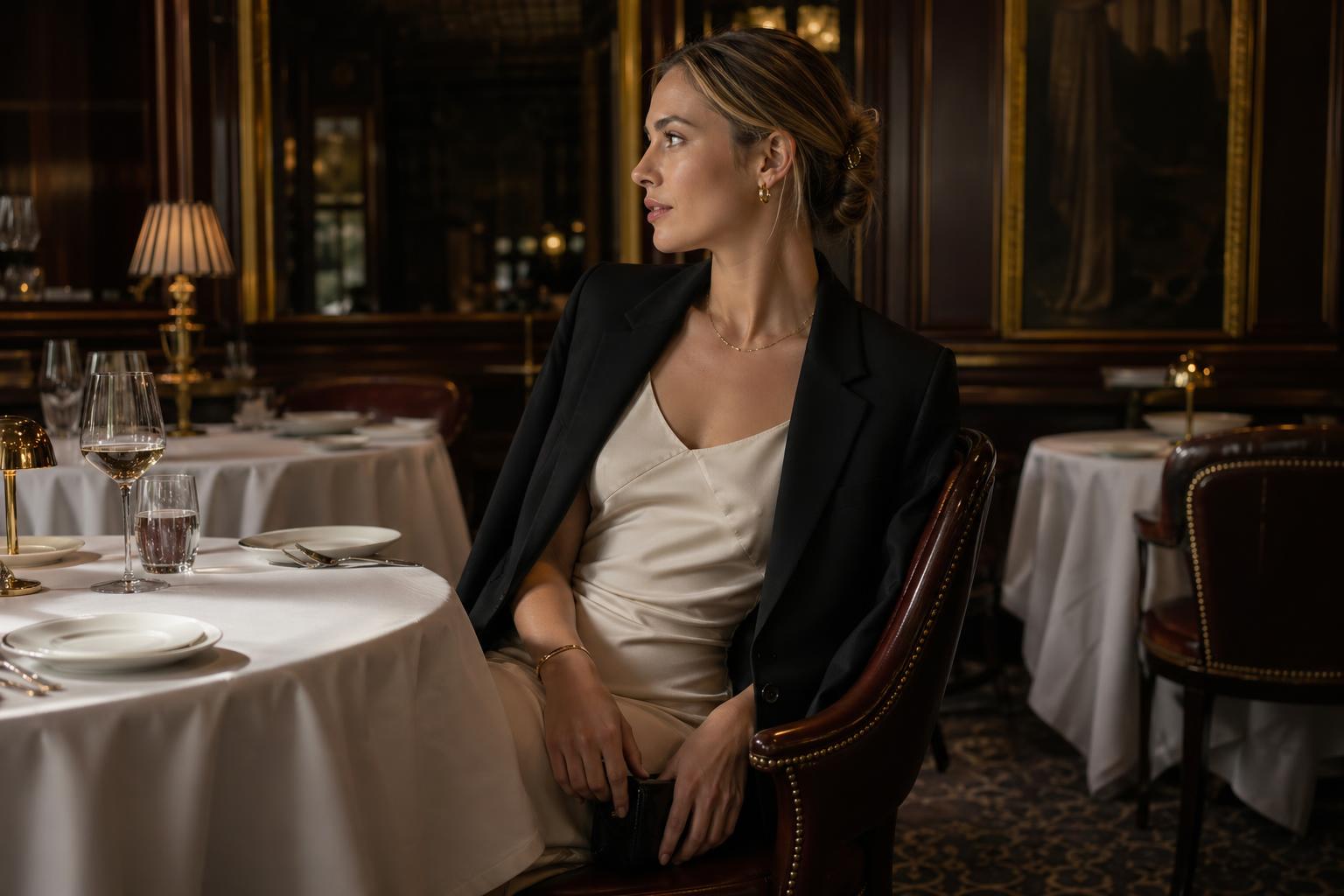
Old Money Dinner Outfit for Quiet Luxury Evenings
At dinner, the old money aesthetic is less about display and more about control. The impression comes from restraint: a silk surface that catches low light, a tailored shoulder that sharpens the line of the body, a neutral palette that feels expensive because it never strains for attention. An old money dinner outfit works in the quiet space between formal dress codes and personal polish, where timeless elegance matters more than trend recognition.
This mood shows up naturally at cocktail hour, private dinners, country club evenings, charity galas, art openings, and refined dinner dates. It is popular because it translates aspiration into something wearable. Quiet luxury gives structure to evening dressing: clean silhouettes, quality fabrics, understated accessories, and a visual rhythm that looks intentional from the first greeting to the final course.
What makes the style especially appealing is its flexibility. The same visual language can shift from New York formality to a softer Mayfair dinner mood, from a black-tie-leaning gown to a blazer-and-trouser composition, from fall wool and cashmere to silk satin in warmer weather. The goal is not to look overly styled. The goal is to look as though elegance is your default setting.
What defines an old money dinner outfit
The foundation is simple: neutral palette, clean lines, and quality fabrics. In practice, that means silhouettes with long, uninterrupted vertical movement, minimal visual clutter, and pieces that hold their shape well through an evening event. A column dress, sheath dress, tailored blazer, precise trouser, or softly structured gown all communicate the same thing: discipline in outfit composition.
Found the dress? Keep the rest in one place.
Zarellea brings guest details, vendors, timelines, and every next step together — so your wedding plan feels as good as your look.
Quiet luxury also depends on fabric behavior. Silk, satin, wool, wool crepe, and cashmere appear repeatedly because they drape cleanly, reflect light in a controlled way, and signal refinement without obvious logos. These fabrics support the old money aesthetic by making even simple garments feel deliberate. A plain black midi dress in silk satin reads very differently from the same shape in a flat synthetic finish.
Color matters just as much. Ivory, taupe, beige, navy, black, and muted jewel tones such as emerald create a stable visual base. These shades allow silhouette and texture to lead, which is central to timeless style. A successful old money dinner outfit does not try to win through novelty. It succeeds through harmony: fabric, cut, and accessories all reinforcing one polished idea.
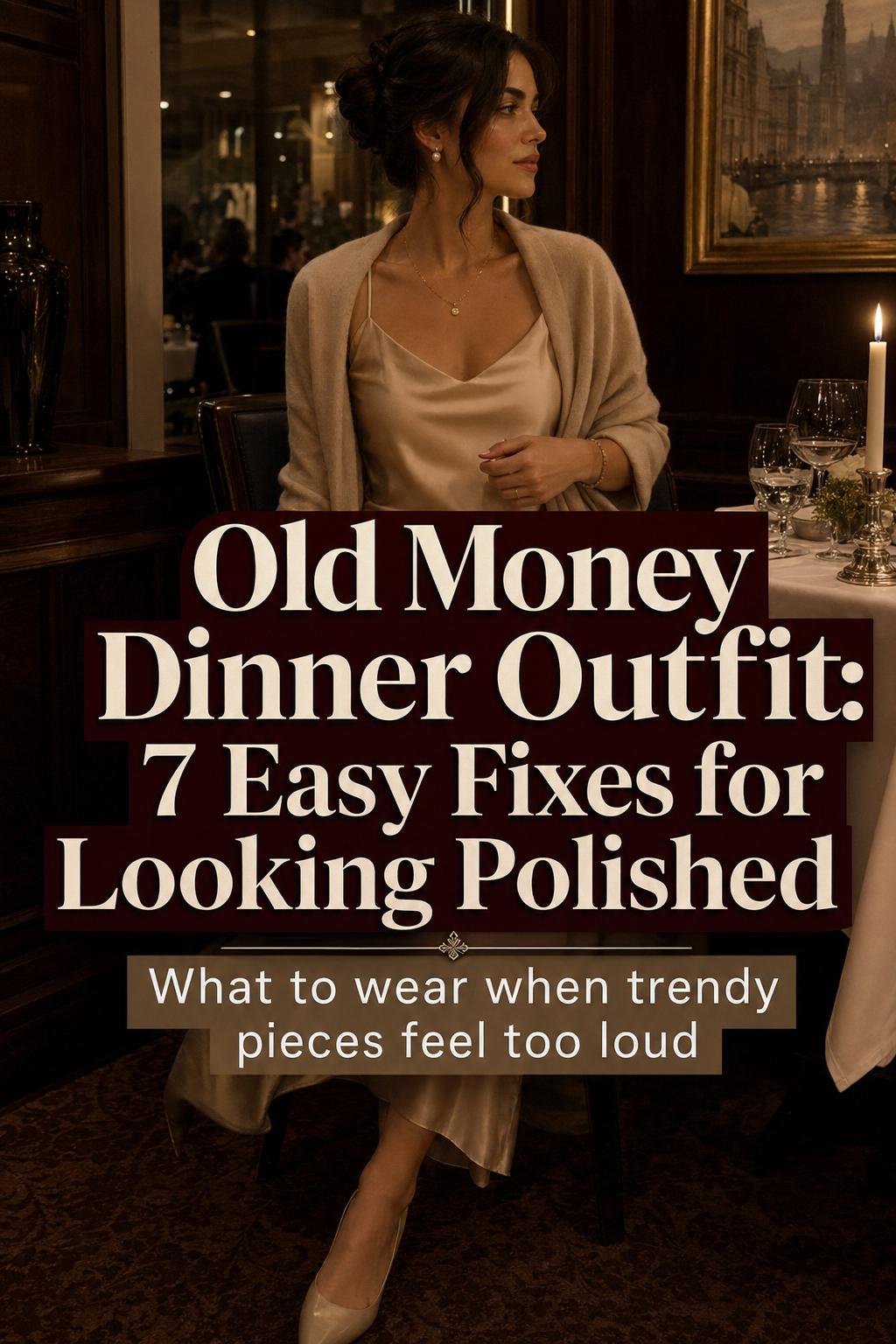
Why dinner changes the styling logic
Dinner attire sits in a nuanced category. It often borrows from cocktail attire and semi-formal dressing, but it usually needs more ease than a strictly ceremonial look. You need enough structure to feel elevated, but enough comfort to sit, move, and remain polished through a long evening. That is why old money styling works so well here. It prioritizes refinement without sacrificing practicality.
For a cocktail hour that transitions into dinner, visual adaptability is key. A slip dress with a tailored coat, a sheath dress with fine gold jewelry, or a tuxedo-inspired suit with a small clutch can shift smoothly from standing and socializing to seated dining. The styling should feel settled under dim lighting, at a restaurant banquette, or in a private club setting, not only in full-length mirror photos.
Venue also changes proportion. Country club dinners often reward restraint and classic tailoring. Charity galas can support longer silhouettes and more formal fabrics. Art openings and business formal dinners usually benefit from a sharper line, where a blazer, suit, or structured midi dress feels especially credible. The old money approach remains consistent, but the weight of the fabrics, the depth of the color palette, and the accessory choices should respond to the event.
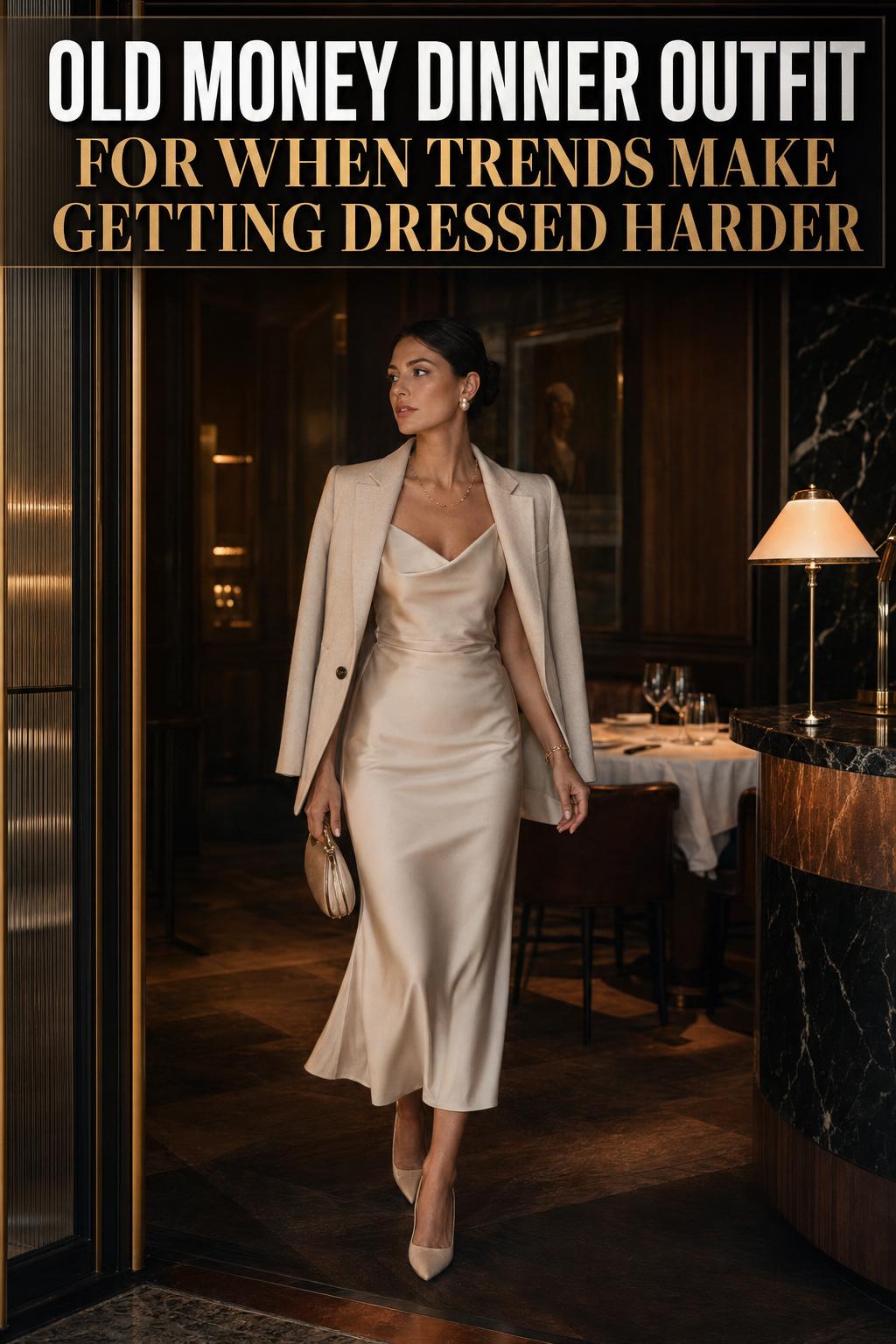
Core pieces that create the mood
- silk slip dress or silk satin midi dress
- sheath dress with clean seaming
- tailored blazer in black, navy, or ivory
- well-cut trousers with a long straight leg
- wool crepe or wool suit for cooler evenings
- cashmere layer for fall and winter dinners
- small clutch or understated bag
- pointed-toe pumps or similarly polished evening shoes
- pearl studs or restrained gold jewelry
These pieces matter because they form a capsule logic. Instead of building every look from scratch, the old money wardrobe relies on recurring anchors that can be restyled across dinner events. A black blazer can move from a business dinner to a cocktail party. A silk midi can become more formal with a tailored coat and more minimal with only pearl jewelry. This repeatability is part of the aesthetic itself.
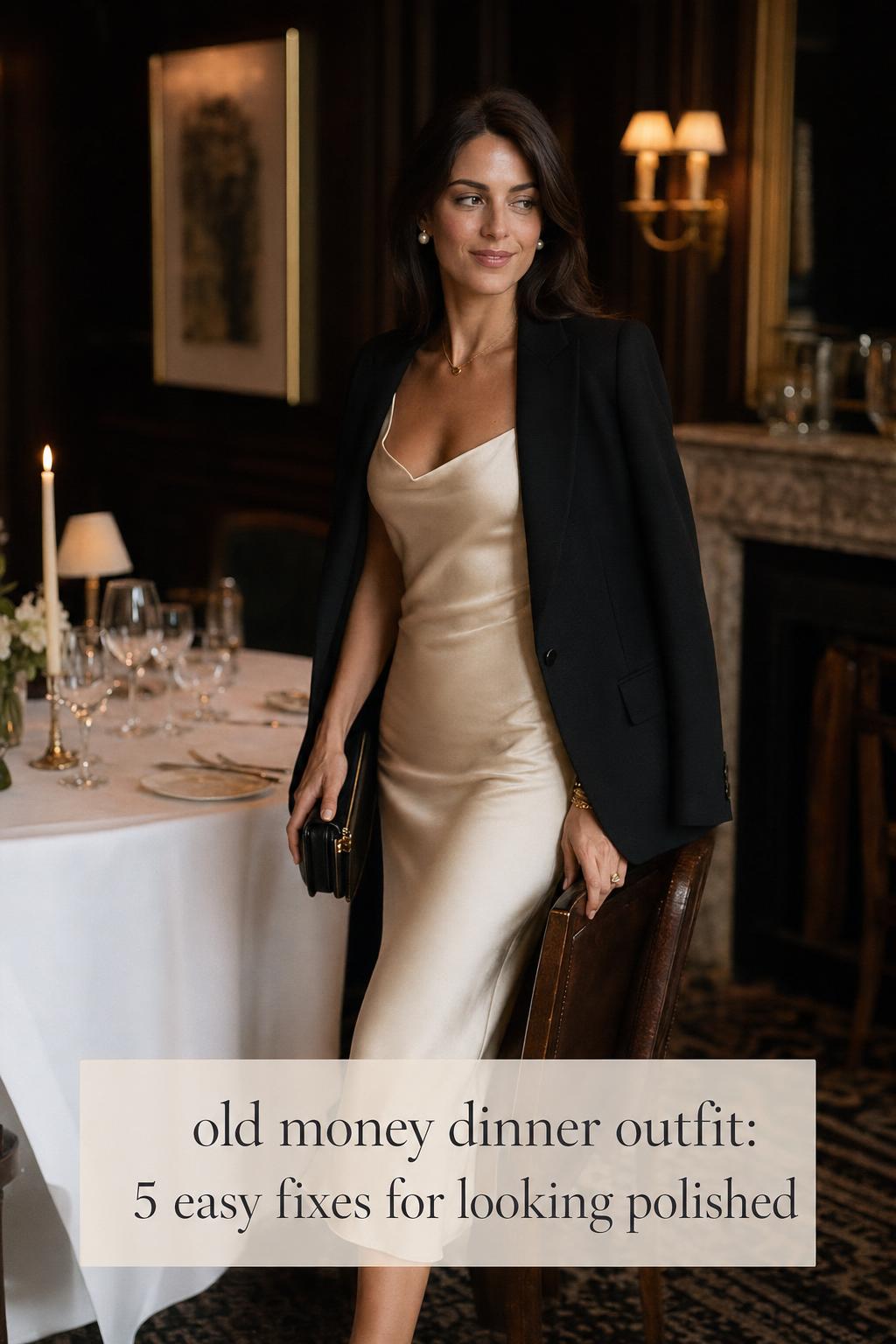
Look: black silk restraint
This is the most direct interpretation of the old money dinner outfit: sleek, understated, and almost architectural in its simplicity. The silhouette is long and clean, with little interruption from excessive detail. It feels especially appropriate for a city dinner in New York, a private dining room, or an evening that begins at cocktail hour and moves into a formal meal.
A black silk or satin midi dress forms the visual anchor. The line can be slip-inspired or sheath-like, as long as it remains fluid rather than dramatic. Add pointed-toe pumps, a compact clutch, and fine gold jewelry or pearl studs. The palette stays monochrome or nearly monochrome, allowing the sheen of the fabric to create dimension instead of relying on contrast.
This look works because the fabric does the expressive work while the silhouette stays controlled. It delivers timeless elegance without reading severe. If the dinner extends late into the evening, a tailored black blazer or tailored coat adds structure without disrupting the tonal unity.
Look: ivory and taupe evening minimalism
For a softer expression of quiet luxury, ivory and taupe create a composed, almost luminous dinner palette. The mood is refined rather than stark. This version feels especially suitable for upscale dinner dates, refined restaurant settings, or elegant warm-weather evenings where black might feel too heavy.
An ivory sheath top paired with a taupe midi skirt, or an ivory midi dress layered with a light tailored coat, creates tonal layering with subtle depth. Silk, cashmere, and smooth wool blends are ideal here because they maintain a polished surface. Accessories should remain minimal: a small bag, delicate gold accents, and clean shoes that do not interrupt the line of the outfit.
The styling logic is all about tonal balance. Because the colors are quiet, fit becomes even more important. Seams must sit correctly, the hem should feel intentional, and the textures should be smooth enough to read expensive under evening lighting. This is an old money aesthetic at its calmest.
Look: the tailored blazer dinner formula
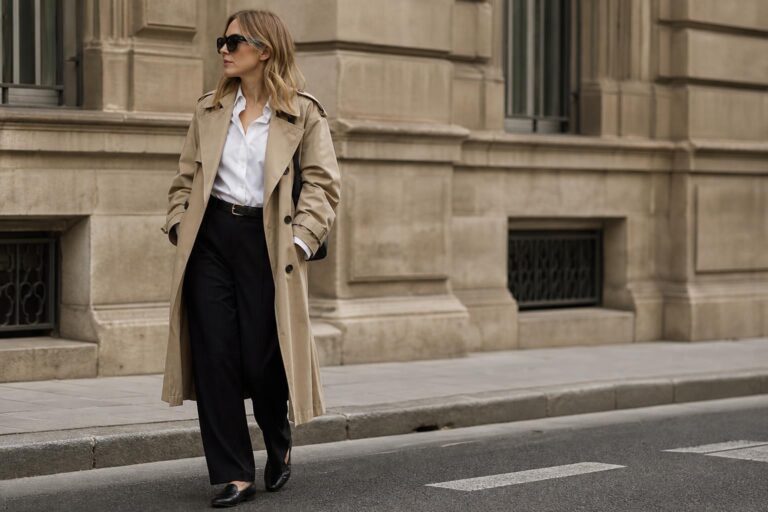
Not every old money dinner outfit needs to begin with a dress. A blazer-led composition can feel equally polished, particularly for business formal dinners, art openings, or dinner parties where you want the authority of tailoring. The effect is crisp, intelligent, and slightly more urban.
Start with a tailored blazer in navy, black, or ivory. Pair it with full-length trousers in wool crepe or another fabric with enough structure to hold a straight line. Underneath, keep the base simple: a refined blouse, a sheath-style top, or a silk layer with minimal detail. Add pointed-toe shoes and a clutch or understated evening bag. Gold jewelry or pearl jewelry keeps the finish quiet and classic.
This outfit composition works because the blazer creates instant silhouette discipline. It sharpens the torso and gives visual order to the full look, which is especially useful in mixed-formality settings. If a dinner begins with cocktails, the blazer also handles the transition beautifully, preserving polish from arrival through dessert.
Style tip: use one structured piece as the visual anchor
In a blazer-and-trouser look, the jacket should carry the authority. In a dress look, let the cut or fabric do that job. Too many competing focal points weaken the old money mood. Restraint is not emptiness; it is precise visual editing.
Look: emerald depth for formal dinners
Emerald is one of the few richer colors that fits naturally into this aesthetic when handled with discipline. It brings evening depth without abandoning the quiet luxury framework. For charity galas, formal dinners, or elevated venue-based events, emerald offers distinction while still feeling rooted in classic taste.
A column gown or midi dress in emerald silk or satin creates a sophisticated alternative to black and navy. Keep accessories muted: a small clutch, minimal gold jewelry, and understated shoes. The silhouette should stay clean and elongated rather than embellished. A tailored coat in a neutral tone can frame the look on arrival and departure.
The reason this works is contrast control. Emerald introduces color, but the rest of the styling remains restrained, preventing the look from drifting away from timeless elegance. It is especially effective in low-light evening settings where rich color reads polished instead of loud.
Look: tuxedo-inspired evening polish
This interpretation leans into the authority of formalwear while staying fully aligned with old money style. The mood is sharp and deliberate, ideal for cocktail events, business dinners, and evenings where a dress may feel expected but not necessary. It also suits readers searching for old money dinner outfit ideas that feel modern without losing tradition.
A black tailored suit with a precise blazer and clean trousers creates the framework. The shirt or blouse should be smooth and understated, with no excessive detail. Fine gold accents, pearl earrings, and an understated bag keep the look grounded in quiet luxury. Shoes should remain elegant and narrow in profile so the line of the trouser stays uninterrupted.
The styling advantage here is control. Tailoring manages proportion instantly and performs well through long dinners, seated events, and colder evening temperatures. Compared with a more fluid dress silhouette, a suit can also feel more credible in business-adjacent venues or city formal settings.
Look: cashmere and wool for a fall old money dinner outfit
Fall changes the texture story. The old money palette becomes deeper, and the atmosphere benefits from wool, knit, and cashmere surfaces that still read polished. This is where a fall old money dinner outfit feels especially strong: tonal, layered, and seasonally grounded without becoming bulky.
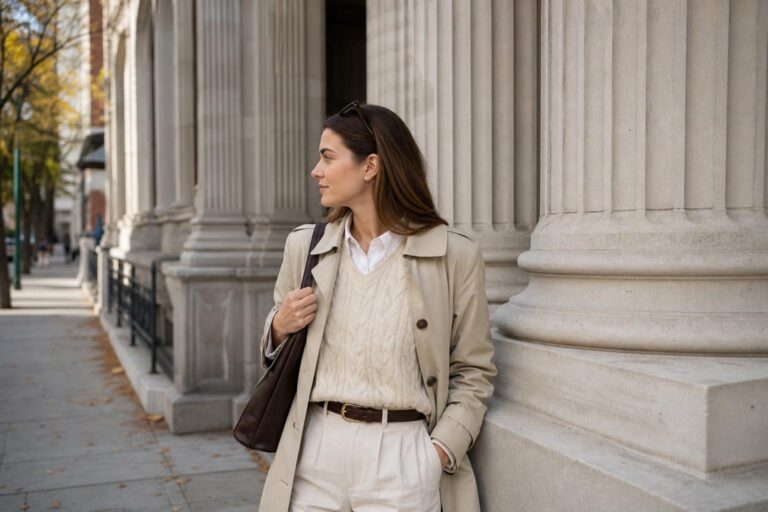
Think a cashmere knit under a tailored blazer, paired with a midi skirt or structured trousers in wool. A tailored coat can complete the line, especially for outdoor arrivals or dinners that involve walking between venues. The palette works best in black, navy, taupe, beige, or softened neutrals, with the textures providing variation instead of bright color.
This combination works because it aligns seasonal practicality with visual refinement. Cashmere softens the severity of tailoring, while wool gives shape and longevity. For colder nights, this approach often feels more convincing than forcing a lightweight silk dress into a setting that clearly calls for warmth.
Look: country club dinner classic
Country club dressing rewards discretion. The silhouette should feel polished but never theatrical, and the color palette should suggest confidence rather than experimentation. This version of the old money aesthetic is rooted in classic American evening style, where ease and etiquette matter as much as elegance.
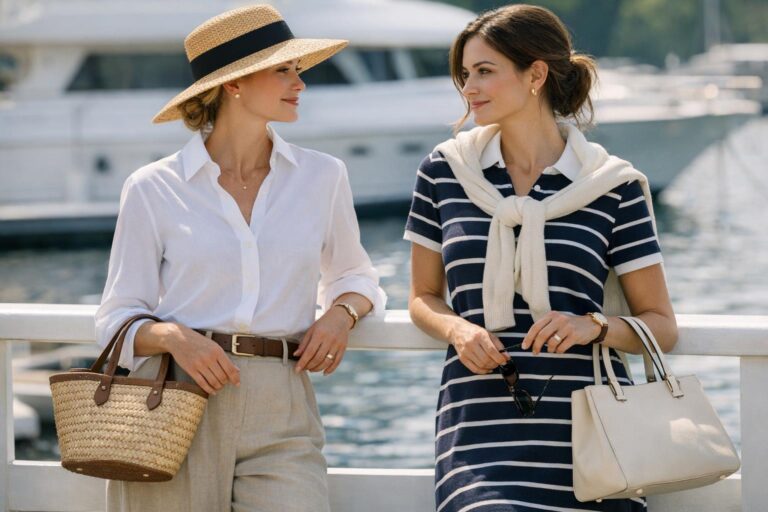
A midi sheath dress in navy, ivory, beige, or black works particularly well here, especially when paired with pearl jewelry and a structured but modest bag. A blazer or tailored coat can add finish if the venue leans conservative or the weather demands an outer layer. Footwear should remain formal enough for dinner but practical enough for movement across indoor and outdoor spaces.
The reason this look succeeds is context alignment. Country club dinners often favor well-mannered proportion, quality fabric, and minimal accessories. This is not the place for overworked styling. A cleaner composition usually reads more sophisticated, especially in spaces where tradition shapes the dress code.
Key pieces for this aesthetic
- navy or black sheath dress
- pearl studs or a restrained pearl detail
- tailored coat for arrival
- small clutch or understated top-handle bag
- simple pumps with a refined shape
Look: the dinner date slip dress with a tailored coat
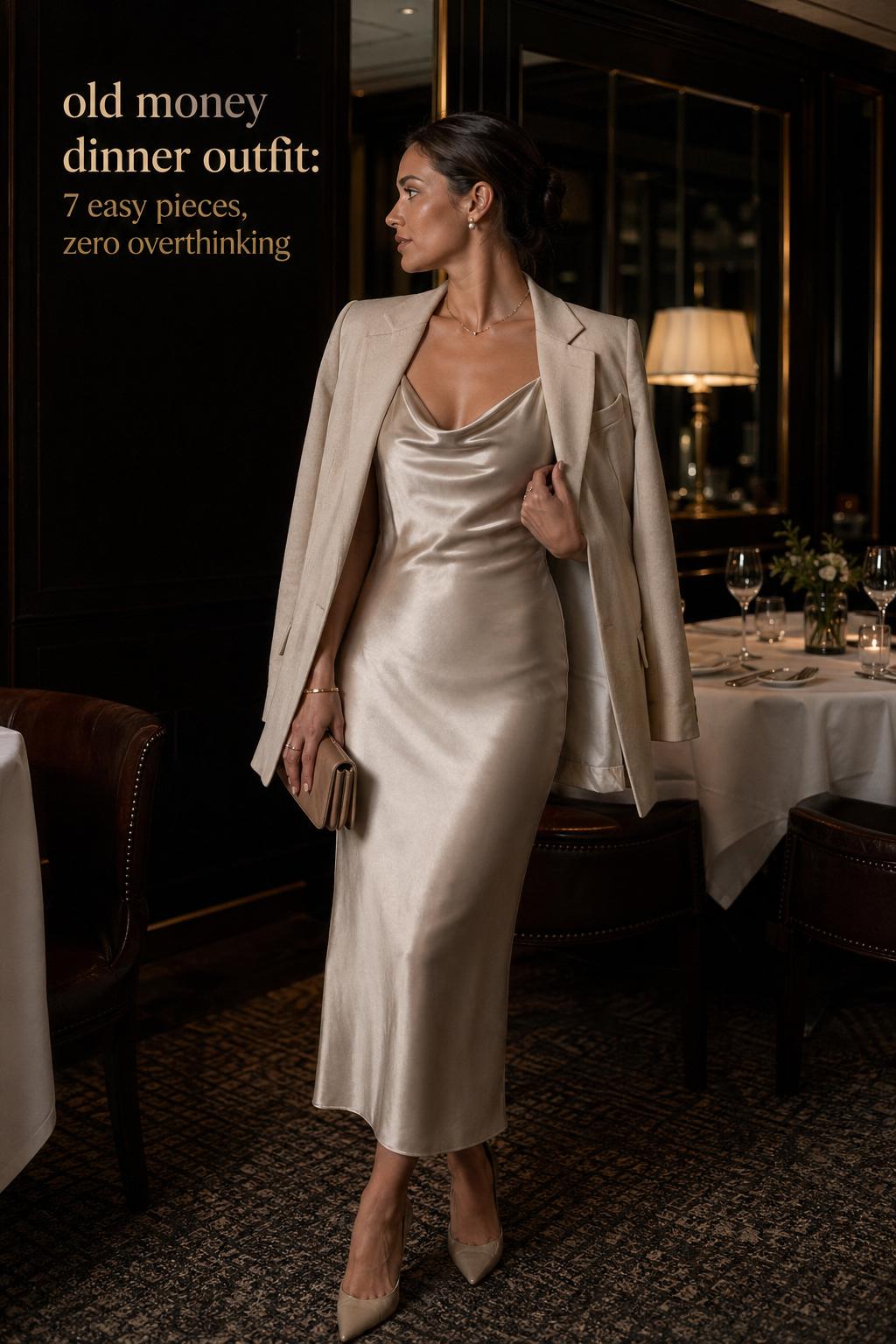
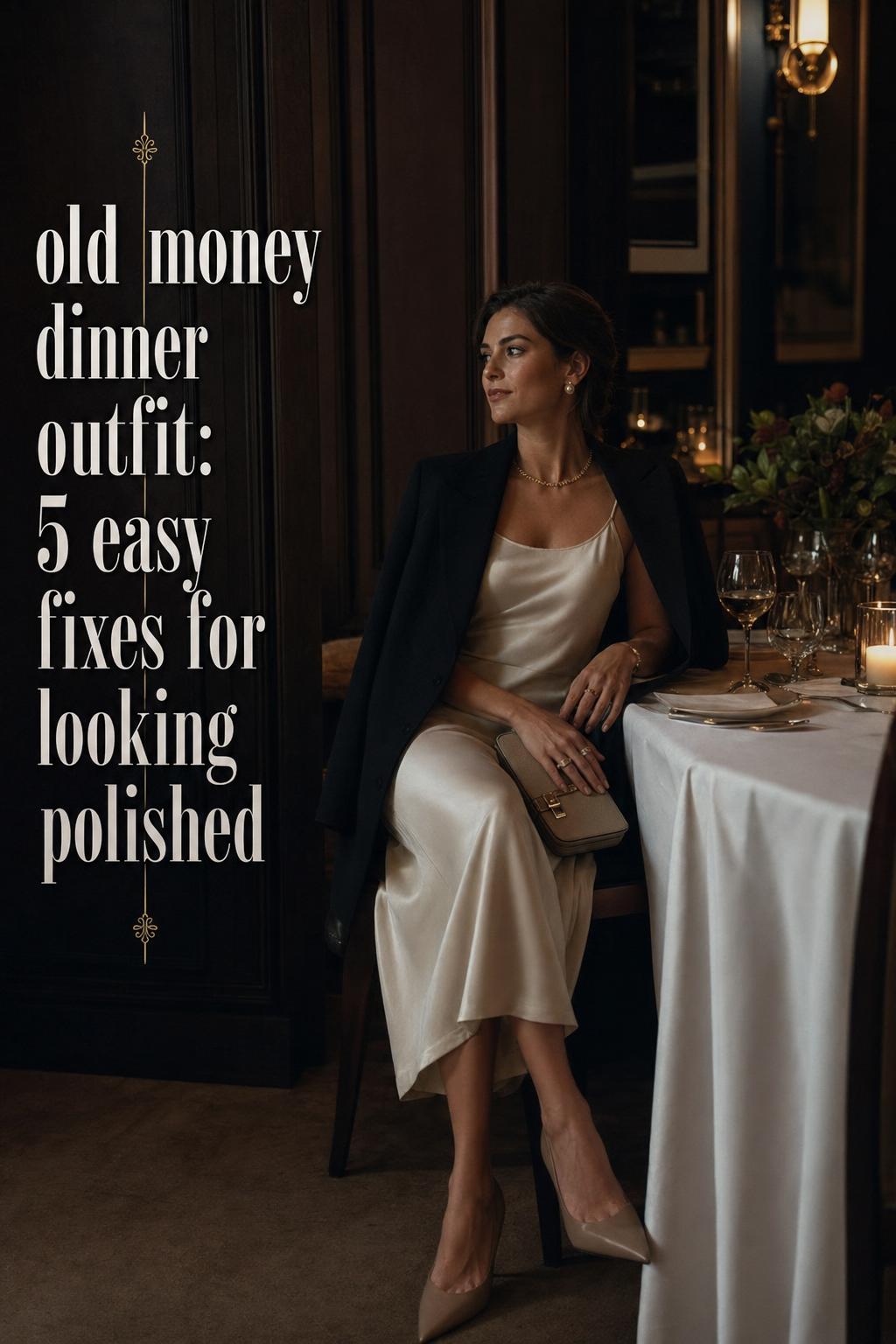
Among the most practical old money dinner outfit ideas, this pairing captures the balance between softness and structure. The slip dress offers fluidity and evening ease, while the coat adds weight, discipline, and a touch of formality. The mood is intimate and polished, ideal for a dinner date or a restaurant setting that calls for refined simplicity.
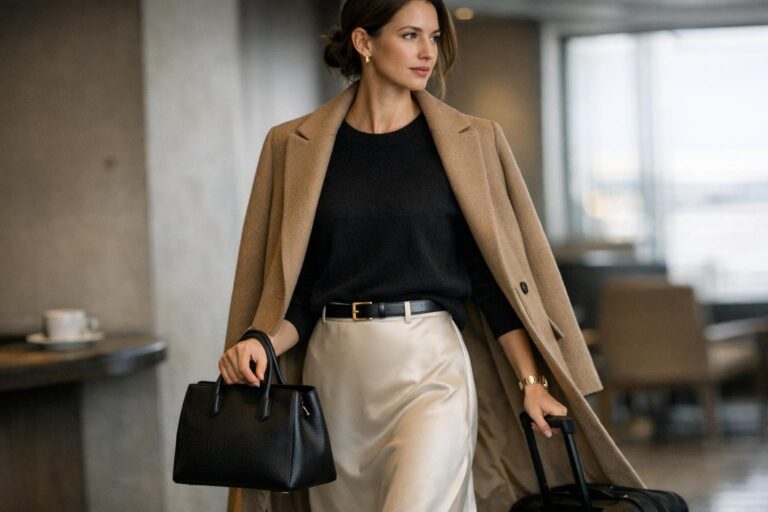
Choose a slip dress in silk or satin, preferably in black, ivory, taupe, or another quiet tone. Layer a tailored coat over the shoulders or wear it properly if the weather requires warmth. Add delicate gold jewelry, a small bag, and shoes that keep the silhouette elongated. The coat should be clean-lined rather than oversized to preserve the old money balance.
This formula works because it solves both aesthetics and function. The dress keeps the look evening-appropriate, while the coat makes the outfit feel complete beyond the table. It also photographs and moves well from arrival to departure, which is often where a dinner look is truly judged.
Look: quiet luxury in all black separates
An all-black dinner look can lean severe if the textures are flat or the shapes are generic. In an old money framework, the key is depth through material and proportion. The mood should feel rich, composed, and intentional rather than simply dark.
Pair black tailored trousers with a black silk top or blouse, then add a structured blazer if the event asks for extra formality. A satin finish against wool or crepe creates enough texture contrast to keep the outfit visually alive. Jewelry should remain fine and minimal, with gold accents adding warmth and definition around the face and neckline.
This interpretation suits cocktail parties, evening meetings that continue into dinner, and art openings where understated sophistication feels more relevant than overt glamour. The outfit composition is especially effective for those who prefer separates over dresses but still want a classic, dinner-ready finish.
Fabrics, color, and texture: the real language of quiet luxury
Silhouette may create the outline, but fabric creates the message. Silk and satin bring evening lightness and soft reflection. Wool crepe gives structure and polish. Cashmere introduces softness and warmth without making a look casual. These materials repeatedly define old money style because they support clean shapes and age better visually through an event.
Color should be chosen with the venue and formality in mind. Black and navy bring authority. Ivory, taupe, and beige soften the look and feel expensive when the fit is strong. Emerald works for formal dinners when the rest of the styling stays restrained. The less decorative the garment, the more important the fabric and cut become.
Texture contrast is also useful in moderation. A cashmere knit with wool trousers, or a silk dress under a tailored coat, creates depth without visual noise. That is the core of timeless style: every element should contribute to the same elegant mood rather than competing for attention.
Accessories that elevate without breaking the illusion
Accessories are where many dinner looks lose discipline. Old money styling does not reject accessories; it edits them. Jewelry should reinforce refinement, not function as a separate trend statement. Pearl jewelry, fine gold details, and minimal evening bags all support the aesthetic because they add finish without disrupting silhouette balance.
Understated bags and clutches work best because they maintain proportion. Footwear should follow the same logic: polished, narrow, and visually clean. If the dress or suit already has a strong shape, the accessories should become supporting elements. In this aesthetic, subtlety is not secondary. It is the mechanism that keeps the whole look credible.
Recognizable luxury houses can be part of the conversation when handled discreetly. Hermès, Burberry, Loro Piana, Chanel, and Dior carry quiet luxury associations in fashion culture, but the styling effect depends less on overt branding than on fabric quality, shape, and restraint. In other words, the signal should come from refinement, not obvious display.
How to keep accessories balanced
- choose either pearl jewelry or fine gold as the main jewelry direction
- keep the bag compact and structured
- avoid stacking too many focal points in one area
- let shoes support the silhouette rather than dominate it
- match accessory polish to the venue’s level of formality
Venue-based styling: from Madison Avenue polish to Mayfair restraint
Location changes the tone of an old money dinner outfit even when the core wardrobe pieces remain similar. In a New York setting, especially one associated with Madison Avenue formality, tailoring often feels sharper and darker. A structured blazer, black silk dress, or navy suit can look entirely natural because the urban environment supports precision and polish.
In London, particularly a Mayfair mood, the same aesthetic may lean slightly softer in color and surface while preserving the same level of restraint. Taupe, ivory, wool, and cashmere can feel especially apt, with the emphasis placed on discreet luxury rather than overt evening drama. Both settings reward the same principles: classic silhouettes, quality fabrics, and minimal accessories.
This matters because real-world dressing is always contextual. A look that feels perfect for a private city dinner may need a warmer fabric, different coat, or softer palette for another venue. The old money aesthetic is not rigid. It is responsive, but always within a disciplined visual framework.
Men’s old money dinner outfit direction
Although many dinner guides focus more heavily on women’s looks, the same principles apply clearly to men. The strongest old money dinner outfit for men relies on tailoring, fabric quality, and quiet accessories rather than dramatic styling. Dinner attire should feel composed, with clear attention to fit, jacket line, and overall proportion.
A suit in navy, black, or another deep neutral works best for most formal and semi-formal dinners. Wool is especially reliable because it keeps structure through the evening. For less rigid settings, a tailored blazer with precise trousers can be enough. Accessories should remain disciplined: a classic tie where appropriate, polished shoes, and a restrained overall finish that feels timeless rather than trend-driven.
This approach is effective because it translates the old money aesthetic into the same visual values seen elsewhere: clean lines, quality fabric, and controlled styling. At a country club dinner or business formal evening, that restraint often reads more sophisticated than anything overly fashion-forward.
Common mistakes that make the look feel off
The first mistake is confusing old money style with visible excess. Too much jewelry, too many trend-led details, or a heavily embellished dress can overpower the quiet luxury effect. The second is ignoring fit. A neutral palette cannot save an outfit if the blazer pulls, the hem sits awkwardly, or the trousers collapse at the shoe.
Another common problem is using fabrics that do not support the silhouette. If a dress is meant to skim the body elegantly, it needs a material with the right drape. If a blazer is meant to sharpen the frame, it needs enough structure. The old money aesthetic depends on fabric and cut working together, not on styling tricks covering weak construction.
Finally, many people over-accessorize in an attempt to make a simple look feel more formal. In reality, a strong evening look often improves when one element is removed. If the dress is already polished, let the jewelry stay small. If the suit is beautifully tailored, the bag and shoes should remain quiet. Editing is often the last and most important step.
Practical tip for long dinners
Always test an outfit seated, not only standing. Dinner dressing is judged across hours, not moments. A neckline that shifts awkwardly, a skirt that rides up, or a blazer that feels rigid at the table can undermine an otherwise elegant look. Movement, comfort, and posture are part of the final impression.
How to build an old money dinner capsule
A practical wardrobe approach starts with fewer, better-aligned pieces. One silk or satin midi dress, one black or navy blazer, one pair of tailored trousers, one refined skirt, one cashmere layer, one tailored coat, and a controlled accessory set can cover most dinner scenarios from cocktail parties to formal evenings. This is why the old money wardrobe feels efficient as well as elegant.
The value of a capsule lies in consistency. When every piece shares a compatible palette and silhouette logic, dressing becomes easier and the results become more coherent. A pearl earring, a gold bracelet, a compact clutch, and classic shoes can move between multiple outfits without making the styling feel repetitive. Repetition, in this context, becomes signature.
If budget is a consideration, the priority should be cut and fabric behavior over quantity. A smaller wardrobe with strong tailoring and credible texture will always support the old money aesthetic better than a larger collection of visually similar but poorly balanced pieces. Quiet luxury is not about excess ownership. It is about disciplined selection.
Where each version works best
- black silk dress: cocktail hour, private dinner, formal restaurant evening
- ivory and taupe tonal look: dinner date, elegant warm-weather venue, refined semi-formal event
- tailored blazer and trousers: business dinner, art opening, city evening event
- emerald gown or midi: charity gala, formal dinner, dressed-up evening venue
- cashmere and wool layering: fall dinner, outdoor arrival, cooler country club setting
- navy sheath with pearls: country club dinner, traditional venue, understated formal gathering
The appeal of timeless dinner dressing
The enduring power of this aesthetic comes from its reliability. An old money dinner outfit does not depend on a single trend cycle or one dramatic styling move. It succeeds because it understands proportion, texture, venue, and mood. Each look feels grounded in a larger visual language of timeless elegance, whether expressed through silk, wool, pearls, or impeccable tailoring.
The easiest way to adapt the style is to begin with silhouette discipline and a quiet palette, then build outward through fabric and accessories. Whether the setting is a cocktail party, a country club dinner, a formal city event, or a simple dinner date, the same principle holds: refined dressing looks strongest when it feels composed, not crowded. That is why this aesthetic continues to resonate. It is not loud, but it leaves a clear impression.
FAQ
What is the best old money dinner outfit for a formal evening?
A formal evening usually calls for a long, clean silhouette in a quality fabric such as silk, satin, or wool crepe. A column dress, polished midi dress, or tailored suit in black, navy, ivory, or emerald works especially well when finished with minimal jewelry, a compact clutch, and understated shoes.
How do I dress old money for a dinner date?
For a dinner date, focus on softness with structure. A silk slip dress with a tailored coat, or a refined midi dress with pearl or fine gold jewelry, creates a polished look that feels intimate rather than overdone. Keep the palette neutral and the accessories restrained so the silhouette stays elegant.
Can an old money dinner outfit include pants instead of a dress?
Yes, tailored trousers are fully aligned with the old money aesthetic when the fit is sharp and the styling remains disciplined. A blazer with straight-leg trousers and a silk or refined blouse is especially effective for business dinners, cocktail-to-dinner transitions, and art-opening settings.
Which colors look most expensive for old money dinner style?
Black, navy, ivory, taupe, beige, and other neutrals tend to create the strongest quiet luxury effect because they allow fabric and silhouette to stand out. Emerald can also work beautifully for formal dinners when the shape remains clean and the accessories stay minimal.
What accessories suit an old money dinner outfit?
Pearl jewelry, fine gold accents, pointed-toe pumps, and small structured bags or clutches are the most reliable choices. The goal is to support the overall outfit composition rather than introduce a second statement, so accessories should feel polished and discreet.
How can I make a fall old money dinner outfit feel elegant instead of heavy?
Use seasonal fabrics with a refined finish, such as cashmere and wool, but keep the silhouette long and controlled. A cashmere knit under a tailored blazer, a wool midi skirt, or structured trousers with a tailored coat creates warmth without sacrificing polish. Tonal neutrals help the look stay light and composed.
Is cocktail attire the same as an old money dinner outfit?
They overlap, but they are not identical. Cocktail attire is a dress code category, while the old money aesthetic is a style language built around timeless elegance, quiet luxury, and restraint. Many old money dinner looks work perfectly for cocktail hour, especially when they use classic silhouettes and controlled accessories.
What fabrics convey quiet luxury most clearly at dinner?
Silk, satin, wool crepe, wool, and cashmere are the clearest choices because they drape or structure the body in a refined way and hold up well under evening lighting. These fabrics give simple garments more authority, which is essential to the old money look.
Can men wear the old money aesthetic to dinner events?
Absolutely. For men, the aesthetic is expressed through a well-cut suit or blazer-and-trouser combination in deep neutrals, supported by quality fabric and minimal accessories. The strongest results come from precise tailoring, polished shoes, and an overall finish that feels classic rather than trend-driven.
How do I keep the outfit from looking too plain?
The answer is texture and fit, not more decoration. A silk surface, a precise shoulder line, a tailored coat, or a contrast between cashmere and wool can add depth while preserving restraint. In old money style, visual interest should come from material and proportion rather than obvious embellishment.