The Modern Old Money Dress: Sharp Lines, Quiet Authority
Why the old money dress still reads as the sharpest kind of modern polish
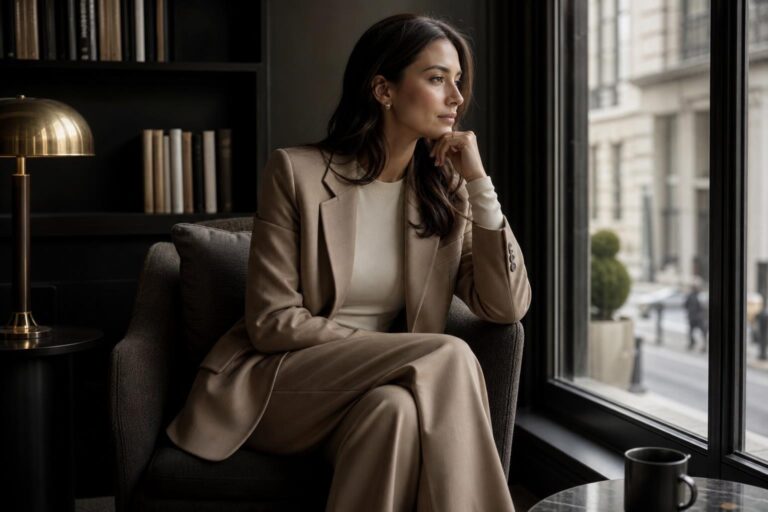
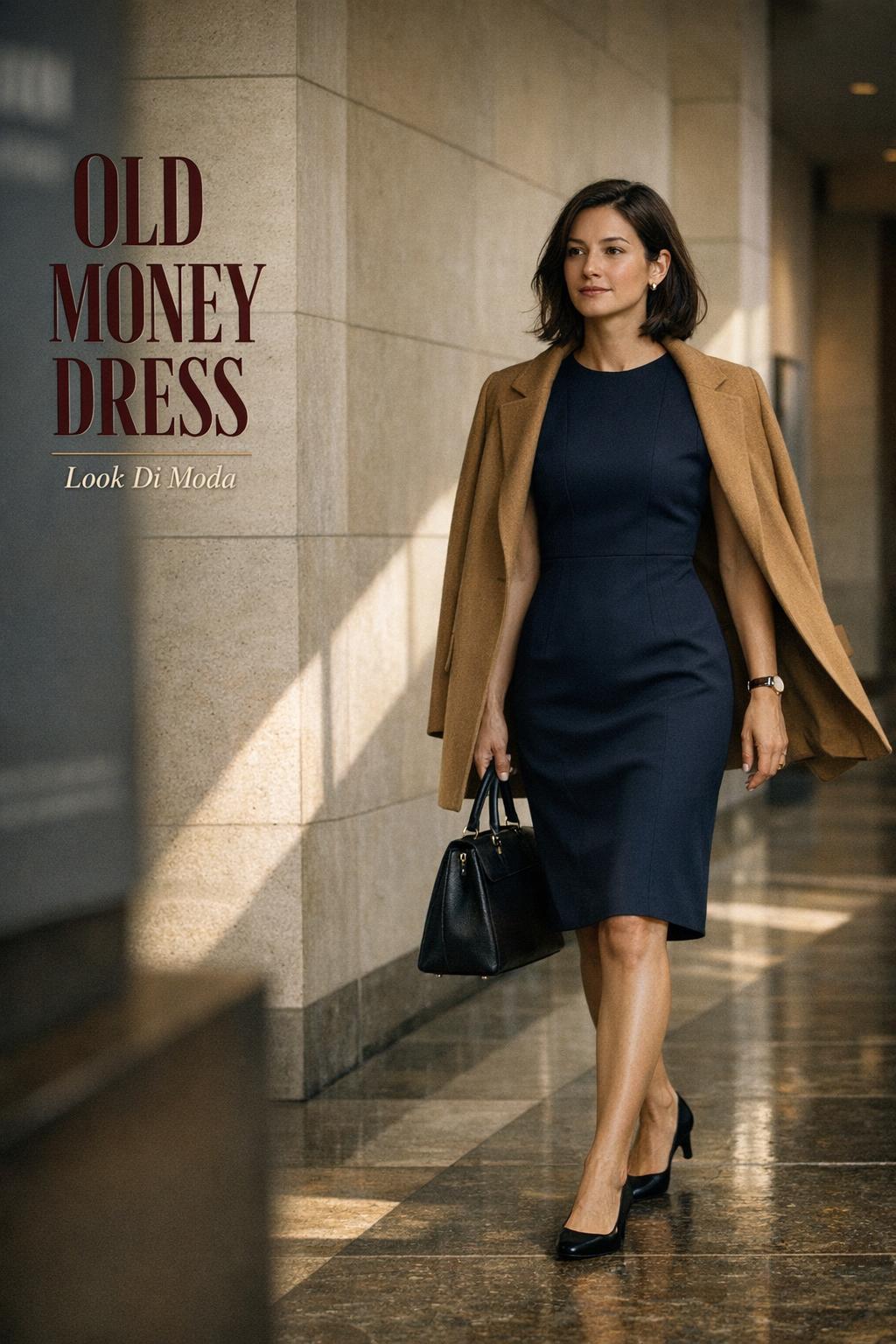
An old money dress works the way good architecture does: it’s quiet, proportioned, and immediately legible. In a world of trend cycles that spike and vanish, this aesthetic holds because its logic is structural—clean lines, disciplined color, and fabric that behaves well in motion. The result isn’t “basic.” It’s controlled visual strategy. You can spot it in a tailored sheath at a work lunch, a restrained midi at a museum, or a modest feminine outfit elegant enough for a formal dinner without performing for the room.
What makes the category especially relevant now is that it supports multiple style priorities at once: refinement without fragility, femininity without excess, and versatility across settings. It also aligns with the “look di moda” mindset in its most intelligent sense—fashion that looks current because it’s composed well, not because it’s loud. Even mini dress fashion can live here when the details remain disciplined: strong fabric, balanced proportions, and a neckline or sleeve that keeps the silhouette anchored.
Defining the “old money” effect: silhouette discipline, fabric behavior, and restrained signals
The old money effect isn’t a single hem length or one kind of dress. It’s a set of design decisions that work together. When the silhouette, fabric, and styling signals all align, the outfit reads expensive—even if the price tag doesn’t. When one element breaks the system (a flimsy fabric, chaotic color, exaggerated cutouts), the illusion collapses.
Silhouette: clean lines with intentional proportion play
Old money women outfits dresses tend to favor shapes that hold their own without clinging. Think structured at the shoulder, smooth through the torso, and calibrated at the hem. The goal is silhouette balance: if the skirt is fuller, the top half stays contained; if the dress is straight, the waist placement and neckline do the work of shaping. This is why tailored midis and sheaths are so reliable—your outline remains clear from multiple angles, even in movement.
Found the dress? Keep the rest in one place.
Zarellea brings guest details, vendors, timelines, and every next step together — so your wedding plan feels as good as your look.
Fabric: the quiet determinant of credibility
Fabric behavior is the difference between “classic” and “costume.” The old money dress relies on textiles that don’t wrinkle into chaos, don’t shine cheaply, and don’t collapse at the seams. A stable weave supports clean seams and crisp hems. Even in softer materials, the surface should look intentional—more refined matte than glossy glare. If you want the look to hold from morning commute to evening reservation, fabric performance matters as much as cut.
Signals: minimal hardware, precise details, and controlled skin exposure
In this style language, details are small but decisive: a well-set collar, a properly placed dart, a hem that doesn’t ride up when you sit. Hardware stays discreet; logos don’t carry the story. Skin exposure—if any—feels measured. That’s why modest old money outfits women often look so powerful: coverage becomes part of the authority, not a compromise. The visual message is composure.
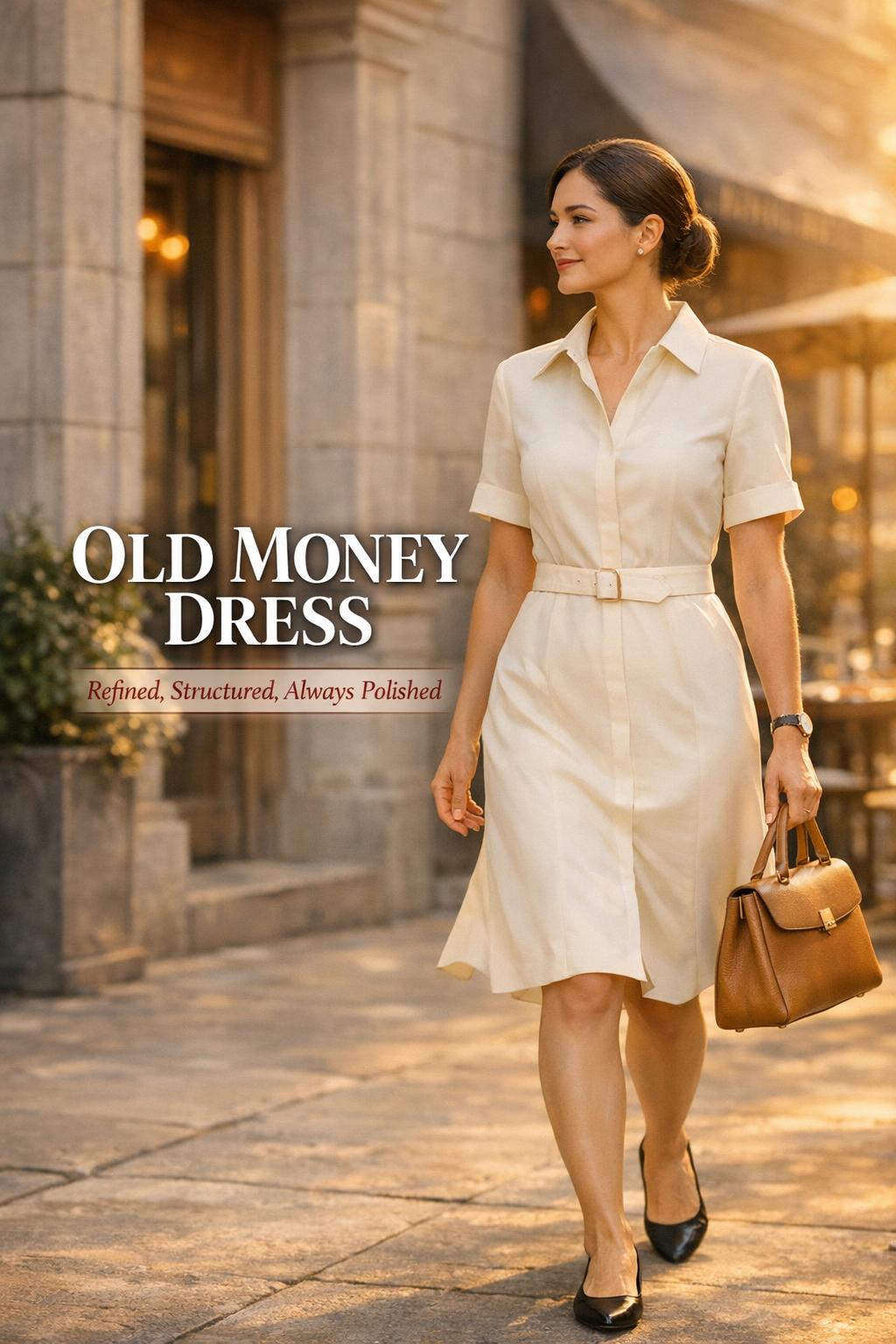
The old money dress color strategy: neutrals, seasonal palettes, and tonal layering
Color is where this aesthetic becomes instantly recognizable. The strongest old money dress choices treat color like a background score—supportive, not disruptive. That doesn’t mean only beige. It means palette control: fewer competing tones, more intentional pairing, and a clear relationship between dress, shoes, and outer layers.
Neutral anchors that always read polished
Neutrals function as the wardrobe’s visual anchor: ivory, cream, camel, navy, charcoal, and black. These shades make tailoring look sharper and fabric look richer because the eye focuses on construction rather than print noise. They also make it easier to repeat outfits without looking repetitive—swap accessories, adjust layering, and the same dress shifts contexts smoothly.
Seasonal palette logic without trend-chasing
Seasonal context matters because color reads differently under different light. Lighter neutrals and soft blues feel clean in spring and summer; deeper navies and charcoals feel grounded in fall and winter. The old money approach uses seasonality as refinement, not novelty. You aren’t “doing a trend.” You’re aligning your palette with the environment so the outfit composition looks inevitable.
Tonal layering: how to look expensive without looking loud
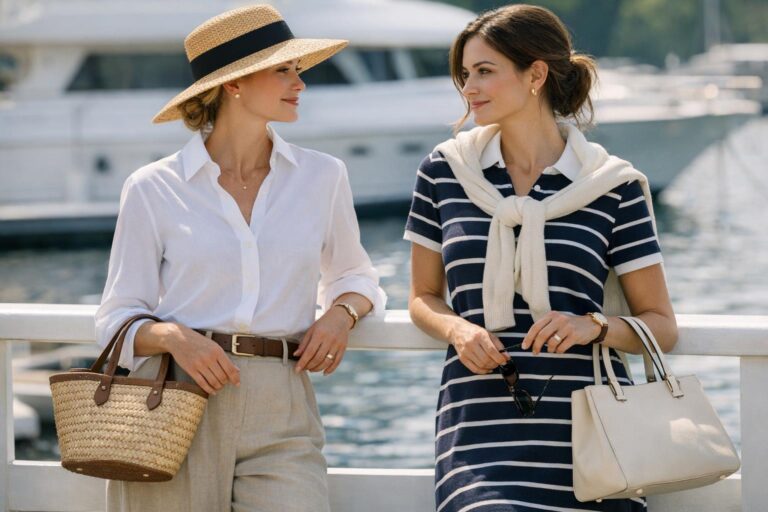
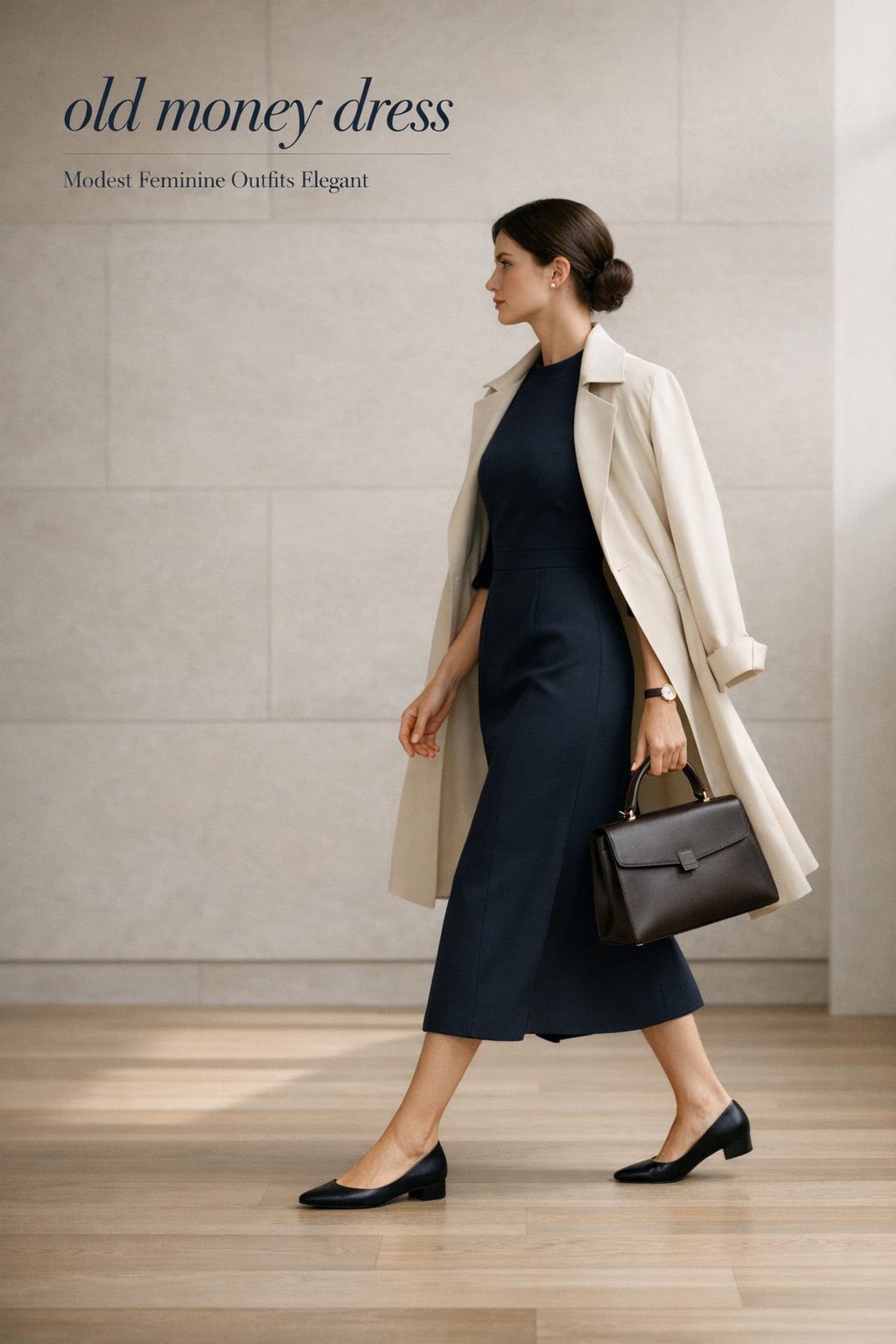
Tonal layering—staying within one color family and varying shade depth—creates instant sophistication. A navy dress with slightly lighter navy knit draped over the shoulders, or an ivory dress under a cream coat, reads cohesive because it reduces visual interruption. This is also a practical trick for modest feminine outfits elegant enough for formal settings: coverage can increase without adding bulk or breaking the line.
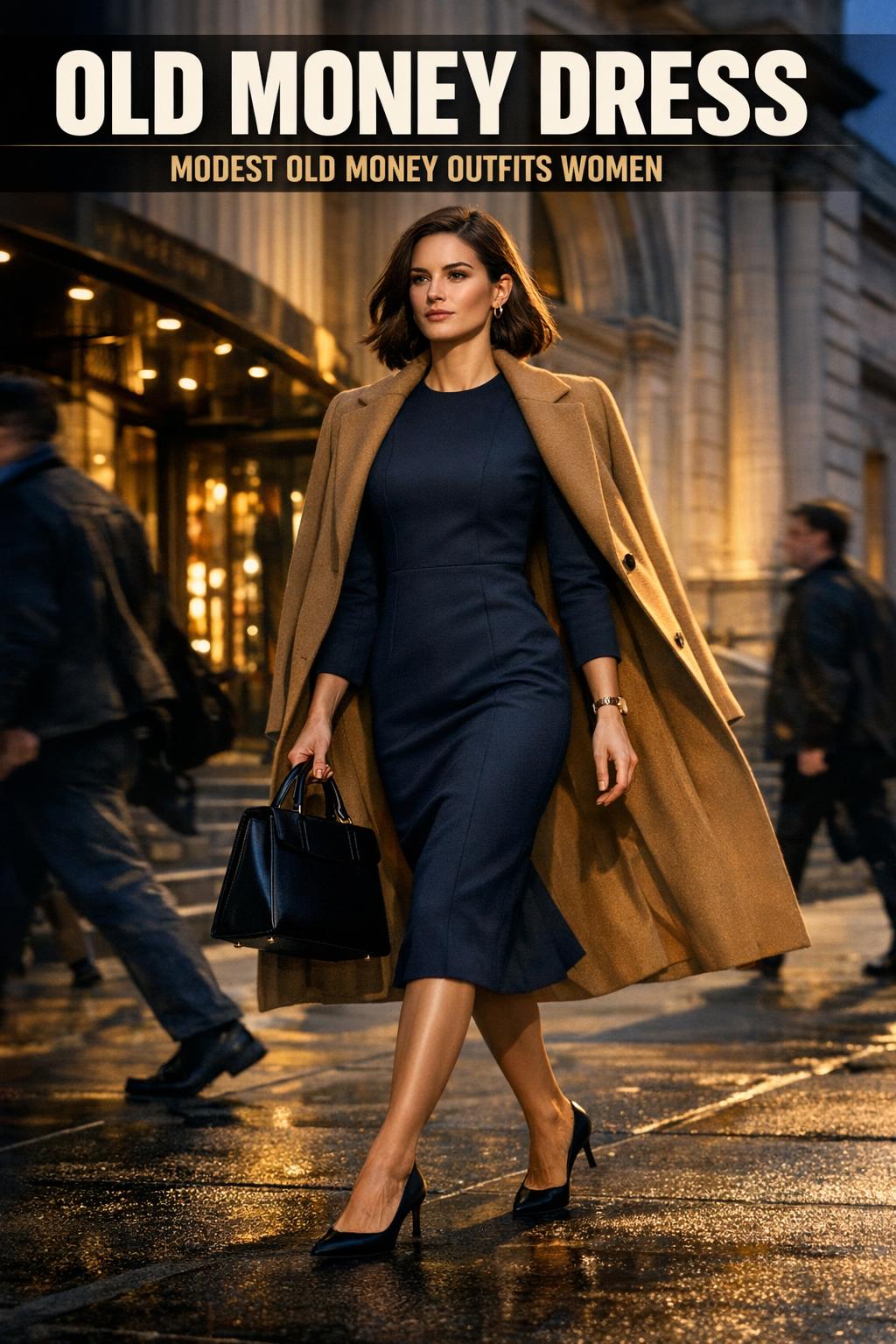
Length and hemline intelligence: mini dress fashion through an old money lens
Hemline is often where people misinterpret the aesthetic. The old money dress is frequently associated with midi lengths because they’re naturally composed, but the concept can stretch shorter or longer if you keep proportion discipline. Mini dress fashion can still read refined when it behaves like tailoring, not like partywear.
When a mini can still look “old money”
A mini works when the dress is structured and the styling is restrained. The silhouette should feel stable—think clean A-line or tailored shift rather than bodycon. The neckline and sleeves become the balancing mechanism: higher necklines, sleeves, or a strong shoulder line counter the shorter hem and keep the composition from feeling exposed.
- Choose firm fabric that holds shape and doesn’t ride up when walking.
- Prioritize clean seams, crisp hems, and minimal embellishment.
- Balance leg exposure with a more covered top half or a sharp outer layer.
Midi and maxi: the default setting for quiet authority
Midi and maxi lengths naturally support modest old money outfits women because they create a long vertical line and reduce the need for constant adjustment. The silhouette reads considered when you sit, stand, and move through a room. For real life—meetings, travel days, long dinners—this length range also performs better for comfort and composure.
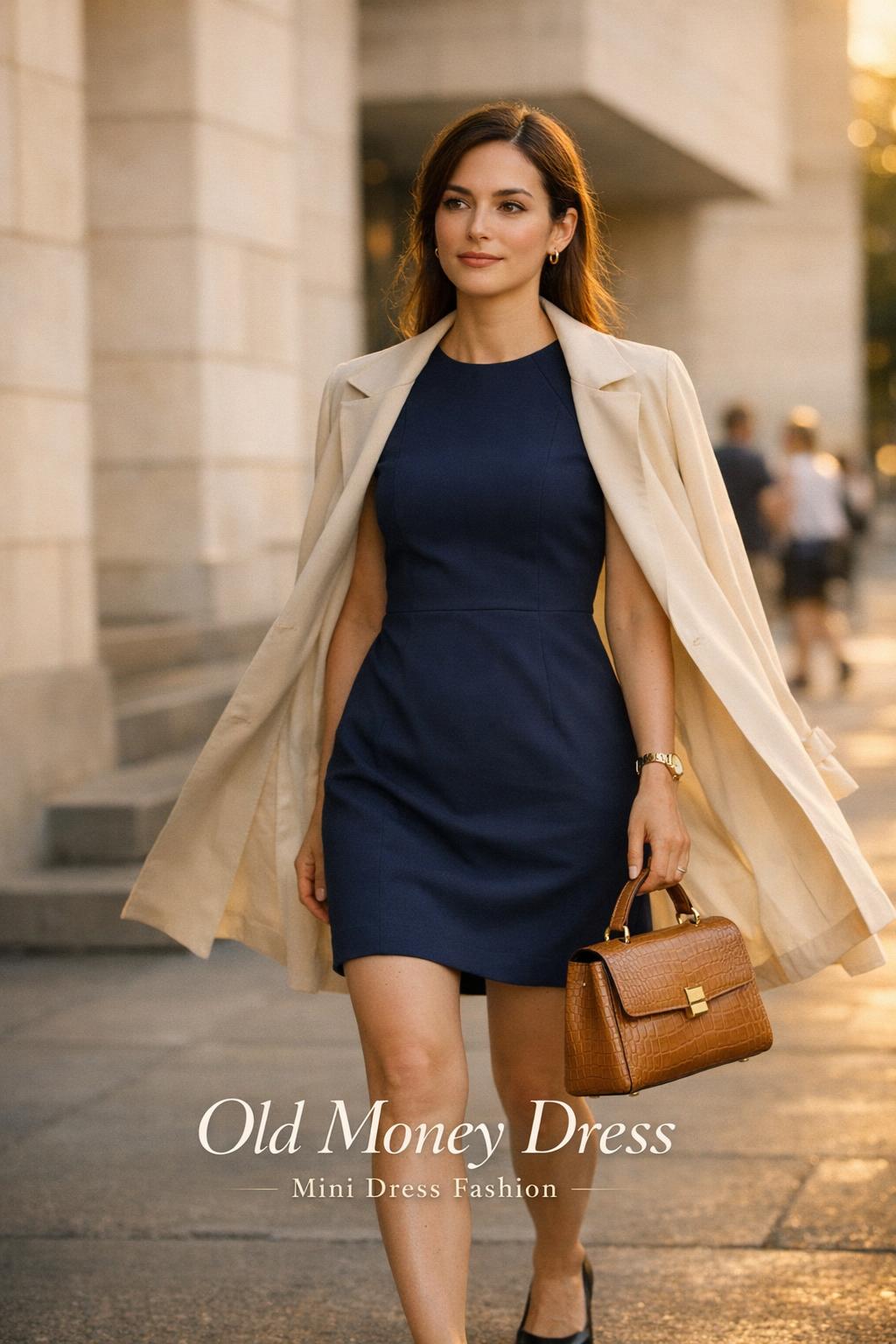
Modest old money outfits women actually wear: coverage as a design advantage
Modesty and elegance aren’t competing priorities in this aesthetic—they reinforce each other. Coverage gives you more surface area for tailoring, texture contrast, and line control. The effect is often more striking than a revealing look because the outfit’s impact comes from precision rather than exposure.
Necklines and sleeves that look intentional, not restrictive
The most effective modest feminine outfits elegant in an old money direction use necklines that frame the face without pulling attention downward. A clean crew, boat neckline, or modest V can elevate posture visually. Sleeves—short, elbow, or long—add structure and keep the silhouette consistent across temperatures and settings. The goal is stability: you never look like you’re adjusting your outfit.
Layering that preserves the dress line
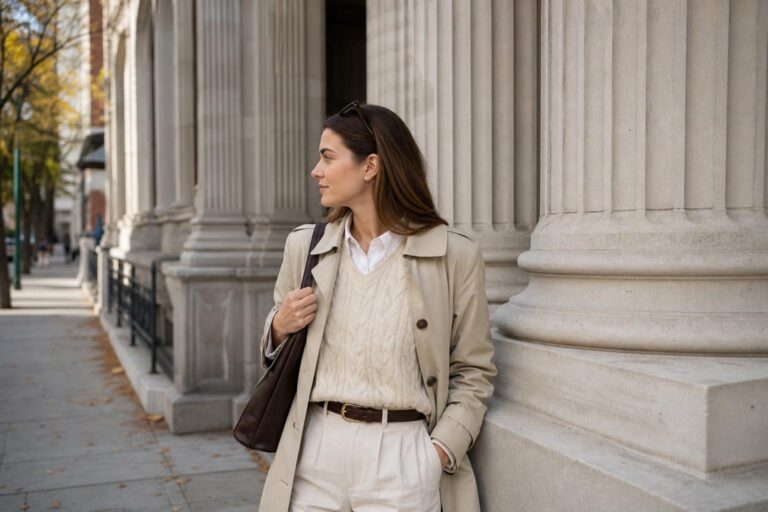
Layering fails when it interrupts proportion. It succeeds when it extends it. A structured blazer over a streamlined dress creates a disciplined column; a fine knit adds softness without bulk. The most old money result comes from outer layers that echo the dress’s geometry—straight, clean, and aligned at the shoulder.
Tips: If your outfit starts to feel heavy, scale back to one “structure piece” at a time—either the dress is structured and the layer is soft, or the dress is soft and the layer is structured. That texture contrast keeps the look rich without looking stiff.
Key pieces that build the wardrobe: what makes a dress feel “old money” in practice
You don’t need a closet full of dresses; you need a small set that covers different scenarios while staying in the same style language. The old money approach is system dressing: repeatable silhouettes, controlled palette, and consistent finishing. That’s why these pieces matter—they create a modular wardrobe where styling is an editorial choice, not a daily scramble.
The tailored sheath: the cleanest line in the category
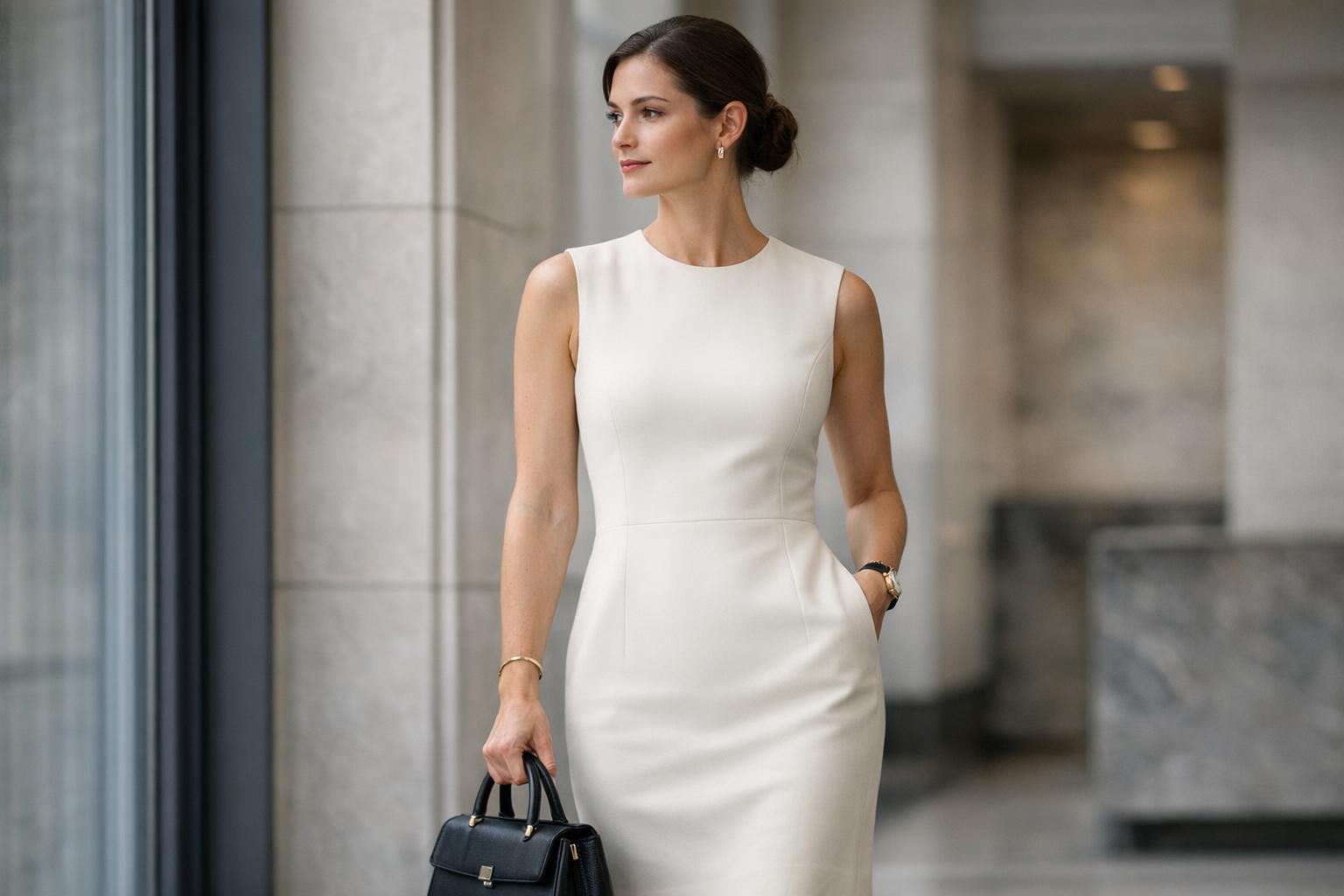
A sheath dress is the sharpest tool for old money women outfits dresses because it lets construction lead. It works in offices, dinners, and formal daytime events. The key is fit that skims rather than grips—enough ease to sit comfortably, enough structure to keep the waist and shoulder line defined.
The shirt dress: controlled ease with built-in structure
A shirt dress brings instant order because the collar and placket create vertical structure. It’s especially strong for modest old money outfits women because it offers coverage while still feeling light. Belt it for waist definition, or keep it straighter for a more relaxed, inherited-polish mood.
The knit dress: softness that still reads composed
Knit dresses can drift into casual territory unless you control the silhouette. A straighter knit with clean finishing reads refined; overly thin knits can look clingy or fragile. Use a blazer or structured coat to create a strong frame, and keep accessories minimal so the texture becomes the statement piece.
The understated mini: a modern lever when you keep the rules
Mini dress fashion in this space is less about “cute” and more about sharp proportion play. The mini becomes your modern lever—use it for a city dinner, a gallery opening, or a warm-weather occasion where you want a shorter hem without losing elegance. The styling should stay composed: neutral shoes, structured bag, and restrained jewelry.
Outfit composition: shoes, bags, and the “expensive” finishing logic
The old money dress only reaches full impact when the supporting pieces hold the same standard. Accessories aren’t decoration here; they’re the framework that keeps the look coherent. One mismatched element—an overly trendy shoe, a busy bag, hardware that competes—can make the dress look less intentional.
Shoes: let shape and material do the talking
Refined footwear tends to be simple in line: a clean pump, a minimal slingback, a polished flat, or a sleek boot depending on season. The point is proportion continuity—the shoe shouldn’t visually “cut” the leg in a harsh way unless that’s an intentional styling choice. A shoe that matches or complements the dress tone extends the line and heightens elegance.
Bags: structured, scaled, and not overstated
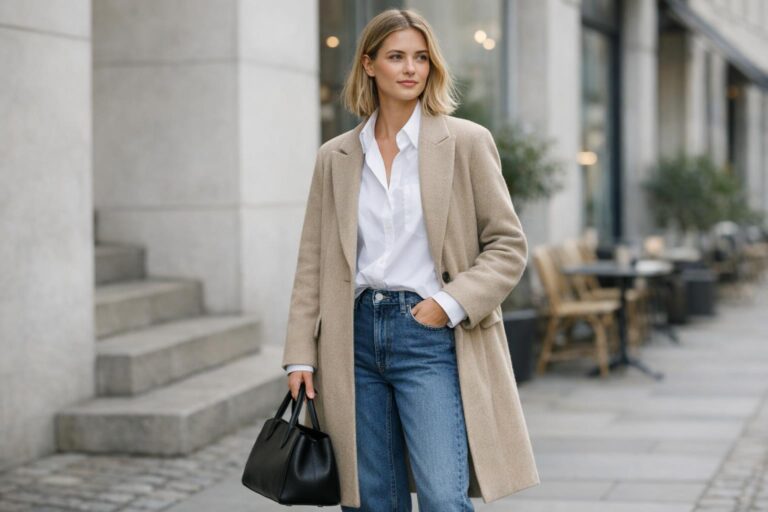
A structured bag reinforces the old money framework because it mirrors tailoring. Scale is key: too large and the outfit turns utilitarian; too small and it reads like evening-only. Aim for a size that suits your day—enough for essentials, compact enough to keep the silhouette clean.
Jewelry and hardware: minimal, strategic, and consistent
Hardware should feel like punctuation, not a headline. Keep finishes consistent—don’t mix too many metals if the dress is already doing subtle work. If you want a more “look di moda” edge while staying old money, use one modern element (a sharper earring shape, a slightly bolder watch profile) and keep everything else quiet.
Occasion mapping: where an old money dress performs best in the U.S.
The appeal of this aesthetic is that it’s context-flexible. With small adjustments—shoe choice, outerwear, hair, and bag—you can move the same dress across very different venues. The goal is always the same: look appropriate, elevated, and unbothered.
Work and presentations: authority without severity
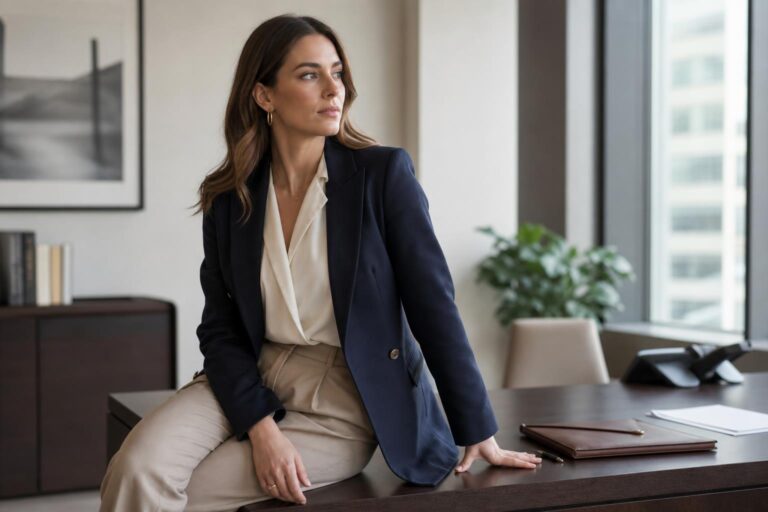
For the office, the most effective old money dresses read professional through structure and coverage: sheath, shirt dress, or a refined knit. Add a blazer to sharpen the shoulder line and reinforce credibility. Keep color controlled—navy, charcoal, cream—so your message is competence, not costume.
Weddings and formal daytime events: elegance with restraint
Old money women outfits dresses translate well to weddings because the aesthetic is inherently respectful: it looks celebratory without competing. A midi is typically the safest proportion choice. The key is fabric that photographs well—matte, substantial, and clean in line—paired with minimal accessories that won’t distract.
Dinners, museums, and city weekends: polished but not overbuilt
For cultural settings, the old money dress reads most current when it’s slightly simplified. Let the dress be the column, then add one sharp layer (a blazer or clean coat) and one intentional accessory. If you choose mini dress fashion here, keep the top half refined and the shoe sleek so the overall impression stays composed.
Tips: For long dinners or events with lots of standing, prioritize a dress you can move in. If you can’t comfortably sit, walk, and lift your arms without adjusting the neckline or hem, the outfit will stop reading effortless—no matter how good it looks in a mirror.
Common mistakes that break the old money illusion (and how to correct them)
The old money aesthetic is unforgiving in one way: it’s built on restraint. When styling gets chaotic, the whole concept unravels. The fix is rarely “buy something new.” It’s usually editing—removing noise so construction, fabric, and proportion can be the focus again.
- Too many focal points: If the dress has a strong neckline or sleeve detail, keep shoes and jewelry quiet to maintain hierarchy.
- Overly thin or clingy fabric: Swap to a more stable textile or add a structured layer to restore silhouette control.
- Unbalanced proportions: A short hem with a plunging neckline reads partywear; balance exposure with coverage to return to elegance.
- Busy branding or loud hardware: Choose clean lines and minimal finishes so the look reads discreet and expensive.
- Color chaos: Reduce the palette to two tones or go tonal; cohesion is the fastest route to polish.
Modest feminine outfits elegant: how to build “soft power” with dress styling
There’s a reason modest old money outfits women are often the most striking: they rely on soft power. The impact comes from control—smooth lines, consistent palette, and texture that looks intentional. This is where femininity becomes precise rather than ornamental.
Use texture contrast to add depth without adding noise
A refined dress becomes more dimensional when you pair textures thoughtfully. A structured dress with a soft knit layer creates a polished-yet-relaxed silhouette. A matte dress with a subtly different matte outer layer creates depth without shine. Texture contrast is particularly useful when you keep color neutral; it stops the look from feeling flat while staying restrained.
Let the waistline be the quiet shaping tool
Old money dressing doesn’t require tightness to show shape. A defined waist—through seaming, a belt, or careful tailoring—creates visual structure while keeping comfort intact. This is also the easiest way to make one dress work across settings: cinched for a formal moment, relaxed for day.
Keep grooming aligned: clean, simple, and consistent
Even the best dress loses power if the finishing feels inconsistent. The old money impression is reinforced by coherence: shoes that look maintained, fabric that’s pressed, and overall styling that reads intentional. The goal isn’t perfection; it’s reliability—nothing looks accidental.
Look di moda, but understated: making classic feel current without breaking the code
Modernizing the old money dress isn’t about chasing novelty; it’s about selecting one updated lever and keeping everything else calm. This is where many outfits achieve that “look di moda” energy—current and sharp, yet still anchored in restraint.
Update one element at a time
Choose a single modern note: a slightly sharper shoulder, a cleaner square neckline, or a more architectural shoe shape. Then keep palette, jewelry, and bag classic. The look reads intentional because the viewer can identify the focal point immediately.
Use proportion as the modern signal, not decoration
Proportion play is the safest way to look current while staying old money. A mini with long sleeves, a midi with a strong shoulder line, or a straighter silhouette paired with a structured coat—all of these feel modern because they’re about shape, not embellishment.
Practical wardrobe planning: building a small rotation that always looks “right”
The most convincing old money wardrobes are repetitive in the best way. They rely on a tight rotation of dresses that share a palette and construction standard. This makes daily dressing faster and creates a consistent personal uniform—an advantage for travel, busy work weeks, and events clustered across a season.
A tight color system prevents wasted purchases
Choose two core neutrals (for example, navy and cream) and one supporting neutral (camel, charcoal, or black). Dresses within this system mix effortlessly with the same shoes and outerwear. This is the simplest way to make modest feminine outfits elegant without needing constant new accessories.
Fit and tailoring: where the “expensive” feeling actually comes from
Fit is less about tightness and more about alignment: shoulders sitting correctly, waist placement that flatters your natural proportions, and hems that stay level. If a dress pulls at the hips or gapes at the chest, it interrupts the clean line that the aesthetic depends on. Small tailoring adjustments often create the biggest jump in perceived quality.
Tips: Before committing to a dress for your rotation, do a movement test: sit, walk quickly, raise your arms, and take a large step. If the dress stays aligned and you don’t need to tug or smooth it constantly, it’s a strong candidate for an old money wardrobe.
FAQ
What exactly makes a dress an old money dress?
An old money dress is defined by disciplined silhouette, stable fabric that holds shape, and restrained styling signals—minimal hardware, controlled color, and clean finishing—so the overall look reads polished and intentional rather than trend-driven.
Can mini dress fashion still fit the old money aesthetic?
Yes, a mini can read old money when it’s structured and balanced: a clean A-line or tailored shift in a refined fabric, paired with a more covered neckline or sleeves and minimal accessories to keep the composition composed.
How do I make modest old money outfits women look elegant instead of heavy?
Keep the line clean by choosing structured or smoothly tailored pieces, using tonal layering, and limiting bulk; aim for one strong structure element (either the dress or the outer layer) while the rest stays refined and minimal.
What colors work best for old money women outfits dresses?
Controlled neutrals are the core—cream, ivory, navy, camel, charcoal, and black—because they highlight construction and make outfits easy to repeat; tonal dressing within one color family also creates a refined, expensive-looking effect.
What’s the easiest way to make an outfit look “old money” fast?
Start with a clean, tailored dress silhouette in a neutral shade, add a structured layer like a blazer or coat, and keep accessories minimal and cohesive so the outfit’s hierarchy stays clear and polished.
Why does fabric matter so much for the old money look?
The aesthetic relies on clean lines and stable structure, so fabric that wrinkles excessively, clings unpredictably, or shines cheaply breaks the illusion; a more substantial, refined textile supports tailoring and keeps the silhouette composed in motion.
How can I make my look di moda while staying old money?
Use one modern lever—like a sharper neckline shape or updated proportions—while keeping the palette neutral and accessories restrained; the outfit stays classic overall but reads current through controlled, intentional design choices.
What are the most common mistakes that ruin an old money dress outfit?
The biggest issues are too many competing focal points, unbalanced proportions, loud hardware or branding, and color chaos; correcting them usually means editing down to a simpler palette and cleaner accessories so the dress’s construction can lead.