

Why a color coded closet Feels So Polished Now
The appeal of a color coded closet is obvious the moment a wardrobe starts to feel visually chaotic: getting dressed takes longer, pieces disappear into the background, and outfit planning becomes more work than it should be. What looks like a simple storage issue is often a styling problem too. When clothing has no visual order, proportion, palette, and outfit composition are harder to read at a glance.
This is why color coding continues to show up in closet organization advice, design magazines, and wardrobe systems. It solves more than one problem at once. It improves visual clarity, supports faster decisions, and adds a sense of harmony that many people want from their dressing space. The challenge is that a beautiful rainbow arrangement is not always the most practical method if it ignores clothing categories, seasonality, or daily use.
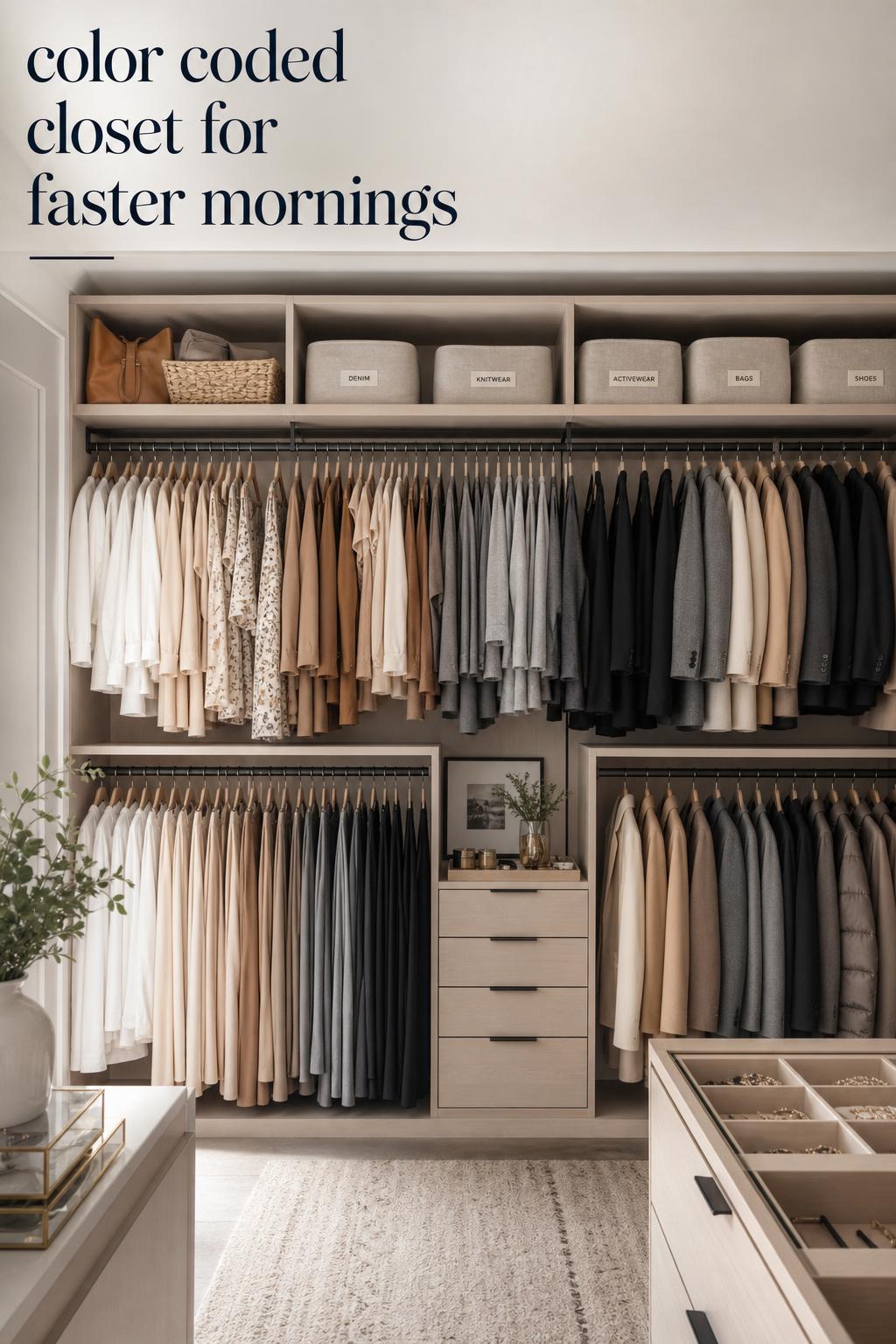
This guide focuses on the real question behind the trend: how to build a color coded closet that looks refined and actually works in everyday life. The goal is not just to arrange clothes by color, but to create a wardrobe system that balances aesthetics, efficiency, comfort, and functionality.
Why this wardrobe challenge happens in the first place
Closet disorder rarely comes from owning the wrong clothes. More often, it comes from using a storage method that does not match the way outfits are chosen. Some people think in categories first, such as tops, dresses, trousers, and outerwear. Others think in palette first and build outfits around tonal layering, contrast, or visual anchors. A closet becomes frustrating when its layout works against that natural decision-making process.

Found the dress? Keep the rest in one place.
Zarellea brings guest details, vendors, timelines, and every next step together — so your wedding plan feels as good as your look.
There is also a practical layer. Seasonal rotation affects visibility. Drawer storage hides color. Mixed hangers disrupt visual rhythm. Small closets, apartment closets, and shared spaces make it harder to maintain order. The result is familiar: a wardrobe may contain strong pieces, but the system around them creates friction.
That is why many professional organizers and home organization editors recommend a more structured approach. A color coded closet can reduce visual noise, but only when color is used with intention rather than as decoration alone.
The styling logic behind a well-planned color coded closet
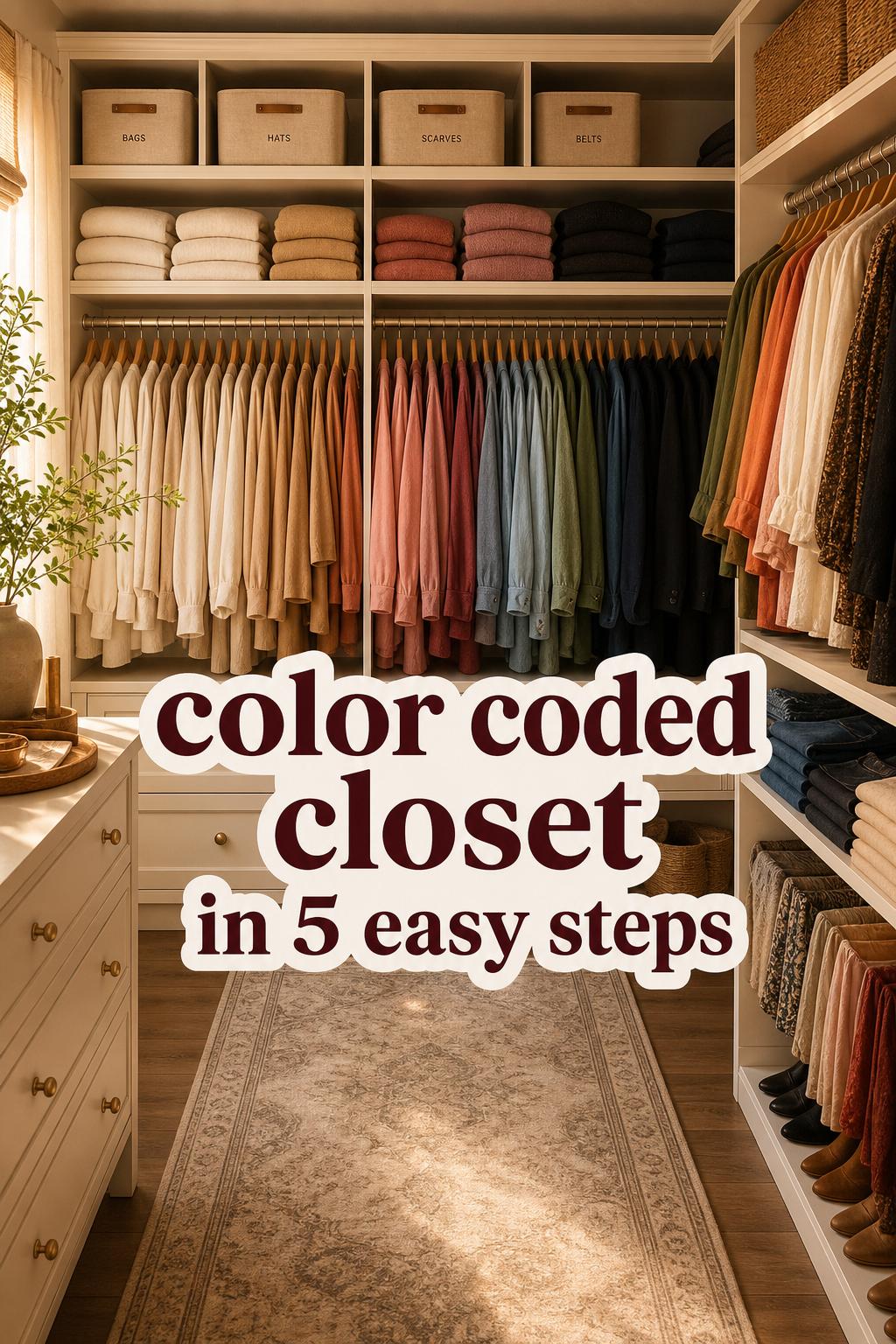
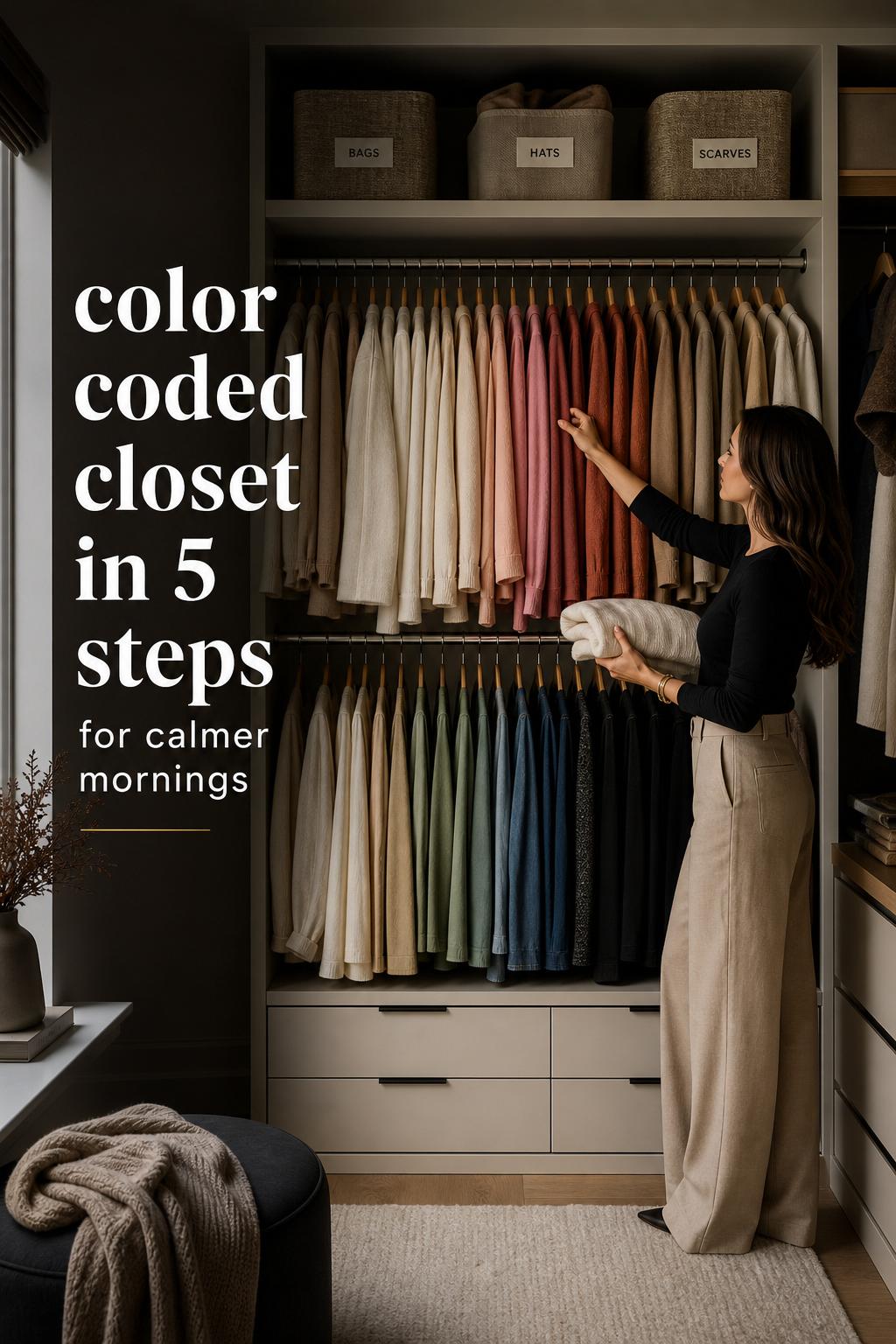
At its best, a color coded closet functions like a visual styling board. You can scan one rail and immediately understand your options for monochrome dressing, neutral foundations, accent colors, and seasonal palette shifts. This is where color psychology and wardrobe efficiency meet. The eye processes order faster than clutter, which makes outfit building feel less mentally heavy.
The most effective systems also respect category-based organization. That means keeping shirts with shirts, dresses with dresses, and jackets with jackets before arranging each category by color. This hybrid method appears again and again because pure color-first systems can become impractical. A black cardigan and black evening dress may share a hue, but they serve completely different styling functions.
In fashion terms, the aim is not just color harmony. It is functional visibility. You want to see what works together without losing track of silhouette, fabric behavior, and occasion. A closet organized this way supports both quick weekday dressing and more deliberate outfit planning.
Start with the right framework: color-first, category-first, or hybrid
Before changing hangers or buying organizers, decide how you actually dress. This decision determines whether your closet organization will last or collapse after a week.
When color-first makes sense
A color-first system suits wardrobes built around tonal dressing, visual coordination, or a tightly edited palette. It is especially effective for minimalist wardrobes, capsule wardrobe planning, and people who naturally choose outfits by mood or shade rather than by garment type.
When category-first is stronger
A category-first method works better when your schedule is varied and practical needs drive your dressing decisions. If you need to find workwear, gym pieces, occasion dresses, or seasonal outerwear quickly, categories should lead. Color can then refine the system within each zone.
Why the hybrid system usually wins
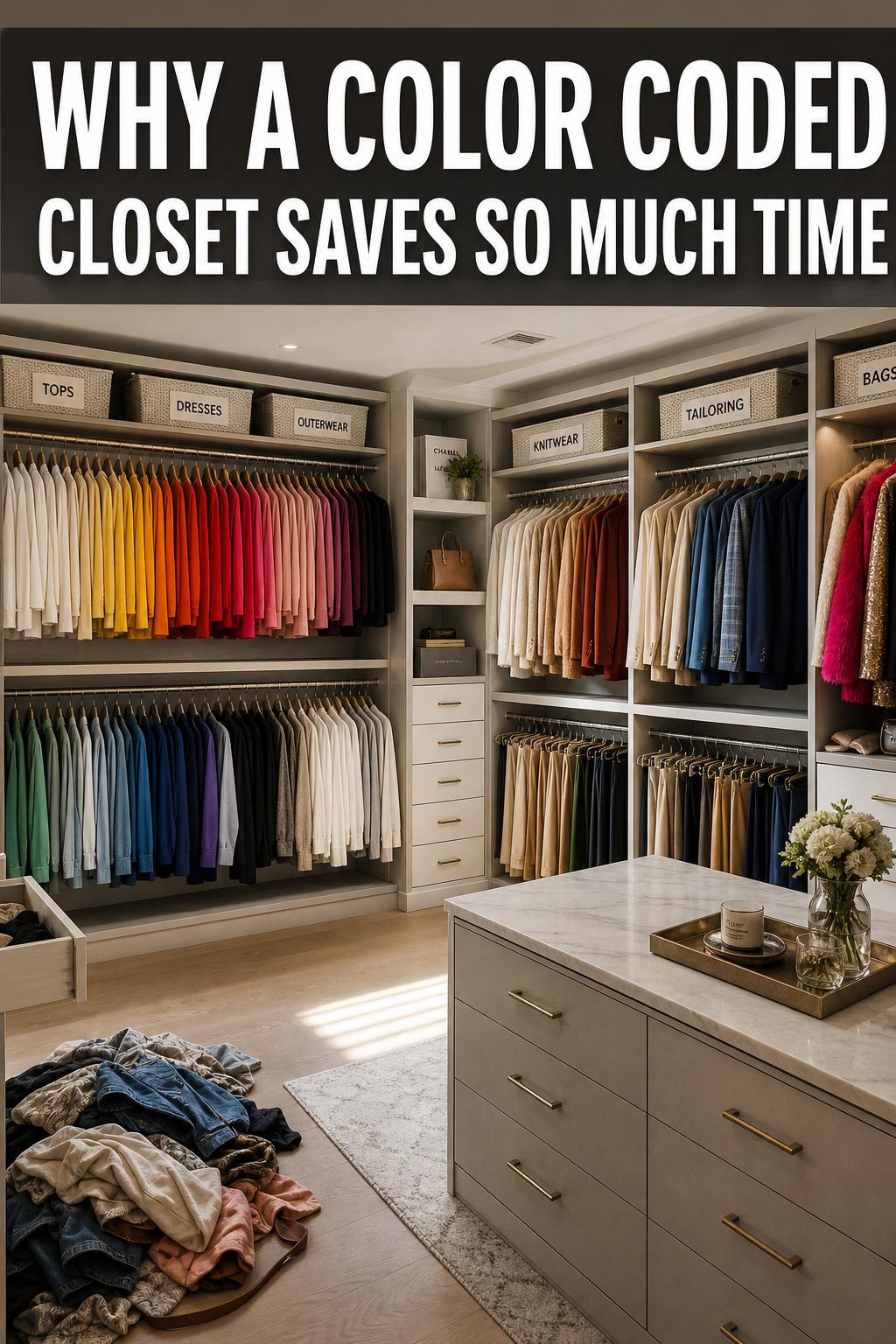
The most balanced solution is a hybrid layout: group by function first, then arrange by color within each category. Housedigest highlights the risk of going too far with pure color coordination, and that point matters. The best practice for color coding within categories preserves both styling logic and practical access.
- Tops arranged from light to dark or by full color spectrum
- Dresses grouped separately, then ordered by hue
- Outerwear stored by category and season before color
- Drawers and shelves divided by garment type, then labeled by color family if needed
A practical method to arrange clothes by color without losing function
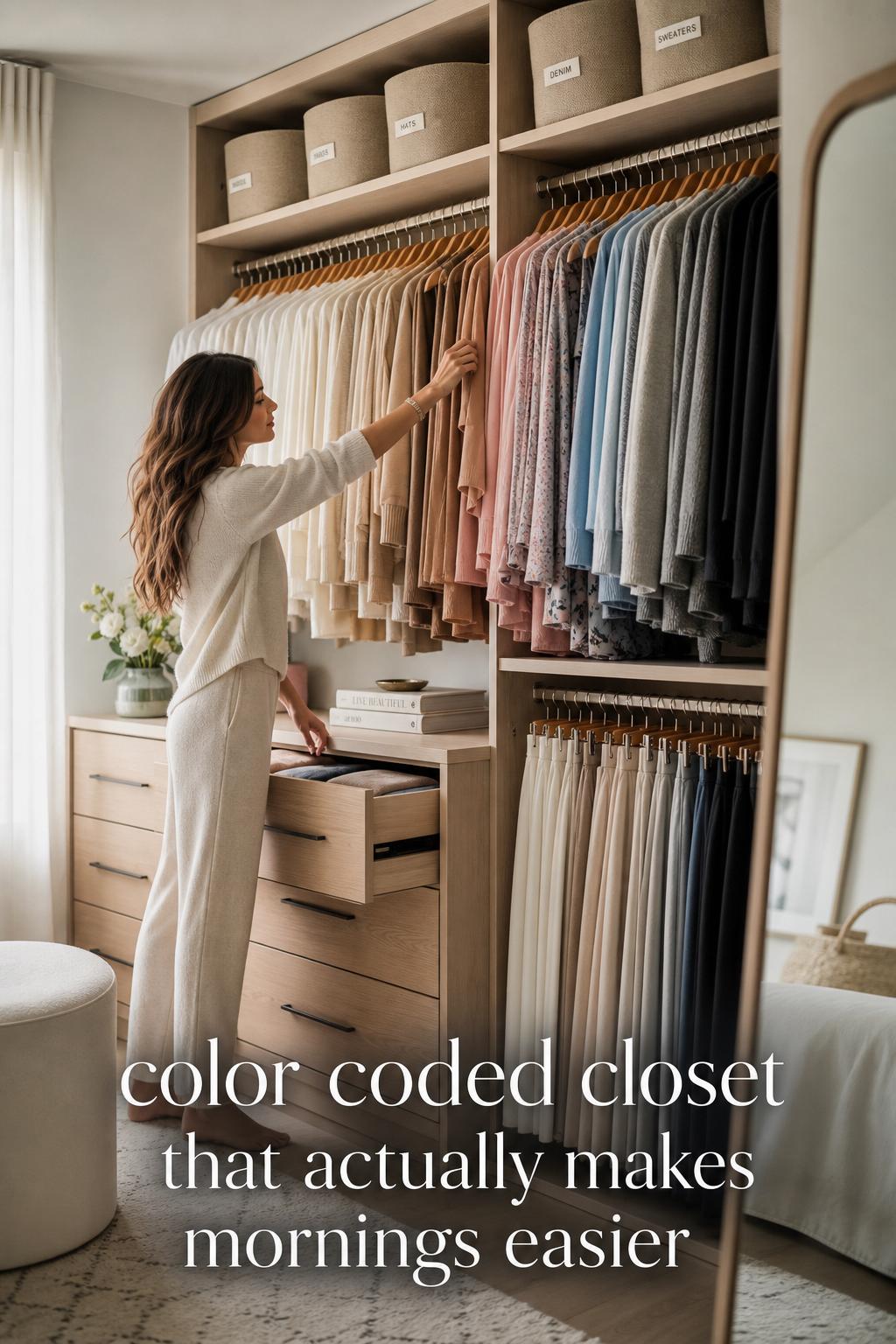
If your goal is to learn how to color code your closet in a way that lasts, the process matters as much as the final look. A polished rail is easy to create for a photo. A usable system is different. It has to survive real mornings, laundry cycles, seasonal changes, and the tendency to abandon order when time is short.
Step one: declutter before you sort
Several articles connect maintenance and decluttering directly to successful color coding, and that relationship is essential. If rarely worn pieces remain in the closet, color order becomes visual clutter instead of visual clarity. Remove anything that no longer fits your daily dressing habits, current season, or overall wardrobe direction.
Step two: separate by wardrobe role
Create clear categories such as tops, bottoms, dresses, tailoring, knitwear, and outerwear. This stage protects functionality. It also makes visual scanning easier because similar silhouettes hang together, allowing color to become a secondary layer of order rather than a distraction.
Step three: choose your color taxonomy
The research highlights a gap around color taxonomy, and filling that gap makes the system much easier to maintain. You need clear grouping rules. The simplest option is a spectrum approach using ROYGBIV, expanded with neutrals and soft categories such as pastels or earth tones where relevant to your wardrobe.
A practical sequence often looks like this: white, cream, beige, brown, gray, black, then red, orange, yellow, green, blue, indigo-inspired navy tones, violet, pink, and prints placed according to their dominant shade. The exact order matters less than consistency.
Step four: refine by tone, depth, or mood
Within each color family, arrange from light to dark if that helps the eye read the rail more easily. Ombre-style transitions can be useful in a design-focused space and are also referenced in broader closet organization ideas. This creates visual harmony without sacrificing usability.
Step five: support the system with tools
Storage systems, closet organizers, hangers, drawer dividers, and labels all support maintenance. Uneven hanger shapes interrupt line and proportion, while drawer clutter hides color information completely. A color coded closet is easier to preserve when the infrastructure is just as organized as the clothing.
Step six: test the system for real life
After organizing, use the closet for a week without making major changes. Notice where friction appears. If you keep pulling activewear from a shelf that is too high, or if occasionwear is mixed into daily categories, the problem is not your discipline. It is the layout. Adjust the system so it reflects your actual routine.
Color grouping rules that make outfit building easier
Not every color arrangement supports styling equally well. The strongest systems are designed around outfit creation, not just visual impact. Color order should help you identify foundations, statement pieces, and transition shades quickly.
Neutrals as the foundation zone
Neutrals deserve their own logic because they do most of the wardrobe work. White, ivory, beige, tan, camel, gray, navy, and black often function as anchors in outfit composition. Keeping them grouped clearly makes everyday dressing faster, especially for workwear, layering, and travel dressing.
Brights and statement shades as visual accents
Brighter colors are often chosen intentionally rather than automatically. Grouping reds, oranges, greens, or vivid blues together helps you see where the strongest accent pieces live. This supports more deliberate styling decisions and reduces the chance of forgetting standout items.
Pastels, earth tones, and seasonal palette shifts
Some wardrobes do not fit neatly into a textbook rainbow. Soft blush, sage, clay, olive, rust, and sand may be more useful grouped by mood or undertone. Seasonal wardrobe rotation also matters. Home organization advice that includes seasonal color zones is practical because many people dress differently across the year. Spring and summer pieces may need one color rhythm, while fall and winter rely more heavily on darker neutrals and dense textures.
If a seasonal color zone makes your closet easier to read, use it. The purpose is not to follow one rigid formula. It is to build a system that keeps the wardrobe visually legible.
Closet systems and tools that support the method
A color coded closet works best when storage design supports visibility. This is where closet systems and product choices become practical rather than decorative. Whether you use a custom setup or a modular unit, the key is to create enough separation for categories and enough continuity for color to read clearly.
Brands such as California Closets, Elfa, and IKEA Pax are often relevant implementation references because they represent scalable closet systems with different levels of structure. The important point is not brand loyalty. It is choosing a setup that gives you a consistent hanging rail, shelf segmentation, and room for labels or bins if needed.
Useful product types for a cleaner visual system
- Matching hangers to create a steady line across garment categories
- Drawer dividers for folded knitwear, accessories, or color-sorted basics
- Color-coded organizers or bins for off-season items
- Labels for shelves, drawers, and storage boxes
- Closet organizers that separate categories before color is added
Even a simple labeling system can improve maintenance. If drawers hold neutrals, workout pieces, or seasonal accessories, clear labels reduce guesswork and help the color order stay intact over time.
Design-forward closets versus everyday closets: finding the right balance
Editorial interiors often present a flawless rainbow closet, and there is a reason that image is so appealing. It communicates order, intention, and calm. Livingetc and Homes & Gardens both reflect the aesthetic side of color-organized wardrobe spaces, including visual balance and harmony. But a home closet still needs to function as a dressing tool, not just a display.
This is where proportion play inside the closet matters. Heavy coats can visually dominate delicate blouses even if the colors align beautifully. Formal dresses can interrupt the rhythm of practical daywear. A successful wardrobe layout respects visual composition while keeping each category easy to access.
In practical terms, that means using design principles selectively. Ombre transitions, rainbow organization, and tonal zoning are excellent for open shelves, curated rails, or sections of the closet that hold frequently worn pieces. Less visible storage can remain more purely functional.
Where color coding helps most in real dressing scenarios
The best closet systems reveal their value in ordinary moments rather than dramatic makeovers. A few realistic scenarios show why color coding remains useful beyond aesthetics.
Busy weekday mornings
When time is short, visual grouping reduces decision friction. You can immediately find neutral workwear, identify the right layer, and pull a balanced outfit without sorting through unrelated pieces. This is where a category-first, color-within-category system performs especially well.
Planning outfits around a statement piece
If you start with one strong item, such as a red knit, a cobalt blouse, or an olive jacket, a color coded closet helps you build around it. You can scan complementary neutrals and related tones quickly, making outfit composition more intentional.
Rotating a capsule wardrobe
Capsule wardrobe dressing benefits from color visibility because repetition is part of the strategy. When you can see your palette clearly, it is easier to prevent duplication and easier to style pieces in multiple combinations. This is one reason a simplified, edited closet often looks more refined even before new clothing enters the picture.
Outfit-focused closet zones that make styling more intuitive
A useful closet does not only store clothing. It supports how outfits are built. One of the smartest ways to improve a color coded closet is to create zones based on styling behavior rather than storage alone.
Outfit solution: the neutral anchor zone
Place your most reliable neutrals together in the most accessible section of the closet. This might include white shirts, black trousers, beige knitwear, gray tailoring, navy layers, and everyday denim if it acts as a neutral in your wardrobe. This zone solves the common challenge of needing an outfit foundation fast. It works because neutral pieces stabilize color and create silhouette balance around stronger accents.
Outfit solution: the tonal layering rail
Dedicate a section to closely related shades if your style leans tonal. Cream, stone, camel, and brown can live together; so can navy, slate, and black. This helps with monochrome and low-contrast outfits, which often look polished because the color story is controlled even when textures vary.
Outfit solution: the statement-color section
Group vivid pieces so they remain visible and intentional. Instead of scattering bright garments across the closet, place them in a dedicated section. This makes it easier to style a bold top with grounded separates or to locate a standout dress when you want more visual energy in the outfit.
Outfit solution: the seasonal color zone
For wardrobes that shift heavily through the year, create seasonal color zones. Lighter and softer shades can move forward for warm-weather months, while darker and richer tones take priority during cooler periods. This is particularly effective when closet space is limited and daily visibility matters more than storing everything equally.
Tips that make the system easier to maintain
Most closet systems fail during maintenance, not setup. The more realistic the upkeep, the longer the order lasts. Small operational choices make a major difference.
- Return garments to the same category before returning them to the correct color section.
- Keep laundry day consistent so pieces do not re-enter the closet randomly.
- Use drawer labels if folded clothing prevents quick color recognition.
- Review the closet at each seasonal shift and re-balance the visible palette.
- Do not overcrowd rails; color order is much harder to maintain when garments are packed too tightly.
One practical insight from many organization systems is that maintenance improves when the closet looks visually satisfying. A well-edited color arrangement gives immediate feedback when something is out of place, which helps preserve the routine.
Accessibility and inclusive ways to color code a closet
Not every person reads color in the same way, so a thoughtful color coded closet should include accessible support. This is one of the most underused improvements in closet organization. If color alone carries all the information, the system can become frustrating rather than helpful.
High-contrast labeling, consistent shelf placement, and tactile or text-based cues can make the closet easier to use for people with color vision differences. Labels on bins, drawers, and sections add a second layer of clarity. Texture-based distinctions can also help: smooth hangers for one category, shaped dividers for another, or clearly separated shelf zones for neutrals versus accent colors.
The principle is simple: color should support the system, not be the only way the system communicates.
Common mistakes that make a color coded closet less useful
Many people abandon color coding not because the idea is flawed, but because the setup overlooks how wardrobes are actually used. Several recurring mistakes explain why some systems feel beautiful but inconvenient.
Mistake: organizing by color and ignoring category
This is the most common problem. It creates a visually attractive closet but weak practical flow. When categories disappear inside the color spectrum, locating the right garment type takes longer. The fix is straightforward: keep garment families intact, then apply color order within them.
Mistake: creating too many color groups
If every subtle tone has its own section, the system becomes fragile. Soft pink, dusty rose, mauve, and berry may not need four separate groups. Broader color families are usually easier to maintain and still provide enough visual precision for outfit planning.
Mistake: forgetting drawers and shelves
A hanging rail may be perfectly color coded while folded items remain disordered. This weakens the overall wardrobe system because knitwear, basics, and accessories often live in drawers. Divider-based drawer color coding solves this gap.
Mistake: building an aesthetic system that ignores routine
A strict rainbow layout may be satisfying visually but inconvenient for someone who dresses for one category repeatedly, such as officewear or uniforms. The better approach is to shape the closet around frequency of use, then refine it with color.
Brand and system references worth considering
When people look for color-coded closet systems, they are often also looking for physical structure: better rails, shelves, drawers, and modular options. California Closets, Elfa, and IKEA Pax are useful reference points because they represent different ways to create clear wardrobe zones. Their role in the conversation is practical. They illustrate that color coding succeeds more easily when the closet has intentional compartments.
Brand-led articles such as those from Victory Closets and InspiredNest also reflect the broader appeal of simple systems that work. The consistent lesson across these approaches is that product support matters less than system clarity. Even a modest closet can perform well if categories, color groups, and labeling are aligned.
The visual payoff: why this method changes how a wardrobe feels
A well-executed color coded closet changes more than storage. It changes the way the wardrobe reads. Pieces become easier to evaluate. Duplicates become more obvious. Gaps in the palette stand out. A closet can start to function like a concise style edit rather than a crowded archive.
This is why the method appeals equally to design-focused readers and practical dressers. It offers both visual calm and operational ease. Whether the inspiration comes from magazine-style wardrobe staging, home decor guidance, or straightforward home organization goals, the underlying value is the same: less visual chaos, better outfit visibility, and a more coherent relationship with the clothes you already own.
How to approach your own closet without overcomplicating it
The most effective starting point is not a full makeover. It is a small, logical reset. Choose one category, such as shirts or dresses, and test a hybrid system there first. Arrange by category, apply a clear color sequence, use matching hangers if possible, and observe how much faster that section becomes to use. Once the logic proves itself, extend the method across the rest of the closet.
That measured approach prevents a common problem: creating a complex system that looks finished but never becomes routine. Color coding works best when the method feels almost obvious in daily life. If you can see the outfit faster, return items more easily, and maintain order without much thought, the system is doing its job.
A successful color coded closet is not about perfection. It is about making your wardrobe clearer, more functional, and more aligned with the way you actually get dressed.
FAQ
What is the best way to start a color coded closet?
The best starting point is to declutter first, separate clothing into categories, and then arrange each category by color. This hybrid method is usually more practical than organizing the entire closet by color alone because it preserves both visibility and function.
Should I organize my closet by color or by clothing type?
For most wardrobes, clothing type should come first and color should come second. Keeping tops, dresses, bottoms, and outerwear in separate sections makes the closet easier to use, while color coding within those groups adds visual order and helps with outfit planning.
How do I arrange clothes by color in a simple way?
A simple approach is to group neutrals first, then follow a consistent color sequence such as red, orange, yellow, green, blue, and violet, with prints placed according to their dominant color. The exact order matters less than keeping it consistent throughout the closet.
Does a color coded closet really save time?
It can save time by reducing visual clutter and making outfit options easier to scan, especially when paired with category-based organization. The biggest time savings usually come from faster decision-making rather than from the color system alone.
What if my wardrobe has a lot of neutrals and only a few bright colors?
That is completely workable. In fact, many wardrobes benefit from a strong neutral zone because those pieces often do the most styling work. Keep whites, beiges, grays, navies, and blacks clearly grouped, then place brighter pieces in a smaller accent section so they remain visible and intentional.
How do I color code drawers and shelves?
Use drawer dividers, shelf sections, or labels to create clear zones for folded pieces. This works well for knitwear, basics, and accessories, especially when color is harder to see in stacked storage than on a hanging rail.
Are closet systems like California Closets, Elfa, or IKEA Pax necessary?
No, but they can make color coding easier because they provide structure through shelves, drawers, and designated zones. The method can still work in a simpler closet as long as categories are clear, colors are grouped consistently, and the layout fits your routine.
What are the biggest color coding mistakes to avoid?
The most common mistakes are ignoring clothing categories, creating too many tiny color groups, and focusing only on the hanging rail while leaving drawers and shelves disorganized. A practical system should be easy to maintain, not just visually pleasing on day one.
How can I make a color coded closet more accessible?
Add high-contrast labels, clear sectioning, and non-color cues such as text labels or tactile dividers. This gives the closet more than one way to communicate, which is especially helpful for anyone with color vision differences.