
Modern Modelling Tips For Castings and Portfolio Days
There is a distinct polish to strong modelling tips when they are applied well: clean lines, controlled energy, and a visual identity that feels effortless even when it is carefully built. In the U.S. market, the most compelling model presence rarely comes from one dramatic element alone. It comes from composition. Portfolio, casting behavior, posing, grooming, and agency communication all work together like tonal layers in a refined wardrobe.
The aesthetic of a successful modeling career is not only fashion-forward; it is strategic. A model is presenting a personal brand to agencies, clients, photographers, and casting teams. That brand must read clearly in headshots, full-length images, go-sees, and on-camera movement. The appeal lies in that balance between individuality and adaptability: enough consistency to be memorable, enough range to book different kinds of work.

This is why modelling tips remain so relevant. They shape how a model is seen in castings, how a model portfolio is curated, how facial expressions land in a frame, and how contracts and representation support long-term progress. The visual mood may change between fashion, editorial, runway, and commercial work, but the underlying styling logic stays consistent: present clearly, move with intention, and build every career element with discipline.
Look: The polished business-of-modelling foundation
The strongest beginner-to-pro mindset starts with structure. Modelling is often romanticized as image alone, yet its real silhouette is much sharper: it is a personal business. That means every interaction, from a portfolio review to a casting arrival, contributes to a client-facing impression. The mood here is minimal, direct, and highly edited, much like a clean fashion uniform that lets the wearer speak before the styling overwhelms the message.

Found the dress? Keep the rest in one place.
Zarellea brings guest details, vendors, timelines, and every next step together — so your wedding plan feels as good as your look.
In practical terms, this foundation is built through presentation, reliability, and clarity. A model needs a coherent portfolio, an understanding of agency representation, and a professional approach to castings and go-sees. These are the core garments of the career: the equivalent of a tailored base layer, neutral enough to work everywhere, strong enough to anchor every other choice. Model Management emphasizes this business perspective, and it remains one of the most useful framing ideas for aspiring talent.
This approach works because it prevents common imbalance. A model can have striking images but still lose momentum if contract details are ignored, if a first impression feels careless, or if communication with agencies lacks consistency. The business mindset creates visual and professional cohesion. It is not glamorous in the obvious sense, but it is what makes the rest of the aesthetic durable.
Style breakdown: what “model as a brand” really means
- Your portfolio acts as a visual business card.
- Your castings and go-sees function like live presentations.
- Your skin, hair, and general health support camera readiness.
- Your agency relationship shapes access, negotiation, and career direction.
- Your contracts define practical limits, expectations, and commissions.
Thinking this way creates discipline around every booking opportunity. It also helps a model judge trade-offs. For example, adding more photos is not automatically better than curating stronger images. Signing representation is not automatically better than understanding the contract terms. A polished modelling career depends on editing, not excess.
Look: Portfolio minimalism with range
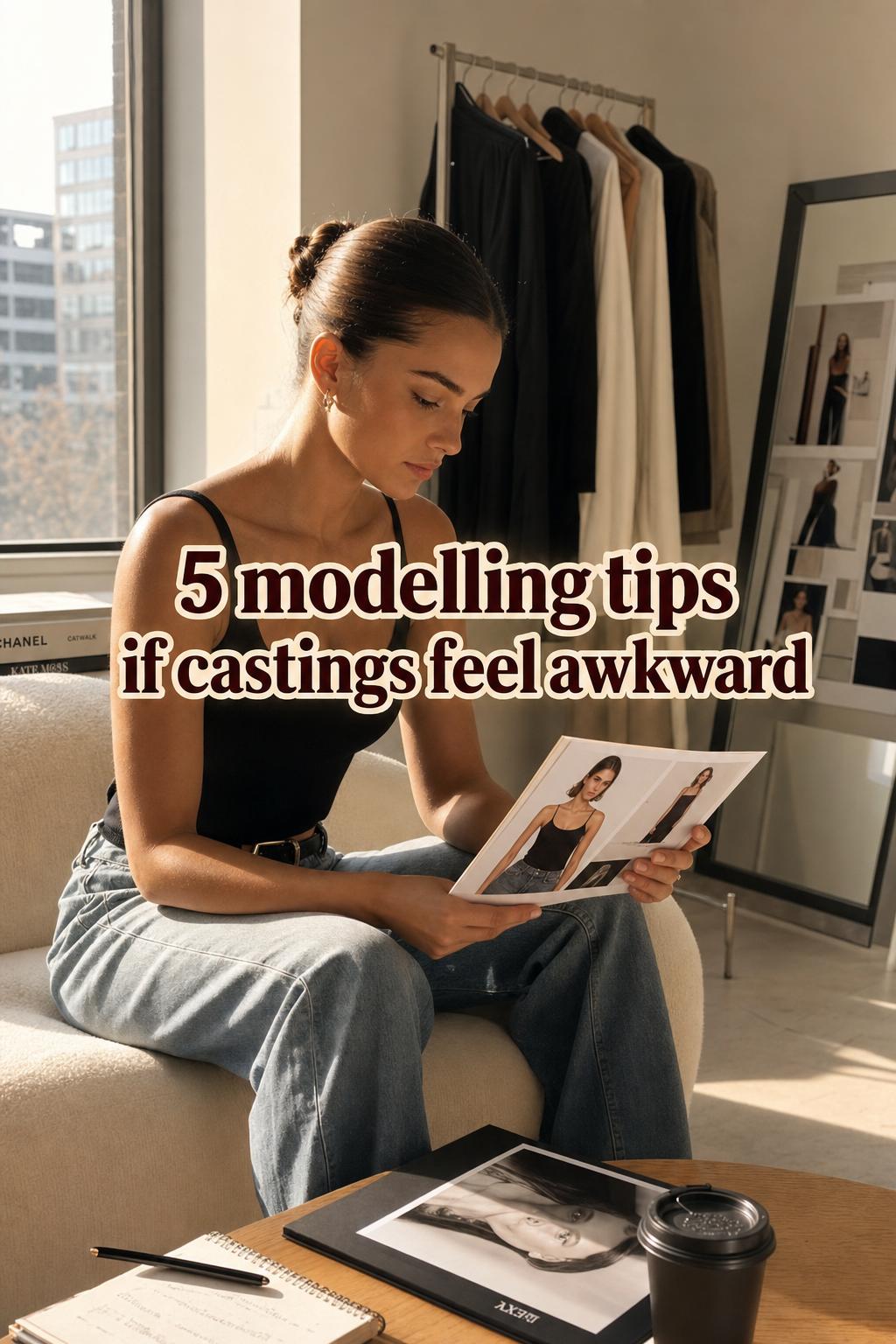
A strong model portfolio has the same effect as a well-composed neutral wardrobe: it feels precise, versatile, and easy to read. The overall visual mood should be clean rather than chaotic. Agencies and clients need to see face, proportions, movement potential, and adaptability. That means the silhouette of the portfolio itself should feel balanced, not overloaded with repetitive angles or heavily edited concepts.
Adobe Express frames the portfolio as a model’s business card, and that comparison is useful because it highlights purpose over decoration. A portfolio is not meant to show every image ever taken. It is meant to illustrate range through selective curation. Headshots, full-length shots, and images that reveal different expressions or fashion contexts create a composition with depth. Fashion, commercial, and editorial directions can each appear, but the set should still feel coherent.
This look fits the broader modelling aesthetic because it combines restraint with versatility. The portfolio should reveal enough texture to communicate range, but not so much visual noise that the viewer loses the model’s core identity. In analytical terms, the best portfolio has a clear visual anchor: the model, not the concept.
Key pieces for this aesthetic
- Strong headshots that show natural features clearly
- Full-length shots that communicate body lines and posture
- A range of looks that suggest versatility without becoming random
- Careful editing and curation rather than image overload
- An online portfolio presentation that is easy to review
How to build a model portfolio with visual logic
The portfolio creation process benefits from order. First, decide the type of modelling focus you want to support, whether that leans more toward fashion, editorial, or commercial work. Then research photographers whose image style aligns with that direction. After shoots, curate for range and consistency, edit with restraint, and arrange the sequence so that the strongest opening images establish immediate confidence.
Adobe Express is useful in this context because templates, AI tools, and web page features support presentation and review. The practical value is not only convenience. It is control. A portfolio that is easy to update and reorganize allows a model to refine visual messaging over time instead of treating the book as static.
Comp cards are also part of this visual system. Even when discussed briefly, they reinforce the same principle: concise presentation matters. Whether an agency, a client, or a casting team reviews a full digital book or a shorter composite format, the goal is the same. Clarity books work.
Look: Casting-day precision and go-see composure
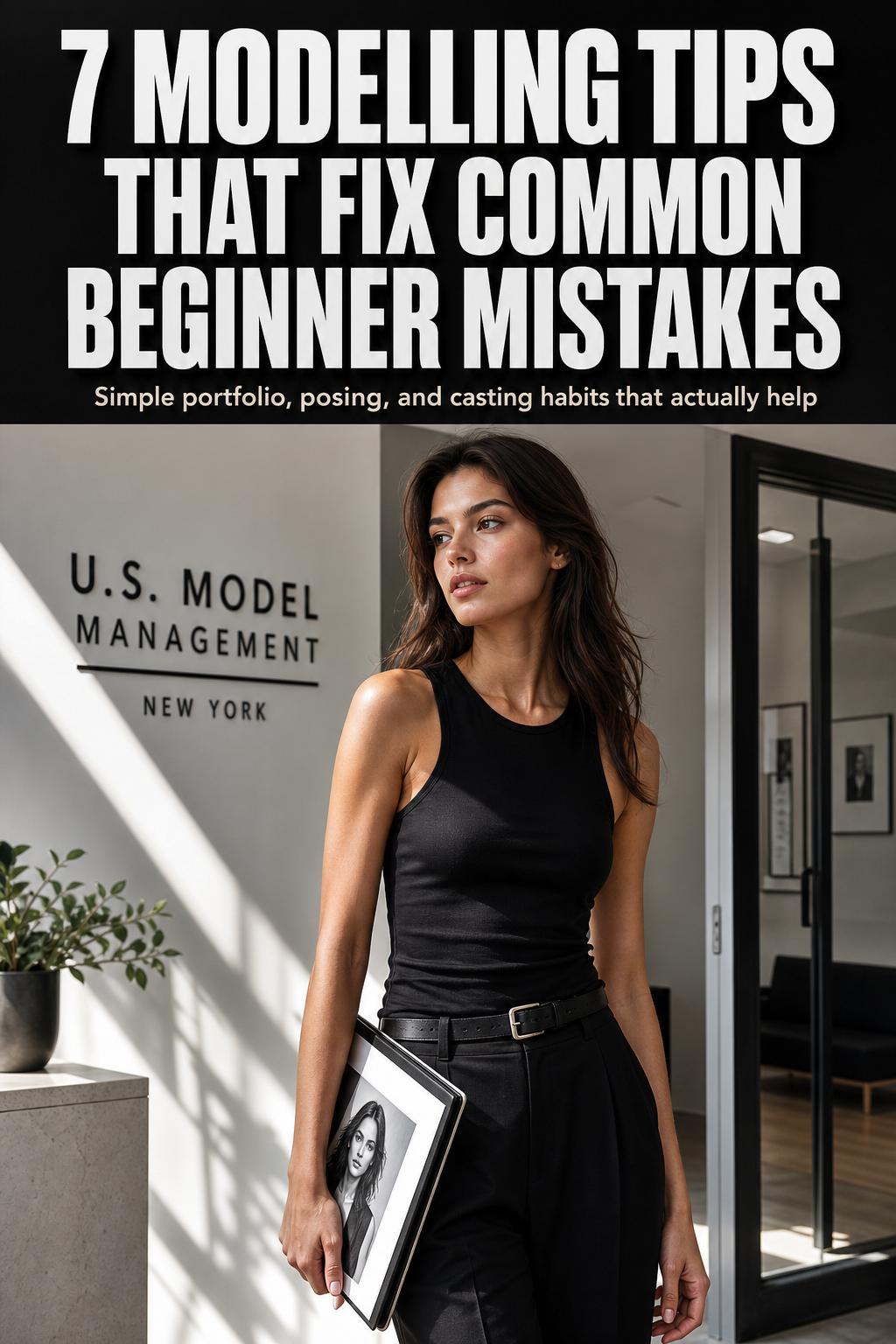
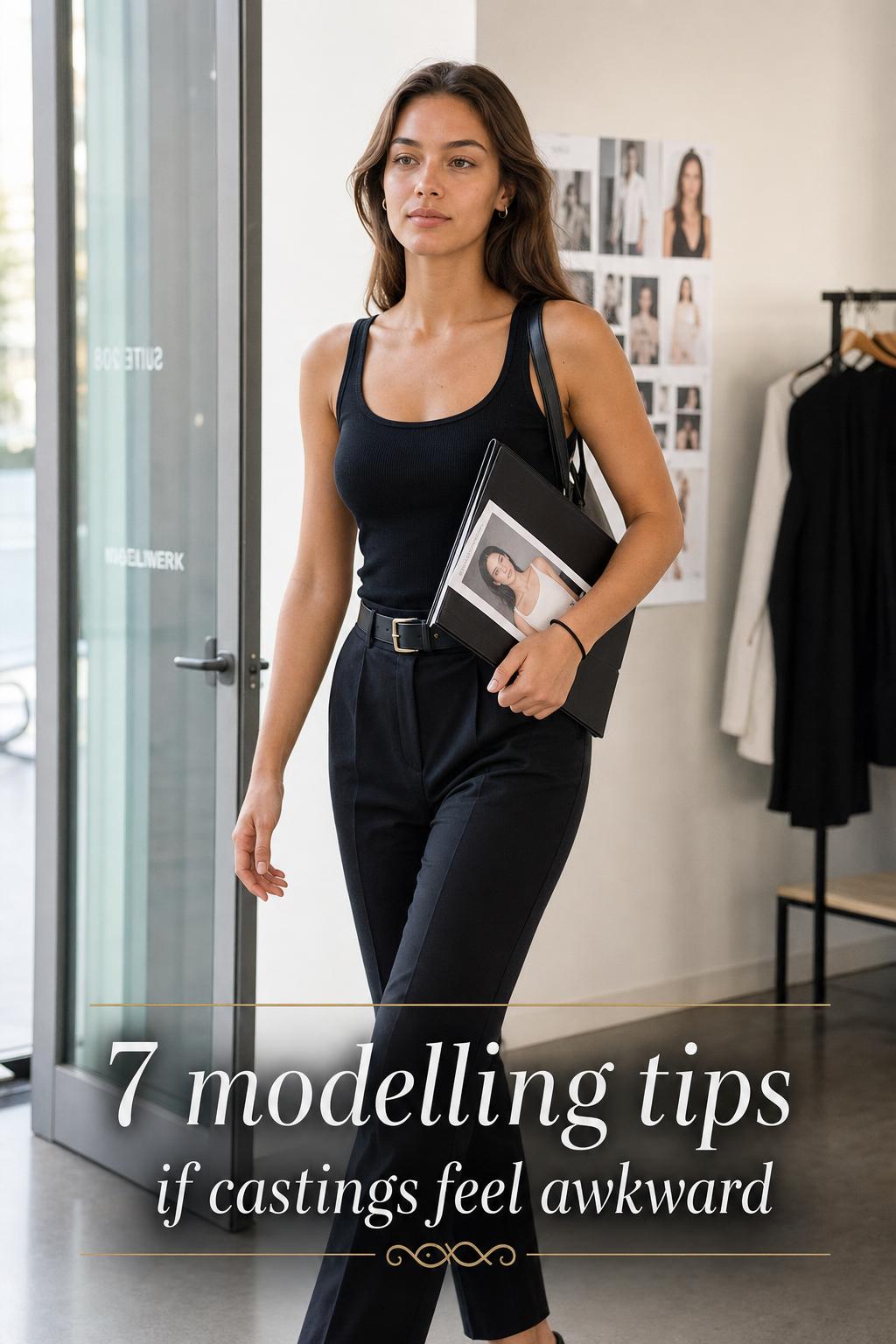
Castings and go-sees have their own aesthetic, and it is far more understated than many beginners expect. The right mood is controlled, punctual, and readable. This is not the moment for visual confusion. It is the equivalent of wearing a perfectly cut base look that lets the proportions and movement stand on their own. In a casting context, first impressions matter because the model is being evaluated in real time, often quickly.
Model Management places clear emphasis on casting and go-see etiquette, which is appropriate because these settings compress multiple judgments into a short encounter. Presentation, confidence, and preparedness need to feel immediate. A late arrival, disorganized materials, or a distracted attitude can interrupt an otherwise strong visual impression. By contrast, a model who arrives prepared with a polished portfolio, calm energy, and professional behavior creates an efficient and trustworthy impression.
This look works because it treats casting as a live extension of the portfolio. Agencies, clients, and casting professionals are checking whether the person in the room matches the promise of the images. The more seamless that transition feels, the stronger the booking potential.
Practical casting tips that improve booking potential
- Arrive on time and ready to be seen quickly.
- Keep your presentation polished and consistent with your portfolio.
- Understand that go-sees are part of how clients assess professionalism as well as appearance.
- Bring a composed attitude that communicates reliability.
- Treat every interaction as part of your brand.
A realistic scenario makes this clearer. A model may have excellent photos but lose momentum if the in-person impression feels disorganized. Another model may have a simpler book but create confidence through strong posture, a clean presentation, and direct communication. In fast-moving casting environments, readability often wins.
Style tip: follow-up and review
After castings and go-sees, review what translated well and what did not. If a portfolio repeatedly fails to support the same type of booking, the issue may be curation. If in-person meetings feel weaker than the photos, the issue may be posing confidence, expression control, or presentation. Progress in modelling usually comes from this kind of practical review rather than from dramatic reinvention.
Look: Clean skin, healthy hair, and camera-ready grooming
The grooming side of modelling is often described in simple terms, but it deserves a more analytical lens. Skin, hair, and general health are not separate from professional presentation; they are part of it. The visual mood here is fresh and disciplined, closer to makeup minimalism than heavy transformation. In many casting and portfolio settings, agencies and clients want to see the model clearly.
That is why skincare, haircare, and lifestyle habits carry so much weight. Healthy skin supports close-up work. Well-maintained hair increases flexibility across shoots. General health affects energy, posture, and consistency over long days. These factors are not superficial details. They shape how well a model holds up during castings, photoshoots, and repeated bookings.
This aesthetic works because it emphasizes base quality. In fashion terms, the cleanest looks always depend on strong foundations. A model who appears fresh, rested, and well cared for gives photographers, agencies, and clients more flexibility. The visual message becomes adaptable rather than fixed.
Why presentation matters beyond beauty
Presentation influences trust. A polished appearance suggests professionalism, self-management, and readiness for the demands of shoots and bookings. It also creates visual consistency between portfolio images and in-person meetings. The limitation, however, is that grooming alone cannot compensate for weak posing, poor portfolio curation, or unclear career direction. It is one essential layer, not the whole outfit.
Look: Editorial expression and pose control
Posing and facial expressions introduce movement into the modelling aesthetic. If portfolio building is about visual editing, posing is about line, tension, and emotional precision. The mood can shift from soft to dramatic, but the underlying principle stays the same: the body and face must communicate intentionally. Models Direct emphasizes this through practical guidance on expressions, smile control, and body language, and that focus aligns closely with what separates static images from compelling ones.
Mirror practice remains one of the most practical ways to build this skill. It allows a model to study emotional categories such as joy, love, or sorrow and understand how subtle shifts in the eyes, mouth, jaw, and shoulders change the final frame. Smiling is a particularly useful example. A natural smile reads very differently from a forced one, and the camera tends to expose the difference immediately. What feels exaggerated in person can sometimes read correctly on camera, while what feels expressive in the mirror may flatten in a still image.
This look fits the modelling aesthetic because it adds dimension without losing clarity. Strong posing is not random movement. It is proportion play. It uses angles, posture, and expression to create visual interest while keeping the model recognizable and bookable.
Key pieces for stronger on-camera presence
- Practice facial expressions in a mirror to understand what reads clearly.
- Work on smiling so it feels connected rather than stiff.
- Use body language intentionally instead of holding one static pose.
- Experiment with props such as a hat, scarf, or beach ball to build movement confidence.
- Review images to see which angles communicate emotion effectively.
How to recreate the look in portfolio shoots
Start with a restrained setup. A clean headshot or a simple full-length frame makes it easier to identify whether expression and pose are doing the work. Then introduce variation slowly: soften the mouth, shift the shoulders, lengthen the neck, or rotate the torso to change the line. Props can help if movement feels rigid, because they give the hands and body a natural point of interaction. The goal is not theatrical excess. It is believable emotion and visual fluidity.
Testimonials on agency advice pages often highlight confidence and uplift, and that makes sense. Once a model understands how to shape expression rather than guess at it, the result tends to feel more controlled and more usable in castings and shoots.
Look: The agency-ready representation edit
Agency representation has a distinct aesthetic of its own: selective, structured, and long-view. It is less about one beautiful image and more about how the entire package reads to decision-makers. A model considering representation needs to think like someone assembling a sharp professional wardrobe. Every piece should have purpose, and nothing should be accepted without understanding how it functions.
Model Management’s focus on agency representation and contract considerations is especially important here. Agencies can open access to clients, castings, and bookings, but representation also involves commission structures, expectations, and sometimes exclusivity. That means the conversation is not simply “Should I sign?” It is “What kind of relationship does this agreement create, and does it fit my direction?” A strong model asks that question before committing.
This look works because it values precision over urgency. New models often feel pressure to move quickly, but a rushed contract decision can create imbalance later. Representation should support career growth, portfolio development, and clearer pathways to work. If those elements are not aligned, the relationship may feel visually polished on the surface while lacking practical fit underneath.
Contract terms that deserve a closer look
At minimum, a model should understand commission, exclusivity, and the practical expectations connected to representation. These terms affect how opportunities are sourced, how earnings are divided, and how much freedom remains to pursue work elsewhere. The most useful mindset is balanced rather than fearful. Contracts are not automatically negative, but they should never be treated casually.
Model release language and exclusivity are especially worth reading carefully because they shape control and career flexibility. Even for beginners, the ability to recognize these terms creates stronger decision-making. In professional styling terms, this is the tailoring stage. A good fit matters more than a fast purchase.
Look: Fashion range without losing identity
Versatility is one of the most attractive qualities in a model, but it should not become visual inconsistency. The ideal range feels like a cohesive collection: different looks, same recognizable presence. In modelling, that means showing adaptability across fashion, editorial, runway, and commercial directions without erasing the features and qualities that make the model distinct.
The strongest portfolio and casting strategy reflects this balance. A model can show softer expressions in one set, sharper body lines in another, and a more approachable smile in commercial-style images. Yet the face, energy, and overall presentation still need to feel connected. This is where careful curation matters. Too much variety with no central identity can make a portfolio feel fragmented. Too little range can make it feel limited.
This look fits the broader aesthetic because it relies on proportion and editing. The range should expand your market positioning, not blur it. Agencies and clients are not simply looking for many moods. They are looking for a model whose range can be deployed effectively.
Common imbalance to avoid
- Too many similar images that repeat the same angle and expression
- Too much heavy editing that hides natural features
- A portfolio sequence with no clear visual anchor
- Expressions that feel disconnected from the body language
- Presentation choices that do not match the intended market direction
Where this aesthetic is worn: U.S. castings, online portfolios, and client-facing spaces
For a U.S. search audience, it helps to understand where these modelling tips actually operate. They show up in castings, go-sees, agency reviews, shoots, and online portfolio submissions. They also matter in quieter spaces: email communication, contract review, photographer research, and image selection. In other words, the modelling aesthetic is not confined to the studio. It exists wherever a model is being evaluated.
This context matters because different settings highlight different strengths. A portfolio review prioritizes image curation and range. A casting emphasizes live presence and first impressions. A contract discussion shifts attention to representation and practical judgment. Strong models learn to move across these contexts without losing coherence. That adaptability is part of what makes the profession visually compelling and professionally demanding.
Real-world application: a simple career path map
A beginner often starts by defining direction, researching photographers, and building a first portfolio. The next phase usually involves portfolio refinement, practicing posing and facial expressions, and pursuing castings or agency conversations. As representation develops, the focus broadens to contracts, commissions, presentation consistency, and maintaining a stronger body of work. The path is not identical for everyone, but the progression from image-building to professional structure is a reliable pattern.
Tools, templates, and review habits that support the look
Tools should sharpen the presentation, not distract from it. Adobe Express fits naturally into this part of the workflow because it supports portfolio creation, layout decisions, and online publishing. Templates can help create visual consistency, while AI-supported tools and web pages can make updates easier as the portfolio evolves. The styling logic is straightforward: use tools that improve clarity.
That same principle applies to habits. Review your book regularly. Rearrange images when your range improves. Replace weaker shots instead of simply adding more. Reassess whether your current headshots and full-length images still represent your strongest market position. Good modelling advice often sounds simple, but its effect is cumulative. Small edits repeated over time can transform how a portfolio reads.
Tips for staying visually consistent
Maintain one clear standard across every touchpoint: your portfolio, your casting presentation, your expression work, and your grooming should all suggest the same level of professionalism. When one layer falls behind, the overall composition weakens. When every layer aligns, even a developing model can appear more established.
An insight-driven edit: what usually weakens otherwise strong models
In practice, most stalled progress comes from imbalance rather than lack of potential. A model may invest heavily in new photos but neglect go-see etiquette. Another may be highly photogenic yet underprepared for agency conversations about commission or exclusivity. Someone else may understand fashion imagery but fail to develop facial expression range. These are not dramatic failures. They are composition issues.
The fix is rarely radical. More often, it involves a sharper review process. Is the portfolio curated for range and clarity? Do headshots and full-length shots still reflect your current standard? Are posing and smile control improving through practice? Is your presentation at castings consistent with the image in the book? Are agency and contract decisions being made with care rather than pressure? These questions create better outcomes than chasing constant reinvention.
That is also why the best modelling tips feel timeless. They are built on visual discipline, professional structure, and repeatable habits. Fashion trends change. The need for clarity, range, and professionalism does not.
Conclusion
The modelling aesthetic works because it blends visual impact with precise decision-making. A successful career in this space depends on more than images alone. It depends on how portfolio curation, castings, posing, grooming, tools, and representation fit together as one cohesive presentation. Adapt the framework to your own direction, edit with intention, and let every career element support the same clear visual identity.
FAQ
What is a model portfolio?
A model portfolio is a curated collection of images that presents your look, range, and professional potential to agencies and clients. It functions like a visual business card, usually built around headshots, full-length shots, and selected images that show versatility without losing clarity.
How do I build a strong model portfolio as a beginner?
Start by deciding the type of modelling direction you want to support, then research photographers whose style fits that direction. Build around clear headshots, full-length images, and a small but effective range of looks, then edit carefully so the final book feels polished rather than overcrowded.
What should I do at castings and go-sees?
Arrive on time, present yourself professionally, and make sure your in-person impression matches the quality and tone of your portfolio. Castings and go-sees are not only about appearance; they also show clients and agencies how reliable, prepared, and easy to work with you are.
How can I improve my facial expressions for modelling?
Practice in a mirror so you can study how subtle shifts in the eyes, mouth, and posture change the emotion in your face. Work on smiling naturally, test different emotional moods, and review photos regularly to see what reads well on camera instead of relying only on how it feels in the moment.
Why are headshots and full-length shots so important?
These images give agencies and clients the clearest understanding of your face, proportions, posture, and overall presentation. They form the foundation of a portfolio because they show your look with minimal distraction and make it easier to assess your suitability for different types of bookings.
What should I know before signing with an agency?
Understand the structure of the relationship before agreeing to representation. Pay close attention to commission, exclusivity, and any expectations connected to the contract so you know how the agency will work with you and what level of flexibility you will keep in your career decisions.
How important are skincare and haircare in modelling?
They are important because skin and hair affect how adaptable and camera-ready you appear in both castings and shoots. Good grooming supports close-up work, creates a stronger first impression, and helps maintain consistency between your portfolio images and your live presentation.
Can Adobe Express help with a model portfolio?
Yes, Adobe Express can support portfolio creation through templates, AI tools, and web page features that help you organize, edit, and present your work clearly. Its value is strongest when you use it to create a clean, easy-to-review portfolio rather than an overly decorative one.
What is a comp card?
A comp card is a shorter composite presentation of a model’s images and core details, used as a concise professional introduction. It supports the same goal as a full portfolio: giving agencies and clients a quick, readable sense of the model’s look and range.
What are the most useful modelling tips for long-term progress?
The most useful modelling tips are the ones that improve consistency across every area of the career: maintain a strong portfolio, practice posing and facial expressions, present professionally at castings, care for skin and hair, and approach agency representation and contracts with patience and clarity. Long-term progress usually comes from disciplined refinement, not constant reinvention.