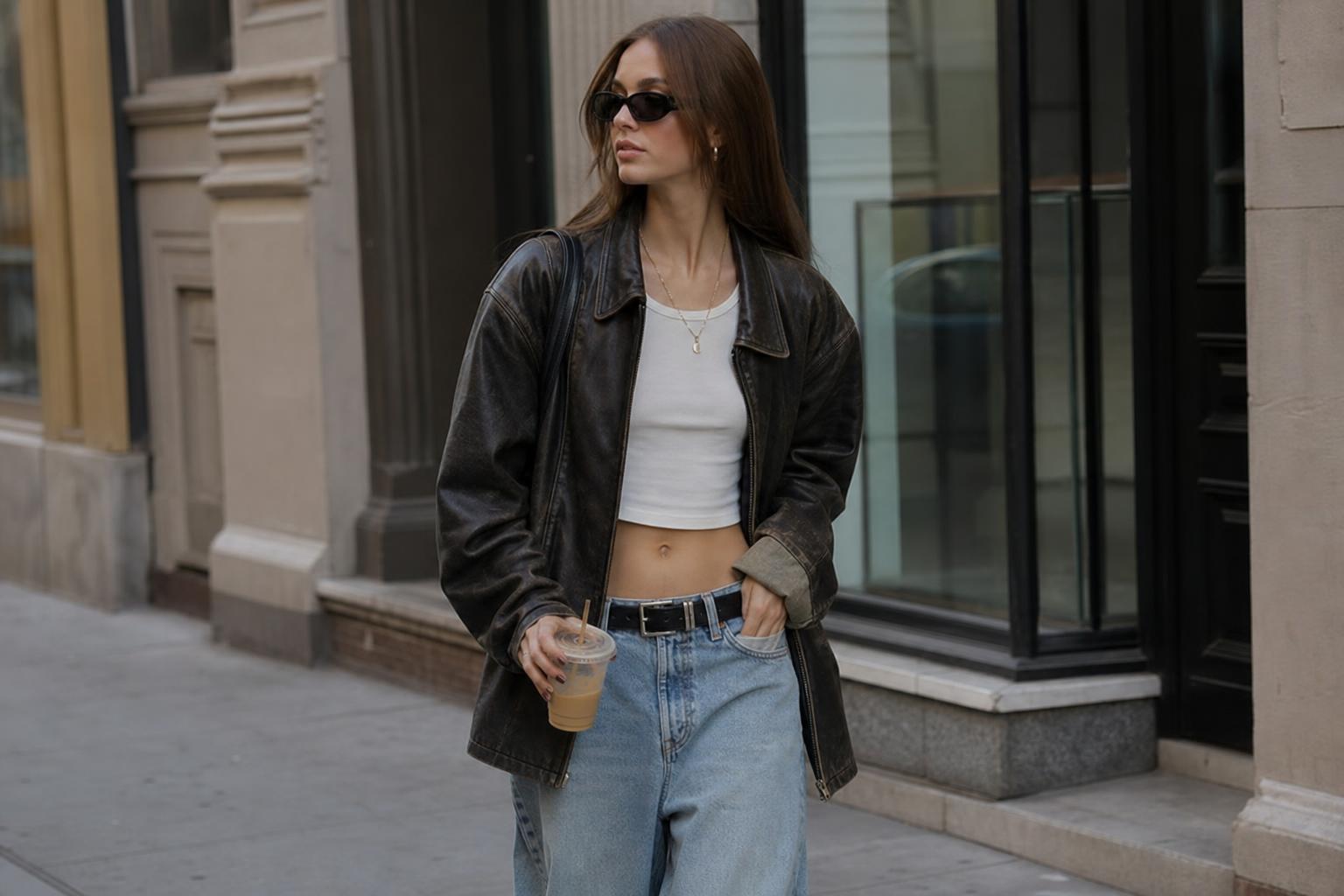
Modern 90s Style That Feels Cool, Not Costume-y
A decade can return in fragments, but 90s style keeps returning as a complete visual system. The appeal is not only nostalgia. It is the efficiency of the silhouettes, the clarity of the styling, and the range within the decade itself: minimalism shaped by Carolyn Bessette-Kennedy, model-off-duty ease associated with Kate Moss, power glamour tied to Naomi Campbell and Cindy Crawford, and a practical street-led wardrobe built around denim, leather jackets, cargo pants, and platform shoes. For U.S. readers searching for 1990s fashion today, the real question is not whether the decade is back. It is which version of it belongs in a modern wardrobe, and how to wear it with balance instead of costume energy.
The most useful way to understand 90s style is through outfit composition. The decade relied on clean lines, relaxed proportions, and a strong relationship between simple basics and one or two defining pieces. Slip dresses worked because they reduced visual noise. Wide-leg jeans and mid-rise denim felt current because they changed the line of the leg without becoming overly decorative. Leather and suede outerwear added weight and texture. Platform sandals and chunky sneakers gave outfits a visual anchor at ground level. These are not isolated trends. They are connected design choices that still translate well now.
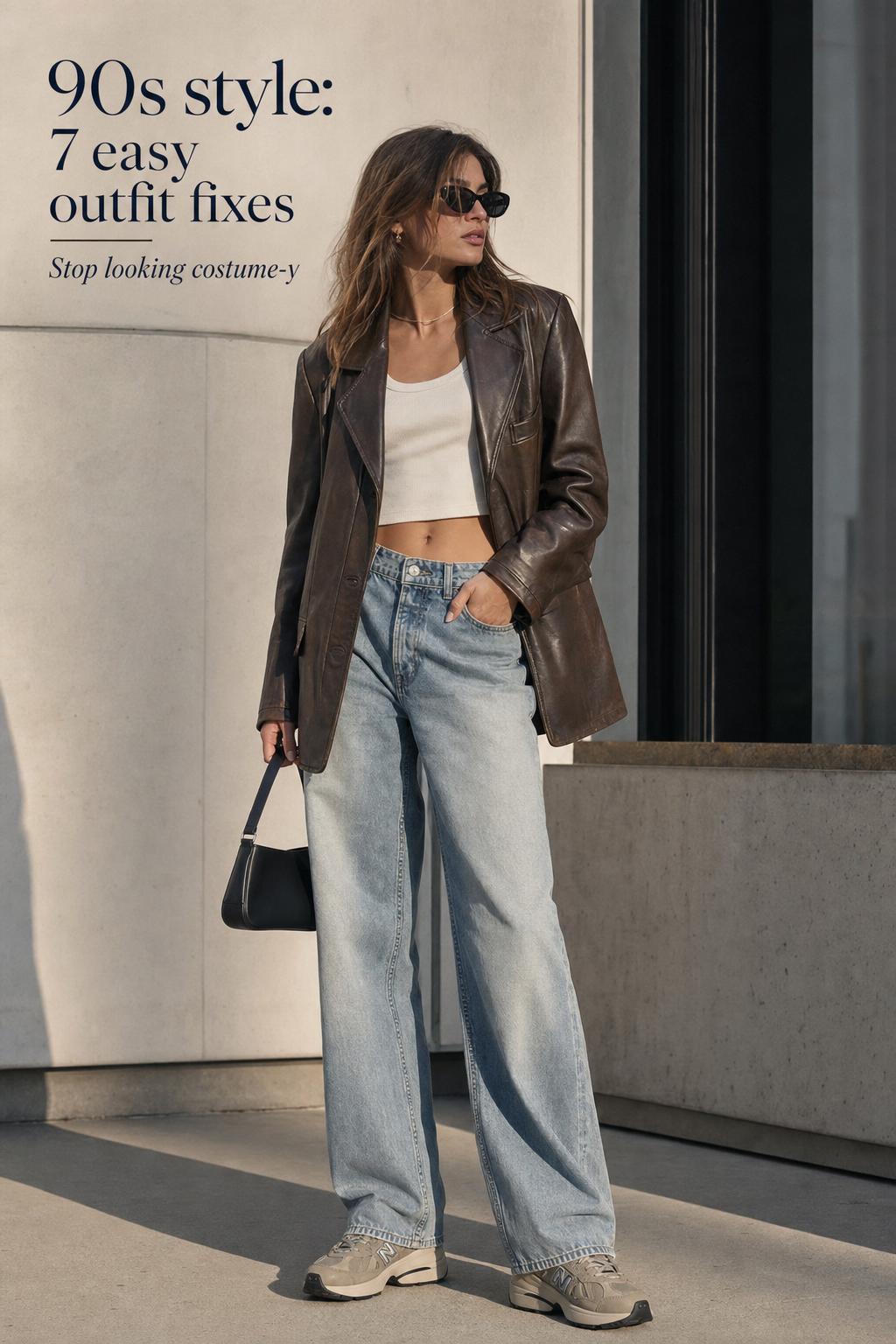
Why the 1990s still feel relevant
1990s fashion has remained visible because it solves a modern style problem: how to look intentional without looking overworked. Many current wardrobes rely on the same logic the decade popularized. Neutral palettes, denim-driven dressing, pared-back dresses, and practical outerwear all support repeat wear. That is one reason the era continues to resonate with both Gen Z and Millennials, especially through social media mood boards, red-carpet references, and re-edited archival imagery.
Another reason is the strength of the decade’s visual personalities. Carolyn Bessette-Kennedy represents disciplined minimalism. Kate Moss signals undone ease. Naomi Campbell and Cindy Crawford stand for the polished, high-impact side of the supers era. Together, these figures map out the core territory of 90s fashion: minimal, glamorous, wearable, and image-conscious without being overloaded. Even when brands like Vogue, GQ, Teen Vogue, Who What Wear, Primark, and Marks & Spencer frame the decade differently, they return to the same structural themes because those themes remain adaptable.
Found the dress? Keep the rest in one place.
Zarellea brings guest details, vendors, timelines, and every next step together — so your wedding plan feels as good as your look.
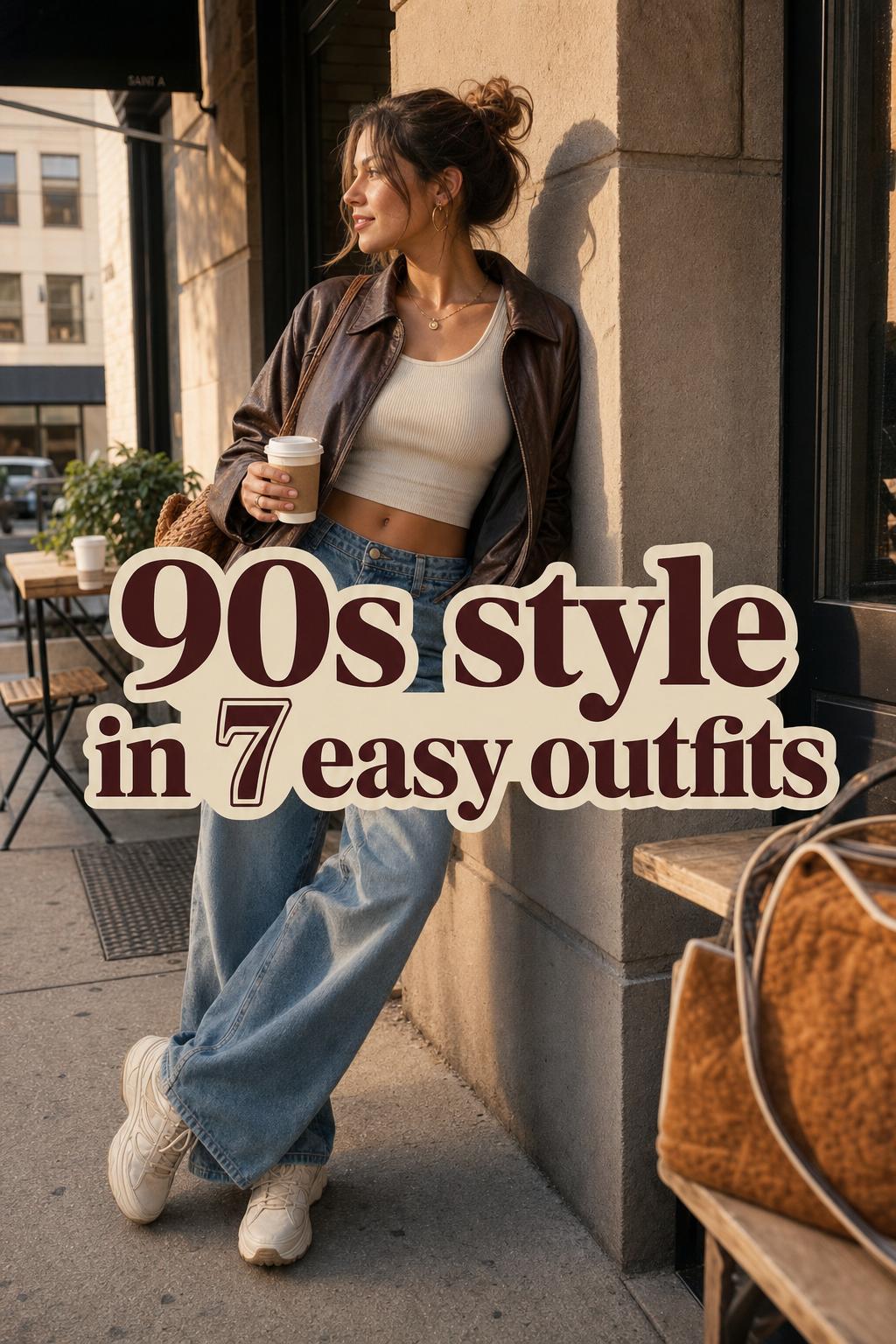
The decade was not one look
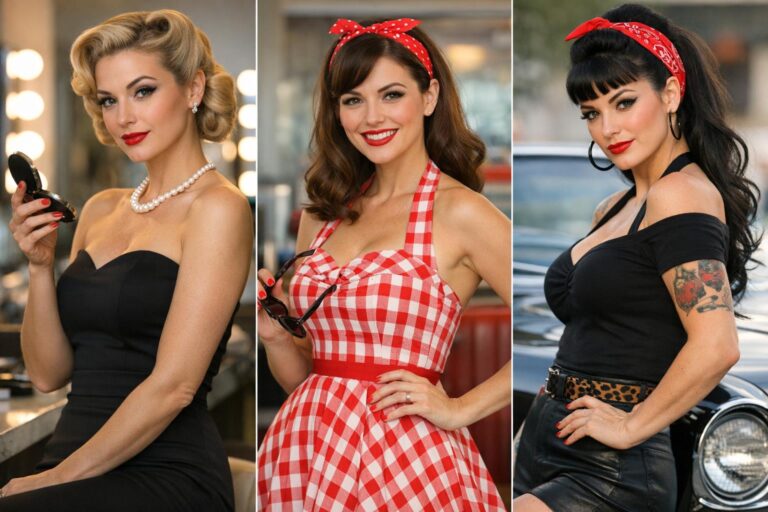
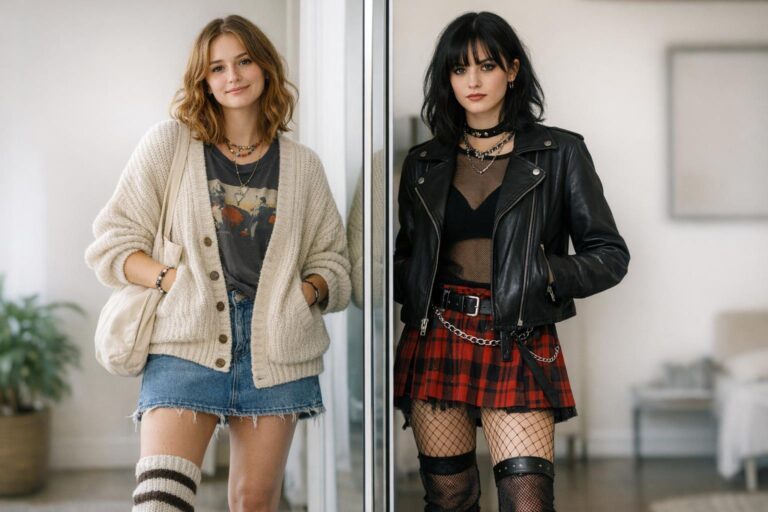
A common mistake is treating 90s style as a single uniform aesthetic. In practice, the decade held several parallel modes of dressing. Minimalism emphasized restraint, clean lines, and versatile basics. Grunge introduced flannel, denim, and a rougher texture story. Streetwear and casual looks centered on baggy silhouettes, cargo pants, and leather jackets. Evening dressing leaned into slip dresses and platform sandals. Understanding these categories matters because it allows a more precise modern interpretation.
That precision also prevents visual confusion. A slip dress styled with a sleek outer layer belongs to a different 90s language than baggy jeans paired with a crop top or overalls. Both are accurate to the decade, but they communicate differently. A strong wardrobe uses one language at a time or combines them with clear proportion control.
The foundation pieces that define 90s style
The decade’s most durable clothes are not random trend artifacts. They are core pieces with strong line, simple styling potential, and repeat-wear value. These staples explain why 1990s style continues to show up in current wardrobes and trend cycles.
Slip dresses and minimalist dresses
The slip dress remains one of the clearest symbols of 90s fashion because it distills the decade’s preference for sleek simplicity. Its power comes from silhouette economy. There is no excess volume, no heavy ornamentation, and no need for complicated styling. The dress works as a complete statement on its own, but it also accepts layering well, which is why it continues to appear in lists of classic 90s trends that still work.
From a styling perspective, the slip dress succeeds when the surrounding pieces preserve its clean line. Heavy additions can interrupt the visual ease that makes the garment effective. If you want a stronger daytime composition, use a leather jacket or suede outerwear to add contrast without sacrificing the streamlined core. For evening, platform sandals provide lift and reinforce the decade-specific finish.
Cargo pants, wide-leg jeans, and the denim reset
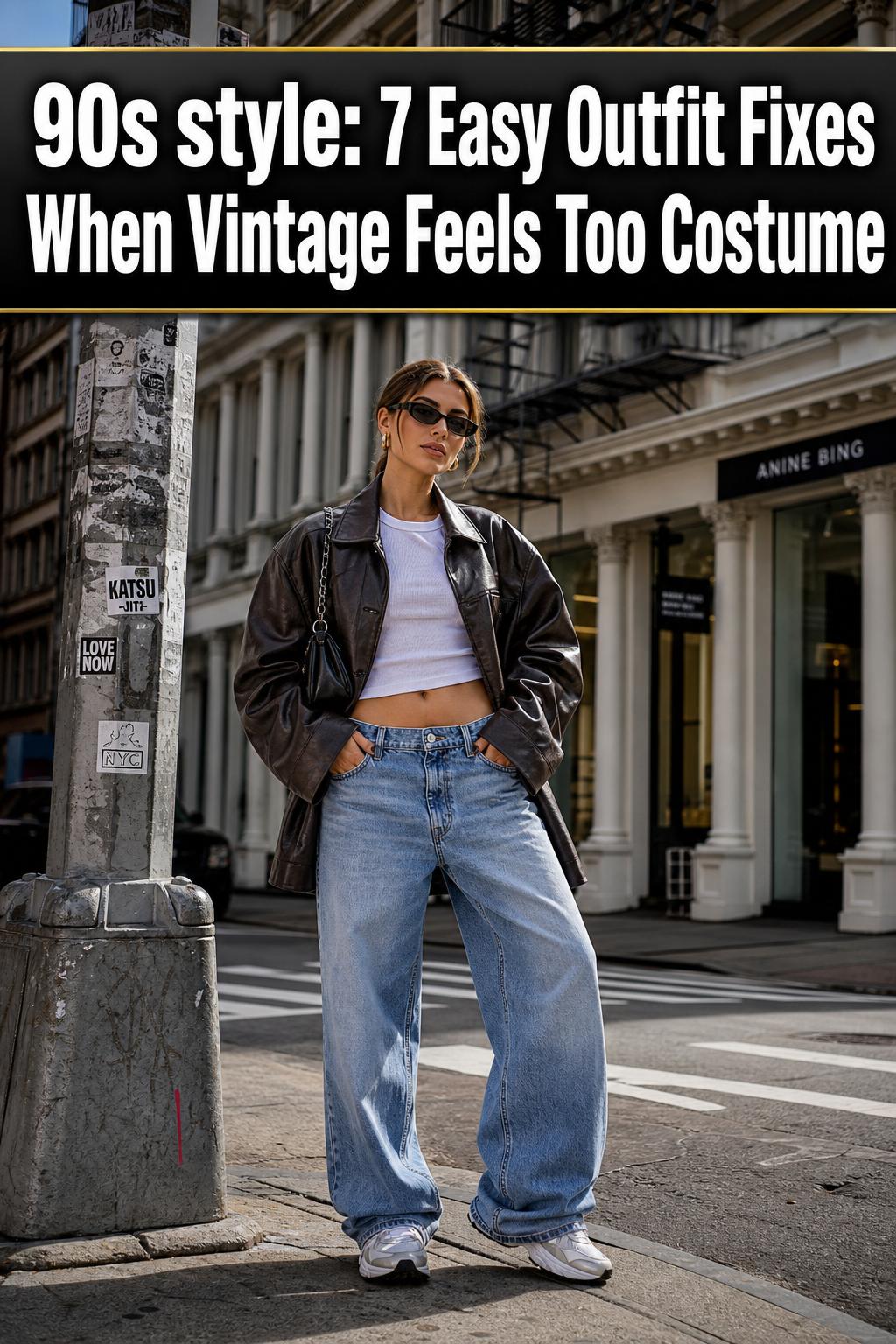
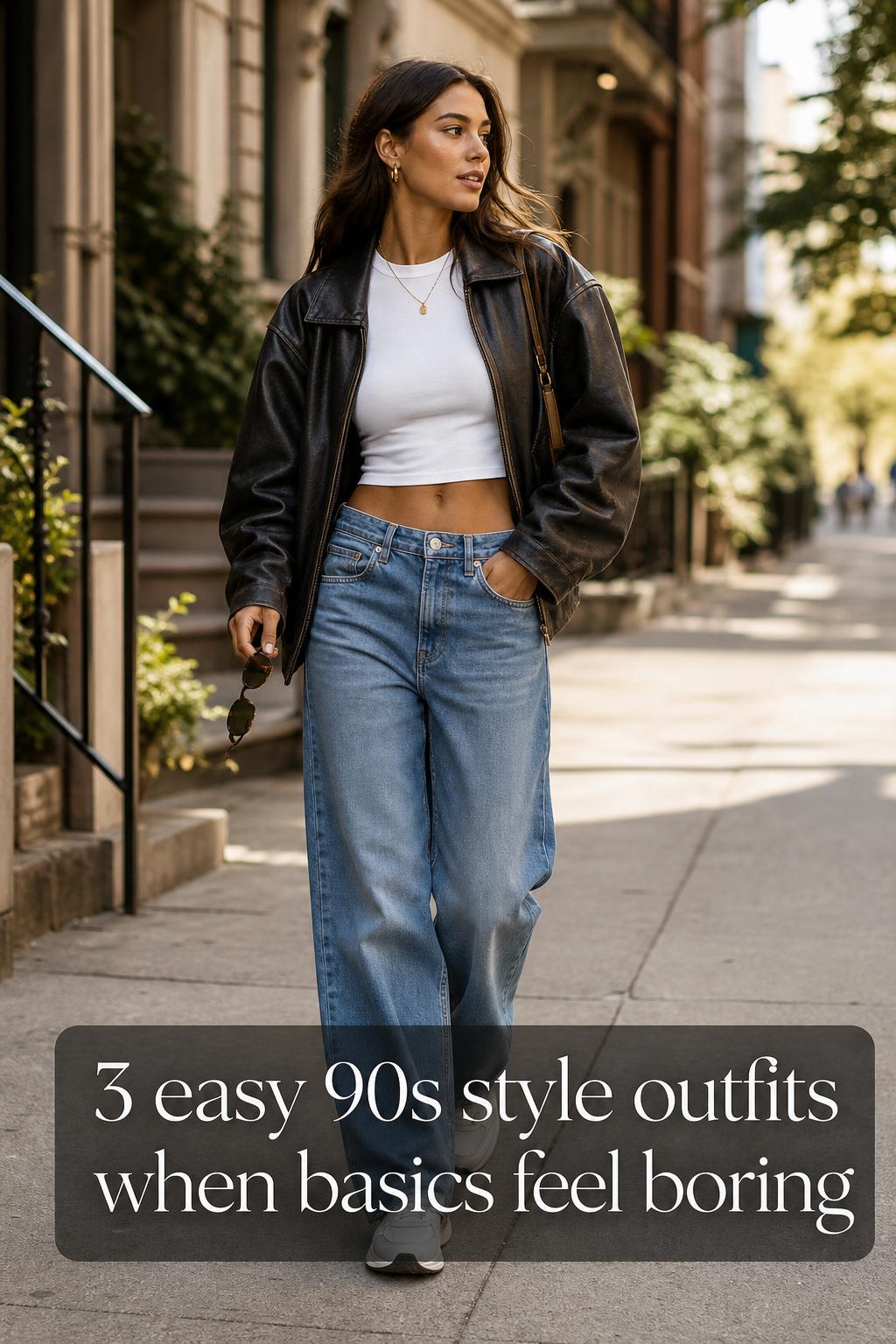
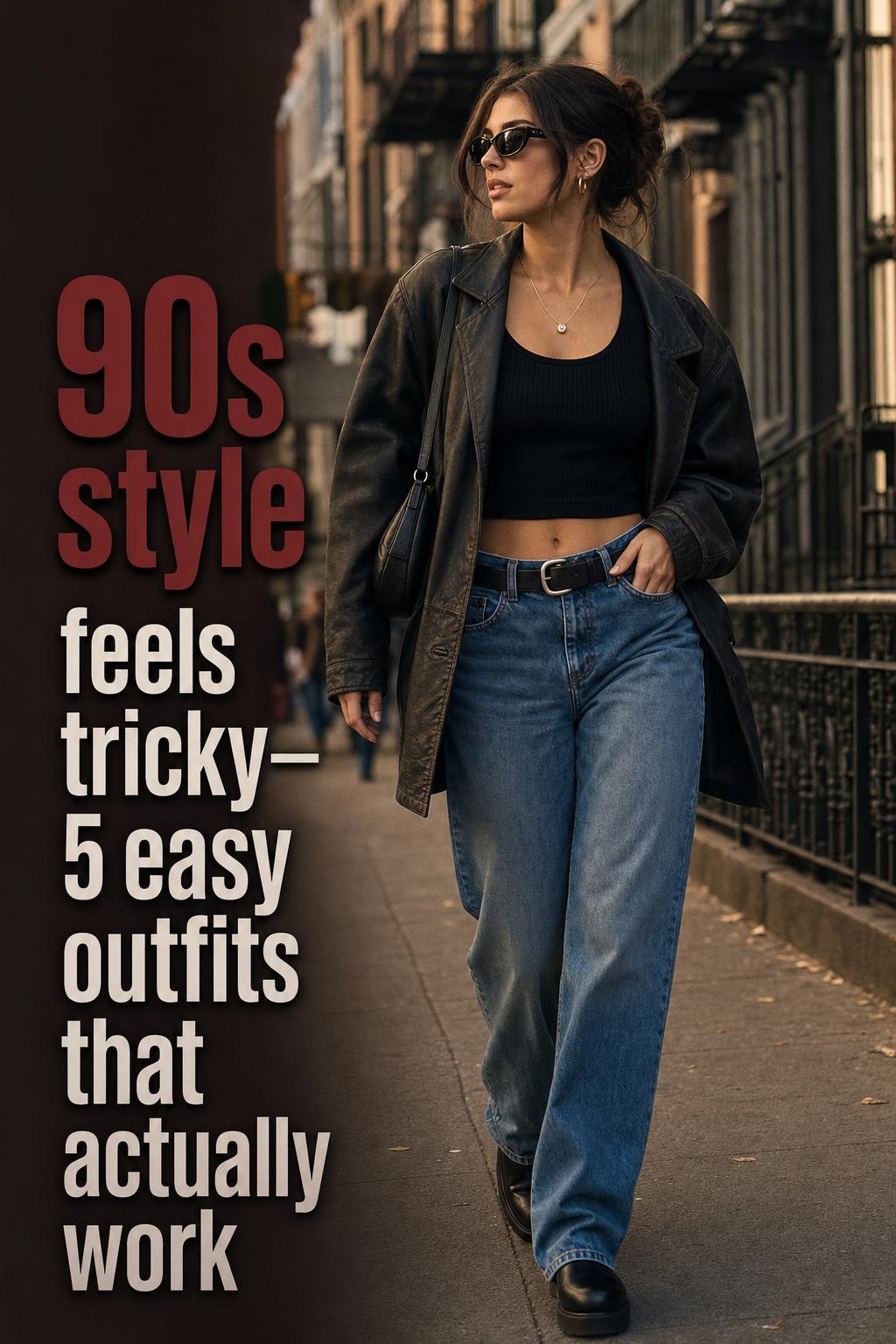
Denim sits at the center of 90s style, but not in a single form. The decade’s current revival often highlights wide-leg jeans, ankle-grazing cuts, exposed hem details, and mid-rise shapes. These silhouettes shift the body line in a way that feels more relaxed than a narrow leg, yet more intentional than oversized denim with no structure. Cargo pants follow the same logic. They bring utility and volume, creating a grounded lower half that pairs well with compact tops or simple layers.
The strongest 90s denim looks depend on proportion play. A wider jean leg needs either a cleaner top line or a defined jacket shape to avoid visual drag. Mid-rise denim often reads more authentic to the decade than extremes at either end because it supports balance. Exposed hems and subtle distressing work best when they remain secondary details rather than the entire point of the look. In other words, denim should shape the outfit, not overwhelm it.
- Choose wide-leg jeans when you want a relaxed silhouette with strong movement.
- Use mid-rise denim for the most versatile 90s-inspired base.
- Reserve cargo pants for looks that need utility and volume rather than polish.
- Keep tops cleaner when the bottom half carries more width or detail.
Leather jackets and suede outerwear
GQ and menswear-focused interpretations of the decade consistently return to leather jackets because they function as both a style signal and a practical wardrobe tool. In 90s fashion, leather and suede outerwear add density to an outfit. That density matters. It creates texture contrast against denim, smooth dresses, or simple separates and gives the overall look a stronger frame.
For a modern wardrobe, the key is to let leather act as the visual anchor. If the jacket is sharp, the rest of the outfit can stay minimal. If the suede piece is softer and more tonal, it can support denim without taking over the look. This is especially effective in transitional weather, when outerwear becomes the most visible layer. The 90s excelled at this kind of dressing because it understood that a great jacket can carry an otherwise simple composition.
Platform sandals and chunky sneakers
Footwear in 1990s style was rarely an afterthought. Platform sandals and chunky sneakers did more than complete an outfit. They stabilized proportion. A sleek dress with a flat, delicate shoe can sometimes lose the decade-specific attitude that made 90s dressing distinct. Add a platform, and the outfit regains weight, attitude, and a clearer link to the era.
Chunky sneakers serve a similar purpose in casual dressing. They support wide-leg jeans, baggy silhouettes, and denim-heavy outfits by creating enough visual substance at the hemline. This is why platform shoes and chunkier sole shapes still make sense in a 90s-inspired wardrobe today. They are not only retro references. They are proportion tools.
The 90s aesthetics that matter most now
Not every trend from the decade has equal relevance. The versions of 90s style that translate best into current U.S. wardrobes are the ones with clear structure, repeat wear, and easy adaptation across occasions. Three aesthetics stand out most strongly: minimalism, grunge-influenced casualwear, and polished retro glamour.
Minimalism and the capsule wardrobe mindset
Minimalism remains one of the strongest 1990s style exports. Carolyn Bessette-Kennedy is the clearest reference point here because her image is repeatedly linked to the decade’s cleaner, more composed wardrobe language. In practical terms, this aesthetic values simple dresses, refined denim, restrained outerwear, and a color story that does not fight for attention. The modern reason it works is simple: these clothes integrate easily into a capsule wardrobe.
A capsule-minded 90s wardrobe prioritizes pieces that can rotate across settings. A slip dress can move from day to evening with a change in jacket and footwear. Mid-rise denim can support minimalist tops during the day and leather outerwear at night. This is where the decade feels surprisingly current. It treated simplicity as a form of strength rather than absence.
Grunge and streetwear influences
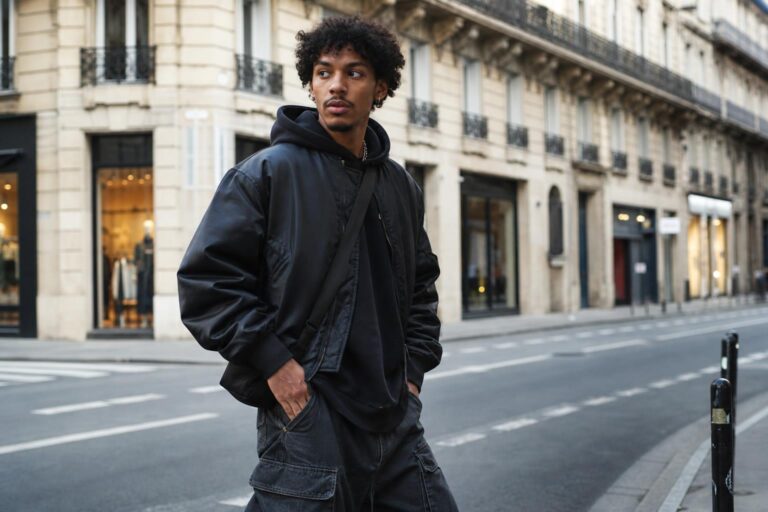
Grunge and streetwear sit at the more relaxed end of the decade’s spectrum. In menswear discussions especially, this side of 90s fashion appears through flannel shirts, denim, leather jackets, and easy layers. The key to wearing it now is restraint. Authenticity comes from texture and silhouette, not from piling on every reference at once.
A strong grunge-influenced outfit usually has one rough-texture element and one stable base. For example, flannel with denim works because both pieces share a casual language, while a leather jacket sharpens the finish. Baggy silhouettes can be effective, but they need some structure elsewhere, whether in the jacket, the shoe, or the length of the hem. Without that balance, the outfit loses clarity.
Glam retro for evening and going-out dressing
The glamorous side of 90s style often appears through supers-era references, red-carpet imagery, and sharper styling details. Naomi Campbell and Cindy Crawford remain central to this conversation because they represent a more elevated interpretation of the decade. In modern terms, glam retro is not about excessive decoration. It is about choosing one striking silhouette and supporting it with confidence.
This is where platform sandals, sleek dresses, and more polished outer layers become important. The goal is visual control. A narrow dress silhouette paired with a stronger shoe creates balance. A cleaner neckline allows the shape of the dress to stay dominant. The result feels more fashion-led than costume-led, which is the difference between a useful 90s reference and a party cliché.
How iconic figures shaped the decade’s visual language
The cultural force of 90s style is inseparable from the people who made it visible. Fashion magazines, tag archives, and retrospective features repeatedly return to the same names because they represent distinct style codes that still guide dressing now.
Carolyn Bessette-Kennedy and disciplined minimalism
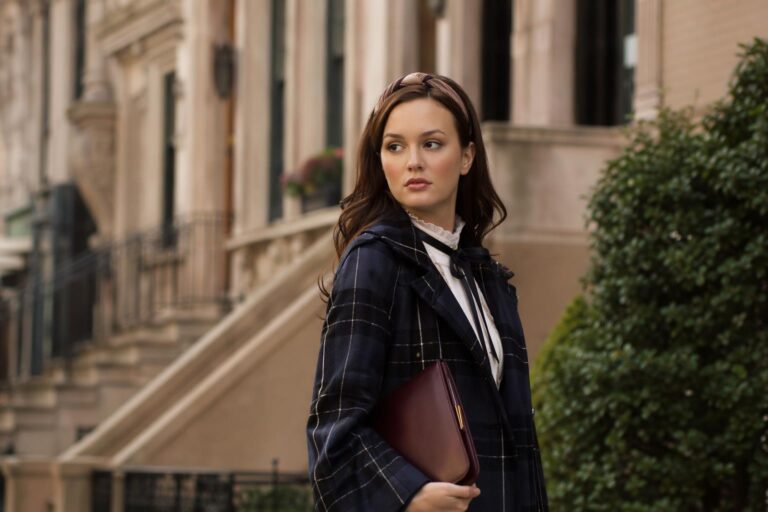
Carolyn Bessette-Kennedy’s influence lies in reduction. Her association with 90s minimalism continues because it offered a clear formula: clean silhouette, controlled color, and very little excess. This approach remains highly relevant for readers who want 90s-inspired outfits without obvious trend overload. It works especially well in urban U.S. settings where wardrobes need to move from work-adjacent dressing to evening plans with minimal adjustment.
The lesson here is not to copy a historic image exactly. It is to use discipline in outfit composition. Keep the line clean. Let one texture or one silhouette shift carry the look. Build around repeatable pieces. That logic is as useful now as it was in the 1990s.
Kate Moss, Naomi Campbell, and Cindy Crawford as style frameworks
Kate Moss, Naomi Campbell, and Cindy Crawford are often grouped together as the supers of the era, but they are helpful for different reasons. Kate Moss is frequently linked with pared-back dressing and model-off-duty attitude. Naomi Campbell represents sleek impact and high-fashion authority. Cindy Crawford brings a more polished, accessible glamour. Together, they show the range inside 90s fashion and explain why the decade can be interpreted in multiple ways without losing coherence.
For today’s reader, these names function less as celebrities to emulate and more as visual categories. If your wardrobe leans minimal, the Kate Moss and Carolyn Bessette-Kennedy side of the decade will feel easiest. If you prefer stronger glamour, references connected to Naomi Campbell and Cindy Crawford offer a better route. The key is internal consistency. One style language should lead.
Brands, houses, and the editorial frame
Luxury houses such as Prada, along with designer references like Mugler, help anchor 90s style in a broader fashion context. These names matter because they connect the decade’s street-level wardrobe staples to a more polished editorial world. That connection explains why the same era can include both cargo pants and refined minimalist dresses. The decade had room for practicality and polish, and brands helped shape that dual identity.
Retailers and brand-led guides such as Primark and Marks & Spencer show another side of the story: how the 90s translate into real shopping behavior now. Their role is useful because it turns abstract nostalgia into wearable categories like denim, color palettes, and simple silhouette-driven outfits. That bridge between editorial inspiration and wardrobe application is one reason the decade remains so easy to revisit.
Building a 90s-inspired wardrobe without looking dated
The difference between a compelling 90s-inspired wardrobe and a theme outfit is editing. Most readers do not need a full vintage overhaul. They need a controlled set of staples that communicate the decade through line, fabric, and styling logic.
Start with a compact core
A practical wardrobe foundation can be built around denim, one minimalist dress, one outerwear statement, and one era-specific shoe direction. This creates enough range for casual looks, party looks, and day-to-night dressing without turning the wardrobe into a costume archive.
- One pair of wide-leg or mid-rise jeans
- One slip dress or other minimalist dress
- One leather jacket or suede jacket
- One pair of platform sandals or chunky sneakers
- One casual top or crop top to work with baggy silhouettes
This combination works because each piece contributes a different styling function. Denim creates the casual base. The dress handles evening or sharper moments. Outerwear adds texture contrast and structure. Footwear reinforces the decade’s proportions. Together, they cover the strongest visual territory of 90s fashion without excess duplication.
Use color palettes with restraint
Although some 90s-inspired fits can lean bold, the most durable interpretations often rely on a controlled palette. Minimalism benefits from neutrals and low-contrast combinations. Denim-led looks benefit from tonal layering that lets the silhouette stay central. Even more playful retro outfits look stronger when the palette is not fighting the shape.
This matters in practice because 90s style is often remembered through strong images, but those images usually worked through simplicity rather than clutter. A good rule is to let either the silhouette or the color story lead, not both at maximum intensity. That creates the visual clarity associated with the decade’s best outfits.
Day-to-night formulas that actually translate
The decade remains useful because many of its outfits adapt easily through small changes. This is especially relevant for U.S. readers balancing work, weekend plans, and evening events in one wardrobe.
- Day: mid-rise denim, simple top, leather jacket, chunky sneakers.
- Night: slip dress, suede or leather outerwear, platform sandals.
- Casual weekend: cargo pants, compact top, simple jacket.
- 90s party look: baggy jeans or overalls, crop top, statement footwear.
Each formula works because the outfit has one clear anchor. In the daytime look, the jacket defines the composition. In the evening look, the dress does. In the weekend option, volume on the lower half creates the attitude. That clarity is what keeps the look modern.
Where 90s style works best today
One reason the decade remains so wearable is its flexibility across settings. The same foundational pieces can shift depending on location, event, and styling finish. In U.S. fashion hubs such as New York and Los Angeles, this is especially visible because the wardrobe needs of each environment support different sides of the decade.
City dressing: polished minimalism
In city contexts, 90s style tends to work best through minimalism. A clean dress, refined denim, or a sharp leather jacket fits naturally into fast-moving urban wardrobes because the pieces are practical and visually direct. This is where Carolyn Bessette-Kennedy’s influence feels strongest. The focus is not trend display. It is wardrobe discipline.
Casual social settings: denim and volume
For more relaxed settings, 90s denim and baggy silhouettes make more sense. Wide-leg jeans, cargo pants, overalls, and crop tops carry the decade’s casual energy without requiring a highly polished finish. The best version of this look uses one loose element and one cleaner counterpart. That keeps the outfit from collapsing into shapelessness.
Themed events and 90s parties
A 90s party changes the styling brief. Here, the goal is recognizable reference without sacrificing wearability over several hours. Denim, crop tops, overalls, baggy jeans, and stronger accessories make immediate sense because they read clearly in photos and social settings. Still, comfort matters. If you are likely to stand, dance, or move through a long evening, choose pieces that allow ease of movement and avoid over-layering simply for accuracy.
The best party outfits also keep one contemporary element in the mix. That could be a cleaner fit, a more controlled jacket, or a less exaggerated shoe. It prevents the look from feeling like costume rental and makes the outfit easier to rewear later.
Style breakdown: why certain 90s combinations keep working
Some outfit formulas survive because their internal balance is strong. They are worth understanding beyond trend language.
Slip dress plus leather jacket
This pairing works through contrast. The dress is fluid and minimal. The jacket introduces structure and texture. Together they create tension between softness and edge, which is one of the most effective principles in 90s fashion. Add platform sandals and the lower half gains enough weight to complete the composition.
Wide-leg jeans plus compact top
This formula succeeds because the volume is controlled. The jeans create movement and a relaxed line, while the top prevents the silhouette from becoming visually heavy. Chunky sneakers or a grounded shoe complete the balance. This is one of the easiest 90s-inspired outfits to adapt to current daily wear.
Cargo pants plus simple outer layer
Cargo pants already bring detail and shape through pockets and volume. They need a calmer partner. A simple outer layer keeps the composition coherent and allows the pants to act as the statement piece. This is why the look still appears in modern 90s style roundups: it is practical, recognizable, and easy to style with restraint.
Common mistakes that weaken a 90s-inspired outfit
Wearing 1990s fashion well is often less about adding references and more about knowing what to remove. The decade’s strongest looks were usually edited, not overloaded.
- Combining too many subcultures at once, such as minimalism, grunge, and party glamour in one outfit.
- Using oversized pieces on every layer without any structured element to create line.
- Adding trend details to every item instead of choosing one clear statement piece.
- Ignoring footwear proportion, which can throw off wide-leg jeans or sleek dresses.
- Treating nostalgia as the goal rather than wearability.
The practical solution is to identify the outfit’s main signal first. Is it minimalist, grunge-influenced, denim-led, or party-focused? Once that answer is clear, the styling decisions become much easier. The shoe, jacket, and silhouette can all reinforce the same direction.
Tips for making 90s style feel current in 2025 and 2026
A modern approach to 90s fashion should preserve the decade’s visual strengths while adjusting for current styling expectations. The goal is recognition without rigidity.
Tips
- Anchor each outfit with one unmistakably 90s piece, then keep the rest of the look cleaner.
- Let denim or outerwear carry the nostalgia if you want an everyday version of the trend.
- Use platform sandals or chunky sneakers strategically to correct proportion, not just for retro effect.
- For minimalist looks, follow the Carolyn Bessette-Kennedy principle of reduction: fewer pieces, stronger line.
- For grunge-inspired looks, rely on texture contrast rather than excessive layering.
- If dressing for a 90s party, prioritize comfort and movement so the outfit remains functional for the full event.
These adjustments matter because trend cycles keep changing, but the most wearable 90s outfits are built on practical design logic. A great leather jacket still frames an outfit. Mid-rise denim still creates a useful line. A slip dress still offers clean impact. The decade’s relevance comes from function as much as image.
90s style as a wardrobe strategy, not just a trend
The most compelling reason to revisit 90s style is that it offers a coherent way to dress. It is not only a collection of nostalgic references. It is a system built on silhouette balance, texture contrast, simple color stories, and recognizable staples. That is why it appears across fashion magazines, menswear commentary, teen trend roundups, and retailer guides alike.
Whether the entry point is Carolyn Bessette-Kennedy minimalism, Kate Moss ease, the supers-era glamour of Naomi Campbell and Cindy Crawford, or the casual utility of cargo pants and denim, the same rule applies: choose a lane, keep the composition controlled, and let proportion do the work. That is the version of 1990s fashion that still looks strong now.
FAQ
Is 90s style still in fashion?
Yes. 90s style remains relevant because many of its core elements—slip dresses, mid-rise and wide-leg denim, leather jackets, cargo pants, and platform shoes—fit naturally into current wardrobes. Its lasting appeal comes from strong silhouette design and practical styling value, not only nostalgia.
What are the main pieces of a 90s-inspired wardrobe?
The strongest foundation includes denim, especially wide-leg or mid-rise jeans, a slip dress or another minimalist dress, a leather or suede jacket, and footwear such as platform sandals or chunky sneakers. These pieces cover the decade’s most recognizable proportions and can be styled across casual and dressier settings.
How do I wear 90s fashion without looking like I am in costume?
Limit the look to one or two strong references and keep the rest of the outfit clean. For example, pair wide-leg jeans with a simple top, or a slip dress with a structured leather jacket. Avoid combining too many sub-styles at once, such as grunge, minimalism, and party glamour in a single outfit.
Which 90s trends still work best today?
The most adaptable trends are slip dresses, cargo pants, leather jackets, denim in mid-rise and wide-leg cuts, platform sandals, chunky sneakers, and minimalist dressing influenced by figures such as Carolyn Bessette-Kennedy. These trends translate well because they rely on wearable shape and simple styling logic.
What is the difference between 90s minimalism and 90s grunge?
90s minimalism is defined by clean lines, restrained color palettes, and a polished, reduced wardrobe. 90s grunge uses rougher textures, flannel, denim, and more casual layering. Both belong to the decade, but they communicate very different moods and should usually be styled with clear distinction.
How should I dress for a 90s party?
Use recognizable pieces such as baggy jeans, denim, overalls, crop tops, and platform shoes, but keep comfort in mind if you will be moving or dancing for hours. The best 90s party outfits are visually clear, easy to wear, and still anchored by one modern element so they do not feel overly theatrical.
Who are the most important style figures associated with 90s fashion?
Carolyn Bessette-Kennedy is strongly linked to 90s minimalism, while Kate Moss, Naomi Campbell, and Cindy Crawford represent the wider power of the supers era. Together, they define different sides of the decade, from pared-back dressing to polished glamour.
Are 90s jeans different from other denim trends?
Yes. 90s jeans are commonly associated with relaxed but intentional silhouettes such as mid-rise cuts, wide-leg shapes, ankle-grazing lengths, and exposed hem details. They shift the line of the body in a way that feels more relaxed than narrow jeans while still maintaining a clear structure.