What to Wear: Minimalist Wardrobe Essentials That Last
A streamlined closet tends to sound easy in theory and surprisingly difficult in practice. Most people do not struggle because they lack clothing; they struggle because too many pieces compete for attention, do not coordinate, or only work for one narrow scenario. That is why minimalist wardrobe essentials remain such a useful framework. A strong capsule wardrobe reduces visual clutter, sharpens outfit composition, and makes daily dressing faster without forcing personal style into something bland.
The most effective minimalist wardrobes are not built around strict deprivation. They are built around versatile foundations: a white shirt that works under a blazer, dark denim that can lean casual or polished, trousers that support both work and travel, and outerwear that layers cleanly through seasonal transitions. The common thread is not owning less for its own sake. It is choosing pieces that create more combinations, better silhouette balance, and easier decision-making in real life.
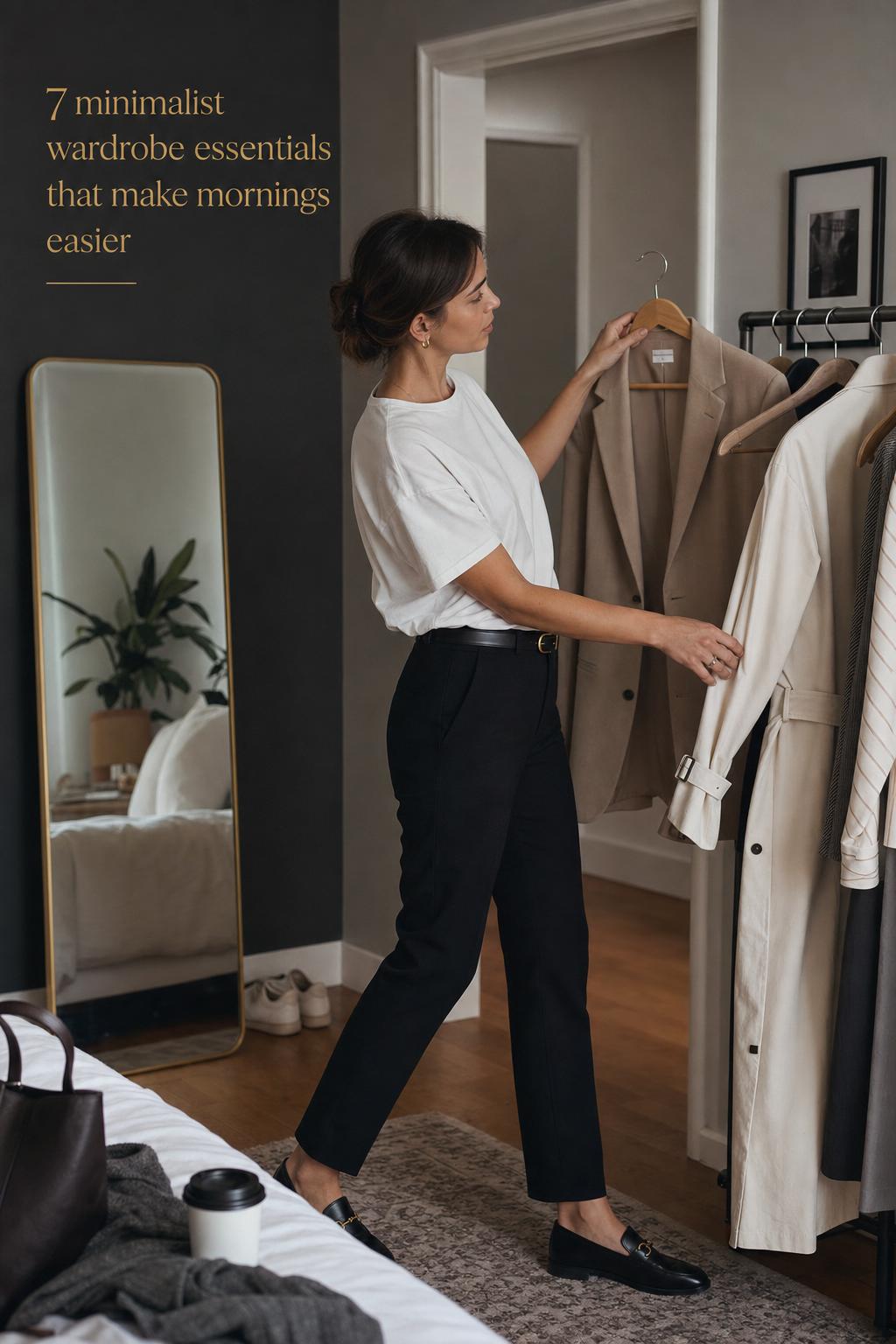
This guide breaks down the smartest minimalist wardrobe essentials, how many pieces usually make sense, what to buy first, how to adapt a capsule wardrobe to climate and lifestyle, and how to avoid common shopping mistakes. The goal is practical: a closet that works on Monday morning, weekend errands, a travel day, and an evening plan without feeling repetitive.
Why a capsule wardrobe works better than a crowded closet
A capsule wardrobe is a tightly edited collection of clothing built around essential pieces that can be mixed and matched with ease. In fashion terms, it improves outfit cohesion because the color palette, fabric choices, and silhouettes are working together instead of against each other. In everyday terms, it means less time standing in front of a full closet with nothing that actually goes together.
Found the dress? Keep the rest in one place.
Zarellea brings guest details, vendors, timelines, and every next step together — so your wedding plan feels as good as your look.
That logic appears again and again across the strongest wardrobe guides: a capsule wardrobe succeeds when each item earns its place through versatility. A blazer should work with jeans and trousers. A neutral knit should layer over a shirt or under outerwear. Shoes should anchor multiple outfits, not require a separate wardrobe to support them.
There is also a practical sustainability benefit. A quality-over-quantity approach encourages better fabric choices, longer wear, more thoughtful repairs, and fewer impulse buys. That does not mean every item needs to be expensive. It means every item should be useful.
The right number of pieces is a range, not a rule
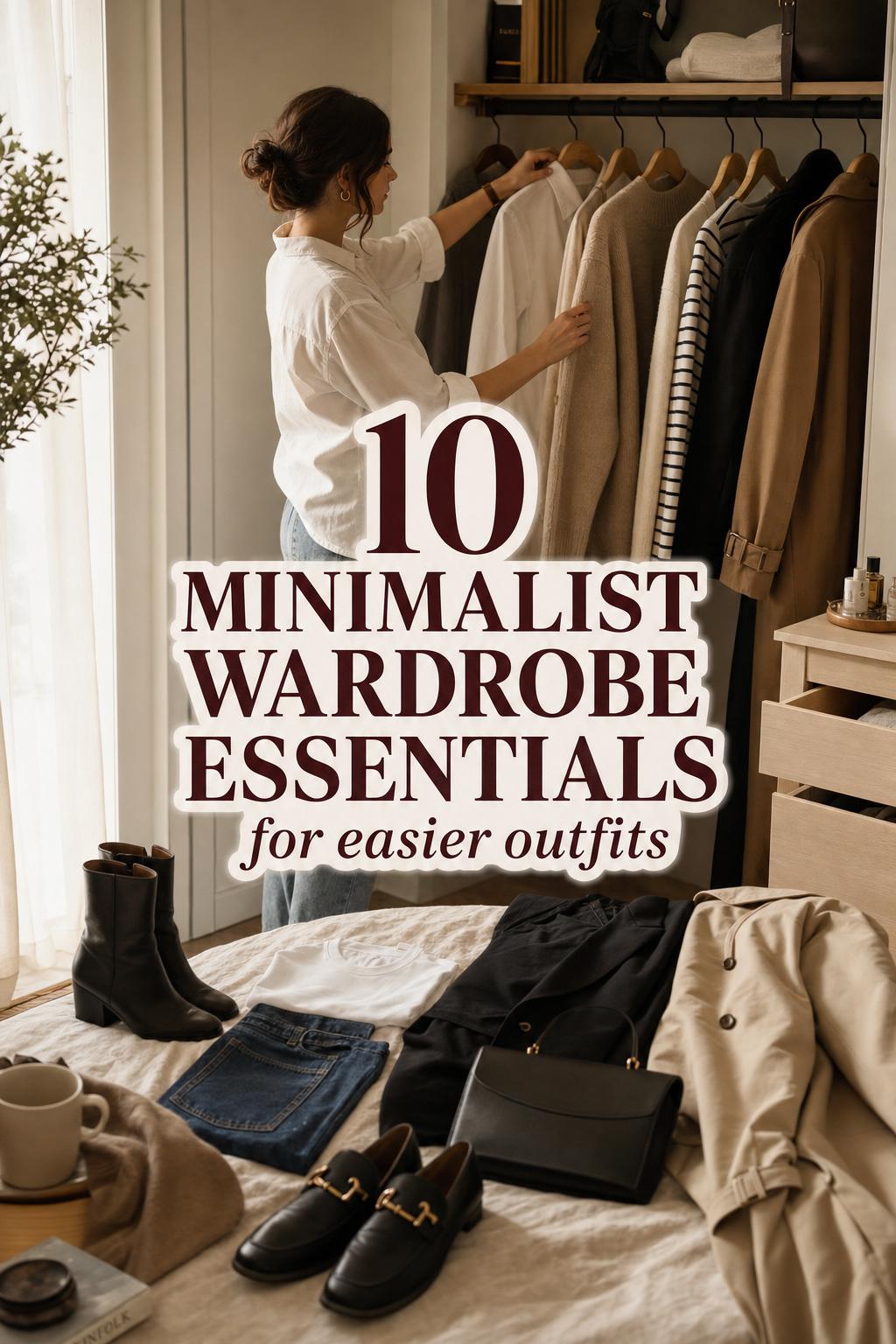
Many capsule wardrobe frameworks land somewhere between 12 essentials, 15 essentials, or a broader 20 to 30 piece baseline. These numbers are useful starting points, but they are not universal. A person commuting to an office five days a week needs a different wardrobe rhythm than someone working from home, traveling often, or living in a climate with heavy seasonal shifts.
A smaller micro-capsule works well if you want to reset your style quickly. A broader 30-piece baseline tends to be more realistic if you need clothes for work, weekends, layering, and a few different weather conditions. The key is customization. Climate, lifestyle, and body type all affect what counts as “essential.”
A practical baseline for daily life
For most wardrobes, the most balanced approach is to begin with 12 to 15 core garments and then expand carefully based on real use. That first layer should cover tops, bottoms, outerwear, knitwear, footwear, and one or two occasion-flexible pieces. If you wear something at least once a week in different combinations, it belongs in the core. If it only works with one shoe and one bag, it probably belongs outside the capsule.
- Choose a smaller capsule if your style is very consistent and your climate is stable.
- Choose a broader capsule if you need workwear, casualwear, and transitional layers.
- Add seasonal pieces only after your year-round foundations are strong.
- Keep duplicate function to a minimum; two nearly identical black trousers rarely improve versatility.
The core minimalist wardrobe essentials that do the most work
The most effective essential pieces appear repeatedly for a reason. They are visually quiet but structurally powerful. They create clean lines, support tonal layering, and give you enough flexibility to dress for work, travel, or a casual day without starting from scratch each time.
Foundational tops
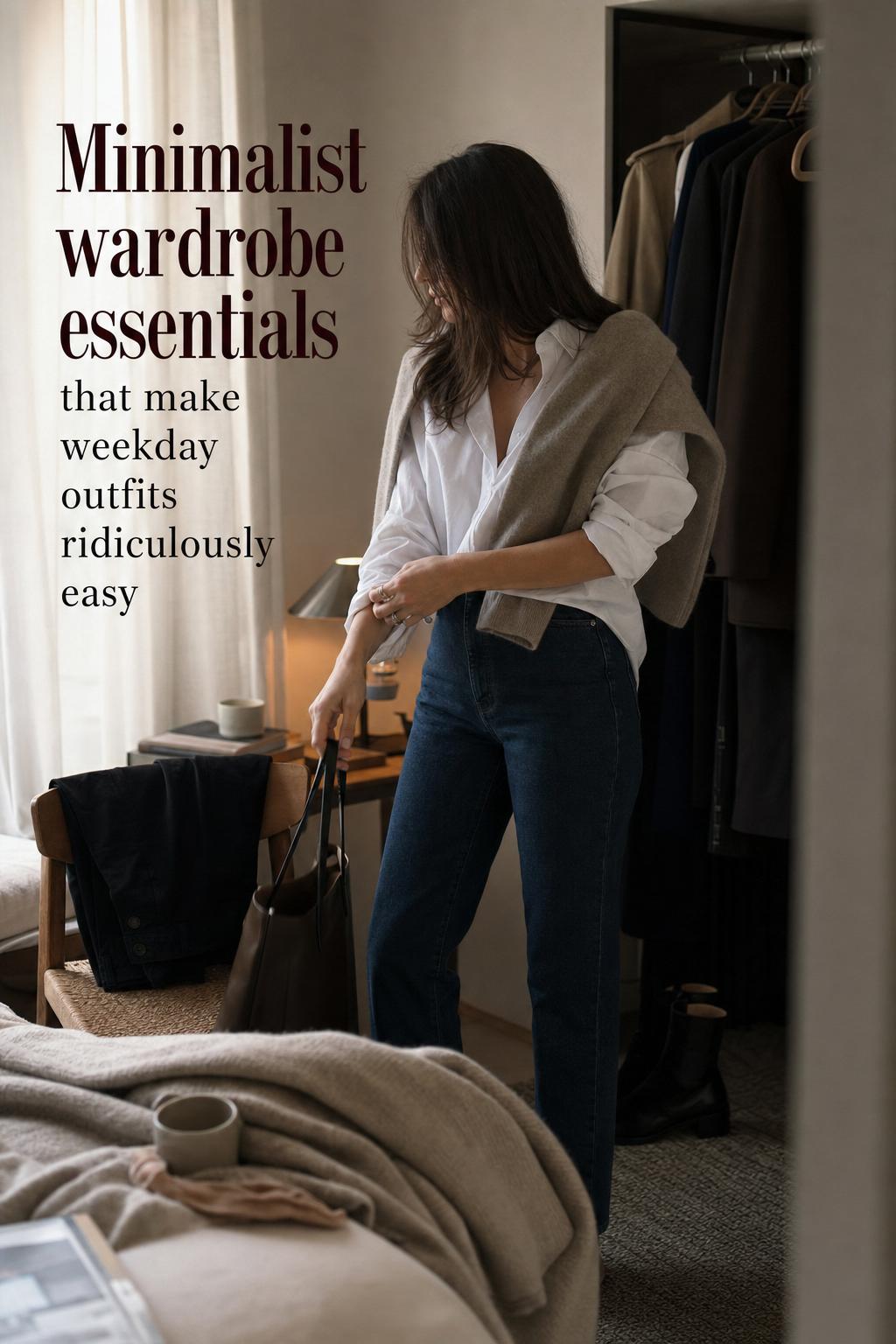
A white button-down shirt is one of the strongest visual anchors in a capsule wardrobe. It sharpens denim, softens tailoring, and layers well under knitwear and blazers. A white tee plays a different role: more relaxed, more casual, but still essential because it creates an easy base layer under jackets and outerwear.
A silk blouse or similarly refined top adds polish without the rigidity of full suiting. It is especially useful if you move between office settings and dinners or need a piece that feels intentional with both jeans and black trousers. A neutral knit rounds out the category by bringing texture contrast and layering function.
Reliable bottoms
Dark jeans remain one of the most versatile minimalist wardrobe essentials because they can sit between casual and polished with almost no effort. Straight silhouettes are especially practical because they pair well with loafers, boots, and more structured outerwear. Trousers are equally important because they clean up the line of an outfit instantly and support a more refined proportion play.
Black trousers are particularly valuable in a capsule. They ground lighter tops, balance oversized knitwear, and transition well between work and evening use. Denim handles off-duty structure; trousers handle polished flexibility. Together they cover most daily needs.
Outerwear and layering pieces
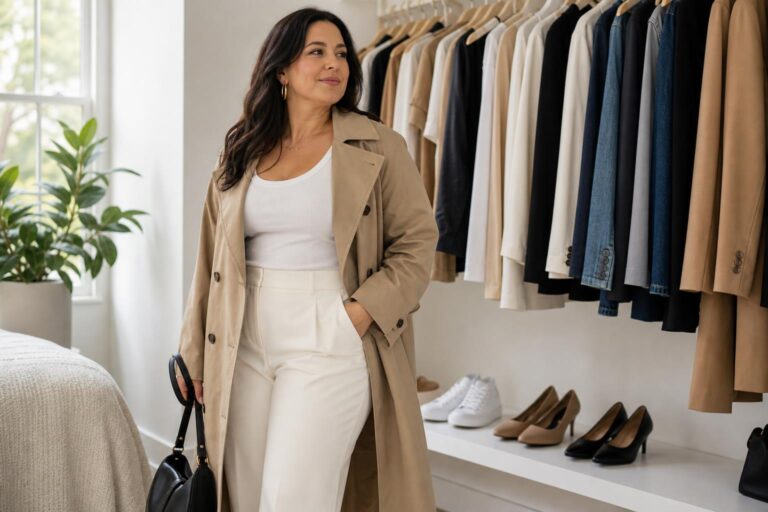
A blazer adds architecture. It turns a tee and jeans into something more composed and gives dresses and trousers a clear frame. A trench coat offers similar versatility with more seasonal reach, especially during fall and spring transitions. A more substantial coat becomes essential in colder climates, where outerwear acts as the primary visual layer for much of the year.
These pieces matter because they shape the silhouette before accessories even enter the conversation. A structured blazer balances softer fabrics. A trench coat lengthens the line and helps unify simple separates. This is why outerwear should be chosen for proportion and compatibility, not just trend value.
Flexible dresses and one-piece solutions
A dress still earns a place in a minimalist capsule when it can move across settings. The classic little black dress remains useful because it shifts easily with footwear and layering. Under a blazer, it works for dinner or office-adjacent settings. With boots and a coat, it adapts to cooler weather. The best version is simple enough to restyle repeatedly rather than so specific that it feels memorable after one wear.
Footwear that stabilizes the wardrobe
Shoes should connect outfits, not complicate them. Loafers, boots, and versatile everyday shoes do the most work because they pair with denim, trousers, dresses, and outerwear without demanding a style shift. Footwear is where many wardrobes lose cohesion: the clothes are minimal, but the shoes feel disconnected. A capsule works better when your footwear categories reflect your actual routine.
- Loafers support polished casual outfits and work especially well with straight denim and trousers.
- Boots extend the life of dresses, denim, and coats through seasonal transitions.
- Neutral versatile shoes prevent the wardrobe from splitting into unrelated style lanes.
Category planning: what to buy first and what can wait
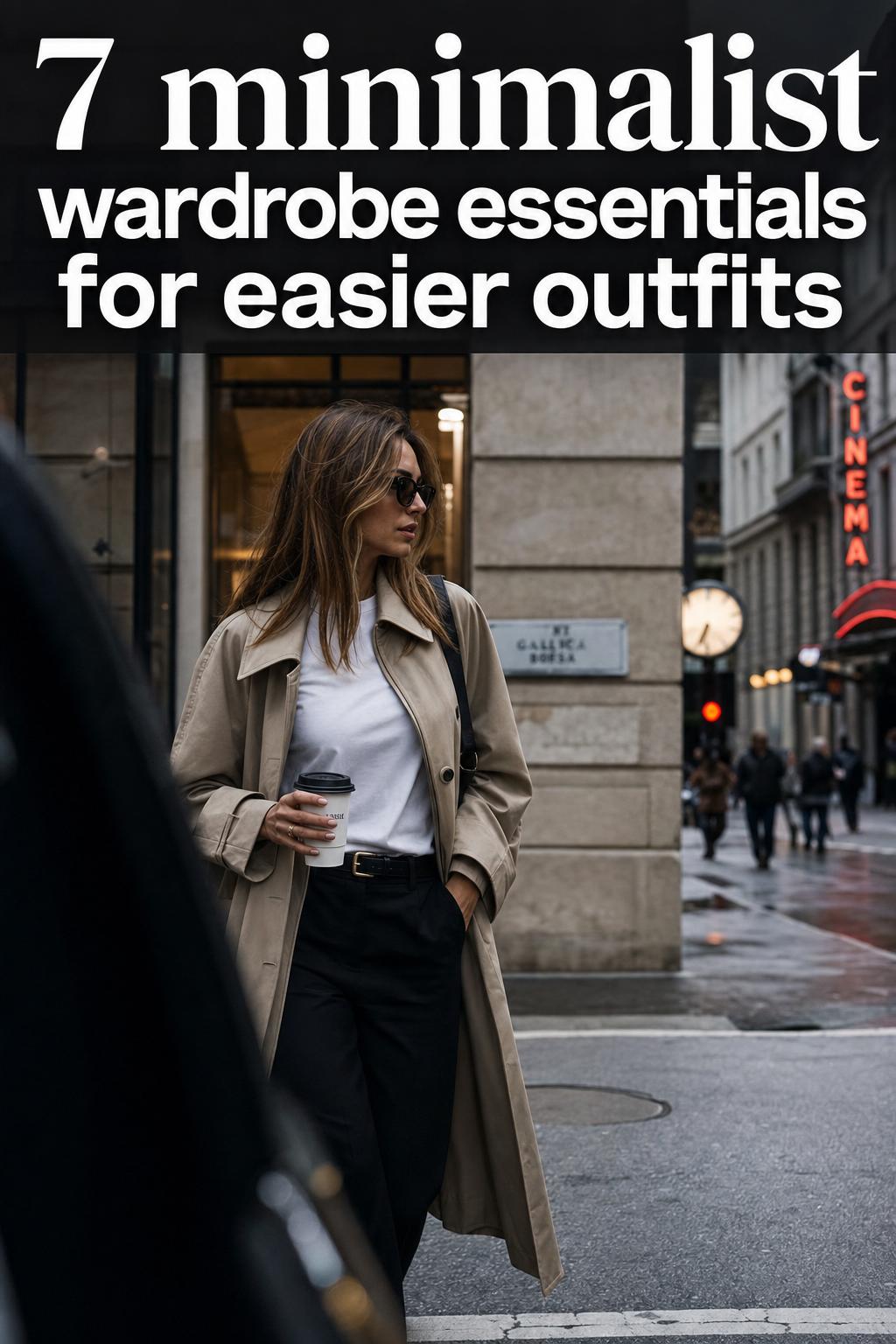
If your closet feels fragmented, do not start with statement pieces. Start with the items that connect the most outfits. That means tops and bottoms first, then outerwear, then shoes, then occasion-specific pieces. The highest-value buys are the ones that solve recurring daily problems.
For most people, the easiest pieces to recreate are a white tee, dark denim, a button-down shirt, and a neutral knit. They are widely available across price points, they mix naturally, and they instantly improve capsule wardrobe compatibility. The pieces worth stronger investment are usually a blazer, trench coat, substantial coat, quality trousers, and durable boots or loafers because construction, fit, and fabric matter more in these categories.
Priority order for a smart reset
- Buy first: white tee, white button-down, dark jeans, black trousers, neutral knit.
- Buy next: blazer, trench coat or coat, versatile shoes, boots or loafers.
- Add later: silk blouse, little black dress, secondary layering pieces.
- Delay purchase: anything that only suits one event, one season, or one very specific styling mood.
This order works because it builds outfit composition from the inside out. Foundations create more combinations immediately. Outerwear and shoes then multiply those combinations. Occasion pieces come last because they are only as useful as the basics that support them.
Color palette logic: why neutrals create more outfits
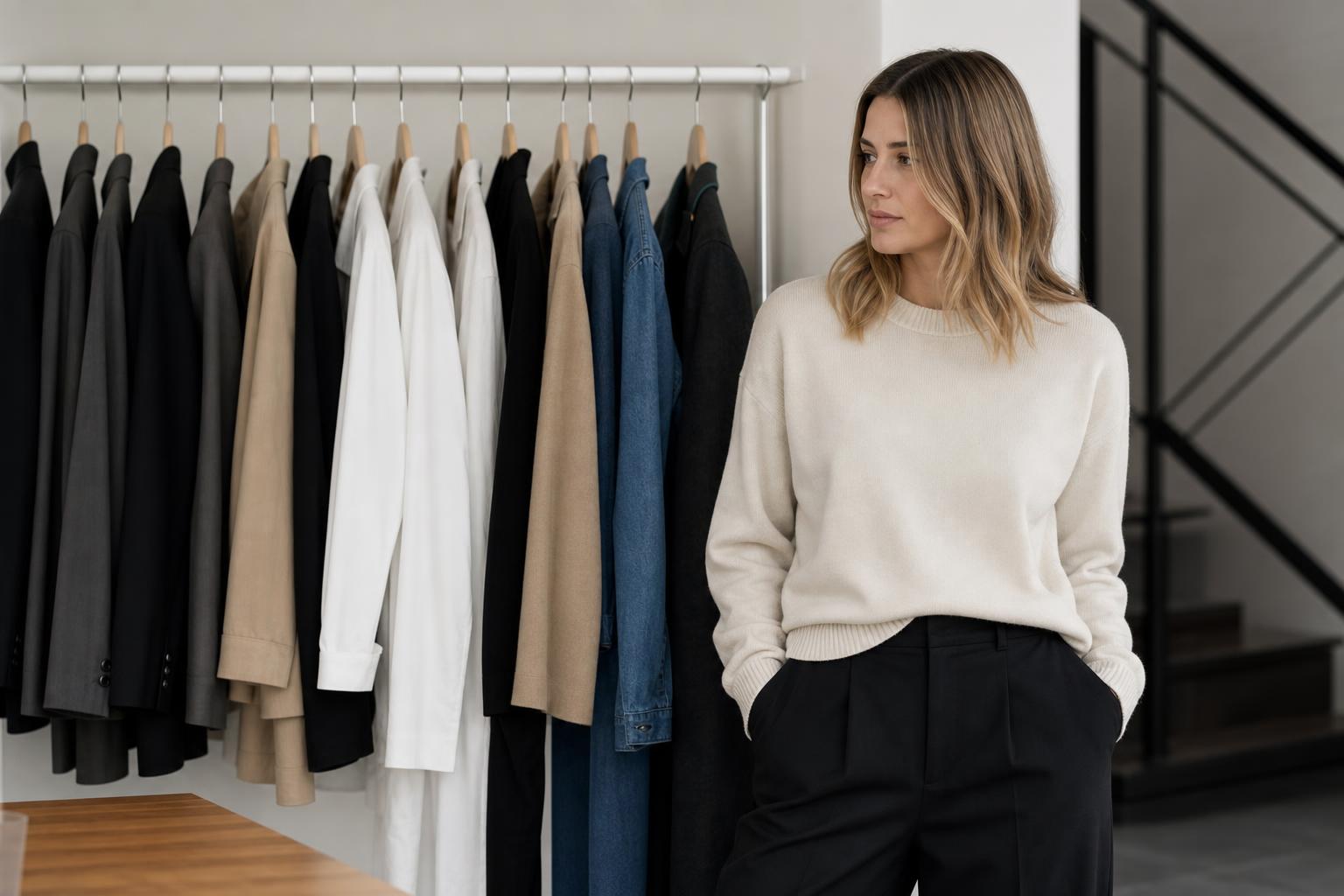
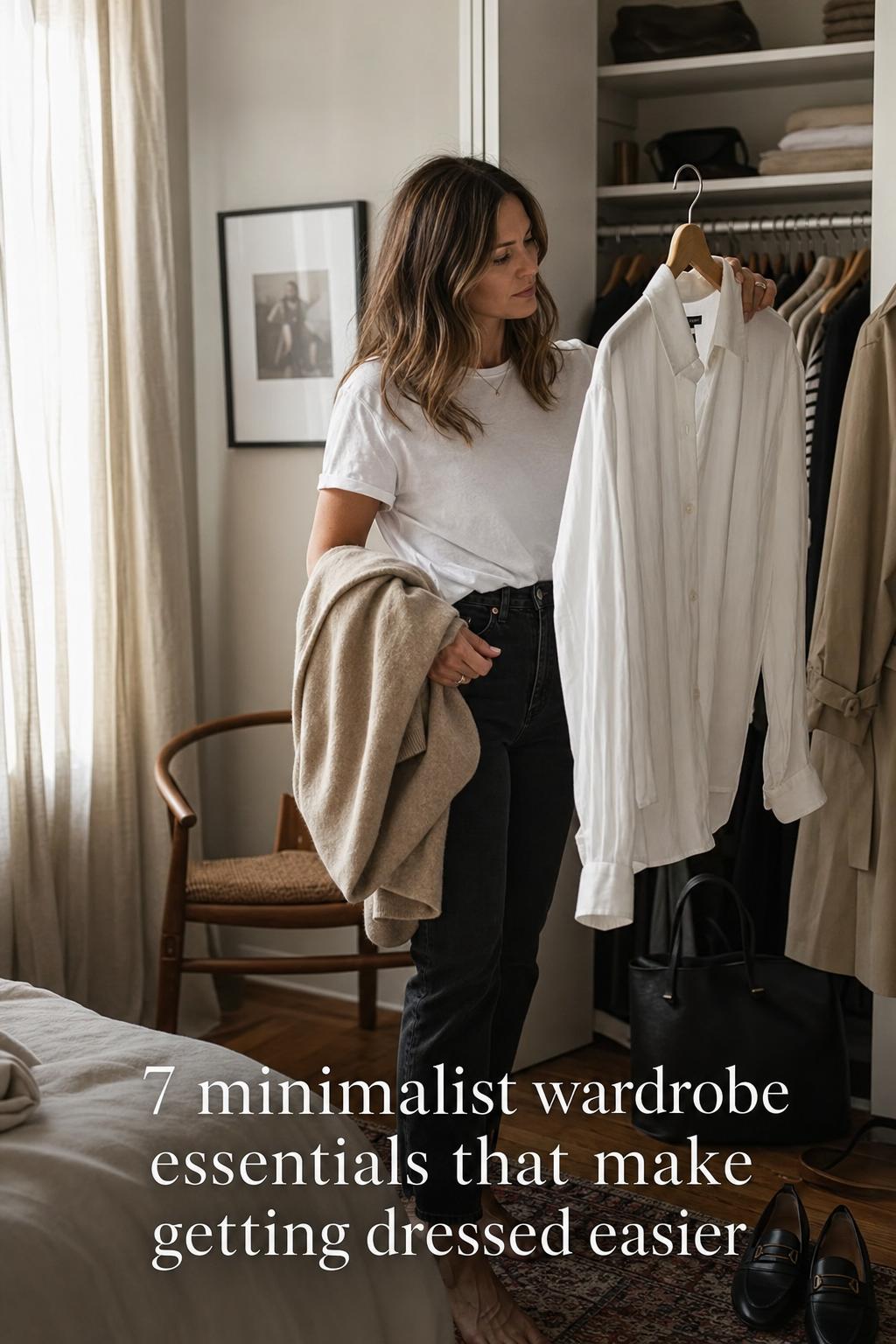
A neutral color palette is not mandatory, but it remains the easiest route to a high-functioning minimalist wardrobe. Neutrals create visual consistency and reduce friction when mixing tops, bottoms, outerwear, and shoes. White, black, and darker denim tones repeatedly appear in capsule wardrobe guides because they form reliable foundations for layering and proportion play.
Tonal layering is particularly effective in a minimalist closet. When colors are close in depth or family, fabric texture becomes more visible and the outfit looks intentional rather than flat. A neutral knit over a white shirt with black trousers, for example, works because the palette stays controlled while the layers create dimension.
How to avoid a dull neutral wardrobe
The mistake is not choosing neutrals. The mistake is choosing too many disconnected neutrals or ignoring texture. A wardrobe built from smooth cotton, wool, wool-blend, linen, and silk-blend pieces has more depth than one built from identical flat fabrics in similar shades. Texture contrast is what keeps minimalism from looking unfinished.
Another practical point: match your palette to your outerwear and footwear first. If your coat, blazer, and shoes all coordinate, getting dressed becomes dramatically easier. This also makes affordable basics look more expensive because the outfit reads as intentional and composed.
Fabric, fit, and finish decide whether a minimalist piece is worth buying
Minimalist dressing places more pressure on quality because the design is simpler. Without heavy prints or decorative details, the eye notices fabric behavior, seam finishing, structure, and fit much faster. That is why durable fabrics and sound construction matter so much in a capsule wardrobe.
Cotton is useful for shirts and tees because it layers well and is easy to wear. Wool and wool-blend fabrics bring structure to coats, trousers, and knitwear. Linen is useful where breathability matters, especially in warmer climates. Silk-blend fabrics can elevate blouses and occasion-flexible tops while maintaining a refined drape.
Shopping criteria that prevent regret
- Check whether the fabric holds shape or collapses too quickly.
- Look at stitching and seam finishing, especially on blazers, trousers, and coats.
- Assess whether the item layers comfortably under or over other essentials.
- Choose silhouettes that leave room for seasonal styling rather than only one exact fit scenario.
- Prioritize pieces that can handle repeated wear, care, and repair.
Price alone does not determine value. Cost-per-wear matters more. A moderately priced blazer worn weekly usually adds more wardrobe value than a trend-driven purchase worn twice. This is the central shopping logic behind quality over quantity.
Body type, silhouette balance, and making essentials work for you
A minimalist capsule should feel edited, not restrictive. The same categories can work across petite, tall, athletic, or curvier body types, but the exact cut matters. Styling success comes from silhouette balance, not from copying one universal shape.
For petite proportions
Prioritize clean lines and avoid outerwear or knitwear that overwhelms the frame. A blazer with clear structure and controlled length usually works better than one with excessive volume. Straight trousers and dark jeans are useful because they create an uninterrupted line, especially when paired with streamlined footwear. A trench coat can still work well, but proportion matters; too much length can dominate the outfit rather than elongate it.
For taller frames
Longer coats, relaxed blazers, and wide or straight trousers often sit beautifully on taller proportions because the frame can carry more fabric and stronger vertical lines. Layering is particularly effective here. A button-down under a neutral knit under a trench coat creates depth without feeling crowded. The key is to maintain a visual anchor, usually through a structured piece or darker bottom.
For curvier or more shaped silhouettes
Fit becomes even more important than item count. Trousers that skim rather than pull, shirts that button comfortably, and blazers with enough structure to define the line of the body make a minimalist wardrobe look deliberate instead of strained. The best essentials are the ones that support movement and comfort throughout the day. If an item only works when standing still, it is not truly essential.
For athletic builds
Texture contrast and layering help create dimension. A structured blazer over a softer tee or knit introduces shape variety, while trousers with a clean drape can balance broader shoulders. Minimalist dressing often works especially well here because the outfit benefits from strong, uncomplicated lines.
Across all body types, tailoring is one of the smartest wardrobe decisions. A simple trouser or coat that fits correctly will always outperform a more fashionable item with poor proportions.
Climate changes everything: a capsule for where you actually live
One major gap in many minimalist wardrobe conversations is climate. A polished capsule in a temperate city will not function the same way in a tropical environment or a winter-heavy location. The foundation can stay similar, but fabrics, layering depth, and outerwear priorities need to shift.
Temperate climates
This is where the classic capsule wardrobe formula works most cleanly: blazer, trench coat, button-down shirt, tee, knitwear, denim, trousers, boots, and loafers. Seasonal transitions are frequent enough that layering matters, but not so extreme that the wardrobe needs constant reinvention.
Tropical or warm climates
Breathability becomes the priority. Linen, cotton, and lighter fabrics matter more than heavy wool structure. A blazer may still have a place, but it should not dominate the capsule. Focus on shirts, refined tops, lightweight trousers, dresses, and shoes that support comfort without breaking the neutral color harmony.
Cold-weather wardrobes
Outerwear becomes the lead category. A coat, substantial knitwear, boots, and layering-friendly trousers and denim deserve more budget and more planning because they will carry the wardrobe visually for months. In winter-heavy locations, the coat is not an extra. It is the outfit’s primary statement piece and structural frame.
This is also where seasonal styling needs realism. A wardrobe may look cohesive indoors, but if the coat, shoes, and layers do not support weather conditions, the capsule fails in practice.
Three real-life outfit formulas that prove versatility
A good capsule wardrobe should produce outfits quickly. These formulas show how the same minimalist wardrobe essentials can serve work, weekend, and evening without requiring separate wardrobes.
Workday structure
Pair black trousers with a white button-down shirt and a blazer, then finish with loafers. This works because the blazer supplies structure, the shirt brightens the composition, and the trousers create a clean lower line. If the office leans more relaxed, swap the shirt for a neutral knit layered over it or wear the knit on its own. The formula remains polished because the silhouette is stable and the palette stays controlled.
Weekend ease
Start with dark jeans and a white tee, then add a trench coat and boots. The tee keeps the outfit relaxed, while the trench introduces vertical structure and prevents the look from feeling unfinished. This formula is especially strong for errands, lunch, and travel days because it balances comfort with enough polish to handle unplanned stops or meetings.
Evening flexibility
Use a little black dress as the base, then layer with a blazer or coat depending on the weather. Boots create a more grounded, modern line; loafers or another versatile shoe can keep the look refined and understated. This outfit works because the dress provides simplicity while the outer layer shapes the mood. In a minimalist wardrobe, evening dressing is rarely about more detail. It is about stronger composition.
What men can borrow from the minimalist wardrobe framework
The same wardrobe logic appears in men’s minimalist style: shirts, jeans, jackets, shoes, color coordination, and fit all carry the system. A men’s capsule works best when the pieces are cohesive in tone and adaptable in use. Shirts should pair with jeans and trousers. Jackets should sharpen a tee without feeling formal. Shoes should bridge work, weekend, and seasonal wear.
The practical lesson is universal. Whether the wardrobe leans more fashion-forward or more understated, the strongest minimalist closet is built around versatile basics, clear category coverage, and careful fit. That is why the capsule framework continues to hold up across different style markets, including U.S. and UK-oriented fashion coverage.
Common mistakes that make a minimalist wardrobe less functional
A capsule wardrobe can still fail if the wrong pieces are selected. The issue is usually not too few clothes. It is the wrong distribution of clothes.
- Buying too much outerwear before fixing tops and bottoms.
- Choosing “basics” that do not suit your climate.
- Ignoring fit because the item seems classic.
- Overcommitting to one piece count instead of building around lifestyle.
- Using a neutral palette without texture or fabric variation.
- Buying beautiful shoes that do not support most outfits.
- Keeping occasion pieces in the core wardrobe when they have low real-life use.
Another common issue is mistaking minimalism for uniformity. A wardrobe should feel cohesive, but it still needs depth. That depth comes from silhouette variation, layering options, texture contrast, and the ability to adapt clothing to work, travel, and weather conditions.
Practical shopping strategy: build slowly, evaluate honestly
The best shopping strategy for minimalist wardrobe essentials is disciplined and observational. Instead of buying an entire capsule wardrobe at once, identify which missing category is creating the most friction. If your tops are weak, a new coat will not solve the problem. If your shoes only work for weekends, adding another pair of trousers may not improve outfit range.
Brands often appear in wardrobe inspiration, especially in fashion magazines such as Vogue and Who What Wear, but the more useful approach is brand-agnostic: evaluate fabric, fit, finish, and how often the piece will be worn. A well-chosen affordable basic can outperform a premium purchase if it integrates more naturally into your wardrobe.
Tips for buying without overbuying
Buy one category at a time and test it in at least three outfit combinations before adding more. This reveals whether the item is genuinely versatile or just attractive on its own. Keep a simple wardrobe record if needed. Digital wardrobe tools and wardrobe apps can be useful here because they make repetition visible, helping you spot gaps and duplicates before spending more.
Repairability matters too. If a coat, blazer, or trouser can be tailored or mended, it usually has stronger long-term value than a cheaper replacement-cycle item. This is where sustainability becomes practical rather than abstract.
Maintenance and longevity are part of minimalist style
A minimalist wardrobe only stays effective if the pieces remain in good condition. Since the capsule relies on repeated wear, care is not an afterthought. It is part of the wardrobe system. Fabrics such as cotton, wool, linen, and silk-blend all behave differently, so maintenance should match the material rather than follow one blanket routine.
Tailoring, repair, and mending extend the life of wardrobe essentials and protect the value of investment pieces. This matters especially for blazers, coats, trousers, and boots, where small maintenance steps preserve structure and polish. Resale can also become part of the wardrobe lifecycle when a piece no longer fits your climate, body, or lifestyle, even if the item itself is still in good condition.
A useful maintenance mindset
- Care for your highest-use items first.
- Repair small issues before they become replacement-level problems.
- Reassess fit at seasonal transitions.
- Store outerwear and knitwear in a way that protects shape and fabric longevity.
The broader point is simple: a capsule wardrobe is not only about curation. It is also about stewardship.
How to make a minimalist wardrobe feel personal, not generic
The fear around minimalism is often that everything will look the same. In reality, personal style comes through in the way you choose proportions, fabrics, and layering logic. One person may rely on sharp blazers and black trousers. Another may lean into softer knitwear, denim, and a trench coat. Both wardrobes can use the same essential categories while producing different visual identities.
This is where personal style should guide final adjustments. If your lifestyle is travel-heavy, prioritize wrinkle-tolerant pieces and reliable footwear. If your week centers on office dressing, strengthen the shirt, blazer, and trouser categories. If you live in a warm climate, shift the capsule toward linen, cotton, and lighter layers. Minimalism works best when it reflects actual life, not an abstract ideal.
FAQ
How many pieces should a minimalist wardrobe have?
A practical capsule wardrobe often starts with 12 to 15 core garments, while a broader everyday wardrobe may land closer to 20 to 30 pieces depending on climate, work needs, and seasonal layering. The best number is the one that covers your real routine without filling the closet with duplicates.
What are the most versatile minimalist wardrobe essentials to buy first?
Start with the pieces that create the most combinations: a white tee, white button-down shirt, dark jeans, black trousers, and a neutral knit. After that, add a blazer, trench coat or coat, and versatile shoes such as loafers or boots.
Would a capsule wardrobe actually work for everyday life?
Yes, if it is built around your actual schedule rather than an idealized version of your life. A useful capsule needs enough flexibility for work, weekends, travel, and weather changes, which is why customization matters more than following one exact piece count.
How do I adapt a minimalist wardrobe for petite, tall, curvy, or athletic body types?
Keep the categories the same but adjust the cut. Petite frames often benefit from cleaner lines and controlled proportions, taller frames can handle stronger vertical silhouettes and more layering, curvier shapes need reliable fit and comfort through the torso and hips, and athletic builds often look especially strong in structured layers and clean drape.
Can I build a minimalist wardrobe on a budget?
Yes. Focus on recreating the easiest essentials first, such as tees, shirts, denim, and knitwear, then invest more carefully in categories where construction matters most, like coats, blazers, trousers, and durable shoes. Cost-per-wear is more useful than price alone when deciding where to spend.
What colors work best in a minimalist wardrobe?
A neutral color palette usually creates the most outfit flexibility because it allows tops, bottoms, outerwear, and footwear to coordinate easily. The wardrobe will feel more refined if you also use texture contrast and tonal layering instead of relying on flat fabrics in similar shades.
How do I make a capsule wardrobe work across seasons?
Use year-round foundations such as shirts, tees, denim, and trousers, then adapt with climate-specific layers. In temperate areas, a trench coat and knitwear do much of the transition work. In cold climates, coats, boots, and heavier layers become central. In warm climates, lighter cotton and linen pieces should carry more of the wardrobe.
What should I avoid when building a minimalist wardrobe?
Avoid buying categories out of order, choosing basics that do not fit well, overloading the wardrobe with duplicates, and selecting pieces that only work for one occasion. A minimalist wardrobe fails when the clothes look coordinated individually but do not function together in daily life.
Are wardrobe apps or digital tools useful for a capsule wardrobe?
They can be very useful for tracking repeats, identifying gaps, and preventing duplicate purchases. Digital wardrobe tools help you see whether a blazer, shirt, or pair of trousers is truly versatile before you add more items to the closet.