Winter Outfits Capsule Wardrobe for Polished City Style
Cold weather style is at its most compelling when it looks intentional rather than improvised. A strong winter outfits capsule wardrobe creates that effect immediately: clean lines, tonal layering, textured knitwear, and outerwear that feels like part of the look instead of an afterthought. The appeal is visual, but the logic is practical. In winter, every visible layer matters, so proportion, fabric weight, and color harmony become the foundation of the aesthetic.
The mood sits somewhere between polished city dressing and quiet minimal ease. Think New York sharpness, Paris restraint, and Milan confidence translated into everyday outfits built from coats, knitwear, trousers, jeans, boots, scarves, and gloves. It is commonly worn everywhere winter demands both warmth and visual clarity: on office commutes, weekend coffee runs, business casual days, and low-key evenings out.
Its popularity comes from that rare combination of beauty and efficiency. A winter capsule wardrobe reduces decision fatigue, supports mix-and-match dressing, and makes layering look cohesive instead of bulky. Done well, it turns a small set of essentials into a wardrobe that feels expansive, whether you prefer a minimalist winter capsule wardrobe, a work-focused rotation, or a soft weekend uniform.
What defines the winter capsule wardrobe aesthetic
A winter capsule wardrobe is a tightly edited collection of seasonal staples designed to work together across multiple outfits. The concept appears in many forms, from a compact 15-piece edit to a broader 20-piece or 32-piece wardrobe, but the visual principle stays the same: each item functions as a versatile anchor that connects easily to several others.
Found the dress? Keep the rest in one place.
Zarellea brings guest details, vendors, timelines, and every next step together — so your wedding plan feels as good as your look.
The aesthetic is driven by cohesion. Coats and knitwear create structure, turtlenecks and thermals add depth, trousers and jeans ground the silhouette, and accessories such as leather gloves, hats, and extra-long scarves finish the look with texture and purpose. Even more directional items like knit sets or fur coats work within the same system when the palette and proportions remain controlled.
This is why a capsule works especially well in winter. Cold-weather dressing naturally relies on layering, and layering can quickly become visually heavy if the wardrobe lacks consistency. A defined capsule keeps the outfit composition balanced, allowing warmth, movement, and polish to exist together.
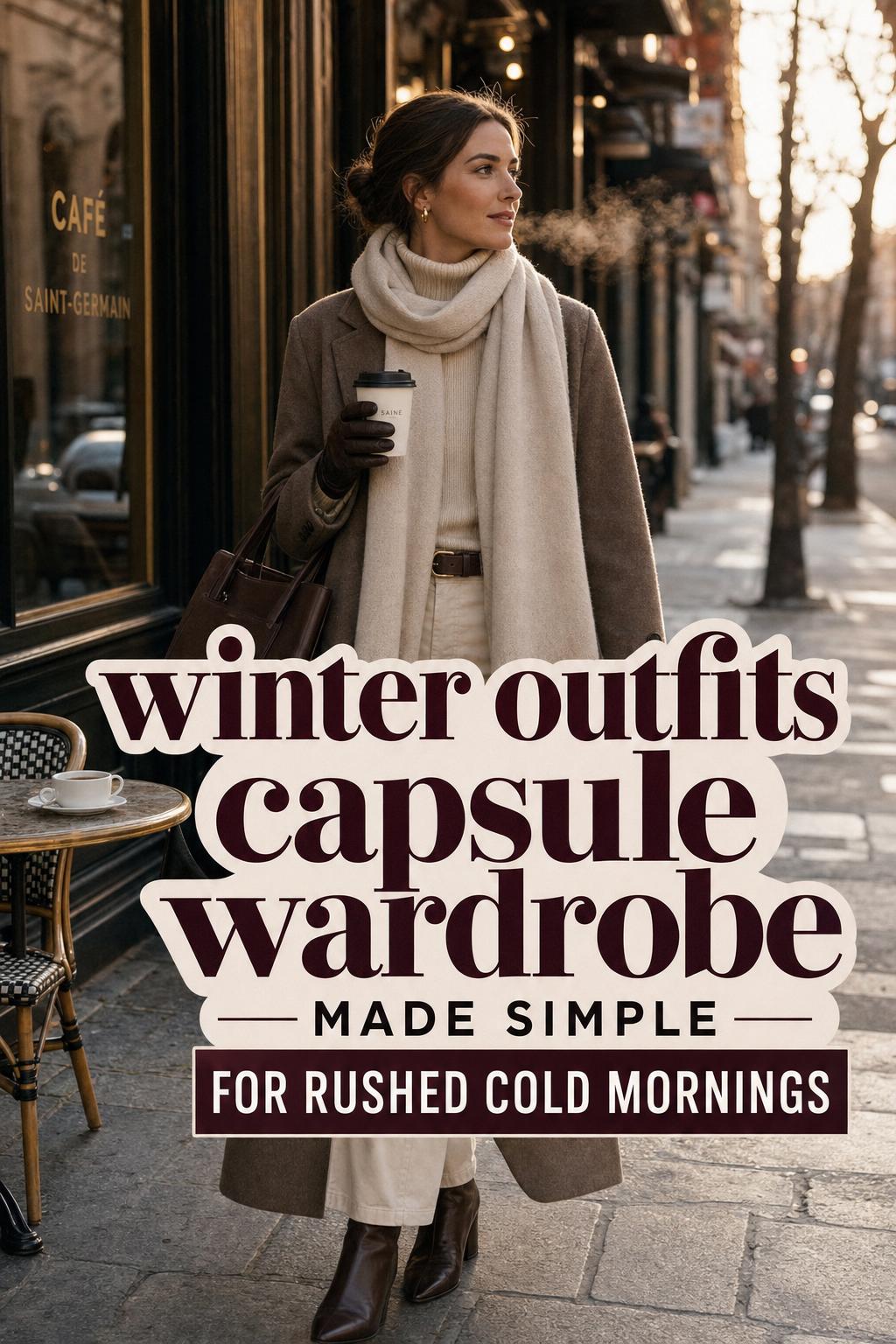
The anchor pieces that create almost every strong winter look
Most winter outfits capsule wardrobe combinations begin with a compact set of core pieces. Across winter fashion guides, the most consistent staples are outerwear, knitwear, tailored or denim bottoms, practical footwear, and accessories that connect the palette while adding warmth.
- outerwear: winter coat, wool coat, blazer, puffer-style topper, or a dramatic fur coat
- knitwear: cashmere sweater, turtleneck sweater, classic knitwear, and knit sets
- base layers: thermal underpinnings and lightweight layers that support warmth
- bottoms: heavy trousers, wool trousers, baggy jeans, and other tailored basics
- footwear: ankle boots, chelsea-style boots, and comfy sneakers
- accessories: leather gloves, scarves, hats, and everyday bags
Brands frequently associated with this type of wardrobe include Madewell, Sezane, Nordstrom, Levi’s, COS, and Banana Republic. In practice, these names represent the broader idea of reliable winter staples rather than a requirement to shop one way. The more important takeaway is the relationship between item and function: a cashmere sweater softens tailored trousers, Levi’s-style denim adds ease under a heavy blazer, and COS or Banana Republic-style minimal separates support clean tonal layering.
Outerwear as the visual anchor
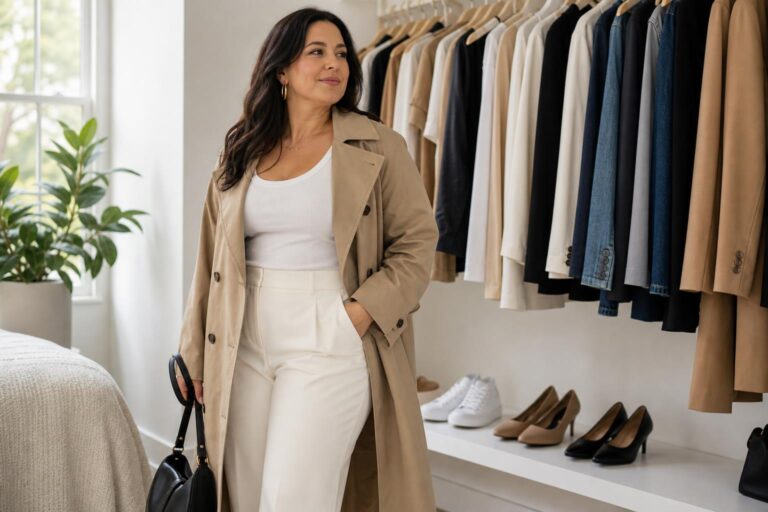
Outerwear does more than provide insulation. In winter, the coat often defines the silhouette before anything else is seen, which is why it should be treated as the central visual anchor of the wardrobe. A wool or wool-blend coat creates a refined line over trousers and boots, while a heavier topper or fur coat shifts the same capsule toward a more dramatic editorial mood.
A three-coat approach makes sense within a practical capsule: one polished coat for elevated outfits, one easy everyday option, and one piece designed for colder or windier conditions. This framework keeps the wardrobe functional without making it feel repetitive. It also explains why outerwear is often the first investment piece in a winter capsule wardrobe for work or daily city dressing.
Knitwear and thermals as the texture layer
Knitwear carries the emotional tone of the winter look. A cashmere sweater reads soft and elevated, a turtleneck sweater sharpens the neckline, and knit sets create visual continuity with almost no styling effort. Thermal underwear and other base layers are less visible, but they make the capsule more wearable by allowing lighter-looking outfits to perform in colder temperatures.
Fabric choice matters because texture contrast is one of the easiest ways to add depth to a minimalist winter capsule wardrobe. Wool, cashmere, merino wool, and wool blends create a rich winter surface without needing loud color or excessive layering. When paired with structured outerwear, these softer fabrics keep the outfit from looking flat.
Trousers, jeans, and the balance of structure
Bottoms determine whether the capsule leans polished, relaxed, or street-informed. Heavy trousers and wool trousers offer a clean vertical line, especially with ankle boots or sleek knitwear. Baggy jeans introduce proportion play, balancing close-fitting sweaters and turtlenecks with a looser lower half. This contrast is one reason denim remains central even in more refined winter wardrobes.
The strongest winter capsules usually include both a tailored bottom and a casual denim option. That combination expands outfit range quickly, turning one sweater into several distinct looks depending on whether it is styled with trousers, jeans, or a knit set.
Footwear and accessories as the finishing system
Ankle boots remain one of the most versatile winter shoes because they connect easily with trousers, denim, and longer coats. Chelsea boots and other traction-focused options support the same logic with slightly more utility. Comfy sneakers are equally relevant, especially for softer day looks and modern business casual outfits that need ease without losing structure.
Accessories are not secondary in winter; they are the connective tissue. Leather gloves sharpen a polished coat, an extra-long scarf introduces movement, and a hat completes the silhouette while reinforcing warmth. In a smaller capsule, these details prevent repetition by changing the outfit’s finish without requiring an entirely new base.
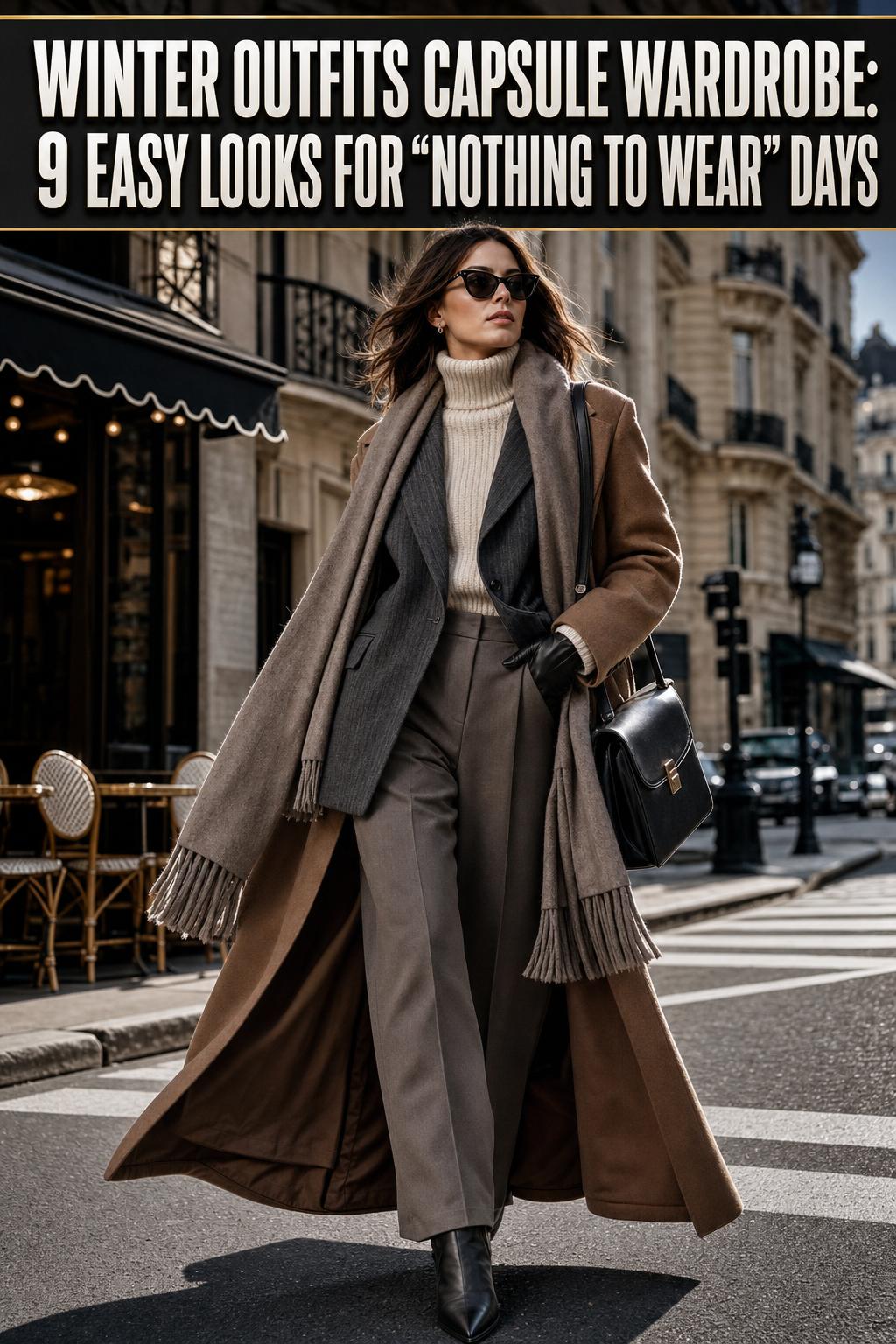
Look: polished city layers
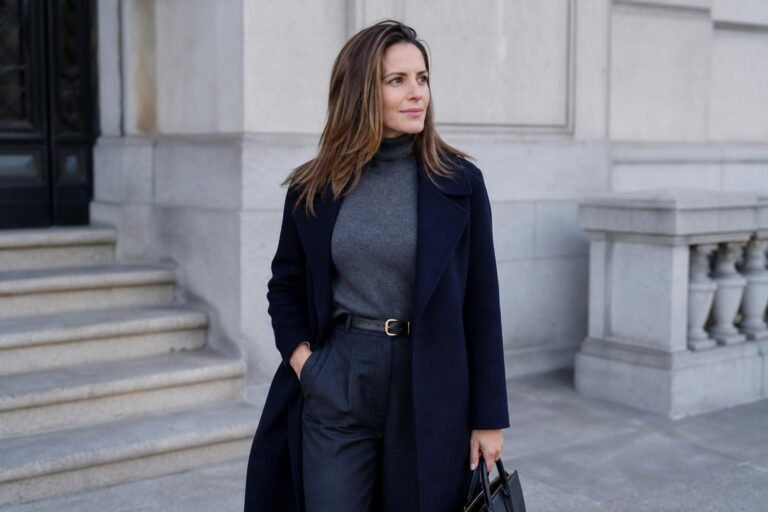
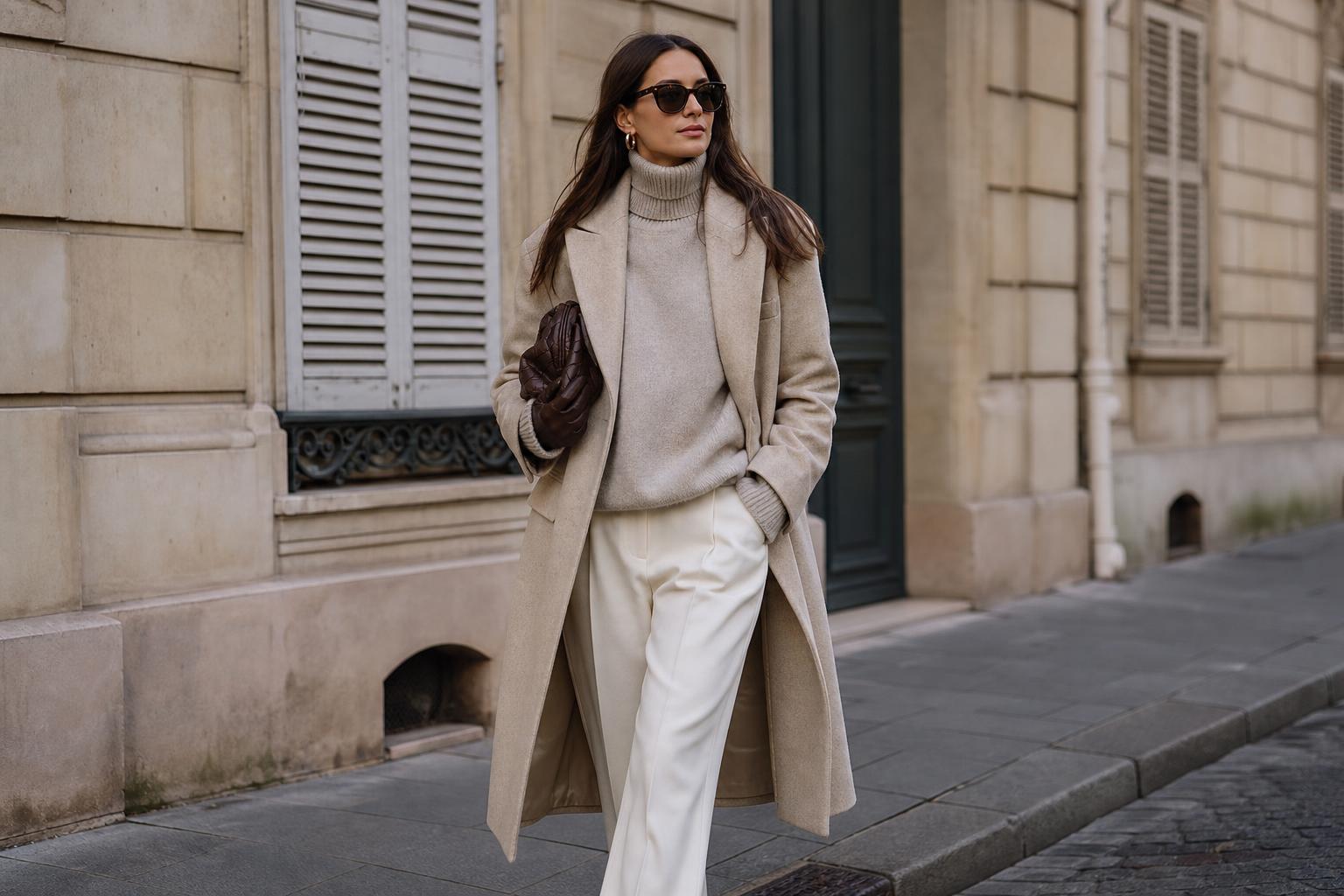
This is the winter uniform that feels most aligned with fashion-capital dressing. The silhouette is long, streamlined, and deliberate: a tailored coat over a fine knit, with trousers creating a clean line through the leg. It reads professional without feeling corporate and elegant without being overly formal.
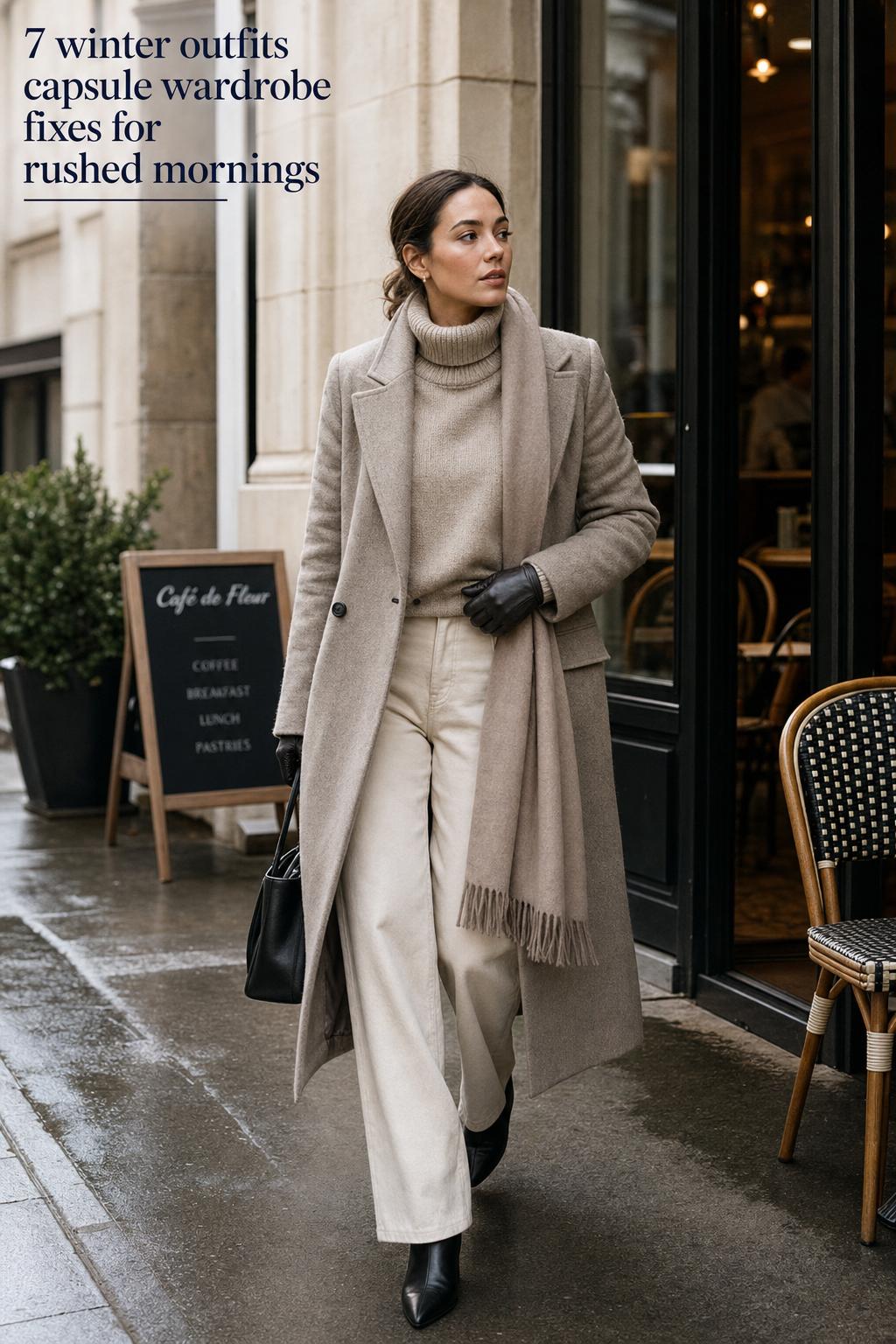
A wool coat or heavy blazer works over a turtleneck sweater in black, cream, camel, or charcoal. Heavy trousers or wool trousers keep the look grounded, while ankle boots refine the hemline. Leather gloves and a long scarf complete the palette with subtle texture contrast. A cashmere sweater can replace the turtleneck if a softer neckline is more flattering or easier for indoor wear.
- key garments: wool coat, turtleneck sweater, heavy trousers
- footwear: ankle boots
- accessories: leather gloves, extra-long scarf
This combination works because the structured outer layer balances the softness of knitwear, creating a polished silhouette with enough warmth for real winter use. It fits the capsule aesthetic particularly well because every piece can reappear elsewhere: the trousers with sneakers, the turtleneck under a blazer, the coat over denim on weekends.
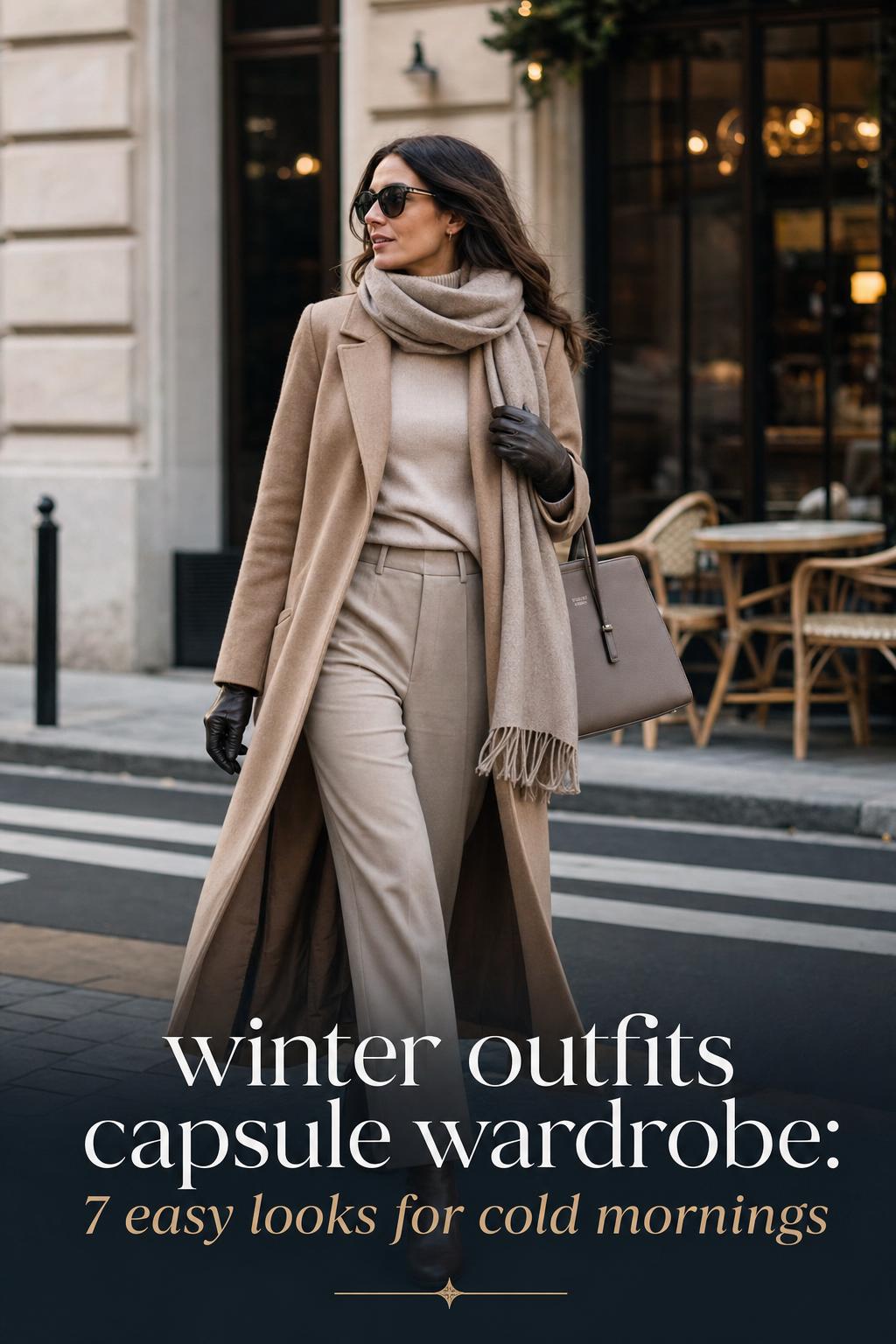
Look: relaxed minimal layers
The mood here is quieter and slightly more off-duty, but still highly composed. Volume is placed lower in the outfit, allowing the upper half to stay clean and fitted. The result is modern and comfortable, with just enough structure to avoid looking casual in an unfinished way.
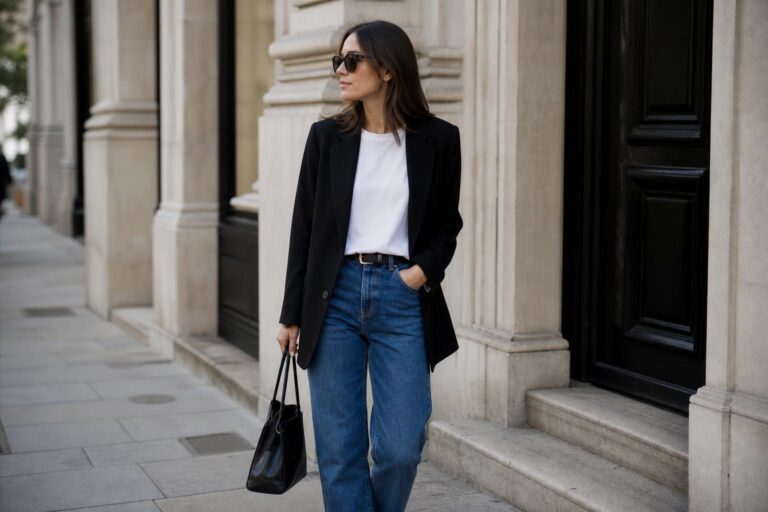
Baggy jeans create the foundation, especially when paired with a close-cut cashmere sweater or turtleneck. Add a heavy blazer or simple coat for shape, then finish with comfy sneakers or ankle boots depending on the setting. This is where brands like Levi’s, Madewell, and COS fit naturally into the winter capsule conversation, because their styling language often centers on easy denim, unfussy tailoring, and clean layering.
The look succeeds through silhouette balance. The relaxed denim introduces softness and movement, while the knit and blazer prevent the outfit from drifting into shapelessness. For Pinterest-driven winter styling, this is one of the most adaptable formulas because it can shift from a coffee run to a casual office day with only minor changes.
Style tip: use one structured layer to control loose proportions
When jeans are baggier, keep at least one element sharp: a turtleneck neckline, a blazer shoulder, or a sleeker boot. That single point of structure acts as the visual anchor and keeps the outfit within a refined winter capsule wardrobe rather than a purely casual rotation.
Look: soft weekend aesthetic
This interpretation leans into comfort, but it is still visually intentional. The silhouette is gentle, the textures are plush, and the entire look feels built for slow winter mornings, errands, lunch dates, or travel days when ease matters as much as appearance.
Knit sets are especially effective here because they create instant tonal unity. Layer one under a longer coat or a heavier topper, then add comfy sneakers for a relaxed finish. A scarf and gloves add warmth without interrupting the visual flow. If knit sets are not part of the wardrobe, the same effect can be achieved with a matching sweater-and-trouser pairing in similar tones.
The styling logic is simple: matching texture creates cohesion, and the outer layer adds shape. That combination prevents comfort dressing from looking too lounge-oriented. It also reflects one of the smartest winter capsule principles: repeated tones make fewer pieces look more considered.
Look: neutral street style with sneaker ease
Street style within a winter capsule does not need loud trend pieces to feel current. A neutral palette, strong layers, and one casual element often create more longevity than a highly directional outfit. The mood is urban, practical, and slightly sporty, with enough polish to hold up beyond weekend wear.
Start with a knitwear base, then build around trousers or jeans in a restrained palette. Add a coat with enough weight to create a clear outer shape, and finish with comfy sneakers. An extra-long scarf introduces movement and dimension, while a hat adds a functional layer that feels integrated rather than decorative.
This works because sneakers lower the formality of the capsule without breaking its visual discipline. In city settings such as New York, that balance is especially relevant: the outfit needs to move, layer easily, and still appear composed in motion. The same formula can also translate to coastal winter outfits with lighter outerwear and more flexible layering.
Look: refined business casual winter outfit
Business casual winter outfits often fail when they focus on correctness rather than composition. The most effective version feels polished but not rigid, with enough warmth to remain comfortable during commutes, office transitions, and long indoor hours. The silhouette should look crisp from the coat down to the shoe.
A heavy blazer layered under or instead of a coat creates tailored definition. Pair it with a turtleneck sweater or refined knitwear and heavy trousers for a balanced, office-appropriate base. Ankle boots sharpen the line, while leather gloves and a scarf maintain the winter mood. This formula aligns closely with business casual winter wardrobe ideas that generate 44+ outfits from a compact capsule because each piece rotates efficiently across workdays.
The reason this look performs so well is that every element has a job. The blazer structures the torso, the knit adds warmth without bulk, and the trousers maintain polish. It is a strong example of how to build a winter capsule wardrobe for work without separating it entirely from the rest of your life.
Look: elevated texture with a dramatic coat
Some winter aesthetics need one statement layer to keep the wardrobe from feeling too restrained. A dramatic coat, including a fur coat, delivers that impact through texture and scale rather than color alone. The mood is richer, more fashion-forward, and slightly evening-coded, even when the underlying outfit remains simple.
Keep the base refined: a fitted turtleneck or cashmere sweater, straight or wide trousers, and ankle boots. Let the outer layer carry the visual drama. Leather gloves strengthen the finish, and a scarf can be omitted if the coat already has enough volume at the neckline. This is where Milan-inspired confidence and Paris-style restraint meet effectively; the coat is expressive, but the rest of the outfit stays disciplined.
This styling approach fits a capsule because it relies on contrast rather than excess. One directional piece can transform several basics, giving the wardrobe greater range without requiring many additional purchases.
Key pieces for this aesthetic
- a coat with strong texture or visual weight
- a fine knit base in a neutral tone
- tailored trousers or clean denim
- ankle boots with a streamlined shape
- minimal accessories that do not compete with the outerwear
Look: the clean tonal capsule
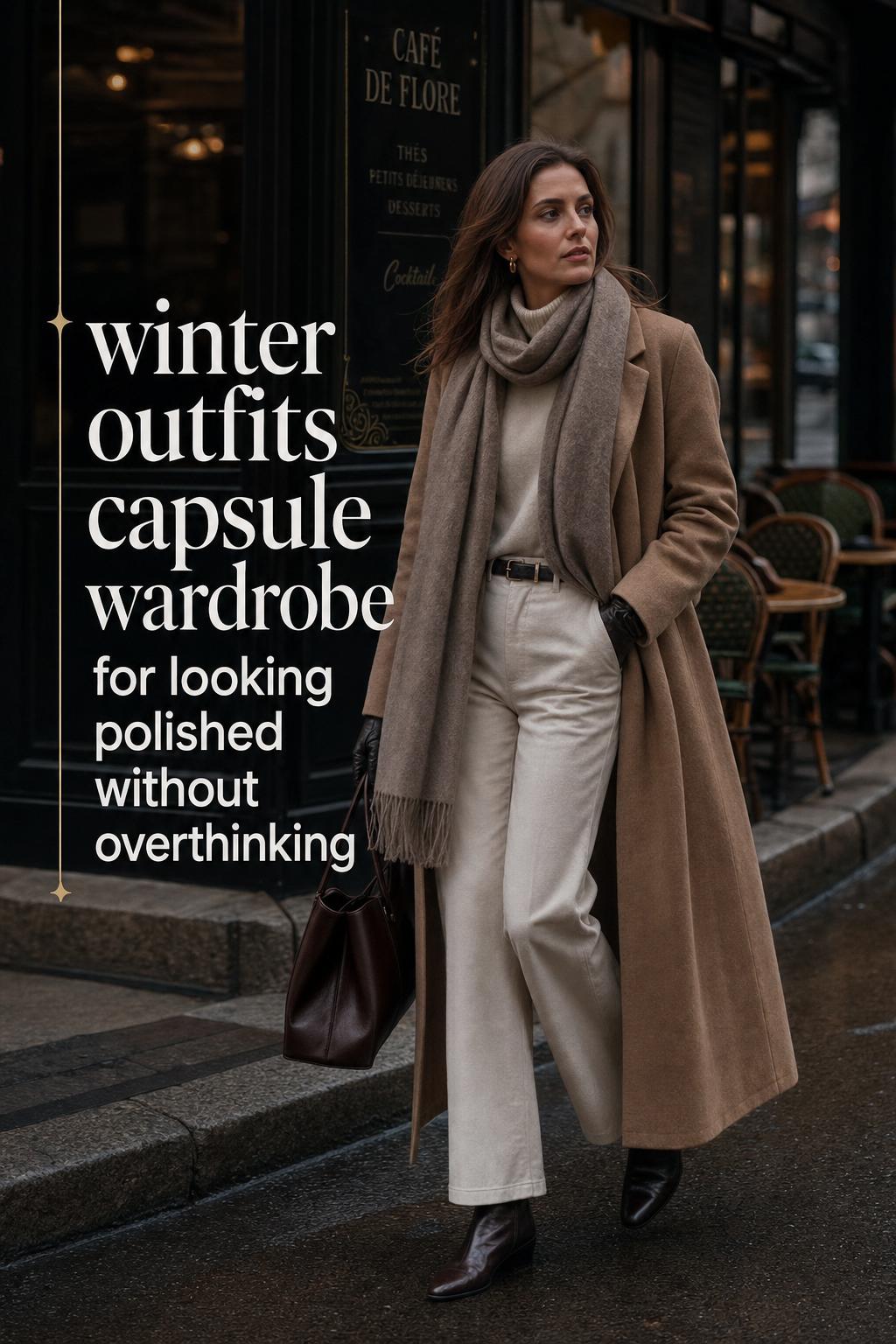
Tonal dressing is one of the fastest ways to make a winter capsule wardrobe look expensive and cohesive. Instead of relying on many contrasting pieces, this look uses neighboring shades to create a seamless line from top to bottom. The mood is minimalist, calm, and highly editorial.
A monochrome or near-monochrome combination built from knitwear, trousers, and a coat creates strong visual continuity. Wool, cashmere, and merino wool are especially effective here because the texture variation keeps similar colors from looking flat. Finish with a scarf in the same family or a subtle contrast one step darker or lighter.
The look fits a minimalist winter capsule wardrobe because it reduces visual noise while increasing outfit flexibility. Once the palette is cohesive, almost every top works with every bottom and every outer layer, which is exactly what a functional capsule is supposed to achieve.
How the outfit formulas actually work
The easiest way to make winter dressing repeatable is to think in formulas rather than isolated outfits. A formula gives you an outfit matrix that can be reused with small changes in color, fabric, or accessories. This is the practical difference between owning winter clothes and having a winter capsule wardrobe.
- fine knit + wool trousers + wool coat + ankle boots
- turtleneck sweater + baggy jeans + heavy blazer + sneakers
- cashmere sweater + tailored trousers + scarf + boots
- knit set + long coat + sneakers + gloves
- thermal base layer + knitwear + coat + trousers + boots
- turtleneck + dramatic coat + heavy trousers + leather gloves
These formulas work because they combine one close-to-body layer, one grounding bottom, one outer structure, and one finishing accessory. That sequence keeps the outfit visually legible. It also explains why a 15-piece, 20-piece, or 32-piece capsule can produce dozens of outfits: the pieces are not random, they are intentionally interlocking.
Where winter capsule dressing changes by city
One of the clearest differences between average winter style advice and more practical wardrobe planning is climate context. A capsule that works in one city will not perform exactly the same in another. The aesthetic can stay consistent, but the weight, layering depth, and role of outerwear need adjustment.
New York: polished layers that move easily
New York winter dressing benefits from outerwear that looks sharp in motion and layers that transition between cold streets and heated interiors. A tailored coat, turtleneck, trousers, ankle boots, and gloves create a strong urban formula. Sneakers also fit naturally when the rest of the outfit is clean and structured.
Chicago: stronger warmth priority within the same visual system
For a Chicago winter wardrobe, thermal underpinnings and heavier outerwear become more central. The outfit still benefits from tonal layering and a refined silhouette, but the capsule should lean more heavily on warmth-supporting fabrics and coat weight. This is where a practical distinction between decorative layering and necessary layering becomes important.
Seattle or coastal winter: flexible layers and easy texture
Coastal winter outfits usually benefit from adaptable layering rather than maximum insulation. Knitwear, lighter coats, scarves, and boots remain relevant, but the capsule can feel slightly softer and less armored. The best strategy is to keep the palette cohesive while allowing more mix-and-match range through midweight pieces.
The key insight across all three settings is simple: regional weather changes the weight of the layers, not the core styling logic. That makes the capsule system scalable instead of restrictive.
Common styling mistakes that weaken the winter capsule effect
Winter outfits lose impact when every layer competes equally. A capsule is most successful when one element leads, one supports, and the rest create continuity. Several common mistakes disrupt that balance.
- too many disconnected colors, which makes layering feel accidental
- bulky knitwear under equally bulky outerwear, which distorts silhouette balance
- owning many statement pieces but too few reliable basics such as trousers, turtlenecks, or boots
- ignoring accessories, even though scarves and gloves often complete the look
- choosing aesthetic coats that do not match actual winter conditions
The fix is usually not buying more. It is clarifying roles inside the wardrobe. Decide which coat acts as the polished anchor, which knitwear pieces layer best, which bottoms create the strongest line, and which accessories repeat across most outfits. Once these roles are defined, the capsule feels coherent very quickly.
Budget, investment, and the value of a smaller edit
A winter capsule wardrobe naturally raises the question of where to spend and where to simplify. The most sensible approach is to invest in pieces that carry the heaviest visual and functional load: outerwear, boots, and knitwear that will be worn repeatedly. More trend-sensitive or highly interchangeable items can stay flexible.
This is why many winter wardrobe guides position coats and knitwear as anchors. A strong coat changes the entire outfit composition, and reliable knitwear reduces the temptation to overbuy less versatile pieces. Retailers and labels such as Nordstrom, Madewell, Sezane, COS, Banana Republic, and Levi’s appear often in this space because they sit within familiar mid-market and accessible investment territory for capsule staples.
The practical advantage of a smaller wardrobe is not only cost control. It also improves rotation. When every piece has a clear function and multiple pairings, wear frequency increases and styling becomes faster. That is one of the strongest arguments for a 20-piece or 32-piece winter capsule instead of an overfilled closet with no visual system.
Tip: build in tiers
Start with the pieces that shape the most outfits: one reliable coat, two to three knitwear options, one trouser, one jean, one boot, and core accessories. Once that foundation works, add seasonal extras such as a knit set or a more dramatic coat. This creates a wardrobe that feels complete at every stage rather than delayed until every possible item is purchased.
Sustainability, maintenance, and why care is part of the aesthetic
A capsule wardrobe has a natural connection to sustainability because it encourages repetition, editing, and long-term use. The concept becomes stronger when fabrics are chosen for durability and cared for properly. Wool, cashmere, merino wool, and other winter materials reward maintenance because their appearance directly affects the polish of the outfit.
Care matters aesthetically as much as practically. A beautiful wool coat loses impact if it looks neglected, and knitwear does not create the same refined texture story when it appears tired. Capsule dressing also supports repair and resale logic because the wardrobe is smaller, more visible, and easier to manage as a system.
Responsible winter styling is not limited to one shopping philosophy. It can mean buying less, choosing more versatile pieces, prioritizing fabrics with longevity, and maintaining the items you already rely on. In a true winter outfits capsule wardrobe, maintenance is part of the styling strategy because the wardrobe depends on repeat wear.
How to adapt the aesthetic for different style identities
The strength of this wardrobe approach is that it does not force one personality. The same core architecture can shift depending on your preferred style identity. That flexibility is why winter capsule content ranges from minimalist editor picks to shopping-led guides with 50+ outfit possibilities.
For the minimalist
Prioritize tonal dressing, a restrained palette, turtlenecks, tailored trousers, and one excellent coat. Let texture do the work rather than contrast. This creates a wardrobe that feels highly editorial and effortless.
For the business casual dresser
Center the capsule around a blazer, refined knitwear, heavy trousers, ankle boots, and a polished outer layer. Keep denim in the wardrobe, but treat it as a supporting piece rather than the lead. This increases weekday flexibility without losing weekend range.
For the relaxed city dresser
Use baggy jeans, comfy sneakers, soft coats, and knitwear with enough structure to keep the outfit intentional. The easiest way to maintain the aesthetic is to stay disciplined with color and layering order, even when the silhouette is looser.
The visual map behind a successful capsule
One useful way to think about winter dressing is as a relationship map between pieces. A coat should pair with multiple sweaters. A sweater should work with both trousers and jeans. Boots should connect to tailored outfits and relaxed ones. Accessories should bridge color and texture gaps across the wardrobe. This kind of mapping is what separates a true capsule from a themed collection of unrelated winter clothes.
For example, one turtleneck can move through at least four style settings: under a heavy blazer with trousers for work, with baggy jeans and sneakers for a casual day, under a wool coat with boots for city polish, or beneath a dramatic topper for evening texture. The item remains the same, but the surrounding pieces alter the mood and level of formality.
That is ultimately the promise of a winter capsule wardrobe: not fewer choices, but better relationships between the pieces you own.
Closing perspective
The winter capsule aesthetic works because it aligns visual clarity with practical dressing. It uses coats, knitwear, trousers, jeans, boots, scarves, and gloves not as isolated items, but as a coordinated system built around texture, warmth, and silhouette balance. Whether your reference point is New York structure, Paris minimalism, Milan polish, or a more relaxed weekend mood, the same principles apply.
Adapt the formula to your climate, your schedule, and your preferred level of polish. Start with anchor pieces, refine the color story, and build outfits through repeatable formulas. When the wardrobe is cohesive, getting dressed in winter becomes less about solving a problem and more about sustaining a consistent aesthetic.
FAQ
What is a winter capsule wardrobe?
A winter capsule wardrobe is a curated group of cold-weather staples designed to mix easily into many outfits. It typically includes coats, knitwear, base layers, trousers, jeans, boots, sneakers, scarves, gloves, and a few versatile extras such as a blazer or knit set.
How many pieces should a winter capsule wardrobe have?
There is no single required number. Some winter capsules are built around 15 pieces, while others use 20 or even 32 pieces for greater range. The right number depends on your climate, lifestyle, and whether you need the capsule to cover work, weekends, and dressier moments.
What are the most important pieces in winter outfits capsule wardrobe planning?
The highest-priority pieces are usually outerwear, knitwear, one or two strong bottoms, practical footwear, and accessories. A winter coat, turtleneck or cashmere sweater, wool trousers or jeans, ankle boots, and a scarf form a reliable core because they connect across many outfits.
How do I build a minimalist winter capsule wardrobe?
Focus on a restrained palette, strong layering basics, and pieces with clean silhouettes. Start with one polished coat, two to three knitwear options, a tailored trouser, a jean, ankle boots, and winter accessories. Tonal dressing helps the wardrobe feel cohesive without requiring many items.
What is the best coat strategy for a winter capsule wardrobe?
A practical strategy is to use a small outerwear rotation with distinct roles: one polished coat, one easy everyday option, and one heavier piece for colder conditions. This keeps the wardrobe functional while preserving variety in silhouette and mood.
Can a winter capsule wardrobe work for business casual outfits?
Yes. In fact, winter capsules work especially well for business casual dressing because they simplify weekday decisions. A blazer, refined knitwear, heavy trousers, ankle boots, and a structured coat can generate many office-ready combinations while still integrating with weekend pieces.
How should I adjust a winter capsule for different climates?
Keep the same core outfit logic but adjust the weight of the layers. Colder cities may need more thermal underpinnings and heavier outerwear, while coastal winters often work better with flexible midweight layers. The aesthetic stays consistent even when the insulation level changes.
Are sneakers appropriate in a winter capsule wardrobe?
Yes, especially for relaxed city dressing and modern casual outfits. Comfy sneakers work best when the rest of the outfit remains clean and structured, such as a knit with tailored trousers or jeans and a strong outer layer.
What fabrics make the most sense for a winter capsule?
Wool, cashmere, merino wool, and wool blends are especially useful because they support warmth and add texture depth. These fabrics also help tonal outfits look richer, which is important in a wardrobe built on repetition and layering.
Why do accessories matter so much in winter capsule styling?
Accessories complete the silhouette and help the same base pieces feel different across outfits. Scarves, leather gloves, and hats add warmth, texture, and visual finish, making them an essential part of the winter capsule rather than an afterthought.