
Autumn Work Outfits for a Polished Season
There is a particular tension to getting dressed in fall: the calendar says back to business, the temperature shifts by the hour, and suddenly the clothes that felt effortless in late summer no longer deliver the same authority. The appeal of autumn work outfits comes from how well they resolve that tension. They add structure without stiffness, warmth without visual heaviness, and enough texture to make even familiar office basics feel considered again.
At their best, fall office outfits are not just seasonal updates. They are wardrobe systems built around tailoring, knitwear, outer layers, and smart footwear that can move through commutes, conference rooms, hybrid schedules, and after-work plans. That is why this category resonates so strongly: it feels aspirational, but it is also grounded in real-life dressing.

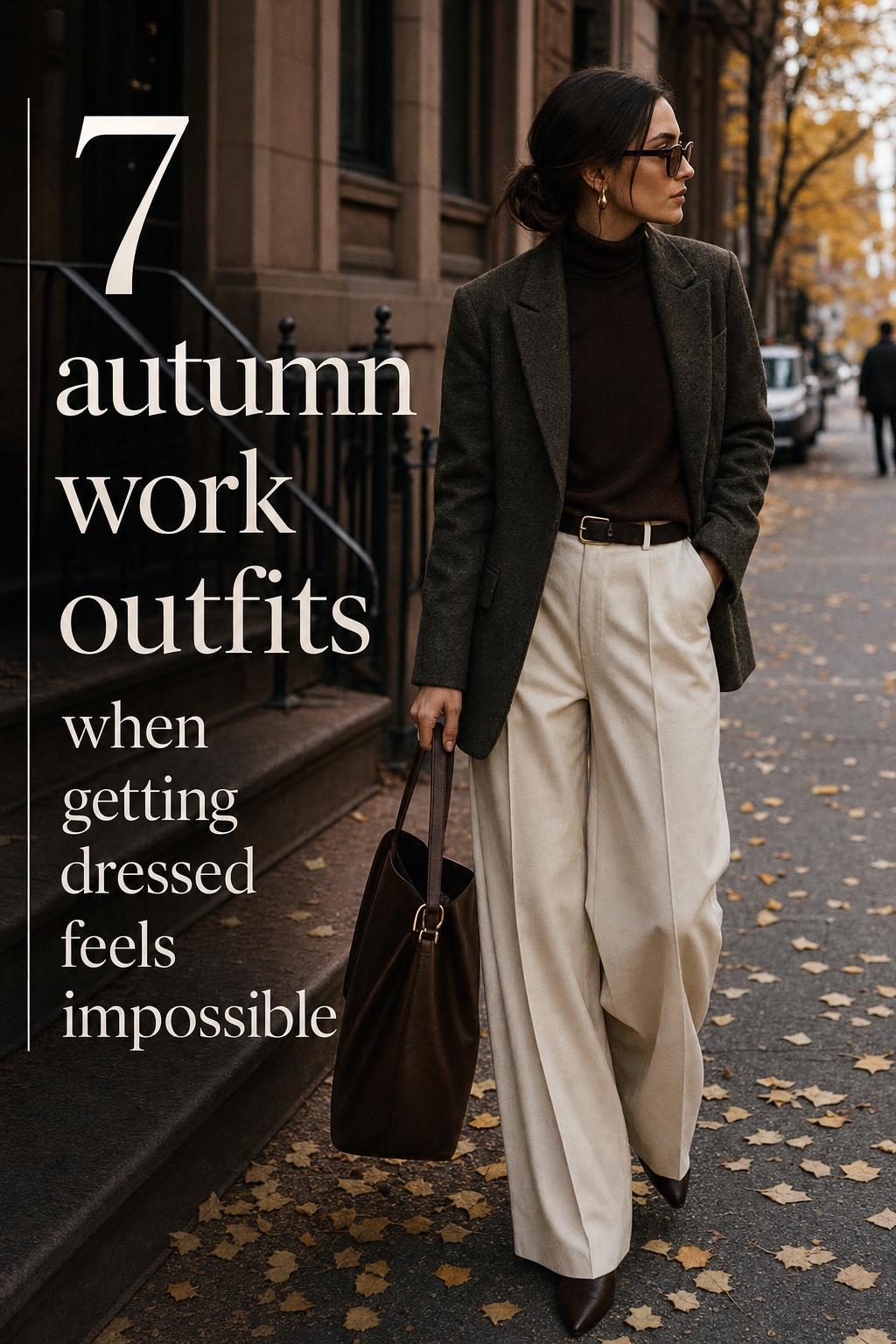
The most compelling autumn workwear sits between polish and ease. A charcoal wool suit becomes softer with a fine knit underneath. A knit dress sharpens up with a structured blazer and ankle boots. Burgundy, camel, navy, olive, and black create the kind of seasonal palette that reads intentional before a single accessory is added. The result is less about chasing trends and more about controlling mood, silhouette, and practicality with precision.
This guide breaks down the core frameworks, pieces, and styling decisions that make professional autumn outfits work in a modern U.S. wardrobe, from business formal offices to business casual settings, from New York City to San Francisco to the Midwest.
Found the dress? Keep the rest in one place.
Zarellea brings guest details, vendors, timelines, and every next step together — so your wedding plan feels as good as your look.
Why fall dressing changes the logic of office style
Autumn is the season when layering becomes part of the outfit composition rather than a last-minute addition. In warmer months, clothing can rely on simplicity. In fall, the visual success of a work look often depends on how fabrics interact: knit against wool, leather against tweed, cotton under cashmere, a trench over tailoring. Texture starts doing the work that bare skin and lightweight drape handled in summer.
This also explains why the strongest autumn work outfits tend to look more expensive and more composed than outfits from other seasons. Layering creates depth. Heavier fabrics hold shape better. Seasonal colors such as burgundy, camel, navy, olive, and black naturally feel grounded and professional. Even relaxed tailoring gains more presence when rendered in wool or brushed blends.
There is a practical side to this too. Fall office style needs flexibility. A workday may begin with a chilly commute, continue in an overheated office, and end in evening wind. Pieces that can be added, removed, or restyled throughout the day matter more than a single dramatic statement item. That is why blazers, cardigans, trenches, coats, and knit tops repeatedly anchor the season.

The outfit frameworks that consistently look polished
Instead of thinking in isolated outfits, it is more useful to build around recurring frameworks. These are the combinations that appear across the strongest fall workwear references because they solve multiple problems at once: formality, comfort, layering, and visual balance.
Relaxed tailoring with a corporate edge
The tailored suit remains one of the most reliable autumn work outfits, but the modern version is less rigid than traditional power dressing. Think charcoal, navy, camel, or black in wool, with a blazer that skims rather than constricts and trousers that fall cleanly through the leg. This is the kind of silhouette often associated with labels such as Totême, Another Tomorrow, and Max Mara: precise, quiet, and visually authoritative without feeling severe.
Why this works is largely about proportion play. The blazer gives the outfit a strong shoulder line and clear structure. The softer knit or button-down underneath prevents the look from becoming too hard. If the trousers are wide-leg, keep the top layer neat. If the suit is sharply cut, a fine-gauge knit or a blouse adds subtle softness.
For U.S. readers looking for a more accessible route, this same framework translates well through mid-priced retailers such as Banana Republic, J.Crew, Everlane, and Reiss equivalents in the U.S. market. The key is not the label alone. It is fabric weight, fit through the shoulder and waist, and whether the trouser hem works with your chosen office shoe.
Style insight: if your office leans business formal, keep the palette tonal and let the tailoring carry the message. In a business casual setting, break the suit apart. Wear the blazer with a knit dress or pair the trousers with a cardigan and loafers.
Soft knit dressing sharpened by structure
Knit dresses dominate fall workwear for good reason. They offer warmth, ease, and line. Yet on their own, they can tilt too lounge-like for the office. The styling correction is simple: add structure. A cardigan in the same color family creates elegant tonal layering, while a blazer or trench gives the dress a sharper outline. Ankle boots or heeled shoes complete the transition from soft to professional.
A fitted or column-style knit dress works especially well because it creates a clean vertical shape. If the knit has more volume, balance it with sleeker shoes and a more defined outer layer. A belt can also help if the dress feels visually flat, but it is most effective when it echoes another accessory, such as a structured handbag or leather boot.
This combination is particularly useful for long workdays because it remains comfortable while still looking deliberate. It also adapts well to hybrid schedules. Remove the blazer for a more relaxed at-home work setting, then add it back for meetings or office time.
Monochrome dressing that feels intentional, not flat
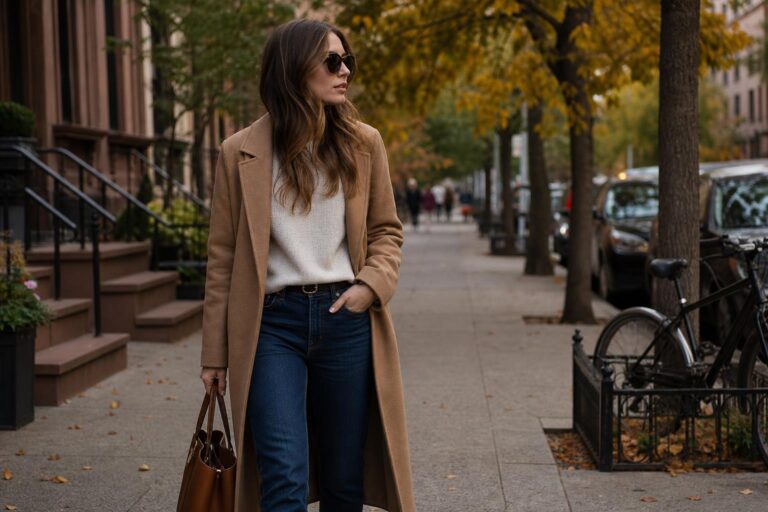
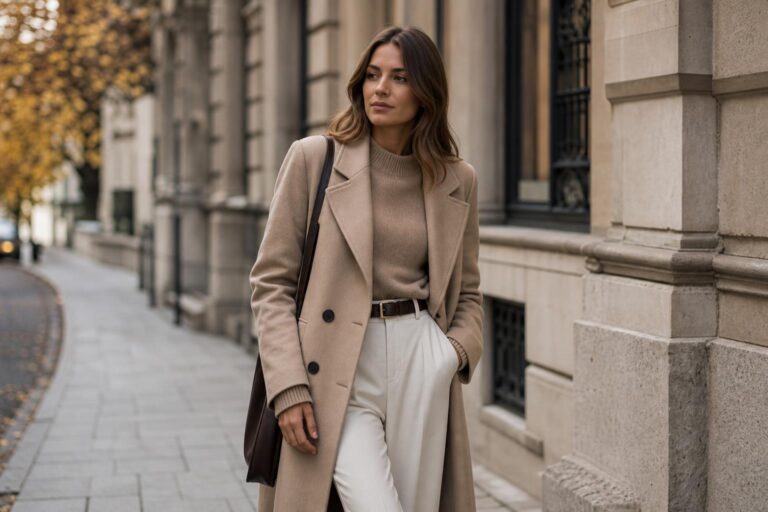
Monochrome is one of the smartest answers to the question of how to look polished quickly in fall. The danger, however, is visual sameness. The way around that is texture contrast. A black outfit becomes richer when it mixes smooth tailoring, ribbed knitwear, and leather shoes. Camel feels more dimensional when a wool coat sits over softer knitwear and crisp trousers.
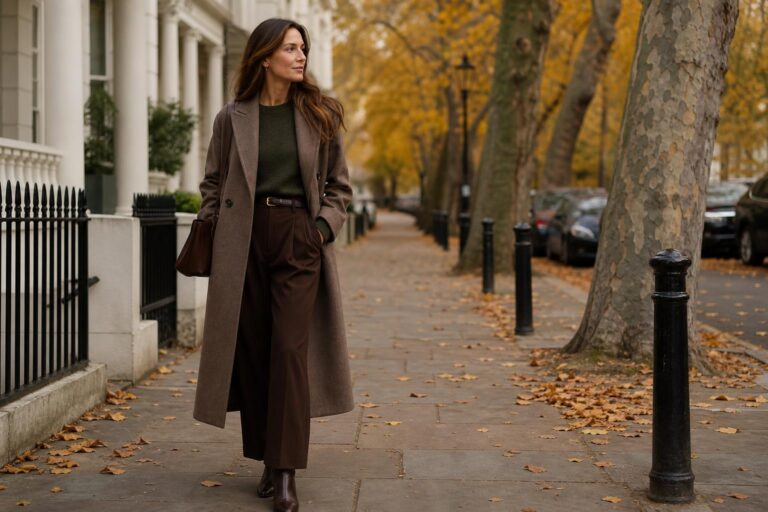
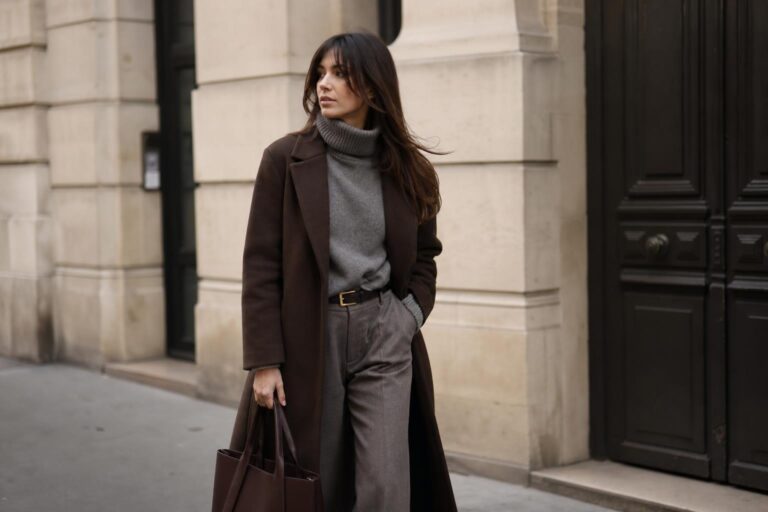
Burgundy, navy, black, olive, and camel are especially effective in autumn because they already carry seasonal depth. In office settings, they also communicate discipline. A burgundy knit with matching trousers can feel modern and directional, while a navy-on-navy composition remains one of the easiest routes to understated authority.
Color-blocking offers a related but slightly bolder route. Pairing navy with camel, olive with black, or burgundy with charcoal creates enough contrast to keep the outfit dynamic without pushing it into trend-costume territory. The strongest versions usually rely on one quiet base color and one warmer autumn accent.
Outerwear as part of the look, not an afterthought
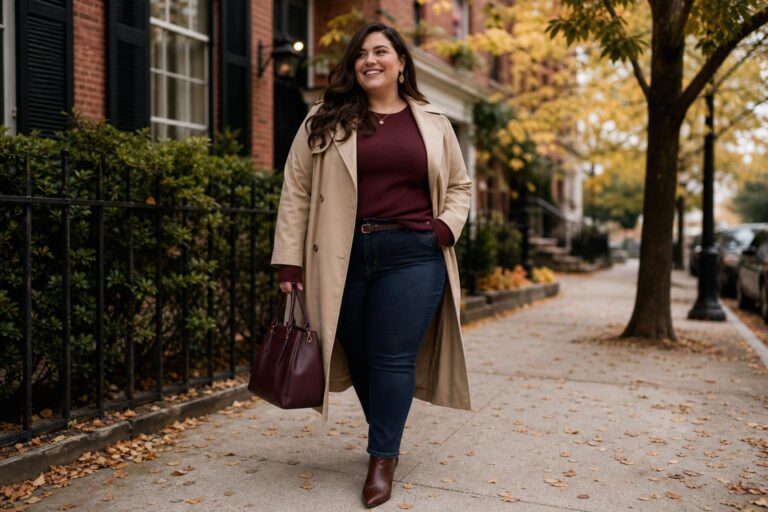
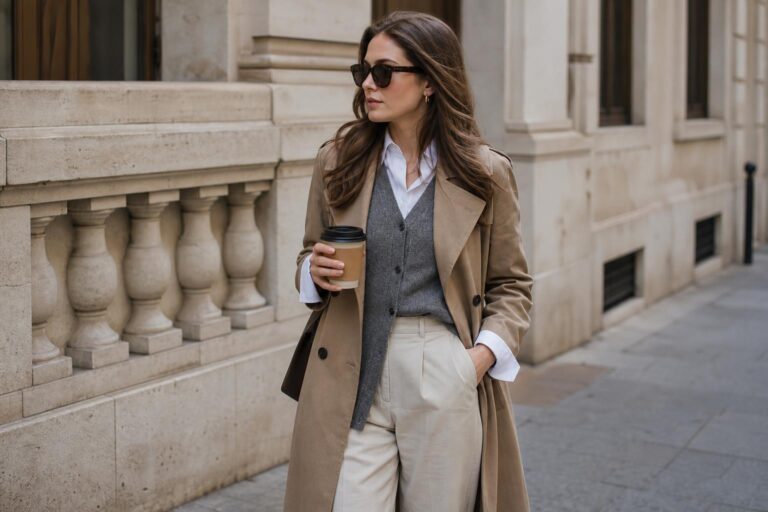
In autumn, outerwear often becomes the first thing people see, which means it should be treated as a core workwear piece rather than a purely functional layer. A trench coat brings sharpness to dresses and tailoring. A wool coat in camel, navy, or black reinforces a polished office silhouette. Leather outerwear introduces edge, but it works best when the rest of the look stays clean and restrained.
The reason trenches and coats appear so often in fall office style is that they provide immediate shape. Even a simple knit top and trousers read as finished once a strong outer layer is added. This is especially helpful for business casual environments where the base outfit can stay relatively minimal.
A useful rule: if your outerwear is oversized, the clothing underneath should maintain some line. If the coat is more fitted, you can afford wider trousers, a fuller skirt, or bulkier knitwear underneath.

Building autumn work outfits from the ground up
When a wardrobe starts feeling repetitive, the issue is often not a lack of outfit ideas but a lack of functional base pieces. Fall workwear becomes easier when each category does a specific job: tops create polish near the face, bottoms determine silhouette, shoes manage both formality and endurance, and accessories provide clarity.
Tops that carry the outfit without competing with it
Blouses, knit tops, and button-down shirts are the most useful top categories for autumn office wear because they layer cleanly under blazers, cardigans, trenches, and coats. The best choice depends on what the rest of the outfit is doing. If your trousers are wide-leg or pleated, a sleeker top prevents bulk. If your skirt or suit is sharply tailored, a softer blouse can reduce visual rigidity.
Fine knits are especially valuable because they solve several styling problems at once. They provide warmth, sit smoothly under tailoring, and create that polished-but-not-overdone effect associated with contemporary workwear. Button-downs are better when you want crispness and definition. Blouses are most effective when the rest of the outfit is pared back enough to let the fabric and neckline read clearly.
Common mistake to avoid: layering a bulky knit under a blazer that was cut for lighter tops. The result often pulls at the sleeves and distorts the shoulder line. In that case, switch to a cardigan over a finer top, or wear the heavier knit with a coat instead.
Bottoms that shape the mood of the office look
Trousers remain the backbone of most fall office wardrobes. Straight-leg, wide-leg, and tailored trouser suits all appear because they adapt easily across dress codes. A wide-leg trouser creates an elegant, directional silhouette, especially with loafers or heels. A straighter cut feels more classic and is often easier to wear in stricter offices.
Skirts add another dimension, particularly pencil skirts and pleated styles. A pencil skirt reads sharper and more formal, especially when paired with a blazer or heeled shoe. A pleated or softer skirt creates movement and can feel less severe, but it needs balancing. A strong knit, defined waistband, or streamlined outer layer keeps it from drifting too romantic for work.
Culottes and dress-trouser combinations also work when the office permits more fashion-forward dressing. The key is line. Any wider or shorter silhouette needs an anchoring piece, whether that is a fitted knit top, a structured blazer, or a taller boot.
Shoes that survive a real workday
The strongest fall office shoe choices are the ones that balance visual authority with real endurance. Boots, loafers, heels, and heeled shoes all have a place, but they serve different functions. Ankle boots are excellent for transitional weather and pair especially well with knit dresses, skirts, and cropped or straight-leg trousers. Loafers offer a grounded, tailored finish and work well in business casual or smart casual offices. Heels bring formality, but comfort matters if the day includes commuting or standing.
One of the most practical distinctions in autumn workwear is heel height. For long office days, a 2- to 3-inch block heel is often the strongest compromise between polish and stability. It delivers lift without changing your posture so dramatically that the rest of the outfit starts to feel high-maintenance. When comfort is the priority, a loafer or lower boot usually creates the cleanest line.
Why this matters visually: footwear is often the piece that confirms the dress code. The same knit dress can lean casual with flat loafers or more formal with heeled boots. The same suit can feel downtown with loafers or corporate with pumps. Shoes are not just a finishing detail; they establish the outfit’s level of authority.
Texture, pattern, and the autumn palette
Fall style becomes memorable when it relies on more than color alone. Texture is what gives autumn work outfits their depth. Wool introduces discipline. Cashmere softens. Leather sharpens. Tweed adds heritage character. Velvet can work in small doses, but it requires restraint in office settings so the outfit does not start reading eventwear rather than workwear.
Patterns such as plaid and houndstooth are especially effective in autumn because they naturally align with tailoring and outerwear. A plaid blazer over a black knit and trousers feels classic without becoming static. Houndstooth can create more visual energy, so it works best when the rest of the palette stays controlled.
The most useful color families remain burgundy, navy, camel, olive, black, and charcoal. They mix easily, flatter the heavier textures of the season, and keep the wardrobe cohesive. Readers interested in undertone-driven dressing can also think of these through a softer or deeper autumn lens. Softer autumn palettes favor muted warmth such as camel and olive, while deeper autumn palettes absorb burgundy, charcoal, and rich navy more naturally. This is less about strict rules and more about choosing colors that make the wearer look energized rather than drained.
Tip: if a fall palette starts to feel too dark, introduce contrast through texture before adding a brighter color. A ribbed knit, polished leather tote, or brushed wool coat can create enough variation to make a tonal outfit feel alive.

Workwear that changes with the office dress code
Not every office reads the same, and one reason many fall workwear guides feel incomplete is that they blur the difference between business formal, business casual, and smart casual. In practice, the same core pieces can work across all three, but they need to be styled differently.
Business formal: sharper lines, quieter styling
In business formal settings, tailoring should lead. Think wool suits, structured blazers, pencil skirts, button-downs, and polished heels or refined ankle boots. Color stories are usually tonal or understated, with navy, charcoal, black, and camel doing most of the work. Accessories should support the outfit rather than interrupt it, which is why a structured tote and minimal jewelry are more useful than trend-driven extras.
This is where luxury references from houses like Max Mara or minimalist labels such as Totême and Another Tomorrow feel especially relevant. Their workwear language is not loud; it depends on fabric quality, cut, and proportion. The same principle applies at any price point.
Business casual: the season where knitwear becomes strategic
Business casual is where fall dressing truly excels. Cardigans, knit tops, relaxed blazers, wide-leg trousers, loafers, and dresses all have room to operate here. The styling challenge is making sure comfort does not slide into visual softness. This is why one structured element is so important. It might be a belt, a clean trouser crease, a sharp coat, or a structured handbag.
A practical formula is knit plus tailored bottom plus strong shoe. For example, a fine knit in burgundy, tailored trousers in charcoal, and loafers or ankle boots. The outfit remains simple, but every piece has enough intention to read office-appropriate.
Smart casual and hybrid schedules: polished without overcommitting
Hybrid and remote-first work culture changed the visual language of office dressing. In many workplaces, the expectation is no longer rigid formality but rather visible effort and adaptability. This is where trench coats, knit dresses, softer tailoring, and dress-trouser combinations become useful. They look considered on video calls, work in person, and can transition between home, commuting, and meetings.
Casual Friday layering follows the same logic. Instead of abandoning structure, simply relax one element. Swap pumps for loafers, replace a button-down with a knit top, or trade a full suit for tailored trousers and a cardigan under a coat.
Regional U.S. styling cues that affect what actually works
Autumn in the U.S. is not one climate, and office dressing reflects that. The same outfit framework can behave very differently in New York City, San Francisco, or the Midwest. Regional context matters because layering strategies are only useful when they match the pace and weather of the day.
New York City: sharper outerwear, stronger footwear
In NYC, commuting often makes outerwear and shoes more visible than the outfit itself. That is why trench coats, wool coats, ankle boots, loafers, and structured bags feel especially relevant. The styling energy tends to reward cleaner lines and stronger contrast. A navy suit with black boots, or a camel coat over a monochrome black base, reads practical and city-appropriate.
San Francisco: layering for microclimates and relaxed offices
San Francisco calls for clothes that can adjust quickly. Cardigans, lighter coats, knit tops, and tailored trousers make more sense than overly heavy layering. Because many workplaces also lean more relaxed, business casual and smart casual formulas dominate. The outfit still benefits from polish, but the overall impression can be softer and more flexible.
Midwest offices: practical warmth with a polished core
In the Midwest, fall can shift toward cold quickly, so fabric choice matters more. Wool, heavier knits, tweed, and boots often become central earlier in the season. The smartest approach is to keep the visible office layer refined while letting underlayers handle warmth. A wool blazer over a fine knit often looks more polished than stacking multiple bulky pieces.
For humid fall days in parts of the U.S., the opposite advice applies. Use breathable cotton blends, lighter knits, and trench-style layers that can be removed easily. The goal is not maximum warmth; it is controlled transition.
The accessories that make autumn workwear feel complete
Accessories are often what separate a decent office outfit from one that feels fully resolved. In fall, bags, belts, scarves, and jewelry work less as decoration and more as visual anchors. They define shape, reinforce polish, and help tonal outfits feel intentional.
A structured tote or handbag is especially useful because it brings discipline to softer seasonal fabrics. This is why large totes and structured handbags show up repeatedly in elevated office style. They offset the softness of knitwear and support the clean geometry of tailoring. Belts perform a similar function. They can sharpen a knit dress, control a coat, or create a waist in outfits that might otherwise feel too fluid.
Minimal jewelry generally works best with autumn work outfits because the season already carries visual richness through texture. A refined earring, simple ring, or subtle necklace allows the fabrics and silhouette to remain the main story. Scarves can also be effective, particularly with suits and coats, but they need to feel integrated into the palette rather than added as an afterthought.
A practical 10-piece autumn workwear capsule
A capsule wardrobe is most useful when it reflects real office repetition rather than fantasy shopping. The point is not to own as little as possible. It is to create enough interconnection that getting dressed becomes faster and the outfit combinations remain varied.
- A tailored blazer in navy, charcoal, camel, or black
- One pair of tailored trousers
- One second bottom option, such as a skirt or wide-leg trouser
- A fine-gauge knit top
- A button-down or blouse
- A knit dress
- A cardigan for indoor layering
- A trench coat or wool coat
- One office-ready loafer or flat
- One polished ankle boot or heeled shoe
With those ten pieces, several combinations open up immediately. The blazer works over the knit dress, with either bottom, or layered under outerwear. The cardigan can replace the blazer on softer days. The trousers and skirt each shift the mood of the same top. The coat unifies everything visually for commuting.
Most versatile item: the blazer. It crosses business formal, business casual, and smart casual more easily than any other single piece. If investment priorities matter, start there, then build into trousers, shoes, and outerwear.
For readers watching budget, a practical strategy is to invest in the pieces that receive the most visible wear: coat, blazer, boots, and bag. Knit tops and layering pieces can often be sourced more affordably without undermining the overall effect.
Outfit interpretations for real workweeks
The strongest wardrobe ideas are the ones that survive ordinary schedules. These combinations are not rigid formulas but working examples of how autumn office style can shift in attitude without losing coherence.
Tonal camel layers for days packed with meetings
A camel blazer over a fine knit with tailored trousers creates one of the most dependable professional autumn outfits because everything about it feels calm and organized. Add a structured tote and a loafer if the day involves movement, or a low block heel if the office is more formal. The tonal palette keeps the eye moving vertically, which is especially effective when you want to look streamlined.
Easy way to recreate the look: keep every element in the same warm-neutral family, then introduce one darker anchor through shoes or a belt. That prevents camel from looking too soft.
A knit dress with black accessories for a sharp soft-structure contrast
This combination works because the knit brings comfort while the black accessories provide authority. A cardigan in a matching tone creates cohesion, while ankle boots and a structured handbag keep the outfit office-ready. If the dress is body-skimming, choose outerwear with a little room. If the dress is looser, define the shape somewhere, either with a belt or a more tailored coat.
Wearable advice: this is one of the easiest formulas for hybrid workers because it feels polished on screen and in person. It also packs well for work trips and fall conferences.
Burgundy knitwear and charcoal tailoring for modern power dressing
Power dressing in fall no longer needs to mean obvious severity. A burgundy knit under charcoal tailoring creates strength through color depth rather than through stiffness. The mood is intelligent, directional, and current. Finish with loafers for daytime ease or a heeled shoe if the environment calls for more formality.
Why this combination works: burgundy adds warmth and personality, while charcoal keeps the look disciplined. It is a refined alternative to all-black without sacrificing professionalism.
Plaid or houndstooth as the single statement layer
A patterned blazer or coat can bring visual energy to an otherwise minimal office wardrobe. The secret is containment. Keep the rest of the outfit in black, navy, camel, or cream-adjacent neutrals and let the pattern act as the focal layer. Plaid and houndstooth already carry enough movement, especially in wool and tweed textures.
Styling mistake to avoid: pairing pattern with too many competing accessories. A structured bag and simple shoe are usually enough.
Wide-leg trousers, a button-down, and a trench for smart-casual offices
This is one of the easiest business casual fall outfits because it feels relaxed without losing line. The button-down adds crispness near the face, the wide-leg trousers create movement, and the trench acts as a sharp finishing layer. Loafers keep the tone grounded. If the office tilts more formal, switch the loafer for a heel and add a belt.
Budget-friendly adaptation: prioritize fit in the trousers first. When the trouser line is right, the rest of the outfit can be relatively simple and still look elevated.
Practical tips that make office outfits feel more expensive and more functional
- Match fabric weight across the outfit. Heavy boots with ultra-light trousers can feel seasonally disconnected unless balanced by a coat or knit.
- Use one structured piece in softer outfits. A blazer, belt, or structured handbag prevents knit-heavy combinations from looking too casual.
- Let one element lead. If the color is rich, keep the silhouette simpler. If the tailoring is dramatic, keep the accessories quieter.
- Check sitting comfort, not just mirror impact. Pencil skirts, higher boots, and fitted dresses need to work across a full office day, not only when standing.
- Build around repeatable shoes. A polished loafer or ankle boot usually supports more autumn work outfits than a highly specific heel.
Another useful principle is to think in visual anchors. Every successful office outfit needs one or two elements that hold the composition together. In fall, those anchors are usually a blazer, coat, trouser line, or shoe. Once those are stable, softer pieces such as cardigans, blouses, or knitwear can rotate in more freely.
Where sustainability and fabric choices fit into the conversation
Sustainability in autumn workwear is often most practical when approached through fabric choice and buying frequency rather than through trend language alone. Pieces that are worn repeatedly through an entire season benefit from durable materials and thoughtful construction. Wool, recycled blends, cotton, cashmere, and vegan leather alternatives all enter the conversation here, particularly when readers are choosing between short-term novelty and long-term wardrobe value.
The reason this matters in workwear is simple: office clothes are often high-rotation items. A blazer, coat, trouser, or boot that can be styled multiple ways delivers more value than a single eye-catching piece with limited range. Brands associated with more elevated minimal workwear, including Another Tomorrow and Totême, often inform this mindset visually, while mid-market retailers can be useful for building out the practical layers of the wardrobe.
The balanced approach is to invest where repetition is highest and trend sensitivity is lowest. That usually means tailoring, outerwear, and dependable shoes first.
The appeal of autumn workwear now
Autumn office style endures because it offers something many wardrobes are missing for the rest of the year: depth. Not just in color, but in texture, proportion, and intention. A good fall work outfit does not need to shout. It simply holds together from every angle, through changing weather, changing dress codes, and changing versions of the workday itself.
The most useful version of this aesthetic is never overly fixed. It can be sharper, softer, more minimal, more layered, more corporate, or more relaxed depending on your office and your life. That flexibility is exactly what makes it worth refining. Once the core pieces are right, the wardrobe starts to feel less like a series of decisions and more like a language you can actually use.
FAQ
What are the most essential pieces for autumn work outfits?
The most useful core pieces are a tailored blazer, tailored trousers, a knit top, a button-down or blouse, a knit dress, a cardigan, a trench coat or wool coat, and office-ready shoes such as loafers, ankle boots, or low heels. These pieces layer well together and adapt across business formal, business casual, and hybrid work settings.
How do I make fall office outfits look polished without wearing a full suit every day?
Use one structured element in each outfit. That could be a blazer, a sharp coat, tailored trousers, or a structured handbag. Pair it with softer seasonal pieces such as knitwear or a cardigan so the outfit still feels comfortable. The balance between structure and softness is what keeps autumn workwear polished.
Which colors work best for professional autumn outfits?
Burgundy, navy, camel, olive, black, and charcoal are especially effective because they feel seasonal, mix easily, and maintain a professional tone. Monochrome dressing in these shades can look very refined, and color-blocking combinations such as camel with navy or burgundy with charcoal add depth without becoming distracting.
Are knit dresses appropriate for work in the fall?
Yes, especially when they are styled with structure. A knit dress becomes more office-appropriate with a blazer, trench, or polished cardigan, plus ankle boots or heeled shoes. The cleanest versions usually have a column or body-skimming shape, which creates a professional line without sacrificing comfort.
What shoes are best for long office days in autumn?
Loafers, ankle boots, and lower block heels are the most practical choices. A 2- to 3-inch block heel often offers the best balance between comfort and formality, especially for long days. The right shoe also helps define the dress code, making the same outfit feel more business formal or more business casual.
How can I dress for a business casual office in fall without looking too relaxed?
Start with knitwear or a softer top, then add a tailored bottom and a deliberate shoe. A fine knit with tailored trousers and loafers is a strong example. Keep at least one item sharp, such as a belt, coat, blazer, or structured tote, so the outfit retains visual discipline.
What is the easiest autumn workwear capsule to build?
A simple capsule includes one blazer, two bottom options, two to three layering tops, one knit dress, one cardigan, one coat, and two pairs of office shoes. This gives enough variation to create multiple office-ready combinations while keeping the wardrobe cohesive and easy to manage.
How should autumn work outfits change for different U.S. climates?
In cities like New York, stronger outerwear and durable shoes matter because commuting is part of the look. In San Francisco, lighter layers and adaptable business casual pieces work better because of changing temperatures and more relaxed office culture. In the Midwest, heavier fabrics such as wool, tweed, and warmer knitwear often become necessary earlier in the season.
Is monochrome a good idea for fall office wear?
Yes, monochrome is one of the easiest ways to look polished quickly in fall. The key is using texture variation so the outfit does not feel flat. Combining wool, knitwear, leather, and crisp tailoring within one color family creates depth and makes the outfit feel more considered.