
Outfits For Autumn With Quiet Luxury Style
There is a particular kind of clarity that arrives with autumn dressing. The air sharpens, fabrics begin to matter more, and getting dressed becomes less about a single statement piece and more about composition: the right knit against structured outerwear, boots grounding a softer hemline, color doing quiet work through olive, burgundy, navy, camel, charcoal, and other earth-toned notes.
That is why outfits for autumn remain so compelling. They sit at the intersection of practicality and visual richness, where layering solves real weather shifts while texture creates mood. A trench coat can make simple trousers feel intentional. A cashmere knit can soften tailored lines. Knee-high boots can turn a skirt into a complete cold-season silhouette rather than a transitional afterthought.

Across city commutes, office days, weekend travel, outdoor events, and casual coffee runs, autumn style works because it is adaptable. It can lean minimal or trend-driven, polished or relaxed, editorial or entirely everyday. The most successful autumn wardrobes are not built on endless novelty. They rely on repeatable formulas, well-chosen core pieces, and a strong understanding of proportion, color, and layering density.
What follows is a wearable style guide built around those principles: capsule-worthy foundations, outfit ideas by mood and occasion, texture and color strategies, regional U.S. climate considerations, and practical advice for making autumn clothing look considered rather than merely seasonal.
Found the dress? Keep the rest in one place.
Zarellea brings guest details, vendors, timelines, and every next step together — so your wedding plan feels as good as your look.
The structure behind strong autumn dressing
Autumn style is rarely about one item in isolation. It works through relationships: knitwear with outerwear, boots with hem length, soft fabrics against sharper tailoring, tonal dressing balanced by one visual anchor. That is why the best fall outfits feel composed even when the pieces themselves are quite basic.
Three ideas appear again and again in the most useful autumn wardrobes: layering, texture, and a controlled seasonal palette. Layering addresses transitional weather. Texture prevents neutral outfits from looking flat. A focused color story makes mixing and repeating pieces easier, which is essential if you want a wardrobe that feels consistent rather than cluttered.
Editors and fashion-led platforms often return to the same foundations for a reason. A bomber jacket, trench coat, wool coat, cardigan, tailored trousers, denim, skirts with tights, ankle boots, and knee-high boots can be recombined in ways that feel fresh without requiring a full reset every week. This is the quiet logic behind the modern autumn capsule wardrobe.
The core pieces that make most autumn outfits work
If autumn dressing feels difficult, the issue is usually not creativity. It is usually wardrobe architecture. Once the right categories are covered, styling becomes faster and more intuitive.
Outerwear that sets the tone
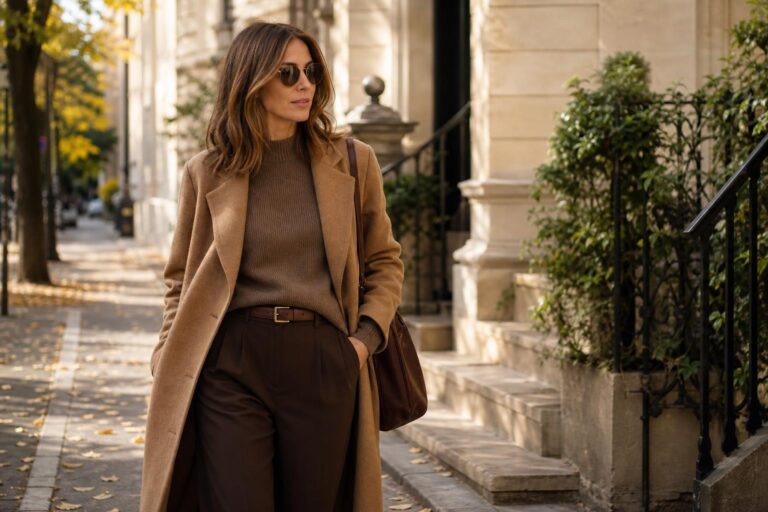
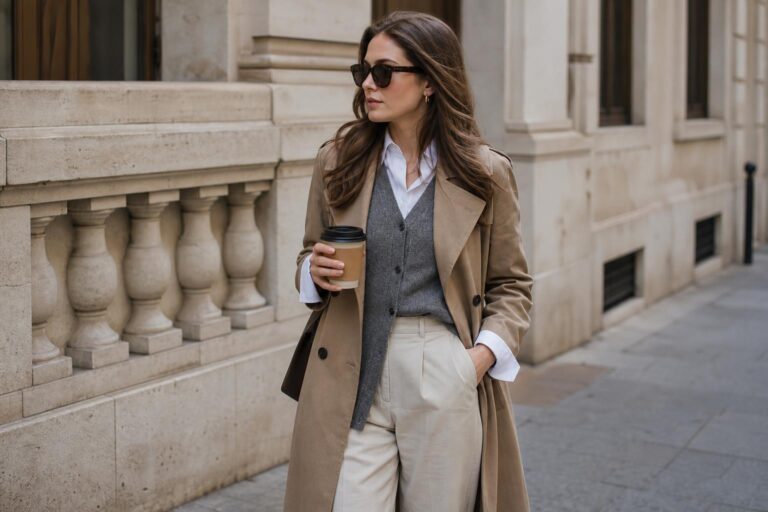
A trench coat remains one of the clearest visual shorthand pieces for autumn. It sharpens casual clothes, works over office layers, and carries transitional weather better than heavier winter options. A wool coat offers a more refined line and becomes especially useful later in the season. A puffer is the practical counterpoint, best for colder days when function needs to lead. A bomber jacket adds an easier street-style edge and works particularly well when the rest of the outfit is simple and tonal.
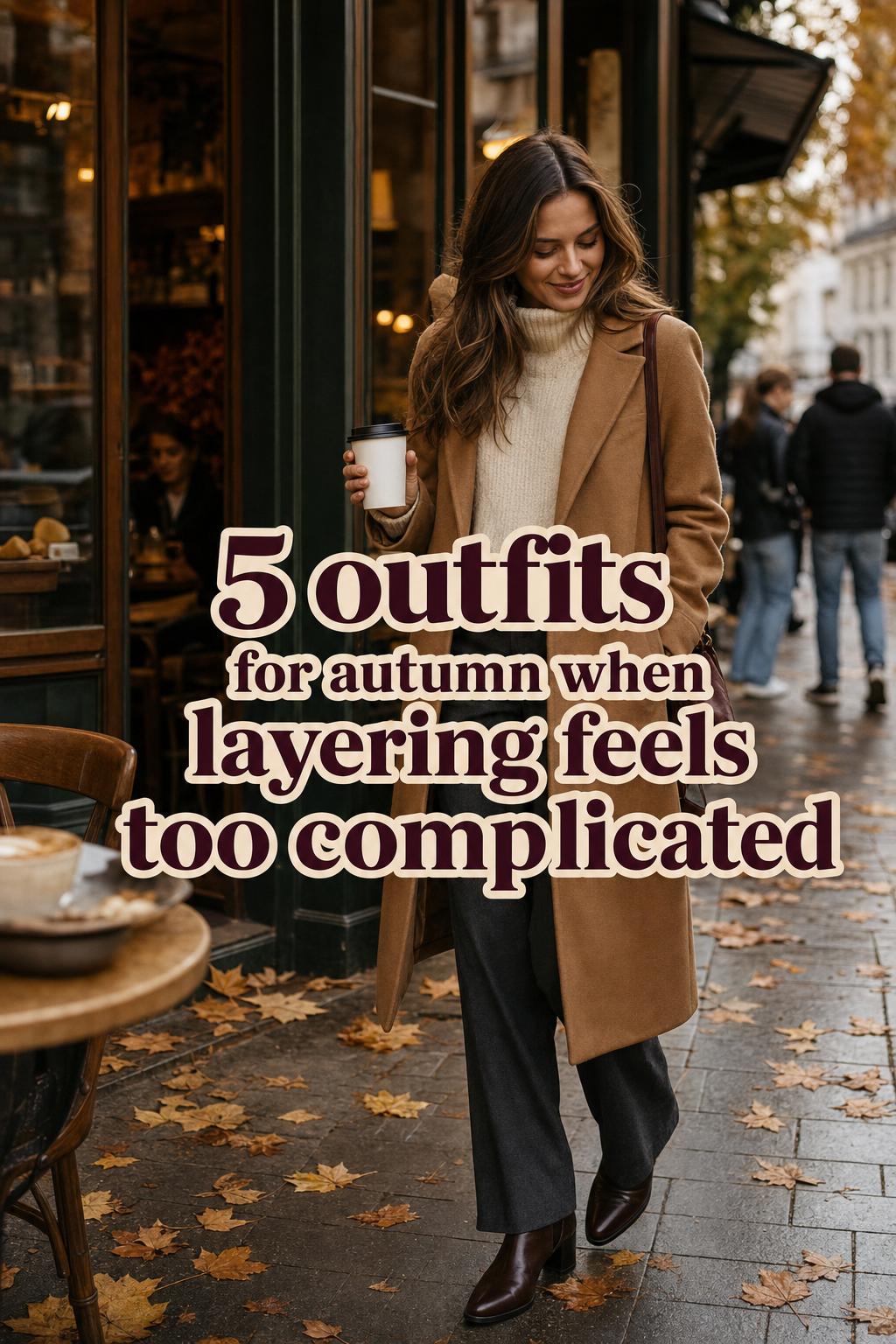
Camel and navy are especially useful because they integrate easily with denim, black boots, grey knitwear, and earthy accents. The outer layer often acts as the visual frame of the outfit, so this is one category where versatility matters more than novelty.
Knitwear and mid-layers that create depth
Knitwear is the emotional center of many autumn outfits. Cashmere brings softness and polish. Merino wool tends to feel cleaner and lighter in layered combinations. Chunky sweaters and cardigans create more volume and texture, which can be useful when the rest of the silhouette is slim or tailored. Knit dresses offer an easy one-piece solution, especially when paired with boots and a coat.
Not every knit needs to be oversized. In fact, autumn outfits often look better when at least one layer stays close to the body. A slimmer knit under a trench or blazer prevents bulk and keeps the overall shape precise.
Bottoms and footwear that anchor the silhouette
Wide-leg trousers, tailored trousers, denim, and skirts all appear frequently in autumn outfit formulas because they solve different proportion problems. Wide-leg trousers create movement and look especially strong with fitted knits or tucked-in cardigans. Tailored trousers read more polished and are ideal for work-ready outfits. Denim keeps the wardrobe grounded and wearable. Skirts become far more autumn-appropriate when balanced with knitwear, tights, and knee-high boots.
Boots are often the anchoring item. Ankle boots keep the line compact and versatile. Knee-high boots add structure, warmth, and immediate seasonal definition. Heeled boots shift an outfit toward evening, while flatter shapes keep it more practical for all-day wear.
Accessories that finish rather than clutter
Scarves, hats, belts, gloves, and bags deserve more attention than they usually receive. In autumn, accessories are less decorative than they are connective. A belt can bring shape back to a layered outfit. A scarf introduces pattern or texture. Bags can echo the shoe tone to unify the composition. When the clothing palette is muted, accessories often provide the final note that makes the outfit feel intentional.
- Invest first in one versatile coat, one reliable knit, and one pair of boots.
- Add variety through scarves, belts, and bags rather than replacing all core garments.
- Keep accessories in palette with the wardrobe so they extend outfit combinations.

Relaxed layers with a soft minimal edge
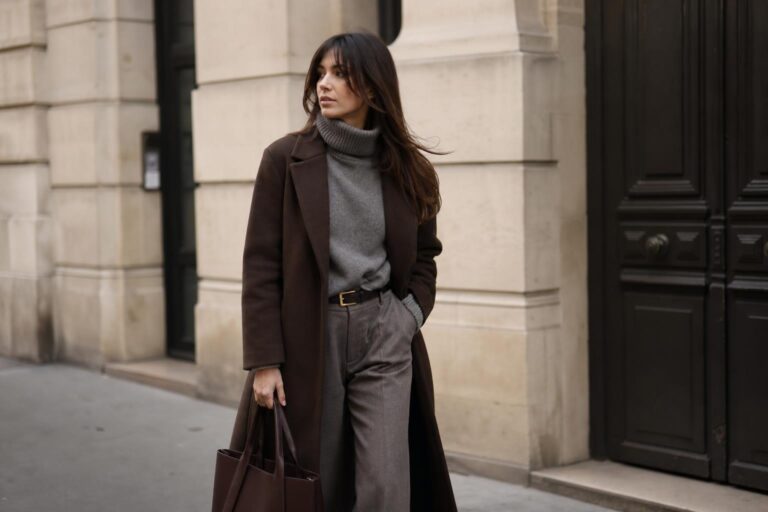
This is one of the most repeatable autumn formulas because it relies on restraint rather than excess. Start with a fine knit or cashmere sweater, add wide-leg trousers or clean denim, and finish with a trench coat or bomber jacket depending on whether you want polish or ease. Footwear can move between ankle boots and loafers, but boots usually give the outfit more seasonal weight.
The success of this combination comes from tonal layering. Instead of relying on contrast, it builds interest through closely related shades: cream with camel, charcoal with black, olive with moss, navy with denim. The eye reads the outfit as calm and coherent, which is why it feels expensive even when the pieces are fairly simple.
For everyday life, this formula works well for office commutes, casual meetings, and city weekends. If the silhouette starts to feel too loose, define the waist slightly with a tuck or choose a more structured bag. If it feels too plain, a textured scarf or leather boot is usually enough to restore dimension.
Style insight
Minimal autumn outfits succeed when texture carries the interest. Cashmere, wool, brushed knits, and leather prevent neutral palettes from becoming flat. This is where high-street brands such as H&M, New Look, and Marks & Spencer often enter the conversation: the formula itself is accessible, and the impact comes more from styling logic than from any single label.
Tailored pieces with a stronger autumn line
Autumn tailoring looks best when it avoids corporate stiffness. A blazer or structured coat paired with tailored trousers can feel too severe unless there is something softer in the composition, such as knitwear, suede-like texture, or a more relaxed boot shape. The balance between polish and ease is what makes these outfits modern.
A useful work-ready formula is a slim merino knit, tailored trousers, and a trench coat, finished with ankle boots. Another is a pencil skirt or tailored skirt with a slightly looser sweater and knee-high boots. The second option works particularly well because the boots visually bridge the gap between autumn practicality and a more refined silhouette.
School-uniform references occasionally appear in autumn styling through pleated skirts, loafers, and layered knitwear. The polished version of that idea keeps the palette grounded in navy, charcoal, burgundy, or camel and avoids overloading the look with too many nostalgic details.
Tips for office layering
- Choose one structured piece only: blazer, trench, or tailored trousers. Let the rest of the outfit soften it.
- If you wear wide-leg trousers, keep the knit cleaner and less bulky to preserve shape.
- Knee-high boots work best with skirts that do not compete at the calf, keeping the line long and uninterrupted.
- For all-day comfort, avoid stacking too many thick layers under a fitted blazer.

Weekend denim, chunky knits, and the quiet appeal of repetition
Some of the best autumn outfits are the ones you wear repeatedly with small adjustments. Denim with knitwear, a jacket, and boots is not groundbreaking, but it remains one of the strongest weekend combinations because it accommodates movement, fluctuating temperatures, and different levels of polish.
The key is to vary the texture and silhouette rather than replacing the entire formula. Straight or relaxed denim with a chunky cardigan and ankle boots reads casual and grounded. Darker denim with a fitted cashmere knit and a wool coat feels cleaner and more elevated. A leather jacket shifts the mood toward something sharper and more trend-aware.
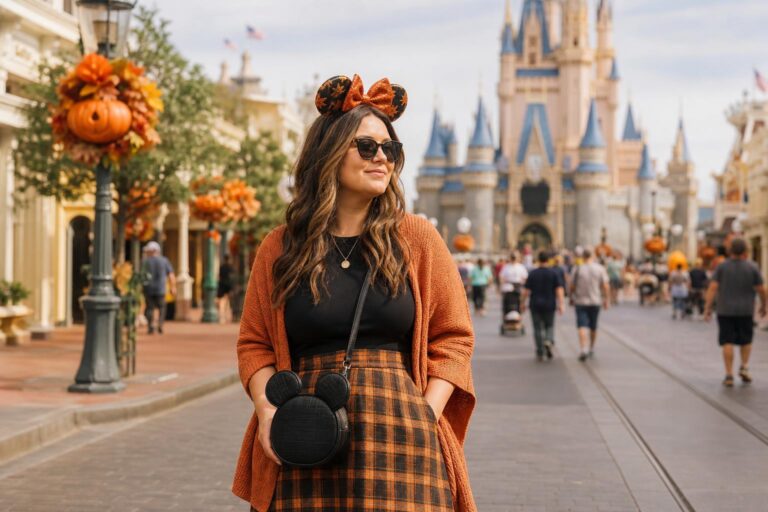
This is also where earthy tones show their versatility. Olive outerwear, amber knits, russet accessories, moss accents, and burgundy bags all work naturally with denim because denim acts as a neutral stabilizer. That is useful when you want color without the outfit feeling overdesigned.
Most versatile item
A cardigan is often underestimated in autumn wardrobes. It can function as a knit, a light jacket, or a layering piece under a coat. In practical terms, that flexibility gives it more outfit value than many statement sweaters.
Skirts, boots, and knitwear for a more directional mood
When autumn style starts to feel too trouser-heavy, skirts create a useful shift in rhythm. The strongest version of this look is not overly delicate. It relies on contrast: a soft knit or cardigan with a more tailored skirt, then grounded by knee-high boots. The boots are important because they prevent the outfit from reading transitional in an unfinished way.
Tailored skirts work especially well when paired with slightly oversized sweaters. That proportion play keeps the outfit from feeling rigid. Knit dresses with boots create a similar effect but with less effort; the dress provides visual continuity, while the boots introduce structure and seasonal relevance.
For a more editorial interpretation, add a trench over the top and keep accessories controlled. For real-life wearability, a scarf and a medium-sized bag are usually enough. Too many accents can compete with the clean line created by skirt and boot combinations.
Why this combination works
The softness of knitwear offsets the formality of a skirt, while the vertical line of knee-high boots gives the outfit coherence. It is a strong option for dinners, work settings, and city days when you want something more composed than denim but still practical enough for walking.
Texture pairings that make autumn outfits feel richer
Autumn style is as much tactile as visual. Texture gives depth to simple combinations and allows restrained color palettes to feel dynamic. Some of the most useful pairings are knit plus leather, plaid plus denim, wool plus satin, and velvet accents against more matte layers.
Leather jackets and leather details bring sharpness to soft sweaters and cardigans. Plaid introduces pattern without disrupting an earth-toned palette. Velvet works best as an accent rather than the entire story, particularly for evening. Even a wool coat over a simple knit dress changes the outfit completely because the materials create contrast before color does.
Texture mixing also helps when shopping your own wardrobe. If you already own a navy knit, black boots, and denim, adding a plaid scarf or a leather jacket changes the visual language without changing the base outfit. That is one of the most efficient ways to make basic autumn pieces feel more intentional.
Styling mistakes to avoid
- Too many heavy textures at once can make the outfit feel bulky rather than layered.
- If both the knit and outerwear are oversized, the silhouette can lose definition.
- Strong texture works best with a controlled palette; too many competing colors reduce its effect.
Color stories that feel distinctly autumn without becoming predictable
Autumn color palettes are often discussed in broad terms, but the most wearable wardrobes use color with more precision. Burgundy brings depth and looks especially strong with navy, charcoal, and black. Olive and moss add an earthy note without becoming loud. Camel and amber warm the wardrobe immediately. Russet is useful as an accent, especially in bags, scarves, or boots.
These shades work because they support tonal dressing while still creating hierarchy. A camel trench over cream knitwear and dark trousers feels refined because the colors move gradually rather than abruptly. A burgundy knit with charcoal tailoring adds mood without overwhelming the outfit. Navy remains one of the most underrated autumn neutrals because it softens the starkness of black while staying polished.
Readers who prefer a quieter wardrobe do not need to wear every classic autumn shade. It is often more effective to choose one warm accent and one cool neutral, then repeat them across different categories. That repetition creates recognizability and makes shopping decisions clearer.
Easy ways to build a cohesive palette
- Pick two anchor neutrals such as navy and camel or charcoal and cream.
- Add one deeper accent like burgundy, olive, or amber.
- Use accessories to introduce russet or moss if you are unsure about wearing them in larger pieces.
- Repeat the same tones across coats, boots, bags, and knitwear so the wardrobe mixes easily.
Outfit ideas by occasion, without losing the seasonal mood
For work: polished layers that still breathe
Work outfits for autumn should manage temperature changes as much as aesthetics. A fine knit under a blazer or trench gives flexibility indoors. Tailored trousers hold the look steady, while ankle boots keep the outfit grounded. If your office leans more formal, a pencil or tailored skirt with knee-high boots and a structured coat brings polish without requiring heavy layers all day.
For weekend plans: casual formulas with editorial texture
Weekend dressing benefits from softness and movement. Denim, chunky knits, cardigans, bomber jackets, and practical boots create a relaxed base. The upgrade comes from material contrast and proportion: roomy denim with a neater sweater, or a looser cardigan over a slimmer knit base layer. This is where a scarf or textured bag can do more than jewelry-heavy styling.
For evening and outdoor events: richer surfaces, cleaner lines
Autumn evenings respond well to velvet accents, satin elements, heeled boots, and darker tonal dressing. The best version keeps one statement texture in focus and lets the rest of the outfit remain controlled. A knit dress, wool coat, and heeled boots can feel more refined than a heavily embellished look because the silhouette remains uninterrupted.
For travel: layers that can be added and removed without disrupting the outfit
Travel-friendly autumn outfits need packable layers and pieces that work across multiple settings. A cardigan, trench, dark denim or tailored trousers, and boots create an adaptable combination for road trips or city breaks. The logic is simple: each layer should still make sense if one piece comes off. That is the difference between practical layering and simply wearing more clothing.
A practical layering system for transitional weather
Layering is often treated as visual styling, but in autumn it is also a weather-management system. The most reliable approach uses three levels: a light base, a functional mid-layer, and an outer layer that responds to wind or temperature drops. This framework keeps outfits adaptable across mornings, indoor spaces, and colder evenings.
A fine knit, fitted top, or lighter sweater forms the base. A cardigan, heavier knit, or blazer can act as the mid-layer depending on the setting. The trench coat, wool coat, puffer, or bomber jacket becomes the outer frame. This sequence matters because it lets you remove pieces without the outfit collapsing visually.
In practical terms, this means avoiding two bulky mid-layers at once. It also means considering fabric behavior. Cashmere and merino are useful because they provide warmth without excessive volume. Chunkier knits are best when the outerwear allows room or when the coat is intended to remain open.
Tip: dress for the shift, not just the forecast
Autumn weather changes throughout the day. Build your outfit around the coldest part you are likely to experience, then make sure one layer can come off indoors. That decision alone makes work outfits, city walking, and travel days much easier.
U.S. autumn dressing by region
One of the reasons autumn style advice can feel inconsistent is that autumn is not the same everywhere. A wardrobe that works in the Northeast may feel excessive in the Southeast. Regional context changes what counts as practical layering.
Northeast and Midwest: build around outerwear and boots
These regions often justify stronger layering sooner. Wool coats, trench coats, boots, scarves, and denser knitwear have more real wardrobe value here. Skirts with tights and knee-high boots make particular sense because they combine warmth with polish.
South and Southeast: lighter layers matter more than heavier ones
In warmer autumn climates, a cardigan, trench, lightweight knitwear, and ankle boots often deliver the autumn mood without overheating. This is a region where texture and color can do more of the seasonal work than weighty fabrics.
West and mixed climates: adaptability becomes the priority
Where temperatures shift notably between morning and evening, modular dressing is essential. A bomber jacket, medium-weight knit, denim, and boots often outperform more fixed combinations because you can adjust throughout the day. Travel wardrobes especially benefit from this approach.
The capsule wardrobe perspective: fewer pieces, more outfit currency
A strong autumn capsule wardrobe is not restrictive. It is strategic. The goal is to own pieces with high outfit currency, meaning each item can move across multiple combinations, moods, and occasions. Trench coats, wool coats, cardigans, boots, tailored trousers, denim, and versatile knitwear consistently score well because they interact easily with one another.
This approach also makes shopping more disciplined. Instead of buying another interesting sweater, it can be smarter to assess which category is limiting the rest of the wardrobe. If most of your looks already rely on one pair of ankle boots, expanding into knee-high boots may unlock more skirt and dress combinations than another knit would.
Capsule thinking is one reason basic autumn outfits remain so strong editorially. They are repeatable, but they do not look repetitive when color, texture, and accessories are rotated with intention.
Key piece breakdown
- Highest versatility: trench coat, cardigan, ankle boots, dark denim.
- Highest polish impact: wool coat, tailored trousers, knee-high boots.
- Highest mood shift: leather jacket, burgundy knit, plaid scarf, velvet accent.
- Best bridge pieces: knit dress, tailored skirt, bomber jacket.
Sustainability, durability, and smarter autumn buying
Autumn wardrobes benefit from a durability-first mindset because the season depends so heavily on repeat wear. Pieces such as wool coats, merino knits, cashmere sweaters, and leather-accented jackets only become more useful when they are chosen for longevity rather than impulse. Recycled fabrics and upcycling practices also fit naturally into autumn dressing because the season rewards texture, layering, and creative reuse.
From a practical perspective, the most sustainable outfit is often one built from what already exists in your wardrobe, restyled through layering systems, accessories, and palette refinement. A scarf, belt, or new boot shape can extend the life of older trousers or knitwear. Capsule wardrobe optimization supports this by focusing attention on gaps rather than duplication.
There is also a trust issue in seasonal shopping. Trend-driven items can be exciting, but they rarely replace the value of foundational pieces. If the choice is between a trend-specific accent and a coat or boot you will wear constantly, autumn usually rewards the more durable investment.
Brand references, editorial cues, and how to translate them into real wardrobes
Fashion editorials and style platforms often reference brands through shop credits and image styling, with names such as Marks & Spencer, M&S, H&M, and New Look appearing alongside outfit formulas. The takeaway is not that one brand defines autumn style. It is that the same core ideas recur across price points: trench coats, knitwear, boots, tailored separates, and controlled palettes.
Editorial imagery also borrows from street style in major fashion capitals and from celebrity-influenced styling cues, but the wearable version is usually simpler. What looks compelling in an image is often just one strong outerwear piece, one textured layer, and footwear that gives the outfit authority. That formula translates well to real wardrobes because it is based on structure rather than spectacle.
Even influencer or editor-led autumn outfits credited to figures such as Lucy Williams tend to resonate when they feel repeatable. The appeal lies in their ease: a knit, a good jacket, useful boots, and proportions that feel current without becoming difficult to wear.
Common reasons autumn outfits fall flat
Most autumn styling problems come down to imbalance. Too much volume on top and bottom can make the outfit feel heavy. Too many trend notes at once can weaken the silhouette. Wearing warm seasonal colors without enough contrast can flatten the face or make the outfit look muddy. Ignoring footwear can leave even a strong outfit unresolved.
Another common issue is confusing seasonal mood with seasonal function. An outfit can look autumnal in color and still fail in changing weather if there is no adaptable layering logic. Likewise, piling on heavy fabrics without considering indoor comfort can make a polished look feel impractical by mid-morning.
The correction is usually straightforward: refine the line, reduce one competing element, and let texture or outerwear do more of the visual work. Autumn style rarely improves by adding everything at once.
Practical tips before you buy anything new
- Check whether your current outerwear works with both trousers and skirts.
- Identify which boot shape your wardrobe is missing: ankle or knee-high.
- Build three reliable color pairings and repeat them.
- Use scarves and belts to refresh familiar outfits before replacing core garments.
How to build a 30-day autumn outfit rotation without boredom
A month of autumn outfits does not require 30 entirely different ideas. It requires a wardrobe where each category performs multiple roles. Start with two outerwear pieces, three to five knits, two bottoms in different silhouettes, one skirt or knit dress, two pairs of boots, and a compact accessory group. That framework can generate a large number of combinations without losing cohesion.
The easiest way to keep the rotation fresh is to vary one styling lever at a time. Change the outerwear while keeping the base the same. Switch ankle boots for knee-high boots. Replace denim with tailored trousers. Add a scarf in burgundy or russet to a neutral base. Because autumn style is built on layers, small adjustments read more strongly than they do in warmer seasons.
This kind of outfit planning is especially useful for busy workweeks, travel, and event-heavy months. It reduces decision fatigue while still leaving room for mood and occasion. More importantly, it keeps the wardrobe visually connected, which is often what makes autumn dressing look polished.
FAQ
What are the best basic outfits for autumn?
The most reliable basics are built from a knit, practical outerwear, grounded footwear, and one clean bottom half. Think a cashmere or merino sweater with wide-leg trousers and a trench coat, or denim with a cardigan, ankle boots, and a wool coat. These combinations work because they balance texture, layering, and ease without depending on trend-heavy pieces.
How do I layer for autumn without looking bulky?
Use a three-part system: a lighter base, one functional mid-layer, and an outer layer. Keep at least one piece close to the body, such as a fine knit under a blazer or trench. Bulk usually happens when both the knit and the coat are oversized or when too many heavy textures are stacked together.
Which shoes work best with autumn outfits?
Ankle boots and knee-high boots are the most useful options because they work across denim, trousers, skirts, and knit dresses. Ankle boots are more versatile for everyday wear, while knee-high boots add polish and help make skirts and dresses feel seasonally complete.
What colors make outfits feel more autumnal?
Earth tones and deeper neutrals tend to create the strongest autumn mood. Burgundy, olive, moss, camel, amber, navy, charcoal, and russet all work well because they layer naturally and add depth without overwhelming the outfit. The most wearable approach is to build around two neutrals and one accent color.
How can I make autumn outfits look more polished for work?
Introduce one structured element, such as tailored trousers, a blazer, or a trench coat, then keep the rest of the outfit softer through knitwear or streamlined boots. This balance prevents office outfits from feeling stiff while still maintaining a professional line.
Are knee-high boots or ankle boots more versatile?
Ankle boots usually win for overall versatility because they work with more trouser and denim combinations. Knee-high boots become especially valuable if you wear skirts, dresses, or tailored autumn looks frequently. The better choice depends on which silhouettes dominate your wardrobe now.
How do I build an autumn capsule wardrobe?
Focus on high-use categories: one or two coats, a small group of knitwear, tailored trousers or denim, one skirt or knit dress, and reliable boots. Choose a tight color story so the pieces combine easily. A trench coat, cardigan, dark denim, and boots often provide the strongest foundation.
What should I wear for autumn in warmer U.S. regions?
Prioritize lighter layers rather than heavier fabrics. A cardigan, trench, lightweight knitwear, denim or tailored trousers, and ankle boots can still create a clear autumn mood. In warmer climates, color and texture often matter more than coat weight.
How do I make my existing wardrobe feel more autumn-ready?
Start by adjusting texture, footwear, and accessories before replacing everything. Add a scarf, swap in boots, layer a cardigan under a coat, or introduce richer tones like burgundy, olive, or camel. Often the shift into autumn comes from styling decisions rather than entirely new clothing.
Autumn dressing endures because it invites thought without demanding excess. It rewards small decisions: the right boot height, a softer knit under a sharper coat, a palette that feels grounded and lived in. The beauty of the season is that it leaves room for interpretation. Whether your wardrobe leans tailored, minimal, relaxed, or texture-rich, autumn offers enough structure to feel polished and enough softness to make the clothes truly wearable.