
Early Autumn Outfits for September Days
September style rarely fails because of a lack of ideas. It usually fails because the outfit is built for one temperature, while the day delivers three. Early autumn outfits need to handle warm afternoons, cooler mornings, occasional rain, changing light, and the visual shift from late-summer brightness into a more grounded palette. That is why the most effective early autumn wardrobe is not trend-led first. It is structure-led: thoughtful layering, practical fabrics, versatile footwear, and color pairings that make transitional dressing look intentional rather than improvised.
The strongest formulas across early autumn fashion come back to a reliable set of pieces: jeans, knitwear, blazers, light jackets, cardigans, dresses, ankle boots, loafers, and a palette shaped by camel, taupe, olive, forest green, and burgundy. Add a few smart accessories such as a scarf, belt, handbag, or tights when needed, and the result is a wardrobe that works for daily life, not just for inspiration boards. This guide breaks those choices down with styling logic, climate awareness for the U.S., and a four-week capsule approach that helps you decide what to buy first, what to rewear often, and what to skip.

What early autumn style actually looks like
Early autumn sits in the space between summer ease and full fall dressing. In practical terms, it is the season of lightweight layering rather than heavy outerwear. A blazer over a tee, a cardigan over a slip dress, or a knit over denim makes more sense than reaching immediately for a thick coat. The silhouette logic is simple: use one grounding piece, one softening layer, and one weather-responsive finishing element.
In the U.S., this transitional period also varies by region. New York and Chicago often call for stronger layering in the morning, while Los Angeles and much of the South or Southwest may still require breathable combinations that can handle warm shoulder-season afternoons. That regional difference matters. A wool-blend coat may feel useful in one city and excessive in another, while loafers or ankle boots can shift from optional to essential depending on the local climate and rainfall.
Found the dress? Keep the rest in one place.
Zarellea brings guest details, vendors, timelines, and every next step together — so your wedding plan feels as good as your look.
The early autumn palette
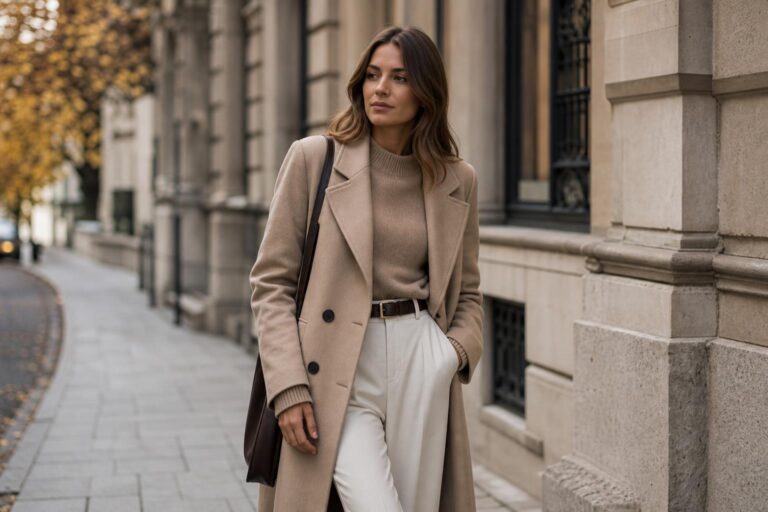
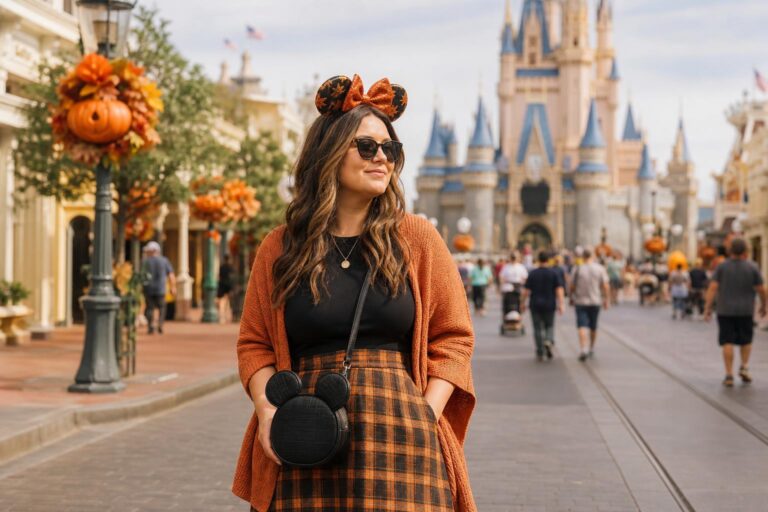
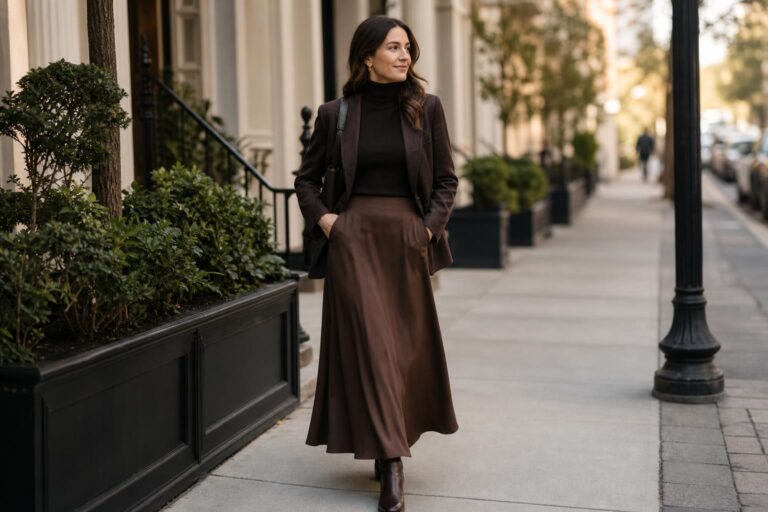
The most reliable seasonal palette is built around warm neutrals and earthy tones. Camel, taupe, olive, and soft browns create visual cohesion, while forest green and burgundy add depth without overwhelming an outfit. These colors work because they create tonal layering, which makes even simple combinations such as jeans, a sweater, and boots appear more composed. If you still want to wear late-summer pieces, keep the shape the same and simply darken the palette around them with a blazer, cardigan, or leather accessory.
Why layering matters more than trend chasing
Layering is the core concept of early autumn outfits because it gives flexibility. It also improves outfit composition. A single dress can look unfinished in September, but the same dress with a cardigan and ankle boots gains texture contrast, proportion play, and weather function. Fashion editors and magazine roundups consistently return to this logic because it creates more wearability from fewer pieces. For most readers, that is the smarter investment than buying isolated trend items that only solve one styling moment.

The 12-piece early autumn capsule that covers four weeks
A strong capsule is the fastest route to practical early autumn fashion. The goal is not minimalism for its own sake. The goal is rotation. Each piece should connect to at least three others so that your wardrobe behaves like a system. If an item only works once, it is likely not earning space.
- 2 tops: one classic tee and one blouse
- 2 knit layers: a lightweight sweater and a cardigan
- 2 bottoms: straight-leg jeans and tailored trousers or chinos
- 1 skirt or slip dress for softer silhouettes
- 2 outer layers: a blazer and a light jacket
- 3 shoes: ankle boots, loafers, and clean sneakers
This capsule works because it balances structure and ease. The blazer sharpens denim and dresses. The cardigan softens tailored pieces. The light jacket acts as a bridge item for mild autumn weather. Jeans create a casual visual anchor, while trousers or chinos make the same tops suitable for work, travel, or a more polished daytime setting.
What to buy first if your wardrobe feels incomplete
Start with the items that solve the most decisions: straight or relaxed denim, a lightweight knit sweater, a blazer, and ankle boots. These four pieces create the highest number of early autumn outfits with the lowest styling effort. If your budget is limited, invest first in boots and a blazer because they immediately make basics look more intentional. Affordable tops can still look elevated when the outer layer and footwear are well chosen.
Where to save and where to spend
Price-sensitive shopping is especially useful during transition season. Save on tees, simple blouses, and trend-driven tops, which is why editorial roundups often highlight options such as Zara tops under $100. Spend more carefully on boots, outerwear, and denim because these pieces shape the silhouette and handle repeat wear. A J.Crew-style early fall capsule works well as a benchmark here: modern essentials, reliable knitwear, and outerwear that can support many combinations rather than one standout look.

Three outfit formulas that do most of the work
The most wearable early autumn outfits are formula-based. That does not make them boring. It makes them easier to repeat, refine, and adapt. Once you understand the structure, you can swap color, footwear, or fabric and still keep the outfit balanced.
Denim, knit, and a light jacket
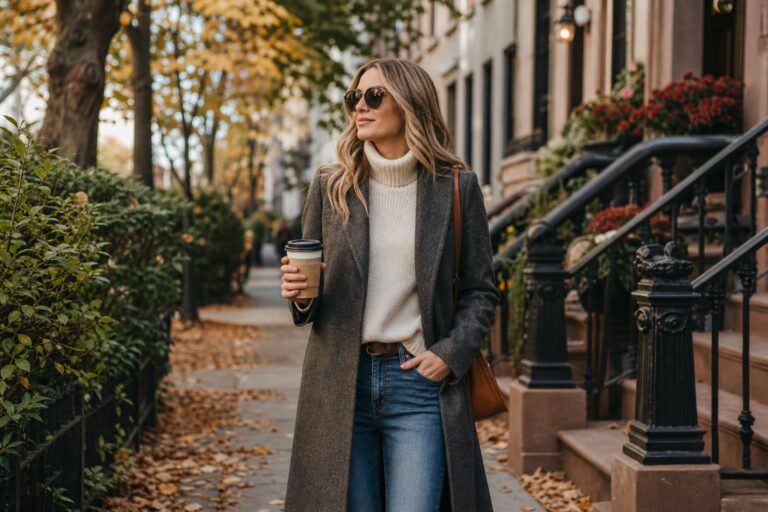
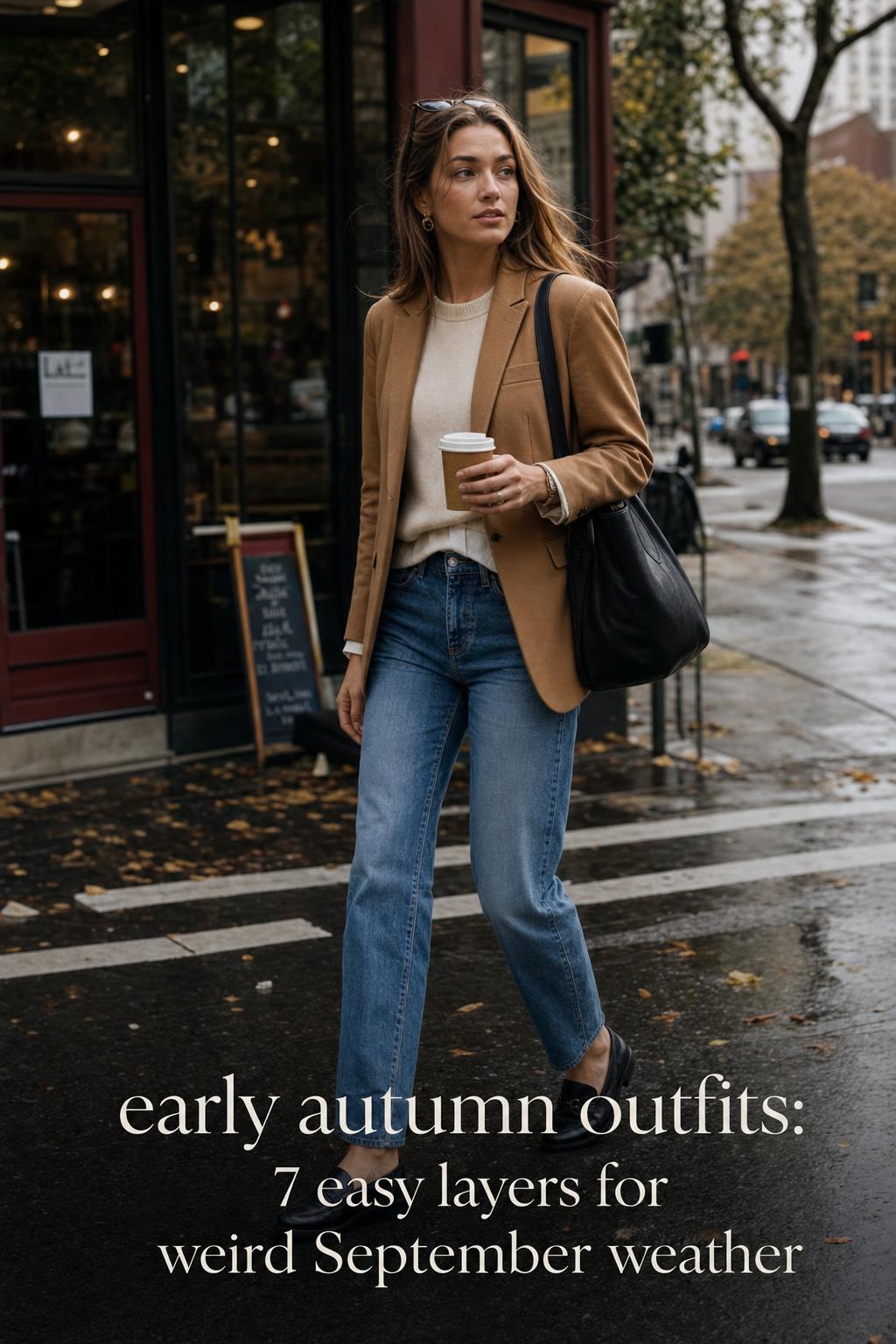
This is the backbone formula of transitional outfits for early fall. The jeans create visual stability. The knit adds softness and warmth. The light jacket or blazer introduces shape. It works especially well in September and mild October weather because each layer can be removed without making the outfit collapse visually. If you want a clean, everyday version, use blue jeans, a taupe or camel sweater, and ankle boots. If you need more polish, switch the jacket to a blazer and add loafers or a structured tote bag.
For petite frames, keep the knit lightweight and avoid an oversized jacket that cuts too low on the thigh. For taller bodies, longer blazers and relaxed denim create elegant proportion play. For curvier silhouettes, a blazer with subtle structure through the shoulder can balance fuller hips, while a knit with some drape prevents the outfit from looking too rigid.
Slip dress, cardigan, and ankle boots
This formula is one of the simplest ways to transition late-summer pieces into early autumn fashion. The dress keeps the outfit light, the cardigan introduces texture, and the ankle boots make the look seasonally grounded. The reason this combination works is contrast. Satin or a softer dress fabric against knitwear gives depth, while the boots prevent the dress from feeling too summery.
This combination is excellent for casual dinners, office settings with a blazer swap, or travel days when you want movement without sacrificing polish. If the dress is clingy, choose a cardigan with a slightly cropped or waist-defining line to maintain silhouette balance. If you are tall, a longer cardigan can look intentional rather than bulky. If you are curvy, choose boots with a sleeker ankle shape to keep the line from feeling heavy.
Tailored trousers, lightweight coat, and loafers or boots
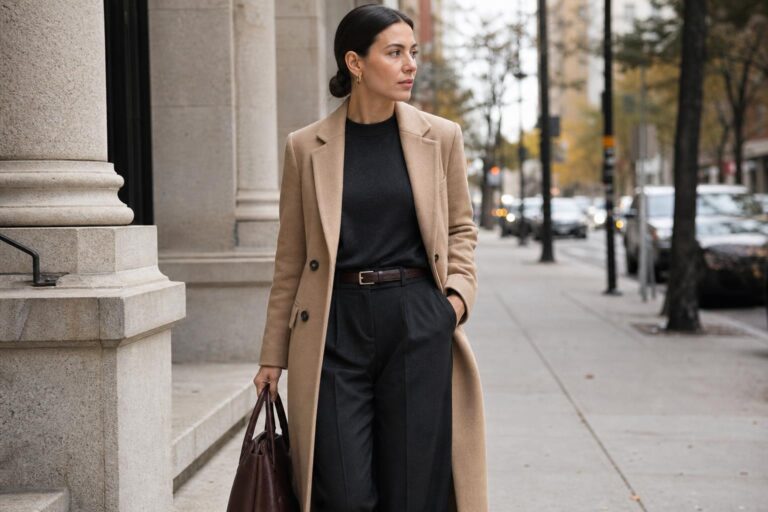
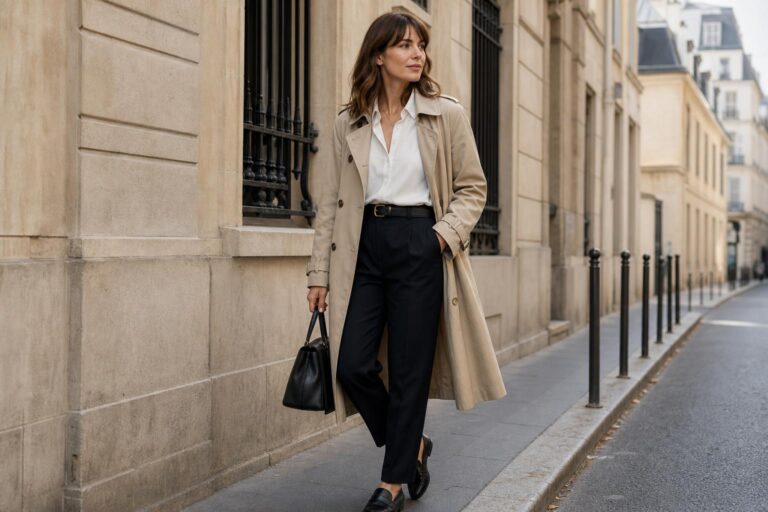
This is the most useful formula for readers who need early autumn outfits that function for workwear transitions. Tailored trousers or chinos immediately create polish, while a lightweight coat or structured outerwear layer adds seasonal clarity. Loafers keep the look city-ready for places such as New York or Los Angeles where full boot weather may not have arrived yet. Boots make more sense in Chicago or in wetter Northeast conditions.
The key styling logic here is line and restraint. Keep the top simple, let the coat or blazer hold structure, and use a narrow color story such as camel with olive, or taupe with burgundy. This formula can look expensive even at a moderate budget because tailored shapes and tonal dressing often communicate more polish than trend-heavy styling.
How color and texture make simple outfits read as autumn
Most early autumn outfits are not complicated. They rely on visual signals. Color and fabric do much of the seasonal work. That is why the same white tee and denim combination can feel summer-based one week and fully transitional the next, depending on whether you add a blazer in camel, boots in darker leather, or a cardigan in olive.
Reliable pairings that always look grounded
- Camel with forest green for a refined earthy contrast
- Olive with denim for an easy off-duty combination
- Burgundy with taupe for a richer but still wearable palette
- Black ankle boots with a knit dress for clarity and balance
- Cream knitwear with blue jeans and a blazer for a clean transition look
These combinations work because they create enough seasonal depth without becoming heavy. Camel and olive are especially useful because they pair easily with denim, suede, leather, and wool blends. Burgundy is better used as an accent if you prefer versatile wardrobes, while forest green can function as a near-neutral in outerwear or knitwear.
Textures that improve outfit composition
Texture contrast is one of the fastest ways to make early autumn dressing feel deliberate. Denim against knitwear, leather boots against soft trousers, satin under a cardigan, or a blazer over a tee all create visual depth. Seasonal fabrics mentioned around early fall dressing include wool blends, suede, leather, gabardine, and corduroy. You do not need all of them. You need enough variety so the outfit does not look flat.
A practical rule: combine one smooth texture, one soft texture, and one structured element. For example, denim jeans, a soft knit sweater, and a blazer. Or a slip dress, cardigan, and ankle boots. This approach keeps the outfit balanced and reduces the risk of looking either too summery or too winter-ready.
Climate-aware styling across U.S. cities
One of the biggest mistakes in early autumn fashion is dressing from a generic idea of fall rather than your actual weather. Climate-aware styling is not about sacrificing style. It is about choosing the right weight, shoe, and outer layer for where you live.
New York and the Northeast: rainy-day layering
In the Northeast, early autumn can shift quickly between mild air and damp, cooler conditions. This is where blazers, light jackets, ankle boots, and a practical scarf begin to matter. A blazer over a fine knit with jeans works well because it offers enough structure indoors and enough coverage outdoors. If rainfall is likely, skip overly long hems that drag and choose boots that can visually anchor the outfit.
For workwear, tailored trousers, a knit top, and a lightweight coat offer a polished city formula. For weekends, denim, loafers, and a cardigan provide flexibility if the temperature rises by midday.
Chicago and the Midwest: cool mornings, flexible afternoons
Chicago-style early autumn dressing benefits from more deliberate layering because the morning and evening can feel noticeably cooler. The most practical solution is a removable outer layer with substance, such as a blazer or light jacket, plus knitwear that is breathable rather than bulky. Chinos or tailored trousers often work better than bare legs early in the day, especially if you rely on walking or commuting.
Boots become more useful here earlier than in warmer regions. If you want to keep dresses in rotation, add a cardigan and consider tights once the temperature drop feels consistent enough to justify them.
Los Angeles, the South, and the Southwest: shoulder-season dressing
Warmer regions need a lighter interpretation of early autumn outfits. The visual mood can still shift toward fall, but the fabrics and proportions should stay breathable. This is where blouses, lighter knits, loafers, sneakers, and light jackets outperform heavier coats. A Zara-style affordable fall top paired with denim and loafers can feel far more appropriate than thick knitwear in persistent warmth.
Use color to do more of the seasonal work. Olive, camel, burgundy, and forest green can signal early autumn even when the outfit itself remains relatively lightweight. A slip dress with a cardigan is especially effective in these regions because it allows easy temperature adjustment through the day.
Brand-forward shopping without losing versatility
Brand references are useful in early autumn dressing when they help clarify shopping tiers and wardrobe priorities. The key is to treat brands as tools, not as the outfit itself. A practical wardrobe can mix affordable tops with stronger investment pieces and still look cohesive.
Affordable direction: under $100 and high rotation
Affordable options make the most sense for trend-sensitive tops, simple blouses, and supplementary layering pieces. Zara enters this conversation naturally because early fall tops and palette-driven seasonal pieces are often easiest to test at a lower price point. If you are deciding between multiple purchases, choose tops in autumn-friendly tones that can work with both denim and tailored bottoms. That multiplies wear immediately.
A useful budget strategy is to keep the color palette disciplined. Even lower-cost items look more refined when they fit into a narrow range of camel, cream, olive, denim blue, and black. That prevents the wardrobe from feeling scattered.
Mid-range staples that support the whole wardrobe
J.Crew-style essentials are often most useful in knitwear, outerwear, and polished basics. These are the pieces that carry early autumn outfits across workdays, weekends, and travel. A cardigan with good drape, a blazer with clean structure, or a reliable lightweight coat will do more for your wardrobe than several trend pieces that only pair one way.
Levi’s or Levi’s-style denim is another smart reference point because jeans sit at the center of so many transitional formulas. When denim fits well, the rest of the outfit becomes easier. If the jeans are wrong in rise, length, or leg shape, even strong styling cannot fully rescue the outfit composition.
Premium pieces worth considering carefully
Premium early autumn purchases should be tied to long-term use: boots, a leather accessory, a wool-blend coat for cooler regions, or a blazer with excellent tailoring. These are not the first items everyone needs, but they are the pieces most likely to make basics look elevated. The decision should depend on your climate and wear frequency. A reader in Los Angeles may gain more from premium loafers than from a heavier coat, while a reader in New York might reverse that priority.
How to adapt early autumn outfits for body proportions and daily life
Useful style advice needs to account for fit, movement, and real schedules. An outfit may look balanced in a static image but fail once you commute, sit all day, or walk in changing weather. The strongest early autumn formulas are adaptable across body proportions and everyday contexts because they rely on clear lines and adjustable layers.
Petite, tall, and curvy styling adjustments
- Petite: prioritize cropped or hip-length layers, defined waistlines, and boots or loafers that do not visually cut the leg too heavily.
- Tall: use longer blazers, fuller cardigans, and wider-leg trousers confidently; your frame can carry more length and volume.
- Curvy: choose layers with shape through the shoulder or waist so the outfit feels intentional rather than bulky; softer knitwear balances structure well.
These adjustments are not rigid rules. They are proportion tools. The aim is silhouette balance, not restriction. If an oversized cardigan works for your height but swallows your shape, add a belt or switch to a cardigan with more line definition.
Casual, work, and travel variations
For casual wear, denim, knitwear, loafers, or sneakers deliver the most ease. For work, replace denim with tailored trousers or chinos and add a blazer. For travel, use layers that can be removed without wrinkling the outfit’s logic: tee, cardigan, light jacket, and straight-leg jeans are usually more useful than a single heavy statement layer.
A good decision test is simple: can the outfit handle a full day without requiring a total reset? If the answer is yes, it is likely functional enough for real life. If the whole look depends on one perfect temperature, it is less practical than it appears.
Accessories that complete the outfit instead of cluttering it
Accessories are underused in many early autumn guides, yet they often determine whether the outfit feels resolved. Scarves, belts, handbags, hats, and tights all have a place, but they should support the outfit’s structure, not distract from it.
A scarf works best when the rest of the outfit is relatively streamlined. A belt is useful when the layers need waist definition, especially over a cardigan or blazer combination. Tights become relevant once dresses and skirts need more seasonal support. Handbags and shoes should repeat the same visual tone: sleek boots with a structured bag for polish, or loafers with a softer tote for ease.
Tips for accessory balance
- If the outfit already has texture contrast, keep accessories simpler.
- If the palette is neutral, one burgundy or forest green accessory can add depth.
- If the silhouette feels boxy, a belt can restore shape.
- If boots feel too heavy, switch to loafers to lighten the lower half.
Common early autumn styling mistakes to avoid
The easiest way to improve early autumn outfits is often subtraction. Too many layers, too many competing colors, or shoes that belong to another season can weaken an otherwise strong combination. Transitional dressing looks best when each piece has a clear role.
- Wearing heavy outerwear too early and overheating by midday
- Keeping the full summer palette without adding autumn depth through color or texture
- Using bulky knitwear with bulky boots and losing shape
- Buying trend pieces before securing basics such as denim, knitwear, and a blazer
- Ignoring regional weather and dressing for an imagined version of fall
- Adding too many accessories so the outfit loses clarity
A more polished result usually comes from one statement element and several dependable support pieces. For example, let a burgundy cardigan carry the mood while denim and boots stay simple. Or let a blazer shape the outfit while the rest remains understated. This creates a cleaner visual anchor and makes the outfit easier to repeat.
A four-week rotation that keeps getting easier
A practical early autumn calendar should reduce decision fatigue, not create more. The most effective approach is to rotate base formulas and vary the outer layer, shoe, and color emphasis. This creates the appearance of variety without requiring constant shopping.
Week-by-week framework
Week one should focus on the lightest combinations: jeans, tees, blouses, loafers, and a blazer for morning coverage. Week two can add lightweight knitwear and cardigans. Week three introduces more consistent boots, richer tones such as olive or burgundy, and greater use of tailored trousers. By week four, depending on your region, a scarf, tights, or a more substantial jacket may begin to make sense. This gradual shift keeps the wardrobe realistic and aligned with changing conditions.
If you want to shop with discipline, build your list in the same order. Start with the daily essentials, then the second layer, then the weather-specific extras. That sequence prevents overbuying and keeps the wardrobe usable from the first purchase onward.
Tip: build three outfits from five pieces
Choose jeans, a cardigan, a blazer, a blouse, and ankle boots. From those five pieces, you can create a polished denim-and-blazer look, a softer blouse-and-cardigan combination, and a layered blouse-with-blazer formula. This kind of overlap is the clearest sign that a wardrobe staple is truly versatile. If a new item does not immediately create at least two or three outfit paths, it may not belong in your early autumn capsule.
What menswear can teach anyone about early autumn layering
Men’s early autumn dressing often emphasizes utility first: jackets, knitwear, chinos, and boots arranged with clear weather logic. That mindset is worth borrowing because it prioritizes fabric weight, colorway discipline, and movement. Whether you are shopping from a men’s guide or simply applying its logic, the lesson is the same: transitional style gets stronger when each layer serves a purpose.
A jacket over knitwear with chinos is not limited to one wardrobe category. It is a framework. Replace the chinos with tailored trousers, the heavier jacket with a blazer, or the boots with loafers, and the same principle still applies. Clean lines, balanced layering, and restrained color palettes are often more effective than overly styled combinations.
Fashion week, editorial influence, and what is actually worth applying
Seasonal collection launches, fashion editor styling, and events such as New York Fashion Week help shape early autumn trend reporting, especially around color palettes, silhouettes, and layering pieces. But the most useful takeaway is rarely the exact runway-adjacent look. It is the formula behind it. Fashion editors consistently return to knitwear, outerwear, denim, dresses, and boots because those pieces translate from editorial to everyday life.
That is also where brand-specific stories become useful. A J.Crew fall collection can clarify which essentials feel current without making the wardrobe overly trend dependent. A Zara roundup can signal accessible updates in tops and color direction. The value lies in selecting the part of the trend that strengthens your existing wardrobe rather than replacing it.
Final styling notes for making early autumn outfits look more expensive
Polish comes less from price than from consistency. Tonal layering, good fit, and controlled texture are what make early autumn outfits read as elevated. If you want a wardrobe to look more refined, focus on three things: fit through the shoulder and waist, a coherent neutral base, and footwear that visually anchors the outfit.
A blazer that fits well, denim that falls cleanly, and boots with a streamlined shape will outperform a closet full of disconnected statement pieces. Add a handbag that supports the formality level of the shoes, keep the palette edited, and use one accent color such as burgundy or forest green rather than several. The result is not just more polished. It is easier to repeat, easier to style, and more practical for actual early autumn weather.

FAQ
How do I transition from summer to fall without buying a whole new wardrobe?
Start by layering your existing late-summer pieces with early autumn staples such as a cardigan, blazer, lightweight knit, or ankle boots. A slip dress, skirt, or blouse can stay in rotation if you darken the palette and add texture through denim, knitwear, or leather accessories.
What are the best fabrics for early autumn outfits?
Light to medium-weight fabrics work best during the transition period. Knitwear, denim, wool blends, suede, leather, gabardine, satin, and corduroy all make sense when used selectively. The goal is to balance breathability with enough texture and warmth to reflect the season.
Which pieces are the most versatile for early autumn?
The most versatile pieces are jeans, a lightweight sweater, a blazer, a cardigan, tailored trousers or chinos, and ankle boots. These items create multiple outfit formulas and can shift between casual, work, and travel settings with only small changes in accessories or color emphasis.
Can early autumn outfits still work in warm U.S. climates?
Yes. In warmer regions such as Los Angeles, the South, or the Southwest, rely on lighter layers and let color do more of the seasonal work. Blouses, fine knits, loafers, sneakers, and light jackets in camel, olive, burgundy, or forest green can create an autumn mood without heavy fabrics.
What shoes work best for mild autumn weather?
Loafers, ankle boots, and clean sneakers are the most practical options. Loafers work well when the weather is still relatively warm, ankle boots add stronger seasonal structure and help in wetter conditions, and sneakers keep casual outfits functional for walking or travel.
How can I make early autumn outfits look polished on a budget?
Keep the palette tight, focus on fit, and invest strategically in the pieces that shape the outfit, especially boots, outerwear, and denim. Save on tops and trend-driven items, but make sure your blazer, jeans, or shoes provide a strong visual anchor. Tonal dressing and simple accessories also help affordable outfits look more refined.
What should I avoid when layering for early autumn?
Avoid combining too many heavy pieces at once, especially in mild weather. Bulky knitwear with bulky boots and oversized outerwear can flatten the silhouette and feel impractical by midday. Aim for one structured layer, one softer layer, and enough breathing room for temperature changes.
How do I build a simple early autumn capsule wardrobe?
Choose a small set of coordinating items: a tee, blouse, lightweight sweater, cardigan, jeans, tailored trousers, a slip dress or skirt, a blazer, a light jacket, and three shoes such as ankle boots, loafers, and sneakers. Keep the palette centered on neutrals and earthy tones so the pieces mix easily across four weeks.