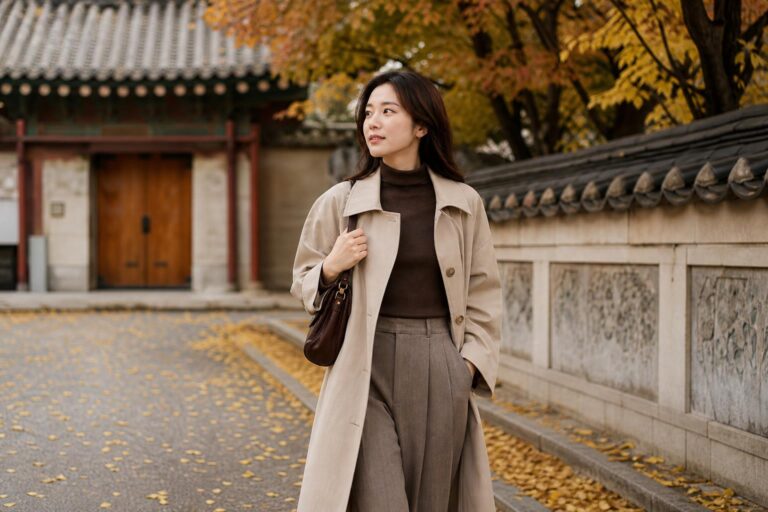

What to Wear: September Work outfits for Early Fall
September work outfits sit in that precise space where summer ease no longer feels complete, yet full autumn dressing can look premature. That tension is exactly what makes the month visually interesting. In early September, a sleeveless blouse may still make sense at noon, while a lightweight blazer, cardigan, or trench coat becomes necessary by evening. The result is a wardrobe built on adjustment rather than fixed formulas.
That transitional quality also explains why so many office looks start to split into different fashion identities. One version leans polished and tailored, with a monochrome power suit, wool-blend trousers, and loafers. Another feels softer and more flexible, built around a knit dress, midi skirt, or blouse layered under a light jacket. Both belong to september work outfits, but they communicate different energies: one controlled and corporate, the other fluid and editorial.
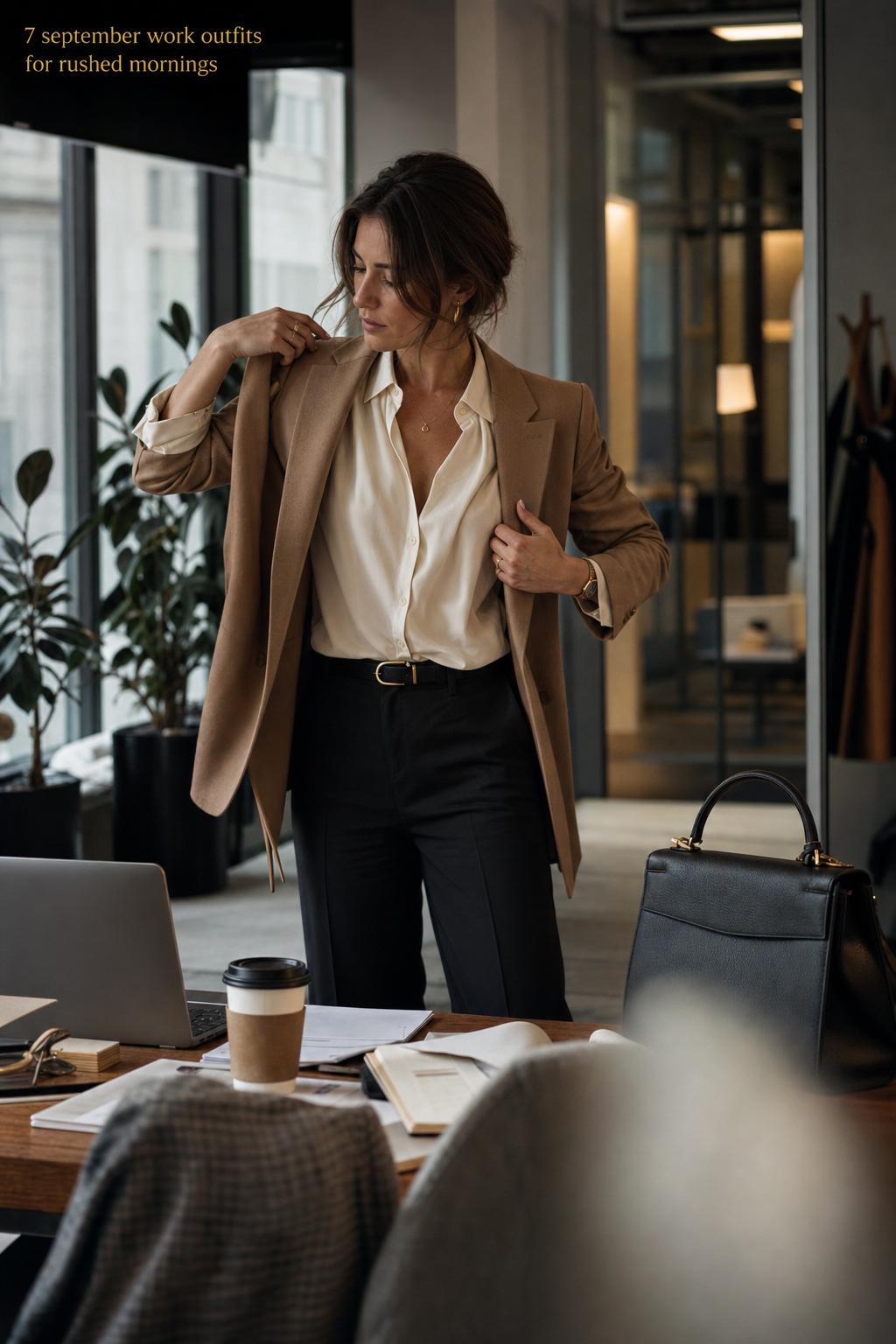
Across New York, Los Angeles, London, and other style-driven settings, editors and fashion figures consistently return to the same visual anchors for this month: blazers, knit tops, tailored trousers, ankle boots, neutral palettes, and structured bags. Whether the influence comes from Vogue-style tailoring, Who What Wear’s summer-to-fall outfit logic, or the practical wardrobe thinking often seen around back-to-work dressing, the core question stays the same: how do you look office-appropriate without looking seasonally confused?
The answer is less about following a rigid outfit list and more about understanding silhouette balance, layering behavior, fabric weight, and the mood each combination creates. September workwear works best when it feels intentional, adaptable, and visually coherent from desk to after-work plans.
Found the dress? Keep the rest in one place.
Zarellea brings guest details, vendors, timelines, and every next step together — so your wedding plan feels as good as your look.
Why september changes the entire logic of office dressing
Unlike a fully established season, September asks clothing to do two jobs at once. It has to preserve the clarity of summer dressing while beginning to introduce the structure and depth associated with autumn workwear. This is why transitional workwear is so central to the month. Pieces cannot be too heavy, but they also cannot feel too bare.
In practical terms, that means outfit composition matters more than trend adoption. A silk blouse under a lightweight blazer works because the blouse keeps the look breathable while the blazer adds professional definition. A knit tank with a midi skirt and ankle boots feels right because it bridges temperatures without making the outfit visually top-heavy. September style succeeds through controlled contrast: light against structured, soft against tailored, open against covered.
There is also a cultural rhythm to this month. September often carries a return-to-work energy, renewed attention to office dress codes, and broader fashion momentum shaped by the season’s editorial reset. That atmosphere naturally pushes work outfits toward sharper tailoring, cleaner accessories, and more deliberate color stories, even when the weather remains mild.
The two dominant september workwear moods
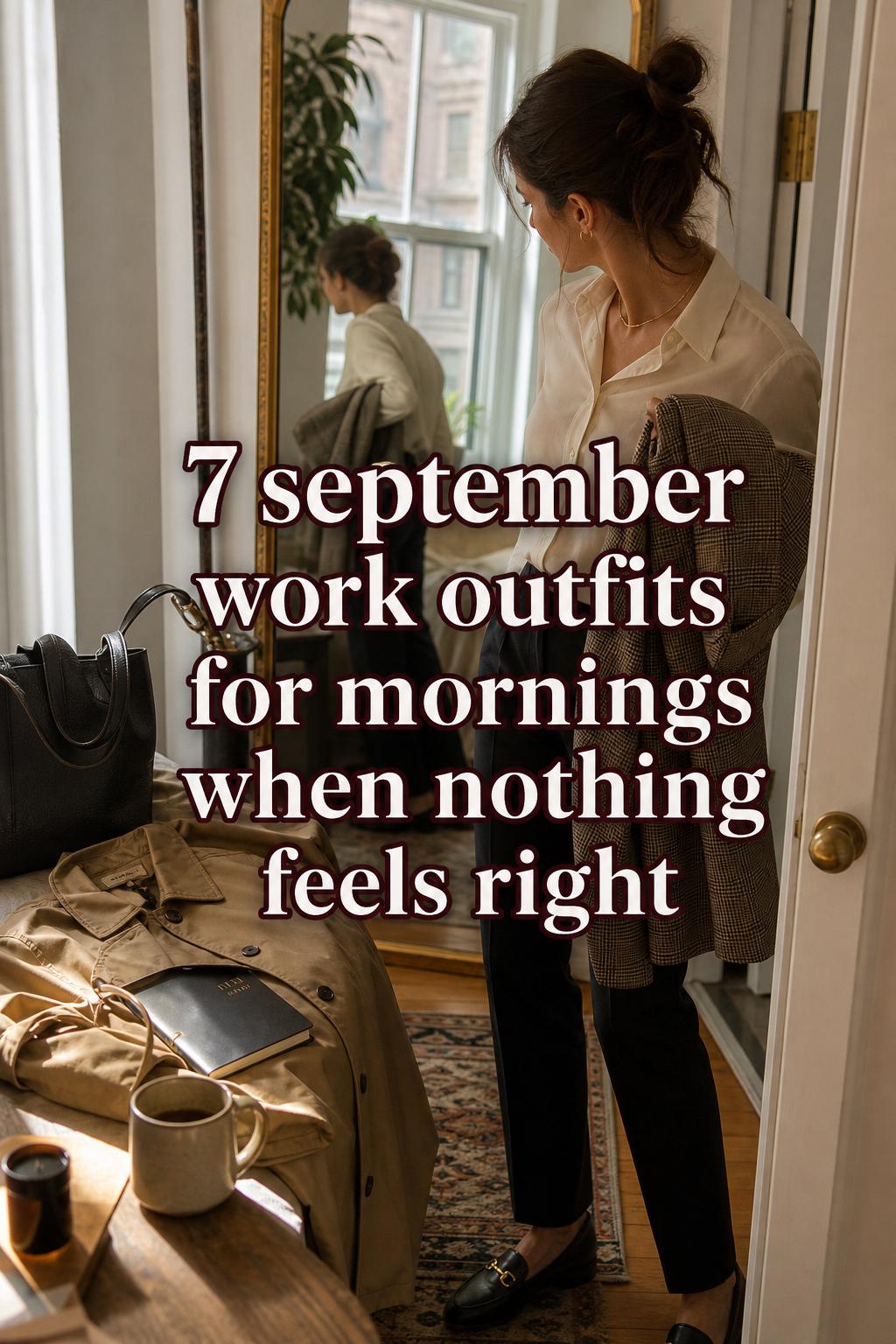
Most strong september work outfits fall into two broad visual worlds. The first is autumn-first tailoring. The second is soft transitional layering. They often overlap, but each has its own styling philosophy.
The controlled elegance of autumn-first tailoring
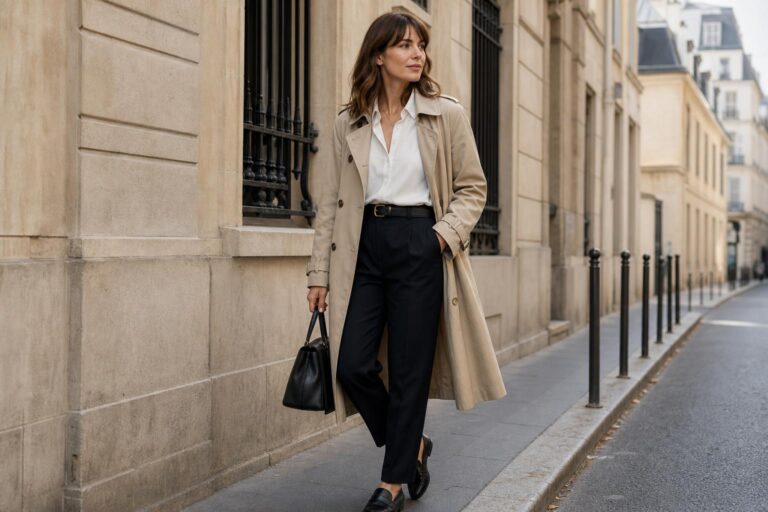
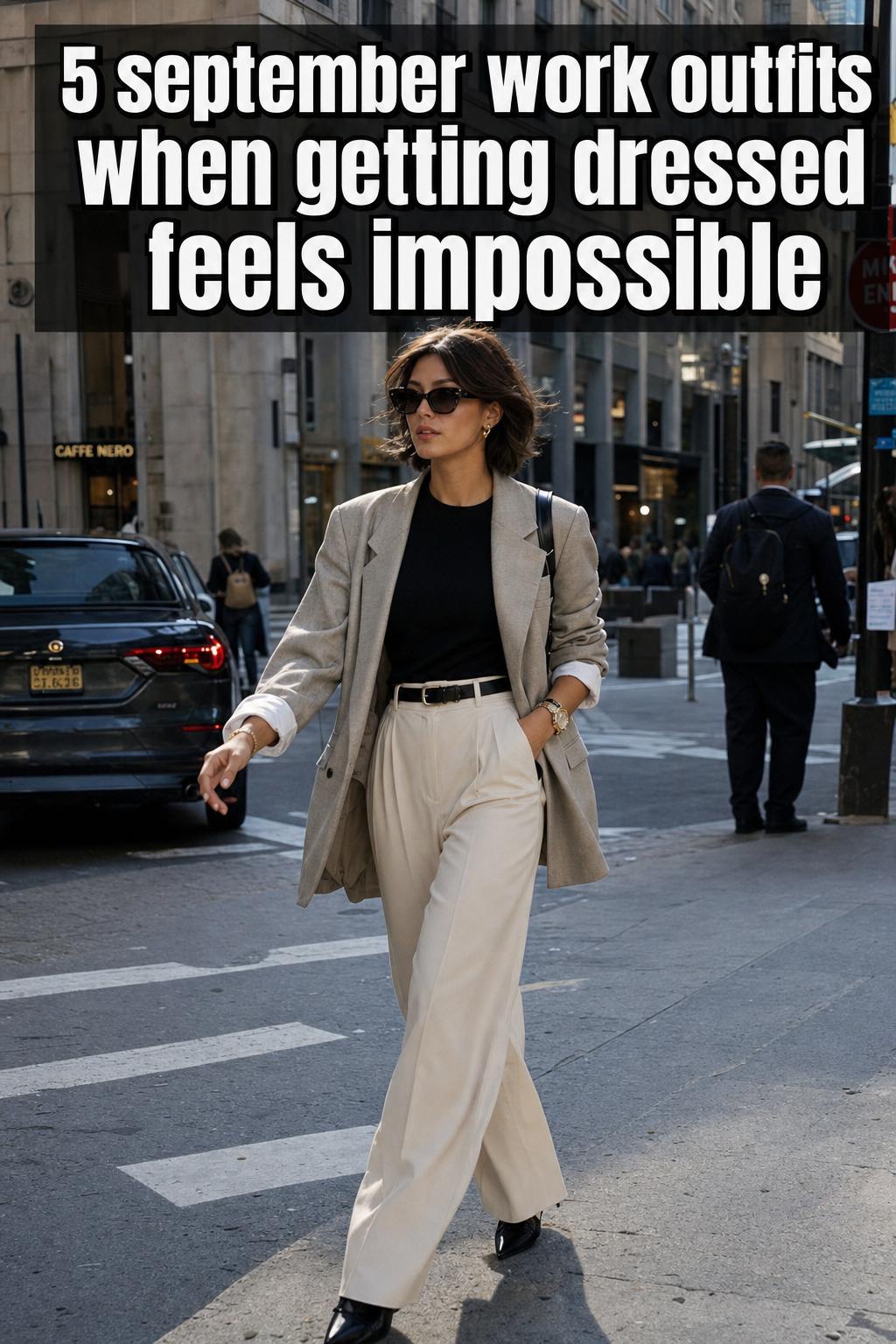
This direction is defined by a clear visual anchor: the blazer, the trench coat, the tailored trouser, the loafer. It is closely associated with the corporate chic language often seen in high-authority editorials, where brands such as Burberry, Max Mara, Prada, and Stella McCartney are tied to precise outerwear, strong shoulder lines, wool trousers, and polished leather accessories. The mood is intentional and assured.
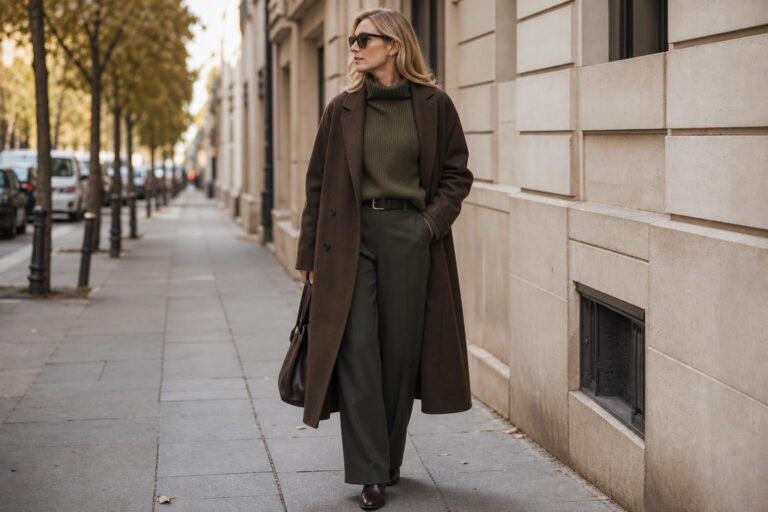
What makes this aesthetic distinctive is proportion control. The blazer gives the upper half a clean framework, while straight or wide tailored trousers create length and stability through the lower half. A shoulder bag or structured tote reinforces that architectural quality. The outfit reads efficient, not decorative.
For readers who prefer a sharper office identity, this is often the easiest direction to make consistent. It performs especially well in offices with traditional dress codes, client-facing environments, or settings where a clear sense of polish matters more than softness.
The relaxed intelligence of soft transitional layering
The second mood is less about strict tailoring and more about flow. Cardigans, knit tops, midi dresses, pleated skirts, lightweight jackets, and heeled mules create a softer kind of professionalism. This is the visual territory often associated with editorial outfit galleries from brands and retailers such as Zara, Reformation, Aritzia, COS, Everlane, Madewell, H&M, and & Other Stories.
Here, the outfit moves differently. Instead of strong structure from shoulder to hem, the silhouette is built through layering and texture. A cardigan over a dress creates vertical softness. A knit tank with a midi skirt keeps the line close to the body without feeling severe. Ankle boots or loafers ground the look, but the overall effect is more fluid than corporate.
This aesthetic resonates with readers who want office polish without feeling overly formal. It suits creative offices, hybrid work settings, and workplaces where personal style can sit comfortably beside professionalism.
The core pieces that make september work outfits look intentional
A strong September wardrobe does not require a large number of clothes. It requires a small group of pieces that connect well across temperatures, dress codes, and styling moods. The most effective september work outfits are rarely built from novelty. They are built from repeatable anchors.
Lightweight blazer
The lightweight blazer is the clearest bridge between summer and fall. It adds authority, creates shape, and instantly makes skirts, trousers, dresses, and even denim look office-ready. In visual terms, it works because it introduces structure without committing the outfit to full cold-weather heaviness.
Neutral shades such as black, camel, and ivory are particularly effective because they integrate easily with silk blouses, knit tanks, and midi skirts. A blazer from J.Crew, Banana Republic, COS, Zara, or Aritzia fits naturally into this kind of capsule thinking because the piece needs repeat value more than trend drama.
Knit tops and lightweight sweaters
Knits carry much of September’s visual intelligence. They soften tailoring, add texture contrast, and make a work outfit feel seasonally current without relying on heavy outerwear. A fitted knit top under a blazer reads polished. A lightweight sweater with a pleated skirt feels more relaxed but still intentional. A cardigan over a dress gives the outfit flexibility throughout the day.
The reason knits are so effective is simple: they make transitional layering believable. Without them, september work outfits can feel like summer pieces with a jacket added as an afterthought. Knit texture creates continuity between warm-weather foundations and autumn styling cues.
Tailored trousers and midi skirts
These are the two lower-half essentials that appear most consistently because they support multiple style identities. Tailored trousers bring clarity and authority. Midi skirts offer movement and softness. Both are office-appropriate, but they direct the outfit differently.
Wool blends, light suiting fabrics, and fluid weaves all matter here because fabric behavior influences polish. Trousers that hold their line pair naturally with loafers, pointed-toe boots, and blazers. Midi skirts work especially well with knit tanks, blouses, cardigans, and heeled boots because the volume below the waist benefits from a more refined upper balance.
Footwear that signals the season without overcommitting
Loafers, heeled boots, ankle boots, pumps, and heeled mules dominate September because they adapt to both weather and dress code. Loafers support the tailored side of autumn workwear. Ankle boots add immediate seasonal direction to skirts, dresses, and trousers. Heeled mules work best in milder conditions, especially when the rest of the outfit already carries enough fall language through layering and color.
Comfort matters here more than many readers expect. Office footwear has to handle commuting, long hours, and the reality of changing weather. Even the most polished outfit loses credibility if the shoes feel disconnected from real movement. This is where comfort-focused choices and footbed support become part of the style decision, not separate from it.

How tailoring and softer dressing create different office identities
Two people can wear nearly the same core pieces and still project entirely different impressions. That difference comes from outfit composition rather than the garments alone.
Consider the blazer with trousers. In one version, the blazer and trouser are monochrome, the blouse is tonal, the bag is structured, and the loafers are polished. This reads powerful, direct, and executive. In another version, the blazer is draped over a knit tank and midi skirt, with ankle boots and softer accessories. The ingredients are adjacent, but the identity is different: more editorial, less formal, more approachable.
This is why readers often feel drawn to september office outfits but struggle to recreate them. The challenge is rarely finding a blazer or skirt. The challenge is reading the styling energy correctly. Tailoring uses line and containment. Soft transitional dressing uses layering and movement. One creates crisp authority; the other creates adaptive polish.
The key visual difference
Tailored dressing places emphasis on shape before texture. Softer transitional dressing tends to do the opposite. That means if your workplace leans corporate, starting with strong shape is usually more effective. If your workplace leans creative, starting with texture and layering often feels more natural.
Wearable outfit interpretations that actually function in real life
The most useful september work outfits are the ones that can survive a commute, a full office day, shifting indoor temperatures, and an after-work dinner or event. Rather than treating outfits as isolated formulas, it helps to think of them as practical compositions.
The silk blouse, blazer, and trouser combination
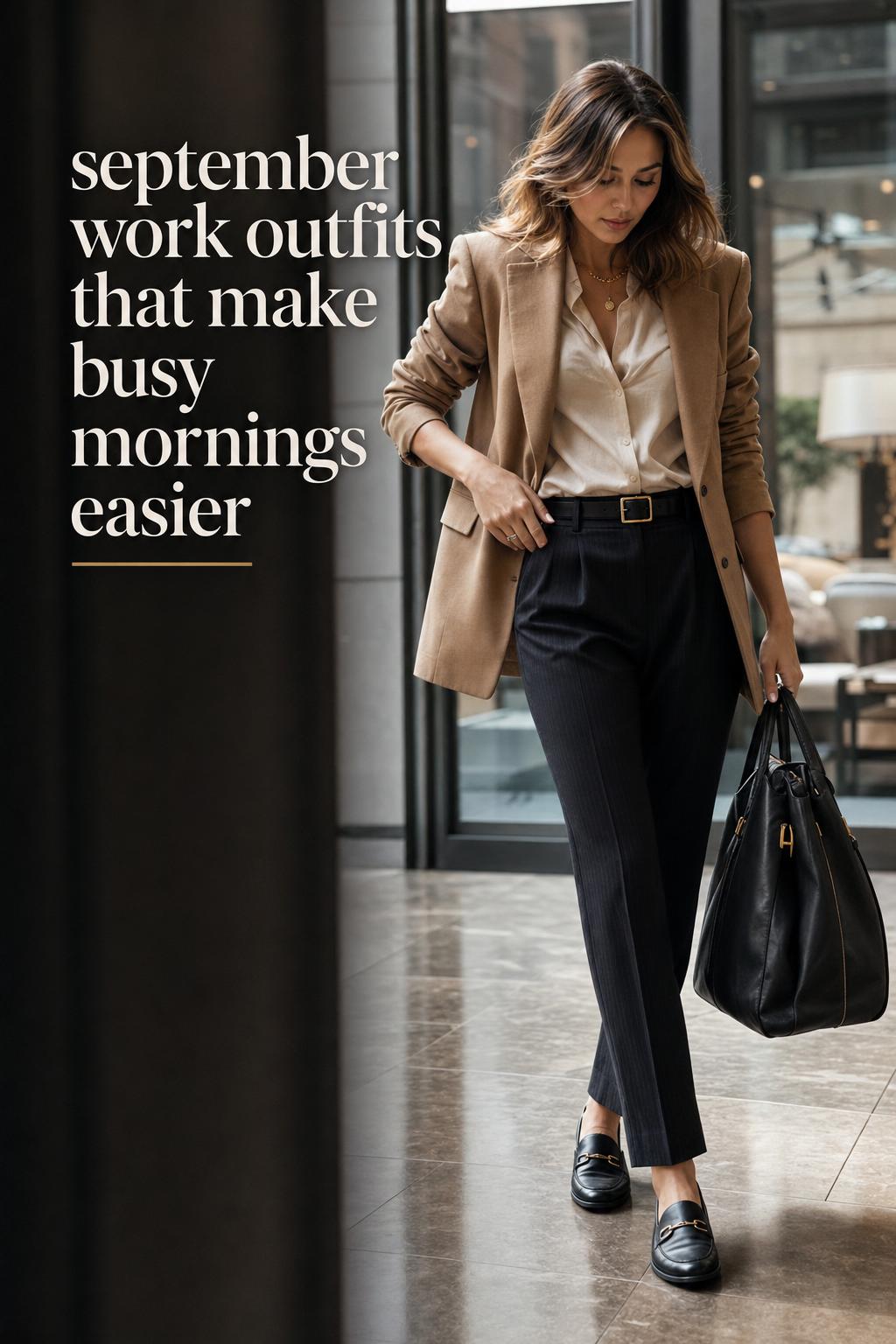
This is one of the most reliable office combinations for September because it balances refinement with flexibility. The silk blouse keeps the outfit light and fluid. The blazer introduces authority. Tailored trousers anchor the entire composition so the blouse does not feel too delicate for work. In cities such as New York, where the day can shift from warm sidewalks to cold office interiors, this combination remains visually steady across settings.
A structured tote bag strengthens the workwear message, while loafers keep the silhouette crisp. If the office is more formal, a pointed-toe shoe or polished pump sharpens the effect. If the setting is more relaxed, a softer loafer preserves professionalism without making the look rigid.
The knit tank, midi skirt, and ankle boot formula
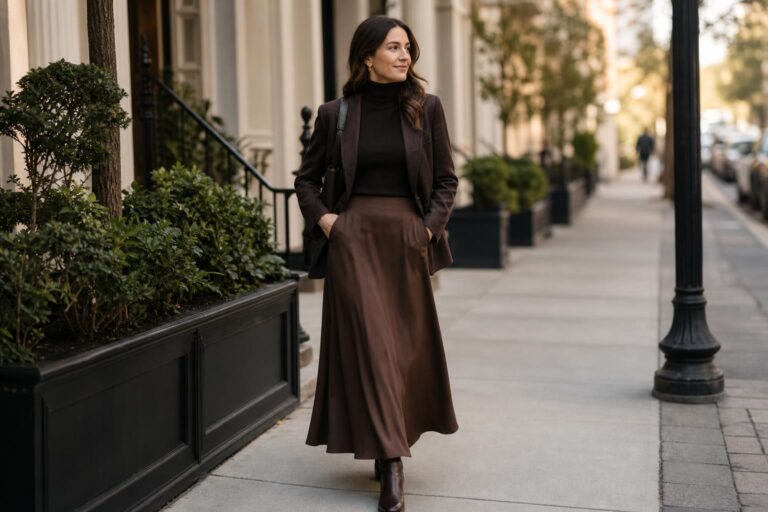
This outfit works because it uses contrast intelligently. The knit tank sits close to the body and gives visual simplicity through the top half. The midi skirt introduces movement and soft volume. The ankle boots add seasonal direction and stop the outfit from feeling too summery. It is a particularly effective choice for readers who want september office outfits that feel feminine without leaning fragile.
In aesthetic terms, this look is less corporate than a full suit, but it can still be highly polished. A camel or black color palette gives it restraint. Adding a lightweight jacket or blazer makes it office-ready in more traditional workplaces. This is also one of the easiest formulas to reinterpret through brands like Reformation, Zara, Madewell, or Everlane, where fluid skirts and knit tops often appear in transitional collections.
The cardigan over a dress with heeled mules
This combination captures the softer side of September particularly well. The dress provides one-piece simplicity, while the cardigan functions as a practical temperature layer and a visual frame. Heeled mules keep the outfit clean and lightly elevated, especially in mild early September conditions.
The success of this look depends on restraint. If the dress is already fluid and feminine, the cardigan should add order rather than bulk. If the cardigan is oversized, the dress needs enough line underneath to keep the silhouette intentional. This formula is useful for desk-to-after-work dressing because removing or draping the cardigan changes the mood without requiring a full outfit switch.
The monochrome power suit
Among all september work outfits, this is the strongest expression of confidence through proportion. Matching blazer and trousers create a long uninterrupted line, which immediately makes the outfit look expensive and composed. The monochrome approach also reduces visual noise, allowing tailoring and fabrication to carry the impact.
Black, ivory, and camel are especially effective because they align with the neutral palette repeatedly associated with early fall workwear. In a Vogue-inflected direction, subtle patterns like pinstripe or houndstooth can deepen the autumn message. A shoulder bag and loafers make the look practical. Pointed-toe boots give it more authority and a sharper seasonal edge.
The layered knit with pleated skirt
This outfit sits at the intersection of softness and discipline. The knit introduces texture and warmth. The pleated skirt adds movement and a more traditional office sensibility. Together, they create an outfit that feels thoughtful rather than severe. It is especially effective for workplaces where tailoring is appreciated but not mandatory.
The key is proportion play. If the knit has any volume, the skirt should have enough structure to prevent the outfit from collapsing into softness. If the skirt is highly fluid, a more fitted knit keeps the look grounded. Loafers, ankle boots, or pumps can all work, depending on how formal the office feels.
Color stories that make early fall workwear feel coherent
Color does more than make an outfit seasonal. It determines whether transitional dressing looks deliberate or accidental. The most effective september work outfits rarely depend on bright contrast. They rely instead on tonal layering, grounded neutrals, and subtle depth.
- Black delivers clarity and authority, especially in suiting, loafers, and structured bags.
- Camel softens tailored pieces and gives blazers, skirts, and outerwear a warmer early-fall mood.
- Ivory keeps knitwear and blouses light enough for September while still reading polished.
- Subtle plaids, pinstripes, and houndstooth introduce autumn texture without overwhelming the outfit.
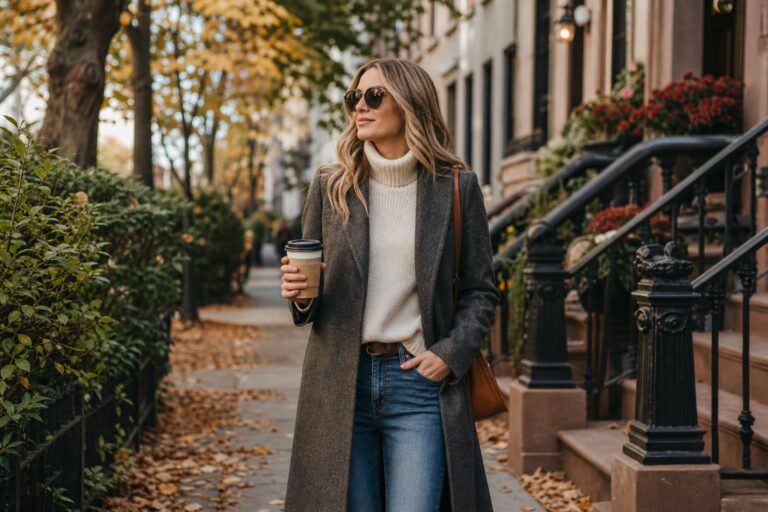
Earthy tones and restrained checks are especially useful when the weather remains mild but the visual mood is shifting toward autumn. They create seasonal credibility without requiring heavy wool coats or deep winter layers. This is also where trench coats become so effective: they introduce autumnal character through shape and tone rather than insulation alone.
Why this combination works
A September palette should feel like a gradient, not a jump cut. The closer the colors are in depth and mood, the more sophisticated the layering looks. That is why a camel blazer over an ivory knit top with black trousers feels more resolved than a visually disconnected mix of unrelated tones.
Accessories are not secondary in september office styling
In transitional dressing, accessories often determine whether the outfit reads summer extended or autumn introduced. Shoes, bags, belts, jewelry, and watches create the finishing logic. They are the small decisions that make a layered look feel complete rather than improvised.
A tote bag supports practicality and reinforces office structure. A structured shoulder bag creates a more refined line and pairs naturally with suits, blazers, and trench coats. Leather accessories in black or camel help connect the outfit to early fall without overpowering lightweight fabrics. Even a belt can change the message of a dress or cardigan by restoring shape and control to softer silhouettes.
Jewelry and watches matter most when the clothing palette is quiet. In a neutral outfit, small metallic accents become precision tools. They sharpen the visual composition and prevent minimal dressing from looking unfinished.
Tips for choosing accessories in September
- Use one structured accessory to anchor softer pieces such as knit dresses or pleated skirts.
- Let shoes signal the season: loafers and ankle boots immediately shift an outfit toward fall workwear.
- Keep bag color connected to at least one other element, such as the belt, shoe, or blazer.
- Avoid stacking too many statement accessories when the outfit already relies on pattern or strong tailoring.
Regional weather changes the outfit, not the aesthetic
One of the most overlooked realities of september work outfits is that the same aesthetic needs different execution across the United States. The visual idea can stay consistent, but layering choices should respond to regional weather rather than fantasy dressing.
In the Northeast, especially around New York, early mornings and evenings often justify a lightweight blazer or trench coat even when afternoons remain mild. In Los Angeles, lighter layering tends to dominate, with blazers, knit tanks, and dresses carrying more of the work than substantial outerwear. The South may demand breathable fabrics and minimal layering for longer, while the Midwest can make tailored jackets and ankle boots feel relevant earlier. On the West Coast, especially in climates that cool quickly after sunset, transitional layers are often less about heavy fabric and more about adaptability.
This is why rigid outfit copying rarely works. The smarter approach is to keep the silhouette logic and adjust the fabric weight, sleeve length, and footwear. A trench coat in one region may become a cardigan in another. Heeled mules may work in one city, while loafers or pointed-toe boots are the more practical version elsewhere.
Regional styling tip
If the day starts warm but ends cool, build the outfit around the piece that will stay on longest. In most cases, that means trousers, midi skirts, knits, or loafers should do the foundational work, while blazers, cardigans, and trench coats function as adjustable layers rather than the entire concept.
How workplace culture changes the best september outfit formula
The same blazer can mean entirely different things depending on office culture. That is why dress code context matters as much as seasonal context. September tends to sharpen this difference because people are re-entering routines, meetings increase, and visual impressions become more important.
In a corporate environment, the most effective september office outfits usually revolve around tailoring: blazer, wool trousers, structured dress, loafers, pointed-toe boots, and a controlled neutral palette. The silhouette should feel direct and streamlined. Accessories should support that precision, not compete with it.
In a creative workplace, the same month may support denim mixed with tailoring, cardigan-and-skirt combinations, or a midi dress under a lightweight jacket. Here, the outfit can tolerate more texture contrast and a slightly less formal line. Denim, when balanced with a blazer or refined knit, can still feel office-polished in the right setting.
Tech and startup environments often sit in between. A polished cardigan, tailored trouser, clean knit top, and loafers may read more appropriate than a full power suit, while still appearing more considered than casual basics. The visual lesson is simple: professionalism is not one silhouette, but the outfit still needs a clear point of structure.
Building a september work capsule without making it feel repetitive
The strongest capsule wardrobes for September are built around interchangeability, not strict minimalism. You want enough variation to shift the mood of an outfit, but not so many variables that styling becomes inconsistent. A good capsule for this month uses a small set of repeat pieces across multiple combinations and relies on layering, footwear, and accessories to change the visual outcome.
- One lightweight blazer in black, camel, or ivory
- One cardigan or lightweight sweater
- Two tops, ideally a blouse and a knit top
- One tailored trouser and one midi or pleated skirt
- One dress that works under layers
- Two shoe options, such as loafers and ankle boots
- One tote or structured shoulder bag
What keeps this from feeling repetitive is styling direction. The blazer with trousers creates one identity. The same blazer over a dress creates another. A cardigan with the midi skirt reads softer than the blouse with that same skirt. This is where brands with broad workwear ranges, such as Banana Republic, J.Crew, Madewell, Everlane, Aritzia, COS, and Reformation, fit into the conversation. The goal is not label matching. The goal is reliable modular dressing.
Most versatile pieces
If you are investing selectively, prioritize the blazer, tailored trousers, loafers, and one strong knit. Those four pieces create the highest number of office-appropriate combinations and make even simpler items look more intentional.
Budget, comfort, and inclusive wearability matter more in September than people admit
September can expose the limitations of highly editorial dressing because real workwear has to function across long days, mixed temperatures, and repeated wear. That makes budget-friendly alternatives and comfort-aware choices especially relevant. An expensive trench coat or designer blazer may set a visual reference, but the practical value comes from understanding the silhouette and recreating it at the right level for your wardrobe.
Retailers such as H&M, Zara, Madewell, Everlane, and J.Crew often appear in the September styling conversation because they offer accessible versions of the shapes that dominate the season: blazers, knitwear, midi skirts, dresses, and trousers. Higher-end names like Burberry, Max Mara, Prada, and Stella McCartney influence the mood and tailoring language, but that does not mean the aesthetic depends on luxury pricing.
Comfort also affects whether an outfit looks polished. Shoes that are too rigid, bags that are difficult to carry, and layers that bunch awkwardly under jackets can make even a strong composition feel wrong in practice. Accessibility and comfort-focused dressing are part of good styling because ease changes posture, movement, and confidence. A work outfit should support the day, not fight it.
Tips for making september workwear feel better to wear
- Choose loafers or ankle boots you can commute in, not just sit in.
- Use lightweight layers that can be removed without disrupting the outfit.
- Prioritize fabrics that hold shape but still allow movement across long workdays.
- Select a bag that fits work essentials without distorting the line of the outfit.
Small styling mistakes that make transitional outfits look off
Most September outfit problems are not dramatic. They are subtle mismatches between mood, proportion, and season. A look can include all the right pieces and still feel visually unresolved.
One common mistake is mixing a very summery base with overly autumnal accessories. For example, a light sleeveless dress with heavy boots and no transitional layer can look abrupt rather than intentional. Another is adding a blazer that is too stiff over a soft outfit without adjusting the rest of the proportions. The result can feel top-heavy and disconnected.
Color imbalance is another issue. If every item belongs to a different tonal family, the outfit loses cohesion. September dressing is usually strongest when the palette stays relatively contained. Finally, many readers underestimate the role of footwear. Shoes that feel too beach-adjacent keep the outfit in summer, while shoes that feel too winter-specific can make early September look forced.
Styling mistake to avoid
Do not treat layering as a last-minute addition. In good transitional workwear, the layer is part of the design from the beginning. A cardigan, blazer, or trench coat should complete the silhouette, not simply solve the temperature problem.
Where fashion context enters the picture
September always carries broader fashion meaning. It aligns with the seasonal shift that makes tailoring, outerwear, and autumn fabrics feel newly relevant. It also sits close to major industry moments, including New York Fashion Week and the wider September fashion calendar in the USA, where emerging silhouettes, color stories, and designer emphasis begin shaping how workwear is interpreted.
That does not mean office dressing should imitate runway logic directly. It means the atmosphere around September tends to favor sharper styling decisions, cleaner wardrobe editing, and renewed attention to pieces like trench coats, blazers, wool blends, checks, and leather accessories. Even readers who never follow trade shows or editorial coverage tend to absorb that shift visually.
This is also why september work outfits often feel more defined than summer office outfits. The month invites a return to visual discipline. Not severe dressing, but dressing with clearer structure and purpose.
Easy ways to blend both aesthetics naturally
The most modern September wardrobe does not force a choice between corporate tailoring and softer transitional dressing. In practice, the most wearable approach often sits between them. A blazer over a knit dress, trousers with a cardigan, a silk blouse with loafers and a pleated skirt, or a trench coat layered over a simple dress all combine elements from both directions.
This blended approach works because it reflects real life. Few people want a wardrobe that is either fully rigid or entirely fluid. Most want a closet that can handle meetings, commuting, variable temperatures, and occasional after-work plans while still feeling personal. The best september office outfits meet that need by mixing one structured piece with one softer one, then grounding the outfit through restrained color and practical footwear.
That is also where the style feels most current. A full power suit can be excellent, but pairing tailoring with softer layers often makes the look more wearable across different workplaces and climates. It reads thoughtful rather than costume-like.
Blend-both formula
Start with one tailored anchor, such as a blazer or trouser, then add one softer transitional element, such as a cardigan, knit tank, midi skirt, or fluid dress. Finish with loafers or ankle boots and a structured bag. That combination consistently produces balance.
The lasting appeal of september workwear
What makes September dressing so compelling is that it reveals styling instinct. In more extreme seasons, clothing choices are often dictated by heat or cold. September allows for nuance. It asks whether you prefer line or movement, tailoring or softness, monochrome restraint or gentle tonal contrast. It also rewards people who understand how clothes behave together rather than simply owning the right categories.
The visual distinction between the strongest september work outfits is rarely about trend labels. It is about how structure meets ease, how layers create rhythm, and how practical choices still communicate intention. Once that logic becomes familiar, it becomes much easier to identify which office aesthetic fits your routine, your workplace, and your own sense of style.
The most polished wardrobe this month is not the one that follows strict rules. It is the one that understands how a blazer, knit, skirt, trouser, loafer, trench coat, or tote can work together in different proportions and moods. That is what makes September dressing feel modern: not rigid seasonal dressing, but intelligent transition.
FAQ
What are the best core pieces for september work outfits?
The most useful core pieces are a lightweight blazer, a cardigan or lightweight sweater, a blouse, a knit top, tailored trousers, a midi or pleated skirt, one layer-friendly dress, and practical office shoes such as loafers or ankle boots. These pieces work well because they can be layered and recombined as temperatures shift.
How do I make summer clothes work for the office in September?
The most effective method is to keep the summer piece and change the styling context around it. A sleeveless blouse becomes office-ready with a blazer and tailored trousers. A dress feels more seasonal with a cardigan, structured bag, and loafers or ankle boots. The goal is not to hide summer pieces completely but to pair them with fall-facing layers and footwear.
Are ankle boots appropriate for september office outfits?
Yes, especially when they are balanced with lighter fabrics and transitional layers. Ankle boots work particularly well with midi skirts, dresses, and tailored trousers because they introduce autumn direction without requiring heavy outerwear. In warmer regions, loafers or heeled mules may still be the more practical option early in the month.
What colors make september workwear look the most polished?
Black, camel, and ivory are the most reliable because they create a grounded early-fall palette and layer well together. Subtle checks, pinstripes, and houndstooth can also work when you want a stronger autumn message. Tonal combinations usually look more refined than high-contrast color mixing during this transition month.
How can I dress for a corporate office without looking too heavy in September?
Focus on light structure instead of heavy fabric. A lightweight blazer, fluid blouse, tailored trousers, and loafers create a professional look without feeling overdressed for mild weather. If you need outerwear, a trench coat usually feels more seasonally accurate than a substantial wool coat this early.
What is the easiest september outfit formula for a creative office?
A knit top with a midi skirt and ankle boots is one of the easiest formulas because it combines polish with softness. Another strong option is denim paired with tailoring, such as clean denim, a blazer, and loafers, if your workplace allows it. The key is to keep one element structured so the outfit still reads work-appropriate.
How do I build a september work capsule on a budget?
Start with the pieces that deliver the most repeat value: a blazer, tailored trousers, a knit top, loafers, and one skirt or dress. Affordable retailers such as H&M, Zara, Madewell, Everlane, J.Crew, and Banana Republic often offer versions of these staples in neutral palettes. Prioritize fit, layering potential, and versatility over quantity.
Can a cardigan look professional enough for work in September?
Yes, if it is styled with intention. A cardigan looks professional when it adds shape or visual order to the outfit, especially over a dress or with a skirt and refined shoes. It works best when the rest of the look includes at least one tailored or structured element, such as a polished bag, a belt, or clean footwear.
What shoes are best for desk-to-after-work September outfits?
Loafers, ankle boots, and heeled mules are the most adaptable. Loafers are the most versatile for office and commuting. Ankle boots create stronger seasonal definition and work well into evening plans. Heeled mules can be useful in milder weather, especially with dresses and skirts, as long as the office setting is not too formal.
What makes september work outfits look intentional rather than random?
Intentional outfits have a clear visual anchor, controlled layering, and a coherent palette. That usually means one structured piece such as a blazer or trouser, one softer element such as a knit or midi skirt, and footwear that matches the season. When color, proportion, and layering all support the same mood, the outfit feels resolved rather than improvised.