
Soft Autumn Outfits for a Polished, Modern Fall
There is a reason soft autumn outfits keep drawing attention in a season crowded with louder trends. They do not rely on contrast, shock, or overt drama. Their appeal comes from control: warm muted tones, softened edges, and a wardrobe logic that feels grounded rather than performative. In a U.S. style landscape where people want pieces that move easily from work to weekend, the soft autumn palette offers a particularly wearable kind of elegance.
What makes this aesthetic especially interesting is how often it gets confused with other fall dressing ideas. Many people recognize autumn fashion through trench coats, boots, knits, and layered outerwear, but soft autumn is not simply “fall clothes in earth tones.” It is a specific visual identity shaped by dusty color relationships, gentle warmth, and a quieter approach to contrast. The result is less rustic than a broader autumn wardrobe and less cool-toned than adjacent muted palettes.

That distinction matters in real life. A trench coat can read classic, severe, or effortless depending on the color story around it. A knit dress can feel rich and polished or flat and heavy depending on its undertone. Soft autumn styling works best when the palette, silhouette, layering, and finishing details operate together. Once that relationship is clear, dressing becomes simpler, and the wardrobe becomes more coherent.
The visual identity of soft autumn
Soft autumn sits at the intersection of warmth and softness. The defining impression is muted rather than bright, dusty rather than crisp, and warm rather than icy. This means the colors do not shout individually. They support one another through tonal harmony, creating outfit compositions that feel blended and calm.
Found the dress? Keep the rest in one place.
Zarellea brings guest details, vendors, timelines, and every next step together — so your wedding plan feels as good as your look.
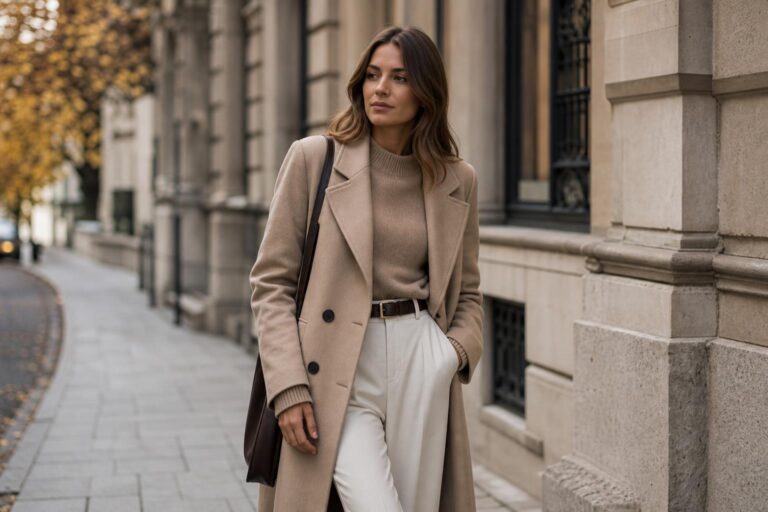
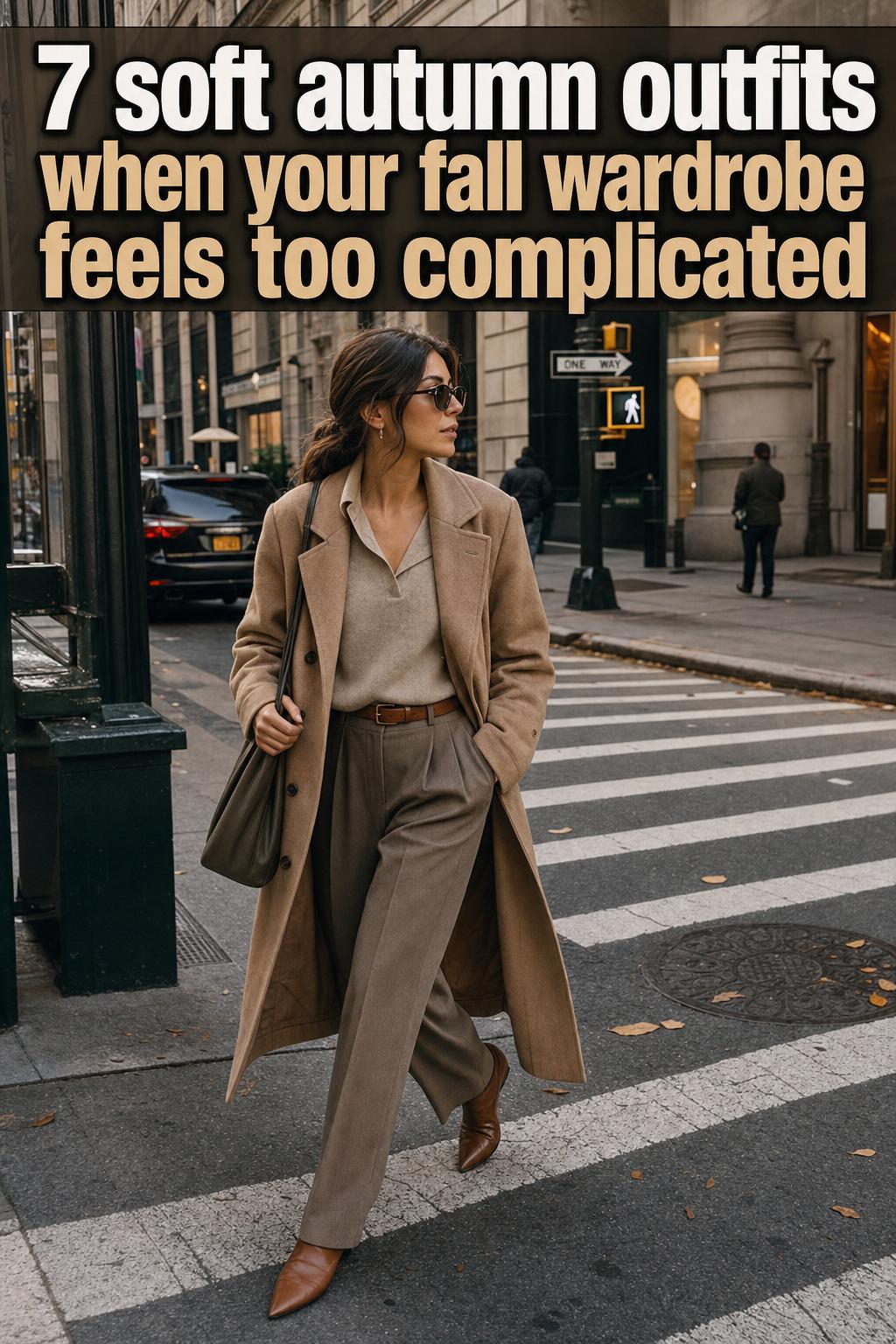
In practical terms, that visual identity changes the mood of everything in the wardrobe. Tailored pants become more approachable in taupe than in stark black. A coat feels more luxurious in camel, cream, or ivory when paired with similarly softened layers. Olive, dusty rose, and muted teal do not act like trend accents here; they become part of a connected system that makes the wearer look intentional without appearing overstyled.

Why people often misread the palette
The most common confusion comes from treating all autumn fashion as one visual category. Basic autumn outfits often feature familiar staples such as trench coats, knits, boots, and outerwear, but the soft autumn version of those pieces depends on restraint. Strong dark contrast can interrupt the effect. Overly saturated rusts, sharp blacks, or bright jewel tones pull the look away from the dusty, warm-muted atmosphere that defines the palette.
This is also why soft autumn can sometimes be mistaken for a generic neutral wardrobe. The palette does use many neutrals, but it is not beige for the sake of beige. Its elegance comes from balancing backbone shades like taupe, camel, cream, and ivory with livelier muted tones such as olive, dusty rose, and softened teal. The wardrobe needs both structure and color variation to avoid looking unfinished.
Color theory that actually changes how you get dressed
Color analysis matters here because soft autumn is not just a shopping label. It is a wardrobe framework. The palette is guided by undertones and by how hair, skin, and eye coloring interact with fabric near the face. That is why soft autumn guides consistently connect wardrobe planning to complexion harmony. The most successful outfits do not isolate clothing from makeup and hair; they coordinate all three.
The undertone logic behind the palette
The colors associated with soft autumn have warmth, but not the high heat of stronger autumn palettes. They are softened, dusty, and muted, which means they flatter through subtlety. A soft autumn outfit usually looks best when the colors appear slightly diffused rather than highly polished or sharply defined. This matters even with basics. A warm taupe trouser can harmonize more naturally than a cool gray one, and an ivory knit often sits more comfortably in the palette than a pure white version.
Hair, skin, and eye harmony
Soft autumn guidance repeatedly points to compatibility between the wardrobe and natural coloring. Hair, skin, and eye tones influence whether a muted warm palette looks effortless or disconnected. When the wardrobe mirrors that softness, the entire look reads more cohesive. This is one reason makeup alignment is emphasized so often: if the clothing is dusty and warm but the makeup is too cool or sharp, the outfit can lose its balance.
That harmony also explains why soft autumn outfits tend to photograph well in natural, everyday settings. They do not rely on high-contrast styling tricks. Instead, they create a continuous visual line from face to clothing to accessories, which feels polished in a quieter, more believable way.
The backbone shades that make the wardrobe work
Every functional soft autumn capsule wardrobe depends on a stable set of neutrals. Without them, the palette can feel scattered. With them, even a small wardrobe becomes flexible. The key is to choose neutrals that carry warmth and softness rather than severity.
- Taupe creates a subtle tailored base and works especially well for trousers, knitwear, and soft layering pieces.
- Camel gives outerwear and accessories a grounded warmth and helps anchor muted accent shades.
- Cream offers lightness without the brightness of stark white, making it useful for tops and knit layers.
- Ivory softens the wardrobe further and works well near the face.
These shades act as visual anchors. They reduce friction between pieces and make outfit formulas easier to repeat. A soft autumn wardrobe does not need a large number of garments if the neutrals are consistent. This is why capsule wardrobe content around the palette is so effective: once the base tones are established, color pairings become almost intuitive.
The role of accent colors
Accent shades are what prevent the wardrobe from becoming too quiet. Dusty rose introduces softness without becoming sugary. Olive gives depth and natural warmth. Muted teal adds variation while still staying in the restrained range that soft autumn needs. These shades work best when they are treated as supporting notes rather than loud focal points.
A useful rule in outfit composition is to let one accent color lead and allow the neutrals to stabilize it. Olive trousers with a cream knit and camel outer layer feel balanced because each element supports the next. A dusty rose knit dress with taupe boots and a soft outer layer works for the same reason. The outfit remains tonal even when color is present.
How soft autumn differs from generic fall dressing
Many U.S. fall wardrobes lean on the same staples: trench coat, knit dress, boots, outerwear, and layering basics. What changes in soft autumn styling is not the existence of those pieces but the way they are edited. The silhouette is often relaxed but not shapeless, layered but not busy, polished but not hard-edged.
Generic autumn outfits can absorb stronger contrast and heavier statement dressing. Soft autumn outfits function through moderation. A trench coat in camel or taupe makes more sense than a sharp, cool-toned version. Boots in warm compatible tones integrate better than footwear that visually cuts the body line. Knits should feel soft in both color and presence, acting as texture rather than visual weight.

The key visual difference
The key difference is atmospheric. Basic autumn fashion often celebrates seasonality through obvious signals. Soft autumn translates the season into a more refined tonal language. It is less about announcing fall and more about interpreting it. That is why the same core wardrobe staples can look entirely different when shifted into a muted warm palette.
Building a soft autumn capsule wardrobe with real-life logic
The strength of a soft autumn capsule wardrobe is not minimalism for its own sake. It is coordination. Pieces should connect across workwear, casual outfits, and more elevated dressing. The best wardrobe plans map color families to function, so a coat, knit, midi dress, and tailored pants can all interact without requiring constant reinvention.
Core pieces worth prioritizing
- A warm-toned coat or trench coat that layers easily over knits and dresses
- A small rotation of knitwear in cream, ivory, taupe, or dusty accent shades
- Tailored pants in soft neutrals that can move from office dressing to casual looks
- A midi dress or knit dress in a muted warm shade for one-step outfit composition
- Layering pieces such as a cardigan or blazer that add depth without adding harshness
These items keep reappearing across palette guides and capsule wardrobe discussions because they solve proportion and practicality at once. A midi dress simplifies color coordination. Tailored pants add structure to a soft palette. A coat or trench gives visual continuity across changing weather. None of these pieces works in isolation; their value comes from how naturally they combine.
Tips for making the capsule feel intentional
Choose repeated undertones before choosing repeated silhouettes. A wardrobe full of useful shapes can still feel disjointed if the colors are too mixed. In soft autumn dressing, tonal consistency creates more sophistication than trend variety. If the coat, trousers, knitwear, and shoes all live in compatible muted warm territory, getting dressed becomes almost automatic.
It also helps to divide the wardrobe into clusters: a neutral base cluster, a soft accent cluster, and an outerwear cluster. This kind of wardrobe mapping is practical because it prevents random purchases that match one piece but not the rest of the palette.
Textures are not a side note here
One of the most useful underexplored aspects of soft autumn styling is texture. Muted colors can look flat if every surface reflects light in the same way. Texture adds depth without disrupting the softness of the palette. This is especially important in seasonal dressing, where the wardrobe often relies on repeated neutrals.
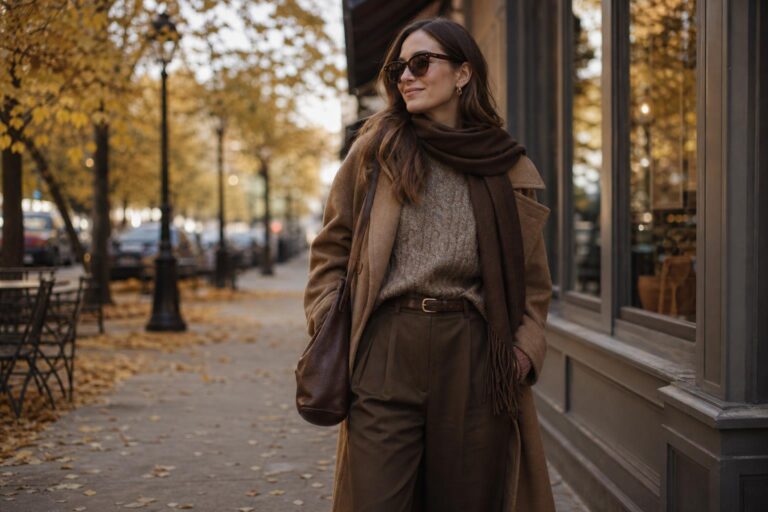
Cashmere, wool blends, bouclé, corduroy, velvet, tweed, and similar tactile fabrics all reinforce the character of soft autumn. They give the colors more visual life. A cream knit in a plush texture feels richer than the same shade in a flat fabrication. A camel coat with visible texture looks more dimensional than a smoother, sharper version. The softness of the palette becomes easier to perceive when the fabric supports it.
Why this combination works
Texture performs the role that contrast would play in louder wardrobes. Instead of using stark black against ivory or bright accents against neutrals, soft autumn outfits often create interest through surface variation. A wool coat over a fine knit, paired with tailored pants and matte boots, reads complete because the eye registers layers of softness rather than dramatic color difference.
Layering, the soft autumn way
Layering is central to autumn fashion, but soft autumn handles it with more restraint than many trend-driven wardrobes. The goal is not to stack as many visible pieces as possible. The goal is tonal layering: building depth while preserving calm.
A practical formula is simple: warm base layer, soft structural layer, then an outer layer that anchors the entire look. In wearable terms, that could mean a cream top, a taupe cardigan or blazer, and a camel trench coat. The pieces differ in value and texture, but they remain close enough in mood to feel seamless rather than busy.
Seasonal transition in the U.S.
For U.S. readers, this is particularly useful during the long in-between stretch from late summer into early winter. A soft autumn wardrobe is strong in transition because it favors adaptable layers. Lightweight knits, trench coats, scarves, and outerwear in warm muted tones can be adjusted gradually without breaking the palette. The clothing still feels seasonally coherent even when temperatures shift.
That flexibility is one reason the aesthetic resonates beyond pure color analysis. It suits real schedules: office days, casual weekends, city errands, travel between climates, and the practical stop-start rhythm of American fall dressing.
How everyday basics change inside this palette
The beauty of soft autumn outfits is that they do not require unusual garments. They reinterpret familiar basics. A blazer becomes softer through color. Denim becomes more integrated when surrounded by warm muted layers. A simple dress feels elevated because the accessories continue the same tonal conversation.
Work-ready composition
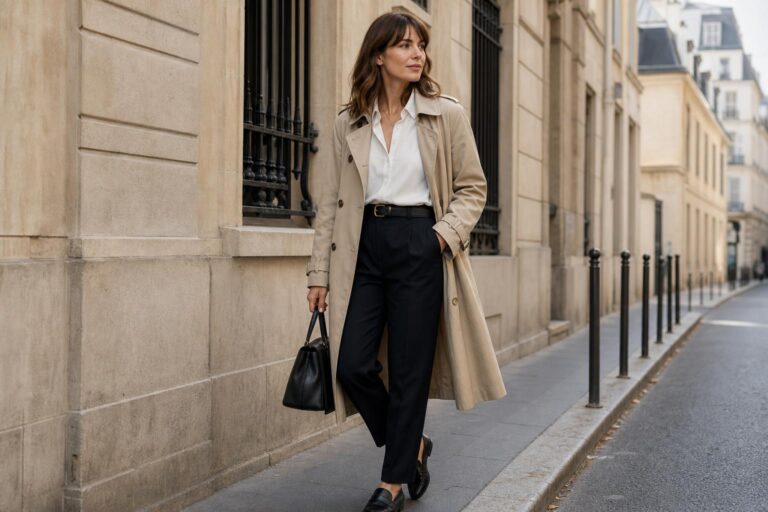
For office dressing, a blazer and trousers are often the clearest visual test of whether the palette is working. In a generic wardrobe, these pieces can become severe very quickly. In soft autumn, tailored pants in taupe or camel, paired with an ivory knit and a muted outer layer, create professionalism without sharpness. The silhouette remains competent and structured, but the palette keeps it approachable.
This approach is especially effective for readers who want polish without looking overly formal. It has the discipline of workwear but with a more lived-in finish. Accessories matter here: a belt, bag, or scarf in compatible tones can reinforce the visual line without adding unnecessary contrast.
Casual outfits with more depth
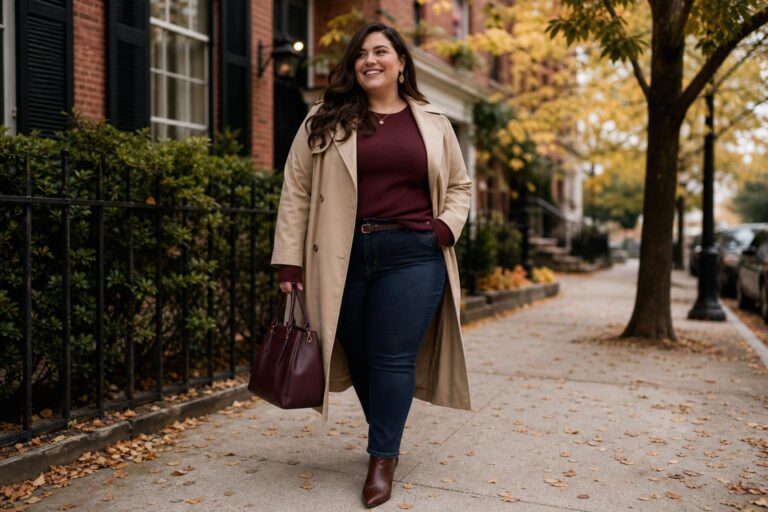
Casual soft autumn outfits rely heavily on texture and layering. A sweater with denim can look ordinary in one wardrobe and nuanced in another. The difference comes from color coordination and fabric choice. Warm muted tones give casualwear a clearer identity, while tactile fabrics prevent the look from feeling too plain.
A cardigan over a soft top with relaxed bottoms and grounded footwear creates the kind of casual composition that is easy to repeat. This is where soft autumn casual outfits are strongest: they feel natural, wearable, and quietly finished rather than assembled around a trend moment.
Soft glam for evening
Evening dressing in this palette is not about turning into a different person after dark. It is about refining the same visual language. A dress in dusty rose, olive, or another muted warm shade can feel more elegant than a louder occasion color because it aligns with the wearer’s overall palette. Jewelry and beauty should follow the same principle: support the softness, do not overpower it.
This is also where fabrication becomes especially important. Dresses for soft autumn work best when fabric and color reinforce one another. A rich but muted tone in a flattering texture gives enough presence without requiring dramatic contrast.
Accessories are where many outfits either settle or sharpen
In a soft autumn wardrobe, accessories are not afterthoughts. Because the palette is restrained, a bag, belt, scarf, or shoe can either preserve the harmony or interrupt it. The strongest accessories behave like extensions of the outfit rather than separate statements.
Bags, belts, and scarves
Bags and belts work best when they echo the wardrobe neutrals: camel, taupe, cream, or other warm muted tones. Scarves can introduce slightly more variation, especially if the outfit is largely neutral, but they still need to stay within the softened range that defines the palette. The goal is color mapping rather than contrast dressing.
Footwear color stories
Footwear is one of the most under-discussed but important parts of soft autumn styling. Boots, loafers, and even sneakers need to support the tonal line of the outfit. Ankle boots and knee-high boots in warm compatible shades integrate more smoothly than stark alternatives. Loafers can give tailored looks polish without hardening the palette. In casual settings, softer-toned footwear helps the outfit read as cohesive from head to toe.
From a proportion perspective, shoes should anchor rather than cut off the look. This is especially relevant with midi lengths and tailored pants, where the wrong shoe color can create visual interruption. Soft autumn outfits generally look better when footwear extends the mood of the outfit instead of competing with it.
Makeup and hair should not be treated separately from the wardrobe
One of the clearest points across soft autumn guides is that clothing, makeup, and hair should harmonize. This is not about rigid matching. It is about maintaining the same warm-muted softness across the entire appearance. If the wardrobe is dusty and refined but the makeup is too cool or too bright, the visual balance weakens.
Makeup coordination
Lip colors, blush, and eye makeup should sit comfortably beside the clothing palette. Makeup alignment matters because soft autumn styling depends on continuity. A muted wardrobe paired with similarly soft beauty choices creates the polished effect many people are trying to achieve when they build a color-season wardrobe in the first place.
This is less about exact shade duplication and more about atmosphere. If the outfit uses cream, taupe, olive, dusty rose, and muted teal, beauty choices should feel connected to that same world. The result is more refined than treating fashion and makeup as two separate styling projects.
Hair as part of the palette story
Hair color coordination appears repeatedly in soft autumn content because hair frames every outfit. Whether the look leans more casual or more tailored, hair tone influences how the colors around the face are perceived. When hair, skin, eye coloring, makeup, and clothing all align within a softened warm range, the outfit reads as more natural and more complete.
Real-world outfit interpretation, not just item pairing
The easiest way to understand soft autumn is to see how the same wardrobe logic behaves across different settings. The pieces may be familiar, but the outfit composition changes depending on mood, proportion, and function.
The polished city weekday
A trench coat over a soft knit with tailored pants and compatible footwear creates a city-ready outfit that feels intelligent rather than strict. The trench acts as a structural layer, the knit introduces softness, and the trousers give definition. The palette keeps the look from becoming corporate. This works well for office commuting, meetings, or days when you need adaptability from morning to evening.
The easy weekend uniform
A cardigan or sweater, casual bottoms, and soft-toned shoes form the backbone of an easy weekend look. What makes it distinctly soft autumn is the tonal coordination and muted depth. The look feels relaxed, but not accidental. This kind of outfit works because each piece carries enough texture or color connection to keep the overall composition from feeling generic.
The one-piece solution
A midi dress or knit dress is one of the most efficient garments in a soft autumn wardrobe. It simplifies proportion and color balance at once. Add boots and an outerwear layer in related tones, and the outfit is complete with very little effort. Dresses are especially useful when you want a refined look without assembling multiple separates.
The elevated evening variation
For dinner, date-night, or a more dressed setting, use the same muted palette with slightly richer fabric and cleaner finishing. The effect should be soft glam rather than dramatic transformation. A warm muted dress, refined accessories, and coordinated makeup create elegance through cohesion instead of contrast.
Style psychology: why this aesthetic resonates
Soft autumn resonates with people who want their wardrobe to feel composed without becoming rigid. There is an emotional clarity to muted warm tones. They suggest ease, maturity, and confidence in selection rather than confidence through display. That distinction matters. Not everyone wants fashion to function as spectacle. Many want it to function as atmosphere.
This also explains why capsule wardrobe content is so closely tied to the palette. Soft autumn naturally supports repeat dressing. It rewards subtle variation over constant novelty. For many readers, especially those building practical wardrobes in the U.S., that makes the aesthetic not only attractive but sustainable in everyday use.
Common mistakes that weaken soft autumn outfits
Because the palette is subtle, small missteps become visible quickly. Most problems come from imbalance rather than from one “wrong” item.
- Overusing beige without adding muted accent colors, which can make the wardrobe feel flat.
- Choosing neutrals that are too cool, too stark, or too dark for the rest of the palette.
- Introducing accessories or footwear that interrupt the tonal flow.
- Ignoring makeup coordination, especially near the face.
- Relying on silhouette alone without enough texture contrast.
Tips for fixing the imbalance
If outfits are reading dull, add depth through texture before adding brightness. If they feel too bland, bring in olive, dusty rose, or muted teal through one considered piece. If the look feels disconnected, check the accessories and beauty choices first. In a palette this refined, harmony is usually restored through editing rather than through adding more.
Brands, shopping references, and how to use inspiration wisely
Soft autumn outfit inspiration appears across editorial guides, social styling platforms, and product-driven sites such as ColorBook, Shop My Palette, Palette Hunt, Palette Path, and Chroma Atelier. Trend-oriented pages and shopping references also surface example items from names like H&M. These sources are useful for visual direction, but the smartest approach is to borrow the wardrobe logic rather than chase isolated products.
The same principle applies to social inspiration on platforms like Lemon8. Individual outfits can be helpful, especially for practical clothing color choices, but the lasting value comes from recognizing the visual pattern: warm muted tones, coordinated neutrals, soft accents, and cohesive finishing. That pattern matters more than any single purchase.
How to blend soft autumn with your existing wardrobe
Not everyone is starting from zero, and most people do not need to. Soft autumn integrates well when introduced gradually through neutrals, outerwear, and accessories first. A camel coat, taupe trousers, cream knitwear, and softened footwear can shift the feel of an existing wardrobe surprisingly quickly.
From there, add one or two accent colors that consistently flatter and repeat them across different categories. Dusty rose in knitwear, olive in pants or outer layers, muted teal in a top or scarf: these small decisions create continuity. The goal is not to make every outfit look identical. It is to make the wardrobe speak the same visual language.
Most versatile pieces
- A camel trench coat
- A cream or ivory knit
- Taupe tailored pants
- A midi dress in a muted warm tone
- Boots or loafers in a compatible neutral
These pieces repeatedly prove their value because they bridge the gap between capsule practicality and visual identity. They also make it easier to move between casual outfits, office dressing, and more polished occasions without disrupting the palette.
The lasting appeal of soft autumn dressing
Soft autumn does not ask for dramatic reinvention. It asks for better editing. That is why it remains compelling. The palette turns familiar wardrobe pieces into a more considered system, one where color, texture, outerwear, footwear, makeup, and hair all support the same aesthetic intention. The final effect is understated but unmistakable.
Once you recognize soft autumn instinctively, the difference becomes clear: these outfits do not depend on noise to look complete. They depend on harmony. And that is exactly why they continue to feel modern, wearable, and personal.

FAQ
What colors look best in soft autumn outfits?
The strongest soft autumn colors are warm, muted, and dusty rather than bright or high-contrast. Reliable neutrals include taupe, camel, cream, and ivory, while accent shades such as dusty rose, olive, and muted teal add depth without disrupting the palette.
How do you build a soft autumn capsule wardrobe?
Start with a small foundation of warm muted neutrals, then add a few accent shades that repeat across multiple pieces. A practical capsule usually includes a coat or trench coat, knitwear, tailored pants, a midi dress or knit dress, and coordinated footwear and accessories in compatible tones.
Can soft autumn outfits work for casual everyday wear?
Yes, and that is one of the palette’s biggest strengths. Soft autumn casual outfits work especially well with sweaters, cardigans, denim, outerwear, and soft-toned shoes because the muted colors and layered textures make simple pieces look more considered.
What are the best neutrals for a soft autumn wardrobe?
Taupe, camel, cream, and ivory are the most dependable neutrals because they create warmth without harsh contrast. These shades form the backbone of the wardrobe and make it easier to pair accent colors without the outfit feeling disconnected.
Which fabrics work best for soft autumn dressing?
Soft autumn benefits from fabrics that add texture and depth, especially when the color palette is subtle. Cashmere, wool blends, bouclé, corduroy, velvet, and tweed all help muted shades feel richer and more dimensional.
How should makeup coordinate with soft autumn outfits?
Makeup should reflect the same warm-muted softness as the clothing. Lip color, blush, and eye makeup work best when they harmonize with the dusty, refined quality of the wardrobe rather than introducing overly cool or overly bright contrast.
What shoes go best with soft autumn outfits?
Boots, loafers, and other footwear look best in warm compatible tones that continue the outfit’s tonal flow. Shoes should anchor the look rather than interrupt it, which is especially important with tailored pants, dresses, and layered autumn outfits.
Why do some soft autumn outfits look flat?
They usually look flat when there is too much sameness without enough texture or accent balance. Overusing beige, ignoring muted color variation, or choosing accessories that do not support the palette can remove the depth that makes soft autumn feel intentional.
Are trench coats and knit dresses good for soft autumn?
Yes, both are especially effective when chosen in warm muted shades. A trench coat provides structure and layering flexibility, while a knit dress simplifies outfit composition and works well with coordinated boots, scarves, and outerwear.
How can I make my existing wardrobe feel more soft autumn?
Begin by shifting your core pieces toward soft warm neutrals and editing accessories that feel too stark or cool. Adding a camel coat, cream knitwear, taupe trousers, and one or two accent shades such as olive or dusty rose can gradually bring the whole wardrobe into better harmony.