Summer Cowgirl Outfits That Feel Fresh and Modern
There is a reason summer cowgirl outfits keep returning to the center of warm-weather style conversations. They sit at an interesting crossroads: part Western heritage, part modern fashion shorthand, part practical dressing solution for concerts, festivals, rodeo settings, coastal weekends, and everyday city heat. The appeal is not only the boots or the hat. It is the way these pieces build a visual identity that feels grounded, confident, and slightly romantic without losing function.
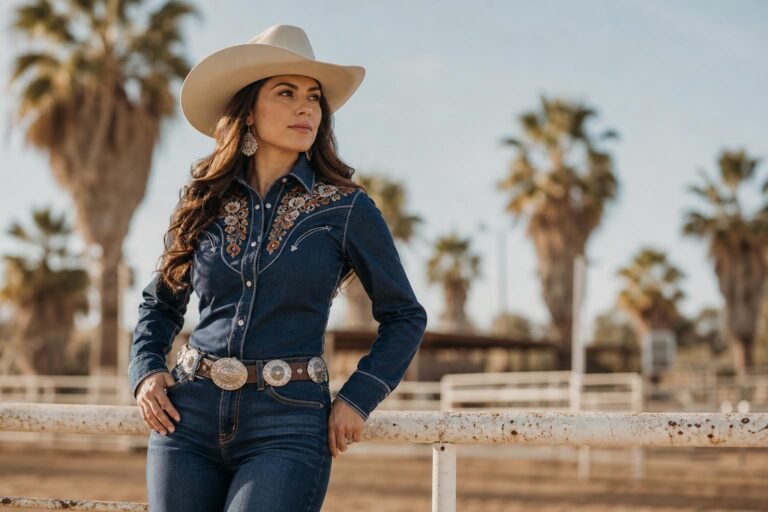
What makes the category especially compelling is how many different fashion mindsets live inside it. A white embroidered dress with ankle boots communicates something very different from denim shorts under an open-front linen shirt. A ranch-ready look built on plaid, belt buckles, and robust boots has a heavier visual rhythm than a coastal cowgirl outfit softened by straw hats, pale blues, and breezy fabrics. They share a Western vocabulary, but the mood shifts dramatically.
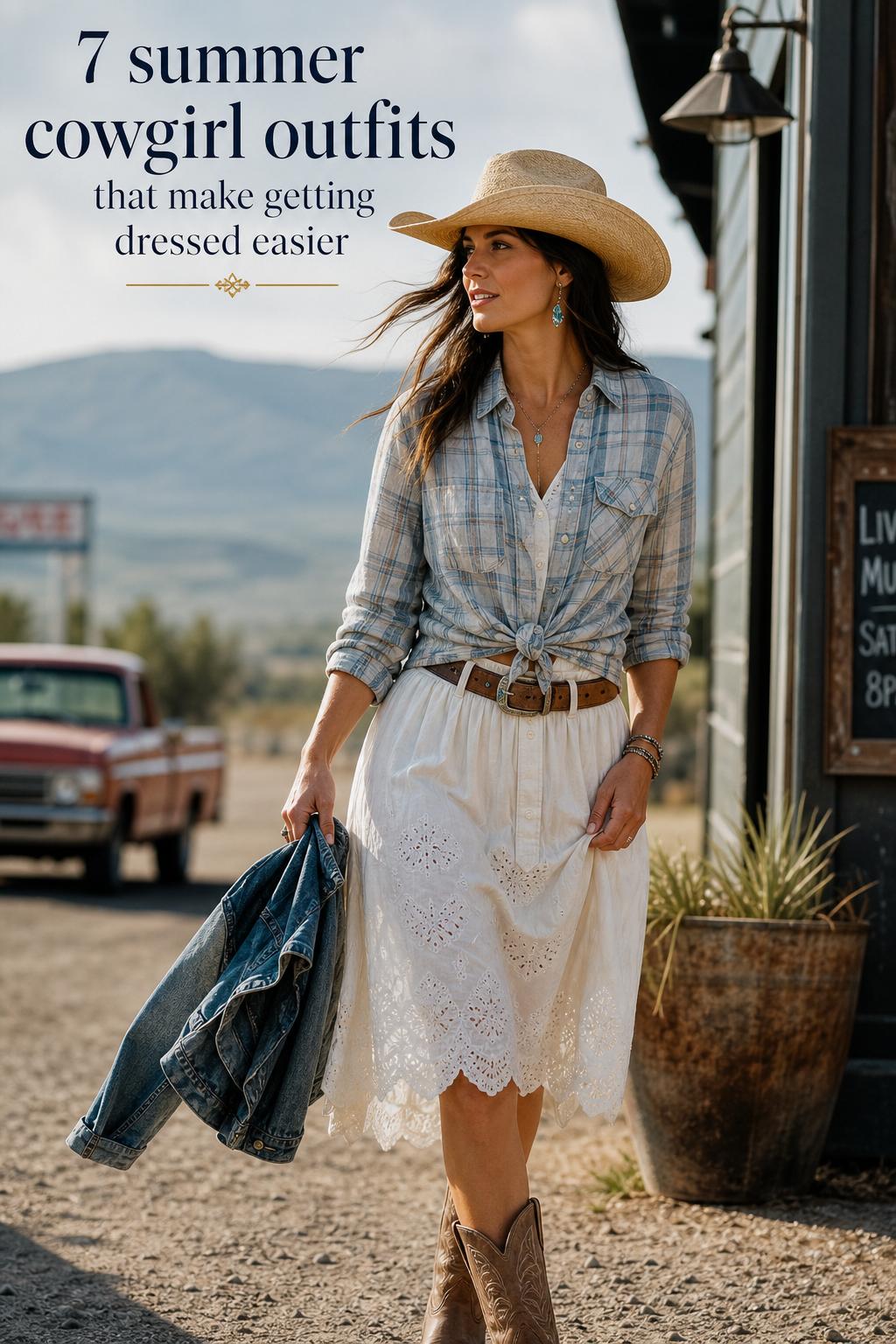
That is why styling summer cowgirl outfits well requires more than collecting trend pieces. It requires understanding silhouette balance, heat management, texture contrast, and the emotional tone each combination gives off. The strongest looks feel intentional because the boots, denim, dresses, hats, fringe, belts, and jewelry are working together rather than competing for attention.
The most wearable approach is not choosing one rigid version of the aesthetic. It is learning how coastal, desert, ranch, rodeo-inspired, and classy Western influences behave in real life, then building outfits that match your climate, schedule, and comfort level.
Found the dress? Keep the rest in one place.
Zarellea brings guest details, vendors, timelines, and every next step together — so your wedding plan feels as good as your look.
Why summer cowgirl style feels so distinct
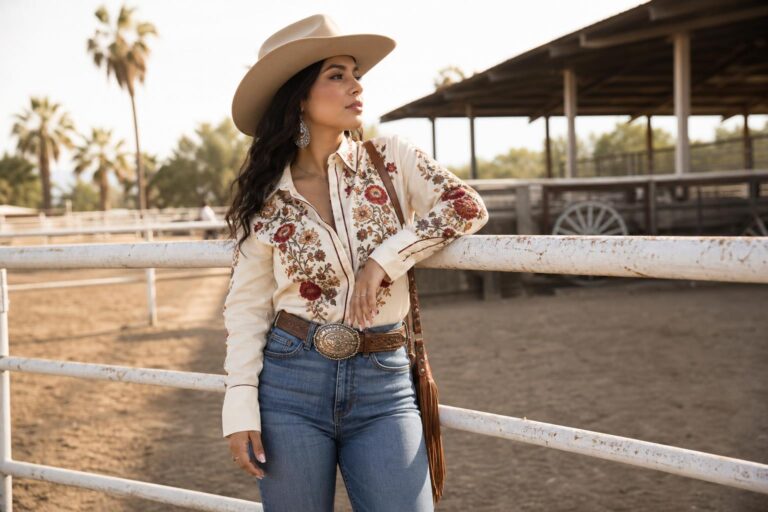
Summer Western fashion has a recognizable visual anchor: cowgirl boots. But boots alone do not create the aesthetic. The look comes from the tension between structure and ease. Denim adds familiarity and shape. Dresses soften the line. Embroidery introduces craft detail. Wide-brim cowboy hats frame the outfit from above and immediately shift even simple basics into Western wear territory.
That combination explains why the style can read casual, polished, boho-Western, festival-ready, or dressy depending on proportion and fabric. A maxi dress with embossed embroidery patterns and mid-calf boots moves differently from a mini dress with white boots. Denim shorts and a tank can feel almost minimal until a belt, turquoise jewelry, and a rancher-style hat reshape the entire outfit composition.
There is also a cultural styling logic behind the appeal. Rodeo-inspired dressing and classic Western shirts carry a sense of durability, while coastal cowgirl styling softens the same language with lighter palettes and more relaxed textures. The result is a category that feels emotionally flexible. It can project toughness, softness, nostalgia, polish, or playfulness without leaving the Western framework.
The visual worlds inside the trend
The polished ease of classy cowgirl dressing
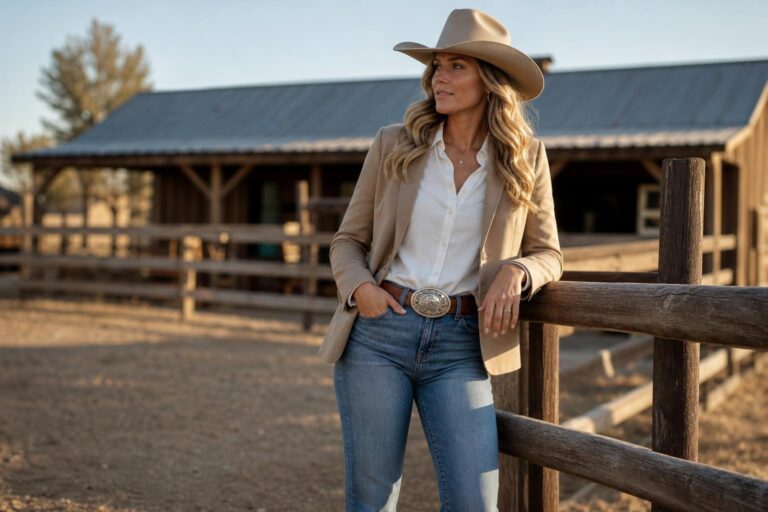
Classy summer cowgirl outfits depend on restraint. The silhouette is usually cleaner, the palette lighter or more tonal, and the accessories more edited. Think a gingham dress or maxi dress paired with tan or white cowgirl boots, a defined belt, and a wide-brim hat that feels deliberate rather than costume-like. The styling energy is elevated, but not stiff.
What makes this version effective is proportion control. A longer dress with a belted waist creates vertical movement, while the boots add weight at the hem. That contrast keeps the outfit grounded. If every element is soft, the look can drift into generic summer dressing. The boots restore the Western identity without needing excessive fringe or too many statement accessories.
The breezy softness of coastal cowgirl
Coastal cowgirl style keeps the Western outline but lightens the atmosphere. Whites, blues, airy cotton, linen, and sundress silhouettes do much of the visual work. Straw hats and shell jewelry replace heavier ranch energy with something sun-washed and relaxed. Boots still matter, but they are often styled as contrast rather than the dominant statement.
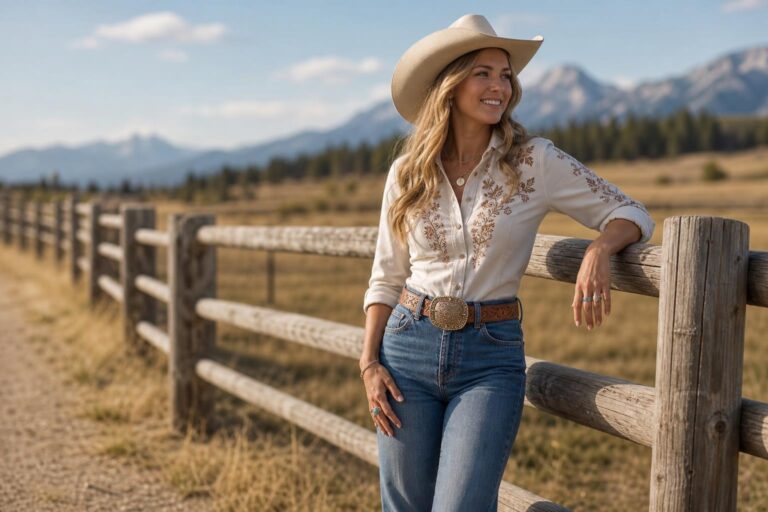
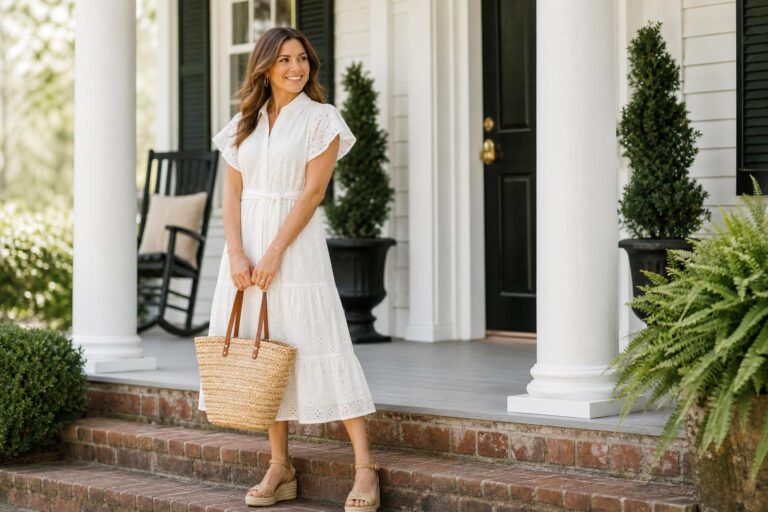
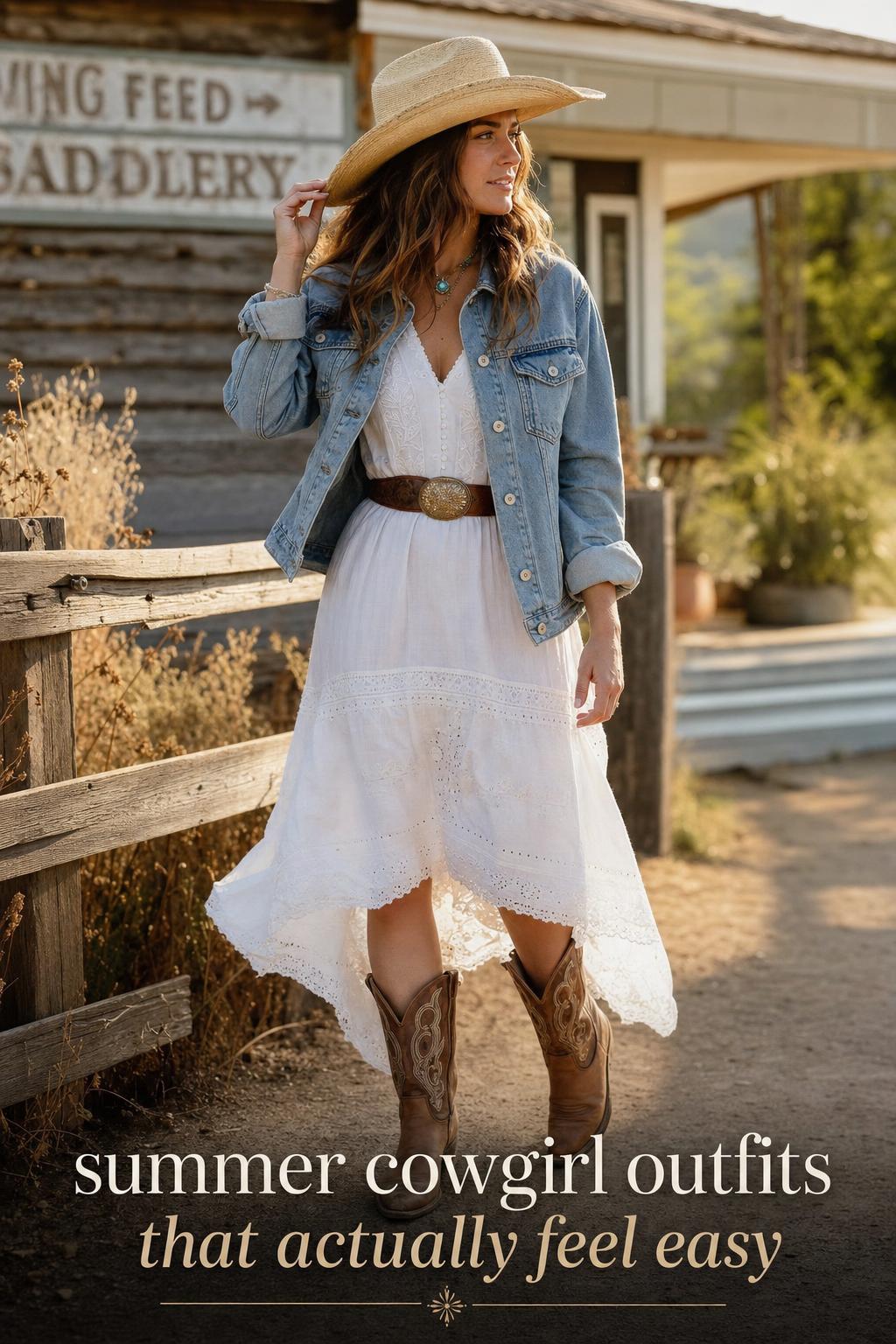
This aesthetic resonates because it feels less dense. The fabrics move more easily, the colors reflect light, and the accessories feel lived-in rather than theatrical. A white embroidered dress with turquoise jewelry and ankle boots captures this perfectly. It has enough Western character to stay recognizable, but the mood is calmer than a concert or rodeo outfit.
The grounded confidence of desert and Southwest styling
Desert cowgirl outfits lean into earth tones, suede textures, and a stronger relationship with rugged Western imagery. The visual language is drier, warmer, and slightly more dramatic. Sage green, white, paisley, florals, and dusty neutrals all sit comfortably here, especially when paired with suede boots, fringe accents, or a belt that gives the outfit a firmer center.
The silhouette philosophy is less delicate than coastal styling. Even when the dress is soft, the styling usually introduces a tougher counterweight through boot shape, a crossbody bag, or more visible accessory structure. This is the version of summer Western wear that can move naturally from a daytime outdoor setting into an evening concert without needing a full outfit change.
The practical directness of ranch-inspired dressing
Ranch and classic Western dressing are often the clearest reminder that cowgirl fashion is not purely decorative. Denim-on-denim, plaid shirts, button-downs, robust boots, and belt buckles all carry a utilitarian logic. In summer, the look becomes lighter through breathable shirts, denim shorts, lighter washes, and straw hats, but the overall message remains more structured and functional than romantic.
This aesthetic is often misunderstood by people who only associate summer cowgirl outfits with dresses. In reality, a ranch-inspired look can be one of the most convincing and wearable versions because every piece has a job. The outfit reads intentional not because it is embellished, but because its proportions are honest and stable.
The key visual difference: softness versus structure
If you want to understand why two Western-inspired outfits feel so different, start with structure. A white floral dress with cowgirl boots, turquoise jewelry, and a straw hat operates on softness interrupted by strategic Western anchors. Denim shorts with an open-front linen shirt, a tank, and a belt depend on casual structure softened by airflow and layering ease. A maxi dress with fringe accessories adds motion and decoration, while a Western shirt with shorts and boots relies on direct lines and visual control.
In practice, softer outfits usually feel more romantic, coastal, or daytime-friendly. Structured outfits feel more classic, ranch-adjacent, or event-ready. Neither is inherently better. The question is whether you want your summer cowgirl outfit to lead with femininity, utility, or contrast.
Outfit ideas that actually translate in real life
The best outfit ideas are not isolated Pinterest images. They are combinations with clear styling logic. These are the kinds of summer cowgirl outfits that work because the fabric, silhouette, and accessories support each other.
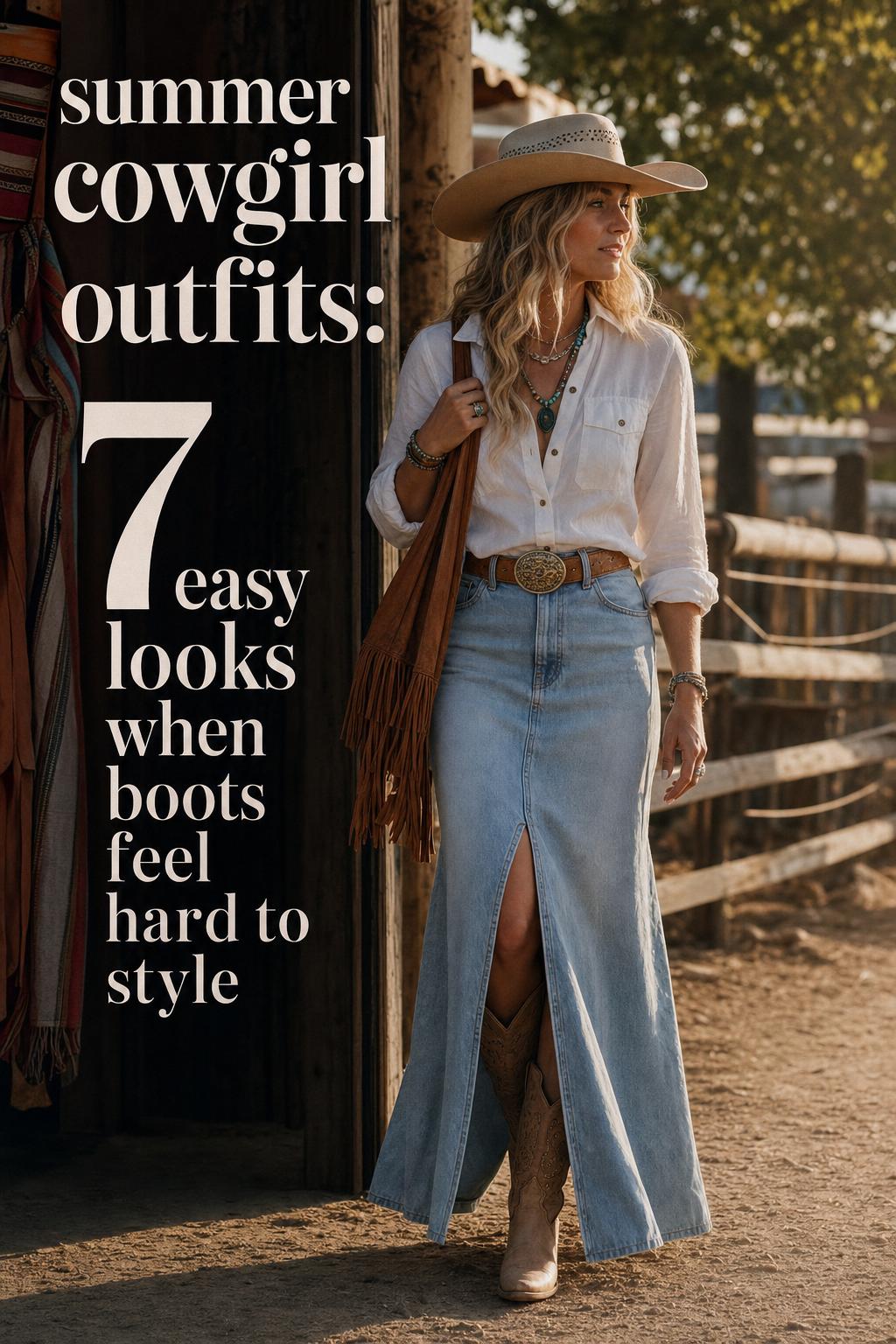
- A light denim and embroidery maxi dress with knee-high or mid-calf boots creates a long, balanced line. The embroidery becomes the focal detail, while the boots prevent the dress from feeling too sweet.
- A white embroidered dress with ankle boots, turquoise jewelry, and a wide-brim hat is one of the clearest warm-weather Western formulas. It reads bright, celebratory, and highly wearable for daytime events.
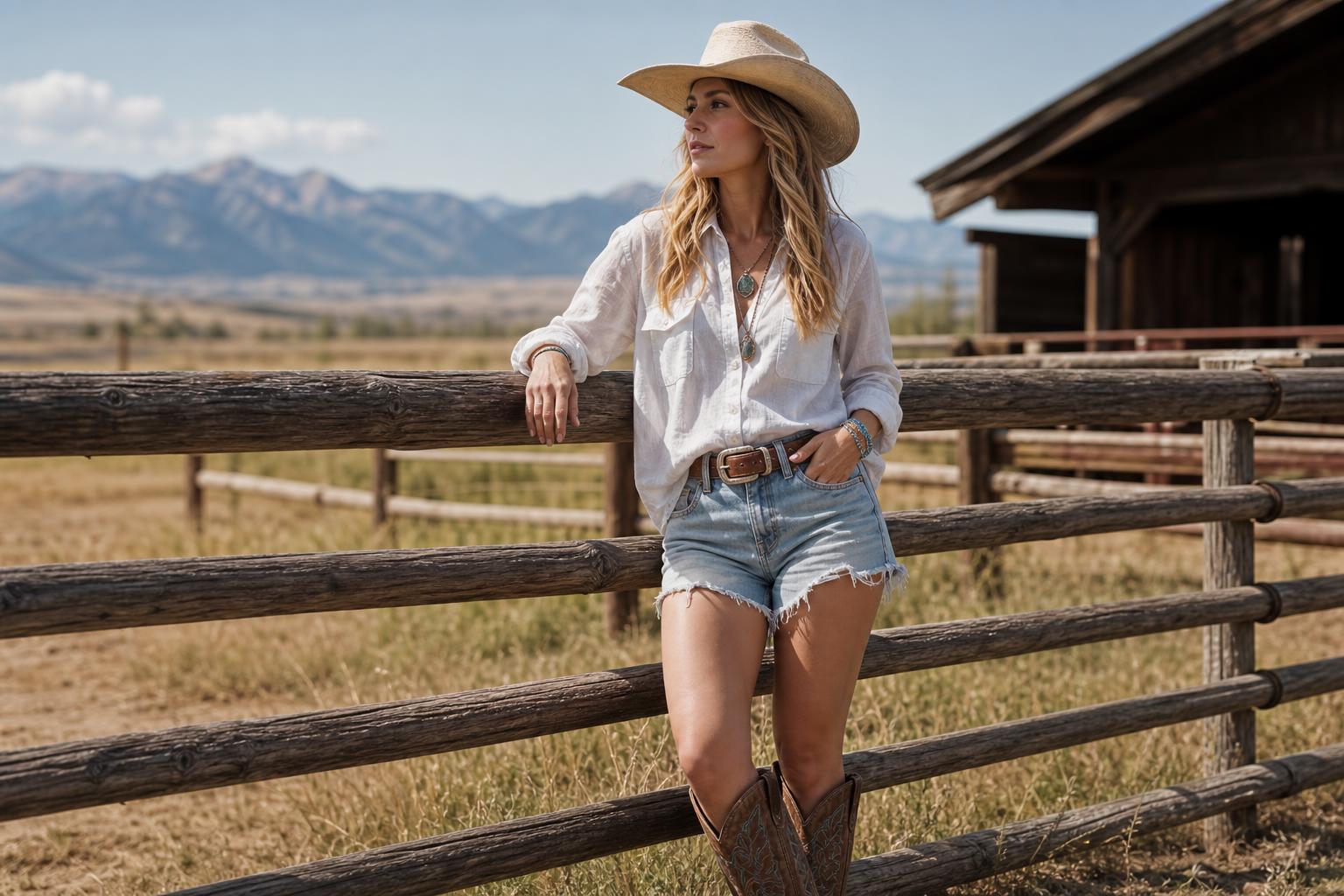
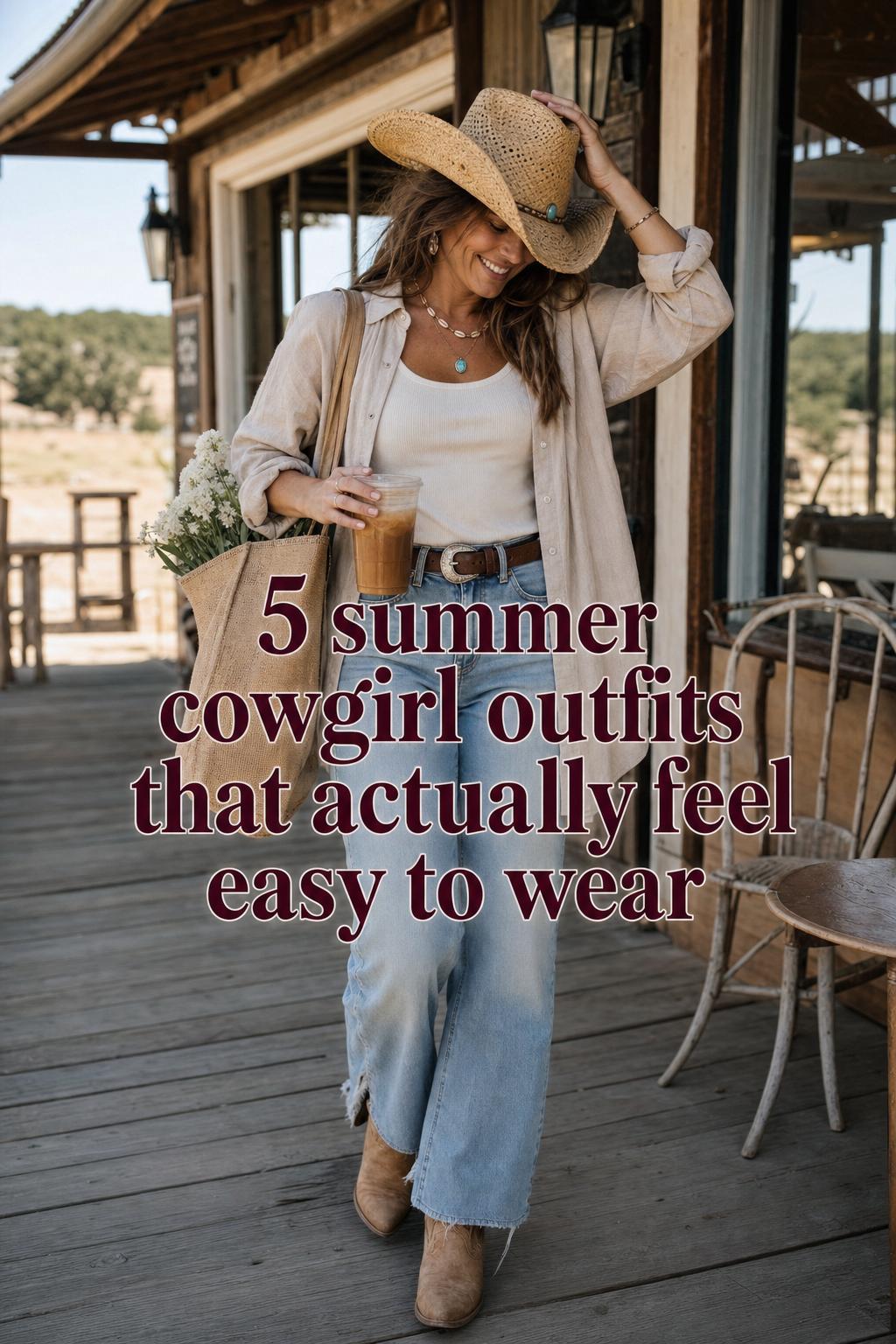
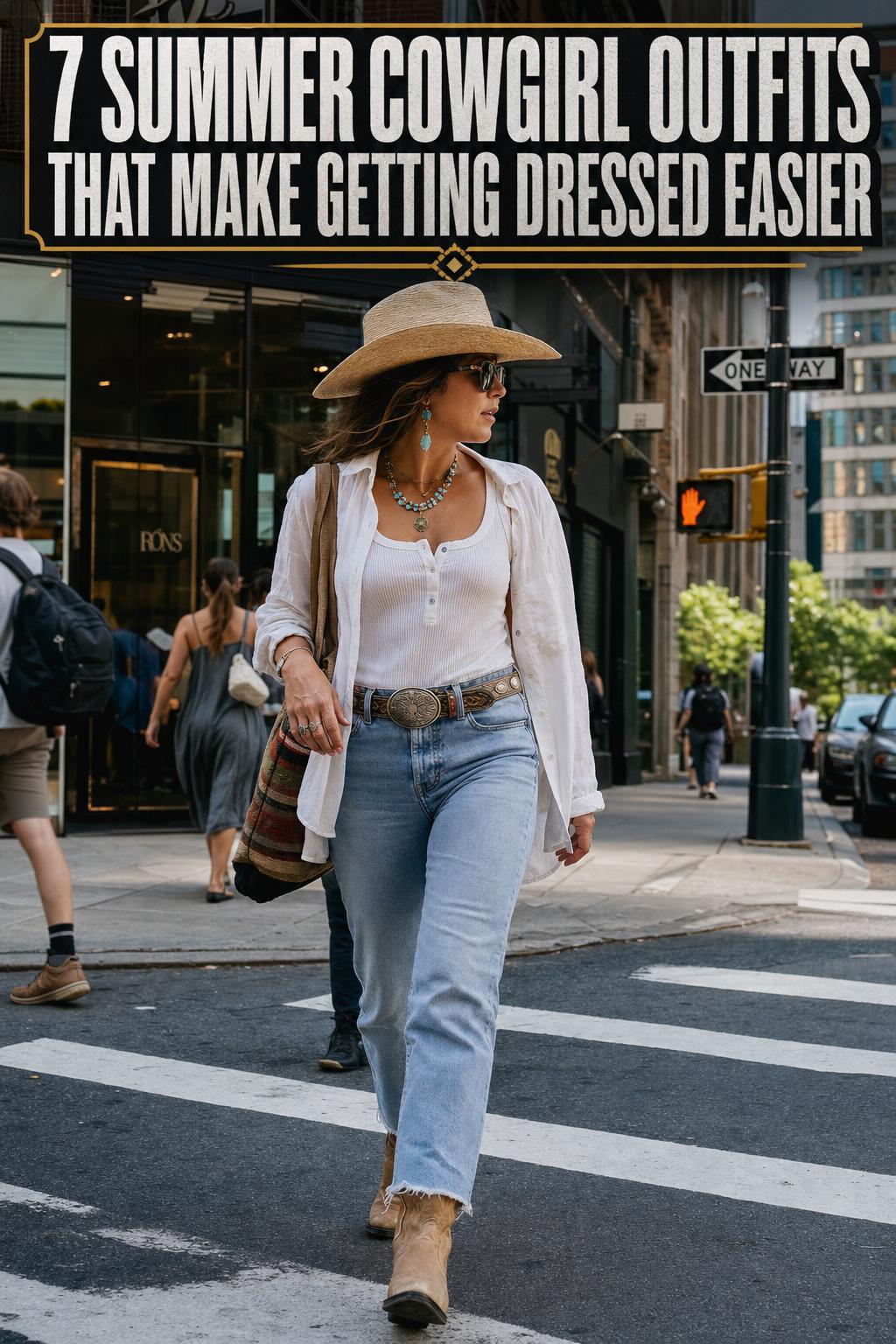
- Denim shorts with an open-front linen shirt over a tank offer a strong coastal cowgirl base. The linen reduces visual heaviness, while a hat or belt reintroduces Western definition.
- A maxi dress with fringe accents and a belted waist works well when you want movement without losing shape. Fringe gives the outfit rhythm, but the belt keeps it from becoming loose and directionless.
- A prairie-influenced romper or playsuit with boots and a crossbody or belt bag is useful when comfort and mobility matter. This is a practical choice for long outdoor days.
- A gingham dress with white boots creates a polished but approachable version of classy cowgirl dressing. The pattern adds personality without overwhelming the outfit.
- Denim shorts with a button-down and straw hat capture ranch energy in a summer-friendly way. This look feels especially effective when the shirt is relaxed rather than oversized beyond proportion.
- A white floral mini dress with white boots offers a clean, youthful variation that still stays inside the Western vocabulary.
Notice the pattern: boots, denim, dresses, hats, belts, and jewelry repeat, but the mood changes based on scale, fabric behavior, and how much visual weight sits at the top or bottom of the outfit.
How each style approaches everyday basics
Denim shorts are not just casual filler
Denim shorts appear across nearly every version of summer Western wear because they function as a stable base. What changes is what surrounds them. With a linen shirt, they lean coastal. With a plaid or Western shirt, they move ranch-ready. With crochet textures, white boots, or turquoise accents, they can shift toward a more boho-Western or festival-ready direction.
The practical advantage is versatility. Denim shorts can handle heat better than heavier denim layers, but they still carry the visual language of classic cowgirl dressing. They are often easier to restyle than a highly specific dress silhouette, which makes them one of the most efficient core pieces in the category.
Dresses carry the emotional tone
Maxi dresses, mini dresses, embroidered dresses, and white-on-white styles do more than add femininity. They determine the mood before the accessories even enter the frame. A prairie-leaning maxi feels nostalgic and expansive. A mini dress with white boots feels sharper and more playful. A floral or paisley print can push the look toward boho-Western, while a cleaner white dress with subtle embroidery reads more refined.
For many people, dresses are also the easiest way to make cowgirl boots feel intentional in summer. The visual contrast between a lightweight dress and a sturdier boot shape is one of the defining formulas of the trend.
Button-downs and Western shirts change the entire mood
A button-down is one of the smartest styling tools in this category because it can shift the outfit in multiple directions. Worn open over a tank and denim shorts, it feels relaxed and heat-aware. Tucked into shorts or a skirt with a belt, it becomes more classic Western. In lighter fabrics, it preserves structure without adding unnecessary weight.
This is where summer cowgirl outfits become more than image-driven dressing. Good styling accounts for movement, temperature changes, and the need to transition between direct sun, evening cool-down, and indoor spaces.
Regional style profiles that change the same wardrobe pieces
One of the most useful ways to build a better Western summer wardrobe is to think regionally. The same boots, denim, and hats can feel completely different depending on whether your outfit is pulling from Texas ranch-to-city energy, California coastal softness, or Southwest desert contrast.
Texas ranch-to-city energy
This profile favors a cleaner, sturdier visual line. Denim is central. Belt buckles matter more. Shirts have a stronger presence. Even when a dress appears, the styling usually benefits from a more grounded boot and less delicate accessorizing. This interpretation is especially useful if you want outfits that can move between casual daytime errands, outdoor events, and more classic rodeo-inspired settings.
California coastal cowgirl
Here the silhouette opens up. Light fabrics, whites and blues, straw hats, shell jewelry, sundress shapes, and softer layering create more visual air. The Western identity stays visible, but it no longer dominates. This is often the most approachable entry point for people who like the mood of cowgirl style but do not want to feel heavily styled.
Southwest desert dressing
Desert styling has more tonal warmth and a stronger relationship with texture. Suede, earth tones, crochet, embroidery, and fringe feel especially coherent here. The look can handle bolder boots or more pronounced accessories because the overall palette already supports that rugged visual language.
Thinking this way helps you avoid the most common styling mistake in the category: combining pieces from different Western moods without a unifying logic. A coastal white dress, a heavy ranch belt buckle, dramatic suede boots, and shell jewelry can all be good pieces, but together they may dilute each other if the outfit has no clear regional direction.
Footwear is the visual anchor
Boots are not just a finishing touch in summer cowgirl outfits. They are usually the visual anchor that makes the outfit readable as Western in the first place. That is why boot choice matters as much as the dress or denim. Ankle boots create a lighter effect and work well with shorter hemlines or coastal styling. Mid-calf boots often feel balanced with maxi dresses and shorts. Knee-high boots create more drama and are best when the rest of the outfit is relatively simple.
Shape matters too. Square-toe, pointed-toe, and stemmed boot silhouettes all influence how sharp or classic the outfit feels. In hot weather, the most useful approach is not always the tallest or most detailed boot. It is the boot that gives Western clarity without overloading the look.
Boots that beat the heat
Warm-weather styling works best when the boots are balanced by breathable fabrics elsewhere in the outfit. A heavy boot can still function in summer if the dress, shirt, or romper is light and airy. This is why cotton, linen, rayon blends, and open-feeling silhouettes appear so often in successful outfits. They offset the density of the footwear.
There is also room for boot-inspired alternatives. Sandals that still read Western can make sense when temperatures are high or when the setting is more coastal than rodeo-driven. The key is maintaining enough Western shape through the belt, hat, embroidery, or denim so the outfit does not lose its identity.
The role of accessories in shaping the mood
Accessories are where many summer cowgirl outfits either become polished or begin to feel overworked. A wide-brim cowboy hat, a rancher silhouette, or a straw hat can all be effective, but each sets a slightly different tone. The same is true of turquoise jewelry, shell jewelry, belts, and fringe. These details should not be added all at once without hierarchy.
The most successful outfits usually have one dominant accessory idea and one supporting one. For example, if the boots are bold and the hat is large, jewelry should often stay simpler. If the dress is plain and airy, turquoise jewelry can become the focal accent. If fringe is already present on a bag or dress, the belt can stay more understated.
- Choose turquoise jewelry when the outfit needs Western personality without extra bulk.
- Use a belt to restore shape in maxi dresses and looser silhouettes.
- Pick straw hats for coastal softness and wide-brim cowboy hats for a more defined Western profile.
- Let one texture lead. If you already have embroidery, heavy fringe and crochet together may be too much.
Fabrics, comfort, and why heat changes the styling equation
One area that separates wearable summer Western outfits from purely visual inspiration is fabric performance. Breathable materials are not a minor detail. They determine whether an outfit remains intentional after several hours outdoors. Cotton, linen, rayon blends, and lighter denim are especially useful because they maintain shape while still allowing airflow.
Texture also matters. Linen introduces dryness and ease, which suits coastal and relaxed styles. Crochet can add handcrafted interest, but it needs careful balance so the outfit does not become visually busy. Embroidery works best when it acts as a focal detail rather than competing with too many other decorative elements. Suede has strong Western relevance, but in summer it is often best used selectively through boots or accessories rather than across multiple garments.
Heat changes layering behavior as well. In cool weather, Western dressing can rely on heavier build-up. In summer, layering has to justify itself. An open-front linen shirt over a tank works because it adds shape, sun coverage, and styling dimension without trapping too much heat. A heavier jacket may look appealing in an image, but it becomes less functional in real use unless the setting shifts into evening.
Tips for staying comfortable without losing the Western look
- Keep one major structured element and let the rest of the outfit breathe.
- Use lighter dresses or rompers to offset taller boots.
- Choose straw hats when you want sun coverage with less visual heaviness.
- Rely on open shirts instead of heavy outer layers for daytime styling.
- Use belts strategically rather than layering extra pieces just to create shape.
How proportion changes the personality of the outfit
Proportion play is one of the clearest signs of thoughtful styling. A long maxi dress with substantial boots creates a grounded, sweeping silhouette that feels calm and assured. Shorts with mid-calf boots bring more leg line into the composition and often feel more youthful or festival-ready. A romper keeps the shape compact, which is useful when you want Western details without the visual volume of a full dress.
Body proportions matter here, not because certain people can or cannot wear a style, but because each silhouette behaves differently. A belted waist can prevent a loose dress from swallowing shape. A shorter boot may create more visual openness under a midi or mini hemline. Denim-on-denim needs enough contrast in cut or tone to avoid becoming flat. These are not rules; they are tools for making the outfit look intentional.
Inclusive fit also belongs in the conversation. Summer cowgirl outfits are easiest to personalize when the styling starts with line and comfort rather than trend pressure. Structured belts, defined waists, breathable dresses, relaxed button-downs, and well-chosen boots all allow the aesthetic to adapt across sizes and preferences without losing authenticity.
Event dressing: concerts, rodeos, and all-day outdoor plans
Not every Western summer outfit needs the same energy. Concert looks often allow more contrast, stronger boots, mini dresses, crochet, or statement fringe because the setting supports higher visual impact. Rodeo-inspired outfits usually look strongest when they feel more classic: denim, Western shirts, boots, hats, and belts arranged with practical clarity. Daytime social events or outdoor lunches often benefit from brighter dresses, lighter hats, and softer accessories.
The point is not to over-categorize the wardrobe. It is to recognize that context changes the styling threshold. A white embroidered dress and turquoise jewelry may feel perfect for a daytime summer party. The same dress can still work at a concert, but it may need stronger boots or a bolder belt to hold its own visually in that environment.
Why this combination works for long outdoor days
The most dependable all-day formulas usually combine one breathable base, one Western anchor, and one practical accessory. For example, denim shorts and a tank create ease, the boots establish the identity, and the hat provides both styling and sun coverage. A romper with boots and a crossbody bag works for the same reason: mobility, shape, and a clear aesthetic center.
Common styling mistakes that make cowgirl outfits feel forced
Because the aesthetic has such strong visual markers, it is easy to overstate it. The goal is not to wear every Western signal at once. It is to create a readable, balanced outfit.
- Adding too many statement textures at the same time, such as fringe, crochet, embroidery, and heavy suede in one look.
- Ignoring heat and choosing pieces that look Western but feel unrealistic for summer wear.
- Using boots that visually overpower a very delicate dress without enough balance elsewhere.
- Mixing coastal accessories with rugged ranch elements without a clear styling intention.
- Forgetting shape in loose silhouettes and ending up with an outfit that reads oversized rather than relaxed.
The most useful corrective is editing. Remove one competing detail, sharpen the silhouette with a belt, or swap a heavy accessory for a lighter one. Summer Western style becomes more convincing when it looks lived in rather than assembled for effect.
The most versatile pieces to build around
If you want a summer wardrobe that can move between classic cowgirl outfits with boots, coastal cowgirl styling, and dressier Western looks, a few pieces carry most of the workload. Denim shorts, a white embroidered dress, a maxi dress with movement, a breathable button-down or linen shirt, a reliable pair of cowgirl boots, and one well-chosen hat provide more range than a larger collection of highly specific trend items.
These pieces also mix well across aesthetics. The same boots can ground a floral dress one day and denim shorts the next. A button-down can act ranch-inspired when tucked with a belt, or coastal when worn open over a tank. That flexibility is what makes the style practical rather than purely aspirational.
Easy ways to blend both polished and relaxed Western energy
A strong modern approach is to combine one refined piece with one more rugged one. A white dress with more robust boots. Denim shorts with a cleaner hat shape. A maxi dress with a classic belt. A gingham dress with understated jewelry instead of multiple statement accents. This creates depth, and it prevents the outfit from drifting too far into either costume-like Western dressing or generic summer fashion.
Sustainability, longevity, and why fewer better pieces often win
Within summer Western wear, longevity comes from versatility and material sense. Pieces with clear styling range tend to stay relevant longer than very trend-specific items. Boots that work with dresses and denim, dresses with enough simplicity to shift between coastal and ranch-inspired styling, and breathable fabrics that hold up across repeated wear usually deliver the best wardrobe value.
There is also a practical trust factor in choosing pieces with visible purpose. A hat that provides actual sun coverage, a linen shirt that genuinely cools the outfit visually and physically, or denim that can handle repeated styling performs better than purely decorative purchases. Summer cowgirl outfits feel strongest when style and function are not in conflict.
How to recognize which cowgirl aesthetic fits you
If your instinct is toward airy dresses, pale palettes, straw hats, and softer jewelry, coastal cowgirl will likely feel natural. If you prefer earth tones, texture contrast, suede, and stronger accessory lines, desert styling may be a better fit. If your wardrobe already leans into denim, shirts, belts, and practical boots, ranch-inspired Western wear probably offers the most authenticity for daily use.
Many people sit between categories, and that is where the most interesting styling often happens. A coastal base with ranch boots. A classic denim outfit softened by shell jewelry. A romantic embroidered maxi given more edge through a sharper boot silhouette. Personal style rarely lives in one lane, and summer cowgirl dressing is flexible enough to accommodate that.
The real distinction is not whether an outfit includes boots, fringe, or a hat. It is whether the visual message feels coherent. Once you can see the difference between soft Western, rugged Western, polished Western, and relaxed Western, building the outfit becomes much easier.
FAQ
What are the best pieces to start with for summer cowgirl outfits?
The most versatile starting pieces are denim shorts, a white embroidered dress, a breathable button-down or linen shirt, a pair of cowgirl boots, and a hat. These create multiple outfit directions, from coastal cowgirl to ranch-inspired Western wear, without requiring a large wardrobe.
What boots work best in hot weather?
Ankle boots and mid-calf boots are often the easiest warm-weather options because they feel lighter visually and pair well with dresses, shorts, and rompers. Taller boots can still work, but they usually need to be balanced with breathable fabrics like cotton, linen, or rayon blends elsewhere in the outfit.
How do I make a cowgirl outfit look classy instead of costume-like?
Focus on editing and proportion. Choose one or two strong Western signals, such as boots and a belt or boots and a hat, then keep the rest of the outfit clean. Dresses with clear shape, lighter palettes, and controlled accessories usually create a more polished result than layering every Western detail at once.
What is the difference between coastal cowgirl and classic ranch style?
Coastal cowgirl uses lighter fabrics, whites, blues, straw hats, and a softer styling mood, while ranch style leans more heavily on denim, Western shirts, belt buckles, and practical boots. Both share the same Western foundation, but coastal styling feels breezier and more relaxed, while ranch dressing feels sturdier and more direct.
Can I wear dresses with cowgirl boots in summer without looking overdressed?
Yes, especially if the dress has a relaxed summer silhouette and the accessories stay balanced. White embroidered dresses, floral minis, gingham dresses, and maxi dresses all work well with cowgirl boots because the softness of the dress offsets the structure of the footwear.
What fabrics are most comfortable for summer Western wear?
Cotton, linen, rayon blends, and lighter denim are the most useful options because they keep the outfit breathable while still holding enough shape for Western styling. These fabrics also help offset the visual and physical weight of boots, belts, and hats.
How can I style denim shorts to feel more cowgirl than casual?
Use denim shorts as the base, then add Western-defining pieces such as boots, a belt, a button-down, a hat, or turquoise jewelry. The shorts themselves are neutral enough to shift between coastal, concert-ready, and ranch-inspired styling depending on what you pair with them.
Are summer cowgirl outfits wearable for concerts and rodeos?
Yes, but the styling emphasis changes by setting. Concert outfits can handle more visual contrast, statement boots, fringe, or mini hemlines, while rodeo-inspired looks often feel strongest with classic denim, Western shirts, boots, hats, and belts arranged in a more practical way.
How do I keep a loose summer outfit from losing shape?
Use a belt, choose boots with enough structure to anchor the hemline, or add an open-front shirt that introduces a clearer vertical line. Shape is especially important in maxi dresses, rompers, and oversized button-down looks, where too much looseness can make the outfit feel unfinished.
Can I mix different cowgirl aesthetics in one outfit?
Yes, and that often creates the most personal outfits, but the mix needs a clear center. A coastal dress with ranch boots or a classic denim base with softer jewelry can work well. The key is to keep the palette, texture story, or silhouette consistent so the outfit still feels coherent.