Western Chic Outfits With a Modern Edge
There is a reason western chic outfits keep returning with fresh energy. The appeal sits in the tension: rugged and polished, nostalgic and urban, relaxed and sharply composed. A pair of cowboy boots under clean denim can shift the mood of an entire outfit, while a belt, a turquoise accent, or a prairie-inspired dress adds just enough character to make everyday dressing feel more intentional.
Right now, the aesthetic moves far beyond costume territory. It appears in Los Angeles street style, in fashion conversations tied to New York and Paris, and in cold-weather destinations like Aspen and Jackson Hole where western references feel especially natural. Celebrity dressing has helped push the look forward too, with Gigi Hadid and Bella Hadid repeatedly showing how denim, boots, and simple accessories can read modern rather than theatrical.
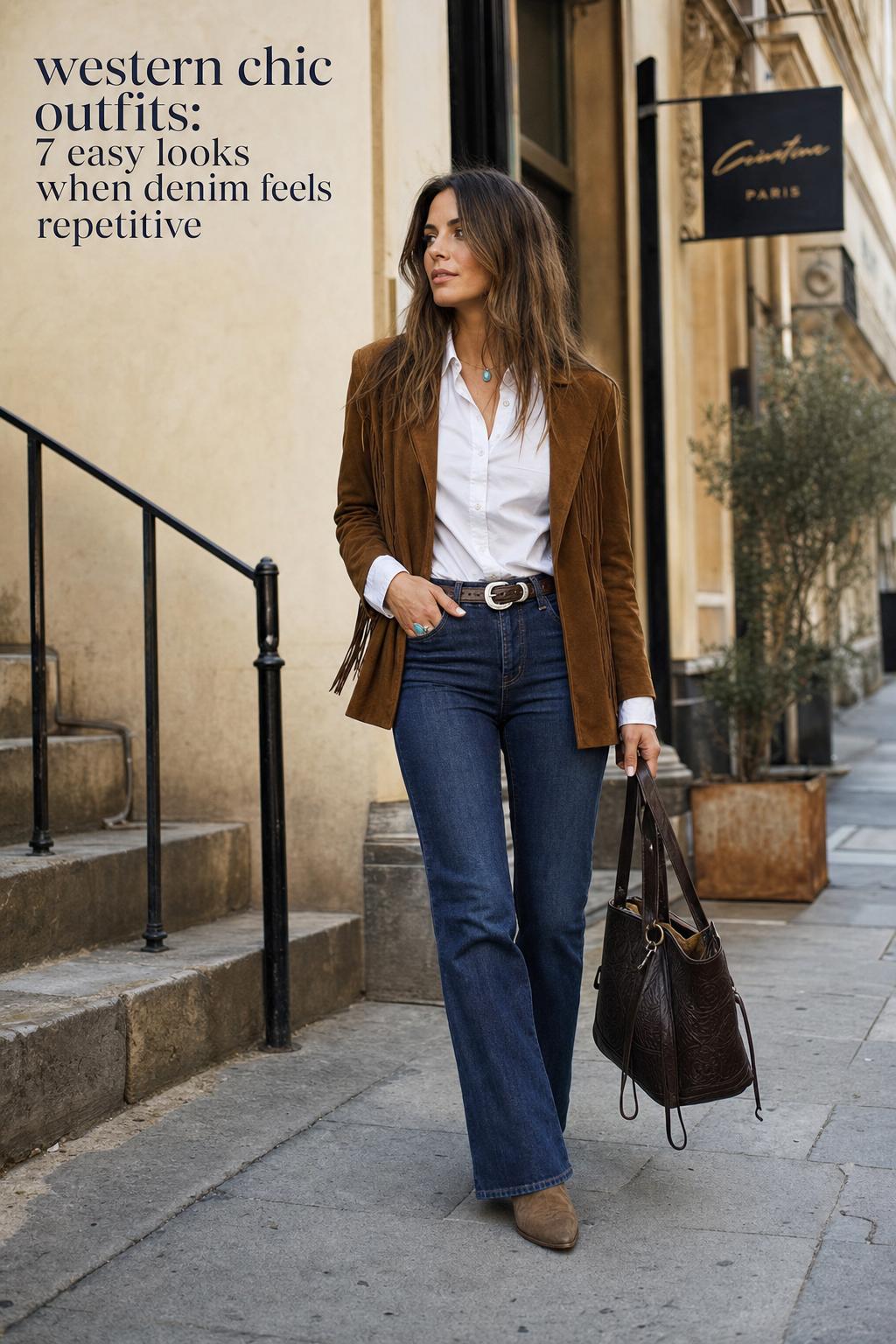
What makes western chic wearable is its flexibility. It can be built from pieces many women already own: jeans, a white shirt, a leather or suede layer, a dress with movement, a belt with presence. The styling difference comes from proportion, texture, and restraint. Instead of piling on every western reference at once, the strongest outfits use one or two clear anchors and let the rest of the composition stay refined.
This guide breaks down how to wear western chic outfits in a way that feels current, practical, and visually coherent across seasons, occasions, and personal style preferences.
Found the dress? Keep the rest in one place.
Zarellea brings guest details, vendors, timelines, and every next step together — so your wedding plan feels as good as your look.
What western chic actually means now
Western chic is best understood as a modern interpretation of western fashion rather than a literal reproduction of traditional western wear. It borrows the most recognizable visual signals of the category, including denim, cowboy boots, belts, hats, fringe, prairie silhouettes, and turquoise jewelry, then filters them through cleaner styling choices and more contemporary proportion play.
The distinction matters. Classic western wear can lean heritage-driven and highly specific. Western chic, by contrast, is edited. It often overlaps with cowgirl chic, cowboy-core, country chic, and western-inspired outfits, but the common thread is balance. A western ankle boot with tailored denim feels chic because the rest of the outfit is controlled. A prairie dress works when the accessories are selective. Fringe becomes elegant when it appears as textural punctuation instead of visual overload.
The mood also shifts depending on context. In a city setting, western chic tends to look sharper and more minimal. In places associated with ranch, mountain, or festival dressing, it can carry more texture, hats, and statement hardware. The core formula stays the same: one strong western signal, one grounding staple, and one thoughtful finishing layer.
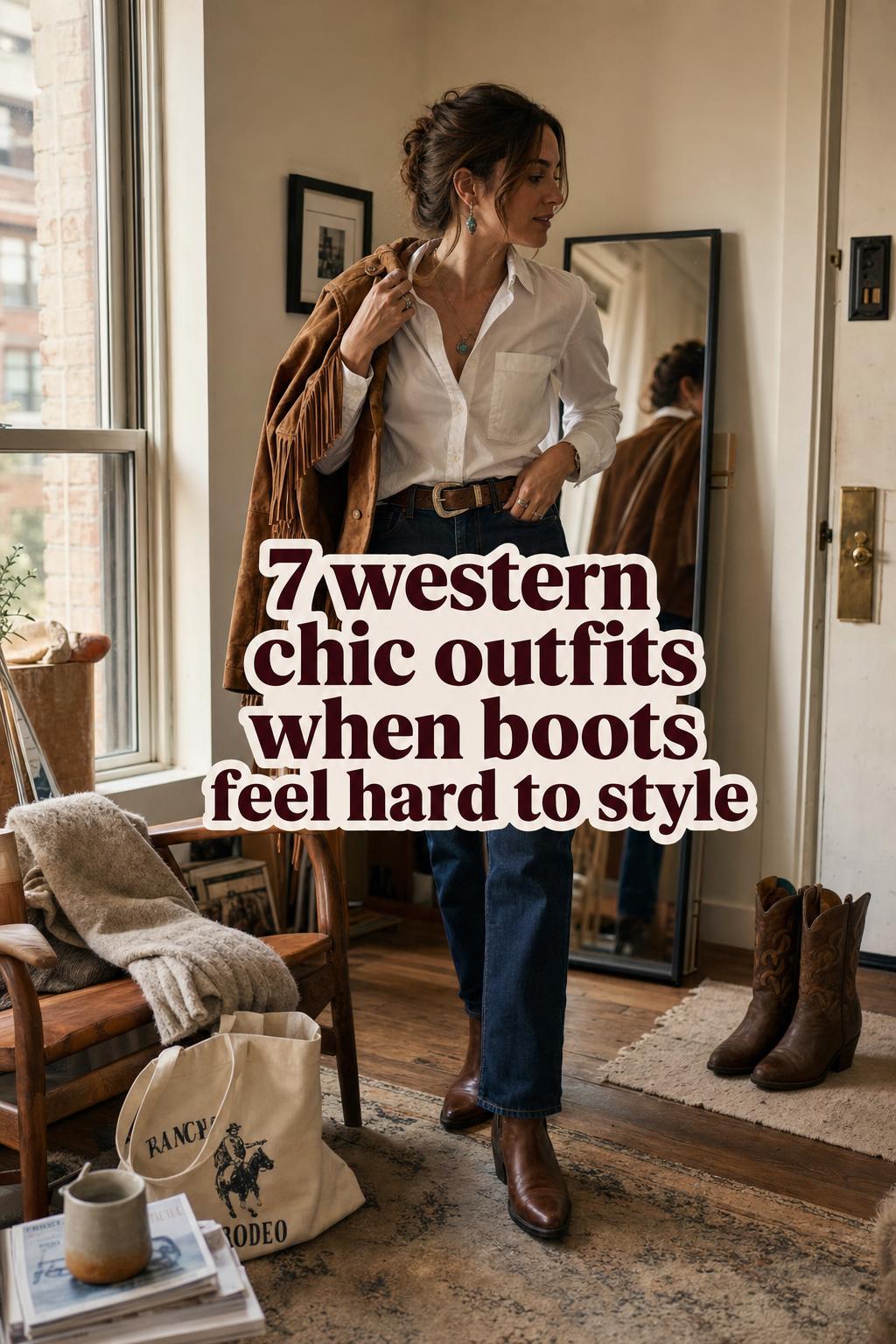
The wardrobe pillars that make the aesthetic believable
Denim as the visual anchor
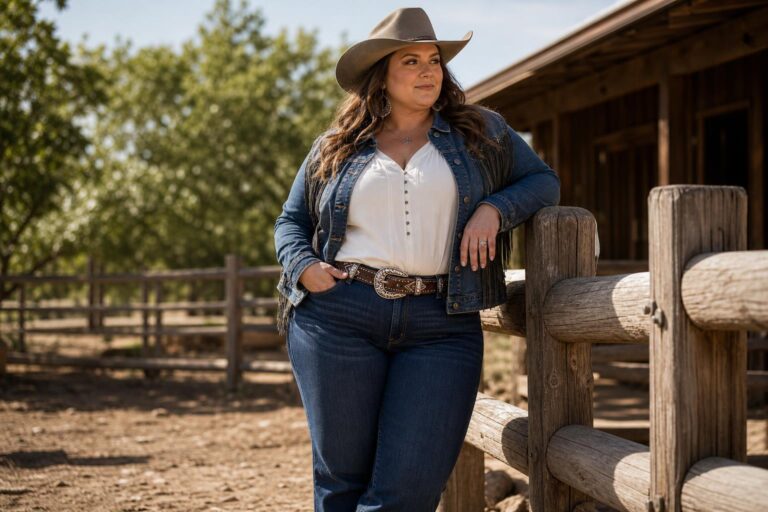
Denim is the foundation of most successful western chic outfits because it gives the aesthetic structure and authenticity without asking for too much styling effort. Bootcut jeans, wide-leg silhouettes, and high-rise cuts all fit naturally within this look. The choice depends on the shape you want to emphasize. Bootcut denim creates continuity with cowboy boots, while wide-leg denim introduces a more directional city feel.
Indigo and classic blue washes tend to read the most versatile. They hold the western reference clearly and pair easily with boots, belts, and crisp shirting. A darker wash often feels more polished for work or dinner, while lighter denim makes the look easier for daytime and weekend styling. Levi’s is a useful reference point here because the brand is logically tied to the denim-centered approach that defines so many western-inspired outfits.
The important detail is hem behavior. If you are styling denim with cowboy boots, the jeans should either break cleanly over the shaft or crop intentionally above it. The awkward middle point, where the hem catches and bunches unevenly, weakens the line of the outfit and makes the whole composition feel accidental.
Boots that ground the entire look
Cowboy boots are the clearest shorthand for western fashion, but not every boot creates the same effect. Taller shafts feel more traditional and often work best with dresses or skirts where the full shape of the boot can participate in the silhouette. Western ankle boots, on the other hand, are easier for everyday city wear and pair especially well with straight or cropped denim.
Heel height changes the mood. A lower heel keeps the look practical and understated. A more sculpted heel can make even simple jeans and a shirt feel intentional. Toe shape matters too. Sharper toes bring elegance and lengthen the line of the leg, while a more rounded shape softens the outfit and can feel less formal.
Style Insight: if the boots are heavily detailed, with embroidery or strong contrast stitching, the rest of the outfit benefits from restraint. If the boots are simple, they can support bolder elements elsewhere, such as a statement belt or a fringe jacket.
Belts, buckles, turquoise, and hats
Accessories are where western chic often becomes either beautifully specific or visually overcrowded. The most useful approach is to select one primary accessory language. That might be a belt with a prominent buckle, turquoise jewelry, a hat, or a bandana. Using all of them at once can tip the look into theme dressing unless the outfit is intentionally built for a rodeo or festival context.
Belts are especially effective because they create a visual break at the waist and reinforce the structured side of western styling. They also sharpen looser garments such as wide-leg jeans or a flowing prairie dress. Turquoise jewelry brings color and heritage cues, but a little goes a long way. A single necklace, ring, or earring set can be enough to establish the reference without distracting from the silhouette.
Hats work best when the rest of the outfit is simple and when the setting supports them. In Aspen, Jackson Hole, or at a country event, a western hat can feel integrated. In a dense city setting, it often requires stronger styling confidence and cleaner supporting pieces to avoid feeling disconnected.
Dresses and skirts with prairie movement
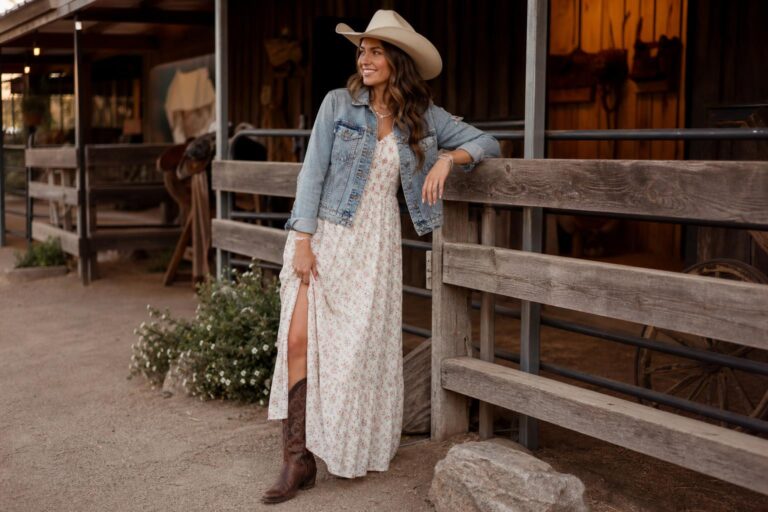
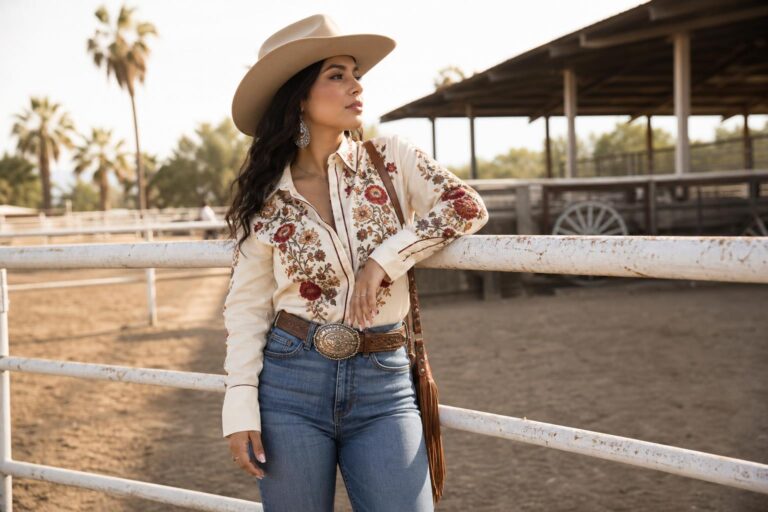
Prairie fashion introduces softness into western chic. Dresses and skirts add movement, romance, and a different kind of silhouette contrast, especially when paired with structured boots or a firm belt. This is where western prairie styling and boho-western fusion meet, but the strongest versions are never too sugary. The dress should have shape, and the accessories should add a little edge.
Embroidery, flowing hemlines, and easy volume all support the aesthetic. The practical challenge is proportion. A very full dress with a tall boot and a hat can become visually heavy if there is no waist definition. Adding a belt or choosing a dress with a cleaner shoulder line usually solves that issue.
Suede, leather, fringe, and embroidery
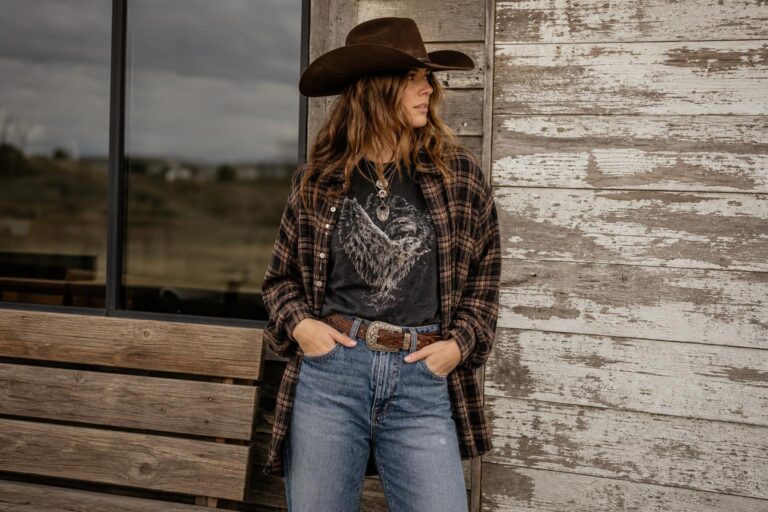
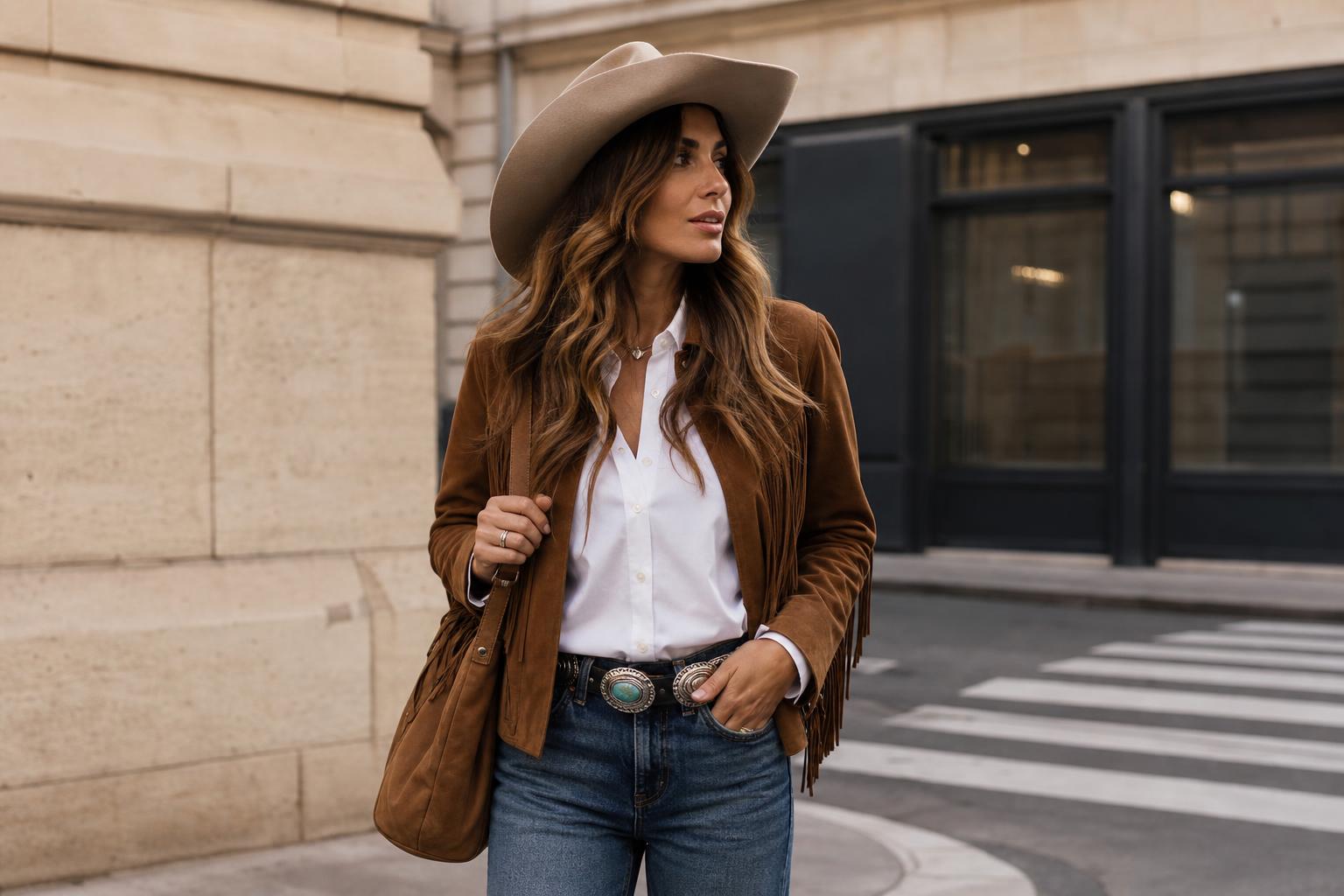
Texture is what gives western chic depth. Suede jackets, leather accents, fringe details, and embroidery all appear repeatedly across western-inspired styling because they add surface interest even when the color palette is restrained. These pieces are often the difference between an outfit that feels simply casual and one that carries a stronger fashion point of view.
There is also a practical hierarchy here. A suede jacket is one of the most versatile investments because it layers over denim, dresses, and shirting without needing much support. Fringe is more directional and works best as a statement piece. Embroidery can be subtle enough for everyday wear if it appears on boots, a shirt yoke, or a trim detail rather than across every garment.
Relaxed denim formulas with city polish
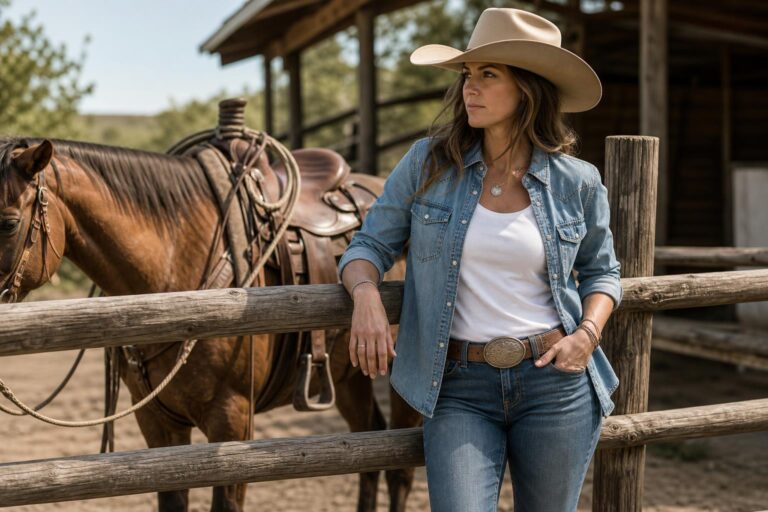
The easiest entry into western chic starts with a clean denim base and one strong accessory cue. Think high-rise jeans, a crisp shirt, cowboy boots, and a belt that gives the waist some definition. This is the outfit formula that repeatedly appears in celebrity street style and in editorial coverage around figures like Gigi Hadid and Bella Hadid. It works because it does not try too hard. The western element is obvious, but the overall silhouette stays grounded in everyday dressing.
In Los Angeles, this combination reads effortless because it mirrors the city’s relaxed approach to daytime dressing. In New York, the same formula benefits from stronger structure, perhaps darker denim, a sleeker boot, or a more directional jacket. In Paris, tonal restraint helps the look feel aligned with the city’s polished fashion language. The geography changes the styling energy, but not the bones of the outfit.
Why this combination works: denim provides familiarity, cowboy boots provide identity, and the belt creates a focal point that visually pulls the outfit together. If your proportions tend to be petite, a higher rise and a boot with a cleaner shaft line help avoid visual heaviness. If you prefer a more relaxed shape, a wide-leg jean with a tucked knit or shirt gives the look movement without losing structure.
- Choose one wash family and stay consistent across the outfit.
- Let the boot shape guide the jean hem rather than forcing the denim to fit awkwardly.
- Add turquoise jewelry only if the rest of the palette is relatively quiet.
- Use a shirt with some crispness if the denim is loose, so the silhouette does not collapse.
Prairie softness balanced by sharper accessories
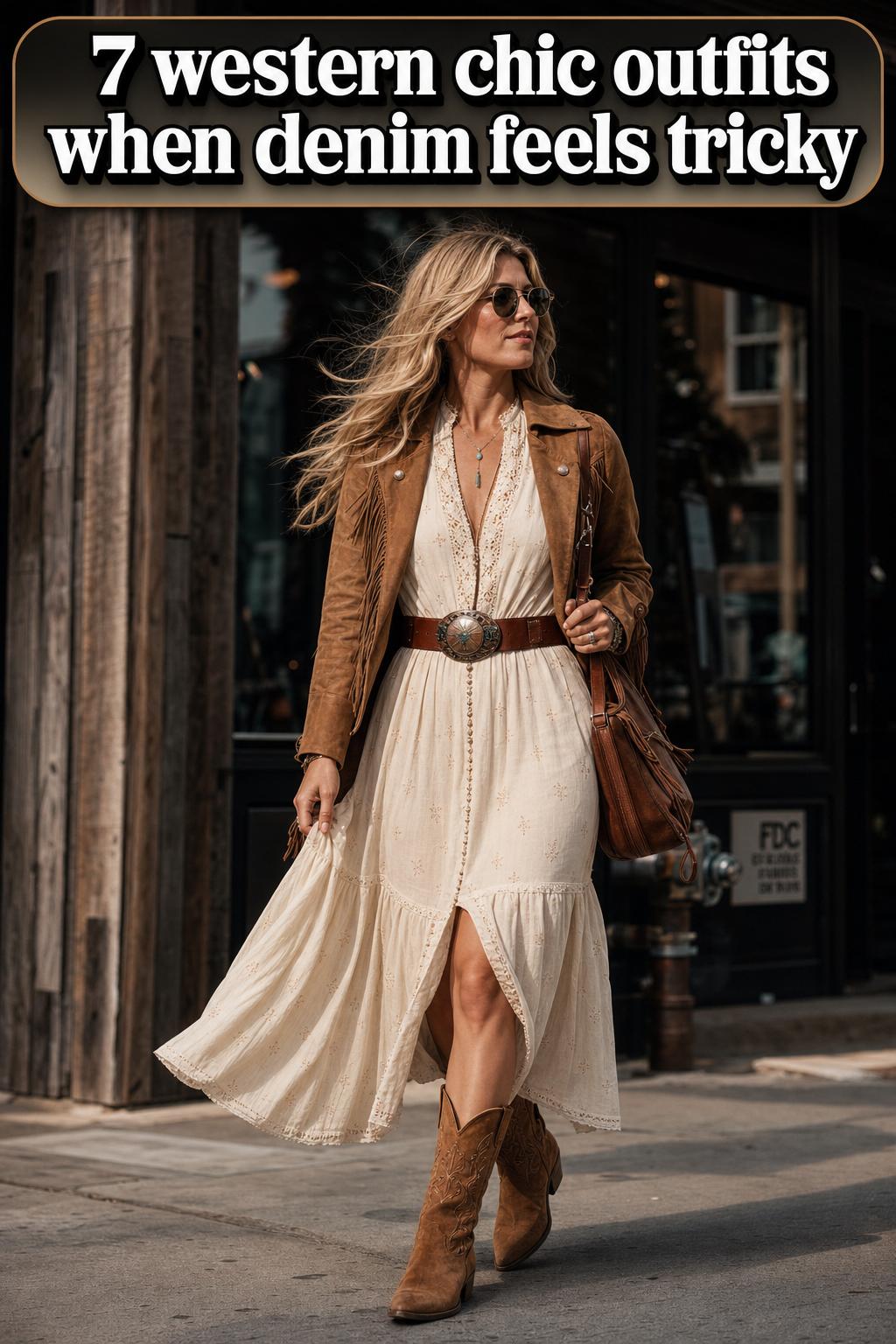
Not every western chic outfit needs jeans. One of the strongest interpretations of the aesthetic comes through prairie dresses styled with more disciplined accessories. This direction is especially useful for readers drawn to western prairie fashion but wary of looking overly costume-like or overly bohemian.
A dress with volume, embroidery, or a softly gathered shape creates the romance. Cowboy boots introduce contrast and stop the outfit from becoming too delicate. A belt can define the waist, while turquoise jewelry adds a subtle western signal. Lulus has leaned into this territory through western chic clothing framed around prairie silhouettes, which reflects how commercially important this softer version of the trend has become.
The visual logic is about opposition. Soft fabric plus structured footwear. Movement plus grounded hardware. A dress that floats needs something with firmness to keep the look modern. This is why boots work better here than overly delicate sandals. They provide weight and a directional finish.
Seasonal adaptation tip: in warmer weather, keep the dress lighter and the accessories minimal. In cooler months, add a suede jacket or an outer layer with texture rather than a generic smooth coat. The tactile quality matters more than complexity.
Fringe, texture, and statement layers that do the work for you
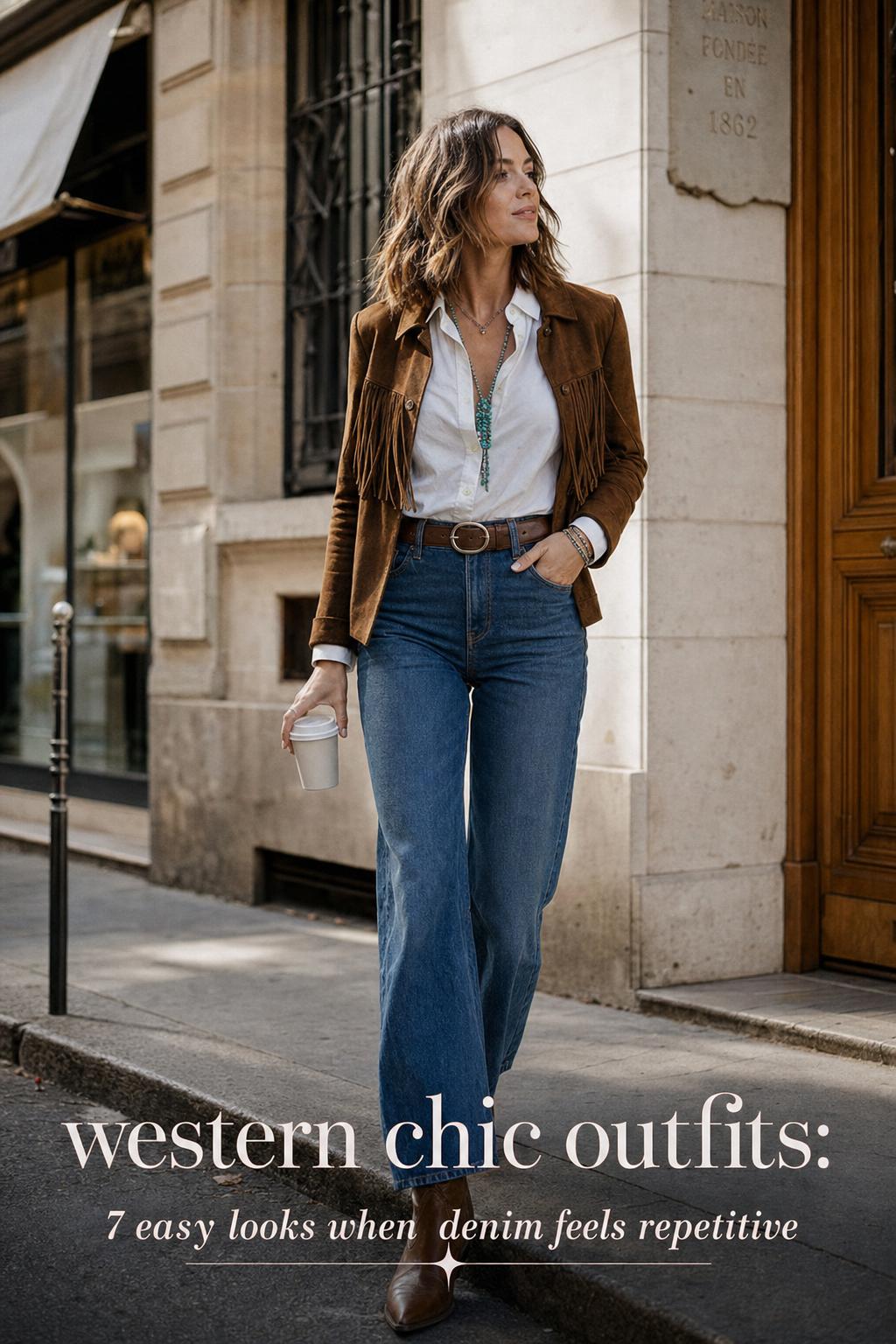
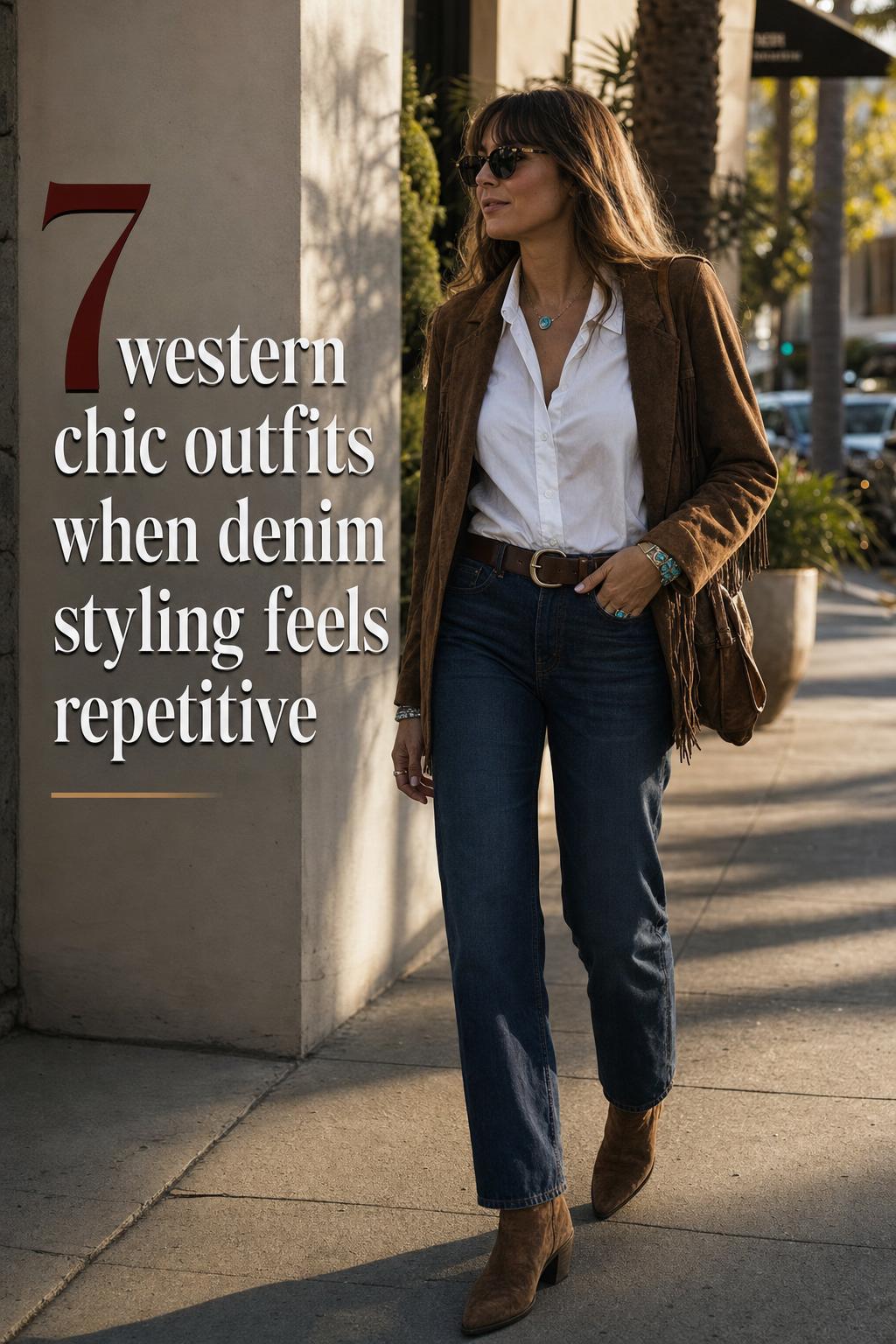
Some western chic outfits are built from basics. Others rely on one unforgettable layer. Fringe jackets, suede outerwear, and embroidered toppers occupy that second category. They are powerful because they can transform simple denim and boots into a complete style statement in seconds.
This approach is especially useful for women who want the mood of cowboy-core without changing their entire wardrobe. Keep the base simple: straight jeans, a fitted tank or shirt, and neutral boots. Then add the textured outer layer. The statement piece becomes the visual anchor, which means every other component can stay quiet.
There is a trade-off to keep in mind. Fringe adds movement and personality, but too many moving elements can create visual noise. If the jacket has dramatic fringe, skip the oversized hat and heavy jewelry. If the embroidery is ornate, use a cleaner denim silhouette. Western chic is strongest when one detail leads and the others support.
Easy ways to recreate the look
- Start with a neutral base in denim and boots.
- Add one textured layer: suede, fringe, or embroidery.
- Repeat no more than one other western signal, such as a belt or turquoise earring.
- Keep the color palette close so the texture stands out more clearly.
Country events, festivals, and rodeo dressing with real-life practicality
Western chic often gets tested in event settings: country music festivals, rodeos, outdoor gatherings, and country weddings. These situations invite more visible western references, but they also demand comfort, movement, and weather awareness. An outfit can look compelling in a photo and still fail if the footwear is too delicate, the hemline drags, or the layers are impractical for a long day outside.
For festival western outfits or rodeo fashion, boots should do actual work. Choose a pair you can walk in for hours. Denim shorts or jeans can work, but dresses and skirts often feel cooler and move better in outdoor settings. The key is to keep the proportions stable. If the dress is short or highly detailed, balance it with sturdy boots and a belt. If the denim is more fitted, introduce ease through the top or outer layer.
Bandanas and hats make more sense here than in a strict urban setting because the context supports them. So does stronger fringe. Still, the best event outfits remain edited. One practical lens is to ask whether each piece contributes to either comfort, silhouette, or identity. If it does none of the three, it is likely clutter.
Tips: if you are dressing for a country wedding, lean more polished than literal. A prairie dress with refined boots and restrained turquoise jewelry feels more appropriate than a head-to-toe rodeo interpretation. For a festival, you can push texture and hardware slightly further, but keep the footwear grounded and the fabrics breathable.
Office-appropriate western chic without looking themed
One of the most underused directions in western fashion is office-ready styling. This version depends on discipline. The goal is not to bring every western reference into a professional setting. The goal is to use one or two signals in a polished outfit composition that still reads credible in a work environment.
The easiest route is tailored denim or dark jeans, a structured shirt or clean knit, and western ankle boots with minimal decoration. Add a belt if the waist needs definition. If your workplace supports dresses, a prairie-influenced silhouette can work when the fabric is not too gauzy and the accessories stay controlled. A suede jacket can replace a standard layer in more relaxed offices, especially during seasonal transitions.
Why this works: western elements are functioning as accents rather than a full costume vocabulary. The professional side of the outfit comes from clean lines, edited color, and a reduced accessory count. The western side comes from the boot shape, belt hardware, or subtle texture.
- Choose dark or mid-wash denim over distressed finishes.
- Favor western ankle boots instead of heavily embroidered tall boots.
- Use one statement accessory, not several.
- Keep hats for off-duty settings unless your workplace has a highly creative dress culture.
Regional nuance changes the mood of the outfit
Western chic does not look identical across the United States. The same core pieces, denim, boots, belts, dresses, hats, and textured layers, take on different energy depending on region and setting. Understanding that nuance makes the aesthetic feel more convincing and less copied.
Southwest and ranch-influenced styling
In a Southwest or ranch-adjacent mood, the styling can hold more visible western identity. Turquoise jewelry feels especially coherent here, as do suede layers, hats, and richer textural combinations. The palette often benefits from earthy restraint so that the accessories do not compete with one another.
Midwest prairie texture and layering
A Midwest-leaning interpretation often feels softer and more practical. Prairie dresses, denim, boots, and functional layering carry the look. The emphasis is less on dramatic styling and more on garments that move easily through changing weather and everyday life. Texture becomes important because it creates visual interest without relying on overly loud detail.
East Coast refinement with western accents
On the East Coast, especially in cities like New York, western chic tends to become more distilled. The boots are cleaner, the denim line sharper, and the accessories more selective. Instead of building an overt western outfit, the styling often uses one reference, perhaps a cowboy boot or statement belt, inside an otherwise urban wardrobe.
Mountain and resort influence in Aspen and Jackson Hole
Aspen and Jackson Hole naturally support more texture and visible western references because the environment makes them feel grounded. Suede, layered denim, hats, and sturdy boots all make sense here. The best versions still avoid excess, but they can carry more weight and personality than an equivalent city outfit.
The brands and retail spaces shaping the current look
The western chic conversation is split between editorial influence and shopping accessibility. On the editorial side, fashion coverage from Marie Claire and Who What Wear has framed the look through celebrity styling, city adoption, and trend language like cowgirl chic and cowboy-core. That editorial lens matters because it shows readers how western references are being modernized rather than simply sold.
On the shopping side, retailers and e-commerce brands have helped translate the trend into clear wardrobe categories. ASOS presents western outfits through trend-driven product curation. Showpo pushes a cowboy chic collection angle with dresses, denim, boots, and fringe pieces. Lulus builds out western prairie fashion with softer, dress-led styling. Cowgirl Charm sits closer to niche western wear and everyday southern chic. Sew Mama Sew and Vetted Magazine frame the look through outfit ideas and practical combinations that readers can adapt without needing a designer wardrobe.
This split is useful. Editorial content explains the styling logic. Retail hubs make the trend easier to shop. The strongest personal style comes from using both: learning the visual principles from fashion media, then selecting only the pieces that fit your own lifestyle and climate.
How to build a western chic wardrobe without overbuying
Because western chic is so identifiable, many people make the same mistake at the start: they buy too many statement pieces at once. The result is a wardrobe full of visually specific items that do not combine easily. A more intelligent approach is to build from anchors, then add personality gradually.
The smartest first purchases
- A pair of cowboy boots or western ankle boots you can walk in comfortably.
- Well-fitting denim in a silhouette that works with those boots.
- A belt that adds structure and western character.
- One dress or skirt with prairie influence if you want a softer interpretation.
- One textured layer, ideally suede, for seasonal depth.
Most versatile item: the boots. They can shift jeans, dresses, and skirts into western territory immediately. After that, denim offers the highest repeat value. A strong belt is often the least expensive way to make existing outfits feel more aligned with the aesthetic.
Budget-friendly alternative: instead of buying a full western wardrobe, use accessories to create the mood. A belt, turquoise jewelry, or a single pair of boots can transform pieces you already own. This is especially effective if your current wardrobe is built around denim, white shirts, neutral knits, or simple dresses.
Investment logic matters too. Boots and suede outerwear usually deliver the strongest long-term value because they carry the style identity on their own. Highly specific fringe garments are better purchased once you understand how often you will actually wear them.
Common styling mistakes that flatten the effect
Western chic is not difficult, but it is easy to overstate. Most styling problems come from using too many coded elements at once or ignoring proportion. When the aesthetic fails, it usually does so because the outfit stops looking edited.
- Combining boots, hat, fringe, turquoise, bandana, and heavy belt hardware all in one everyday outfit.
- Wearing denim that bunches awkwardly over the boot shaft.
- Choosing a prairie dress with too much volume and no waist definition.
- Using distressed or overly busy pieces when a cleaner silhouette would look more current.
- Forgetting context and wearing event-level western styling in environments that call for more restraint.
The fix is almost always subtraction. Remove one accessory. Simplify the palette. Let one western cue lead. This is why the best western chic outfits often look deceptively simple. They are built with control.
Why celebrity and city influence matters to the trend
Fashion aesthetics gain traction when they move between recognizable people, places, and shopping behavior. Western chic has done exactly that. Gigi Hadid and Bella Hadid have helped demonstrate how jeans, cowboy boots, belts, hats, and turquoise accents can feel directional in daily dressing rather than reserved for themed events. That celebrity visibility gives the look cultural momentum.
At the same time, trend coverage has tied western fashion to urban adoption in New York and Paris while also maintaining its connection to places like Aspen, Jackson Hole, and Los Angeles. That broadens the visual language. The style is no longer confined to one region or one type of wardrobe. It can read sleek, rugged, romantic, or minimal depending on where and how it is worn.
This flexibility is part of the reason western chic continues to resonate. It gives wearers a clear style identity without demanding uniformity. One woman may build the aesthetic through prairie dresses and turquoise jewelry. Another may rely almost entirely on denim, a belt, and sharp boots. Both can feel fully within the same fashion conversation.
The heritage, sustainability, and authenticity conversation
One of the more interesting directions around western fashion is the growing interest in heritage references, regional authenticity, and more thoughtful shopping. Discussions around western chic often emphasize trend appeal, but there is also value in understanding the craft logic behind the look: embroidery, leather and suede texture, accessory traditions, and the influence of western heritage designers and makers.
Nudie Cohn is one of the names that surfaces when conversations move toward western heritage influence. That kind of reference adds depth because it reminds readers that western styling has a design lineage, not just a trend cycle. Even if your personal wardrobe interpretation remains modern and minimal, knowing the heritage side of the aesthetic can sharpen your eye for what feels authentic versus overly generic.
Sustainability also enters the conversation through vintage sourcing, upcycling, and careful wardrobe building rather than constant trend purchasing. Western chic is well suited to that mindset because many of its strongest pieces, boots, belts, denim, suede jackets, can carry long-term wear and often look better with age. The most modern approach is not to buy everything new; it is to assemble the look gradually and with intention.
A wearable framework for choosing your version of western chic
If you are trying to decide which direction of western chic fits your life, start with context rather than trend intensity. Think about where you will actually wear the clothes: office, city weekends, festivals, travel, country events, dinners, or everyday errands. Then choose the version of the aesthetic that supports those settings.
If your wardrobe is mostly casual and denim-led
Prioritize boots, jeans, and belts. This gives the highest wearability and the easiest daily integration. Add hats and turquoise sparingly.
If you prefer dresses and softer silhouettes
Lean into prairie fashion, but control it with structured boots and one clear accessory. Keep the fabrics fluid and the finishing details restrained.
If you want fashion-forward city styling
Use western ankle boots, dark denim, and one directional accessory. Let New York or Paris-style polish guide the outfit rather than full western layering.
If you dress frequently for events or travel to western destinations
You can carry more texture, hats, suede, and statement hardware. Aspen, Jackson Hole, festival settings, and rodeo-adjacent occasions naturally support a stronger visual read.
This framework helps prevent impulse dressing. Instead of asking whether a piece is western enough, ask whether it creates silhouette balance, serves your setting, and integrates with what you already own.
FAQ
What defines western chic outfits?
Western chic outfits combine recognizable western elements such as denim, cowboy boots, belts, hats, fringe, prairie dresses, and turquoise jewelry with more modern, edited styling. The key difference is restraint: the look feels intentional because only a few western cues are used at once, and the silhouette stays polished.
How do I wear cowboy boots without looking costumey?
Use cowboy boots as the main statement and keep the rest of the outfit clean. Pair them with well-fitting jeans, a simple dress, or a structured shirt, then limit additional western accessories. The boots should feel like the anchor, not one detail among too many competing references.
Which boots pair best with a prairie dress?
Tall cowboy boots work well when you want the full western silhouette to show, while western ankle boots create a lighter, more everyday effect. The best choice depends on the dress volume: fuller dresses often benefit from a more grounded boot, while simpler dresses can handle a sharper, cleaner ankle style.
Can western chic work for the office?
Yes, when the western references are subtle. Dark denim or tailored separates, western ankle boots, a clean belt, and controlled accessories can make the look feel polished rather than themed. Office-ready western chic relies on clean lines and minimal decoration.
What are the most important pieces to buy first?
Start with boots, denim, and a belt. Those three items create the strongest western foundation and work with a wide range of existing wardrobe staples. If you want a softer interpretation, add one prairie-inspired dress or skirt after those basics are covered.
Are western chic outfits only for festivals or rodeos?
No. Festivals and rodeos allow for stronger western styling, but the aesthetic also works for everyday city wear, casual weekends, dinners, travel, and some work settings. The difference is styling intensity: daily outfits usually need fewer western references than event dressing.
How do I style turquoise jewelry with western outfits?
Use turquoise as a precise accent rather than a dominant theme. One necklace, ring, or pair of earrings can add western identity without overwhelming the outfit. It works especially well with denim, suede, prairie dresses, and belts when the rest of the palette is relatively calm.
What is the difference between western chic, cowgirl chic, and cowboy-core?
They overlap heavily, but the emphasis shifts slightly. Western chic usually suggests a more polished, fashion-edited interpretation. Cowgirl chic often leans feminine and outfit-driven. Cowboy-core is broader trend language that can include both rugged and city-ready versions of western style.
Where can I shop for western-inspired pieces?
Retailers and style hubs such as ASOS, Showpo, Lulus, and Cowgirl Charm all offer western-inspired categories or collections, while editorial inspiration can come from outlets like Marie Claire, Who What Wear, Sew Mama Sew, and Vetted Magazine. The best approach is to use those sources selectively and build around the pieces that fit your own wardrobe habits.
How can I make western chic feel personal instead of trend-driven?
Choose the version that aligns with your lifestyle and natural wardrobe preferences. If you live in denim, start there. If you prefer dresses, build from prairie silhouettes. If you dress for cities like New York or Los Angeles, keep the styling sharper and more minimal. Personal style appears when the western references support your life rather than replace it.