Comfy Goth Outfits for Real Life
Some aesthetics ask for spectacle. Others ask to be lived in. That is the appeal behind comfy goth outfits: they keep the visual gravity of goth fashion while shifting the focus toward movement, softness, and everyday function. The mood stays dark, but the wardrobe becomes more flexible, more layered, and much easier to wear from morning through night.
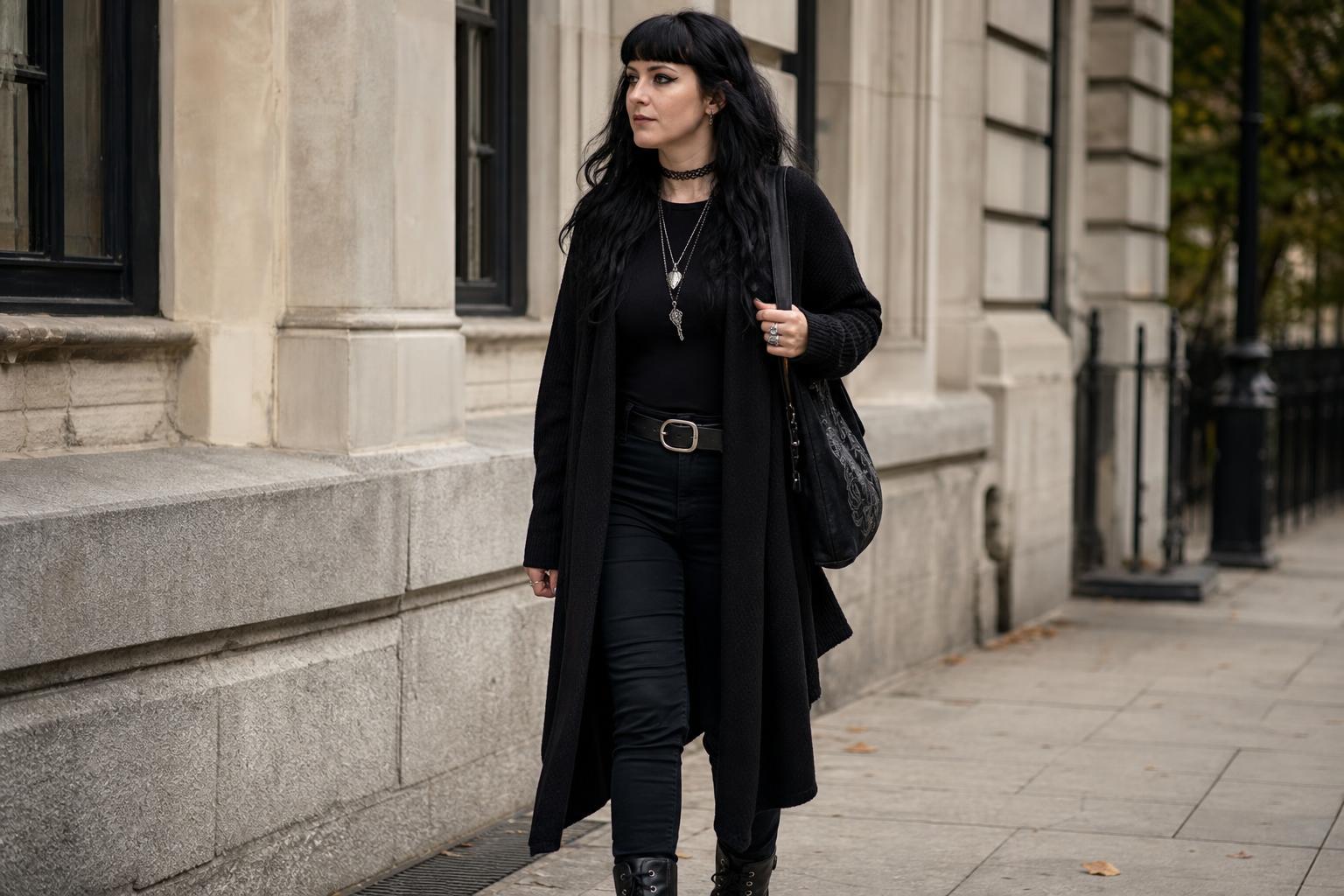
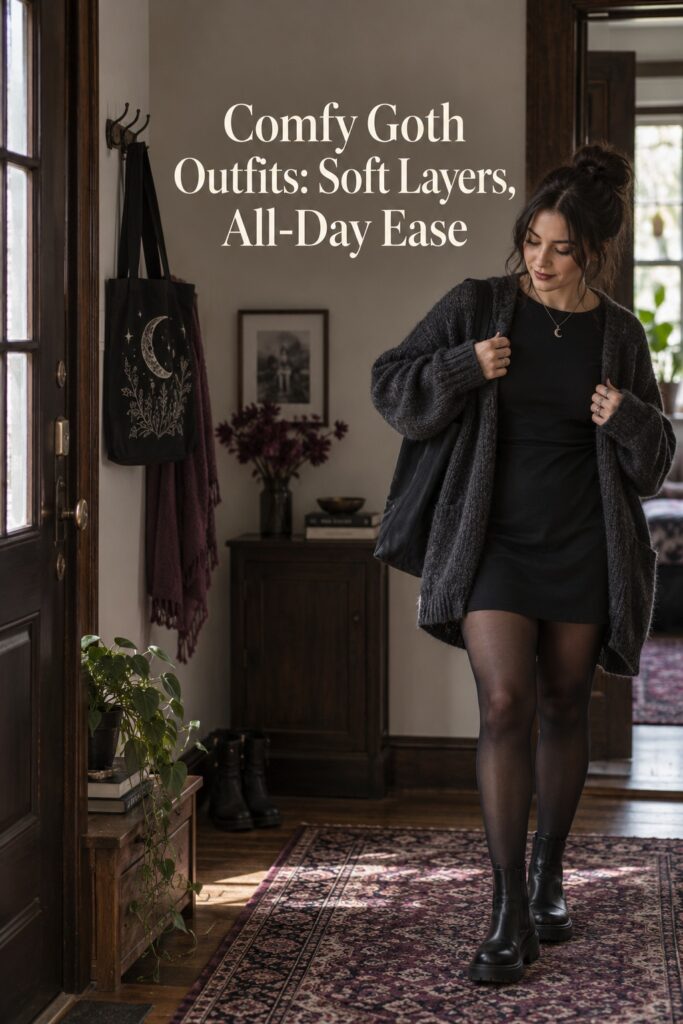
This is also why soft goth and casual goth are so often grouped together. Both borrow from the larger gothic wardrobe, but they soften the edges through fabric choice, simpler outfit composition, and practical proportions. A maxi dress under a longline coat, a black tee with leggings and combat boots, a knit layer over a fitted base: these combinations still read clearly as goth, yet they do not rely on costume-like intensity.
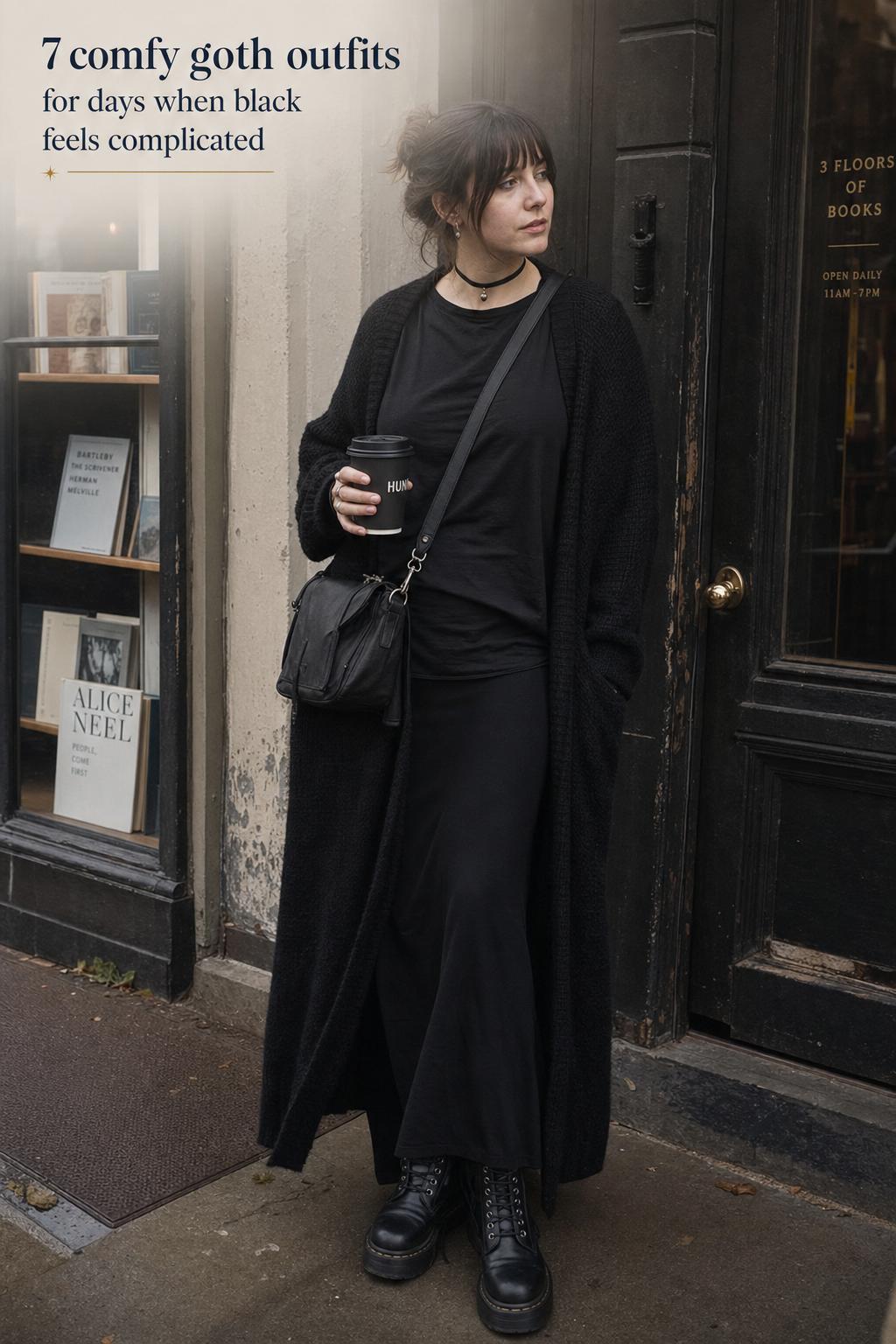
What makes the conversation more interesting is that comfort does not erase style identity. In fact, it sharpens it. Once extreme detail is removed, silhouette, texture contrast, and accessory placement become even more important. The difference between dark goth, soft goth, and everyday gothic wear is often less about dramatic declaration and more about how fabrics, layering, and visual weight are handled in real life.
For anyone building a wardrobe that feels dark, wearable, and personal, the smartest approach is not copying a single lookbook. It is learning the visual logic behind the aesthetic and then translating it into a wardrobe that works for work, weekends, campus, cold weather, and nights out. That is where comfy goth dressing becomes less of a trend and more of a style system.
Found the dress? Keep the rest in one place.
Zarellea brings guest details, vendors, timelines, and every next step together — so your wedding plan feels as good as your look.
The visual language of comfy goth
Comfy goth sits at the intersection of atmosphere and utility. It keeps the black color palette, the shadowy mood, and the accessory vocabulary associated with goth fashion, but it changes the outfit structure. Instead of relying on stiffness or high-maintenance pieces, it leans on leggings, hoodies, dresses, tees, knitwear, and outerwear that can be layered without restricting movement.
That is why soft goth often becomes the entry point. Soft goth is less about abandoning gothic style and more about filtering it through a capsule wardrobe mindset. The base is usually built from all-black basics, then developed through tonal layering, mesh details, velvet accents, or jewelry that adds definition without making the outfit feel heavy.
Dark goth, by comparison, often reads more deliberate and visually weighted. The same black palette may be present, but the styling usually emphasizes stronger contrast through dramatic layering, more pronounced accessories, and deeper textural intensity. Casual goth lives between the two. It is practical, daily, and less formal, but still recognizably rooted in gothic wardrobe codes.
The key visual difference
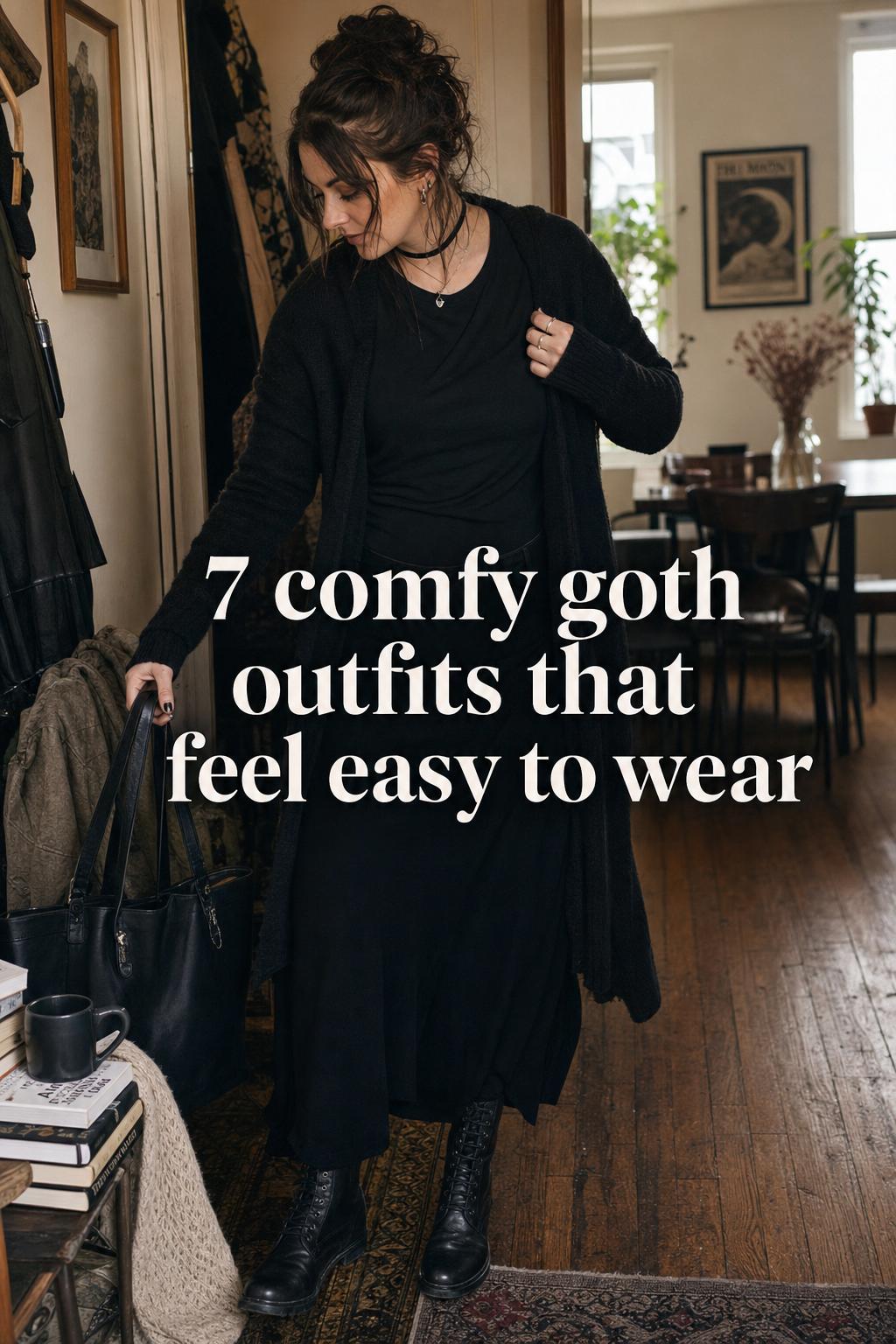
Soft goth diffuses the mood. Dark goth concentrates it. Casual goth relaxes it. In wearable terms, that means a soft goth outfit might center on a jersey dress, cardigan, and ankle boots; a darker interpretation may swap the cardigan for a longline coat and add heavier jewelry or a more severe boot. The pieces can overlap, but the proportion play and styling intensity change the final impression.
Why everyday goth works best through a capsule wardrobe
A gothic wardrobe becomes far more useful when it is treated as a system rather than a series of isolated statement looks. This is why the soft goth capsule wardrobe concept feels so practical. It allows the aesthetic to stay cohesive while making outfit building faster, especially for daily wear.
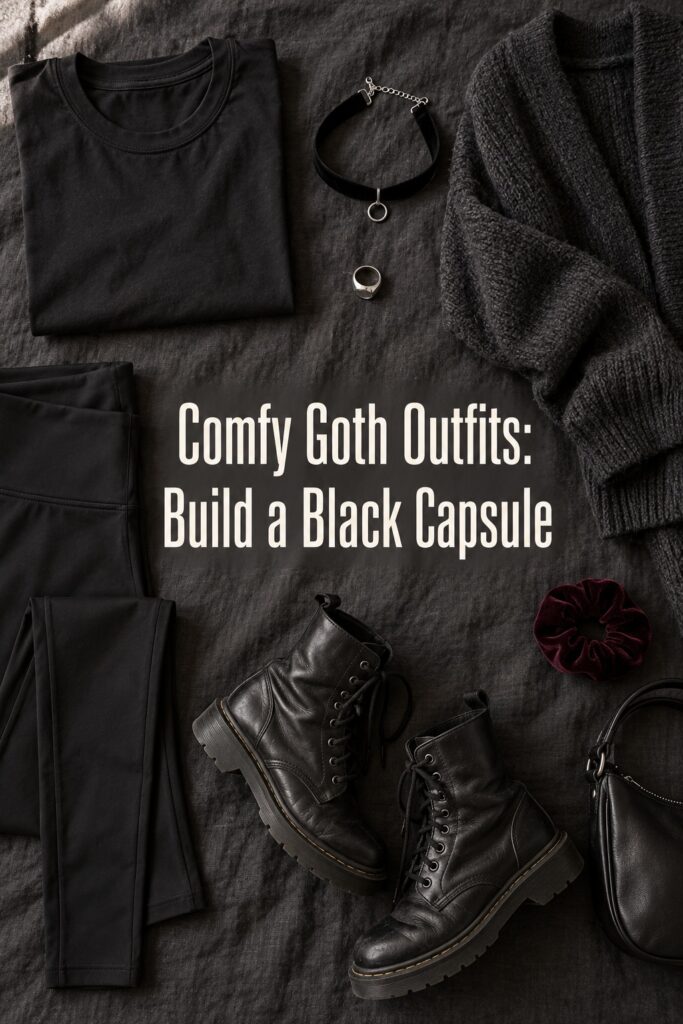
The most wearable wardrobes in this space are built around repeatable foundations: tops, leggings or black pants, dresses, skirts, outerwear, and a few dependable layers. The goal is not variety for its own sake. The goal is interoperability. A base tee should work under a cardigan, under a jacket, or with a skirt. A dress should shift from daytime to evening depending on boots, jewelry, and outerwear.
This approach is especially relevant in the United States, where wardrobes often need to move across very different settings in one day. A work-friendly blouse and black pants can still feel gothic with the right silhouette and accessories. A campus outfit can rely on a hoodie and leggings without losing its edge if the color palette and footwear stay coherent. A weekend look can become more expressive simply by adding mesh or velvet texture.
Core pieces that anchor the wardrobe
- black tops and base tees
- leggings or black pants for easy daily styling
- dresses, including wrap dresses and maxi silhouettes
- skirts that can be styled with hoodies, knitwear, or fitted tops
- longline coats and lighter outerwear for layering
- knitwear and cardigans for warmth and texture
- combat boots or ankle boots as visual anchors
- chokers, rings, bags, and jewelry for identity and finish
These pieces work because they are modular. They allow the aesthetic to remain dark and coherent without demanding a completely different wardrobe for every occasion.
Fabrics decide whether goth feels wearable or performative
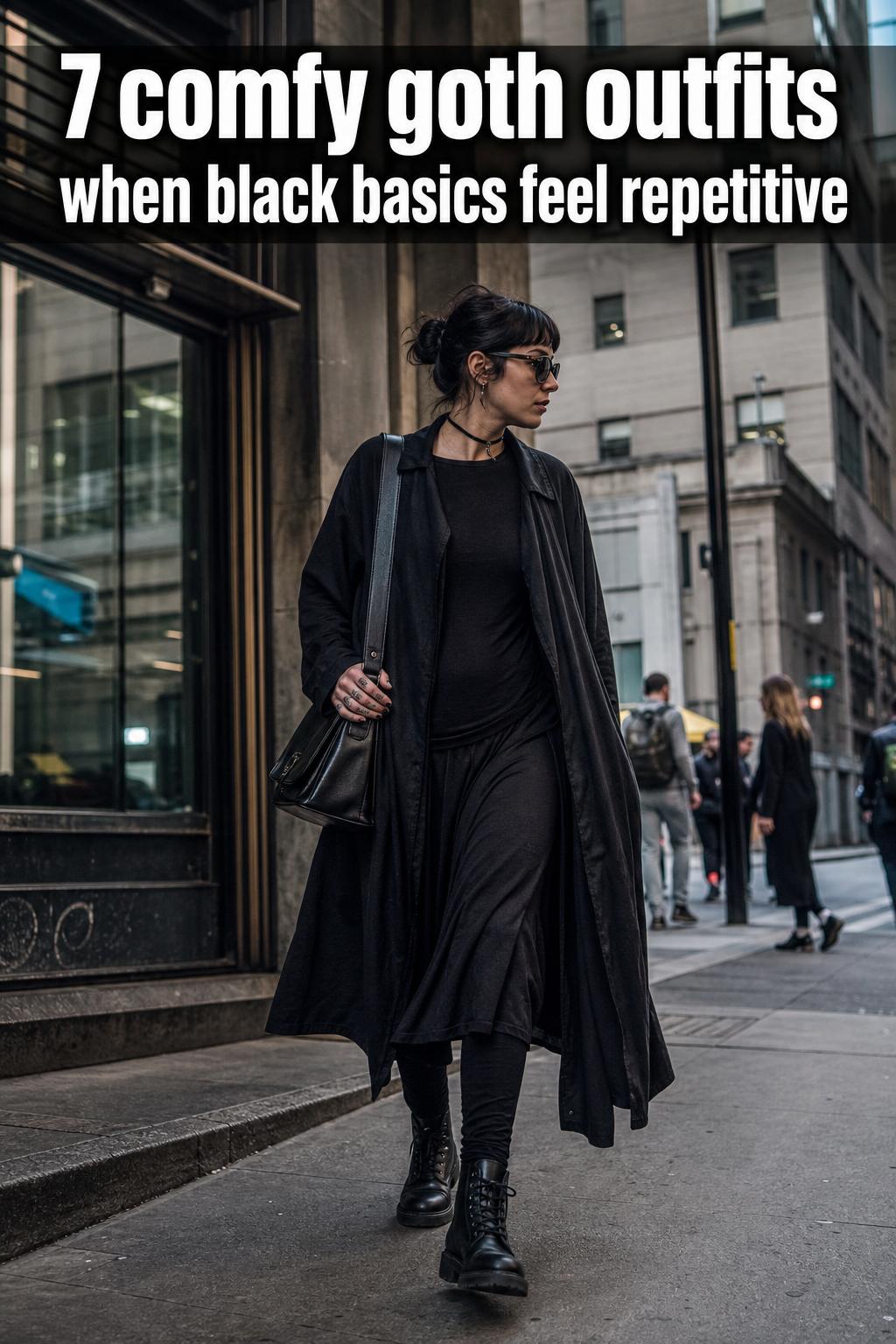
If silhouette is the outline of a goth outfit, fabric is the reason it succeeds or fails over the course of a day. Comfortable goth dressing depends heavily on material choice. Cotton jersey, knit fabrics, stretch-friendly pieces, velvet, and mesh all appear repeatedly because they create the right texture story without making the outfit rigid.
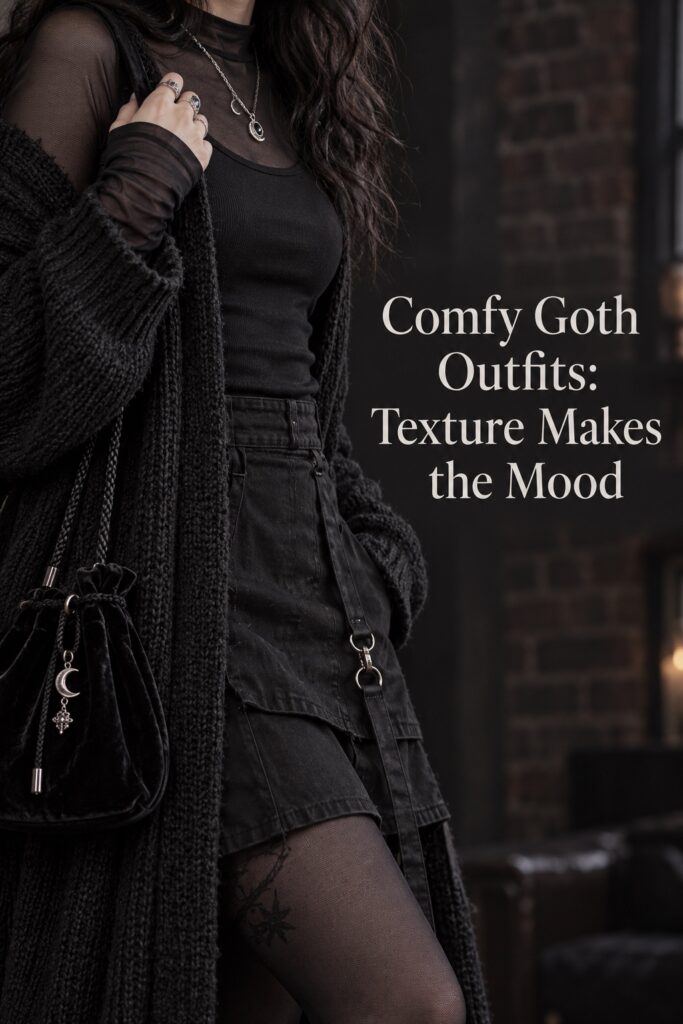
Cotton and jersey are essential because they make the all-black wardrobe feel livable. They soften the severity that can sometimes come with monochrome dressing. Knitwear adds warmth and gentle volume, which is particularly useful when balancing fitted leggings or a slim dress. Velvet brings a richer, darker surface quality, but it works best when used as a texture accent rather than overwhelming the whole outfit. Mesh is one of the easiest ways to preserve edge while keeping a look light.
The emotional effect matters too. A wardrobe made only of flat black basics can start to feel visually one-note. Texture contrast prevents that. Even within one color family, a velvet dress under a matte coat, or a mesh layer under a soft jersey tee, creates dimension. That is often what separates an intentional gothic outfit from an outfit that is simply black.
Why this combination works
A successful comfy goth look rarely depends on one dramatic item. It usually depends on at least two contrasting fabric behaviors. A soft base layer grounds the outfit; a richer or more sheer layer adds mood. That contrast keeps the styling expressive while preserving comfort.
Tips for choosing fabrics
- use cotton jersey and soft tees for base layers that can be worn repeatedly
- add velvet selectively so the outfit gains depth without feeling overly formal
- use mesh as a light visual layer rather than the main source of warmth
- bring in knitwear when the outfit needs softness, volume, or seasonal practicality
- mix matte and textured black surfaces to keep monochrome dressing from looking flat
Layering is where the aesthetic becomes personal
Layering is not just a cold-weather habit in goth style. It is one of the main ways the aesthetic communicates mood, proportion, and confidence. In comfy goth outfits, layering also solves a practical problem: how to make dark clothing feel dynamic without relying on discomfort.
A longline coat immediately changes how the body is framed. It elongates the silhouette, gives a dress or leggings more presence, and creates movement. A cardigan softens the outfit and makes the look more approachable. A sheer undershirt under a tee adds depth without bulk. These are not random additions. Each one alters the way the black palette is perceived.
There is also a seasonal intelligence to layering. In winter, knitwear and outerwear do most of the visual work. In milder conditions, the outfit can rely more on base layers, dresses, and lighter accessories. For transitional weather, the strongest combinations usually involve one fluid piece, one fitted piece, and one layer that adds structure. That balance keeps the outfit from becoming either shapeless or overly severe.
Different ways these aesthetics handle layering
Soft goth layering tends to feel fluid and blended. A wrap dress, soft knit, and subtle jewelry create continuity rather than sharp contrast. Casual goth layering is more utilitarian: hoodie, tee, skirt or leggings, then boots. Darker goth dressing often uses stronger vertical lines, heavier outerwear, and more assertive accessories to increase drama. The ingredients may overlap, but the visual pressure changes.
Styling mistake to avoid
The most common problem is adding too many layers with no change in texture or proportion. If every item is equally heavy, equally matte, and equally oversized, the outfit can lose definition. Layering works best when each piece has a clear role: base, shape, or accent.
How comfy goth outfits change by occasion
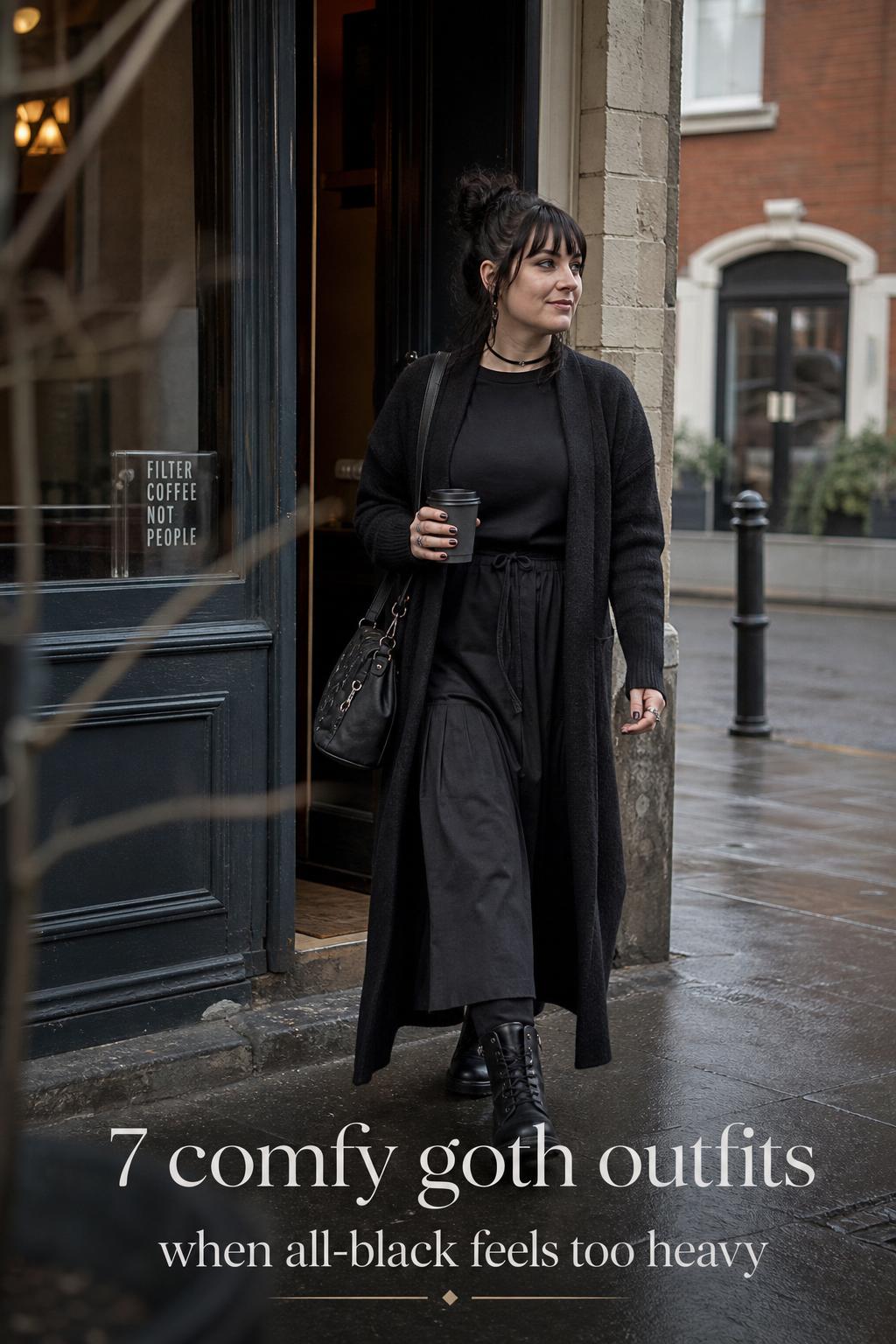
The value of a comfortable gothic wardrobe becomes obvious when it can shift across daily contexts without looking disconnected. A strong outfit system should handle work, weekends, school or campus life, and evening plans without asking for a total identity change. The difference comes from styling energy rather than a completely new set of clothes.
For work: controlled darkness
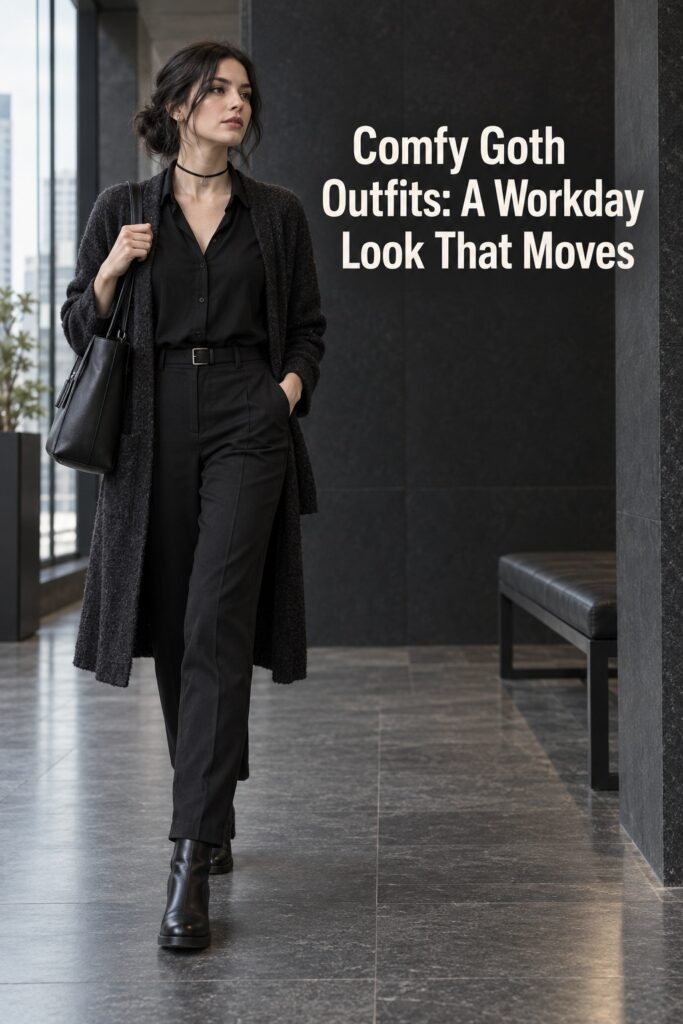
Work-friendly goth styling depends on restraint and clean composition. A blouse with black pants and a cardigan or longline outer layer keeps the silhouette polished while staying within the everyday gothic mood. Accessories matter here: a choker may be too visually dominant in some settings, while rings, a structured bag, or understated jewelry can preserve the aesthetic with less friction.
The visual goal is not to mute goth into invisibility. It is to translate it into a more refined language. Smooth fabrics, balanced layering, and disciplined proportion make the outfit feel intentional rather than theatrical.
For weekends: relaxed and expressive
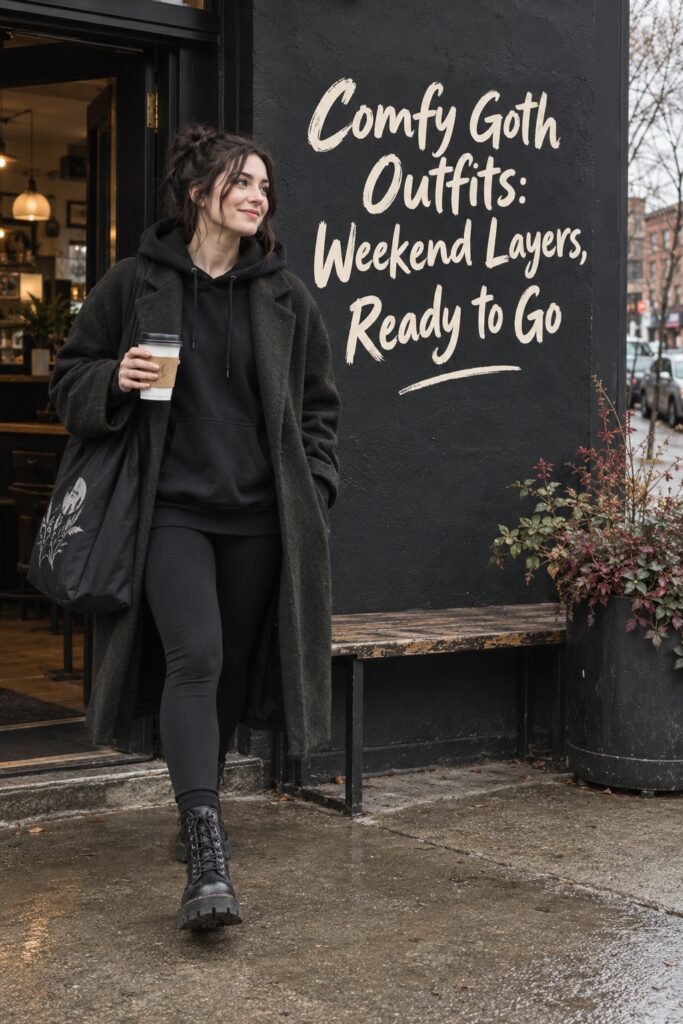
Weekend dressing gives casual goth its clearest form. A hoodie with a skirt and combat boots, or a graphic tee with leggings and an oversized layer, creates an outfit that is easy to move in yet still rooted in the dark palette. This is where t-shirt graphics, bags, and more visible accessories have room to shape the look.
Comfort is strongest here when the outfit has one visual anchor. That might be the boots, the outerwear, or a textured skirt. Without that anchor, very casual pieces can drift away from the gothic identity and read as simply off-duty black basics.
For school or campus: practical layering with attitude
Campus dressing benefits from repeatable combinations. Leggings, hoodies, soft tees, and boots are useful because they can handle long days and changing temperatures. The key is to maintain a consistent silhouette strategy. If the top half is loose and comfortable, footwear and accessories should provide enough visual weight to keep the outfit from feeling generic.
A simple black base, plus one layer with shape and one accessory with personality, often does more than a complicated outfit built from less wearable pieces.
For a night out: atmosphere without sacrificing ease
Night dressing is where velvet, mesh, and stronger contrast come forward. A maxi dress with a leather-adjacent outerwear feel, or a long coat over a softer dress, creates depth without abandoning comfort. Platform boots or heavier footwear can shift the outfit toward a more dramatic register, while jewelry and chokers intensify the mood.
The smartest night-out looks still prioritize movement. If the dress is fluid, the outerwear can bring structure. If the boots are visually heavy, the upper half should stay relatively clean. That balance keeps the outfit from feeling cumbersome.
The role of accessories in making black basics read as goth
Accessories are where comfy goth outfits become legible. Without them, an all-black outfit may still look sleek, but it will not always communicate a gothic identity. The shift often happens through a few carefully placed details: chokers, rings, belts, bags, and the right boot shape.
Combat boots are especially important because they anchor the silhouette from the ground up. They add weight, give softer garments tension, and keep leggings or dresses from feeling too plain. Ankle boots offer a slightly cleaner finish and can work well in work-friendly or softer outfits. Platform boots increase drama, but they can also dominate an outfit if every other element is equally assertive.
Jewelry serves a different purpose. It is less about structure and more about atmosphere. Chokers bring the eye upward and make even simple tops feel styled. Rings and other accessories add repetition and density in a way that supports the larger mood. Bags can also stabilize a look, especially when the clothing itself is soft and fluid.
Most versatile accessory choices
- combat boots for balancing dresses, skirts, and leggings
- ankle boots for cleaner casual goth and work-oriented looks
- chokers for adding instant gothic identity to simple tops
- rings and jewelry for visual density without changing comfort
- a dark bag that reinforces the outfit instead of interrupting it
Brand references and why they matter in soft goth dressing
Some names appear repeatedly in soft goth conversations because they represent a clearer version of the aesthetic. Foxblood is one such reference point. It is often associated with soft goth basics and helps define the idea that gothic dressing can be comfortable, streamlined, and wearable rather than purely dramatic.
Impericon also appears in this space through product-led soft goth collections and styling guidance. That matters because retailer language often shapes how people understand a style category. When soft goth is framed through basics, jersey fabrics, mesh combinations, and approachable layering, the aesthetic becomes easier to adopt as a daily wardrobe rather than an occasional costume.
VampireFreaks brings in another angle: the broader goth community lens. There, outfit building is often discussed through key pieces and accessories, which reinforces the idea that everyday goth is created through composition rather than a single must-have item. Together, these references help define the spectrum from editorial goth dressing to more practical casual wear.
What to take from these brand perspectives
The most useful takeaway is not brand loyalty. It is understanding the shared formula: base pieces with goth credibility, comfort-oriented fabrics, and styling that leaves room for repetition. That formula is what makes a wardrobe sustainable over time.
Where the style still has room to grow
One reason comfy goth dressing remains compelling is that it is not fully fixed. The most visible conversations tend to focus on soft goth, casual goth, and dark goth, but the wider landscape includes trad goth, cyber goth, and mall goth as distinct style lanes. Even when someone does not fully dress in one of those substyles, awareness of them can sharpen styling choices.
A person drawn to trad goth may want stronger vertical silhouettes, more severity, and less softness. Someone influenced by mall goth may prefer more obvious casual references and graphic pieces. A cyber goth influence can push layering and contrast in a more synthetic direction. These distinctions matter because they explain why two black outfits can communicate entirely different energies.
There is also a strong United States context to how this style is worn. Daily life often demands wardrobes that can move between commuting, work, casual social settings, and weather shifts. That practicality naturally rewards capsule dressing, all-black basics, and pieces that can be layered quickly. A UK perspective may emphasize capsule logic and seasonal layering in a slightly different way, but the underlying principle is similar: comfort strengthens consistency.
How to recognize which version of goth fits your life
Choosing between soft goth, casual goth, and darker everyday gothic dressing is less about labels and more about personal rhythm. The right version is usually the one that aligns with your tolerance for structure, your preferred silhouette, and how much visual intensity feels natural in your daily environment.
If your wardrobe depends on easy repetition, long days out, and pieces that can move from one setting to another, soft goth usually makes the most sense. If you want a darker presence but still rely on practical combinations, casual goth offers room for stronger boots, layered outerwear, and graphic elements. If you are drawn to a more dramatic atmosphere and do not mind clothing carrying more visual weight, darker goth dressing may feel more authentic.
Style psychology
Soft goth often communicates introspection and calm control. Casual goth suggests ease, confidence, and cultural familiarity with the aesthetic. Dark goth tends to project deliberate intensity. None is inherently better. The question is which version still feels true at 9 a.m., at work, in cold weather, or after hours of wear.
Tips for making the choice easier
- look at which silhouettes you repeat most often: fitted, oversized, or elongated
- notice whether you rely more on soft knits and leggings or on structured outerwear and heavier boots
- build from one core palette and adjust intensity through texture and accessories
- choose the version of goth that still feels convincing in your everyday settings
- avoid buying statement pieces before your base wardrobe is strong enough to support them
Outfit logic that makes comfy goth look intentional
The difference between a polished everyday gothic outfit and a random dark outfit often comes down to visual hierarchy. One part of the look should lead. It may be a longline coat, a velvet dress, platform boots, or a choker with a clean neckline. Once that lead element is clear, the rest of the outfit can support it rather than compete.
Another important principle is proportion control. If the lower half is slim, the upper half can carry more softness or volume through knitwear or outerwear. If the dress is flowing, the boots can provide grounding. If the outer layer is dramatic, the base should usually stay clean. These decisions are what keep goth styling modern and wearable rather than cluttered.
Texture also helps establish intention. A full outfit in jersey may be comfortable, but it can look unfinished unless jewelry, boots, or a second fabric introduce contrast. By the same logic, a highly textured outfit needs at least one calm area so the eye can rest. Good styling is not about more detail. It is about where detail is placed.
Easy ways to blend soft goth and casual goth
The easiest hybrid formula is a soft base with a stronger finish. Start with a dress, leggings, or a jersey top. Add one practical layer such as a cardigan or long coat. Then use combat boots, a choker, or rings to sharpen the mood. This creates an outfit that feels approachable but still clearly gothic.
Real-world outfit interpretations that actually hold up
One of the best tests for any aesthetic is whether it survives ordinary conditions. A look may work in a photo, but if it cannot handle sitting, walking, commuting, temperature changes, or a full day of wear, it has limited value as a wardrobe model. Comfy goth outfits perform well because the best versions are built for real life first and visual impact second.
The long day outfit
A black base tee, leggings, knitwear, and combat boots create a dependable casual goth composition. The tee keeps the outfit simple, the knitwear adds softness and warmth, and the boots give the outfit enough visual gravity to remain within the gothic register. Add a bag and rings, and the look feels finished without asking for maintenance throughout the day.
The soft evening transition
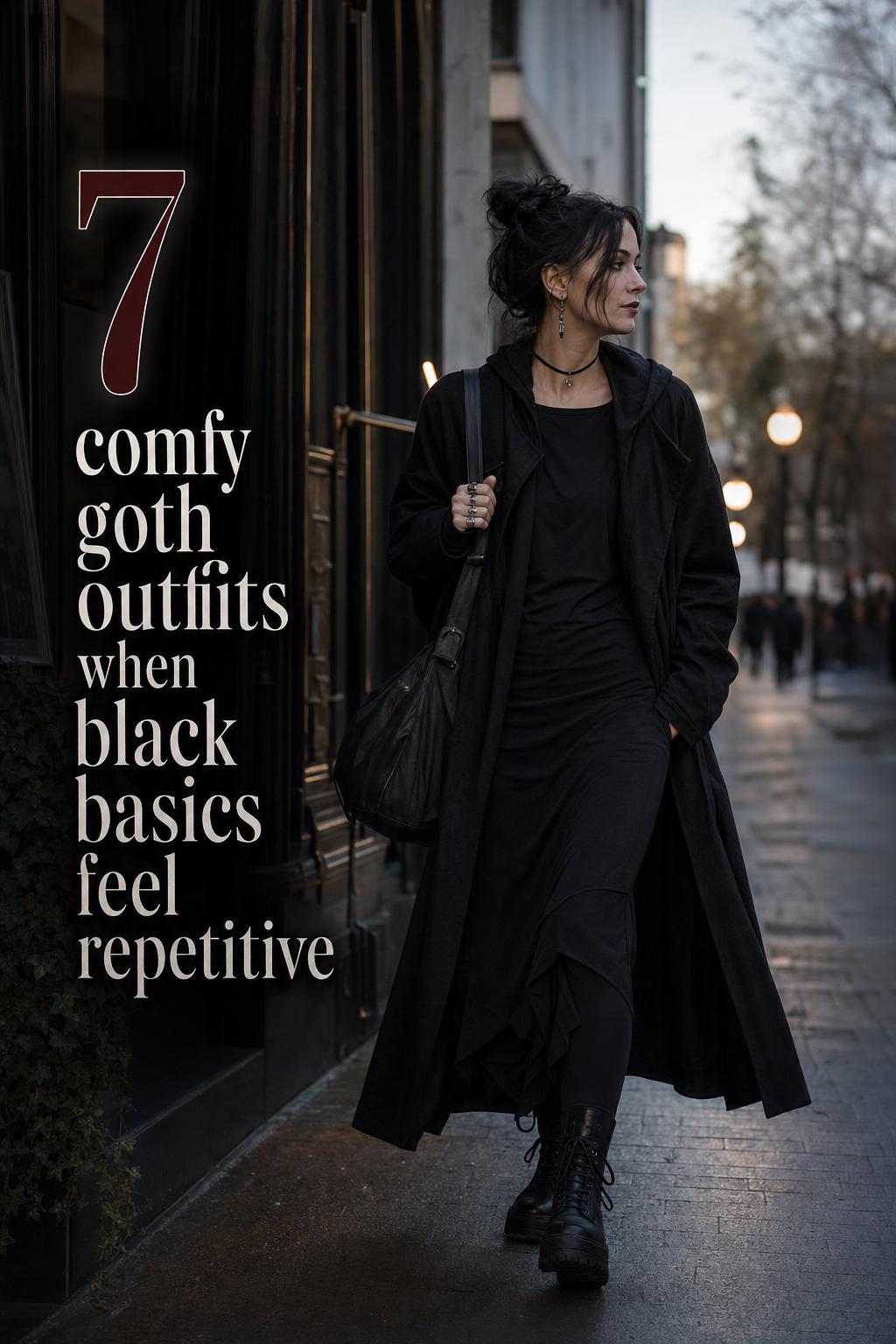
A wrap dress layered with a longline coat shows how soft goth can move into evening without becoming stiff. The dress offers fluidity and comfort, the coat adds silhouette control, and ankle boots or platform boots adjust the mood depending on how dramatic you want the finish to feel. A choker or jewelry completes the shift from daytime to night.
The weekend contrast look
A hoodie with a skirt and boots is a strong example of casual goth logic. The hoodie introduces familiar comfort, but the skirt prevents the outfit from becoming purely athletic. The boots supply weight, and accessories keep the look from flattening into generic streetwear. This combination works because it uses contrast in silhouette and cultural references without overcomplicating the result.
Shopping with intention instead of chasing isolated looks
Shopping for comfy goth style in the U.S. is easiest when you focus on categories rather than single viral outfits. Tops, dresses, pants, skirts, outerwear, and accessories should all connect back to the same wardrobe language. This is where store guides, collection pages, and lookbooks can be useful, but only if the pieces support a repeatable wardrobe rather than one-off styling moments.
Soft goth garments are most useful when they can be worn in at least three ways: alone, layered, and dressed up with accessories. A dress that only works with one pair of boots is less valuable than one that can shift between cardigan, coat, and jewelry combinations. The same logic applies to outerwear. A longline coat should work over both dresses and leggings-based outfits.
Inclusive sizing also matters because comfort and proportion are inseparable. A goth outfit cannot feel right if the fit disrupts movement or throws off balance. The best shopping decisions are rarely the most dramatic ones. They are the ones that strengthen your styling options across multiple contexts.
Shopping tips that improve wearability
- buy base layers first, then build texture and drama through outerwear and accessories
- prioritize pieces that work for both everyday wear and occasion dressing
- check whether a garment layers well under coats, cardigans, or knitwear
- use boots and jewelry to increase mood instead of forcing every garment to be dramatic
- treat all-black basics as infrastructure, not as the finished outfit
Final perspective: dark style becomes stronger when it feels natural
The most effective comfy goth outfits are not the ones trying hardest to prove their identity. They are the ones that understand it deeply enough to express it through proportion, texture, and repetition. Soft goth, casual goth, and darker everyday dressing all belong to the same visual family, but they communicate different levels of softness, tension, and intent.
Once you can recognize those patterns, getting dressed becomes much easier. A longline coat starts to read as more than outerwear. Combat boots become a grounding device. Mesh becomes a way to lighten density. Velvet becomes a mood layer rather than a costume signal. The wardrobe starts to function as a language.
That is the real appeal of this style direction. It leaves room for personality. You can lean softer, darker, more practical, or more expressive, and the aesthetic still holds. The goal is not to fit perfectly inside one label. It is to build a version of goth that feels convincing on your body, in your climate, and within your actual life.
FAQ
What are comfy goth outfits exactly?
Comfy goth outfits are gothic-inspired looks built around wearable fabrics, practical layering, and repeatable basics such as tees, leggings, dresses, knitwear, coats, and boots. They keep the dark mood and accessory language of goth fashion while making daily comfort a priority.
What is the difference between soft goth and casual goth?
Soft goth usually feels more fluid, muted, and capsule-wardrobe based, with an emphasis on soft fabrics, tonal black layering, and approachable silhouettes. Casual goth is more utilitarian and relaxed, often using hoodies, graphic tees, leggings, skirts, and combat boots in a way that still reads clearly gothic.
How can I make black basics look gothic instead of plain?
The shift usually comes from texture and accessories. Add mesh, velvet, knit contrast, or a longline coat, then use boots, chokers, rings, or a dark bag to give the outfit a stronger visual identity. Black basics work best when they are treated as the base rather than the entire look.
Which fabrics work best for everyday goth outfits?
Cotton jersey, knit fabrics, velvet, and mesh are especially useful because they create comfort and visual depth at the same time. Jersey and cotton help with repeat wear, knitwear adds warmth and softness, velvet deepens the mood, and mesh keeps outfits light while preserving edge.
Can goth outfits work for work or school?
Yes, especially when the outfit is built from a clean silhouette and controlled accessories. For work, black pants, a blouse, and a cardigan or long outer layer are often effective. For school or campus, leggings, hoodies, tees, and boots work well when the layering and accessories keep the outfit visually intentional.
What shoes work best with comfy goth outfits?
Combat boots are often the most versatile because they ground soft garments and strengthen the outfit’s silhouette. Ankle boots are useful for cleaner everyday looks, while platform boots add more drama for evenings or stronger dark goth styling.
How do I start a soft goth capsule wardrobe?
Start with all-black basics that can be mixed easily: tops, leggings or pants, one or two dresses, a skirt, knitwear, and a dependable outer layer such as a longline coat or cardigan. Then build texture and personality through mesh, velvet, jewelry, and boots rather than buying only statement pieces.
Are brands like Foxblood relevant for soft goth style?
Yes, Foxblood is often associated with soft goth basics and helps define the idea of goth clothing that feels streamlined and wearable. Retailers such as Impericon also shape the category through soft goth collections and layering guidance, while platforms like VampireFreaks connect the look back to broader goth fashion culture.
How can I make comfy goth outfits feel more dramatic for night?
Increase drama through texture, outerwear, and accessories instead of rebuilding the entire outfit. Swap in velvet or mesh, add a long coat, choose platform boots or a stronger boot silhouette, and bring in chokers or jewelry to intensify the mood while keeping the base comfortable.