Comfy Home Outfits with Polished Ease
There is a reason comfy home outfits sit at the center of modern wardrobes rather than at the edge of them. Home dressing is no longer just about what feels soft on the couch. It now carries visual intention, work-from-home practicality, and a quiet kind of self-presentation that matters even when the day stays indoors.
What makes this category especially interesting is how often different homewear aesthetics get folded into one idea. Lounge wear, at-home chic, cozy outfits, and work-from-home outfits overlap, but they do not communicate the same mood. One leans cocooning and relaxed, another looks more structured and camera-ready, and another is built around seasonal ease. The visual difference usually comes down to proportion, fabric, and how much polish is added through layering.
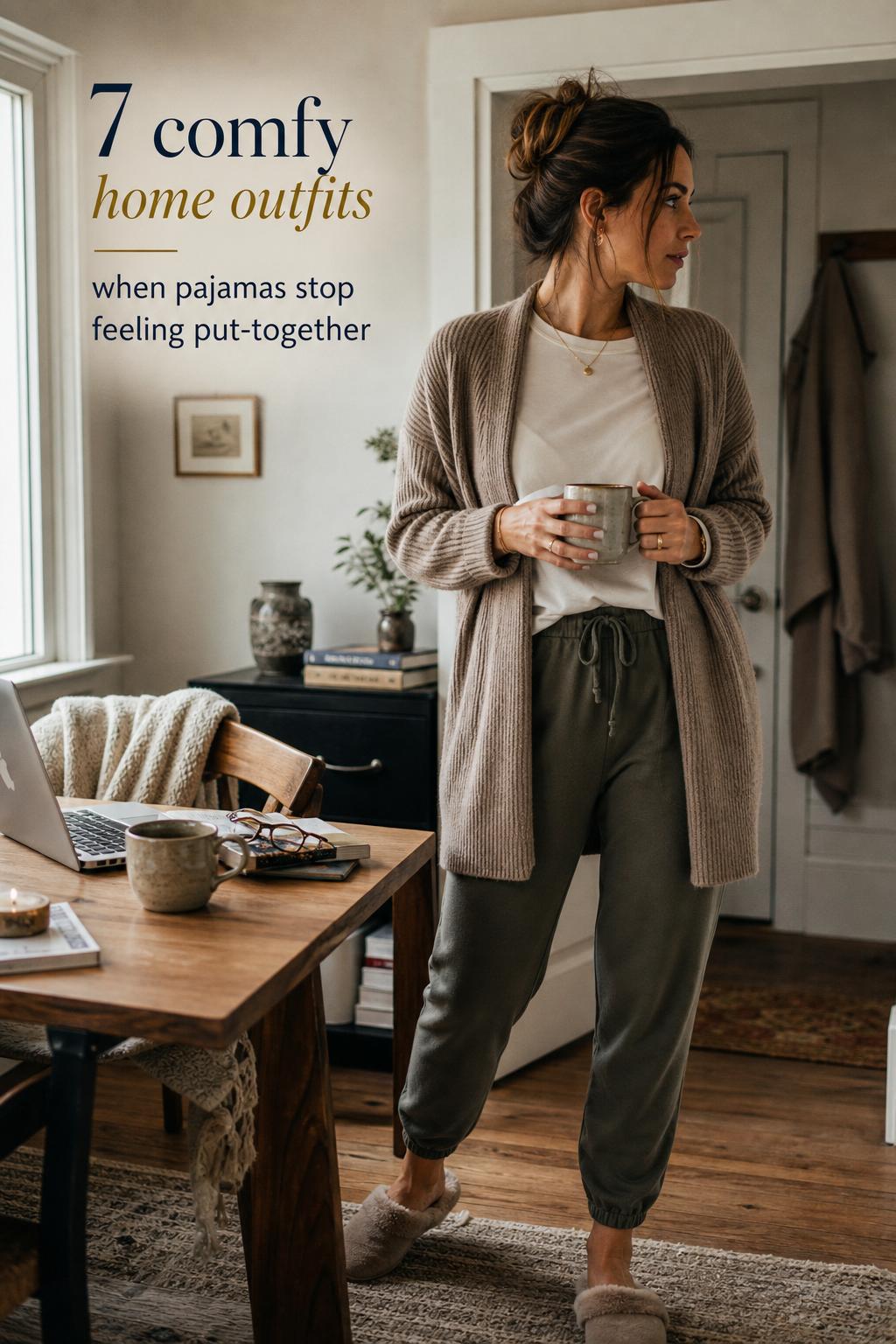
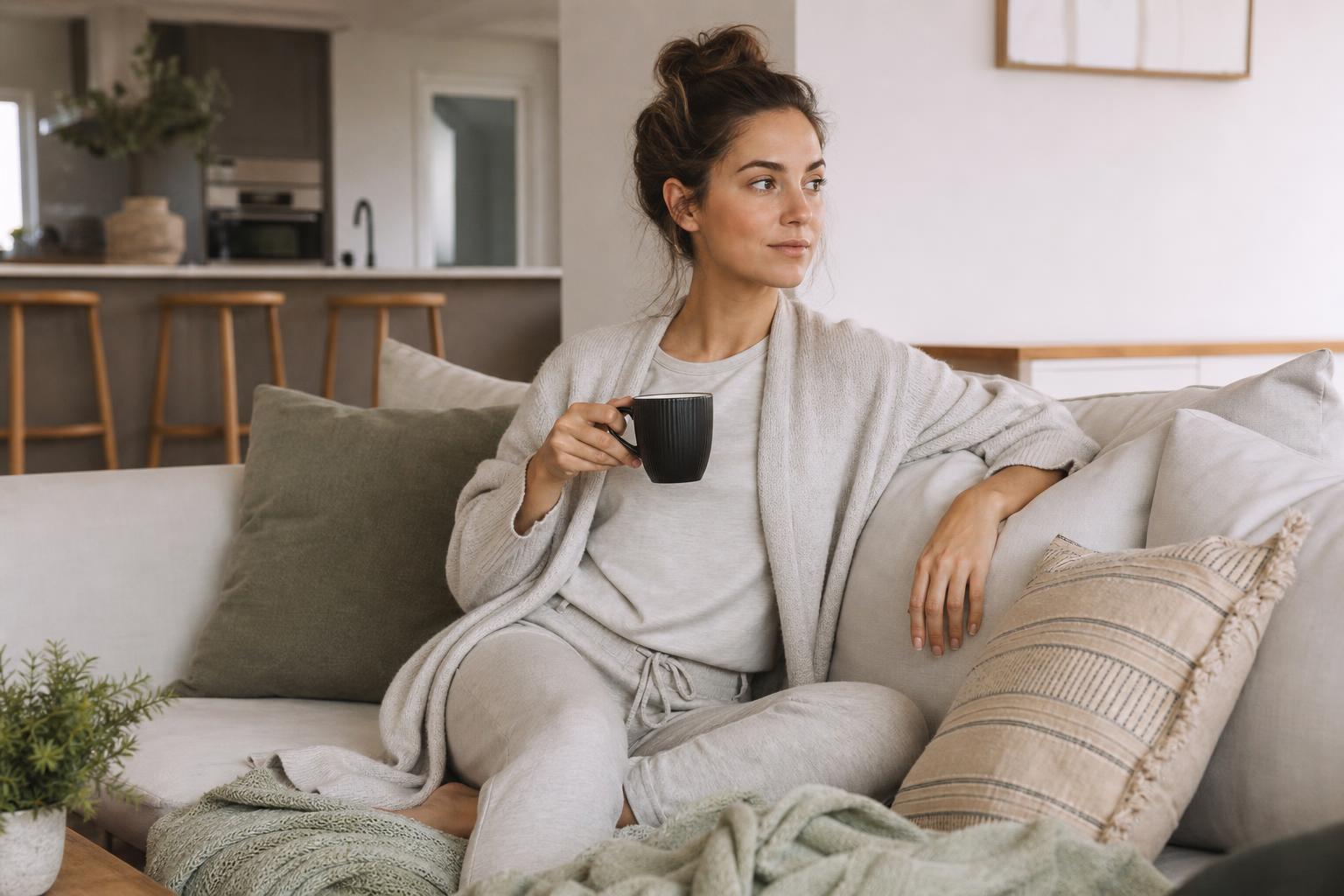
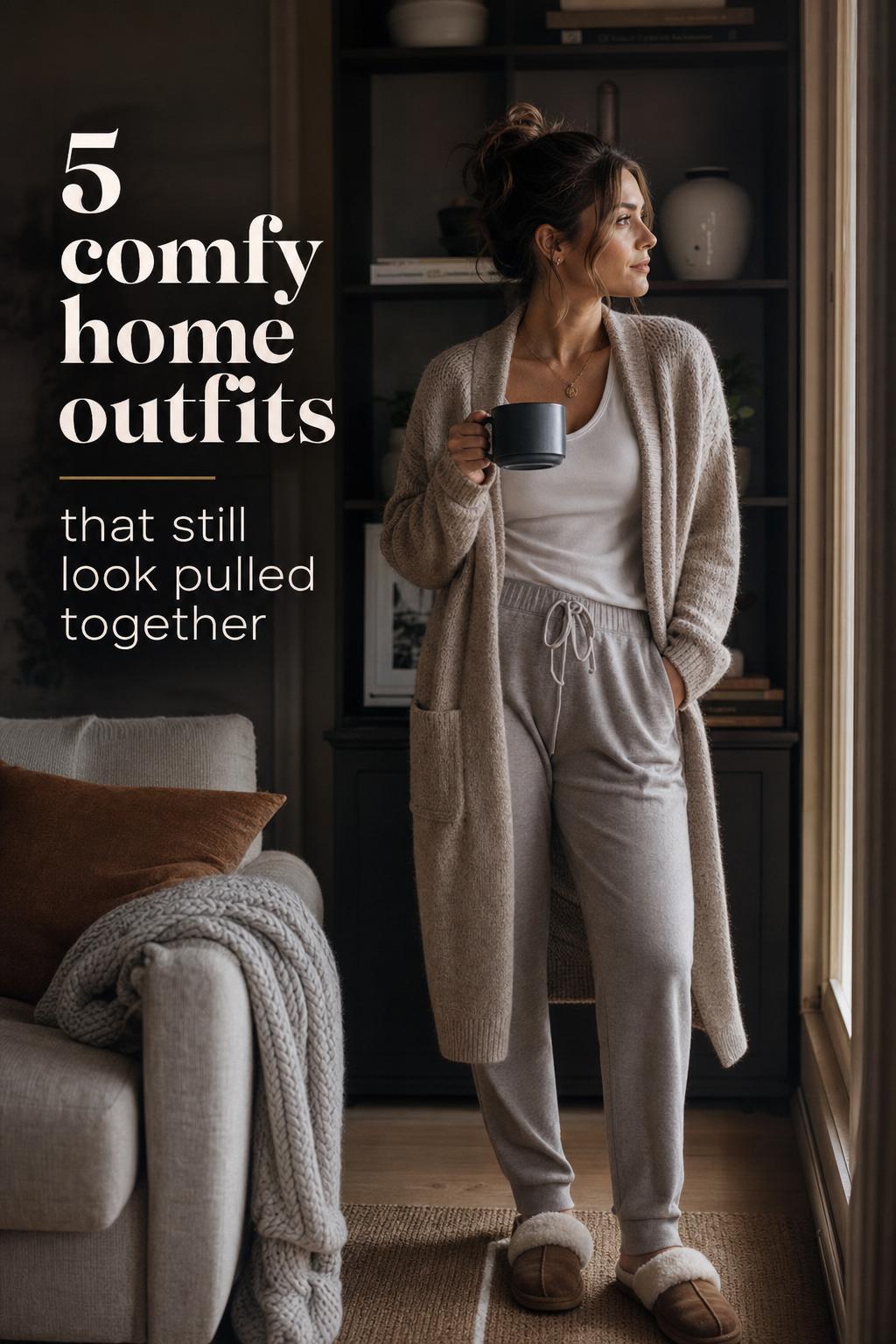
That is why the best at-home wardrobe is not simply a pile of leggings and hoodies. It is a controlled balance of softness, utility, and shape. A cardigan changes the rhythm of a lounge set. Knit trousers create more structure than fleece joggers. A robe suggests ease, while a casual blazer shifts the same base layer toward work-from-home polish. The goal is not to overdress for the living room. It is to build an environment-appropriate uniform that feels good, looks intentional, and adapts to real life.
The visual language of home dressing
Comfy home outfits work best when they are read as a visual identity rather than a random mix of soft pieces. The strongest homewear looks share three signals: tactile comfort, easy movement, and enough structure to prevent the outfit from collapsing into sleepwear. This is the difference between loungewear that feels styled and loungewear that feels unfinished.
Found the dress? Keep the rest in one place.
Zarellea brings guest details, vendors, timelines, and every next step together — so your wedding plan feels as good as your look.
In practical terms, the home outfit spectrum usually moves between two poles. On one side is the cozy homebody approach: fuzzy hoodie, brushed fleece, leggings, and warm layers that prioritize softness and insulation. On the other side is the polished at-home approach: knit tops, cardigan layers, knit trousers, and even a casual blazer for moments when the day includes video calls or quick transitions outside. Both belong in a home wardrobe, but they answer different needs and project different energy.
The emotional distinction matters. Fleece and oversized hoodies create a cocooning mood. Cotton and modal blends tend to feel lighter and more versatile. Lightweight jackets and zip-ups add edge and shape. A robe reads as luxurious ease, while a matching lounge set suggests control and coordination. When readers struggle to make home outfits look better, the issue is rarely the individual pieces. It is usually the outfit composition.
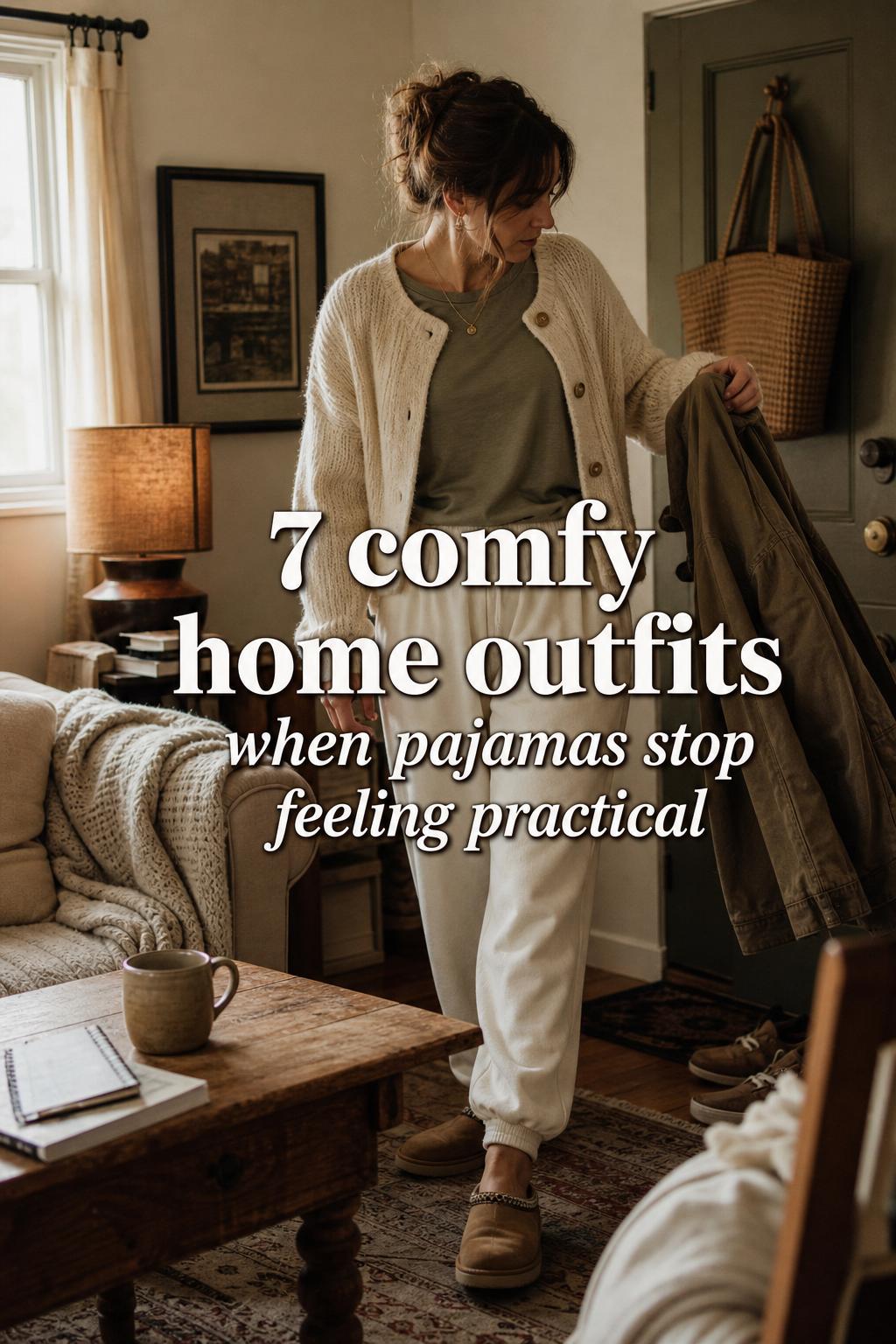
Why comfort and style matter in a home wardrobe
A home wardrobe has to do more than feel pleasant. It has to support how a day unfolds. At-home routines often move between work, chores, caregiving, rest, and quick outdoor moments. Clothing that only serves one of those functions tends to feel limiting. That is why comfort and style are not competing values here. They are part of the same wardrobe logic.
The practical benefit is obvious: soft sweaters, joggers, lounge pants, and cardigans let the body move through a long day without the friction of restrictive dressing. The psychological benefit is subtler but just as important. A put-together home outfit gives shape to the day. Even a simple combination of a knit top and leggings looks more purposeful than a mismatched set of leftover basics. That visual order often helps home life feel less scattered.
This is also why at-home chic resonates so strongly. It is not about dressing formally inside the house. It is about refining comfort enough that the outfit supports confidence, mood, and routine. Aerie and Lunya approach this from different price and brand positions, but the underlying appeal is similar: comfort with polish. Costco’s cozy outfits for home take a more direct collection-based route, centering accessible pieces like sweatshirts, fleece pants, and lounge sets. Different retail frames, same core desire.
Style psychology
Homewear often reflects personal tempo. The person drawn to robe-and-trouser combinations usually wants softness with visual calm. The person reaching for a fuzzy hoodie and tracksuit pieces often wants warmth and ease first. The person layering a cardigan over knit trousers is usually seeking a more presentable rhythm. Recognizing that styling instinct makes shopping and outfit building much easier.
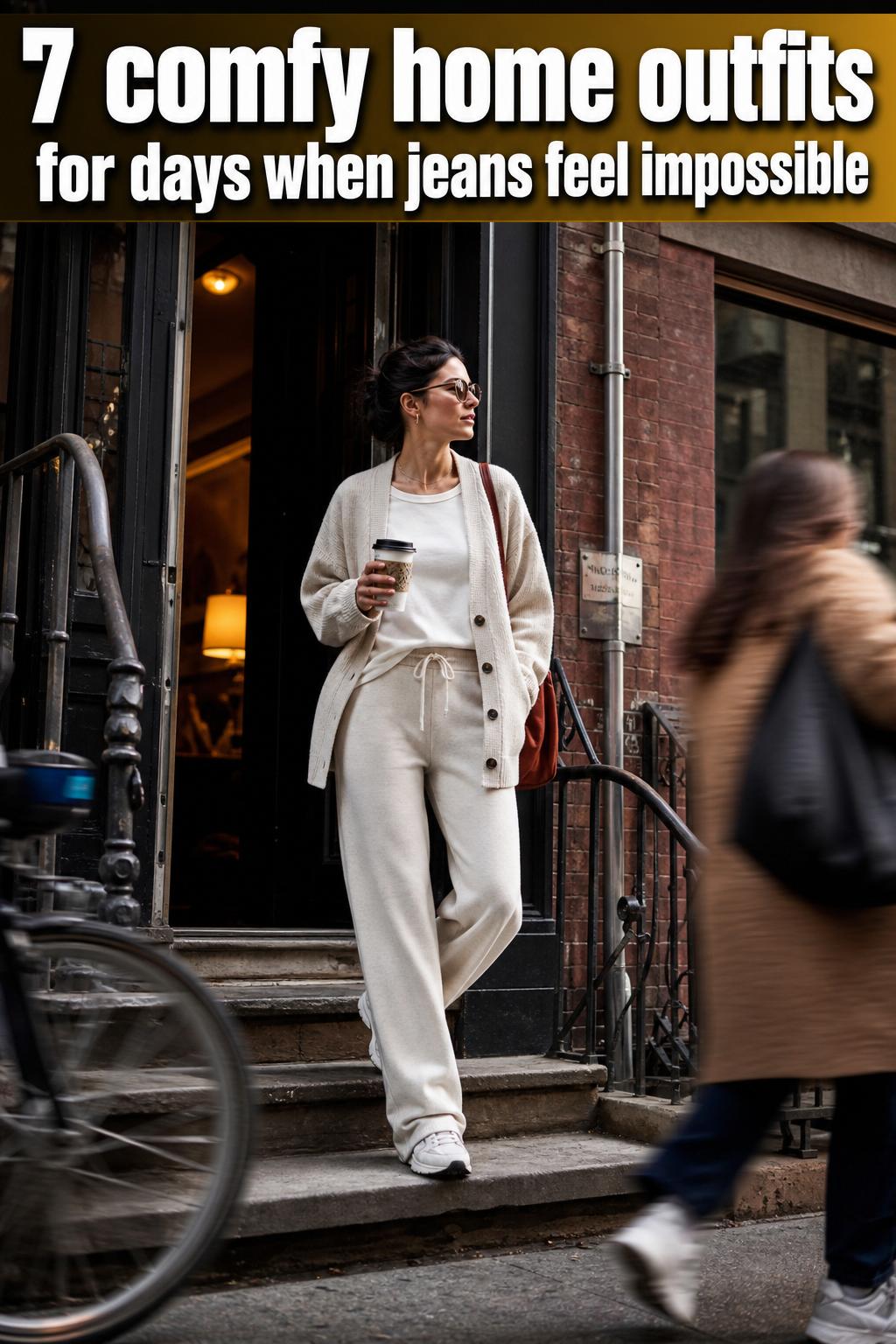
The core wardrobe: pieces that create the strongest foundation
The most effective comfy home outfits start with a compact group of essentials. This is where the capsule wardrobe idea becomes useful. A capsule is not about strict minimalism. In this context, it means choosing a controlled set of garments that combine well, cover multiple moods, and reduce decision fatigue.
Tops that set the tone
Soft tees establish the easiest base because they layer well and work across seasons. Knit tops create more polish without sacrificing ease, which is why they appear so often in work-from-home styling. Lightweight hoodies bring casual volume and a relaxed silhouette, while knit sweaters and soft sweaters add texture and visual depth. The difference between these options is not only warmth. It is the image each one creates.
Bottoms that determine the outfit mood
Leggings communicate streamlined comfort and pair naturally with oversized or mid-length layers. Joggers introduce shape through tapering and tend to feel sportier. Lounge pants read softer and more fluid. Fleece leggings and fleece pants offer a heavier, winter-ready texture. Knit trousers sit at the most polished end of this category because they keep comfort while giving the eye a cleaner vertical line.
Outer layers that make simple outfits look intentional
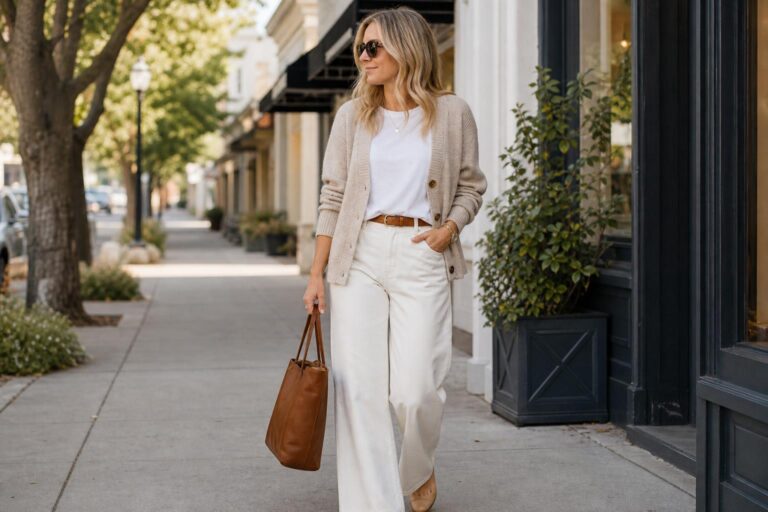
Cardigans are one of the most useful homewear layers because they soften the outfit while still adding structure. Zip-ups and casual jackets create a slightly sharper frame. Lightweight jackets are especially useful for quick transitions, since they make it easier to step outside without changing entirely. A casual blazer belongs to the work-from-home side of the wardrobe, not the deeply cozy side, but it can transform basic leggings and a knit top into something more composed for calls and desk time.
Fabrics and why they change the entire impression
Cotton, modal blends, and brushed fleece show up repeatedly in strong homewear because each one solves a different problem. Cotton is dependable and easy for everyday basics. Modal blends often bring a smoother drape, which can make simple silhouettes feel more refined. Brushed fleece creates immediate coziness and visual softness, making it ideal when warmth is part of the look. The fabric choice often decides whether an outfit feels breathable, cocooning, polished, or heavy.
- For everyday versatility: soft tees, leggings, joggers, cardigan
- For work-from-home structure: knit top, knit trousers, casual blazer or cardigan
- For colder lounging: fuzzy hoodie, fleece leggings, sweatshirt, zip-up
- For soft luxury: robe, lounge set, trousers, lightweight knit
The relaxed homebody aesthetic versus the polished at-home aesthetic
Many readers are not deciding whether to wear homewear at all. They are deciding what kind of homewear identity fits them. The two most consistent directions are the cozy homebody aesthetic and the polished at-home aesthetic. They share some pieces, but the styling philosophy is different.
The cozy homebody world
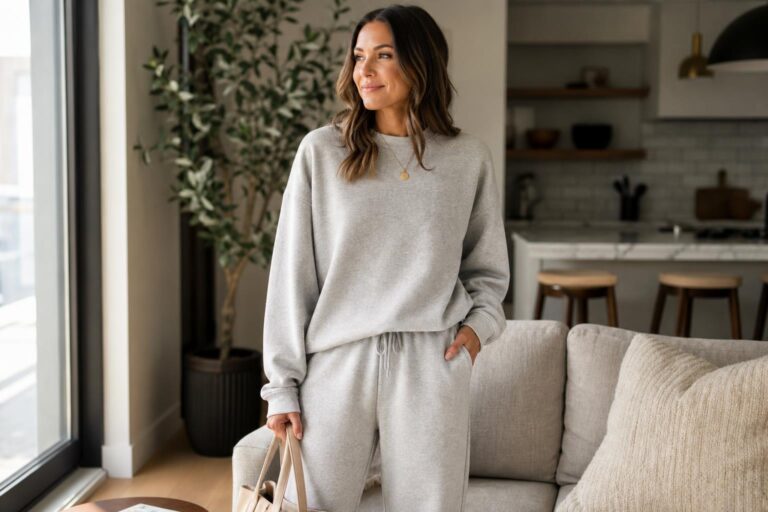
This look is built around softness, warmth, and visual comfort. Think sweatshirts, hoodies, brushed fleece, fuzzy textures, tracksuit pieces, and lounge sets that create a cocooning effect. The silhouette is often looser on top, with leggings or joggers providing enough balance underneath. It works especially well in fall and winter, when heavier layering feels natural rather than excessive.
The appeal is emotional as much as practical. This aesthetic suggests rest, retreat, and ease. It suits readers whose home life includes long stretches indoors, low-pressure routines, or a strong attachment to tactile comfort. Kind of Fancy’s fall capsule for the cozy homebody reflects this direction clearly, with sweatshirts, joggers, and fleece leggings anchoring the visual world.
The polished at-home world
This look is less about insulation and more about controlled softness. The fabrics still feel comfortable, but the lines are cleaner. Knit tops, cardigans, knit trousers, robes, and well-balanced lounge sets define the outfit. The silhouette tends to be smoother and less bulky, which makes it especially useful for work-from-home days. Aerie and Lunya both operate in this zone, though Lunya leans more premium and robe-driven, while Aerie’s styling often centers approachable cardigans, leggings, and knit pants.
The mood here is calm, presentable, and lightly elevated. These outfits often photograph well, transition more easily to errands or quick doorstep moments, and create a stronger sense of daywear. For readers who feel underdressed in purely cozy pieces, this is often the more satisfying direction.
The key visual difference
The cozy homebody aesthetic expands around the body through plushness and volume. The polished at-home aesthetic follows the body more carefully through drape and controlled proportion. One wraps. The other refines. Neither is better in absolute terms; the right choice depends on climate, daily schedule, and how visible or invisible you want your outfit energy to feel.
How everyday basics shift across different homewear moods
The easiest way to understand comfy home outfits is to watch what happens when the same staple gets styled in different ways. The garment does not change, but the visual identity does.
Leggings as a visual anchor
With a fuzzy hoodie, leggings feel casual, warm, and cocooning. Add a cardigan instead, and the same leggings look softer and more balanced. Replace the cardigan with a casual blazer and a knit top, and they move toward work-from-home functionality. The leggings remain the same, but the outer layer changes the social meaning of the outfit.
Joggers as the bridge piece
Joggers are one of the most flexible garments in homewear because they sit between lounge wear and styled casual dressing. A sweatshirt and joggers read sport-relaxed. A soft sweater and joggers feel more curated. A zip-up over a fitted knit top makes them practical for active home routines. This is why joggers appear across blog editorials and retailer collections alike: they solve comfort without fully giving up silhouette.
Cardigans as mood shifters
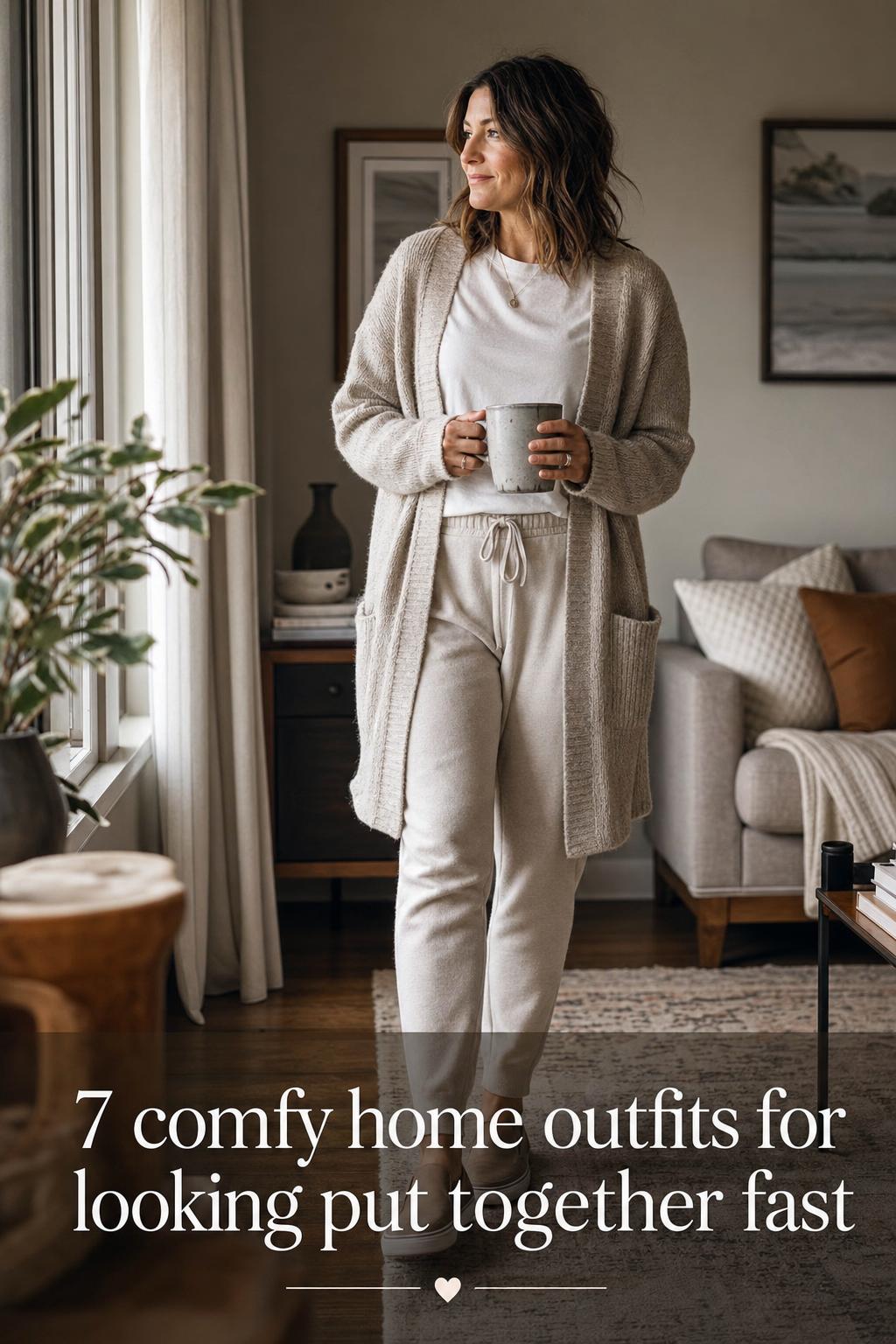
A cardigan has unusually strong styling power in this category. Over a casual top and leggings, it creates at-home chic with very little effort. Over a lounge set, it softens any sense of matching-set rigidity. Over knit trousers, it builds the kind of tonal layering that makes homewear feel deliberate. Society19’s emphasis on cardigans and practical styling tweaks reflects how effective this layer is in making simple outfits look complete.
Seasonal homewear and why temperature changes the silhouette
Seasonal shifts are not only about adding or removing layers. They change the shape, weight, and movement of an outfit. The same person may prefer a cozy homebody aesthetic in winter and a lighter at-home chic approach in spring and summer. Good homewear planning allows for that shift instead of forcing one formula year-round.
Fall: the season of layered softness
Fall homewear thrives on layering because the climate allows for texture without full winter bulk. Sweatshirts, lightweight hoodies, leggings, joggers, and cardigans all work especially well here. This is also the season where a capsule wardrobe feels most intuitive. The combinations are easy, and proportion play becomes more visible: a slightly oversized top over a slim bottom, or a soft sweater with relaxed lounge pants and a structured outer layer.
For readers who like the cozy homebody aesthetic, fall is often the best starting point. It supports fleece, layering, and warm texture without requiring the heaviest pieces in the wardrobe.
Winter: warmth becomes part of the visual story
Winter at-home outfits rely more heavily on insulation. Fleece leggings, fuzzy hoodies, tracksuit pieces, sweatshirts, and cozy sets create the strongest visual and practical return. Styleoholic’s winter angle reflects this clearly: warmth is not a background detail but a defining feature of the look. In winter, texture often replaces color as the main source of visual interest.
The main challenge in winter homewear is avoiding a shapeless result. The solution is to vary volume. If the top is plush and oversized, keep the bottom more streamlined. If both pieces are relaxed, introduce a cardigan, zip-up, or jacket that frames the body more clearly.
Spring and summer: breathability and practical ease
Spring and summer home outfits shift toward lighter silhouettes and more breathable fabrics. Soft tees, casual tops, lounge pants, knit tops, and lighter cardigans become more useful than heavy fleece. For a more activity-driven home life, pieces like a linen shirt or drawstring shorts fit naturally into the wardrobe, especially in settings shaped by chores, caregiving, or frequent movement.
This season also changes how polish appears. In colder months, polish often comes from layering. In warmer months, it comes from clean lines and relaxed silhouettes that do not look sloppy. A simple knit top with lounge pants can look more refined than a complicated outfit if the proportions are controlled.
A climate-based approach for the U.S.
Regional climate shapes homewear more than trend language does. A cozy capsule in the Northeast or Midwest will not function the same way as one in the South or on a milder coast. That does not mean every region needs a different aesthetic. It means the same aesthetic should be translated through the right weights and layers.
Cold-climate loungewear
In colder parts of the U.S., brushed fleece, sweatshirts, hoodies, fleece leggings, and outer layers like cardigans and zip-ups become foundational rather than optional. The most useful capsule here includes warming pieces that can be layered and unlayered through the day. Cozy sets are especially effective because they simplify dressing without sacrificing the visual cohesion that often gets lost in cold-weather comfort dressing.
Warm-climate lounge sets
In warmer areas, the polished at-home aesthetic often becomes easier to maintain because heavy volume is unnecessary. Lightweight knits, soft tees, lounge pants, cardigans for air-conditioned interiors, and breathable summer pieces such as drawstring shorts or a linen shirt feel more realistic. Here, comfort comes less from insulation and more from ease and movement.
Urban indoor dressing
For city readers whose homewear also has to cover quick building exits, package pickups, or coffee runs, transitional pieces matter more. Knit trousers, a clean cardigan, a lightweight jacket, or a casual blazer can make home outfits look outward-facing without asking for a full change. This is where the line between lounge wear and casual street-ready dressing becomes especially useful.
The role of accessories in making homewear look intentional
Accessories are often treated as optional in home dressing, but they are usually what separate an outfit from a pile of soft garments. The most effective accessories in this category are not dramatic. They are selective. Their role is to clarify the mood of the outfit.
When a lounge look needs more presence, small additions matter: a cleaner outer layer, a more deliberate footwear choice for at-home calls, or subtle jewelry that gives the face and neckline more definition. Even the contrast between slippers and a more structured home shoe alternative changes how complete the outfit feels. This is especially relevant for readers who move between living space, home office, and doorstep interactions throughout the day.
Why this combination works
A cardigan over a lounge set works because it creates a second vertical line and reduces the visual flatness of matching separates. A lightweight jacket over leggings and a knit top works because the outer layer becomes the visual anchor. A robe with trousers works when the trousers provide enough structure to keep the look in daywear territory. Accessories do not have to dominate. They simply need to complete the composition.
- Use one visible layer to frame the outfit, such as a cardigan, zip-up, or lightweight jacket.
- If the fabric is very soft and plush, add one cleaner element to avoid a sleepy silhouette.
- For video-call polish, prioritize the neckline and top half of the outfit first.
- Let one category lead: texture, shape, or coordination. Too many signals at once can look overworked for home.
Brand perspectives and what each one represents
Brand references in homewear matter less as status markers and more as indicators of aesthetic direction. Each label tends to frame comfort in a slightly different way, which can help readers identify what kind of wardrobe they want to build.
Costco’s curated homewear angle is practical and collection-driven, with pieces such as sweatshirts, lounge sets, and fleece pants often linked to labels like DKNY Sport. The appeal here is accessible comfort and straightforward functionality. Aerie leans into comfy and cute work-from-home outfits, often through cardigans, leggings, and knit trousers that make comfort feel youthful and presentable. Lunya positions homewear more as premium loungewear, with tops, trousers, sets, and robes emphasizing high-quality fabrics and a more refined at-home identity.
Spanx appears in the wider conversation through dupe references rather than as a central homewear brand in this space, which reflects a familiar consumer habit: readers often want the shaping or streamlined effect associated with a known name, but translated into a more relaxed and affordable wardrobe. That detail matters because it shows how homewear is not separate from broader fashion expectations. People still want flattering lines, even in their softest clothes.
Most versatile pieces across price points
If versatility is the priority, the strongest cross-brand categories are cardigans, leggings, joggers, knit tops, lounge sets, and robes. These pieces appear repeatedly because they allow the widest range of styling interpretation. Premium fabric can improve feel and drape, but the outfit logic stays consistent across tiers.
Outfit composition in real life
The best home outfits do not begin with trend language. They begin with a real scenario. Styling becomes much clearer when the outfit is built around how the day actually moves.
The desk-day outfit
A knit top, knit trousers, and a cardigan create a smooth silhouette with enough ease for sitting, moving, and being seen on screen. If more structure is needed, a casual blazer can replace the cardigan. This works because the softness stays close to the body while the outer layer defines the frame. It is one of the most dependable work-from-home outfit formulas.
The all-day homebody outfit
A sweatshirt or fuzzy hoodie with leggings or joggers creates immediate comfort and low-maintenance ease. Add a zip-up for extra depth if the outfit starts to feel too flat. This is ideal for colder days, low-pressure weekends, or routines centered on warmth and comfort over presentation.
The quick-change outfit
A casual top with lounge pants and a lightweight jacket works especially well for readers who move between indoors and short outside moments. The jacket handles the transition without forcing a full outfit shift. This reflects the practical value of quick outfit changes often highlighted in strong homewear guidance: the wardrobe should adapt without demanding effort every time the setting changes.
The soft polished outfit
A robe layered over trousers and a fitted top creates a more elevated lounge silhouette. It feels relaxed, but not accidental. This combination works best when the robe has enough clean drape and the base layer is relatively streamlined. It is the homewear equivalent of quiet confidence.
Common styling mistakes that weaken comfy home outfits
Most homewear mistakes are not dramatic. They are small visual imbalances that make the outfit feel less intentional than it could.
- Wearing only oversized pieces at once, which removes silhouette definition.
- Using heavy fleece in situations where a lighter knit would create better balance.
- Ignoring the top half of the outfit on work-from-home days, even when visibility matters.
- Choosing pieces that are soft but do not coordinate in weight or mood.
- Treating layering as purely functional instead of visual.
The fix is usually straightforward. Balance volume with shape. Match texture to season. Let one piece act as a visual anchor. If the outfit is very casual, add a cardigan or jacket. If the outfit is already structured, keep the rest soft so it still reads as homewear rather than incomplete office wear.
Tips for making home outfits feel more polished
Start by refining one category instead of changing everything. Upgrade the outer layer, switch fleece joggers to knit trousers, or replace an old top with a cleaner knit silhouette. That single adjustment often has more impact than adding more items. The strongest at-home style is edited, not crowded.
A practical 7-day capsule plan
A useful homewear capsule should cover both comfort-heavy days and more presentable moments. The goal is repetition with variation, not a different identity every day.
- Day 1: knit top, leggings, cardigan
- Day 2: sweatshirt, joggers, zip-up
- Day 3: soft tee, lounge pants, lightweight jacket
- Day 4: knit top, knit trousers, casual blazer
- Day 5: fuzzy hoodie, fleece leggings
- Day 6: casual top, drawstring shorts or lighter lounge bottoms, cardigan
- Day 7: fitted top, trousers, robe
This kind of rotation works because it repeats familiar shapes while adjusting texture and structure. It also prevents the common problem of a home wardrobe leaning too far in only one direction. A strong capsule needs both deeply cozy options and more polished combinations.
Shopping checklist
- 2 to 3 tops: soft tee, knit top, lightweight hoodie or sweater
- 2 to 3 bottoms: leggings, joggers, lounge pants or knit trousers
- 2 layers: cardigan, zip-up, lightweight jacket, or casual blazer
- 1 matching or coordinated lounge set
- 1 robe if soft luxury and layering are part of your style
- Fabric mix that covers breathability and warmth, such as cotton, modal blends, and brushed fleece
Mixing aesthetics without losing intention
Many of the best comfy home outfits sit between categories. They borrow the softness of the cozy homebody style and the structure of polished at-home dressing. This is often the most wearable solution because real life is mixed. A day can begin with desk work, move into house tasks, and end in full lounge mode.
The easiest way to blend aesthetics is to keep one side dominant. If the base is deeply cozy, add one polished element such as knit trousers, a cardigan, or a clean jacket. If the base is polished, soften it with a robe, plush texture, or more relaxed bottom. The outfit should feel intentional in one direction, not split evenly into two competing moods.
Easy ways to blend both styles
Try leggings with a soft sweater and a structured cardigan, or joggers with a fitted knit top and robe-style layer. Another reliable combination is a lounge set anchored by a lightweight jacket. These formulas work because they maintain comfort while introducing enough visual order to make the outfit feel complete.
Which homewear aesthetic fits which lifestyle?
The cozy homebody direction tends to suit readers who prioritize warmth, tactile comfort, and low-friction dressing. It is especially strong for colder regions, slower weekends, and home-centered routines. The polished at-home direction suits readers who need their wardrobe to pass through work-from-home hours, quick transitions, and more visible daily interactions.
For stay-at-home moms or readers with activity-heavy home days, practicality becomes the deciding factor. Pieces like drawstring shorts, a linen shirt, leggings, cardigans, and easy lounge separates often outperform more precious combinations because they allow movement and layering. In these wardrobes, style works best when it supports routine rather than interrupting it.
The right wardrobe is rarely about choosing one aesthetic forever. It is about understanding what you need your clothes to do and then building around that reality. Homewear succeeds when the styling logic matches the life being lived inside it.
FAQ
How can I make comfy home outfits look put together without feeling overdressed?
Focus on one element of structure rather than changing the whole outfit. A cardigan, lightweight jacket, knit top, or knit trousers can make lounge wear look intentional while keeping the comfort level high.
What are the most useful pieces for a homewear capsule wardrobe?
The strongest capsule usually includes soft tees, knit tops, leggings, joggers, lounge pants, a cardigan, and one or two outer layers such as a zip-up or lightweight jacket. A robe or matching lounge set can add variety if that fits your routine.
What is the difference between lounge wear and work-from-home outfits?
Lounge wear leans more heavily into softness, ease, and low-pressure dressing, often through hoodies, sweats, and plush textures. Work-from-home outfits keep comfort but introduce cleaner lines, knit pieces, cardigans, or casual blazers for a more presentable silhouette.
Which fabrics work best for comfy home outfits?
Cotton is strong for everyday basics, modal blends are useful when you want a smoother drape, and brushed fleece works best for warmth and a cozy texture. The best choice depends on whether your priority is breathability, softness, or insulation.
How should I dress for home in winter without looking shapeless?
Use texture and layering strategically. Pair an oversized sweatshirt or fuzzy hoodie with leggings or more tapered joggers, and add a cardigan or zip-up if the outfit needs more definition. Balancing volume is more effective than simply adding more layers.
Are leggings or joggers better for at-home outfits?
Neither is universally better; they create different effects. Leggings give a cleaner, more streamlined base for oversized or layered tops, while joggers feel more relaxed and sporty with slightly more shape than loose lounge pants.
What brands are often associated with comfy home outfits?
Aerie is often linked to comfy and cute work-from-home styling, Lunya to premium loungewear and robes, and Costco to accessible homewear collections that may include labels such as DKNY Sport. Each one reflects a slightly different approach to comfort and polish.
How do I choose comfy home outfits for warm weather?
Shift toward lighter silhouettes and breathable pieces such as soft tees, casual tops, lounge pants, drawstring shorts, and a linen shirt. In warm weather, polished homewear usually comes from clean proportions rather than heavy layering.
Can a robe be part of a real daytime home outfit?
Yes, if it is styled over a more defined base such as trousers or a fitted knit top. The robe works best when the rest of the outfit keeps enough structure to maintain a daywear feel rather than reading as sleepwear.
What is the easiest way to upgrade old house clothes?
Replace the weakest category first, usually the outer layer or the bottoms. Swapping worn sweats for joggers or knit trousers, or adding a clean cardigan to basic tops and leggings, often makes the biggest difference with the least effort.