Fall Weekend Outfits with Quiet Polish
Getting dressed for fall weekends sounds easy until the day actually starts. The temperature shifts by the hour, plans change from coffee to errands to dinner, and the outfit that looked balanced in your bedroom can feel bulky, too warm, too casual, or strangely unfinished once you step outside. That is exactly why fall weekend outfits can feel harder than weekday dressing: weekends ask more from fewer pieces.
The real challenge is not simply choosing a sweater and jeans. It is building an outfit composition that can handle movement, layering, comfort, and a slightly more polished social setting without feeling overdone. A look for a farmers market, brunch, date night, or a quick fall trip needs to work visually and practically at the same time.
The strongest fall weekend style relies on a small set of dependable pieces: denim, knit sweaters, jackets, boots, dresses, blazers, and accessories that make the look feel intentional. Once those pieces are combined with smarter proportion play, seasonal color palettes, and weather-aware layering, weekend dressing becomes much easier to repeat and adapt.
Why fall weekend dressing gets complicated so quickly
Fall is a transitional season, and transitional seasons are where styling problems show up most clearly. Outerwear matters, but a heavy coat can overwhelm a casual daytime look. Knitwear feels right visually, but some sweaters become too warm once you move indoors. Boots add structure, but the wrong boot shape can throw off the line of cropped denim or make a dress feel too heavy.
Found the dress? Keep the rest in one place.
Zarellea brings guest details, vendors, timelines, and every next step together — so your wedding plan feels as good as your look.
There is also a social element. Weekend wear usually needs to sit somewhere between fully relaxed and lightly elevated. That is why many people end up stuck between extremes: either a look becomes too basic, like default denim and sneakers with no visual anchor, or it becomes overworked, with too many layers, too many textures, and not enough comfort.
From a style perspective, the problem often comes down to three factors: silhouette balance, temperature adaptability, and outfit versatility. If one of those is missing, the outfit rarely feels complete. A great fall weekend outfit should move with you, adjust to changing weather, and still hold its shape visually from morning to evening.
The core capsule pieces that solve most weekend outfit problems
A fall weekend capsule wardrobe is not about restriction. It is about reducing decision fatigue by leaning on a few versatile pieces that work in multiple combinations. The most useful capsule for this category usually centers on denim, knitwear, lightweight outerwear, practical footwear, and one or two dress options that can shift tone depending on styling.
- Jeans, including classic denim and black jeans
- A denim jacket or light jacket for transitional layering
- Knit sweaters and brushed knits
- A cardigan for softer layering
- A trench or windbreaker-style outer layer
- Ankle boots as a core footwear anchor
- Loafers, sneakers, or ballet flats for lighter looks
- A knit dress or midi dress for easier one-piece styling
- A blazer for evening or brunch polish
- A crossbody bag, belt, and scarf to finish the composition
These pieces work because they create overlap across different scenarios. A knit sweater with jeans and ankle boots can handle a casual café stop. The same boots can ground a midi dress with a blazer for dinner. A trench can sit over both denim and dresses without creating a styling disconnect. That kind of repetition is what makes weekend dressing efficient.
Most versatile piece
If one item carries the most visual workload, it is the ankle boot. It bridges dresses, denim, and layered separates more effectively than almost any other shoe in this category. It also adds seasonal weight without requiring a full cold-weather outfit, which is why it appears so often across weekend wear, casual fall outfits, and more elevated autumn looks.
Styling logic that makes fall outfits feel polished instead of random
Successful fall styling usually looks effortless, but it is rarely accidental. The outfit needs a clear visual anchor, enough texture contrast to feel seasonal, and proportion decisions that support comfort rather than fight it. When these elements are missing, even expensive pieces can feel mismatched.
Silhouette balance matters more than trend pieces
A chunky knit with wide visual volume works better when the rest of the look stays streamlined, such as straight denim or a simple midi dress with defined shape. A blazer, on the other hand, introduces structure, so it can balance softer items like a knit dress or lighter layering pieces. This is why a blazer over a dress with heeled boots often feels polished so quickly: the structure and softness are doing different jobs.
Texture contrast is what makes a fall outfit look intentional
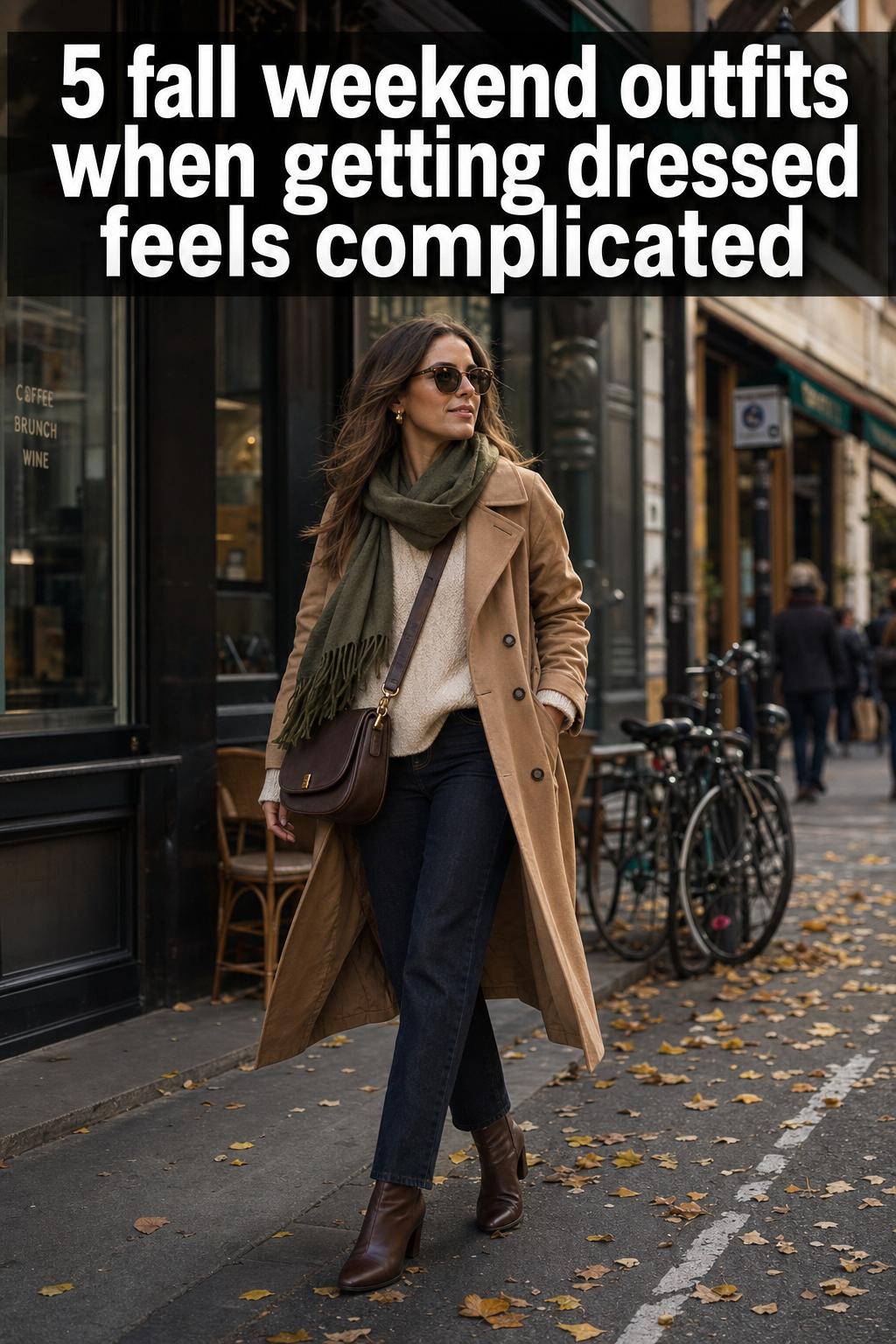
Fall outfits are visually strongest when smooth and soft textures are mixed. Denim with brushed knits, a trench over a sweater, or boots paired with a knit dress all create subtle texture contrast. Without that contrast, a weekend outfit can feel flat. With too much contrast, it can feel over-styled. The goal is enough variation to create depth without losing ease.
Tonal layering keeps casual outfits from looking unfinished
Earth tones and neutrals are especially useful here because they make layering simpler. Camel, rust, olive, and forest green can be mixed with denim, black jeans, and brown or black boots without visual friction. Tonal layering also helps a practical outfit read as more refined. Even a basic cardigan-and-jeans combination looks more thoughtful when the palette feels connected.
Relaxed layers that still feel polished
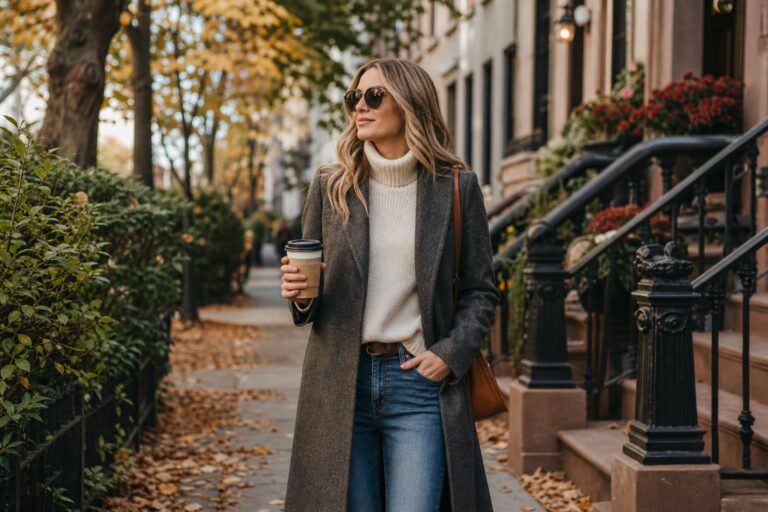
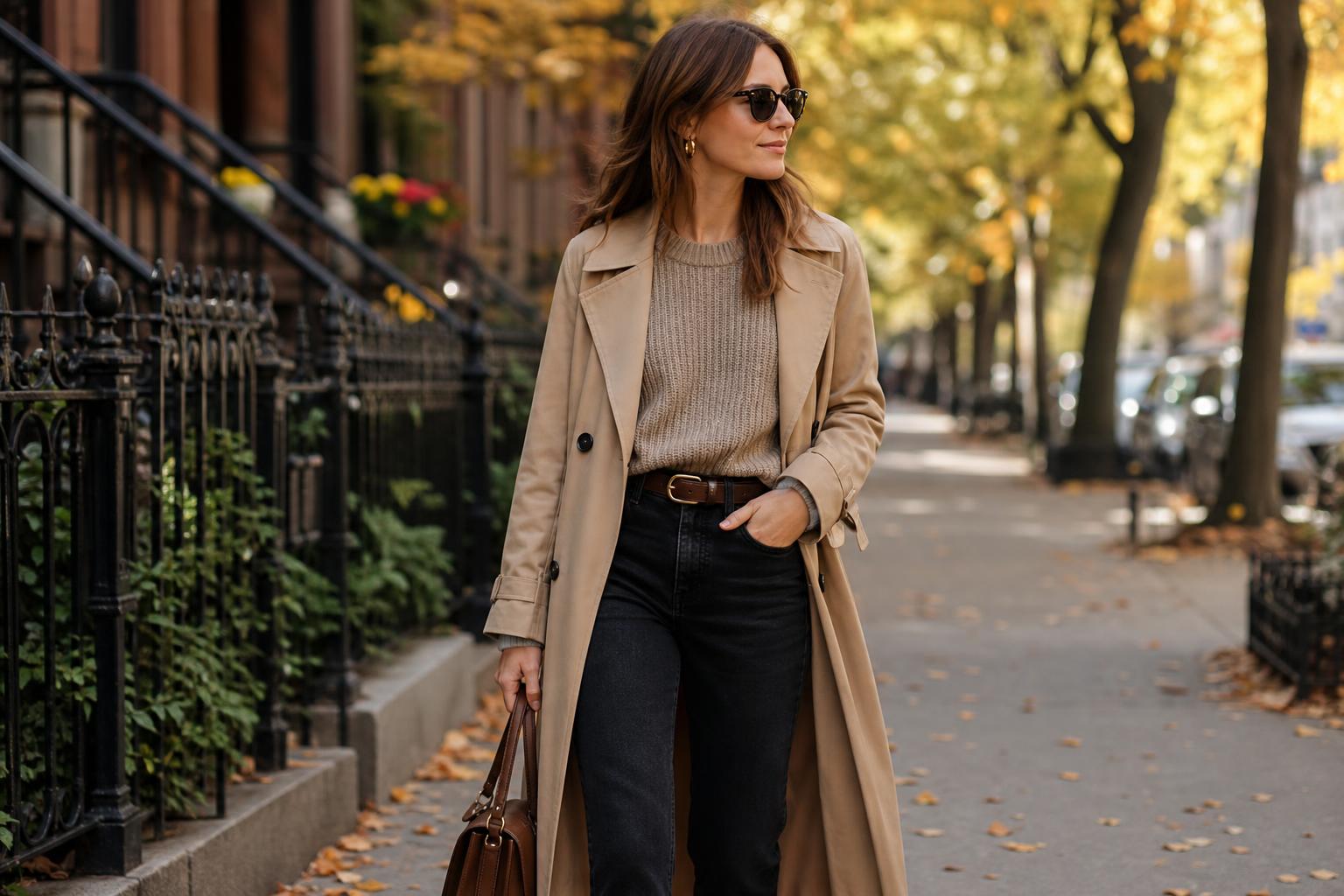
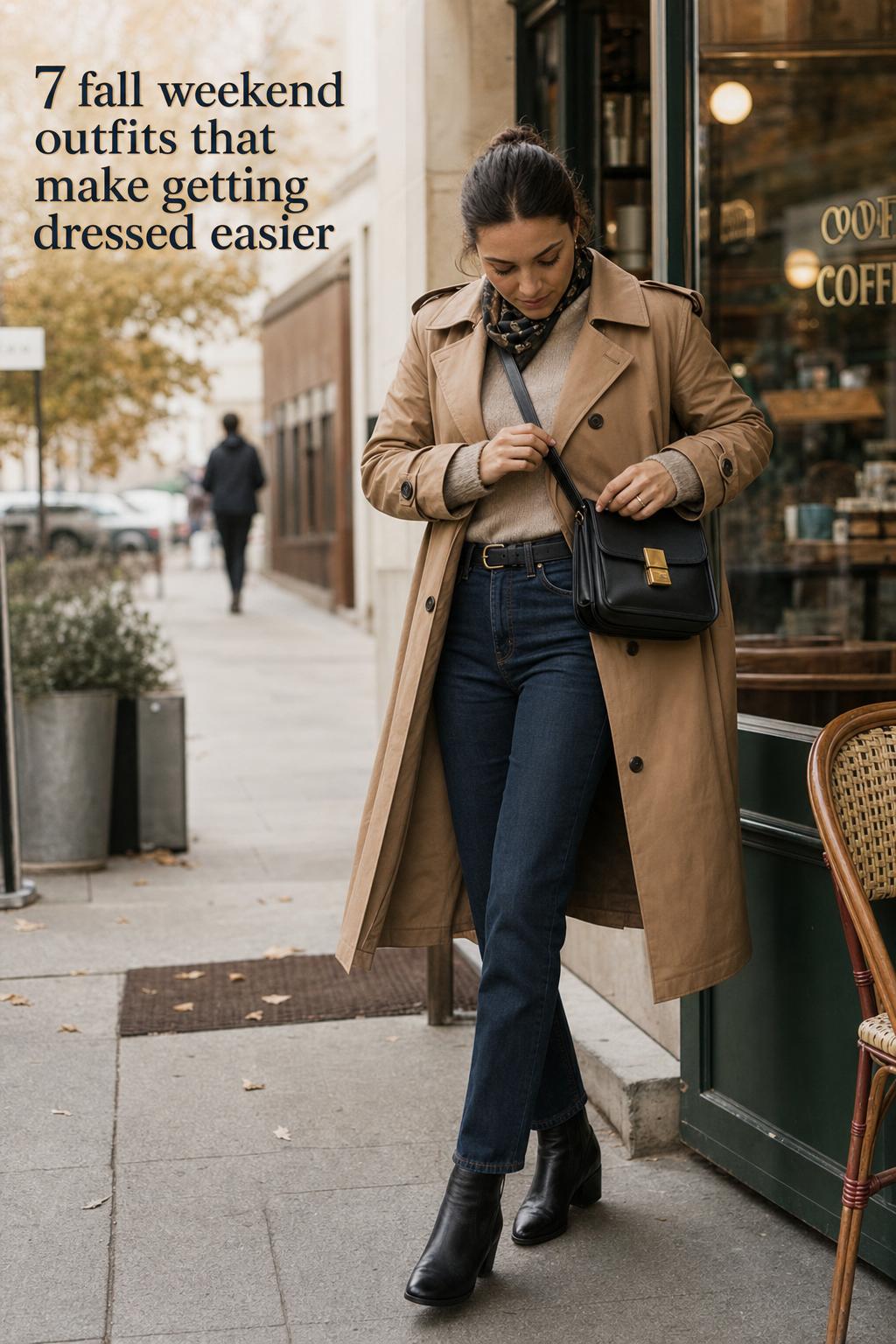
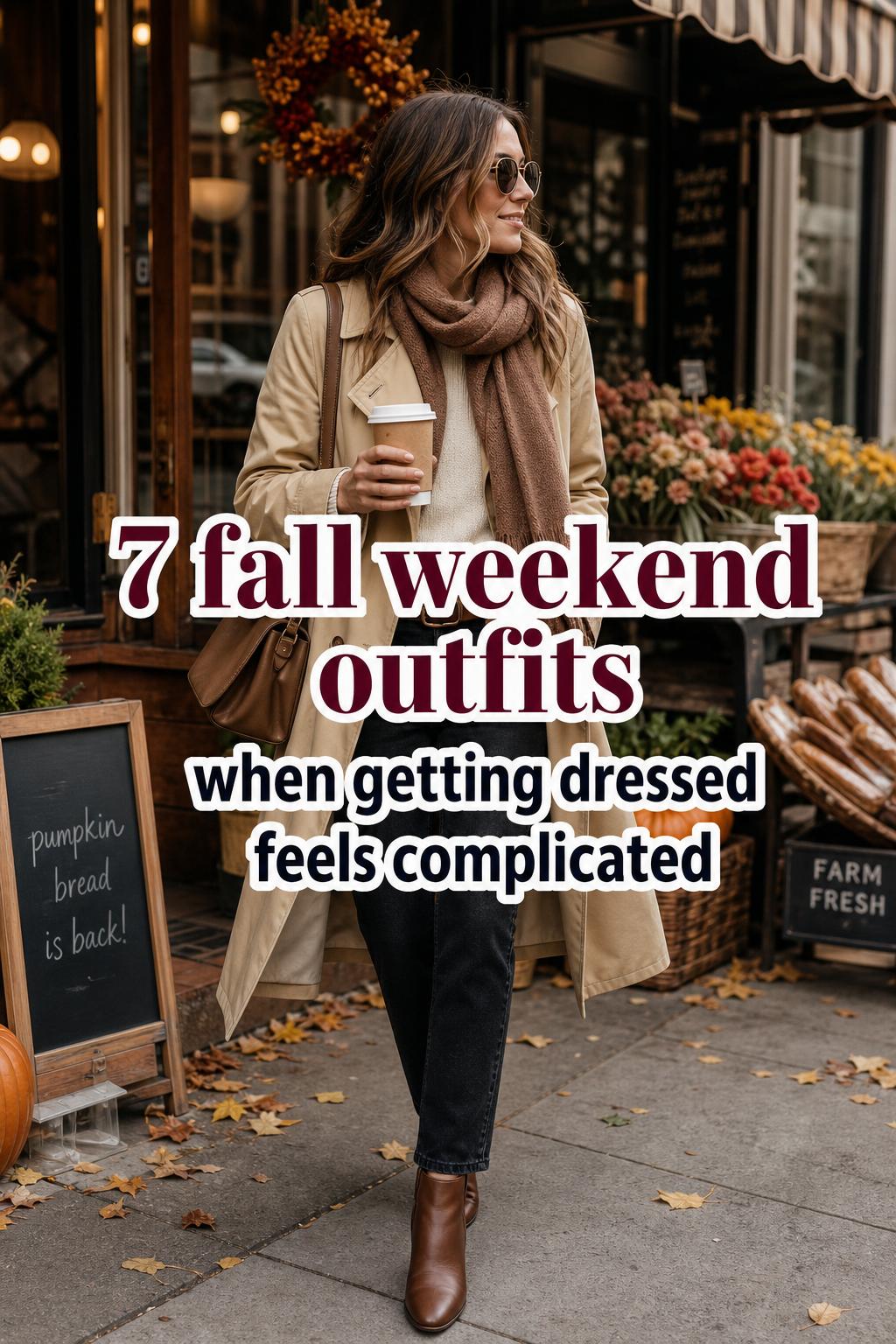
One of the most wearable answers to fall weekend dressing is a relaxed denim-based outfit built around a knit sweater, straight jeans, and ankle boots, finished with a trench or denim jacket depending on the weather. This look works because it solves the most common weekend problem: wanting comfort without slipping into visual laziness.
The silhouette is easy but controlled. Straight or clean denim gives the look shape, while the sweater adds softness and seasonal texture. Ankle boots provide a strong base, especially if the knit has more volume. A trench introduces polish; a denim jacket keeps the outfit more casual and youthful. For a crossbody bag, choose one that sits close to the body so it supports movement during errands, coffee stops, or a farmers market.
Why this outfit works
It relies on familiar pieces but creates definition through contrast. The knit offers texture, the denim gives structure, and the boots act as the visual anchor. This is exactly the kind of weekend wear formula that feels repeatable without looking repetitive.
Easy ways to recreate the look
- Swap blue jeans for black jeans if you want a slightly sharper finish.
- Use loafers instead of boots for a milder day.
- Add a belt if the sweater is more fitted and the outfit needs waist definition.
- Choose a cardigan instead of a pullover if you want easier indoor temperature control.
Soft dressing for brunch without losing shape
Brunch outfits often fail when they lean too far in one direction. A full casual look can feel underdressed, while a more dressed-up option can feel stiff for daytime. A knit dress with ankle boots and a blazer solves that tension well. It feels comfortable enough for a long meal and polished enough for photos, city walking, or a spontaneous second stop afterward.
The knit dress is the key because it simplifies the outfit foundation. Instead of building from separate pieces, you start with one uninterrupted line, which naturally makes the silhouette look more refined. The blazer adds structure at the shoulders and upper body, preventing the softness of the knit from reading too lounge-like. Ankle boots keep the mood rooted in fall rather than veering too dressy.
Fabric insight
Brushed knits and wool blends are especially effective here because they bring seasonal texture without requiring heavy layering. The outfit should feel light enough for indoor comfort but substantial enough to match the fall palette and atmosphere.
How to make the outfit feel more elevated
Use a crossbody bag in a neutral or earth tone and keep the color story cohesive. Camel, olive, rust, and forest green all work well with dresses, blazers, and boots because they add richness without competing for attention. If the blazer is more tailored, the boots can be slightly softer in shape; if the dress is more fluid, a cleaner boot line helps keep the outfit grounded.
Comfortable city outfits with structure
For city weekends, the outfit usually needs more stamina. You are walking more, sitting less, moving between outdoor air and heated interiors, and carrying a bag for longer stretches. That changes what works. A cardigan layered over a relaxed tee with denim and loafers or sneakers often performs better than a bulky sweater because it allows easier temperature adjustment.
The visual trick is to keep one structured element in the composition. That can be black jeans, a sharp jacket, or a trench. Without structure, soft layers can start to collapse into each other and the outfit loses clarity. This is where casual fall outfits benefit from a little restraint: not every piece needs to be cozy at the same time.
Best shoe pairing
Loafers are ideal when the weather is dry and the look needs a more polished edge than sneakers. Sneakers work better when comfort and distance are the priority. If the city forecast looks uncertain, ankle boots usually provide the best middle ground because they support long wear while keeping the outfit seasonally anchored.
Elevated casual looks for dinner, date night, or evening plans
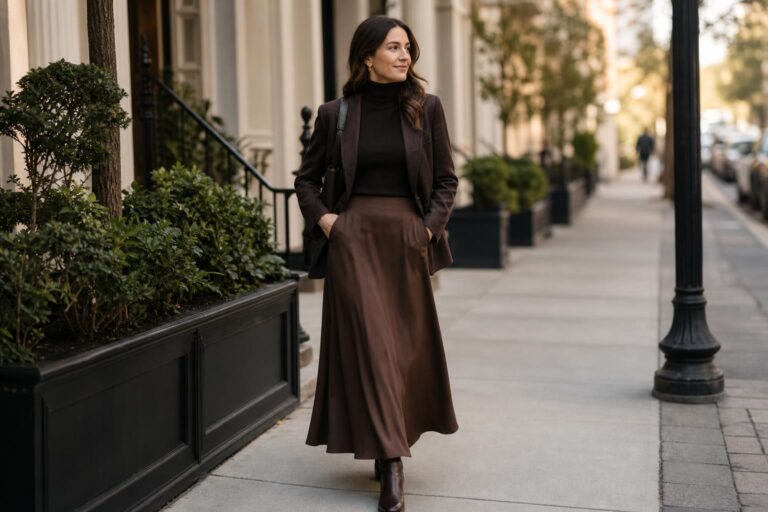
Evening fall weekend outfits should not require a complete wardrobe change. The most efficient formula is a midi dress with a blazer and heeled boots, or dark denim with a refined knit and structured outer layer. These combinations work because they preserve comfort while sharpening the outline of the outfit.
A midi dress is especially useful for day-to-night transitions because it can shift mood with very small changes. During the day, a softer outer layer or flat shoe keeps it grounded. In the evening, a blazer and heeled ankle boots add enough structure and lift to change the tone. This is a practical approach used frequently in fashion editorial styling because it allows one piece to carry different contexts.
Quick styling adjustment
If the dress feels too soft for evening, add the blazer first instead of immediately changing the shoe. Structure at the top half often transforms the overall composition faster than any other single swap. If the outfit still feels too relaxed, then move to a heeled boot or a more defined bag.
Black jeans, denim, and the power of a familiar base
Black jeans deserve special attention because they solve a different set of weekend needs than classic blue denim. They create a cleaner line, pair easily with boots, and make simple knitwear or jackets look more intentional. That is why they are often a strong starting point for casual chic fall weekend style.
Blue denim tends to feel more relaxed and approachable, which is perfect for daytime activities. Black jeans shift the same outfit formula into sharper territory. A sweater and boots with blue jeans reads easy and everyday. The same sweater and boots with black jeans looks more urban and slightly more polished. Neither is better; they simply serve different weekend moods.
Tip
If your wardrobe already contains several sweaters, jackets, and ankle boots, adding black jeans may create more outfit range than buying another knit. They often act as the bridge between fully casual looks and outfits that need to feel a little more elevated.
Layering for real weather, not idealized weather
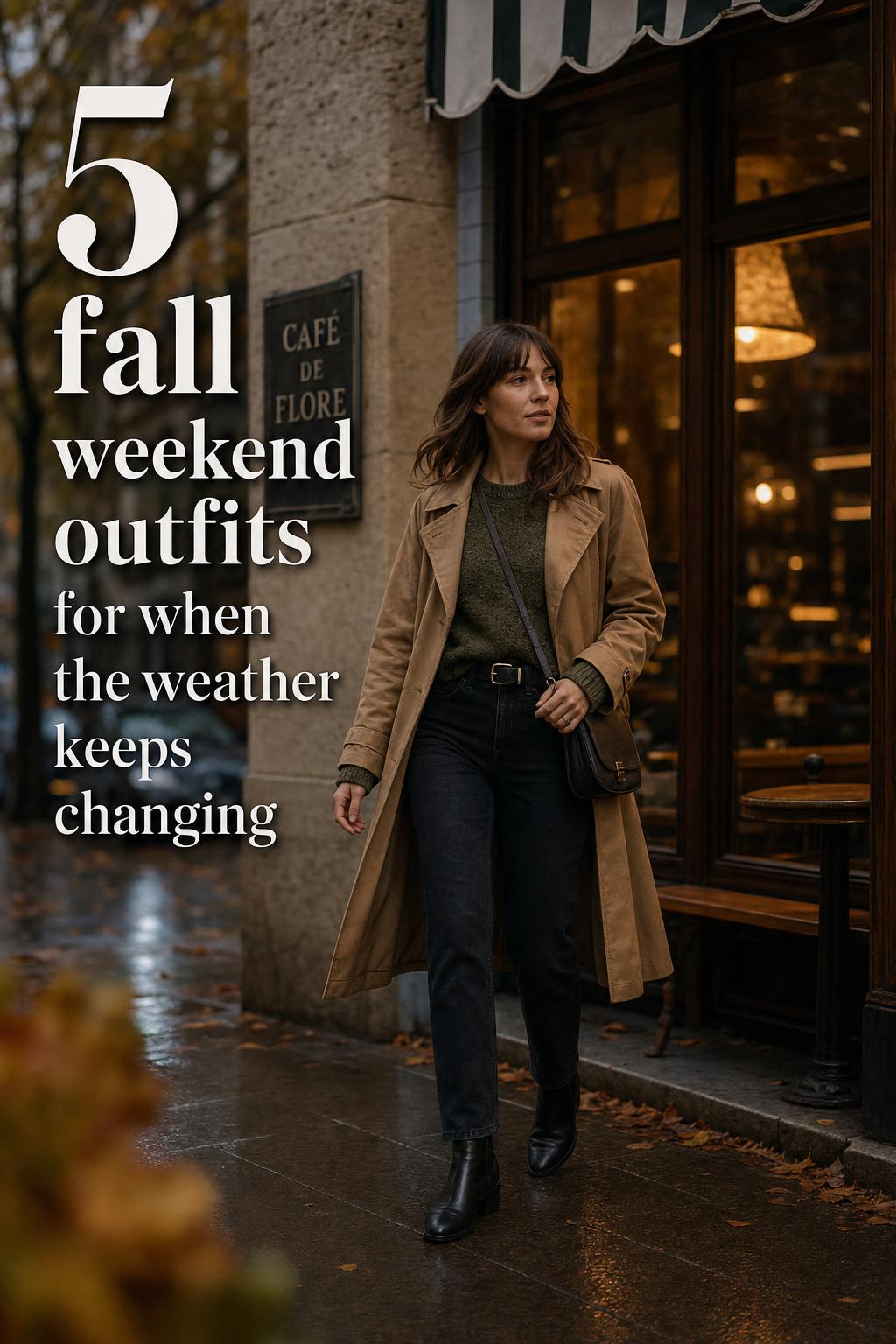
Layering advice often becomes too abstract. In practice, temperature-aware layering means choosing pieces you can remove or add without ruining the outfit underneath. That is why a trench, cardigan, denim jacket, scarf, and blazer are more useful than one very heavy layer. They allow you to regulate comfort while keeping the visual composition intact.
A common comfort mistake is layering too much texture at once. A thick sweater under a heavy jacket with a scarf may look seasonal in theory but becomes restrictive when you are carrying a bag, sitting indoors, or moving through a full day. Better layering creates flexibility, not bulk.
Common comfort mistake
People often use outerwear to solve every temperature issue. In reality, the smarter move is to balance the inner layer first. A lighter sweater with a trench is often more functional than a thick sweater under an equally heavy coat when the weekend includes both indoor and outdoor time.
- Use a cardigan when you expect to be indoors often.
- Choose a trench when the outfit needs polish and layering flexibility.
- Reach for a denim jacket when the look should stay casual and youthful.
- Add a scarf as a removable warmth layer rather than depending on one bulky knit.
Color stories that make autumn outfits feel cohesive
Color is one of the easiest ways to make fall weekend outfits look more editorial without making them harder to wear. Earth tones and neutrals dominate for good reason: they connect naturally to the season and layer well across different item categories. Olive, rust, camel, and forest green work particularly well with denim, black jeans, boots, and outerwear.
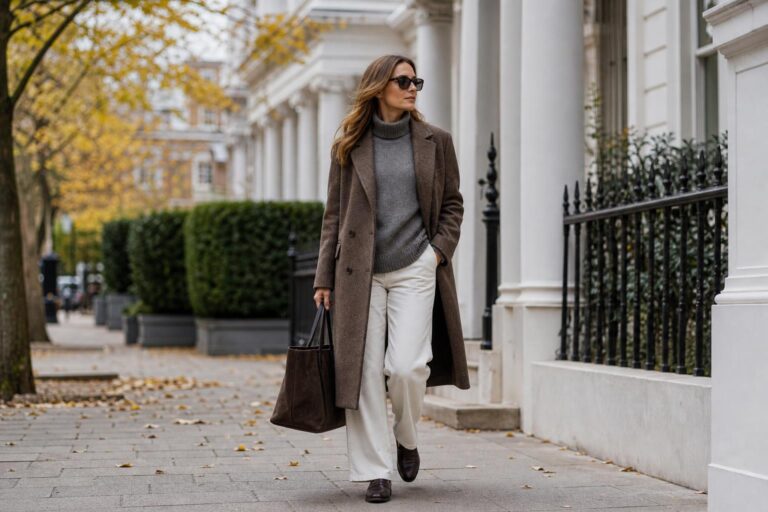
The most wearable approach is to keep one part of the outfit grounded in a neutral family, then use one seasonal color as emphasis. For example, denim and brown boots can support an olive cardigan. Black jeans and ankle boots can support a rust knit. A camel trench over a knit dress creates tonal layering that feels polished without becoming visually heavy.
Why color pairing matters
When a weekend outfit contains several practical elements, such as a bag, outerwear, and durable footwear, color harmony prevents the look from feeling pieced together. This is especially important in outfits that rely on basics. Color often provides the refinement that trend details would otherwise supply.
Footwear and accessories that support the outfit instead of fighting it
Footwear should match both the silhouette and the actual demands of the day. Boots, sneakers, loafers, and ballet flats all appear in fall styling, but they solve different problems. The right choice depends on whether the outfit needs grounding, softness, mobility, or polish.
How each shoe changes the outfit
- Ankle boots add structure and seasonal weight, making them ideal with jeans, dresses, and blazers.
- Heeled boots elevate a midi dress or black jeans for evening plans.
- Sneakers keep a layered denim look functional for walking-heavy weekends.
- Loafers bring polish to cardigans, relaxed trousers, or black jeans.
- Ballet flats lighten a softer outfit, especially in warmer regions where boots may feel too heavy.
Accessories deserve more attention than they usually get in weekend outfit advice. A scarf, belt, bag, or hat can stabilize an outfit in subtle but important ways. A belt adds definition if knitwear creates too much volume. A crossbody bag improves function and keeps the outline cleaner than a large shoulder bag. A scarf can add color and warmth while reducing the need for heavier outerwear.
Tip
If an outfit feels incomplete, add an accessory before adding another garment. Many fall outfits become over-layered when what they really need is a better finishing element, not more fabric.
Regional fall weather changes how you should build the outfit
One reason generic fall styling can feel unhelpful is that fall behaves differently across the United States. A Northeast or Midwest weekend often calls for stronger outerwear logic and more substantial layering. A South or West weekend may still require seasonal styling, but the pieces need to stay lighter and more flexible.
Northeast and East Coast weekends
A trench, knit sweater, jeans, scarf, and ankle boots make sense here because the outfit needs genuine layering capacity. These regions often support richer texture combinations and more visible outerwear because the climate allows the full fall wardrobe to function properly. This is also where a capsule wardrobe approach becomes especially useful for short weekend trips.
Midwest weekends
Layering should stay adaptable. Conditions can shift quickly, so removable pieces matter. A cardigan under a jacket, boots with denim, or a knit dress paired with a blazer gives you more control than a single heavy layer. Comfort and practicality are particularly important when plans include driving, outdoor stops, and longer transitions between locations.
South and West weekends
In warmer regions, the seasonal look still matters, but heavy composition can feel out of place. This is where lighter knits, dresses, loafers, ballet flats, and a denim jacket or blazer often outperform bulkier combinations. The outfit should reference fall through color palette and texture rather than through excessive weight.
Weekend itinerary dressing: matching the outfit to the plan
One of the easiest ways to make better styling decisions is to think in terms of itinerary rather than individual garments. Fall weekends rarely revolve around one static event. A single day may include coffee, a market, an autumn festival, a walk through a leaf-peeping town, a late lunch, and dinner. The outfit needs to survive all of that without constant fixing.
Coffee and farmers market
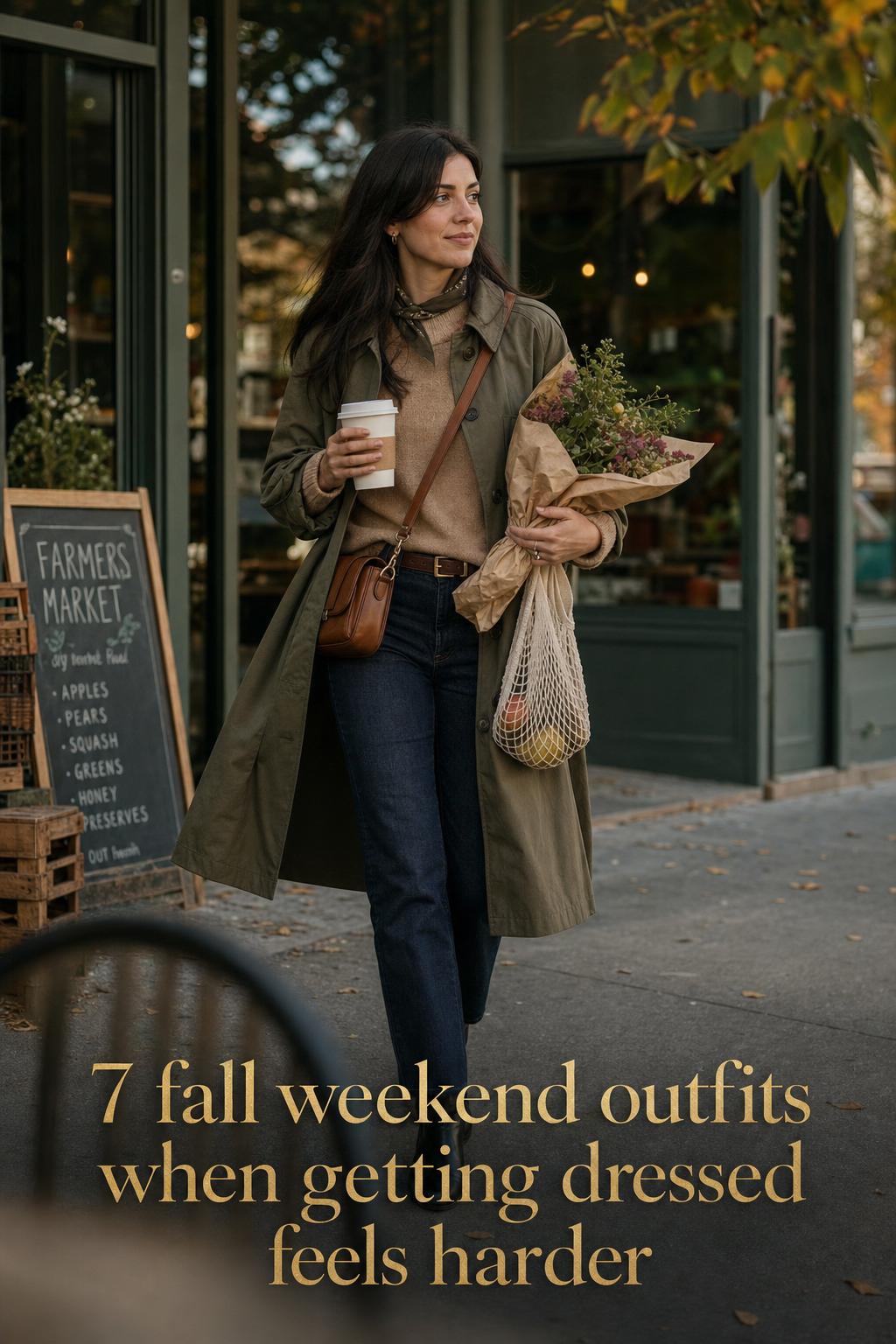
Denim, a cardigan or knit sweater, loafers or ankle boots, and a crossbody bag work well because they support movement and keep the look casual but composed. This is a good setting for earth tones and practical layers that can be removed easily.
Pumpkin patch or autumn festival
Prioritize a stable shoe, easy outerwear, and pieces that can handle walking and temperature shifts. Jeans, a brushed knit, and boots are often more practical than a delicate dress-based look here. A scarf can add seasonal character without complicating movement.
Brunch into shopping or city walking
A knit dress with a blazer and ankle boots, or black jeans with a refined sweater and loafers, keeps the outfit polished enough for social settings while still functioning for longer wear. The bag should stay compact and hands-free.
Date night after a casual day
Build from a base that can be upgraded. Dark denim or a midi dress gives you that flexibility. Then add a blazer, switch to heeled boots if needed, and let the color story stay clean and tonal rather than adding too many statement elements at once.
Age-inclusive and size-aware styling that still feels current
Great weekend style should not depend on one age group or one body type. The same outfit logic can be adapted through proportion, shape, and fabric choice. This is where many practical readers need more than trend inspiration. They need to know how to make the look work for their actual wardrobe and comfort preferences.
For mature audiences, timeless pieces such as coats, knitwear, boots, and blazers often provide the strongest foundation because they combine longevity with ease. For college students or younger readers, denim jackets, sweaters, dresses, and booties offer accessibility and enough flexibility for campus and weekend life. In both cases, the styling principle is similar: use one core shape, then build around it with seasonal texture and functional footwear.
Adapting the look without changing the formula
- If you prefer more coverage, use a longer cardigan or trench over denim and knits.
- If you want more waist definition, use a belt with dresses or choose a blazer that creates shape.
- If comfort is the priority, choose loafers or supportive boots instead of delicate shoes that shorten wear time.
- If you want a cleaner line, black jeans often simplify the outfit more than heavily distressed denim.
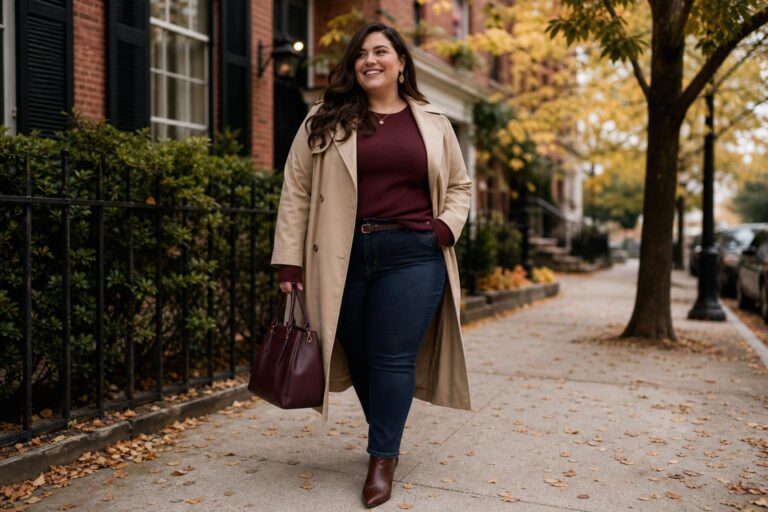
Plus-size, petite, and tall styling adjustments often come down to proportion more than trend selection. The outfit works best when one piece clearly anchors the silhouette and the layers do not compete for volume in every area at once.
Sustainable choices and performance-minded fabrics
Fall weekend dressing also benefits from thinking about fabric behavior, not just appearance. Stretch denim, wool blends, brushed knits, organic cotton, and recycled polyester blends can all support comfort, layering, and repeat wear in different ways. The value of these materials is practical: they influence warmth, movement, and how long the outfit remains comfortable.
For a capsule wardrobe approach, this matters even more. If a sweater pills quickly, a dress loses shape, or denim becomes restrictive after a few hours, the outfit stops functioning no matter how good it looks at first. Ethical and sustainable considerations can fit naturally into weekend style by focusing on pieces that are versatile, durable, and easy to wear repeatedly.
Tip
When choosing between two similar weekend pieces, the better option is usually the one that layers well and works across more than one setting. Versatility is one of the most practical forms of value in a fall wardrobe.
Shopping direction: budget, mid-range, and investment thinking
You do not need a completely new wardrobe to create better fall weekend outfits. The smarter approach is to identify which category is missing from your current rotation. Often the gap is not the sweater or the jeans themselves, but the bridging piece that makes combinations easier, such as a blazer, ankle boots, a trench, or a versatile dress.
Brand-led style hubs such as Ann Taylor and Lulus often frame weekend dressing through versatility and occasion-based styling, which is helpful when you want to see how one item can shift from casual to evening. Editorial sources such as Who What Wear tend to spotlight layering, dresses, blazers, boots, and trend-aware combinations in a more image-driven way. Both approaches are useful if you interpret them through your actual routine rather than copying a look without context.
What is worth spending on
Pieces that carry the most repeat use usually deserve the most attention: ankle boots, outerwear, and a reliable pair of jeans or black jeans. Trend details are easier to express through knitwear, accessories, and seasonal color updates.
Common fall weekend outfit mistakes and what works better
Most styling mistakes in this category are not dramatic. They are small decisions that make the outfit less wearable over time. The goal is not perfection. It is reducing friction so the outfit still works hours later.
- Over-layering: too many thick pieces create heat, bulk, and restricted movement. Use fewer, smarter layers instead.
- Ignoring footwear demands: a beautiful shoe that cannot handle walking will limit the entire day. Let the itinerary guide the shoe choice.
- Using only soft pieces: cardigans, knits, and dresses all at once can lack structure. Add a blazer, jacket, or a stronger boot.
- Forgetting color cohesion: great individual basics can still look disconnected if the palette is chaotic. Stay within a seasonal color story.
- Prioritizing a trend over function: dress-over-pants or other trend-forward styling can work, but only if the layers remain comfortable and proportionate.
Even more fashion-forward weekend looks should still answer practical questions: Can you sit comfortably? Can you remove a layer without ruining the outfit? Does the shoe support where you are going? If the answer is no, the look may be visually appealing but not truly successful.
Five-item formulas that make getting dressed faster
When weekends feel busy, outfit formulas are more useful than inspiration alone. These combinations are effective because each piece has a job within the overall composition.
- Jeans + knit sweater + trench + ankle boots + crossbody bag
- Black jeans + cardigan + loafers + scarf + light jacket
- Knit dress + blazer + ankle boots + belt + bag
- Midi dress + denim jacket + boots + scarf + crossbody bag
- Relaxed tee + cardigan + denim + sneakers + trench
These formulas are not strict rules. They are repeatable frameworks. Once you understand the role of each item, you can change color, texture, or footwear depending on the weather, your region, and the social tone of the day.
Final styling perspective
The best fall weekend outfits are rarely the most complicated ones. They are the ones that understand what the day actually requires and build style around that reality. Denim, knits, dresses, boots, blazers, and thoughtful accessories continue to work because they balance comfort, function, and visual clarity in a season that changes by the hour.
Start with a dependable capsule, pay attention to proportion and layering, and let the itinerary guide the final details. When the outfit supports movement, temperature shifts, and your personal style at the same time, weekend dressing stops feeling like a guessing game and starts feeling easy in the right way.
FAQ
What are the best core pieces for fall weekend outfits?
The most useful core pieces are jeans or black jeans, knit sweaters, a cardigan, a trench or light jacket, ankle boots, and one versatile dress such as a knit dress or midi dress. These items mix easily and can shift between casual daytime plans and more polished evening settings.
How do I make casual fall outfits look more polished?
Focus on structure, color cohesion, and one strong finishing element. A blazer, trench, ankle boots, or a belt can sharpen a casual outfit quickly, while earth tones and neutrals help the whole look feel intentional instead of pieced together.
What shoes work best for weekend wear in fall?
Ankle boots are the most versatile because they work with denim, dresses, and layered separates while adding seasonal weight. Sneakers are best for walking-heavy days, loafers suit polished daytime outfits, and heeled boots are useful when the look needs a dressier evening finish.
How should I layer for unpredictable fall weather?
Choose removable layers that do not disrupt the outfit underneath. A cardigan, trench, denim jacket, blazer, or scarf usually works better than one very heavy layer because you can adjust throughout the day without losing the outfit’s shape or balance.
Are dresses practical for fall weekend outfits?
Yes, especially knit dresses and midi dresses. They simplify getting dressed, create a polished base, and pair well with blazers, jackets, and boots. They are most practical when the fabric has enough seasonal texture and the footwear can handle the day’s activity level.
How can I build a fall capsule wardrobe for weekends?
Start with a small set of repeatable pieces that cover layering, footwear, and outfit variety: denim, black jeans, one or two sweaters, a cardigan, a trench or jacket, ankle boots, and a dress. The goal is to create multiple outfits from a limited group of items rather than buying separate looks for every plan.
What colors work best for autumn outfits?
Earth tones and grounded neutrals are the easiest to style. Olive, rust, camel, and forest green pair especially well with denim, black jeans, boots, and outerwear, creating a seasonal palette that feels rich but still easy to wear.
What should I wear for a fall weekend date night?
A midi dress with a blazer and heeled boots is a strong option because it balances softness and structure while remaining comfortable. Dark denim with a refined knit and a polished outer layer also works well if you want something slightly more casual but still elevated.
How do I adapt fall weekend outfits for warmer U.S. regions?
Keep the seasonal feeling through color and texture rather than heavy layering. Lighter knits, dresses, loafers, ballet flats, and a denim jacket or blazer usually make more sense in warmer South or West climates than bulky sweaters and heavy outerwear.
Can I recreate stylish fall outfits without buying a whole new wardrobe?
Yes. Most people already own some of the essential building blocks, such as denim, sweaters, and jackets. The biggest improvement usually comes from adding one bridging piece like ankle boots, a blazer, or a trench, then styling existing basics with better layering, proportion, and color coordination.